Association of Clinical Aspects and Genetic Variants with the Severity of Cisplatin-Induced Ototoxicity in Head and Neck Squamous Cell Carcinoma: A Prospective Cohort Study
by
 , ,
, ,
Ligia Traldi Macedo
1,2,†,
Ericka Francislaine Dias Costa
1,†,
Bruna Fernandes Carvalho
1,
Gustavo Jacob Lourenço
1,
Luciane Calonga
3,
Arthur Menino Castilho
3,
Carlos Takahiro Chone
3 and
Carmen Silvia Passos Lima
1,3,* 1
Laboratory of Cancer Genetics, Faculty of Medical Sciences, University of Campinas, Campinas 13083-970, SP, Brazil
2
Department of Anesthesiology, Oncology and Radiology, Faculty of Medical Sciences, University of Campinas, Campinas 13083-888, SP, Brazil
3
Department of Ophthalmology and Otorhinolaryngology, Faculty of Medical Sciences, University of Campinas, Campinas 13083-888, SP, Brazil
*
Author to whom correspondence should be addressed.
†
These authors contributed equally to this work.
Cancers 2023, 15(6), 1759; https://doi.org/10.3390/cancers15061759
Submission received: 3 February 2023
/
Revised: 1 March 2023
/
Accepted: 7 March 2023
/
Published: 14 March 2023
(This article belongs to the Topic Pathogenetic, Diagnostic and Therapeutic Perspectives in Head and Neck Cancer)
Simple Summary
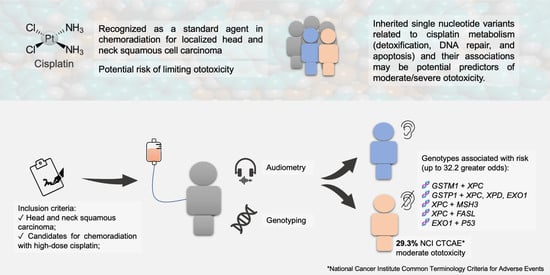
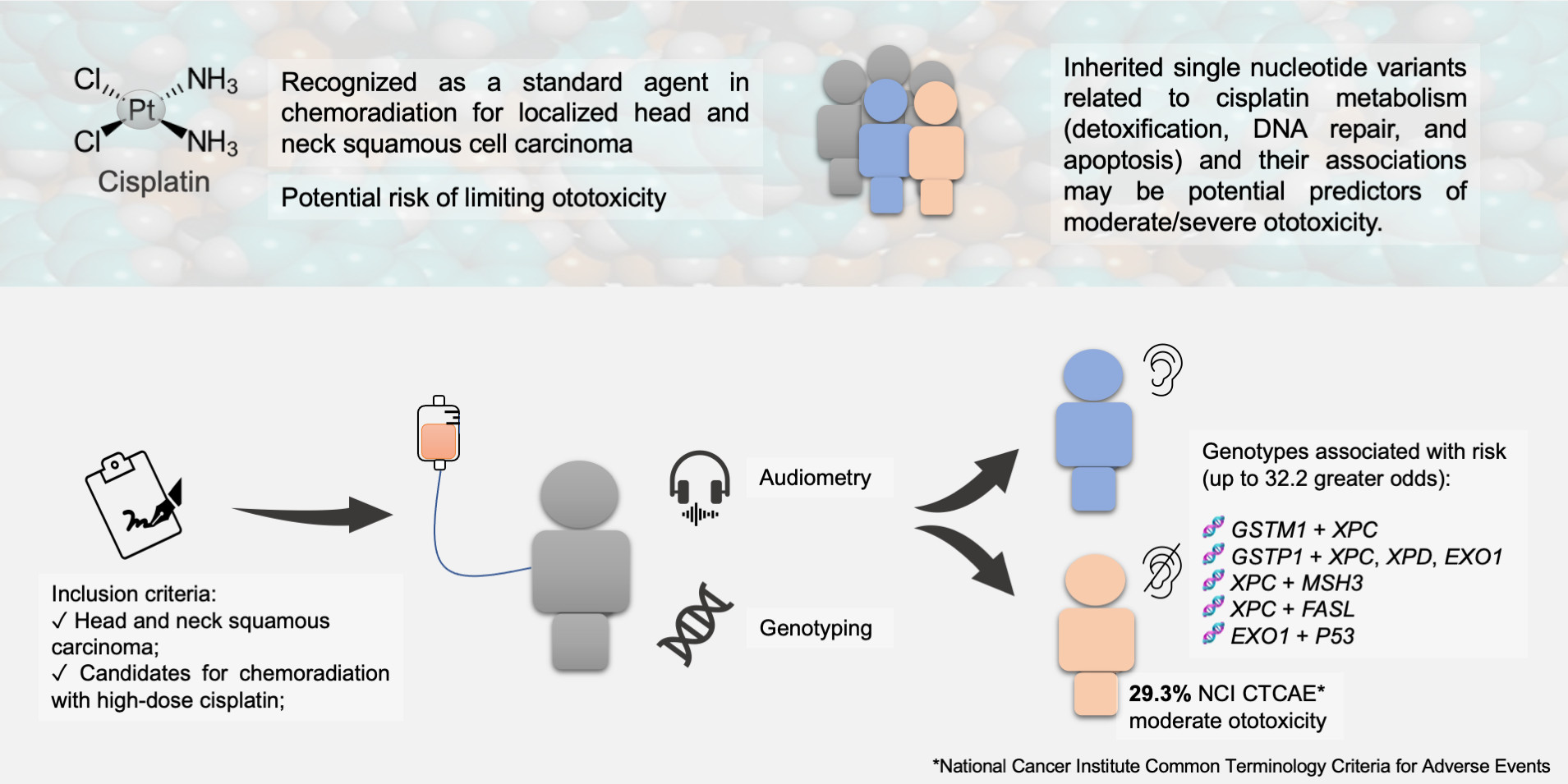
Cisplatin is recognized as the standard agent for head and neck squamous cell carcinoma therapy, despite the relevant risk of permanent hearing damage. The aim of this study was to evaluate the possible associations of the clinicopathological features and inherited genotypes encoding cisplatin metabolism in eighty-nine patients undergoing chemoradiation with the risk of hearing loss. We were able to confirm race, body mass index, and cumulative cisplatin dose as independent clinical risk factors. Patients with specific isolated and combined genotypes encoding cisplatin efflux (GSTM1, GSTP1 c.313A>G), DNA repair (XPC c.2815A>C, XPD c.934G>A, EXO1 c.1762G>A, MSH3 c.3133A>G), and apoptosis-related proteins (FASL c.-844A>T, P53 c.215G>C) presented up to 32.22 higher odds of moderate or severe ototoxicity. These findings reinforce the importance of inherited nucleotide variants involved in cisplatin metabolism as candidate variables for predictive models of adverse events.
Abstract
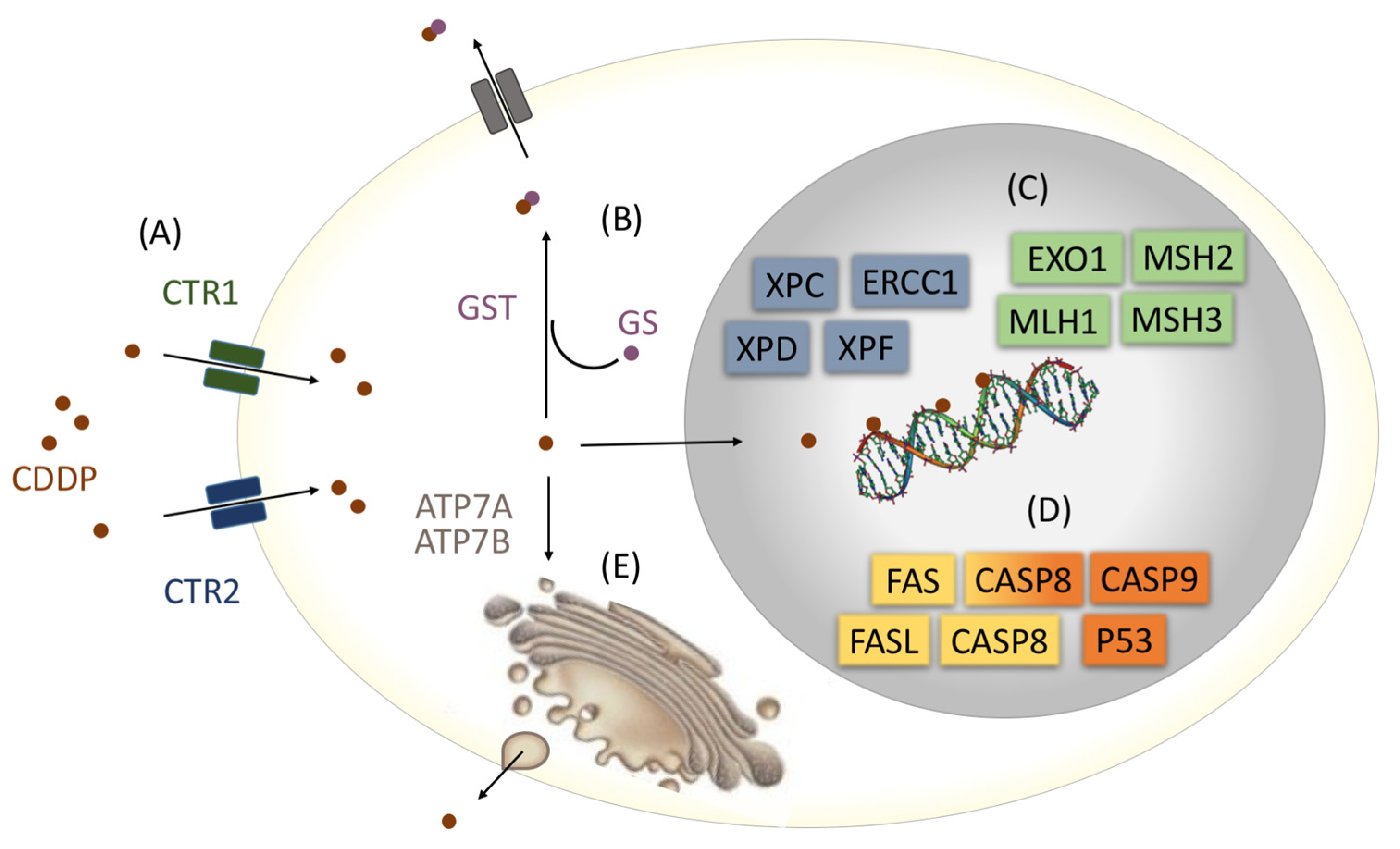
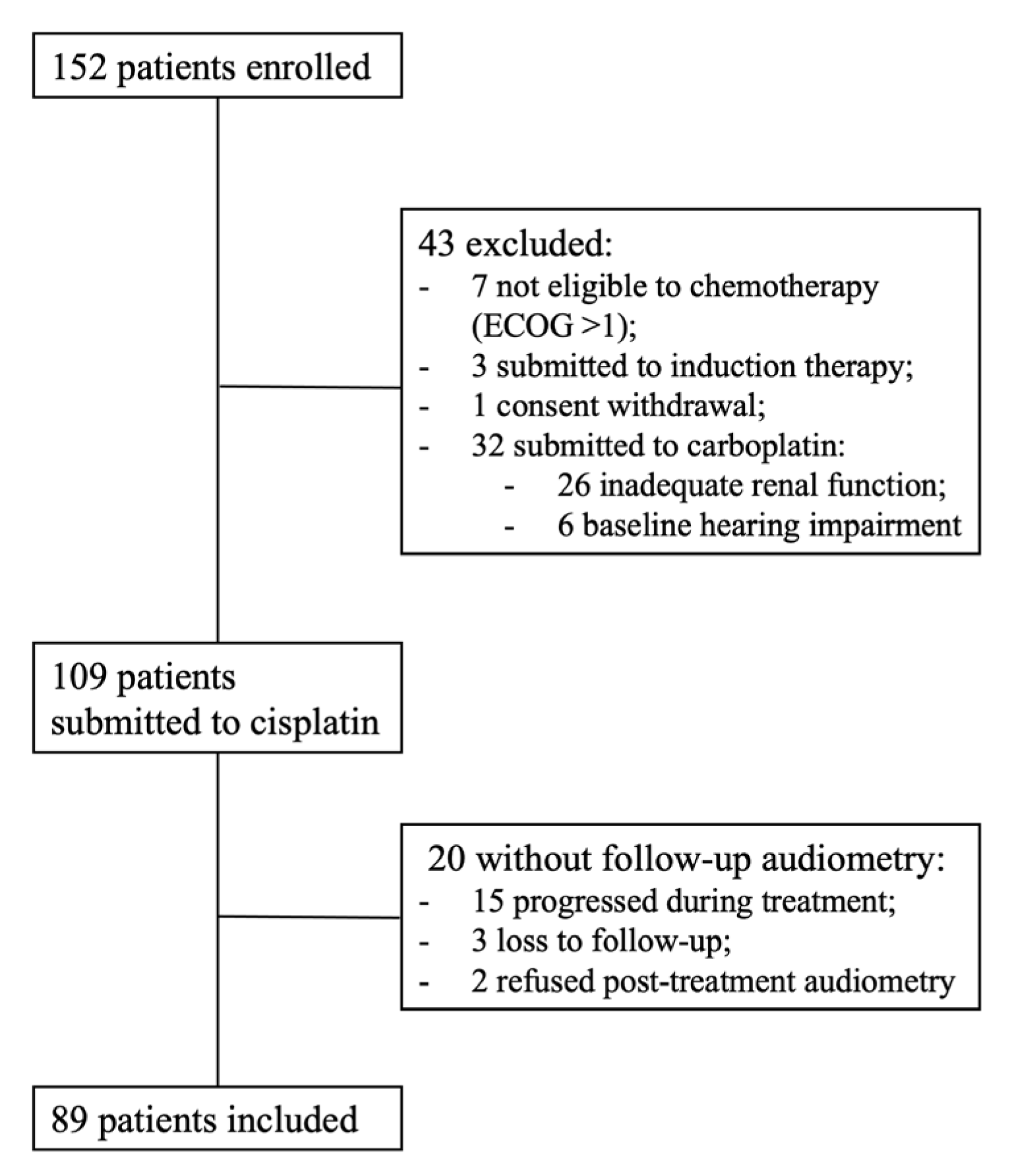
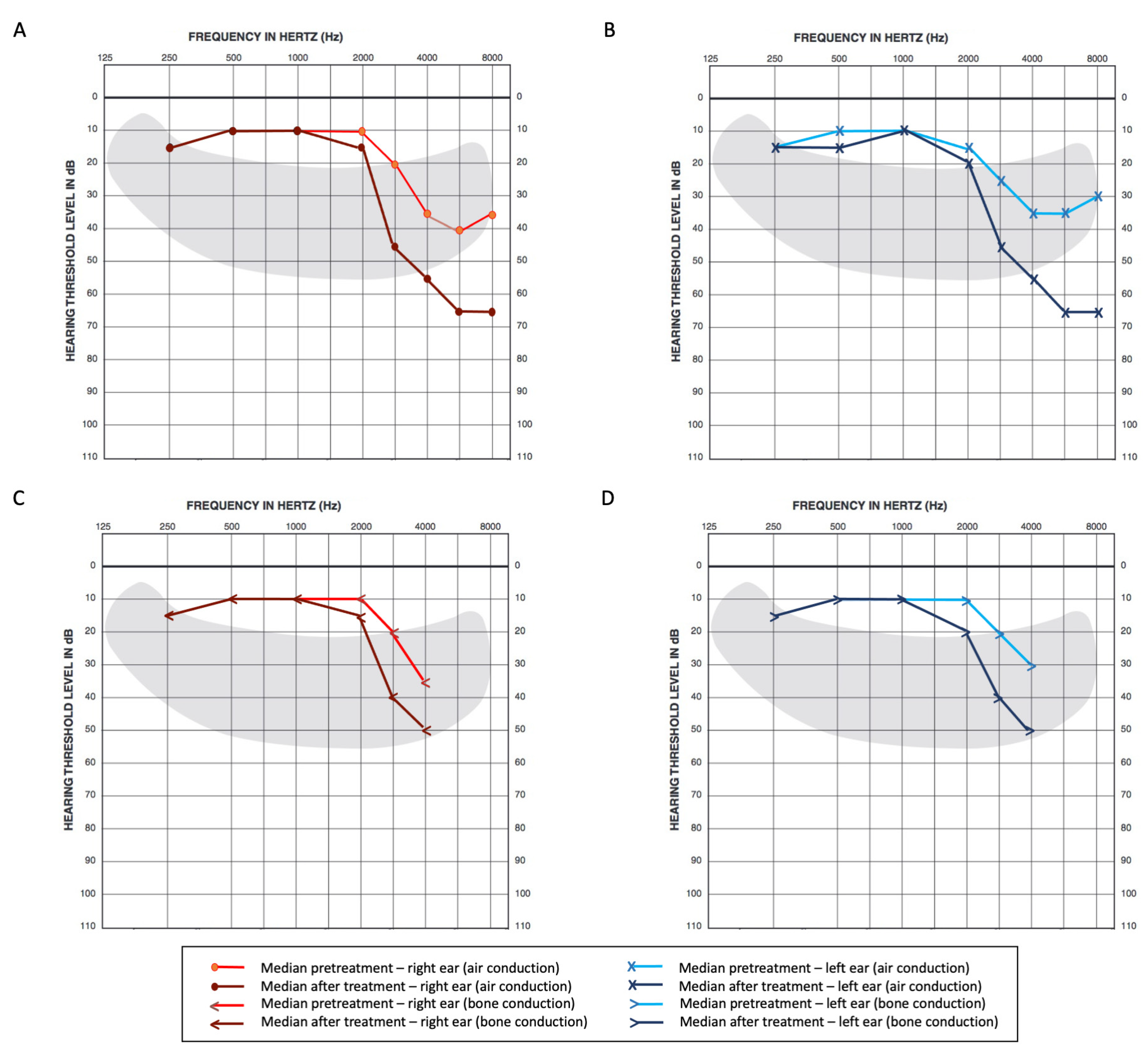
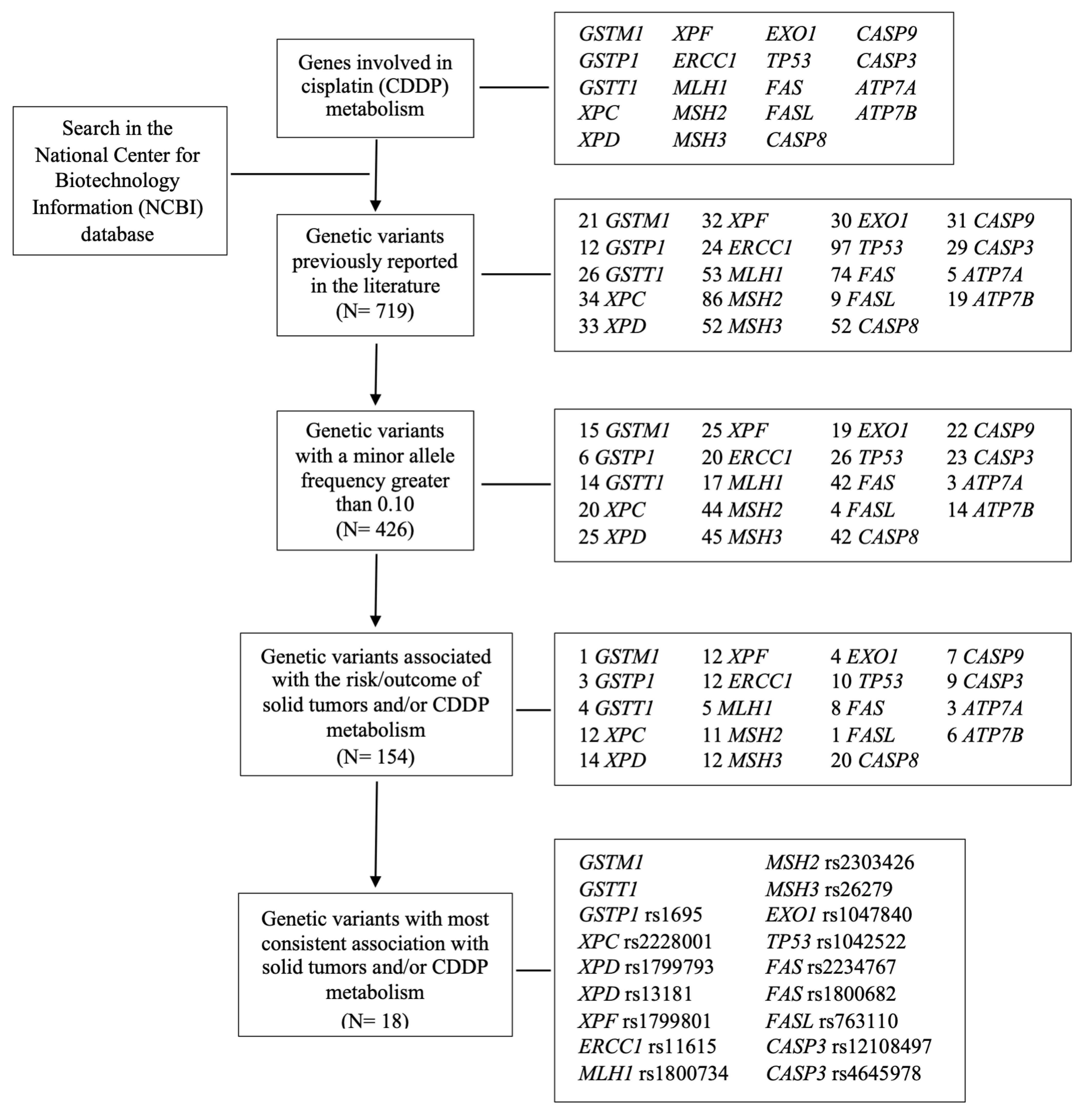
Background: Cisplatin (CDDP) is a major ototoxic chemotherapy agent for head and neck squamous cell carcinoma (HNSCC) treatment. Clinicopathological features and genotypes encode different stages of CDDP metabolism, as their coexistence may influence the prevalence and severity of hearing loss. Methods: HNSCC patients under CDDP chemoradiation were prospectively provided with baseline and post-treatment audiometry. Clinicopathological features and genetic variants encoding glutathione S-transferases (GSTT1, GSTM1, GSTP1), nucleotide excision repair (XPC, XPD, XPF, ERCC1), mismatch repair (MLH1, MSH2, MSH3, EXO1), and apoptosis (P53, CASP8, CASP9, CASP3, FAS, FASL)-related proteins were analyzed regarding ototoxicity. Results: Eighty-nine patients were included, with a cumulative CDDP dose of 260 mg/m2. Moderate/severe ototoxicity occurred in 26 (29%) patients, particularly related to hearing loss at frequencies over 3000 Hertz. Race, body-mass index, and cumulative CDDP were independent risk factors. Patients with specific isolated and combined genotypes of GSTM1, GSTP1 c.313A>G, XPC c.2815A>C, XPD c.934G>A, EXO1 c.1762G>A, MSH3 c.3133A>G, FASL c.-844A>T, and P53 c.215G>C SNVs had up to 32.22 higher odds of presenting moderate/severe ototoxicity. Conclusions: Our data present, for the first time, the association of combined inherited nucleotide variants involved in CDDP efflux, DNA repair, and apoptosis with ototoxicity, which could be potential predictors in future clinical and genomic models.
Keywords:
cisplatin; ototoxicity; single-nucleotide variants; detoxification; DNA repair; apoptosis