Relationship between Being Overweight and Clinical Outcomes of Ablation Therapy for Hepatocellular Carcinoma under Ultrasound Guidance: A Retrospective Analysis
by
 , and
, and
Takeshi Hatanaka
1 ,
,
Yutaka Yata
2,*,
Naoto Saito
1,
Sachi Nakano
1,
Yuya Nakano
1,
Yoichi Hazama
1,
Sachiko Yoshida
1,
Yoko Hachisu
1,
Yoshiki Tanaka
1,
Teruo Yoshinaga
1,
Atsushi Naganuma
3 and
Satoru Kakizaki
4,5
1
Department of Gastroenterology, Gunma Saiseikai Maebashi Hospital, Maebashi 371-0821, Japan
2
Department of Gastroenterology, Hanwa Memorial Hospital, Osaka 558-0041, Japan
3
Department of Gastroenterology, National Hospital Organization Takasaki General Medical Center, Takasaki 370-0829, Japan
4
Department of Clinical Research, National Hospital Organization Takasaki General Medical Center, Takasaki 370-0829, Japan
5
Department of Gastroenterology and Hepatology, Gunma University Graduate School of Medicine, Maebashi 371-8511, Japan
*
Author to whom correspondence should be addressed.
Cancers 2023, 15(4), 1289; https://doi.org/10.3390/cancers15041289
Submission received: 2 February 2023
/
Revised: 14 February 2023
/
Accepted: 15 February 2023
/
Published: 17 February 2023
(This article belongs to the Collection Primary Liver Cancer)
Simple Summary
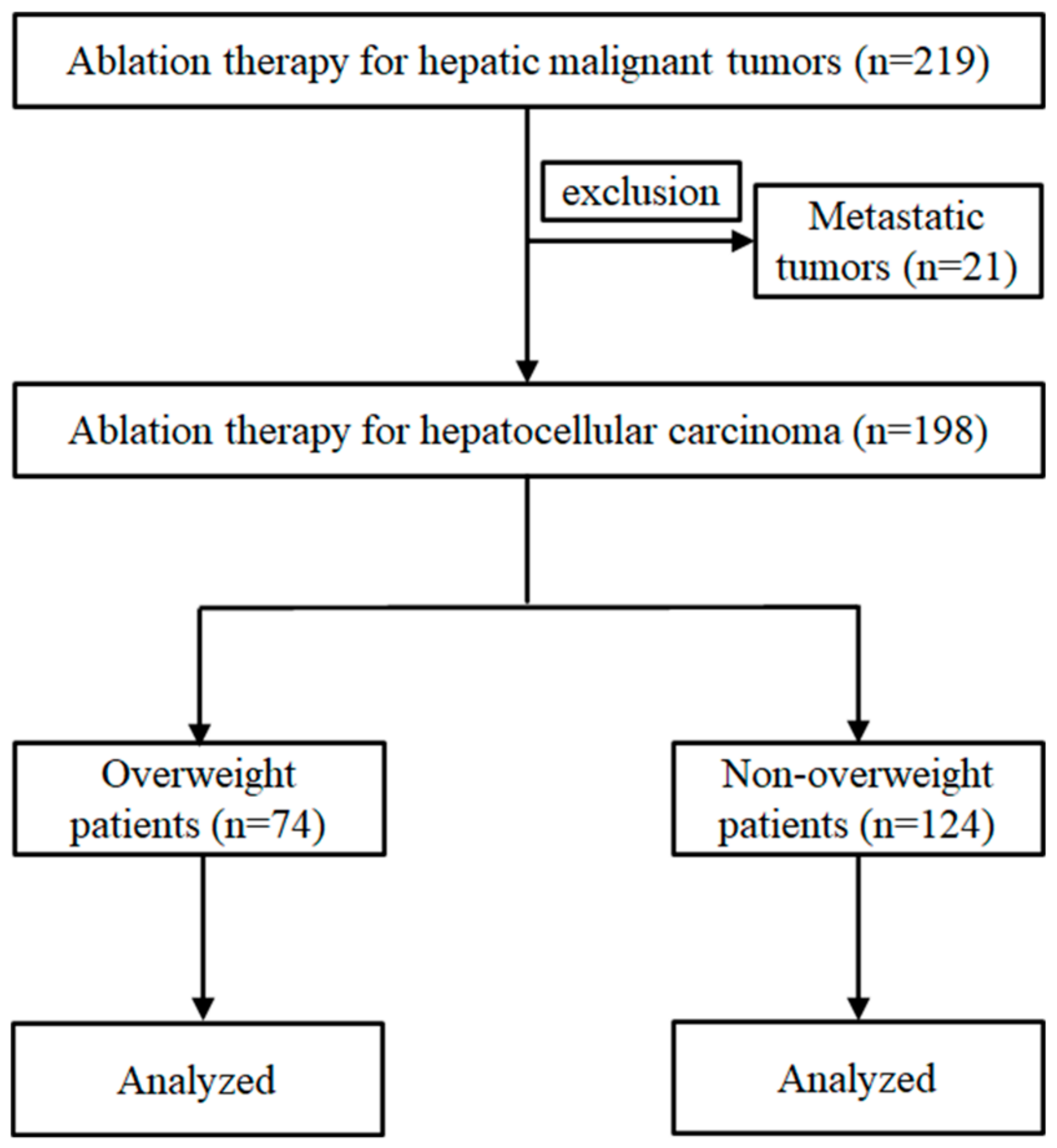
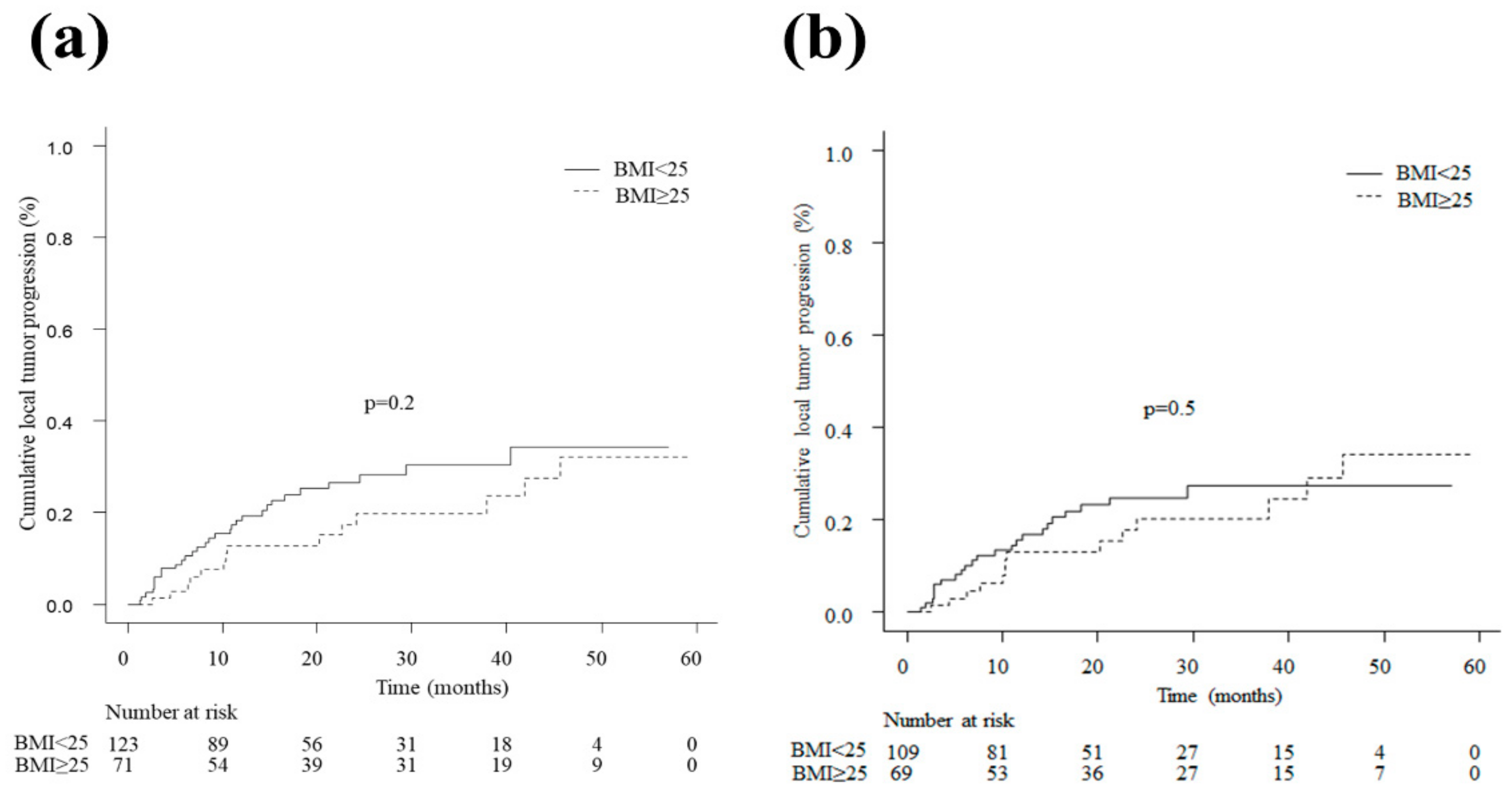
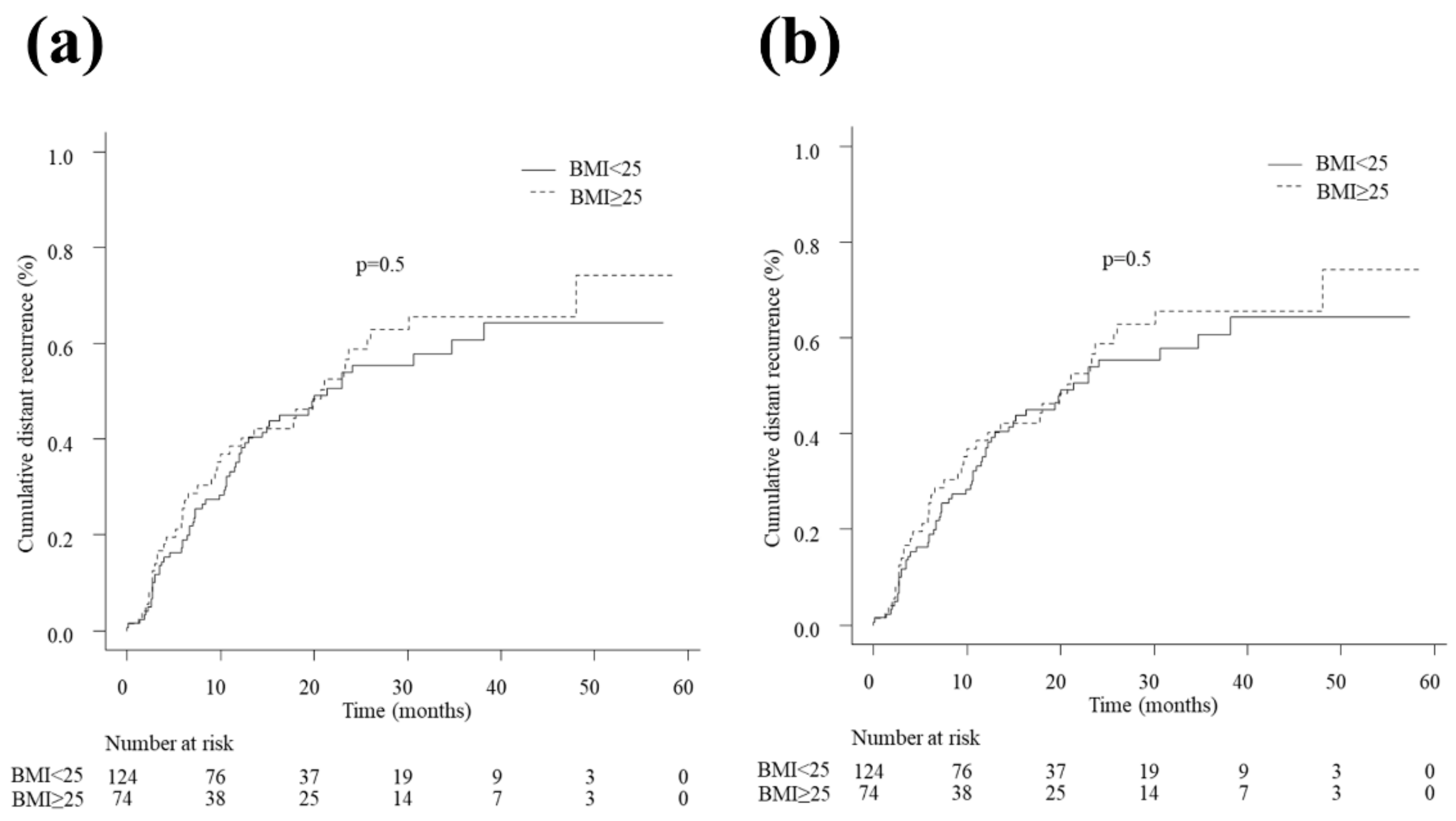
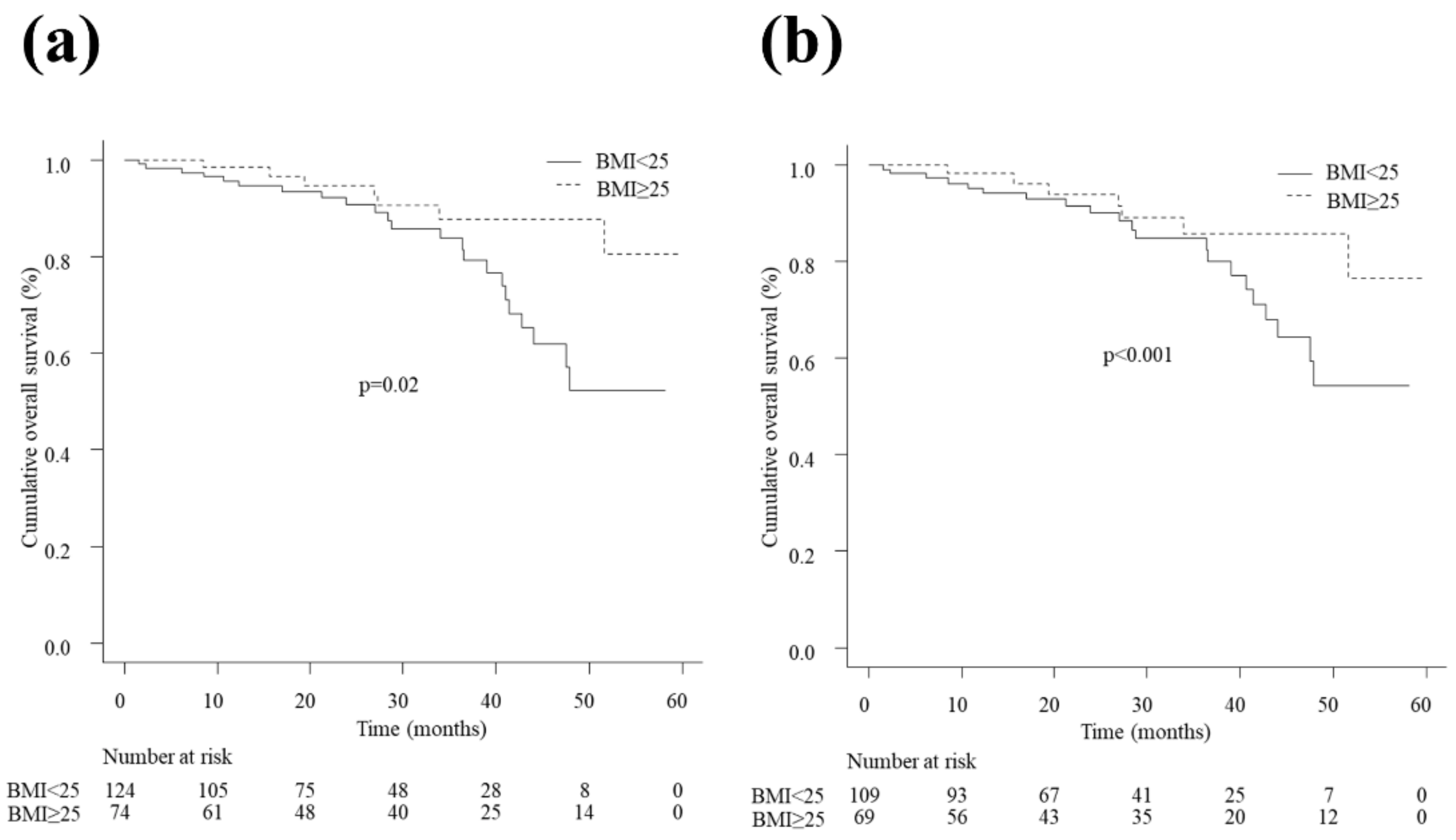
In this retrospective study of 198 HCC patients receiving ablation therapy, participants were divided into two groups based on body mass index (BMI): overweight patients (BMI ≥ 25) and non-overweight patients (BMI < 25). The technical success rate (TSR) in the first session was significantly higher in non-overweight patients than in overweight patients (90.3% vs. 78.4%, p = 0.03). Fifteen (20.3%) overweight and eleven (8.9%) non-overweight patients required additional ablation therapy for residual tumors, resulting in almost similar TSRs at the final session (95.9% vs. 99.2%, p = 0.3). Local tumor progression and distant recurrence rates were not significantly different between the two groups, but overall survival was better in overweight patients than in non-overweight patients (p < 0.001). Despite the potential adverse impact of being overweight on public health problems, the present findings showed the relationship between being overweight and improved survival. The negative aspects of being overweight might remain as minor technical issues in HCC patients receiving ablation therapy.
Abstract
This study aimed to investigate the effect of being overweight on the outcome of ablation therapy for patients with early-stage hepatocellular carcinoma (HCC). This retrospective study included 198 patients with HCC who underwent radiofrequency ablation or microwave ablation at Gunma Saiseikai Maebashi Hospital between April 2017 and December 2021. We divided the patients into two groups based on their body mass index (BMI): overweight (BMI ≥ 25 kg/m2, n = 74 (37.4%)) and non-overweight (BMI < 25 kg/m2, n = 124 (62.6%)). The technical success rates (TSRs) in the first session were 78.4% and 90.3% in overweight and non-overweight patients, respectively, with a significant difference (p = 0.03). Additional ablation therapy for residual tumors was required in 15 (20.3%) overweight and 11 (8.9%) non-overweight patients (p = 0.03), resulting in 95.9% and 99.2% TSRs at the final session, respectively, without a significant difference (p = 0.3). While local tumor progression and distant recurrence rates were not significantly different between the two groups, overall survival was better in overweight patients than in non-overweight patients (p < 0.001). Despite the potential adverse impact of being overweight on public health problems, the present findings showed the relationship between being overweight and improved survival. The negative aspects of being overweight might remain as minor technical issues in HCC patients receiving ablation therapy.