Alternative Splicing in Cancer and Immune Cells


1
Team CAdIR, CRI INSERM UMR1231 “Lipids, Nutrition and Cancer’’, 21000 Dijon, France
2
Faculté des Sciences de Santé, Université Bourgogne Franche-Comté, 21000 Dijon, France
3
Molecular Biology Unit, Centre Georges-François Leclerc, UNICANCER, 21079 Dijon, France
4
Institute de Chimie Moléculaire de l’Université de Bourgogne ICMUB, UMR CNRS 6302, 21000 Dijon, France
*
Author to whom correspondence should be addressed.
Cancers 2022, 14(7), 1726; https://doi.org/10.3390/cancers14071726
Submission received: 1 February 2022
/
Revised: 22 March 2022
/
Accepted: 25 March 2022
/
Published: 28 March 2022
(This article belongs to the Special Issue Alternative and Aberrant Splicing in Cancer: How Can We Fix It?)
Simple Summary
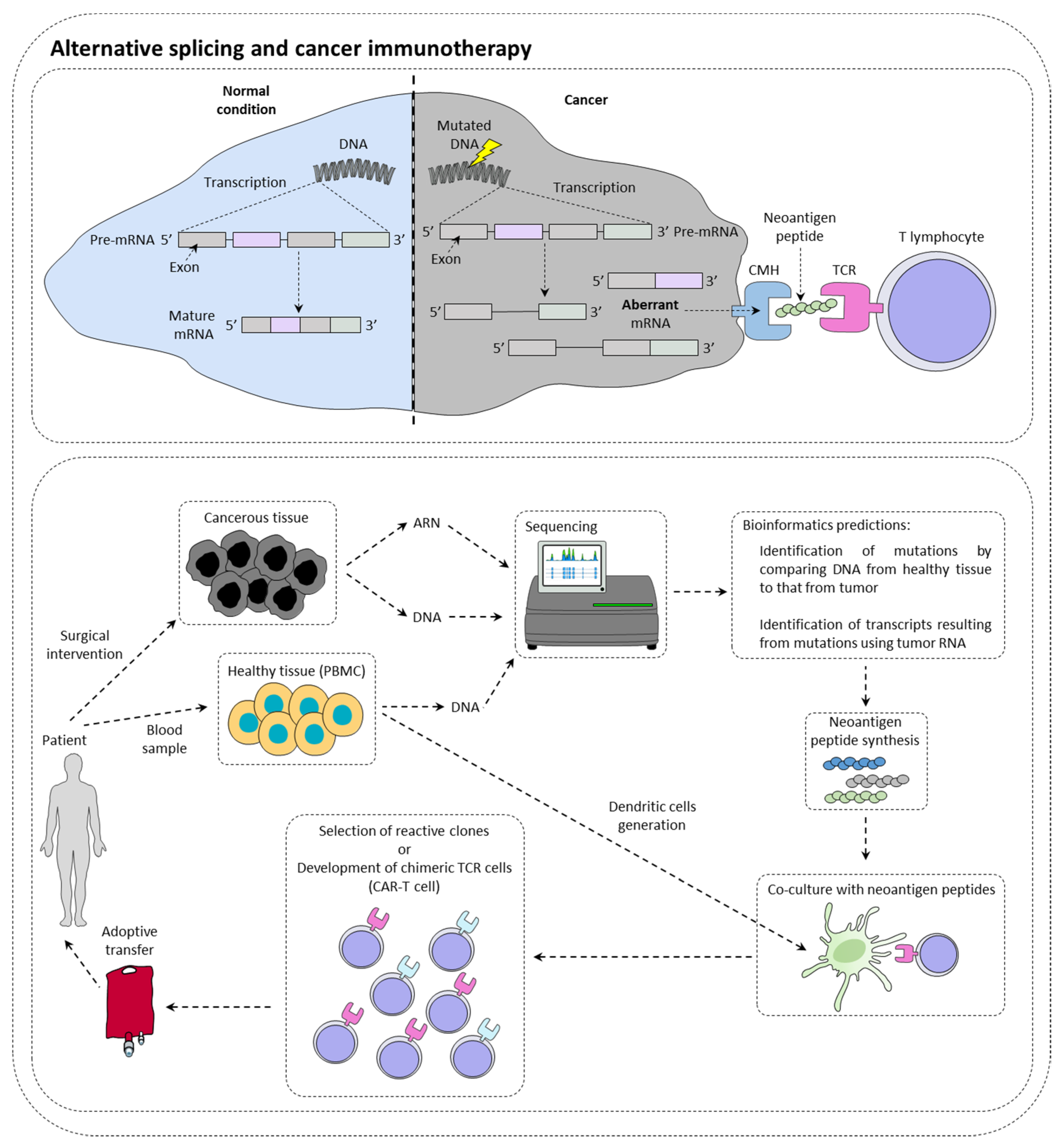
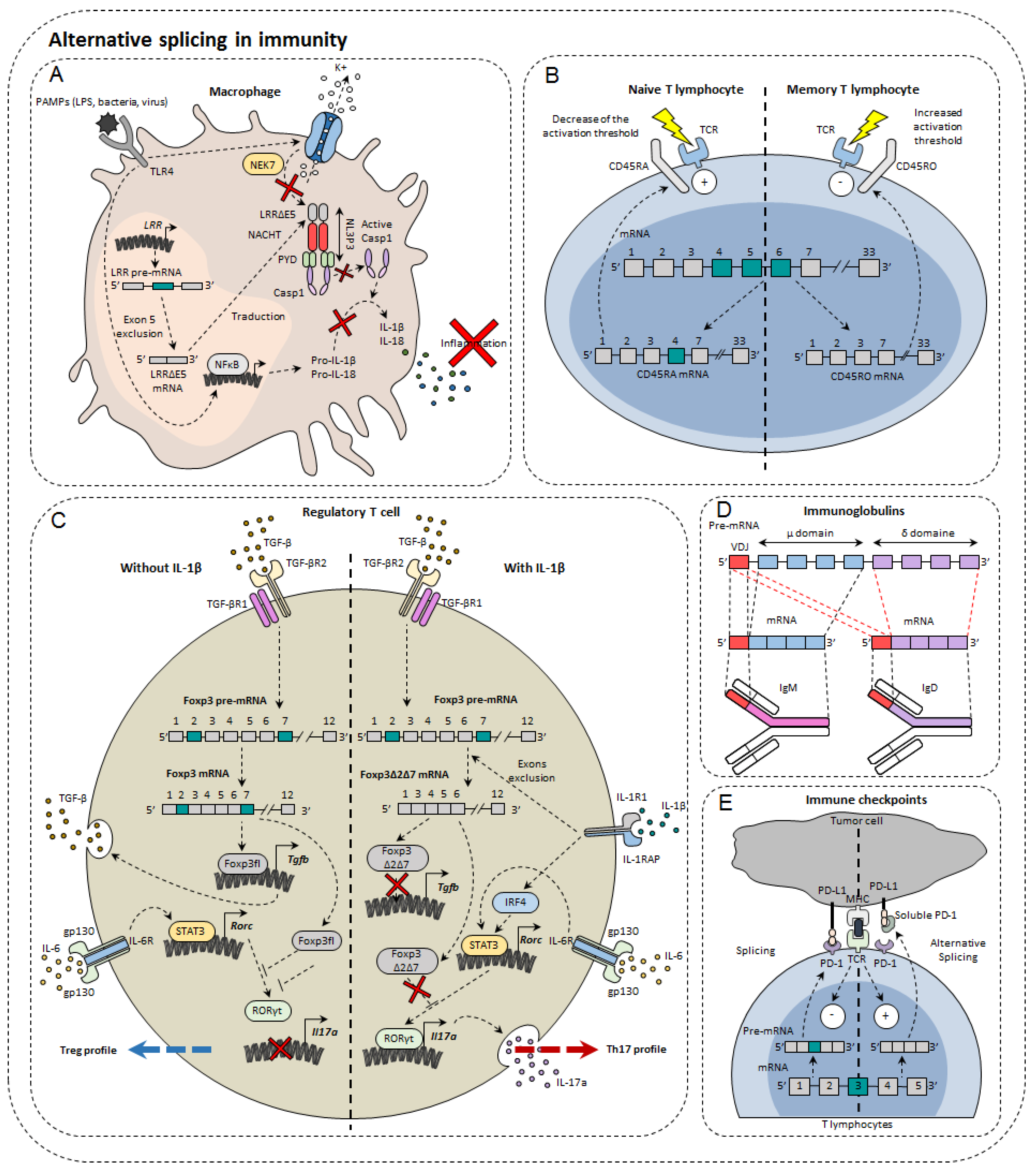
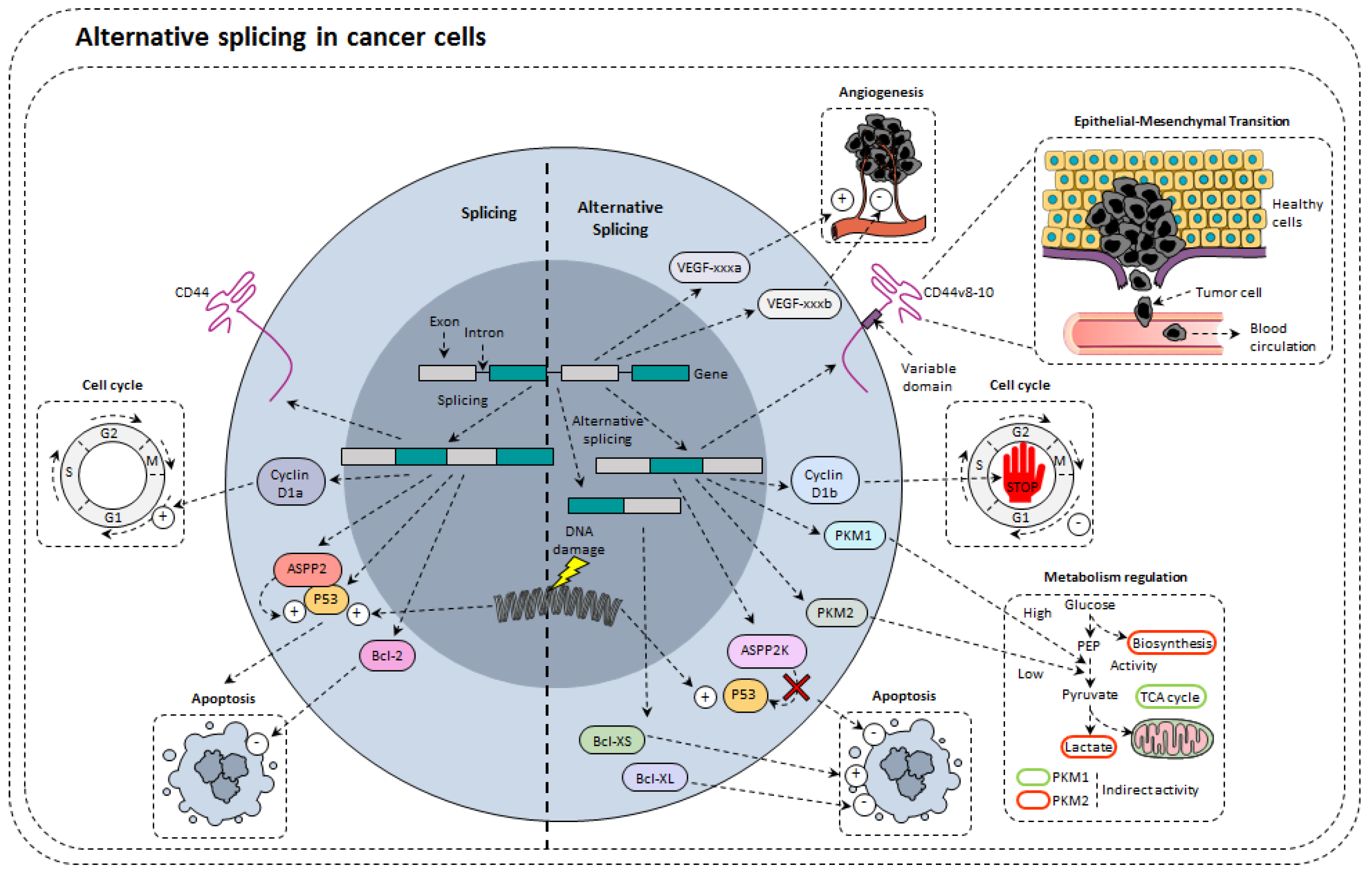
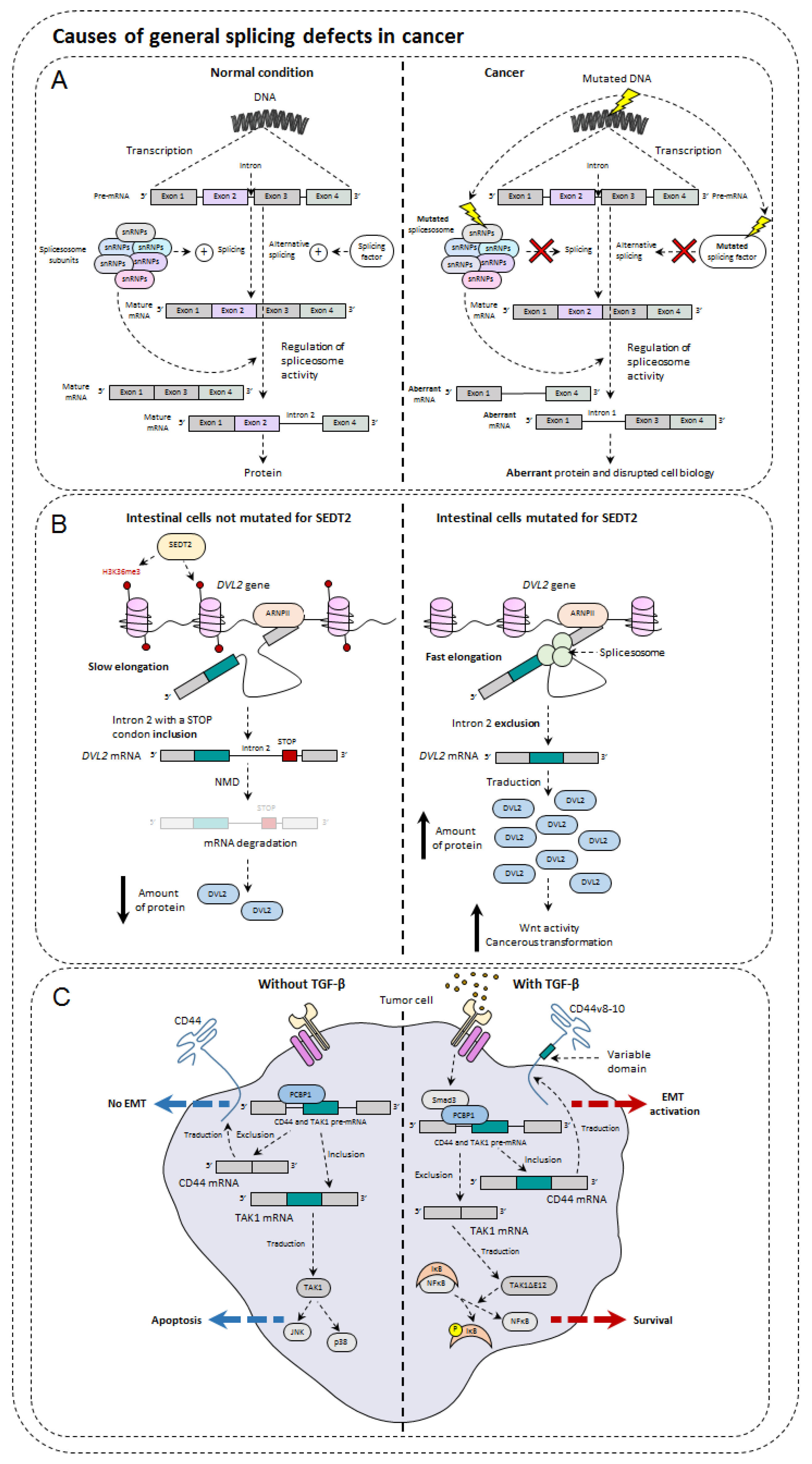
Alternative splicing is one of the most fabulous and important mechanism in the cell. Alternative splicing is capable of generating many proteins from a single gene and can be involved in many pathways. In this review, we decided to present a review of the literature on alternative splicing in cancer cells but also in immune cells. This Review is composed of 4 different parts, with the impact of alternative splicing in cancer immunotherapy, the role of alternative splicing in immune modulation, the involvement of alternative splicing in cancer cells and finally, the cause of deregulation of alternative splicing in cancer.
Abstract
Splicing is a phenomenon enabling the excision of introns from pre-mRNA to give rise to mature mRNA. All the 20,000 genes of the human genome are concerned by this mechanism. Nevertheless, it is estimated that the proteome is composed of more than 100,000 proteins. How to go from 20,000 genes to more than 100,000 proteins? Alternative splicing (AS) is in charge of this diversity of proteins. AS which is found in most of the cells of an organism, participates in normal cells and in particular in immune cells, in the regulation of cellular behavior. In cancer, AS is highly dysregulated and involved in almost all of the hallmarks that characterize tumor cells. In view of the close link that exists between tumors and the immune system, we present in this review the literature relating to alternative splicing and immunotherapy. We also provide a global but not exhaustive view of AS in the immune system and tumor cells linked to the events that can lead to AS dysregulation in tumors.
Keywords:
alternative splicing; cancer cells; immune cells