PTTG1/ZEB1 Axis Regulates E-Cadherin Expression in Human Seminoma
by
 , , , , , , ,
Emanuela Teveroni
1 ,
,
Fiorella Di Nicuolo
1,
Edoardo Vergani
2,
Giada Bianchetti
3,4 ,
,
Carmine Bruno
2 ,
,
Giuseppe Maulucci
3,4 ,
,
Marco De Spirito
3,4 ,
,
Tonia Cenci
5,
Francesco Pierconti
5,
Gaetano Gulino
6,
Pierfrancesco Bassi
6,
Alfredo Pontecorvi
1,2,†,
Domenico Milardi
1,2,† and
Francesca Mancini
1,*,† 1
International Scientific Institute Paul VI, Fondazione Policlinico Universitario A. Gemelli IRCCS, 00168 Rome, Italy
2
Division of Endocrinology, Fondazione Policlinico Universitario A. Gemelli IRCCS, 00168 Rome, Italy
3
Department of Neuroscience, Section of Biophysics, Università Cattolica del Sacro Cuore, 00168 Rome, Italy
4
Fondazione Policlinico Universitario A. Gemelli IRCCS, 00168 Rome, Italy
5
Division of Anatomic Pathology and Histology, School of Medicine, Università Cattolica del Sacro Cuore, 00168 Rome, Italy
6
Department of Urology, Fondazione Policlinico Universitario A. Gemelli IRCCS, 00168 Rome, Italy
*
Author to whom correspondence should be addressed.
†
These authors contributed equally to this work.
Cancers 2022, 14(19), 4876; https://doi.org/10.3390/cancers14194876
Submission received: 16 September 2022
/
Revised: 30 September 2022
/
Accepted: 2 October 2022
/
Published: 5 October 2022
(This article belongs to the Section Molecular Cancer Biology)
Simple Summary
Seminoma represents one of the most common neoplasms in Caucasian males between 15 and 40 years old. The molecular pathways underlying its clinical behavior are far from being understood yet. We previously demonstrated that nuclear Pituitary-tumor transforming-gene 1 (PTTG1), overexpressed in several neoplasms, promotes invasiveness through its transcriptional target matrix-metalloproteinase-2 (MMP2). PTTG1 sustains the migratory and invasive properties of cancer cells through the induction of the epithelial-to-mesenchymal transition (EMT). E-Cadherin (E-CAD) repression is the first step of EMT. Therefore, we investigated the role of PTTG1 in EMT in human seminoma using an in vitro and in vivo model and through Atlas database interrogation. Our data showed a PTTG1-mediated E-CAD transcriptional repression through Zinc finger E-box binding homeobox 1 (ZEB1), a master regulator of the EMT process. Our data provide insights into the molecular characterization of seminoma, promoting PTTG1 as a prognostic marker useful in human seminoma clinical management.
Abstract
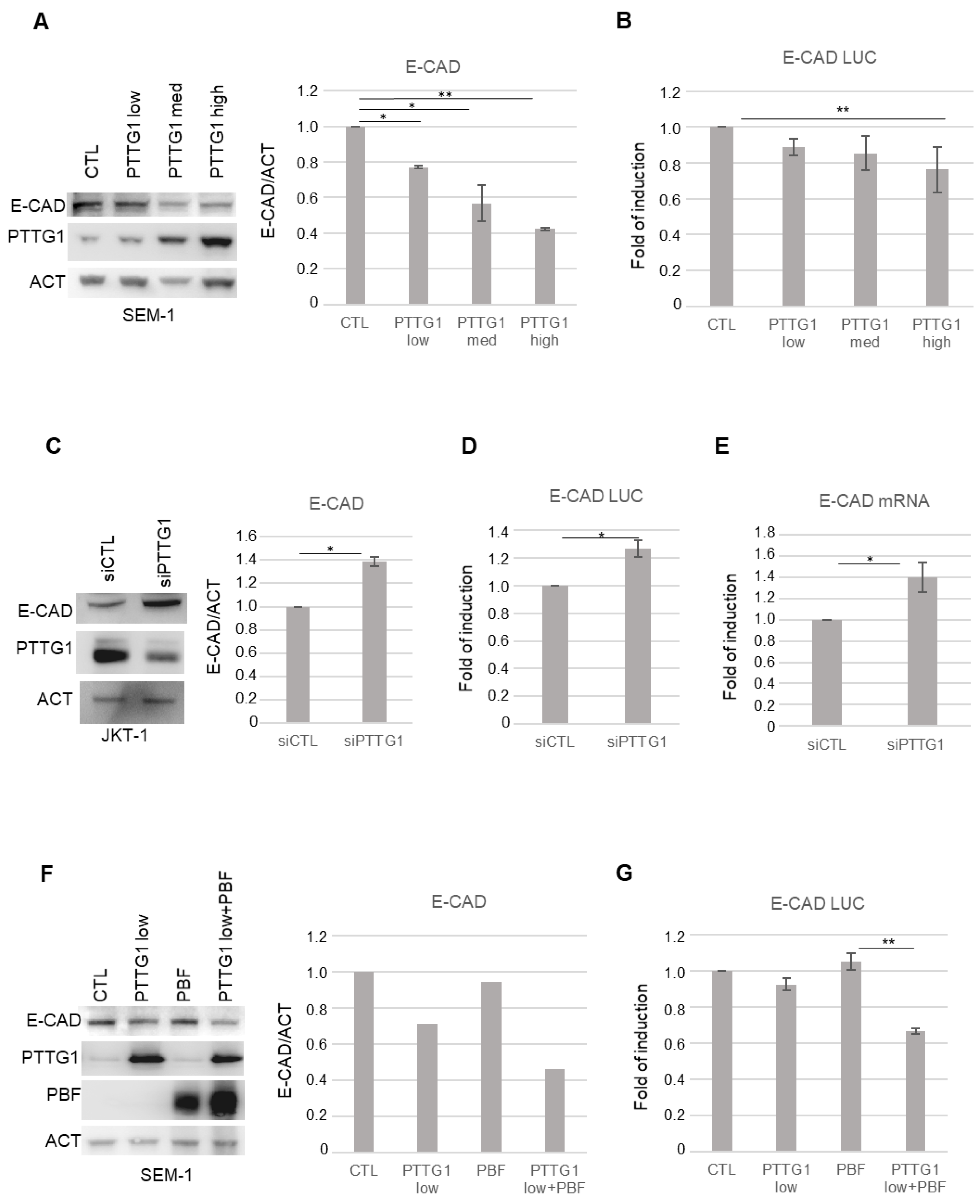
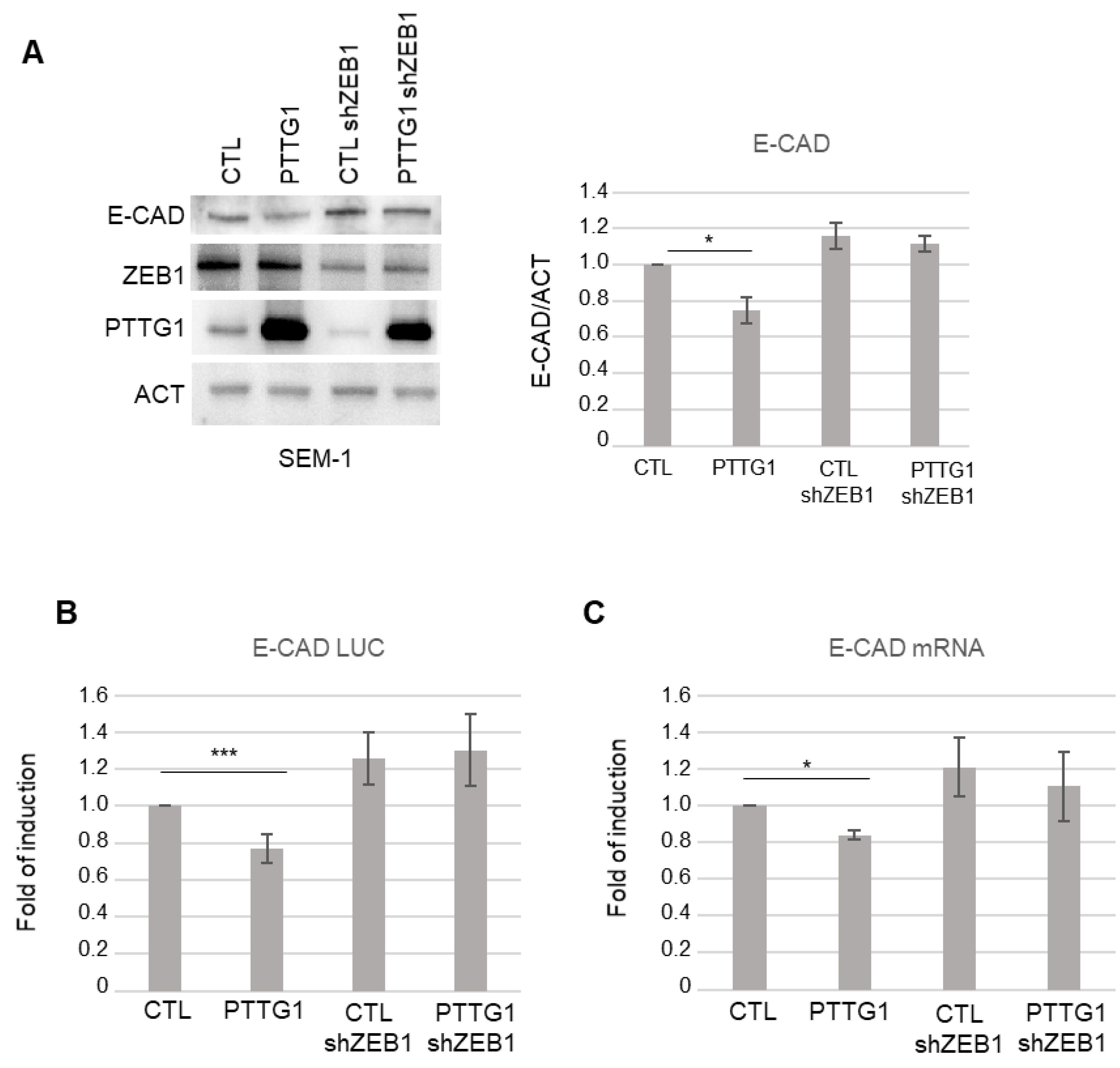
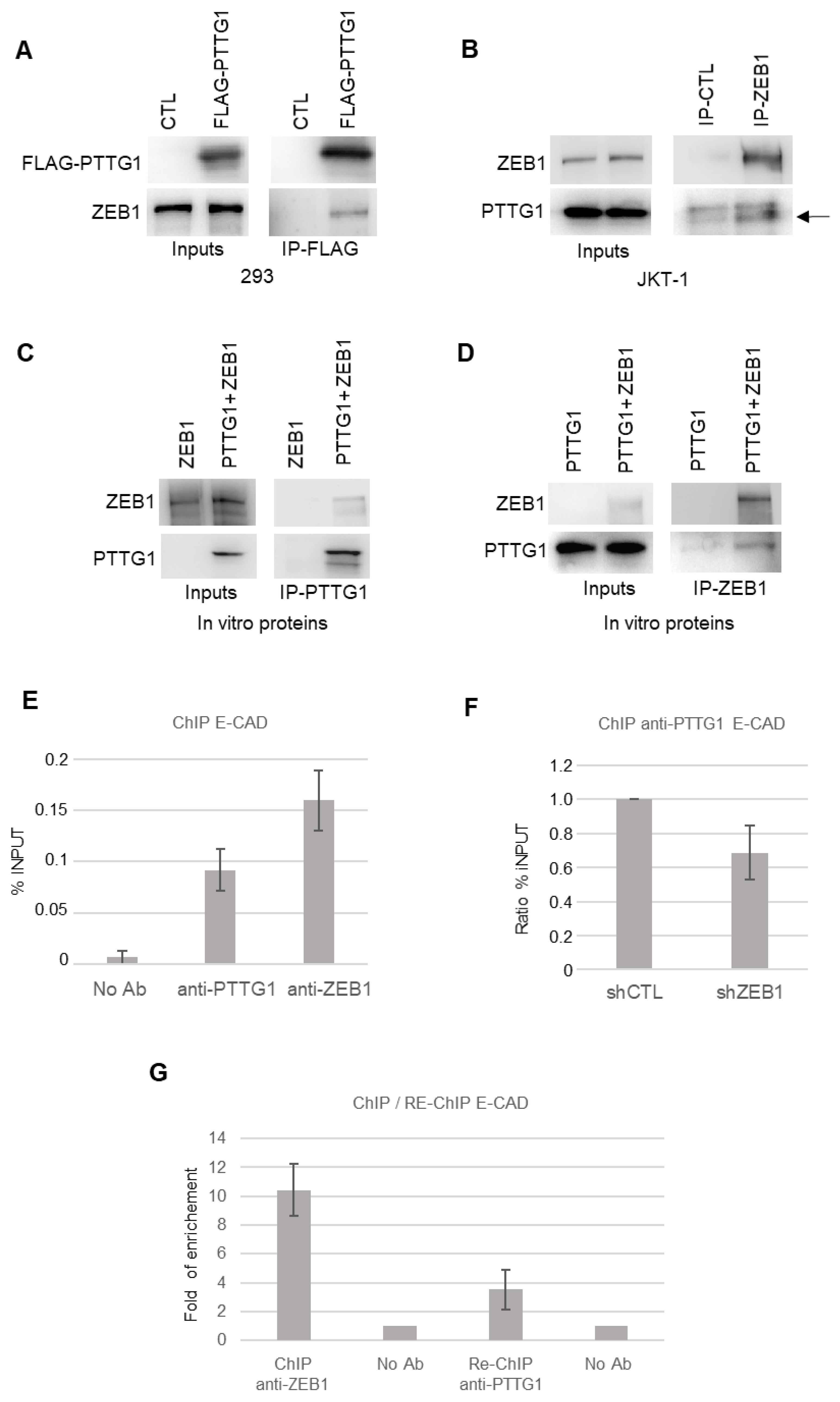
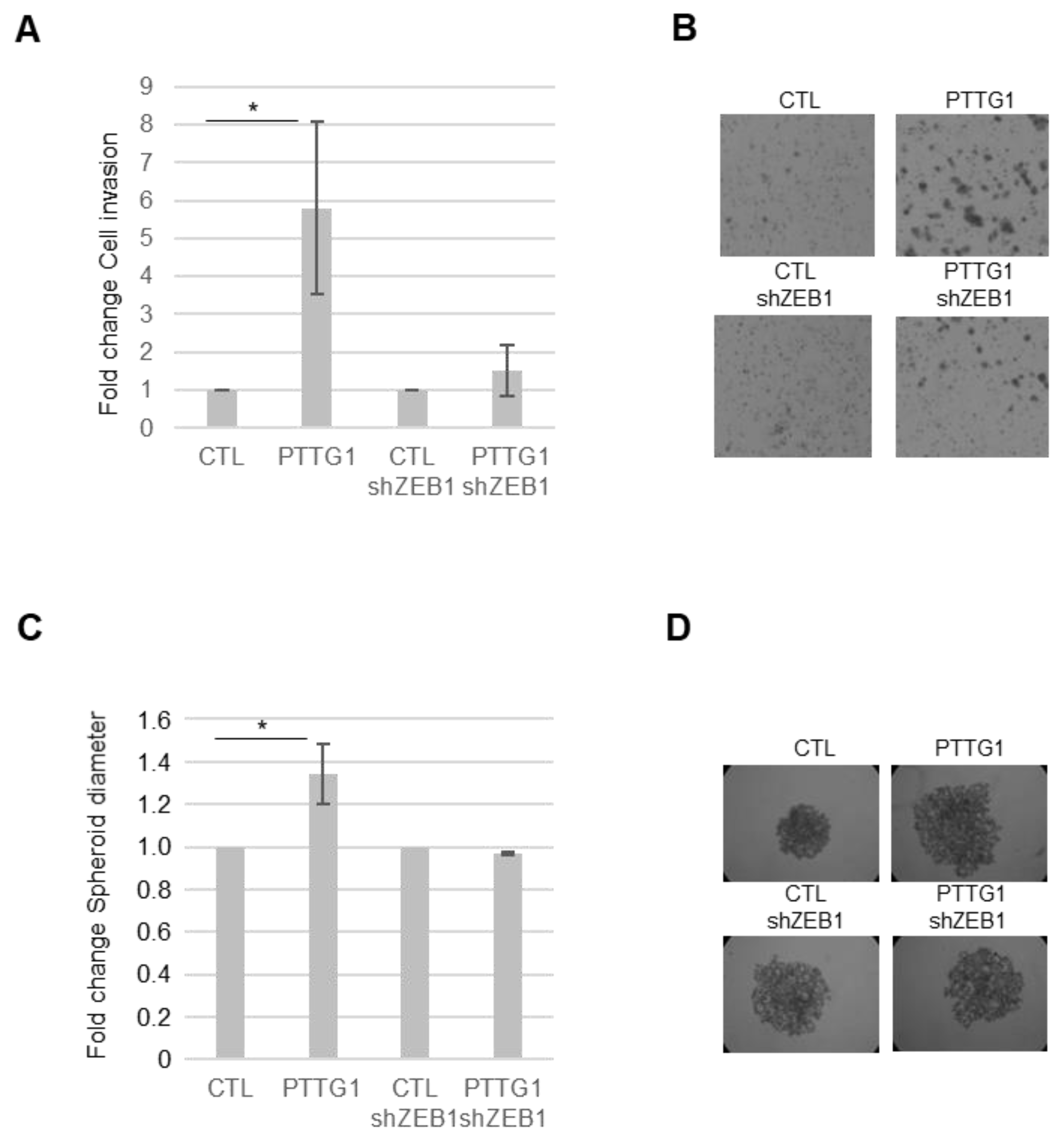
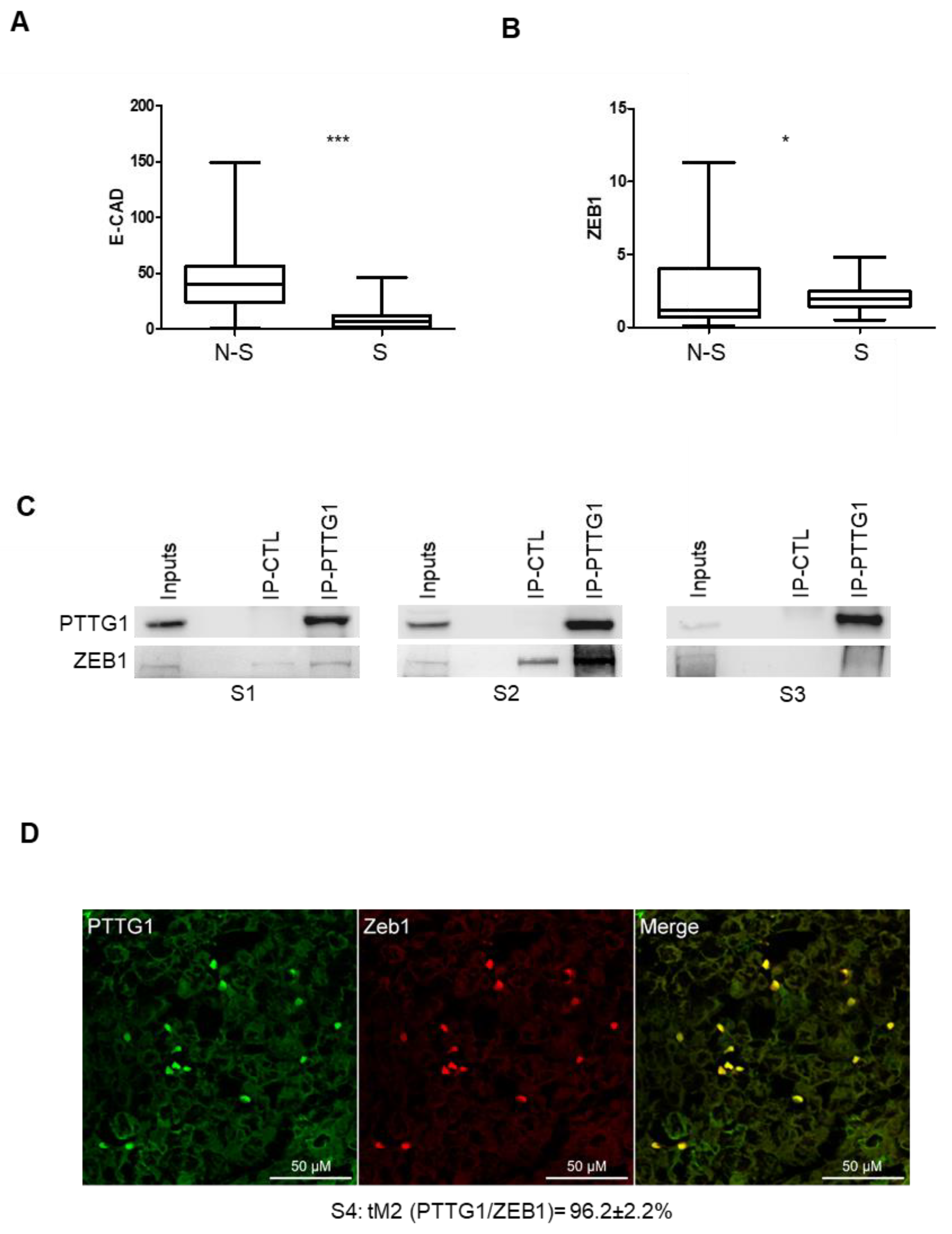
(1) Background: PTTG1 sustains the EMT process and the invasiveness of several neoplasms. We previously showed the role of nuclear PTTG1 in promoting invasiveness, through its transcriptional target MMP2, in seminoma in vitro models. Here, we investigated the key players involved in PTTG1-mediated EMT in human seminoma. (2) Methods: Two seminoma cell lines and four human seminoma tumor specimens were used. E-Cadherin gene regulation was investigated using Western blot, real-time PCR, and luciferase assay. Immunoprecipitation, ChIP, RE-ChIP, and confocal microscopy analysis were performed to evaluate the interplay between PTTG1 and ZEB1. Matrigel invasion and spheroid formation assays were applied to functionally investigate PTTG1 involvement in the EMT of seminoma cell lines. RNA depletion and overexpression experiments were performed to verify the role of PTTG1/ZEB1 in E-Cadherin repression and seminoma invasiveness. E-Cadherin and ZEB1 levels were analyzed in human testicular tumors from the Atlas database. (3) Results: PTTG1 transcriptionally represses E-Cadherin in seminoma cell lines through ZEB1. The cooperation of PTTG1 with ZEB1 has a significant impact on cell growth/invasion properties involving the EMT process. Analysis of the Atlas database of testicular tumors showed significantly lower E-Cadherin levels in seminoma, where PTTG1 showed nuclear staining. Finally, PTTG1 and ZEB1 strongly localize together in the periphery of the tumors. (4) Conclusions: These results strengthen the evidence for a role of PTTG1 in the EMT process in human seminomas through its cooperation with the transcriptional repressor ZEB1 on the E-Cadherin gene. Our data enrich the molecular characterization of seminoma, suggesting that PTTG1 is a prognostic factor in seminoma clinical management.
Keywords:
TGCTs; seminoma; PTTG1; ZEB1; E-Cadherin; EMT; invasiveness