Lost but Not Least—Novel Insights into Progesterone Receptor Loss in Estrogen Receptor-Positive Breast Cancer

1
Department of Pathomorphology, Medical University of Gdańsk, 80-214 Gdańsk, Poland
2
Laboratory of Translational Oncology, Intercollegiate Faculty of Biotechnology, Medical University of Gdańsk, 80-211 Gdańsk, Poland
3
Department of Oncology and Radiotherapy, Medical University of Gdańsk, 80-214 Gdańsk, Poland
*
Author to whom correspondence should be addressed.
Cancers 2021, 13(19), 4755; https://doi.org/10.3390/cancers13194755
Submission received: 23 August 2021
/
Revised: 20 September 2021
/
Accepted: 21 September 2021
/
Published: 23 September 2021
(This article belongs to the Special Issue The Endocrine Basis of Breast Cancer)
Simple Summary
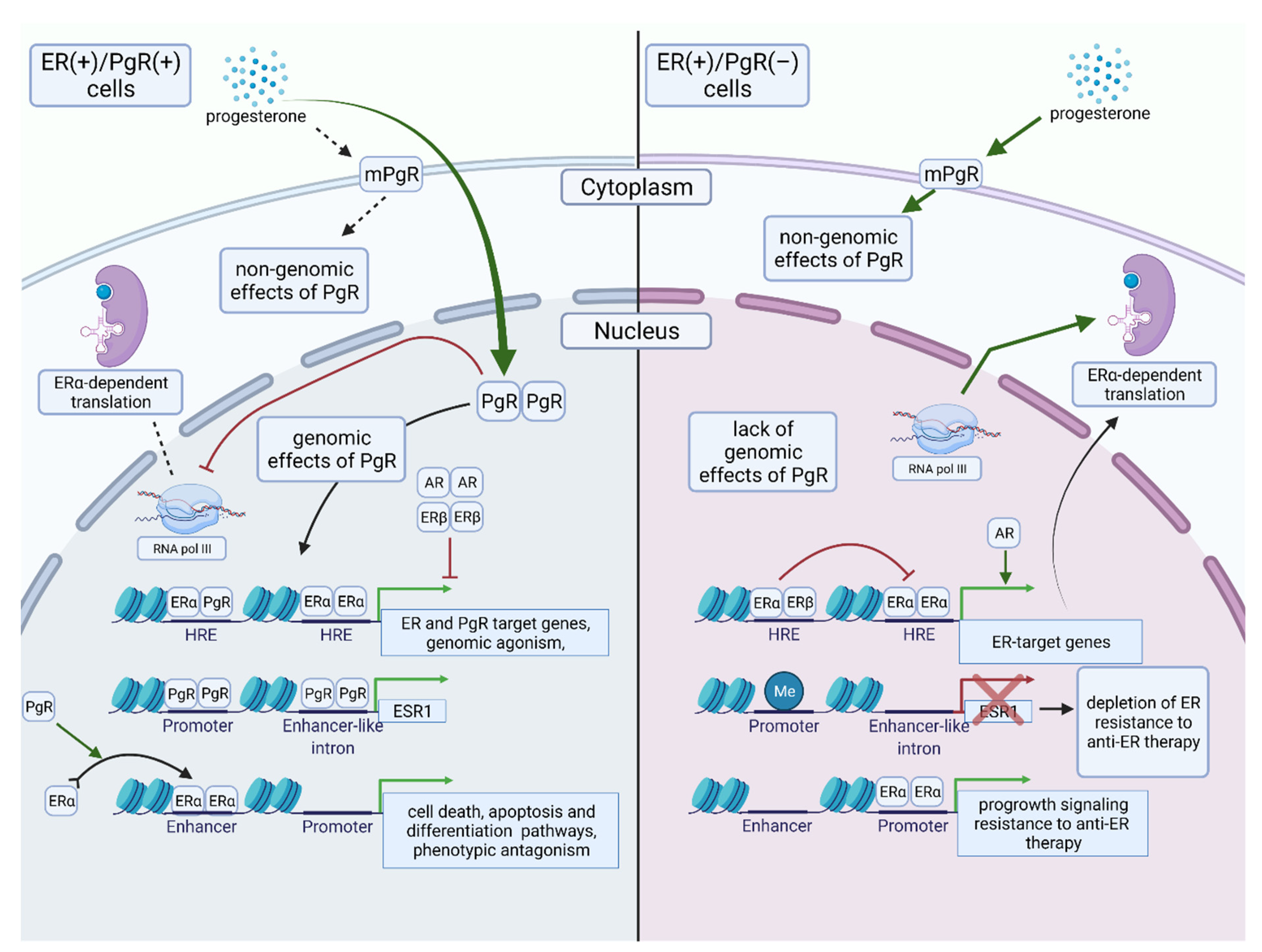
Most breast cancers co-express estrogen receptor α (ERα) and progesterone receptor (PgR). These cancers are sensitive to endocrine therapy and, in general, have superior outcomes. However, a subset of tumors expresses ERα but loses expression of PgR in various mechanisms. The processes driving the loss of PgR may cause resistance to hormonal treatment and a more aggressive clinical course. The current review summarizes current knowledge on the biology of ERα-positive PgR(−)negative breast cancer and discusses the associations between molecular mechanisms and clinical characteristics.
Abstract
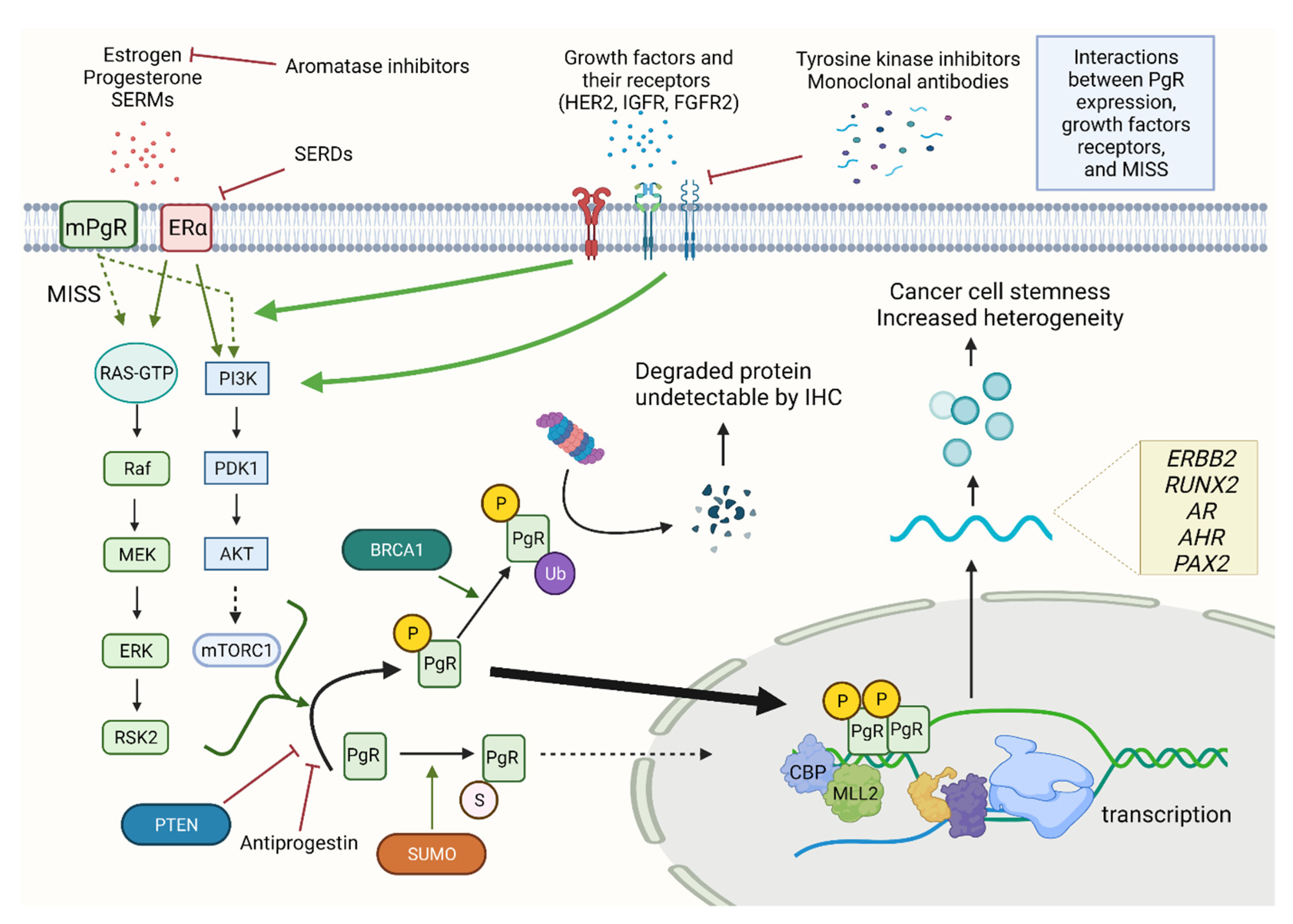
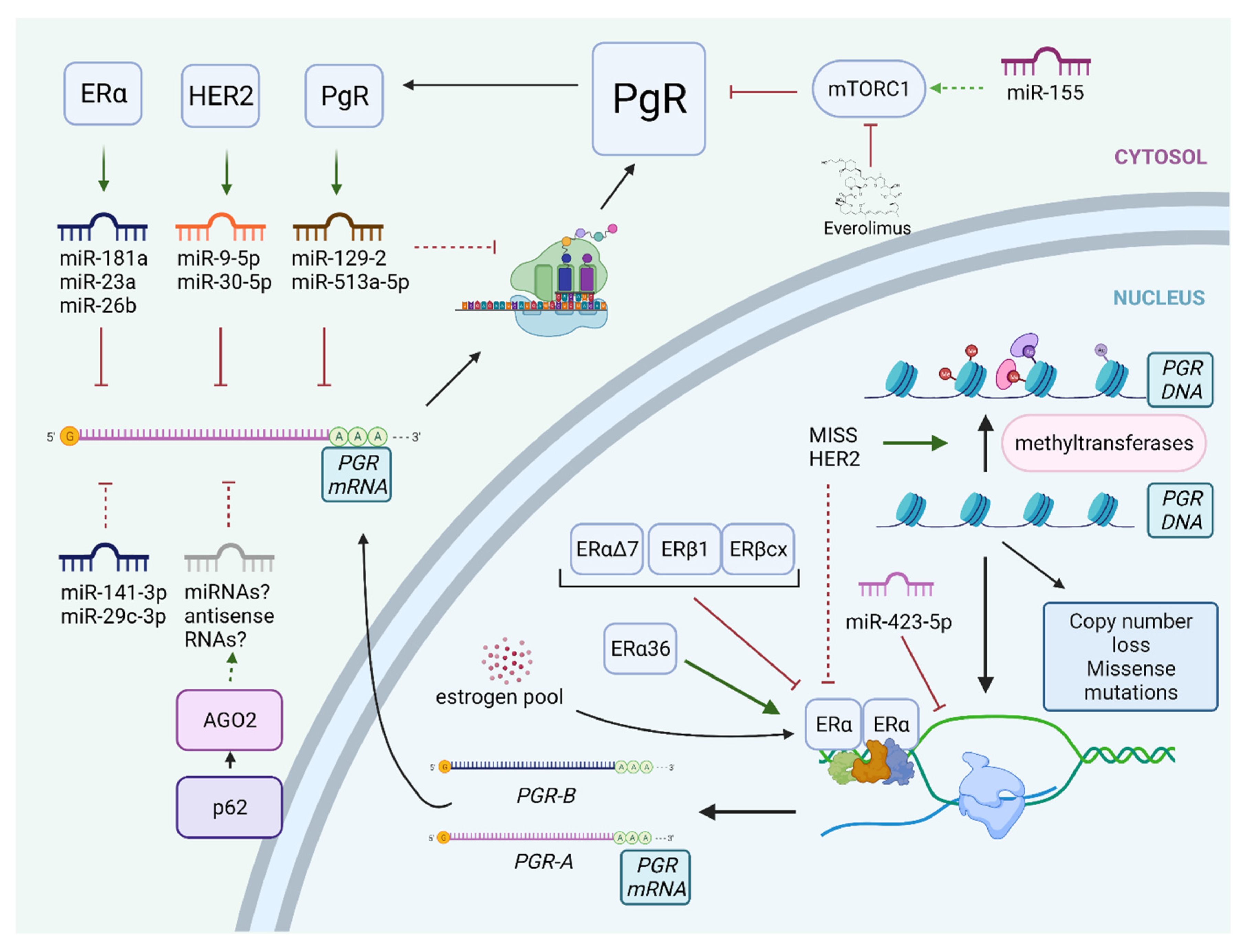
Estrogen receptor α (ERα) and progesterone receptor (PgR) are crucial prognostic and predictive biomarkers that are usually co-expressed in breast cancer (BC). However, 12–24% of BCs present ERα(+)/PgR(−) phenotype at immunohistochemical evaluation. In fact, BC may either show primary PgR(−) status (in chemonaïve tumor sample), lose PgR expression during neoadjuvant treatment, or acquire PgR(−) phenotype in local relapse or metastasis. The loss of PgR expression in ERα(+) breast cancer may signify resistance to endocrine therapy and poorer outcomes. On the other hand, ERα(+)/PgR(−) BCs may have a better response to neoadjuvant chemotherapy than double-positive tumors. Loss of PgR expression may be a result of pre-transcriptional alterations (copy number loss, mutation, epigenetic modifications), decreased transcription of the PGR gene (e.g., by microRNAs), and post-translational modifications (e.g., phosphorylation, sumoylation). Various processes involved in the down-regulation of PgR have distinct consequences on the biology of cancer cells. Occasionally, negative PgR status detected by immunohistochemical analysis is paradoxically associated with enhanced transcriptional activity of PgR that might be inhibited by antiprogestin treatment. Identification of the mechanism of PgR loss in each patient seems challenging, yet it may provide important information on the biology of the tumor and predict its responsiveness to the therapy.
Keywords:
estrogen receptor; progesterone receptor; breast cancer; treatment; microRNA