Biomarkers for Diagnosis, Prognosis and Response to Immunotherapy in Melanoma
by
 and
and
Rossella Puglisi
, 
Maria Bellenghi
,
Giada Pontecorvi
,
Giulia Pallante
,
Alessandra Carè
* and
Gianfranco Mattia
Center for Gender-Specific Medicine, Istituto Superiore di Sanità, Viale Regina Elena 299, 00161 Rome, Italy
*
Author to whom correspondence should be addressed.
Cancers 2021, 13(12), 2875; https://doi.org/10.3390/cancers13122875
Submission received: 7 May 2021
/
Revised: 27 May 2021
/
Accepted: 4 June 2021
/
Published: 9 June 2021
(This article belongs to the Section Cancer Therapy)
Simple Summary
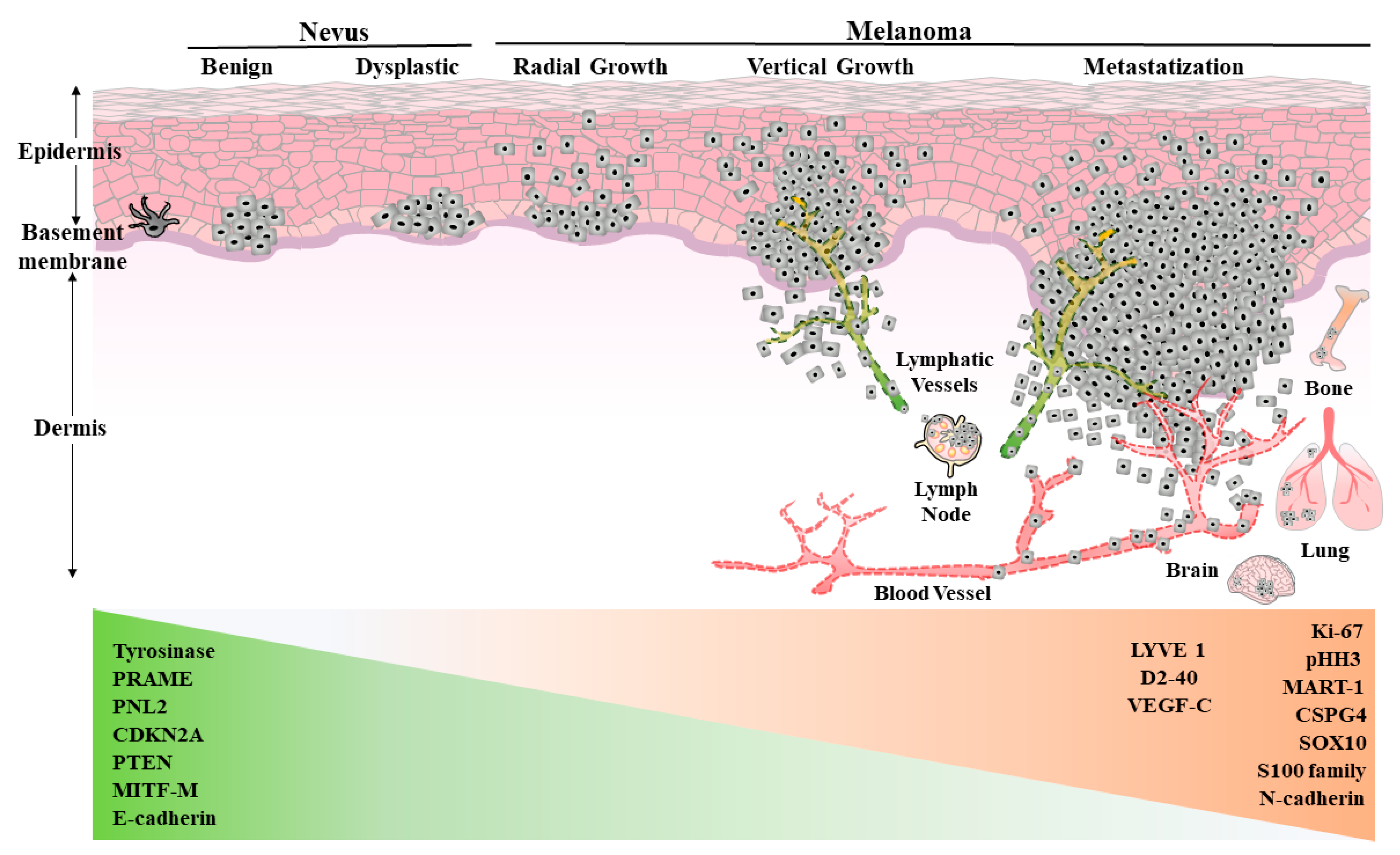
Cutaneous Melanoma is a form of skin cancer characterized by an elevated mutational load that favors high spread to distant organs and resistance to therapies. The identification of biomarkers, able to dissect normal and pathogenic biological processes and response to therapeutic intervention, is necessary to describe melanoma as accurately as possible, having a positive impact on early diagnosis, in turn selecting the best therapeutic option. Recently, a great number of new biomarkers were evaluated, in order to identify those patients who may have clinical benefit from a therapeutic choice, particularly for immunotherapy. At present, these new biomarkers wait to be validated before clinical use. Hence, the requirement to look at and periodically update the advances in this field.
Abstract
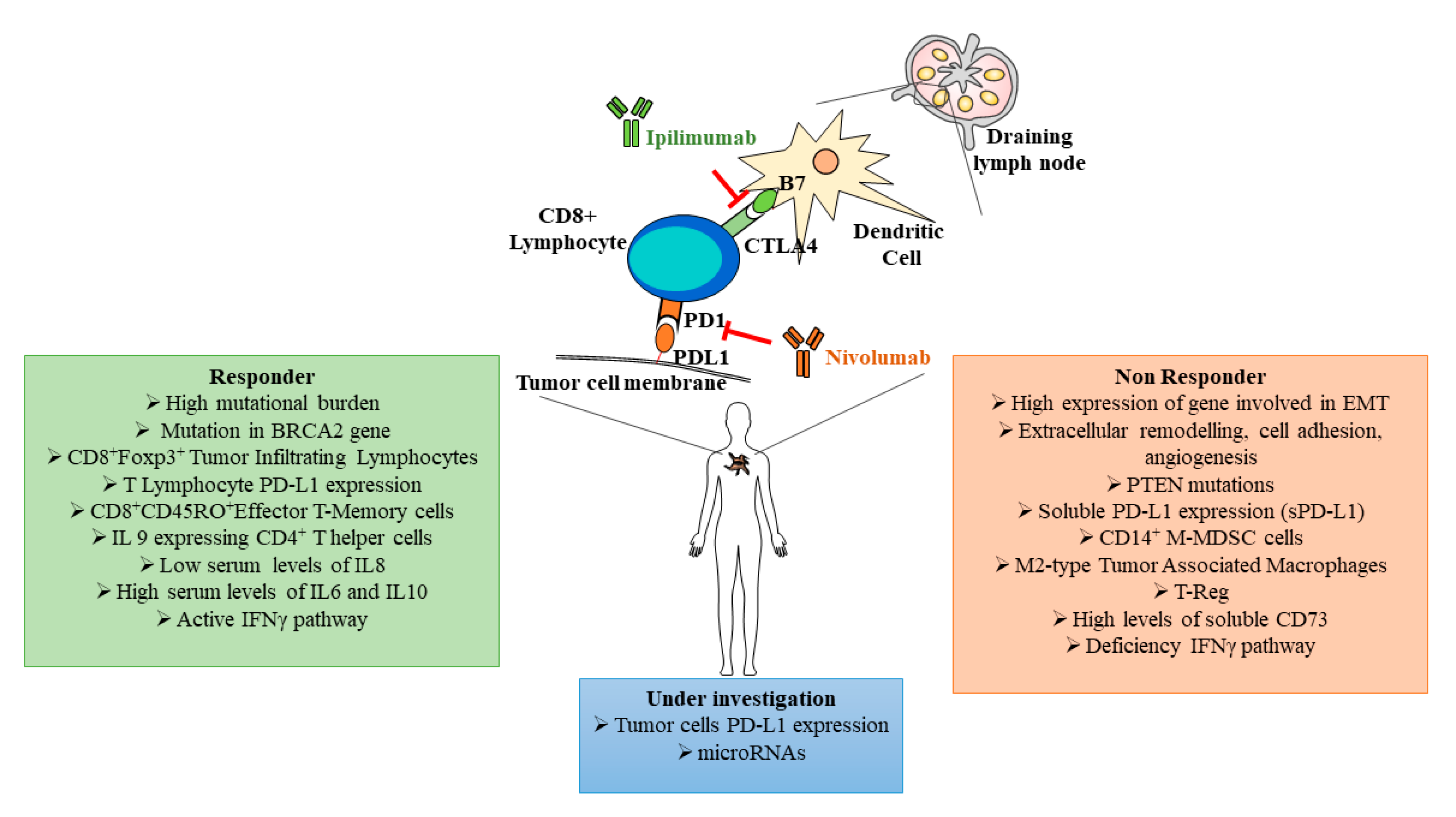
Cutaneous Melanoma classification is constantly looking for specific and sensitive biomarkers capable of having a positive effect on diagnosis, prognosis and risk assessment, eventually affecting clinical outcome. Classical morphological, immunohistochemical and the well-known BRAF and NRAS genetic biomarkers do not allow the correct categorization of patients, being melanoma conditioned by high genetic heterogeneity. At the same time, classic prognostic methods are unsatisfactory. Therefore, new advances in omics and high-throughput analytical techniques have enabled the identification of numerous possible biomarkers, but their potentiality needs to be validated and standardized in prospective studies. Melanoma is considered an immunogenic tumor, being the first form of cancer to take advantage of the clinical use of the immune-checkpoint blockers. However, as immunotherapy is effective only in a limited number of patients, biomarkers associated with different responses are essential to select the more promising therapeutic approach and maximize clinical benefits. In this review, we summarize the most utilized biomarkers for Cutaneous Melanoma diagnosis, focusing on new prognostic and predictive biomarkers mainly associated with immunotherapy.
Keywords:
melanoma; biomarkers; immunotherapy; BRAF; NRAS