Review

Neuroendocrine Differentiation of Prostate Cancer—An Intriguing Example of Tumor Evolution at Play


Department of Cell Biology and Biochemistry, Texas Tech University Health Sciences Center, Lubbock, TX 79430, USA
*
Author to whom correspondence should be addressed.
Cancers 2019, 11(10), 1405; https://doi.org/10.3390/cancers11101405

Submission received: 15 August 2019 / Revised: 9 September 2019 / Accepted: 17 September 2019 / Published: 20 September 2019
(This article belongs to the Special Issue Prostate Cancer: Past, Present, and Future)

Abstract

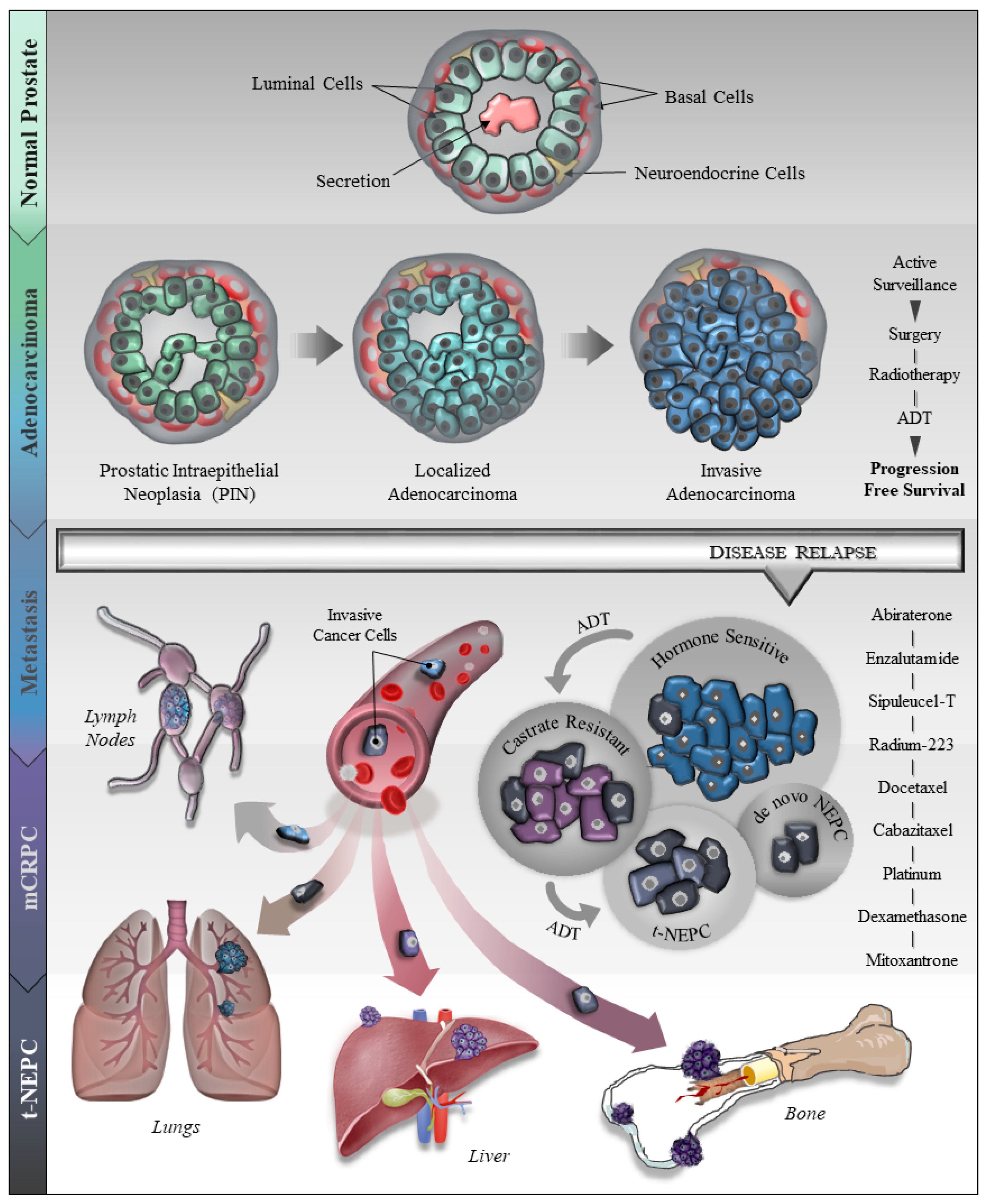
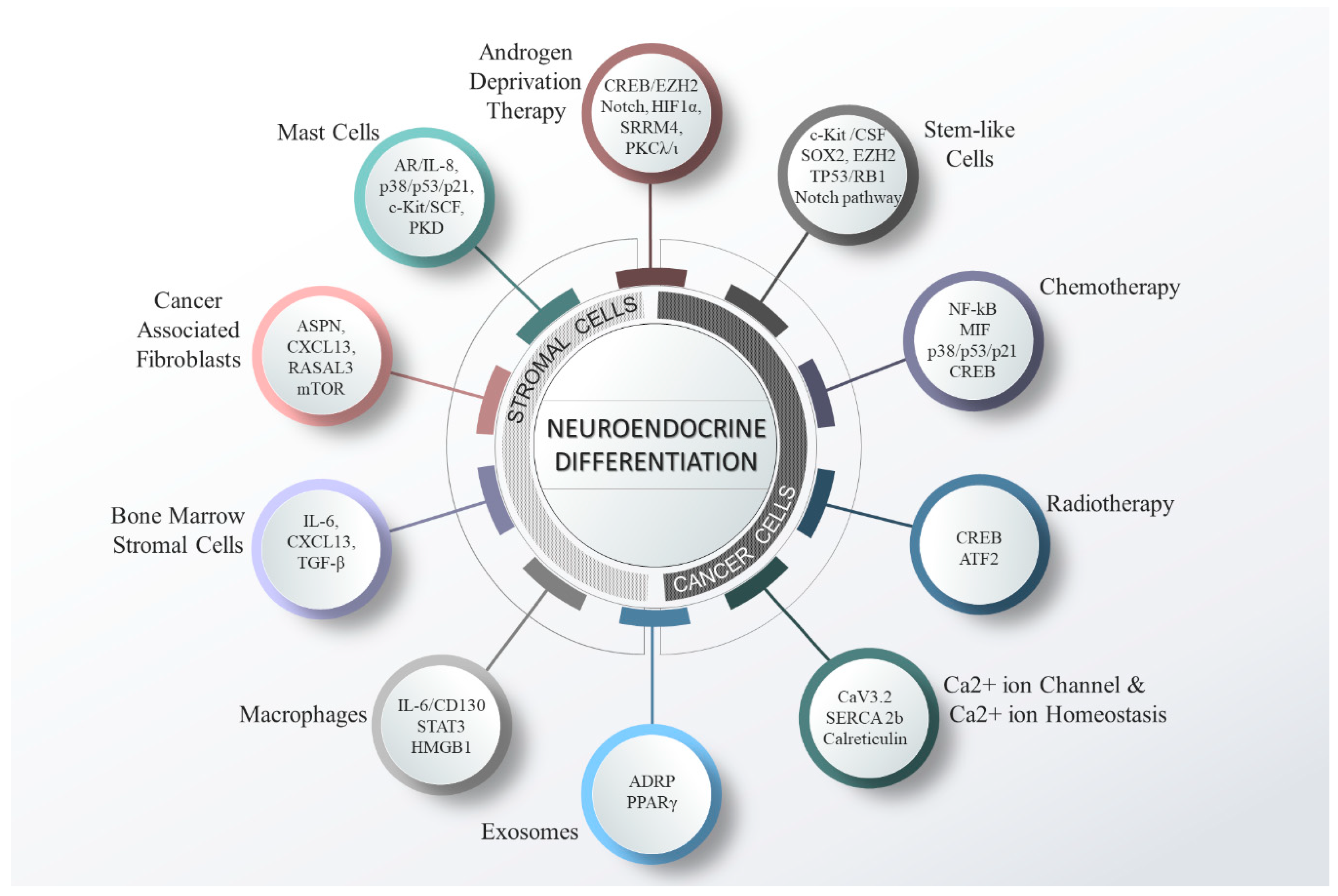
Our understanding of neuroendocrine prostate cancer (NEPC) has assumed a new perspective in light of the recent advances in research. Although classical NEPC is rarely seen in the clinic, focal neuroendocrine trans-differentiation of prostate adenocarcinoma occurs in about 30% of advanced prostate cancer (PCa) cases, and represents a therapeutic challenge. Even though our knowledge of the mechanisms that mediate neuroendocrine differentiation (NED) is still evolving, the role of androgen deprivation therapy (ADT) as a key driver of this phenomenon is increasingly becoming evident. In this review, we discuss the molecular, cellular, and therapeutic mediators of NED, and emphasize the role of the tumor microenvironment (TME) in orchestrating the phenotype. Understanding the role of the TME in mediating NED could provide us with valuable insights into the plasticity associated with the phenotype, and reveal potential therapeutic targets against this aggressive form of PCa.
Keywords: Androgen deprivation therapy (ADT); cellular plasticity; metastasis; neuroendocrine differentiation (NED); radiation therapy; therapy-induced neuroendocrine prostate cancer (t-NEPC); tumor microenvironment (TME); castration resistant prostate cancer (CRPC) Androgen deprivation therapy (ADT); cellular plasticity; metastasis; neuroendocrine differentiation (NED); radiation therapy; therapy-induced neuroendocrine prostate cancer (t-NEPC); tumor microenvironment (TME); castration resistant prostate cancer (CRPC)