Article

Heterodimeric Plasmonic Nanogaps for Biosensing


by
Sharmistha Chatterjee
1,2,3,
Loredana Ricciardi
2,3,
Julia I. Deitz
4,5,
Robert E. A. Williams
4,
David W. McComb
4,5 and
Giuseppe Strangi
1,2,3,*
1
Department of Physics, Case Western Reserve University, 10600 Euclid Avenue, Cleveland, OH 44106, USA
2
CNR-NANOTEC Istituto di Nanotecnologia and Department of Physics, University of Calabria, 87036 Rende, Italy
3
Fondazione con Il Cuore, via Roma 170, 88811 Ciro’ Marina, Italy
4
Center for Electron Microscopy and Analysis, The Ohio State University, Columbus, OH 43212, USA
5
Department of Material Science and Engineering, The Ohio State University, Columbus, OH 43210, USA
*
Author to whom correspondence should be addressed.
Micromachines 2018, 9(12), 664; https://doi.org/10.3390/mi9120664
Submission received: 28 November 2018 / Revised: 13 December 2018 / Accepted: 13 December 2018 / Published: 16 December 2018
(This article belongs to the Special Issue Nanocrystal based Nanophotonic Devices)

Abstract

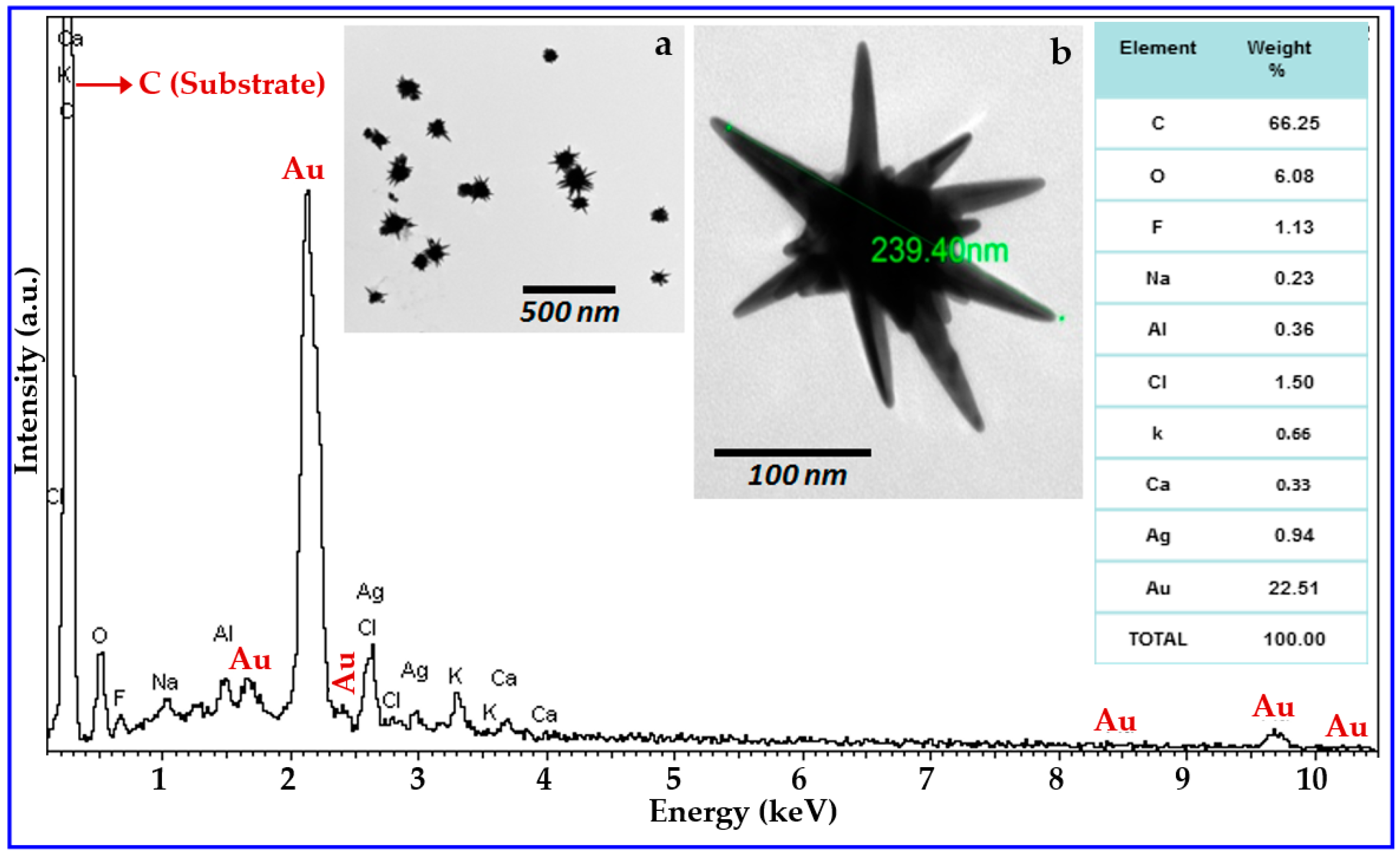
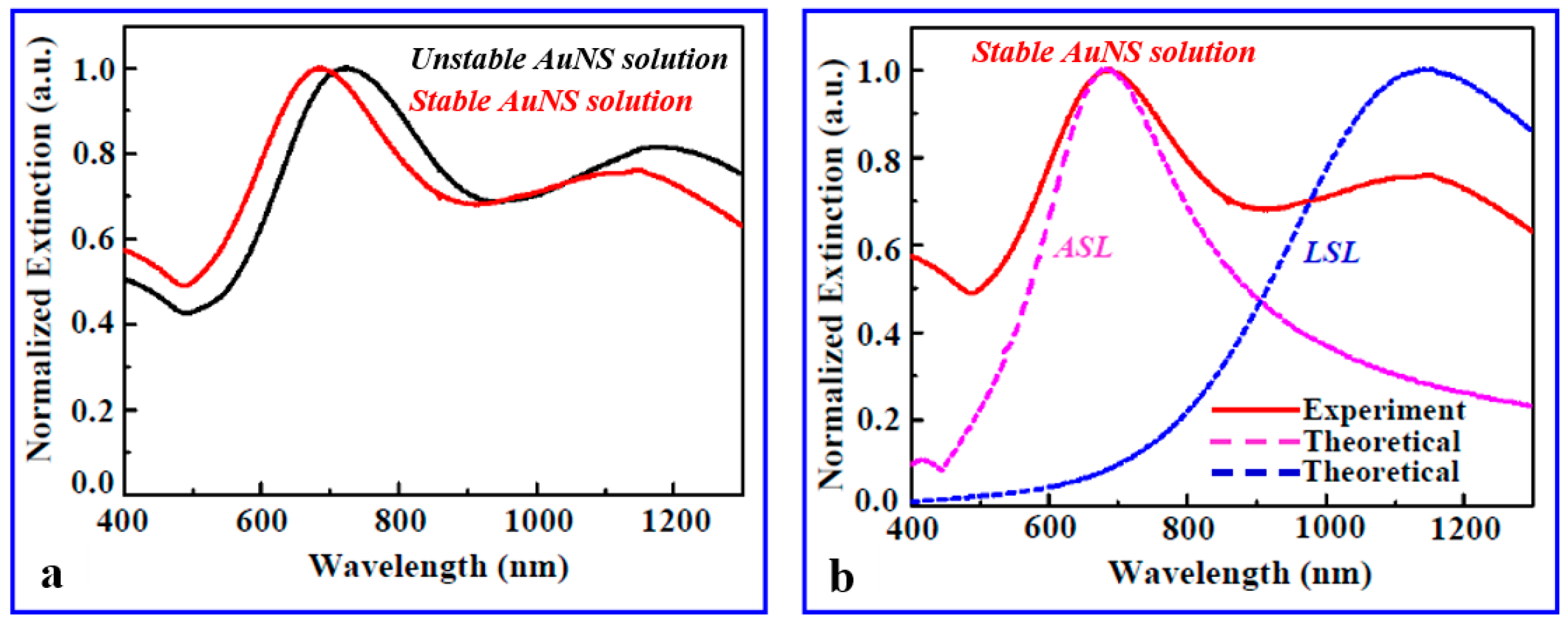
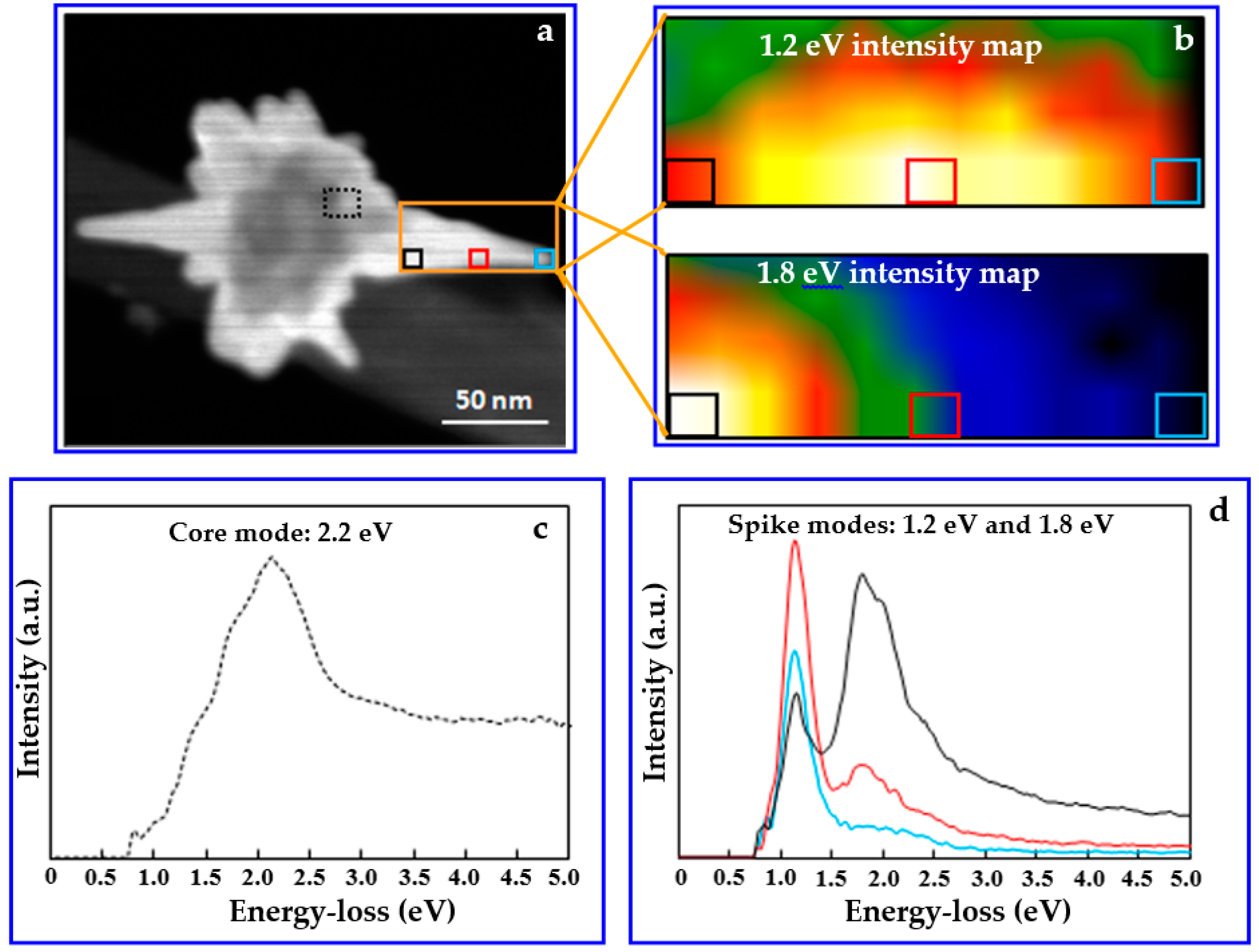
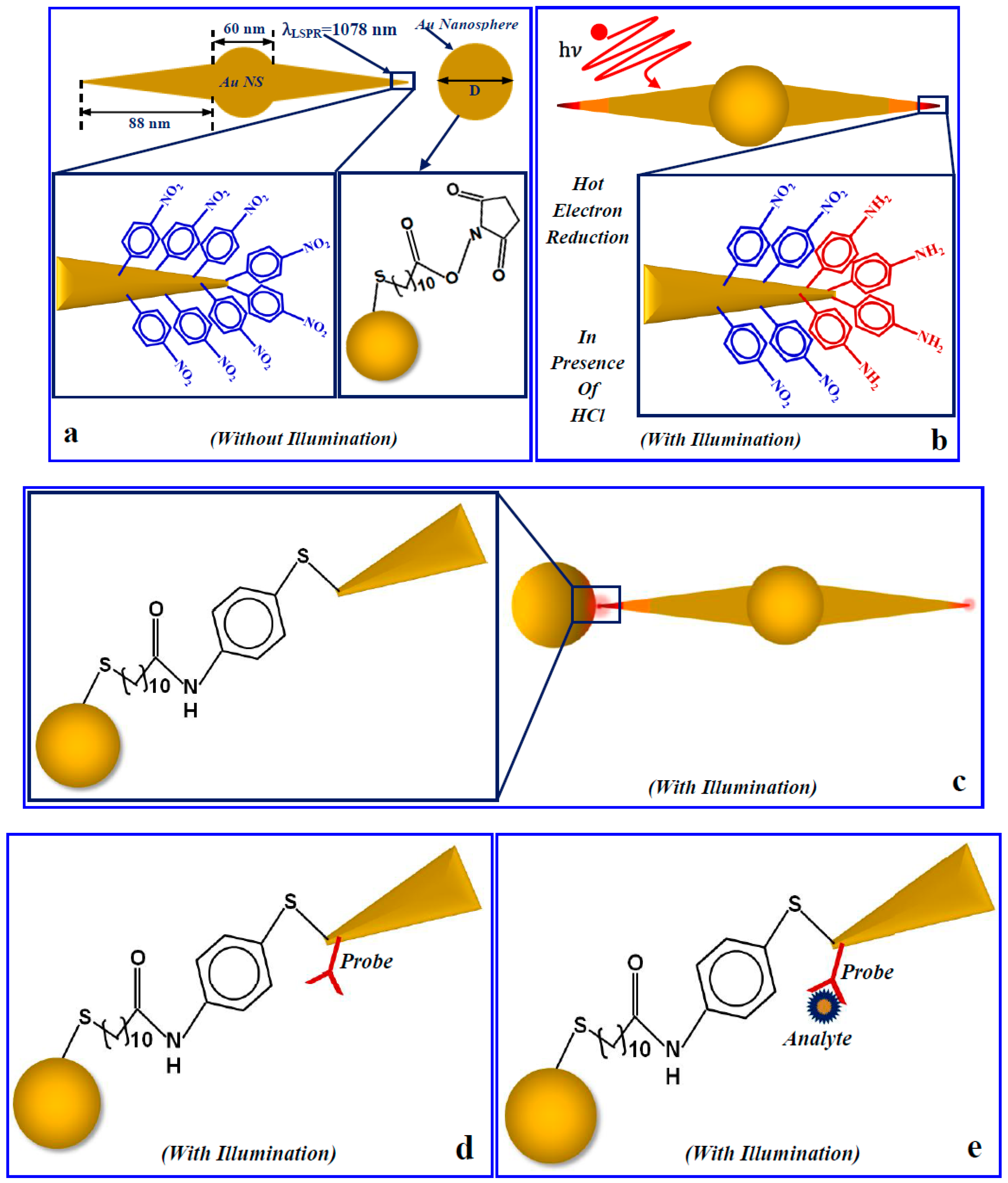
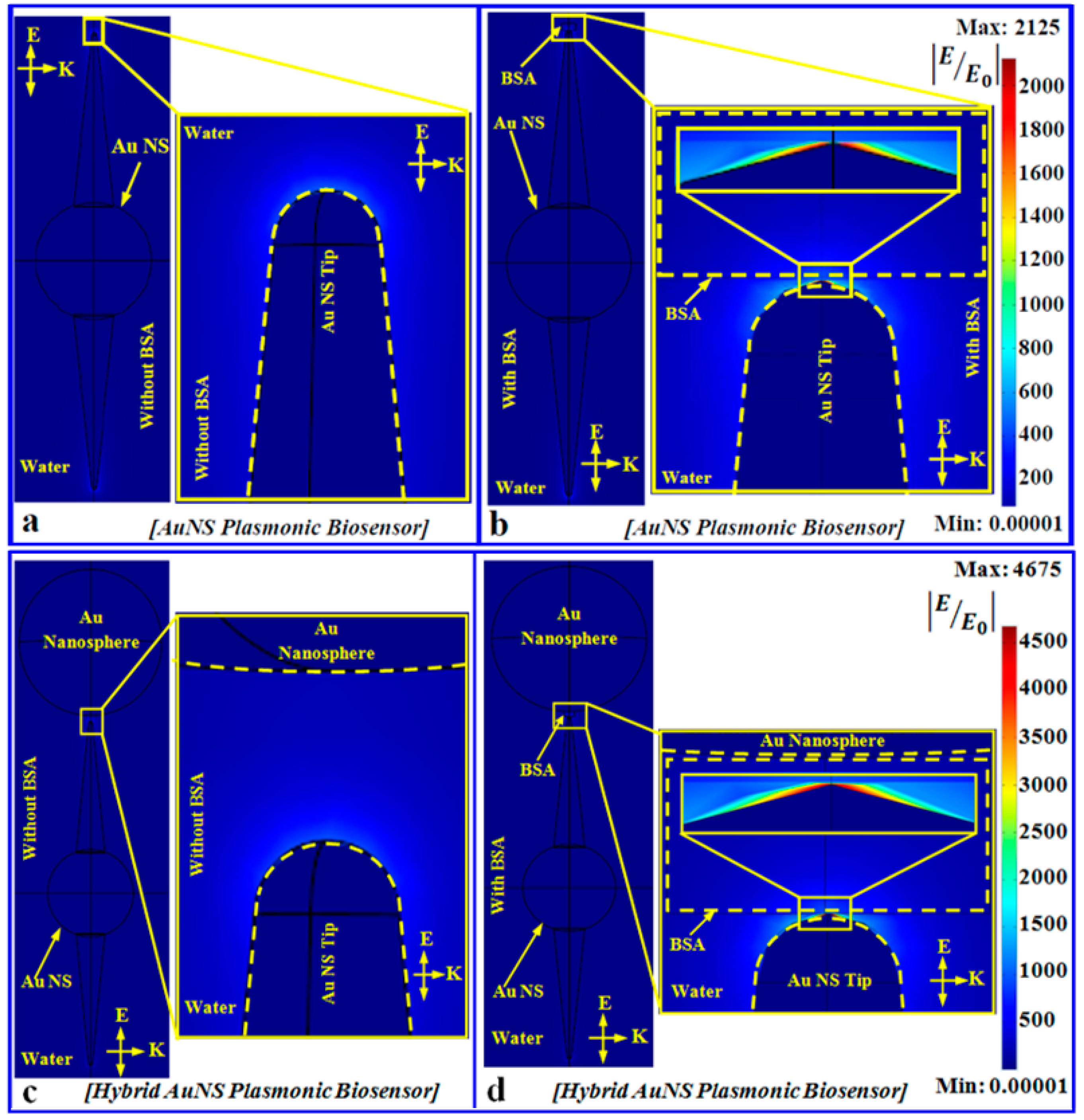
We report the study of heterodimeric plasmonic nanogaps created between gold nanostar (AuNS) tips and gold nanospheres. The selective binding is realized by properly functionalizing the two nanostructures; in particular, the hot electrons injected at the nanostar tips trigger a regio-specific chemical link with the functionalized nanospheres. AuNSs were synthesized in a simple, one-step, surfactant-free, high-yield wet-chemistry method. The high aspect ratio of the sharp nanostar tip collects and concentrates intense electromagnetic fields in ultrasmall surfaces with small curvature radius. The extremities of these surface tips become plasmonic hot spots, allowing significant intensity enhancement of local fields and hot-electron injection. Electron energy-loss spectroscopy (EELS) was performed to spatially map local plasmonic modes of the nanostar. The presence of different kinds of modes at different position of these nanostars makes them one of the most efficient, unique, and smart plasmonic antennas. These modes are harnessed to mediate the formation of heterodimers (nanostar-nanosphere) through hot-electron-induced chemical modification of the tip. For an AuNS-nanosphere heterodimeric gap, the intensity enhancement factor in the hot-spot region was determined to be 106, which is an order of magnitude greater than the single nanostar tip. The intense local electric field within the nanogap results in ultra-high sensitivity for the presence of bioanalytes captured in that region. In case of a single BSA molecule (66.5 KDa), the sensitivity was evaluated to be about 1940 nm/RIU for a single AuNS, but was 5800 nm/RIU for the AuNS-nanosphere heterodimer. This indicates that this heterodimeric nanostructure can be used as an ultrasensitive plasmonic biosensor to detect single protein molecules or nucleic acid fragments of lower molecular weight with high specificity.
Keywords: plasmonic nanostructures; EELS; TEM; FEM; nanogaps; hot-spot; single molecule sensing plasmonic nanostructures; EELS; TEM; FEM; nanogaps; hot-spot; single molecule sensing