
A Physics-Informed Hybrid Neural Network for High-Precision Temperature Prediction in Semiconductor Process Equipment

 ,
,
Abstract
1. Introduction
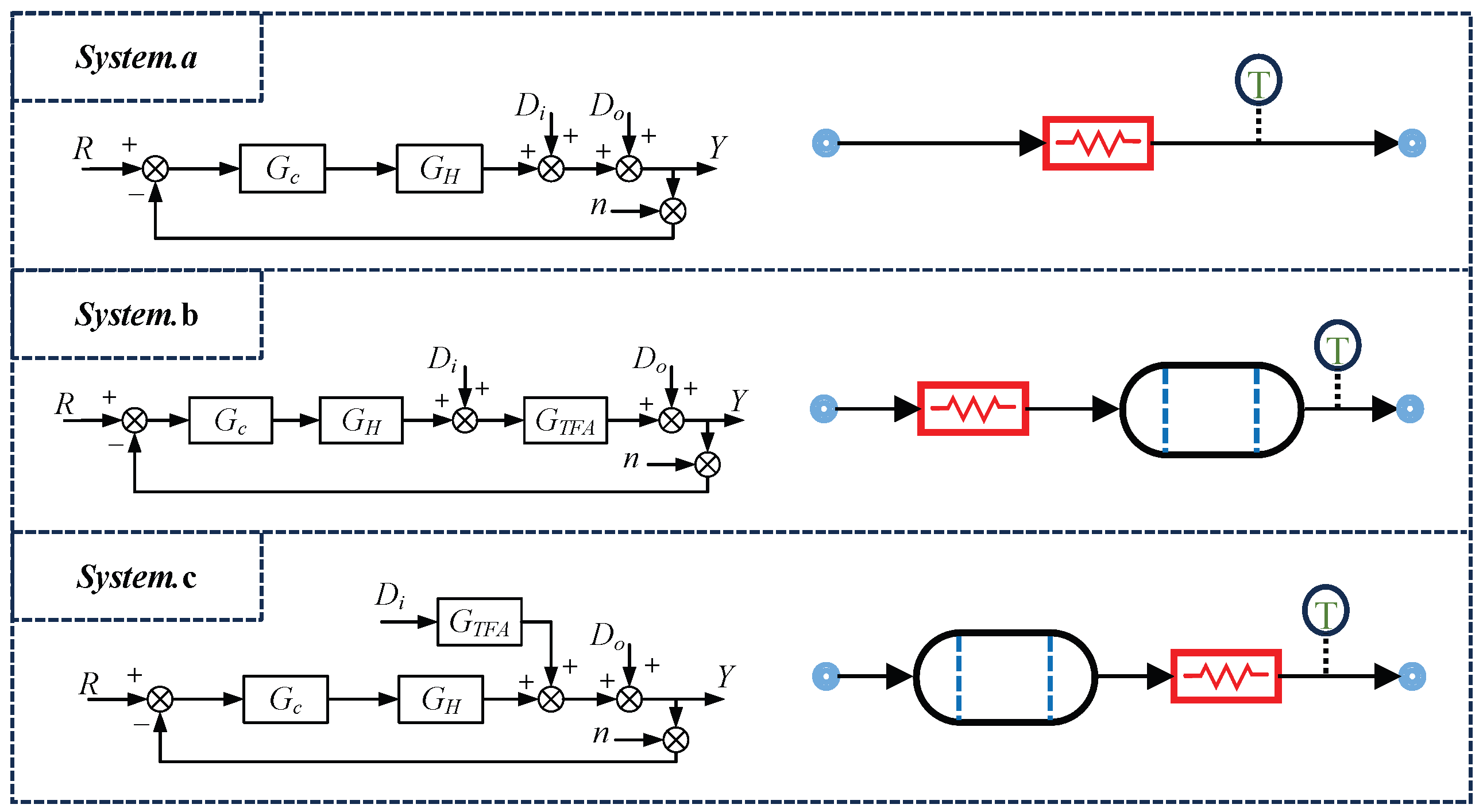
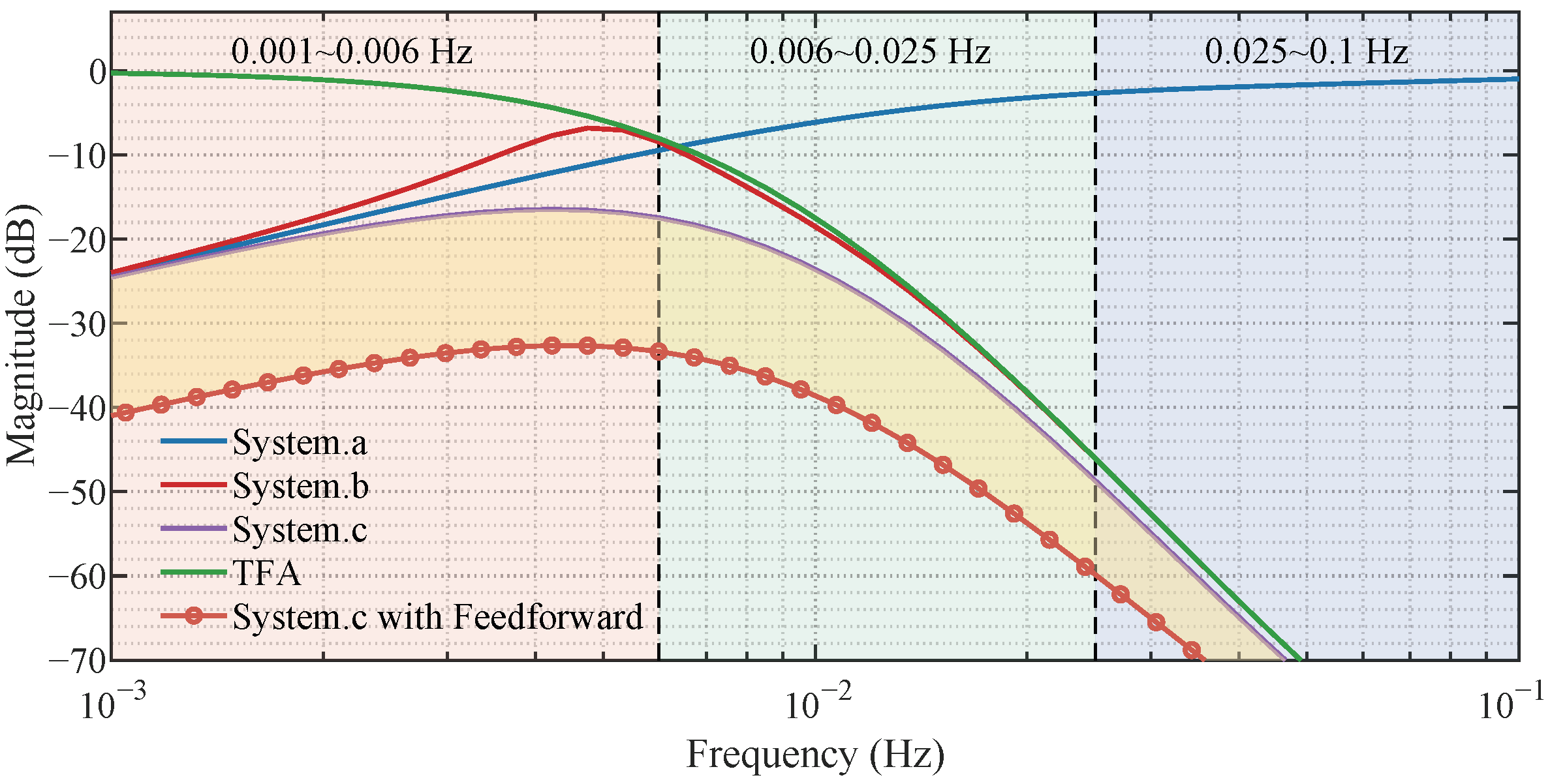
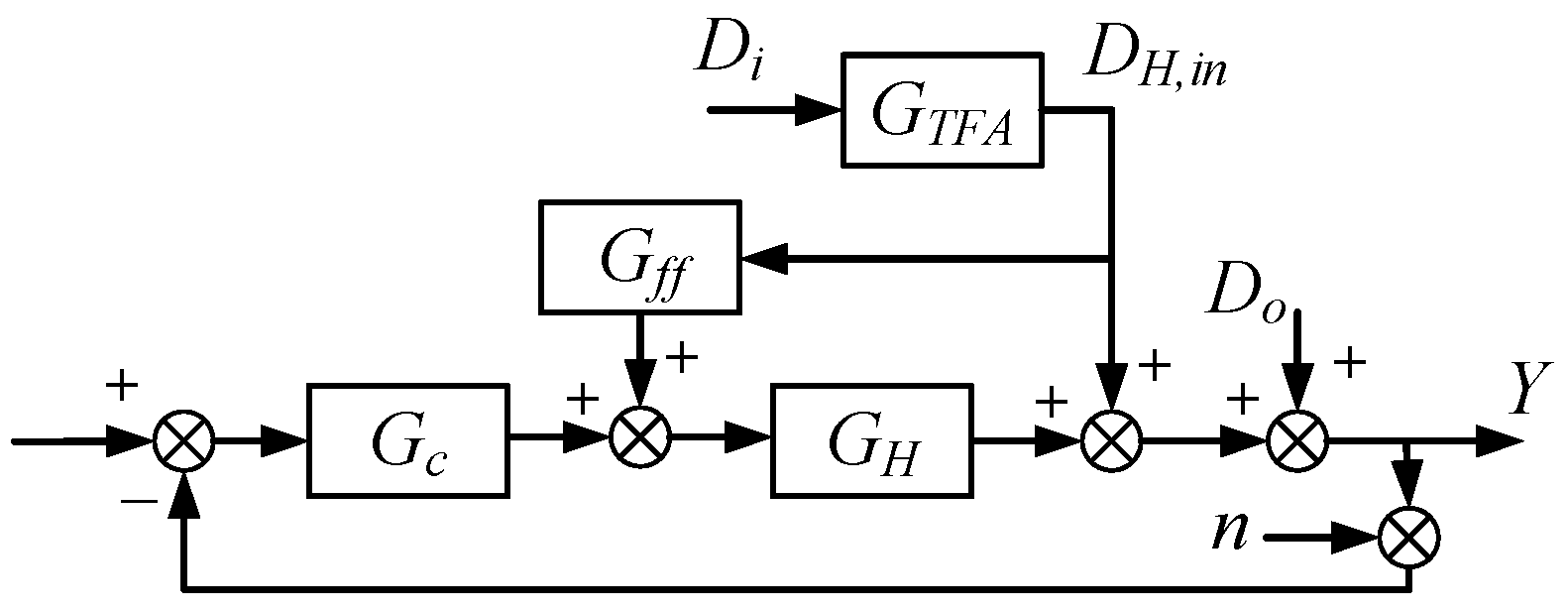
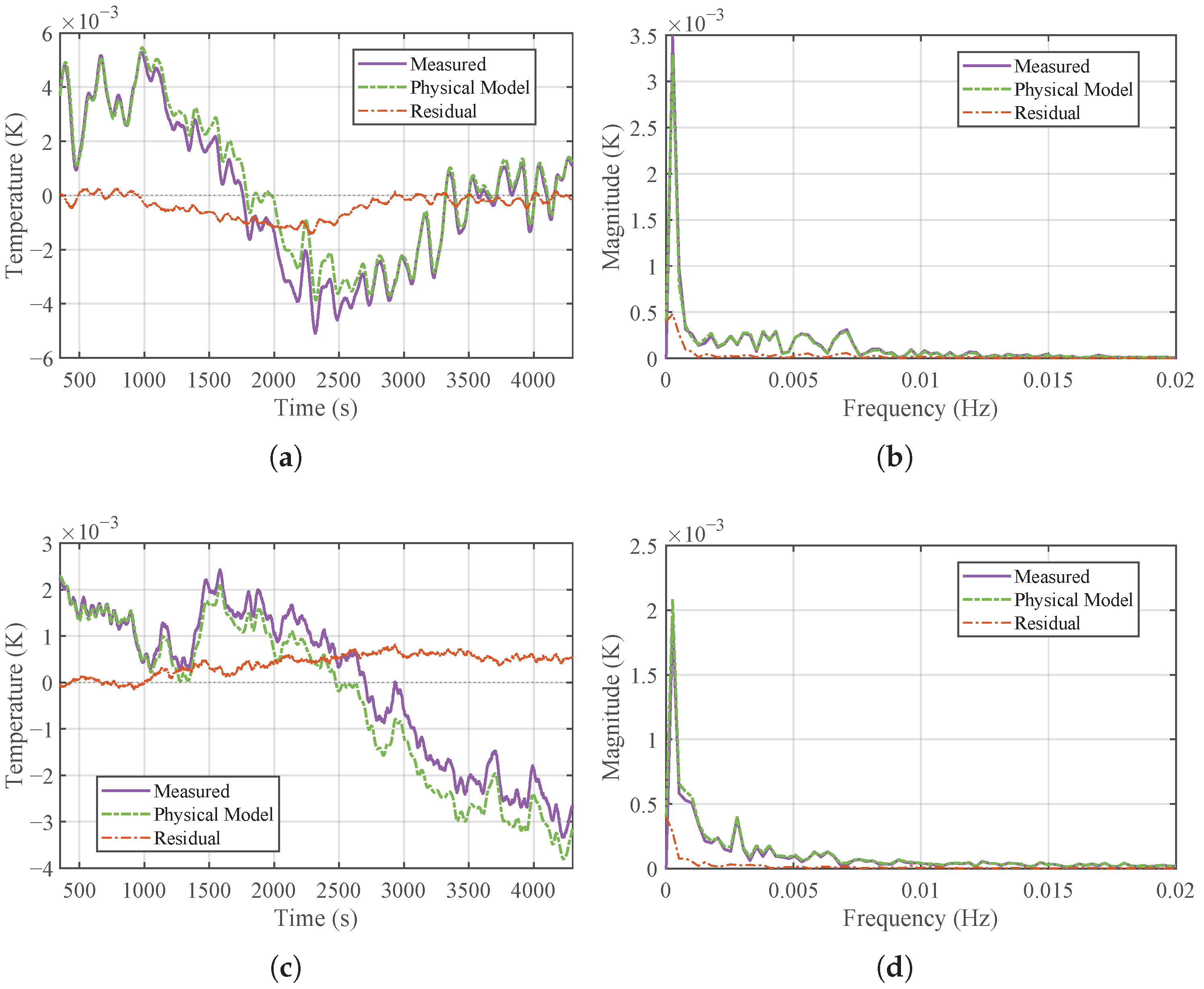
- Architecture Optimization and Physical Modeling: A frequency-domain analysis of typical temperature-control architectures is conducted to clarify the roles of active feedback regulation and passive hardware attenuation across disturbance frequency bands. The analysis supports placing the TFA upstream of the heater to pre-filter mid-to-high-frequency inlet disturbances without degrading closed-loop stability. For this configuration, the disturbance-rejection mechanism of adding feedforward compensation is analyzed. A mathematical model of the cascaded TFA is then established to provide a baseline prediction, and residual analysis is performed to characterize discrepancies attributed to unmodeled dynamics.
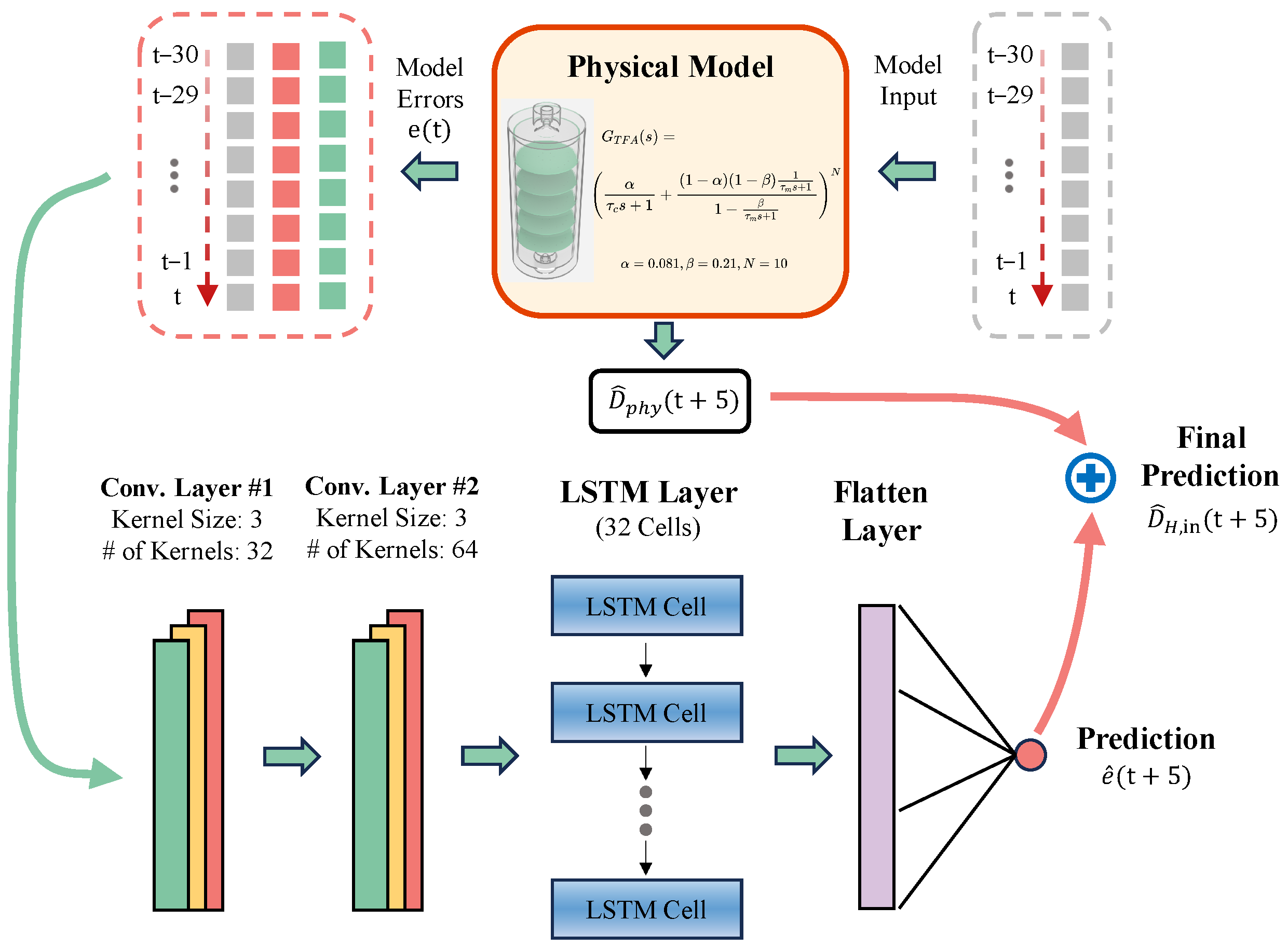
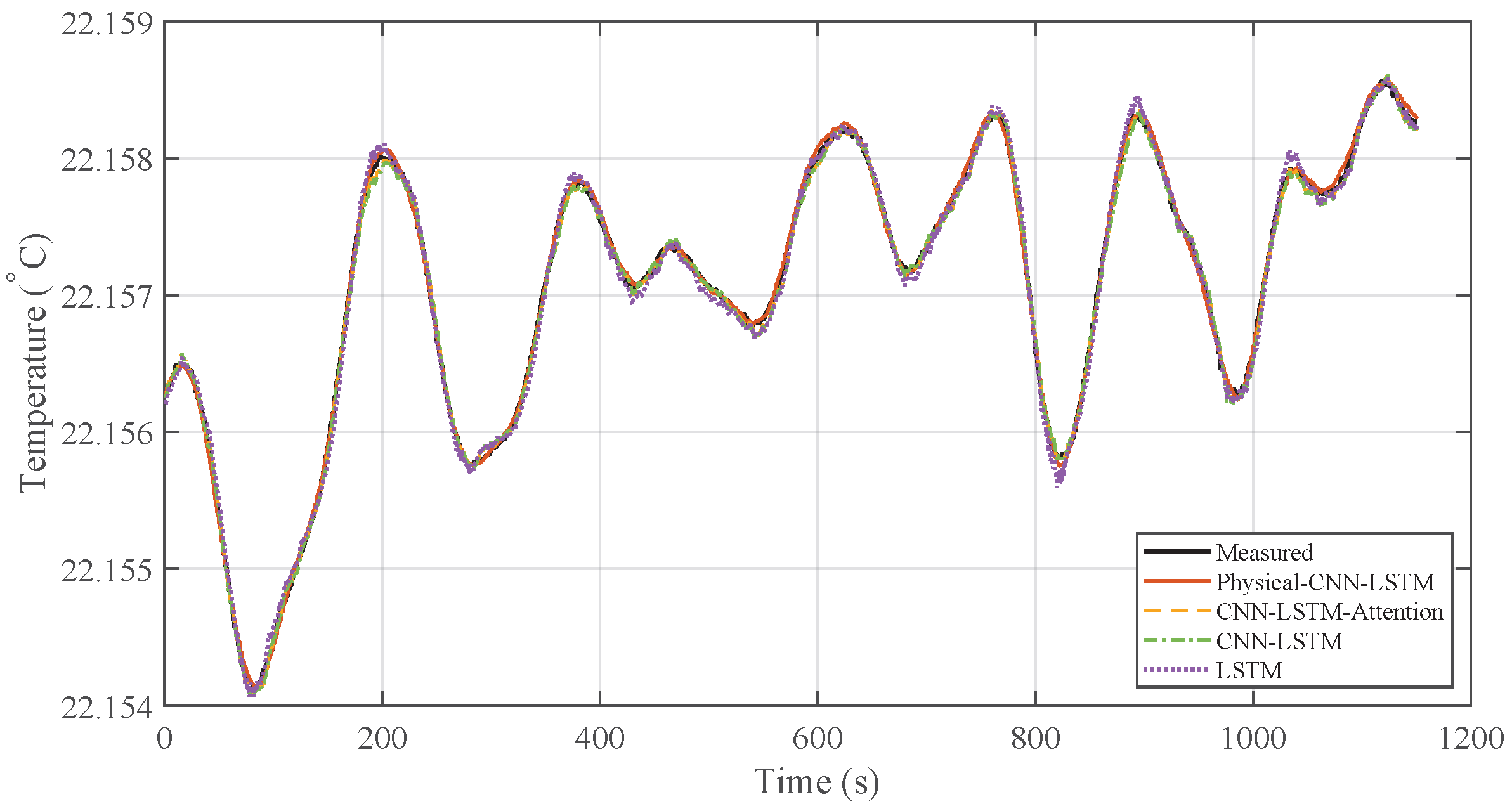
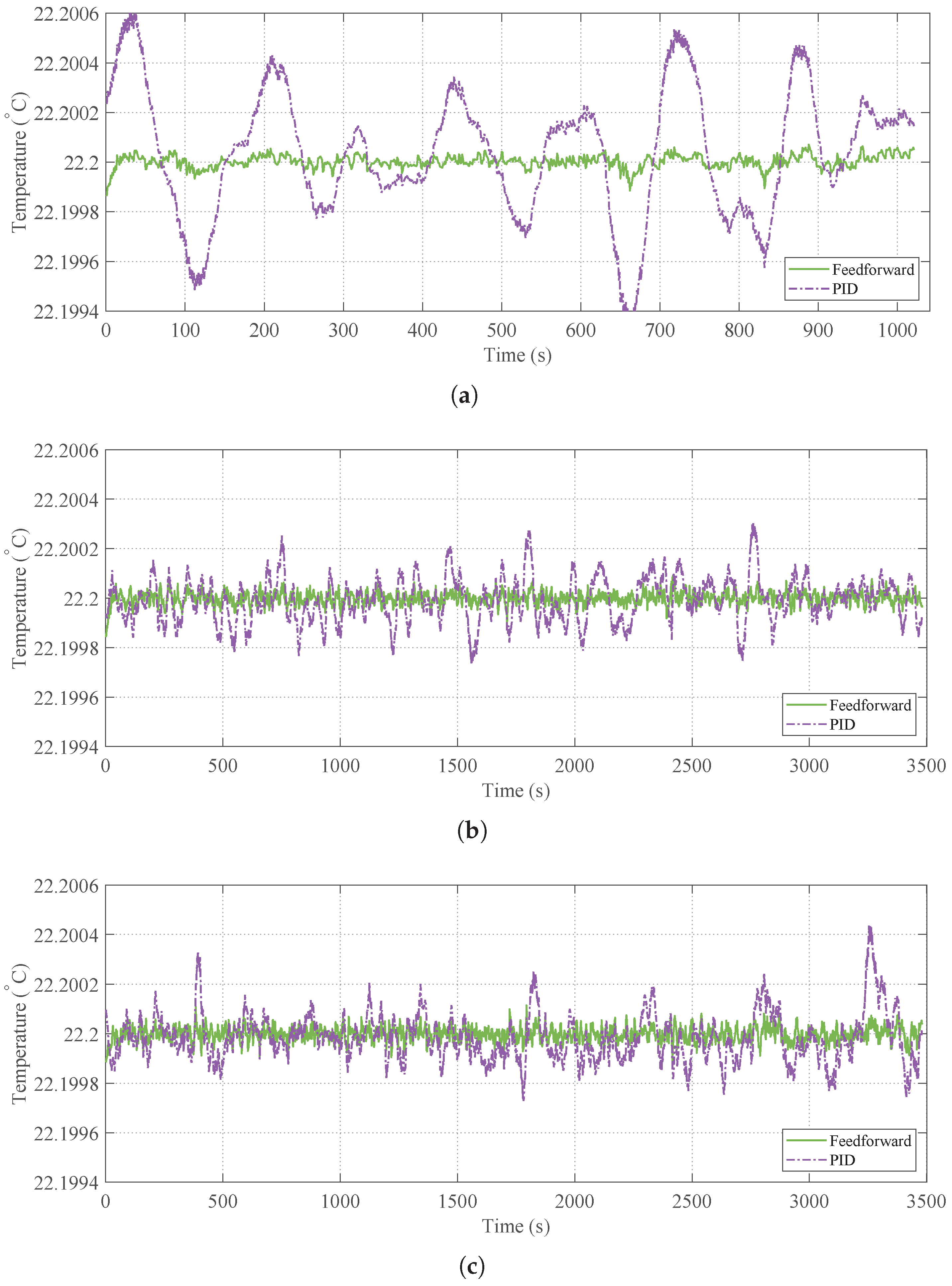
- Physics-CNN-LSTM Prediction: A Physics-CNN-LSTM predictor employing a residual learning strategy is developed to address the specific challenges of thermal control. By embedding the transport dynamics of the TFA, the proposed framework establishes a deterministic physical baseline essential for industrial safety, effectively mitigating the instability risks associated with “black-box” pure data-driven models. The deep learning module complements this by accurately estimating the nonlinear residuals caused by unmodeled environmental thermal coupling and flow fluctuations, thereby dynamically correcting the physical baseline. Quantitative comparisons against pure data-driven benchmarks—including LSTM, CNN-LSTM, and the advanced CNN-LSTM-Attention model—across distinct operating conditions demonstrate the proposed hybrid model’s superiority in both accuracy and generalization capability. Finally, closed-loop Simulink simulations validate the effectiveness of the proposed feedforward compensation, confirming its feasibility and robustness for high-precision temperature control in advanced semiconductor manufacturing equipment.
2. System Analysis and Problem Formulation
2.1. System Architecture and Control Strategy Analysis
2.2. Physical Modeling of Key Components
2.3. Problem Formulation and Residual Analysis
3. Physics-Informed Hybrid Framework
3.1. Hybrid Prediction Architecture
3.2. Network Design and Input Representation
4. Experimental Results and Discussion
4.1. Experimental Setup, Data Preprocessing, and Metrics
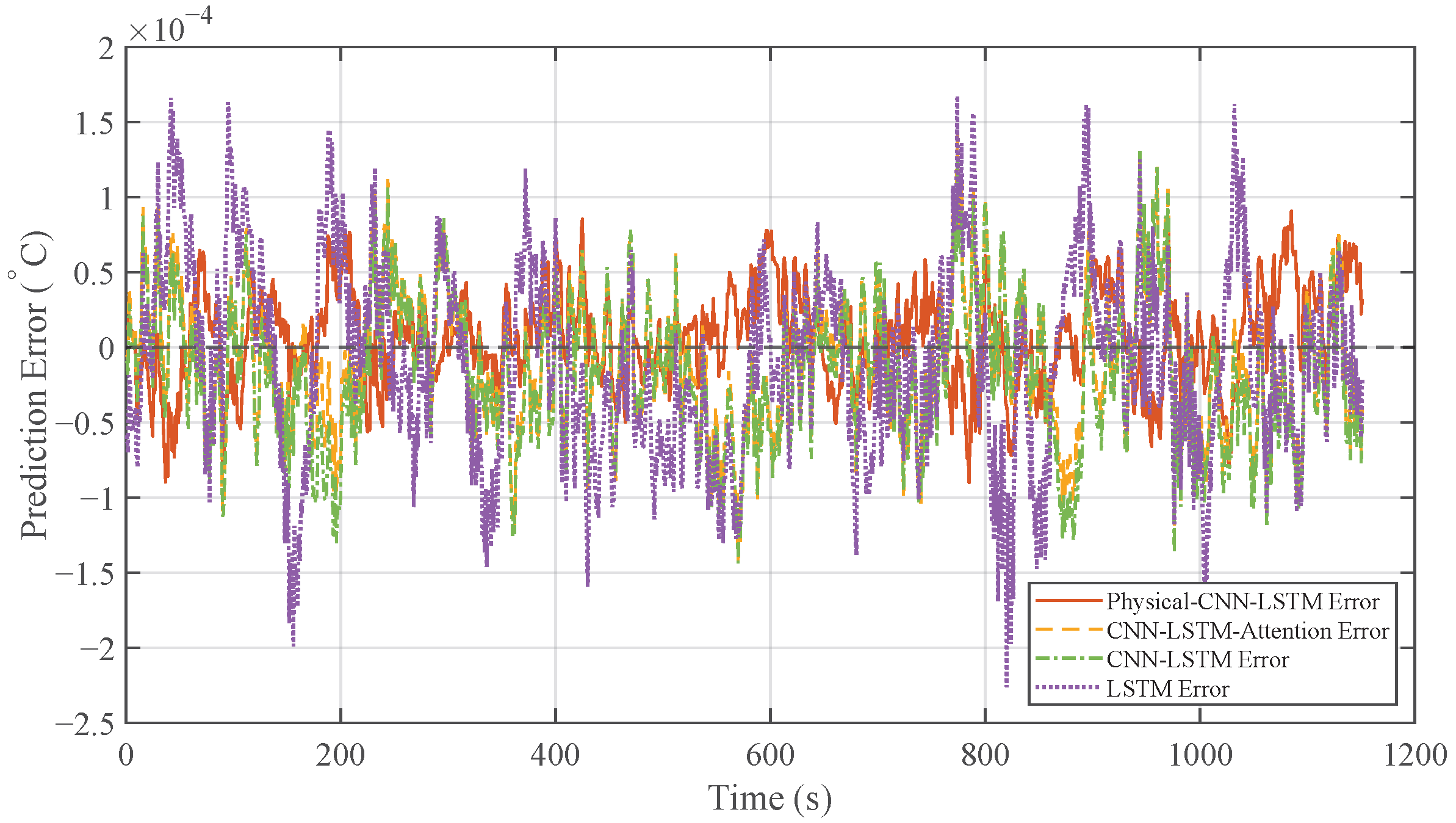
4.2. Analysis of Results
4.3. Generalization and Robustness Analysis
4.4. Ablation Study
4.5. Closed-Loop Control Simulation Validation
5. Conclusions
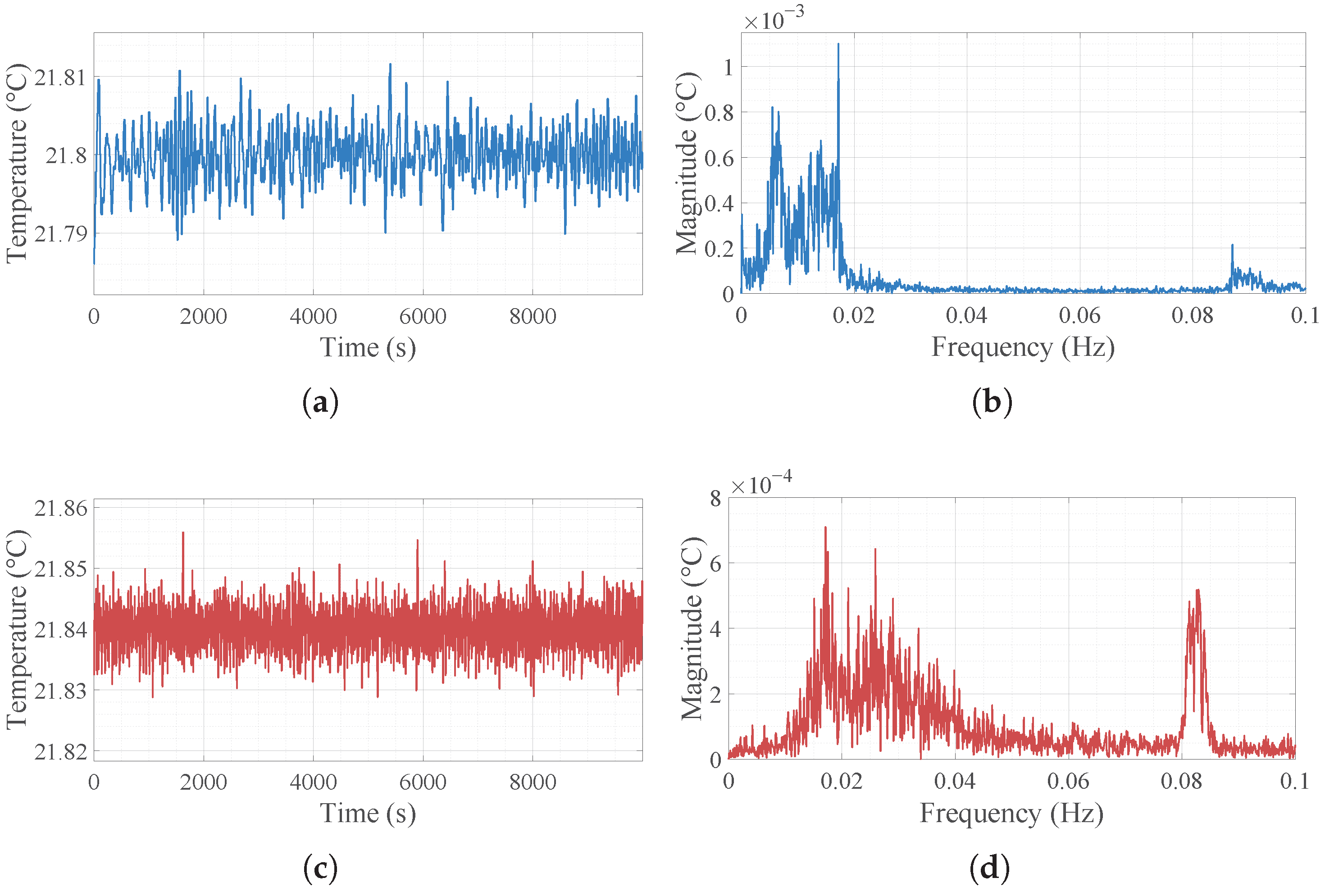
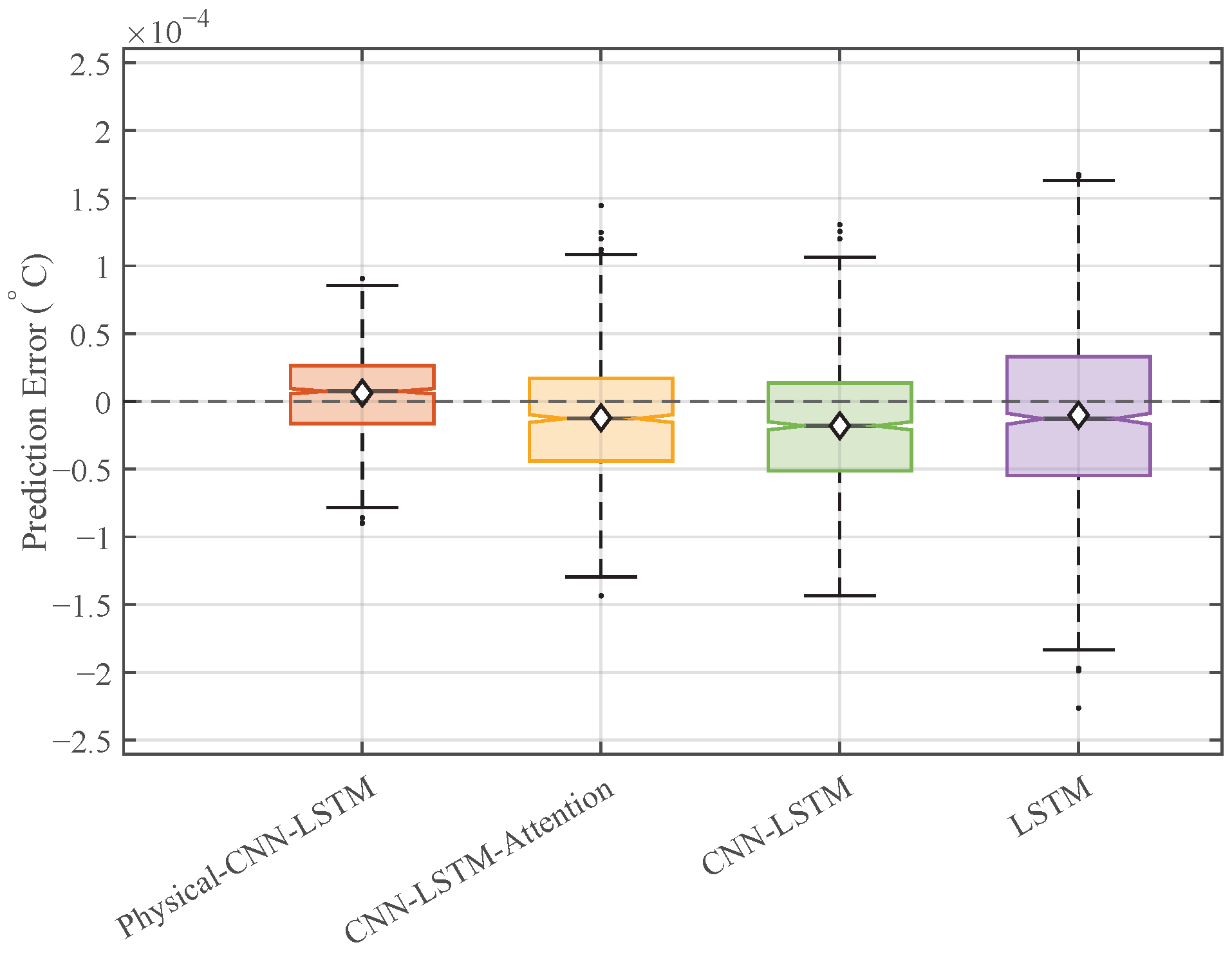
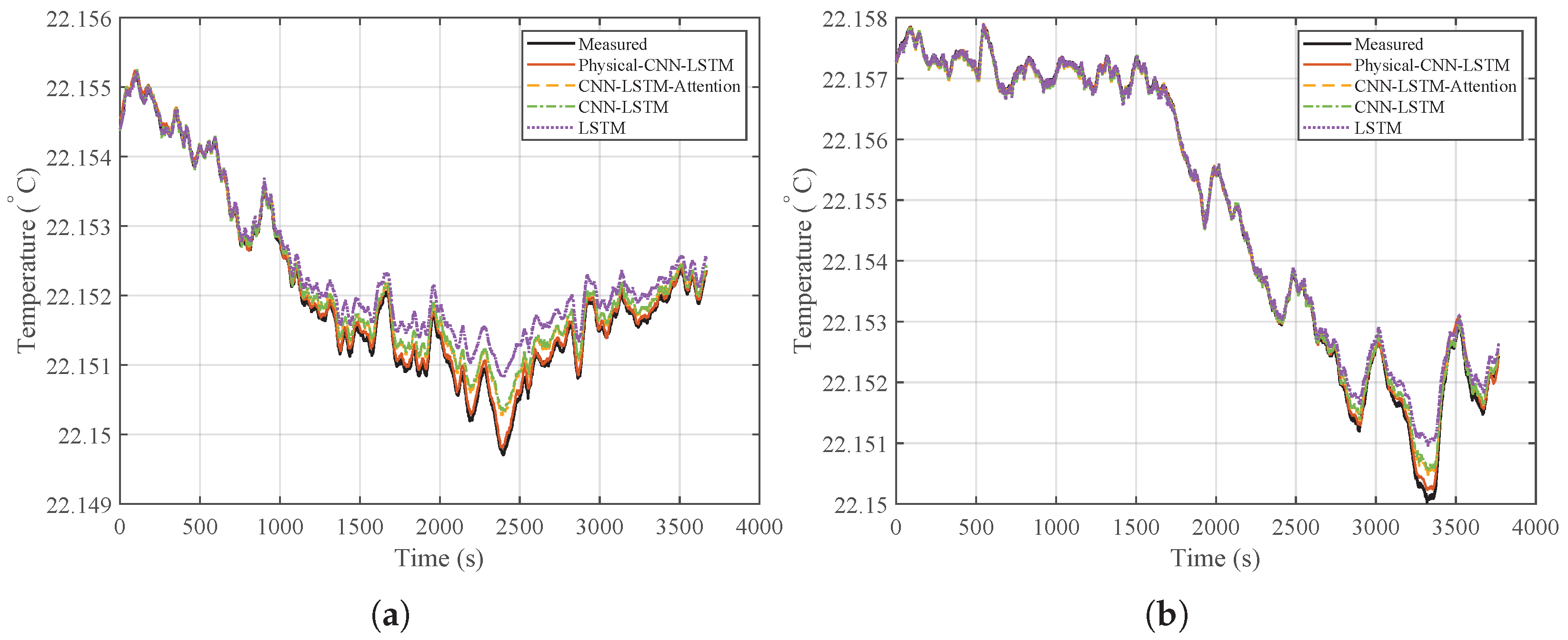
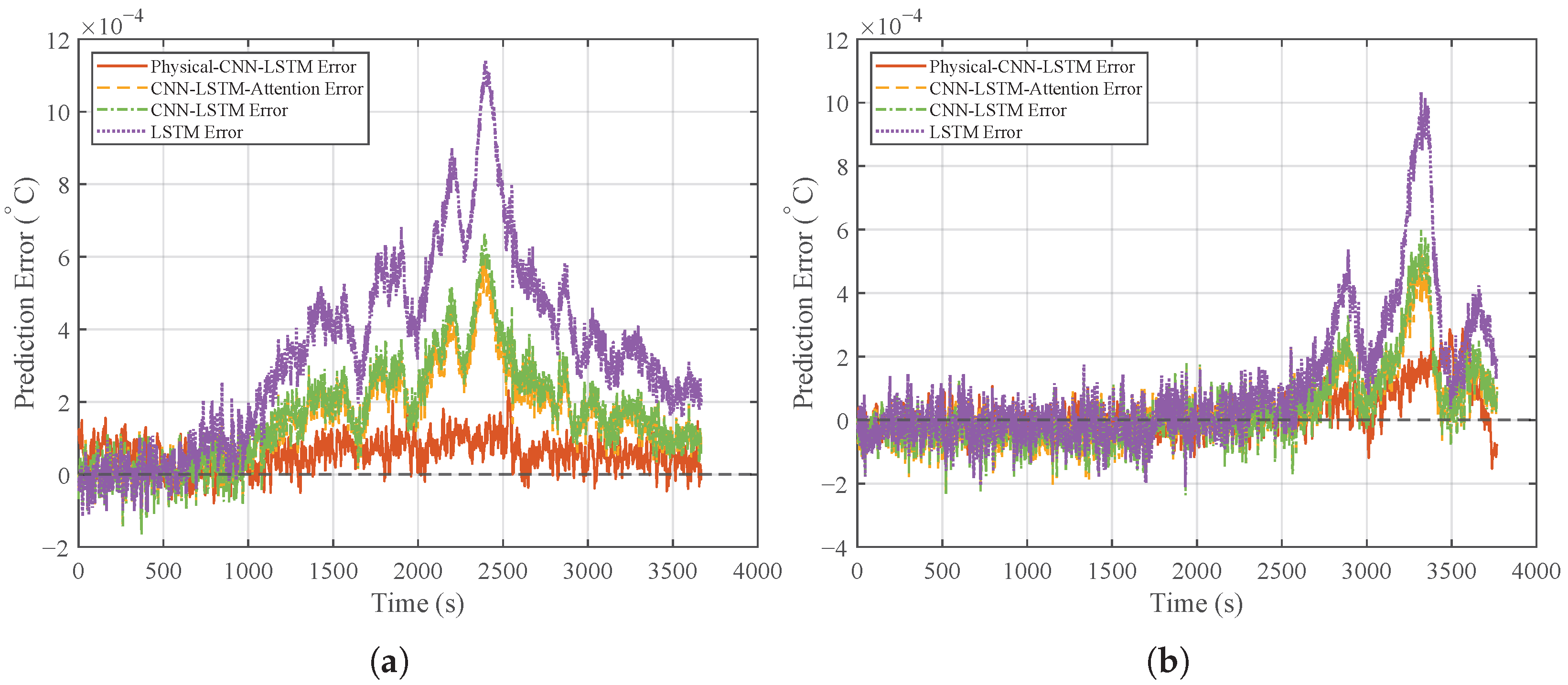
- Prediction Accuracy (Case 1): Under low-to-mid-frequency disturbance conditions, the Physical-CNN-LSTM model achieved an RMSE of K and an of 0.99876. Compared to the standard LSTM model, the prediction error was reduced by approximately 51.8%.
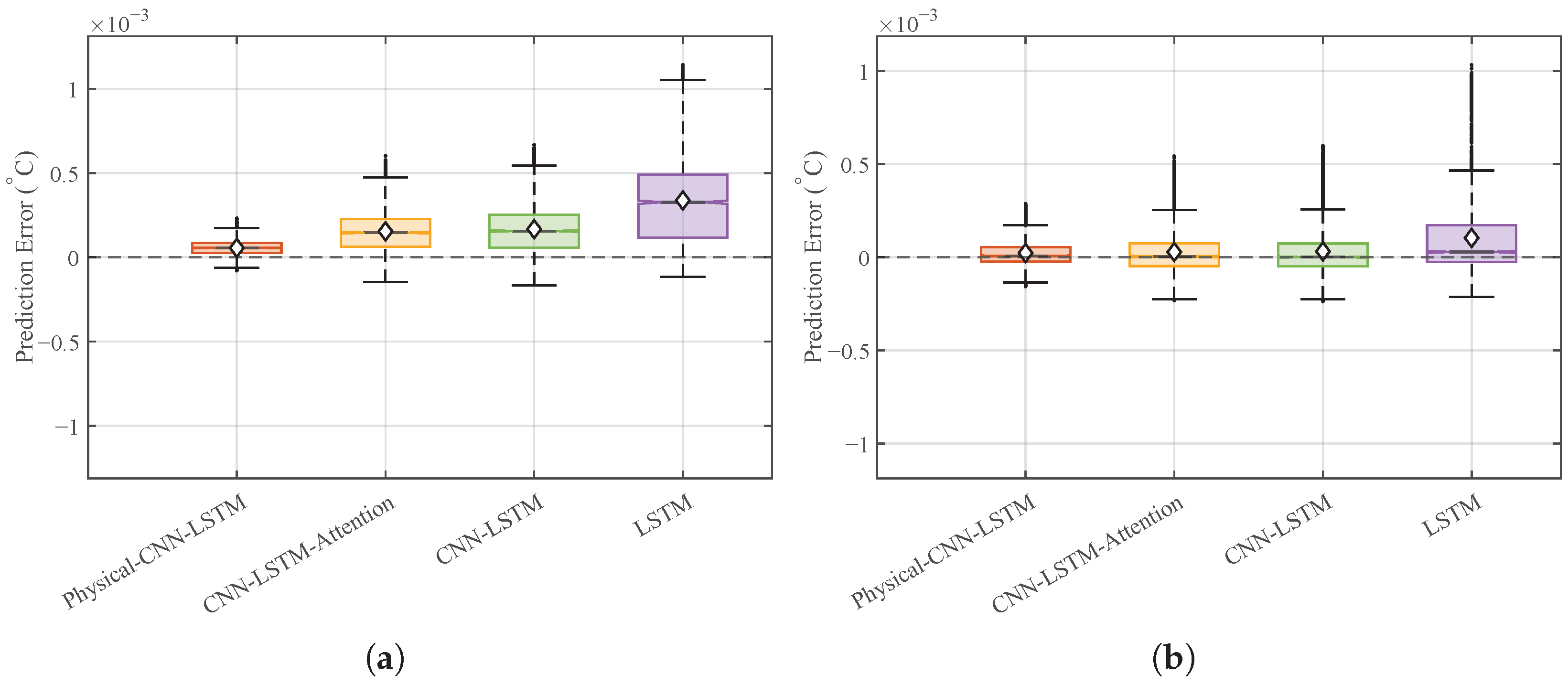
- Generalization Performance (Case 2, 3): When tested against unseen mid-to-high-frequency disturbances without retraining, the hybrid model maintained an . In contrast, pure data-driven models showed performance degradation. These findings indicate that embedding physical constraints effectively prevents overfitting and improves robustness.
Author Contributions
Funding
Institutional Review Board Statement
Informed Consent Statement
Data Availability Statement
Conflicts of Interest
References
- Baek, S.Y.; Cole, D.C.; Rothschild, M.; Switkes, M.; Yeung, M.S.; Barouch, E. Simulation study of process latitude for liquid immersion lithography. In Proceedings Optical Microlithography XVI; SPIE: Bellingham, WA, USA, 2003; Volume 5040, pp. 1620–1630. [Google Scholar]
- Switkes, M.; Kunz, R.R.; Sinta, R.F.; Rothschild, M.; Gallagher-Wetmore, P.M.; Krukonis, V.J.; Williams, K. Immersion liquids for lithography in the deep ultraviolet. In Proceedings Optical Microlithography XVI; SPIE: Bellingham, WA, USA, 2003; Volume 5040, pp. 690–699. [Google Scholar]
- Streefkerk, B.; Baselmans, J.; Gehoel-van Ansem, W.; Mulkens, J.; Hoogendam, C.; Hoogendorp, M.; Flagello, D.G.; Sewell, H.; Graupner, P. Extending optical lithography with immersion. In Proceedings Optical Microlithography XVII; SPIE: Bellingham, WA, USA, 2004; Volume 5377, pp. 285–305. [Google Scholar]
- Yang, M.K.; Kaplan, S.G.; French, R.H.; Burnett, J.H. Index of refraction of high-index lithographic immersion fluids and its variability. J. Micro/Nanolithography MEMS MOEMS 2009, 8, 023005. [Google Scholar]
- Cao, D.; Dong, H.; Zeng, Z.; Zhang, W.; Li, X.; Yu, H. Thermal control systems in projection lithography tools: A comprehensive review. Micromachines 2025, 16, 880. [Google Scholar] [CrossRef] [Scilit] [PubMed]
- Li, X.; Zhao, Y.; Lei, M. High precision and stability temperature control system for the immersion liquid in immersion lithography. Flow Meas. Instrum. 2017, 53, 317–325. [Google Scholar] [CrossRef] [Scilit]
- Liu, J.; Ruan, X.; Hu, L.; Su, R.; Liu, W.; Peng, J.; Ren, Z. Analysis of transient laminar forced convective heat transfer in parallel-plate channels with time-varying thermal boundary conditions of the inlet and wall. Int. J. Heat Mass Transf. 2023, 216, 124585. [Google Scholar] [CrossRef] [Scilit]
- Lawton, K.M.; Patterson, S.R.; Keanini, R.G. Precision temperature control of high-throughput fluid flows: Theoretical and experimental analysis. J. Heat Transf. 2001, 123, 796–802. [Google Scholar] [CrossRef] [Scilit]
- Lawton, K.M.; Patterson, S.R.; Keanini, R.G. Direct contact packed bed thermal gradient attenuators: Theoretical analysis and experimental observations. Rev. Sci. Instruments 2003, 74, 2886–2893. [Google Scholar] [CrossRef] [Scilit]
- Peng, J.; Su, R.; Hu, L.; Shen, Y.; Ruan, X.; Fu, X.; Liu, J.; Ren, Z. Enhancing mid-to-high frequency temperature attenuation in precision control systems using a cascade-based attenuator. Therm. Sci. Eng. Prog. 2025, 58, 103195. [Google Scholar] [CrossRef] [Scilit]
- Cao, D.; Huang, X.; Zeng, Z.; Yu, H.; Zhang, W.; Li, X. Modeling and experimental analysis of high-efficiency fluid temperature fluctuation attenuator based on phase regulator. Int. J. Heat Mass Transf. 2023, 217, 124622. [Google Scholar] [CrossRef] [Scilit]
- Guo, W.; Hong, Y.; Chen, D.; Wang, Z.; Zhu, X.; Zhu, Z.; Ye, W.; Zhang, X. Frequency-domain analysis of two controllable attenuators for control processes and perturbations in a constant temperature chilled-water system. Appl. Therm. Eng. 2024, 252, 123663. [Google Scholar] [CrossRef] [Scilit]
- Lan, Z.; Chen, J.; Xue, C.; Lan, J.; Wang, B.; Wang, Y.; Yang, Y. A temperature control algorithm for lithography machine based on generalized predictive control and BP neural network PI control. Meas. Control 2024, 57, 903–918. [Google Scholar] [CrossRef] [Scilit]
- Dong, H.; Li, X.; He, X.; Zeng, Z.; Wen, G. A two-degree-of-freedom controller for a high-precision air temperature control system with multiple disturbances. Case Stud. Therm. Eng. 2023, 50, 103442. [Google Scholar] [CrossRef] [Scilit]
- Liu, L.; Tian, S.; Xue, D.; Zhang, T.; Chen, Y. Industrial feedforward control technology: A review. J. Intell. Manuf. 2019, 30, 2819–2833. [Google Scholar] [CrossRef] [Scilit]
- Seborg, D.E.; Edgar, T.F.; Mellichamp, D.A.; Doyle, F.J., III. Process Dynamics and Control; John Wiley & Sons: Hoboken, NJ, USA, 2016. [Google Scholar]
- Pandey, K.; Basu, B. Indoor room temperature forecasting in buildings: A literature review (2001-21). Facilities 2023, 41, 81–107. [Google Scholar] [CrossRef] [Scilit]
- Xu, C.; Chen, H.; Wang, J.; Guo, Y.; Yuan, Y. Improving prediction performance for indoor temperature in public buildings based on a novel deep learning method. Build. Environ. 2019, 148, 128–135. [Google Scholar] [CrossRef] [Scilit]
- Zhuo, H.; Li, T.; Lu, W.; Zhang, Q.; Ji, L.; Li, J. Prediction model for spontaneous combustion temperature of coal based on PSO-XGBoost algorithm. Sci. Rep. 2025, 15, 2752. [Google Scholar] [CrossRef] [Scilit]
- Shi, X.; Lu, W.; Zhao, Y.; Qin, P. Prediction of indoor temperature and relative humidity based on cloud database by using an improved BP neural network in Chongqing. IEEE Access 2018, 6, 30559–30566. [Google Scholar] [CrossRef] [Scilit]
- Kim, T.Y.; Cho, S.B. Predicting residential energy consumption using CNN-LSTM neural networks. Energy 2019, 182, 72–81. [Google Scholar] [CrossRef] [Scilit]
- Cho, K.; Van Merriënboer, B.; Gulcehre, C.; Bahdanau, D.; Bougares, F.; Schwenk, H.; Bengio, Y. Learning phrase representations using RNN encoder-decoder for statistical machine translation. arXiv 2014, arXiv:1406.1078. [Google Scholar] [CrossRef] [Scilit]
- Yu, H.; Dong, H.; Zeng, Z.; Cao, D.; Zhang, W.; Wang, P.; Li, X. Modeling temporal dual variations for return air temperature prediction of mK-level temperature-controlled clean chamber. J. Build. Eng. 2024, 86, 108917. [Google Scholar] [CrossRef] [Scilit]
- Noorizadegan, A.; Young, D.L.; Hon, Y.; Chen, C.S. Power-enhanced residual network for function approximation and physics-informed inverse problems. Appl. Math. Comput. 2024, 480, 128910. [Google Scholar] [CrossRef] [Scilit]
- Tao, Z.; Xu, K.; Liu, F. LSTM-PINN: An Hybrid Method for Prediction of Steady-State Electrohydrodynamic Flow. J. Comput. Phys. 2025, 548, 114586. [Google Scholar] [CrossRef] [Scilit]
- Xing, F.; Li, J.; Tao, Z.; Liu, F.; Tan, Y. Modeling dynamic gas–liquid interfaces in underwater explosions using interval-constrained physics-informed neural networks. Phys. Fluids 2025, 37, 116126. [Google Scholar] [CrossRef] [Scilit]
- Li, X.; Han, Z.; Zhao, T.; Gao, J. Online model for indoor temperature control based on building thermal process of air conditioning system. J. Build. Eng. 2021, 39, 102270. [Google Scholar] [CrossRef] [Scilit]
- Li, X.; Han, Z.; Zhao, T.; Zhang, J.; Xue, D. Modeling for indoor temperature prediction based on time-delay and Elman neural network in air conditioning system. J. Build. Eng. 2021, 33, 101854. [Google Scholar] [CrossRef] [Scilit]
- Cao, D.; Zhao, Y.; Dong, H.; Zeng, Z.; Zhang, W.; Li, X.; Yu, H. Design of a temperature control system for immersion liquid utilizing cascade active disturbance rejection control and PI algorithm. Int. J. Therm. Sci. 2026, 221, 110472. [Google Scholar] [CrossRef] [Scilit]
- Zeng, Z.; Zhang, W.; Yu, H.; Cao, D.; Li, X. Dynamic thermal model and control performance analysis over frequency domain of temperature control unit. Case Stud. Therm. Eng. 2023, 45, 102975. [Google Scholar] [CrossRef] [Scilit]
- Steinhart, J.S.; Hart, S.R. Calibration curves for thermistors. In Deep Sea Research and Oceanographic Abstracts; Elsevier: Amsterdam, The Netherlands, 1968; Volume 15, pp. 497–503. [Google Scholar]
- Qiao, H.; Wang, T.; Wang, P.; Qiao, S.; Zhang, L. A time-distributed spatiotemporal feature learning method for machine health monitoring with multi-sensor time series. Sensors 2018, 18, 2932. [Google Scholar] [CrossRef] [Scilit]
- Montaha, S.; Azam, S.; Rafid, A.R.H.; Hasan, M.Z.; Karim, A.; Islam, A. Timedistributed-cnn-lstm: A hybrid approach combining cnn and lstm to classify brain tumor on 3d mri scans performing ablation study. IEEE Access 2022, 10, 60039–60059. [Google Scholar] [CrossRef] [Scilit]
- Yang, Y.; Xiong, Q.; Wu, C.; Zou, Q.; Yu, Y.; Yi, H.; Gao, M. A study on water quality prediction by a hybrid CNN-LSTM model with attention mechanism. Environ. Sci. Pollut. Res. 2021, 28, 55129–55139. [Google Scholar] [CrossRef] [Scilit]
- Skogestad, S.; Grimholt, C. The SIMC method for smooth PID controller tuning. In PID Control in the Third Millennium: Lessons Learned and New Approaches; Springer: Berlin/Heidelberg, Germany, 2012; pp. 147–175. [Google Scholar]
- Ziegler, J.G.; Nichols, N.B. Optimum settings for automatic controllers. Trans. Am. Soc. Mech. Eng. 1942, 64, 759–765. [Google Scholar] [CrossRef] [Scilit]



| Method | MAE () | RMSE () | |
|---|---|---|---|
| LSTM | 5.86 ± 0.74 | 7.39 ± 1.04 | 0.99455 ± 0.0016 |
| CNN-LSTM | 4.54 ± 0.36 | 5.64 ± 0.46 | 0.99686 ± 0.0005 |
| CNN-LSTM-Attention | 4.24 ± 0.37 | 5.22 ± 0.42 | 0.99731 ± 0.0004 |
| Physical-CNN-LSTM |
| Method | MAE () | RMSE () | |
|---|---|---|---|
| Case 2 | |||
| LSTM | 47.8 ± 7.75 | 58.1 ± 8.72 | 0.80254 ± 0.0572 |
| CNN-LSTM | 19.3 ± 1.70 | 24.2 ± 2.08 | 0.96631 ± 0.0061 |
| CNN-LSTM-Attention | 18.7 ± 1.36 | 23.2 ± 1.64 | 0.96902 ± 0.0043 |
| Physical-CNN-LSTM | |||
| Case 3 | |||
| LSTM | 19.0 ± 2.95 | 32.1 ± 4.79 | 0.98190 ± 0.0005 |
| CNN-LSTM | 9.12 ± 0.56 | 13.9 ± 1.01 | 0.99662 ± 0.0005 |
| CNN-LSTM-Attention | 8.79 ± 0.41 | 13.4 ± 0.77 | 0.99691 ± 0.0003 |
| Physical-CNN-LSTM |
| Method | MAE () | RMSE () | |
|---|---|---|---|
| Case 1 | |||
| Pure Physical Model | 41.72 | 55.43 | 0.95729 |
| Pure CNN-LSTM | 4.54 ± 0.36 | 5.64 ± 0.46 | 0.99686 ± 0.0005 |
| Physical-LSTM (w/o CNN) | 3.09 ± 0.24 | 3.83 ± 0.29 | 0.99855 ± 0.0002 |
| Physical-CNN-LSTM | |||
| Case 2 | |||
| Pure Physical Model | 12.29 | 14.31 | 0.98814 |
| Pure CNN-LSTM | 19.3 ± 1.70 | 24.2 ± 2.08 | 0.96631 ± 0.0061 |
| Physical-LSTM (w/o CNN) | 8.72 ± 0.87 | 10.3 ± 0.89 | 0.99383 ± 0.0011 |
| Physical-CNN-LSTM | |||
| Case 3 | |||
| Pure Physical Model | 33.14 | 46.49 | 0.96284 |
| Pure CNN-LSTM | 9.12 ± 0.56 | 13.9 ± 1.01 | 0.99662 ± 0.0005 |
| Physical-LSTM (w/o CNN) | 7.79 ± 0.23 | 12.9 ± 0.49 | 0.99709 ± 0.0002 |
| Physical-CNN-LSTM |
Disclaimer/Publisher’s Note: The statements, opinions and data contained in all publications are solely those of the individual author(s) and contributor(s) and not of MDPI and/or the editor(s). MDPI and/or the editor(s) disclaim responsibility for any injury to people or property resulting from any ideas, methods, instructions or products referred to in the content. |
© 2026 by the authors. Licensee MDPI, Basel, Switzerland. This article is an open access article distributed under the terms and conditions of the Creative Commons Attribution (CC BY) license.
Share and Cite
Peng, J.; Hu, L.; Su, R.; Shen, Y.; Wang, J.; Fu, X.; Ruan, X. A Physics-Informed Hybrid Neural Network for High-Precision Temperature Prediction in Semiconductor Process Equipment. Micromachines 2026, 17, 287. https://doi.org/10.3390/mi17030287
Peng J, Hu L, Su R, Shen Y, Wang J, Fu X, Ruan X. A Physics-Informed Hybrid Neural Network for High-Precision Temperature Prediction in Semiconductor Process Equipment. Micromachines. 2026; 17(3):287. https://doi.org/10.3390/mi17030287
Chicago/Turabian StylePeng, Jiefeng, Liang Hu, Rui Su, Yingnan Shen, Jing Wang, Xin Fu, and Xiaodong Ruan. 2026. "A Physics-Informed Hybrid Neural Network for High-Precision Temperature Prediction in Semiconductor Process Equipment" Micromachines 17, no. 3: 287. https://doi.org/10.3390/mi17030287
APA StylePeng, J., Hu, L., Su, R., Shen, Y., Wang, J., Fu, X., & Ruan, X. (2026). A Physics-Informed Hybrid Neural Network for High-Precision Temperature Prediction in Semiconductor Process Equipment. Micromachines, 17(3), 287. https://doi.org/10.3390/mi17030287