Study on the Material Removal Mechanism of FGH99 by Laser-Induced Microjet Assisted Ablation at Different Incidence Angles


Abstract
1. Introduction
2. Materials and Experimental Setup
2.1. Material and Sample Preparation
2.2. Laser Ablation Experiment
3. Results
3.1. Influence of Power on Jet Behavior and Macroscopic Surface Morphology at 0° Incidence
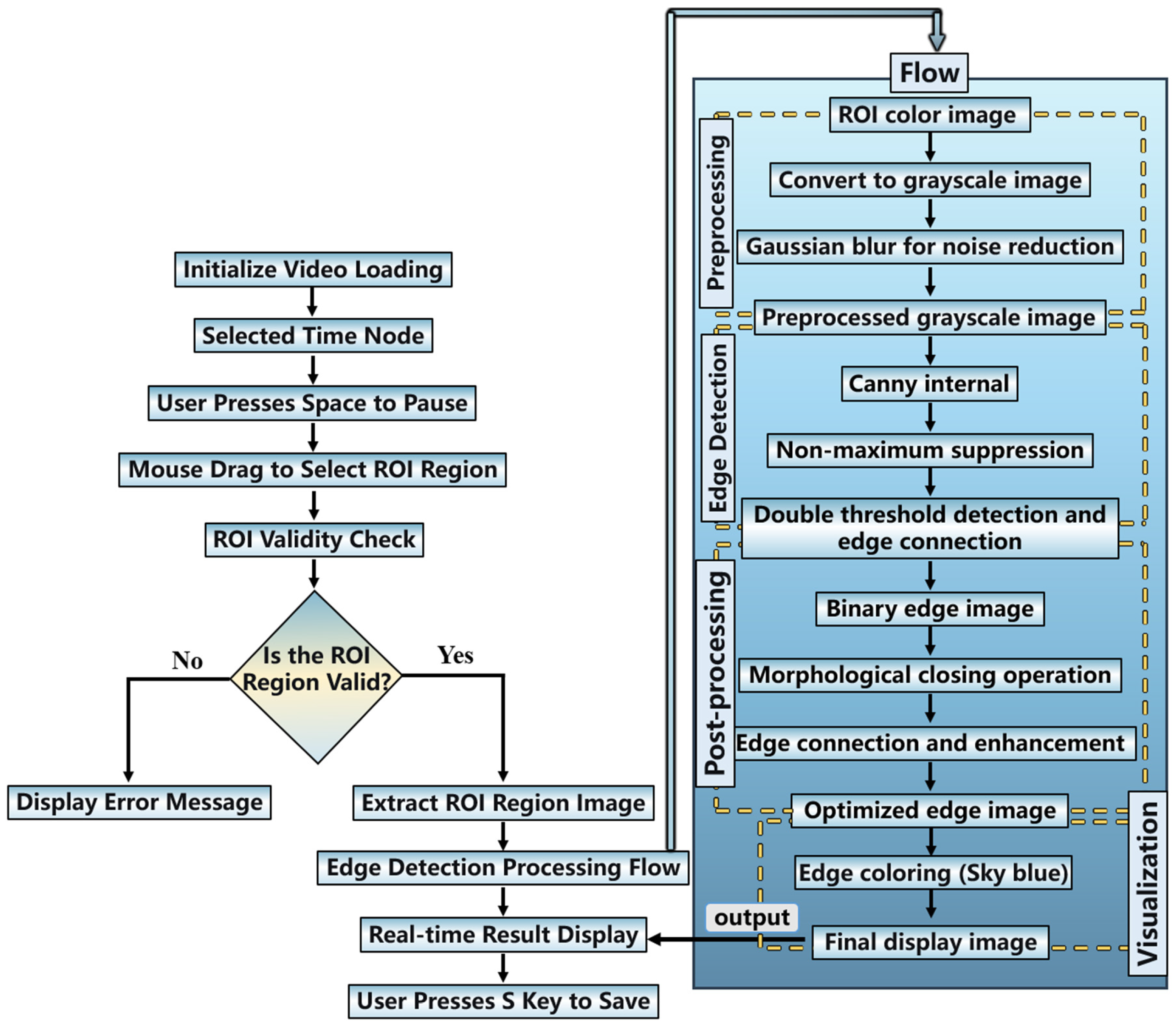
3.1.1. OpenCV Program Design
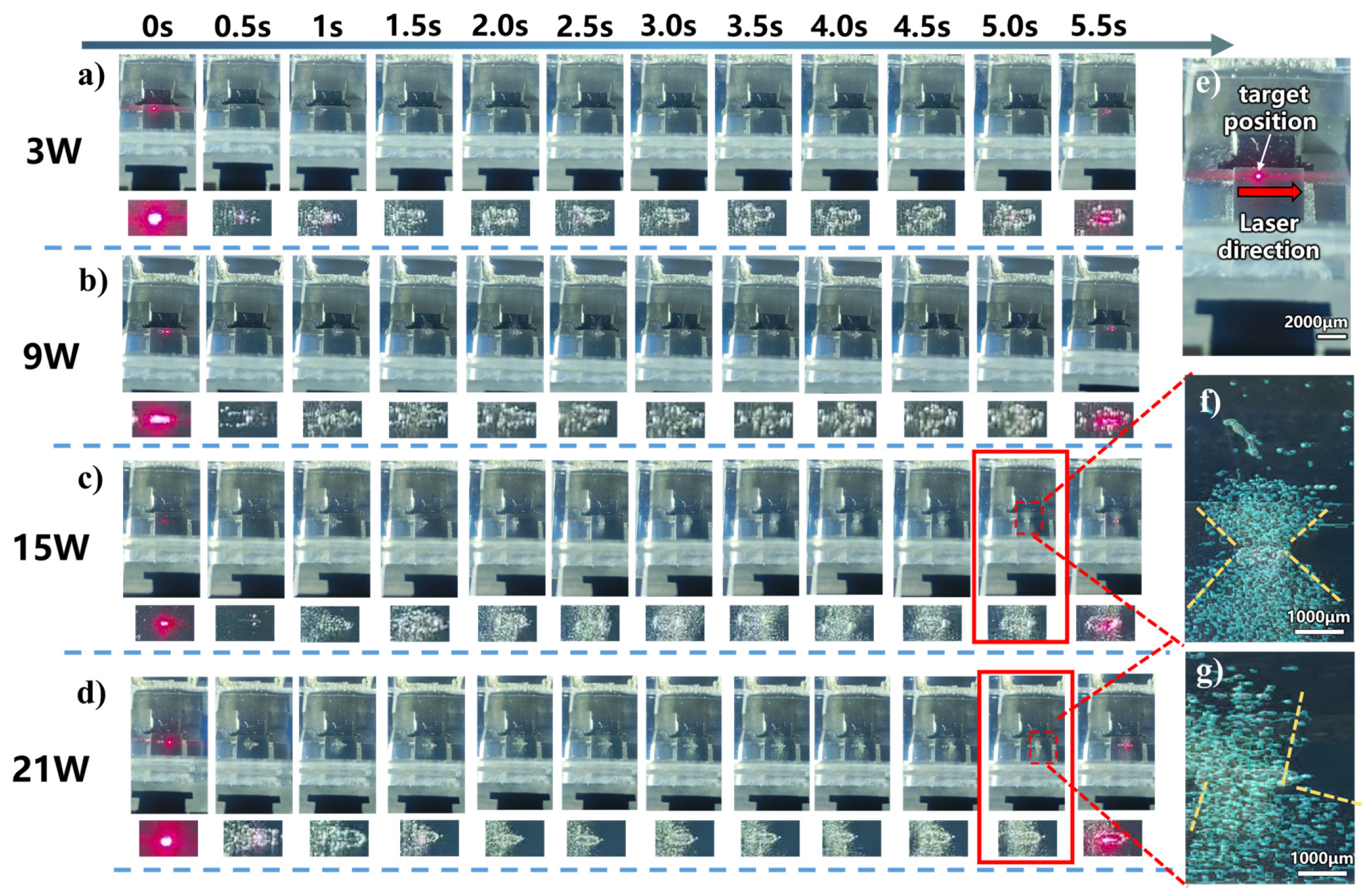
3.1.2. Jet Evolution Under Different Laser Powers
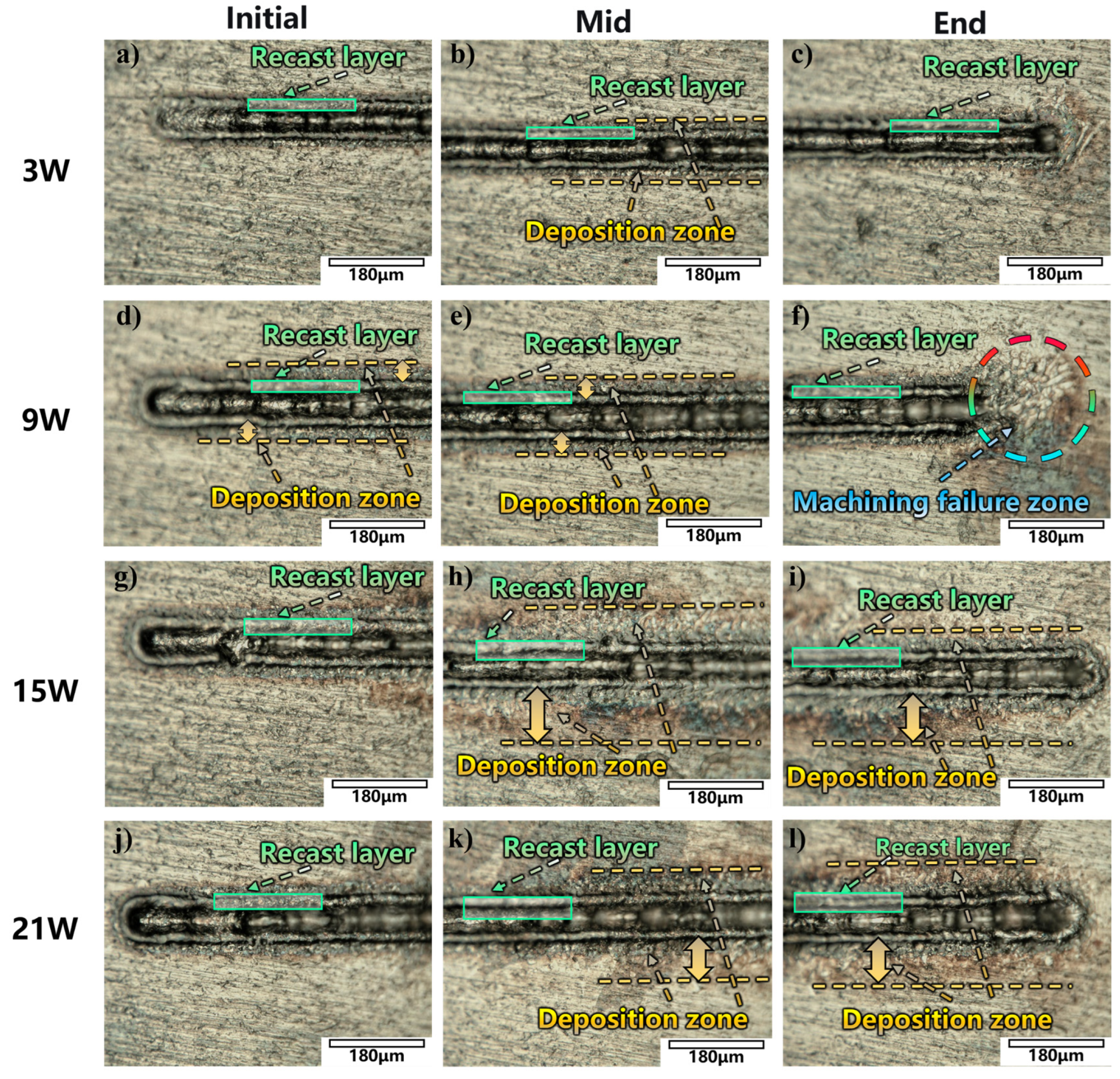
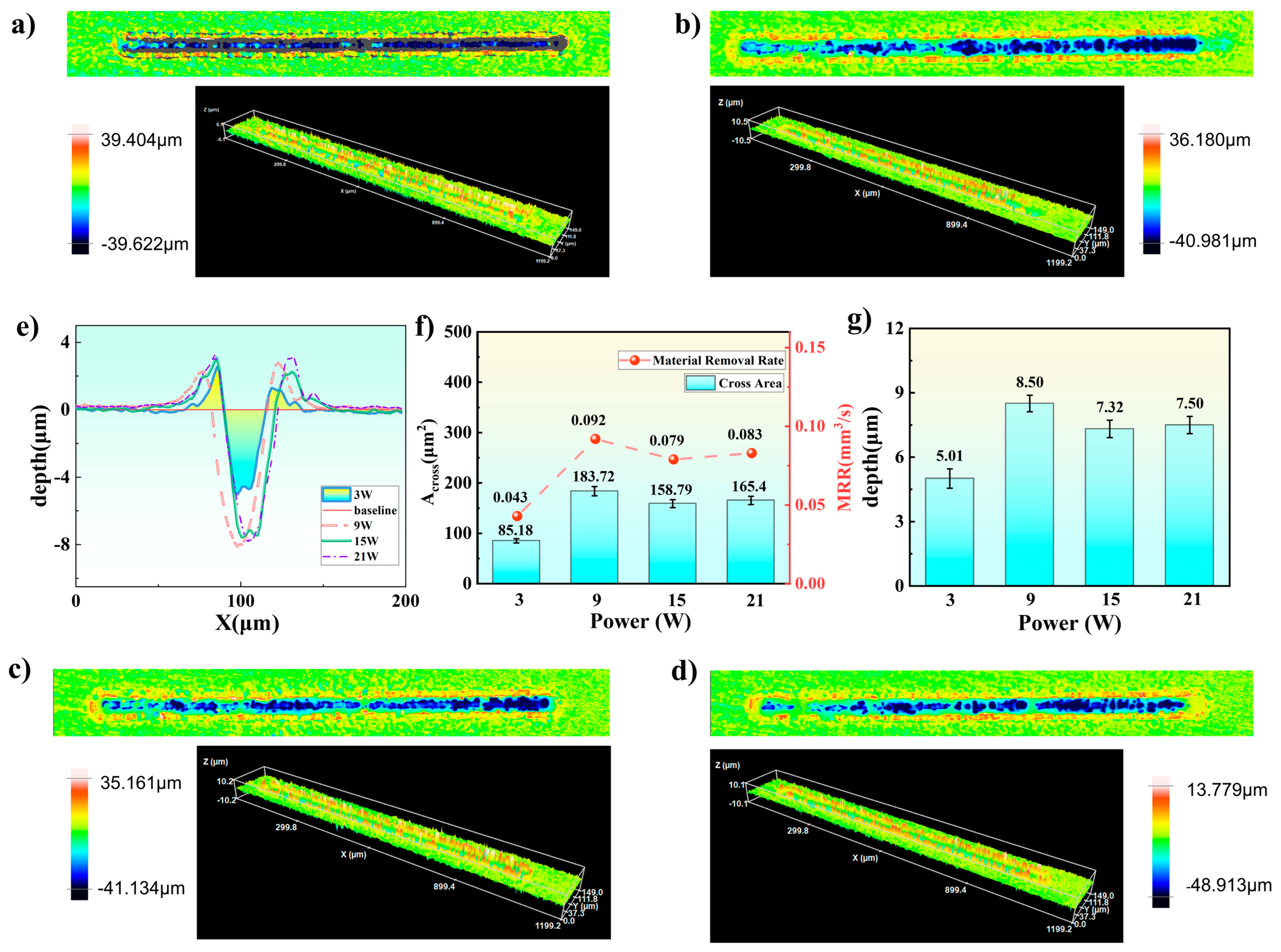
3.1.3. Effect of Different Laser Powers on Ablation Morphology and Resultant Surface Characteristics
3.2. Influence of Incidence Angle on Jet Behavior and Macroscopic Surface Morphology
3.2.1. Effect of Incidence Angle on Jet Morphology
3.2.2. Effect of Incidence Angle on Ablation Morphology and Resultant Surface Characteristics
3.3. Influence of Incidence Angle on Microstructure and Elemental Composition
4. Discussion
5. Conclusions
- (1)
- Under a liquid layer thickness of 1 mm and a laser power of 15 W, a vertically symmetric conical jet morphology was formed. Under normal incidence, the maximum material removal rate of 0.092 mm3/s was achieved at 9 W. However, as the laser power further increased, the material removal rate did not improve correspondingly but instead decreased, indicating that bubble aggregation at higher powers negatively affected processing efficiency.
- (2)
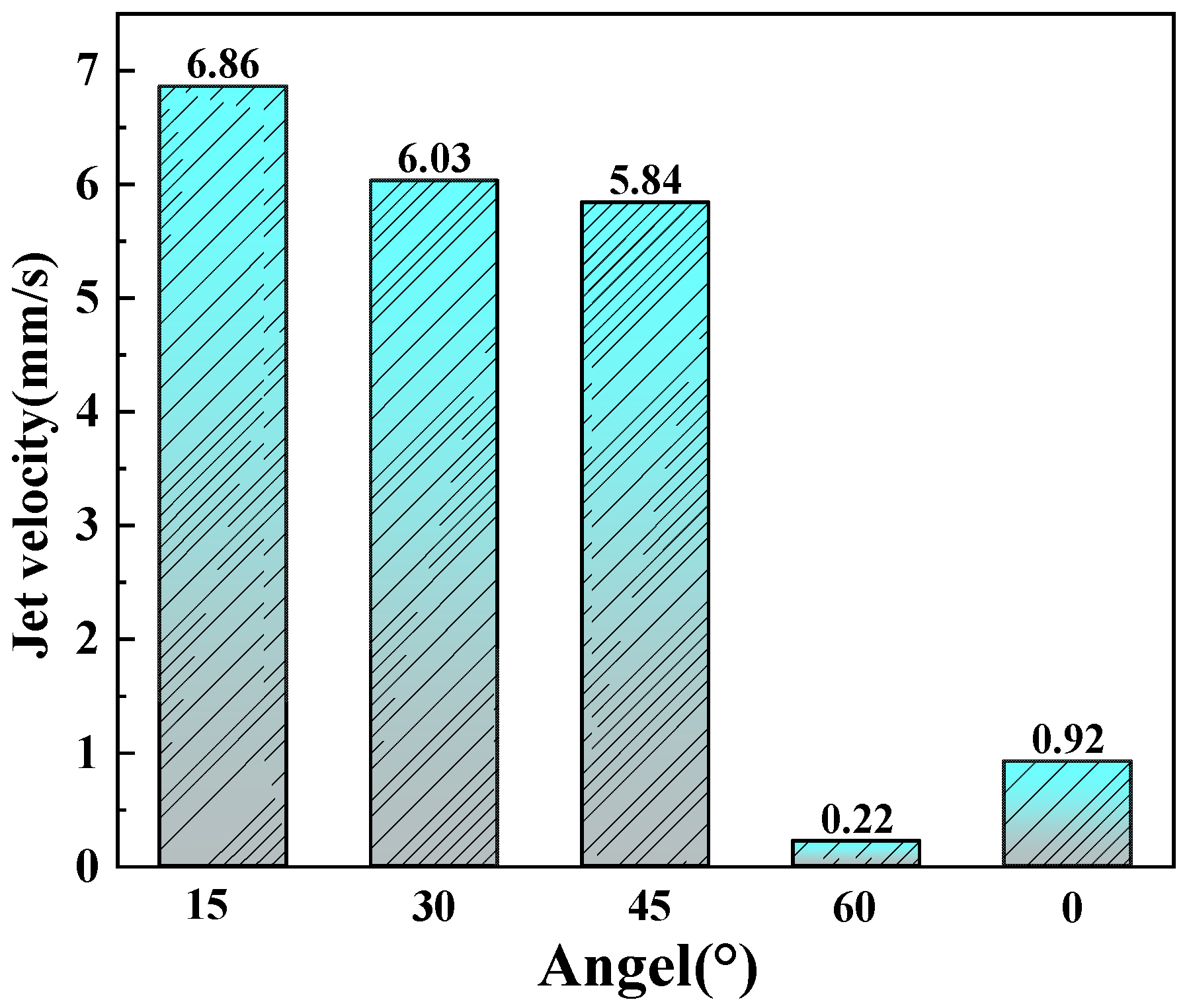
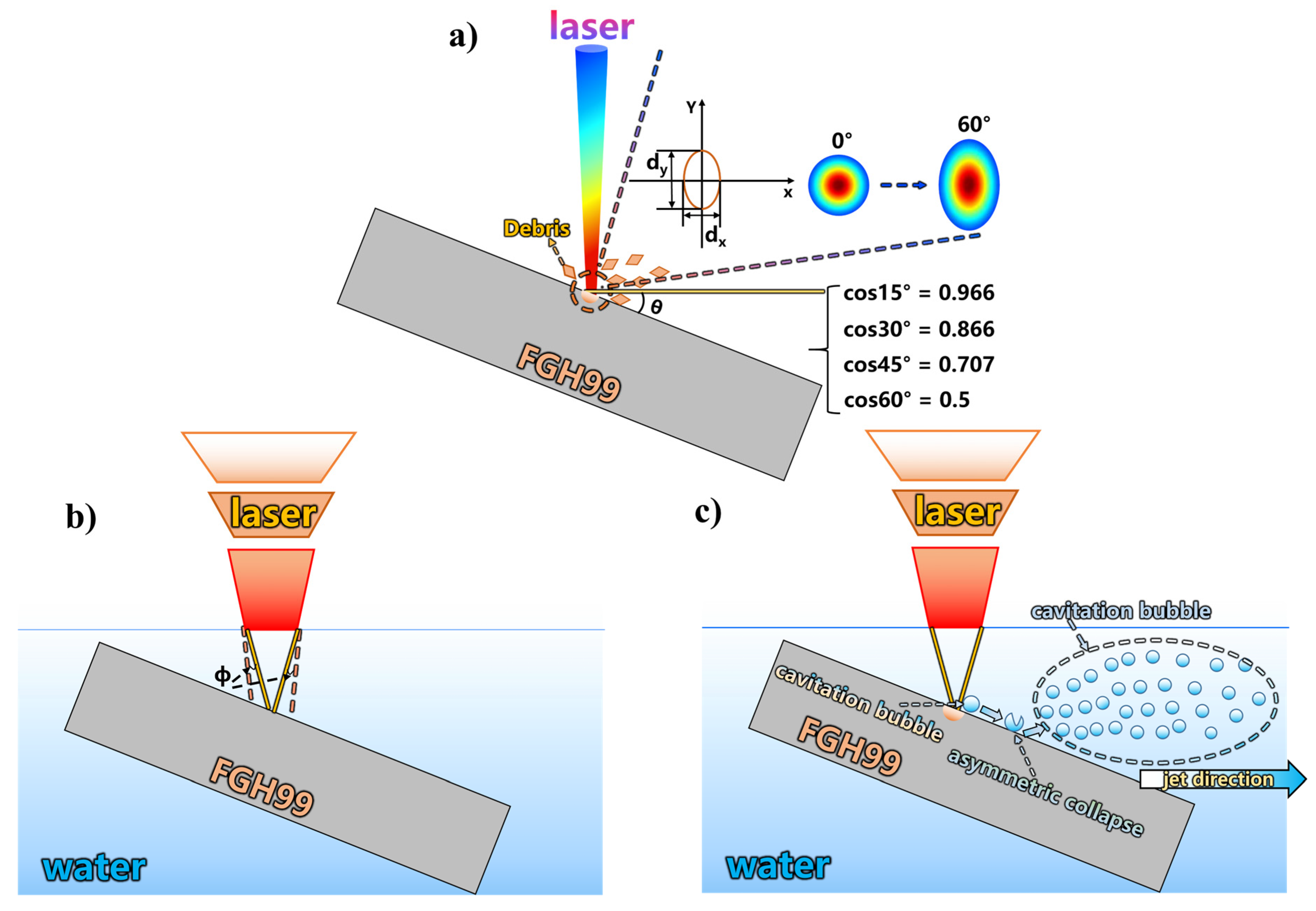
- At a sample inclination angle of 15°, the jet exhibited the maximum velocity, along with the best straightness and convergence, reaching a jet velocity of 6.86 mm/s. At this angle, the jet demonstrated optimal stability and directionality, providing favorable dynamic conditions for efficient debris removal.
- (3)
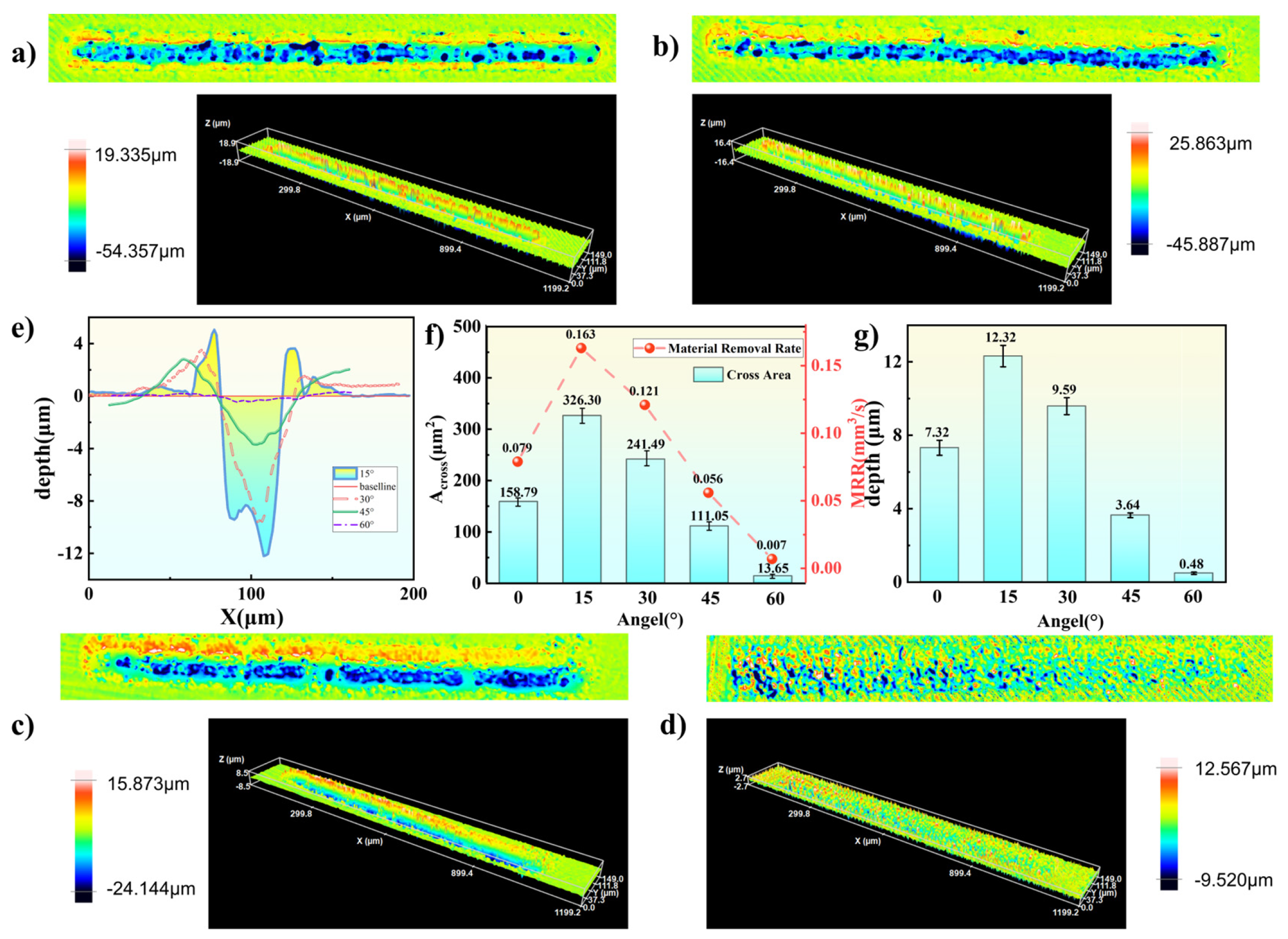
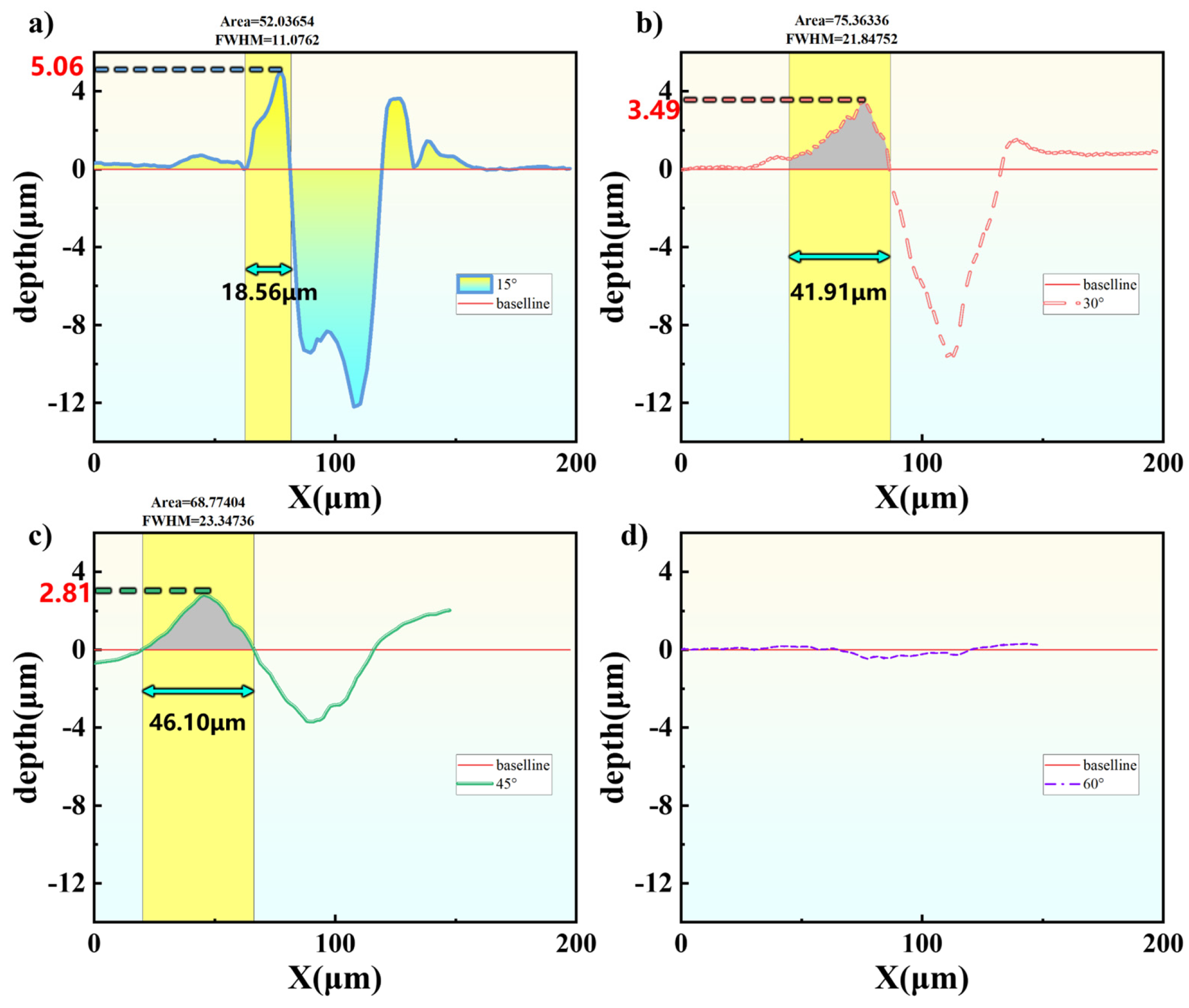
- Under the processing conditions of 1 mm liquid thickness and 15 W laser power, the sample inclination angle significantly influenced the material removal rate. Compared to 0.079 mm3/s at 0°, the material removal rates at 15° and 30° increased by 106.3% and 53.1%, reaching 0.163 mm3/s and 0.121 mm3/s, respectively. This demonstrated that the directional microjet generated by optimizing the inclination angle could effectively assist the ablation process, significantly enhancing material removal efficiency.
- (4)
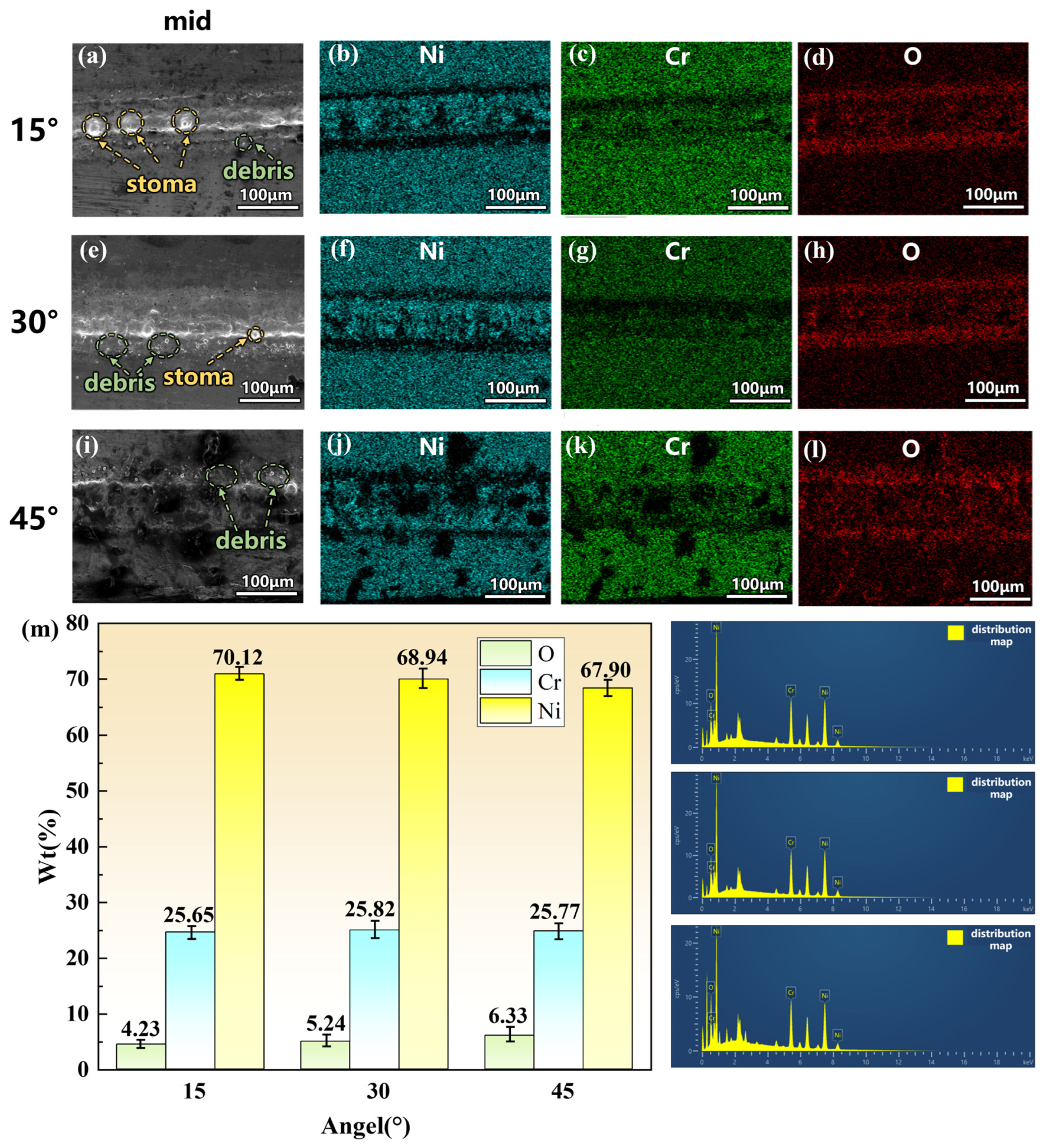
- EDS analysis revealed the lowest oxygen content (4.35 ± 0.15%), indicating the strongest debris removal capability and the thinnest recast layer. Conversely, higher oxygen content at 30° (5.23 ± 0.18%) and 45° (6.33 ± 0.22%) suggested less effective debris removal and greater surface oxidation. These microscopic results validated 15° as the optimal angle for laser-induced microjet-assisted ablation of FGH99.
Author Contributions
Funding
Institutional Review Board Statement
Informed Consent Statement
Data Availability Statement
Acknowledgments
Conflicts of Interest
References
- Qu, Z.; Liu, K.; Wang, B.; Chen, Z. Fretting fatigue experiment and finite element analysis for dovetail specimen at high temperature. Appl. Sci. 2021, 11, 9913. [Google Scholar] [CrossRef]
- Dai, Q.; Chen, L.; Pan, J.; Shi, L.; Liu, D.; Huang, W.; Wang, X. Rapid surface texturing to achieve robust superhydrophobicity, controllable droplet impact, and anti-frosting performances. Friction 2024, 12, 291–304. [Google Scholar] [CrossRef]
- Huang, W.; Mei, X.; Fan, Z.; Wang, W.; Jiang, G.; Zhang, J.; Wang, Y. Adaptive positioning technology of film cooling holes in hollow turbine blades. Aerosp. Sci. Technol. 2024, 145, 108878. [Google Scholar] [CrossRef]
- Li, C.; Wang, K.; Zakharov, O.; Cui, H.; Wu, M.; Zhao, T.; Yan, Y.; Geng, Y. Damage evolution mechanism and low-damage grinding technology of silicon carbide ceramics. Int. J. Extrem. Manuf. 2025, 7, 022015. [Google Scholar] [CrossRef]
- Qu, S.; Li, L.; Yang, Y.; Sun, Y.; Pang, S.; Yin, G.; Li, Z.; Xu, X.; Yao, P. Surface roughness and damage evaluation of carbon fiber reinforced silicon carbide composites after laser ablation treatment and subsequent grinding. J. Eur. Ceram. Soc. 2025, 46, 118082. [Google Scholar] [CrossRef]
- Zhang, Z.; Zhang, Q.; Wang, Y.; Xu, J. Modeling of the temperature field in nanosecond pulsed laser ablation of single crystalline diamond. Diam. Relat. Mater. 2021, 116, 108402. [Google Scholar] [CrossRef]
- Zhang, J.; Zhang, Y.; Yong, J.; Hou, X.; Chen, F. Femtosecond laser direct weaving bioinspired superhydrophobic/hydrophilic micro-pattern for fog harvesting. Opt. Laser Technol. 2022, 146, 107593. [Google Scholar] [CrossRef]
- Zhong, L.; Wang, Z.; Wang, G.; He, X.; Wei, G.; Chen, L.; Wu, X.; Luo, M.; Kang, G.; Li, Z. Corrosion Properties of Ni60/WC coating with abrasion-resistant microdimples ablated by Nanosecond Laser. Adv. Eng. Mater. 2022, 24, 2200328. [Google Scholar] [CrossRef]
- Chen, S.; Zhu, W.; Zhou, J.; Yu, Y.; Xie, Y.; Deng, Y. High-Precision and Low-Damage microchannel construction via magnetically assisted laser-Induced plasma ablation for micro-thermoelectric devices. ACS Appl. Mater. Interfaces 2022, 14, 46756–46764. [Google Scholar] [CrossRef] [PubMed]
- Han, J.; Cai, M.; Lin, Y.; Liu, W.; Luo, X.; Zhang, H.; Zhong, M. 3D re-entrant nanograss on microcones for durable superamphiphobic surfaces via laser-chemical hybrid method. Appl. Surf. Sci. 2018, 456, 726–736. [Google Scholar] [CrossRef]
- Soltani, B.; Azarhoushang, B.; Zahedi, A. Laser ablation mechanism of silicon nitride with nanosecond and picosecond lasers. Opt. Laser Technol. 2019, 119, 105644. [Google Scholar] [CrossRef]
- Nivas, J.J.J.; Allahyari, E.; Vecchione, A.; Hao, Q.; Amoruso, S.; Wang, X. Laser ablation and structuring of CdZnTe with femtosecond laser pulses. J. Mater. Sci. Technol. 2020, 48, 180–185. [Google Scholar] [CrossRef]
- Qiu, P.; Guo, Y.; Huang, L.; Li, J.; Huang, J.; Wang, M.; Zhang, Z.; Xu, S. Patterned laser ablation of microgrooves with Controllable Cross-Sections. Adv. Mater. Technol. 2023, 8, 2300333. [Google Scholar] [CrossRef]
- Barmina, E.V.; Stratakis, E.; Barberoglou, M.; Stolyarov, V.; Stolyarov, I.; Fotakis, C.; Shafeev, G. Laser-assisted nanostructuring of Tungsten in liquid environment. Appl. Surf. Sci. 2012, 258, 5898–5902. [Google Scholar] [CrossRef]
- Lian, Z.; Yang, J.; Wang, J.; Zhou, D.; Xu, J.; Yu, H. Texturing of superhydrophobic Ti6Al4V surfaces by dynamic water film assisted laser micromachining. Opt. Laser Technol. 2025, 181, 112044. [Google Scholar] [CrossRef]
- Wang, J.; Xu, J.; Chen, G.; Lian, Z.; Yu, Z.; Hou, Y.; Wang, J.; Li, Y.; Yu, H. Microstructural evolution, mechanical properties and surface quality of TC11 titanium alloy subjected to waterjet-assisted laser direct inscription. J. Mater. Res. Technol. 2023, 24, 4986–5006. [Google Scholar] [CrossRef]
- Long, J.; Eliceiri, M.H.; Ouyang, Y.; Zhang, Y.; Xie, X.; Grigoropoulos, C.P. Effects of immersion depth on the dynamics of cavitation bubbles generated during ns laser ablation of submerged targets. Opt. Lasers Eng. 2021, 137, 106334. [Google Scholar] [CrossRef]
- Han, J.; Tong, L.; He, B.; Kong, L.; Li, Q.; Wang, D.; Ding, K.; Lei, W. Investigation on high-aspect-ratio silicon carbide ceramic microchannel by using waterjet-assisted laser micromachining. Int. J. Adv. Manuf. Technol. 2024, 134, 4127–4140. [Google Scholar] [CrossRef]
- Yu, X.; Jiang, L.; Luan, Q.; Cai, Y.; Song, Q.; Wang, B.; Liu, Z. Investigation of mechanism and surface morphology on the femtosecond laser ablation of silicon nitride under different auxiliary processing environments. Ceram. Int. 2023, 49, 13425–13434. [Google Scholar] [CrossRef]
- Zhou, J.; Xu, R.; Jiao, H.; Bao, J.-D.; Liu, Q.-Y.; Long, Y.-H. Study on the mechanism of ultrasonic-assisted water confined laser micromachining of silicon. Opt. Lasers Eng. 2020, 132, 106118. [Google Scholar] [CrossRef]
- Jang, H.J.; Park, M.A.; Sirotkin, F.V.; Yoh, J.J. Laser-induced microjet: Wavelength and pulse duration effects on bubble and jet generation for drug injection. Appl. Phys. B 2013, 113, 417–421. [Google Scholar] [CrossRef]
- Guo, Y.; Qiu, P.; Xu, S.; Cheng, G.J. Laser-induced microjet-assisted ablation for high-quality microfabrication. Int. J. Extrem. Manuf. 2022, 4, 035101. [Google Scholar] [CrossRef]
- Krasovitski, B.; Kislev, H.; Kimmel, E. Modeling photothermal and acoustical induced microbubble generation and growth. Ultrasonics 2007, 47, 90–101. [Google Scholar] [CrossRef]
- Ali, N.; Bashir, S.; Begum, N.; Kalsoom, U.I.; Rafique, M.S.; Husinsky, W. Effect of liquid environment on the titanium surface modification by laser ablation. Appl. Surf. Sci. 2017, 405, 298–307. [Google Scholar] [CrossRef]
- Wang, X.; Duan, J.; Jiang, M.; Ke, S.; Wu, B.; Zeng, X. Study of laser precision ablating texture patterns on large-scale freeform surface. Int. J. Adv. Manuf. Technol. 2017, 92, 4571–4581. [Google Scholar] [CrossRef]
- Michalek, A.; Batal, A.; Qi, S.; Penchev, P.; Bruneel, D.; See, T.L.; Dimov, S. Modelling ultrafast laser structuring/texturing of freeform surfaces. Appl. Surf. Sci. Adv. 2020, 2, 100036. [Google Scholar] [CrossRef]
- Saleh, B.E.A.; Teich, M.C.; Slusher, R.E. Fundamentals of Photonics. Phys. Today 1992, 45, 87. [Google Scholar] [CrossRef]
- Chen, J.; Chen, X.; Zhang, X.; Zhang, W. Effect of laser incidence angle on the femtosecond laser ablation characteristics of silicon carbide ceramics. Opt. Lasers Eng. 2024, 172, 107849. [Google Scholar] [CrossRef]
- Tangwarodomnukun, V.; Likhitangsuwat, P.; Tevinpibanphan, O.; Dumkum, C. Laser ablation of titanium alloy under a thin and flowing water layer. Int. J. Mach. Tools Manuf. 2015, 89, 14–28. [Google Scholar] [CrossRef]
- Swinehart, D.F. The Beer-Lambert Law. J. Chem. Educ. 1962, 39, 333. [Google Scholar] [CrossRef]
- Deng, R.R.; He, Y.Q.; Qin, Y. Measuring pure water absorption coefficient in the nearinfrared spectrum (900–2500 nm). J. Remote Sens. 2012, 16, 192–206. [Google Scholar] [CrossRef]
- Blake, J.R.; Taib, B.B.; Doherty, G. Transient cavities near boundaries. Part 1. Rigid boundary. J. Fluid Mech. 1986, 170, 479–497. [Google Scholar] [CrossRef]







| C | Cr | B | Fe | Mo | Al | Ti | Nb | W | Ni |
|---|---|---|---|---|---|---|---|---|---|
| 0.03 | 20 | 13 | 4.3 | 2.9 | 3.6 | 3.5 | 1.5 | 0.35 | Other |
| Processing Liquid Media, M. | Water |
|---|---|
| Laser power, P (W) | 3 W, 9 W, 15 W, 21 W |
| laser energy density | 5.1 J/cm2, 15.3 J/cm2, 25.5 J/cm2, 35.7 J/cm2 |
| Angle, θ (°) | 0°, 15°, 30°, 45°, 60° |
| Pulse frequency, f (kHz) | 30 kHz |
| Number of Scan passes, N | 500 (constant) |
| Laser Wavelength, λ (nm) | 1064 nm |
| Laser Spot Diameter | 50 μm |
| Liquid thickness, l (mm) | 1.0 |
| Pulse Width | 100 ns |
| Overlap Ratio | 66.7% |
Disclaimer/Publisher’s Note: The statements, opinions and data contained in all publications are solely those of the individual author(s) and contributor(s) and not of MDPI and/or the editor(s). MDPI and/or the editor(s) disclaim responsibility for any injury to people or property resulting from any ideas, methods, instructions or products referred to in the content. |
© 2026 by the authors. Licensee MDPI, Basel, Switzerland. This article is an open access article distributed under the terms and conditions of the Creative Commons Attribution (CC BY) license.
Share and Cite
Duan, Y.; Zhang, Z.; Zhu, Z.; Ni, J. Study on the Material Removal Mechanism of FGH99 by Laser-Induced Microjet Assisted Ablation at Different Incidence Angles. Micromachines 2026, 17, 475. https://doi.org/10.3390/mi17040475
Duan Y, Zhang Z, Zhu Z, Ni J. Study on the Material Removal Mechanism of FGH99 by Laser-Induced Microjet Assisted Ablation at Different Incidence Angles. Micromachines. 2026; 17(4):475. https://doi.org/10.3390/mi17040475
Chicago/Turabian StyleDuan, Yixin, Zhen Zhang, Zefei Zhu, and Jing Ni. 2026. "Study on the Material Removal Mechanism of FGH99 by Laser-Induced Microjet Assisted Ablation at Different Incidence Angles" Micromachines 17, no. 4: 475. https://doi.org/10.3390/mi17040475
APA StyleDuan, Y., Zhang, Z., Zhu, Z., & Ni, J. (2026). Study on the Material Removal Mechanism of FGH99 by Laser-Induced Microjet Assisted Ablation at Different Incidence Angles. Micromachines, 17(4), 475. https://doi.org/10.3390/mi17040475