


Study on the Material Removal Mechanism of FGH99 by Laser-Induced Microjet Assisted Ablation at Different Incidence Angles


Round 1
Reviewer 1 Report
Comments and Suggestions for AuthorsThis manuscript systematically investigates the laser-induced microjet-assisted ablation of the FGH99 nickel-based superalloy at different incidence angles. By integrating rigorous experimental characterization (machining videos analysis based on OpenCV, white light interferometry, and SEM/EDS), a comprehensive study on the material removal mechanism is conducted. The results show that the identification of 15° as the optimal angle, with a 106.3% improvement in material removal rate. Overall, this work is technically reliable, well-organized, and offers significant contributions to the role of solid boundaries in microjet-assisted laser processing. Therefore, this manuscript can be accepted for publication in the journal Micromachines. Additionally, there are some suggestions that can be considered to further improve the article quality:
- As a key evaluation metric, the method for obtaining the jet velocity from the video is not described in the manuscript. A brief explanation should be added to the original text.
- Changes in the angle affect the laser energy density, which is a primary factor influencing the jet. However, this result is only partially represented by numbers in the text and is not intuitive enough. It is recommended to add a chart to visually illustrate the variation in energy density.
- The conclusions highlight the improvement in material removal rate, but do not sufficiently address the practical implications. It would strengthen the paper to briefly mention potential applications of this technique, such as in cooling hole drilling or surface texturing of aerospace components.
- Please unify the labeling format in the figures. The sub-figure labels in Fig. 6 are inconsistent with those in other figures; please correct this.
- The authors are not cited in the second reference.
- The differences between subfigures of Figure 5 should be illustrated in the manuscript for clear presentation.
Author Response
|
Comments 1: As a key evaluation metric, the method for obtaining the jet velocity from the video is not described in the manuscript. A brief explanation should be added to the original text. |
|
Response 1: Thank you for the reviewer’s comment. We have added the method for measuring the flow velocity in subsection 2.2 of this paper. The changes can be found on page 3, lines 103–107 of the original manuscript. “[Using OpenCV, the displacement of the jet front between different frames is tracked. After the jet morphology stabilizes, adjacent frames are selected to calculate the distance traveled by the jet front. This distance is then divided by the frame interval (0.5 s), and the average value is taken as the jet velocity under the given condition]” |
|
Comments 2: Changes in the angle affect the laser energy density, which is a primary factor influencing the jet. However, this result is only partially represented by numbers in the text and is not intuitive enough. It is recommended to add a chart to visually illustrate the variation in energy density. |
|
Response 2: Thank you for the reviewer’s comment. We have added a figure to the paper for a more intuitive illustration. The changes can be found on page 22, lines 653–654 of the original manuscript(original Fig.15 of the paper). |
|
Comments 3: The conclusions highlight the improvement in material removal rate, but do not sufficiently address the practical implications. It would strengthen the paper to briefly mention potential applications of this technique, such as in cooling hole drilling or surface texturing of aerospace components. |
|
Response 3: Thank you for the reviewer’s comment. We have added specific application scenarios in the final conclusion section. The changes can be found on page 25, lines 764、765 of the original manuscript. “[The findings provide important theoretical foundations and practical guidance for sur-face microstructuring(anti-icing performance enhancement)and efficient material removal(film cooling hole drilling)of high-temperature alloys in the aerospace industry]” |
|
Comments 4: Please unify the labeling format in the figures. The sub-figure labels in Fig. 6 are inconsistent with those in other figures; please correct this. |
|
Response 4: Thank you for the reviewer’s comment. The labeling format in the figures has been corrected. The changes can be found on page 13, line 388 of the original manuscript(original Fig.8 of the paper). |
|
Comments 5: The authors are not cited in the second reference. |
|
Response 5: Thank you for the reviewer’s comment. The author names have been added to the reference. The changes can be found on page 26, lines 788–789 of the original manuscript. “[Dai Q , Chen L , Pan J ,et al. Rapid surface texturing to achieve robust superhydrophobicity ,controllable droplet impact,and anti-frosting performances [J].Friction , 2024, 12(2):291-304.DOI:10.1007/s40544-023-0757-3]” |
|
Comments 6: The differences between subfigures of Figure 5 should be illustrated in the manuscript for clear presentation. |
|
Response 6: Thank you for the reviewer’s comment. A detailed explanation has been added in the figure caption. The changes can be found on page 13, lines 388–389 of the original manuscript. “[Jet evolution and jet velocity at different incidence angles (15 W, 1 mm liquid thickness),15°(a), 30°(b), 45°(c), 60°(d)]” |
Reviewer 2 Report
Comments and Suggestions for AuthorsThe authors present an experimental investigation of the effects of laser power and sample inclination angle on the characteristics of pulsed laser machined grooves in FGH99. The irradiations were performed with the sample submerged in water to leverage microjet formation. The main conclusion is that inclining the sample by 15° relative to the direction perpendicular to the incident laser beam optimizes groove morphology and enables microjets to carry debris away from the machined region.
- The manuscript could benefit from more descriptive figure captions
- The features in the images from figure 3 (currently labeled figure 2 in the manuscript) are difficult to analyze. Clarity could be improved by indicating the direction of the incident laser and the location of the target on an example image.
- It would be helpful for the authors to indicate how many process grooves were machined and analyzed for each set of conditions (laser power and incident angle). It should be demonstrated that these results are consistent and reproducible.
- Section 3.1.2 paragraph 4 states, “Although the jet velocity increased slightly with power, its expulsion capacity was limited, preventing timely removal of the excessive bubbles. These retained bubbles coalesced and spread at the tail of the processing zone, forming local accumulations that disrupted flow field stability”. However, the manuscript does not state how the jet velocities were determined or indicate the value of the jet velocities at 0-degree incidence. A clear methodology of determining jet velocity should be included in the methods. Additionally, it would be interesting to compare jet velocities determined at 0-degree incidence to the angles of inclination investigated in this study.
- Section 3.1.3 paragraph 2 states, “Under different laser powers, the thickness of the recast layer on the machined grooves gradually increased with increasing power, while remaining within a relatively small range and exhibiting a symmetric distribution on both sides of the groove”. This is not clear from the images in figure 4 (currently labeled figure 3 in the manuscript). The criteria used to determine the boundaries of the recast layer and the measurements along the machining groove (with an average and standard deviation) would help clarify this statement.
- Section 3.1.3 paragraph 3 states, “However, at 9 W, an incompletely ablated region with debris splashing was observed at the tail of the processed groove”. This feature is quite different from the features observed at the other laser powers. It would be helpful to state how consistent this feature was observed over multiple process grooves.
- Section 3.1.3 paragraph 4 states, “Consequently, a substantial number of cavitation bubbles remained in the processing zone without being promptly expelled”. Is it possible to measure the density of bubbles over time using the images in figure 3 (currently labeled figure 2 in the manuscript) to help support this claim?
- Figure 5 (currently labeled figure 4 in the manuscript) shows the average cross-sectional areas and depth of the grooves produced with different laser powers. The standard deviation of the cross-sectional area and depth along the groove should be indicated to determine statistical significance across the range of laser powers. Additionally, comparison across different fluences could be made easier by standardizing the color map.
- Section 3.1.3 paragraph 8 states, “However, the bubble removal capacity was limited by the finite jet-induced debris removal efficiency, leading to substantial bubble accumulation in the processing zone. These accumulated bubbles not only strongly scattered and absorbed subsequent laser pulses but also impeded effective energy transfer to the material surface, resulting in significant energy waste and, consequently, a decrease in ablation efficiency rather than an increase”. Without standard deviations of the groove cross-sectional area and depth the statistical significance of the “decrease in ablation efficiency” cannot be determined. Include standard deviations and perform t-test to determine statistical significance.
- Section 3.2.1 paragraph 1 states, “The analysis in the previous section indicated that under normal incidence (0°), the average maximum ablation depth and surface morphology quality deteriorated due to disordered bubble generation, accumulation of secondary bubbles on the surface, and significant randomness in jet direction”. It is unclear if this deterioration references the quality of the ablation depth and surface morphology along the grooves or across fluences.
- The features in many of the images presented in figure 6 (currently labeled as figure 5 in the manuscript) are difficult to observe. In some cases, the text indicating the number of edges is blocked and impossible to read.
- Figure 7 (currently labeled as figure 6 in the manuscript) presents the jet velocity as a function of angle, however the jet velocity at normal incidence is not presented. It would be interesting to the reader how the jet velocity at normal incidence compares to the jet velocities at different angles of inclination.
- Section 3.2.2 states paragraph 3, “post-processing observations also reveal that the recast layer thickness on the upper edge is significantly greater than that on the lower edge. At 15°, the recast layer on the upper edge is thinnest, and its thickness progressively increases with larger inclination angles.” Quantitative measurements of the recast layers and the criteria used to measure them should be included to help bolster this argument.
- Figure 9 (currently labeled figure 8 in the manuscript) shows the average cross-sectional areas and depth of the grooves produced with different laser powers. The standard deviation of the cross-sectional area and depth along the groove should be included as error bars. Additionally, comparison across different fluences could be made easier by standardizing the color map.
- Section 3.3.1paragraph 3 states, “Quantitative comparison of oxygen content at the three angles showed the lowest value at 15° (4.51%), increasing to 5.03% at 30°, and further to 6.08% at 45°”. The variation of these measurements across multiple process grooves should be included along with a t-test to prove statistical significance of the differences of oxygen content across different processing conditions.
- The main conclusion of this work is that groove processing using a laser power of 15 W was optimized at a sample inclination angle of 15 degrees. This was largely attributed to the formation of directional microjets efficiently removing the debris from the ablation zone. However, as the angle of inclination is further increased, the elongation of the spot size decreases the overall fluence which resulted in lower quality grooves. It would be interesting to determine if angles greater than 15 degrees could be optimized by standardizing the fluence delivered to the sample by compensating with an increase in laser power or more tightly focusing the laser beam.
The following comments are formatting issues and were not factored into my review
- All figures after figure 2 are mislabeled
- Section 3.3.1 is missing the final digit.
- The figure caption in figure 7 (currently labeled figure 6) is bolded where all others are not.
Comments for author File:  Comments.pdf
Author Response
|
Comments 1: The manuscript could benefit from more descriptive figure captions. |
|
Response 1: Thank you for this suggestion. I have checked all figure captions and added detailed annotations for the subfigures. The revisions can be found on page 6, lines 174-176; page 11, line 342; page 18, lines 549; page 19, lines 559-560; and page 21, lines 598-599. |
|
Comments 2: The features in the images from figure 3 (currently labeled figure 2 in the manuscript) are difficult to analyze. Clarity could be improved by indicating the direction of the incident laser and the location of the target on an example image. |
|
Response 2: Thank you for pointing this out. I have added the laser moving direction and the target area in the figure. The modification is located on page 6, line 173. ”[ Fig.3 Jet evolution at different laser powers and a liquid thickness of 1 mm:3 W (a); 9 W (b); 15 W (c); 21 W (d); processing example (e); OpenCV processed image (15W 5.0s) (f); OpenCV processed image (21W 5.0s) (g) ]” |
|
Comments 3: It would be helpful for the authors to indicate how many process grooves were machined and analyzed for each set of conditions (laser power and incident angle). It should be demonstrated that these results are consistent and reproducible. |
|
Response 3: Thank you for this comment. The experimental results presented in the manuscript were repeated three times to ensure rigor. This has been stated in Section 2.2, page 3, paragraph1, lines 99-10. “[To ensure the reliability and reproducibility of the experimental results, each set of experimental parameters was repeatedly machined and analyzed using at least three independent machining grooves]” |
|
Comments 4: Section 3.1.2 paragraph 4 states, “Although the jet velocity increased slightly with power, its expulsion capacity was limited, preventing timely removal of the excessive bubbles. These retained bubbles coalesced and spread at the tail of the processing zone, forming local accumulations that disrupted flow field stability”. However, the manuscript does not state how the jet velocities were determined or indicate the value of the jet velocities at 0-degree incidence. A clear methodology of determining jet velocity should be included in the methods. Additionally, it would be interesting to compare jet velocities determined at 0-degree incidence to the angles of inclination investigated in this study. |
|
Response 4: Thank you for this valuable comment. The method for measuring jet velocity has been added in Section 2.2, page 3, paragraph 2,lines 103-107. The jet velocities at different powers under 0° incidence have also been added, located on page 7, line 210. “[Using OpenCV, the displacement of the jet front between different frames is tracked. After the jet morphology stabilizes, adjacent frames are selected to calculate the distance traveled by the jet front. This distance is then divided by the frame interval (0.5 s), and the average value is taken as the jet velocity under the given condition,as shown in Fig .4
Fig. 4 . Diagram of jet velocity at different power under 0° and 1mm ]”
|
|
Comments 5: Section 3.1.3 paragraph 2 states, “Under different laser powers, the thickness of the recast layer on the machined grooves gradually increased with increasing power, while remaining within a relatively small range and exhibiting a symmetric distribution on both sides of the groove”. This is not clear from the images in figure 4 (currently labeled figure 3 in the manuscript). The criteria used to determine the boundaries of the recast layer and the measurements along the machining groove (with an average and standard deviation) would help clarify this statement. |
|
Response 5: T Thank you for this comment. I have measured the recast layer thickness using the average cross-sectional profiles and described the thickness, cross-sectional area, height, and distribution in detail. The revisions are located on page 10, paragraph 5, lines 313-324, and page 11, paragraph 1, lines 325-340. The modified content is shown in originally Fig.7 in the manuscript. “[To analyze the processing differences under different laser powers in more detail, we start from the cross-sectional profiles and further examine the variation characteristics of the recast layer, the results are shown in Fig.7 It can be observed that as the laser power increases, the height of the recast layer continuously rises: from a maximum of 2.533 μm at 3 W to 2.752 μm, 3.084 μm, and 3.241 μm at 9 W, 15 W, and 21 W, respectively. The thickness of the recast layer increases from 15.64 μm at 3 W to 19.28 μm at 15 W during the initial power increase, and then remains stable at approximately 19 μm when the power is further increased to 21 W. Meanwhile, the cross-sectional area of the recast layer continuously increases from 19.398 μm² at 3 W to a maximum of 38.042 μm² at 21 W. Under all power conditions, the recast layer exhibits a symmetric distribution on both sides of the ablated groove. The above phenomena can be attributed to the following factors. First, higher power implies greater energy input per unit time, leading to intensified material melting and vaporization; the ejected molten material rapidly cools and solidifies in the underwater environment to form a recast layer. Water has a significantly higher thermal conductivity than air, allowing it to quickly absorb heat from the molten material and suppress excessive accumulation. Even at low powers where a stable jet has not yet formed, the shock waves generated by the laser itself induce fluid motion, carrying away some debris and further limiting the thickness of the recast layer. Second, under normal incidence (0°), the laser energy follows a Gaussian symmetric distribution—rotationally symmetric about the optical axis, with maximum energy at the center and uniform attenuation toward the periphery. This ensures identical heating and melting conditions on both sides of the groove, resulting in a symmetric recast layer. Fig .7 Ablation cross-sections at 0° for different power levels,3 W (a), 9 W(b), 15 W(c), 21 W(d) Third, the recast layer mainly builds up upward rather than spreading significantly sideways. This is determined by the combined effects of rapid underwater solidification, surface tension, directional action of shock waves, and the Gaussian energy distribution. The high thermal conductivity of water causes the ejected molten material to solidify quickly, leaving no time for lateral spreading. Meanwhile, the surface tension of the melt tends to form a convex structure with small curvature to reduce surface energy, making it easier to stack vertically on top of the already solidified layer. Under high power, the laser-induced shock waves and cavitation bubble collapse produce microjets directed toward the workpiece surface, squeezing the melt toward the center of the groove rather than pushing it sideways. In addition, under normal incidence, the Gaussian beam has the highest energy at the center, so the melt is ejected upward from the bottom; the sidewalls have a large temperature gradient and solidify extremely quickly, preventing lateral flow. Subsequent scanning preferentially heats the already existing protruding areas, further enhancing vertical accumulation. Therefore, the height and cross-sectional area of the recast layer continuously increase, while the lateral thickness quickly stabilizes, exhibiting a symmetric buildup pattern dominated by upward growth]”
|
|
Comments 6: Section 3.1.3 paragraph 3 states, “However, at 9 W, an incompletely ablated region with debris splashing was observed at the tail of the processed groove”. This feature is quite different from the features observed at the other laser powers. It would be helpful to state how consistent this feature was observed over multiple process grooves. |
|
Response 6: Thank you for this comment. This phenomenon appeared repeatedly in the experiments. The results of the two additional repetitions are shown in Figure 1. A supplementary note has been added in the manuscript on page 8, paragraph 2, lines 219-221, as follows.
Figure 1 Ablation morphology at 9 W and 0° |
|
Comments 7: Section 3.1.3 paragraph 4 states, “Consequently, a substantial number of cavitation bubbles remained in the processing zone without being promptly expelled”. Is it possible to measure the density of bubbles over time using the images in figure 3 (currently labeled figure 2 in the manuscript) to help support this claim? |
|
Response 7: Thank you for this insightful suggestion. I attempted to perform this measurement but was unable to achieve it due to the limited resolution of the recording equipment and the overlap of many bubbles. I regret that this is not feasible at the current stage.
|
|
Comments 8: Figure 5 (currently labeled figure 4 in the manuscript) shows the average cross-sectional areas and depth of the grooves produced with different laser powers. The standard deviation of the cross-sectional area and depth along the groove should be indicated to determine statistical significance across the range of laser powers. Additionally, comparison across different fluences could be made easier by standardizing the color map |
|
Response 8: Thank you for this comment. I have recalculated and reorganized the measured results (average ablation depth and cross-sectional area), added error bars, and performed t‑tests to confirm significance. The revisions are located on page 9, line 253 (originally Fig 6), and page 10, paragraph 3,lines 270-278 and page 10, paragraph 2,291-298. Regarding the 3D color map, it mainly reflects the single‑point maximum ablation depth. Since these values differ under each condition, I have kept them separate for clearer presentation. The specific modifications are as follows: “[Further analysis of the effect of power on ablation depth showed that when the power increased from 3 W to 9 W, the cross-sectional area expanded significantly, and the average maximum ablation depth increased from 5.01±0.45 μm to 8.50±0.39 μm—a substantial improvement of 69.7%. However, when the power was further increased to 15 W and 21 W, the ablation cross-section did not continue to expand; instead, it decreased slightly, with the average maximum ablation depth dropping to 7.32±0.41 μm and 7.50±0.40 μm, respectively (Fig. 5f). Statistical analysis (t-test) revealed that the ablation depth at 9 W was significantly greater than those at 3 W (t=10.22, p < 0.05), 15 W(t = 3.67, p < 0.05) and 21 W(t = 3.13, p < 0.05). The results showed that the cross-sectional area reached a maximum of 183.72±9.19 μm² at 9 W; the cross-sectional areas at 3 W, 15 W, and 21 W were 85.16±4.26 μm², 158.79±8.21 μm², and 165.40±8.47 μm², respectively. Based on Eq. (1), the material removal rates at the different powers were calculated to be 0.043 mm³/s, 0.092mm³/s, 0.079mm³/s, and 0.083mm³/s, Statistical analysis (Student’s t-test) revealed that the materials remove rate at 9 W was significantly greater than those at 3W (t=23.45, p < 0.05), 15 W(t = 6.61, p < 0.05) and 21 W (t = 4.13, p < 0.05) respectively]” |
|
Comments 9: Section 3.1.3 paragraph 8 states, “However, the bubble removal capacity was limited by the finite jet-induced debris removal efficiency, leading to substantial bubble accumulation in the processing zone. These accumulated bubbles not only strongly scattered and absorbed subsequent laser pulses but also impeded effective energy transfer to the material surface, resulting in significant energy waste and, consequently, a decrease in ablation efficiency rather than an increase”. Without standard deviations of the groove cross-sectional area and depth the statistical significance of the “decrease in ablation efficiency” cannot be determined. Include standard deviations and perform t-test to determine statistical significance. |
|
Response 9: Thank you for this comment. I have added error bars to the measured results and performed t tests to confirm significance. The revisions are located on page 9, line 253 (originally Fig 6), and page 10, paragraph 3, lines 270-278 and page 10, paragraph 2,291-298. Regarding the 3D color map, it mainly reflects the single‑point maximum ablation depth. Since these values differ under each condition, I have kept them separate for clearer presentation. The specific modifications are as follows: “[Further analysis of the effect of power on ablation depth showed that when the power increased from 3 W to 9 W, the cross-sectional area expanded significantly, and the average maximum ablation depth increased from 5.01±0.45 μm to 8.50±0.39 μm—a substantial improvement of 69.7%. However, when the power was further increased to 15 W and 21 W, the ablation cross-section did not continue to expand; instead, it decreased slightly, with the average maximum ablation depth dropping to 7.32±0.41 μm and 7.50±0.40 μm, respectively (Fig. 5f). Statistical analysis (Student’s t-test) revealed that the ablation depth at 9 W was significantly greater than those at 3 W (t=10.22, p < 0.05), 15 W (t = 3.67, p < 0.05) and 21 W (t = 3.13, p < 0.05). The results showed that the cross-sectional area reached a maximum of 183.72±9.19 μm² at 9 W; the cross-sectional areas at 3 W, 15 W, and 21 W were 85.16±4.26 μm², 158.79±8.21 μm², and 165.40±8.47 μm², respectively. Based on Eq. (1), the material removal rates at the different powers were calculated to be 0.043 mm³/s, 0.092mm³/s, 0.079mm³/s, and 0.083mm³/s, Statistical analysis (Student’s t-test) revealed that the materials remove rate at 9 W was significantly greater than those at 3W (t=23.45, p < 0.05), 15 W(t = 6.61, p < 0.05) and 21 W (t = 4.13, p < 0.05), respectively]”. |
|
Comments 10: Section 3.2.1 paragraph 1 states, “The analysis in the previous section indicated that under normal incidence (0°), the average maximum ablation depth and surface morphology quality deteriorated due to disordered bubble generation, accumulation of secondary bubbles on the surface, and significant randomness in jet direction”. It is unclear if this deterioration references the quality of the ablation depth and surface morphology along the grooves or across fluences. |
|
Response 10:Thank you for pointing this out. I have rephrased this paragraph. The modification is located on page 11, paragraph 2, lines 345-350, as follows: “[As the laser power increases, the average maximum ablation depth of the machining groove and the material removal rate show a decreasing trend, while the surface morphology quality deteriorates due to debris spattering and oxidation. As analyzed in the previous section, under normal incidence (0°), this is attributed to disordered bubble generation, accumulation of secondary bubbles on the surface, and significant randomness in the jet direction]”. |
|
Comments 11: The features in many of the images presented in figure 6 (currently labeled as figure 5 in the manuscript) are difficult to observe. In some cases, the text indicating the number of edges is blocked and impossible to read |
|
Response 11: Thank you for this comment. I have reprocessed this figure and redepicted the jet morphology. The revision is located on page 13, line 390 (originally Fig 8). |
|
Comments 12: Figure 7 (currently labeled as figure 6 in the manuscript) presents the jet velocity as a function of angle, however the jet velocity at normal incidence is not presented. It would be interesting to the reader how the jet velocity at normal incidence compares to the jet velocities at different angles of inclination |
|
Response 12: Thank you for this comment. I have added the jet velocity at 0° for comparison. The revision is located on page 14, line 394 (originally Fig. 9). “[
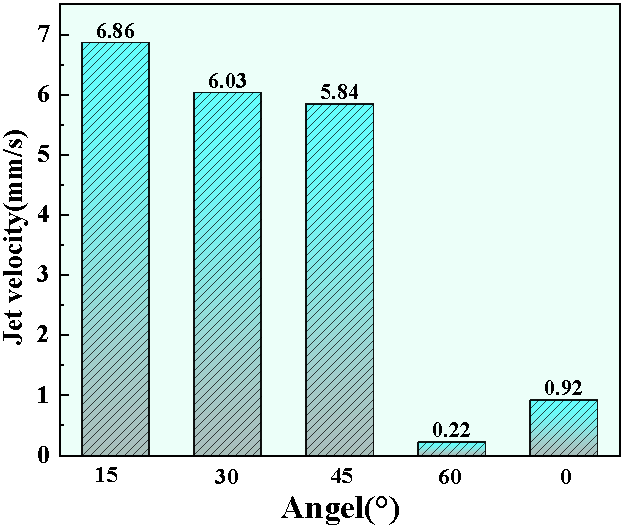
Fig.9 Diagram of jet velocity at different angles under 15 W and 1mm]” |
|
Comments 13 :Section 3.2.2 states paragraph 3, “post-processing observations also reveal that the recast layer thickness on the upper edge is significantly greater than that on the lower edge. At 15°, the recast layer on the upper edge is thinnest, and its thickness progressively increases with larger inclination angles.” Quantitative measurements of the recast layers and the criteria used to measure them should be included to help bolster this argument. |
|
Response 13: Thank you for this comment. I have measured the recast layer thickness using the average cross-sectional profiles and described the thickness, cross-sectional area, height, and distribution in detail. The revisions are located on page 17, paragraph 5,lines 521-530, and page 18, paragraph 1,lines 531-547 (originally Fig.12 in the manuscript). “[To analyze the processing differences under different inclination angles in more detail, we start from the cross-sectional profiles and further examine the variation characteristics of the recast layer; the results are shown in Fig.12. It can be observed that as the inclination angle increases, the height of the recast layer continuously decreases: from a maximum of 5.06 μm at 15° to 3.49 μm at 30° and 2.81 μm at 45°, while at 60° no obvious recast layer is formed. The thickness of the recast layer increases significantly with increasing angle: from 18.56 μm at 15° to 41.91 μm at 30° and further to 46.10 μm at 45°. Overall, the recast layer exhibits a “low and wide” trend. The cross-sectional area of the recast layer first increases and then slightly decreases: from 52.04 μm² at 15° to 75.36 μm² at 30°, and then drops slightly to 68.77 μm² at 45°.
Fig.12 Ablation cross-sections at 0° for different angel, 15 °(a), 30 °(b), 45 °(c), 60 °(d) It is worth noting that the recast layer is not symmetrically distributed on both sides of the machined groove. Post‑processing observations reveal that the recast layer thickness on the upper edge is significantly greater than that on the lower edge. At 15°, the recast layer on the upper edge is thinnest, and its thickness progressively increases with larger inclination angles. This phenomenon can be explained from two aspects. First, the energy distribution of obliquely incident laser exhibits asymmetry — along the incident direction (lower edge), the energy gradient is gentler and the effective range extends farther, allowing material to be fully vaporized and ejected. In contrast, opposite the incident direction (upper edge), the energy gradient is steeper with rapid attenuation, resulting in incomplete material removal and residual molten material that solidifies. Second, the directional jet scours downward along the inclined direction, transporting most debris to the lower edge region, resulting in a thinner recast layer there. The upper edge, being in the “upstream” region of the jet scouring, is not only difficult to clean effectively but also receives some debris deposition due to backflow vortices. Consequently, as the inclination angle increases, the recast layer thickness on the upper edge continuously increases, while the lower edge remains thin. At 60°, because the jet direction is almost parallel to the surface, no obvious continuous recast layer is formed.]” |
|
Comments 14 : Figure 9 (currently labeled figure 8 in the manuscript) shows the average cross-sectional areas and depth of the grooves produced with different laser powers. The standard deviation of the cross-sectional area and depth along the groove should be included as error bars. Additionally, comparison across different fluences could be made easier by standardizing the color map |
|
Response 14: Thank you for this comment. I have added error bars to the measured results and performed t‑tests to confirm significance. The revisions are located on page 16, line 476 (originally Fig. 11), and page 10, paragraph 1and paragraph 2, lines 497-520. “[Based on the average cross-sectional profiles (Fig. 11e), the machined cross-section at 15° exhibited a "straight-walled" shape without noticeable inclination. At 30° and 45°, the cross-sections transitioned to a "V-shape," with progressively decreasing aspect ratios and a rightward shift of the machined end as the angle increased. This reflects the elongation of the laser spot in the y-direction and the expansion of the irradiated area. The average maximum ablation depth peaked at 15° with a value of 12.32 ± 0.58 μm, followed by 9.59 ± 0.46 μm at 30°, 3.64 ± 0.13 μm at 45°, and 0.48 ± 0.06 μm at 60°. Com-pared to the value of 7.32 ± 0.41 μm at 0°, the average maximum depths at 15° and 30° increased by 68.3% and 31.0%, respectively. Statistical analysis (Student’s t-test) further confirmed that the ablation depth at 15° was significantly greater than those at 0° (t = 6.39,p < 0.05), 30°(t=6.36, p < 0.05),45° (t = 21.16, p < 0.05), and 60° (t = 33.98, p < 0.05). Using the processing method described previously and the material removal rate calculation formula (Eq. 1), the cross-sectional areas and material removal rates at different angles were calculated. The results showed that the cross-sectional area was largest at 15°, reaching 326 ± 16.10 μm²; at 30°, 45°, 60°, and 0°, the cross-sectional areas were 241.49 ± 14.76 μm², 111.05 ± 5.75 μm², 13.65 ± 1.26 μm², and 158.79 ± 3.76 μm², respectively. Statistical analysis (Student’s t-test) indicated that the cross-sectional area at 15° was significantly greater than those at 30° (t = 6.73,p < 0.05), 45° (t = 21.82,p < 0.05), 60° (t = 33.55, p < 0.05), and 0° (t = 17.54, p < 0.05). Based on Eq. (1), the material removal rates at each angle were calculated to be 0.163 mm³/s (15°), 0.121 mm³/s (30°), 0.056 mm³/s (45°), and 0.007 mm³/s (60°). Compared to the material removal rate of 0.079 mm³/s at 0°, the rates at 15° and 30° increased by 106.3% and 53.1%, respectively. This further demonstrates that at an inclination angle of 15°, the generated directional microjet can more effectively assist the machining process, thereby significantly enhancing ablation efficiency.]”
|
|
Comments 15: Section 3.3.1paragraph 3 states, “Quantitative comparison of oxygen content at the three angles showed the lowest value at 15° (4.51%), increasing to 5.03% at 30°, and further to 6.08% at 45°”. The variation of these measurements across multiple process grooves should be included along with a t-test to prove statistical significance of the differences of oxygen content across different processing conditions. |
|
Response 15: Thank you for this comment. I have reorganized the data, added error bars, and performed ttests. The revision is located on page 20, paragraph 1,lines 579-581. “[Quantitative comparison of oxygen content at the three angles showed the lowest value at 15° (4.35% ± 0.15%), with values increasing to 5.23% ± 0.18% at 30° and 6.33% ± 0.22% at 45°. Statistical analysis (Student’s t-test ) revealed that the oxygen content at 15° was significantly lower than that at 30° (t = 5.96, p < 0.05) and at 45° (t = 13.00, p < 0.05).]” |
|
Comments 16: The main conclusion of this work is that groove processing using a laser power of 15 W was optimized at a sample inclination angle of 15 degrees. This was largely attributed to the formation of directional microjets efficiently removing the debris from the ablation zone. However, as the angle of inclination is further increased, the elongation of the spot size decreases the overall fluence which resulted in lower quality grooves. It would be interesting to determine if angles greater than 15 degrees could be optimized by standardizing the fluence delivered to the sample by compensating with an increase in laser power or more tightly focusing the laser beam. |
|
Response 16: Thank you for this very constructive comment. I agree your suggestion, Unfortunately, I am unable to perform these additional experiments under my current conditions. However, this will certainly be a direction for my future research. I greatly appreciate your valuable suggestion |
|
Comments 17: All figures after figure 2 are mislabeled |
|
Response 17: Thank you very much for pointing this out. I apologize for this error. I have carefully rechecked and corrected all figure numbers in the revised manuscript to ensure they are sequential and accurate from figure 2 onwards. The issue may have originated during PDF conversion of the previous submission, but it has been fully addressed in the current revision. I am very grateful for your careful review. |
|
Comments 18 :Section 3.3.1 is missing the final digit. |
|
Response 18 : This has been corrected in the manuscript. The revision is located on page 18, line 548. |
|
Comments 19:The figure caption in figure 7 (currently labeled figure 6) is bolded where all others are not |
|
Response 19 :Thank you for noticing this. I have corrected it in the manuscript. The revision is located on page 13, lines 389-390 |



Round 2
Reviewer 2 Report
Comments and Suggestions for AuthorsThe authors have thoroughly addressed the comments raised in the previous review. The revisions have improved the clarity and quality of the manuscript, and I have no further concerns. I recommend the manuscript for publication.
