1. Introduction
The rapid transition from gasoline engines to electric motors, as well as the widespread adoption of renewable energy sources, necessitates the development of next-generation rechargeable batteries that can overcome the constraints of existing lithium-ion battery technology [
1,
2,
3]. Although lithium-ion batteries have achieved extraordinary commercial success, their finite natural abundance, unequal geopolitical distribution, growing costs, and intrinsic safety risks linked to dendritic lithium growth pose increasing hurdles to long-term sustainability [
4,
5]. These challenges have sparked a surge in interest in alternative charge carriers based on abundant material resources. Calcium-ion batteries (CIBs) are a promising option owing to their abundant natural supply, inexpensive cost, low redox potential (−2.87 V versus SHE), and high volumetric capacity (2073 mAh cm
−3). Furthermore, the divalent nature of Ca
2+ allows for the transfer of two electrons per ion, leading to high-energy-density storage with minimal material utilization [
6]. In this context, the present study specifically focuses on nonaqueous CIBs, where electrolyte chemistry and moisture sensitivity play a decisive role in governing Ca
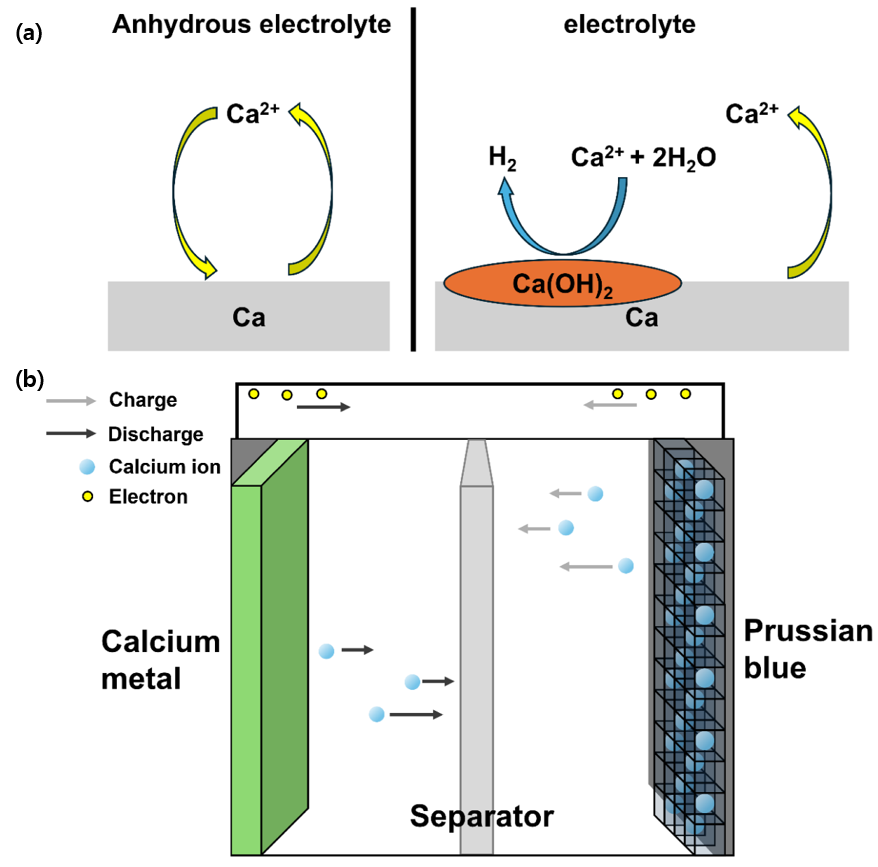
2+ transport, interfacial stability, and electrochemical reversibility (
Scheme 1a). In this context, the present study specifically focuses on nonaqueous CIBs, where electrolyte chemistry and moisture sensitivity play a decisive role in governing Ca
2+ transport, interfacial stability, and electrochemical reversibility.
Scheme 1.
Schematic of (a) calcium metal in anhydrous electrolyte and (b) a calcium metal half-cell.
Scheme 1.
Schematic of (a) calcium metal in anhydrous electrolyte and (b) a calcium metal half-cell.
Despite the inherent advantages of calcium, fundamental electrolyte issues have significantly hampered the practical implementation of nonaqueous CIBs (
Scheme 1b). Ca
2+ has significant electrostatic interactions with solvent molecules and counter anions, resulting in slow ion transport, high desolvation barriers, and unstable interphases at the electrode–electrolyte interface [
7,
8]. Electrolyte chemistry plays a crucial role in the development of calcium-based energy storage systems, affecting not only the transport kinetics but also the electrode reversibility, cycle life, and rate capability. Ca(ClO
4)
2 and Ca(PF
6)
2 are two of the most extensively studied options among the reported calcium salts owing to their comparatively weak anion–cation interactions and possible compatibility with organic solvents [
9,
10,
11]. However, both salts present significant and unique challenges [
12]. Commercial Ca(ClO
4)
2 is usually produced as a highly hydrated salt with water molecules that are tightly coupled to Ca
2+, which causes parasitic side reactions and severely impairs the electrochemical stability. Conversely, Ca(PF
6)
2 is inherently sensitive to moisture and susceptible to chemical and photochemical breakdown, producing reactive species that deteriorate the integrity of the electrodes and electrolyte [
2,
13]. Moreover, systematic investigations linking the synthesis, dehydration method, solvation behavior, and electrochemical performance are notably lacking, and few dependable, affordable synthesis techniques for high-purity Ca(PF
6)
2 have been reported.
The performance of the calcium electrolyte is significantly influenced by the type of solvent used. In addition to stabilizing the Ca
2+ solvation shell, facilitating effective desolvation at the electrode interfaces and offering a sufficiently broad electrochemical stability window, the solvent must concurrently dissolve the calcium salt at realistic concentrations [
14,
15]. Compared with traditional carbonate solvents, acetonitrile (ACN) is shown to be a particularly advantageous solvent in this study because of its high dielectric constant, low viscosity, excellent solvating ability for Ca
2+, and superior electrochemical stability. However, carbonate-based electrolyte systems, such as Ethylene Carbonate (EC) and Propylene Carbonate (PC), do not work well with calcium salts, leading to excessively high overpotentials and rapid cell failure. Crucially, we show that the electrochemical reversibility and salt solubility of ACN are highly sensitive to trace moisture, highlighting the crucial need for thorough dehydration. In nonaqueous CIBs systems, calcium electrochemistry is severely compromised by water contamination originating from hydrated salts, air exposure, or solvent impurities [
12]. Even trace levels of water in nonaqueous electrolytes can induce salt decomposition, promote the formation of electronically insulating interphases, and severely suppress reversible Ca
2+ transport. Therefore, the effective dehydration of both Ca(ClO
4)
2 and Ca(PF
6)
2 is essential. Two complementary dehydration techniques are thoroughly evaluated in this study: molecular sieve 3 Å (MS3A)-assisted dehydration, which selectively absorbs residual trace moisture from the salts, and extended vacuum drying, which removes structurally bound water. We demonstrate that MS3A treatment is particularly successful in reducing the water content to the ppm level, which stabilizes the electrolyte chemistry and greatly improves the electrochemical performance.
To assess the practical implications of the electrolyte chemistry and dehydration, we assemble Ca symmetric cells, Prussian blue (PB) half cells, and calcium-ion full cells with hard carbon (HC) anodes and PB cathodes. PB is used as a standard cathode because of its open framework and advantageous Ca+ transport pathways, whereas HC offers a stable and scalable anode platform. Our electrochemical investigation shows that thoroughly dehydrated Ca(ClO4)2 electrolytes enable highly reversible Ca2+ storage, resulting in long-term cycling stability of over 240 cycles and Coulombic efficiencies approaching 99%. Ca(PF6)2 electrolytes have greater high-rate capability but experience rapid capacity fading, indicating anion-dependent trade-offs between kinetics and stability. Overall, this study provides a complete and mechanistic understanding of calcium electrolyte chemistry. This study also explores salt synthesis, solvent selection, moisture control, and full-cell performance. This study establishes practical dehydration strategies and elucidates the structure–property–performance relationships of Ca(ClO4)2 and Ca(PF6)2 electrolytes, providing critical design principles for advancing CIBs as viable, low-cost, and sustainable energy-storage technologies.
3. Results and Discussion
The obtained Ca(PF
6)
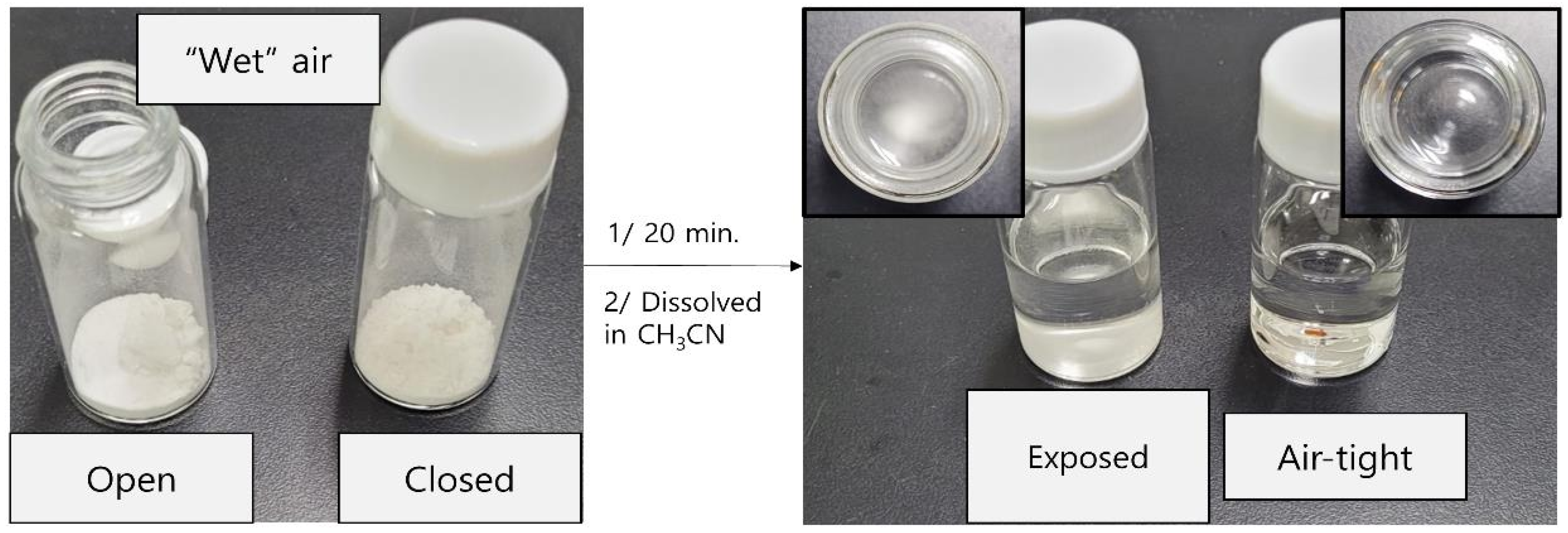
2 salt was a white crystalline solid that was extremely sensitive to moisture. Because of the humidity, the salt quickly decomposed after being exposed to the surrounding air for a few minutes. Ca(PF
6)
2 is extremely soluble in ACN (approximately 71 g per 100 mL) and highly hygroscopic; thus, controlling moisture during handling is crucial. Ca(PF
6)
2 was evaluated in two circumstances to assess the impact of moisture on its solubility: (i) exposed to ambient air and (ii) stored in an airtight environment.
Figure 2 shows that the airtight sample readily dissolved to create a clear solution, whereas the air-exposed (“wet”) Ca(PF
6)
2 became entirely insoluble in ACN. These results show that even trace amounts of absorbed water considerably impede the breakdown, which poses a significant obstacle to the synthesis of electrolytes.
As shown in
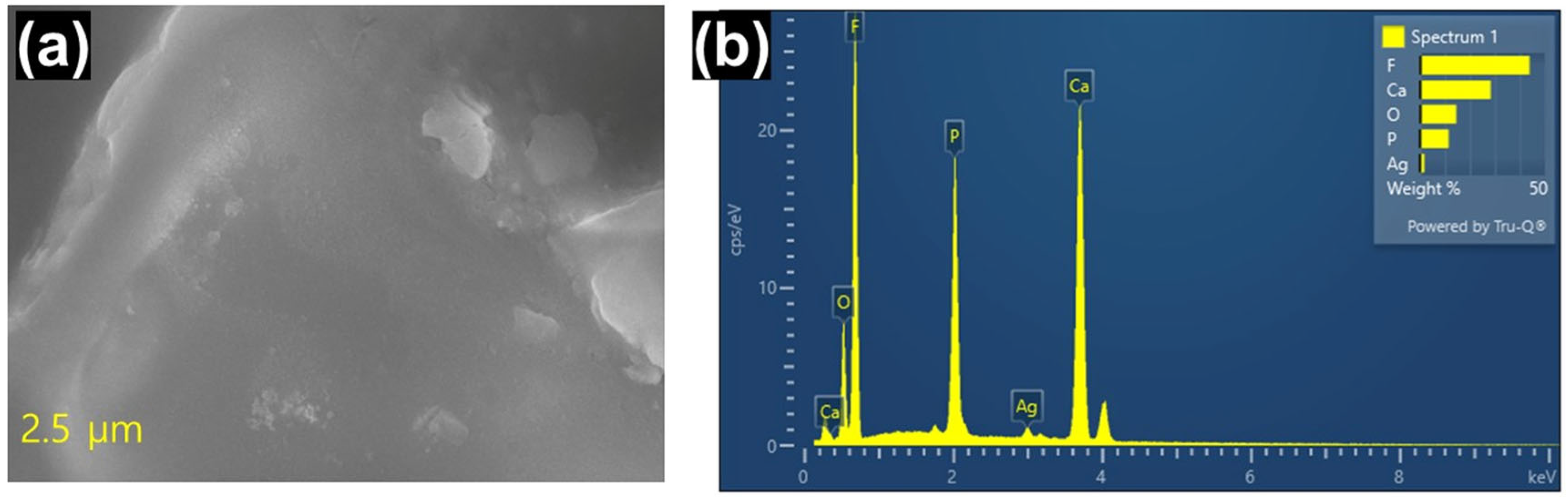
Figure 3, SEM-EDX was used to analyze the morphology and elemental content of the synthesized Ca(PF
6)
2 salt. Because Ca is highly sensitive to moisture, the SEM image in
Figure 3a does not show a well-defined morphology or crystal structure. Partial hydrolysis was caused by brief exposure to ambient air during sample transfer, which is consistent with the increased oxygen signal observed in the EDX spectrum (
Figure 3b and
Table 1). Minor anion degradation is indicated by the P:F atomic ratio (1:6.21), which differs significantly from the ideal PF
6− stoichiometry (1:6) [
24,
25]. Additionally, the predicted value of 1:2:12 for Ca(PF
6)
2 is much higher than the Ca:P:F molar ratio reported via EDX (1:0.53:3.27), indicating a considerable loss of PF
6− species. This breakdown is likely caused by the inherent reactivity of PF
6− with trace moisture, wherein progressive hydrolysis yields HF and PF
5, the latter of which is volatile under ambient conditions and causes detectable anion depletion [
13,
26,
27]. These results unequivocally show that moisture-induced decomposition occurred during ex situ sample handling, even when the synthesis was performed inside a dry glove box. The detected Ag signal originates from residual AgPF
4, which is not eliminated during filtration because of its high solubility in ACN. The product purity is expected to be approximately 97.7% based on the Ca:Ag molar ratio (1:0.023) and assuming minimal PF
6− breakdown. The carbon tape and SEM sample substrate were the sources of the Si and C contributions.
Calcium perchlorate exhibits pronounced hygroscopicity, and the commercial Ca(ClO
4)
2 salt exists as a tetrahydrate (Ca(ClO
4)
2·4H
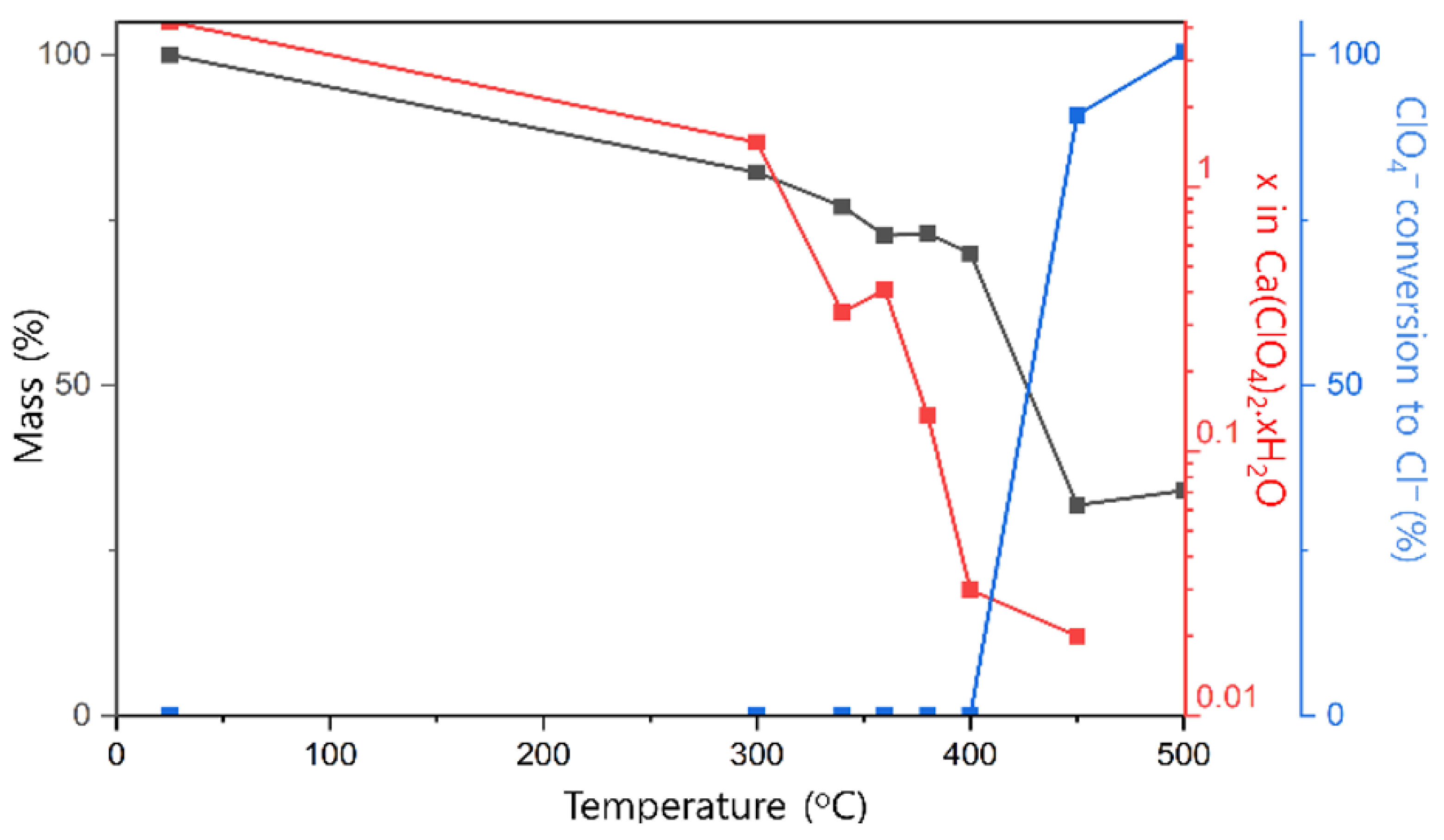
2O). Consequently, rigorous dehydration is essential before electrolyte formulation. To identify an optimal dehydration temperature, thermogravimetric analysis (
Figure 4) was performed on Ca(ClO
4)
2·4H
2O samples annealed between 300 and 500 °C. Progressive mass loss from 300 to 400 °C corresponds to stepwise removal of coordinated water, while the ClO
4− anion remains stable throughout this temperature range. However, annealing at ≥450 °C induces significant ClO
4− decomposition, evidenced by conversion to CaCl
2 upon dissolution of the annealed product in ACN. These results indicate that ≈390 °C represents the upper limit for thermal dehydration without inducing perchlorate degradation. In the subsequent experiment, it was found that the vacuum drying result at 190 °C was similar to the result of the above experiment, and subsequent experiments were conducted using vacuum drying.
The Karl Fischer titration results (
Table 2) clearly demonstrate the progressive removal of moisture from Ca(ClO
4)
2 through sequential dehydration treatments. Commercial Ca(ClO
4)
2 contains a high water content of 11,281 ppm (≈1.12 wt%), corresponding to 4.1 mol of bound water per mole of salt. Treatment with MS3A alone reduces the moisture level to 4560 ppm, indicating partial removal of free and weakly bound water. In contrast, Synthesized Ca(ClO
4)
2 prolonged vacuum drying is substantially, decreasing the water content to 802.3 ppm. Notably, combining vacuum drying with subsequent MS3A-assisted dehydration further suppresses the residual moisture to 11.2 ppm for Synthesized Ca(ClO
4)
2, approaching the intrinsic moisture level of dry acetonitrile. These results demonstrate that MS3A is particularly effective at scavenging trace residual water once the bulk and coordinated hydration water has been removed by vacuum drying, enabling near-complete dehydration of the electrolyte salt.
These results demonstrate that MS3A is most effective when applied after moisture has been reduced to the sub-0.1 wt% range, which is consistent with the limited adsorption capacity of the desiccant. Combining the TGA and KF titration results confirmed that Ca(ClO4)2 was stably dehydrated without pyrolysis of anions through heat treatment near 390 °C or vacuum drying for a long duration. To remove the remaining trace-level moisture, an optional MS3A drying should be performed in parallel. This anhydrous Ca(ClO4)2 electrolyte was used in all subsequent Ca(ClO4)2 coin cells.
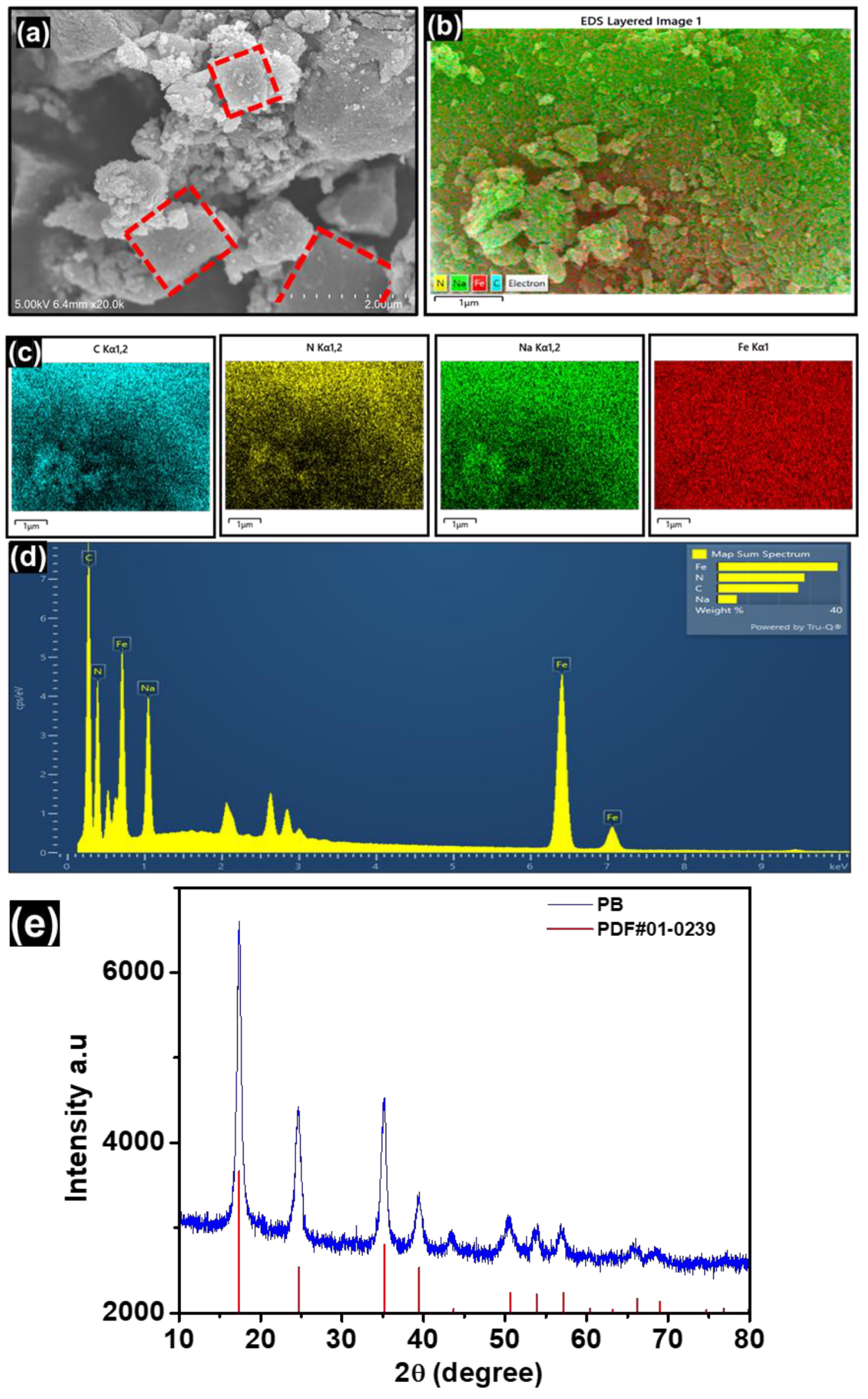
The morphological and compositional properties of the synthesized PB were investigated using SEM and EDX, as illustrated in
Figure 5. The SEM image (
Figure 5a) illustrates that the PB particles have a highly agglomerated but distinguishable cubic morphology, composed of several interparticle gaps and irregularly shaped microcrystallites with rough surfaces. Apparently hierarchical architecture is advantageous for boosting effective electrochemical kinetics by shortening ion-diffusion paths and facilitating electrolyte penetration. The uniform spatial distribution of Na, Fe, C, and N throughout the entirety of the particle domain has been further demonstrated by elemental mapping (
Figure 5b,c), suggesting that a uniform Prussian blue framework was successfully formed without any noticeable phase segregation. The chemical purity of the developed material is confirmed by the accompanying EDS spectrum (
Figure 5d, which displays clear and strong signals of Na, Fe, C, and N with no discernible impurity elements. Reversible Ca
2+ storage and sustained electrochemical performance in CIBs systems depend on favorable electronic connection and ion-accessible routes, which are suggested by the homogeneous elemental distribution and well-developed microstructure. The crystallographic phase of the Prussian Blue (PB) cathode material was examined by X-ray diffraction (XRD). As shown in
Figure 5e, the diffraction pattern matches well with PDF card No. 01-0239, corresponding to low-hydrous Prussian Blue (Fe
4[Fe(CN)
6]
3·xH
2O) with a face-centered cubic structure (space group Fm-3m). The characteristic reflections at 2θ ≈ 17.4° (200), 24.6° (220), 35.1° (400), and 50.4° (440) confirm the formation of a structurally intact PB framework without detectable impurity phases. No reflections associated with dehydrated Prussian White or secondary iron cyanide phases were observed.
Given the hydrous nature of PB, the potential contribution of coordinated water to the electrolyte moisture content was quantitatively evaluated using Karl Fischer (KF) titration. PB electrodes were prepared following the same protocol used for electrochemical testing, including vacuum drying at 70 °C. A mixture of PB and acetonitrile (ACN) at a 5:95 weight ratio was sonicated, and the dissolved moisture was measured to be 2177 ppm based on 0.5 g of PB. When normalized to the actual cell configuration—an electrode loading of 1.131 mg PB and an electrolyte volume of 150 μL ACN (117.9 mg)—the PB-derived moisture contribution corresponds to only ~20.9 ppm. This value is significantly lower than the moisture levels originating from insufficiently dehydrated calcium salts and falls within the ppm regime shown to have a negligible influence on electrochemical performance. These results confirm that, although PB is structurally hydrous, its contribution to electrolyte moisture under practical cell conditions is minimal and does not affect the conclusions of this study.
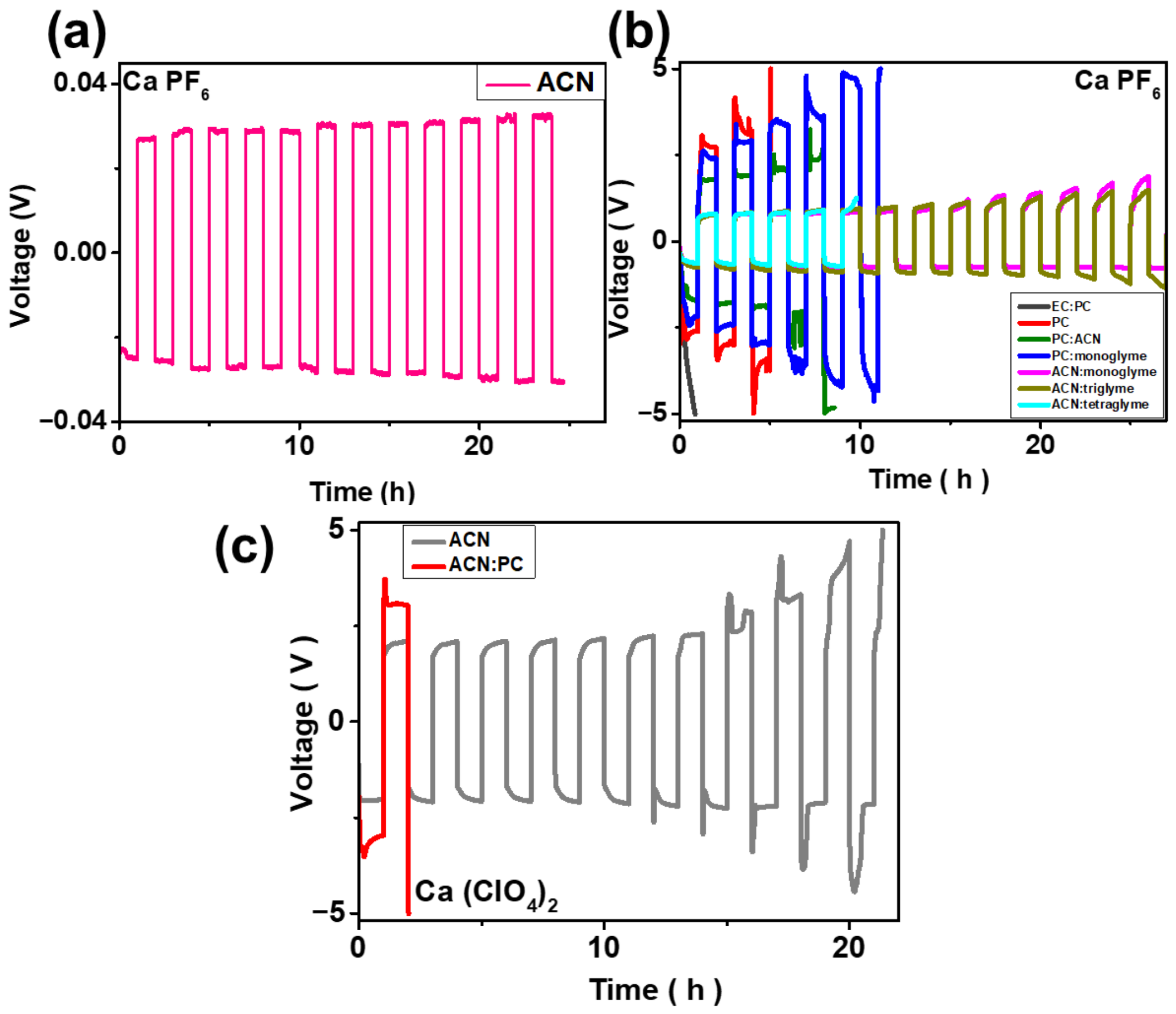
Symmetric Ca–Ca cells were assembled to quantitatively evaluate the plating/stripping overpotential of calcium metal in well-defined electrolyte environments. All of the Ca(PF
6)
2 electrolytes were prepared at a concentration of 0.5 M, and mixed-solvent systems employed binary solvents at a 1:1 volume ratio. When 0.5 M Ca(PF
6)
2 (synthesized via metathesis from AgPF
6) was dissolved in ACN, the Ca symmetric cell exhibited an exceptionally low overpotential of approximately 30 mV, indicative of highly facile Ca
2+ desolvation and interfacial charge transfer kinetics (
Figure 6a). Across many ACN-containing formulations, the Ca metal anode displayed remarkable reversibility during repeated plating and stripping. In contrast, electrolytes based on conventional carbonate solvents, specifically EC:PC mixtures commonly employed in Li- and Na-ion systems [
17,
28], failed to sustain even a single plating cycle on the Ca metal, underscoring their intrinsic incompatibility. Other PC-rich solvent systems also exhibited rapid cell failure, typically within fewer than six cycles. The initial interfacial overpotential further reflects these solvent-dependent behaviors: ACN-based electrolytes showed an initial overpotential of ≈0.6 V, whereas PC-only and ACN:PC (1:1
v/
v) systems exhibited significantly higher values of ~3.13 V and 1.8 V, respectively (
Figure 6b). To assess the salt dependence of these trends, symmetric cells employing 1 M Ca(ClO
4)
2 were also evaluated. It should be noted that the “initial overpotential” refers to the first-cycle transient polarization dominated by interfacial activation and Ca
2+ desolvation barriers, whereas the voltage plateaus in
Figure 6a,b correspond to the stabilized steady-state plating/stripping overpotential; therefore, these values are not expected to coincide quantitatively, particularly in kinetically hindered PC-containing electrolytes. The overall electrochemical behavior was qualitatively similar to that of Ca(PF
6)
2. In the PC:ACN (1:1
v/
v) system, Ca(ClO
4)
2 produced an initial overpotential of ≈3 V, which was substantially higher than the >2 V observed for the ACN-only formulation, thus highlighting the strong influence of solvent identity on interfacial Ca deposition/desolvation barriers. Notably, the ACN-based Ca(ClO
4)
2 electrolyte sustained stable cycling for up to six cycles, whereas PC-containing systems again failed prematurely (
Figure 6c).
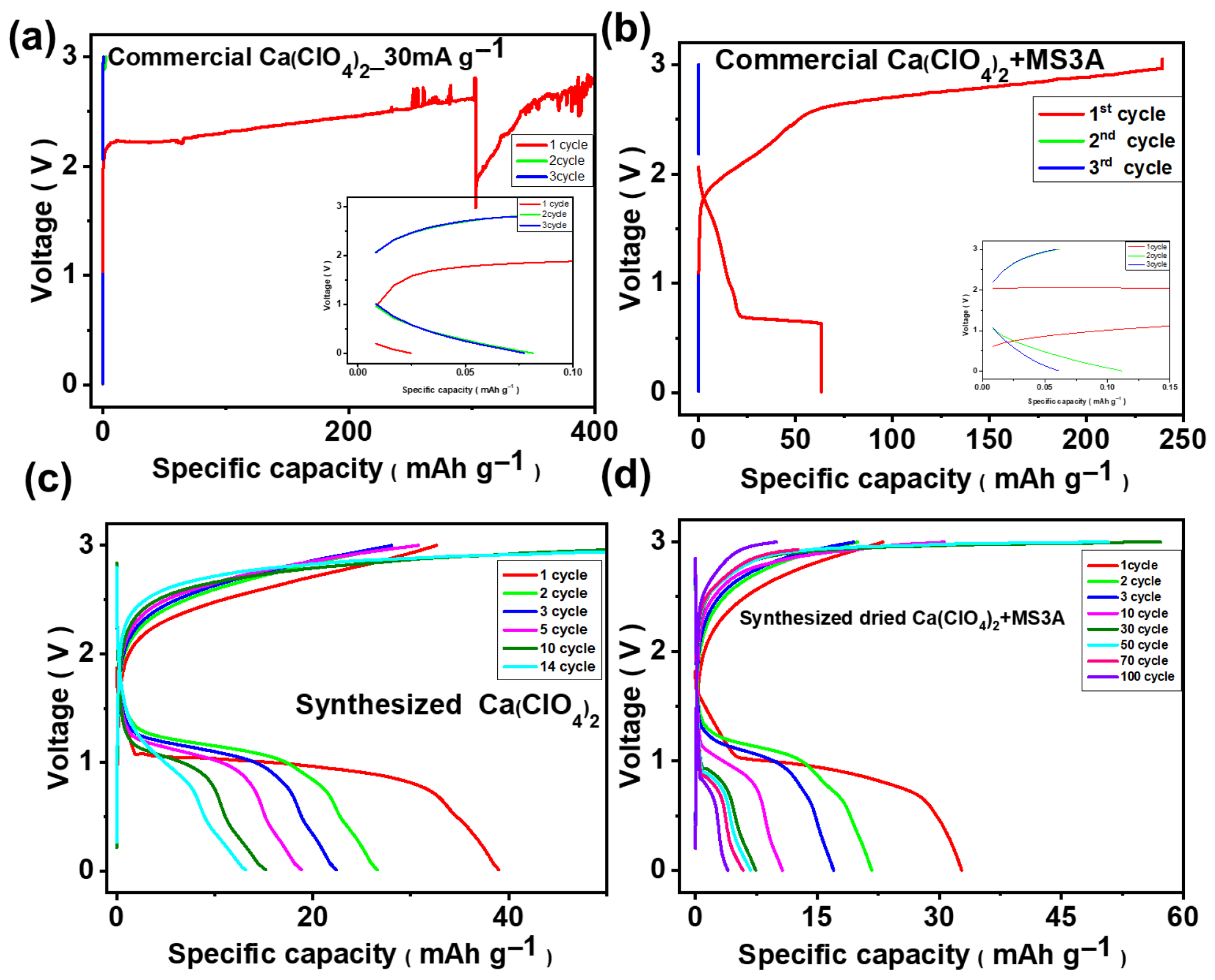
The electrochemical reversibility of calcium metal was first validated using Ca‖Ca symmetric cells. Based on the superior cycling stability observed in ACN, calcium metal batteries (CMBs) were assembled using PB as the cathode (cast on SS316 current collectors) and GF/A separators. For cells employing commercial Ca(ClO
4)
2 in ACN, the electrochemical performance was extremely poor. As shown in
Figure 7a, the untreated electrolyte delivered only ≈0.08 mAh g
−1 during the initial discharge, and no meaningful charge/discharge reversibility could be obtained, indicating that the intrinsic moisture content critically suppressed the Ca-ion electrochemistry. When the commercial salt was partially dehydrated using MS3A molecular sieves, the first discharge exhibited a more typical voltage profile; however, the subsequent charge/discharge immediately failed, with a capacity of only ≈0.11 mAh g
−1 (
Figure 7b), demonstrating that minimal drying is insufficient to stabilize the electrode–electrolyte interface. In contrast, the synthesized Ca(ClO
4)
2 salt, rigorously vacuum dried for one week, enabled reversible Ca-ion storage for up to 14 cycles (
Figure 7c). Nevertheless, the cell exhibited a rapid capacity decay, with the discharge capacity falling to ≈20 mAh g
−1 by the fifth cycle (approximately half of the first-cycle value), highlighting the remaining instability associated with Ca(ClO
4)
2. Remarkably, when the synthesized Ca(ClO
4)
2 was further conditioned with MS3A, the electrochemical performance improved dramatically, yielding charge–discharge profiles for up to 100 cycles (
Figure 7d). Although partial overlap of the voltage profiles is observed during the initial cycles, a gradual decrease in capacity is evident within the first 10 cycles, indicating progressive electrochemical stabilization rather than complete voltage-profile retention.
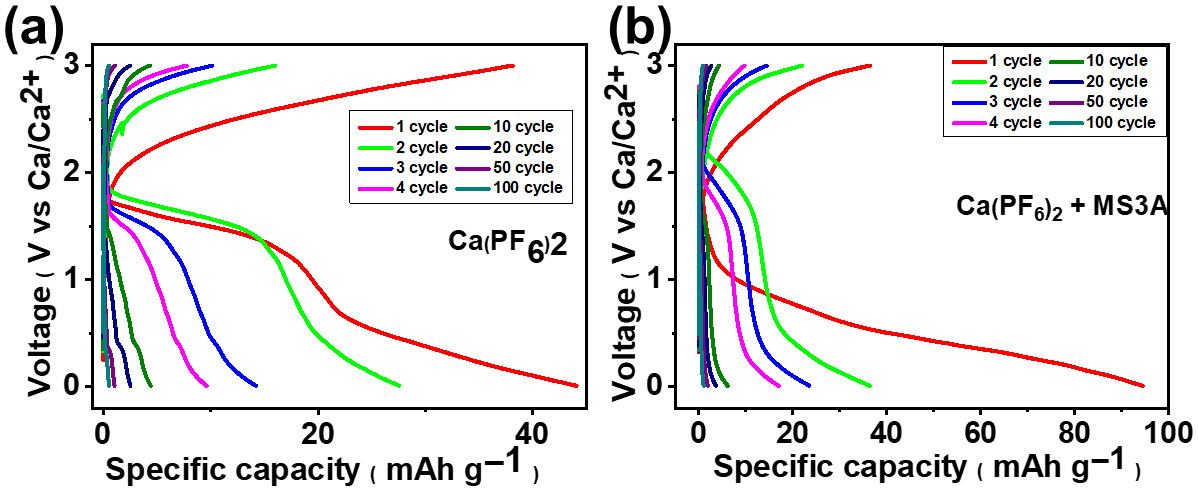
With the Ca(PF
6)
2-based electrolyte, the charging and discharging behavior was confirmed 100 times regardless of the additional MS3A drying process. However, compared with the Ca(ClO
4)
2-based electrolyte, the capacity decreased rapidly owing to the low stability of the electrolyte. The initial discharge capacity reached ≈44 mAh g
−1, which decreased to 10 mAh g
−1 by the fourth cycle and ≈5 mAh g
−1 by the tenth cycle (
Figure 8a). However, after MS3A-assisted drying, the Ca(PF
6)
2 electrolyte delivered a significantly higher first-cycle discharge capacity of 94.5 mAh g
−1, which was the highest among all of the evaluated electrolytes (
Figure 8b). Although this value rapidly decreased to ≈38 mAh g
−1 in the second cycle and continued to decrease thereafter, the capacity retention remained superior to that of cells assembled with Ca(ClO
4)
2 electrolytes over the same number of cycles [
29,
30,
31]. This highlights not only the intrinsic advantages of the PF
6− anion in ACN but also the essential role of rigorous dehydration in achieving kinetically favorable Ca-ion insertion and extraction in PB cathodes.
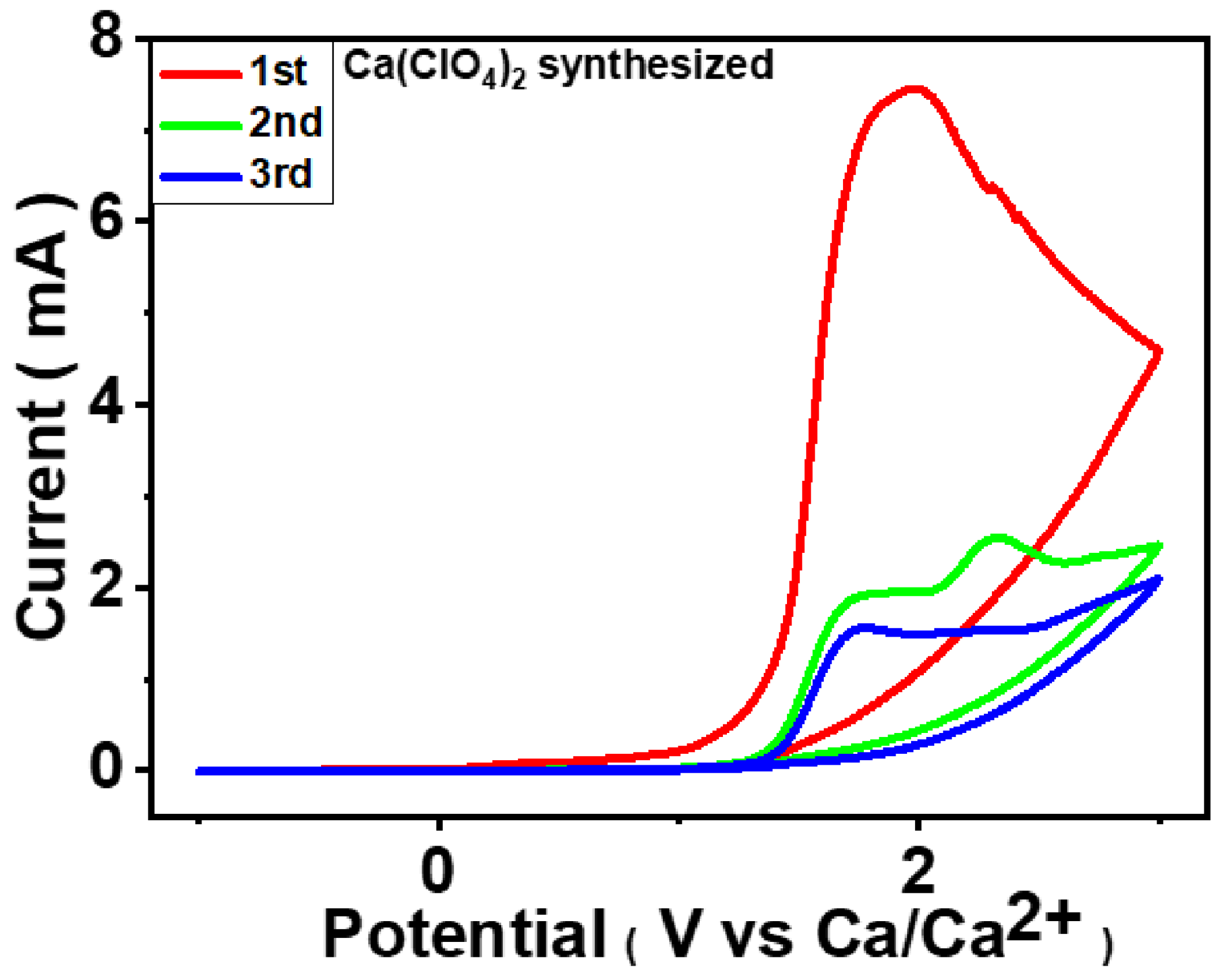
The cyclic voltammetry (CV) profiles of the Prussian Blue (PB) cathode paired with a Ca metal anode elucidate the interfacial and bulk electrochemical processes governing Ca
2+ storage (
Figure 9). During the first anodic scan, a broad and pronounced oxidation feature appears at ~1.4–1.6 V, which is largely irreversible, as no corresponding cathodic peak is observed. This behavior is attributed to initial interfacial activation, including electrolyte decomposition and the formation of a passivating Cathode Electrolyte Interphase (CEI) on the PB surface, driven by the strong solvation and sluggish desolvation kinetics of Ca
2+ ions. In subsequent cycles, the anodic current is significantly reduced, and the CV curves largely overlap, indicating suppression of parasitic reactions and stabilization of the interphase. The remaining electrochemical response arises predominantly from reversible Ca
2+ insertion/extraction within the open PB framework. The absence of sharp redox peaks and the sloping current response reflect diffusion-limited, solid-solution–type Ca
2+ storage kinetics associated with divalent ion transport. The enhanced overlap between later cycles confirms improved reversibility and reduced interfacial resistance, consistent with the disappearance of the first-cycle voltage plateau in galvanostatic profiles. Overall, the CV results demonstrate that stable CEI formation is essential for enabling reversible Ca
2+ storage in PB cathodes.
A full cell incorporating the rigorously dehydrated 1.0 M Ca(ClO
4)
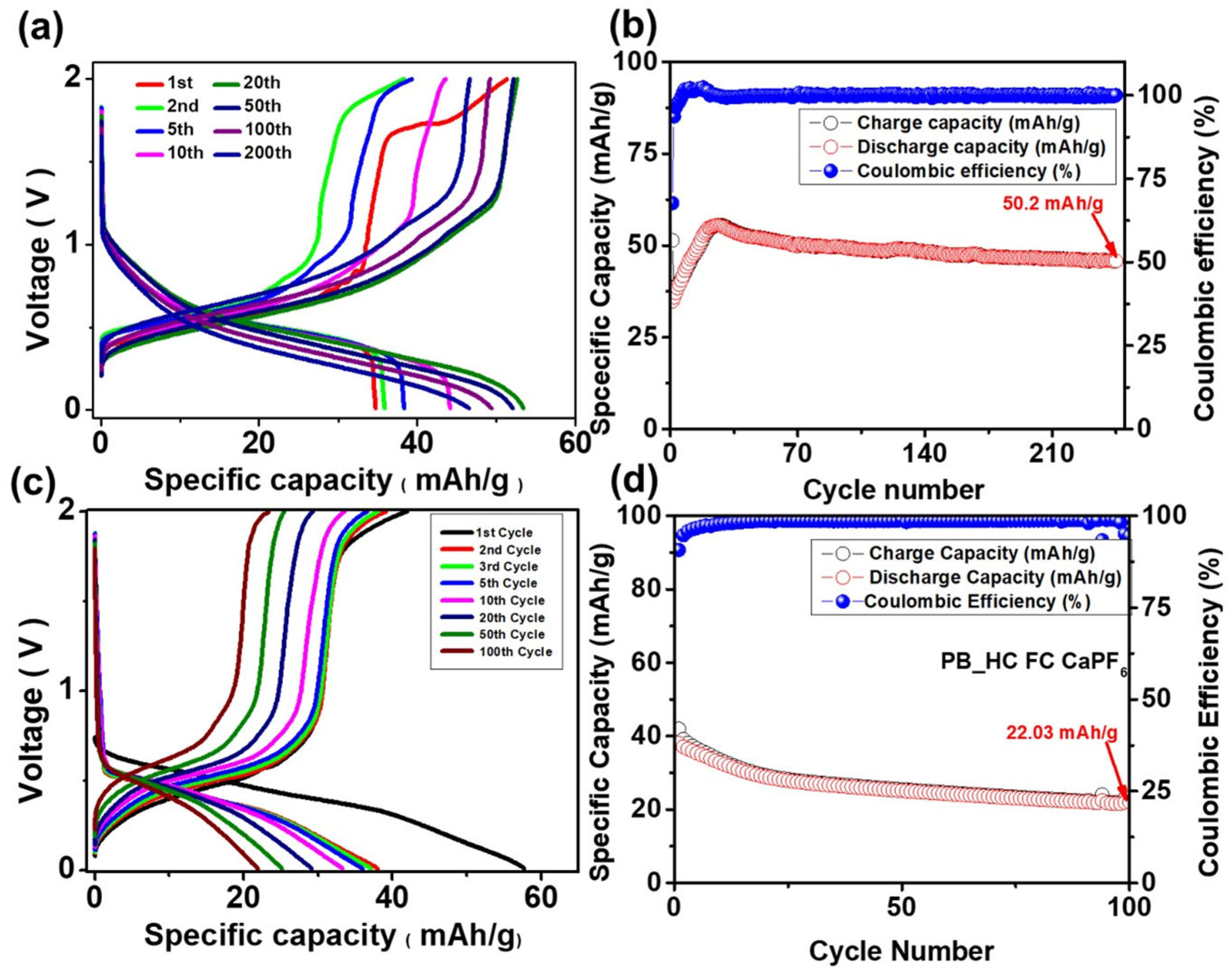
2 electrolyte in ACN dried under vacuum and further conditioned with MS3A was assembled using PB as the cathode and HC cast on Cu foil as the anode. HC was selected instead of metallic calcium to mitigate the well-known challenges associated with Ca plating/stripping kinetics and to evaluate the Ca-ion intercalation behavior in a practical full-cell configuration. Galvanostatic cycling was performed over a voltage window of 0–2 V, yielding an initial discharge capacity of 55.5 mAh g
−1 (
Figure 10a). Interestingly, the discharge capacity gradually increased from cycle 1 to approximately cycle 20. This progressive activation is a characteristic feature frequently observed in Ca(ClO
4)
2-based electrolytes and has been previously reported in PB|Ca full cells employing the same salt system [
32]. This phenomenon is attributed to several synergistic effects: (i) the slow formation and stabilization of a Ca-conductive interphase on the HC surface, (ii) enhanced wetting and ion transport through microporous regions of PB and HC as the electrolyte further equilibrates, and (iii) gradual removal of trace residual water through electrochemical consumption during early cycling, resulting in improved Ca
2+ desolvation kinetics. Together, these interfacial and ionic-transport improvements manifest as an apparent “capacity activation” in the early cycles. Following activation, the discharge capacity reached a maximum near cycle 25; thereafter, gradual capacity decay was observed. Even at 240 cycles, which is well beyond conventional benchmarks for Ca-ion systems, the full cell retained a capacity of 45.8 mAh g
−1, corresponding to a modest 17.4% reduction relative to the peak value. Throughout cycling, the Coulombic efficiency remained exceptionally stable at approximately 99% (
Figure 10b), indicating highly reversible Ca-ion intercalation/deintercalation and the absence of significant parasitic reactions. Previous reports have established that Ca(ClO
4)
2 in ACN exhibits a wide electrochemical stability window (ESW > 3 V) [
32] that is considerably larger than the cycling window employed here. Therefore, electrolyte oxidation or reduction cannot account for the capacity decay. Instead, the gradual decline is more likely associated with structural distortions of PB during repeated Ca
2+ insertion, minor interfacial thickening on the HC surface, or slow accumulation of diffusion-related polarization in the host frameworks. These processes, rather than electrolyte degradation, are the primary contributors to the long-term capacity fading in Ca-ion full cells.
In parallel with the Ca(ClO
4)
2 system, the electrochemical behavior of Ca-ion full cells employing PB as the cathode and HC as the anode was evaluated using the Ca(PF
6)
2 electrolyte (
Figure 10c,d). Galvanostatic cycling was conducted within the voltage window of 0–2 V. The Ca(PF
6)
2 full cell delivered an initial discharge capacity of approximately 38 mAh g
−1, which was significantly lower than the 55 mAh g
−1 obtained for the Ca(ClO
4)
2 system. Although the Coulombic efficiency remained relatively high (≈98%), the Ca(PF
6)
2 electrolyte exhibited accelerated capacity fading compared to Ca(ClO
4)
2. By the 100th cycle, the discharge capacity had fallen to 22 mAh g
−1, corresponding to a 42.1% reduction relative to the initial capacity. Several mechanistic factors collectively account for the inferior electrochemical performance and accelerated degradation of the Ca(PF
6)
2-based full cells. First, the PF
6− anion exhibits intrinsically lower thermodynamic and electrochemical stability and undergoes gradual hydrolysis even in the presence of trace moisture, generating HF and other reactive species. These byproducts can damage the PB framework and promote the growth of a resistive, fluorine-rich interphase on the HC, thereby increasing cell polarization. Second, PF
6− is highly susceptible to photolytic and thermal decomposition during synthesis and handling. Partial conversion to POF
3 and other fluoride-containing species that are difficult to eliminate entirely undermines the long-term electrolyte stability and accelerates capacity decay. Third, PF
6− forms a more strongly coordinated solvation sheath around Ca
2+ in ACN relative to ClO
4−, leading to sluggish Ca
2+ desolvation kinetics at the electrode–electrolyte interface. The kinetic barrier exhibits overpotential and reduces the efficiency of Ca
+ entry into PB. In PF
6−-based electrolytes, the interfacial chemistry at the HC anode is less stable. Decomposition products create a thicker, more resistant surface layer, which further inhibits reversible Ca
2+ storage. These chemical, kinetic, and interfacial instabilities explain why Ca(PF
6)
2 full cells have lower capacity, poorer activation, and quicker capacity fading compared to Ca(ClO
4)
2.
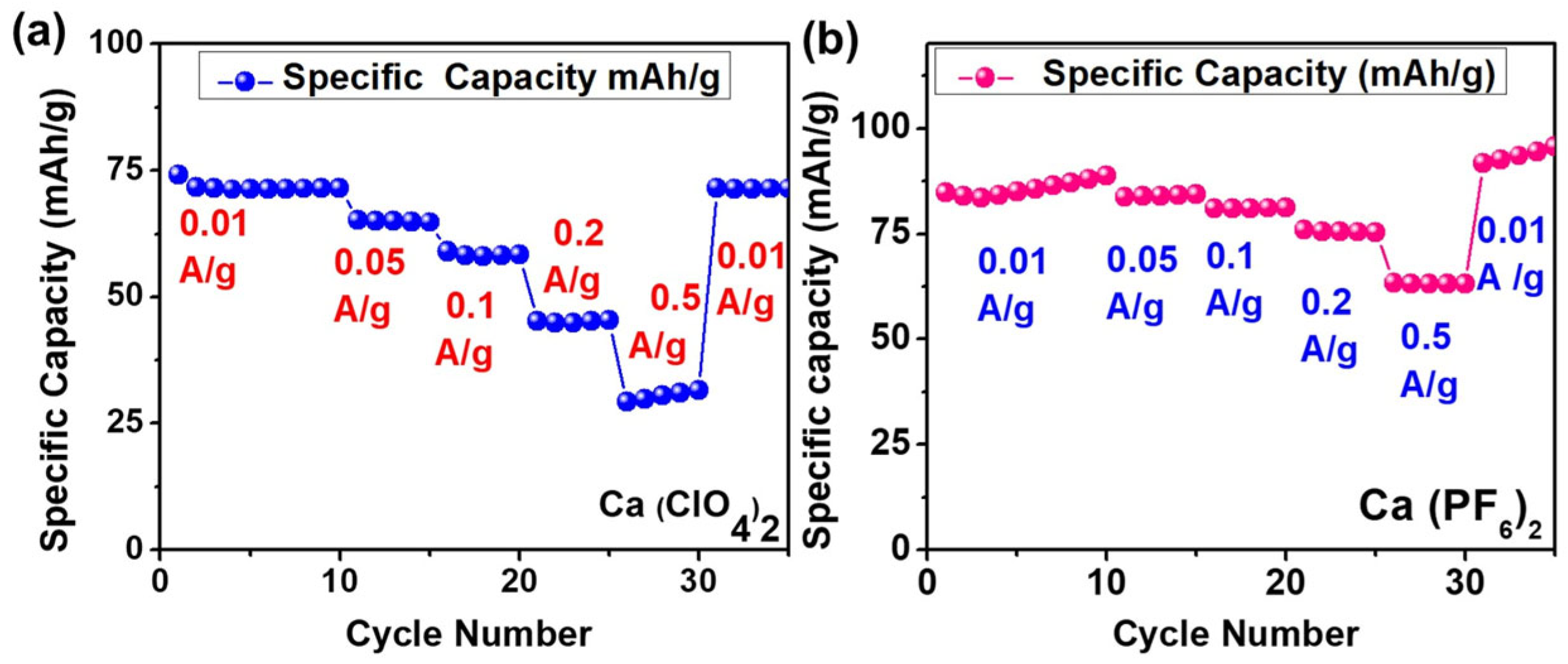
The PB-HC full cells were assessed in terms of their rate capability at various current densities (0.01, 0.05, 0.1, 0.2, and 0.5 A g
−1). The discharge capacity of the Ca(ClO
4)
2 electrolyte dropped from 71.7 to 30.4 mAh g
−1 as the current density increased. Recovering the current density to 0.01 A g
−1 resulted in nearly full capacity recovery to 71.5 mAh g
−1, with 99.72% retention compared with the initial low-rate cycling (
Figure 11a). This recovery suggests that the capacity loss at higher rates is mostly caused by kinetic limits rather than irreversible structural degradation. In contrast, the Ca(PF
6)
2 electrolyte exhibited higher capacities of 85.7, 84.0, 81.1, 75.5, and 63.1 mAh g
−1 across the same current range. It also displayed an activation-type rise in capacity when cycled again at 0.01 A g
−1 (
Figure 11b). This shows that Ca
2+ transport and interfacial charge-transfer kinetics in the Ca(PF
6)
2 system gradually improve during initial cycling, potentially owing to stability or thinning of interphase layers on the PB or HC. Ca(ClO
4)
2 showed a more severe capacity decline with increasing current density than Ca(PF
6). When comparing the capacities at cycles 26–30 to those achieved during the initial low-rate cycles, Ca(ClO
4)
2 showed a 57.6% loss, while Ca(PF
6)
2 showed only a 26.4% decline. Although Ca(ClO
4)
2 has stronger reversibility at low rates, the Ca(PF
6)
2 electrolyte provides improved rate tolerance owing to faster Ca
2+ transport kinetics and more stable interface formation under high-rate circumstances.
The rate capability of PB‖HC full cells provides further insight into the effective Ca
2+ transport characteristics of the electrolytes. As shown in
Figure 11, the Ca(PF
6)
2–ACN electrolyte exhibits comparatively higher capacity retention at elevated current densities, which can be attributed to the formation of a more tightly coordinated Ca
2+ solvation sheath that temporarily stabilizes charge transport under high polarization conditions. However, this strong ion association is accompanied by sluggish desolvation kinetics and increased interfacial resistance, ultimately leading to accelerated capacity decay during prolonged cycling. In contrast, the Ca(ClO
4)
2–ACN electrolyte shows a more pronounced capacity decrease with increasing current density but demonstrates nearly complete capacity recovery upon returning to low current operation (99.7% retention), indicating minimal irreversible degradation and superior long-term ion transport reversibility. This behavior reflects weaker Ca
2+–anion interactions and reduced ion pairing, which facilitate more efficient desolvation and interfacial charge transfer. Collectively, these results highlight that while Ca(PF
6)
2 may support transient high-rate operation, Ca(ClO
4)
2 offers more favorable effective Ca
2+ transport for sustained and reversible calcium-ion battery operation [
5,
6,
33,
34].