Article

Influence of Anode Immersion Speed on Current and Power in Plasma Electrolytic Polishing

by
Joško Valentinčič
1,*,
Henning Zeidler
2,
Toni Böttger
2 and
Marko Jerman
1
1
Faculty of Mechanical Engineering, University of Ljubljana, Aškerčeva 6, 1000 Ljubljana, Slovenia
2
Chair Additive Manufacturing, Technische Universität Bergakademie Freiberg, Agricolastrasse 1, 09599 Freiberg, Germany
*
Author to whom correspondence should be addressed.
Micromachines 2024, 15(6), 783; https://doi.org/10.3390/mi15060783
Submission received: 19 February 2024 / Revised: 27 May 2024 / Accepted: 11 June 2024 / Published: 14 June 2024

Abstract

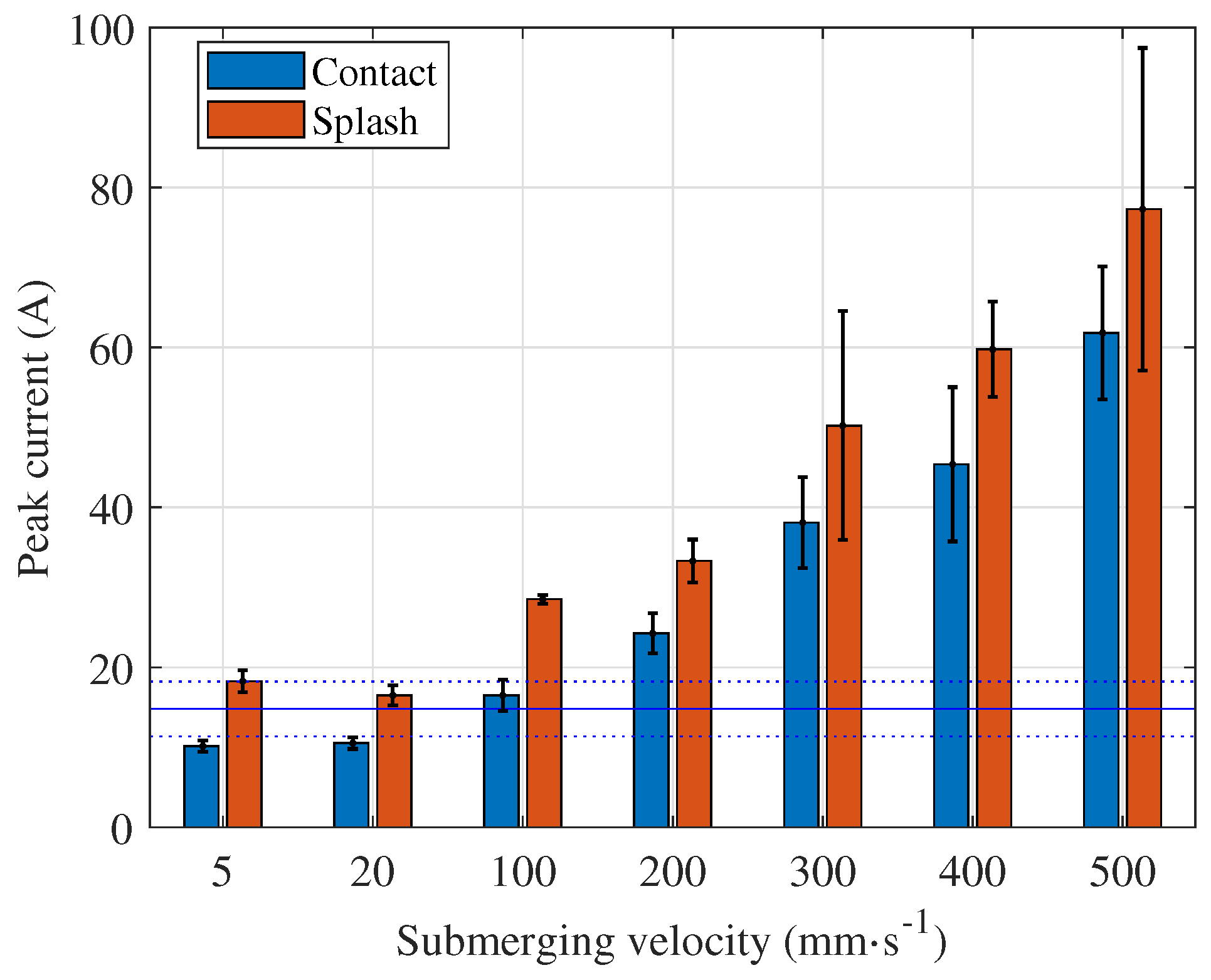
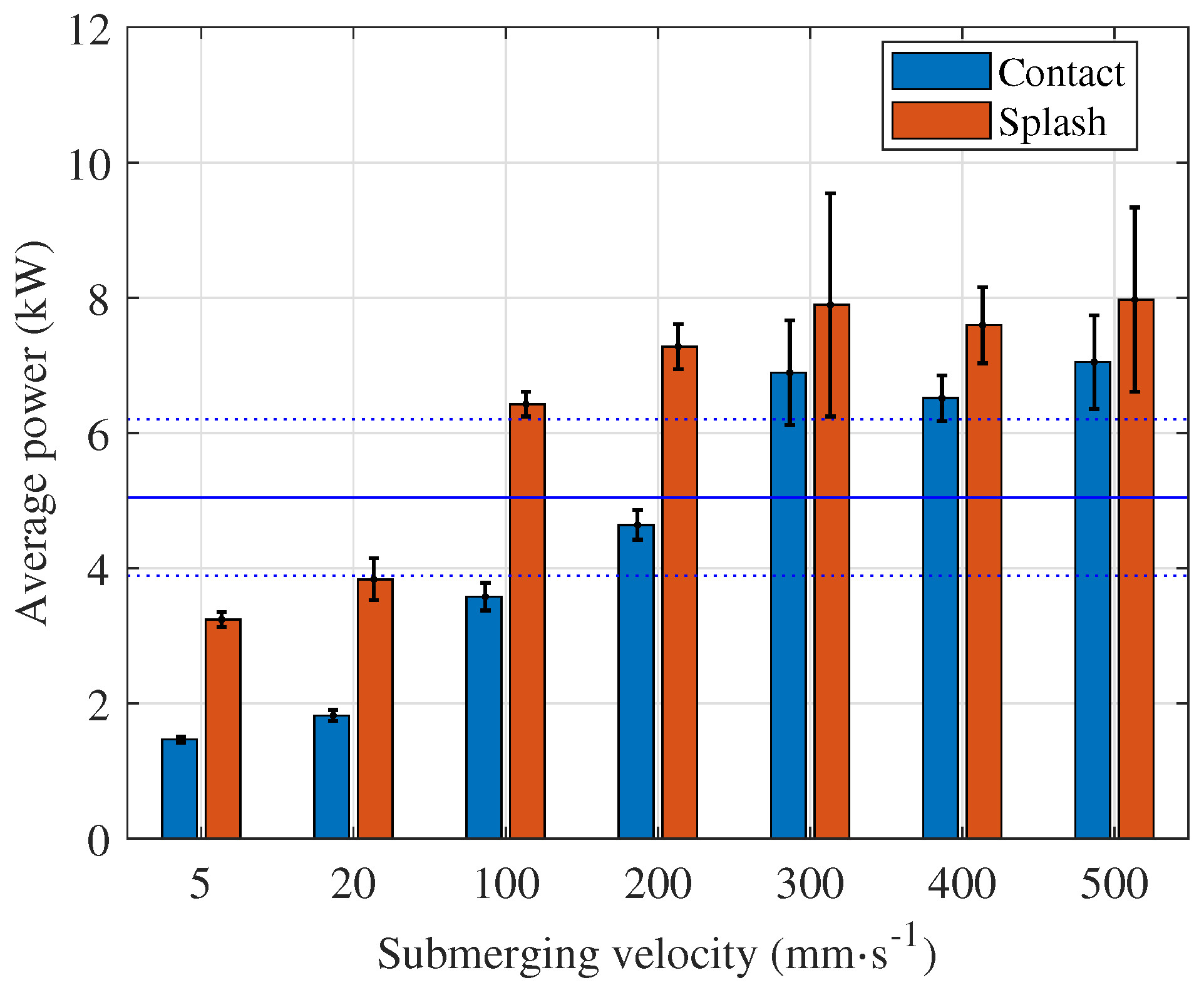
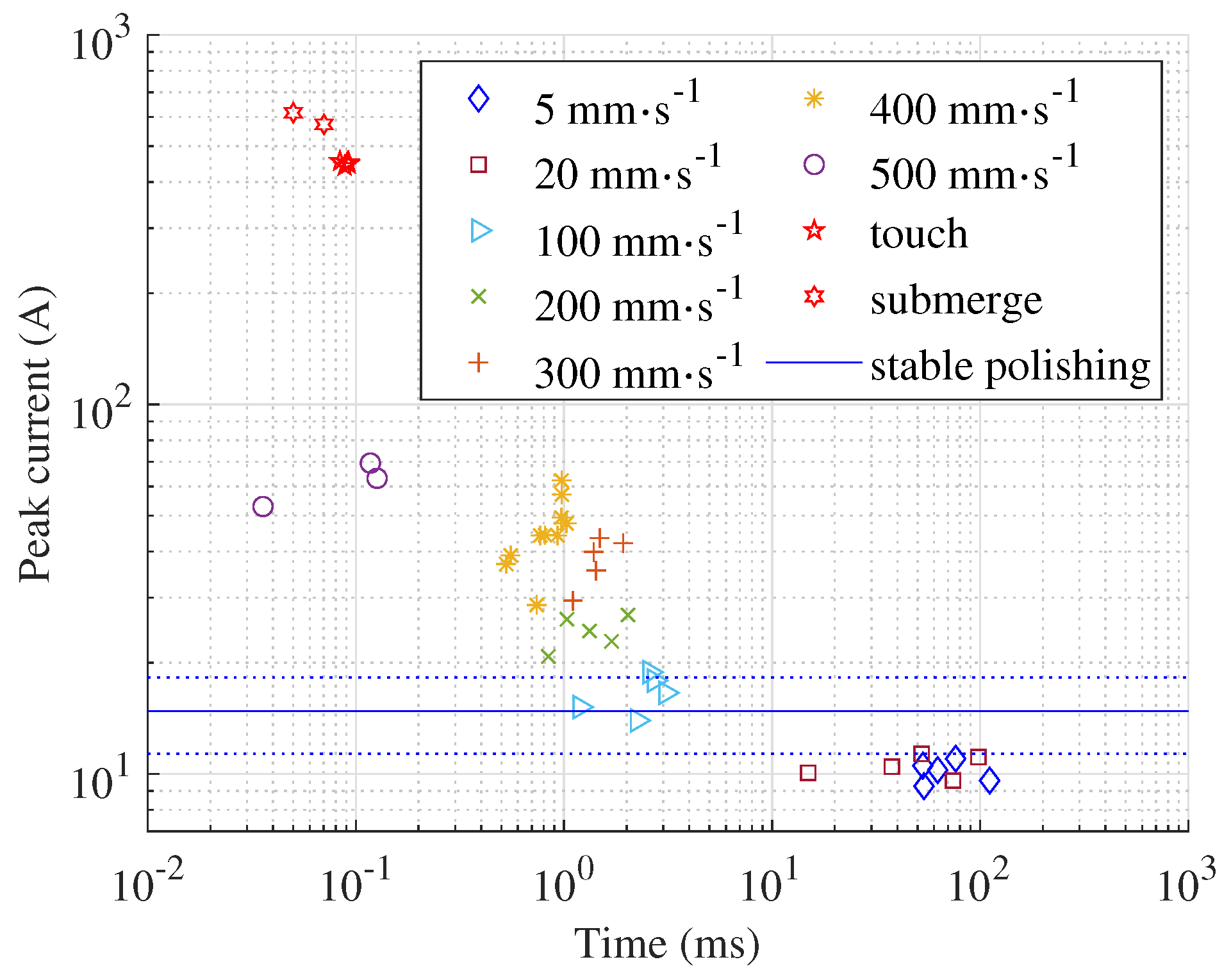
Plasma electrolytic polishing (PeP) is mainly used to improve the surface quality and thus the performance of electrically conductive parts. It is usually used as an anodic process, i.e., the workpiece is positively charged. However, the process is susceptible to high current peaks during the formation of the vapour–gaseous envelope, especially when polishing workpieces with a large surface area. In this study, the influence of the anode immersion speed on the current peaks and the average power during the initialisation of the PeP process is investigated for an anode the size of a microreactor mould insert. Through systematic experimentation and analysis, this work provides insights into the control of the initialisation process by modulating the anode immersion speed. The results clarify the relationship between immersion speed, peak current, and average power and provide a novel approach to improve process efficiency in PeP. The highest peak current and average power occur when the electrolyte splashes over the top of the anode and not, as expected, when the anode touches the electrolyte. By immersion of the anode while the voltage is applied to the anode and counterelectrode, the reduction of both parameters is over 80%.
Keywords: plasma electrolytic polishing (PeP); vapour–gaseous envelope; immersion speed; peak current; average power; process initialisation plasma electrolytic polishing (PeP); vapour–gaseous envelope; immersion speed; peak current; average power; process initialisation