Review

Recent Progress in Silicon-Based Slow-Light Electro-Optic Modulators
1
State Key Laboratory of Advanced Optical Communications System and Networks, School of Electronics, Peking University, Beijing 100871, China
2
Frontiers Science Center for Nano-Optoelectronics, Peking University, Beijing 100871, China
3
Peng Cheng Laboratory, Shenzhen 518055, China
4
Peking University Yangtze Delta Institute of Optoelectronics, Nantong 226010, China
*
Author to whom correspondence should be addressed.
Micromachines 2022, 13(3), 400; https://doi.org/10.3390/mi13030400
Submission received: 9 February 2022 / Revised: 25 February 2022 / Accepted: 26 February 2022 / Published: 28 February 2022
(This article belongs to the Special Issue Photonic Chips for Optical Communications)

Abstract

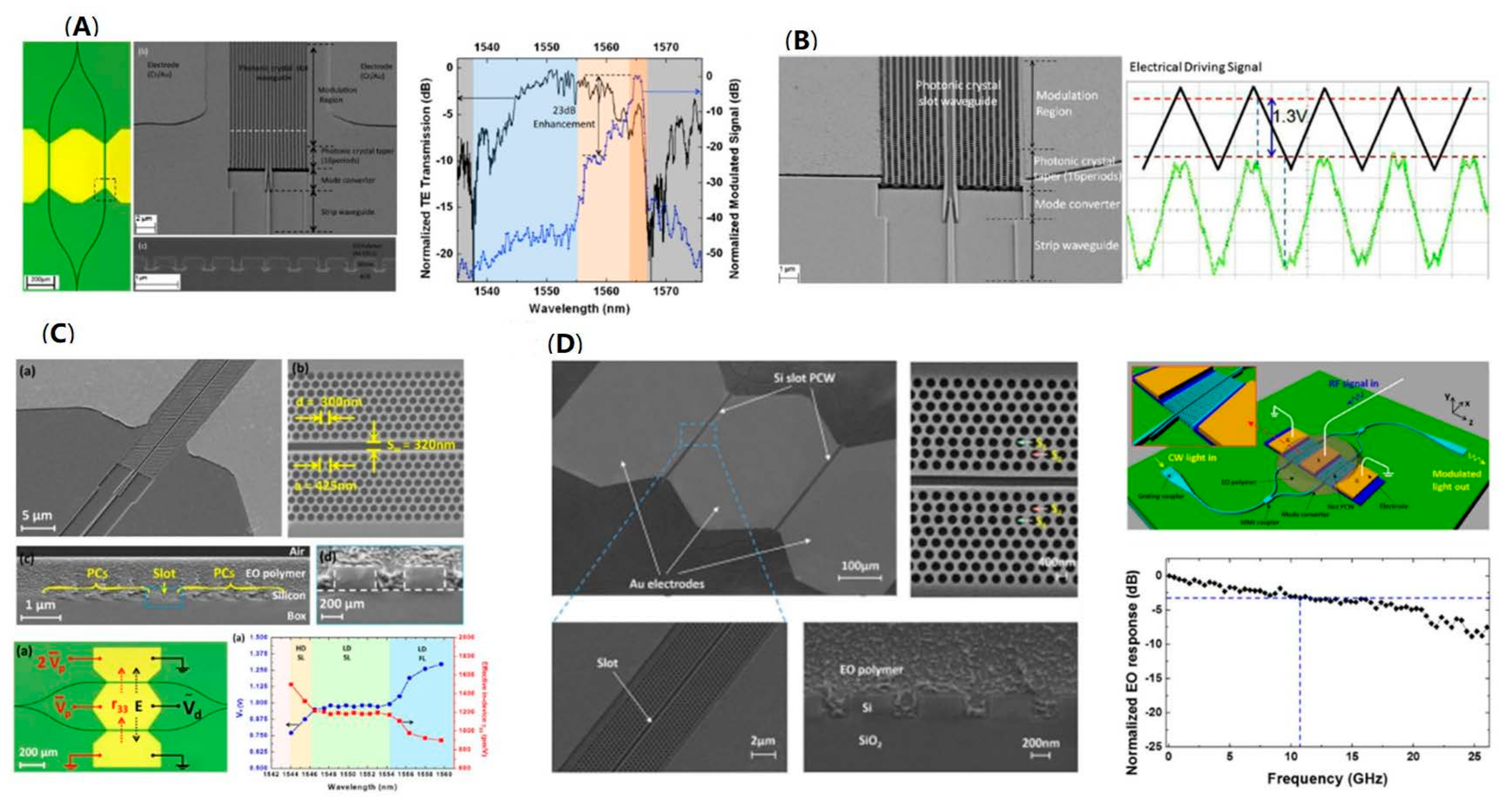
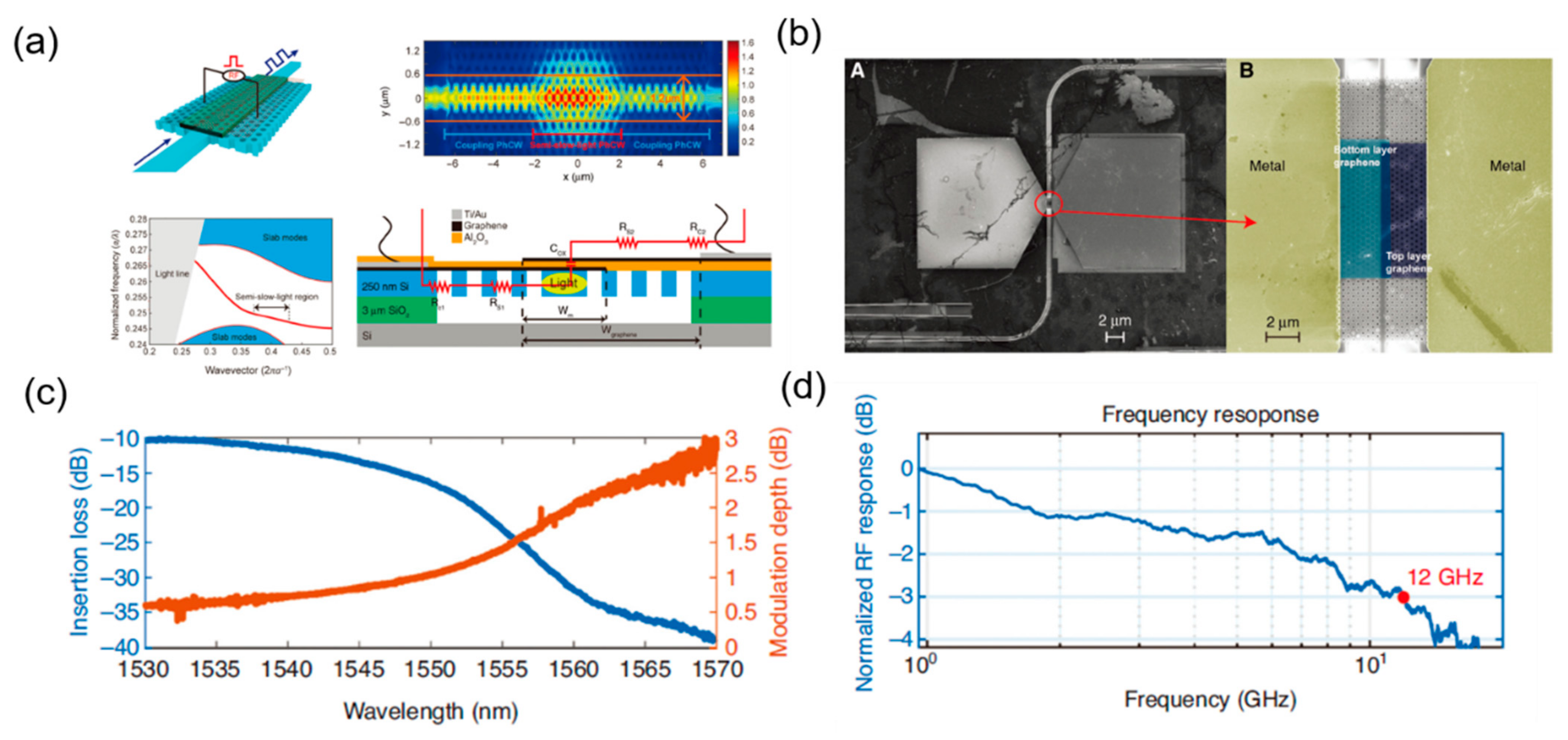
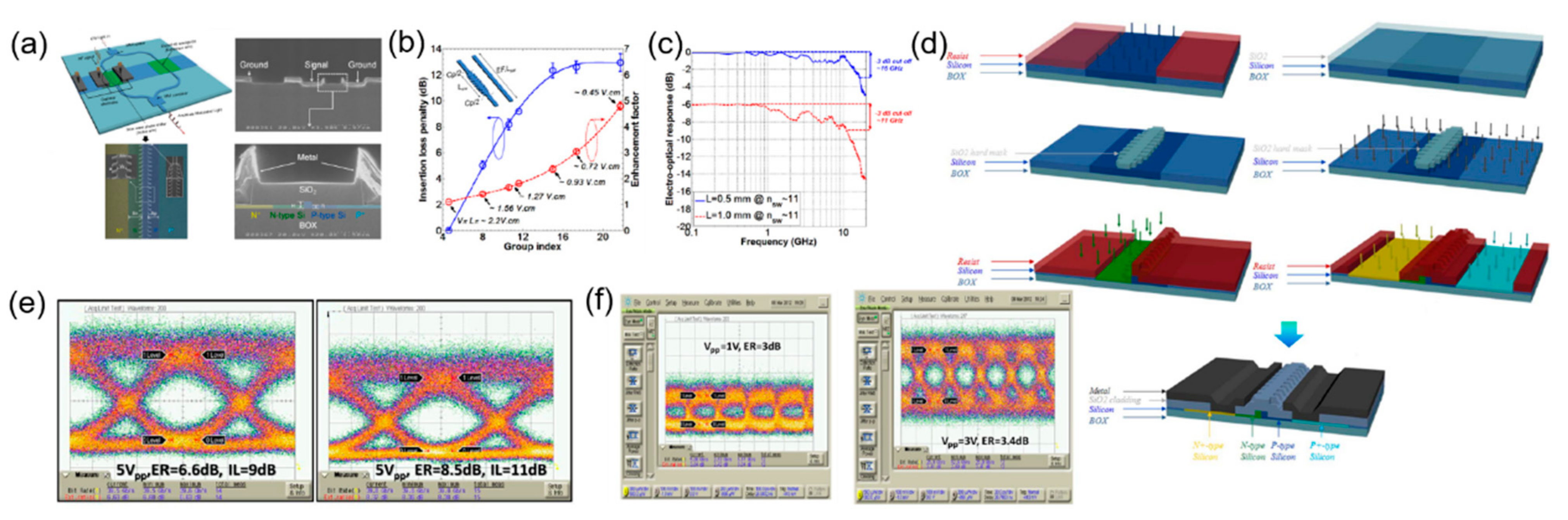
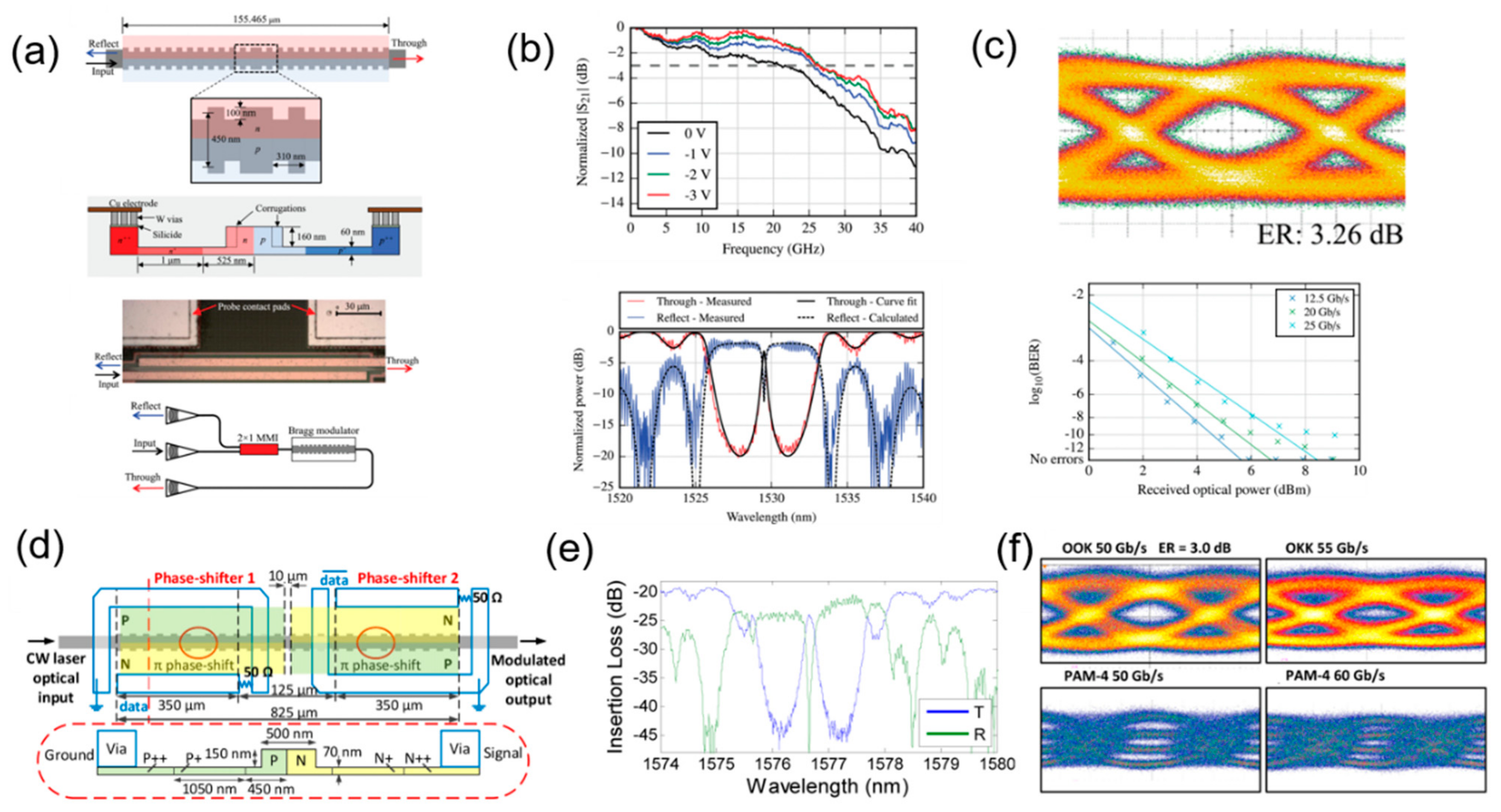
As an important optoelectronic integration platform, silicon photonics has achieved significant progress in recent years, demonstrating the advantages on low power consumption, low cost, and complementary metal–oxide–semiconductor (CMOS) compatibility. Among the different silicon photonics devices, the silicon electro-optic modulator is a key active component to implement the conversion of electric signal to optical signal. However, conventional silicon Mach–Zehnder modulators and silicon micro-ring modulators both have their own limitations, which will limit their use in future systems. For example, the conventional silicon Mach–Zehnder modulators are hindered by large footprint, while the silicon micro-ring modulators have narrow optical bandwidth and high temperature sensitivity. Therefore, developing a new structure for silicon modulators to improve the performance is a crucial research direction in silicon photonics. Meanwhile, slow-light effect is an important physical phenomenon that can reduce the group velocity of light. Applying slow-light effect on silicon modulators through photonics crystal and waveguide grating structures is an attractive research point, especially in the aspect of reducing the device footprint. In this paper, we review the recent progress of silicon-based slow-light electro-optic modulators towards future communication requirements. Beginning from the principle of slow-light effect, we summarize the research of silicon photonic crystal modulators and silicon waveguide grating modulators in detail. Simultaneously, the experimental results of representative silicon slow-light modulators are compared and analyzed. Finally, we discuss the existing challenges and development directions of silicon-based slow-light electro-optic modulators for the practical applications.
Keywords: silicon photonics; slow-light effect; electro-optic modulators; compact footprint silicon photonics; slow-light effect; electro-optic modulators; compact footprint