Article

An In Vivo Microfluidic Study of Bacterial Load Dynamics and Absorption in the C. elegans Intestine
Laboratory of Microsystems, Ecole Polytechnique Fédérale de Lausanne, CH-1015 Lausanne, Switzerland
*
Author to whom correspondence should be addressed.
Micromachines 2021, 12(7), 832; https://doi.org/10.3390/mi12070832
Submission received: 25 June 2021 / Revised: 13 July 2021 / Accepted: 15 July 2021 / Published: 17 July 2021
(This article belongs to the Special Issue Organisms-on-Chips)

Abstract

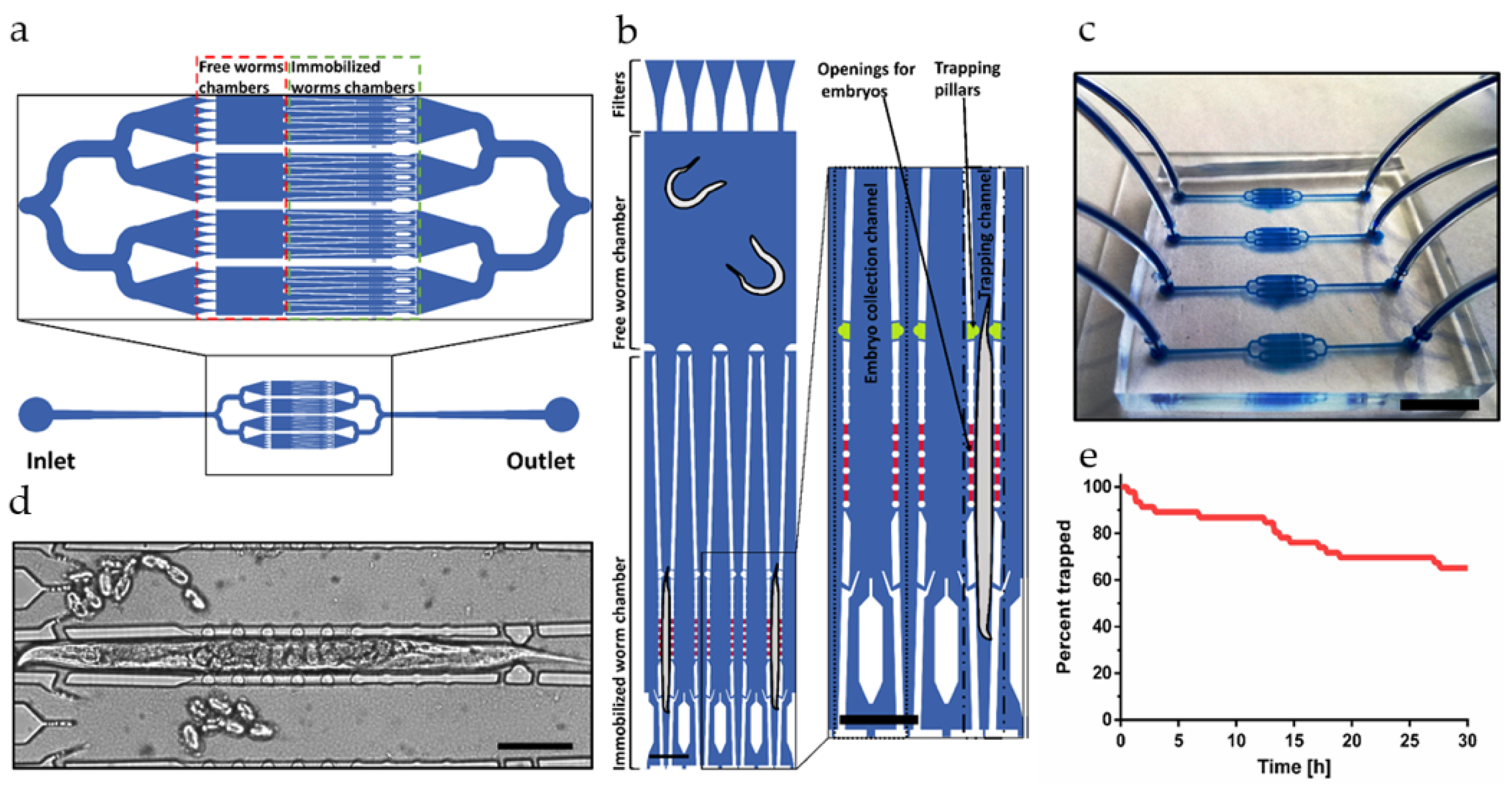
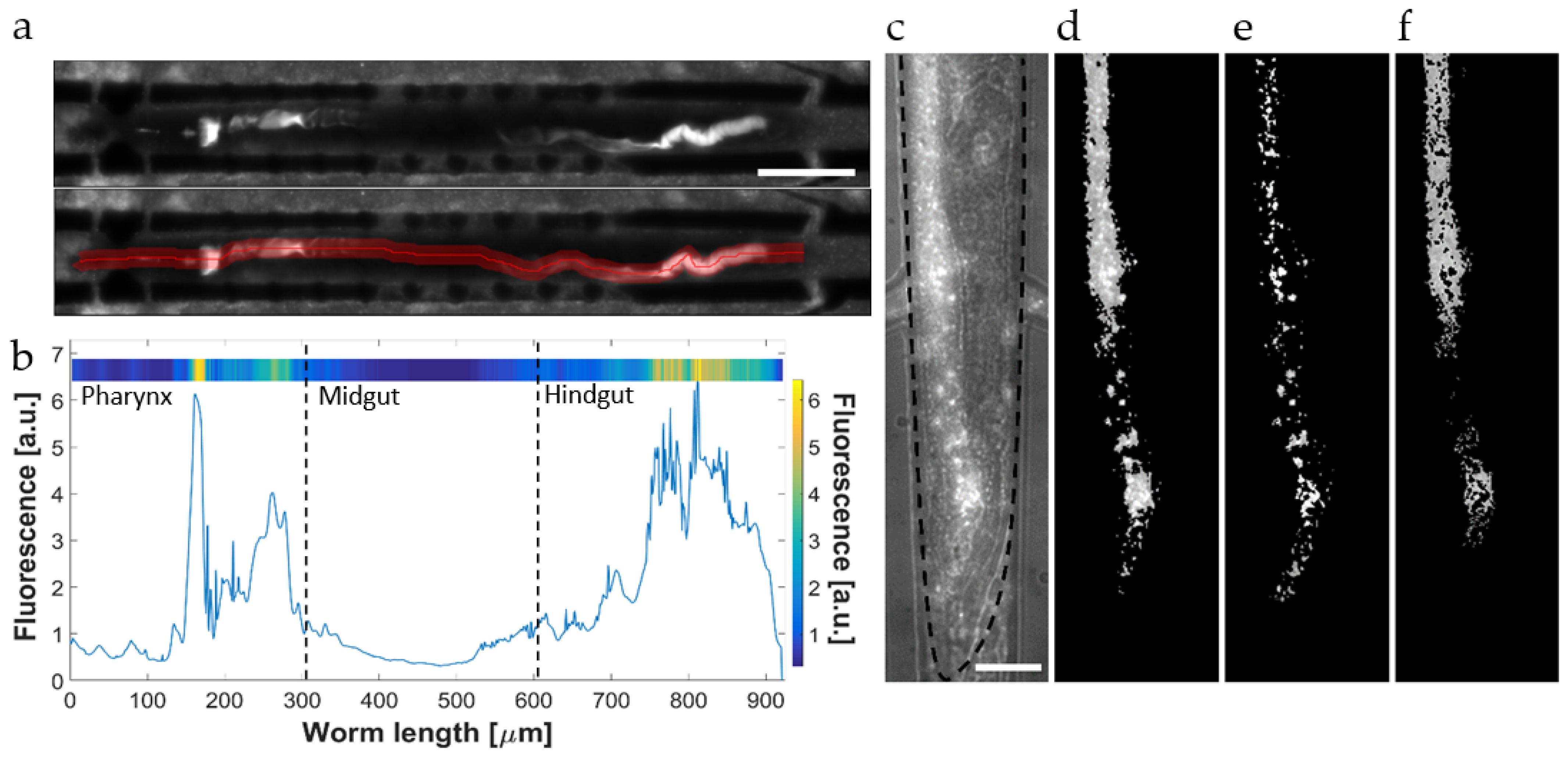
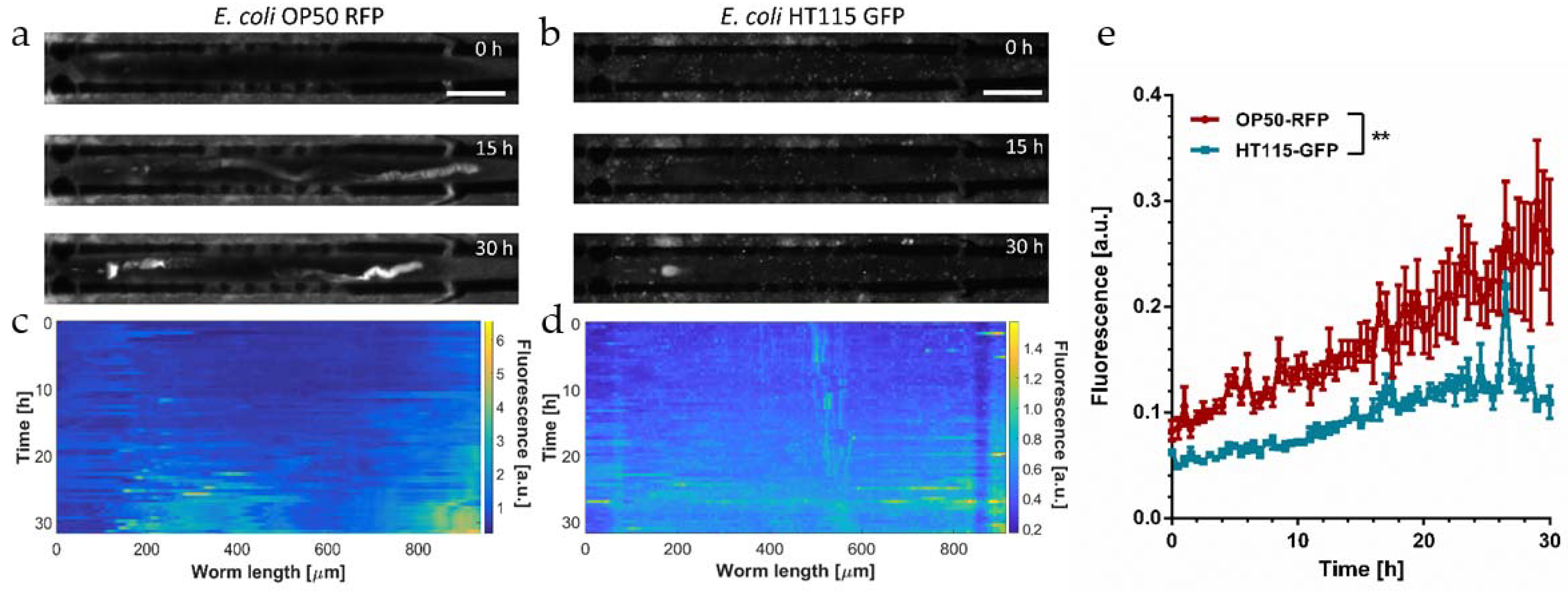
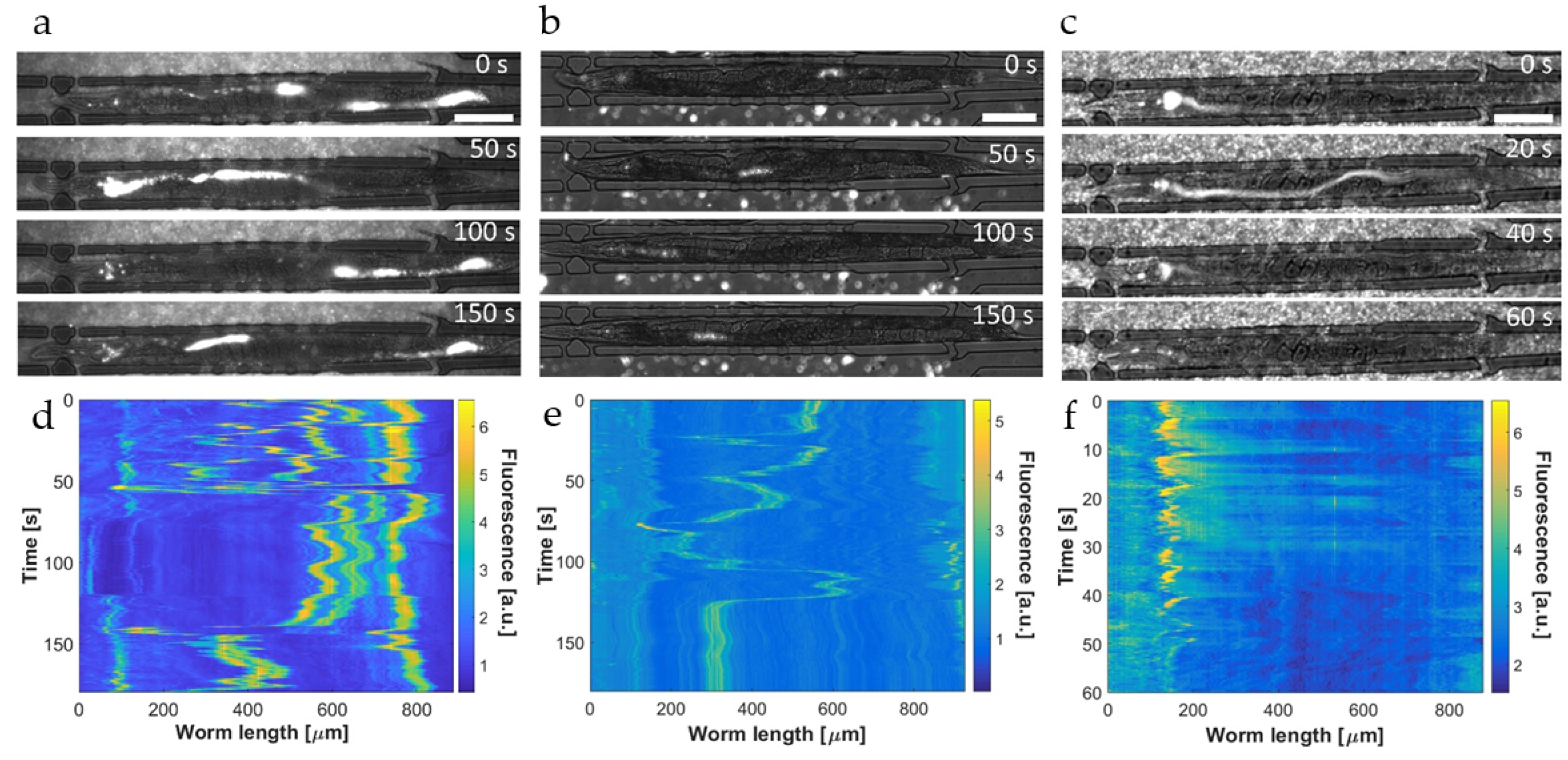
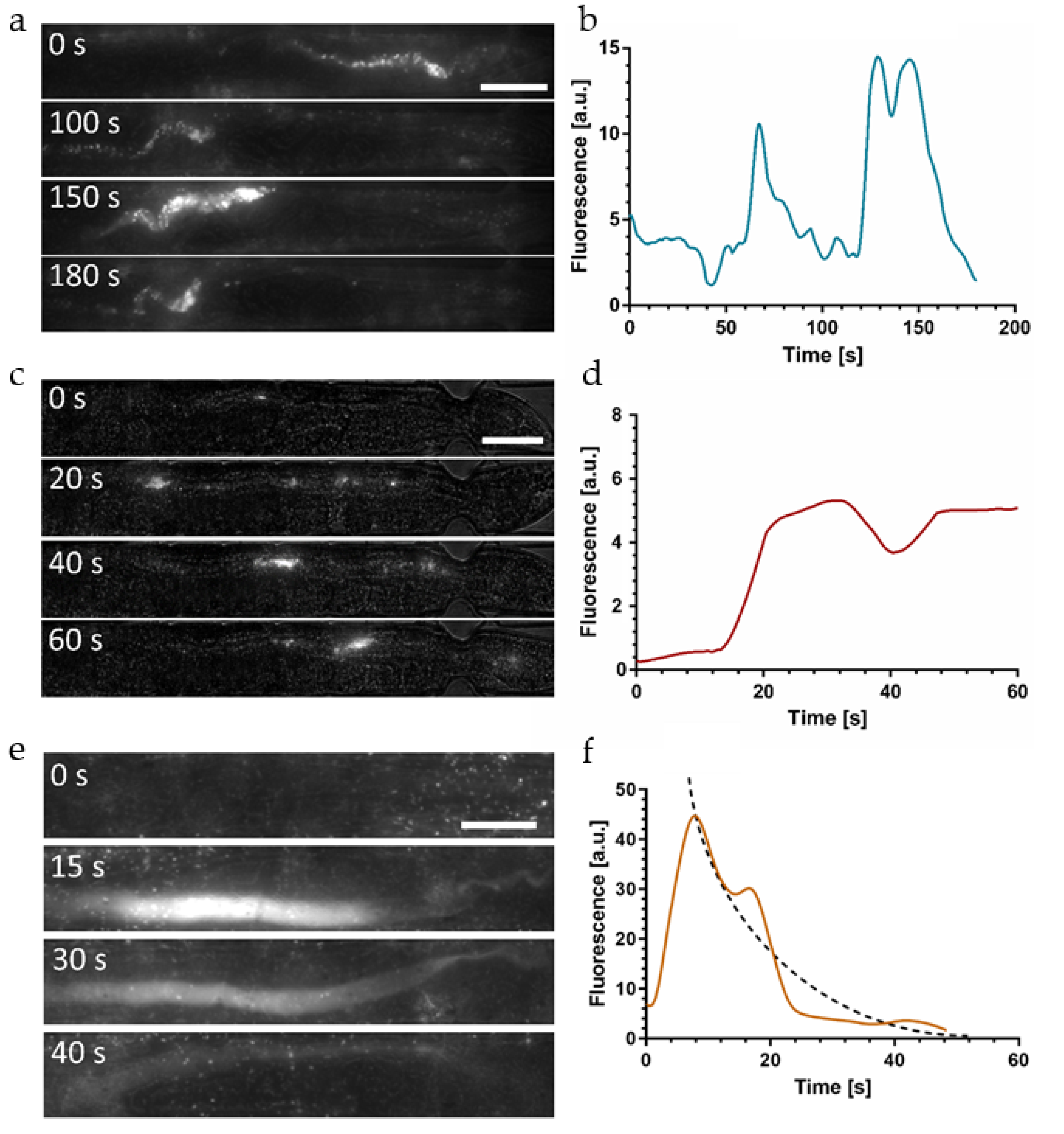
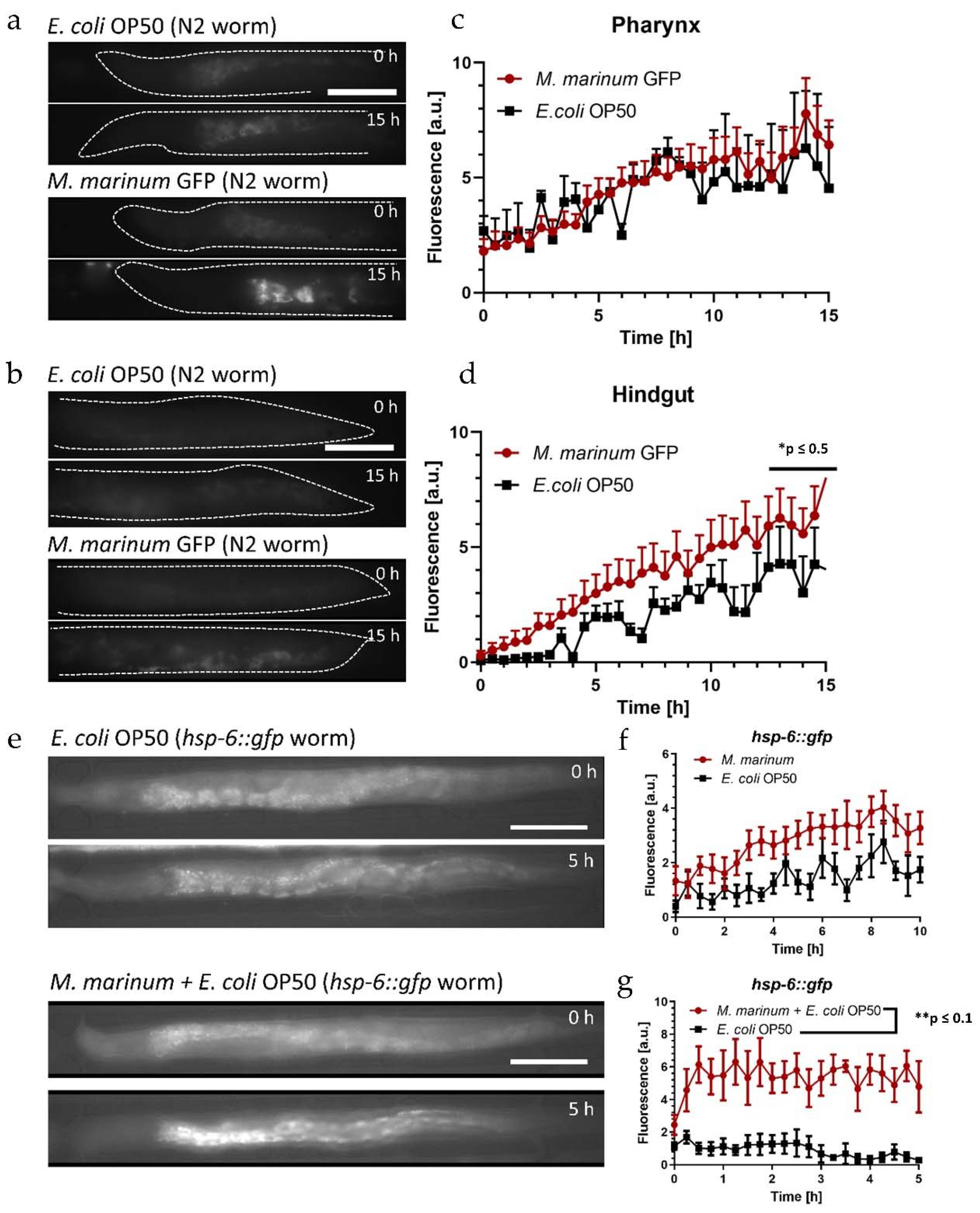
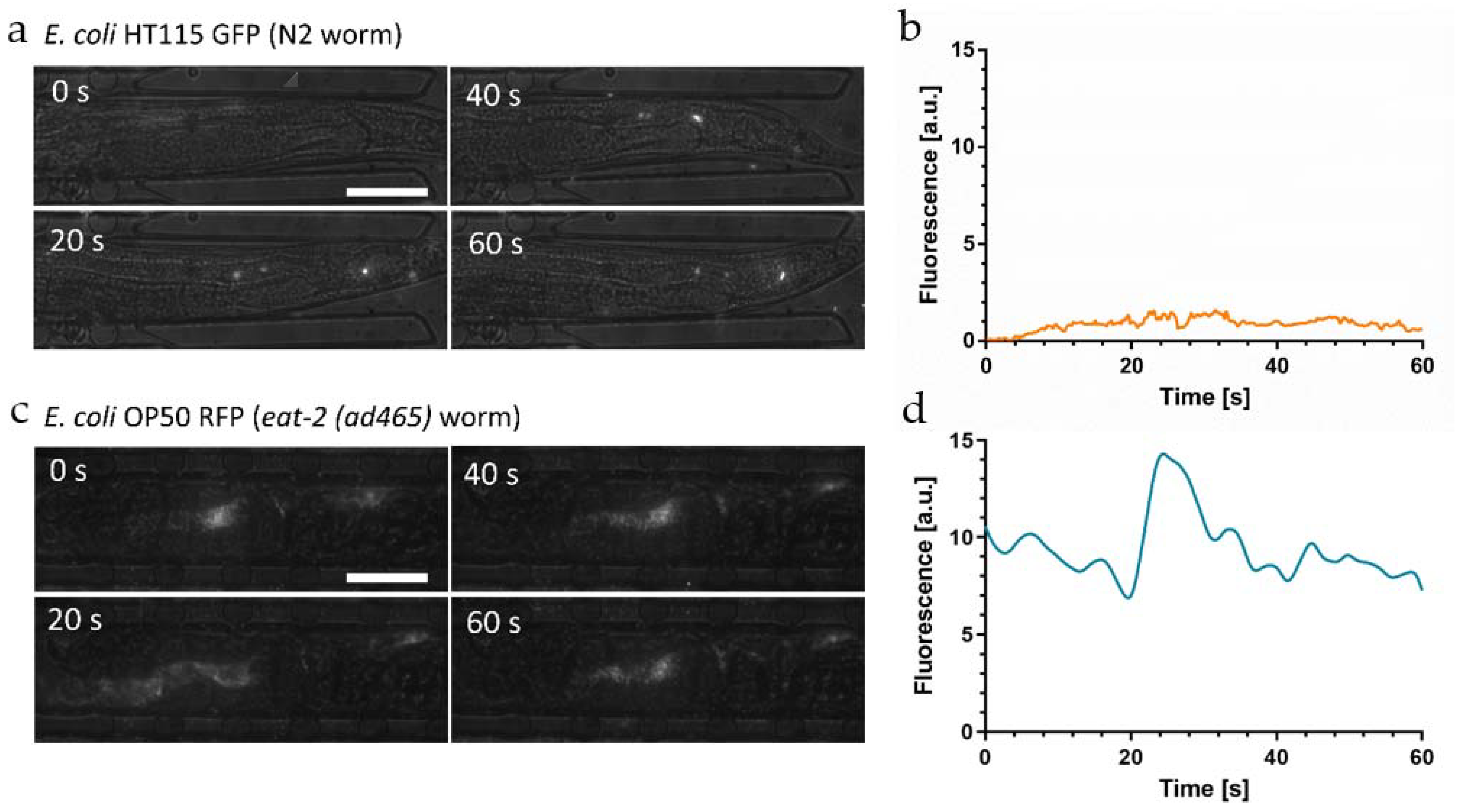
Caenorhabditiselegans (C. elegans) has gained importance as a model for studying host-microbiota interactions and bacterial infections related to human pathogens. Assessing the fate of ingested bacteria in the worm’s intestine is therefore of great interest, in particular with respect to normal bacterial digestion or intestinal colonization by pathogens. Here, we report an in vivo study of bacteria in the gut of C. elegans. We take advantage of a polydimethylsiloxane (PDMS) microfluidic device enabling passive immobilization of adult worms under physiological conditions. Non-pathogenic Escherichia coli (E. coli) bacteria expressing either pH-sensitive or pH-insensitive fluorescence reporters as well as fluorescently marked indigestible microbeads were used for the different assays. Dynamic fluorescence patterns of the bacterial load in the worm gut were conveniently monitored by time-lapse imaging. Cyclic motion of the bacterial load due to peristaltic activity of the gut was observed and biochemical digestion of E. coli was characterized by high-resolution fluorescence imaging of the worm’s intestine. We could discriminate between individual intact bacteria and diffuse signals related to disrupted bacteria that can be digested. From the decay of the diffuse fluorescent signal, we determined a digestion time constant of 14 ± 4 s. In order to evaluate the possibility to perform infection assays with our platform, immobilized C. elegans worms were fed pathogenic Mycobacterium marinum (M. marinum) bacteria. We analyzed bacterial fate and accumulation in the gut of N2 worms and mitochondrial stress response in a hsp-6::gfp mutant.
Keywords: C. elegans; microfluidics; bacteria; absorption C. elegans; microfluidics; bacteria; absorption