Article

Ultrafast Parallel Micro-Gap Resistance Welding of an AuNi9 Microwire and Au Microlayer


1
State Key Laboratory of Advanced Welding and Joining, Harbin Institute of Technology, Harbin 150001, China
2
Institute of Electronic Engineering, China Academy of Engineering Physics, Mianyang 621900, China
*
Author to whom correspondence should be addressed.
Micromachines 2021, 12(1), 51; https://doi.org/10.3390/mi12010051
Submission received: 15 December 2020 / Revised: 29 December 2020 / Accepted: 31 December 2020 / Published: 3 January 2021
(This article belongs to the Special Issue Micro-Nano Science and Engineering)

Abstract

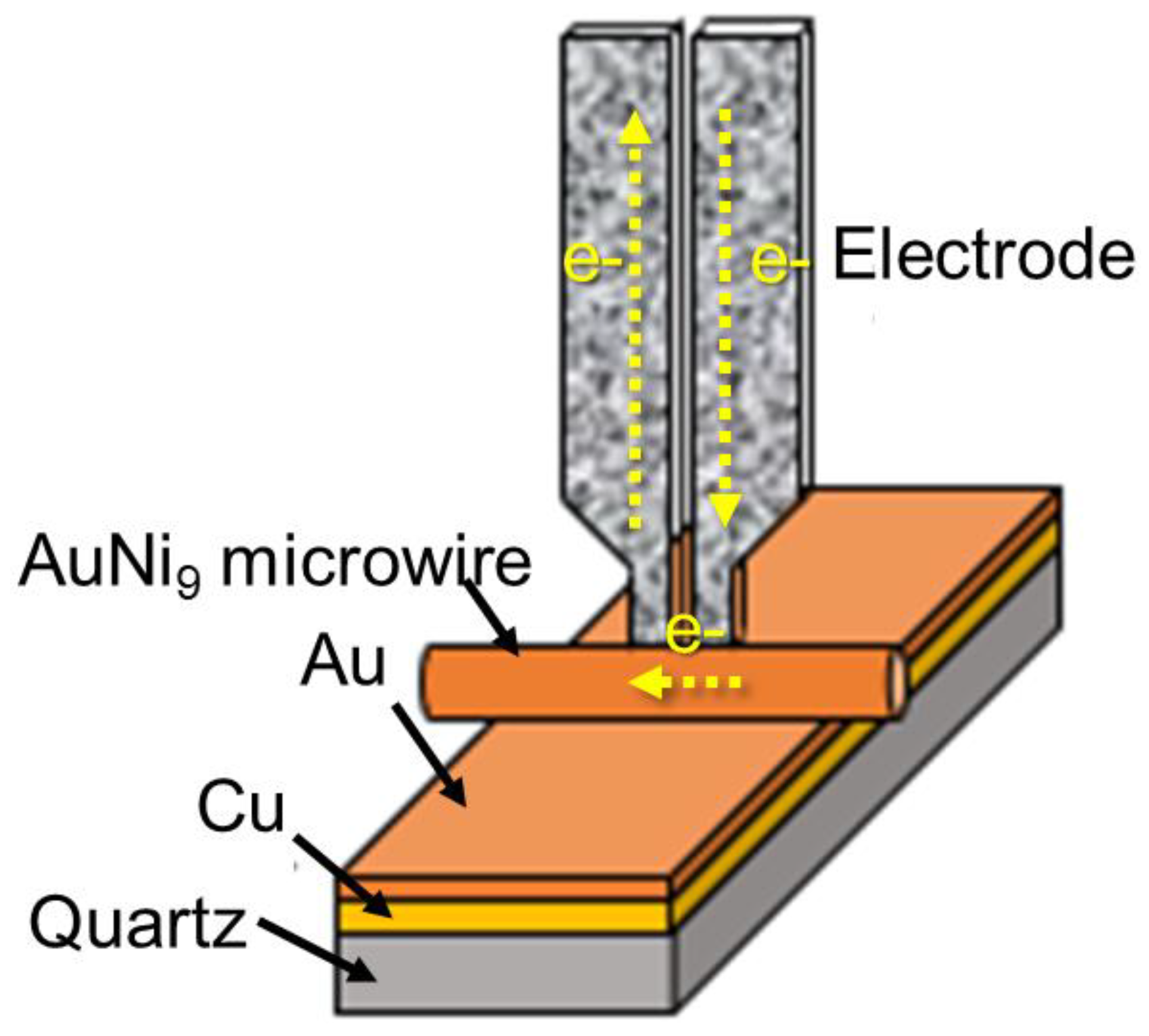
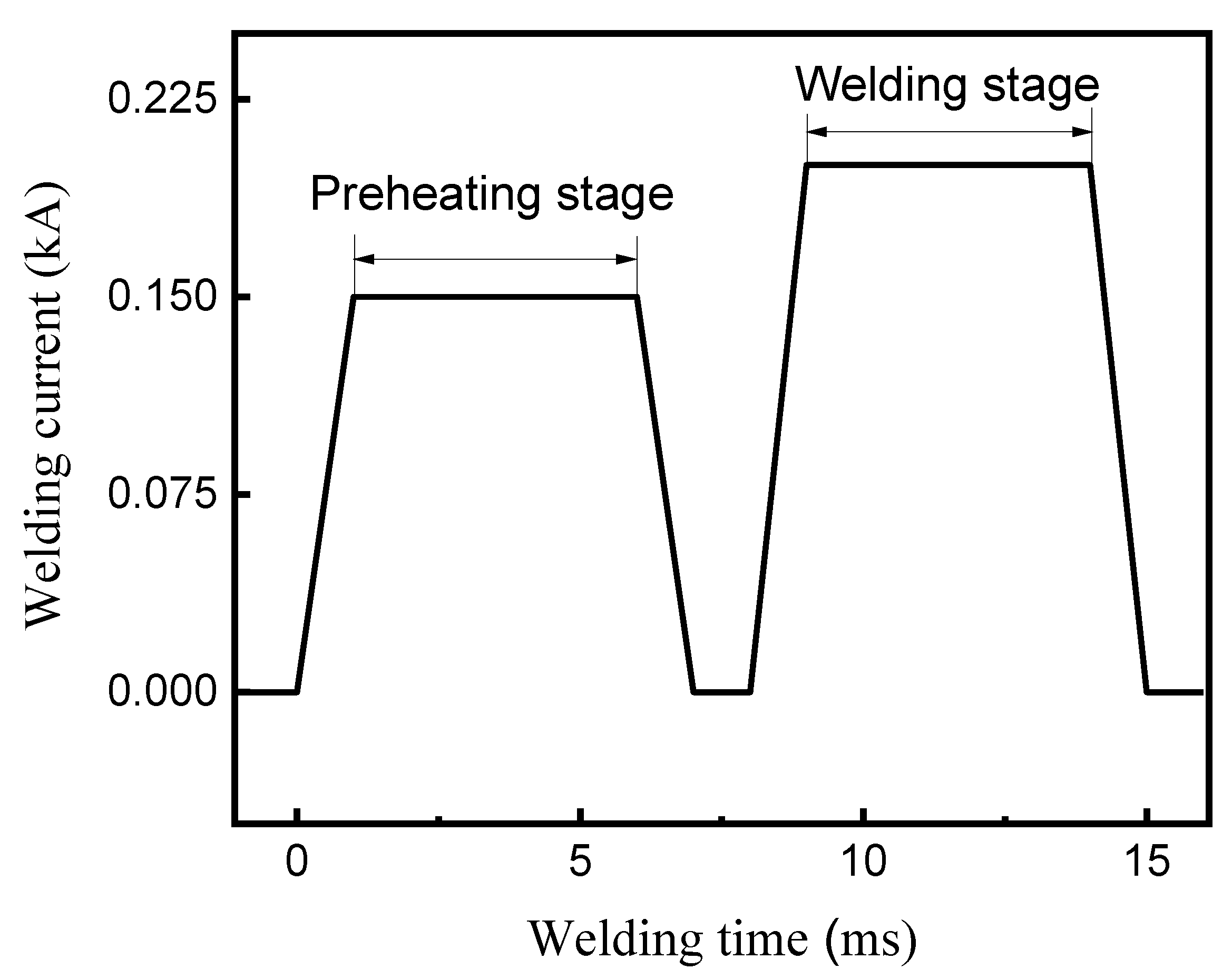
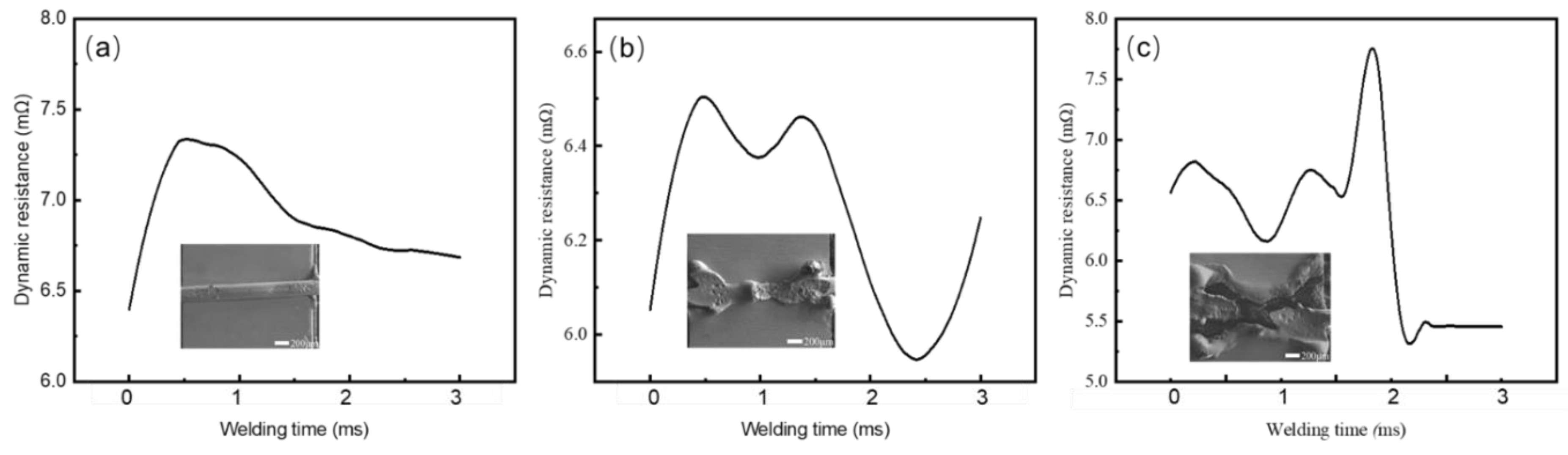
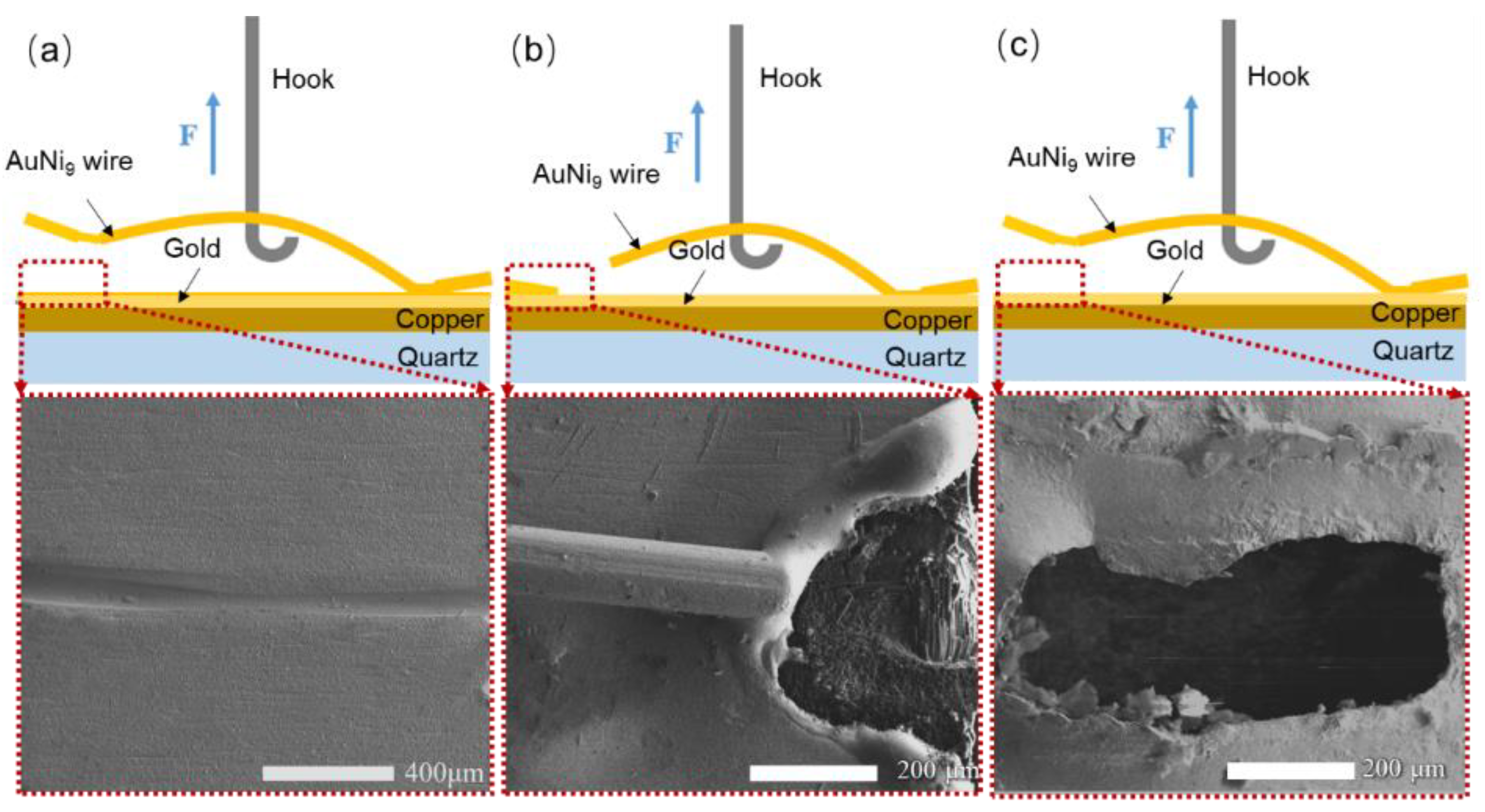
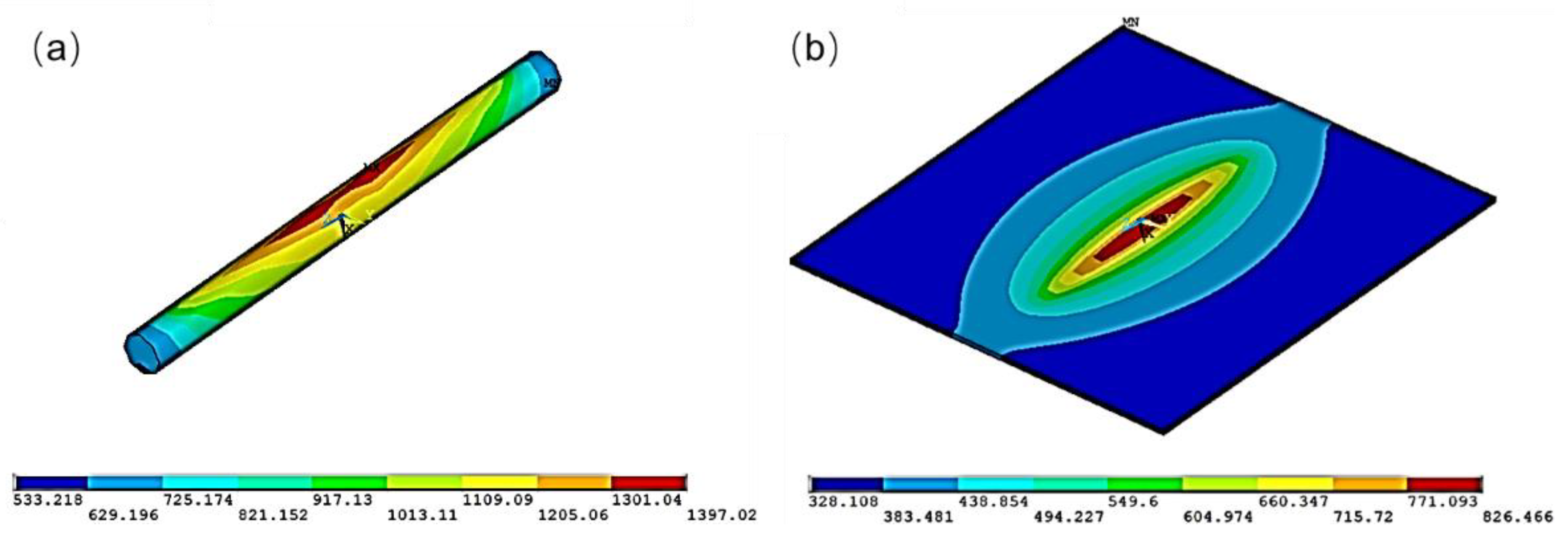
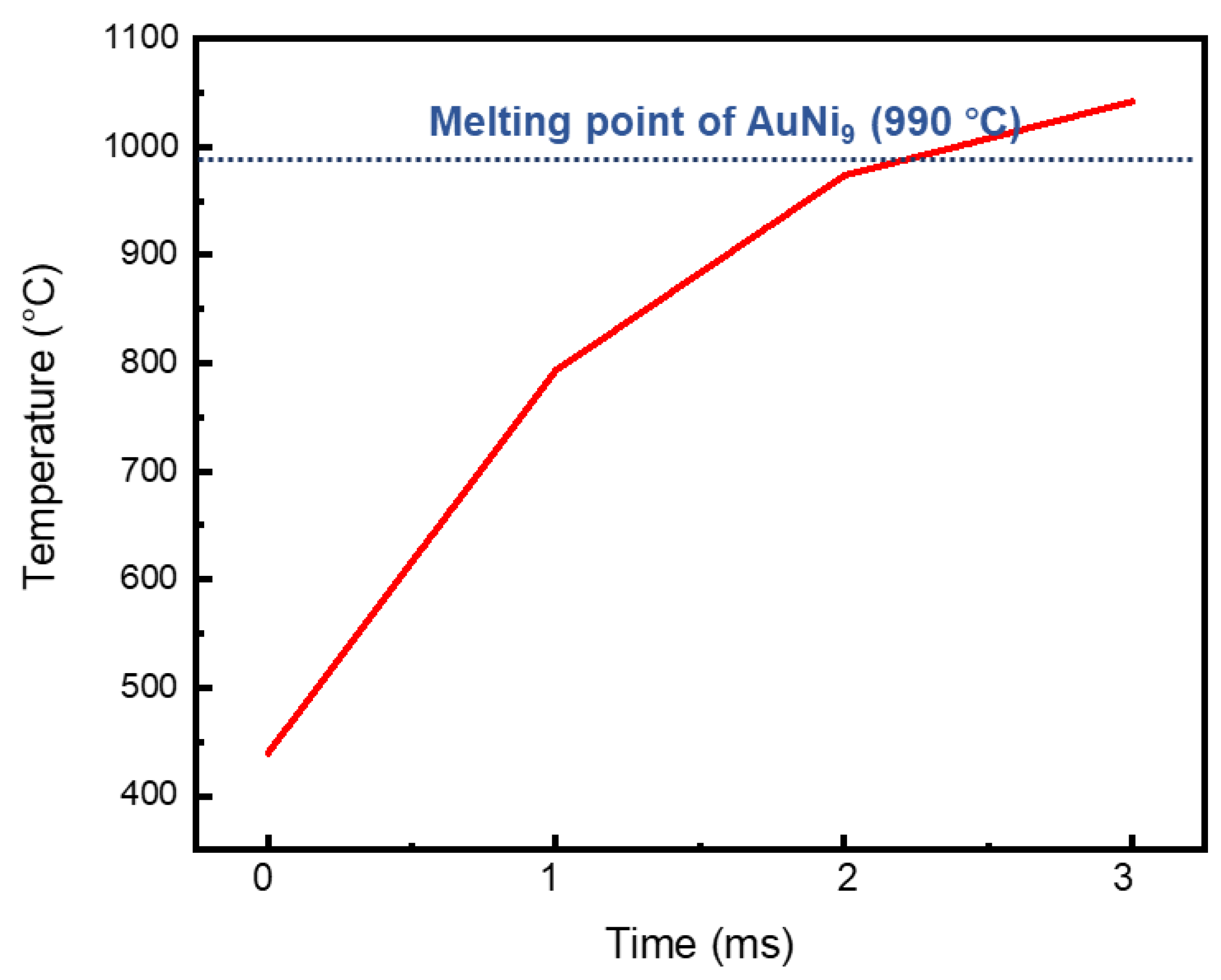
Welding between an AuNi9 microwire and Au microlayer is of great importance for fabricating electrical contact structures for high precision inertial devices, satellite slip ring brushes, robots, etc. In this paper, the achievement of parallel micro-gap resistance welding (PMRW) with 200-μm AuNi9 microwires on a 3-μm Au layer was presented. The study on the orthogonal design of the experiment was carried out. The effect of the process parameters (welding current, welding time, and welding pressure) was discussed in reference to the morphologies and tensile force of the joint using range analysis. It is shown that too much or too little heat input will decrease the welding performance. A group of optimized process parameters (0.275 kA welding current, 3 ms welding time, and 28.7 N welding pressure) was obtained. During the welding process, the dynamic resistance of the whole welding system was measured, which can reflect the welding quality. Finite element simulation is utilized to calculate the welding temperature. The highest temperature was located in the center area of the AuNi9 microwire, reaching 1397.2 °C, which is higher than the melting point of AuNi9. By contrast, the highest temperature for the pad was 826.47 °C (lower than the melting point of Au). Hence, under optimized process parameters, a transient interfacial reaction between the liquid AuNi9 microwire and solid Au pad occurred, and the strength of the welded joint reached 5.54 N.
Keywords: AuNi9 microwire; Au microlayer; parallel micro-gap resistance welding AuNi9 microwire; Au microlayer; parallel micro-gap resistance welding