Investigation of Hydrogen Embrittlement Susceptibility and Fracture Toughness Drop after in situ Hydrogen Cathodic Charging for an X65 Pipeline Steel


 ,
,  and
and
Abstract
1. Introduction
2. Experimental Section
3. Results and Discussion
4. Conclusions
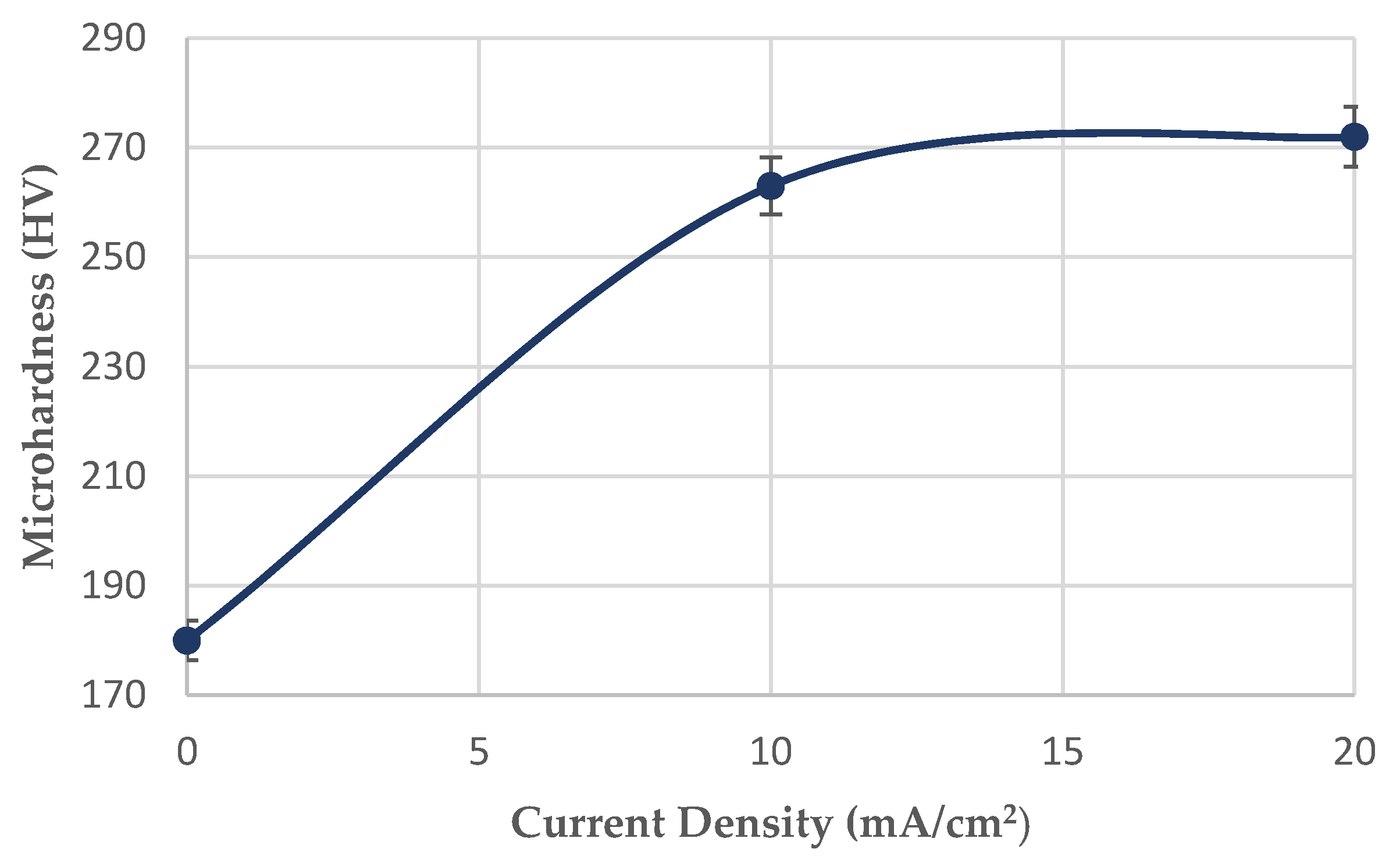
- After applying the in situ hydrogen cathodic charging process at 10 and 20 mA/cm2 current densities, a severe increase in metal surface hardness was detected. This effect is attributed to the interaction between dislocation networks and hydrogen Cottrell atmospheres, to the creation of high volume fraction of hydrogenated vacancies, and the development of interstitial solid solution.
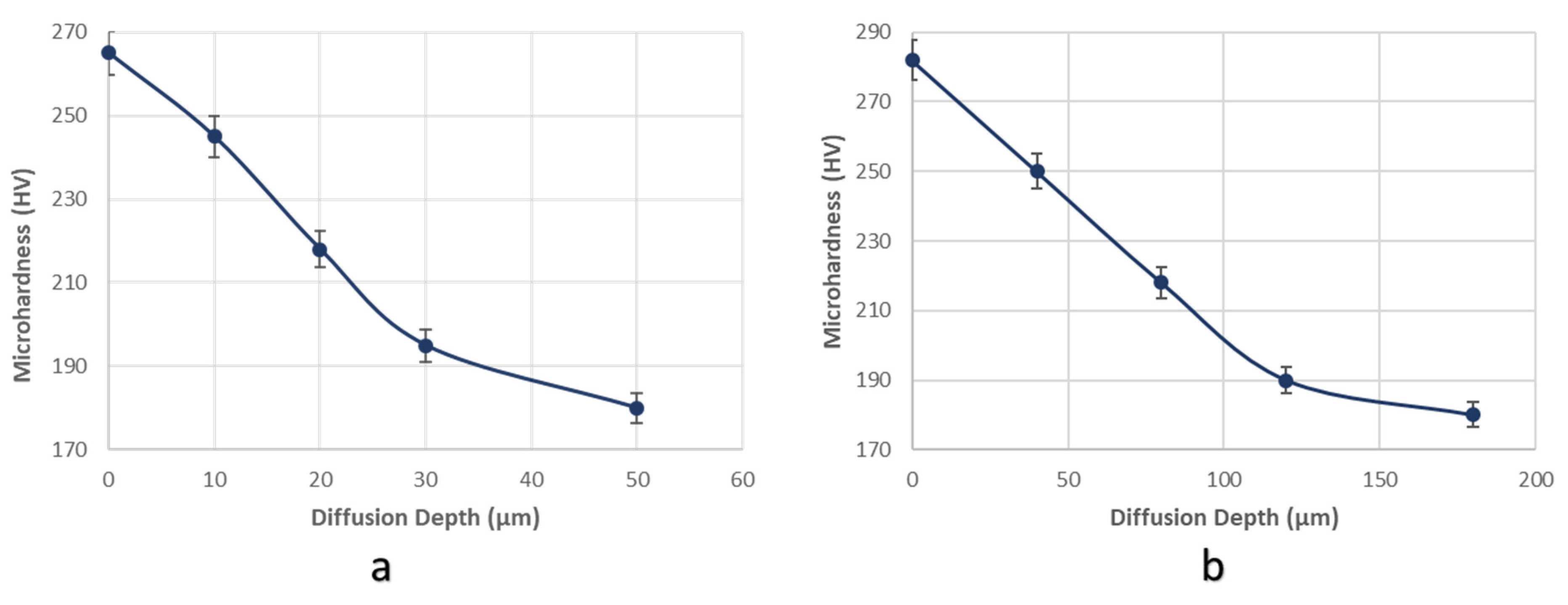
- With the increment of the cathodic charging current density from 10 to 20 mA/cm2, the diffusion depth of hydrogen cations into the X65 crystal structure augmented from 50 to 180 μm.
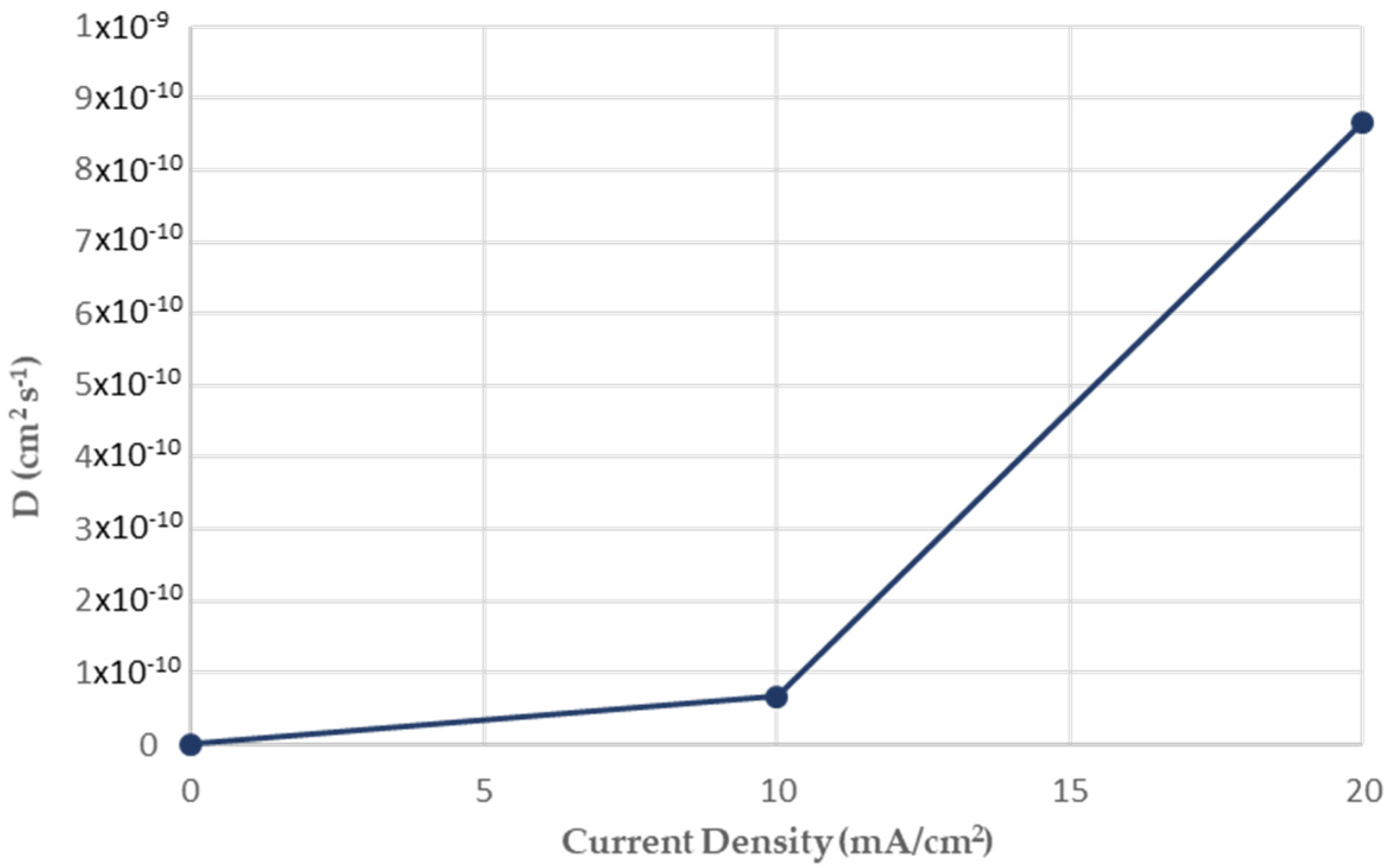
- The diffusion coefficient of hydrogen atoms into the crystalline structure during the in situ hydrogen cathodic charging process and slow strain rate bending loading until fracture was icreased linearly from 6.67735 × 10⁻¹¹ cm2s−1 to 8.65385 × 10⁻¹⁰ cm2s−1 by increasing the current density field from 10 to 20 mA/cm2.
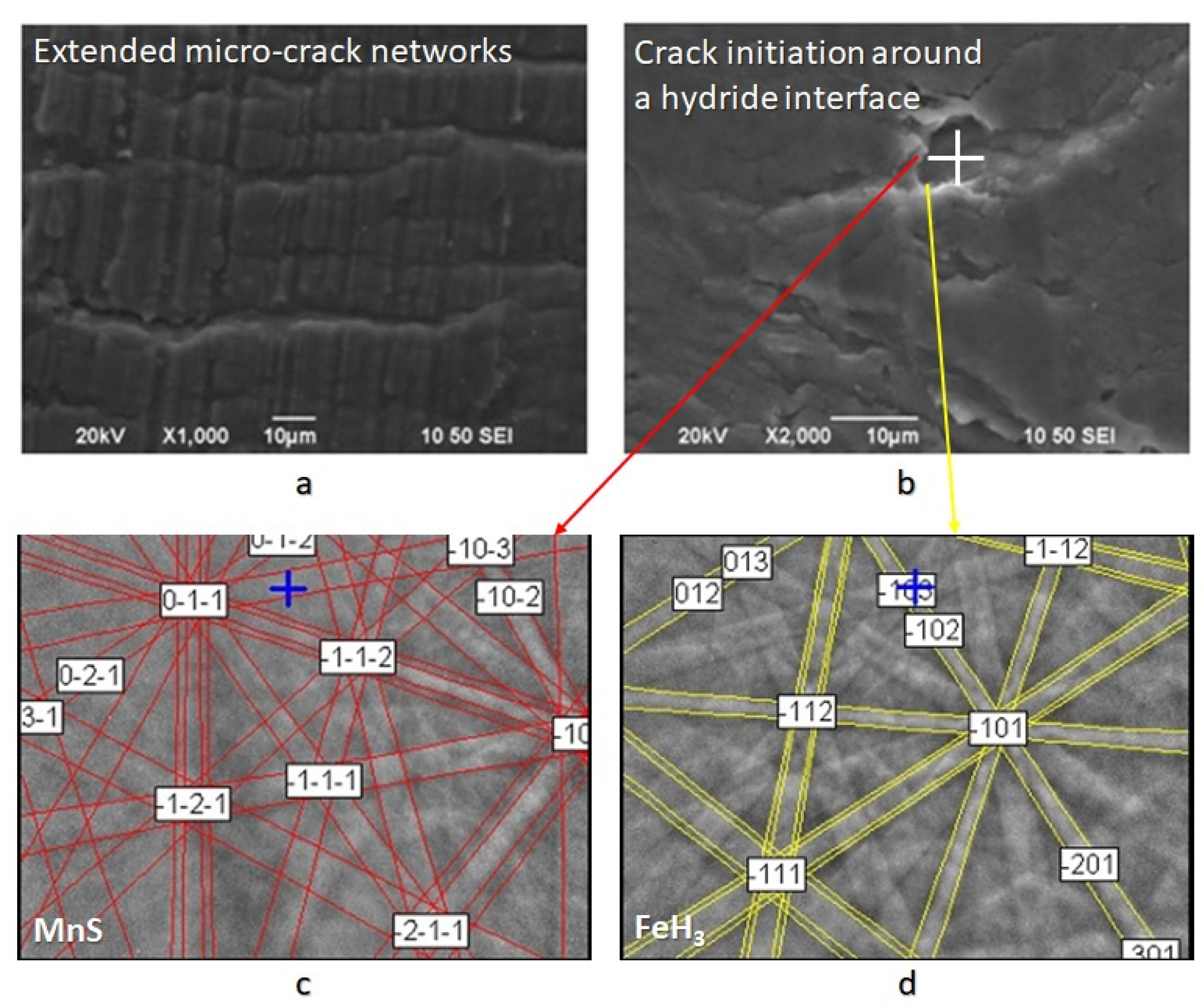
- After the in situ hydrogen cathodic charging process both at 10 and 20 mA/cm2 in the surface structure of the X65 pipeline steel was detected the microcracking phenomenon around the interfaces of blisters and non-metallic inclusions.
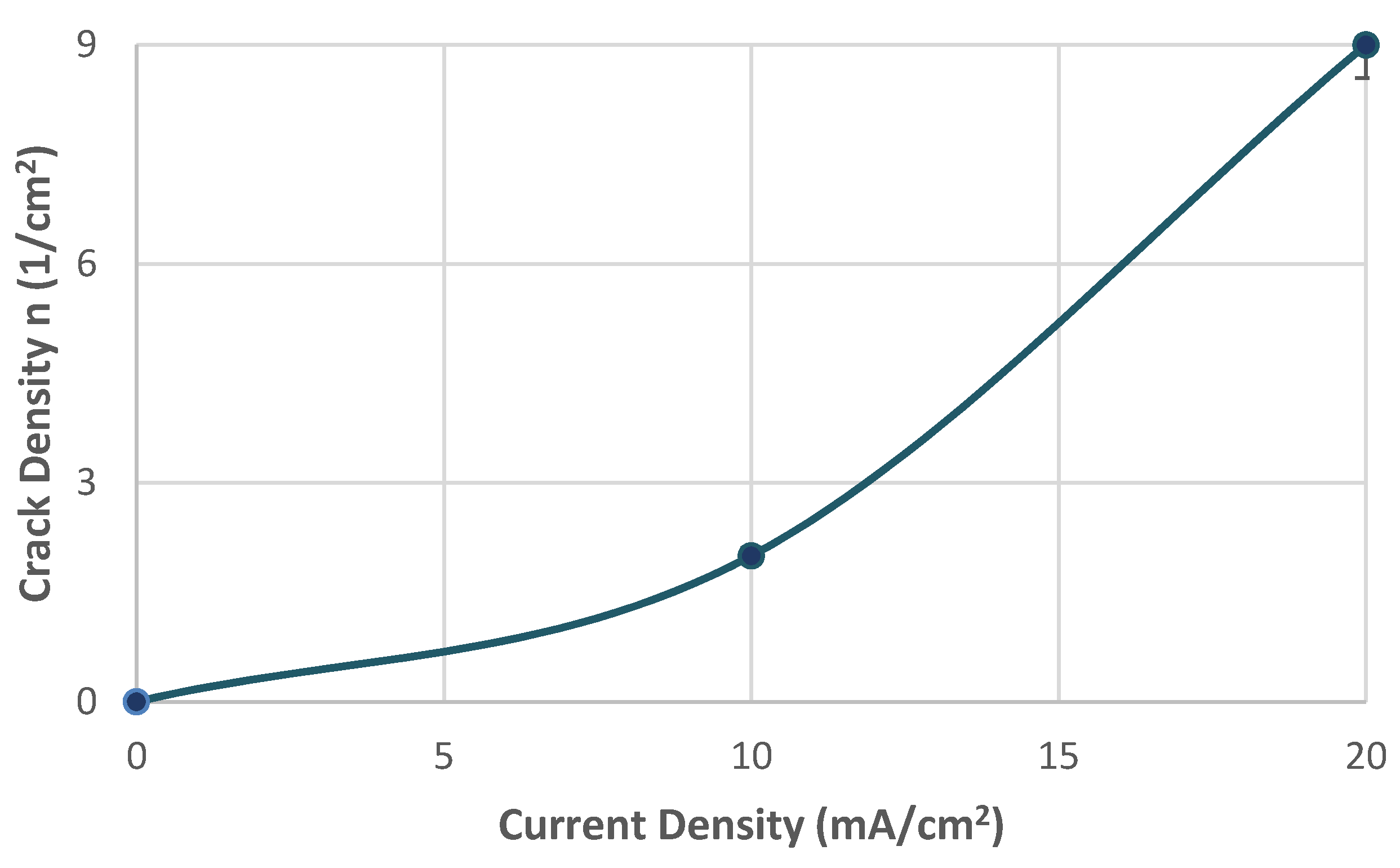
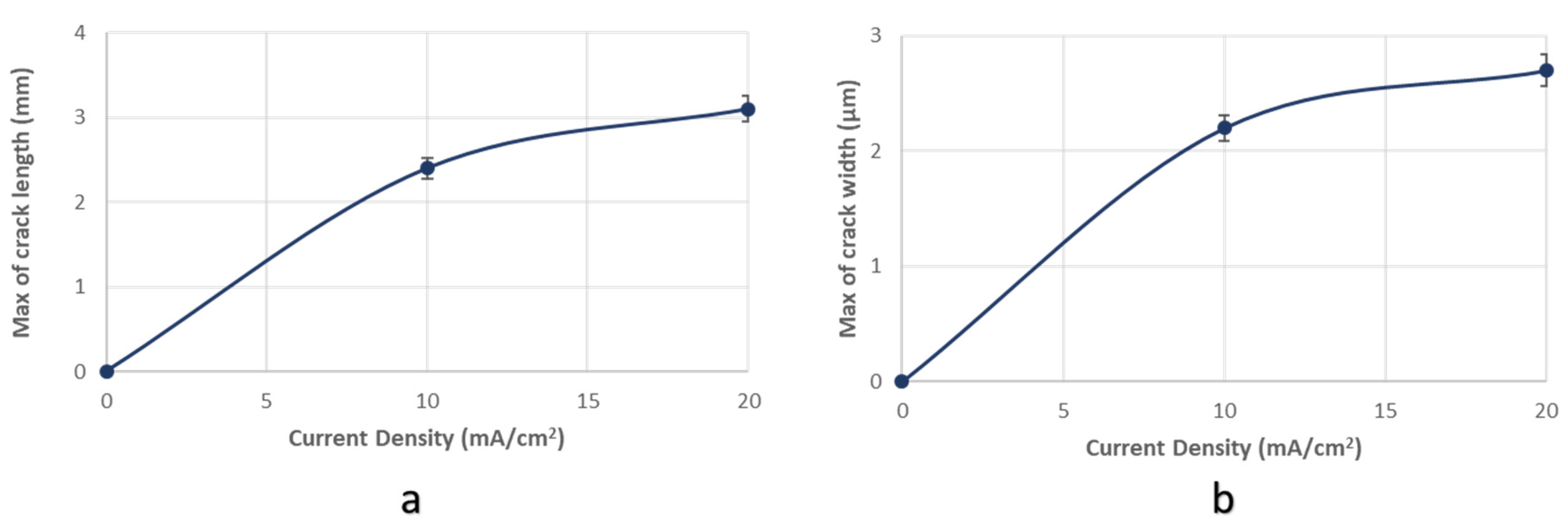
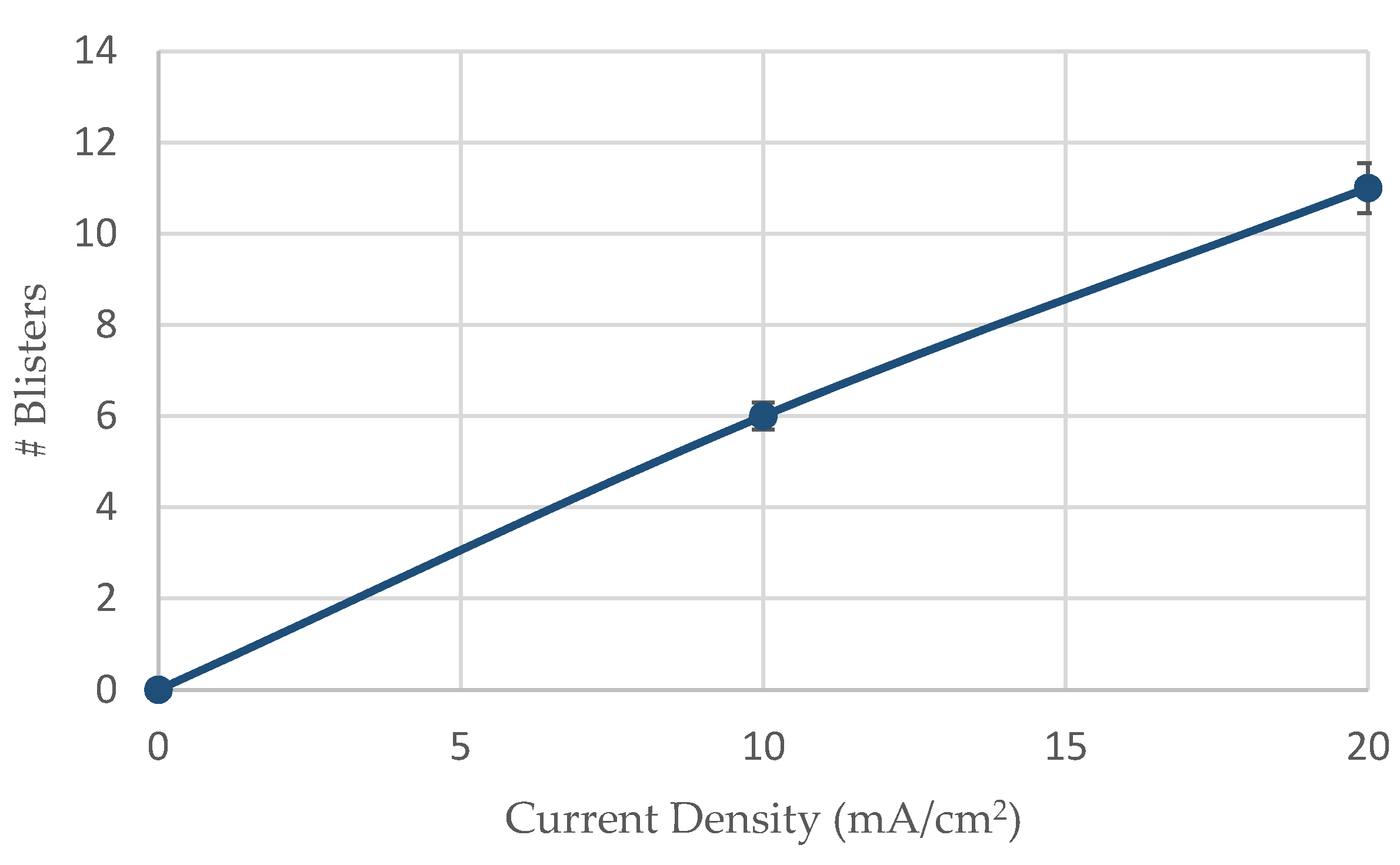
- The surficial density of microcracks was observed to increase exponentially (from 2 cracks/ cm2 to 9 microcracks/cm2) with the increment of the required polarization current density during the in situ hydrogen charging process and slow strain rate bending loading. For a 10 mA/cm2 current density field, the maximum crack width was determined at 2.2 µm and the maximum crack length at 2.4 µm. Correspondingly for a current density field of 20 mA/cm2, the maximum crack width was determined at 2.75 µm and the maximum crack length at 3.1 µm.
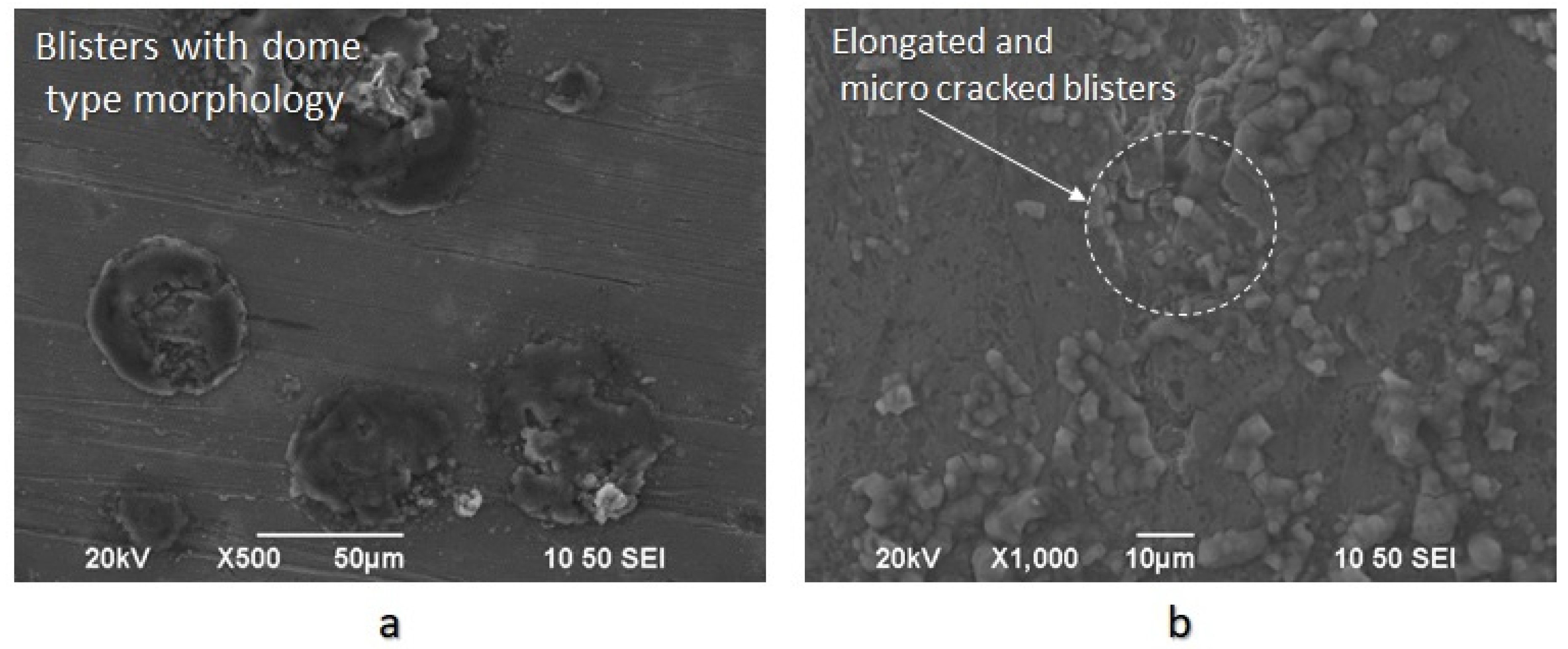
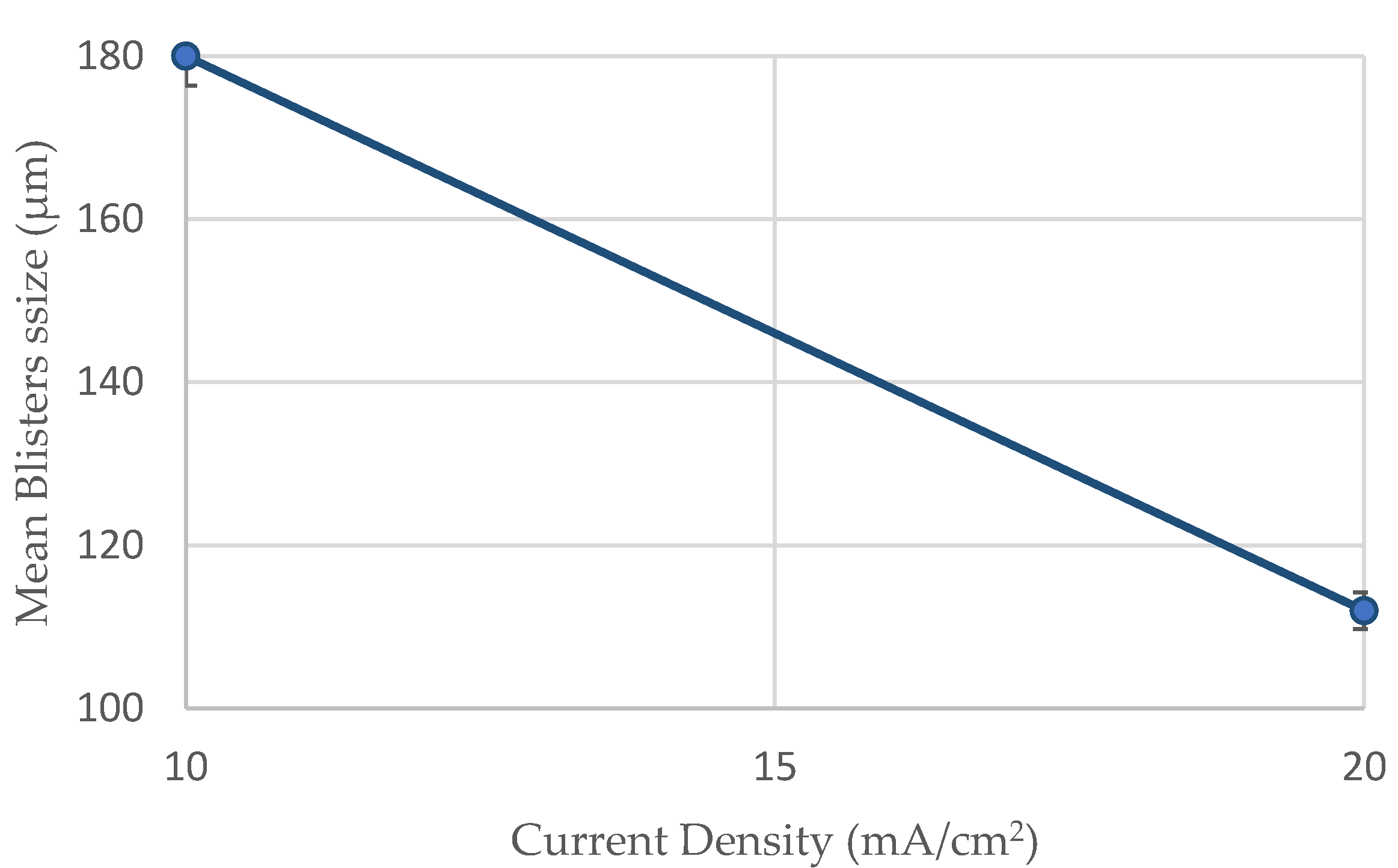
- In the surface area of the cathodically charged specimens of X65 pipeline steel for a current density field of 10 mA/cm2, an increased volume fraction of blisters with dome-type morphology was detected. After the polarization process of the specimens at a current density field of 20 mA/cm2, the development of elongated blisters was observed, with extended microcrack branching networks at their surfaces. Concerning the average growth size of blister formations, it seems to decrease from 180 µm to 110 µm by increasing the required cathodic polarization current density from 10 to 20 mA/cm2.
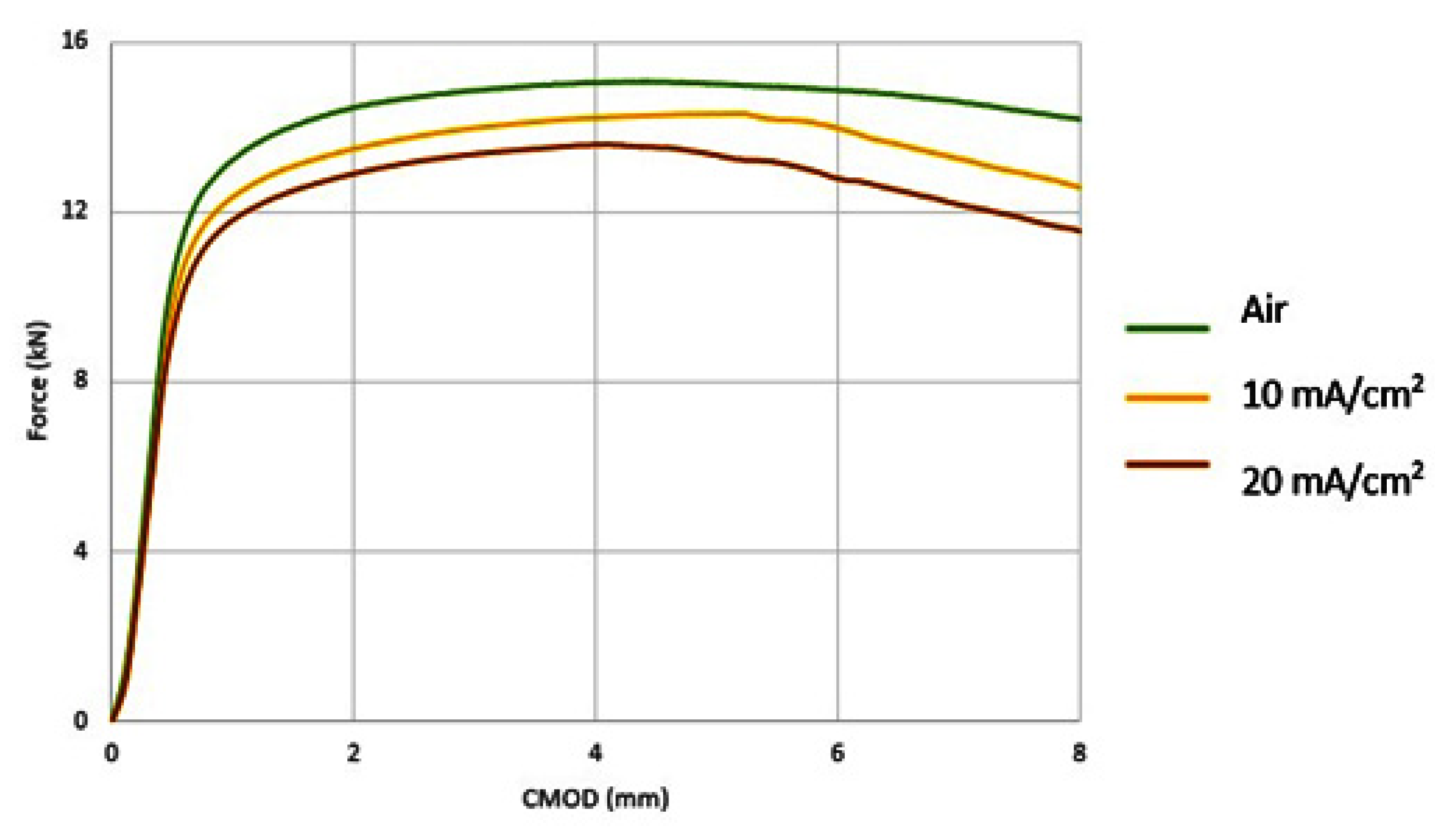
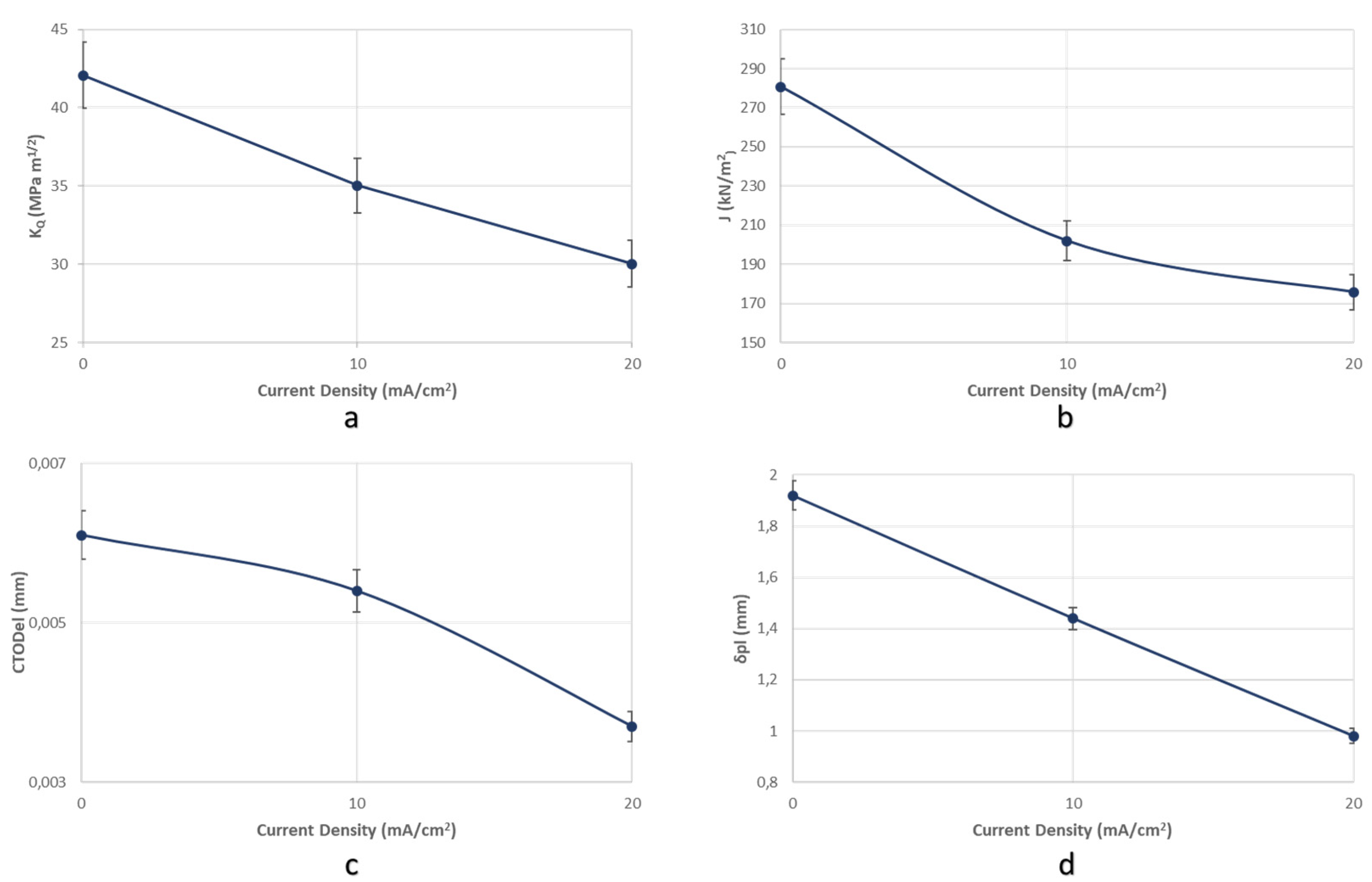
- For the X65 steel specimens subjected to CTOD mechanical testing in ambient air, the mechanical values associated with the fracture toughness were determined as follows: KQ = 42.070 MPa·m1/2, J = 280.76 KN/m2, CTODel = 0.0061 mm, CTODpl = 1.92 mm. After the in situ hydrogen cathodic charging process at 10 mA/cm2 the main parameters correlated with toughness properties were calculated as follows: KQ = 35.04 MPa·m1/2, J = 202.01 KN/m2, CTODel = 0.0054 mm, CTODpl = 1.44 mm. Respectively after the in situ hydrogen cathodic charging procedure at 20 mA/cm2 the above parameters were identified as follows: KQ = 30.04 MPa·m1/2, J = 175.8 KN/m2, CTODel = 0.0037 mm, CTODpl = 0.98 mm.
- Consequently, during the transition from the uncharged state of X65 pipeline steel to the cathodically polarized under a current density field of 10 mA/cm2, the parameters KQ, J, CTODel and CTODpl decreased by 16.71%, 28%, 11.48%, and 25%, respectively. During the transition from the charged condition under a current density field of 10 mA/cm2 to that with a current density field of 20 mA/cm2, the parameters KQ, J, CTODel and CTODpl decreased by 28.6%, 37.4%, 39.34%, and 48.95%, respectively.
- The significant drop of the fracture toughness parameters after the in situ hydrogen cathodic charging process of X65 pipeline steel under a current density field of 10 mA/cm2, is attributed is related to the contribution of the Hydrogen Enhanced Localized Plasticity (HELP), Hydrogen Induced Cracking (HIC) and Elastic Shielding Reactions mechanisms
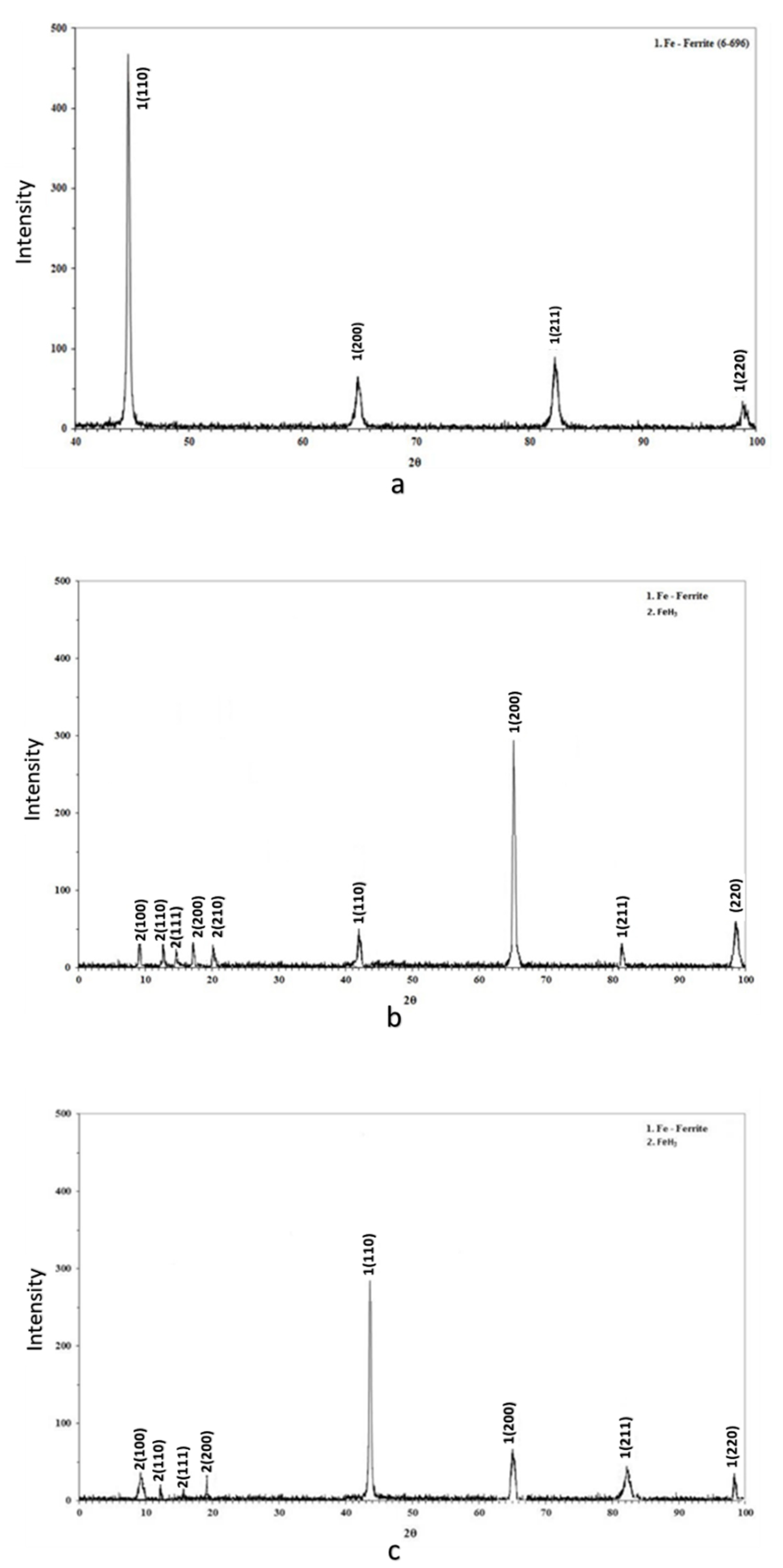
- After the in situ hydrogen cathodic charging testing under a polarization field of 20 mA/cm2 the significant deterioration of the mechanical properties is attributed to the development of a high volume fraction of FeH3 hydrides and the evolution of the Hydrogen Enhanced Decohesion embrittlement mechanism (HEDE).
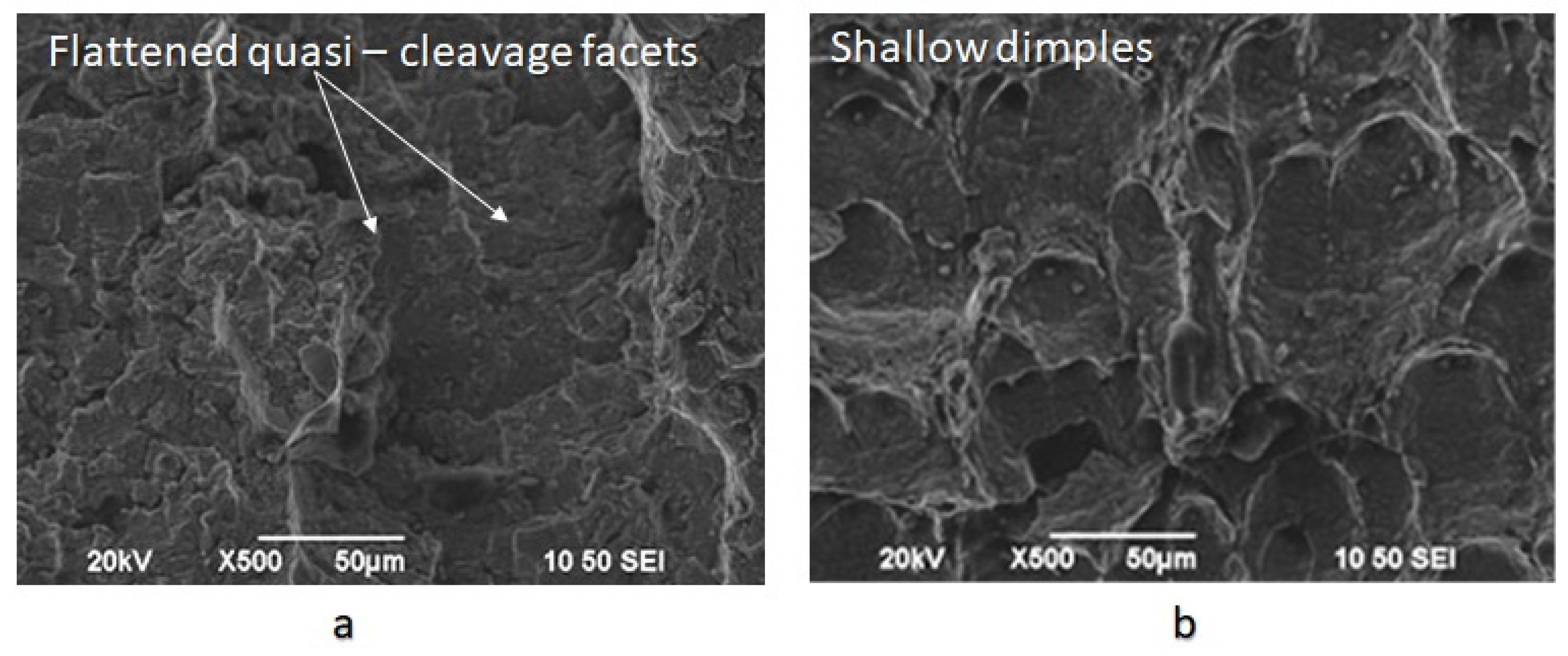
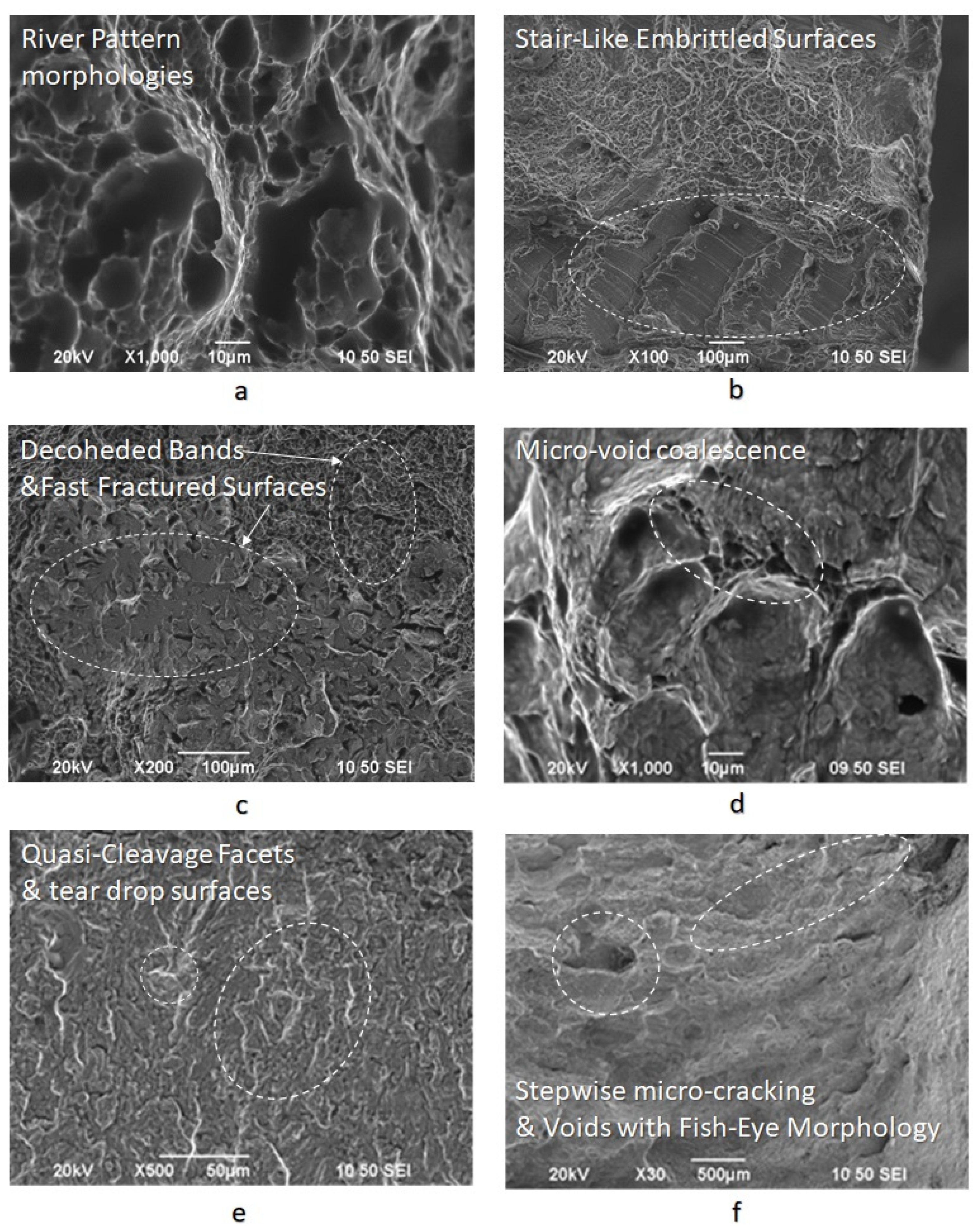
- The fractured surfaces of the specimens that had been submitted under CTOD testing both at the air and hydrogenated environment consisted of the fatigue-precracked area and the bended area. For the specimens subjected to slow strain rate bending loading under the effect of hydrogen cathodic charging process at a current density of 10 and 20 mA/cm2 the extensive appearance of embrittled regions, such as quasi-cleavage facets, river pattern morphologies, fast fracture surfaces (FFS), teardrop ridges and stair-like features was detected.
Author Contributions
Funding
Conflicts of Interest
References
- Shih, D.S.; Robertson, I.M.; Birnbaum, H.K. Hydrogen embrittlement of a titanium: In situ TEM studies. Acta Metall. 1988, 36, 111–124. [Google Scholar] [CrossRef] [Scilit]
- Westlake, D.G. A generalized model for hydrogen embrittlement. Amer. Soc. Met. 1969, 62, 1000–1006. [Google Scholar]
- Beachem, C.D. A new model for hydrogen assisted cracking. Metall. Trans. 1972, 3, 437–451. [Google Scholar]
- Birnbaum, H.; Sofronis, P. Hydrogen-enhanced localized plasticity—A mechanism for hydrogen-related fracture. Mater. Sci. Eng. A 1994, 176, 191–202. [Google Scholar] [CrossRef] [Scilit]
- Sofronis, P.; Birnbaum, H.K. Mechanisms of the hydrogen dislocation-impurity interaction—Increasing shear modulus. J. Mech. Phys. Solids 1995, 43, 49–90. [Google Scholar] [CrossRef] [Scilit]
- Bastien, P. Influence de l’ ecrouissage sur le frottement interieur de fer et de l’ acier, charge ou non en hydrogene. C. R. Hebd. Seances Acad. Sci. 1951, 232, 1845–1862. [Google Scholar]
- McMahon, C. Hydrogen-induced intergranular fracture of steels. Eng. Fract. Mech. 2001, 68, 773–788. [Google Scholar] [CrossRef] [Scilit]
- Fang, B.; Han, E.-H.; Wang, J.; Zhu, Z.; Ke, W. Hydrogen in stress corrosion cracking of X-70 pipeline steels in near-neutral pH solutions. J. Mater. Sci. 2006, 41, 1797–1803. [Google Scholar] [CrossRef] [Scilit]
- Liang, P.; Li, X.; Du, C.; Chen, X. Stress corrosion cracking of X80 pipeline steel in simulated alkaline soil solution. Mater. Des. 2009, 30, 1712–1717. [Google Scholar] [CrossRef] [Scilit]
- Cheng, Y.F. Analysis of electrochemical hydrogen permeation through X-65 pipeline steel and its implications on pipeline stress corrosion cracking. Int. J. Hydrogen Energy 2007, 32, 1269–1276. [Google Scholar] [CrossRef] [Scilit]
- Torresislas, A.; Salinasbravo, V.; Albarran, J.; Gonzalezrodriguez, J. Effect of hydrogen on the mechanical properties of X-70 pipeline steel in diluted solutions at different heat treatments. Int. J. Hydrogen Energy 2005, 30, 1317–1322. [Google Scholar] [CrossRef] [Scilit]
- Hardie, D.; Charles, E.; Lopez, A. Hydrogen embrittlement of high strength pipeline steels. Corros. Sci. 2006, 48, 4378–4385. [Google Scholar] [CrossRef] [Scilit]
- Trasatti, S.P.; Sivieri, E.; Mazza, F. Susceptibility of a X80 steel to hydrogen embrittlement. Mater. Corros. 2005, 56, 111–117. [Google Scholar] [CrossRef] [Scilit]
- Wang, R. Effects of hydrogen on the fracture toughness of a X70 pipeline steel. Corros. Sci. 2009, 51, 2803–2810. [Google Scholar] [CrossRef] [Scilit]
- Zhang, T.; Chu, W.; Gao, K.; Qiao, L. Study of correlation between hydrogen-induced stress and hydrogen embrittlement. Mater. Sci. Eng. A 2003, 347, 291–299. [Google Scholar] [CrossRef] [Scilit]
- Chen, W.; Kania, R.; Worthingham, R.; Van Boven, G. Transgranular crack growth in the pipeline steels exposed to near-neutral pH soil aqueous solutions: The role of hydrogen. Acta Mater. 2009, 57, 6200–6214. [Google Scholar] [CrossRef] [Scilit]
- Chen, W.; Sutherby, R.L. Crack Growth Behavior of Pipeline Steel in Near-Neutral pH Soil Environments. Met. Mater. Trans. A 2007, 38, 1260–1268. [Google Scholar] [CrossRef] [Scilit]
- Arafin, M.; Szpunar, J. Effect of bainitic microstructure on the susceptibility of pipeline steels to hydrogen induced cracking. Mater. Sci. Eng. A 2011, 528, 4927–4940. [Google Scholar] [CrossRef] [Scilit]
- API 1104: Welding of pipelines and related facilities, 19th ed.; American Petroleum Institute: Washington, DC, USA, 1999.
- American Petroleum Institute. API 579-1: Fitness-for-Service; American Petroleum Institute: Washington, DC, USA, 2007. [Google Scholar]
- Mørk, K.; Collberg, L.; Bjømsen, T. Limit State Design in DNV96 Rules for Submarine Pipeline Systems: Background and Project Experience; Society of Petroleum Engineers (SPE): Houston, TX, USA, 1998. [Google Scholar]
- British Standards Institution. Guide to Methods for Assessing the Acceptability of Flaws in Metallic Structures; British Standards Institution: London, UK, 2005. [Google Scholar]
- Zapffe, C.; Sims, C. Hydrogen embrittlement, internal stress and defects in steel. Trans. AIME 1941, 145, 225–232. [Google Scholar]
- Hayden, L.E.; Stalheim, D. ASME B31.12 Hydrogen Piping and Pipeline Code Design Rules and Their Interaction with Pipeline Materials Concerns, Issues and Research. In Proceedings of the ASME 2009 Pressure Vessels and Piping Conference. Volume 1: Codes and Standards, Prague, Czech Republic, 26–30 July 2009; pp. 355–361. [Google Scholar]
- Chatzidouros, E.V.; Papazoglou, V.I.; Pantelis, D.I. Hydrogen effect on a low carbon ferritic – bainitic pipeline steel. Int. J. Hydrogen Energy 2014, 39, 18498–18505. [Google Scholar] [CrossRef] [Scilit]
- Chatzidouros, E.; Traidia, A.; Devarapalli, R.; Pantelis, D.; Steriotis, T.; Jouiad, M. Effect of hydrogen on fracture toughness properties of a pipeline steel under simulated sour service conditions. Int. J. Hydrogen Energy 2018, 43, 5747–5759. [Google Scholar] [CrossRef] [Scilit]
- Jemblie, L.; Olden, V.; Mainçon, P.; Akselsen, O.M. Cohesive zone modelling of hydrogen induced cracking on the interface of clad steel pipes. Int. J. Hydrogen Energy 2017, 42, 28622–28634. [Google Scholar] [CrossRef] [Scilit]
- Olden, V.; Alvaro, A.; Akselsen, O.M. Hydrogen diffusion and hydrogen influenced critical stress intensity in an API X70 pipeline steel welded joint e experiments and FE simulations. Int. J. Hydrogen Energy 2012, 37, 11474–11486. [Google Scholar] [CrossRef] [Scilit]
- Traidia, A.; Alfano, M.; Lubineau, G.; Duval, S.; Sherik, A. An effective finite element model for the prediction of hydrogen induced cracking in steel pipelines. Int. J. Hydrogen Energy 2012, 37, 16214–16230. [Google Scholar] [CrossRef] [Scilit]
- Chong, T.-V.S.; Kumar, S.B.; Lai, M.O.; Loh, W.L. Effects of wet H2S containing environment on mechanical properties of NACE grade FeMn steel pipeline girth welds. Eng. Fract. Mech. 2014, 131, 485–503. [Google Scholar] [CrossRef] [Scilit]
- Hejazi, D.; Haq, A.; Yazdipour, N.; Dunne, D.; Calka, A.; Barbaro, F.; Pereloma, E.V. Effect of manganese content and microstructure on the susceptibility of X70 pipeline steel to hydrogen cracking. Mater. Sci. Eng. A 2012, 551, 40–49. [Google Scholar] [CrossRef] [Scilit]
- ASTM E1820. Standard Test Method for Measurement of Fracture Toughness; American Society for Testing and Materials: West Conshohocken, PA, USA, 2009. [Google Scholar]
- Beltrán, M.; González, J.; Rivas, D.; Hernández, F.; Dorantes, H. On the role of microstructural properties on mechanical behavior of API-X46 steel. Procedia Struct. Integr. 2017, 3, 57–67. [Google Scholar] [CrossRef] [Scilit]
- Huang, F.; Liu, J.; Deng, Z.; Cheng, J.; Lu, Z.; Li, X. Effect of microstructure and inclusions on hydrogen induced cracking susceptibility and hydrogen trapping efficiency of X120 pipeline steel. Mater. Sci. Eng. A 2010, 527, 6997–7001. [Google Scholar] [CrossRef] [Scilit]
- Xue, H.B.; Cheng, Y.F. Hydrogen Permeation and Electrochemical Corrosion Behavior of the X80 Pipeline Steel Weld. J. Mater. Eng. Perform. 2012, 22, 170–175. [Google Scholar] [CrossRef] [Scilit]
- Djukic, M.; Zeravcic, V.S.; Bakic, G.; Sedmak, A.; Rajicic, B. Hydrogen damage of steels: A case study and hydrogen embrittlement model. Eng. Fail. Anal. 2015, 58, 485–498. [Google Scholar] [CrossRef] [Scilit]
- Singh, R.; Singh, V.; Arora, A.; Mahajan, D.K. In-situ investigations of hydrogen influenced crack initiation and propagation under tensile and low cycle fatigue loadings in RPV steel. J. Nucl. Mater. 2020, 529, 151912. [Google Scholar] [CrossRef] [Scilit]
- Djukic, M.; Bakic, G.M.; Zeravcic, V.S.; Sedmak, A.; Rajicic, B. The synergistic action and interplay of hydrogen embrittlement mechanisms in steels and iron: Localized plasticity and decohesion. Eng. Fract. Mech. 2019, 216, 106528. [Google Scholar] [CrossRef] [Scilit]
- ASME. ASME B31. Gas Transmission and Distribution Piping Systems; American Society of Mechanical Engineers: New York, NY, USA, 1999. [Google Scholar]
- Tetelman, A.; Robertson, W. Direct observation and analysis of crack propagation in iron-3% silicon single crystals. Acta Met. 1963, 11, 415–426. [Google Scholar] [CrossRef] [Scilit]
- Elboujdaini, M. Hydrogen-Induced Cracking and Sulfide Stress Cracking; Wiley: Hoboken, NJ, USA, 2011; pp. 183–194. [Google Scholar]
- Birnbaum, H.K.; Moody, N.; Thompson, A.W. Hydrogen Effects on Materials Behavior. Min. Met. Mater. Soc. 1990, 12, 639–658. [Google Scholar]
- Barrera, O.; Bombac, D.; Chen, Y.; Daff, T.D.; Galindo-Nava, E.; Gong, P.; Haley, D.; Horton, R.; Katzarov, I.; Kermode, J.R.; et al. Understanding and mitigating hydrogen embrittlement of steels: A review of experimental, modelling and design progress from atomistic to continuum. J. Mater. Sci. 2018, 53, 6251–6290. [Google Scholar] [CrossRef] [Scilit]
- Stroh, A.N. A theory of the fracture of metals. Adv. Phys. 1957, 6, 418–465. [Google Scholar] [CrossRef] [Scilit]
- Oriani, R.A.; Josephic, P.H. Equilibrium aspects of hydrogen-induced cracking of steels. Acta Metall. 1974, 22, 1065–1074. [Google Scholar] [CrossRef] [Scilit]
- Oriani, R.; Josephic, P. Equilibrium and kinetic studies of the hydrogen-assisted cracking of steel. Acta Met. 1977, 25, 979–988. [Google Scholar] [CrossRef] [Scilit]
- Troiano, A.R.; Hehemann, R.F. Stress Corrosion Cracking of Ferritic and Austenitic Stainless Steels. Hydrogen Embrittlement and Stress Corros. Cracking 1995, 231–248. [Google Scholar]
- Campbell, J. The Mechanisms of Metallurgical Failure, On the Origin of Fracture; Butterworth-Heinemann: Birmingham, UK, 2020. [Google Scholar]



| Loading Stage | Cycles | Fmax (kN) | Fmin (kN) | Target Set Point | Amplitude |
|---|---|---|---|---|---|
| First stage | 9000 | −14 | −1.4 | −7.7 | 6.3 |
| Second stage | 12,000 | −10 | −1.0 | −5.5 | 4.5 |
| Third stage | 50,000 | −6 | −0.6 | −2.7 | 3.3 |
| C | Si | Mn | P | S | V | Nb | Ti | Fe |
|---|---|---|---|---|---|---|---|---|
| 0.16% | 0.45% | 1.65% | 0.02% | 0.01% | 0.08% | 0.05% | 0.06% | Bal. |
| Yield Strength Min (KSI) | Tensile Strength Min (KSI) | Yield to Tensile Ratio (max) | Elongation (%) | Hardness (HV) |
|---|---|---|---|---|
| 65 | 77 | 0.93 | 18 | 220 |
© 2020 by the authors. Licensee MDPI, Basel, Switzerland. This article is an open access article distributed under the terms and conditions of the Creative Commons Attribution (CC BY) license (http://creativecommons.org/licenses/by/4.0/).
Share and Cite
Kyriakopoulou, H.P.; Karmiris-Obratański, P.; Tazedakis, A.S.; Daniolos, N.M.; Dourdounis, E.C.; Manolakos, D.E.; Pantelis, D. Investigation of Hydrogen Embrittlement Susceptibility and Fracture Toughness Drop after in situ Hydrogen Cathodic Charging for an X65 Pipeline Steel. Micromachines 2020, 11, 430. https://doi.org/10.3390/mi11040430
Kyriakopoulou HP, Karmiris-Obratański P, Tazedakis AS, Daniolos NM, Dourdounis EC, Manolakos DE, Pantelis D. Investigation of Hydrogen Embrittlement Susceptibility and Fracture Toughness Drop after in situ Hydrogen Cathodic Charging for an X65 Pipeline Steel. Micromachines. 2020; 11(4):430. https://doi.org/10.3390/mi11040430
Chicago/Turabian StyleKyriakopoulou, Helen P., Panagiotis Karmiris-Obratański, Athanasios S. Tazedakis, Nikoalos M. Daniolos, Efthymios C. Dourdounis, Dimitrios E. Manolakos, and Dimitrios Pantelis. 2020. "Investigation of Hydrogen Embrittlement Susceptibility and Fracture Toughness Drop after in situ Hydrogen Cathodic Charging for an X65 Pipeline Steel" Micromachines 11, no. 4: 430. https://doi.org/10.3390/mi11040430
APA StyleKyriakopoulou, H. P., Karmiris-Obratański, P., Tazedakis, A. S., Daniolos, N. M., Dourdounis, E. C., Manolakos, D. E., & Pantelis, D. (2020). Investigation of Hydrogen Embrittlement Susceptibility and Fracture Toughness Drop after in situ Hydrogen Cathodic Charging for an X65 Pipeline Steel. Micromachines, 11(4), 430. https://doi.org/10.3390/mi11040430