Article

Fabrication of Tapered 3D Microstructure Arrays Using Dual-Exposure Lithography (DEL)


Department of Biological Engineering, Utah State University, Logan, UT 84322, USA
*
Author to whom correspondence should be addressed.
Micromachines 2020, 11(10), 903; https://doi.org/10.3390/mi11100903
Submission received: 1 September 2020 / Revised: 26 September 2020 / Accepted: 28 September 2020 / Published: 29 September 2020

Abstract

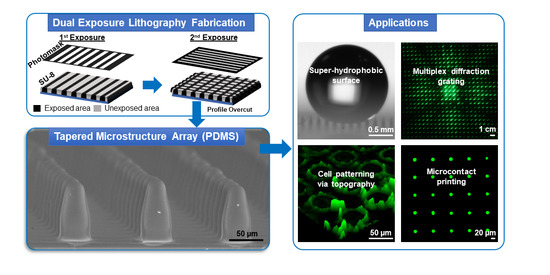
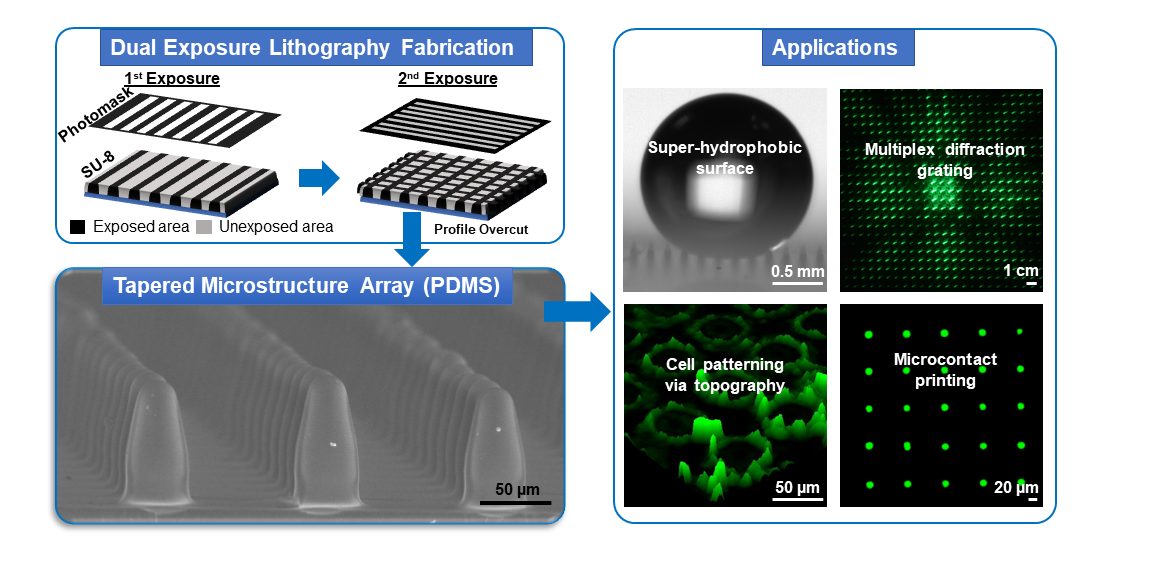
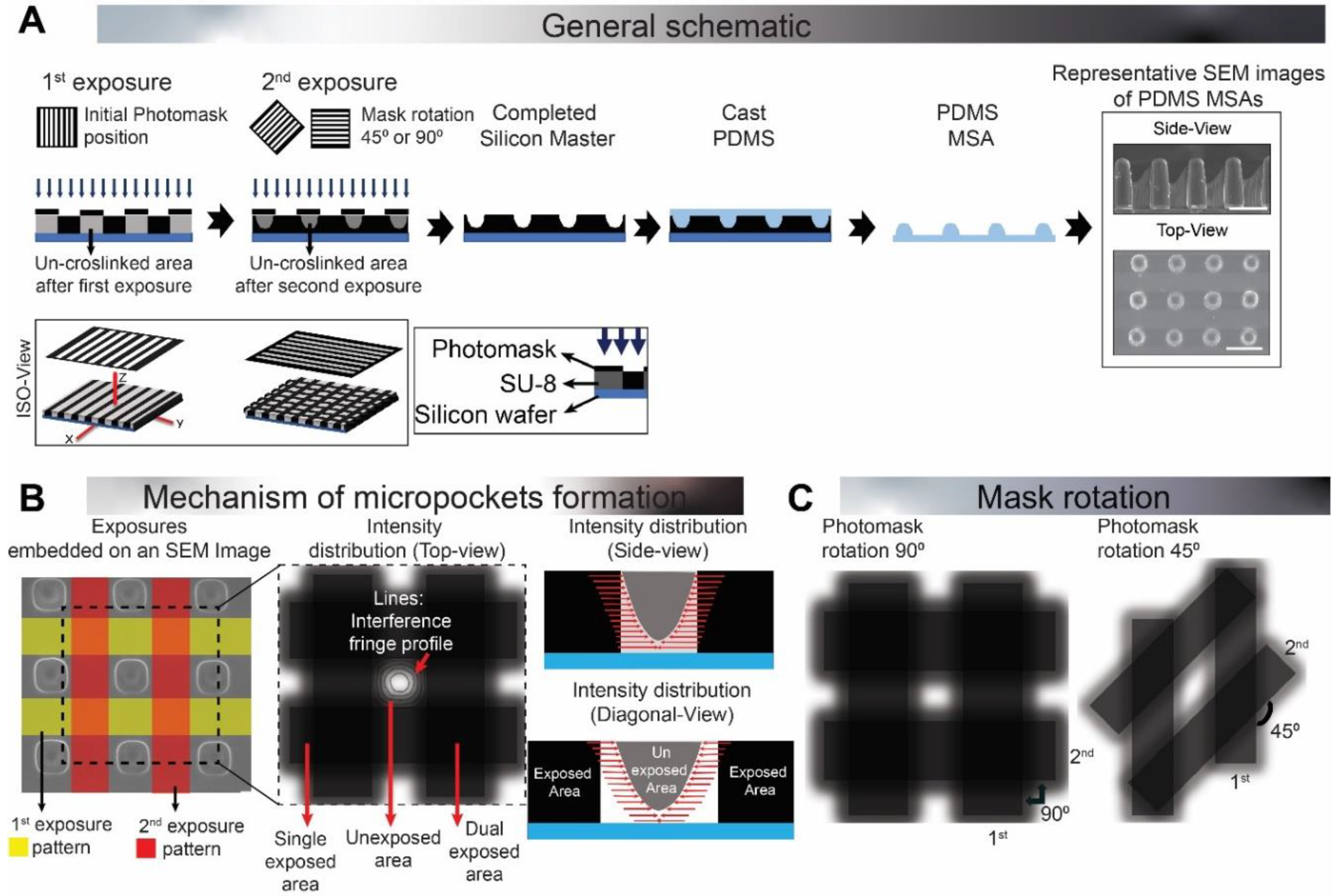
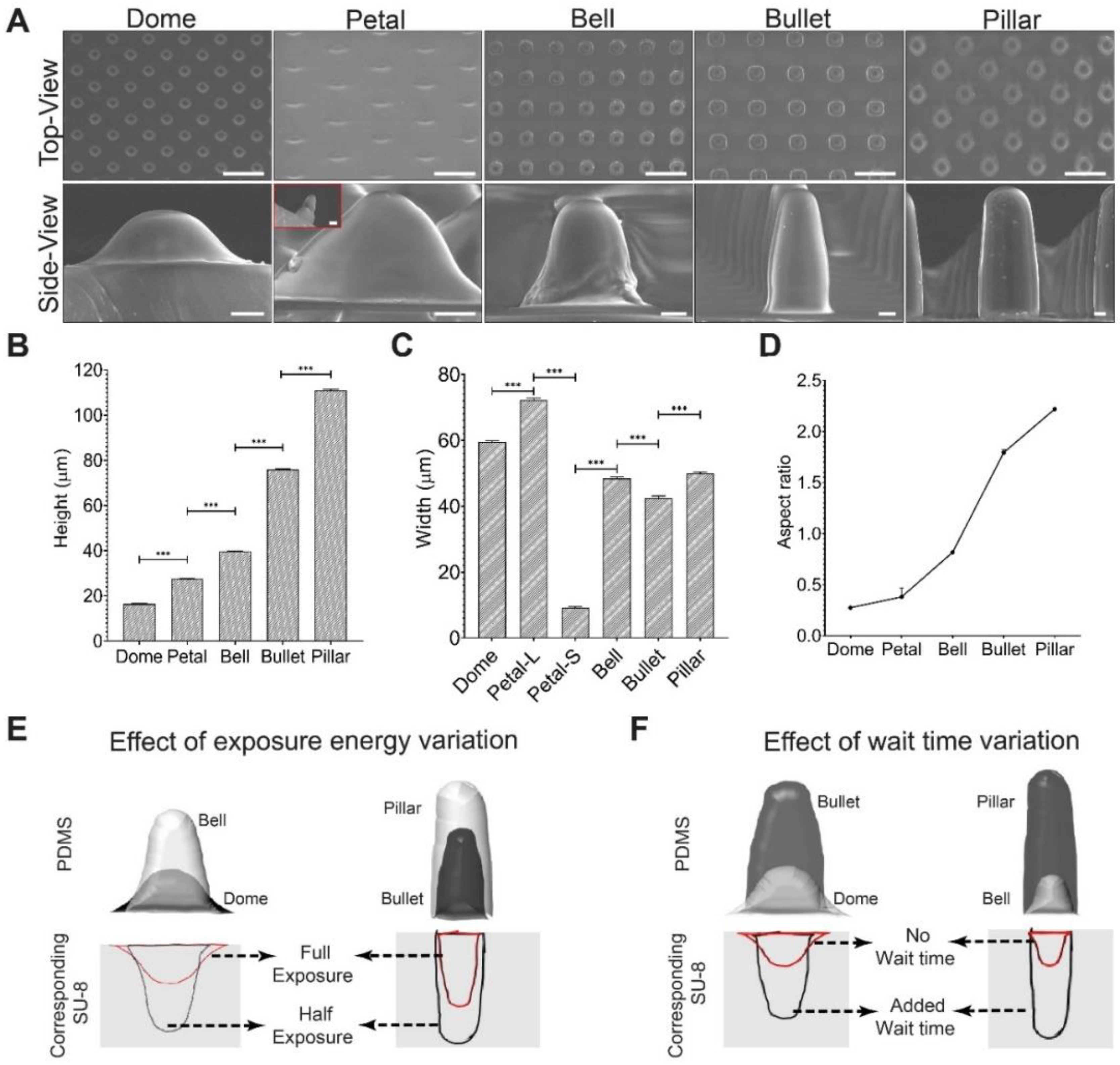
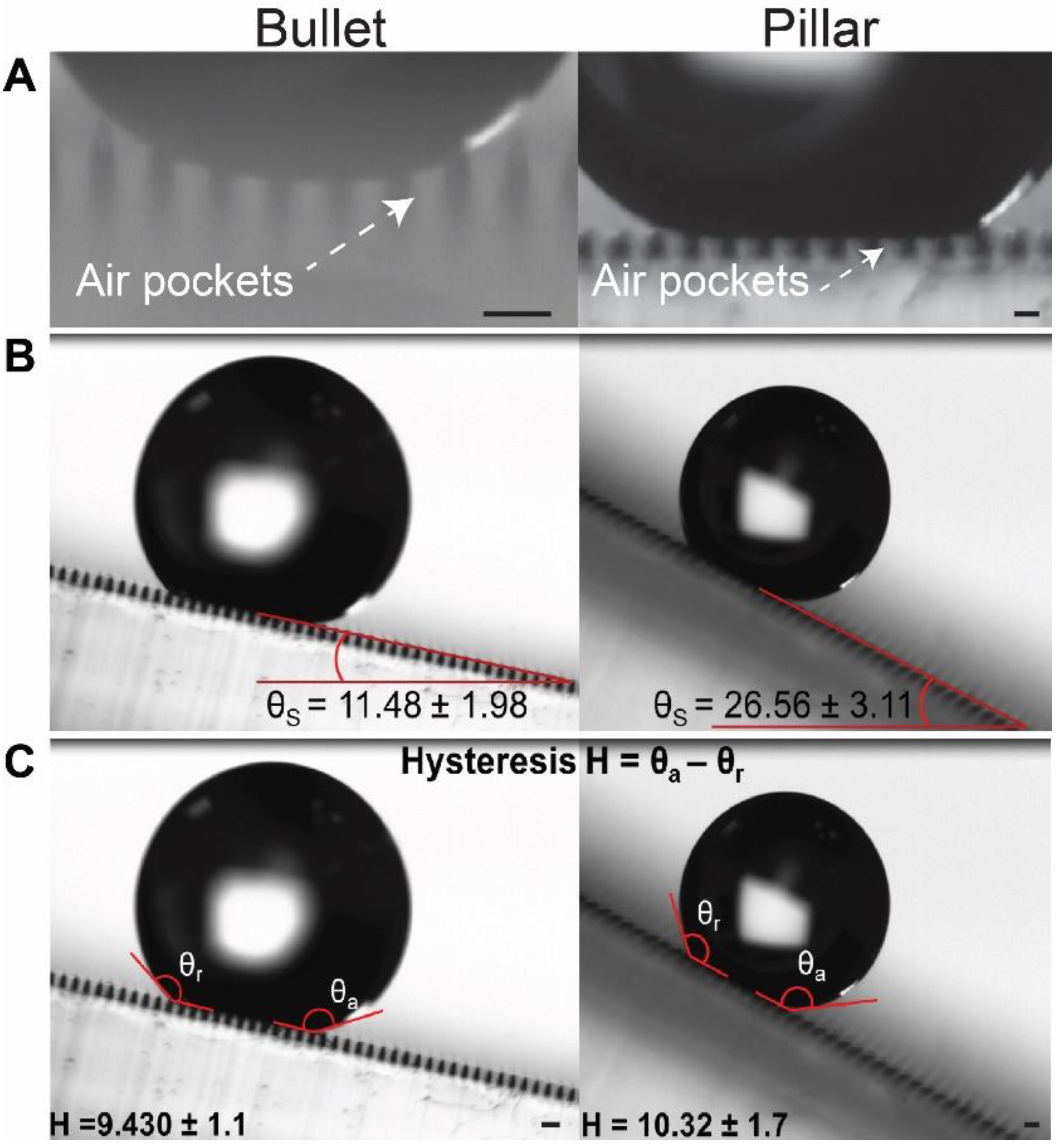
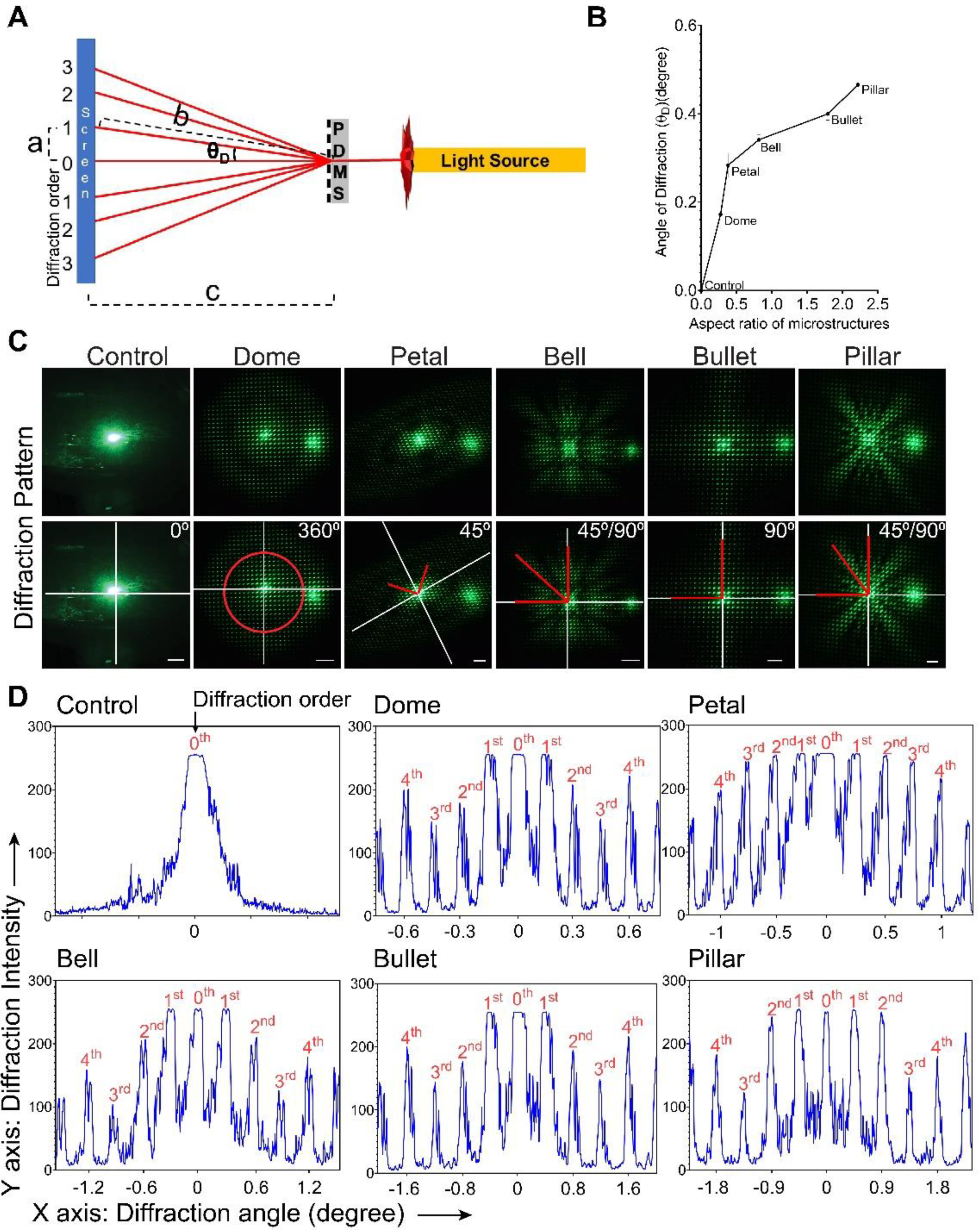
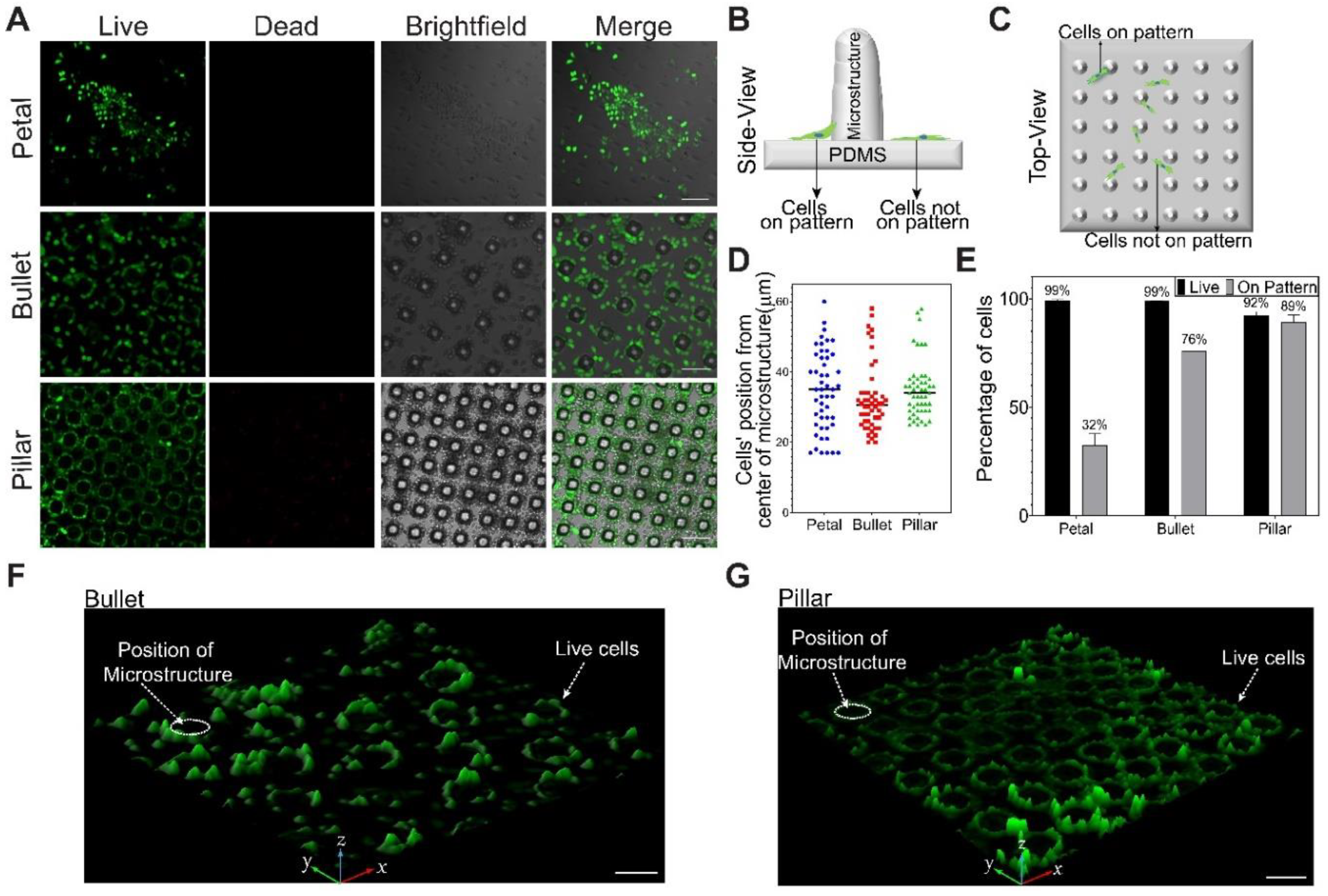
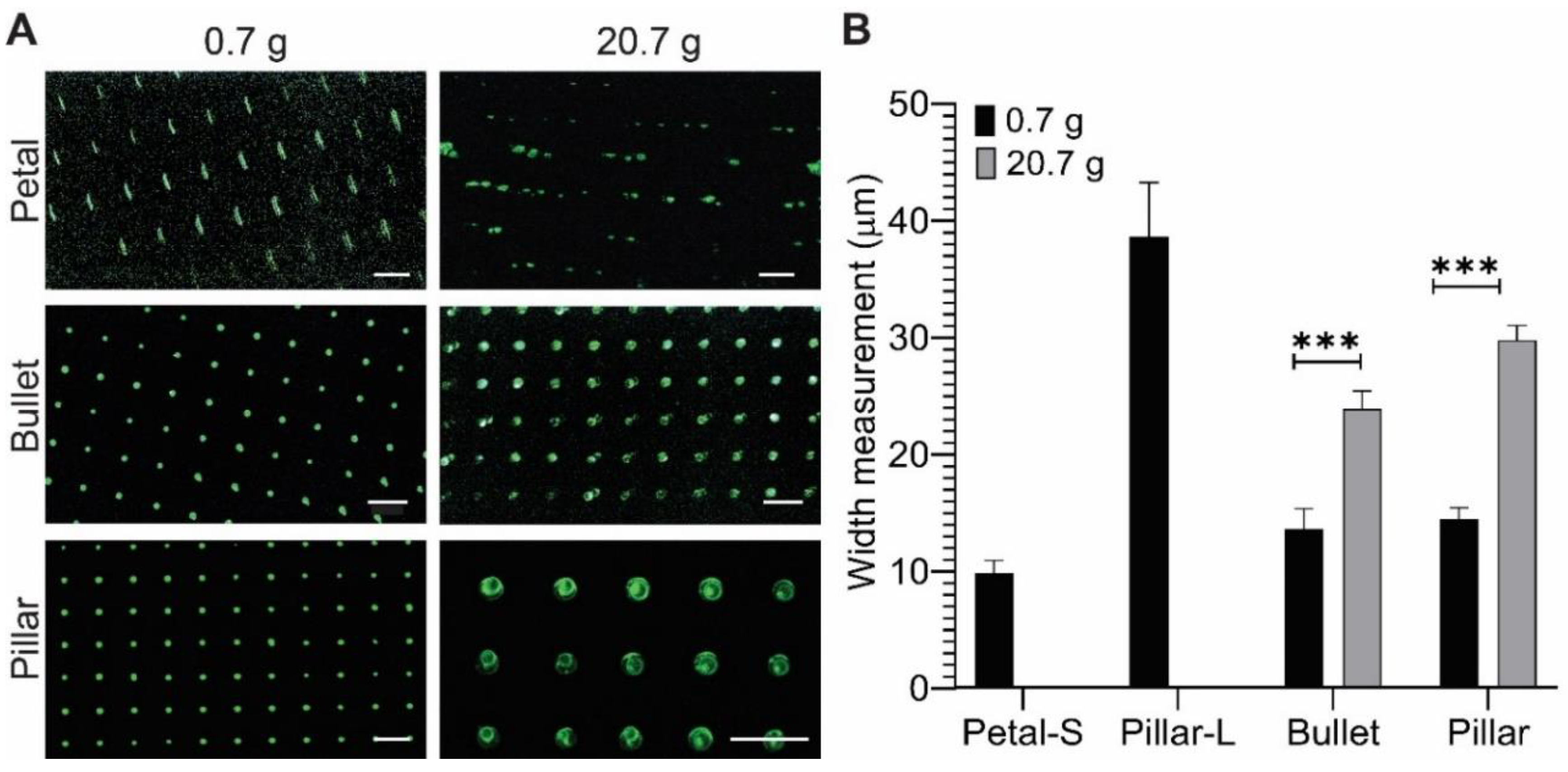
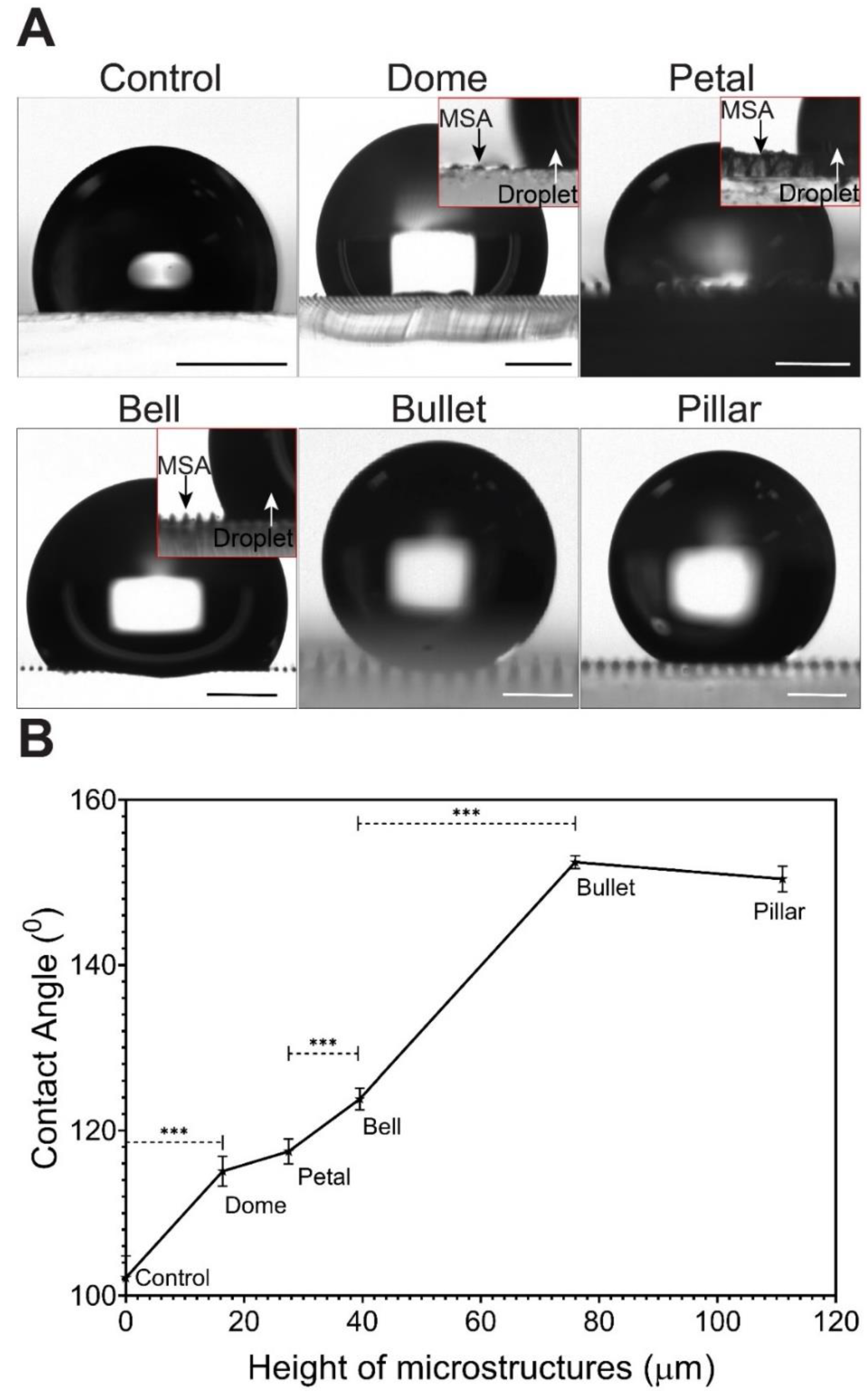
Three-dimensional (3D) microstructure arrays (MSAs) have been widely used in material science and biomedical applications by providing superhydrophobic surfaces, cell-interactive topography, and optical diffraction. These properties are tunable through the engineering of microstructure shapes, dimensions, tapering, and aspect ratios. However, the current fabrication methods are often too complex, expensive, or low-throughput. Here, we present a cost-effective approach to fabricating tapered 3D MSAs using dual-exposure lithography (DEL) and soft lithography. DEL used a strip-patterned film mask to expose the SU-8 photoresist twice. The mask was re-oriented between exposures (90° or 45°), forming an array of dual-exposed areas. The intensity distribution from both exposures overlapped and created an array of 3D overcut micro-pockets in the unexposed regions. These micro-pockets were replicated to DEL-MSAs in polydimethylsiloxane (PDMS). The shape and dimension of DEL-MSAs were tuned by varying the DEL parameters (e.g., exposure energy, inter-exposure wait time, and the photomask re-orientation angle). Further, we characterized various properties of our DEL-MSAs and studied the impact of their shape and dimension. All DEL-MSAs showed optical diffraction capability and increased hydrophobicity compared to plain PDMS surface. The hydrophobicity and diffraction angles were tunable based on the MSA shape and aspect ratio. Among the five MSAs fabricated, the two tallest DEL-MSAs demonstrated superhydrophobicity (contact angles >150°). Further, these tallest structures also demonstrated patterning proteins (with ~6–7 μm resolution), and mammalian cells, through microcontact printing and direct culturing, respectively. Our DEL method is simple, scalable, and cost-effective to fabricate structure-tunable microstructures for anti-wetting, optical-, and bio-applications.
Keywords: interference lithography; microarray structures; Cassie–Baxter wetting; superhydrophobic; optical diffraction; grating; cell patterning; protein patterning interference lithography; microarray structures; Cassie–Baxter wetting; superhydrophobic; optical diffraction; grating; cell patterning; protein patterning
Graphical Abstract