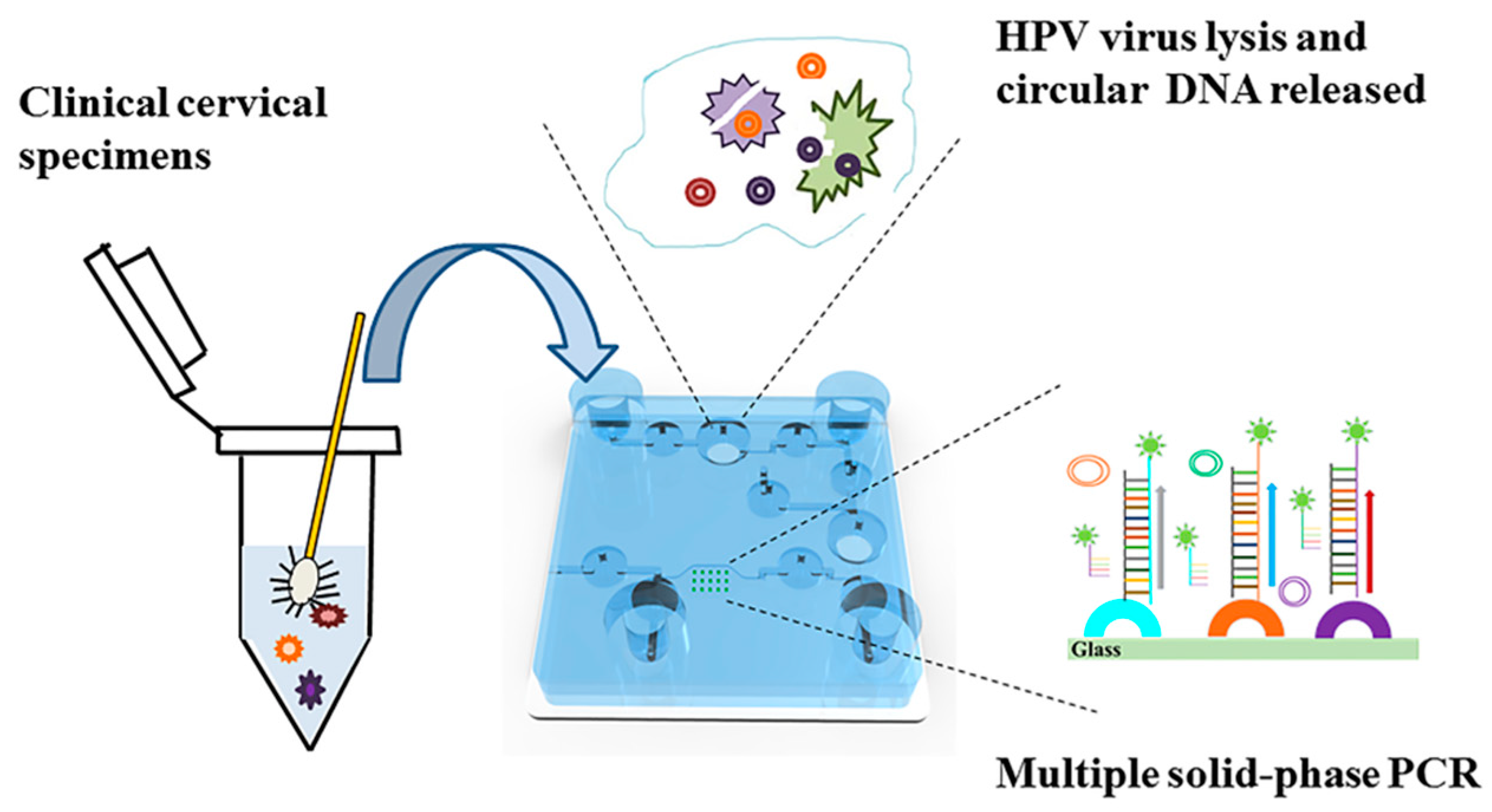
A Lab-on-a-Chip Device Integrated DNA Extraction and Solid Phase PCR Array for the Genotyping of High-Risk HPV in Clinical Samples


Abstract
1. Introduction
2. Materials and Methods
2.1. Preparation of Clinical Cervical Specimens and Positive Samples
2.2. Reagents for Nucleic Acid Extraction and SP-PCR
2.3. Fabrication the Integrated Microfluidic Chip
2.4. Experimental Procedures on the Chip
2.5. SP-PCR Amplification
3. Results and Discussion
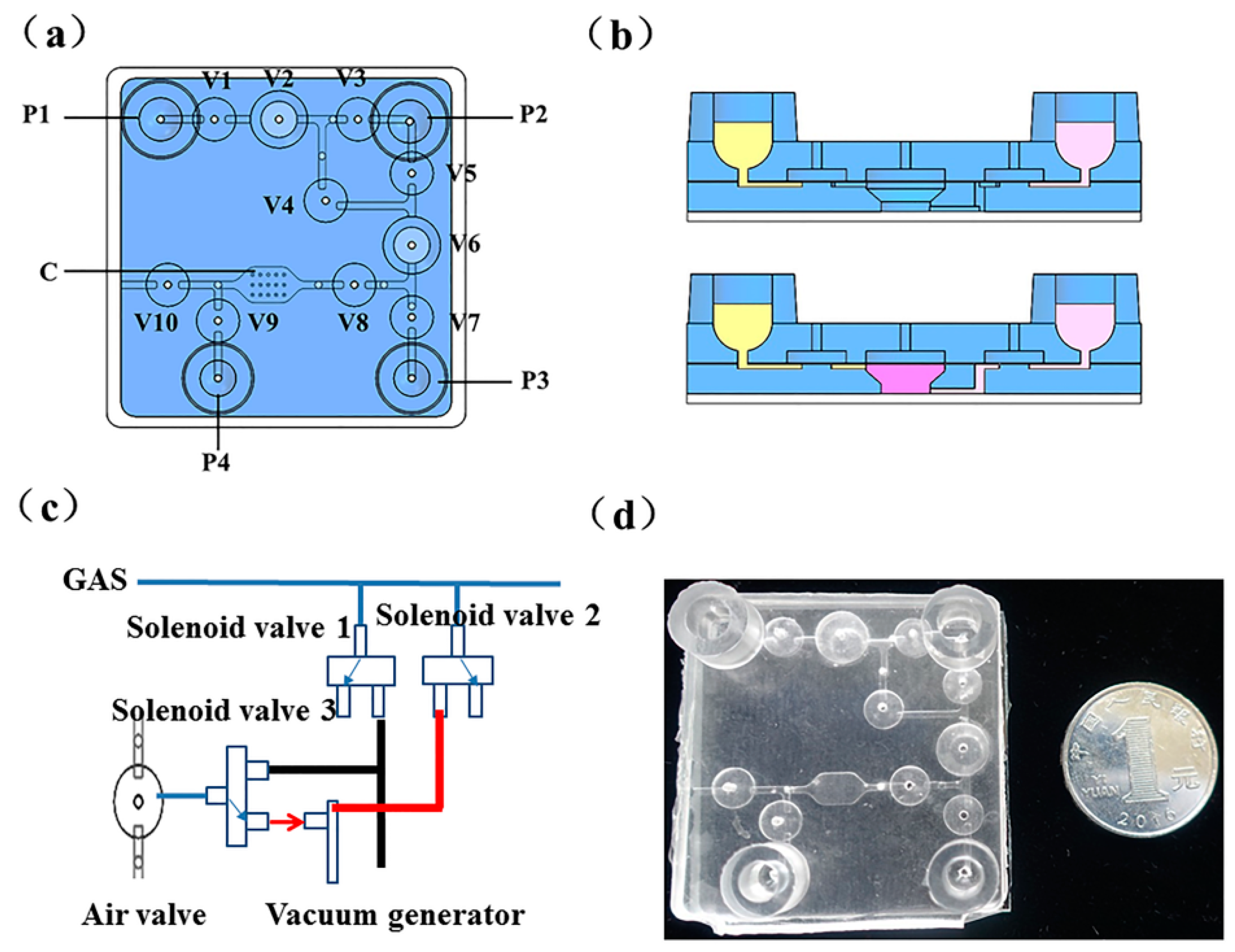
3.1. The Design of the Integrated Microfluidic Chip
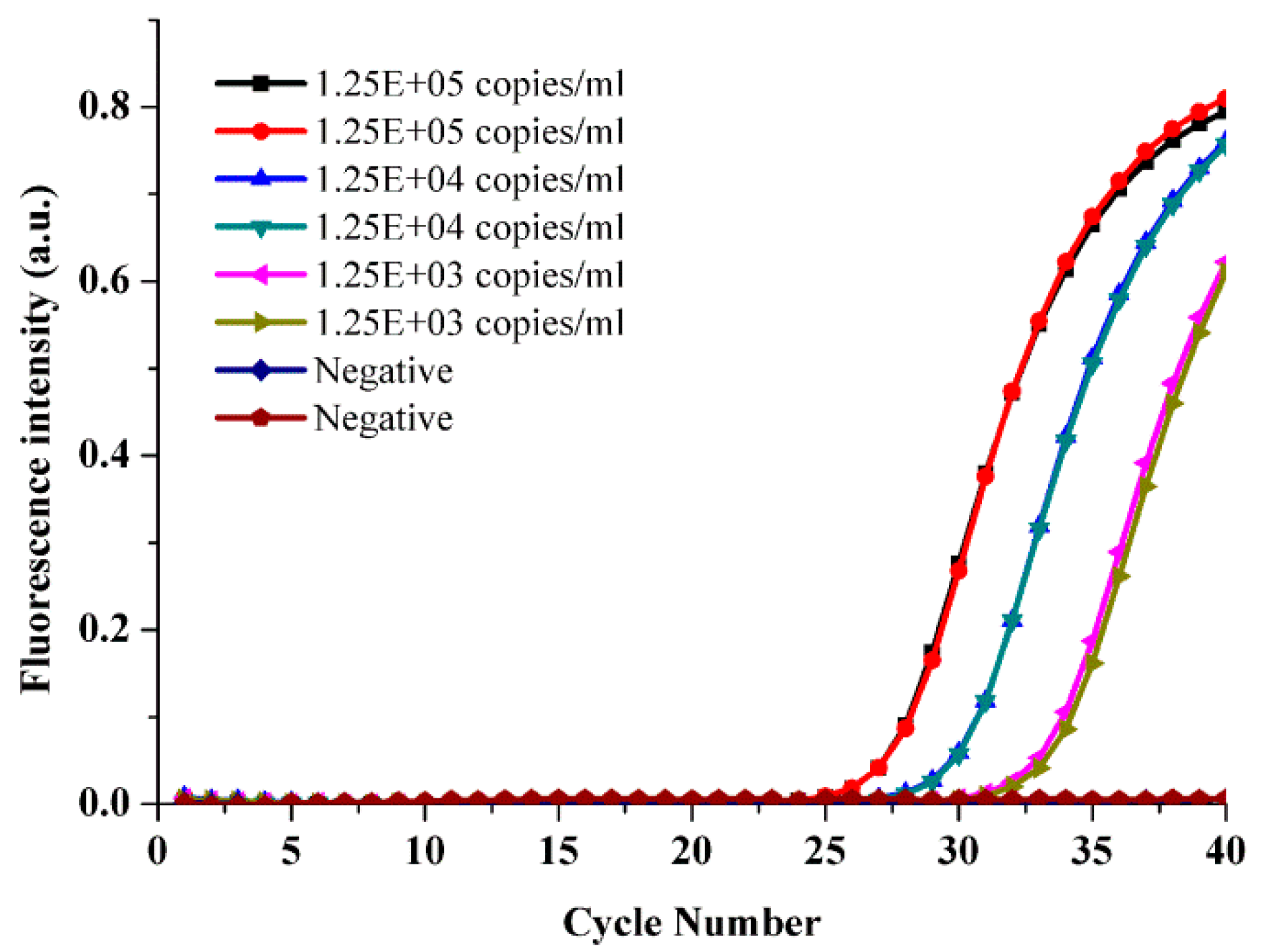
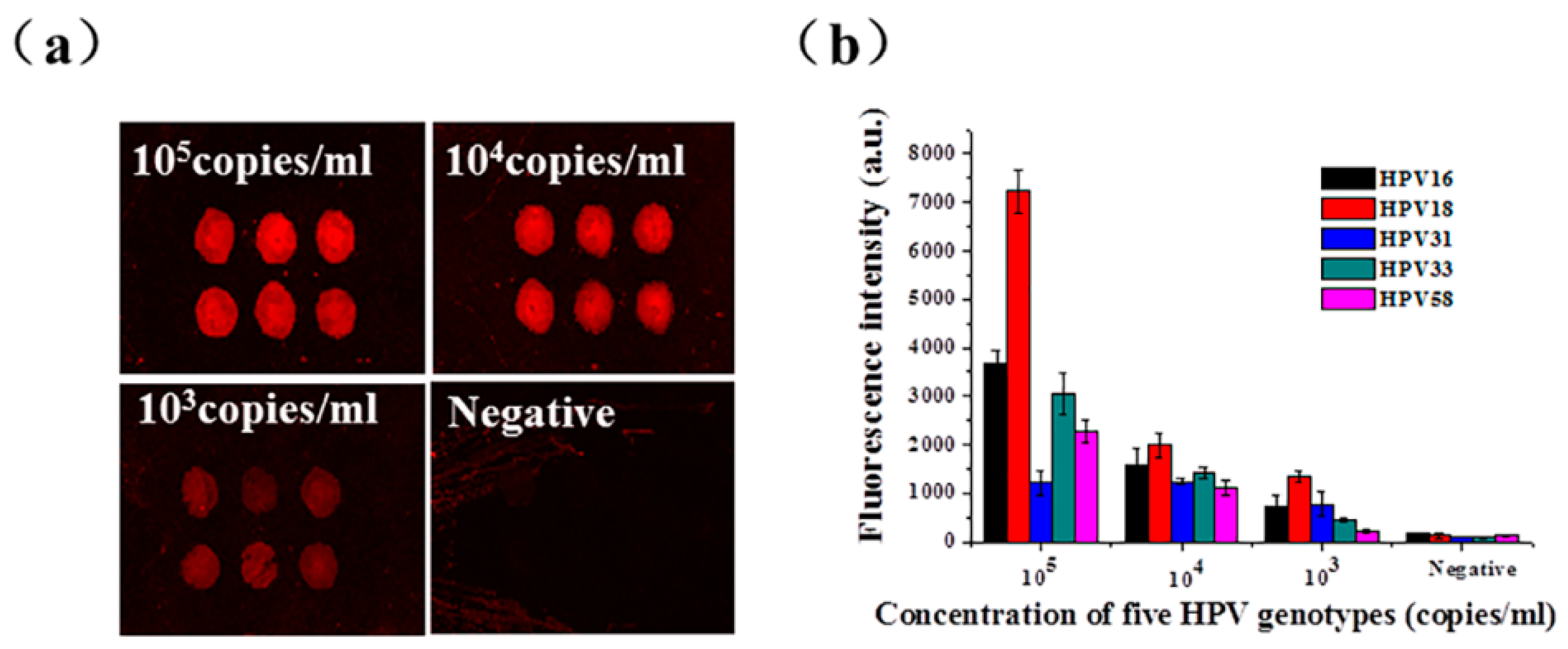
3.2. Nucleic Acid Extraction and the Sensitivity and Specificity of SP-PCR on the Integrated Chip
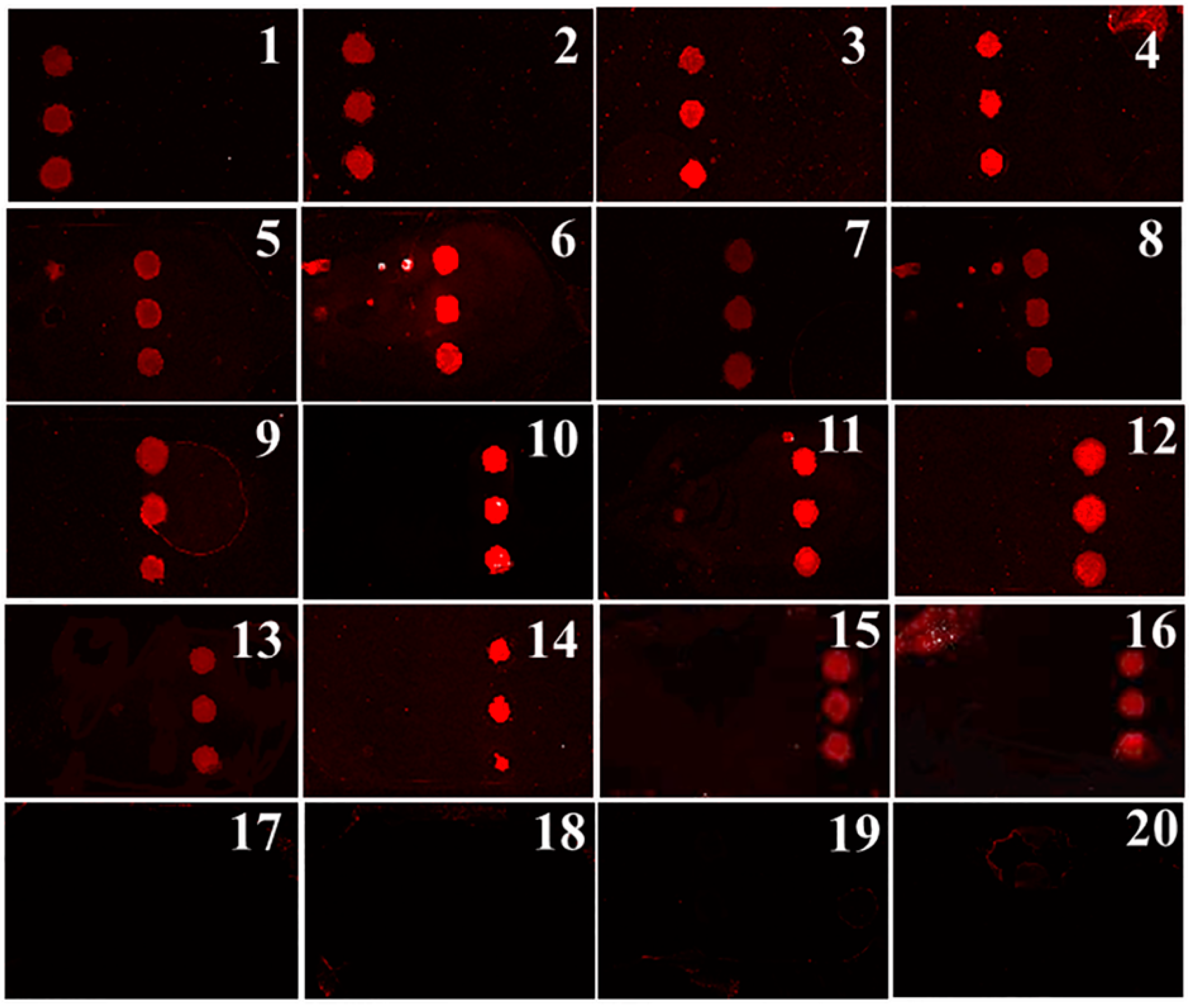
3.3. Multiplex Detection of HPV Genotypes from Clinical Samples on the Microfluidic Chip
4. Conclusions
Supplementary Materials
Author Contributions
Funding
Conflicts of Interest
References
- English, D.P.; Menderes, G.; Black, J.; Schwab, C.L.; Santin, A.D. Molecular diagnosis and molecular profiling to detect treatment-resistant ovarian cancer. Expert Rev. Mol. Diagn. 2016, 16, 769–782. [Google Scholar] [CrossRef] [Scilit] [PubMed]
- You, J.H.S.; Tam, L.P.; Lee, N.L.S. Cost-effectiveness of molecular point-of-care testing for influenza viruses in elderly patients at ambulatory care setting. PLoS ONE 2017, 12, e0182091. [Google Scholar] [CrossRef] [Scilit] [PubMed]
- Prakash, R.; Pabbaraju, K.; Wong, S.; Tellier, R.; Kaler, K.V. Integrated sample-to-detection chip for nucleic acid test assays. Biomed. Microdevices 2016, 18, 44. [Google Scholar] [CrossRef] [Scilit] [PubMed]
- Jha, S.K.; Chand, R.; Han, D.; Jang, Y.C.; Ra, G.S.; Kim, J.S.; Nahm, B.H.; Kim, Y.S. An integrated PCR microfluidic chip incorporating aseptic electrochemical cell lysis and capillary electrophoresis amperometric DNA detection for rapid and quantitative genetic analysis. Lab Chip 2012, 12, 4455–4464. [Google Scholar] [CrossRef] [Scilit] [PubMed]
- Foudeh, A.M.; Fatanat Didar, T.; Veres, T.; Tabrizian, M. Microfluidic designs and techniques using lab-on-a-chip devices for pathogen detection for point-of-care diagnostics. Lab Chip 2012, 12, 3249–3266. [Google Scholar] [CrossRef] [Scilit] [PubMed]
- Fernandez-Carballo, B.L.; McBeth, C.; McGuiness, I.; Kalashnikov, M.; Baum, C.; Borros, S.; Sharon, A.; Sauer-Budge, A.F. Continuous-flow, microfluidic, qRT-PCR system for RNA virus detection. Anal. Bioanal. Chem. 2018, 410, 33–43. [Google Scholar] [CrossRef] [Scilit] [PubMed]
- Amasia, M.; Kang, S.-W.; Banerjee, D.; Madou, M. Experimental validation of numerical study on thermoelectric-based heating in an integrated centrifugal microfluidic platform for polymerase chain reaction amplification. Biomicrofluidics 2013, 7, 014106. [Google Scholar] [CrossRef] [Scilit]
- Da Fonseca, A.J.; Galvao, R.S.; Miranda, A.E.; Ferreira, L.C.; Chen, Z. Comparison of three human papillomavirus DNA detection methods: Next generation sequencing, multiplex-PCR and nested-PCR followed by Sanger based sequencing. J. Med. Virol. 2016, 88, 888–894. [Google Scholar] [CrossRef] [Scilit]
- Nogueira Dias Genta, M.L.; Martins, T.R.; Mendoza Lopez, R.V.; Sadalla, J.C.; de Carvalho, J.P.M.; Baracat, E.C.; Levi, J.E.; Carvalho, J.P. Multiple HPV genotype infection impact on invasive cervical cancer presentation and survival. PLoS ONE 2017, 12, e0182854. [Google Scholar] [CrossRef] [Scilit]
- Woodman, C.B.; Collins, S.I.; Young, L.S. The natural history of cervical HPV infection: Unresolved issues. Nat. Rev. Cancer 2007, 7, 11–22. [Google Scholar] [CrossRef] [Scilit]
- Brotherton, J.M.L.; Tabrizi, S.N.; Phillips, S.; Pyman, J.; Cornall, A.M.; Lambie, N.; Anderson, L.; Cummings, M.; Payton, D.; Scurry, J.P.; et al. Looking beyond human papillomavirus (HPV) genotype 16 and 18: Defining HPV genotype distribution in cervical cancers in Australia prior to vaccination. Int. J. Cancer 2017, 141, 1576–1584. [Google Scholar] [CrossRef] [Scilit] [PubMed]
- Joura, E.A.; Ault, K.A.; Bosch, F.X.; Brown, D.; Cuzick, J.; Ferris, D.; Garland, S.M.; Giuliano, A.R.; Hernandez-Avila, M.; Huh, W.; et al. Attribution of 12 high-risk human papillomavirus genotypes to infection and cervical disease. Cancer Epidemiol. Biomarkers Prev. 2014, 23, 1997–2008. [Google Scholar] [CrossRef] [Scilit] [PubMed]
- Sun, Y.; Dhumpa, R.; Bang, D.D.; Høgberg, J.; Handberg, K.; Wolff, A. A lab-on-a-chip device for rapid identification of avian influenza viral RNA by solid-phase PCR. Lab Chip 2011, 11, 1457–1463. [Google Scholar] [CrossRef] [Scilit] [PubMed]
- Hoffmann, J.; Trotter, M.; von Stetten, F.; Zengerle, R.; Roth, G. Solid-phase PCR in a picowell array for immobilizing and arraying 100,000 PCR products to a microscope slide. Lab Chip 2012, 12, 3049–3054. [Google Scholar] [CrossRef] [Scilit] [PubMed]
- Damin, F.; Galbiati, S.; Ferrari, M.; Chiari, M. DNA microarray-based solid-phase PCR on copoly (DMA-NAS-MAPS) silicon coated slides: An example of relevant clinical application. Biosens. Bioelectron. 2016, 78, 367–373. [Google Scholar] [CrossRef] [Scilit] [PubMed]
- Hung, T.Q.; Chin, W.H.; Sun, Y.; Wolff, A.; Bang, D.D. A novel lab-on-chip platform with integrated solid phase PCR and Supercritical Angle Fluorescence (SAF) microlens array for highly sensitive and multiplexed pathogen detection. Biosens. Bioelectron. 2017, 90, 217–223. [Google Scholar] [CrossRef] [Scilit] [PubMed]
- Chin, W.H.; Sun, Y.; Hogberg, J.; Hung, T.Q.; Wolff, A.; Bang, D.D. Solid-phase PCR for rapid multiplex detection of Salmonella spp. at the subspecies level, with amplification efficiency comparable to conventional PCR. Anal. Bioanal. Chem. 2017, 409, 2715–2726. [Google Scholar] [CrossRef] [Scilit] [PubMed]
- Chen, D.; Mauk, M.; Qiu, X.; Liu, C.; Kim, J.; Ramprasad, S.; Ongagna, S.; Abrams, W.R.; Malamud, D.; Corstjens, P.L.; et al. An integrated, self-contained microfluidic cassette for isolation, amplification, and detection of nucleic acids. Biomed. Microdevices 2010, 12, 705–719. [Google Scholar] [CrossRef] [Scilit] [PubMed]
- Kim, Y.T.; Lee, D.; Heo, H.Y.; Sim, J.E.; Woo, K.M.; Kim, D.H.; Im, S.G.; Seo, T.S. Total integrated slidable and valveless solid phase extraction-polymerase chain reaction-capillary electrophoresis microdevice for mini Y chromosome short tandem repeat genotyping. Biosens. Bioelectron. 2016, 78, 489–496. [Google Scholar] [CrossRef] [Scilit]
- Liu, Y.; Yang, Z.; Qin, Y.; Du, X.; Qi, W.; Lu, J. A Novel Microfluidic Device that Integrates Nucleic Acid Extraction, Amplification, and Detection to Identify an EGFR Mutation in Lung Cancer Tissues. RSC Adv. 2016, 6, 13399–13406. [Google Scholar] [CrossRef] [Scilit]
- Du, K.; Cai, H.; Park, M.; Wall, T.A.; Stott, M.A.; Alfson, K.J.; Griffiths, A.; Carrion, R.; Patterson, J.L.; Hawkins, A.R. Multiplexed Efficient On-Chip Sample Preparation and Sensitive Amplification-Free Detection of Ebola Virus. Biosens. Bioelectron. 2017, 91, 489–496. [Google Scholar] [CrossRef] [Scilit] [PubMed]
- Wang, J.H.; Cheng, L.; Wang, C.H.; Ling, W.S.; Wang, S.W.; Lee, G.B. An integrated chip capable of performing sample pretreatment and nucleic acid amplification for HIV-1 detection. Biosens. Bioelectron. 2013, 41, 484–491. [Google Scholar] [CrossRef] [Scilit] [PubMed]
- Gudnason, H.; Dufva, M.; Duong Bang, D.; Wolff, A. An inexpensive and simple method for thermally stable immobilization of DNA on an unmodified glass surface: UV linking of poly(T)10-poly(C)10-tagged DNA probes. Biotechniques 2008, 45, 261–271. [Google Scholar] [CrossRef] [Scilit] [PubMed]
- Li, Z.; Zhao, J.; Wu, X.; Zhu, C.; Liu, Y.; Wang, A.; Deng, G.; Zhu, L. A rapid microfluidic platform with real-time fluorescence detection system for molecular diagnosis. Biotechnol. Biotechnol. Equip. 2019. [Google Scholar] [CrossRef] [Scilit]
- Zhu, C.; Wu, X.; Li, Z.; Zhao, J.; Liu, Y.; Wang, A.; Deng, G.; Zhu, L. A Microfluidic System Integrated One-step PCR and High-resolution Melting Analysis for Rapid Rice Mutant Detection. Biotechnol. Biotechnol. Equip. 2019, 33, 1164–1171. [Google Scholar] [CrossRef] [Scilit]
- Araci, I.E.; Quake, S.R. Microfluidic very large scale integration (mVLSI) with integrated micromechanical valves. Lab Chip 2012, 12, 2803–2806. [Google Scholar] [CrossRef] [Scilit] [PubMed]
- Zhao, S.-M.; Zhu, L.; Zhu, C.-C.; Li, Y.; Wang, H.-D.; Zhang, L.; Du, D.-W.; Deng, G.-Q.; Wang, A.; Liu, Y. An Integrated Nucleic Acid Extraction Microchip for Real-time PCR Micro Total Analysis. Chin. J. Anal. Chem. 2014, 42, 1393–1399. [Google Scholar] [CrossRef] [Scilit]


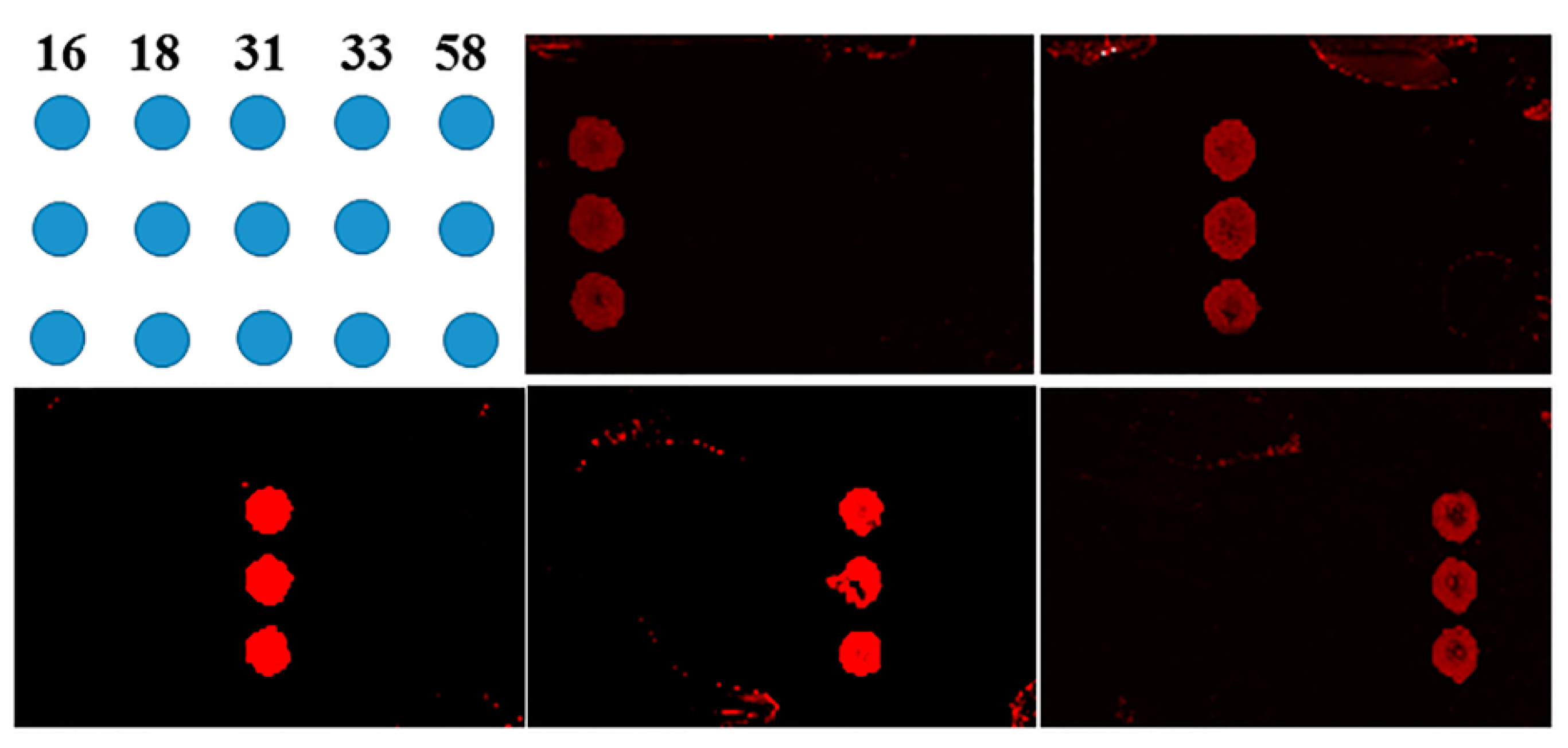


| Sample ID | HPV Genotype on Integrated Chip | HPV Genotype by Real-Time PCR (Ct/LightCycle96) | ||||||||
|---|---|---|---|---|---|---|---|---|---|---|
| HPV16 | HPV18 | HPV31 | HPV33 | HPV58 | HPV16 | HPV18 | HPV31 | HPV33 | HPV58 | |
| 1 | + | − | − | − | − | 32.91 | − | − | − | − |
| 2 | + | − | − | − | − | 36.97 | − | − | − | − |
| 3 | − | + | − | − | − | − | 24.98 | − | − | − |
| 4 | − | + | − | − | − | − | 27.57 | − | − | − |
| 5 | − | − | + | − | − | − | − | 33.65 | − | − |
| 6 | − | − | + | − | − | − | − | 35.79 | − | − |
| 7 | − | − | + | − | − | − | − | 19.47 | − | − |
| 8 | − | − | + | − | − | − | − | 25.37 | − | − |
| 9 | − | − | + | − | − | − | − | 33.68 | − | − |
| 10 | − | − | − | + | − | − | − | − | 22.10 | − |
| 11 | − | − | − | + | − | − | − | − | 27.66 | − |
| 12 | − | − | − | + | − | − | − | − | 36.92 | − |
| 13 | − | − | − | + | − | − | − | − | 33.27 | − |
| 14 | − | − | − | + | − | − | − | − | 32.91 | − |
| 15 | − | − | − | − | + | − | − | − | − | 27.98 |
| 16 | − | − | − | − | + | − | − | − | − | 33.89 |
| 17 | − | − | − | − | − | − | − | − | − | − |
| 18 | − | − | − | − | − | − | − | − | − | − |
| 19 | − | − | − | − | − | − | − | − | − | − |
| 20 | − | − | − | − | − | − | − | − | − | − |
© 2019 by the authors. Licensee MDPI, Basel, Switzerland. This article is an open access article distributed under the terms and conditions of the Creative Commons Attribution (CC BY) license (http://creativecommons.org/licenses/by/4.0/).
Share and Cite
Zhu, C.; Hu, A.; Cui, J.; Yang, K.; Zhu, X.; Liu, Y.; Deng, G.; Zhu, L. A Lab-on-a-Chip Device Integrated DNA Extraction and Solid Phase PCR Array for the Genotyping of High-Risk HPV in Clinical Samples. Micromachines 2019, 10, 537. https://doi.org/10.3390/mi10080537
Zhu C, Hu A, Cui J, Yang K, Zhu X, Liu Y, Deng G, Zhu L. A Lab-on-a-Chip Device Integrated DNA Extraction and Solid Phase PCR Array for the Genotyping of High-Risk HPV in Clinical Samples. Micromachines. 2019; 10(8):537. https://doi.org/10.3390/mi10080537
Chicago/Turabian StyleZhu, Cancan, Anzhong Hu, Junsheng Cui, Ke Yang, Xinchao Zhu, Yong Liu, Guoqing Deng, and Ling Zhu. 2019. "A Lab-on-a-Chip Device Integrated DNA Extraction and Solid Phase PCR Array for the Genotyping of High-Risk HPV in Clinical Samples" Micromachines 10, no. 8: 537. https://doi.org/10.3390/mi10080537
APA StyleZhu, C., Hu, A., Cui, J., Yang, K., Zhu, X., Liu, Y., Deng, G., & Zhu, L. (2019). A Lab-on-a-Chip Device Integrated DNA Extraction and Solid Phase PCR Array for the Genotyping of High-Risk HPV in Clinical Samples. Micromachines, 10(8), 537. https://doi.org/10.3390/mi10080537