Effect of Pre-Exposure to Deoxynivalenol on the Response of Porcine Intestinal Epithelial Cells to F18 E. coli Infection


Abstract
1. Introduction
2. Results
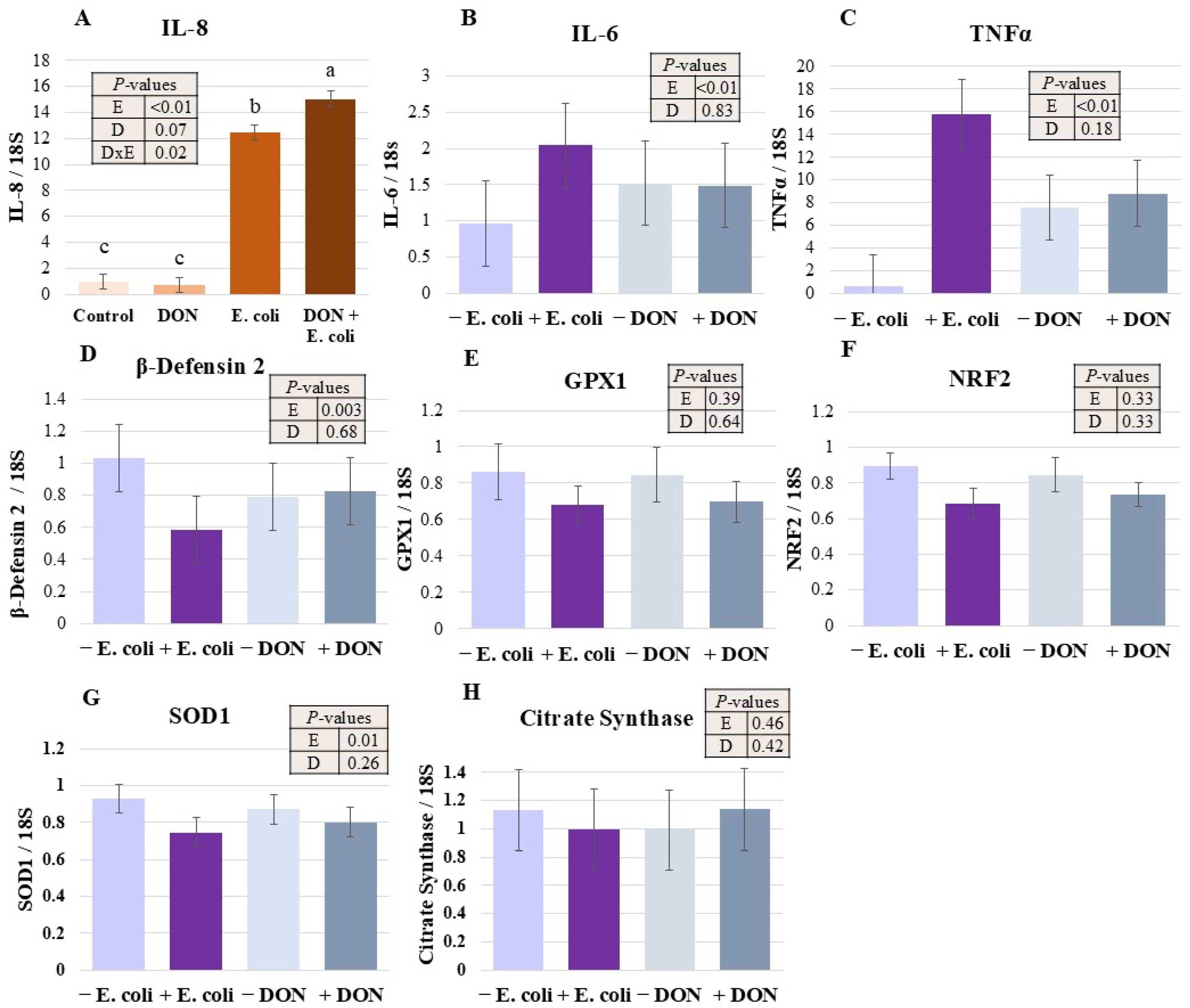
2.1. E. coli Infection Regulated Changes in Expression of Genes Involved in Inflammatory, Antioxidant and Metabolic Response Pathways
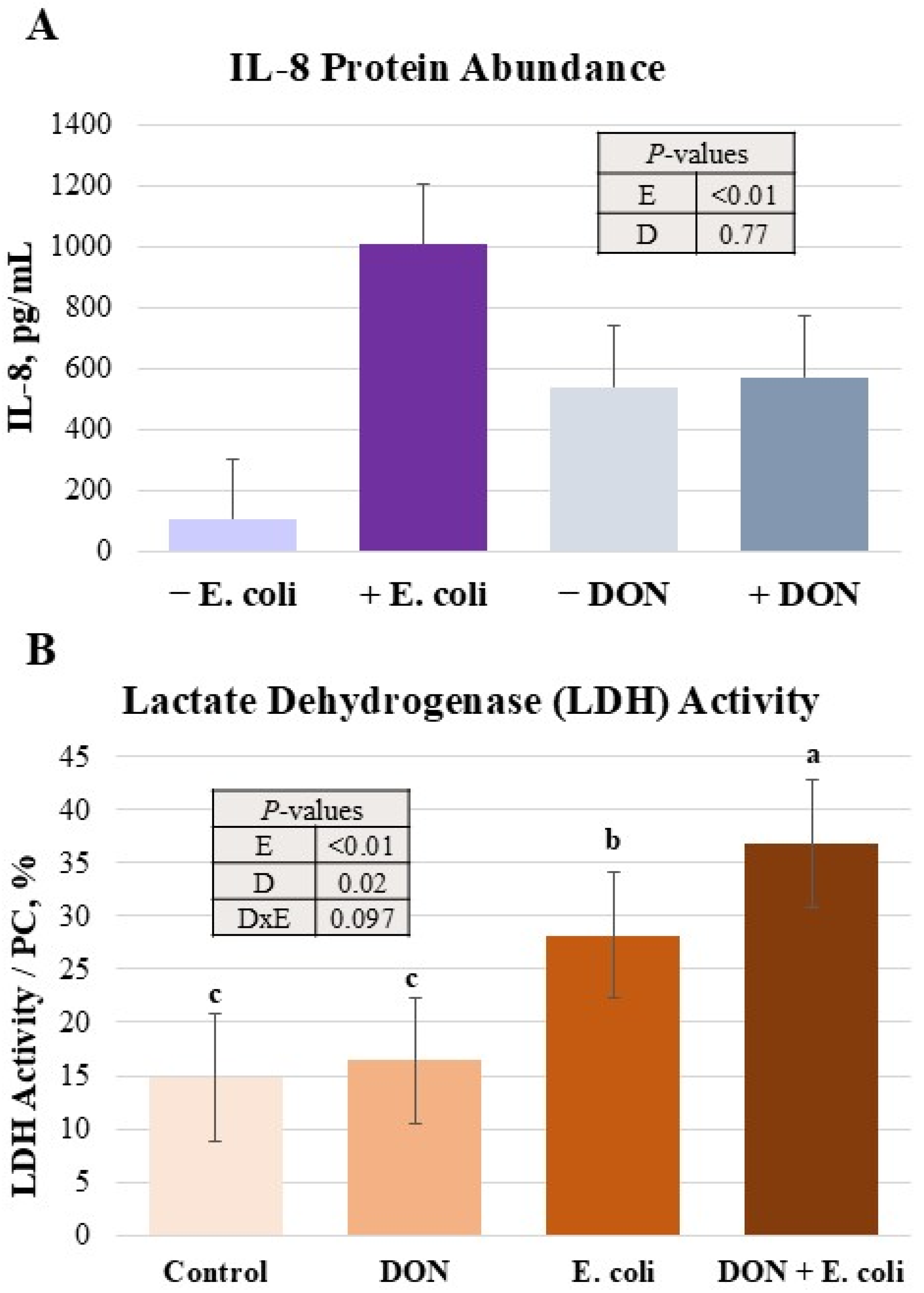
2.2. E. coli Challenge Increased Abundance of IL-8 Protein
2.3. E. coli and DON Increased IPEC-J2 Cytotoxicity
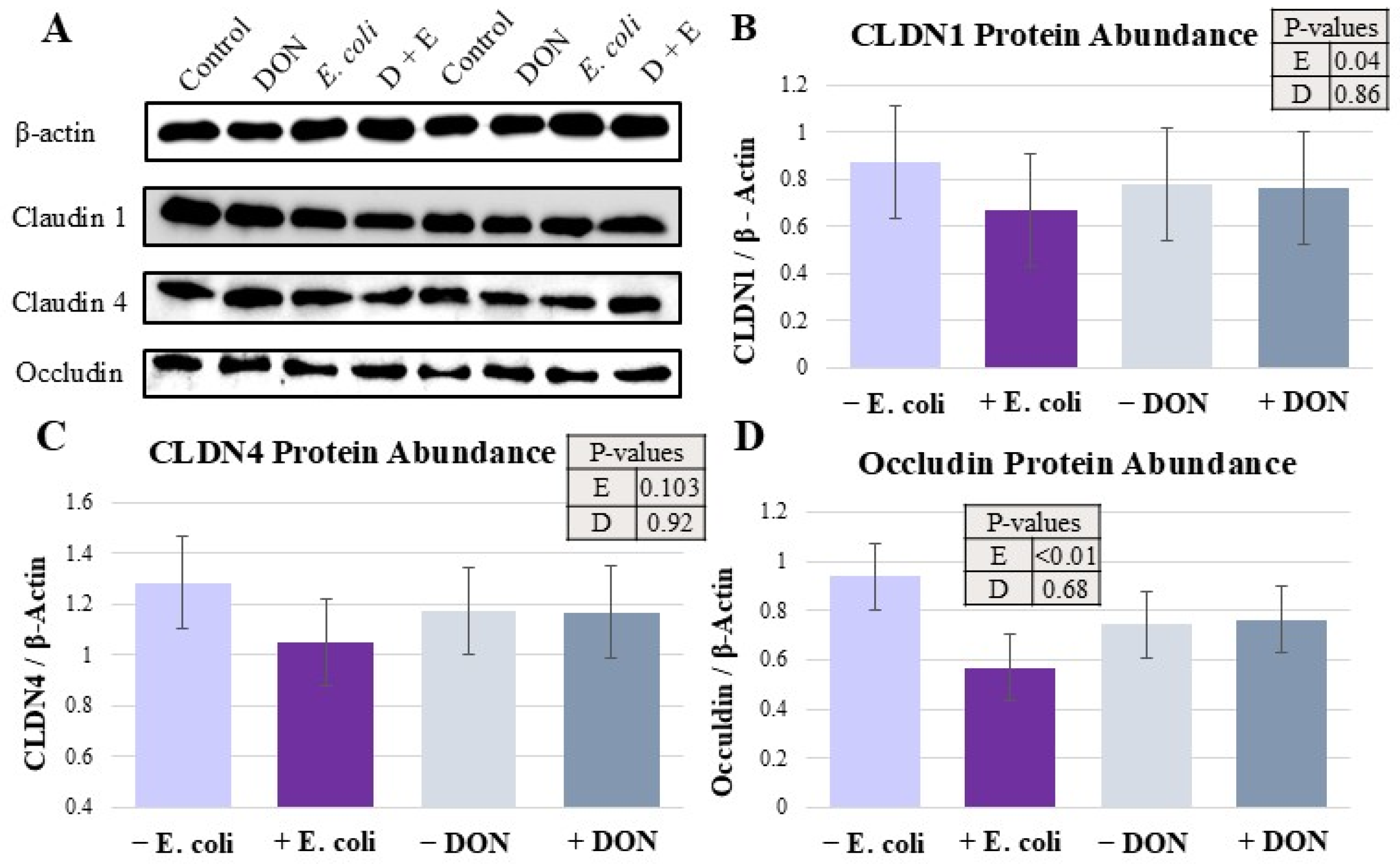
2.4. Tight-Junction Protein Expression Was Differentially Impacted by Treatments
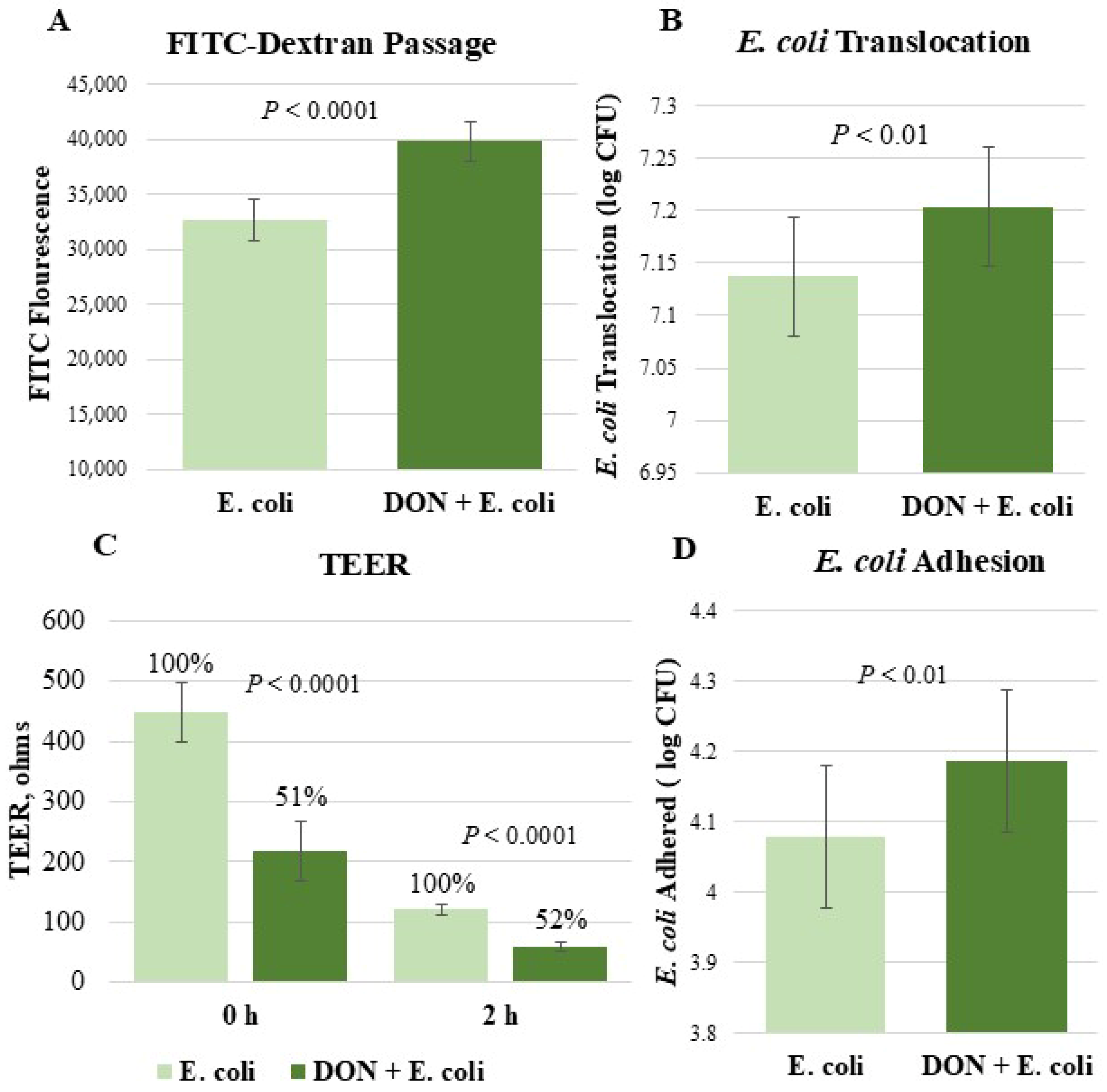
2.5. Cells Pre-Exposed to DON Demonstrated an Impaired Epithelial Barrier and Elevated E. coli Attachment
3. Discussion
4. Conclusions
5. Materials and Methods
5.1. IPEC-J2 Cell Culture
5.2. Experimental Model
5.3. Deoxynivalenol Conditions
5.4. F18 East 1 + E. coli Culture
5.5. Epithelial Barrier Integrity Measurements
5.6. E. coli Adhesion Assay
5.7. Real-Time qPCR
5.8. Protein Expression Measured Through Western Blot
5.9. Protein Expression Measured with ELISA
5.10. Lactate Dehydrogenase Assay
5.11. Statistical Analysis
Author Contributions
Funding
Institutional Review Board Statement
Informed Consent Statement
Data Availability Statement
Acknowledgments
Conflicts of Interest
Abbreviations
| DON | Deoxynivalenol |
| ELISA | Enzyme-linked immune absorbent assay |
| ETEC | Enterotoxigenic E. coli |
| TEER | Transepithelial electrical resistance |
| PCR | Polymerase chain reaction |
| IPEC-J2 | Intestinal porcine epithelial cells (jejunum); |
| EGF | Epidermal growth factor |
| DMEM | F12, Dulbecco’s Modified Eagle’s Medium F12 |
| BHI | Brain–heart infusion |
| PBS | Phosphate-buffered saline |
| FITC-dextran | FITC-dextran, fluorescein isothiocyanate-dextran |
| LDH | Lactate dehydrogenase |
| BSA | Bovine serum albumin |
| GPX1 | Glutathione peroxidase 1 |
| NRF2 | Nuclear factor erythroid 2-related factor 2 |
| SMAC | MacConkey Sorbitol Agar |
| IL | Interleukin |
| TNF | Tumor necrosis factor |
| RIPA | Radioimmunoprecipitation assay buffer |
| SOD1 | Superoxide dismutase 1 |
References
- Moeser, A.J.; Pohl, C.S.; Rajput, M. Weaning stress and gastrointestinal barrier development: Implications for lifelong gut health in pigs. Anim. Nutr. 2017, 3, 313–321. [Google Scholar] [CrossRef]
- Szabó, C.; Kachungwa Lugata, J.; Ortega, A.D.S.V. Gut health and influencing factors in pigs. Animals 2023, 13, 1350. [Google Scholar] [CrossRef]
- Modina, S.C.; Polito, U.; Rossi, R.; Corino, C.; Di Giancamillo, A. Nutritional regulation of gut barrier integrity in weaning piglets. Animals 2019, 9, 1045. [Google Scholar] [CrossRef]
- Moretó, M.; Pérez-Bosque, A. Dietary plasma proteins, the intestinal immune system, and the barrier functions of the intestinal mucosa. J. Anim. Sci. 2009, 87, E92–E100. [Google Scholar] [CrossRef]
- Tang, X.; Xiong, K.; Fang, R.; Li, M. Weaning stress and intestinal health of piglets: A review. Front. Immunol. 2022, 13, 1042778. [Google Scholar] [CrossRef] [PubMed]
- Ghareeb, K.; Awad, W.A.; Böhm, J.; Zebeli, Q. Impacts of the feed contaminant deoxynivalenol on the intestine of monogastric animals: Poultry and swine. J. Appl. Toxicol. 2015, 35, 327–337. [Google Scholar] [CrossRef] [PubMed]
- Alizadeh, A.; Braber, S.; Akbari, P.; Garssen, J.; Fink-Gremmels, J. Deoxynivalenol impairs weight gain and affects markers of gut health after low-dose, short-term exposure of growing pigs. Toxins 2015, 7, 2071–2095. [Google Scholar] [CrossRef] [PubMed]
- Kang, R.; Li, R.; Dai, P.; Li, Z.; Li, Y.; Li, C. Deoxynivalenol-induced apoptosis and inflammation of IPEC-J2 cells by promoting ROS production. Environ. Pollut. 2019, 251, 689–698. [Google Scholar] [CrossRef]
- Liu, S.; Lin, Z.; Mao, X.; Ge, L.; Hou, L.; Le, G.; Gan, F.; Wen, L.; Huang, K. Nontoxic dose of phenethyl isothiocyanate ameliorates deoxynivalenol-induced cytotoxicity and inflammation in IPEC-J2 cells. Res. Vet. Sci. 2021, 136, 66–73. [Google Scholar] [CrossRef]
- Zhang, C.; Zhang, K.-F.; Chen, F.-J.; Chen, Y.-H.; Yang, X.; Cai, Z.-H.; Jiang, Y.-B.; Wang, X.-B.; Zhang, G.-P.; Wang, F.-Y. Deoxynivalenol triggers porcine intestinal tight junction disorder: Insights from mitochondrial dynamics and mitophagy. Ecotoxicol. Environ. Saf. 2022, 248, 114291. [Google Scholar] [CrossRef]
- Pinton, P.; Nougayrède, J.-P.; Del Rio, J.-C.; Moreno, C.; Marin, D.E.; Ferrier, L.; Bracarense, A.-P.; Kolf-Clauw, M.; Oswald, I.P. The food contaminant deoxynivalenol decreases intestinal barrier permeability and reduces claudin expression. Toxicol. Appl. Pharmacol. 2009, 237, 41–48. [Google Scholar] [CrossRef]
- Xiao, K.; Liu, C.; Qin, Q.; Zhang, Y.; Wang, X.; Zhang, J.; Odle, J.; Lin, X.; Hu, C.-A.A.; Liu, Y. EPA and DHA attenuate deoxynivalenol-induced intestinal porcine epithelial cell injury and protect barrier function integrity by inhibiting necroptosis signaling pathway. FASEB J. 2020, 34, 2483–2496. [Google Scholar] [CrossRef]
- Alberge, J.; Mussard, E.; Al-Ayoubi, C.; Lencina, C.; Marrauld, C.; Cauquil, L.; Achard, C.S.; Mateos, I.; Alassane-Kpembi, I.; Oswald, I.P.; et al. Butyrate reduces epithelial barrier dysfunction induced by the foodborne mycotoxin deoxynivalenol in cell monolayers derived from pig jejunum organoids. Gut Microbes 2024, 16, 2430424. [Google Scholar] [CrossRef]
- Pinton, P.; Braicu, C.; Nougayrède, J.-P.; Laffitte, J.; Taranu, I.; Oswald, I.P. Deoxynivalenol impairs porcine intestinal barrier function and decreases claudin-4 expression through a MAPK-dependent mechanism. J. Nutr. 2010, 140, 1956–1962. [Google Scholar] [CrossRef] [PubMed]
- Li, E.; Horn, N.; Ajuwon, K.M. Mechanisms of deoxynivalenol-induced endocytosis and degradation of tight junction proteins in jejunal IPEC-J2 cells involve selective activation of MAPK pathways. Arch. Toxicol. 2021, 95, 2065–2079. [Google Scholar] [CrossRef]
- Zhang, H.; Deng, X.; Zhou, C.; Wu, W.; Zhang, H. Deoxynivalenol induces inflammation in IPEC-J2 cells by activating p38 MAPK and ERK1/2. Toxins 2020, 12, 180. [Google Scholar] [CrossRef]
- Zhu, M.; Lu, E.-Q.; Fang, Y.-X.; Liu, G.-W.; Cheng, Y.-J.; Huang, K.; Xu, E.; Zhang, Y.-Y.; Wang, X.-J. Piceatannol alleviates deoxynivalenol-induced damage in intestinal epithelial cells via inhibition of the NF-κB pathway. Molecules 2024, 29, 855. [Google Scholar] [CrossRef] [PubMed]
- Fairbrother, J.M.; Nadeau, É.; Gyles, C.L. Escherichia coli in postweaning diarrhea in pigs: An update on bacterial types, pathogenesis, and prevention strategies. Anim. Health Res. Rev. 2005, 6, 17–39. [Google Scholar] [CrossRef]
- Luppi, A.; Gibellini, M.; Gin, T.; Vangroenweghe, F.; Vandenbroucke, V.; Bauerfeind, R.; Bonilauri, P.; Labarque, G.; Hidalgo, Á. Prevalence of virulence factors in enterotoxigenic Escherichia coli isolated from pigs with post-weaning diarrhoea in Europe. Porcine Health Manag. 2016, 2, 20. [Google Scholar] [CrossRef]
- Duarte, M.E.; Garavito-Duarte, Y.; Kim, S.W. Impacts of F18+ Escherichia coli on intestinal health of nursery pigs and dietary interventions. Animals 2023, 13, 2791. [Google Scholar] [CrossRef] [PubMed]
- Wu, Y.; Zhu, C.; Chen, Z.; Zhang, W.; Ma, X.; Wang, L.; Yang, X.; Jiang, Z. Protective effects of Lactobacillus plantarum on epithelial barrier disruption caused by enterotoxigenic Escherichia coli in intestinal porcine epithelial cells. Vet. Immunol. Immunopathol. 2016, 172, 55–63. [Google Scholar] [CrossRef] [PubMed]
- Lin, Q.; Fu, Q.; Su, G.; Chen, D.; Yu, B.; Luo, Y.; Zheng, P.; Mao, X.; Huang, Z.; Yu, J.; et al. Protective effect of Bombyx mori gloverin on intestinal epithelial cells exposed to enterotoxigenic E. coli. Braz. J. Microbiol. 2021, 52, 1235–1245. [Google Scholar] [CrossRef]
- Luo, X.; Wu, S.; Jia, H.; Si, X.; Song, Z.; Zhai, Z.; Bai, J.; Li, J.; Yang, Y.; Wu, Z. Resveratrol alleviates enterotoxigenic Escherichia coli K88-induced damage by regulating SIRT1 signaling in intestinal porcine epithelial cells. Food Funct. 2022, 13, 7346–7360. [Google Scholar] [CrossRef] [PubMed]
- Sudan, S.; Zhan, X.; Li, J. A novel probiotic Bacillus subtilis strain confers cytoprotection to host pig intestinal epithelial cells during enterotoxigenic Escherichia coli infection. Microbiol. Spectr. 2022, 10, e0125721. [Google Scholar] [CrossRef]
- Karimi, S.; Jonsson, H.; Lundh, T.; Roos, S. Lactobacillus reuteri strains protect epithelial barrier integrity of IPEC-J2 monolayers from the detrimental effect of enterotoxigenic Escherichia coli. Physiol. Rep. 2018, 6, e13514. [Google Scholar] [CrossRef]
- Yi, H.; Wang, L.; Xiong, Y.; Wang, Z.; Qiu, Y.; Wen, X.; Jiang, Z.; Yang, X.; Ma, X. Lactobacillus reuteri LR1 improves expression of tight junction proteins via the MLCK pathway in IPEC-1 cells during enterotoxigenic Escherichia coli K88 infection. Mediators Inflamm. 2018, 2018, 6434910. [Google Scholar] [CrossRef]
- Liu, G.; Gu, K.; Wang, F.; Jia, G.; Zhao, H.; Chen, X.; Wu, C.; Zhang, R.; Tian, G.; Cai, J.; et al. Tryptophan ameliorates barrier integrity and alleviates inflammatory responses to enterotoxigenic Escherichia coli K88 through the CaSR/Rac1/PLC-γ1 signaling pathway in porcine intestinal epithelial cells. Front. Immunol. 2021, 12, 748497. [Google Scholar] [CrossRef] [PubMed]
- Yu, H.; Ding, X.; Shang, L.; Zeng, X.; Liu, H.; Li, N.; Huang, S.; Wang, Y.; Wang, G.; Cai, S.; et al. Protective ability of biogenic antimicrobial peptide Microcin J25 against enterotoxigenic Escherichia coli-induced intestinal epithelial dysfunction and inflammatory responses in IPEC-J2 cells. Front. Cell. Infect. Microbiol. 2018, 8, 242. [Google Scholar] [CrossRef]
- Guo, X.; Chen, J.; Yang, J.; He, Q.; Luo, B.; Lu, Y.; Zou, T.; Wang, Z.; You, J. Seaweed polysaccharide mitigates intestinal barrier dysfunction induced by enterotoxigenic Escherichia coli through NF-κB pathway suppression in porcine intestinal epithelial cells. J. Anim. Physiol. Anim. Nutr. 2021, 105, 1063–1074. [Google Scholar] [CrossRef]
- Bao, X.; Gänzle, M.G.; Wu, J. Ovomucin hydrolysates reduce bacterial adhesion and inflammation in enterotoxigenic Escherichia coli K88-challenged intestinal epithelial cells. J. Agric. Food Chem. 2024, 72, 7219–7229. [Google Scholar] [CrossRef]
- Sargeant, H.R.; Miller, H.M.; Shaw, M.-A. Inflammatory response of porcine epithelial IPEC-J2 cells to enterotoxigenic E. coli infection is modulated by zinc supplementation. Mol. Immunol. 2011, 48, 2113–2121. [Google Scholar] [CrossRef]
- Fu, Q.; Lin, Q.; Chen, D.; Yu, B.; Luo, Y.; Zheng, P.; Mao, X.; Huang, Z.; Yu, J.; Luo, J.; et al. β-Defensin 118 attenuates inflammation and injury of intestinal epithelial cells upon enterotoxigenic Escherichia coli challenge. BMC Vet. Res. 2022, 18, 142. [Google Scholar] [CrossRef]
- Weaver, A.C.; Weaver, D.M.; Adams, N.; Yiannikouris, A. Co-occurrence of 35 mycotoxins: A seven-year survey of corn grain and corn silage in the United States. Toxins 2021, 13, 516. [Google Scholar] [CrossRef]
- Muñoz-Solano, B.; Lizarraga Pérez, E.; González-Peñas, E. Monitoring mycotoxin exposure in food-producing animals. Toxins 2024, 16, 218. [Google Scholar] [CrossRef]
- McLamb, B.L.; Gibson, A.J.; Overman, E.L.; Stahl, C.; Moeser, A.J. Early weaning stress in pigs impairs innate mucosal immune responses to enterotoxigenic E. coli challenge and exacerbates intestinal injury. PLoS ONE 2013, 8, e59838. [Google Scholar] [CrossRef]
- Yang, J.; Qiu, Y.; Hu, S.; Zhu, C.; Wang, L.; Wen, X.; Yang, X.; Jiang, Z. Lactobacillus plantarum inhibits inflammatory responses induced by enterotoxigenic Escherichia coli K88 via MAPK and NF-κB signaling in intestinal porcine epithelial cells. J. Appl. Microbiol. 2021, 130, 1684–1694. [Google Scholar] [CrossRef]
- Wu, Q.; Cui, D.; Chao, X.; Chen, P.; Liu, J.; Wang, Y.; Su, T.; Li, M.; Xu, R.; Zhu, Y.; et al. Transcriptome analysis identifies immune response-related pathways to control enterotoxigenic Escherichia coli infection in porcine intestinal epithelial cells. Front. Vet. Sci. 2021, 8, 677897. [Google Scholar] [CrossRef] [PubMed]
- Shen, X.; Gu, M.; Zhan, F.; Cai, H.; Zhang, K.; Wang, K.; Li, C. Porcine β-defensin 2 attenuates inflammatory responses in IPEC-J2 cells against Escherichia coli via TLRs–NF-κB/MAPK signaling. BMC Vet. Res. 2024, 20, 357. [Google Scholar] [CrossRef] [PubMed]
- Hu, Z.-Y.; Yang, S.-J.; Chang, Y.-H.; Wang, X.-Q.; Liu, R.-Q.; Jiang, F.-W.; Chen, M.-S.; Wang, J.-X.; Liu, S.; Zhu, H.-M.; et al. AHR activation relieves deoxynivalenol-induced disruption of porcine intestinal epithelial barrier functions. J. Hazard. Mater. 2024, 480, 136095. [Google Scholar] [CrossRef] [PubMed]
- Liu, J.; Zhou, M.; Xu, Q.; Lv, Q.; Guo, J.; Qin, X.; Xu, X.; Chen, S.; Zhao, J.; Xiao, K.; et al. Quercetin ameliorates deoxynivalenol-induced intestinal injury and barrier dysfunction by inhibiting necroptosis signaling in weaned pigs. Int. J. Mol. Sci. 2023, 24, 15172. [Google Scholar] [CrossRef]
- Subramanian, S.; Geng, H.; Tan, X.-D. Cell death of intestinal epithelial cells in intestinal diseases. Sheng Li Xue Bao 2020, 72, 308–324. [Google Scholar]
- Fotakis, G.; Timbrell, J.A. In vitro cytotoxicity assays: Comparison of LDH, neutral red, MTT and protein assay. Toxicol. Lett. 2006, 160, 171–177. [Google Scholar] [CrossRef]
- Kumar, P.; Nagarajan, A.; Uchil, P.D. Analysis of cell viability by the lactate dehydrogenase assay. Cold Spring Harb. Protoc. 2018, 6, pdb.prot095497. [Google Scholar] [CrossRef]
- Diesing, A.-K.; Nossol, C.; Panther, P.; Walk, N.; Post, A.; Kluess, J.; Kreutzmann, P.; Dänicke, S.; Rothkötter, H.-J.; Kahlert, S. Deoxynivalenol mediates biphasic cellular responses in intestinal porcine epithelial cell lines. Toxicol. Lett. 2011, 200, 8–18. [Google Scholar] [CrossRef]
- Li, Y.; Wang, J.; Li, Y.; Wu, H.; Zhao, S.; Yu, Q. Recombinant porcine IL-22 protects intestinal epithelial cells against deoxynivalenol and Escherichia coli damage. Vet. Microbiol. 2019, 231, 154–159. [Google Scholar] [CrossRef]
- Zheng, Y.; Wang, G.; Li, R.; Geng, H.; Lei, X.; Chen, L.; Wu, S.; Yao, J.; Deng, L. Promotion of intestinal epithelial cell apoptosis by enterotoxigenic Escherichia coli via PKA-mediated inhibition of mTORC1 activation. Microbes Infect. 2023, 25, 105099. [Google Scholar] [CrossRef] [PubMed]
- Hou, M.; Yang, W.; Liu, N.; Sun, S.; Feng, Q.; Shi, B.; Liu, J.; Dong, X. Heat-stable enterotoxin induces apoptosis in intestinal epithelial cells via mitochondrial oxidative phosphorylation pathway. Front. Vet. Sci. 2025, 12, 1545696. [Google Scholar] [CrossRef] [PubMed]
- Alzahrani, A.S. PI3K/Akt/mTOR inhibitors in cancer: At the bench and bedside. Semin. Cancer Biol. 2019, 59, 125–132. [Google Scholar] [CrossRef]
- Qin, W.; Xie, Y.; Ren, Z.; Xu, C.; Sun, M.; Yin, Z.; Bao, W. Integrative ATAC-seq and RNA-seq analyses reveal transcriptional regulation associated with Escherichia coli F18ac inhibition by Lactobacillus reuteri. Front. Microbiol. 2023, 14, 1101111. [Google Scholar] [CrossRef]
- Bonetti, A.; Piva, A.; Grilli, E. Botanicals as a zinc oxide alternative to protect intestinal cells from Escherichia coli F4 infection. Front. Vet. Sci. 2023, 10, 1141561. [Google Scholar] [CrossRef] [PubMed]
- Ma, T.Y.; Iwamoto, G.K.; Hoa, N.T.; Akotia, V.; Pedram, A.; Boivin, M.A.; Said, H.M. TNF-α-induced increase in intestinal epithelial tight junction permeability requires NF-κB activation. Am. J. Physiol. Gastrointest. Liver Physiol. 2004, 286, G367–G376. [Google Scholar] [CrossRef]
- Abdulqadir, R.; Al-Sadi, R.; Haque, M.; Gupta, Y.; Rawat, M.; Ma, T.Y. Bifidobacterium bifidum strain BB1 inhibits tumor necrosis factor-α–induced increase in intestinal epithelial tight junction permeability via Toll-like receptor-2/Toll-like receptor-6 receptor complex–dependent stimulation of peroxisome proliferator-activated receptor γ and suppression of NF-κB p65. Am. J. Pathol. 2024, 194, 1664–1683. [Google Scholar] [CrossRef]
- Dubreuil, J.D. Enterotoxigenic Escherichia coli targeting intestinal epithelial tight junctions: An effective way to alter barrier integrity. Microb. Pathog. 2017, 113, 129–134. [Google Scholar] [CrossRef]
- Li, X.; Wang, C.; Zhu, J.; Lin, Q.; Yu, M.; Wen, J.; Feng, J.; Hu, C. Sodium butyrate ameliorates oxidative stress-induced intestinal epithelium barrier injury and mitochondrial damage through the AMPK–mitophagy pathway. Oxid. Med. Cell. Longev. 2022, 2022, 3745135. [Google Scholar] [CrossRef]
- Ying, C.; Hong, W.; Nianhui, Z.; Chunlei, W.; Kehe, H.; Cuiling, P. Nontoxic concentrations of ochratoxin A aggravate deoxynivalenol-induced intestinal barrier dysfunction in IPEC-J2 cells via activation of the NF-κB signaling pathway. Toxicol. Lett. 2019, 311, 114–124. [Google Scholar] [CrossRef] [PubMed]
- Akbari, P.; Braber, S.; Gremmels, H.; Koelink, P.J.; Verheijden, K.A.T.; Garssen, J.; Fink-Gremmels, J. Deoxynivalenol: A trigger for intestinal integrity breakdown. FASEB J. 2014, 28, 2414–2429. [Google Scholar] [CrossRef]
- Schulzke, J.-D.; Bojarski, C.; Zeissig, S.; Heller, F.; Gitter, A.H.; Fromm, M. Disrupted barrier function through epithelial cell apoptosis. Ann. N. Y. Acad. Sci. 2006, 1072, 288–299. [Google Scholar] [CrossRef]
- Butt, S.; Saleh, M.; Gagnon, J. Impact of the Escherichia coli heat-stable enterotoxin b (STb) on gut health and function. Toxin 2020, 12, 760. [Google Scholar] [CrossRef] [PubMed]
- Li, E.; Horn, N.; Ajuwon, K.M. EPA and DHA inhibit endocytosis of claudin-4 and protect against deoxynivalenol-induced intestinal barrier dysfunction through PPARγ-dependent and independent pathways in jejunal IPEC-J2 cells. Food Res. Int. 2022, 157, 111420. [Google Scholar] [CrossRef] [PubMed]
- Bonetti, A.; Toschi, A.; Tugnoli, B.; Piva, A.; Grilli, E. A blend of selected botanicals maintains intestinal epithelial integrity and reduces susceptibility to Escherichia coli F4 infection by modulating acute and chronic inflammation in vitro. Front. Vet. Sci. 2023, 10, 1275802. [Google Scholar] [CrossRef]
- Kim, K.; Song, M.; Liu, Y.; Ji, P. Enterotoxigenic Escherichia coli infection of weaned pigs: Intestinal challenges and nutritional interventions. Front. Immunol. 2022, 13, 885253. [Google Scholar] [CrossRef] [PubMed]
- Pinton, P.; Tsybulskyy, D.; Lucioli, J.; Laffitte, J.; Callu, P.; Lyazhri, F.; Grosjean, F.; Bracarense, A.-P.; Kolf-Clauw, M.; Oswald, I.P. Toxicity of deoxynivalenol and its acetylated derivatives on the intestine. Toxicol. Sci. 2012, 130, 180–190. [Google Scholar] [CrossRef] [PubMed]
- Gu, X.; Guo, W.; Zhao, Y.; Liu, G.; Wu, J.; Chang, C. Deoxynivalenol-induced cytotoxicity and apoptosis in IPEC-J2 cells via autophagy activation. ACS Omega 2019, 4, 18478–18486. [Google Scholar] [CrossRef]
- Awad, W.A.; Aschenbach, J.R.; Zentek, J. Cytotoxicity and metabolic stress induced by deoxynivalenol in porcine intestinal IPEC-J2 cells. J. Anim. Physiol. Anim. Nutr. 2012, 96, 709–716. [Google Scholar] [CrossRef]
- Dubreuil, J.D.; Isaacson, R.E.; Schifferli, D.M. Animal enterotoxigenic Escherichia coli. EcoSal Plus 2016, 7. [Google Scholar] [CrossRef]
- Sun, Y.; Kim, S.W. Intestinal challenge with enterotoxigenic Escherichia coli in pigs and nutritional intervention. Anim. Nutr. 2017, 3, 322–330. [Google Scholar] [CrossRef]
- Yan, H.; Ajuwon, K.M. Butyrate modifies intestinal barrier function in IPEC-J2 cells through a selective upregulation of tight junction proteins and activation of the Akt signaling pathway. PLoS ONE 2017, 12, e0179586. [Google Scholar] [CrossRef] [PubMed]



| Gene | Forward Primer (5′–3′) | Reverse Primer (5′–3′) | Accession Number |
|---|---|---|---|
| 18S | ATCCCTGAGAAGTTCCAGCA | CCTCCTGGTGAGGTCGATGT | XM_059255789.1 |
| IL-8 | AGAGGTCTGCCTGGACCCCA | GGGAGCCACGGATGGGT | NM_213867.1 |
| IL-6 | TTCACCTCTCCGGACAAAAC | TCTGCCAGTACCTCCTTGCT | NM_214399.1 |
| TNFα | CTACTGCACTTCGAGGTTATC | GGGCTTATCTGAGGTTTGAG | NM_214022.1 |
| β-Defensin 2 | GACTGTCTGCCTCCTCTC | GGTCCCTTCAATCTGTTG | AY506573.1 |
| GPX1 | TACAGCCGTCGCTTTCTGAC | CACTCTAGGCACTGCTAGGC | NM_214201.1 |
| NRF2 | TGTCTTTGGATTTAGCGTTTCGG | TCCATGTCCCTTGACAGCAA | XM_021075133.1 |
| SOD1 | GTTGGAGACCTGGGCAATGT | TCAGACCATGGCATGAGGGA | NM_001190422.1 |
| Citrate synthase | TGCCATGGCCTTACTCACTG | GGCAGCAAGAACAAGACAGG | NM_214276.1 |
Disclaimer/Publisher’s Note: The statements, opinions and data contained in all publications are solely those of the individual author(s) and contributor(s) and not of MDPI and/or the editor(s). MDPI and/or the editor(s) disclaim responsibility for any injury to people or property resulting from any ideas, methods, instructions or products referred to in the content. |
© 2026 by the authors. Licensee MDPI, Basel, Switzerland. This article is an open access article distributed under the terms and conditions of the Creative Commons Attribution (CC BY) license.
Share and Cite
Brackett, M.; Oladele, P.; Lu, H.; Horn, N.; Ajuwon, K.M. Effect of Pre-Exposure to Deoxynivalenol on the Response of Porcine Intestinal Epithelial Cells to F18 E. coli Infection. Toxins 2026, 18, 141. https://doi.org/10.3390/toxins18030141
Brackett M, Oladele P, Lu H, Horn N, Ajuwon KM. Effect of Pre-Exposure to Deoxynivalenol on the Response of Porcine Intestinal Epithelial Cells to F18 E. coli Infection. Toxins. 2026; 18(3):141. https://doi.org/10.3390/toxins18030141
Chicago/Turabian StyleBrackett, Madison, Paul Oladele, Hang Lu, Nathan Horn, and Kolapo M. Ajuwon. 2026. "Effect of Pre-Exposure to Deoxynivalenol on the Response of Porcine Intestinal Epithelial Cells to F18 E. coli Infection" Toxins 18, no. 3: 141. https://doi.org/10.3390/toxins18030141
APA StyleBrackett, M., Oladele, P., Lu, H., Horn, N., & Ajuwon, K. M. (2026). Effect of Pre-Exposure to Deoxynivalenol on the Response of Porcine Intestinal Epithelial Cells to F18 E. coli Infection. Toxins, 18(3), 141. https://doi.org/10.3390/toxins18030141