Comparative Analytics and Pharmacodynamics of the Complex Protein-Free Botulinum Toxin Type A Formulations DaxibotulinumtoxinA, IncobotulinumtoxinA and RelabotulinumtoxinA

Abstract
1. Introduction
2. Results
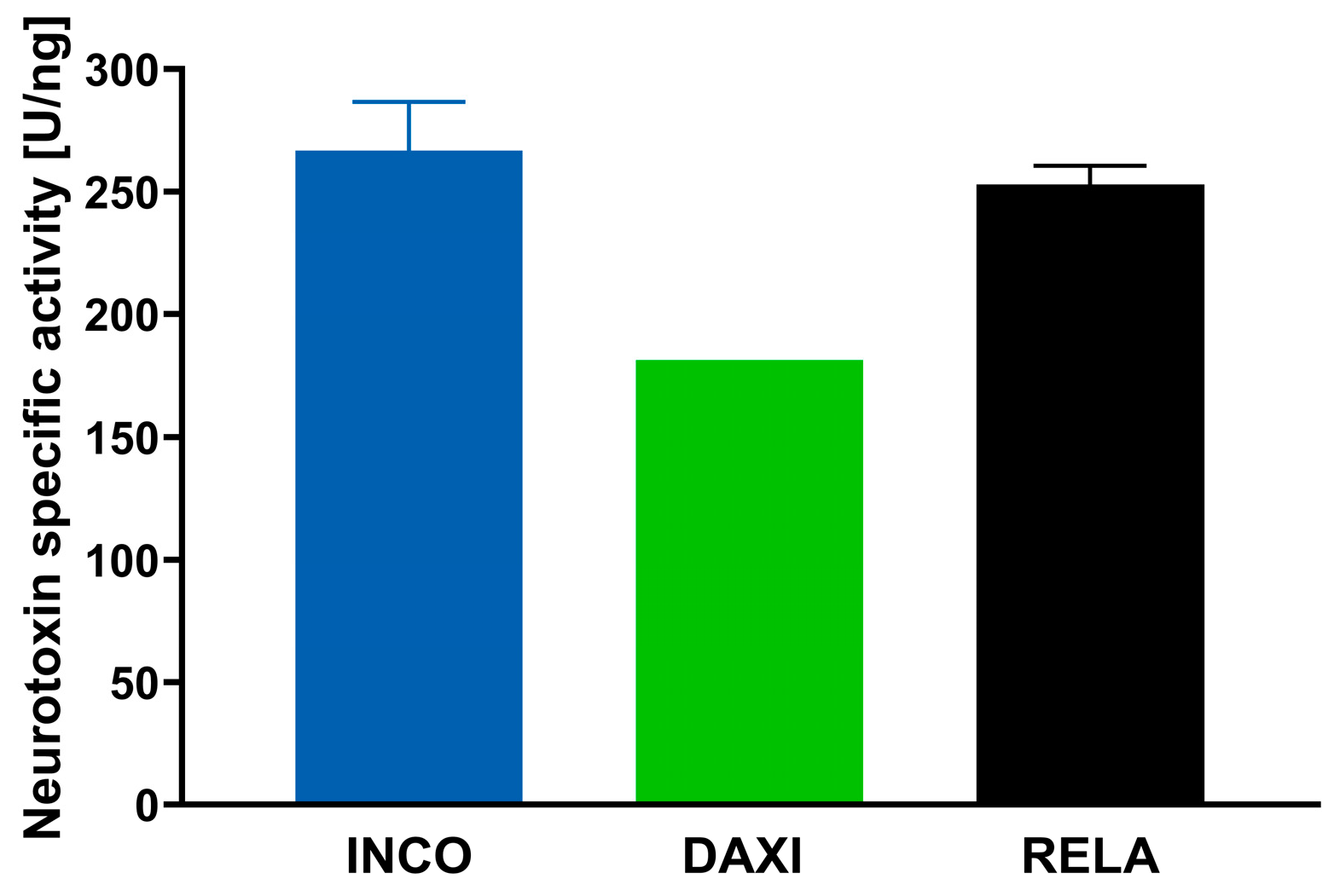
2.1. Concentration and Biologic Activity of BoNT/A
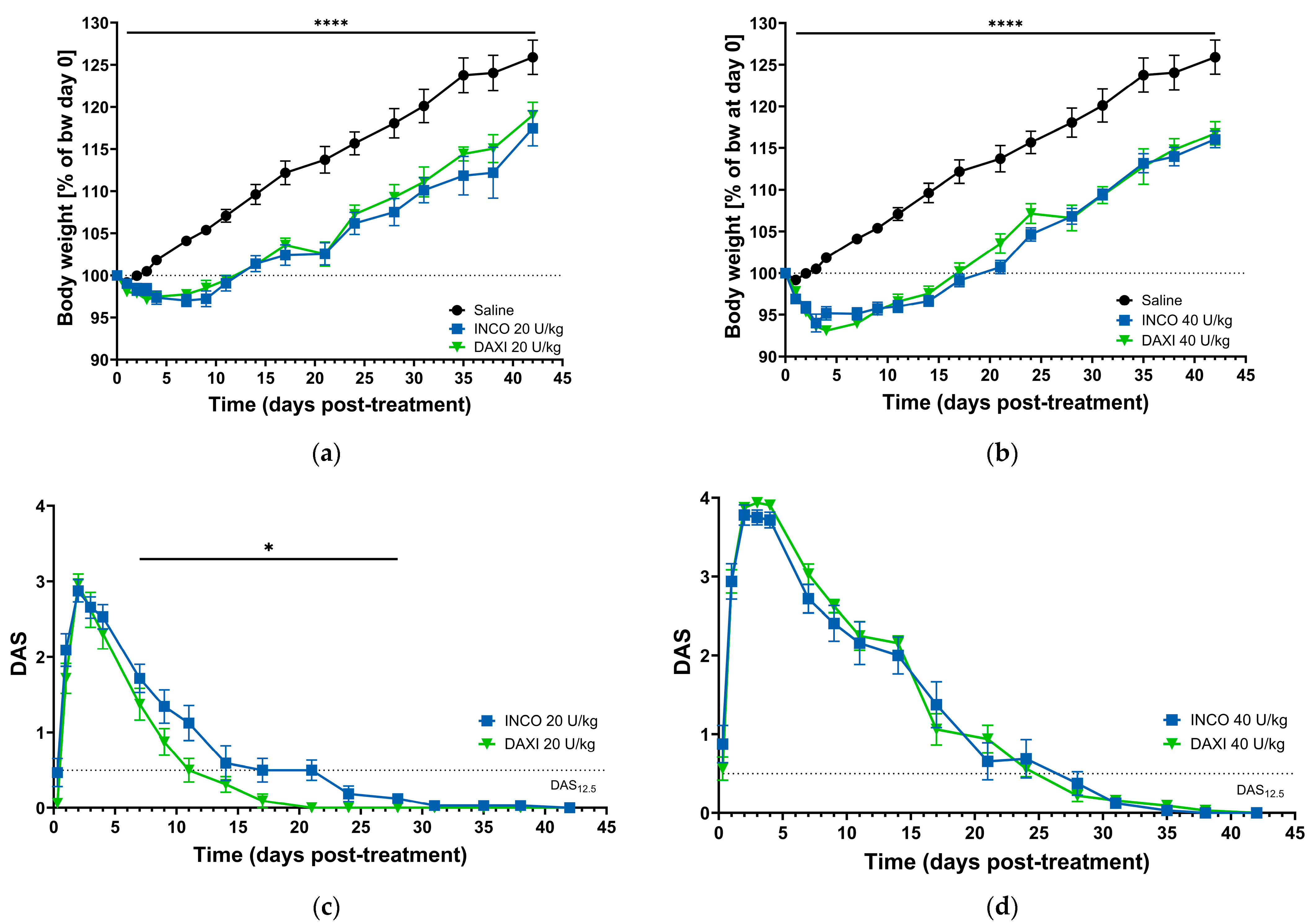
2.2. Digit Abduction Score
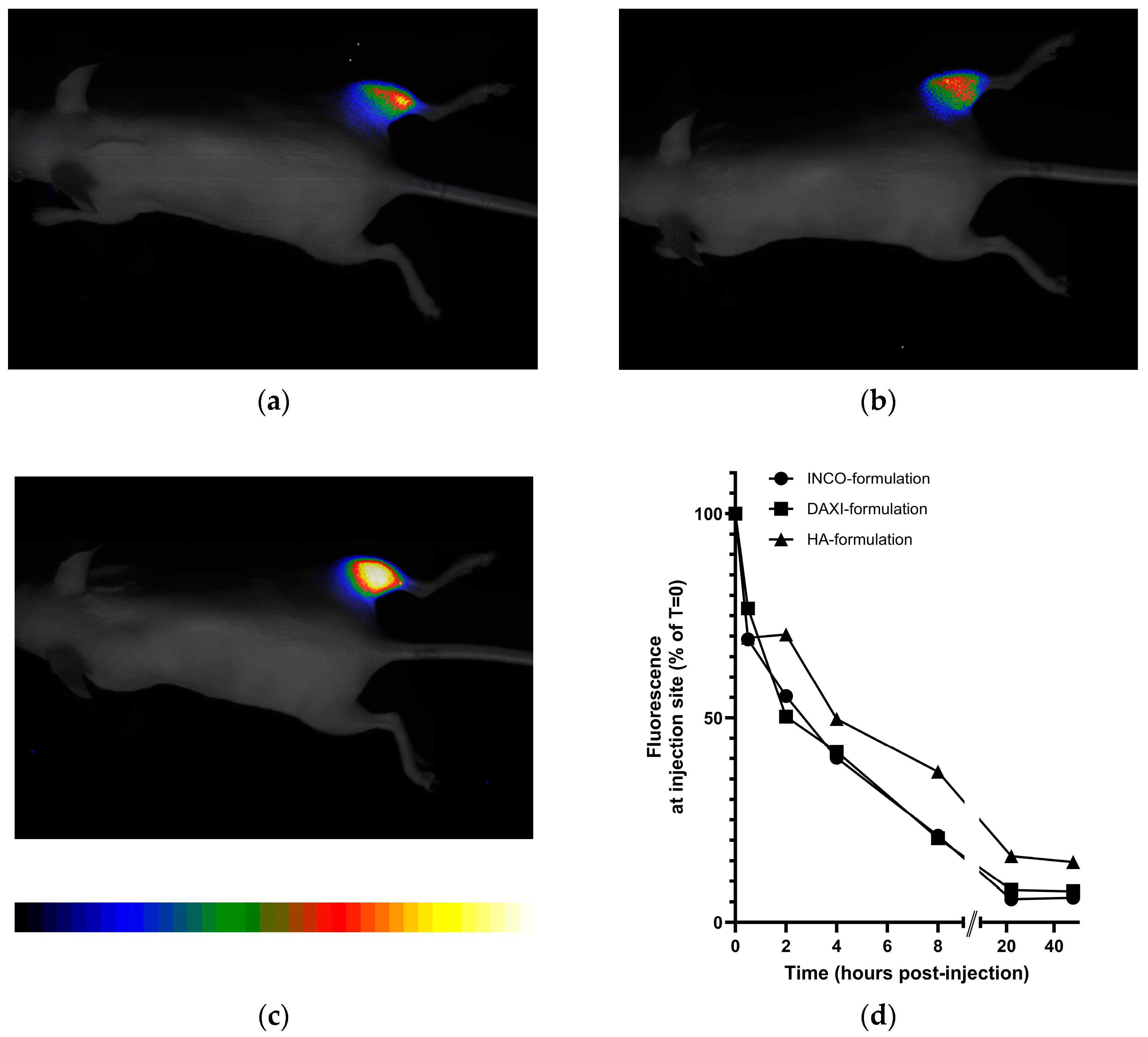
2.3. Far-Red Fluorescence (FRF) In Vivo Imaging
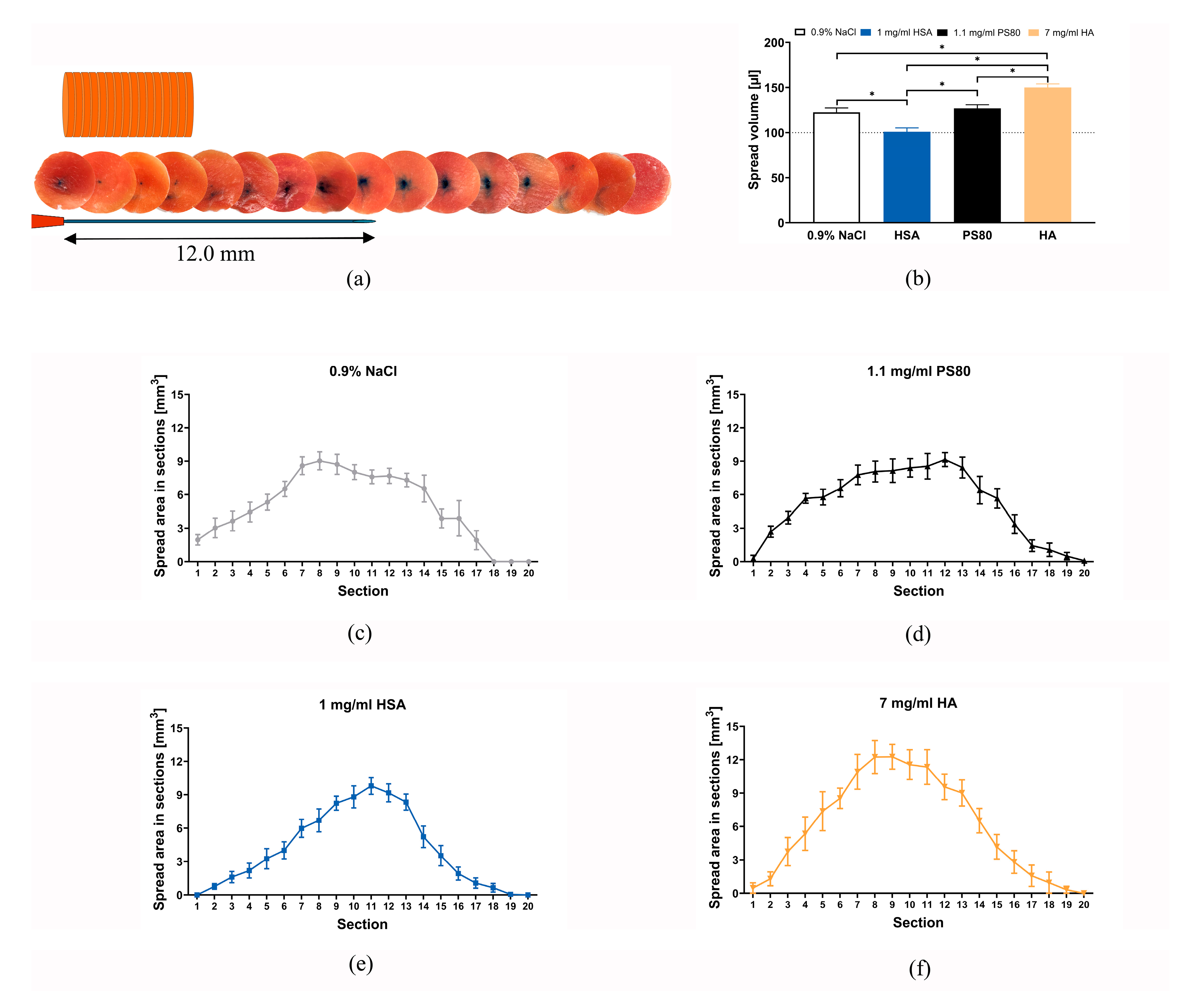
2.4. BoNT/A Spread in Muscle Tissue
3. Discussion
4. Conclusions
5. Materials and Methods
5.1. Botulinum Toxin A Formulations
5.2. Animals
5.3. Experimental Protocol for DAS
DAS Assay and Body Weight Development in Mice
5.4. Determination of Concentration and Biologic Activity of BoNT/A Products
5.5. In Vivo Imaging in Mice
5.6. Ex Vivo Investigation of BoNT/A Spread
5.7. Life–Dead Assay
5.8. Statistics
Author Contributions
Funding
Institutional Review Board Statement
Informed Consent Statement
Data Availability Statement
Acknowledgments
Conflicts of Interest
Abbreviations
| ABO | AbobotulinumtoxinA |
| BoNT/A | Botulinum toxin type A |
| CBA | Cell-based assay |
| DAS | Digit abduction score |
| DASAUC | Total DAS response versus time |
| DAXI | DaxibotulinumtoxinA |
| HIV-1 | Human immunodeficiency virus |
| IM | Intramuscular |
| INCO | IncobotulinumtoxinA |
| ONA | OnabotulinumtoxinA |
| PTD | Protein transduction domain |
| RELA | RelabotulinumtoxinA |
References
- Atassi, M.Z.; Oshima, M. Structure, activity, and immune (T and B cell) recognition of botulinum neurotoxins. Crit. Rev. Immunol. 1999, 19, 219–260. [Google Scholar] [CrossRef]
- Pirazzini, M.; Rossetto, O.; Eleopra, R.; Montecucco, C. Botulinum Neurotoxins: Biology, Pharmacology, and Toxicology. Pharmacol. Rev. 2017, 69, 200–235. [Google Scholar] [CrossRef]
- Goldstein, E.M. Safety of high-dose botulinum toxin type A therapy for the treatment of pediatric spasticity. J. Child Neurol. 2006, 21, 189–192. [Google Scholar] [CrossRef]
- Dressler, D.; Saberi, F.A.; Kollewe, K.; Schrader, C. Safety aspects of incobotulinumtoxinA high-dose therapy. J. Neural Transm. 2015, 122, 327–333. [Google Scholar] [CrossRef]
- Adler, S.; Bicker, G.; Bigalke, H.; Bishop, C.; Blumel, J.; Dressler, D.; Fitzgerald, J.; Gessler, F.; Heuschen, H.; Kegel, B.; et al. The current scientific and legal status of alternative methods to the LD50 test for botulinum neurotoxin potency testing. The report and recommendations of a ZEBET Expert Meeting. Altern. Lab. Anim. 2010, 38, 315–330. [Google Scholar] [CrossRef] [PubMed]
- Frevert, J. Pharmaceutical, biological, and clinical properties of botulinum neurotoxin type A products. Drugs R D 2015, 15, 1–9. [Google Scholar] [CrossRef]
- Wissel, J.; Bensmail, D.; Ferreira, J.J.; Molteni, F.; Satkunam, L.; Moraleda, S.; Rekand, T.; McGuire, J.; Scheschonka, A.; Flatau-Baque, B.; et al. Safety and efficacy of incobotulinumtoxinA doses up to 800 U in limb spasticity: The TOWER study. Neurology 2017, 88, 1321–1328. [Google Scholar] [CrossRef]
- Merz. Bocouture (Merz Pharmaceuticals GmbH, Frankfurt). Summary of Product Characteristic (SPC). Available online: https://www.medicines.org.uk/emc/medicine/23251 (accessed on 25 July 2025).
- FDA Prescribing Information Xeomin/IncobotulinumtoxinA. Available online: https://www.accessdata.fda.gov/drugsatfda_docs/label/2023/125360s097lbl.pdf (accessed on 8 April 2025).
- Frevert, J. Xeomin is free from complexing proteins. Toxicon 2009, 54, 697–701. [Google Scholar] [CrossRef] [PubMed]
- Dressler, D.; Mander, G.; Fink, K. Measuring the potency labelling of onabotulinumtoxinA (Botox®) and incobotulinumtoxinA (Xeomin®) in an LD50 assay. J. Neural Transm. 2012, 119, 13–15. [Google Scholar] [CrossRef] [PubMed]
- Jost, W.H.; Blumel, J.; Grafe, S. Botulinum neurotoxin type A free of complexing proteins (XEOMIN®) in focal dystonia. Drugs 2007, 67, 669–683. [Google Scholar] [CrossRef]
- Pagan, F.L.; Harrison, A. A guide to dosing in the treatment of cervical dystonia and blepharospasm with Xeomin®: A new botulinum neurotoxin A. Park. Relat. Disord. 2012, 18, 441–445. [Google Scholar] [CrossRef] [PubMed]
- Ravenni, R.; De Grandis, D.; Mazza, A. Conversion ratio between Dysport and Botox in clinical practice: An overview of available evidence. Neurol. Sci. 2013, 34, 1043–1048. [Google Scholar] [CrossRef]
- Carruthers, J.; Fournier, N.; Kerscher, M.; Ruiz-Avila, J.; Trindade de Almeida, A.R.; Kaeuper, G. The convergence of medicine and neurotoxins: A focus on botulinum toxin type A and its application in aesthetic medicine—A global, evidence-based botulinum toxin consensus education initiative: Part II: Incorporating botulinum toxin into aesthetic clinical practice. Dermatol. Surg. 2013, 39, 510–525. [Google Scholar] [CrossRef] [PubMed]
- Poulain, B.; Trevidic, P.; Clave, M.; Aharoni, C.; Baspeyras, M.; Bui, P.; Cartier, H.; Charavel, M.H.; Coulon, P.; Dahan, S.; et al. Clinical equivalence of conventional OnabotulinumtoxinA (900 KDa) and IncobotulinumtoxinA (neurotoxin free from complexing proteins—150 KDa): 2012 multidisciplinary French consensus in aesthetics. J. Drugs Dermatol. 2013, 12, 1434–1446. [Google Scholar]
- Lorenc, Z.P.; Kenkel, J.M.; Fagien, S.; Hirmand, H.; Nestor, M.S.; Sclafani, A.P.; Sykes, J.M.; Waldorf, H.A. Consensus panel’s assessment and recommendations on the use of 3 botulinum toxin type A products in facial aesthetics. Aesthetic Surg. J. 2013, 33, 35S–40S. [Google Scholar] [CrossRef]
- Aoki, K.R.; Ranoux, D.; Wissel, J. Using translational medicine to understand clinical differences between botulinum toxin formulations. Eur. J. Neurol. 2006, 13, 10–19. [Google Scholar] [CrossRef]
- Contarino, M.F.; Van Den Dool, J.; Balash, Y.; Bhatia, K.; Giladi, N.; Koelman, J.H.; Lokkegaard, A.; Marti, M.J.; Postma, M.; Relja, M.; et al. Clinical Practice: Evidence-Based Recommendations for the Treatment of Cervical Dystonia with Botulinum Toxin. Front. Neurol. 2017, 8, 35. [Google Scholar] [CrossRef]
- Salame, N.; Eber, A.E.; Dover, J. DaxibotulinumtoxinA-lanm (Daxxify): A Comprehensive Overview. Skin Ther. Lett. 2023, 28, 1–3. [Google Scholar]
- FDA. Prescribing Information DAXXIFY/DaxibotulinumtoxinA-lanm. Available online: https://www.accessdata.fda.gov/drugsatfda_docs/label/2023/761127s002lbl.pdf (accessed on 8 April 2025).
- Gallagher, C.J.; Bowsher, R.R.; Clancy, A.; Dover, J.S.; Humphrey, S.; Liu, Y.; Prawdzik, G. Clinical Immunogenicity of DaxibotulinumtoxinA for Injection in Glabellar Lines: Pooled Data from the SAKURA Phase 3 Trials. Toxins 2023, 15, 60. [Google Scholar] [CrossRef]
- Rizzuti, M.; Nizzardo, M.; Zanetta, C.; Ramirez, A.; Corti, S. Therapeutic applications of the cell-penetrating HIV-1 Tat peptide. Drug Discov. Today 2015, 20, 76–85. [Google Scholar] [CrossRef] [PubMed]
- Vives, E.; Brodin, P.; Lebleu, B. A truncated HIV-1 Tat protein basic domain rapidly translocates through the plasma membrane and accumulates in the cell nucleus. J. Biol. Chem. 1997, 272, 16010–16017. [Google Scholar] [CrossRef]
- Dietz, G.P.; Bahr, M. Delivery of bioactive molecules into the cell: The Trojan horse approach. Mol. Cell. Neurosci. 2004, 27, 85–131. [Google Scholar] [CrossRef]
- Bertucci, V.; Humphrey, S.; Carruthers, J.; Solish, N.; Muhn, C.; Swift, A.; Rubio, R.G.; Shears, G.; Rosen, N. Comparing Injectable DaxibotulinumtoxinA and OnabotulinumtoxinA in Moderate and Severe Glabellar Lines: Additional Analyses From a Phase 2, Randomized, Dose-Ranging, Double-Blind, Multicenter Study. Dermatol. Surg. 2017, 43, S262–S273. [Google Scholar] [CrossRef] [PubMed]
- Carruthers, J.; Solish, N.; Humphrey, S.; Rosen, N.; Muhn, C.; Bertucci, V.; Swift, A.; Metelitsa, A.; Rubio, R.G.; Waugh, J.; et al. Injectable DaxibotulinumtoxinA for the Treatment of Glabellar Lines: A Phase 2, Randomized, Dose-Ranging, Double-Blind, Multicenter Comparison With OnabotulinumtoxinA and Placebo. Dermatol. Surg. 2017, 43, 1321–1331. [Google Scholar] [CrossRef] [PubMed]
- Comella, C.L.; Jankovic, J.; Hauser, R.A.; Patel, A.T.; Banach, M.D.; Ehler, E.; Vitarella, D.; Rubio, R.G.; Gross, T.M.; Group, A.-S. Efficacy and Safety of DaxibotulinumtoxinA for Injection in Cervical Dystonia: ASPEN-1 Phase 3 Randomized Controlled Trial. Neurology 2024, 102, e208091. [Google Scholar] [CrossRef] [PubMed]
- FDA. Prescribing Information Botox/OnabotulinumtoxinA. 2021. Available online: https://www.accessdata.fda.gov/drugsatfda_docs/label/2021/103000s5320lbl.pdf (accessed on 6 March 2026).
- FDA. Prescribing Information Dysport/AbobotulinumtoxinA. 2016. Available online: https://www.accessdata.fda.gov/drugsatfda_docs/label/2016/125274s107lbl.pdf (accessed on 6 March 2026).
- Comella, P.; Massidda, B.; Filippelli, G.; Natale, D.; Farris, A.; Buzzi, F.; Tafuto, S.; Maiorino, L.; Palmeri, S.; De Lucia, L.; et al. Safety and efficacy of irinotecan plus high-dose leucovorin and intravenous bolus 5-fluorouracil for metastatic colorectal cancer: Pooled analysis of two consecutive southern Italy cooperative oncology group trials. Clin. Color. Cancer 2005, 5, 203–210. [Google Scholar] [CrossRef]
- Do, M.; Mul, S.; Grün, N.H.; Stern, A.L.; Liljegren Sundberg, A.; Stahl, U. The purification process to obtain a complex free highly purified botulinum neurotoxin type A1—RelabotulinumtoxinA. Toxicon 2022, 214, S16. [Google Scholar] [CrossRef]
- Sundberg, Å.L.; Ståhl, U. RelabotulinumtoxinA—A novel, high-purity BoNT-A1 in liquid formulation. Toxicon 2021, 190, S70. [Google Scholar] [CrossRef]
- Galderma. Relfydess Prescribing Information—Approved July2024 (Galderma Australia, Pty Ltd.). 2024. Available online: https://www.galderma.com/au/sites/default/files/Relyfdess_PI_ApprovedJuly2024.pdf (accessed on 8 March 2026).
- Lekholm, E.; Hamnevik, E.; Ståhl, U.; Fredriksson, R.; Lin, X.; Liljegren Sundberg, A. RelabotulinumtoxinA, a ready-to-use formulation neuromodulator manufactured with PEARL technology to maintain high potency and specific activity. Toxins 2025, 17, 501. [Google Scholar]
- Aoki, K.R. A comparison of the safety margins of botulinum neurotoxin serotypes A, B, and F in mice. Toxicon 2001, 39, 1815–1820. [Google Scholar] [CrossRef]
- Broide, R.S.; Rubino, J.; Nicholson, G.S.; Ardila, M.C.; Brown, M.S.; Aoki, K.R.; Francis, J. The rat Digit Abduction Score (DAS) assay: A physiological model for assessing botulinum neurotoxin-induced skeletal muscle paralysis. Toxicon 2013, 71, 18–24. [Google Scholar] [CrossRef]
- Wissel, J. Towards flexible and tailored botulinum neurotoxin dosing regimens for focal dystonia and spasticity—Insights from recent studies. Toxicon 2018, 147, 100–106. [Google Scholar] [CrossRef] [PubMed]
- Stone, H.F.; Zhu, Z.; Thach, T.Q.; Ruegg, C.L. Characterization of diffusion and duration of action of a new botulinum toxin type A formulation. Toxicon 2011, 58, 159–167. [Google Scholar] [CrossRef] [PubMed]
- Frevert, J.; Dressler, D. Complexing proteins in botulinum toxin type A drugs: A help or a hindrance? Biologics 2010, 4, 325–332. [Google Scholar] [CrossRef] [PubMed]
- Mander, G.; Brünn, C.; Jatzke, C.; Eisele, K.-H.; Taylor, H.V.; Pellett, S.; Johnson, E.A.; Fink, K. 134. Potency assay for botulinum neurotoxin type A based on neuronal cells as a replacement for the mouse bioassay. Toxicon 2015, 93, S41–S42. [Google Scholar] [CrossRef]
- Fernandez-Salas, E.; Wang, J.; Molina, Y.; Nelson, J.B.; Jacky, B.P.; Aoki, K.R. Botulinum neurotoxin serotype A specific cell-based potency assay to replace the mouse bioassay. PLoS ONE 2012, 7, e49516. [Google Scholar] [CrossRef]
- Kerscher, M.; Fabi, S.; Fischer, T.; Gold, M.; Joseph, J.; Prager, W.; Rzany, B.; Yoelin, S.; Roll, S.; Klein, G.; et al. IncobotulinumtoxinA Demonstrates Safety and Prolonged Duration of Effect in a Dose-Ranging Study for Glabellar Lines. J. Drugs Dermatol. 2021, 20, 1052–1060. [Google Scholar]
- Joseph, J.H.; Maas, C.; Palm, M.D.; Lain, E.; Glaser, D.A.; Bruce, S.; Yoelin, S.; Cox, S.E.; Fagien, S.; Sangha, S.; et al. Safety, Pharmacodynamic Response, and Treatment Satisfaction with OnabotulinumtoxinA 40 U, 60 U, and 80 U in Subjects with Moderate to Severe Dynamic Glabellar Lines. Aesthet. Surg. J. 2022, 42, 1318–1327. [Google Scholar] [CrossRef]
- Shridharani, S.M.; Moradi, A.; Donofrio, L.; Gold, M.H.; Biesman, B.; Chiang, M.; George, R.; Polder, K.; Solish, N.; Schwarcz; et al. Efficacy and Safety of RelabotulinumtoxinA, a New Ready-to-Use Liquid Formulation Botulinum Toxin: Results from the READY-1 Double-Blind, Randomized, Placebo-Controlled Phase 3 Trial in Glabellar Lines. Aesthet. Surg. J. 2024, 44, 1330–1340. [Google Scholar] [CrossRef]
- Jelinek, A. In-Vitro-Toxizität Grenzflächenaktiver Substanzen: Wirkung auf Zellmembran, Mitochondriale Funktion und Apoptose. Doctoral Dissertation, Luther-Universitaet Halle-Wittenberg, Halle, Germany, 2001. [Google Scholar]
- Zhu, W.; Zhou, Y.; Guo, L.; Feng, S. Biological function of sialic acid and sialylation in human health and disease. Cell Death Discov. 2024, 10, 415. [Google Scholar] [CrossRef]
- Pingel, J.; Nielsen, M.S.; Lauridsen, T.; Rix, K.; Bech, M.; Alkjaer, T.; Andersen, I.T.; Nielsen, J.B.; Feidenhansl, R. Injection of high dose botulinum-toxin A leads to impaired skeletal muscle function and damage of the fibrilar and non-fibrilar structures. Sci. Rep. 2017, 7, 14746. [Google Scholar] [CrossRef] [PubMed]
- Torii, Y.; Goto, Y.; Nakahira, S.; Kozaki, S.; Kaji, R.; Ginnaga, A. Comparison of Systemic Toxicity between Botulinum Toxin Subtypes A1 and A2 in Mice and Rats. Basic Clin. Pharmacol. Toxicol. 2015, 116, 524–528. [Google Scholar] [CrossRef]
- Cornet, S.; Perier, C.; Kalinichev, M. Optimization of the rat digit abduction score (DAS) assay: Evaluation of botulinum neurotoxin activity in the gastrocnemius lateralis, peronei, and extensor digitorum longus. Toxicon X 2020, 6, 100029. [Google Scholar] [CrossRef] [PubMed]
- Shokurova, A.; Eisele, K.H.; Taylor, H.V.; Fink, K. Cytotoxic effects of Pharmaceutical Botulinum Toxin Type A Formulation Components. Toxicon 2026, 271, S116. [Google Scholar] [CrossRef]
- Ajasin, D.; Eugenin, E.A. HIV-1 Tat: Role in Bystander Toxicity. Front. Cell. Infect. Microbiol. 2020, 10, 61. [Google Scholar] [CrossRef] [PubMed]
- Yang, W.; Lindo, P.; Riding, S.; Chang, T.-W.; Cai, S.; Van, T.; Kukreja, R.; Zhou, Y.; Vasa, K.; Singh, B.R. Expression, purification and comparative characterisation of enzymatically deactivated recombinant botulinum neurotoxin type A. Botulinum J. 2008, 1, 219. [Google Scholar] [CrossRef]
- Field, M.; Splevins, A.; Picaut, P.; van der Schans, M.; Langenberg, J.; Noort, D.; Snyder, D.; Foster, K. AbobotulinumtoxinA (Dysport®), OnabotulinumtoxinA (Botox®), and IncobotulinumtoxinA (Xeomin®) Neurotoxin Content and Potential Implications for Duration of Response in Patients. Toxins 2018, 10, 535. [Google Scholar] [CrossRef]
- Carruthers, A.; Carruthers, J. Prospective, double-blind, randomized, parallel-group, dose-ranging study of botulinum toxin type A in men with glabellar rhytids. Dermatol. Surg. 2005, 31, 1297–1303. [Google Scholar] [CrossRef] [PubMed]
- Carruthers, A.; Carruthers, J.; Said, S. Dose-ranging study of botulinum toxin type A in the treatment of glabellar rhytids in females. Dermatol. Surg. 2005, 31, 414–422. [Google Scholar] [CrossRef] [PubMed]
- Revance Therapeutics, I. Phase 2 DaxibotulinumtoxinA for Injection for the Management of Plantar Fasciitis. 2017. Available online: https://clinicaltrials.gov/study/NCT03137407 (accessed on 6 March 2026).
- Revance Therapeutics. A Phase II, Prospective, Randomized, Double-Blind, Multi-Center, Placebo-Controlled Trial of DaxibotulinumtoxinA for Injection for the Management of Plantar Fasciitis. 2020. Available online: https://clinicaltrials.gov/study/NCT03825315 (accessed on 6 March 2026).
- Lain, E.; Beer, K.; Donath, A.; Kaufman, J.; Fagien, S.; Naga, L.; Nestor, M.S.; Goldberg, D.; Rivkin, A.; Patel, S.; et al. 61656 READY-4: Long-term safety with repeated injections using RelabotulinumtoxinA, a novel liquid formulation botulinum toxin, in the treatment of glabellar and lateral canthal lines. J. Am. Acad. Dermatol. 2025, 93, AB282. [Google Scholar] [CrossRef]
- Carli, L.; Montecucco, C.; Rossetto, O. Assay of diffusion of different botulinum neurotoxin type a formulations injected in the mouse leg. Muscle Nerve 2009, 40, 374–380. [Google Scholar] [CrossRef] [PubMed]
- Honndorf, S.; Fink, K. Electrical or magnetic nerve stimulation enhance the BoNT/A-mediated muscle paralysis. J. Neuroeng. Rehabil. 2026, 23, 77. [Google Scholar] [CrossRef] [PubMed]



| Product | IncobotulinumtoxinA | DaxibotulinumtoxinA | RelabotulinumtoxinA |
|---|---|---|---|
| Dosage (U) per vial | 100 | 100 | 150 |
| API | Purified toxin (150 kDa) | Purified toxin (150 kDa) | Purified toxin (150 kDa) |
| Volume | 0.5–5 mL (Xeomin US PI and EU SPC) 2–2.5 mL (Bocouture US PI) | 1.2 mL (Daxxify US PI) | 1.5 mL (Relfydess AUS PI) |
| Appearance | Lyophilizate | Lyophilizate | Liquid |
| Formulation | HSA 1.0 mg Sucrose 4.7 mg | L-Histidine 0.14 mg L-Histidine-HCl monohydrate 0.65 mg Trehalose dihydrate 36 mg Polysorbate 20 0.1 mg RTP004 peptide 11.7 µg | NaH2PO4 dihydrate 0.9 mg/mL Na2HPO4 dihydrate 0.7 mg/mL KCl 0.2 mg/mL NaCl 8.2 mg/mL Polysorbate 80 1.1 mg/mL Tryptophan 1.0 mg/mL H2O for injection |
| Total neurotoxin protein (ng per 100 U *) | 0.44 ± 0.04 | 0.58 | 0.46 ± 0.01 |
| Relative biological activity (U/vial) | 116.00 ± 8.16 | 104.21 | 116.79 ± 5.45 |
| Specific neurotoxin potency (U/ng) | 266.68 ± 19.97 | 181.12 | 252.89 ± 7.62 |
| Treatment | Dose U/kg | Mean Peak DAS | Duration of Action (d) | DASAUC (DAS * d) |
|---|---|---|---|---|
| INCO | 20 | 2.88 ± 0.15 | 21.0 | 29.00 ± 3.43 * |
| DAXI | 20 | 2.97 ± 0.13 | 11.0 | 19.13 ± 2.16 |
| INCO | 40 | 3.78 ± 0.13 | 26.4 | 51.25 ± 5.64 |
| DAXI | 40 | 3.94 ± 0.06 | 24.7 | 53.25 ± 1.94 |
Disclaimer/Publisher’s Note: The statements, opinions and data contained in all publications are solely those of the individual author(s) and contributor(s) and not of MDPI and/or the editor(s). MDPI and/or the editor(s) disclaim responsibility for any injury to people or property resulting from any ideas, methods, instructions or products referred to in the content. |
© 2026 by the authors. Licensee MDPI, Basel, Switzerland. This article is an open access article distributed under the terms and conditions of the Creative Commons Attribution (CC BY) license.
Share and Cite
Honndorf, S.; Kühbach, K.; Eisele, K.-H.; Shokurova, A.; Buch, P.; Jatzke, C.; Taylor, H.V.; Fink, K. Comparative Analytics and Pharmacodynamics of the Complex Protein-Free Botulinum Toxin Type A Formulations DaxibotulinumtoxinA, IncobotulinumtoxinA and RelabotulinumtoxinA. Toxins 2026, 18, 142. https://doi.org/10.3390/toxins18030142
Honndorf S, Kühbach K, Eisele K-H, Shokurova A, Buch P, Jatzke C, Taylor HV, Fink K. Comparative Analytics and Pharmacodynamics of the Complex Protein-Free Botulinum Toxin Type A Formulations DaxibotulinumtoxinA, IncobotulinumtoxinA and RelabotulinumtoxinA. Toxins. 2026; 18(3):142. https://doi.org/10.3390/toxins18030142
Chicago/Turabian StyleHonndorf, Stefanie, Katja Kühbach, Karl-Heinz Eisele, Alina Shokurova, Philipp Buch, Claudia Jatzke, Harold Victor Taylor, and Klaus Fink. 2026. "Comparative Analytics and Pharmacodynamics of the Complex Protein-Free Botulinum Toxin Type A Formulations DaxibotulinumtoxinA, IncobotulinumtoxinA and RelabotulinumtoxinA" Toxins 18, no. 3: 142. https://doi.org/10.3390/toxins18030142
APA StyleHonndorf, S., Kühbach, K., Eisele, K.-H., Shokurova, A., Buch, P., Jatzke, C., Taylor, H. V., & Fink, K. (2026). Comparative Analytics and Pharmacodynamics of the Complex Protein-Free Botulinum Toxin Type A Formulations DaxibotulinumtoxinA, IncobotulinumtoxinA and RelabotulinumtoxinA. Toxins, 18(3), 142. https://doi.org/10.3390/toxins18030142