Dietary Intake of Patients with Parkinson’s Disease in Lithuania

 , , , , and
Abstract
1. Introduction
2. Materials and Methods
2.1. Participants
2.2. Data Collection and Tools
2.3. Statistics
3. Results
3.1. Demographic and Disease-Related Characteristics
3.2. Macro- and Micronutrient Intake
3.3. Dietary Intake Associations with Parkinson’s Disease Characteristics
4. Discussion
5. Conclusions
Supplementary Materials
Author Contributions
Funding
Institutional Review Board Statement
Informed Consent Statement
Data Availability Statement
Acknowledgments
Conflicts of Interest
Abbreviations
| PD | Parkinson’s Disease |
| RDI | Recommended Daily Intake |
| SFAs | Saturated Fatty Acids |
| PUFAs | Polyunsaturated Fatty Acids |
| MUFAs | Monounsaturated Fatty Acids |
| BMI | Body Mass Index |
| MMSE | Mini-Mental State Examination |
| MDS-UPDRS | Movement Disorder Society—Unified Parkinson’s Disease Rating Scale |
| LED | Levodopa equivalent dose |
| ESS | Epworth Sleepiness Scale |
| PSS-2 | Parkinson’s Disease Sleep Scale-2 |
| HADS | Hospital Anxiety and Depression Scale |
| PSF-16 | Parkinson’s Disease Fatigue Scale |
| MoCA | Montreal Cognitive Assessment |
| PDQ-39 | Parkinson’s Disease Quality of Life Questionnaire-39 |
| PA | Physical activity |
| IPAQ | International Physical Activity Questionnaire |
| MET | Metabolic Equivalent Minutes |
| PAL | Physical Activity Level |
| IQR | Interquartile Range |
| T2DM | Type 2 Diabetes Mellitus |
| GLP-1 | Glucagon-like peptide-1 |
References
- Tysnes, O.B.; Storstein, A. Epidemiology of Parkinson’s disease. J. Neural Transm. 2017, 124, 901–905. [Google Scholar] [CrossRef] [PubMed]
- Bloem, B.R.; Okun, M.S.; Klein, C. Parkinson’s disease. Lancet 2021, 397, 2284–2303. [Google Scholar] [CrossRef]
- Xu, L.; Wang, Z.; Li, Q. Global trends and projections of Parkinson’s disease incidence: A 30-year analysis using GBD 2021 data. J. Neurol. 2025, 272, 286. [Google Scholar] [CrossRef]
- Su, D.; Cui, Y.; He, C.; Yin, P.; Bai, R.; Zhu, J. Projections for prevalence of Parkinson’s disease and its driving factors in 195 countries and territories to 2050: Modelling study of Global Burden of Disease Study 2021. BMJ 2025, 388, e080952. [Google Scholar] [CrossRef]
- Branca, F.; Lartey, A.; Oenema, S.; Aguayo, V.; Stordalen, G.A.; Richardson, R.; Arvelo, M.; Afshin, A. Transforming the food system to fight non-communicable diseases. BMJ 2019, 364, l296. [Google Scholar] [CrossRef] [PubMed]
- Bulotaitė, G.; Bartkevičiūtė, R.; Barzda, A.; Stukas, R. Intakes of energy, macronutrients, and micronutrients in adult Lithuanian population: A national study of 2019–2020. J. Nutr. Sci. 2024, 13, e46. [Google Scholar] [CrossRef] [PubMed]
- Mertens, E.; Kuijsten, A.; Dofková, M.; Mistura, L.; D’Addezio, L.; Turrini, A.; Dubuisson, C.; Favret, S.; Havard, S.; Trolle, E.; et al. Geographic and socioeconomic diversity of food and nutrient intakes: A comparison of four European countries. Eur. J. Nutr. 2019, 58, 1475–1493. [Google Scholar] [CrossRef]
- Cena, H.; Calder, P.C. Defining a healthy diet: Evidence for the role of contemporary dietary patterns in health and disease. Nutrients 2020, 12, 334. [Google Scholar] [CrossRef]
- Knight, E.; Geetha, T.; Burnett, D.; Babu, J.R. The role of diet and dietary patterns in Parkinson’s disease. Nutrients 2022, 14, 4472. [Google Scholar] [CrossRef]
- Sheard, J.M.; Ash, S.; Silburn, P.A.; Kerr, G.K. Prevalence of malnutrition in Parkinson’s disease: A systematic review. Nutr. Rev. 2011, 69, 520–532. [Google Scholar] [CrossRef]
- Li, Y.; Liu, Y.; Du, C.; Wang, J. Body mass index in patients with Parkinson’s disease: A systematic review. J. Neurophysiol. 2024, 131, 311–320. [Google Scholar] [CrossRef]
- Ma, K.; Xiong, N.; Shen, Y.; Han, C.; Liu, L.; Zhang, G.; Wang, L.; Guo, S.; Guo, X.; Xia, Y.; et al. Weight loss and malnutrition in patients with Parkinson’s disease: Current knowledge and future prospects. Front. Aging Neurosci. 2018, 10, 1. [Google Scholar] [CrossRef]
- Hart, A.; Cordova-Rivera, L.; Barker, F.; Sayer, A.A.; Granic, A.; Yarnall, A.J. The prevalence of sarcopenia in Parkinson’s disease and related disorders—A systematic review. Neurol. Sci. 2023, 44, 4205–4217. [Google Scholar] [CrossRef] [PubMed]
- Aiello, M.; Eleopra, R.; Rumiati, R.I. Body weight and food intake in Parkinson’s disease: A review of the association to non-motor symptoms. Appetite 2015, 84, 204–211. [Google Scholar] [CrossRef] [PubMed]
- Fasano, A.; Visanji, N.P.; Liu, L.W.; Lang, A.E.; Pfeiffer, R.F. Gastrointestinal dysfunction in Parkinson’s disease. Lancet Neurol. 2015, 14, 625–639. [Google Scholar] [CrossRef]
- Capecci, M.; Petrelli, M.; Emanuelli, B.; Millevolte, M.; Nicolai, A.; Provinciali, L.; Ceravolo, M.G. Rest energy expenditure in Parkinson’s disease: Role of disease progression and dopaminergic therapy. Park. Relat. Disord. 2013, 19, 238–241. [Google Scholar] [CrossRef] [PubMed]
- Kwon, D.; Folle, A.D.; Del Rosario, I.; Zhang, K.; Paul, K.C.; Keener, A.M.; Bronstein, J.M.; Ritz, B. Diet quality and Parkinson’s disease: Potential strategies for non-motor symptom management. Park. Relat. Disord. 2023, 115, 105816. [Google Scholar] [CrossRef]
- Palavra, N.C.; Lubomski, M.; Flood, V.M.; Davis, R.L.; Sue, C.M. Increased added sugar consumption is common in Parkinson’s disease. Front. Nutr. 2021, 8, 628845. [Google Scholar] [CrossRef]
- Wang, L.; Xiong, N.; Huang, J.; Guo, S.; Liu, L.; Han, C.; Zhang, G.; Jiang, H.; Ma, K.; Xia, Y.; et al. Protein-restricted diets for ameliorating motor fluctuations in Parkinson’s disease. Front. Aging Neurosci. 2017, 9, 206. [Google Scholar] [CrossRef]
- Sherzai, A.Z.; Tagliati, M.; Park, K.; Gatto, N.M.; Pezeshkian, S.; Sherzai, D. Micronutrients and risk of Parkinson’s disease: A systematic review. Gerontol. Geriatr. Med. 2016, 2, 2333721416644286. [Google Scholar] [CrossRef]
- Wang, A.; Lin, Y.; Wu, Y.; Zhang, D. Macronutrients intake and risk of Parkinson’s disease: A meta-analysis. Geriatr. Gerontol. Int. 2015, 15, 606–616. [Google Scholar] [CrossRef] [PubMed]
- Evatt, M.L.; Delong, M.R.; Khazai, N.; Rosen, A.; Triche, S.; Tangpricha, V. Prevalence of vitamin D insufficiency in patients with Parkinson disease and Alzheimer disease. Arch. Neurol. 2008, 65, 1348–1352. [Google Scholar] [CrossRef]
- Luthra, N.S.; Marcus, A.H.; Hills, N.K.; Christine, C.W. Vitamin B12 measurements across neurodegenerative disorders. J. Clin. Mov. Disord. 2020, 7, 3. [Google Scholar] [CrossRef]
- Sahu, M.R.; Rani, L.; Kharat, A.S.; Mondal, A.C. Could vitamins have a positive impact on the treatment of Parkinson’s disease? Brain Sci. 2023, 13, 272. [Google Scholar] [CrossRef] [PubMed]
- Ongun, N. Does nutritional status affect Parkinson’s disease features and quality of life? PLoS ONE 2018, 13, e0205100. [Google Scholar] [CrossRef] [PubMed]
- Parkinson’s UK. Best Practice Guidelines for Dietitians on the Management of Parkinson’s. Available online: https://www.parkinsons.org.uk/professionals/resources/best-practice-guidelines-dietitians-management-parkinsons (accessed on 15 October 2025).
- Van Asseldonk, M.J.M.D.; Dicke, H.C.; van den Beemt, B.J.W.; van den Berg, D.J.; ter Borg, S.; Duin, G.M.; Govers, S.L.H.M.; van Teeffelen, J.J.; Hoff, J.I.; van Harten, B.; et al. Dietetic Guideline for Parkinson’s Disease. 2012. Available online: http://www.puntkomma.nl (accessed on 15 October 2025).
- Sauerbier, A.; Schrag, A.; Martinez-Martin, P.; Hall, L.J.; Parry, M.; Mischley, L.K.; Zis, P.; Chaudhuri, K.R. Dietary variations in a multiethnic Parkinson’s disease cohort and possible influences on nonmotor aspects: A cross-sectional multicentre study. Park. Dis. 2018, 2018, 7274085. [Google Scholar] [CrossRef]
- Hughes, A.J.; Daniel, S.E.; Kilford, L.; Lees, A.J. Accuracy of clinical diagnosis of idiopathic Parkinson’s disease: A clinico-pathological study of 100 cases. J. Neurol. Neurosurg. Psychiatry 1992, 55, 181–184. [Google Scholar] [CrossRef]
- Goetz, C.G.; Tilley, B.C.; Shaftman, S.R.; Stebbins, G.T.; Fahn, S.; Martinez-Martin, P.; Poewe, W.; Sampaio, C.; Stern, M.B.; Dodel, R.; et al. Movement Disorder Society-sponsored revision of the Unified Parkinson’s Disease Rating Scale (MDS-UPDRS): Scale presentation and clinimetric testing results. Mov. Disord. 2008, 23, 2129–2170. [Google Scholar] [CrossRef]
- Rabey, J.M.; Korczyn, A.D. The Hoehn and Yahr Rating Scale for Parkinson’s Disease. In Instrumental Methods and Scoring in Extrapyramidal Disorders; Springer: Berlin/Heidelberg, Germany, 1995; pp. 7–17. [Google Scholar]
- Jost, S.T.; Kaldenbach, M.A.; Antonini, A.; Martinez-Martin, P.; Timmermann, L.; Odin, P.; Katzenschlager, R.; Borgohain, R.; Fasano, A.; Stocchi, F.; et al. Levodopa dose equivalency in Parkinson’s disease: Updated systematic review and proposals. Mov. Disord. 2023, 38, 1236–1252. [Google Scholar] [CrossRef]
- Högl, B.; Arnulf, I.; Comella, C.; Ferreira, J.; Iranzo, A.; Tilley, B.; Trenkwalder, C.; Poewe, W.; Rascol, O.; Sampaio, C.; et al. Scales to assess sleep impairment in Parkinson’s disease: Critique and recommendations. Mov. Disord. 2010, 25, 2704–2716. [Google Scholar] [CrossRef]
- Johns, M.W. A new method for measuring daytime sleepiness: The Epworth sleepiness scale. Sleep 1991, 14, 540–545. [Google Scholar] [CrossRef] [PubMed]
- Muntean, M.L.; Benes, H.; Sixel-Döring, F.; Chaudhuri, K.R.; Suzuki, K.; Hirata, K.; Zimmermann, J.; Trenkwalder, C. Clinically relevant cut-off values for the Parkinson’s Disease Sleep Scale-2 (PDSS-2): A validation study. Sleep Med. 2016, 24, 87–92. [Google Scholar] [CrossRef]
- Snaith, R.P. The Hospital Anxiety and Depression Scale. Health Qual. Life Outcomes 2003, 1, 29. [Google Scholar] [CrossRef]
- Dissanayaka, N.N.; Torbey, E.; Pachana, N.A. Anxiety rating scales in Parkinson’s disease: A critical review updating recent literature. Int. Psychogeriatr. 2015, 27, 1777–1784. [Google Scholar] [CrossRef] [PubMed]
- Mondolo, F.; Jahanshahi, M.; Granà, A.; Biasutti, E.; Cacciatori, E.; Di Benedetto, P. The validity of the Hospital Anxiety and Depression Scale and the Geriatric Depression Scale in Parkinson’s disease. Behav. Neurol. 2006, 17, 109–115. [Google Scholar] [CrossRef]
- Brown, R.G.; Dittner, A.; Findley, L.; Wessely, S.C. The Parkinson fatigue scale. Park. Relat. Disord. 2005, 11, 49–55. [Google Scholar] [CrossRef]
- Nasreddine, Z.S.; Phillips, N.A.; Bédirian, V.; Charbonneau, S.; Whitehead, V.; Collin, I.; Cummings, J.L.; Chertkow, H. The Montreal Cognitive Assessment, MoCA: A brief screening tool for mild cognitive impairment. J. Am. Geriatr. Soc. 2005, 53, 695–699. [Google Scholar] [CrossRef]
- Rome Foundation. Rome IV Criteria. C2 Functional Constipation. Available online: https://theromefoundation.org/rome-iv/rome-iv-criteria/ (accessed on 15 June 2025).
- Peto, V.; Jenkinson, C.; Fitzpatrick, R.; Greenhall, R. The development and validation of a short measure of functioning and well-being for individuals with Parkinson’s disease. Qual. Life Res. 1995, 4, 241–248. [Google Scholar] [CrossRef]
- World Health Organization. Body Mass Index (BMI). Available online: https://www.who.int/data/gho/data/themes/topics/topic-details/GHO/body-mass-index (accessed on 15 June 2025).
- Hagströmer, M.; Oja, P.; Sjöström, M. The International Physical Activity Questionnaire (IPAQ): A study of concurrent and construct validity. Public Health Nutr. 2006, 9, 755–762. [Google Scholar] [CrossRef]
- Castell, G.S.; Serra-Majem, L.; Ribas-Barba, L. What and how much do we eat? 24-hour dietary recall method. Nutr. Hosp. 2015, 31, 46–48. [Google Scholar] [CrossRef]
- Lietuvos Respublikos Sveikatos Apsaugos Ministro. Įsakymas Nr. 510 dėl Rekomenduojamų Paros Maistinių Medžiagų ir Energijos Normų Patvirtinimo (The order of the Minister of Health of the Republic of Lithuania on the approval of Recommended Daily Intake of Nutrients and Energy); Ministry of Health of the Republic of Lithuania: Vilnius, Lithuania, 1999. Available online: https://www.e-tar.lt/portal/lt/legalAct/TAR.D3B11DAD7AA2/asr (accessed on 15 June 2025).
- Ådén, E.; Carlsson, M.; Poortvliet, E.; Stenlund, H.; Linder, J.; Edström, M.; Forsgren, L.; Håglin, L. Dietary intake and olfactory function in patients with newly diagnosed Parkinson’s disease: A case-control study. Nutr. Neurosci. 2011, 14, 25–31. [Google Scholar] [CrossRef]
- Marczewska, A.; De Notaris, R.; Sieri, S.; Barichella, M.; Fusconi, E.; Pezzoli, G. Protein intake in Parkinsonian patients using the EPIC food frequency questionnaire. Mov. Disord. 2006, 21, 1229–1231. [Google Scholar] [CrossRef]
- Barichella, M.; Cereda, E.; Cassani, E.; Pinelli, G.; Iorio, L.; Ferri, V.; Privitera, G.; Pasqua, M.; Valentino, A.; Monajemi, F.; et al. Dietary habits and neurological features of Parkinson’s disease patients: Implications for practice. Clin. Nutr. 2017, 36, 1054–1061. [Google Scholar] [CrossRef]
- Dunk, D.; Mulryan, P.; Affonso, S.; O’Keeffe, G.W.; O’Keeffe, M.; Sullivan, A.M. Diet quality, sleep and quality of life in Parkinson’s disease: A cross-sectional study. Ir. J. Med. Sci. 2023, 192, 1371–1380. [Google Scholar] [CrossRef] [PubMed]
- Baert, F.; Matthys, C.; Mellaerts, R.; Lemaître, D.; Vlaemynck, G.; Foulon, V. Dietary intake of Parkinson’s disease patients. Front. Nutr. 2020, 7, 105. [Google Scholar] [CrossRef] [PubMed]
- Haas, J.; Berg, D.; Bosy-Westphal, A.; Schaeffer, E. Parkinson’s disease and sugar intake—Reasons for and consequences of a still unclear craving. Nutrients 2022, 14, 3240. [Google Scholar] [CrossRef]
- Gatto, E.M.; Aldinio, V. Impulse control disorders in Parkinson’s disease: A brief and comprehensive review. Front. Neurol. 2019, 10, 351. [Google Scholar] [CrossRef]
- Schapira, A.H.V.; Chaudhuri, K.R.; Jenner, P. Non-motor features of Parkinson disease. Nat. Rev. Neurosci. 2017, 18, 435–450. [Google Scholar] [CrossRef] [PubMed]
- Jacques, A.; Chaaya, N.; Beecher, K.; Ali, S.A.; Belmer, A.; Bartlett, S. The impact of sugar consumption on stress-driven, emotional and addictive behaviors. Neurosci. Biobehav. Rev. 2019, 103, 178–199. [Google Scholar] [CrossRef]
- Roy, A.; Choudhury, S.; Banerjee, R.; Basu, P.; Mondal, B.; Sarkar, S.; Anand, S.S.; Dey, S.; Kumar, H. Dietary and Environmental Risk Factors in Parkinson’s and Alzheimer’s Disease: A Semi-Quantitative Pilot Study. Ann. Indian Acad. Neurol. 2023, 26, 174–181. [Google Scholar] [CrossRef]
- Chen, L.; Wang, C.; Qin, L.; Zhang, H. Parkinson’s disease and glucose metabolism impairment. Transl. Neurodegener. 2025, 14, 10. [Google Scholar] [CrossRef]
- Sergi, D.; Renaud, J.; Simola, N.; Martinoli, M.G. Diabetes, a contemporary risk for Parkinson’s disease: Epidemiological and cellular evidences. Front. Aging Neurosci. 2019, 11, 302. [Google Scholar] [CrossRef]
- Lv, D.; Feng, P.; Guan, X.; Liu, Z.; Li, D.; Xue, C.; Bai, B.; Hölscher, C. Neuroprotective effects of GLP-1 class drugs in Parkinson’s disease. Front. Neurol. 2024, 15, 1462240. [Google Scholar] [CrossRef] [PubMed]
- Kwon, D.; Zhang, K.; Paul, K.C.; Folle, A.D.; Del Rosario, I.; Jacobs, J.P.; Keener, A.M.; Bronstein, J.M.; Ritz, B. Diet and the gut microbiome in patients with Parkinson’s disease. npj Park. Dis. 2024, 10, 89. [Google Scholar] [CrossRef] [PubMed]
- Cassani, E.; Barichella, M.; Ferri, V.; Pinelli, G.; Iorio, L.; Bolliri, C.; Caronni, S.; Faierman, S.A.; Mottolese, A.; Pusani, C.; et al. Dietary habits in Parkinson’s disease: Adherence to Mediterranean diet. Park. Relat. Disord. 2017, 42, 40–46. [Google Scholar] [CrossRef]
- Astarloa, R.; Mena, M.A.; Sánchez, V.; de la Vega, L.; de Yébenes, J.G. Clinical and pharmacokinetic effects of a diet rich in insoluble fiber on Parkinson disease. Clin. Neuropharmacol. 1992, 15, 375–380. [Google Scholar] [CrossRef]
- Pedrosa Carrasco, A.J.; Timmermann, L.; Pedrosa, D.J. Management of constipation in patients with Parkinson’s disease. npj Park. Dis. 2018, 4, 6. [Google Scholar] [CrossRef]
- Van der Schoot, A.; Drysdale, C.; Whelan, K.; Dimidi, E. The effect of fiber supplementation on chronic constipation in adults: An updated systematic review and meta-analysis of randomized controlled trials. Am. J. Clin. Nutr. 2022, 116, 953–969. [Google Scholar] [CrossRef]
- Lorefält, B.; Ganowiak, W.; Pålhagen, S.; Toss, G.; Unosson, M.; Granérus, A.K. Factors of importance for weight loss in elderly patients with Parkinson’s disease. Acta Neurol. Scand. 2004, 110, 180–187. [Google Scholar] [CrossRef]
- Huotari, A.; Herzig, K.H. Vitamin D and living in northern latitudes—An endemic risk area for vitamin D deficiency. Int. J. Circumpolar Health 2008, 67, 164–178. [Google Scholar] [CrossRef] [PubMed]
- Giustina, A.; Bouillon, R.; Dawson-Hughes, B.; Ebeling, P.R.; Lazaretti-Castro, M.; Lips, P. Vitamin D in the older population: A consensus statement. Endocrine 2023, 79, 31–44. [Google Scholar] [CrossRef]
- Toussirot, E.; Compagne, C.; Vauchy, C.; Bereau, M. Bone health in Parkinson’s disease: A comprehensive review of bone involvement and its pathophysiological mechanisms. Front. Med. 2026, 12, 1737844. [Google Scholar] [CrossRef]
- Behl, T.; Arora, A.; Singla, R.K.; Sehgal, A.; Makeen, H.A.; Albratty, M.; Meraya, A.M.; Najmi, A.; Bungau, S.G. Understanding the role of “sunshine vitamin D” in Parkinson’s disease: A review. Front. Pharmacol. 2022, 13, 993033. [Google Scholar] [CrossRef]
- Wadood, L.A.; McHugh, V.; Clemens, K.K.; Jenkins, M.E.; Holmes, J.D.; Fleet, J.L. Management of osteoporosis in Parkinson’s disease: A scoping review. Bone 2026, 202, 117646. [Google Scholar] [CrossRef] [PubMed]
- Prokopidis, K.; Giannos, P.; Ispoglou, T.; Witard, O.C.; Isanejad, M. Dietary fiber intake is associated with cognitive function in older adults: Data from the National Health and Nutrition Examination Survey. Am. J. Med. 2022, 135, e257–e262. [Google Scholar] [CrossRef] [PubMed]
- He, Q.; An, L.; Yue, Y.; Cui, C.; Wang, C.; Xu, H.; Guo, Y.; Zhao, X. Non-linear association between dietary fiber intake and cognitive function mediated by vitamin E: A cross-sectional study in older adults. Front. Nutr. 2025, 12, 1611162. [Google Scholar] [CrossRef]
- La Torre, D.; Verbeke, K.; Dalile, B. Dietary fibre and the gut-brain axis: Microbiota-dependent and independent mechanisms of action. Gut Microbiome 2021, 2, e3. [Google Scholar] [CrossRef]
- Church, J.S.; Bannish, J.A.M.; Adrian, L.A.; Rojas Martinez, K.; Henshaw, A.; Schwartzer, J.J. Serum short-chain fatty acids mediate hippocampal BDNF and correlate with decreasing neuroinflammation following high pectin fiber diet in mice. Front. Neurosci. 2023, 17, 1134080. [Google Scholar] [CrossRef]
- Bouattour, N.; Sakka, S.; Farhat, N.; Kacem, H.H.; Hdiji, O.; Dammak, M.; Mhiri, C. Vitamin B12 deficiency neuropathy: A clinical and electrophysiological study. Neurophysiol. Clin. 2018, 48, 130. [Google Scholar] [CrossRef]
- Tufan, G.; Demir, S.; Gökçe, Ç. Vitamin B12 deficiency and autonomic dysfunction. J. Electrocardiol. 2007, 40, S16. [Google Scholar] [CrossRef]
- Yousaf, Z.; Razok, A.; Elzouki, A.N.; Sabobeh, T. Hypotension: An unusual presentation of vitamin B12 deficiency, with complete recovery following cyanocobalamin therapy. BMJ Case Rep. 2019, 12, e232677. [Google Scholar] [CrossRef]
- Keramati, M.; Kheirouri, S.; Etemadifar, M. Dietary approach to stop hypertension (DASH), but not Mediterranean and MIND, dietary pattern protects against Parkinson’s disease. Food Sci. Nutr. 2023, 12, 943–951. [Google Scholar] [CrossRef]
- Fox, D.J.; Park, S.J.H.; Mischley, L.K. Comparison of associations between MIND and Mediterranean diet scores with patient-reported outcomes in Parkinson’s disease. Nutrients 2022, 14, 5185. [Google Scholar] [CrossRef]
- Paknahad, Z.; Sheklabadi, E.; Derakhshan, Y.; Bagherniya, M.; Chitsaz, A. The effect of the Mediterranean diet on cognitive function in patients with Parkinson’s disease: A randomized clinical controlled trial. Complement. Ther. Med. 2020, 50, 102366. [Google Scholar] [CrossRef]
- Rusch, C.; Beke, M.; Tucciarone, L.; Nieves, C., Jr.; Ukhanova, M.; Tagliamonte, M.S.; Mai, V.; Suh, J.H.; Wang, Y.; Chiu, S.; et al. Mediterranean diet adherence in people with Parkinson’s disease reduces constipation symptoms and changes fecal microbiota after a 5-week single-arm pilot study. Front. Neurol. 2021, 12, 794640. [Google Scholar] [CrossRef] [PubMed]
- Godos, J.; Ferri, R.; Caraci, F.; Cosentino, F.I.I.; Castellano, S.; Galvano, F.; Grosso, G. Adherence to the Mediterranean diet is associated with better sleep quality in Italian adults. Nutrients 2019, 11, 976. [Google Scholar] [CrossRef] [PubMed]
- Arshad, M.T.; Maqsood, S.; Altalhi, R.; Shamlan, G.; Mohamed Ahmed, I.A.; Ikram, A.; Abdullahi, M.A. Role of dietary carbohydrates in cognitive function: A review. Food Sci. Nutr. 2025, 13, e70516. [Google Scholar] [CrossRef]
- Yoon, S.I.; Moon, H.R.; Lee, S.R.; Zhang, J.; Lee, S.; Cho, J.A. Nutrient inadequacy in Korean young adults with depression: A case-control study. Nutrients 2023, 15, 2195. [Google Scholar] [CrossRef] [PubMed]
- Burrows, K.; Stewart, J.L.; Antonacci, C.; Kuplicki, R.; Thompson, K.; Taylor, A.; Teague, T.K.; Paulus, M.P. Association of poorer dietary quality and higher dietary inflammation with greater symptom severity in depressed individuals with appetite loss. J. Affect. Disord. 2020, 263, 99–106. [Google Scholar] [CrossRef]
- Grases, G.; Colom, M.A.; Sanchis, P.; Grases, F. Possible relation between consumption of different food groups and depression. BMC Psychol. 2019, 7, 14. [Google Scholar] [CrossRef]
- Pignolo, A.; Mastrilli, S.; Davì, C.; Arnao, V.; Aridon, P.; Dos Santos Mendes, F.A.; Gagliardo, C.; D’Amelio, M. Vitamin D and Parkinson’s Disease. Nutrients 2022, 14, 1220. [Google Scholar] [CrossRef] [PubMed]
- Mischley, L.K.; Lau, R.C.; Bennett, R.D. Role of diet and nutritional supplements in Parkinson’s disease progression. Oxidative Med. Cell. Longev. 2017, 2017, 6405278. [Google Scholar] [CrossRef] [PubMed]
- van den Berg-Emons, R.J.; Schasfoort, F.C.; de Vos, L.A.; Bussmann, J.B.; Stam, H.J. Impact of chronic pain on everyday physical activity. Eur. J. Pain 2007, 11, 587–593. [Google Scholar] [CrossRef]
- Elma, Ö.; Tümkaya Yılmaz, S.; Nijs, J.; Clarys, P.; Coppieters, I.; Mertens, E.; Deliens, T.; Malfliet, A. Proinflammatory Dietary Intake Relates to Pain Sensitivity in Chronic Nonspecific Low Back Pain: A Case-Control Study. J. Pain 2024, 25, 350–361. [Google Scholar] [CrossRef]
- Stelmach-Mardas, M.; Kleiser, C.; Uzhova, I.; Peñalvo, J.L.; La Torre, G.; Palys, W.; Lojko, D.; Nimptsch, K.; Suwalska, A.; Linseisen, J.; et al. Seasonality of food groups and total energy intake: A systematic review and meta-analysis. Eur. J. Clin. Nutr. 2016, 70, 700–708. [Google Scholar] [CrossRef]
- Ersoy, N.; Taşçi, İ.; Özgürtaş, T.; Salih, B.; Doruk, H.; Rakicioğlu, N. Effect of seasonal changes on nutritional status and biochemical parameters in Turkish older adults. Nutr. Res. Pract. 2018, 12, 315–323. [Google Scholar] [CrossRef]
- Landi, F.; Sieber, C.; Fielding, R.A.; Rolland, Y.; Guralnik, J. Nutritional Intervention in Sarcopenia: Report from the International Conference on Frailty and Sarcopenia Research Task Force. J. Frailty Aging 2018, 7, 247–252. [Google Scholar] [CrossRef] [PubMed]



| Variable | PD (n = 59) | Controls (n = 54) | p Value |
|---|---|---|---|
| Age, years | 67.0 ± 6.8 | 65.7 ± 7.4 | 0.329 |
| Male, n (%) | 33 (55.9) | 27 (50.0) | 0.528 |
| Marital status, n (%) | 0.849 | ||
| Married/partner | 45 (76.3) | 42 (77.8) | |
| Single/divorced/widowed | 14 (23.7) | 12 (22.2) | |
| Education, years | 16.0 (13–17) | 14.5 (13–16) | 0.072 |
| Education level, n (%) | 0.015 * | ||
| Secondary | 6 (10.2) | 4 (7.4) | |
| College | 14 (23.7) | 27 (50.0) | |
| University | 39 (66.1) | 23 (42.6) | |
| Residency, n (%) | 0.476 | ||
| City | 56 (94.9) | 49 (90.7) | |
| Rural | 3 (5.1) | 5 (9.3) | |
| Employed, n (%) | 21 (35.6) | 35 (64.8) | 0.002 * |
| Financial status, n (%) | 0.077 | ||
| Good | 12 (20.3) | 21 (38.9) | |
| Average | 44 (74.6) | 32 (59.3) | |
| Difficult | 3 (5.1) | 1 (1.9) | |
| Income ≥1000 €/month, n (%) | 24 (40.7) | 38 (70.4) | 0.002 * |
| Smoking status, n (%) | 0.041 * | ||
| Never | 39 (66.1) | 25 (46.3) | |
| Former | 13 (22.0) | 13 (24.1) | |
| Current | 7 (11.9) | 16 (29.6) | |
| Regular physical activity, n (%) | 23 (39.0) | 12 (22.2) | 0.054 |
| Physical activity frequency, n (%) | 0.008 * | ||
| Daily | 15 (65.2) | 1 (8.3) | |
| 2–3/week | 7 (30.4) | 8 (66.7) | |
| 1/week | 1 (4.4) | 3 (25.0) | |
| IPAQ level, n (%) | 0.285 | ||
| Low | 5 (8.5) | 4 (7.4) | |
| Moderate | 31 (52.5) | 21 (38.9) | |
| High | 23 (39.0) | 29 (53.7) | |
| BMI, kg/m2 | 27.5 ± 4.3 | 28.4 ± 3.9 | 0.226 |
| BMI category, n (%) | 0.537 | ||
| Underweight | 1 (1.7) | 0 | |
| Normal | 15 (25.4) | 11 (20.4) | |
| Overweight | 28 (47.5) | 24 (44.5) | |
| Obesity | 15 (25.4) | 19 (35.2) |
| Variable | PD (n = 59) |
|---|---|
| Age at diagnosis, years | 59.6 ± 6.8 |
| Disease duration, years | 6.0 (3–11) |
| MDS-UPDRS III | 30.0 ± 12.6 |
| Hoehn–Yahr stage, n (%) | |
| Stage I | 5 (8.5) |
| Stage II | 38 (64.4) |
| Stage III | 14 (23.7) |
| Stage IV | 2 (3.4) |
| Non-motor symptoms, n (%) | |
| Cognitive impairment | 30 (50.8) |
| Daytime sleepiness | 13 (22.0) |
| Sleep problems | 23 (39.0) |
| Fatigue | 20 (33.9) |
| Anxiety | 20 (33.9) |
| Depression | 11 (18.6) |
| Constipation | 39 (66.1) |
| Orthostatic hypotension | 39 (66.1) |
| Urinary dysfunction | 47 (79.7) |
| Pain | 45 (76.3) |
| Impulse control disorders | 12 (20.3) |
| Hyposmia | 32 (54.2) |
| PD medication | |
| Number of medications | 3 (3–4) |
| LED, mg | 880 (532–1250) |
| Dopamine agonist LED, mg | 240 (120–320) |
| Oral levodopa use, n (%) | 47 (79.7) |
| Dopamine agonists use, n (%) | 51 (86.4) |
| Amantadine use, n (%) | 30 (50.8) |
| MAO-B inhibitors use, n (%) | 51 (86.4) |
| COMT inhibitors use, n (%) | 17 (28.8) |
| Comorbidities, n (%) | |
| Hypertension | 30 (58.8) |
| Cardiovascular disease | 3 (5.1) |
| Osteoporosis | 3 (5.1) |
| Hypothyroidism | 4 (6.8) |
| Dyslipidemia | 17 (28.8) |
| Gout | 4 (6.8) |
| PDQ-39 summary index | 20.7 (7.4–34.6) |
| Nutrient | PD (n = 59) | RDI (%) ^ | Controls (n = 54) | RDI (%) ^ | p Value § | RDI | p-Value # |
|---|---|---|---|---|---|---|---|
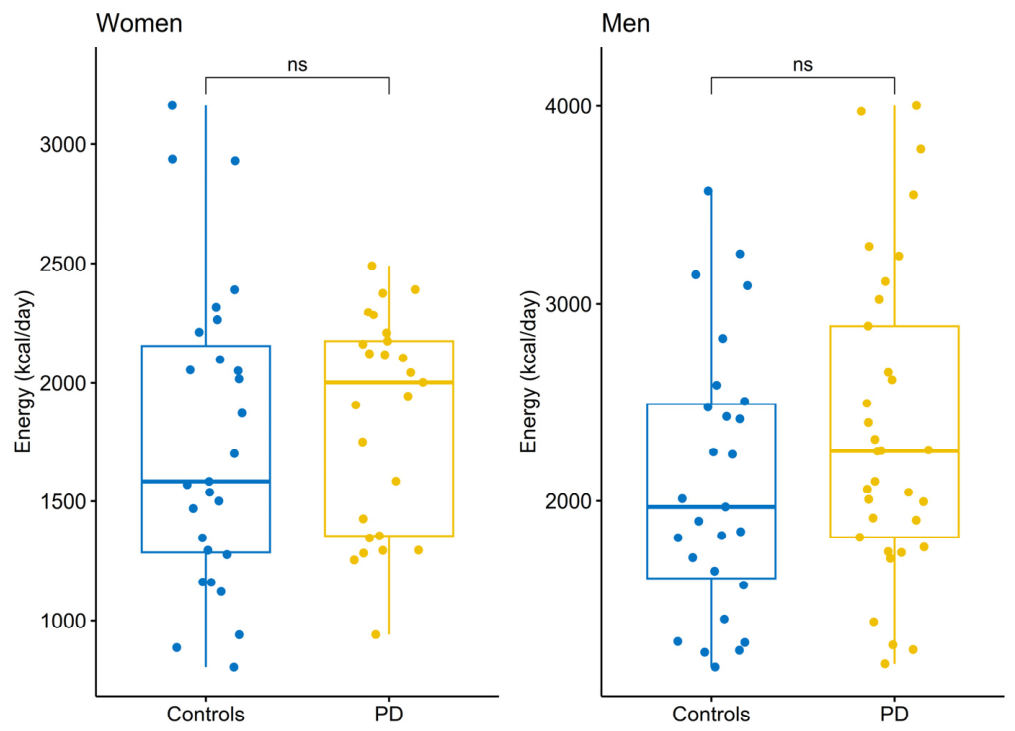
| Energy, kcal (men) | 2363.9 ± 777.1 | 27.3 | 2100.8 ± 677.4 | 25.9 | 0.167 | 2030–2670 | 0.748 |
| Energy, kcal (women) | 2001.8 (1351.5–2192.3) | 34.6 | 1765.9 ± 639.0 | 22.2 | 0.374 | 1690–2170 | 0.708 |
| Protein, E% | 15.9 ± 3.6 | 37.3 | 15.9 ± 2.9 | 51.9 | 0.998 | 15–20 | 0.001 * |
| Fat, E% | 23.5 ± 6.3 | 35.6 | 26.9 ± 7.8 | 38.9 | 0.013 * | 25–35 | 0.082 |
| SFAs, E% | 8.6 (7.5–10.5) | 66.1 | 9.5 ± 3.1 | 64.8 | 0.387 | <10 | 0.004 * |
| MUFAs, E% | 8.8 (6.9–11.5) | 20.3 | 11.1 ± 3.7 | 31.5 | 0.005 * | 10–14 | 0.064 |
| PUFAs, E% | 5.2 ± 1.8 | 30.5 | 5.6 (4.3–7.4) | 31.5 | 0.109 | 6–10 | <0.001 ** |
| Carbohydrates, E% | 50.3 ± 7.0 | 69.5 | 44.3 ± 8.9 | 46.3 | <0.001 ** | 45–60 | 0.019 * |
| Total sugars, E% | 11.3 (8.7–15.5) | 37.3 | 11.7 ± 4.7 | 42.6 | 0.843 | <10 | 0.012 * |
| Protein, g | 78.6 (63.2–94.9) | NA | 71.7 (55.0–98.7) | NA | 0.094 | – | NA |
| Protein, g/kg/day | 1.01 (0.76–1.38) | 52.5 | 0.81 (0.66–1.20) | 33.3 | 0.019 * | 1.0 | 0.319 |
| Animal protein, g | 39.7 ± 15.1 | NA | 40.8 ± 15.8 | NA | 0.700 | NA | |
| Plant protein, g | 41.2 (24.8–54.1) | NA | 28.1 (18.2–47.8) | NA | 0.019 * | – | NA |
| Fat, g | 54.9 ± 19.8 | NA | 52.5 (42.4–66.1) | NA | 0.852 | – | NA |
| SFAs, g | 21.1 (16.0–24.3) | NA | 19.2 (14.8–24.3) | NA | 0.344 | – | NA |
| MUFAs, g | 18.9 (14.7–27.2) | NA | 23.1 ± 9.6 | NA | 0.330 | – | NA |
| PUFAs, g | 11.3 (7.8–15.0) | NA | 11.7 (8.2–15.8) | NA | 0.583 | – | NA |
| Cholesterol, mg | 262.7 (186.0–349.8) | 64.4 | 273.9 (203.8–378.3) | 59.3 | 0.631 | <300 | 0.072 |
| Carbohydrates, g | 261.4 (189.7–333.8) | NA | 196.9 (153.1–271.9) | NA | 0.002 * | – | NA |
| Total sugars, g | 60.3 (37.9–80.2) | NA | 49.9 (38.1–68.6) | NA | 0.131 | – | NA |
| Dietary fiber, g | 20.6 (15.4–27.5) | 35.6 | 16.9 (12.4–23.2) | 22.2 | 0.029 * | 25–35 | 0.021 * |
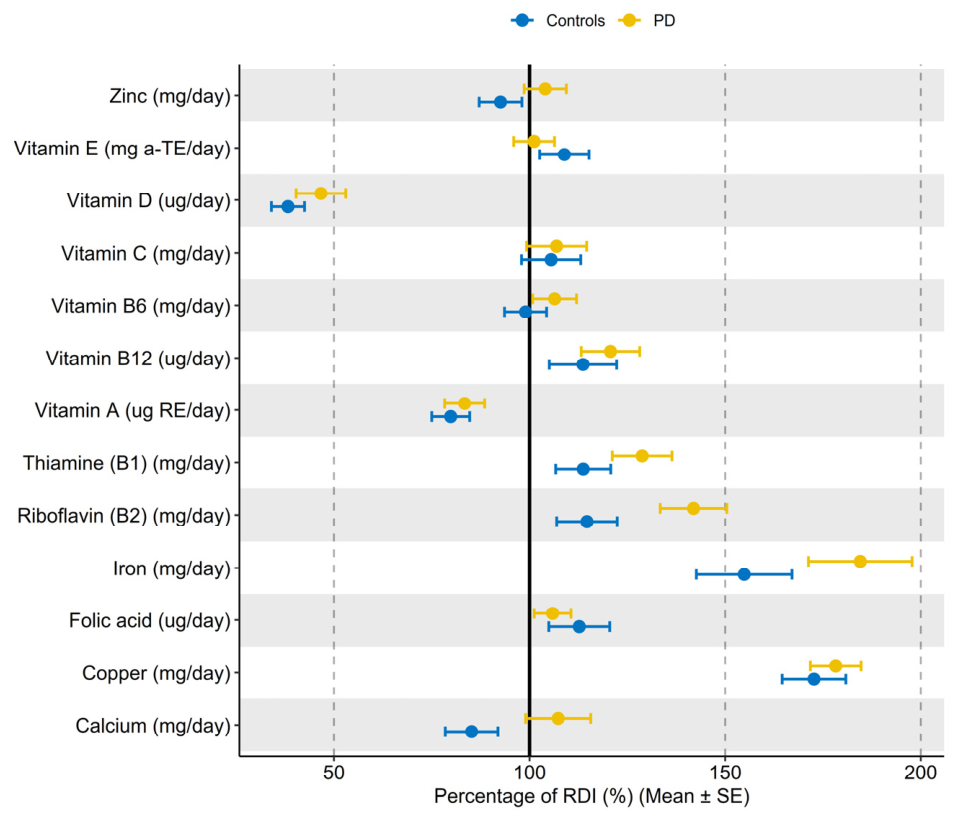
| Calcium, mg | 842.4 (553.0–1094.2) | 45.8 | 650.3 (371.6–1047.7) | 37.0 | 0.055 | 900 | 0.709 |
| Iron, mg | 14.4 (10.1–23.9) | 78.0 | 12.1 (9.2–20.8) | 70.4 | 0.091 | 10 | <0.001 ** |
| Copper, mg | 1.78 ± 0.50 | 98.3 | 1.73 ± 0.60 | 87.0 | 0.595 | 1.0 | <0.001 ** |
| Zinc, mg | 10.0 (8.1–12.3) | 49.2 | 9.3 ± 4.0 | 37.0 | 0.162 | 10 | 0.865 |
| Vitamin A, μg RE | 627.2 (458.1–789.8) | 28.8 | 595.6 (399.8–798.1) | 24.1 | 0.579 | 800 | <0.001 ** |
| Vitamin D, μg | 3.2 (2.0–5.1) | 10.2 | 2.7 (1.9–4.6) | 3.7 | 0.433 | 10 | <0.001 ** |
| Vitamin E, mg α-TE | 12.1 ± 4.8 | 49.2 | 13.1 ± 5.6 | 53.7 | 0.347 | 11 | 0.074 |
| Vitamin B1, mg | 1.39 (1.08–1.67) | 69.5 | 1.14 (0.81–1.86) | 48.1 | 0.131 | 1.1 | <0.001 ** |
| Vitamin B2, mg | 1.67 (1.21–2.14) | 69.5 | 1.26 (0.95–1.97) | 51.9 | 0.013 * | 1.3 | <0.001 ** |
| Folic acid, μg | 202.5 (158.9–234.2) | 52.5 | 198.1 (142.7–289.8) | 48.1 | 0.870 | 200 | 0.731 |
| Vitamin B6, mg | 1.70 ± 0.69 | 54.2 | 1.58 ± 0.63 | 46.3 | 0.341 | 1.4 | 0.001 * |
| Vitamin B12, μg | 3.62 ± 1.72 | 59.3 | 3.50 (2.01–4.40) | 59.3 | 0.403 | 3.0 | 0.008 * |
| Vitamin C, mg | 73.7 (54.9–101.7) | 45.8 | 81.9 (45.2–111.5) | 53.7 | 0.947 | 80 | 0.818 |
Disclaimer/Publisher’s Note: The statements, opinions and data contained in all publications are solely those of the individual author(s) and contributor(s) and not of MDPI and/or the editor(s). MDPI and/or the editor(s) disclaim responsibility for any injury to people or property resulting from any ideas, methods, instructions or products referred to in the content. |
© 2026 by the authors. Licensee MDPI, Basel, Switzerland. This article is an open access article distributed under the terms and conditions of the Creative Commons Attribution (CC BY) license.
Share and Cite
Guk, J.; Kaladytė Lokominienė, R.; Nečiporenko, A.; Bartkevičiūtė, R.; Barzda, A.; Jatužis, D. Dietary Intake of Patients with Parkinson’s Disease in Lithuania. Nutrients 2026, 18, 1302. https://doi.org/10.3390/nu18081302
Guk J, Kaladytė Lokominienė R, Nečiporenko A, Bartkevičiūtė R, Barzda A, Jatužis D. Dietary Intake of Patients with Parkinson’s Disease in Lithuania. Nutrients. 2026; 18(8):1302. https://doi.org/10.3390/nu18081302
Chicago/Turabian StyleGuk, Jevgenija, Rūta Kaladytė Lokominienė, Anatolij Nečiporenko, Roma Bartkevičiūtė, Albertas Barzda, and Dalius Jatužis. 2026. "Dietary Intake of Patients with Parkinson’s Disease in Lithuania" Nutrients 18, no. 8: 1302. https://doi.org/10.3390/nu18081302
APA StyleGuk, J., Kaladytė Lokominienė, R., Nečiporenko, A., Bartkevičiūtė, R., Barzda, A., & Jatužis, D. (2026). Dietary Intake of Patients with Parkinson’s Disease in Lithuania. Nutrients, 18(8), 1302. https://doi.org/10.3390/nu18081302