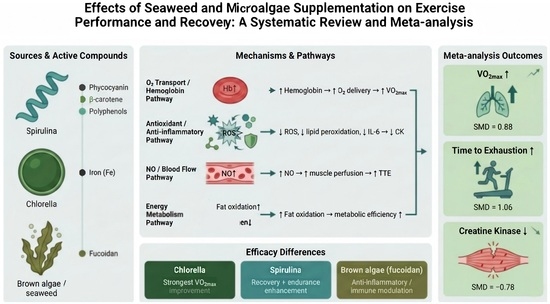
The Effects of Seaweed and Microalgae Supplementation on Exercise Performance and Recovery: A Systematic Review and Meta-Analysis

 , ,
, ,
Abstract
1. Introduction
2. Methods
2.1. Study Protocol Registration
2.2. Literature Search Strategy
2.3. Inclusion and Exclusion Criteria (PICOS)
2.4. Data Extraction and Quality Assessment
2.5. Data Synthesis and Statistical Analysis
2.6. Sensitivity Analysis and Publication Bias Assessment
3. Results
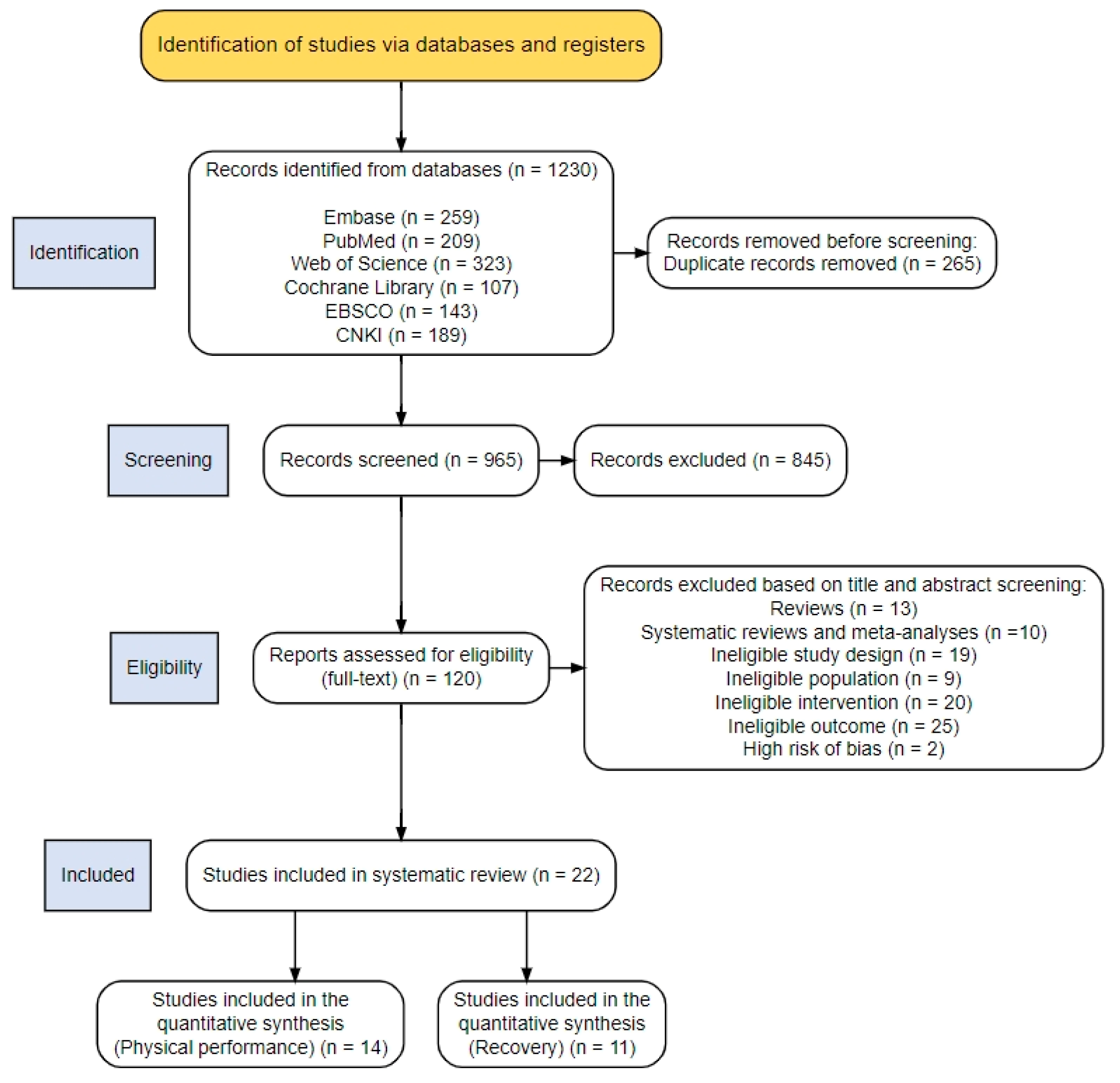
3.1. Study Selection
3.2. Characteristics of Included Studies
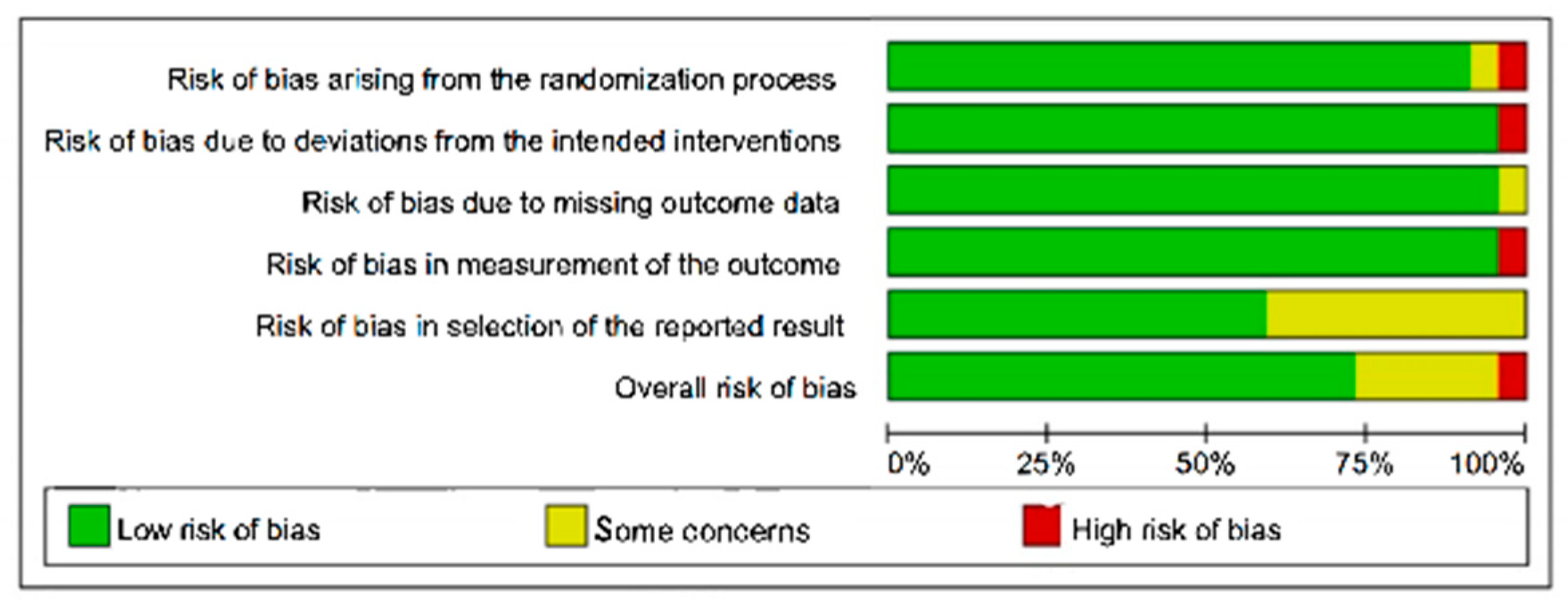
3.3. Risk of Bias Assessment
3.4. Overall Effects on Primary Outcomes
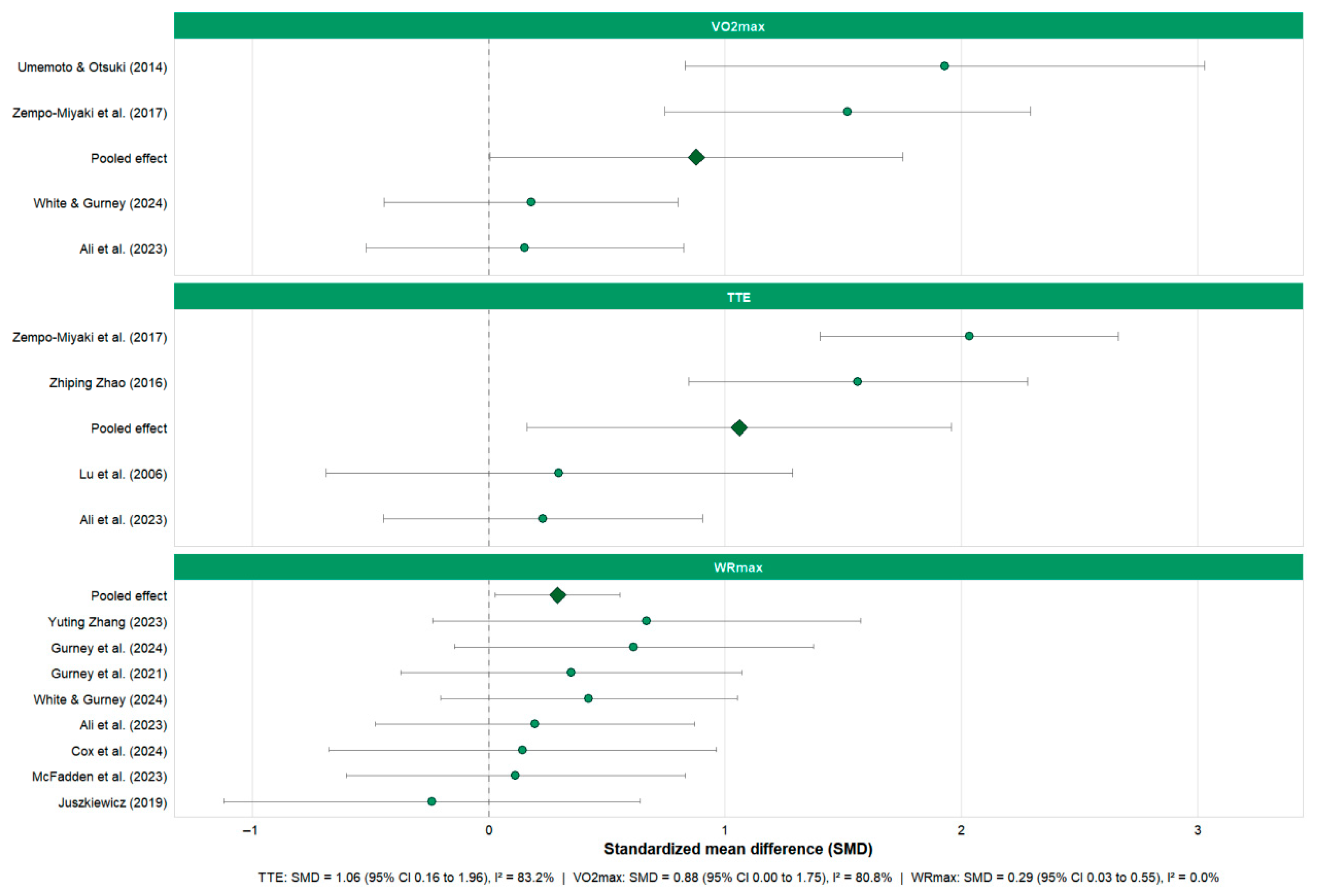
3.4.1. Aerobic Performance Indicators (VO2max, TTE, WRmax, TT)
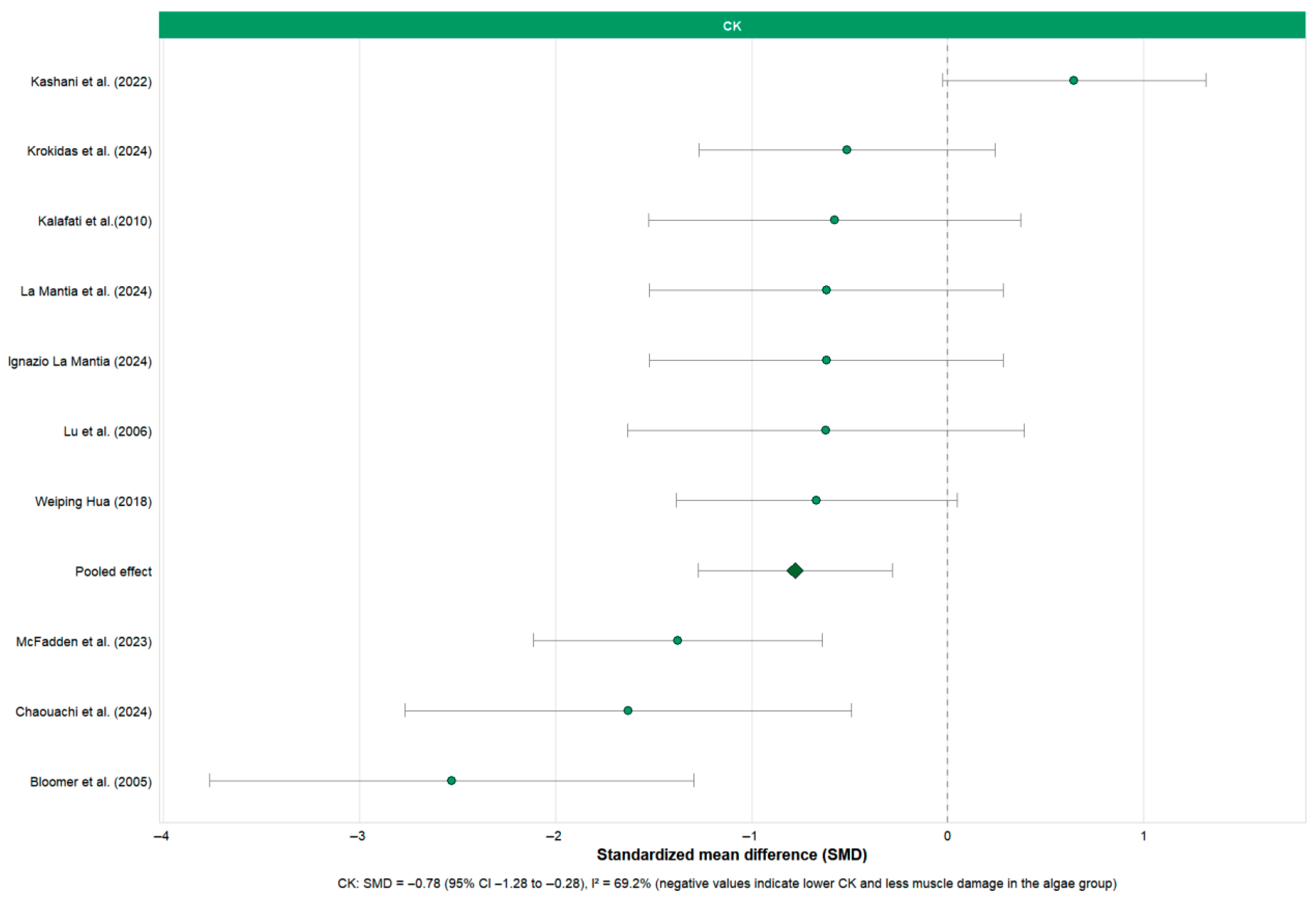
3.4.2. Post-Exercise Recovery and Muscle Damage Indicators (CK, LDH)
3.4.3. Oxidative Stress Indicators
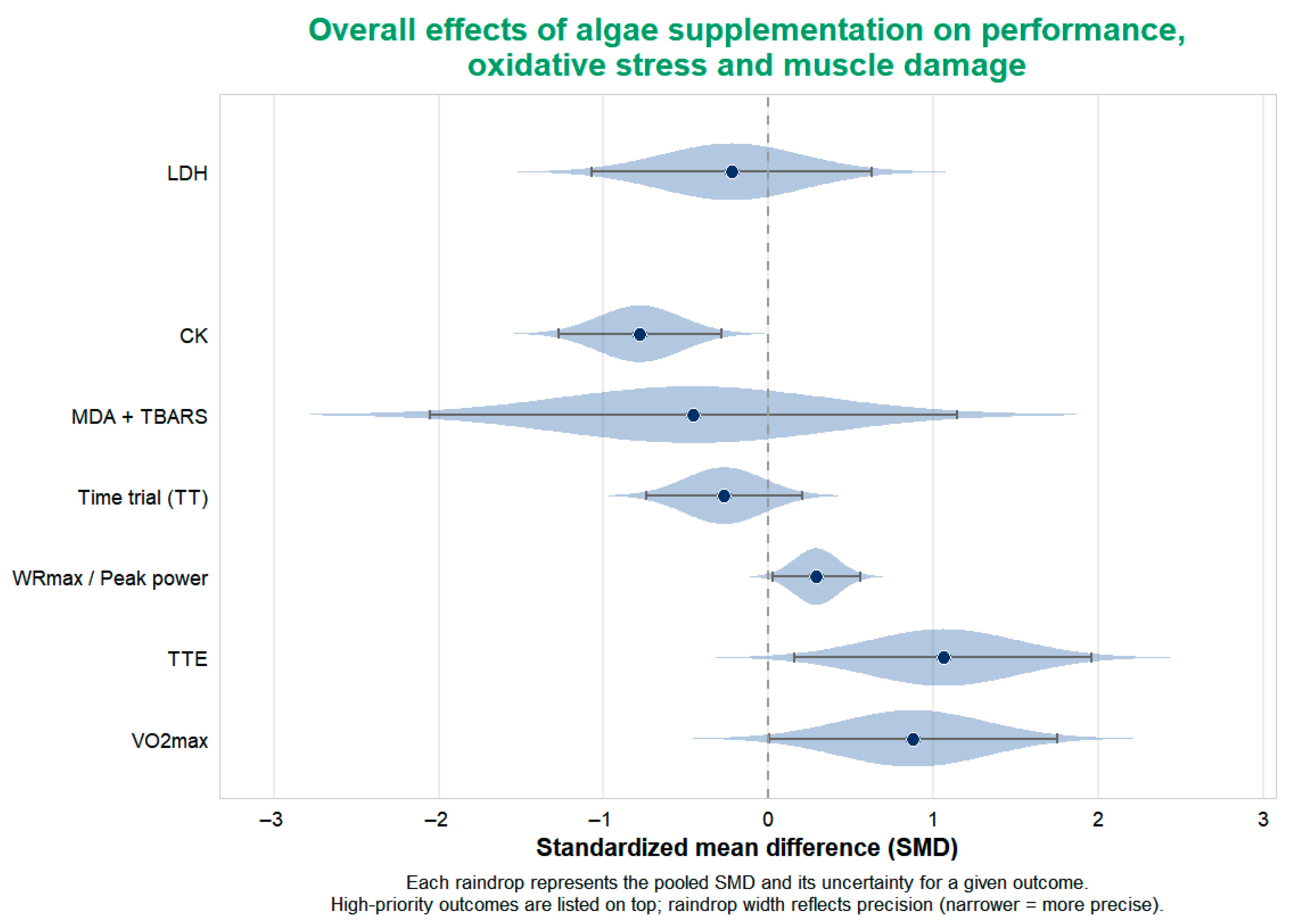
3.4.4. Overall Distribution in Rainforest Plot (Figure 5)
- (1)
- The summary effect points for VO2max and TTE are positioned to the right of the zero line, with a more pronounced shift for TTE.
- (2)
- WRmax also leans to the right, but with a smaller effect value.
- (3)
- The effect point for CK is on the left side of the zero line, indicating an overall decreasing trend for this muscle damage marker.
3.5. Subgroup Analyses
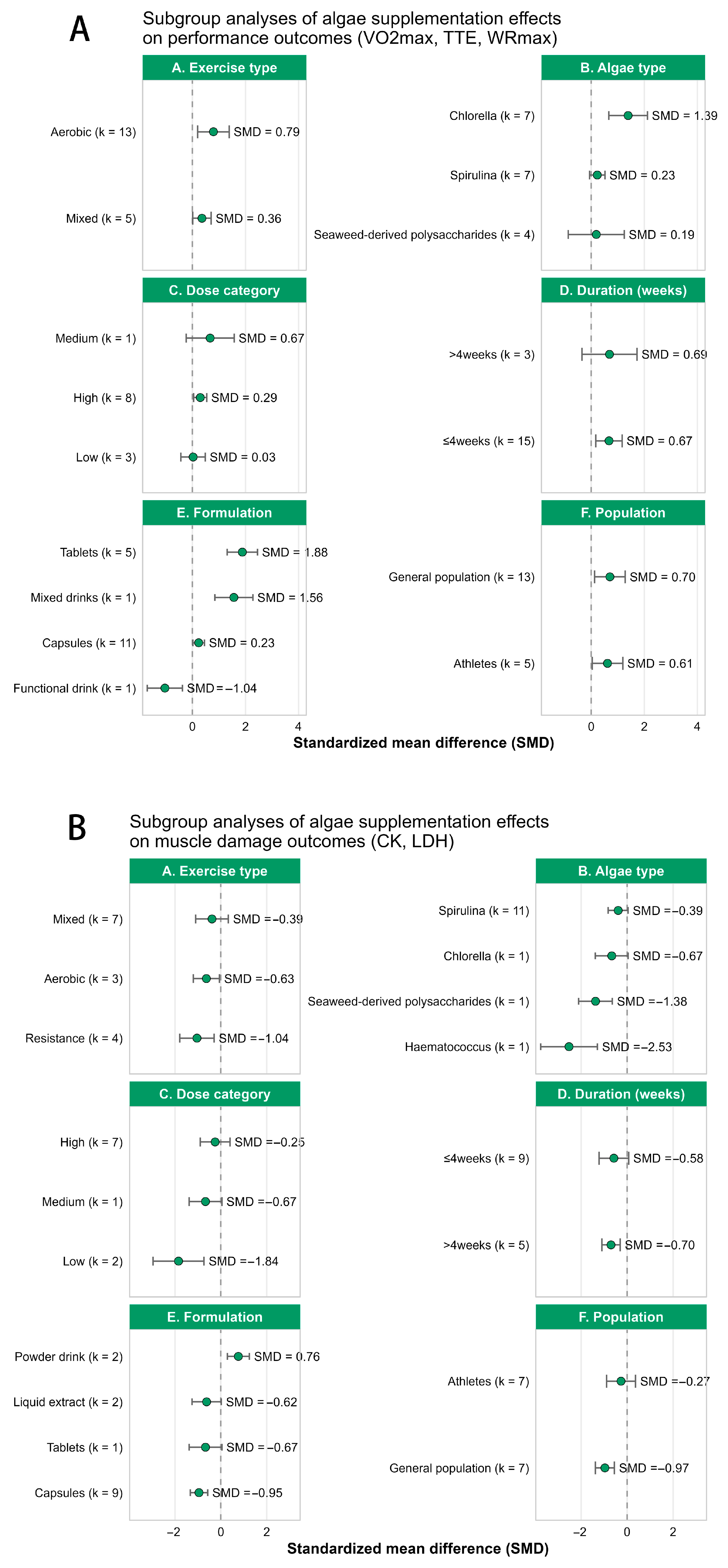
3.5.1. Subgroup Analysis for Performance Outcomes
3.5.2. Subgroup Analysis for Muscle Damage and Recovery Outcomes
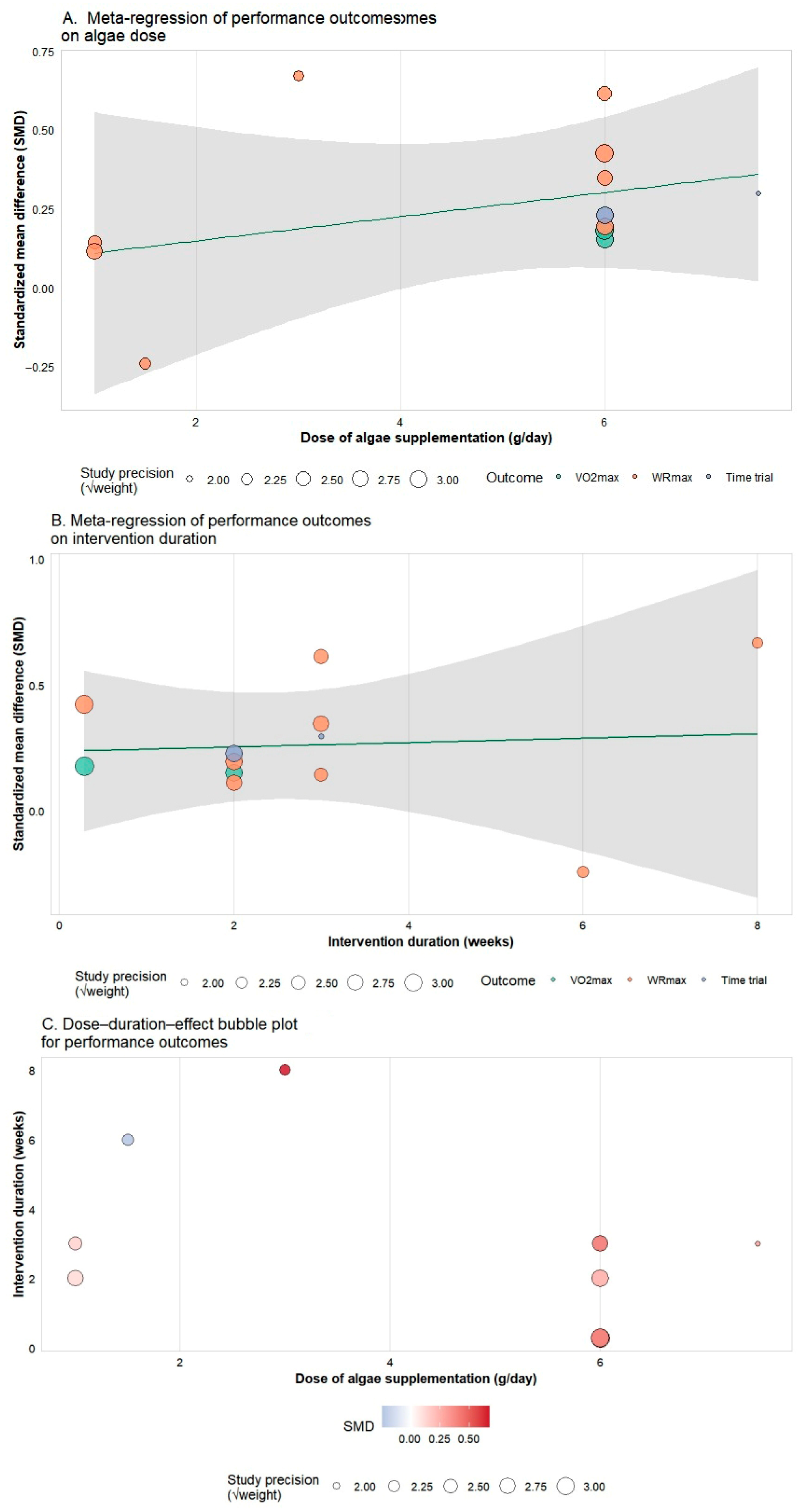
3.5.3. Meta-Regression and Dose–Duration Effects
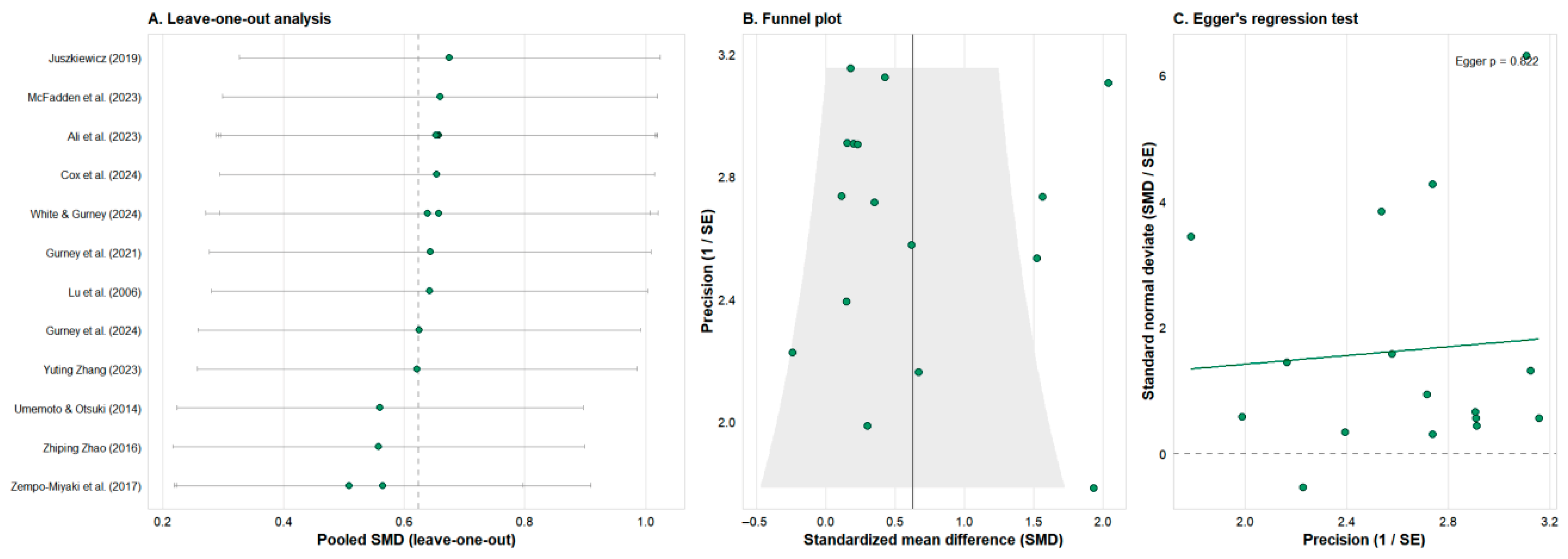
3.6. Sensitivity Analysis and Publication Bias
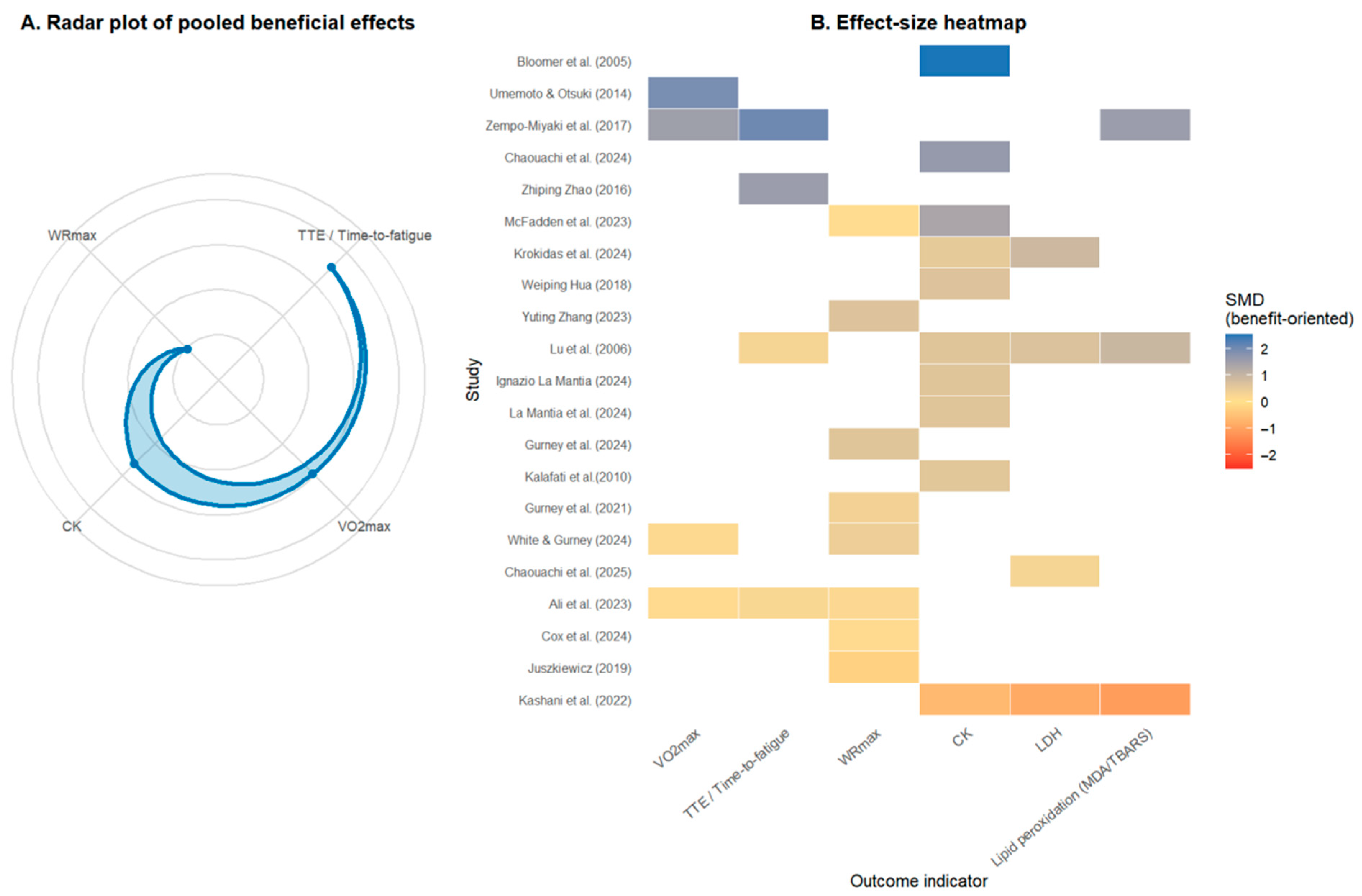
3.7. Multi-Indicator Integrated Visualization Analysis
4. Discussion
4.1. Main Findings
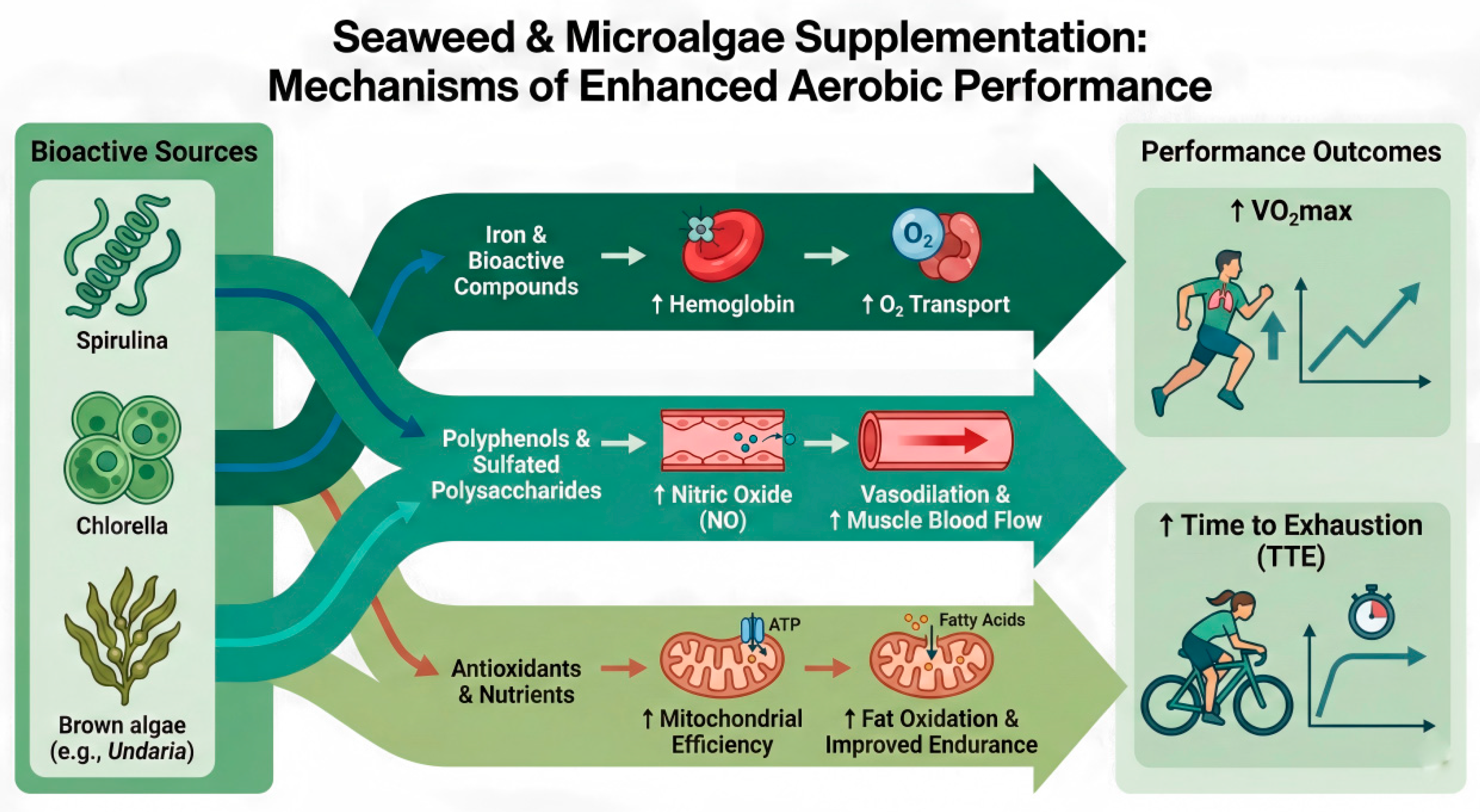
4.2. Mechanisms and Application of Aerobic Performance Improvement
4.2.1. Antioxidant Effects Delaying Fatigue
4.2.2. Promotion of Nitric Oxide Release and Blood Flow/Oxygen Supply
4.2.3. Increasing Hemoglobin Levels and Oxygen-Carrying Capacity
4.2.4. Improving Substrate Metabolism and Energy Utilization
4.3. Significance and Mechanisms of Muscle Damage and Recovery
4.3.1. Reducing Oxidative and Inflammatory Damage
4.3.2. Promoting Recovery and Maintaining Exercise Capacity
4.4. Differences Among Algae Preparations and Intervention Protocols
4.4.1. Conceptual Heterogeneity of Algae Supplementation and Its Implications for Interpretation
4.4.2. Biological Profiles and Variations in Supplementation Strategies
4.5. Insights from Subgroup Analyses: Moderating Factors and Heterogeneity
4.6. Study Limitations and Future Directions
5. Conclusions
Supplementary Materials
Author Contributions
Funding
Institutional Review Board Statement
Informed Consent Statement
Data Availability Statement
Acknowledgments
Conflicts of Interest
Abbreviations
| VO2max | maximal oxygen uptake |
| TTE | time to exhaustion |
| WRmax | maximal workload/peak power output |
| TT | time trial |
| CK | creatine kinase |
| LDH | lactate dehydrogenase |
| CRP | C-reactive protein |
| IL-6 | interleukin-6 |
| TNF-α | tumor necrosis factor-alpha |
| MDA | malondialdehyde |
| SOD | superoxide dismutase |
| GPx | glutathione peroxidase |
| CAT | catalase |
| TAC | total antioxidant capacity |
| GSH | glutathione |
| TBARS | thiobarbituric acid reactive substances |
| AOPP | advanced oxidation protein products |
| ROS | reactive oxygen species |
| NO | nitric oxide |
| RCT | randomized controlled trial |
| PRISMA | Preferred Reporting Items for Systematic Reviews and Meta-Analyses |
| PROSPERO | International Prospective Register of Systematic Reviews |
| RoB 2 | Risk of Bias 2 tool |
| SMD | standardized mean difference |
| CI | confidence interval |
References
- Sandgruber, F.; Gielsdorf, A.; Schenz, B.; Müller, S.M.; Schwerdtle, T.; Lorkowski, S.; Griehl, C.; Dawczynski, C. Variability in Macro- and Micronutrients of 15 Rarely Researched Microalgae. Mar. Drugs 2023, 21, 355. [Google Scholar] [CrossRef]
- Čmiková, N.; Kowalczewski, P.Ł.; Kmiecik, D.; Tomczak, A.; Drożdżyńska, A.; Ślachciński, M.; Królak, J.; Kačániová, M. Characterization of Selected Microalgae Species as Potential Sources of Nutrients and Antioxidants. Foods 2024, 13, 2160. [Google Scholar] [CrossRef]
- Tibbetts, S.M.; Milley, J.E.; Lall, S.P. Nutritional quality of some wild and cultivated seaweeds: Nutrient composition, total phenolic content and in vitro digestibility. J. Appl. Phycol. 2016, 28, 3575–3585. [Google Scholar] [CrossRef]
- Maghimaa, M.; Sagadevan, S.; Fatimah, I.; Lett, J.A.; Garg, S. Exploring algal diversity for enhanced nutrition: Implications for human health and sustainability. Algal Res. 2025, 86, 103907. [Google Scholar] [CrossRef]
- Gao, F.; Guo, W.; Zeng, M.; Feng, Y.; Feng, G. Effect of microalgae as iron supplements on iron-deficiency anemia in rats. Food Funct. 2019, 10, 723–732. [Google Scholar] [CrossRef]
- Lithi, U.J.; Laird, D.W.; Ghassemifar, R.; Wilton, S.D.; Moheimani, N.R. Microalgae as a source of bioavailable heme. Algal Res. 2024, 77, 103363. [Google Scholar] [CrossRef]
- Kang, K.; Park, Y.; Hwang, H.J.; Kim, S.H.; Lee, J.G.; Shin, H.-C. Antioxidative properties of brown algae polyphenolics and their perspectives as chemopreventive agents against vascular risk factors. Arch. Pharmacal Res. 2003, 26, 286–293. [Google Scholar] [CrossRef]
- Gonçalves, A.C.; Gaspar, D.; Flores-Félix, J.D.; Falcão, A.; Alves, G.; Silva, L.R. Effects of Functional Phenolics Dietary Supplementation on Athletes’ Performance and Recovery: A Review. Int. J. Mol. Sci. 2022, 23, 4652. [Google Scholar] [CrossRef]
- Vignaud, J.; Loiseau, C.; Hérault, J.; Mayer, C.; Côme, M.; Martin, I.; Ulmann, L. Microalgae Produce Antioxidant Molecules with Potential Preventive Effects on Mitochondrial Functions and Skeletal Muscular Oxidative Stress. Antioxidants 2023, 12, 1050. [Google Scholar] [CrossRef]
- Gammone, M.A.; Gemello, E.; Riccioni, G.; D’Orazio, N. Marine bioactives and potential application in sports. Mar. Drugs 2014, 12, 2357–2382. [Google Scholar] [CrossRef]
- Arzhang, P.; Arghavan, H.; Kazeminejad, S.; Mohammadi, F.; Baniasadi, M.M.; Bavani, N.G.; Darvishi, H.; Azadbakht, L. The effect of algae supplementation on lipid profile and blood pressure in adults: A systematic review and meta-analysis of randomized controlled trials. J. Funct. Foods 2024, 122, 106461. [Google Scholar] [CrossRef]
- Wang, C.; Min, R.; Zhou, Q.; Qi, Y.; Ma, Y.; Zhang, X. Multiple health outcomes associated with algae and its extracts supplementation: An umbrella review of systematic reviews and meta-analyses. Phytother. Res. 2024, 38, 5162–5183. [Google Scholar] [CrossRef]
- Rezaei, S.; Doaei, S.; Tabrizi, R.; Ghobadi, S.; Zare, M.; Gholamalizadeh, M.; Mazloom, Z. The effects of macro-algae supplementation on serum lipid, glycaemic control and anthropometric indices: A systematic review and meta-analysis of clinical trials. Endocrinol. Diabetes Metab. 2023, 6, e439. [Google Scholar] [CrossRef]
- Johnson, M.; Hassinger, L.; Davis, J.; Devor, S.T.; DiSilvestro, R.A. A randomized, double blind, placebo controlled study of spirulina supplementation on indices of mental and physical fatigue in men. Int. J. Food Sci. Nutr. 2016, 67, 203–206. [Google Scholar] [CrossRef]
- Ousmer, L.; Houali, K.; Madani, Z.; Amrane, A.; Kelai, E.; Adouane, M.; Ould Ouali, K.; Oubellil, Y.a.; M’Hamedi, A.; Kadri, N. Characterization and in vitro assessment of the antioxidant and anti-inflammatory activities of water-soluble polysaccharides isolated from the brown algae Cystoseira amentacea from the Mediterranean coasts. Algal Res. 2025, 91, 104215. [Google Scholar] [CrossRef]
- Kobayashi, M.; Kakizono, T.; Nishio, N.; Nagai, S.; Kurimura, Y.; Tsuji, Y. Antioxidant role of astaxanthin in the green alga Haematococcus pluvialis. Appl. Microbiol. Biotechnol. 1997, 48, 351–356. [Google Scholar] [CrossRef]
- Hasani, M.; Arabpour, Z.; Hasani, M.; Saeedi, A.; Khodabakhshi, A. Effect of astaxanthin on physical activity factors, lipid profile, inflammatory markers, and antioxidants indices in athletic men: A systematic review and meta-analysis. J. Funct. Foods 2024, 122, 106477. [Google Scholar] [CrossRef]
- Page, M.J.; McKenzie, J.E.; Bossuyt, P.M.; Boutron, I.; Hoffmann, T.C.; Mulrow, C.D.; Shamseer, L.; Tetzlaff, J.M.; Akl, E.A.; Brennan, S.E.; et al. The PRISMA 2020 statement: An updated guideline for reporting systematic reviews. Int. J. Surg. 2021, 88, 105906. [Google Scholar] [CrossRef]
- Tugwell, P.; Tovey, D. PRISMA 2020. J. Clin. Epidemiol. 2021, 134, A5–A6. [Google Scholar] [CrossRef]
- Garritty, C.; Gartlehner, G.; Nussbaumer-Streit, B.; King, V.J.; Hamel, C.; Kamel, C.; Affengruber, L.; Stevens, A. Cochrane Rapid Reviews Methods Group offers evidence-informed guidance to conduct rapid reviews. J. Clin. Epidemiol. 2021, 130, 13–22. [Google Scholar] [CrossRef]
- You, T.; Peng, K.; Zhao, K.; Liu, S.; Sun, F.; Yu, B.; Dou, Y.; Tang, J.; Jiang, W.; Liu, C. Effects of astaxanthin supplementation on exercise-induced oxidative stress: A systematic review and meta-analysis of randomized controlled trials. 3 Biotech 2026, 16, 98. [Google Scholar] [CrossRef]
- Du, H.; Liu, S.; Li, M.; Zhao, K.; Jiang, W.; You, T.; Wang, Z.; Zou, D.; Shu, J.; Liu, C. Effects of Nutritional Supplements on Explosive Lower Limb Performance in Volleyball Players: A Systematic Review and Network Meta-Analysis. Nutrients 2025, 17, 3702. [Google Scholar] [CrossRef]
- Pham, B.; Klassen, T.P.; Lawson, M.L.; Moher, D. Language of publication restrictions in systematic reviews gave different results depending on whether the intervention was conventional or complementary. J. Clin. Epidemiol. 2005, 58, 769–776. [Google Scholar] [CrossRef]
- Li, J.; Liu, S.; Wang, S.; Wu, Y.; Yang, L.; Luo, Q.; Li, Z.; Yang, S.; Zhao, K.; Liu, C. Effects of Nutritional Supplements on Endurance Performance and Subjective Perception in Athletes Exercising in the Heat: A Systematic Review and Network Meta-Analysis. Nutrients 2025, 17, 2141. [Google Scholar] [CrossRef]
- Yan, Y.; Peng, C.; Zhang, H.; Tao, B.; Liu, S.; Li, S.; Mi, J.; Liu, C. Effects of High-Intensity Interval Training on Body Composition, Metabolic Health, and Cardiorespiratory Fitness in Overweight or Obese Children and Adolescents: A Systematic Review and Meta-Analysis. Metabolites 2026, 16, 232. [Google Scholar] [CrossRef]
- Gong, L.; Chen, C.; Jia, Y.; Zheng, Z.; Dong, X.; Hou, X. Effects of exercise on body composition, physical function, and metabolic health in older adults with sarcopenic obesity: A systematic review and meta-analysis. Maturitas 2026, 209, 108934. [Google Scholar] [CrossRef]
- Sterne, J.A.C.; Savović, J.; Page, M.J.; Elbers, R.G.; Blencowe, N.S.; Boutron, I.; Cates, C.J.; Cheng, H.Y.; Corbett, M.S.; Eldridge, S.M.; et al. RoB 2: A revised tool for assessing risk of bias in randomised trials. BMJ 2019, 366, l4898. [Google Scholar] [CrossRef]
- DerSimonian, R.; Laird, N. Meta-analysis in clinical trials. Control Clin. Trials 1986, 7, 177–188. [Google Scholar] [CrossRef]
- Higgins, J.P.; Thompson, S.G.; Deeks, J.J.; Altman, D.G. Measuring inconsistency in meta-analyses. BMJ 2003, 327, 557–560. [Google Scholar] [CrossRef]
- Egger, M.; Davey Smith, G.; Schneider, M.; Minder, C. Bias in meta-analysis detected by a simple, graphical test. BMJ 1997, 315, 629–634. [Google Scholar] [CrossRef]
- Bloomer, R.; Fry, A.; Schilling, B.; Chiu, L.; Hori, N.; Weiss, L. Astaxanthin supplementation does not attenuate muscle injury following eccentric exercise in resistance-trained men. Int. J. Sport Nutr. Exerc. Metab. 2005, 15, 401–412. [Google Scholar] [CrossRef]
- Lu, H.K.; Hsieh, C.C.; Hsu, J.J.; Yang, Y.K.; Chou, H.N. Preventive effects of Spirulina platensis on skeletal muscle damage under exercise-induced oxidative stress. Eur. J. Appl. Physiol. 2006, 98, 220–226. [Google Scholar] [CrossRef]
- Kalafati, M.; Jamurtas, A.; Nikolaidis, M.; Paschalis, V.; Theodorou, A.; Sakellariou, G.; Koutedakis, Y.; Kouretas, D. Ergogenic and Antioxidant Effects of Spirulina Supplementation in Humans. Med. Sci. Sports Exerc. 2010, 42, 142–151. [Google Scholar] [CrossRef]
- Oh, J.; Shin, Y.; Yoon, J.; Kim, S.; Shin, H.; Hwang, H. Effect of Supplementation With Ecklonia cava Polyphenol on Endurance Performance of College Students. Int. J. Sport Nutr. Exerc. Metab. 2010, 20, 72–79. [Google Scholar] [CrossRef]
- Umemoto, S.; Otsuki, T. Chlorella-derived multicomponent supplementation increases aerobic endurance capacity in young individuals. J. Clin. Biochem. Nutr. 2014, 55, 143–146. [Google Scholar] [CrossRef]
- Zempo-Miyaki, A.; Maeda, S.; Otsuki, T. Effect of Chlorella-derived multicomponent supplementation on maximal oxygen uptake and serum vitamin B2 concentration in young men. J. Clin. Biochem. Nutr. 2017, 61, 135–139. [Google Scholar] [CrossRef][Green Version]
- Chidley, C.; Davison, G. The effect of Chlorella pyrenoidosa supplementation on immune responses to 2 days of intensified training. Eur. J. Nutr. 2018, 57, 2529–2536. [Google Scholar] [CrossRef]
- Reid, S.N.S.; Ryu, J.-K.; Kim, Y.; Jeon, B.H. The Effects of Fermented Laminaria japonica on Short-Term Working Memory and Physical Fitness in the Elderly. Evid.-Based Complement. Altern. Med. eCAM 2018, 2018, 8109621. [Google Scholar] [CrossRef]
- Juszkiewicz, A.; Basta, P.; Trzeciak, J.; Petriczko, E.; Cieslicka, M.; Skarpanska-Stejnborn, A. Effect of spirulina supplementation on selected components of Th1/Th2 balance in rowers. Food Agric. Immunol. 2019, 30, 178–189. [Google Scholar] [CrossRef]
- Gurney, T.; Spendiff, O. Spirulina supplementation improves oxygen uptake in arm cycling exercise. Eur. J. Appl. Physiol. 2020, 120, 2657–2664. [Google Scholar] [CrossRef]
- Chaouachi, M.; Gautier, S.; Carnot, Y.; Bideau, N.; Guillemot, P.; Moison, Y.; Collin, T.; Vincent, S.; Groussard, C. Spirulina platensis Provides a Small Advantage in Vertical Jump and Sprint Performance But Does Not Improve Elite Rugby Players’ Body Composition. J. Diet. Suppl. 2021, 18, 682–697. [Google Scholar] [CrossRef]
- Kashani, A.; Keshavarz, S.; Jafari-Vayghan, H.; Azam, K.; Hozoori, M.; Alinavaz, M.; Djafarian, K. Preventive Effects of Spirulina platensis on Exercise-Induced Muscle Damage, Oxidative Stress and Inflammation in Taekwondo Athletes: A Randomized Cross-Over Trial. Pharm. Sci. 2022, 28, 589–595. [Google Scholar] [CrossRef]
- Chaouachi, M.; Gautier, S.; Carnot, Y.; Guillemot, P.; Pincemail, J.; Moison, Y.; Collin, T.; Groussard, C.; Vincent, S. Spirulina supplementation prevents exercise-induced lipid peroxidation, inflammation and skeletal muscle damage in elite rugby players. J. Hum. Nutr. Diet. Off. J. Br. Diet. Assoc. 2022, 35, 1151–1163. [Google Scholar] [CrossRef]
- Cox, A.; Speer, H.; Radcliffe, C.; Masocha, K.; Ramsey, R.; West, N.; Pyne, D. Immunomodulatory effects of fucoidan in recreationally active adult males undertaking 3-weeks of intensified training. J. Sports Sci. 2023, 41, 1875–1882. [Google Scholar] [CrossRef]
- McFadden, B.; Vincenty, C.; Chandler, A.; Cintineo, H.; Lints, B.; Mastrofini, G.; Arent, S. Effects of fucoidan supplementation on inflammatory and immune response after high-intensity exercise. J. Int. Soc. Sports Nutr. 2023, 20, 2224751. [Google Scholar] [CrossRef]
- Ali, Y.; Aubeeluck, R.; Gurney, T. Fourteen-Days Spirulina Supplementation Increases Hemoglobin, but Does Not Provide Ergogenic Benefit in Recreationally Active Cyclists: A Double-Blinded Randomized Crossover Trial. J. Diet. Suppl. 2024, 21, 261–280. [Google Scholar] [CrossRef]
- Gurney, T.; Brouner, J.; Spendiff, O. The Efficacy of Chlorella Supplementation on Multiple Indices of Cycling Performance. J. Diet. Suppl. 2024, 21, 99–115. [Google Scholar] [CrossRef]
- Krokidas, A.; Gakis, A.; Aktypi, O.; Antonopoulou, S.; Nomikos, T. Effect of Spirulina nigrita® Supplementation on Indices of Exercise-Induced Muscle Damage after Eccentric Protocol of Upper Limbs in Apparently Healthy Volunteers. Nutrients 2024, 16, 1651. [Google Scholar] [CrossRef]
- La Mantia, I.; Maniaci, A.; Scibilia, G.; Scollo, P. Effects of a Dietary Microalgae (Arthrospira platensis) Supplement on Stress, Well-Being, and Performance in Water Polo Players: A Clinical Case Series. Nutrients 2024, 16, 2421. [Google Scholar] [CrossRef]
- Hua, W. Effects of Chlorella vulgaris supplementation on resistance exercise-induced muscle damage. Genom. Appl. Biol. 2018, 37, 5108–5113. [Google Scholar] [CrossRef]
- Zhao, Z. Effects of algal peptides on exercise endurance in athletes. Food Res. Dev. 2016, 37, 169–172. [Google Scholar]
- Zhang, Y. Effects of Spirulina Supplementation on Exercise Performance, Blood Biochemical Parameters, and Gut Microbiota in Football Players. Master’s Thesis, Ningbo University, Ningbo, China, 2023. [Google Scholar]
- White, H.; Gurney, T. Chlorella Supplementation Reduces Blood Lactate Concentration and Increases O2 Pulse during Submaximal and Maximal Cycling in Young Healthy Adults. Nutrients 2024, 16, 697. [Google Scholar] [CrossRef] [PubMed]
- Gurney, T.; Brouner, J.; Spendiff, O. Twenty-one days of spirulina supplementation lowers heart rate during submaximal cycling and augments power output during repeated sprints in trained cyclists. Appl. Physiol. Nutr. Metab. 2022, 47, 18–26. [Google Scholar] [CrossRef] [PubMed]
- Gurney, T.; Spendiff, O. Algae Supplementation for Exercise Performance: Current Perspectives and Future Directions for Spirulina and Chlorella. Front. Nutr. 2022, 9, 865741. [Google Scholar] [CrossRef]
- de Quirós, A.R.-B.; Frecha-Ferreiro, S.; Vidal-Pérez, A.M.; López-Hernández, J. Antioxidant compounds in edible brown seaweeds. Eur. Food Res. Technol. 2010, 231, 495–498. [Google Scholar] [CrossRef]
- Kang, H.S.; Chung, H.Y.; Kim, J.Y.; Son, B.W.; Jung, H.A.; Choi, J.S. Inhibitory phlorotannins from the edible brown algaecklonia stolonifera on total reactive oxygen species (ROS) generation. Arch. Pharmacal Res. 2004, 27, 194–198. [Google Scholar] [CrossRef]
- Wu, Q.; Liu, L.; Miron, A.; Klímová, B.; Wan, D.; Kuča, K. The antioxidant, immunomodulatory, and anti-inflammatory activities of Spirulina: An overview. Arch. Toxicol. 2016, 90, 1817–1840. [Google Scholar] [CrossRef]
- Villalpando, D.M.; Verdasco-Martín, C.M.; Plaza, I.; Gómez-Rivas, J.; de Bethencourt, F.R.; Villarroel, M.; García, J.L.; Otero, C.; Ferrer, M. Beneficial Effects of Spirulina Aqueous Extract on Vasodilator Function of Arteries from Hypertensive Rats. Int. J. Vasc. Med. 2020, 2020, 6657077. [Google Scholar] [CrossRef]
- Hayashi, O.; Ono, S.; Ishii, K.; Shi, Y.; Hirahashi, T.; Katoh, T. Enhancement of proliferation and differentiation in bone marrow hematopoietic cells by Spirulina (Arthrospira) platensis in mice. J. Appl. Phycol. 2006, 18, 47–56. [Google Scholar] [CrossRef]
- Aoi, W.; Naito, Y.; Takanami, Y.; Kawai, Y.; Sakuma, K.; Ichikawa, H.; Yoshida, N.; Yoshikawa, T. Oxidative stress and delayed-onset muscle damage after exercise. Free Radic. Biol. Med. 2004, 37, 480–487. [Google Scholar] [CrossRef]
- Ghallab, D.S.; Ibrahim, R.S.; Mohyeldin, M.M.; Shawky, E. Marine algae: A treasure trove of bioactive anti-inflammatory compounds. Mar. Pollut. Bull. 2024, 199, 116023. [Google Scholar] [CrossRef] [PubMed]
- Mousavi, S.; Yegdaneh, A.; Shirani, M.; Feizi, A.; Ghanadian, M. Spirulina supplementation and its effects on inflammation and oxidative stress: A systematic review and Meta-analysis on randomized clinical trials. J. Funct. Foods 2025, 131, 106945. [Google Scholar] [CrossRef]





| Author (Year) | Country/Region | Population | Sample Size (Intervention/Control) | Age | Gender (% Male) | Exercise Type | Intervention (Dose/Duration) | Physical Performance (TTE, VO2max) | Recovery (e.g., CK, LDH, CRP, IL-6, RPE, DOMS) | Formulation | Result |
|---|---|---|---|---|---|---|---|---|---|---|---|
| Bloomer (2005) [31] | USA | Resistance-trained healthy adults | 10/10 | 25.1 ± 1.6 | 100.0% | Eccentric knee extensions (10 × 10 85% eccentric 1-RM) | BioAstin (Haematococcus pluvialis extract) ≈ 4 mg astaxanthin/day; 3 weeks pre + 4 days post | 1-RM concentric strength (NS) | CK(NS); muscle soreness (VAS)(NS) | Capsules | No benefit on soreness, CK, 1-RM, or MIF; MDF lower vs. placebo at 10–72 h |
| Lu (2006) [32] | Taiwan, China | Healthy college students | 8/8 | 20.7 ± 0.8 | 37.5% | Bruce incremental treadmill to exhaustion | Spirulina 7.5 g/day, 3 weeks | TTE ↑ | MDA ↓; LDH show significant time × treatment interaction; CK: no significant change | Capsules | Spirulina improved antioxidant profile and extended TTE within group; mixed effects on damage markers; between-group ANCOVA favored Spirulina for GPx/LDH; CK non-significant. |
| Kalafati (2010) [33] | Greece | Healthy moderately trained men | 9 (cross-over) | 23.3 ± 1.7 | 100.0% | 2 h treadmill run 70–75% VO2max + 95% VO2max to exhaustion | Spirulina 6 g/day for 4 weeks | TTE ↑ (p = 0.048); VO2max unchanged | GSH ↑ at rest & 24 h post; TBARS ↑ only in placebo; CK ↑ after exercise both groups; | Capsules | Spirulina improved endurance and fat oxidation; attenuated lipid peroxidation; no change in CK or TAC |
| Oh (2010) [34] | South Korea | Healthy male college students | 20 (cross-over) | 20.9 ± 2.0 | 100.0% | 30 min submax treadmill + incremental to exhaustion | 40 mg ECP (Ecklonia cava polyphenol) in 100 mL drink; acute pre-exercise | VO2max (NS); TTE ↑ (p < 0.05) | Lactate ↓ (–8.3%, NS) | Functional drink | ECP increased endurance time and glucose maintenance with a trend toward lower lactate; mechanisms speculative (antioxidant & vasodilatory effects). |
| Umemoto & Otsuki (2014) [35] | Japan | Healthy young men & women | 10 (cross-over) | 21.3 ± 0.3 | 70.0% | Incremental cycling to exhaustion | Chlorella 30 tablets/day (15 × 2) for 4 weeks | VO2peak ↑ (37.9 → 41.4 mL/kg/min, p = 0.003); VO2max ↑ (+4.3 mL/kg/min, p = 0.006); WRmax ↑ (+18 W, p = 0.05) | HRpeak, | Tablets | Chlorella significantly improved VO2peak and VO2max, suggesting enhanced aerobic capacity likely via multi-nutrient synergy. |
| Zempo-Miyaki (2017) [36] | Japan | Healthy young men with insufficient micronutrient intake | 17/17 | 19.6–20.1 | 100.0% | Incremental cycling to exhaustion | Chlorella 30 tablets/day (15 × 2) for 4 weeks | VO2max ↑ (42.1 → 44.9 mL/kg/min, p < 0.05) | NR | Tablets | 4-week Chlorella intake improved VO2max but not B2 levels; nutrient sufficiency of B2 rose from 67%→86%. |
| Chidley & Davison (2018) [37] | UK | Healthy trained adults | 13/13 | 29.1 ± 8.7 | 77.0% | 2-day intensified cycling: VO2max test + HIIT + 90 min steady ride | Chlorella 6 g/day for 6 weeks (30 tabs/day, Sun Chlorella A) | VO2max used for intensity calibration (no change reported) | NR | Tablets | Chlorella enhanced mucosal immunity (↑ sIgA secretion) but did not reduce URTI episodes. |
| Reid (2018) [38] | Korea | Healthy elderly adults | 32/28 | 73.4 ± 5.5 | NP | No structured exercise (habitual activity only) | Fermented Laminaria japonica (1.5 g/day) for 6 weeks | NR | TBARS, | Capsules | FST improved short-term memory, antioxidant enzyme activity, and functional mobility in the elderly. |
| Juszkiewicz (2019) [39] | Poland | Elite rowers (Polish National Team) | 10/9 | 20.2 ± 0.8 | 100.0% | 2000 m rowing ergometer test | Spirulina 1500 mg/day for 6 weeks | No change in power output or rowing time; LAmax ↓ slightly (NS) | IL-10 ↓ | Capsules | Spirulina prevented Th2 shift and maintained Th1/Th2 cytokine balance during intensive training. |
| Gurney & Spendiff (2020) [40] | UK | Healthy untrained men | 11 (crossover) | 21.0 ± 1.0 | 100.0% | 30-min arm crank at 55% VO2max + incremental to fatigue | Spirulina 6 g/day for 7 days | VO2 ↓ (−6%) p = 0.03; HR ↓ (−5 bpm) p = 0.022; VO2 at fatigue ↑ (+8.9%) p = 0.024; TTE NS | Hb ↑ (+7.9%, p = 0.005); no biochemical data reported | Capsules | Spirulina reduced submax VO2 & HR, raised Hb and VO2 at fatigue without affecting RER or TTE. |
| Chaouachi (2021) [41] | France | Elite male rugby players | 11/11 | 25.8 ± 3.4 | 100.0% | Strength, vertical jump (SJ/CMJ), 10 m & 30 m sprint, Yo-Yo IRT-1 | Spirulina 5.7 g/day × 7 weeks | Sprint and jump performance (NS) | No change in leg strength, both groups, no aerobic difference | Capsules | Small within-group gains in jump and sprint, no between-group effect on body composition or aerobic fitness. |
| Kashani (2022) [42] | Iran | Trained male taekwondo athletes | 18 (cross-over) | 26.6 ± 2.3 | 100.0% | 2-h standardized taekwondo training (4 sessions) | Spirulina 8 g/day × 3 weeks | NP | ↓ CK, ↓ LDH, ↓ IL-6 (p < 0.05); MDA NS | Powder drink | Spirulina enhanced antioxidant capacity, reduced inflammation and muscle damage without MDA change. |
| Chaouachi (2022) [43] | France | Elite rugby players | 9/8 | 26.0 ± 3.8 | 100.0% | Yo-Yo Intermittent Recovery Test Level 2 | Spirulina 5.7 g/day × 7 weeks | NP | ↓ F2-Isop (–17.8% vs. ↑ in PLA), ↓ CRP (−27.5%), ↓ CK (−34.2%); LDH, | Capsules | Spirulina prevented lipid peroxidation, inflammation, and muscle damage; accelerated recovery within 24 h. |
| Cox (2023) [44] | Australia | Recreationally active males | 12 (cross-over) | 31.0 ± 9.6 | 100.0% | High-intensity cycling training (9 sessions/3 weeks) | Fucoidan (Undaria pinnatifida extract) 1 g/day × 3 weeks | ↑ Mean & Peak Power (both groups); no between-group difference | NR | Capsules | Safe and tolerable; modest IgA response enhancement, no effect on performance or fecal markers. |
| McFadden (2023) [45] | USA | Healthy active adults | 16 (cross-over) | 21.2 ± 2.8 | 50.0% | Wingate anaerobic test × 9 (HIE) | Fucoidan 1 g/day × 2 weeks | No change in Peak or Mean Power | ↑ IL-6 (p = 0.002), ↑ IL-10 (p = 0.005), | Capsules | Fucoidan enhanced IL-6/IL-10 recovery response; safe and tolerable, no ergogenic effect. |
| Ali (2024) [46] | UK | Recreationally active cyclists | 17 (crossover) | 23.0 ± 5.0 | 82.0% | 20 min cycling 40% WRmax + VO2max test | Spirulina 6 g/day × 14 days | No change in VO2max, WRmax, TTF (p > 0.05) | ↑ Hb (+3.4%, p = 0.047); No change in lactate, HR | Capsules | Hb increased, no ergogenic effect in submaximal/maximal cycling. |
| Gurney (2024) [47] | UK | Trained male cyclists | 14 (cross-over) | 37.0 ± 8.0 | 100.0% | Submax cycling (55% Wmax), 16.1 km TT, 3 × 20 s RSPT | Chlorella 6 g/day × 21 days | ↑ Peak Power (+5.3%), ↑ Avg Power (+5.6%); TT NS | ↓ Lactate (–12%), ↓ HR (–4%), ↑ Hb (+4.2%), VO2 NS | Capsules | Improved sprint power & submax homeostasis; no change in VO2max or TT. |
| Krokidas (2024) [48] | Greece | Healthy adults | 14 (cross-over) | 24.5 ± 3.8 | 57.0% | Eccentric elbow flexion | Spirulina Nigrita 42 mg/kg BW × 15 days | NR | CK ↑ (48–72 h male only), LDH ↑ (48–72 h male only), VAS ↑ (NS), | Capsules | No significant improvement; trend toward slightly worse ROM and CK. |
| La Mantia (2024) [49] | Italy | Male water polo players | 10/10 | 25.0 ± 3.0 | 100.0% | Water polo training (5 sessions/week) | Spirulina extract 15 mL × 2/day × 8 weeks + Copper 22.5% NRV | NR | CK ↑ (186 → 289 U/L, p = 0.115, NS) | Liquid extract | Improved subjective performance; no objective biomarker improvement. |
| Hua (2018) [50] | China | Volleyball players | 16/16 | 21.5 ± 2.1 | 50.00% | Single high-intensity resistance exercise | Chlorella powder 4.5 g/day × 35 d | NP | CK ↑ (p < 0.05), NO change in LDH | Tablets | Chlorella reduced DOMS after resistance exercise, but CK increased and LDH was unchanged. |
| Zhao (2016) [51] | China | Long-distance runners | 20/20 | 22.5 ± 1.1 | 50.00% | Endurance running at 80% maximal exercise intensity after 30 min adaptive slow running | Algae peptide sports supplement 60 mL/day × 90 d (algal peptide 25.26%) | TTE ↑ (p < 0.05) | IL-6/IL-10 ↑ (p < 0.05) | Mixed drink | Algae peptide improved TTE and increased exercise-related cytokine responses, with no adverse events reported. |
| Zhang (2023) [52] | China | Football players | 10/10 | 19.69 ± 0.92 | 100.00% | Ball training, strength, endurance, and tactical training, 6 d/week for 8 weeks | Spirulina extract 3 g/day × 56 d | WRmax ↑ (p < 0.05) average; power ↑ (p < 0.05) | mean hemoglobin concentration ↑ | Tablets | Spirulina improved power-related performance, with broader gains observed in the supplementation group. |
Disclaimer/Publisher’s Note: The statements, opinions and data contained in all publications are solely those of the individual author(s) and contributor(s) and not of MDPI and/or the editor(s). MDPI and/or the editor(s) disclaim responsibility for any injury to people or property resulting from any ideas, methods, instructions or products referred to in the content. |
© 2026 by the authors. Licensee MDPI, Basel, Switzerland. This article is an open access article distributed under the terms and conditions of the Creative Commons Attribution (CC BY) license.
Share and Cite
Wei, Y.; Liu, S.; You, T.; Liu, X.; Zhong, W.; Wu, Y.; Azhati, S.; Han, Q.; Jiang, W.; Liu, C. The Effects of Seaweed and Microalgae Supplementation on Exercise Performance and Recovery: A Systematic Review and Meta-Analysis. Nutrients 2026, 18, 1289. https://doi.org/10.3390/nu18081289
Wei Y, Liu S, You T, Liu X, Zhong W, Wu Y, Azhati S, Han Q, Jiang W, Liu C. The Effects of Seaweed and Microalgae Supplementation on Exercise Performance and Recovery: A Systematic Review and Meta-Analysis. Nutrients. 2026; 18(8):1289. https://doi.org/10.3390/nu18081289
Chicago/Turabian StyleWei, Yan, Shuning Liu, Ting You, Xingyu Liu, Wen Zhong, Yutong Wu, Samuhaer Azhati, Qisen Han, Wei Jiang, and Chang Liu. 2026. "The Effects of Seaweed and Microalgae Supplementation on Exercise Performance and Recovery: A Systematic Review and Meta-Analysis" Nutrients 18, no. 8: 1289. https://doi.org/10.3390/nu18081289
APA StyleWei, Y., Liu, S., You, T., Liu, X., Zhong, W., Wu, Y., Azhati, S., Han, Q., Jiang, W., & Liu, C. (2026). The Effects of Seaweed and Microalgae Supplementation on Exercise Performance and Recovery: A Systematic Review and Meta-Analysis. Nutrients, 18(8), 1289. https://doi.org/10.3390/nu18081289