The Use of Spice Herbs May Reduce Chronic Inflammation and Improve the Quality of Life of Women with Metabolic Syndrome—A Narrative Review

 , , , , , and
Abstract
1. Introduction
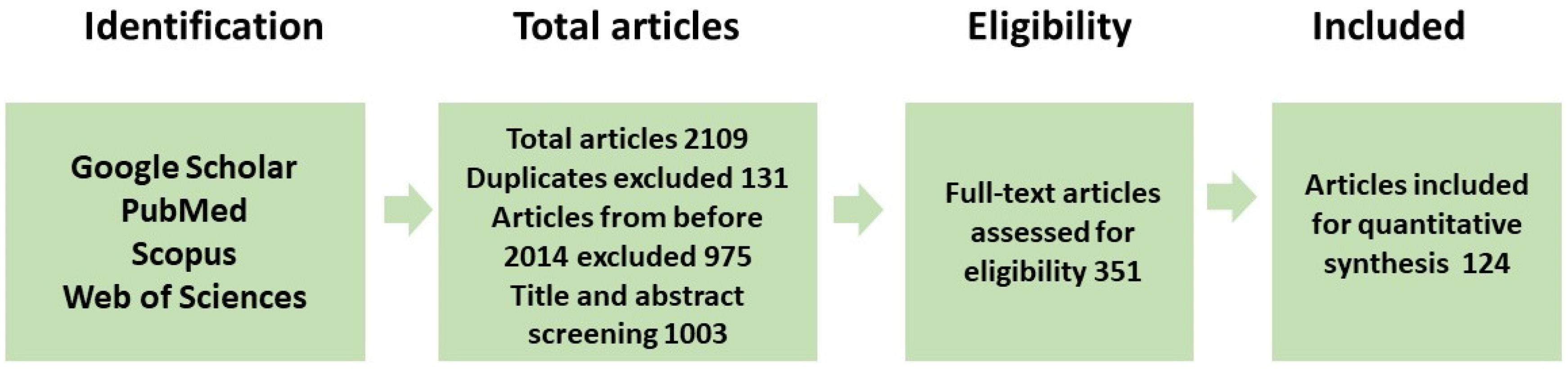
2. Materials and Methods
- (1)
- Contained information on the anti-obesogenic, antidiabetic, insulin-sensitising, blood pressure-lowering, and/or lipid-lowering effects of the previously selected spice herbs;
- (2)
- Provided information on the use of herbs in metabolic syndrome in women;
- (3)
- Supplied information on the mechanisms of anti-inflammatory action of bioactive components of the herbs;
- (4)
- Were genuine studies (involving laboratory animals, humans, or in vitro), review articles, or clinical studies published in English;
- (5)
- Were published from 2014 to 2025.
3. Results
3.1. Inflammation in Metabolic Syndrome
3.2. Metabolic Syndrome in Women
3.3. Dietary Influence on Inflammation
3.4. Spice Herbs with Anti-Inflammatory Properties
3.5. Gut Microbiota–Inflammation–Polyphenols Interplay
3.6. The Anti-Inflammatory Effect of Spice Herbs–Review of Studies
4. Potential Spice Herb–Drug Interactions and Dosage
- -
- -
- -
- mint-Mentha piperita interacts with drugs used in cardiovascular diseases, including inhibition of CYP3A4 (Felodipine), induction of CYP3A4 (Nifedipine), and induction of P-gp (Digoxin, Talinolol) [117].
- -
- basil–in an in vivo study using human liver microsomes, aqueous and methanolic extracts inhibited CYP2B6, whereas ethanol and methanol extracts inhibited Rifampicin [118].
5. Conclusions and Future Perspectives
Author Contributions
Funding
Institutional Review Board Statement
Informed Consent Statement
Data Availability Statement
Conflicts of Interest
Abbreviations
| hs-CRP | High-Sensitivity C-reactive Protein |
| CRP | C-reactive Protein |
| IL-1, 1β, 4, 6, 8 | Interleukin-1, 1β, 4, 6, 8 |
| TNF-α | Tumour Necrosis Factor-alpha |
| NF-κB | Nuclear Factor kappa B |
| IFN-γ | Interferon gamma |
| BMI | Body Mass Index |
| PPAR-γ | Peroxisome Proliferator-Activated Receptor gamma |
| TLR4 | Toll-like Receptor 4 |
| ROS | Reactive Oxygen Species |
| NO | Nitric Oxide |
| HOMA-IR | Homeostatic Model Assessment for Insulin Resistance |
| NGF | Nerve Growth Factor |
| SII | Systemic Immune-Inflammation Index |
| SIRI | Systemic Inflammatory Response Index |
| DII | Dietary Inflammatory Index |
| PUFA | Polyunsaturated Fatty Acids |
| MUFA | Monounsaturated Fatty Acids |
| SFA | Saturated Fatty Acids |
| VEGF | Vascular Endothelial Growth Factor |
| EGF | Epidermal Growth Factor |
| SCFAs | Short-chain Fatty Acids |
| GM-CSF | Granulocyte–macrophage Colony-stimulating Factor |
| AMPK | AMP-activated Protein Kinase |
| MCP-1 | Monocyte Chemotactic Protein-1 |
| PAI-1 | Type 1 Plasminogen Activator Inhibitor |
| C/EBPβ/α | CCAAT/enhancer-binding protein beta/alpha |
| LPS | Lipopolysaccharides |
| GALT | Gut-associated Lymphoid Tissue |
| KC/Gro | Keratinocyte Chemoattractant/Growth-Regulated Oncogene |
| CCL2 | C-C Motif Chemokine Ligand 2 |
| Tnfrsf9 | TNF Receptor Superfamily Member 9 |
| ESR | Erythrocyte Sedimentation Rate |
| AMPK/ULK1/Nrf2 | AMPK/unc-51-like kinase 1/nuclear factor erythroid 2-related factor 2 |
| PAMs | Porcine Alveolar Macrophages |
References
- Kucher, S.V.; Mudra, U.O.; Tkachuk, V.V.; Ruda, M.M.; Chernets, T.Y.; Nikitina, I.M.; Dzhyvak, V.H. Impact of lifestyle modification interventions on metabolic syndrome and obesity in adults. Wiad. Lek. 2025, 78, 1857–1865. [Google Scholar] [CrossRef] [Scilit] [PubMed]
- Olcha, P.; Winiarska-Mieczan, A.; Kwiecień, M.; Nowakowski, Ł.; Miturski, A.; Semczuk, A.; Kiczorowska, B.; Gałczyński, K. Antioxidative, anti-inflammatory, anti-obesogenic, and antidiabetic properties of tea polyphenols–The positive impact of regular tea consumption as an element of prophylaxis and pharmacotherapy support in endometrial cancer. Int. J. Mol. Sci. 2022, 23, 6703. [Google Scholar] [CrossRef] [Scilit] [PubMed]
- Noubiap, J.J.; Nansseu, J.R.; Nyaga, U.F.; Ndoadoumgue, A.L.; Ngouo, A.T.; Tounouga, D.N.; Tianyi, F.L.; Foka, A.J.; Lontchi-Yimagou, E.; Nkeck, J.R.; et al. Worldwide trends in metabolic syndrome from 2000 to 2023: A systematic review and modelling analysis. Nat. Commun. 2025, 17, 573. [Google Scholar] [CrossRef] [Scilit] [PubMed]
- Suschana, E.; Anderson, T.; Hong, C.; Narikatte, A.; Silverberg, J.; Sharma, M.S. The role of anti-inflammatory diets and supplementation in metabolic syndrome and symptom remission in adults with schizophrenia: A systematic review. Front. Psychiatry 2025, 15, 1506353. [Google Scholar] [CrossRef] [Scilit]
- Grosso, G.; Laudisio, D.; Frias-Toral, E.; Barrea, L.; Muscogiuri, G.; Savastano, S.; Colao, A. Anti-Inflammatory Nutrients and Obesity-Associated Metabolic Inflammation: State of the Art and Future Direction. Nutrients 2022, 14, 1137. [Google Scholar] [CrossRef] [Scilit]
- Fenwick, P.H.; Jeejeebhoy, K.; Dhaliwal, R.; Royall, D.; Brauer, P.; Tremblay, A.; Klein, D.; Mutch, D.M. Lifestyle genomics and the metabolic syndrome: A review of genetic variants that influence response to diet and exercise interventions. Crit. Rev. Food Sci. Nutr. 2019, 59, 2028–2039. [Google Scholar] [CrossRef] [Scilit]
- Srinivasan, K. Anti-Inflammatory Influences of Culinary Spices and Their Bioactives. Food Rev. Int. 2022, 38, 1–17. [Google Scholar] [CrossRef] [Scilit]
- Farapti, F.; Sari, A.N.; Adi, A.C.; Majid, H.B.A. Culinary herbs and spices for low-salt dietary management: Taste sensitivity and preference among the elderly. NFS J. 2024, 34, 100162. [Google Scholar] [CrossRef] [Scilit]
- Jachimowicz-Rogowska, K.; Winiarska-Mieczan, A. Initiatives to reduce the content of sodium in food products and meals and improve the population’s health. Nutrients 2023, 15, 2393. [Google Scholar] [CrossRef] [Scilit]
- Abdollahzad, H.; Pasdar, Y.; Nachvak, S.M.; Rezaeian, S.; Saber, A.; Nazari, R. The Relationship Between the Dietary Inflammatory Index and Metabolic Syndrome in Ravansar Cohort Study. Diabetes Metab. Syndr. Obes. 2020, 13, 477–487. [Google Scholar] [CrossRef] [Scilit]
- Catrysse, L.; van Loo, G. Inflammation and the Metabolic Syndrome: The Tissue-Specific Functions of NF-κB. Trends Cell Biol. 2017, 27, 417–429. [Google Scholar] [CrossRef] [Scilit]
- Savulescu-Fiedler, I.; Mihalcea, R.; Dragosloveanu, S.; Scheau, C.; Baz, R.O.; Caruntu, A.; Scheau, A.E.; Caruntu, C.; Benea, S.N. The Interplay between Obesity and Inflammation. Life 2024, 14, 856. [Google Scholar] [CrossRef] [Scilit]
- Cybulska, A.M.; Rachubińska, K.; Grochans, E.; Bosiacki, M.; Simińska, D.; Korbecki, J.; Lubkowska, A.; Panczyk, M.; Kuczyńska, M.; Schneider-Matyka, D. Systemic Inflammation Indices, Chemokines, and Metabolic Markers in Perimenopausal Women. Nutrients 2025, 17, 2885. [Google Scholar] [CrossRef] [Scilit] [PubMed]
- Atanassova, P.; Hrischev, P.; Orbetzova, M.; Nikolov, P.; Nikolova, J.; Georgieva, E. Expression of leptin, NGF and adiponectin in metabolic syndrome. Folia Biol. 2014, 62, 301–306. [Google Scholar] [CrossRef] [Scilit] [PubMed]
- Sigit, F.S.; Trompet, S.; Tahapary, D.L.; Sartono, E.; Willems van Dijk, K.; Yazdanbakhsh, M.; Supali, T.; Smit, J.W.A.; Rosendaal, F.R.; de Mutsert, R. The associations of leptin and adiponectin with the metabolic syndrome in an Indonesian and a Dutch population. Nutr. Metab. Cardiovasc. Dis. 2021, 31, 2426–2435. [Google Scholar] [CrossRef] [Scilit] [PubMed]
- López-Jaramillo, P.; Gómez-Arbeláez, D.; López-López, J. Relationship among the leptin-to-adiponectin ratio, systemic inflammation, and anisocytosis: A plausible pathophysiological mechanism of a novel cardiovascular risk marker. Kardiol. Pol. 2020, 78, 381–382. [Google Scholar] [CrossRef] [Scilit]
- Begum, M.; Choubey, M.; Tirumalasetty, M.B.; Arbee, S.; Mohib, M.M.; Wahiduzzaman, M.; Mamun, M.A.; Uddin, M.B.; Mohiuddin, M.S. Adiponectin: A Promising Target for the Treatment of Diabetes and Its Complications. Life 2023, 13, 2213. [Google Scholar] [CrossRef] [Scilit]
- Flores Gomez, D.; Bekkering, S.; Ter Horst, R.; Cossins, B.; van den Munckhof, I.C.L.; Rutten, J.H.W.; Joosten, L.A.B.; Netea, M.G.; Riksen, N.P. The effect of leptin on trained innate immunity and on systemic inflammation in subjects with obesity. J. Leukoc. Biol. 2024, 115, 374–384. [Google Scholar] [CrossRef] [Scilit]
- Ali, I.I.; D’Souza, C.; Singh, J.; Adeghate, E. Adropin’s Role in Energy Homeostasis and Metabolic Disorders. Int. J. Mol. Sci. 2022, 23, 8318. [Google Scholar] [CrossRef] [Scilit]
- Hognogi, L.D.; Simiti, L.V. The cardiovascular impact of visfatin—An inflammation predictor biomarker in metabolic syndrome. Clujul Med. 2016, 89, 322–326. [Google Scholar] [CrossRef] [Scilit]
- Yang, Z.; Xiao, K.; Wang, W.; Tang, J.; Sun, P.P.; Peng, K.M.; Song, H. The effect of visfatin on inflammatory reaction in uterus of LPS-induced rats. Int. J. Morphol. 2015, 33, 194–203. [Google Scholar] [CrossRef] [Scilit]
- Catalán, V.; Gómez-Ambrosi, J.; Rodríguez, A.; Ramírez, B.; Rotellar, F.; Valentí, V.; Silva, C.; Gil, M.J.; Salvador, J.; Frühbeck, G. Increased tenascin C and Toll-like receptor 4 levels in visceral adipose tissue as a link between inflammation and extracellular matrix remodeling in obesity. J. Clin. Endocrinol. Metab. 2012, 97, E1880–E1889. [Google Scholar] [CrossRef] [Scilit] [PubMed]
- Thomalla, M.; Schmid, A.; Neumann, E.; Pfefferle, P.I.; Müller-Ladner, U.; Schäffler, A.; Karrasch, T. Evidence of an anti-inflammatory toll-like receptor 9 (TLR 9) pathway in adipocytes. J. Endocrinol. 2019, 240, 325–343. [Google Scholar] [CrossRef] [Scilit] [PubMed]
- Nijhawans, P.; Behl, T.; Bhardwaj, S. Angiogenesis in obesity. Biomed. Pharmacother. 2020, 126, 110103. [Google Scholar] [CrossRef] [Scilit]
- Ter Horst, R.; van den Munckhof, I.C.L.; Schraa, K.; Aguirre-Gamboa, R.; Jaeger, M.; Smeekens, S.P.; Brand, T.; Lemmers, H.; Dijkstra, H.; Galesloot, T.E.; et al. Sex-Specific Regulation of Inflammation and Metabolic Syndrome in Obesity. Arterioscler. Thromb. Vasc. Biol. 2020, 40, 1787–1800. [Google Scholar] [CrossRef] [Scilit]
- Suliga, E.; Kozieł, D.; Głuszek, S. Prevalence of metabolic syndrome in normal weight individuals. Ann. Agric. Environ. Med. 2016, 23, 631–635. [Google Scholar] [CrossRef] [Scilit]
- Sabbatini, A.R.; Kararigas, G. Estrogen-related mechanisms in sex differences of hypertension and target organ damage. Biol. Sex Differ. 2020, 11, 31. [Google Scholar] [CrossRef] [Scilit]
- Pinto da Costa Viana, D.; Caseri Câmara, L.; Borges Palau, R. Menopause as a Critical Turning Point in Lipedema: The Estrogen Receptor Imbalance, Intracrine Estrogen, and Adipose Tissue Dysfunction Model. Int. J. Mol. Sci. 2025, 26, 7074. [Google Scholar] [CrossRef] [Scilit]
- Kok, V.C.; Tsai, H.J.; Su, C.F.; Lee, C.K. The Risks for Ovarian, Endometrial, Breast, Colorectal, and Other Cancers in Women with Newly Diagnosed Endometriosis or Adenomyosis: A Population-Based Study. Int. J. Gynecol. Cancer 2015, 25, 968–976. [Google Scholar] [CrossRef] [Scilit]
- Ji, Y.; Wang, H. Prognostic prediction of systemic immune-inflammation index for patients with gynecological and breast cancers: A meta-analysis. World J. Surg. Oncol. 2020, 18, 197. [Google Scholar] [CrossRef] [Scilit]
- Baranowska-Wójcik, E.; Winiarska-Mieczan, A.; Olcha, P.; Kwiecień, M.; Jachimowicz-Rogowska, K.; Nowakowski, Ł.; Miturski, A.; Gałczyński, K. Polyphenols Influence the Development of Endometrial Cancer by Modulating the Gut Microbiota. Nutrients 2024, 16, 681. [Google Scholar] [CrossRef] [Scilit] [PubMed]
- Nikniaz, L.; Nikniaz, Z.; Shivappa, N.; Hébert, J.R. The association between dietary inflammatory index and metabolic syndrome components in Iranian adults. Prim. Care Diabetes 2018, 12, 467–472. [Google Scholar] [CrossRef] [Scilit] [PubMed]
- Delgado-Alarcón, J.M.; Hernández Morante, J.J.; Morillas-Ruiz, J.M. Modification of Breakfast Fat Composition Can Modulate Cytokine and Other Inflammatory Mediators in Women: A Randomized Crossover Trial. Nutrients 2023, 15, 3711. [Google Scholar] [CrossRef] [Scilit] [PubMed]
- Hall, C.V.; Hepsomali, P.; Dalile, B.; Scapozza, L.; Gurry, T. Effects of a diverse prebiotic fibre blend on inflammation, the gut microbiota and affective symptoms in metabolic syndrome: A pilot open-label randomised controlled trial. Br. J. Nutr. 2024, 132, 1002–1013. [Google Scholar] [CrossRef] [Scilit]
- Hall, C.V.; Twelves, J.L.; Saxena, M.; Scapozza, L.; Gurry, T. Effects of a diverse prebiotic fibre supplement on HbA1c, insulin sensitivity and inflammatory biomarkers in pre-diabetes: A pilot placebo-controlled randomised clinical trial. Br. J. Nutr. 2024, 132, 68–76. [Google Scholar] [CrossRef] [Scilit]
- Keshani, M.; Rafiee, S.; Heidari, H.; Rouhani, M.H.; Sharma, M.; Bagherniya, M. Mediterranean Diet Reduces Inflammation in Adults: A Systematic Review and Meta-analysis of Randomized Controlled Trials. Nutr. Rev. 2025, nuaf213. [Google Scholar] [CrossRef] [Scilit]
- Davis, C.; Bryan, J.; Hodgson, J.; Murphy, K. Definition of the Mediterranean diet; a literature review. Nutrients 2015, 7, 9139–9153. [Google Scholar] [CrossRef] [Scilit]
- Wu, P.Y.; Chen, K.M.; Tsai, W.C. The Mediterranean dietary pattern and inflammation in older adults: A systematic review and meta-analysis. Adv. Nutr. 2021, 12, 363–373. [Google Scholar] [CrossRef] [Scilit]
- Asoudeh, F.; Fallah, M.; Aminianfar, A.; Djafarian, K.; Shirzad, N.; Clark, C.C.T.; Larijani, B.; Esmaillzadeh, A. The effect of Mediterranean diet on inflammatory biomarkers and components of metabolic syndrome in adolescent girls. J. Endocrinol. Investig. 2023, 46, 1995–2004. [Google Scholar] [CrossRef] [Scilit]
- Duś-Żuchowska, M.; Bajerska, J.; Krzyżanowska, P.; Chmurzyńska, A.; Miśkiewicz-Chotnicka, A.; Muzsik, A.; Walkowiak, J. The Central European diet as an alternative to the Mediterranean diet in atherosclerosis prevention in postmenopausal obese women with a high risk of metabolic syndrome–a randomized nutritional trial. Acta Sci. Pol. Technol. Aliment. 2018, 17, 399–407. [Google Scholar] [CrossRef] [Scilit]
- Nair, A.R.; Mariappan, N.; Stull, A.J.; Francis, J. Blueberry supplementation attenuates oxidative stress within monocytes and modulates immune cell levels in adults with metabolic syndrome: A randomized, double-blind, placebo-controlled trial. Food Funct. 2017, 8, 4118–4128. [Google Scholar] [CrossRef] [Scilit]
- Hussain, A.I.; Anwar, F.; Hussain Sherazi, S.T.; Przybylski, R. Chemical composition, antioxidant and antimicrobial activities of basil (Ocimum basilicum) essential oils depends on seasonal variations. Food Chem. 2008, 108, 986–995. [Google Scholar] [CrossRef] [Scilit] [PubMed]
- Joshi, R.K. Chemical composition and antimicrobial activity of the essential oil of Ocimum basilicum L. (sweet basil) from Western Ghats of North West Karnataka, India. Anc. Sci. Life 2014, 33, 151–156. [Google Scholar] [CrossRef] [Scilit] [PubMed]
- Kokkini, S.; Karousou, R.; Lanaras, T. Essential oils of spearmint (Carvone-rich) plants from the island of Crete (Greece). Biochem. Syst. Ecol. 1995, 23, 425–430. [Google Scholar] [CrossRef] [Scilit]
- Ghorbani, A.; Esmaeilizadeh, M. Pharmacological properties of Salvia officinalis and its components. J. Tradit. Complement. Med. 2017, 7, 433–440. [Google Scholar] [CrossRef] [Scilit]
- Ben Farhat, M.; Jordán, M.J.; Chaouech-Hamada, R.; Landoulsi, A.; Sotomayor, J.A. Variations in essential oil, phenolic compounds, and antioxidant activity of Tunisian cultivated Salvia officinalis L. J. Agric. Food Chem. 2009, 57, 10349–10356. [Google Scholar] [CrossRef] [Scilit]
- Vázquez-Fresno, R.; Rosana, A.R.R.; Sajed, T.; Onookome-Okome, T.; Wishart, N.A.; Wishart, D.S. Herbs and Spices–Biomarkers of Intake Based on Human Intervention Studies—A Systematic Review. Genes Nutr. 2019, 14, 18. [Google Scholar] [CrossRef] [Scilit]
- Mockute, D.; Bernotiene, G.; Judzentiene, A. The essential oil of Origanum vulgare L. ssp. vulgare growing wild in Vilnius district (Lithuania). Phytochemistry 2001, 57, 65–69. [Google Scholar] [CrossRef] [Scilit]
- Rubió, L.; Motilva, M.J.; Romero, M.P. Recent advances in biologically active compounds in herbs and spices: A review of the most effective antioxidant and anti-inflammatory active principles. Crit. Rev. Food Sci. Nutr. 2013, 53, 943–953. [Google Scholar] [CrossRef] [Scilit]
- Scandar, S.; Zadra, C.; Marcotullio, M.C. Coriander (Coriandrum sativum) Polyphenols and Their Nutraceutical Value against Obesity and Metabolic Syndrome. Molecules 2023, 28, 4187. [Google Scholar] [CrossRef] [Scilit]
- Nisa, M.U.; Umer, M.; Hamza, M.; Umbreen, H.; Khalid, N.; Raza, M.Q.; Mohamed Ahmed, I.A.; Aljobair, M.O.; Khan, O.A. Investigating Coriander Leaf Phenolics With HPLC-UV and Their Role in Modulating Nitrogen Metabolism. Food Sci. Nutr. 2025, 13, e70029. [Google Scholar] [CrossRef] [Scilit]
- Iqbal, M.; Butt, M.S.; Shehzad, A.; Asghar, M. In vitro antioxidant and chromatographic quantification of supercritical fluid extracts obtained from coriander (Coriandrum sativum L.). J. Chem. Soc. Pak. 2018, 40, 733–741. [Google Scholar]
- Sharma, Y.; Velamuri, R.; Fagan, J.; Schaefer, J. Full-Spectrum Analysis of Bioactive Compounds in Rosemary (Rosmarinus officinalis L.) as Influenced by Different Extraction Methods. Molecules 2020, 25, 4599. [Google Scholar] [CrossRef] [Scilit] [PubMed]
- Huang, M.T.; Ho, C.T.; Wang, Z.Y.; Ferraro, T.; Lou, Y.R.; Stauber, K.; Ma, W.; Georgiadis, C.; Laskin, J.D.; Conney, A.H. Inhibition of skin tumorigenesis by rosemary and its constituents carnosol and ursolic acid. Cancer Res. 1994, 54, 701–708. [Google Scholar] [PubMed]
- Farag, R.S.; Daw, Z.Y.; Hewedi, F.M.; El-Baroty, G.S.A. Antimicrobial activity of some Egyptian spice essential oils. J. Food Prot. 1989, 52, 665–667. [Google Scholar] [CrossRef] [Scilit]
- Sun, N.N.; Wu, T.Y.; Chau, C.F. Natural dietary and herbal products in anti-obesity treatment. Molecules 2016, 21, 1351. [Google Scholar] [CrossRef] [Scilit]
- Sarnowska, E.; Balcerak, A.; Olszyna-Serementa, M.; Kotlarek, D.; Sarnowski, T.J.; Siedlecki, J.A. AMP-activated protein kinase (AMPK) as therapeutic target. Postepy Hig. Med. Dosw. 2013, 67, 750–760. [Google Scholar] [CrossRef] [Scilit]
- Wang, S.; Moustaid-Moussa, N.; Chen, L.; Mo, H.; Shastri, A.; Su, R.; Bapat, P.; Kwun, I.; Shen, C.L. Novel insights of dietary polyphenols and obesity. J. Nutr. Biochem. 2014, 25, 1–18. [Google Scholar] [CrossRef] [Scilit]
- Wang, Z.; Lam, K.L.; Hu, J.; Ge, S.; Zhou, A.; Zheng, B.; Zeng, S.; Lin, S. Chlorogenic acid alleviates obesity and modulates gut microbiota in high-fat-fed mice. Food Sci. Nutr. 2019, 7, 579–588. [Google Scholar] [CrossRef] [Scilit]
- Ilavenil, S.; Kim, D.; Srigopalram, S.; Arasu, M.V.; Lee, K.D.; Lee, J.C.; Lee, J.S.; Renganathan, S.; Choi, K.C. Potential Application of p-Coumaric Acid on Differentiation of C2C12 Skeletal Muscle and 3T3-L1 Preadipocytes-An in Vitro and in Silico Approach. Molecules 2016, 21, 997. [Google Scholar] [CrossRef] [Scilit]
- Vasileva, L.V.; Savova, M.S.; Amirova, K.M.; Balcheva-Sivenova, Z.; Ferrante, C.; Orlando, G.; Wabitsch, M.; Georgiev, M.I. Caffeic and chlorogenic acids synergistically activate browning program in human adipocytes: Implications of AMPK- and PPAR-mediated pathways. Int. J. Mol. Sci. 2020, 21, 9740. [Google Scholar] [CrossRef] [Scilit]
- Alam, M.A.; Subhan, N.; Hossain, H.; Hossain, M.; Reza, H.M.; Rahman, M.M.; Ullah, M.O. Hydroxycinnamic acid derivatives: A potential class of natural compounds for the management of lipid metabolism and obesity. Nutr. Metab. 2016, 13, 27. [Google Scholar] [CrossRef] [Scilit] [PubMed]
- Nani, A.; Murtaza, B.; Sayed Khan, A.; Khan, N.A.; Hichami, A. Antioxidant and anti-inflammatory potential of polyphenols contained in Mediterranean diet in obesity: Molecular mechanisms. Molecules 2021, 26, 985. [Google Scholar] [CrossRef] [Scilit] [PubMed]
- Marrelli, M.; Conforti, F.; Araniti, F.; Statti, G.A. Effects of saponins on lipid metabolism: A review of potential health benefits in the treatment of obesity. Molecules 2016, 21, 1404. [Google Scholar] [CrossRef] [Scilit] [PubMed]
- Seo, J.B.; Park, S.W.; Choe, S.S.; Jeong, H.W.; Park, J.Y.; Choi, E.W.; Seen, D.S.; Jeong, J.Y.; Lee, T.G. Foenumoside B from Lysimachia foenum-graecum inhibits adipocyte differentiation and obesity induced by high-fat diet. Biochem. Biophys. Res. Commun. 2012, 417, 800–806. [Google Scholar] [CrossRef] [Scilit]
- Wang, P.X.; Deng, X.R.; Zhang, C.H.; Yuan, H.J. Gut microbiota and metabolic syndrome. Chin. Med. J. 2020, 133, 808–816. [Google Scholar] [CrossRef] [Scilit]
- Al Bander, Z.; Nitert, M.D.; Mousa, A.; Naderpoor, N. The Gut Microbiota and Inflammation: An Overview. Int. J. Environ. Res. Public Health 2020, 17, 7618. [Google Scholar] [CrossRef] [Scilit]
- Candelli, M.; Franza, L.; Pignataro, G.; Ojetti, V.; Covino, M.; Piccioni, A.; Gasbarrini, A.; Franceschi, F. Interaction between Lipopolysaccharide and Gut Microbiota in Inflammatory Bowel Diseases. Int. J. Mol. Sci. 2021, 22, 6242. [Google Scholar] [CrossRef] [Scilit]
- Mohr, A.E.; Crawford, M.; Jasbi, P.; Fessler, S.; Sweazea, K.L. Lipopolysaccharide and the gut microbiota: Considering structural variation. FEBS Lett. 2022, 596, 849–875. [Google Scholar] [CrossRef] [Scilit]
- Liu, B.N.; Liu, X.T.; Liang, Z.H.; Wang, J.H. Gut microbiota in obesity. World J. Gastroenterol. 2021, 27, 3837–3850. [Google Scholar] [CrossRef] [Scilit]
- Plamada, D.; Vodnar, D.C. Polyphenols–Gut microbiota interrelationship: A transition to a new generation of prebiotics. Nutrients 2021, 14, 137. [Google Scholar] [CrossRef] [Scilit]
- Jungbauer, A.; Medjakovic, S. Anti-inflammatory properties of culinary herbs and spices that ameliorate the effects of metabolic syndrome. Maturitas 2012, 71, 227–239. [Google Scholar] [CrossRef] [Scilit]
- Oh, E.S.; Petersen, K.S.; Kris-Etherton, P.M.; Rogers, C.J. Spices in a High-Saturated-Fat, High-Carbohydrate Meal Reduce Postprandial Proinflammatory Cytokine Secretion in Men with Overweight or Obesity: A 3-Period, Crossover, Randomized Controlled Trial. J. Nutr. 2020, 150, 1600–1609. [Google Scholar] [CrossRef] [Scilit] [PubMed]
- Oh, E.S.; Petersen, K.S.; Kris-Etherton, P.M.; Rogers, C.J. Four weeks of spice consumption lowers plasma proinflammatory cytokines and alters the function of monocytes in adults at risk of cardiometabolic disease: Secondary outcome analysis in a 3-period, randomized, crossover, controlled feeding trial. Am. J. Clin. Nutr. 2022, 115, 61–72. [Google Scholar] [CrossRef] [Scilit] [PubMed]
- Hernández-Saavedra, D.; Pérez-Ramírez, I.F.; Ramos-Gómez, M.; Mendoza-Díaz, S.; Loarca-Piña, D.; Reynoso-Camacho, R. Phytochemical characterization and effect of Calendula officinalis, Hypericum perforatum, and Salvia officinalis infusions on obesity-associated cardiovascular risk. Med. Chem. Res. 2016, 25, 163–172. [Google Scholar] [CrossRef] [Scilit]
- Ben Khedher, M.R.; Hammami, M.; Arch, J.R.S.; Hislop, D.C.; Eze, D.; Wargent, E.T.; Kępczyńska, M.A.; Zaibi, M.S. Preventive effects of Salvia officinalis leaf extract on insulin resistance and inflammation in a model of high fat diet-induced obesity in mice that responds to rosiglitazone. PeerJ 2018, 6, e4166. [Google Scholar] [CrossRef] [Scilit]
- Russo, C.; Edwards, K.D.; Margetts, G.; Kleidonas, S.; Zaibi, N.S.; Clapham, J.C.; Zaibi, M.S. Effects of Salvia officinalis L. and Chamaemelum nobile (L.) extracts on inflammatory responses in two models of human cells: Primary subcutaneous adipocytes and neuroblastoma cell line (SK-N-SH). J. Ethnopharmacol. 2021, 268, 113614. [Google Scholar] [CrossRef] [Scilit]
- Brindisi, M.; Bouzidi, C.; Frattaruolo, L.; Loizzo, M.R.; Cappello, M.S.; Dugay, A.; Deguin, B.; Lauria, G.; Cappello, A.R.; Tundis, R. New Insights into the Antioxidant and Anti-Inflammatory Effects of Italian Salvia officinalis Leaf and Flower Extracts in Lipopolysaccharide and Tumor-Mediated Inflammation Models. Antioxidants 2021, 10, 311. [Google Scholar] [CrossRef] [Scilit]
- Boufadi, M.Y.; Keddari, S.; Moulai-Hacene, F.; Chaa, S. Chemical Composition, Antioxidant and Anti-Inflammatory Properties of Salvia officinalis Extract from Algeria. Pharmacogn. J. 2021, 13, 506–515. [Google Scholar] [CrossRef] [Scilit]
- Safi-eldin, M.; Abdelfattah, M.M.; Barghash, S.; Ashour, A.A.; Taha, H.A. Potential antioxidant and anti-inflammatory impacts of Salvia officinalis leaves extract on mice experimentally infected with Trichinella spiralis. Vet. Res. Commun. 2025, 49, 337. [Google Scholar] [CrossRef] [Scilit]
- Parsaeyan, N. The effect of coriander seed powder consumption on atherosclerotic and cardioprotective indices of type 2 diabetic patients. Iran. J. Diabetes Obes. 2012, 4, 86–93. [Google Scholar]
- Zanusso-Junior, G.; Melo, J.; Romero, A.; Dantas, J.; Caparroz-Assef, S.; Bersani-Amado, C.; Cuman, R. Evaluation of the anti-inflammatory activity of coriander (Coriandrum sativum L.) in rodents. Rev. Bras. Plantas Med. 2011, 13, 17–23. [Google Scholar] [CrossRef] [Scilit]
- Kükner, A.; Soyler, G.; Toros, P.; Dede, G.; Meriçli, F.; Işık, S.; Edebal, O.; Özoğul, C. Protective effect of Coriandrum sativum extract against inflammation and apoptosis in liver ischaemia/reperfusion injury. Folia Morphol. 2021, 80, 363–371. [Google Scholar] [CrossRef] [Scilit] [PubMed]
- Mechchate, H.; Costa de Oliveira, R.; Es-Safi, I.; Vasconcelos Mourão, E.M.; Bouhrim, M.; Kyrylchuk, A.; Soares Pontes, G.; Bousta, D.; Grafov, A. Antileukemic Activity and Molecular Docking Study of a Polyphenolic Extract from Coriander Seeds. Pharmaceuticals 2021, 14, 770. [Google Scholar] [CrossRef] [Scilit] [PubMed]
- Leyva-López, N.; Gutiérrez-Grijalva, E.P.; Heredia, J.B.; Ramos-Payan, R.; Contreras-Angulo, L.A.; Gonzalez-Galaviz, J.R.; Rodriguez-Anaya, L.Z. Antioxidant potential, cytokines regulation, and inflammation-related genes expression of phenolic extracts from Mexican oregano. J. Food Biochem. 2022, 46, e14440. [Google Scholar] [CrossRef] [Scilit]
- Li, C.; Niu, J.; Liu, Y.; Li, F.; Liu, L. The effects of oregano essential oil on production performance and intestinal barrier function in growing Hyla rabbits. Ital. J. Anim. Sci. 2021, 20, 2165–2173. [Google Scholar] [CrossRef] [Scilit]
- Veljovic, K.; Tesevic, V.; Mitrovic, H.; Stankovic, M. Essential oil of Origanum minutiflorum exhibits anti-inflammatory and antioxidative effects in human bronchial cells and antimicrobial activity on lung pathogens. J. Herb. Med. 2023, 39, 100651. [Google Scholar] [CrossRef] [Scilit]
- Kamelnia, E.; Mohebbati, R.; Kamelnia, R.; El-Seedi, H.R.; Boskabady, M.H. Anti-inflammatory, immunomodulatory and anti-oxidant effects of Ocimum basilicum L. and its main constituents: A review. Iran. J. Basic Med. Sci. 2023, 26, 617–627. [Google Scholar] [CrossRef] [Scilit]
- Eftekhar, N.; Moghimi, A.; Mohammadian Roshan, N.; Saadat, S.; Boskabady, M.H. Immunomodulatory and anti-inflammatory effects of hydro-ethanolic extract of Ocimum basilicum leaves and its effect on lung pathological changes in an ovalbumin-induced rat model of asthma. BMC Complement. Altern. Med. 2019, 19, 349. [Google Scholar] [CrossRef] [Scilit]
- Abdullah, H.T.; Al-Bayati, A.M.; Aldin Saleh, A.N.; AlSalihi, K.A.; Abed, H.H. Effect of Ocimum basilicum herbs extract on pro-inflammatory cytokines in ethanol-induced liver damage in rats. Wiad. Lek. 2025, 78, 1522–1529. [Google Scholar] [CrossRef] [Scilit]
- Güez, C.M.; Souza, R.O.; Fischer, P.; Leão, M.F.; Duarte, J.A.; Boligon, A.A.; Athayde, M.L.; Zuravski, L.; Oliveira, L.F.S.; Machado, M.M. Evaluation of basil extract (Ocimum basilicum L.) on oxidative, anti-genotoxic and anti-inflammatory effects in human leukocytes cell cultures exposed to challenging agents. Braz. J. Pharm. Sci. 2017, 53, e15098. [Google Scholar] [CrossRef] [Scilit]
- Takeuchi, H.; Takahashi-Muto, C.; Nagase, M.; Kassai, M.; Tanaka-Yachi, R.; Kiyose, C. Anti-inflammatory Effects of Extracts of Sweet Basil (Ocimum basilicum L.) on a co-culture of 3T3-L1 Adipocytes and RAW264.7 Macrophages. J. Oleo Sci. 2020, 69, 487–493. [Google Scholar] [CrossRef] [Scilit] [PubMed]
- Horváth, G.; Horváth, A.; Reichert, G.; Böszörményi, A.; Sipos, K.; Pandur, E. Three chemotypes of thyme (Thymus vulgaris L.) essential oil and their main compounds affect differently the IL-6 and TNFα cytokine secretions of BV-2 microglia by modulating the NF-κB and C/EBPβ signalling pathways. BMC Complement. Med. Ther. 2021, 21, 148. [Google Scholar] [CrossRef] [Scilit] [PubMed]
- Pandur, E.; Micalizzi, G.; Mondello, L.; Horváth, A.; Sipos, K.; Horváth, G. Antioxidant and Anti-Inflammatory Effects of Thyme (Thymus vulgaris L.) Essential Oils Prepared at Different Plant Phenophases on Pseudomonas aeruginosa LPS-Activated THP-1 Macrophages. Antioxidants 2022, 11, 1330. [Google Scholar] [CrossRef] [Scilit]
- Roxo, M.; Zuzarte, M.; Gonçalves, M.J.; Alves-Silva, J.M.; Cavaleiro, C.; Cruz, M.T.; Salgueiro, L. Antifungal and anti-inflammatory potential of the endangered aromatic plant Thymus albicans. Sci. Rep. 2020, 10, 18859. [Google Scholar] [CrossRef] [Scilit]
- Touaibia, M. In vitro antioxidant and anti-inflammatory properties of Thymus algeriensis and Thymus dreatensis essential oils from Algeria. J. Essent. Oil Bear. Plants 2025, 28, 1313–1326. [Google Scholar] [CrossRef] [Scilit]
- Abdelhamed, F.M.; Abdeltawab, N.F.; ElRakaiby, M.T.; Shamma, R.N.; Moneib, N.A. Antibacterial and Anti-Inflammatory Activities of Thymus vulgaris Essential Oil Nanoemulsion on Acne vulgaris. Microorganisms 2022, 10, 1874. [Google Scholar] [CrossRef] [Scilit]
- de Macedo, L.M.; Santos, É.M.D.; Militão, L.; Tundisi, L.L.; Ataide, J.A.; Souto, E.B.; Mazzola, P.G. Rosemary (Rosmarinus officinalis L., syn Salvia rosmarinus Spenn.) and Its Topical Applications: A Review. Plants 2020, 9, 651. [Google Scholar] [CrossRef] [Scilit]
- Nieto, G.; Ros, G.; Castillo, J. Antioxidant and Antimicrobial Properties of Rosemary (Rosmarinus officinalis, L.): A Review. Medicines 2018, 5, 98. [Google Scholar] [CrossRef] [Scilit]
- Bayat, M.; Aryaeian, N.; Shirani, F.; Abolghasemi, J.; Heydarian, A.; Fallah, S.; Tond, S.B.; Karimi, E. The effect of rosemary leaf powder on disease symptoms, inflammatory and oxidative markers in patients with rheumatoid arthritis: A double-blinded randomized controlled clinical trial. J. Funct. Foods 2025, 129, 106878. [Google Scholar] [CrossRef] [Scilit]
- Ali-Shtayeh, M.S.; Jamous, R.M.; Abu-Zaitoun, S.Y.; Khasati, A.I.; Kalbouneh, S.R. Biological properties and bioactive components of Mentha spicata L. essential oil: Focus on potential benefits in the treatment of obesity, Alzheimer’s Disease, dermatophytosis, and drug-resistant infections. Evid. Based Complement. Altern. Med. 2019, 2019, 3834265. [Google Scholar] [CrossRef] [Scilit]
- Mahboubi, M. Cynara scolymus (artichoke) and its efficacy in management of obesity. Bull. Fac. Pharm. Cairo Univ. 2018, 56, 115–120. [Google Scholar] [CrossRef] [Scilit]
- Jamous, R.M.; Abu-Zaitoun, S.Y.; Akkawi, R.J.; Ali-Shtayeh, M.S. Antiobesity and antioxidant potentials of selected Palestinian medicinal plants. Evid. Based Complement. Altern. Med. 2018, 2018, 8426752. [Google Scholar] [CrossRef] [Scilit]
- Goudarzi, M.A.; Radfar, M.; Goudarzi, Z. Peppermint as a promising treatment agent in inflammatory conditions: A comprehensive systematic review of literature. Phytother. Res. 2024, 38, 187–195. [Google Scholar] [CrossRef] [Scilit]
- Hejna, M.; Kovanda, L.; Rossi, L.; Liu, Y. Mint Oils: In Vitro Ability to Perform Anti-Inflammatory, Antioxidant, and Antimicrobial Activities and to Enhance Intestinal Barrier Integrity. Antioxidants 2021, 10, 1004. [Google Scholar] [CrossRef] [Scilit] [PubMed]
- Brahmi, F.; Nury, T.; Debbabi, M.; Hadj-Ahmed, S.; Zarrouk, A.; Prost, M.; Madani, K.; Boulekbache-Makhlouf, L.; Lizard, G. Evaluation of Antioxidant, Anti-Inflammatory and Cytoprotective Properties of Ethanolic Mint Extracts from Algeria on 7-Ketocholesterol-Treated Murine RAW 264.7 Macrophages. Antioxidants 2018, 7, 184. [Google Scholar] [CrossRef] [Scilit] [PubMed]
- Mohammadi, F.; Rahimi, K.; Ahmadi, A.; Hooshmandi, Z.; Amini, S.; Mohammadi, A. Anti-inflammatory effects of Mentha pulegium L. extract on human peripheral blood mononuclear cells are mediated by TLR-4 and NF-κB suppression. Heliyon 2024, 10, e24040. [Google Scholar] [CrossRef] [Scilit] [PubMed]
- Zatla, A.T.; Hammoudi, A.; Dib, M.E.A.; Perard, J. In Vitro Evaluation of the Synergistic Anti-inflammatory Activities of the Combined Hydroalcoholic Extracts from Mentha pulegium L. and Pimpinella anisum L. Anti-Inflamm. Anti-Allergy Agents Med. Chem. 2025, 24, 215–220. [Google Scholar] [CrossRef] [Scilit]
- Cho, B.O.; Shin, J.Y.; Kang, H.J.; Park, J.H.; Hao, S.; Wang, F.; Jang, S.I. Anti-inflammatory effect of Chrysanthemum zawadskii, peppermint, Glycyrrhiza glabra herbal mixture in lipopolysaccharide-stimulated RAW264.7 macrophages. Mol. Med. Rep. 2021, 24, 532. [Google Scholar] [CrossRef] [Scilit]
- Ma, D.; Zhang, M.; Feng, J. Dietary Peppermint Extract Inhibits Chronic Heat Stress-Induced Activation of Innate Immunity and Inflammatory Response in the Spleen of Broiler Chickens. Animals 2024, 14, 1157. [Google Scholar] [CrossRef] [Scilit]
- Gupta, R.C.; Chang, D.; Nammi, S.; Bensoussan, A.; Bilinski, K.; Roufogalis, B.D. Interactions between antidiabetic drugs and herbs: An overview of mechanisms of action and clinical implications. Diabetol. Metab. Syndr. 2017, 9, 59. [Google Scholar] [CrossRef] [Scilit]
- Szpirer, C. Rat models of human diseases and related phenotypes: A systematic inventory of the causative genes. J. Biomed. Sci. 2020, 27, 84. [Google Scholar] [CrossRef] [Scilit] [PubMed]
- Izzo, A.A. Interactions between Herbs and Conventional Drugs: Overview of the Clinical Data. Med. Princ. Pract. 2012, 21, 404–428. [Google Scholar] [CrossRef] [Scilit] [PubMed]
- Blais, E.M.; Rawls, K.D.; Dougherty, B.V.; Li, Z.I.; Kolling, G.L.; Ye, P.; Wallqvist, A.; Papin, J.A. Reconciled rat and human metabolic networks for comparative toxicogenomics and biomarker predictions. Nat. Commun. 2017, 8, 14250. [Google Scholar] [CrossRef] [Scilit] [PubMed]
- Spandana, U.; Sreedevi, A.; Sruthi, K.S. Interactive Effect of Seeds of Coriandrum sativum L. with Glimepiride in Streptozotocin-Induced Diabetic Rats: Pharmaceutical Sciences—Chemistry for New drug discovery. Int. J. Life Sci. Pharma Res. 2021, 11, 42–48. [Google Scholar] [CrossRef] [Scilit]
- Alsanad, S.M.; Al-Khamees, O.A. Diabetic Patients at Risk from Herb-Drug Interactions. Adv. Complement. Altern. Med. 2023, 7, 733–741. [Google Scholar] [CrossRef] [Scilit]
- Shaikh, A.S.; Thomas, A.B.; Chitlange, S.S. Herb-drug interaction studies of herbs used in treatment of cardiovascular disorders—A narrative review of preclinical and clinical studies. Phytother. Res. 2020, 34, 1008–1026. [Google Scholar] [CrossRef] [Scilit]
- Li, L.; Cheng, X.; Wang, J.J. The Research Progress of TCM Injections with Warfarin Drug Interactions. Chin. J. Geriatr. Care 2016, 14, 59–61. [Google Scholar] [CrossRef]
- Kumar, S.; Bouic, P.J.; Rosenkranz, B. In Vitro Assessment of the Interaction Potential of Ocimum basilicum (L.) Extracts on CYP2B6, 3A4, and Rifampicin Metabolism. Front. Pharmacol. 2020, 11, 517. [Google Scholar] [CrossRef] [Scilit]
- Kowalska, G. The safety assessment of toxic metals in commonly used herbs, spices, tea, and coffee in Poland. Int. J. Environ. Res. Public Health 2021, 18, 5779. [Google Scholar] [CrossRef] [Scilit]
- Mackonochie, M.; Rodriguez-Mateos, A.; Mills, S.; Rolfe, V. A Scoping Review of the Clinical Evidence for the Health Benefits of Culinary Doses of Herbs and Spices for the Prevention and Treatment of Metabolic Syndrome. Nutrients 2023, 15, 4867. [Google Scholar] [CrossRef] [Scilit] [PubMed]
- Al Dhaheri, A.S.; Alkhatib, D.H.; Feehan, J.; Cheikh Ismail, L.; Apostolopoulos, V.; Stojanovska, L. The Effect of Therapeutic Doses of Culinary Spices in Metabolic Syndrome: A Randomized Controlled Trial. Nutrients 2024, 16, 1685. [Google Scholar] [CrossRef] [Scilit] [PubMed]
- Garza, M.C.; Pérez-Calahorra, S.; Rodrigo-Carbó, C.; Sánchez-Calavera, M.A.; Jarauta, E.; Mateo-Gallego, R.; Gracia-Rubio, I.; Lamiquiz-Moneo, I. Effect of Aromatic Herbs and Spices Present in the Mediterranean Diet on the Glycemic Profile in Type 2 Diabetes Subjects: A Systematic Review and Meta-Analysis. Nutrients 2024, 16, 756. [Google Scholar] [CrossRef] [Scilit] [PubMed]
- Petersen, K.S.; Davis, K.M.; Rogers, C.J.; Proctor, D.N.; West, S.G.; Kris-Etherton, P.M. Herbs and spices at a relatively high culinary dosage improves 24-hour ambulatory blood pressure in adults at risk of cardiometabolic diseases: A randomized, crossover, controlled-feeding study. Am. J. Clin. Nutr. 2021, 114, 1936–1948. [Google Scholar] [CrossRef] [Scilit]



| Characteristic | Inflammation Parameters | Tissue | Experimental Factors | Type of Work | References |
|---|---|---|---|---|---|
| Patients with rheumatoid arthritis vs. Control (n = 72) | ↓ TNF-α, ↓ IL-6 | Serum | 4 g/day (Rosemary leaf powder) | Double-blind randomized controlled trial | [100] |
| Overweight/obese men (n = 13) vs. Control | ↓ Postprandial IL-1β, ↓ IL-6, ↓ TNF-α | Blood | 6 g or 12 g per meal (Spice blend) | 3-period, crossover, randomized controlled trial | [73] |
| Adults at risk of cardiometabolic disease (male n = 28, female n = 35) | ↓ Plasma cytokines, altered monocyte function, ↓ IL-6 | Plasma/Monocytes | 2715–5785 g/day per meal of spice blend for 4 weeks | Randomized controlled trial, secondary outcome analysis | [74] |
| Type 2 diabetic patients (n = 40) vs. Control | ↓ CRP (indirect) | Serum | 1000 mg/day (Coriander seed powder) | Clinical trial | [81] |
| Adolescent girls with MetS (n = 70) vs. Control | ↓ hs-CRP, ↓ IL-6 | Serum | Mediterranean diet (high supply of polyphenols from herbs and olive oil) | Randomized trial | [39] |
| Animal Species | Inflammation Parameters | Place of Collection | Duration of Intervention | Experimental Factors | References | |
|---|---|---|---|---|---|---|
| Male Wistar rats | n = 32 | ↓ IL-4, ↓ IFN-γ, | Serum/BALF | 28 days | Ocimum basilicum hydro-ethanolic extract, orally, 100, 200, 400 mg/kg | [89] |
| Male Mice C57BL/6J | n = 48 | ↓ TNF-α, ↓ IL-6, | Serum/Adipose tissue | 8 weeks | Salvia officinalis ethanolic extract, orally, 100, 300, 500 mg/kg | [76] |
| Rats Wistar | n = 36 | ↓ IL-1β, ↓ TNF-α, ↓ | Serum/Liver | 14 days | Ocimum basilicum aqueous extract, oral, 200, 400 mg/kg | [90] |
| Male Wistar rats | n = 42 | ↓ inflammatory markers | Paw tissue/Serum | 7 days | Coriandrum sativum extract, orally, 100, 200, 400 mg/kg | [82] |
| Wistar rats | n = 40 | ↓ Apoptosis, ↓ inflammatory infiltration | Liver tissue | 3 days | Coriandrum sativum extract, orally, 300 mg/kg | [83] |
| Growing Hyla rabbits | n = 192 | ↑ IL-2; ↑ IL-10 | Duodenum, jejunum | 35 days | Oregano essential oil, orally, 0.02%, 0.04%, 0.08% | [86] |
| Cells or Tissues | Inflammation Parameters | Place of Collection | Duration of Intervention | Experimental Factors | References |
|---|---|---|---|---|---|
| Human adipocytes | ↓ IL-6, ↓ MCP-1 | Cell supernatant | 24–48 h | Salvia officinalis extract, in medium, 10, 25, 50 μg/mL | [77] |
| Murine RAW 264.7 acrophages | ↓ Pro-inflammatory cytokines | Cell culture | 24 h | Mint extracts ethanolic extract (25, 50, 100 μg/mL) | [106] |
| Adipocytes (3T3-L1) and macrophages | ↓ IL-6, ↓ MCP-1 | Co-culture medium | 24 h | Ocimum basilicum | [92] |
| LPS-activated macrophages | ↓ IL-6, ↓ TNF-α | Cell supernatant | 24 h | Thymus vulgaris essential oil | [93] |
| Intestinal barrier model | ↓ Inflammation | Caco-2 cells | 24 h | Mentha spp. oil | [105] |
| Human PBMCs (Peripheral blood) (n = 10) | ↓ TLR-4, ↓ NF-κB | Blood cells | 24, 48, 72 h | Mentha pulegium L. extract (10, 20, 40, 80, 160, 320 μg/mL) | [107] |
| Human leukocytes | ↑ IL-10 | Cell culture | 72 h | Ocimum basilicum rosmarinic acid extract | [91] |
| Human bronchial cells | ↓ Pro-inflammatory cytokines | Lung cells | 24 h | Origanum minutiflorum essential oil | [87] |
Disclaimer/Publisher’s Note: The statements, opinions and data contained in all publications are solely those of the individual author(s) and contributor(s) and not of MDPI and/or the editor(s). MDPI and/or the editor(s) disclaim responsibility for any injury to people or property resulting from any ideas, methods, instructions or products referred to in the content. |
© 2026 by the authors. Licensee MDPI, Basel, Switzerland. This article is an open access article distributed under the terms and conditions of the Creative Commons Attribution (CC BY) license.
Share and Cite
Winiarska, A.; Jachimowicz-Rogowska, K.; Kwiecień, M.; Stamirowska-Krzaczek, E.; Kałwa, K.; Stryjecka, M.; Tomczyk-Warunek, A.; Olcha, P. The Use of Spice Herbs May Reduce Chronic Inflammation and Improve the Quality of Life of Women with Metabolic Syndrome—A Narrative Review. Nutrients 2026, 18, 1018. https://doi.org/10.3390/nu18071018
Winiarska A, Jachimowicz-Rogowska K, Kwiecień M, Stamirowska-Krzaczek E, Kałwa K, Stryjecka M, Tomczyk-Warunek A, Olcha P. The Use of Spice Herbs May Reduce Chronic Inflammation and Improve the Quality of Life of Women with Metabolic Syndrome—A Narrative Review. Nutrients. 2026; 18(7):1018. https://doi.org/10.3390/nu18071018
Chicago/Turabian StyleWiniarska, Anna, Karolina Jachimowicz-Rogowska, Małgorzata Kwiecień, Ewa Stamirowska-Krzaczek, Klaudia Kałwa, Małgorzata Stryjecka, Agnieszka Tomczyk-Warunek, and Piotr Olcha. 2026. "The Use of Spice Herbs May Reduce Chronic Inflammation and Improve the Quality of Life of Women with Metabolic Syndrome—A Narrative Review" Nutrients 18, no. 7: 1018. https://doi.org/10.3390/nu18071018
APA StyleWiniarska, A., Jachimowicz-Rogowska, K., Kwiecień, M., Stamirowska-Krzaczek, E., Kałwa, K., Stryjecka, M., Tomczyk-Warunek, A., & Olcha, P. (2026). The Use of Spice Herbs May Reduce Chronic Inflammation and Improve the Quality of Life of Women with Metabolic Syndrome—A Narrative Review. Nutrients, 18(7), 1018. https://doi.org/10.3390/nu18071018