Age-Related Olfactory and Cognitive Decline: Potential Effects of Rosmarinus officinalis and Carum carvi Essential Oils

 ,
,  , ,
, ,  ,
,  and
and 
Abstract
1. Introduction
2. Materials and Methods
2.1. Essential Oils
2.2. GC-MS Analysis of Essential Oils
2.3. Participant Enrollment and Study Design
2.4. Assessment of Olfactory and Gustatory Functions
2.5. Assessment of Cognitive Abilities
2.6. Evaluation of Odor Pleasantness, Intensity, and Familiarity of Rosemary and C. carvi EOs
2.7. Statistical Analysis
3. Results
3.1. EO Chemical Composition
3.2. Demographics of the General Population
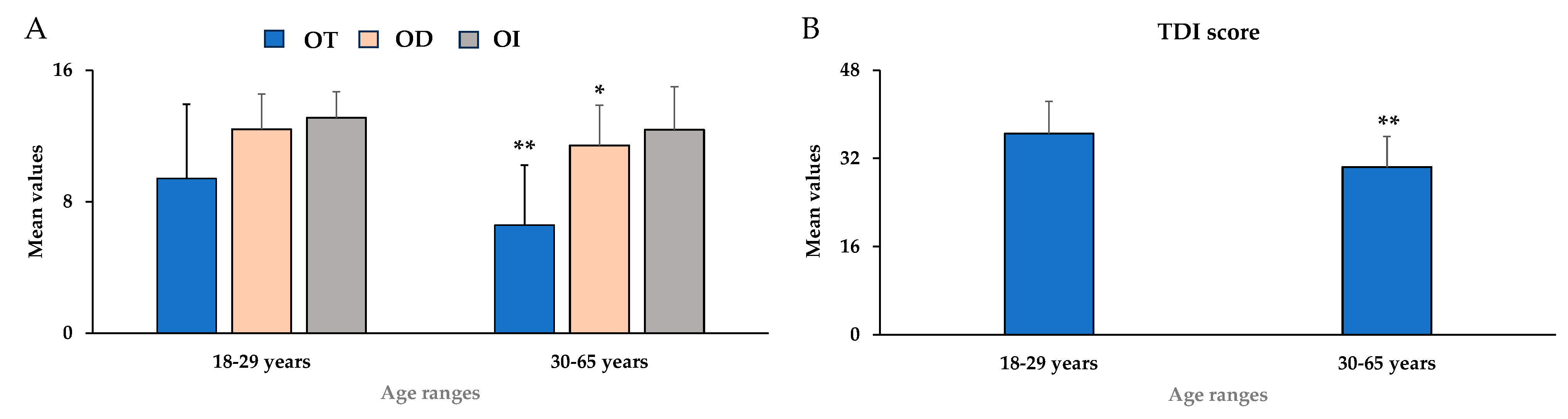
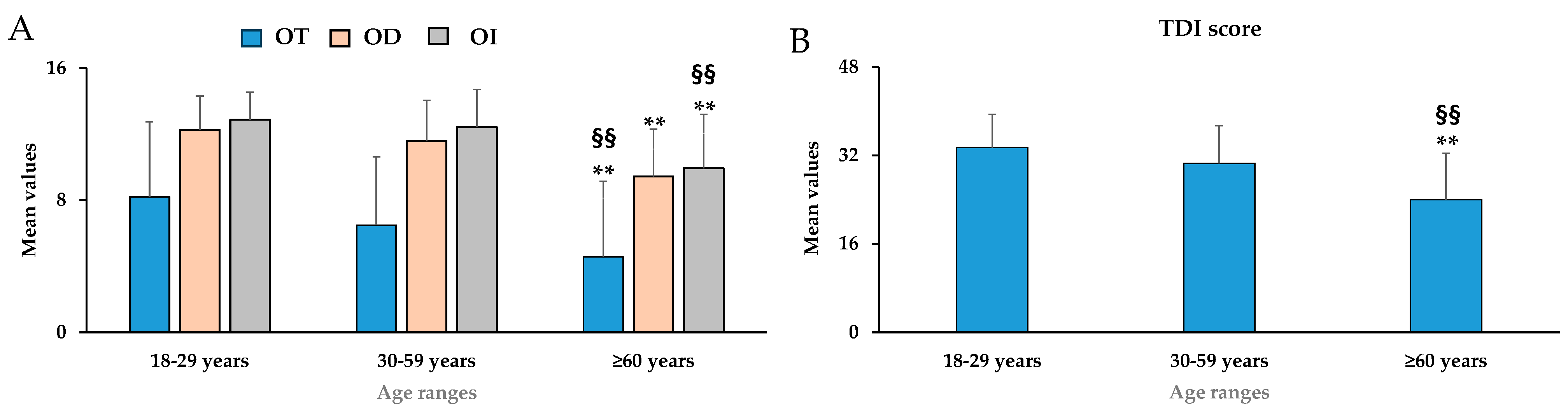
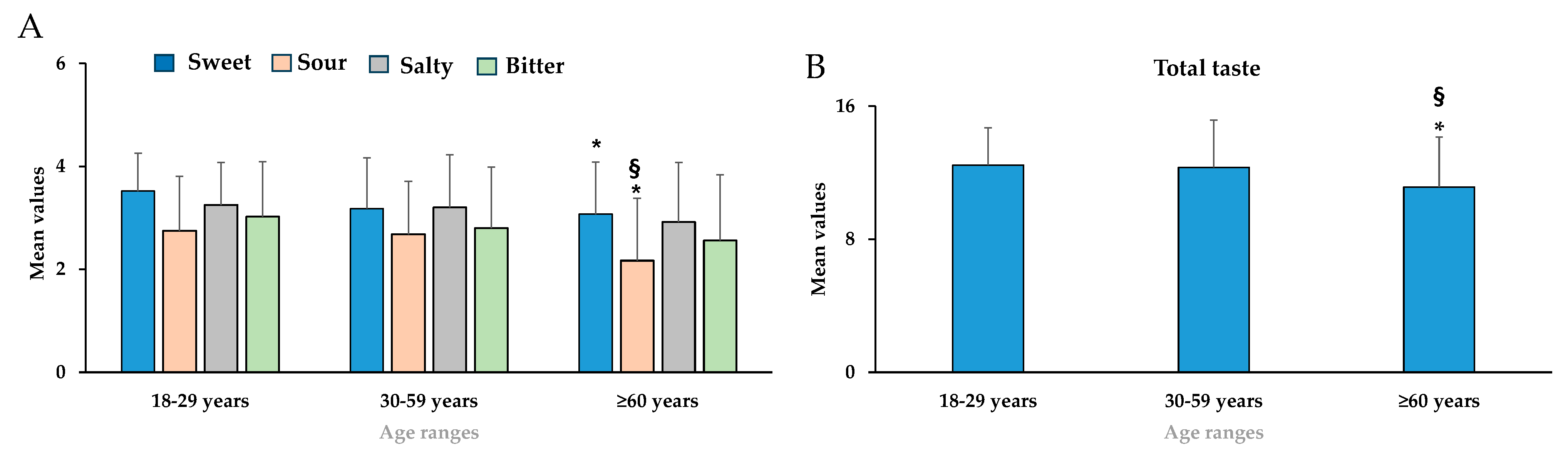
3.3. Age-Related Sensory Changes
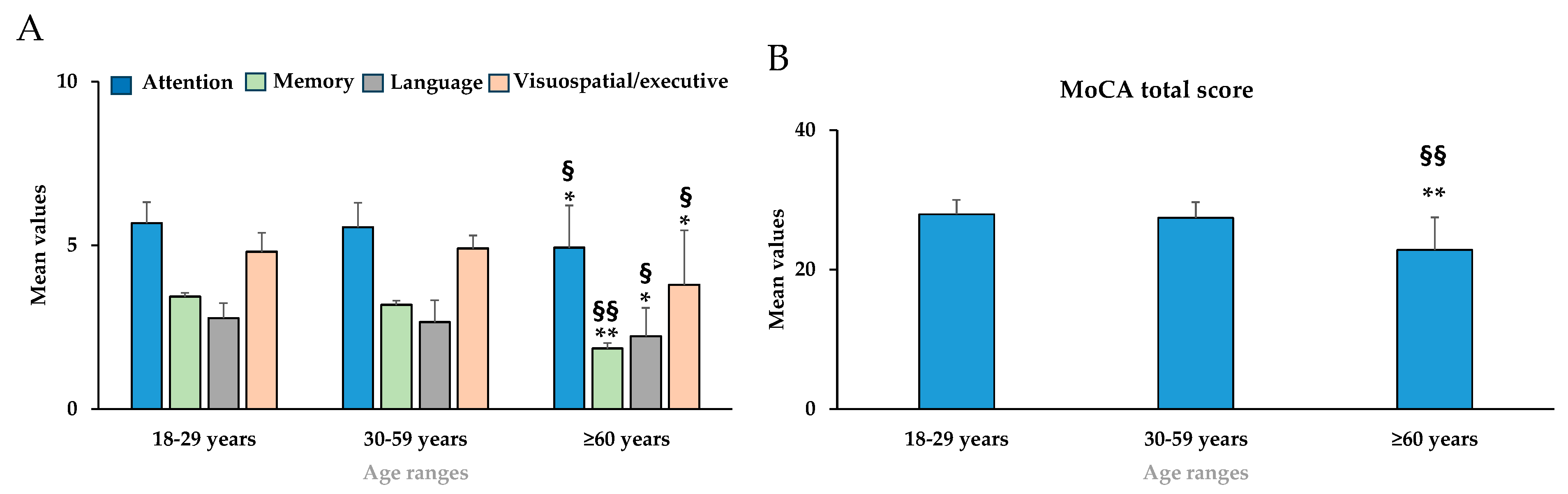
3.4. Age-Related Cognitive Changes
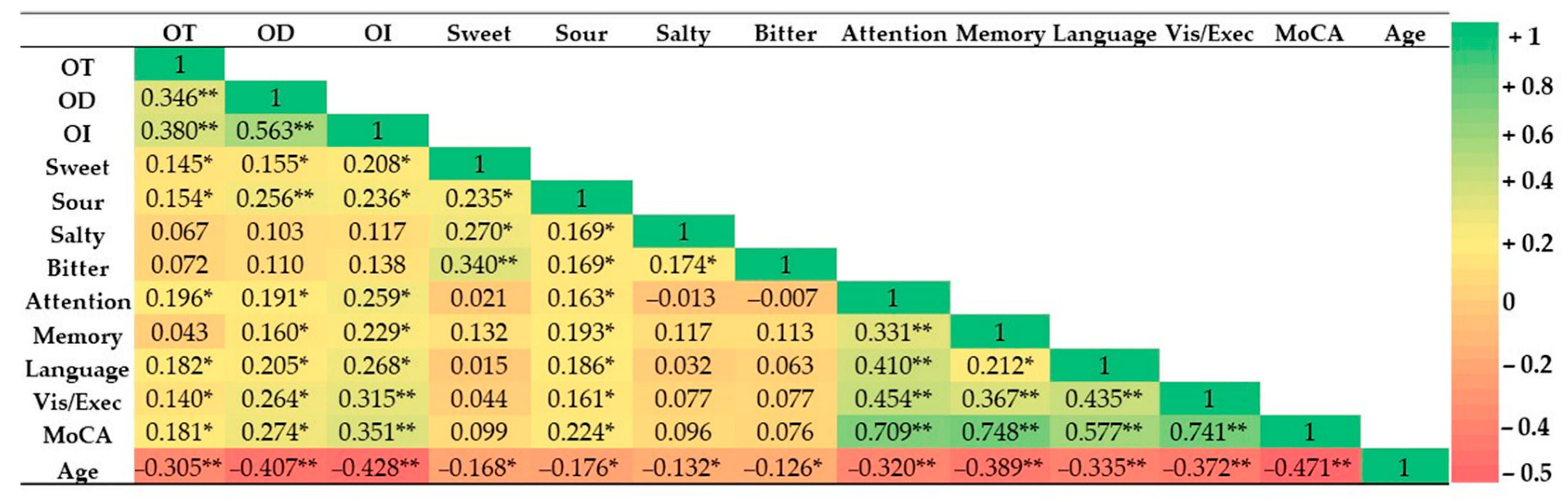
3.5. Sensory-Cognitive Associations
3.6. Regression Analyses
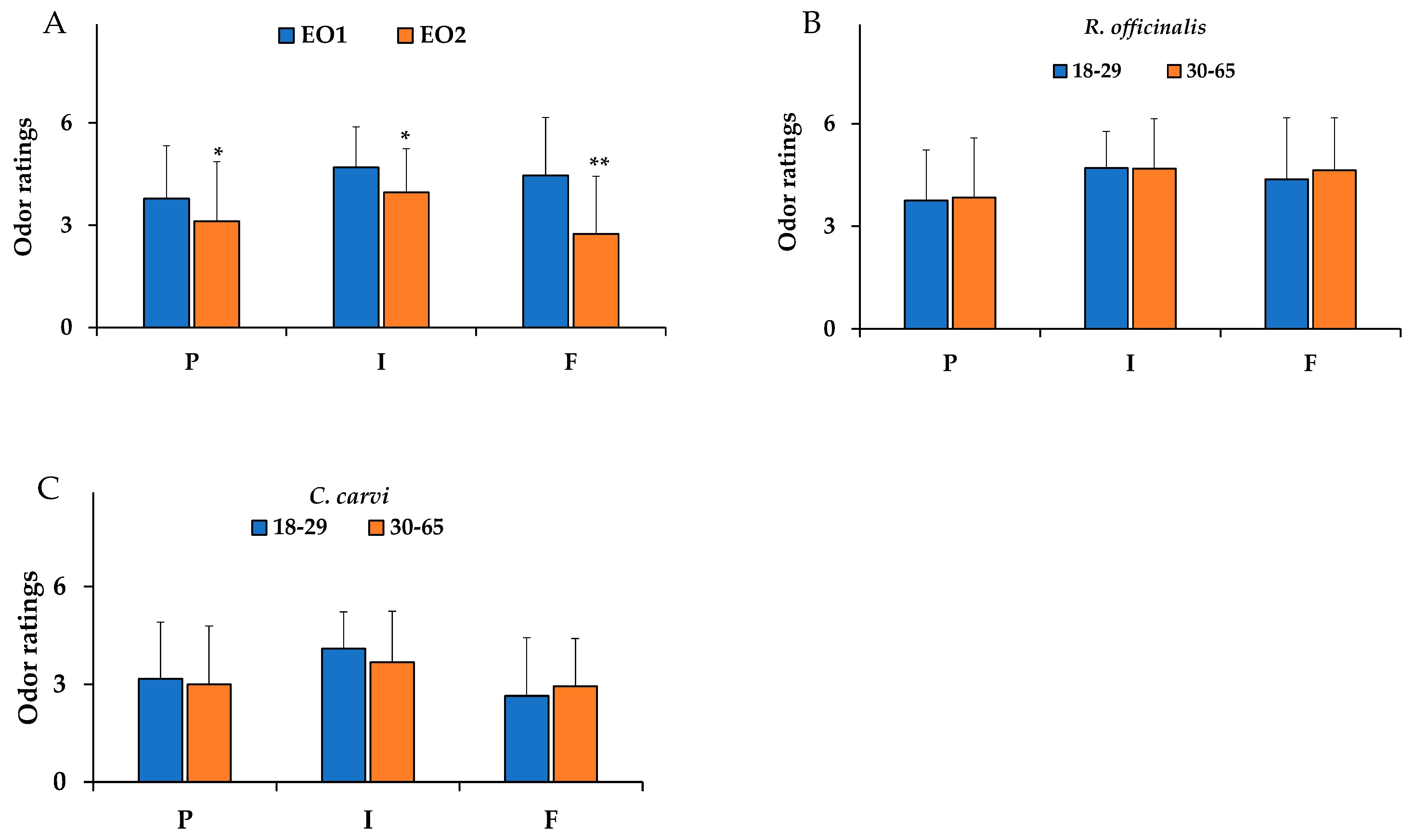
3.7. EOs Hedonic Ratings
4. Discussion
4.1. Age-Related Changes in Olfactory, Gustatory Functions, and Cognitive Abilities
4.2. Effects of R. officinalis and C. carvi EOs on the Chemosensory System in Relation to Age
5. Conclusions
Author Contributions
Funding
Institutional Review Board Statement
Informed Consent Statement
Data Availability Statement
Conflicts of Interest
Abbreviations
| AChE | Acetylcholinesterase |
| EO | Essential Oil |
| EO 1 | Rosmarinus officinalis Essential Oil |
| EO 2 | Carum carvi Essential Oil |
| MoCA | Montreal Cognitive Assessment |
| OT | Odor Threshold |
| OD | Odor Discrimination |
| OI | Odor Identification |
| ROS | Reactive Oxygen Species |
| TDI | Threshold + Discrimination + Identification |
References
- Hong, S.; Baek, S.H.; Lai, M.K.P.; Arumugam, T.V.; Jo, D.G. Aging-associated sensory decline and Alzheimer’s disease. Mol. Neurodegener. 2024, 19, 93. [Google Scholar] [CrossRef] [Scilit] [PubMed]
- Gadhave, D.G.; Sugandhi, V.V.; Jha, S.K.; Nangare, S.N.; Gupta, G.; Singh, S.K.; Dua, K.; Cho, H.; Hansbro, P.M.; Paudel, K.R. Neurodegenerative disorders: Mechanisms of degeneration and therapeutic approaches with their clinical relevance. Ageing Res. Rev. 2024, 99, 102357. [Google Scholar] [CrossRef] [Scilit] [PubMed]
- Sanna, F.; Castelli, M.P.; Mostallino, R.; Loy, F.; Masala, C. Correlations between Gustatory, Olfactory, Cognitive Function, and Age in Healthy Women. Nutrients 2024, 16, 1731. [Google Scholar] [CrossRef] [Scilit] [PubMed]
- Nyberg, L.; Wåhlin, A. The many facets of brain aging. eLife 2020, 9, e56640. [Google Scholar] [CrossRef] [Scilit]
- Olofsson, J.K.; Ekström, I.; Larsson, M.; Nordin, S. Olfaction and Aging: A Review of the Current State of Research and Future Directions. Iperception 2021, 12, 20416695211020331. [Google Scholar] [CrossRef] [Scilit]
- Hossain, M.S.; Wazed, M.A.; Asha, S.; Hossen, M.A.; Fime, S.N.M.; Teeya, S.T.; Jenny, L.Y.; Dash, D.; Shimul, I.M. Flavor and Well-Being: A Comprehensive Review of Food Choices, Nutrition, and Health Interactions. Food Sci. Nutr. 2025, 13, e70276. [Google Scholar] [CrossRef] [Scilit]
- Doty, R.L. The olfactory vector hypothesis of neurodegenerative disease: Is it viable? Ann. Neurol. 2008, 63, 7–15. [Google Scholar] [CrossRef] [Scilit]
- Doty, R.L.; Kamath, V. The influences of age on olfaction: A review. Front. Psychol. 2014, 5, 20. [Google Scholar] [CrossRef] [Scilit]
- Zhou, D.; Lin, Y.; Han, Z.; Zhang, Z.; Lin, L.; Lin, S.; Yang, Q. The Impact of Aging on Neurological Diseases in the Elderly: Molecular Mechanisms and Therapeutic Perspectives. Aging Dis. 2024, 16, 2953–2978. [Google Scholar] [CrossRef] [Scilit]
- Wysocki, C.J.; Cowart, B.J.; Radil, T. Nasal trigeminal chemosensitivity across the adult life span. Percept. Psychophys. 2003, 65, 115–122. [Google Scholar] [CrossRef] [Scilit]
- Hummel, T.; Livermore, A. Intranasal chemosensory function of the trigeminal nerve and aspects of its relation to olfaction. Int. Arch. Occup. Environ. Health 2002, 75, 305–313. [Google Scholar] [CrossRef] [Scilit] [PubMed]
- Hummel, T. Assessment of intranasal trigeminal function. Int. J. Psychophysiol. 2000, 36, 147–155. [Google Scholar] [CrossRef] [Scilit] [PubMed]
- Frasnelli, J.; Hummel, T. Age-related decline of intranasal trigeminal sensitivity: Is it a peripheral event? Brain Res. 2003, 987, 201–206. [Google Scholar] [CrossRef] [Scilit] [PubMed]
- Tremblay, C.; Frasnelli, J. Olfactory and trigeminal systems interact in the periphery. Chem. Senses 2018, 43, 611–616. [Google Scholar] [CrossRef] [Scilit]
- Badran, B.W.; Gruber, E.M.; O’Leary, G.H.; Austelle, C.W.; Huffman, S.M.; Kahn, A.T.; McTeague, L.M.; Uhde, T.W.; Cortese, B.M. Electrical stimulation of the trigeminal nerve improves olfaction in healthy individuals: A randomized, double-blind, sham-controlled trial. Brain Stimul. 2022, 15, 761–768. [Google Scholar] [CrossRef] [Scilit]
- Peiffer, A.M.; Hugenschmidt, C.E.; Maldjian, J.A.; Casanova, R.; Srikanth, R.; Hayasaka, S.; Burdette, J.H.; Kraft, R.A.; Laurienti, P.J. Aging and the interaction of sensory cortical function and structure. Hum. Brain Mapp. 2009, 30, 228–240. [Google Scholar] [CrossRef] [Scilit]
- Yahiaoui-Doktor, M.; Luck, T.; Riedel-Heller, S.G.; Loeffler, M.; Wirkner, K.; Engel, C. Olfactory function is associated withcognitive performance: Results from the population-based LIFE-Adult-Study. Alzheimer’s Res. Ther. 2019, 11, 43. [Google Scholar] [CrossRef] [Scilit]
- Larsson, M.; Nilsson, L.G.; Olofsson, J.K.; Nordin, S. Demographic and cognitive predictors of cued odor identification: Evidence from a population-based study. Chem. Senses 2004, 29, 547–554. [Google Scholar] [CrossRef] [Scilit]
- Masala, C.; Solla, P.; Loy, F. Gender-Related Differences in the Correlation between Odor Threshold, Discrimination, Identification, and Cognitive Reserve Index in Healthy Subjects. Biology 2023, 12, 586. [Google Scholar] [CrossRef] [Scilit]
- De Cleene, N.; Schwarzová, K.; Labrecque, S.; Cerejo, C.; Djamshidian, A.; Seppi, K.; Heim, B. Olfactory dysfunction as potential biomarker in neurodegenerative diseases: A narrative review. Front. Neurosci. 2025, 18, 1505029. [Google Scholar] [CrossRef] [Scilit]
- Shi, A.; Long, Y.; Ma, Y.; Yu, S.; Li, D.; Deng, J.; Wen, J.; Li, X.; Wu, Y.; He, X.; et al. Natural essential oils derived from herbal medicines: A promising therapy strategy for treating cognitive impairment. Front. Aging Neurosci. 2023, 15, 1104269. [Google Scholar] [CrossRef] [Scilit] [PubMed]
- de la Fuente, A.G.; Pelucchi, S.; Mertens, J.; Di Luca, M.; Mauceri, D.; Marcello, E. Novel therapeutic approaches to target neurodegeneration. Br. J. Pharmacol. 2023, 180, 1651–1673. [Google Scholar] [CrossRef] [Scilit] [PubMed]
- GBD 2019 Dementia Forecasting Collaborators. Estimation of the global prevalence of dementia in 2019 and forecasted prevalence in 2050: An analysis for the Global Burden of Disease Study 2019. Lancet 2022, 7, e105–e125. [Google Scholar] [CrossRef]
- de Sousa, D.P.; Damasceno, R.O.S.; Amorati, R.; Elshabrawy, H.A.; de Castro, R.D.; Bezerra, D.P.; Nunes, V.R.V.; Gomes, R.C.; Lima, T.C. Essential oils: Chemistry and pharmacological activities. Biomolecules 2023, 13, 1144. [Google Scholar] [CrossRef] [Scilit]
- Liang, J.; Zhang, Y.; Chi, P.; Liu, H.; Jing, Z.; Cao, H.; Du, Y.; Zhao, Y.; Qin, X.; Zhang, W.; et al. Essential oils: Chemical constituents, potential neuropharmacological effects and aromatherapy—A review. Pharmacol. Res.-Mod. Chin. Med. 2023, 6, 100210. [Google Scholar] [CrossRef] [Scilit]
- Rosa, A.; Piras, F.; Piras, A.; Porcedda, S.; Sogos, V.; Masala, C. Chemical characterization, sensory evaluation, and biological activity in neuronal cells of essential oils (rose, eucalyptus, lemon, and clove) used for olfactory training. Molecules 2025, 30, 3591. [Google Scholar] [CrossRef] [Scilit]
- Chavda, V.; Balar, P.; Apostolopoulos, V. A review on essential oils: A potential tonic for mental wellbeing in the aging population? Maturitas 2025, 192, 108158. [Google Scholar] [CrossRef] [Scilit]
- Moss, M.; Howarth, J.; Moss, H. Aroma of Genius essential oil blend significantly enhances cognitive performance and brain metabolism in healthy adults. Hum. Psychopharmacol. 2025, 40, e70027. [Google Scholar] [CrossRef] [Scilit]
- Agatonovic-Kustrin, S.; Kustrin, E.; Morton, D.W. Essential oils and functional herbs for healthy aging. Neural Regen. Res. 2019, 14, 441–445. [Google Scholar] [CrossRef] [Scilit]
- Viana, F. Chemosensory properties of the trigeminal system. ACS Chem. Neurosci. 2011, 2, 38–50. [Google Scholar] [CrossRef] [Scilit]
- Lagouri, V.; Alexandri, G. Antioxidant properties of greek O. dictamnus and R. officinalis methanol and aqueous extracts-HPLC determination of phenolic acids. Int. J. Food Prop. 2013, 16, 549–562. [Google Scholar] [CrossRef] [Scilit]
- Bencharif-Betina, S.; Benhamed, N.; Benabdallah, A.; Bendif, H.; Benslama, A.; Negro, C.; Plavan, G.; Abd-Elkader, O.H.; De Bellis, L. A Multi-Approach Study of Phytochemicals and Their Effects on Oxidative Stress and Enzymatic Activity of Essential Oil and Crude Extracts of Rosmarinus officinalis. Separations 2023, 10, 394. [Google Scholar] [CrossRef] [Scilit]
- Satyal, P.; Jones, T.H.; Lopez, E.M.; McFeeters, R.L.; Ali, N.A.; Mansi, I.; Al-Kaf, A.G.; Setzer, W.N. Chemotypic Characterization and Biological Activity of Rosmarinus officinalis. Foods 2017, 6, 20. [Google Scholar] [CrossRef] [Scilit] [PubMed]
- Yosr, Z.; Hnia, C.; Rim, T.; Mohamed, B. Changes in essential oil composition and phenolic fraction in Rosmarinus officinalis L. var. typicus Batt. organs during growth and incidence on the antioxidant activity. Ind. Crops Prod. 2013, 43, 412–419. [Google Scholar] [CrossRef] [Scilit]
- Kosmopoulou, D.; Lafara, M.-P.; Adamantidi, T.; Ofrydopoulou, A.; Grabrucker, A.M.; Tsoupras, A. Neuroprotective Benefits of Rosmarinus officinalis and Its Bioactives against Alzheimer’s and Parkinson’s Diseases. Appl. Sci. 2024, 14, 6417. [Google Scholar] [CrossRef] [Scilit]
- Saito, M.; Misaka, T. Menthol-like cooling compounds, including (R)-(-)-carvone, inhibit the human bitter taste receptors for saccharin and acesulfame K. FEBS Open Bio 2025, 15, 1955–1962. [Google Scholar] [CrossRef] [Scilit]
- Keshavarz, A.; Minaiyan, M.; Ghannadi, A.; Mahzouni, P. Effects of Carum carvi L. (Caraway) extract and essential oil on TNBS-induced colitis in rats. Res. Pharm. Sci. 2013, 8, 1–8. [Google Scholar]
- Baananou, S.; Bagdonaite, E.; Marongiu, B.; Piras, A.; Porcedda, S.; Falconieri, D.; Boughattas, N. Extraction of the volatile oil from Carum carvi of Tunisia and Lithuania by supercritical carbon dioxide: Chemical composition and antiulcerogenic activity. Nat. Prod. Res. 2013, 27, 2132–2136. [Google Scholar] [CrossRef] [Scilit]
- Adams, R.P. Identification of Essential Oil Components by Gas Chromatography/Mass Spectroscopy; Allured Publishing Corporation: Carol Stream, IL, USA, 2007. [Google Scholar]
- NIST/EPA/NIH. Mass Spectral Library; National Institute of Standard and Technology: Gaithersburg, MD, USA, 2005. [Google Scholar]
- Van Den Dool, H.; Kratz, P.D. A generalization of the retention index system including linear temperature programmed gasliquid chromatography. J. Chromatogr. 1963, 11, 463–471. [Google Scholar] [CrossRef] [Scilit]
- Piras, A.; Porcedda, S.; Smeriglio, A.; Trombetta, D.; Nieddu, M.; Piras, F.; Sogos, V.; Rosa, A. Chemical composition, nutritional, and biological properties of extracts obtained with different techniques from Aronia melanocarpa berries. Molecules 2024, 29, 2577. [Google Scholar] [CrossRef] [Scilit]
- Hummel, T.; Sekinger, B.; Wolf, S.R.; Pauli, E.; Kobal, G. Sniffin’ Sticks: Olfactory performance assessed by the combined testing of odor identification, odor discrimination and olfactory threshold. Chem. Senses 1997, 22, 39–52. [Google Scholar] [CrossRef] [Scilit] [PubMed]
- Hummel, T.; Kobal, G.; Gudziol, H.; Mackay-Sim, A. Normative data for the “Sniffin’ Sticks” including tests of odor identification, odor discrimination, and olfactory thresholds: An upgrade based on a group of more than 3000 subjects. Eur. Arch. Eur. Arch. Otorhinolaryngol. 2007, 264, 237–243. [Google Scholar] [CrossRef] [Scilit] [PubMed]
- Haehner, A.; Mayer, A.M.; Landis, B.N.; Pournaras, I.; Lill, K.; Gudziol, V.; Hummel, T. High test-retest reliability of the extended version of the “Sniffin’ Sticks” test. Chem. Senses 2009, 34, 705–711. [Google Scholar] [CrossRef] [Scilit] [PubMed]
- Oleszkiewicz, A.; Schriever, V.A.; Croy, I.; Hähner, A.; Hummel, T. Updated Sniffin’ Sticks normative data based on an extended sample of 9139 subjects. Eur. Arch. Otorhinolaryngol. 2019, 276, 719–728. [Google Scholar] [CrossRef] [Scilit]
- Landis, B.N.; Welge-Luessen, A.; Brämerson, A.; Bende, M.; Mueller, C.A.; Nordin, S.; Hummel, T. “Taste strips”—A rapid, lateralized, gustatory bedside identification test based on impregnated filter papers. J. Neurol. 2009, 256, 242–248. [Google Scholar] [CrossRef] [Scilit]
- Conti, S.; Bonazzi, S.; Laiacona, M.; Masina, M.; Coralli, M.V. Montreal Cognitive Assessment (MoCA)-Italian version: Regression based norms and equivalent scores. Neurol. Sci. 2015, 36, 209–214. [Google Scholar] [CrossRef] [Scilit]
- Nasreddine, Z.S.; Phillips, N.A.; Bédirian, V.; Charbonneau, S.; Whitehead, V.; Collin, I.; Cummings, J.L.; Chertkow, H. The Montreal Cognitive Assessment, MoCA: A brief screening tool for mild cognitive impairment. J. Am. Geriatr. Soc. 2005, 53, 695–699. [Google Scholar] [CrossRef] [Scilit]
- Rosa, A.; Loy, F.; Pinna, I.; Masala, C. Role of aromatic herbs and spices in salty perception of patients with hyposmia. Nutrients 2022, 14, 4976. [Google Scholar] [CrossRef] [Scilit]
- Rosa, A.; Pinna, I.; Piras, A.; Porcedda, S.; Masala, C. Sex differences in the bitterness perception of an aromatic myrtle bitter liqueur and bitter compounds. Nutrients 2023, 15, 2030. [Google Scholar] [CrossRef] [Scilit]
- Kondo, K.; Kikuta, S.; Ueha, R.; Suzukawa, K.; Yamasoba, T. Age-Related Olfactory Dysfunction: Epidemiology, Pathophysiology, and Clinical Management. Front. Aging Neurosci. 2020, 12, 208. [Google Scholar] [CrossRef] [Scilit]
- Boyce, J.M.; Shone, G.R. Effects of ageing on smell and taste. Postgrad. Med. J. 2006, 82, 239–241. [Google Scholar] [CrossRef] [Scilit] [PubMed]
- Alia, S.; Aquilanti, L.; Pugnaloni, S.; Di Paolo, A.; Rappelli, G.; Vignini, A. The Influence of Age and Oral Health on Taste Perception in Older Adults: A Case-Control Study. Nutrients 2021, 13, 4166. [Google Scholar] [CrossRef] [Scilit] [PubMed]
- Iannilli, E.; Broy, F.; Kunz, S.; Hummel, T. Age-related changes of gustatory function depend on alteration of neuronal circuits. J. Neurol. Res. 2017, 95, 1927–1936. [Google Scholar] [CrossRef] [Scilit] [PubMed]
- Braun, T.; Doerr, J.M.; Peters, L.; Viard, M.; Reuters, I.; Prosiegel, M. Age-related changes in oral sensitivity, taste and smell. Sci. Rep. 2022, 12, 1533. [Google Scholar] [CrossRef] [Scilit]
- Doty, R.L. Age-related deficits in taste and smell. Otolaryngol. Clin. N. Am. 2018, 51, 815–825. [Google Scholar] [CrossRef] [Scilit]
- Makizako, M.; Makizako, H.; Doi, T.; Uemura, K.; Tsutsumimoto, K.; Miyaguchi, H.; Shimada, H. Olfactory identification and cognitive performance in community-dwelling older adults with mild cognitive impairment. Chem. Senses 2014, 39, 39–46. [Google Scholar] [CrossRef] [Scilit]
- Wang, M.C.; Chiou, J.M.; Chen, Y.C.; Chen, J.H. Association between olfactory dysfunction and cognitive impairment in dementia-free older adults: A prospective cohort study in Taiwan. J. Alzheimer’s Dis. 2023, 96, 1477–1488. [Google Scholar] [CrossRef] [Scilit]
- Ramaswamy, V.M.C.; Schofield, P.W. Olfaction and Executive Cognitive Performance: A Systematic Review. Front. Psychol. 2022, 13, 871391. [Google Scholar] [CrossRef] [Scilit]
- Jacobson, P.T.; Vilarello, B.J.; Tervo, J.P.; Waring, N.A.; Gudis, D.A.; Goldberg, T.E.; Devanand, D.P.; Overdevest, J.B. Associations between olfactory dysfunction and cognition: A scoping review. J. Neurol. 2024, 271, 1170–1203. [Google Scholar] [CrossRef] [Scilit]
- Delgado-Lima, A.H.; Bouhaben, J.; Delgado-Losada, M.L. The efficacy of olfactory training in improving olfactory function: A meta-analysis. Eur. Arch. Otorhinolaryngol. 2024, 281, 5267–5284. [Google Scholar] [CrossRef] [Scilit]
- Koyama, S.; Heinbockel, T. The Effects of Essential Oils and Terpenes in Relation to Their Routes of Intake and Application. Int. J. Mol. Sci. 2020, 21, 1558. [Google Scholar] [CrossRef] [Scilit]
- Liu, X.; Yin, J.; Zhang, L.; Sun, B.; Yang, Y.; Qi, G.; Xie, J.; Yang, R.; Sun, S.; Zhang, Y. The potential of olfactory training and dietary intervention in the treatment of olfactory dysfunction: A review. Trends Food Sci. Technol. 2026, 167, 105460. [Google Scholar] [CrossRef] [Scilit]
- Vora, L.K.; Gholap, A.D.; Hatvate, N.T.; Naren, P.; Khan, S.; Chavda, V.P.; Balar, P.C.; Gandhi, J.; Khatri, D.K. Essential oils for clinical aromatherapy: A comprehensive review. J. Ethnopharmacol. 2024, 330, 118180. [Google Scholar] [CrossRef] [Scilit] [PubMed]
- Moss, M.; Cook, J.; Wesnes, K.; Duckett, P. Aromas of rosemary and lavender essential oils differentially affect cognition and mood in healthy adults. Int. J. Neurosci. 2003, 113, 15–38. [Google Scholar] [CrossRef] [Scilit] [PubMed]
- Faridzadeh, A.; Salimi, Y.; Ghasemirad, H.; Kargar, M.; Rashtchian, A.; Mahmoudvand, G.; Karimi, M.A.; Zerangian, N.; Jahani, N.; Masoudi, A.; et al. Neuroprotective potential of aromatic herbs: Rosemary, sage, and lavender. Front. Neurosci. 2022, 16, 909833. [Google Scholar] [CrossRef] [Scilit]
- Mori, K.; Sakano, H. How is the olfactory map formed and interpreted in the mammalian brain? Annu. Rev. Neurosci. 2011, 34, 467–499. [Google Scholar] [CrossRef] [Scilit]
- Auti, S.T.; Kulkarni, Y.A. Beneficial Effects of Caraway Oil in Aluminium Chloride-Induced Neurotoxicity. Cureus 2025, 17, e86783. [Google Scholar] [CrossRef] [Scilit]
- Lasarte-Cia, A.; Lozano, T.; Pérez-González, M.; Gorraiz, M.; Iribarren, K.; Hervás-Stubbs, S.; Sarobe, P.; Rabal, O.; Cuadrado-Tejedor, M.; García-Osta, A.; et al. Immunomodulatory Properties of Carvone Inhalation and Its Effects on Contextual Fear Memory in Mice. Front. Immunol. 2018, 9, 68. [Google Scholar] [CrossRef] [Scilit]
- Pina, L.T.S.; Serafini, M.R.; Oliveira, M.A.; Sampaio, L.A.; Guimarães, J.O.; Guimarães, A.G. Carvone and its pharmacological activities: A systematic review. Phytochemistry 2022, 196, 113080. [Google Scholar] [CrossRef] [Scilit]



| EO 1 | EO 2 | |||||
|---|---|---|---|---|---|---|
| Compound | 1 RIEXP | RILIT | Formula | Class | Amount (%) | |
| Tricyclene | 926 | 921 | C10H16 | MH | 0.2 | - |
| α-Thujene | 927 | 924 | C10H16 | MH | 0.2 | - |
| α-Pinene | 935 | 932 | C10H16 | MH | 31.8 | - |
| Camphene | 951 | 946 | C10H16 | MH | 4.8 | - |
| Thuja-2,4(10)-diene | 957 | 953 | C10H14 | MH | 1.1 | - |
| β-Pinene | 980 | 974 | C10H16 | MH | 2.5 | - |
| Myrcene | 989 | 988 | C10H16 | MH | 1.6 | 0.5 |
| α-Phellandrene | 1007 | 1002 | C10H16 | MH | 0.6 | - |
| iso-Sylvestrene | 1012 | 1007 | C10H16 | MH | 1.5 | - |
| α-Terpinene | 1017 | 1014 | C10H16 | MH | 0.8 | - |
| para-Cymene | 1024 | 1020 | C10H14 | MH | 1.4 | - |
| Limonene | 1031 | 1024 | C10H16 | MH | 4.2 | 46.4 |
| 1,8-Cineole | 1034 | 1026 | C10H18O | MO | 13.1 | - |
| γ-Terpinene | 1057 | 1054 | C10H16 | MH | 1.3 | - |
| Terpinolene | 1083 | 1086 | C10H16 | MH | 2.0 | - |
| Linalool | 1099 | 1095 | C10H18O | MO | 1.6 | - |
| Chrysanthenone | 1126 | 1124 | C10H14O | MO | 1.3 | - |
| Camphor | 1147 | 1141 | C10H16O | MO | 1.8 | - |
| Borneol | 1167 | 1165 | C10H18O | MO | 4.9 | - |
| cis-Pinocamphone | 1175 | 1172 | C10H16O | MO | 0.3 | - |
| Terpin-4-ol | 1178 | 1174 | C10H18O | MO | 1.1 | - |
| α-terpineol | 1191 | 1186 | C10H18O | MO | 1.9 | - |
| Myrtenol | 1196 | 1194 | C10H16O | MO | 0.7 | - |
| trans-Dihydrocarvone | 1203 | 1200 | C10H16O | MO | 0.5 | - |
| Verbenone | 1209 | 1204 | C10H14O | MO | 8.4 | - |
| Carvone | 1231 | 1239 | C10H12O | MO | - | 53.0 |
| Bornyl acetate | 1286 | 1287 | C12H20O2 | MO | 2.0 | - |
| (E)-Caryophyllene | 1412 | 1417 | C15H24 | SH | 7.1 | 0.2 |
| α-Humulene | 1448 | 1452 | C15H24 | SH | 1.0 | - |
| Unidentified peaks | - | - | ||||
| Parameters | 18–29 Years (n = 178) | 30–59 Years (n = 137) | ≥60 Years (n = 87) |
|---|---|---|---|
| Sex | 115 W/63 M | 63 W/74 M | 48 W/39 M |
| Weight (kg) | 62.9 ± 13.9 | 68.4 ± 13.2 | 69.8 ± 14.4 |
| Height (m) | 1.7 ± 0.1 | 1.67 ± 0.1 | 1.6 ± 0.1 |
| BMI | 22.9 ± 4.1 | 25.9 ± 7.4 | 25.7 ± 4.1 |
| Parameters | 18–29 Years (n = 178) | 30–59 Years (n = 137) | ≥60 Years (n = 87) |
|---|---|---|---|
| Anosmia | 1.1% | 2.2% | 20.7% ** |
| Hyposmia | 24.3% | 40.1% | 54% ** |
| Ageusia | 0 | 1.5% | 2.3% |
| Hypogeusia | 11.8% | 15.3% | 25.3% ** |
| Predictors | B | SD Error | β | t | Significance (p Value) |
|---|---|---|---|---|---|
| (a) Attention as a dependent variable | |||||
| OT | 0.021 | 0.010 | 0.106 | 2.002 | 0.046 |
| OD | 0.011 | 0.020 | 0.031 | 0.516 | 0.606 |
| OI | 0.068 | 0.021 | 0.194 | 3.212 | 0.001 |
| Sweet | −0.039 | 0.053 | −0.039 | −0.734 | 0.463 |
| Sour | 0.096 | 0.042 | 0.118 | 2.295 | 0.022 |
| Salty | −0.042 | 0.044 | −0.048 | −0.955 | 0.340 |
| Bitter | −0.033 | 0.040 | −0.043 | −0.838 | 0.402 |
| (b) Memory as a dependent variable | |||||
| OT | −0.025 | 0.019 | −0.071 | −1.333 | 0.183 |
| OD | 0.018 | 0.037 | 0.029 | 0.477 | 0.634 |
| OI | 0.121 | 0.039 | 0.190 | 3.123 | 0.002 |
| Sweet | 0.070 | 0.097 | 0.039 | 0.720 | 0.472 |
| Sour | 0.186 | 0.076 | 0.125 | 2.435 | 0.015 |
| Salty | 0.092 | 0.081 | 0.057 | 1.129 | 0.259 |
| Bitter | 0.061 | 0.072 | 0.044 | 0.849 | 0.396 |
| (c) Language as a dependent variable | |||||
| OT | 0.012 | 0.008 | 0.083 | 1.588 | 0.113 |
| OD | −0.011 | 0.015 | 0.042 | 0.706 | 0.481 |
| OI | 0.051 | 0.016 | 0.196 | 3.253 | 0.001 |
| Sweet | −0.063 | 0.040 | −0.085 | −1.593 | 0.112 |
| Sour | 0.080 | 0.031 | 0.132 | 2.583 | 0.010 |
| Salty | −0.004 | 0.033 | −0.006 | −0.119 | 0.905 |
| Bitter | 0.019 | 0.030 | 0.033 | 0.636 | 0.525 |
| (d) MoCA as a dependent variable | |||||
| OT | 0.023 | 0.036 | 0.033 | 0.640 | 0.522 |
| OD | 0.101 | 0.072 | 0.080 | 1.392 | 0.165 |
| OI | 0.334 | 0.075 | 0.261 | 4.452 | 0.001 |
| Sweet | −0.053 | 0.188 | −0.015 | −0.281 | 0.779 |
| Sour | 0.396 | 0.148 | 0.133 | 2.680 | 0.008 |
| Salty | 0.114 | 0.157 | 0.035 | 0.727 | 0.468 |
| Bitter | 0.014 | 0.140 | 0.005 | 0.101 | 0.919 |
| Parameters | 18–29 Years (n = 40) | 30–65 Years (n = 19) |
|---|---|---|
| Sex | 28 W/12 M | 11 W/8 M |
| Weight (kg) | 61.2 ± 11.8 | 65.5 ± 9.5 |
| Height (m) | 1.6 ± 0.1 | 1.7 ± 0.1 |
| BMI | 22.9 ± 4.1 | 23.7 ± 2.4 |
| EO | EOs Perceived Odor | Main Constituents | Chemical Sensation |
|---|---|---|---|
| R. officinalis | 18–29 years: Rosemary, lavender, and turpentine 30–65 years: Citrus fruit, natural essence, spice, rosemary, bergamot, saffron, menthol, eucalyptus, and plant bark | α-Pinene | |
| 1,8-Cineole | Trigeminal [25] | ||
| C. carvi | 18–29 years: Vanilla, liquorice, herbs, anise, balsamic plants, and almond 30–65 years: Mint, unpleasant, aromatic, menthol, eucalyptus, balsamic plants, and artichoke | Carvone | Trigeminal [25] |
| Limonene | Trigeminal [25] | ||
Disclaimer/Publisher’s Note: The statements, opinions and data contained in all publications are solely those of the individual author(s) and contributor(s) and not of MDPI and/or the editor(s). MDPI and/or the editor(s) disclaim responsibility for any injury to people or property resulting from any ideas, methods, instructions or products referred to in the content. |
© 2026 by the authors. Licensee MDPI, Basel, Switzerland. This article is an open access article distributed under the terms and conditions of the Creative Commons Attribution (CC BY) license.
Share and Cite
Rosa, A.; Piras, A.; Porcedda, S.; Solari, P.; Pinna, I.; Masala, C. Age-Related Olfactory and Cognitive Decline: Potential Effects of Rosmarinus officinalis and Carum carvi Essential Oils. Nutrients 2026, 18, 862. https://doi.org/10.3390/nu18050862
Rosa A, Piras A, Porcedda S, Solari P, Pinna I, Masala C. Age-Related Olfactory and Cognitive Decline: Potential Effects of Rosmarinus officinalis and Carum carvi Essential Oils. Nutrients. 2026; 18(5):862. https://doi.org/10.3390/nu18050862
Chicago/Turabian StyleRosa, Antonella, Alessandra Piras, Silva Porcedda, Paolo Solari, Ilenia Pinna, and Carla Masala. 2026. "Age-Related Olfactory and Cognitive Decline: Potential Effects of Rosmarinus officinalis and Carum carvi Essential Oils" Nutrients 18, no. 5: 862. https://doi.org/10.3390/nu18050862
APA StyleRosa, A., Piras, A., Porcedda, S., Solari, P., Pinna, I., & Masala, C. (2026). Age-Related Olfactory and Cognitive Decline: Potential Effects of Rosmarinus officinalis and Carum carvi Essential Oils. Nutrients, 18(5), 862. https://doi.org/10.3390/nu18050862