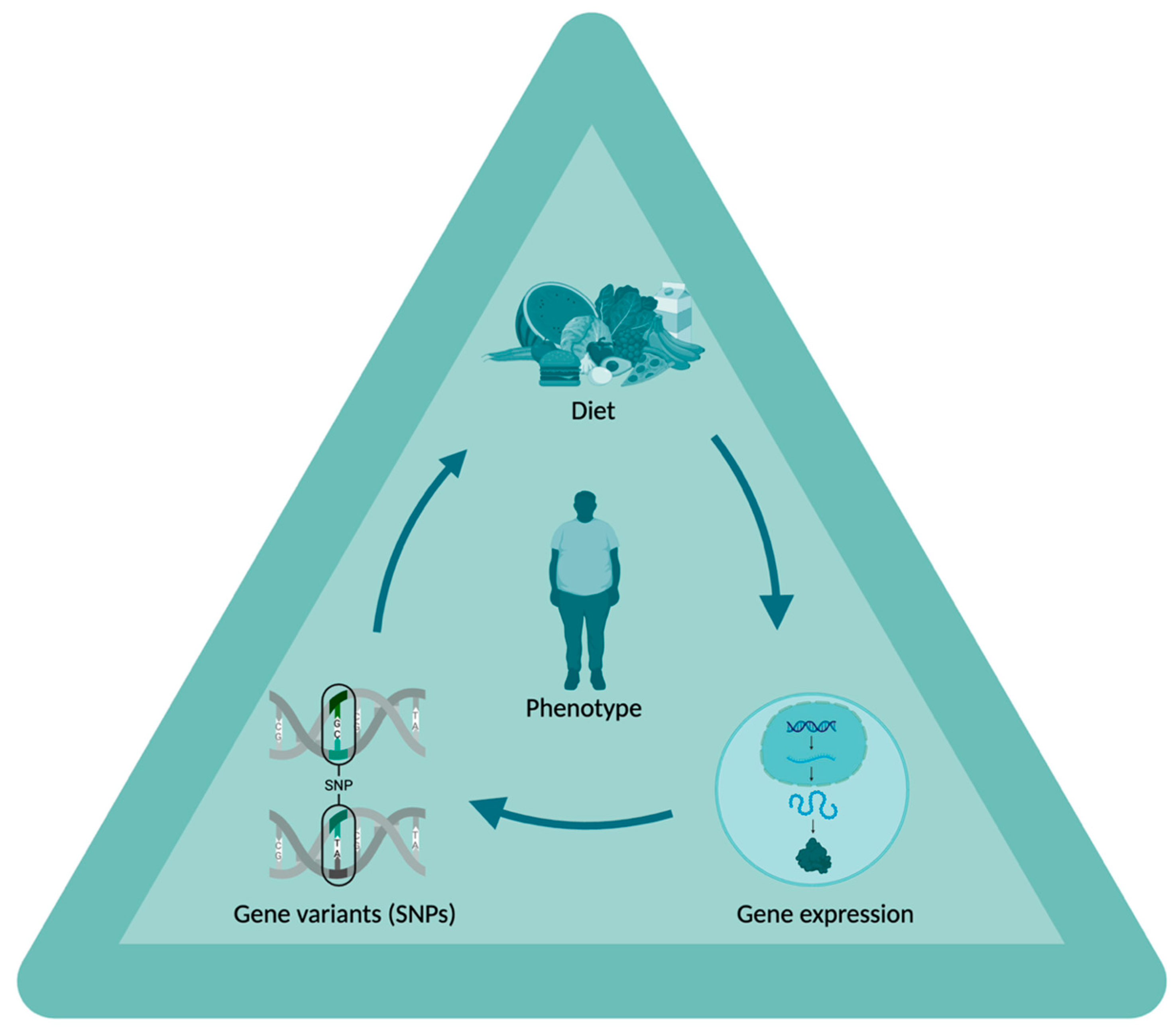
Personalised Nutrition in Obesity and Prediabetes: Do Genotypes Matter?

 , , and
Abstract
1. Introduction
2. Materials and Methods
3. Results
3.1. Genotype–Diet Effects on Body Composition
3.1.1. Key Genes and Diet Exposures
3.1.2. TCF7L2 and Macronutrient Thresholds
3.1.3. MC4R: Protein Sensitivity and Metformin Response
3.1.4. FTO: Fat Intake and Weight Loss Response
3.1.5. PPARG: PUFA vs. SFA Effects
3.1.6. Polygenic and Genetic Risk Scores

| Study (Year) | Score Composition | Exposure (Definition/Threshold) | Outcome(s) | Key Interaction Finding (Direction) | Effect Size/Estimate (If Reported) | p-Value |
|---|---|---|---|---|---|---|
| Sekar et al., 2025 [55] | 10-SNP metabolic GRS | PUFA intake (≥3.1 g/day); high GRS (≥6 risk alleles) | WC | Lower WC in high GRS + high PUFA group | NR (WC lower; p = 0.047 noted in source text) | Pint: 0.00009 |
| Wuni et al., 2022 [18] | CETP/LPL 3-SNP GRS | SFA intake | WC | Low SFA reduced WC in high GRS | NR | Pint: 0.006 |
| Alathari et al., 2022 [56] | Vitamin D 8-SNP GRS | Fiber intake (low fibre stratum) | BMI | Higher BMI in high GRS + low fibre | NR | Pint: 0.020 |
| Alathari et al., 2022 [56] | Vitamin D 8-SNP GRS | Fat intake (low fat stratum) | HbA1c | Lower HbA1c in high GRS + low fat | NR | Pint: 0.029 |
| Chen et al., 2021 [43] | 159-SNP adiposity PGS (WHR only+) | Protein intake | Fasting glucose | WHR only+ PGS × protein interaction reported | NR | Pint: 0.0007 |
| Padilla-Martinez et al., 2022 [86] | 68-SNP T2D PRS | Observational | Fat mass | PRS associated with Δ fat mass | NR | P(reported): 0.025 |
| Sekar et al., 2024 [59] | 23-SNP GRS | MUFA intake (low MUFA stratum) | HbA1c | Higher HbA1c in high GRS + low MUFA | NR | Pint: 0.026 |
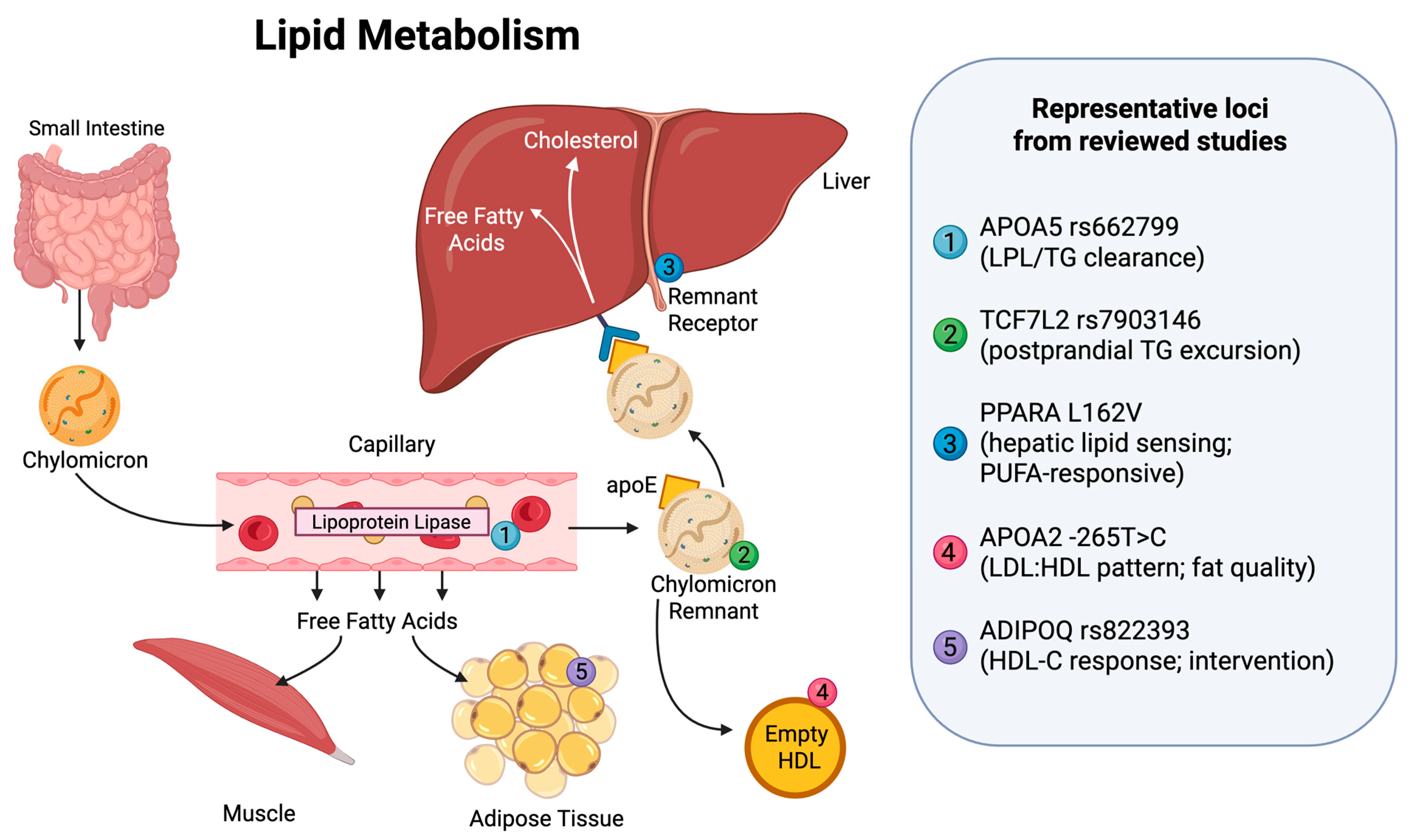
3.2. Lipid Profile and Fatty Acid Metabolism: Fat Quality × Genotype Interactions
3.2.1. The Gatekeepers: Apolipoproteins and Nuclear Receptors
3.2.2. TCF7L2: Acute Fat Clearance and Lipemia
3.2.3. Metabolites and Fatty Acid Flux
3.3. Insulin/Glucose Signalling: Risk Amplification and Pathway Specificity
3.3.1. TCF7L2: Macronutrient Thresholds and Fat Sensitivity
3.3.2. Polygenic Risk: The Amplification Effect
3.3.3. Specific Macronutrient Tuning: Fat Quality and Carbohydrate Handling
3.3.4. Pathway Specificity: Insulin Resistance vs. β-Cell Function
3.4. Inflammation and Oxidative Stress: Redox Gating and Uncoupled Responses
3.4.1. The APOA2 Paradox: Redox Gating
3.4.2. Adipokines and the Mediterranean Effect
3.4.3. Systemic Defence: Polygenic Antioxidant Response
3.4.4. TCF7L2: The “Override” Signal
4. Discussion
5. Conclusions
Supplementary Materials
Author Contributions
Funding
Institutional Review Board Statement
Informed Consent Statement
Data Availability Statement
Conflicts of Interest
Abbreviations
| ADA | American Diabetes Association |
| APOA2 | apolipoprotein A2 |
| APOA5 | apolipoprotein A5 |
| APOB | apolipoprotein B |
| APOE | apolipoprotein E |
| AUC | area under the curve |
| BDNF | Brain-derived neurotrophic factor |
| BMI | Body mass index |
| CETP | Cholesteryl ester transfer protein |
| CI | Confidence interval |
| CIR30 | Corrected insulin response at 30 min |
| CREBRF | cAMP-responsive element binding protein 3 regulatory factor |
| DASH | Dietary Approaches to Stop Hypertension |
| DII | Dietary inflammatory index |
| DPA | docosapentaenoic acid |
| DTAC | dietary total antioxidant capacity |
| FADS | fatty acid desaturase genes |
| FFQs | food frequency questionnaires |
| FPG | fasting plasma glucose |
| FTO | fat mass and obesity-associated protein |
| GI | glycaemic index |
| GL | glycaemic load |
| GRS | genetic risk score |
| HbA1c | glycated haemoglobin |
| HDL-C | high-density lipoprotein cholesterol |
| HOMA-B | homeostatic model assessment of β-cell function |
| HOMA-IR | homeostatic model assessment for insulin resistance |
| hs-CRP | high-sensitivity C-reactive protein |
| IL-6 | interleukin (IL)-6 |
| IL-18 | interleukin (IL)-18 |
| LPL | lipoprotein lipase |
| LDL-C | low-density lipoprotein cholesterol |
| MC4R | melanocortin 4 receptor |
| MTNR1B | melatonin receptor 1B |
| MUFA | monounsaturated fatty acid |
| n-3 PUFA | omega-3 polyunsaturated fatty acid |
| OGTT | oral glucose tolerance test |
| OR | odds ratio |
| PGS | polygenic score |
| PPARG | peroxisome proliferator-activated receptor gamma |
| PRAL | potential renal acid load |
| PRISMA | Preferred Reporting Items for Systematic Reviews and Meta-Analyses |
| PRS | polygenic risk score |
| PREDIMED | Prevención con Dieta Mediterránea |
| PUFA/PUFAs | polyunsaturated fatty acid(s) |
| RCT(s) | randomized controlled trial(s) |
| SAT | subcutaneous adipose tissue |
| SFA/SFAs | saturated fatty acid(s) |
| SLC16A11 | solute carrier family 16 member 11 |
| SNP(s) | single nucleotide polymorphism(s) |
| T2D | type 2 diabetes |
| TCF7L2 | transcription factor 7-like 2 |
| TG | triglyceride |
| TMEM18 | transmembrane protein 18 |
| TNF-α | tumour necrosis factor (TNF)-α |
| VAT | visceral adipose tissue |
| VDR | vitamin D receptor |
| VLDL-TGs | very-low-density lipoprotein triglycerides |
| WC | waist circumference |
| WHO | World Health Organization |
| WHR | waist-to-hip ratio |
| WHtR | waist-to-height ratio |
References
- Rutkowska, M. Czy Polacy Mają Problem z Nadwagą? Komunikat z Badań; Centrum Badania Opinii Społecznej (CBOS): Warszawa, Poland, 2019. [Google Scholar]
- Phelps, N.H.; Singleton, R.K.; Zhou, B.; Heap, R.A.; Mishra, A.; Bennett, J.E.; Paciorek, C.J.; Lhoste, V.P.; Carrillo-Larco, R.M.; Stevens, G.A.; et al. Worldwide Trends in Underweight and Obesity from 1990 to 2022: A Pooled Analysis of 3663 Population-Representative Studies with 222 Million Children, Adolescents, and Adults. Lancet 2024, 403, 1027–1050. [Google Scholar] [CrossRef]
- Ng, M.; Gakidou, E.; Lo, J.; Abate, Y.H.; Abbafati, C.; Abbas, N.; Abbasian, M.; ElHafeez, S.A.; Abdel-Rahman, W.M.; Abd-Elsalam, S.; et al. Global, Regional, and National Prevalence of Adult Overweight and Obesity, 1990–2021, with Forecasts to 2050: A Forecasting Study for the Global Burden of Disease Study 2021. Lancet 2025, 405, 813–838. [Google Scholar] [CrossRef]
- International Diabetes Federation. IDF Diabetes Atlas; International Diabetes Federation: Brussels, Belgium, 2025; ISBN 978-2-930229-96-6. [Google Scholar]
- Maciejewska-Skrendo, A.; Massidda, M.; Tocco, F.; Leźnicka, K. The Influence of the Differentiation of Genes Encoding Peroxisome Proliferator-Activated Receptors and Their Coactivators on Nutrient and Energy Metabolism. Nutrients 2022, 14, 5378. [Google Scholar] [CrossRef]
- Gorini, F.; Tonacci, A. The Complex Gene–Carbohydrate Interaction in Type 2 Diabetes: Between Current Knowledge and Future Perspectives. Nutrients 2025, 17, 2350. [Google Scholar] [CrossRef]
- Bhori, M.; Rastogi, V.; Tungare, K.; Marar, T. A Review on Interplay between Obesity, Lipoprotein Profile and Nutrigenetics with Selected Candidate Marker Genes of Type 2 Diabetes Mellitus. Mol. Biol. Rep. 2022, 49, 687–703. [Google Scholar] [CrossRef]
- Bruna-Mejias, A.; San Martin, J.; Arciniegas-Diaz, D.; Meneses-Caroca, T.; Salamanca-Cerda, A.; Beas-Gambi, A.; Paola-Loaiza-Giraldo, J.; Ortiz-Ahumada, C.; Nova-Baeza, P.; Oyanedel-Amaro, G.; et al. Comparison of the Mediterranean Diet and Other Therapeutic Strategies in Metabolic Syndrome: A Systematic Review and Meta-Analysis. Int. J. Mol. Sci. 2025, 26, 5887. [Google Scholar] [CrossRef] [PubMed]
- De Luis, D.; Izaola, O.; Primo, D. APOA-5 Genetic Variant Rs662799: Role in Lipid Changes and Insulin Resistance after a Mediterranean Diet in Caucasian Obese Subjects. Dis. Markers 2021, 2021, 1257145. [Google Scholar] [CrossRef] [PubMed]
- Primo, D.; Izaola, O.; Lopez Gomez, J.J.; Rico, D.; De Luis, D.A. Impact of the Rs822393 Variant on Adiponectin Levels and Metabolic Parameters after Weight Loss Secondary to a High-Fat Hypocaloric Diet with Mediterranean Pattern. Lifestyle Genom. 2024, 17, 64–71. [Google Scholar] [CrossRef]
- Parnell, L.D.; Lai, C.-Q.; Holzapfel, C.; Christensen, J.J.; Ordovás, J.M. CC Genotype at TCF7L2 Diabetes Risk Locus Rs7903146 Directs a Coordinated Fatty Acid Response to a Mediterranean Diet Intervention: A Randomized Controlled Trial. Lifestyle Genom. 2025, 18, 36–51. [Google Scholar] [CrossRef]
- Kabisch, S.; Honsek, C.; Kemper, M.; Gerbracht, C.; Meyer, N.M.T.; Arafat, A.M.; Birkenfeld, A.L.; Machann, J.; Dambeck, U.; Osterhoff, M.A.; et al. Effects of Insoluble Cereal Fibre on Body Fat Distribution in the Optimal Fibre Trial. Mol. Nutr. Food Res. 2021, 65, 2000991. [Google Scholar] [CrossRef] [PubMed]
- Valeeva, F.V.; Medvedeva, M.S.; Khasanova, K.B.; Valeeva, E.V.; Kiseleva, T.A.; Egorova, E.S.; Pickering, C.; Ahmetov, I.I. Association of Gene Polymorphisms with Body Weight Changes in Prediabetic Patients. Mol. Biol. Rep. 2022, 49, 4217–4224. [Google Scholar] [CrossRef] [PubMed]
- Basiri, R.; Rajanala, Y. Effects of Individualized Nutrition Therapy and Continuous Glucose Monitoring on Dietary and Sleep Quality in Individuals with Prediabetes and Overweight or Obesity. Nutrients 2025, 17, 1507. [Google Scholar] [CrossRef]
- Sevilla-González, M.; Garibay-Gutiérrez, M.F.; Vargas-Vázquez, A.; Medina-García, A.C.; Ordoñez-Sánchez, M.L.; Clish, C.B.; Almeda-Valdes, P.; Tusie-Luna, T. Metabolomic Profile Alterations Associated with the SLC16A11 Risk Haplotype Following a Lifestyle Intervention in People with Prediabetes. Curr. Dev. Nutr. 2024, 8, 104444. [Google Scholar] [CrossRef]
- Heinitz, S.; Traurig, M.; Krakoff, J.; Rabe, P.; Stäubert, C.; Kobes, S.; Hanson, R.L.; Stumvoll, M.; Blüher, M.; Bogardus, C.; et al. An E115A Missense Variant in CERS2 Is Associated with Increased Sleeping Energy Expenditure and Hepatic Insulin Resistance in American Indians. Diabetes 2024, 73, 1361–1371. [Google Scholar] [CrossRef]
- Munawaroh, E.; Herawati, D.; Megawati, G.; Wijayakesuma, A.; Apriani, L.; Sofiatin, Y.; Dani, D. Effectiveness of Personalized Nutrition on Management Diabetes Mellitus Type 2 and Prediabetes in Adults: A Systematic Review. Diabetes Metab. Syndr. Obes. 2025, 18, 2783–2796. [Google Scholar] [CrossRef]
- Wuni, R.; Adela Nathania, E.; Ayyappa, A.K.; Lakshmipriya, N.; Ramya, K.; Gayathri, R.; Geetha, G.; Anjana, R.M.; Kuhnle, G.G.C.; Radha, V.; et al. Impact of Lipid Genetic Risk Score and Saturated Fatty Acid Intake on Central Obesity in an Asian Indian Population. Nutrients 2022, 14, 2713. [Google Scholar] [CrossRef] [PubMed]
- Franzago, M.; Di Nicola, M.; Fraticelli, F.; Marchioni, M.; Stuppia, L.; Vitacolonna, E. Nutrigenetic Variants and Response to Diet/Lifestyle Intervention in Obese Subjects: A Pilot Study. Acta Diabetol. 2022, 59, 69–81. [Google Scholar] [CrossRef] [PubMed]
- Konieczna, J.; Ruiz-Canela, M.; Galmes-Panades, A.M.; Abete, I.; Babio, N.; Fiol, M.; Martín-Sánchez, V.; Estruch, R.; Vidal, J.; Buil-Cosiales, P.; et al. An Energy-Reduced Mediterranean Diet, Physical Activity, and Body Composition: An Interim Subgroup Analysis of the PREDIMED-Plus Randomized Clinical Trial. JAMA Netw. Open 2023, 6, e2337994. [Google Scholar] [CrossRef]
- Alsulami, S.; Cruvinel, N.T.; Da Silva, N.R.; Antoneli, A.C.; Lovegrove, J.A.; Horst, M.A.; Vimaleswaran, K.S. Effect of Dietary Fat Intake and Genetic Risk on Glucose and Insulin-Related Traits in Brazilian Young Adults. J. Diabetes Metab. Disord. 2021, 20, 1337–1347. [Google Scholar] [CrossRef]
- Goodrich, J.K.; Singer-Berk, M.; Son, R.; Sveden, A.; Wood, J.; England, E.; Cole, J.B.; Weisburd, B.; Watts, N.; Caulkins, L.; et al. Determinants of Penetrance and Variable Expressivity in Monogenic Metabolic Conditions across 77,184 Exomes. Nat. Commun. 2021, 12, 3505. [Google Scholar] [CrossRef]
- Tolonen, U.; Lankinen, M.; Laakso, M.; Schwab, U. Changes in Food Choices and Dietary Patterns during the Lifestyle Intervention and Their Association with Type 2 Diabetes Risk in Participants with High or Low Genetic Risk for Type 2 Diabetes. Eur. J. Nutr. 2025, 64, 274. [Google Scholar] [CrossRef]
- Bauer, W.; Adamska-Patruno, E.; Krasowska, U.; Moroz, M.; Fiedorczuk, J.; Czajkowski, P.; Bielska, D.; Gorska, M.; Kretowski, A. Dietary Macronutrient Intake May Influence the Effects of TCF7L2 Rs7901695 Genetic Variants on Glucose Homeostasis and Obesity-Related Parameters: A Cross-Sectional Population-Based Study. Nutrients 2021, 13, 1936. [Google Scholar] [CrossRef]
- Westerman, K.E.; Miao, J.; Chasman, D.I.; Florez, J.C.; Chen, H.; Manning, A.K.; Cole, J.B. Genome-Wide Gene–Diet Interaction Analysis in the UK Biobank Identifies Novel Effects on Hemoglobin A1c. Hum. Mol. Genet. 2021, 30, 1773–1783. [Google Scholar] [CrossRef]
- Zhuang, P.; Liu, X.; Li, Y.; Li, H.; Zhang, L.; Wan, X.; Wu, Y.; Zhang, Y.; Jiao, J. Circulating Fatty Acids and Genetic Predisposition to Type 2 Diabetes: Gene-Nutrient Interaction Analysis. Diabetes Care 2022, 45, 564–575. [Google Scholar] [CrossRef]
- Zhu, R.; Guo, J.; Huttunen-Lenz, M.; Silvestre, M.; Stratton, G.; Macdonald, I.A.; Handjieva-Darlenska, T.; Handjiev, S.; Navas-Carretero, S.; Poppitt, S.D.; et al. Long-Term Effects of Dietary Protein and Carbohydrate Quality on Prediabetes Remission: Results from the PREVIEW Randomised Multinational Diabetes Prevention Trial. Diabetologia 2025, 69, 81–92. [Google Scholar] [CrossRef] [PubMed]
- Polskie Towarzystwo Diabetologiczne. Zalecenia Kliniczne Dotyczące Postępowania u Osób z Cukrzycą—2025: Stanowisko Polskiego Towarzystwa Diabetologicznego. Curr. Top. Diabetes 2025, 5, 2025. [Google Scholar]
- American Diabetes Association Professional Practice Committee for Diabetes. 2. Diagnosis and Classification of Diabetes: Standards of Care in Diabetes—2026. Diabetes Care 2025, 49, S27–S49. [Google Scholar] [CrossRef]
- Binh, T.Q.; Linh, D.T.; Chung, L.T.K.; Phuong, P.T.; Nga, B.T.T.; Ngoc, N.A.; Thuyen, T.Q.; Tung, D.D.; Nhung, B.T. FTO-Rs9939609 Polymorphism Is a Predictor of Future Type 2 Diabetes: A Population-Based Prospective Study. Biochem. Genet. 2022, 60, 707–719. [Google Scholar] [CrossRef] [PubMed]
- Adamska-Patruno, E.; Bauer, W.; Bielska, D.; Fiedorczuk, J.; Moroz, M.; Krasowska, U.; Czajkowski, P.; Wielogorska, M.; Maliszewska, K.; Puckowska, S.; et al. An Association between Diet and MC4R Genetic Polymorphism, in Relation to Obesity and Metabolic Parameters—A Cross Sectional Population-Based Study. Int. J. Mol. Sci. 2021, 22, 12044. [Google Scholar] [CrossRef]
- Lin, L.; Fang, T.; Lin, L.; Ou, Q.; Zhang, H.; Chen, K.; Quan, H. Genetic Variants Relate to Fasting Plasma Glucose, 2-Hour Postprandial Glucose, Glycosylated Hemoglobin, and BMI in Prediabetes. Front. Endocrinol. 2022, 13, 778069. [Google Scholar] [CrossRef]
- López-Portillo, M.L.; Huidobro, A.; Tobar-Calfucoy, E.; Yáñez, C.; Retamales-Ortega, R.; Garrido-Tapia, M.; Acevedo, J.; Paredes, F.; Cid-Ossandon, V.; Ferreccio, C.; et al. The Association between Fasting Glucose and Sugar Sweetened Beverages Intake Is Greater in Latin Americans with a High Polygenic Risk Score for Type 2 Diabetes Mellitus. Nutrients 2021, 14, 69. [Google Scholar] [CrossRef]
- Lima, A.C.D.S.; Cruvinel, N.T.; Silva, N.R.D.; Mendes, M.M.; Duarte, A.C.S.; Coelho, A.S.G.; Vimaleswaran, K.S.; Horst, M.A. Interaction Between Dietary Fiber Intake and MTNR1B Rs10830963 Polymorphism on Glycemic Profiles in Young Brazilian Adults. Genes 2025, 16, 497. [Google Scholar] [CrossRef]
- Abaj, F.; Esmaeily, Z.; Naeini, Z.; Rafiee, M.; Koohdani, F. Dietary Acid Load Modifies the Effects of ApoA2–265 T > C Polymorphism on Lipid Profile and Serum Leptin and Ghrelin Levels among Type 2 Diabetic Patients. BMC Endocr. Disord. 2022, 22, 190. [Google Scholar] [CrossRef] [PubMed]
- Miklankova, D.; Markova, I.; Hüttl, M.; Stankova, B.; Malinska, H. The Different Insulin-Sensitising and Anti-Inflammatory Effects of Palmitoleic Acid and Oleic Acid in a Prediabetes Model. J. Diabetes Res. 2022, 2022, 4587907. [Google Scholar] [CrossRef]
- Torres-Valadez, R.; Ramos-Lopez, O.; Frías Delgadillo, K.J.; Flores-García, A.; Rojas Carrillo, E.; Aguiar-García, P.; Bernal Pérez, J.A.; Martinez-Lopez, E.; Martínez, J.A.; Zepeda-Carrillo, E.A. Impact of APOE Alleles-by-Diet Interactions on Glycemic and Lipid Features– A Cross-Sectional Study of a Cohort of Type 2 Diabetes Patients from Western Mexico: Implications for Personalized Medicine. Pharmacogenomics Pers. Med. 2020, 13, 655–663. [Google Scholar] [CrossRef]
- Russell, E.M.; Carlson, J.C.; Krishnan, M.; Hawley, N.L.; Sun, G.; Cheng, H.; Naseri, T.; Reupena, M.S.; Viali, S.; Tuitele, J.; et al. CREBRF Missense Variant Rs373863828 Has Both Direct and Indirect Effects on Type 2 Diabetes and Fasting Glucose in Polynesian Peoples Living in Samoa and Aotearoa New Zealand. BMJ Open Diabetes Res. Care 2022, 10, e002275. [Google Scholar] [CrossRef] [PubMed]
- Lam, H.N.; Lin, S.-P.; Nguyen, D.H.N.; Chen, C.-M.; Su, C.-T.; Fang, T.-C.; Li, S.-C. Integrative Roles of Functional Foods, Microbiotics, Nutrigenetics, and Nutrigenomics in Managing Type 2 Diabetes and Obesity. Nutrients 2025, 17, 608. [Google Scholar] [CrossRef]
- Hosseinpour-Niazi, S.; Mirmiran, P.; Hadaegh, F.; Daneshpour, M.S.; Hedayati, M.; Azizi, F. The Effect of TCF7L2 Polymorphisms on Inflammatory Markers after 16 Weeks of Legume-Based Dietary Approach to Stop Hypertension (DASH) Diet versus a Standard DASH Diet: A Randomised Controlled Trial. Nutr. Metab. 2022, 19, 35. [Google Scholar] [CrossRef] [PubMed]
- AlAnazi, M.M.; Ventura, E.F.; Lovegrove, J.A.; Vimaleswaran, K.S. A Systematic Review of the Gene–Lifestyle Interactions on Metabolic Disease-Related Outcomes in Arab Populations. Nutrients 2024, 16, 2519. [Google Scholar] [CrossRef]
- Bineid, M.M.; Ventura, E.F.; Samidoust, A.; Radha, V.; Anjana, R.M.; Sudha, V.; Walton, G.E.; Mohan, V.; Vimaleswaran, K.S. A Systematic Review of the Effect of Gene–Lifestyle Interactions on Metabolic-Disease-Related Traits in South Asian Populations. Nutr. Rev. 2025, 83, 1061–1082. [Google Scholar] [CrossRef]
- Chen, Y.; Zhou, T.; Sun, D.; Li, X.; Ma, H.; Liang, Z.; Heianza, Y.; Pei, X.; Bray, G.A.; Sacks, F.M.; et al. Distinct Genetic Subtypes of Adiposity and Glycemic Changes in Response to Weight-Loss Diet Intervention: The POUNDS Lost Trial. Eur. J. Nutr. 2021, 60, 249–258. [Google Scholar] [CrossRef] [PubMed]
- Alsulami, S.; Bodhini, D.; Sudha, V.; Shanthi Rani, C.S.; Pradeepa, R.; Anjana, R.M.; Radha, V.; Lovegrove, J.A.; Gayathri, R.; Mohan, V.; et al. Lower Dietary Intake of Plant Protein Is Associated with Genetic Risk of Diabetes-Related Traits in Urban Asian Indian Adults. Nutrients 2021, 13, 3064. [Google Scholar] [CrossRef] [PubMed]
- Huang, T.; Zhuang, Z.; Heianza, Y.; Sun, D.; Ma, W.; Wang, W.; Gao, M.; Fang, Z.; Ros, E.; Del Gobbo, L.C.; et al. Interaction of Diet/Lifestyle Intervention and TCF7L2 Genotype on Glycemic Control and Adiposity among Overweight or Obese Adults: Big Data from Seven Randomized Controlled Trials Worldwide. Health Data Sci. 2021, 2021, 9897048. [Google Scholar] [CrossRef]
- Pramono, A.; Jocken, J.W.E.; Adriaens, M.E.; Hjorth, M.F.; Astrup, A.; Saris, W.H.M.; Blaak, E.E. The Association between Vitamin D Receptor Polymorphisms and Tissue-Specific Insulin Resistance in Human Obesity. Int. J. Obes. 2021, 45, 818–827. [Google Scholar] [CrossRef]
- Sepulveda-Villegas, M.; Panduro, A.; Leal-Mercado, L.; Cardenas-Benitez, J.P.; Ojeda-Granados, C.; Roman, S. The Fat-Mass and Obesity-Associated Gene Rs9939609 T Allele Is Prominent among the Native Mexican Population and Is Associated with Risk for Type 2 Diabetes and Metabolic Dysfunction-Associated Steatotic Liver Disease. Front. Nutr. 2025, 12, 1569342. [Google Scholar] [CrossRef]
- Madhu, S.V.; Mishra, B.K.; Mannar, V.; Aslam, M.; Banerjee, B.; Agrawal, V. TCF7L2 Gene Associated Postprandial Triglyceride Dysmetabolism- a Novel Mechanism for Diabetes Risk among Asian Indians. Front. Endocrinol. 2022, 13, 973718. [Google Scholar] [CrossRef] [PubMed]
- De Soysa, A.K.H.; Langaas, M.; Jakic, A.; Shojaee-Moradie, F.; Umpleby, A.M.; Grill, V.; Mostad, I.L. The Fat Mass and Obesity-Associated (FTO) Gene Allele Rs9939609 and Glucose Tolerance, Hepatic and Total Insulin Sensitivity, in Adults with Obesity. PLoS ONE 2021, 16, e0248247. [Google Scholar] [CrossRef]
- Al-odinan, M.S.; Aljefree, N.M.; Almoraie, N.M.; Bakarman, M.A.; Alhadrami, H.A.; Shatwan, I.M. Interaction between the TCF7L2 Gene and Dietary Intake on Metabolic Syndrome Risk Factors among Saudi Arabian Adults. Front. Nutr. 2025, 12, 1513088. [Google Scholar] [CrossRef]
- Hosseinpour-Niazi, S.; Mirmiran, P.; Hosseini, S.; Hadaegh, F.; Ainy, E.; Daneshpour, M.S.; Azizi, F. Effect of TCF7L2 on the Relationship between Lifestyle Factors and Glycemic Parameters: A Systematic Review. Nutr. J. 2022, 21, 59. [Google Scholar] [CrossRef]
- Ramos-Lopez, O. Genotype-Based Precision Nutrition Strategies for the Prediction and Clinical Management of Type 2 Diabetes Mellitus. World J. Diabetes 2024, 15, 142–153. [Google Scholar] [CrossRef] [PubMed]
- Yanasegaran, K.; Ng, J.Y.E.; Chua, E.W.; Nawi, A.M.; Ng, P.Y.; Abdul Manaf, M.R. Single Nucleotide Polymorphisms (SNPs) That Are Associated with Obesity and Type 2 Diabetes among Asians: A Systematic Review and Meta-Analysis. Sci. Rep. 2024, 14, 20062. [Google Scholar] [CrossRef]
- Sørensen, T.I.A.; Metz, S.; Kilpeläinen, T.O. Do Gene–Environment Interactions Have Implications for the Precision Prevention of Type 2 Diabetes? Diabetologia 2022, 65, 1804–1813. [Google Scholar] [CrossRef]
- Sekar, P.; Lovegrove, J.A.; Surendran, S.; Vimaleswaran, K.S. High Polyunsaturated Fatty Acid Intake Attenuates the Genetic Risk of Higher Waist Circumference in a Sri Lankan Adult Population. Nutrients 2025, 17, 2866. [Google Scholar] [CrossRef]
- Alathari, B.E.; Nyakotey, D.A.; Bawah, A.-M.; Lovegrove, J.A.; Annan, R.A.; Ellahi, B.; Vimaleswaran, K.S. Interactions between Vitamin D Genetic Risk and Dietary Factors on Metabolic Disease-Related Outcomes in Ghanaian Adults. Nutrients 2022, 14, 2763. [Google Scholar] [CrossRef] [PubMed]
- Tieu, S.; Koivusalo, S.; Lahti, J.; Engberg, E.; Laivuori, H.; Huvinen, E. Genetic Risk of Type 2 Diabetes Modifies the Association between Lifestyle and Glycemic Health at 5 Years Postpartum among High-Risk Women. BMJ Open Diabetes Res. Care 2024, 12, e003942. [Google Scholar] [CrossRef] [PubMed]
- Molani-Gol, R.; Rafraf, M.; Asghari Jafarabadi, M.; Shanehbandi, D. The Interaction of Vitamin D Supplementation with Omentin-1 Gene Polymorphism on Metabolic Factors and Anthropometric Indices in Women with Prediabetes: A Study Protocol for a Double-Blind Randomized Controlled Trial. BMC Complement. Med. Ther. 2025, 25, 299. [Google Scholar] [CrossRef]
- Sekar, P.; Aji, A.S.; Ariyasra, U.; Sari, S.R.; Tasrif, N.; Yani, F.F.; Lovegrove, J.A.; Sudji, I.R.; Lipoeto, N.I.; Vimaleswaran, K.S. A Novel Interaction between a 23-SNP Genetic Risk Score and Monounsaturated Fatty Acid Intake on HbA1c Levels in Southeast Asian Women. Nutrients 2024, 16, 3022. [Google Scholar] [CrossRef] [PubMed]
- Antwi, J. Precision Nutrition to Improve Risk Factors of Obesity and Type 2 Diabetes. Curr. Nutr. Rep. 2023, 12, 679–694. [Google Scholar] [CrossRef]
- Gurtan, A.; Dominy, J.; Khalid, S.; Vong, L.; Caplan, S.; Currie, T.; Richards, S.; Lamarche, L.; Denning, D.; Shpektor, D.; et al. Analyzing Human Knockouts to Validate GPR151 as a Therapeutic Target for Reduction of Body Mass Index. PLoS Genet. 2022, 18, e1010093. [Google Scholar] [CrossRef]
- Aronica, L.; Volek, J.; Poff, A.; D’agostino, D.P. Genetic Variants for Personalised Management of Very Low Carbohydrate Ketogenic Diets. BMJ Nutr. Prev. Health 2020, 3, 363–373. [Google Scholar] [CrossRef]
- Jiang, W.; Tang, Y.; Yang, R.; Long, Y.; Sun, C.; Han, T.; Wei, W. Maternal Smoking, Nutritional Factors at Different Life Stage, and the Risk of Incident Type 2 Diabetes: A Prospective Study of the UK Biobank. BMC Med. 2024, 22, 50. [Google Scholar] [CrossRef]
- Billings, L.K.; Jablonski, K.A.; Pan, Q.; Florez, J.C.; Franks, P.W.; Goldberg, R.B.; Hivert, M.-F.; Kahn, S.E.; Knowler, W.C.; Lee, C.G.; et al. Increased Genetic Risk for β-Cell Failure Is Associated With β-Cell Function Decline in People with Prediabetes. Diabetes 2024, 73, 1352–1360. [Google Scholar] [CrossRef] [PubMed]
- Li, H.; Zhuang, P.; Liu, X.; Li, Y.; Ao, Y.; Tian, Y.; Jia, W.; Zhang, Y.; Jiao, J. Marine N-3 Fatty Acids Mitigate Hyperglycemia in Prediabetes by Improving Muscular Glucose Transporter 4 Translocation and Glucose Homeostasis. Research 2025, 8, 0683. [Google Scholar] [CrossRef] [PubMed]
- Rhee, T.-M.; Choi, J.; Lee, H.; Merino, J.; Park, J.-B.; Kwak, S.H. Discrepancy Between Genetically Predicted and Observed BMI Predicts Incident Type 2 Diabetes. Diabetes Care 2024, 47, 1826–1833. [Google Scholar] [CrossRef] [PubMed]
- Patarrão, R.S.; Duarte, N.; Coelho, I.; Ward, J.; Ribeiro, R.T.; Meneses, M.J.; Andrade, R.; Costa, J.; Correia, I.; Boavida, J.M.; et al. Prediabetes Blunts DPP4 Genetic Control of Postprandial Glycaemia and Insulin Secretion. Diabetologia 2022, 65, 861–871. [Google Scholar] [CrossRef]
- Górczyńska-Kosiorz, S.; Cichocka, E.; Niemiec, P.; Trautsolt, W.; Pluskiewicz, W.; Gumprecht, J. Bone Mineral Density and the Risk of Type-2 Diabetes in Postmenopausal Women: Rs4988235 Polymorphism Associated with Lactose Intolerance Effects. Nutrients 2024, 16, 3002. [Google Scholar] [CrossRef]
- Ajabnoor, G.M.A.; Bahijri, S.M.; Alrashidi, W.; Enani, S.M.; Alamoudi, A.A.; Al Sheikh, L.; Eldakhakhny, B. ABCA1 C69T Gene Polymorphism Association with Dysglycemia in Saudi Prediabetic Adults. Genes 2022, 13, 2277. [Google Scholar] [CrossRef]
- González-Salazar, L.E.; Granados-Portillo, O.; Medina-Vera, I.; Pichardo-Ontiveros, E.; Vigil-Martínez, A.; Guizar-Heredia, R.; Palacios-González, B.; Arteaga-Sánchez, L.; Hernández-Gómez, K.G.; Avila-Nava, A.; et al. Effect of the BCAT2 Polymorphism (Rs11548193) on Plasma Branched-Chain Amino Acid Concentrations after Dietary Intervention in Subjects with Obesity and Insulin Resistance. Br. J. Nutr. 2022, 128, 43–54. [Google Scholar] [CrossRef]
- Mostad, I.L.; Grill, V. NEFA Dynamics in Adults with Severe Obesity and Insulin Resistance: No Coupling to the Rs9939609 FTO Risk Allele. J. Endocr. Soc. 2023, 7, bvad101. [Google Scholar] [CrossRef]
- Mongkolsucharitkul, P.; Surawit, A.; Manosan, T.; Ophakas, S.; Suta, S.; Pinsawas, B.; Pongkunakorn, T.; Pumeiam, S.; Ratanasuwan, W.; Homsanit, M.; et al. Metabolic and Genetic Risk Factors Associated with Pre-Diabetes and Type 2 Diabetes in Thai Healthcare Employees: A Long-Term Study from the Siriraj Health (SIH) Cohort Study. PLoS ONE 2024, 19, e0303085. [Google Scholar] [CrossRef]
- Burden, H.J.; Adams, S.; Kulatea, B.; Wright-McNaughton, M.; Sword, D.; Ormsbee, J.J.; Watene-O’Sullivan, C.; Merriman, T.R.; Knopp, J.L.; Chase, J.G.; et al. The CREBRF Diabetes-Protective Rs373863828-A Allele Is Associated with Enhanced Early Insulin Release in Men of Māori and Pacific Ancestry. Diabetologia 2021, 64, 2779–2789. [Google Scholar] [CrossRef]
- Mirrakhimov, E.; Bektasheva, E.; Isakova, J.; Lunegova, O.; Kerimkulova, A.; Abilova, S.; Neronova, K.; Alibaeva, N.; Mamatuulu, Y.U.; Kudaibergenova, I.; et al. Association of Leptin Receptor Gene Gln223Arg Polymorphism with Insulin Resistance and Hyperglycemia in Patients with Metabolic Syndrome. Arch. Med. Sci. 2024, 20, 54–60. [Google Scholar] [CrossRef]
- Mojsak, P.; Miniewska, K.; Godlewski, A.; Adamska-Patruno, E.; Samczuk, P.; Rey-Stolle, F.; Bauer, W.; Barbas, C.; Kretowski, A.; Ciborowski, M. A Preliminary Study Showing the Impact of Genetic and Dietary Factors on GC–MS-Based Plasma Metabolome of Patients with and without PROX1-Genetic Predisposition to T2DM up to 5 Years Prior to Prediabetes Appearance. Curr. Issues Mol. Biol. 2021, 43, 513–528. [Google Scholar] [CrossRef]
- Williamson, A.; Norris, D.M.; Yin, X.; Broadaway, K.A.; Moxley, A.H.; Vadlamudi, S.; Wilson, E.P.; Jackson, A.U.; Ahuja, V.; Andersen, M.K.; et al. Genome-Wide Association Study and Functional Characterization Identifies Candidate Genes for Insulin-Stimulated Glucose Uptake. Nat. Genet. 2023, 55, 973–983. [Google Scholar] [CrossRef]
- Huang, N.; Xiao, W.; Lv, J.; Yu, C.; Guo, Y.; Pei, P.; Yang, L.; Millwood, I.Y.; Walters, R.G.; Chen, Y.; et al. Genome-wide Polygenic Risk Score, Cardiometabolic Risk Factors, and Type 2 Diabetes Mellitus in the Chinese Population. Obesity 2023, 31, 2615–2626. [Google Scholar] [CrossRef] [PubMed]
- Farrell, M.; Ramne, S.; Gouinguenet, P.; Brunkwall, L.; Ericson, U.; Raben, A.; Nilsson, P.M.; Orho-Melander, M.; Granfeldt, Y.; Tovar, J.; et al. Effect of AMY1 Copy Number Variation and Various Doses of Starch Intake on Glucose Homeostasis: Data from a Cross-Sectional Observational Study and a Crossover Meal Study. Genes Nutr. 2021, 16, 21. [Google Scholar] [CrossRef] [PubMed]
- Ozen, E.; Lovegrove, J.A.; Jackson, K.G. Association between Body Composition and Cardiometabolic Disease Risk: Role of Dietary Fat Intake and APOLIPOPROTEIN E Genotype on This Relationship. Proc. Nutr. Soc. 2024, 1–9. [Google Scholar] [CrossRef]
- Binjawhar, D.; Ansari, M.; Sabico, S.; Hussain, S.; Alenad, A.; Alokail, M.; Al-Masri, A.; Al-Daghri, N. Genetic Variants of HNF4A, WFS1, DUSP9, FTO, and ZFAND6 Genes Are Associated with Prediabetes Susceptibility and Inflammatory Markers in the Saudi Arabian Population. Genes 2023, 14, 536. [Google Scholar] [CrossRef]
- Yamamoto, R.; Takeshita, Y.; Takayama, H.; Tsujiguchi, H.; Kannon, T.; Sato, T.; Hosomichi, K.; Suzuki, K.; Tanaka, T.; Goto, H.; et al. The SELENOP Polymorphism Rs7579 Predicts Hepatic Steatosis in Females with Insulin Resistance in the General Population. J. Endocr. Soc. 2025, 9, bvaf144. [Google Scholar] [CrossRef]
- Abaj, F.; Saeedy, S.A.G.; Mirzaei, K. Are Caveolin-1 Minor Alleles More Likely to Be Risk Alleles in Insulin Resistance Mechanisms in Metabolic Diseases? BMC Res. Notes 2021, 14, 185. [Google Scholar] [CrossRef] [PubMed]
- Luukkonen, P.K.; Qadri, S.; Lehtimäki, T.E.; Juuti, A.; Sammalkorpi, H.; Penttilä, A.K.; Hakkarainen, A.; Orho-Melander, M.; Arola, J.; Yki-Järvinen, H. The PNPLA3-I148M Variant Confers an Antiatherogenic Lipid Profile in Insulin-Resistant Patients. J. Clin. Endocrinol. Metab. 2021, 106, e300–e315. [Google Scholar] [CrossRef]
- Mutch, D.M.; Lowry, D.E.; Roth, M.; Sihag, J.; Hammad, S.S.; Taylor, C.G.; Zahradka, P.; Connelly, P.W.; West, S.G.; Bowen, K.; et al. Polymorphisms in the Stearoyl-CoA Desaturase Gene Modify Blood Glucose Response to Dietary Oils Varying in MUFA Content in Adults with Obesity. Br. J. Nutr. 2022, 127, 503–512. [Google Scholar] [CrossRef]
- Jang, H.-M.; Hwang, M.Y.; Park, Y.S.; Kim, B.-J.; Kim, Y.J. SLC30A8 Rare Variant Modify Contribution of Common Genetic and Lifestyle Factors toward Type 2 Diabetes Mellitus. Diabetes Metab. J. 2025. Epub ahead of print. [Google Scholar] [CrossRef]
- Padilla-Martinez, F.; Szczerbiński, Ł.; Citko, A.; Czajkowski, M.; Konopka, P.; Paszko, A.; Wawrusiewicz-Kurylonek, N.; Górska, M.; Kretowski, A. Testing the Utility of Polygenic Risk Scores for Type 2 Diabetes and Obesity in Predicting Metabolic Changes in a Prediabetic Population: An Observational Study. Int. J. Mol. Sci. 2022, 23, 16081. [Google Scholar] [CrossRef] [PubMed]
- Cheng, R.; Wang, L.; Le, S.; Yang, Y.; Zhao, C.; Zhang, X.; Yang, X.; Xu, T.; Xu, L.; Wiklund, P.; et al. A Randomized Controlled Trial for Response of Microbiome Network to Exercise and Diet Intervention in Patients with Nonalcoholic Fatty Liver Disease. Nat. Commun. 2022, 13, 2555. [Google Scholar] [CrossRef] [PubMed]
- Fu, Y.; Lu, M.; Zhang, K.; Sun, Y.; Tan, X.; Wang, N.; Xu, F.; Jiang, B.; Lu, Y.; Wang, B. Vitamin D Status, Vitamin D Receptor Polymorphisms, and Risk of Type 2 Diabetes: A Prospective Cohort Study. J. Clin. Endocrinol. Metab. 2024, 109, 2173–2181. [Google Scholar] [CrossRef] [PubMed]
- Zuaiter, A.; Kaufman-Shriqui, V.; Zuaiter, S.; Bitar, D.; Zuaiter, L.; Manor, O.; Paltiel, O.; Lahad, A. Adherence to Mediterranean Diet Among Prediabetic Patients in East Jerusalem. Nutrients 2025, 17, 1777. [Google Scholar] [CrossRef]
- Oh, J.; Cha, J.; Choi, S. Identification of Novel Genetic Variants and Food Intake Factors Associated with Type 2 Diabetes in South Korean Adults, Using an Illness–Death Model. Int. J. Mol. Sci. 2025, 26, 2597. [Google Scholar] [CrossRef]
- Sehgal, R.; De Mello, V.D.; Männistö, V.; Lindström, J.; Tuomilehto, J.; Pihlajamäki, J.; Uusitupa, M. Indolepropionic Acid, a Gut Bacteria-Produced Tryptophan Metabolite and the Risk of Type 2 Diabetes and Non-Alcoholic Fatty Liver Disease. Nutrients 2022, 14, 4695. [Google Scholar] [CrossRef]
- Das, A.; Kerr, D.; Glantz, N.; Bevier, W.; Santiago, R.; Gutierrez-Osuna, R.; Mortazavi, B.J. CGMacros: A Pilot Scientific Dataset for Personalized Nutrition and Diet Monitoring. Sci. Data 2025, 12, 1557. [Google Scholar] [CrossRef]
- Vimaleswaran, K.S.; Bodhini, D.; Jiang, J.; Ramya, K.; Mohan, D.; Shanthi Rani, C.S.; Lakshmipriya, N.; Sudha, V.; Pradeepa, R.; Anjana, R.M.; et al. Circulating Adiponectin Mediates the Association between Omentin Gene Polymorphism and Cardiometabolic Health in Asian Indians. PLoS ONE 2021, 16, e0238555. [Google Scholar] [CrossRef]
- Chen, X.; Ayala, I.; Shannon, C.; Fourcaudot, M.; Acharya, N.K.; Jenkinson, C.P.; Heikkinen, S.; Norton, L. The Diabetes Gene and Wnt Pathway Effector TCF7L2 Regulates Adipocyte Development and Function. Diabetes 2018, 67, 554–568. [Google Scholar] [CrossRef]
- Gkouskou, K.K.; Grammatikopoulou, M.G.; Lazou, E.; Sanoudou, D.; Goulis, D.G.; Eliopoulos, A.G. Genetically-Guided Medical Nutrition Therapy in Type 2 Diabetes Mellitus and Pre-Diabetes: A Series of n-of-1 Superiority Trials. Front. Nutr. 2022, 9, 772243. [Google Scholar] [CrossRef]
- Kapellou, A.; Salata, E.; Vrachnos, D.M.; Papailia, S.; Vittas, S. Gene–Diet Interactions in Diabetes Mellitus: Current Insights and the Potential of Personalized Nutrition. Genes 2025, 16, 578. [Google Scholar] [CrossRef]
- Song, C.; Gong, W.; Ding, C.; Wang, R.; Fang, H.; Liu, A. Gene–Environment Interaction on Type 2 Diabetes Risk among Chinese Adults Born in Early 1960s. Genes 2022, 13, 645. [Google Scholar] [CrossRef]
- Hur, H.J.; Yang, H.J.; Kim, M.J.; Lee, K.-H.; Kim, M.-S.; Park, S. Association of Polygenic Variants with Type 2 Diabetes Risk and Their Interaction with Lifestyles in Asians. Nutrients 2022, 14, 3222. [Google Scholar] [CrossRef]
- Li, M.J.; Ren, J.; Zhang, W.S.; Jiang, C.Q.; Jin, Y.L.; Lam, T.H.; Cheng, K.K.; Thomas, G.N.; Xu, L. Association of Alcohol Drinking with Incident Type 2 Diabetes and Pre-diabetes: The Guangzhou Biobank Cohort Study. Diabetes Metab. Res. Rev. 2022, 38, e3548. [Google Scholar] [CrossRef]
- Park, S. Interaction of Polygenetic Variants for Gestational Diabetes Mellitus Risk with Breastfeeding and Korean Balanced Diet to Influence Type 2 Diabetes Risk in Later Life in a Large Hospital-Based Cohort. J. Pers. Med. 2021, 11, 1175. [Google Scholar] [CrossRef]
- Hardy, D.S.; Garvin, J.T.; Mersha, T.B. Analysis of Ancestry-Specific Polygenic Risk Score and Diet Composition in Type 2 Diabetes. PLoS ONE 2023, 18, e0285827. [Google Scholar] [CrossRef]
- Jafari Azad, B.; Yaseri, M.; Daneshzad, E.; Koohdani, F. Interaction between Apo A-II –265T > C Polymorphism and Dietary Total Antioxidant Capacity on Some Oxidative Stress and Inflammatory Markers in Patients with Type 2 Diabetes Mellitus. Br. J. Nutr. 2022, 128, 13–29. [Google Scholar] [CrossRef]
- Choi, Y.; Kwon, H.-K.; Park, S. Polygenic Variants Linked to Oxidative Stress and the Antioxidant System Are Associated with Type 2 Diabetes Risk and Interact with Lifestyle Factors. Antioxidants 2023, 12, 1280. [Google Scholar] [CrossRef]
- Choi, J.-E.; Kwon, Y.-J.; Hong, K.-W. Differential Genetic Architecture of Insulin Resistance (HOMA-IR) Based on Obesity Status: Evidence from a Large-Scale GWAS of Koreans. Curr. Issues Mol. Biol. 2025, 47, 461. [Google Scholar] [CrossRef]
- Hosseinpour-Niazi, S.; Mirmiran, P.; Hadaegh, F.; Mahdavi, M.; Khalili, D.; Daneshpour, M.S.; Momenan, A.A.; Azizi, F. Improvement of Glycemic Indices by a Hypocaloric Legume-Based DASH Diet in Adults with Type 2 Diabetes: A Randomized Controlled Trial. Eur. J. Nutr. 2022, 61, 3037–3049. [Google Scholar] [CrossRef]
- Gkouskou, K.; Lazou, E.; Skoufas, E.; Eliopoulos, A.G. Genetically Guided Mediterranean Diet for the Personalized Nutritional Management of Type 2 Diabetes Mellitus. Nutrients 2021, 13, 355. [Google Scholar] [CrossRef] [PubMed]
- Franzago, M.; Borrelli, P.; Di Nicola, M.; Stuppia, L.; Vitacolonna, E. Genetic Variants in CD36 Involved in Fat Taste Perception: Association with Anthropometric and Clinical Parameters in Overweight and Obese Subjects Affected by Type 2 Diabetes or Dysglycemia—A Pilot Study. Nutrients 2023, 15, 4656. [Google Scholar] [CrossRef] [PubMed]
- Galiero, R.; Caturano, A.; Vetrano, E.; Monda, M.; Marfella, R.; Sardu, C.; Salvatore, T.; Rinaldi, L.; Sasso, F.C. Precision Medicine in Type 2 Diabetes Mellitus: Utility and Limitations. Diabetes Metab. Syndr. Obes. 2023, 16, 3669–3689. [Google Scholar] [CrossRef] [PubMed]
- Marushchak, M.; Krynytska, I. Insulin Receptor Substrate 1 Gene and Glucose Metabolism Characteristics in Type 2 Diabetes Mellitus with Comorbidities. Ethiop. J. Health Sci. 2021, 31, 1–8. [Google Scholar] [CrossRef]


| Study (Year) | Variant | Exposure (Definition/Threshold) | Outcome(s) | Key Interaction Finding (Direction) | Effect Size/Estimate (If Reported) | p-Value |
|---|---|---|---|---|---|---|
| Huang et al. 2021 [45] | rs7903146 | Diet/lifestyle intervention | Body weight | No significant genotype × intervention interaction for body weight | NR | NS (NR) |
| Huang et al. 2021 [45] | rs7903146 | Diet/lifestyle intervention | Waist circumference (WC) | WC reduction reported regardless of genotype; no significant interaction | NR | NS (NR) |
| Bauer et al. 2021 [24] | rs7901695 | High protein (>18% energy) | VAT; VAT/SAT ratio | TT carriers showed higher VAT with high protein | NR | p (reported): 0.038 |
| Bauer et al. 2021 [24] | rs7901695 | Lower carbohydrate (≤48% energy) | VAT; SAT | CC carriers showed higher VAT with low CHO | NR | p (reported): 0.033 |
| Bauer et al. 2021 [24] | rs7901695 | High fat (>30% energy) | VAT; VAT/SAT ratio | Both genotypes showed higher VAT with high fat | NR | p (reported): 0.0006 |
| Al-Odinan et al. 2025 [50] | rs7903146 | Total energy | WC | TT carriers had the highest WC | 83.5 cm (TT) | p (reported): 0.05 |
| Hosseinpour-Niazi et al. 2022 [51] | Multiple | Weight-loss diets (review) | Insulin resistance | Non-risk allele subjects improved more (direction heterogeneous across studies) | NR | NA (review; varies) |
| Study (Year) | Variant | Exposure (Definition/Threshold) | Outcome(s) | Key Interaction Finding (Direction) | Effect Size/Estimate (If Reported) | p-Value |
|---|---|---|---|---|---|---|
| Valeeva et al., 2022 [13] | rs17782313 | Diet + metformin (vs. diet alone) | Weight loss | TT homozygotes showed greater weight loss | −5.35 ± 0.89% vs. −2.5 ± 0.86% | p (reported): 0.037 |
| Valeeva et al., 2022 [13] | rs17782313 | Diet + metformin (vs. diet alone) | Fat mass | TT homozygotes showed greater fat-mass reduction | −1.6 ± 0.28% vs. −0.65 ± 0.26% | p (reported): 0.027 |
| Adamska-Patruno et al., 2021 [31] | rs17782313 | High protein (>18% energy) | VAT; VAT/SAT ratio | CC carriers had higher VAT/VAT:SAR with higher protein strata | NR | p (reported): <0.05 |
| Adamska-Patruno et al., 2021 [31] | rs12970134 | High protein (>18% energy) | BMI; body fat | AA carriers had higher BMI and body fat with high protein | NR | p (reported): <0.05 |
| Study (Year) | Variant | Exposure (Definition/Threshold) | Outcome(s) | Key Interaction Finding (Direction) | Effect Size/Estimate (If Reported) | p-Value |
|---|---|---|---|---|---|---|
| De Soysa et al., 2021 [49] | rs9939609 | Meal test | Total insulin sensitivity (IS) | A allele associated with lower total IS in males only; no effect in females | NR | NS (NR) for females; p NR for males |
| Sepulveda-Villegas et al., 2025 [47] | rs9939609 | Diet composition | Waist-to-height ratio (WHtR); BMI | No genotype effect on BMI/body fat, but TT carriers had higher WHtR | WHtR: 0.52 ± 0.07 vs. 0.49 ± 0.08 | NS (NR) for BMI |
| AlAnazi et al., 2024 [41] | rs9939609 | Physical activity | BMI | Significant interaction reported | NR | Pint: 0.02 |
| AlAnazi et al., 2024 [41] | rs9939609 | Mediterranean diet adherence | WHR | Significant interaction reported | NR | Pint: 0.023 |
| Study (Year) | Variant | Exposure (Definition/Threshold) | Outcome(s) | Key Interaction Finding (Direction) | Effect Size/Estimate (If Reported) | p-Value |
|---|---|---|---|---|---|---|
| Valeeva et al., 2022 [13] | rs1801282 | Diet therapy | Weight loss | CC homozygotes had greater weight loss vs. CG/GG | −2.92 ± 0.57% vs. −0.33 ± 0.70% | p (reported): 0.013 |
| Valeeva et al., 2022 [13] | rs1801282 | Diet therapy | Waist/hip ratio | CC homozygotes had greater decrease vs. CG/GG | −2.78 ± 0.97% vs. +0.70 ± 1.52% | p (reported): 0.05 |
| Maciejewska-Skrendo et al., 2022 [5] | Pro12Ala | PUFA vs. SFA (reviewed evidence) | BMI | 12Ala carriers: lower BMI on high PUFA; higher BMI on high SFA | NR | NA (review; varies) |
| Study (Year) | Variant/Marker/Score | Exposure (Definition/Threshold) | Outcome(s) | Key Interaction Finding (Direction) | Effect Size/Estimate (If Reported) | p-Value (Interaction When Applicable) |
|---|---|---|---|---|---|---|
| Primo et al., 2024 [10] | ADIPOQ rs822393 | High-fat hypocaloric Mediterranean-pattern diet | HDL-C | Non-T-allele carriers (CC) showed greater HDL-C increase vs. T-allele carriers | +8.9 ± 1.1 vs. +1.7 ± 0.8 mg/dL | p = 0.02 |
| Primo et al., 2024 [10] | ADIPOQ rs822393 | High-fat hypocaloric Mediterranean-pattern diet | LDL-C | LDL-C reduction occurred, with no clear genotype-dependent difference | NR (similar reduction across genotypes) | p = 0.41 |
| De Luis et al., 2021 [9] | APOA5 rs662799 | Mediterranean-pattern hypocaloric diet | Triglycerides | Non-C carriers had larger TG reduction than C carriers | −19.3 ± 4.2 vs. −3.2 ± 3.1 mg/dL | p = 0.02 |
| Madhu et al., 2022 [48] | TCF7L2 rs7903146 | Standardized oral fat challenge | 4 h TG; TG AUC (postprandial lipemia) | T-allele carriers showed higher postprandial TG excursions and AUC | NR | p < 0.01 |
| Parnell et al., 2025 [11] | TCF7L2 rs7903146 | Mediterranean vs. low-fat diet (crossover) | Fatty-acid profile change (Δ-SFA; Δ-MUFA) | Coordinated fatty-acid response was genotype-dependent (CC-directed signal in Mediterranean arm) | NR | pint(Δ-SFA) = 0.0046; pint(Δ-MUFA) = 0.0078 |
| Zhuang et al., 2022 [26] | DPA-associated alleles | n-3 PUFA intake | T2D risk (lipid-related pathway signal) | Inverse association between n-3 PUFA intake and T2D risk was stronger in participants carrying more DPA-associated alleles | NR | pint = 0.007 |
| Sevilla-González et al., 2024 [15] | SLC16A11 risk haplotype | Lifestyle intervention; higher PUFA exposure | Methylmalonylcarnitine (lipotoxicity-related metabolite) | Higher PUFA exposure was inversely associated with methylmalonylcarnitine in risk-haplotype carriers | β = −0.038 | p = 0.017 |
| Study (Year) | Variant/Marker/Score | Exposure (Definition/Threshold) | Outcome(s) | Key Interaction Finding (Direction) | Effect Size/Estimate (If Reported) | p-Value (Interaction When Applicable) |
|---|---|---|---|---|---|---|
| Hosseinpour-Niazi et al., 2022 [51] | TCF7L2 variants (incl. rs7903146) | Fatty acids, macronutrients, Mediterranean-style diet (reviewed evidence) | Glucose, insulin, HOMA-IR, HOMA-β | Risk-carrier glycaemic responses less favourable with higher SFA; more favourable patterns with unsaturated fat/Mediterranean-style exposures (heterogeneous evidence) | NR | NA (review; varies) |
| Bauer et al., 2021 [24] | TCF7L2 rs7901695 | Carbohydrate intake thresholds (≤48% vs. >48% energy) | VAT, HbA1c, CIR30 | Lower carbohydrates linked to less favourable central adiposity/glycaemic phenotypes in CC carriers; higher carbohydrates linked to lower HbA1c and stronger CIR30 in TT carriers | NR | NR |
| López-Portillo et al., 2021 [33] | 16-SNP T2D GRSw (incl. TCF7L2)/TCF7L2 rs7903146 | Sugar-sweetened beverage (SSB) intake | Fasting glucose | Positive association of SSB intake with fasting glucose was stronger at higher aggregate genetic risk (graded amplification) | NR | NR |
| Tolonen et al., 2025 [23] | 76-variant T2D GRS | Lifestyle intervention (dietary pattern change over 3 years) | T2D incidence | In high genetic risk, least healthy dietary changes increased T2D risk; healthiest changes reduced risk; minimal effect in low-risk group | OR 3.69 (least healthy change, high risk); OR 0.53 (healthiest change, high risk) | NR |
| Tieu et al., 2024 [57] | 50-SNP T2D PRS | Healthy lifestyle score (postpartum) | Glycaemic abnormalities (5-year postpartum) | High lifestyle score associated with lower glycaemic risk, strongest in highest PRS tertile; null effects in lower-risk tertiles | OR 0.24 (highest PRS tertile) | NR |
| Mutch et al., 2022 [84] | SCD rs3071 (CC highlighted) | Dietary oils varying in SFA/MUFA (control vs. canola/high-oleic canola) | Fasting glucose | In rs3071 CC carriers, SFA-rich control oil associated with higher fasting glucose; MUFA-rich oils associated with reduction | +0.14 mmol/L under control (SFA-rich) condition (reported in text) | p = 0.005 |
| Sevilla-González et al., 2024 [15] | SLC16A11 risk haplotype | Lifestyle intervention; higher PUFA exposure | Methylmalonylcarnitine | Higher PUFA exposure inversely associated with methylmalonylcarnitine in risk-haplotype carriers | β = −0.038 | p = 0.017 |
| Farrell et al., 2021 [78] | AMY1 copy number variation | Habitual starch intake; controlled starch challenges | Fasting glucose; postprandial glucose/insulin | AMY1 copy number interacted with starch exposure to modify glucose homeostasis | NR | NR |
| Westerman et al., 2021 [25] | Loci near TRPM2/TRPM3 (interaction signals) | Carbohydrate-containing food groups (GWIS dietary traits/patterns) | HbA1c | Genome-wide interaction signals implicated loci near TRPM2/TRPM3 in HbA1c modification by carbohydrate-containing foods | NR | NR |
| Chen et al., 2021 [43] | 159-SNP adiposity PGS (WHRonly+) | Dietary protein intake | Fasting glucose; β-cell compensation (HOMA-B) | WHRonly+ PGS significantly modified glycaemic response to dietary protein; pathway signal stronger for β-cell compensation than for insulin resistance in narrative synthesis | NR | pint = 0.0007 |
| Billings et al., 2024 [64] | Partitioned T2D polygenic score (β-cell burden) | Lifestyle vs. metformin vs. placebo (DPP) | β-cell function decline | β-cell-risk score predicted declining function independent of intervention allocation (predictive; not a clear diet-specific interaction) | NR | NR |
| Study (Year) | Variant/Marker/Score | Exposure (Definition/Threshold) | Outcome(s) | Key Interaction Finding (Direction) | Effect Size/Estimate (If Reported) | p-Value (Interaction When Applicable) |
|---|---|---|---|---|---|---|
| Abaj et al., 2022 [35] | APOA2 −265T>C (rs5082) | High dietary acid load (PRAL) | hs-CRP, leptin, ghrelin | In T2D, C-allele carriers with high PRAL had higher hs-CRP, leptin, and ghrelin; no association in T-allele carriers | NR | pint = 0.04 |
| Jafari Azad et al., 2022 [102] | APOA2 −265T>C (rs5082) | Dietary total antioxidant capacity (DTAC) | hs-CRP, SOD, IL-18, PGF2α | Direction differed by genotype: in T carriers, higher DTAC associated with lower hs-CRP and higher SOD; in CC homozygotes, higher DTAC associated with higher IL-18 and PGF2α | NR | p = 0.037 |
| Primo et al., 2024 [10] | ADIPOQ rs822393 | Hypocaloric Mediterranean-pattern intervention | Adiponectin (plus HDL-C/insulin sensitivity context) | CC (non-T) carriers showed greater adiponectin response and more favourable metabolic improvement than T-allele carriers | NR | NR |
| Choi et al., 2023 [103] | Antioxidant defence pathway PRS (e.g., GSTA5 and GPX1) | Dietary antioxidants/vitamin C intake | T2D risk (oxidative-stress pathway context) | Higher antioxidant-related dietary exposures attenuated T2D risk associated with higher genetic burden | NR | NR |
| Hosseinpour-Niazi et al., 2022 [105] | TCF7L2 rs7903146 | Diet–inflammation context (trial setting examined) | Inflammatory biomarkers | No genotype-dependent differences in diet-related inflammatory biomarker changes were observed | NR | NS (qualitative) |
| Hosseinpour-Niazi et al., 2022 [105] | TCF7L2 rs7903146 | Legume-based DASH vs. standard DASH | hs-CRP, TNF-α, IL-6 | Legume-based DASH reduced inflammatory markers irrespective of genotype | NR | NR |
Disclaimer/Publisher’s Note: The statements, opinions and data contained in all publications are solely those of the individual author(s) and contributor(s) and not of MDPI and/or the editor(s). MDPI and/or the editor(s) disclaim responsibility for any injury to people or property resulting from any ideas, methods, instructions or products referred to in the content. |
© 2026 by the authors. Licensee MDPI, Basel, Switzerland. This article is an open access article distributed under the terms and conditions of the Creative Commons Attribution (CC BY) license.
Share and Cite
Bossowska, M.; Bossowski, F.; Adamska-Patruno, E.; Maliszewska, K.; Krętowski, A. Personalised Nutrition in Obesity and Prediabetes: Do Genotypes Matter? Nutrients 2026, 18, 815. https://doi.org/10.3390/nu18050815
Bossowska M, Bossowski F, Adamska-Patruno E, Maliszewska K, Krętowski A. Personalised Nutrition in Obesity and Prediabetes: Do Genotypes Matter? Nutrients. 2026; 18(5):815. https://doi.org/10.3390/nu18050815
Chicago/Turabian StyleBossowska, Magdalena, Filip Bossowski, Edyta Adamska-Patruno, Katarzyna Maliszewska, and Adam Krętowski. 2026. "Personalised Nutrition in Obesity and Prediabetes: Do Genotypes Matter?" Nutrients 18, no. 5: 815. https://doi.org/10.3390/nu18050815
APA StyleBossowska, M., Bossowski, F., Adamska-Patruno, E., Maliszewska, K., & Krętowski, A. (2026). Personalised Nutrition in Obesity and Prediabetes: Do Genotypes Matter? Nutrients, 18(5), 815. https://doi.org/10.3390/nu18050815