


Abstract
Hypertension (HTN) remains a leading modifiable risk factor for cardiovascular disease, and non-pharmacological strategies combining exercise training with plant-derived bioactive supplementation are increasingly recognized as promising adjuncts for blood pressure (BP) management. This evidence-based review synthesizes findings from 31 clinical studies investigating selected plant-based supplements with the strongest available clinical evidence, namely beetroot juice (BRJ), green tea (GT), curcumin (CN), resveratrol (RSV), and garlic, administered alone or in combination with different exercise modalities across acute, short-term, and long-term interventions. Collectively, the evidence indicates that BRJ exerts the most consistent BP-lowering effects, particularly during aerobic training performed at ~50% heart rate reserve (HRR), or ~60% peak oxygen consumption (VO2peak) in individuals with early-stage vascular dysfunction. CN and garlic also enhance exercise-induced BP reductions, especially in older or metabolically compromised populations. GT shows variable outcomes depending on caffeine content, exercise modality, and participant health status, while RSV provides modest vascular support, often contingent on concurrent training. Mechanistically, these botanicals and exercise converge on key vascular-regulatory pathways, including enhanced nitric oxide (NO) bioavailability, reduced oxidative stress and inflammation, attenuated renin–angiotensin–aldosterone system (RAAS) and sympathetic activity, and improved mitochondrial function through Sirtuin 1 (SIRT1)/AMP-activated protein kinase (AMPK) signaling. Together, these integrated mechanisms improve endothelial function, lower vascular resistance, and ultimately reduce BP. From a translational standpoint, combining exercise with targeted plant-based supplementation offers a safe, accessible, and physiologically synergistic strategy for BP control in clinical populations. Future research should define optimal dosing, timing relative to exercise, and population-specific efficacy to inform precision-based, integrative interventions for HTN management.
Keywords:
physical activity; resistance training; aerobic training; beetroot; green tea; garlic; curcumin; resveratrol 1. Introduction
Hypertension (HTN) is a leading modifiable risk factor for cardiovascular morbidity and mortality worldwide, affecting over one billion adults [1]. Most cardiovascular risk factors can be prevented or managed through lifestyle modifications [2], particularly nutritional and exercise interventions [3,4]. Regular exercise training and healthy dietary habits have consistently been shown to lower arterial blood pressure (BP) and improve vascular function [2,4,5,6,7,8].
Beyond traditional approaches, growing evidence indicates that plant-based bioactive compounds (e.g., polyphenols, flavonoids, and organosulfur compounds) may exert antihypertensive effects through mechanisms including enhanced nitric oxide (NO) bioavailability, improved endothelial function, and reduced oxidative stress [9,10,11,12,13,14]. However, despite widespread use, the efficacy of many plant-derived supplements remains uncertain, and results across clinical studies are inconsistent [15]. Consequently, identifying combinations of nutritional supplementation and exercise training that produce additive or synergistic BP-lowering effects represents a promising research direction.
Recent experimental findings suggest that combining naturally derived supplements with exercise training may produce additive or synergistic BP-lowering effects [4,16,17]. Nevertheless, comprehensive synthesis of this emerging evidence is lacking. Therefore, this review aims to summarize current clinical findings on the effects of selected plant-based supplements, administered alone or in combination with exercise training, on BP regulation in clinical populations. It should be noted that this review was designed as a narrative evidence-based synthesis rather than a formal systematic review or meta-analysis. Accordingly, no predefined PRISMA framework or statistical pooling procedures were applied. This approach allows integration of mechanistic evidence with clinical findings and supports the identification of knowledge gaps to inform future research directions in hypertension management.
2. Study Overview
This review included studies examining the acute (30–180 min prior to exercise), short-term (3 days–3 weeks), and long-term (4–16 weeks) effects of combined plant-based supplementation and exercise training on BP responses and adaptations in clinical populations. As shown in Table 1, a total of 31 original studies were identified across five commonly studied herbal supplements: beetroot juice (BRJ, n = 14), green tea (GT, n = 6), curcumin (CN, n = 4), resveratrol (RSV, n = 3), and garlic (n = 3). All studies were conducted in human participants with various clinical conditions, including pre-HTN or HTN, metabolic syndrome (MetS), obesity, type 2 diabetes mellitus (T2DM), heart failure, peripheral artery disease (PAD), coronary artery disease (CAD), and chronic obstructive pulmonary disease (COPD).
Table 1.
Characteristics of the studies included.
Most studies employed a randomized controlled trial (RCT) design, with crossover or parallel-group allocation. Double-blind, placebo-controlled methods were reported in the majority of acute and short-term trials [24,31,32], while quasi-experimental designs with parallel groups were more common among long-term interventions [40,41]. Interventions typically compared herbal supplementation combined with exercise versus exercise alone, supplementation alone, or placebo/control.
Sample sizes ranged from 8 to 81 participants per study, with group sizes between 8 and 20 participants per arm. The participants were mainly middle-aged and older adults, both male and female. Only a few studies focused exclusively on women [32,37] or men [33].
Herbal supplement doses varied widely depending on the compound. For instance, BRJ doses ranged from 70 to 500 mL per day, GT from 100 mg capsules to 3 g brewed leaves per day, curcumin from 10.5 to 80 mg/day, RSV from 300 to 500 mg/day, and garlic 1000 mg capsules daily. Furthermore, exercise protocols also varied. Aerobic training (AT) ranged from moderate-intensity continuous walking/jogging [(e.g., 60–85% maximum heart rate (HRmax)] to high-intensity interval training (HIIT, e.g., 90–95% HRmax). Resistance training (RT) included dynamic low-intensity [50% of one-repetition maximum (1RM)] circuits and high-resistance [80% of peak power (Ppeak)], isometric, and eccentric training programs. The acute and short-term studies assessed BP changes during the exercise or recovery period, whereas most long-term studies evaluated resting or ambulatory BP adaptations.
3. Beetroot
Beetroot (Beta vulgaris) is recognized as an ergogenic and multifunctional supplement with potential benefits for vascular dysfunction, atherosclerosis, cardiorespiratory disorders, and diabetes [43]. Its high inorganic nitrate (NO3−) content may enhance NO bioavailability, supporting vascular function and compensating for NO-impaired pathways in HTN [44]. In addition, beetroot is rich in other bioactive phytochemicals, indicating potential BP-lowering effects beyond nitrate-dependent mechanisms [10].
We identified 14 studies investigating the effects of BRJ on BP responses to exercise in clinical populations. These include seven acute studies [18,19,20,21,22,23,24], four short-term supplementation studies [27,28,29,30], two studies investigating both acute and short-term supplementation effect [25,26], and one long-term combined intervention [7].
3.1. Acute BRJ Effects on BP Responses to Exercise
Acute BRJ supplementation (typically a single dose of 70–500 mL providing ~6–13 mmol NO3−, administered 30–180 min prior to exercise) has been examined in nine studies involving diverse clinical populations. Most studies involved AT and reported significant increases in plasma NO3− and nitrite (NO2−) concentrations after BRJ ingestion, confirming bioavailability, but BP responses were variable.
In AT settings, acute BP-lowering effects of BRJ has been demonstrated in several studies. For instance, Benjamim et al. [26] reported a significant reduction in systolic BP (SBP) and mean arterial pressure (MAP) 50 min post-exercise in hypertensive postmenopausal women following acute BRJ intake compared with placebo. Similarly, Kenjale et al. [18] found significant decreases in diastolic BP (DBP) during a graded cardiopulmonary exercise test in patients with PAD after BRJ supplementation. Berry et al. [19] also observed significant reductions in exercise DBP in patients with COPD, while Bezerra et al. [21] demonstrated that acute BRJ supplementation significantly reduced ambulatory SBP up to six hours post-exercise [running at 50% heart rate reserve (HRR)] in obese individuals.
However, other studies reported null effects despite increased NO3− and NO2− levels. Amaral et al. [20] found no changes in BP during the recovery period after moderate-intensity AT (i.e., 65–70% HRR) in hypertensive postmenopausal women, and van der Avoort et al. [22] similarly reported no significant BP changes in PAD patients. Eggebeen et al. [25] and Gonzaga et al. [23] also found no significant effects on BP or heart rate variability in patients with heart failure and CAD, respectively.
While only one study examined the acute BP responses to RT, a similar pattern was observed. In drug-naïve hypertensive individuals performing isometric handgrip exercise, Zafeiridis et al. [24] found that BRJ significantly attenuated increases in ambulatory SBP, DBP, and MAP compared with placebo, indicating a protective effect on BP elevation during RT.
3.2. Short-Term BRJ Effects on BP Responses to Exercise
Four studies have evaluated the short-term effects of BRJ supplementation (3–15 days) prior to AT in clinical populations. Choi et al. (2016) [28] administered BRJ daily for 15 days (70 mL/day, ~5.6 mmol NO3−) to prehypertensive men and reported significant reductions in both resting and exercise SBP, DBP and MAP compared with placebo. Similarly, Eggebeen et al. [25] provided 1 week of daily BRJ (~6 mmol NO3−) to elderly patients with heart failure and found significant reductions in SBP at rest and during a submaximal AT protocol. In older patients with PAD, Kim et al. [29] reported that 5–6 days of BRJ supplementation (~9.7 mmol NO3−/day) significantly decreased DBP and MAP at peak exercise stages compared with placebo. By contrast, Hirai et al. [27] administered 9 days of BRJ (~13 mmol NO3−/day) to males with heart failure and observed no significant changes in resting or exercise BP.
Additionally, two studies have assessed the short-term effects of BRJ supplementation on BP during RT. Broxterman et al. [30] administered 3 days of nitrate-rich BRJ (~6.4 mmol NO3−/day) to hypertensive patients who were not taking antihypertensive medications. They observed significant reductions in SBP, DBP, and MAP during knee-extensor exercise and in DBP during handgrip exercise compared with placebo. In contrast, Kim et al. (2024) [29] provided 5–6 days of BRJ (~9.7 mmol NO3−/day) to older PAD patients but found no significant differences in BP between the conditions during standardized RT protocols.
3.3. Long-Term BRJ Supplementation and Exercise Training
Only one pilot study by Shaltout et al. [7] has examined the combined effects of long-term BRJ supplementation (4–6 weeks) with supervised AT on BP outcomes in patients with HTN or heart failure. While AT protocol alone significantly improved aerobic endurance and reduced resting SBP in both the BRJ and placebo groups, no additional BP-lowering effect was observed with BRJ supplementation compared to placebo. Both groups experienced similar improvements in arterial compliance and exercise tolerance, suggesting that regular AT remains a potent intervention for BP control and cardiovascular function regardless of adjunctive BRJ supplementation in these populations.
3.4. Summary and Interpretation of BRJ Findings
Synthesizing the evidence across acute, short-term, and long-term BRJ supplementation studies reveals several consistent patterns. Acute and short-term dosing (typically 70–500 mL/day or ~6–13 mmol NO3− for 3–15 days, ingested ~30–180 min pre-exercise) reliably elevates plasma NO3− and NO2− levels and appears most effective at attenuating BP during moderate-intensity (e.g., 50% HRR, or ~60% VO2peak) AT in populations with mild-to-moderate vascular dysfunction (e.g., pre-HTN, PAD, obesity) and in untreated hypertensive individuals. In contrast, patients with advanced cardiovascular disease (e.g., heart failure, CAD) or those receiving antihypertensive medications show little or no BP improvement, suggesting that endothelial impairment, structural vascular changes, or pharmacotherapy may blunt the hemodynamic response to dietary nitrate. Evidence from the single long-term study [7] indicates that adding BRJ to supervised AT over four or six weeks did not provide additional benefits beyond exercise alone in hypertensive or heart failure patients, despite clear improvements in endurance and arterial compliance from the training program itself.
Taken together, these findings suggest that BRJ is most likely to provide additive or synergistic BP-lowering effects when combined with exercise in individuals with early or moderate vascular dysfunction who are not on antihypertensive therapy. The most consistent effects occur during moderate-intensity, large-muscle AT rather than high-intensity or small-muscle RT, where sympathetic activation may counteract vasodilation. Furthermore, optimal dosing protocols across studies center on 6–13 mmol nitrate per day, consumed 30–180 min before exercise.
3.5. Limitations of Current Evidence and Future Research Directions for BRJ
Although acute and short-term studies suggest that BRJ supplementation can lower BP during or after exercise in some clinical populations, the current evidence is limited by small sample sizes, short intervention durations, and heterogeneous patient characteristics. Future research should focus on clarifying population-specific responses to identify which groups (e.g., hypertensive, PAD, or heart failure patients) benefit most from BRJ combined with exercise. Standardization of BRJ dosing, NO3− content, and timing relative to exercise is also needed, along with dose–response studies to determine optimal supplementation strategies. Long-term interventions (≥8–12 weeks) are particularly important to assess whether chronic BRJ intake provides additive or synergistic effects beyond exercise alone. Comparative studies across AT, RT, and combined exercise modalities, as well as investigations into the impact of exercise intensity, will further elucidate how training type moderates BP responses. Finally, inclusion of mechanistic outcomes (e.g., endothelial function, arterial stiffness, autonomic regulation, and NO biomarkers) will help clarify the physiological basis of BRJ-induced BP changes.
An additional consideration is the potential interaction between BRJ-derived nitrates and antihypertensive medications. Given that NO3− supplementation enhances NO bioavailability and promotes vasodilation, additive BP-lowering effects may occur when combined with agents such as angiotensin-converting enzyme (ACE) inhibitors, calcium channel blockers, or nitrates [45]. Although no serious adverse interactions have been reported in the included studies, future trials should systematically monitor medication use and assess potential synergistic or hypotensive effects in medicated patients.
4. Green Tea
GT (Camellia sinensis) is a widely consumed herbal supplement rich in polyphenols such as epigallocatechin gallate (EGCG), epigallocatechin, epicatechin-3 gallate, epicatechin, gallocatechin, and gallocatechin gallate [35,46,47]. Owing to these bioactive compounds, particularly EGCG, GT has attracted attention for its potential health benefits [47]. Evidence suggests that GT supplementation may contribute to modest reductions in SBP and DBP [46], largely through its antioxidant and anti-inflammatory properties [35,46].
To date, six studies have examined the effects of GT supplementation on exercise-induced BP responses and adaptations. These include one acute study [31], one short-term intervention [32], and four long-term trials [4,33,34,35]. While the acute (single dose, ~30 min before exercise) and short-term studies (up to three weeks of supplementation) assessed BP responses after exercise, the majority of available research has focused on longer-term interventions (6–9 weeks), investigating the combined effects of GT supplementation with structured exercise training on resting or ambulatory BP outcomes in various clinical populations.
4.1. Acute and Short-Term GT Effects on BP Responses to Exercise
Research on GT supplementation and exercise-related BP responses is limited, with only one acute and one short-term study available. Neto et al. [31] tested a single GT dose (~2 g, 636 mg EGCG, ~20 mg caffeine) before AT in hypertensive adults. Although both GT and placebo sessions induced post-exercise hypotension (PEH), GT blunted the systolic response and induced a hypertensive diastolic reaction, suggesting acute GT ingestion may attenuate BP benefits of AT.
In contrast, Arazi et al. [32] evaluated the effects of GT extract consumption (~75 mg EGCG twice daily) for three weeks on BP responses to a single RT session in hypertensive women. Both RT and GT groups reduced SBP and DBP post-exercise, with only modest additional effects of GT on MAP and rate-pressure product (RPP). Overall, GT did not enhance BP reductions beyond exercise alone in the short term.
4.2. Long-Term GT Supplementation and Exercise Training
Four long-term trials have evaluated the combined effects of GT and exercise training. In overweight/obese adults, both Touli et al [33] and Amozadeh et al. [34] found that GT combined with AT reduced SBP and DBP compared to control, but without added benefit beyond training alone. Similarly, Golpasandi et al. [35] reported BP reductions with GT (800 mg daily, ∼320 mg EGCG), HIIT, and their combination for eight weeks in obese men with T2DM, but no interaction effect. By contrast, Taati et al. [4] showed that GT extract (500 mg daily, ~150 mg EGCG) with low-intensity RT (i.e., 50% 1RM) in hypertensive women yielded greater improvements in office and 24 h BP, MAP, and RPP compared to either intervention alone, suggesting possible synergy with resistance-based protocols.
4.3. Summary and Interpretation of GT Findings
Research on GT supplementation and exercise reveals that its effects on BP are highly dependent on patient characteristics, exercise modality, and supplementation duration. Acute and short-term studies showed mixed outcomes. In physically active hypertensive patients, acute ingestion of GT containing ~20 mg caffeine attenuated systolic PEH and induced a transient diastolic hypertensive response during AT [31], suggesting that caffeine content and its vasoconstrictive properties may offset GT’s expected BP-lowering effects. Conversely, a three-week GT regimen (~75 mg EGCG/day) modestly improved post-exercise MAP and RPP responses to RT in hypertensive women, although effects on SBP and DBP were limited [32].
Long-term studies (i.e., 6–9 weeks) demonstrated more consistent BP reductions, primarily driven by exercise training, with GT showing variable additive effects across populations. In overweight and obese men and women, AT alone reduced BP, and GT provided no additional benefit when combined with training [33,34]. In obese men with T2DM, both GT alone and HIIT alone lowered BP, but no synergistic interaction was observed [35]. In contrast, among women with HTN, GT supplementation combined with RT produced greater improvements in resting and ambulatory BP, MAP, and RPP than either intervention alone, highlighting a potential synergistic effect in this higher-risk group [4].
Taken together, the evidence suggests that GT supplementation may be most beneficial in patients with established HTN, particularly when combined with low-intensity RT (e.g., 50% 1RM), whereas in overweight, obese, or diabetic populations, exercise remains the dominant driver of BP reduction, with GT acting as either a modest independent intervention or offering no additional advantage.
4.4. Limitations of Current Evidence and Future Research Directions for GT
The current body of evidence on GT supplementation and exercise-induced BP responses is limited, with only a single acute and short-term trial available. Most evidence comes from long-term interventions, but even here, findings are inconsistent and often confounded by the strong BP-lowering effects of exercise itself, making it difficult to isolate GT’s contribution.
Additionally, study populations have been heterogeneous (i.e., hypertensives, obese individuals, patients with T2DM), and supplementation protocols varied widely in form, dose, duration, and caffeine content. The influence of caffeine, present in some preparations, remains unclear and may attenuate BP-lowering effects. Accordingly, future studies should use standardized GT formulations, evaluate caffeine-free options, and apply rigorous designs across diverse patient groups. Trials with ambulatory BP monitoring, mechanistic biomarkers, and RT interventions in hypertensives appear especially promising.
Potential interactions between GT supplementation and antihypertensive therapy should also be considered. Catechins may influence endothelial function and the renin–angiotensin–aldosterone system (RAAS) activity, while caffeine-containing preparations could transiently elevate BP or interact with beta-blockers [48]. Furthermore, polyphenols may affect drug-metabolizing enzymes, potentially altering pharmacokinetics of certain medications [49]. Future studies should carefully control for medication regimens and distinguish between caffeinated and decaffeinated formulations.
5. Curcumin
CN, the principal natural compound in turmeric (Curcuma longa), is a yellowish polyphenol with diverse therapeutic properties linked to its chemical structure, which allows interactions with cellular molecules and mediates antioxidant and anti-inflammatory effects [50,51,52]. In recent years, CN has gained global research attention [53], with studies highlighting its anti-inflammatory actions [52,53,54] and its potential in the prevention and treatment of cardiovascular disease (CVD) [12,55] and other chronic disorders [13,53].
To date, four studies have investigated the combined effects of CN supplementation and exercise training on BP adaptations. All studies were long-term interventions (i.e., 6–16 weeks), with no trials exploring acute or short-term effects of CN on exercise-related BP responses. Three studies examined AT or HIIT in overweight, obese, or T2DM individuals [16,36,37], while one study assessed the interaction of CN with RT in older adults at risk for MetS [6].
5.1. Long-Term CN Supplementation and Exercise Training
Osali et al. [36] examined six weeks of moderate-intensity AT (i.e., 65–75% HRR) combined with nano-CN supplementation (80 mg/day) in older women (60–65 years) with MetS. Both AT and CN alone reduced SBP, but the combined intervention led to greater reductions compared with control. Similarly, Darmian et al. [37] reported that eight weeks of AT (walking/jogging at 60–75% HRmax) plus turmeric supplementation (∼23 mg CN/day) in middle-aged women with T2DM reduced both SBP and DBP more effectively than either AT or CN alone.
In contrast, Dabidi Roshan et al. [16] found no additive effects for the combined interventions. They investigated eight weeks of low- and moderate-volume HIIT with or without nano-CN supplementation (80 mg/day) in obese menopausal women. SBP reductions were observed only with CN alone, while both CN and HIIT reduced DBP.
In the only study conducted on RT, Juesas et al. [6] compared 16 weeks of high-RT (accentuated eccentric or maximum strength protocols) with or without CN supplementation (500 mg/day) in older adults at risk of MetS. All RT groups significantly reduced SBP and DBP compared to controls. Notably, CN supplementation alone prevented the BP increases observed in placebo controls, and the RT + CN group achieved additional reductions in DBP compared to placebo.
5.2. Summary and Interpretation of CN Findings
Evidence on CN supplementation with exercise training is limited to four long-term trials, but collectively they suggest favorable effects on BP regulation in at-risk populations. Across studies, CN was administered in doses ranging from ~23 mg/day to 500 mg/day over 6–16 weeks, combined with AT, HIIT, or RT.
Patterns emerge when findings are considered by participant characteristics. In older women with MetS [36] and women with T2DM [37], CN enhanced the BP-lowering effects of moderate-intensity AT (e.g., 60–75% HRmax or HRR), suggesting potential synergy between CN and aerobic modalities in populations with impaired metabolic and vascular health. In obese menopausal women [16], CN and HIIT each improved DBP, but their combination did not yield additive benefits, which may reflect physiological limits in vascular adaptation or insufficient dosing relative to the training intensity. In older adults at risk of MetS [6], CN combined with high-RT protocols amplified DBP improvements beyond training alone and helped blunt the rise in BP observed in placebo controls, pointing toward protective or stabilizing effects in aging populations.
Taken together, the available evidence indicates that CN supplementation, particularly in metabolically compromised or older individuals, may complement AT and RT to improve BP regulation. However, the magnitude and consistency of effects appear influenced by exercise modality, CN formulation/dose, and baseline health condition.
5.3. Limitations of Current Evidence and Future Research Directions for CN
Current evidence on CN with exercise is limited by small sample sizes, short intervention periods (i.e., 6–16 weeks), and a lack of acute or short-term studies. Most trials focused on older adults or patients with metabolic disturbances, restricting generalizability. Heterogeneity in formulations (i.e., turmeric, nano-CN, standardized extracts) and doses (i.e., 23–500 mg/day) also complicates comparisons, while mechanistic outcomes were rarely assessed. Future studies should test standardized CN preparations at varied doses, explore both acute and chronic effects across different exercise modalities, and include mechanistic biomarkers. Larger, longer trials in diverse populations are needed to clarify CN’s role in exercise-related BP regulation.
CN may also interact with antihypertensive medications due to its anti-inflammatory and vasodilatory properties, potentially enhancing BP-lowering effects. Additionally, CN has been reported to influence cytochrome P450 activity and drug metabolism, which may alter plasma levels of certain cardiovascular drugs [56]. Careful monitoring of medicated patients and pharmacodynamic assessments are warranted in future trials.
6. Resveratrol
RSV (3,5,4′-trihydroxystilbene) is a naturally occurring polyphenolic compound belonging to the stilbene family, found in more than 70 plant species. Its main dietary sources include grapes, peanuts, cacao, and berries [11,57]. Numerous studies have demonstrated the antihypertensive effects of RSV in various preclinical models of HTN, primarily through its antioxidant capacity, stimulation of endothelial NO production, inhibition of vascular inflammation, and prevention of platelet aggregation [11,58,59].
To date, only three studies have investigated the effects of RSV supplementation on BP responses to exercise (one acute and two long-term interventions) mainly in populations with cardiovascular or metabolic disorders.
6.1. Acute RSV Effects on BP Responses to Exercise
The only acute study, conducted by Gonzaga et al. [38], examined the isolated and combined effects of a single 500 mg dose of trans-RSV and BRJ extract on post-exercise BP recovery in men with CVD. Despite increases in plasma NO3− and NO-related metabolites, no significant differences in SBP, DBP, or MAP were observed between RSV, BRJ, RSV + BRJ, or placebo conditions. These results indicate that a single RSV dose may not acutely influence BP responses during or after moderate-intensity AT (i.e., 60% HRR), at least in individuals with established CVD.
6.2. Long-Term RSV Supplementation and Exercise Training
Long-term studies have provided more mixed findings. Dorani and Hosseini [17] reported that eight weeks of AT combined with 400 mg/day RSV supplementation significantly reduced SBP and DBP in overweight women, though the reductions were comparable to those achieved by AT or RSV alone, suggesting no additive effect. Conversely, Nicolau et al. [39] found that 60 days of RSV intake (300 mg/day) without structured exercise increased BP in sedentary older women, while active women maintained stable BP levels. This suggests that exercise training may mitigate potential adverse BP responses to RSV in older adults.
6.3. Summary and Interpretation of RSV Findings
Collectively, evidence from the limited studies suggests that RSV supplementation alone exerts inconsistent effects on BP, which appear to depend strongly on participants’ health status and physical activity level. Sedentary or older individuals may experience neutral or even adverse BP responses, whereas combining RSV with regular exercise, particularly AT, tends to support BP reduction or maintenance within normal ranges. However, the absence of consistent synergistic effects between RSV and exercise indicates that the hemodynamic benefits of RSV may be secondary to, or dependent on, exercise-induced vascular adaptations.
6.4. Limitations of Current Evidence and Future Research Directions for RSV
Current evidence on RSV and exercise-related BP adaptations is limited by small sample sizes, short intervention durations (i.e., 6–8 weeks), and heterogeneous doses (i.e., 300–500 mg/day). Moreover, none of the studies investigated the effects of RSV combined with RT or interval training, which could elicit different vascular responses. Future studies should focus on dose–response relationships, the interaction between RSV bioavailability and exercise intensity, and sex- and age-specific differences in BP regulation. Long-term, well-controlled randomized trials using standardized RSV preparations are needed to clarify whether RSV offers meaningful cardiovascular benefits beyond those of exercise training alone.
RSV’s effects on AMP-activated protein kinase (AMPK)/Sirtuin 1 (SIRT1) signaling, endothelial function, and vascular tone suggest the possibility of additive interactions with antihypertensive therapies [60]. Moreover, RSV may influence platelet aggregation and drug-metabolizing pathways [61], which could be clinically relevant in patients receiving combination cardiovascular therapy. Future investigations should evaluate safety profiles and potential pharmacodynamic interactions in medicated populations.
7. Garlic
Garlic (Allium sativum), the edible bulb of a plant from the lily family, is widely recognized for both its culinary value and traditional medicinal properties. Its cardiovascular benefits are primarily attributed to bioactive sulfur-containing compounds such as allicin, S-allyl cysteine (SAC), and diallyl disulfide, which exert antihypertensive, antioxidant, and anti-inflammatory effects [9,62,63]. A meta-analysis of 12 clinical trials involving 553 hypertensive participants confirmed that garlic supplementation significantly reduces SBP and DBP [14]. More recent randomized controlled trials further support its antihypertensive potential in medicated Grade I hypertensive patients receiving low-dose SAC from aged garlic extract [64] and in prehypertensive individuals supplemented with freeze-dried garlic extract, where significant improvements in BP, lipid profile, and NO levels were observed [65]. Proposed mechanisms include enhanced NO bioavailability, modulation of ACE activity, improved endothelial responsiveness, and antioxidant effects. Despite the growing body of evidence supporting garlic as a standalone intervention, only three studies to date have examined its effects in conjunction with structured exercise training on BP adaptations.
7.1. Long-Term Garlic Supplementation and Exercise Training
Towhidi et al. [40] examined the effects of eight weeks of AT and garlic extract (6 g/day) in obese hypertensive men (mean age 53 ± 7.6 years). Both AT and garlic supplementation significantly reduced SBP and DBP compared with controls, with no additional benefit from combining the two interventions. Similarly, Kaleh et al. [41] evaluated the effects of eight weeks of progressive AT (55–65% HR reserve, 30–55 min/session, 3 sessions/week) and garlic supplementation (1000 mg twice daily) in postmenopausal obese women with HTN. SBP significantly decreased in all intervention groups (AT, garlic, AT + garlic) relative to controls, while DBP was significantly reduced only in the combined AT + garlic group.
More recently, Ried et al. [42] conducted a 12-week randomized controlled trial in middle-aged recreational endurance athletes with elevated arterial stiffness, investigating the effects of Kyolic aged garlic extract (2.4 or 9.6 g/day) while participants maintained their habitual moderate-to-high intensity endurance training. Although garlic supplementation significantly improved pulse wave velocity, aerobic fitness, lactate threshold, recovery indices, and cardiovascular proteomic biomarkers, no significant differences in resting SBP or DBP were observed between the garlic and placebo groups after 12 weeks. These findings suggest that in already trained individuals with preserved BP control, vascular and performance adaptations may occur independently of resting BP changes.
7.2. Summary and Interpretation of Garlic Findings
The limited available evidence indicates that garlic supplementation improves BP regulation in hypertensive and obese individuals, whether used alone or in conjunction with AT. The antihypertensive effects appear consistent across studies, but the presence or absence of synergistic effects may depend on participants’ sex, hormonal status, or differences in garlic dosage and formulation. While both men and women benefited from BP reductions, the greater diastolic improvement observed in postmenopausal women [41] may reflect enhanced vascular responsiveness or oxidative stress modulation in this group. Collectively, current evidence suggests that garlic supplementation may contribute to BP reductions in hypertensive and obese populations, particularly when combined with AT. However, in normotensive or well-trained individuals with controlled baseline BP, improvements may manifest primarily through enhanced vascular function and aerobic capacity rather than additional reductions in resting BP.
7.3. Limitations of Current Evidence and Future Research Directions for Garlic
Current evidence on the combined effects of garlic supplementation and exercise training on BP regulation remains limited to a small number of randomized controlled trials with heterogeneous designs and populations. While BP reductions have been observed in hypertensive and obese individuals, findings in physically active or normotensive cohorts suggest that improvements may primarily involve arterial stiffness or aerobic performance rather than additional reductions in resting BP. Variability in garlic formulation, dosage, intervention duration, and exercise protocols further limits comparability across studies. Future adequately powered trials using standardized preparations, clearly defined exercise prescriptions, and comprehensive cardiovascular endpoints are needed to determine whether garlic provides additive or synergistic benefits beyond exercise alone.
Garlic supplementation may exert additive BP-lowering effects when combined with antihypertensive agents, particularly ACE inhibitors or diuretics, due to its influence on NO and hydrogen sulfide (H2S) pathways [63]. Additionally, garlic’s mild antithrombotic properties may interact with anticoagulant or antiplatelet therapies [66]. Future studies should stratify participants by medication use and monitor potential synergistic or excessive hypotensive responses.
8. Mechanistic Overview of Plant-Derived Bioactives and Exercise in BP Regulation
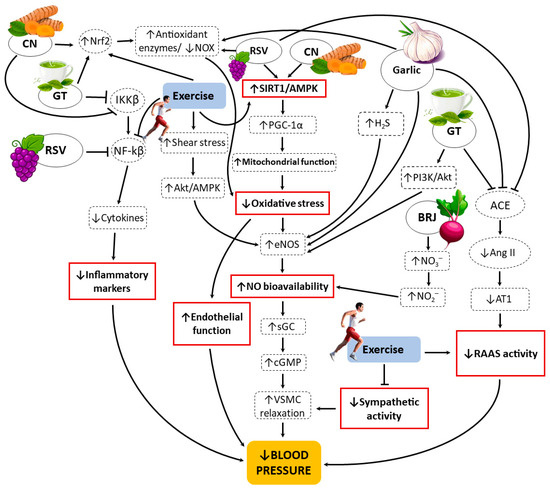
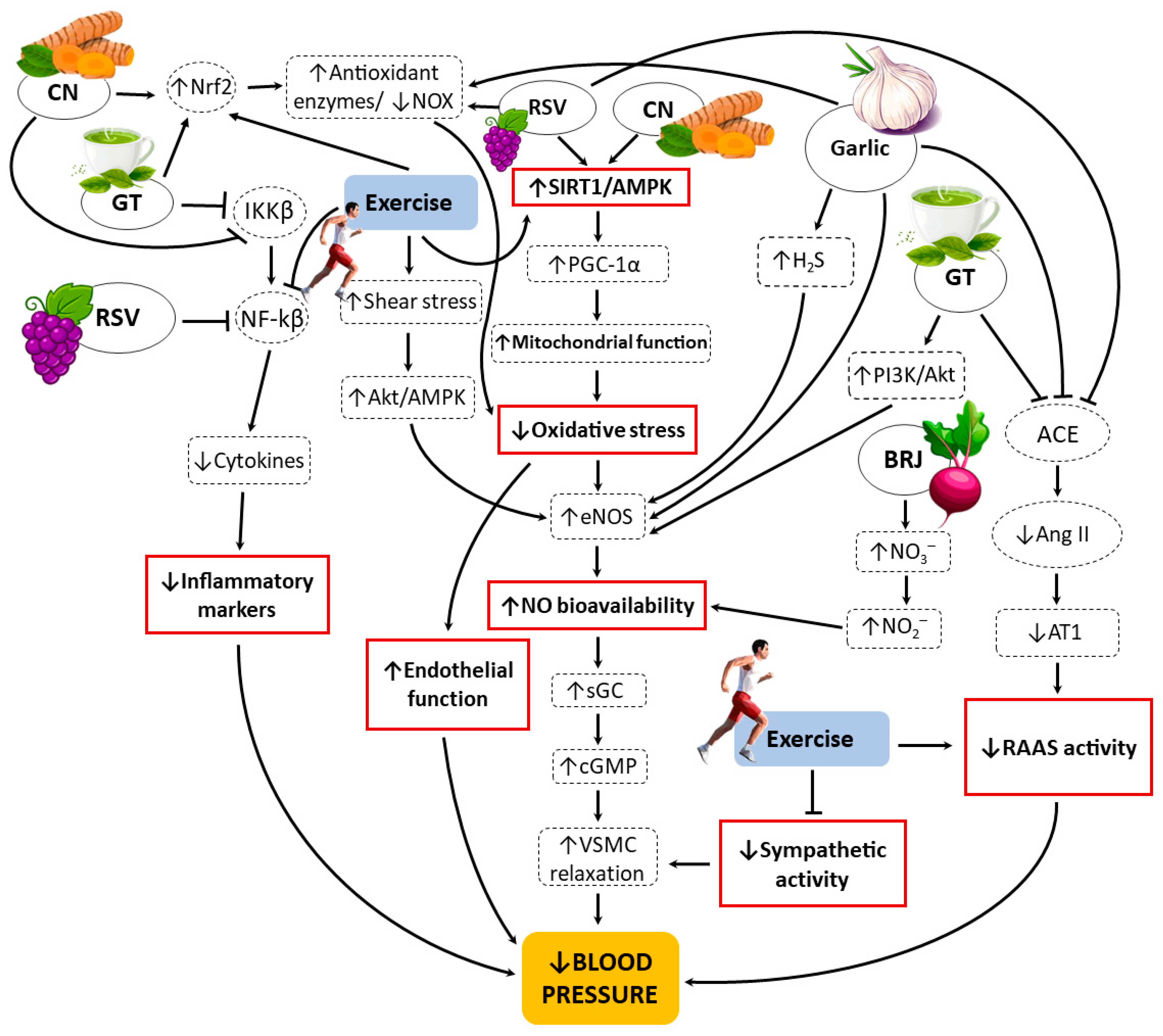
Plant-derived bioactives and exercise training converge on a set of vascular-regulatory hubs that together lower systemic BP (Figure 1). A primary shared axis is the NO signaling cascade: dietary NO3− from BRJ is reduced via the enterosalivary pathway and tissue NO2− reduction to increase NO bioavailability and stimulate soluble guanylate cyclase (sGC), causing vascular smooth muscle cell (VSMC) relaxation and reduced peripheral resistance [67,68]. Several phytochemicals (e.g., CN, GT catechins, RSV, and garlic) augment endothelial NO by upregulating endothelial nitric oxide synthase (eNOS) via phosphatidylinositol-3 kinase (PI3K)/Akt or AMPK)/SIRT1 signaling, preserving eNOS coupling through antioxidant/Nrf2-driven induction of antioxidant enzymes (e.g., superoxide dismutase, catalase, glutathione peroxidase) and tetrahydrobiopterin (BH4) preservation, or by complementary gasotransmitter signaling (garlic → H2S) that synergizes with NO [60,63,69,70,71,72]. These NO-centered actions are reinforced by reduced oxidative stress and lower inflammatory signaling, which together protect endothelial function and maintain vasodilatory responsiveness.
Figure 1.
Proposed integrated mechanistic pathways through which beetroot juice (BRJ), curcumin (CN), green tea (GT), resveratrol (RSV), garlic, and exercise training regulate blood pressure. The figure summarizes the main converging mechanisms (the solid boxes) leading to endothelial improvement, vascular relaxation, and decreased blood pressure. These represent the predominant proposed pathways, although additional signaling routes may also contribute to the antihypertensive effects of each agent. ↑ increase, ↓ decrease, → activation, ⊣ inhibition, Nrf2: Nuclear factor erythroid 2 like factor 2, IKKβ: IκB kinase beta, NF-kβ: nuclear factor-kappa beta, NOX: NADPH oxidase, AMPK: AMP-activated protein kinase, PGC-1α: peroxisome proliferator-activated receptor gamma coactivator 1-alpha, eNOS: endothelial nitric oxide synthase, NO: nitric oxide, sGC: soluble guanylate cyclase, cGMP: cyclic guanosine monophosphate, VSMC: vascular smooth muscle cells, H2S: hydrogen sulfide, PI3K: phosphatidylinositol-3 kinase, NO3−: nitrate, NO2−: nitrite, ACE: angiotensin converting enzyme, Ang II: angiotensin II, AT1: angiotensin II type 1, RAAS: renin–angiotensin–aldosterone system.
Beyond NO, members of this group exert complementary effects on mitochondrial and neurohormonal control of vascular tone. RSV and exercise strongly activate SIRT1/AMPK → peroxisome proliferator-activated receptor gamma coactivator 1-alpha (PGC-1α) to improve mitochondrial biogenesis and reduce mitochondrial ROS, indirectly sustaining NO signaling and endothelial health [73,74]. Garlic, RSV and some catechins additionally attenuate RAAS signaling, reducing vasoconstrictive drive and salt-retaining hormonal effects [48,63,75], while regular exercise lowers sympathetic outflow and RAAS activity and increases endothelial shear stress that directly stimulates eNOS [76,77]. Together, these overlapping mechanisms (i.e., increased NO bioavailability, reduced oxidative stress and inflammation, lower RAAS/sympathetic drive, and improved SIRT1/AMPK–mitochondrial function) collectively explain how the plant-derived bioactives and exercise synergistically improve endothelial function, reduce vascular resistance, and lower BP in clinical and experimental studies.
9. Limitations
Several limitations of the current evidence should be acknowledged. Although participant characteristics including sex distribution, age range, and clinical condition are summarized in Table 1, none of the included studies were designed or powered to evaluate sex- or age-specific differences in BP responses. Therefore, potential moderating effects of biological sex, hormonal status, or aging on supplementation–exercise interactions remain unclear.
In addition, while some trials included participants receiving stable antihypertensive therapy, reporting of medication regimens and polypharmacy was inconsistent. In several studies, medication use was either not specified or temporarily withheld prior to testing in acute protocols [18], limiting conclusions regarding real-world pharmacological interactions.
Finally, comorbidity profiles varied substantially across studies (e.g., obesity, PAD, COPD, established HTN, physically active individuals), which may partly explain heterogeneity in BP responses and restrict generalizability to patients with complex cardiovascular risk profiles.
10. Conclusions and Practical Implications
The available evidence demonstrates that plant-derived bioactives and exercise training exert complementary and mechanistically convergent effects on BP regulation. Among the botanicals reviewed, BRJ shows the most consistent benefits through enhanced NO bioavailability via the NO3−–NO2−–NO pathway, leading to improved endothelial function, vascular relaxation, and lower peripheral resistance. CN and GT catechins primarily act through potent antioxidant and anti-inflammatory mechanisms: upregulating Nrf2-dependent antioxidant enzymes, suppressing nuclear factor-kappa beta (NF-κB) signaling, and supporting endothelial NO synthesis. Garlic offers dual benefits by stimulating endothelial NO and H2S production while inhibiting ACE activity, thereby mitigating vasoconstriction and fluid retention. RSV acts as a metabolic regulator by activating SIRT1/AMPK–PGC-1α signaling, improving mitochondrial efficiency, and maintaining redox and endothelial homeostasis. Exercise training, in turn, may reinforce these effects by promoting shear stress–mediated eNOS activation, reducing sympathetic and RAAS activity, and further enhancing antioxidant capacity and endothelial health.
From a translational standpoint, integrating exercise with targeted plant-based supplementation represents a physiologically grounded and low-risk strategy for improving BP control, particularly in individuals with early or moderate vascular dysfunction. The magnitude and consistency of BP responses depend on factors such as supplement type, dose, timing relative to exercise, duration of intervention, and baseline health status. Personalized combinations that leverage complementary mechanisms (e.g., BRJ for NO support, CN or GT for redox balance, RSV for mitochondrial optimization, and garlic for RAAS modulation) hold promise for synergistic BP reduction, though this hypothesis requires confirmation in well-controlled clinical trials. Future research should prioritize standardized protocols, mechanistic biomarkers, and long-term outcomes to establish evidence-based recommendations for clinical implementation.
Author Contributions
Conceptualization, B.T.; Methodology, B.T., G.B. and J.V.; Writing—original draft preparation, B.T. and G.B.; Writing—review and editing, B.T., G.B. and J.V.; funding acquisition, G.B. and J.V. All authors have read and agreed to the published version of the manuscript.
Funding
This research received no external funding.
Data Availability Statement
No new data were created or analyzed in this study. Data sharing is not applicable to this article.
Conflicts of Interest
The authors declare no conflicts of interest.
Abbreviations
| HTN | hypertension |
| BP | blood pressure |
| NO | nitric oxide |
| BRJ | beetroot juice |
| GT | green tea |
| CN | curcumin |
| RSV | resveratrol |
| MetS | metabolic syndrome |
| T2DM | type 2 diabetes mellitus |
| PAD | peripheral artery disease |
| CAD | coronary artery disease |
| COPD | chronic obstructive pulmonary disease |
| RCT | randomized controlled trial |
| AT | aerobic training |
| HIIT | high-intensity interval training |
| RT | resistance training |
| 1RM | one-repetition maximum |
| Ppeak | peak power |
| NO3− | nitrate |
| NO2− | nitrite |
| SBP | systolic blood pressure |
| MAP | mean arterial pressure |
| DBP | diastolic blood pressure |
| EGCG | epigallocatechin gallate |
| PEH | post-exercise hypotension |
| RPP | rate-pressure product |
| CVD | cardiovascular disease |
| HRmax | maximum heart rate |
| sGC | soluble guanylate cyclase |
| VSMCs | vascular smooth muscle cells |
| eNOS | endothelial nitric oxide synthase |
| PI3K/Akt | phosphatidylinositol-3 kinase |
| AMPK | AMP-activated protein kinase |
| SIRT1 | Sirtuin 1 |
| Nrf2 | Nuclear factor erythroid 2 like factor 2 |
| BH4 | tetrahydrobiopterin |
| H2S | hydrogen sulfide |
| PGC-1α | peroxisome proliferator-activated receptor gamma coactivator 1-alpha |
| RAAS | renin–angiotensin–aldosterone system |
| NF-κB | nuclear factor-kappa beta |
| ACE | angiotensin-converting enzyme |
References
- Kario, K.; Okura, A.; Hoshide, S.; Mogi, M. The WHO Global report 2023 on hypertension warning the emerging hypertension burden in globe and its treatment strategy. Hypertens. Res. 2024, 47, 1099–1102. [Google Scholar] [CrossRef] [Scilit]
- Banez, M.J.; Geluz, M.I.; Chandra, A.; Hamdan, T.; Biswas, O.S.; Bryan, N.S.; Von Schwarz, E.R. A systemic review on the antioxidant and anti-inflammatory effects of resveratrol, curcumin, and dietary nitric oxide supplementation on human cardiovascular health. Nutr. Res. 2020, 78, 11–26. [Google Scholar] [CrossRef] [Scilit] [PubMed]
- Jurik, R.; Stastny, P. Role of nutrition and exercise programs in reducing blood pressure: A systematic review. J. Clin. Med. 2019, 8, 1393. [Google Scholar] [CrossRef] [Scilit] [PubMed]
- Taati, B.; Arazi, H.; Kheirkhah, J. Interaction effect of green tea consumption and resistance training on office and ambulatory cardiovascular parameters in women with high-normal/stage 1 hypertension. J. Clin. Hypertens. 2021, 23, 978–986. [Google Scholar] [CrossRef] [Scilit]
- Thompson, P.D.; Arena, R.; Riebe, D.; Pescatello, L.S. ACSM’s new preparticipation health screening recommendations from ACSM’s guidelines for exercise testing and prescription. Curr. Sports Med. Rep. 2013, 12, 215–217. [Google Scholar] [CrossRef] [Scilit] [PubMed]
- Juesas, A.; Saez-Berlanga, A.; Babiloni-Lopez, C.; Martin, E.G.; Garrigues-Pelufo, L.; Ferri-Caruana, A.; Gene-Morales, J.; Martin-Rivera, F.; Chulvi-Medrano, I.; Jiménez-Martínez, P. Effects of accentuated eccentric and maximal strength high-resistance training programs with or without a curcumin-based formulation supplement on body composition, blood pressure, and metabolic parameters in older adults. Diseases 2025, 13, 62. [Google Scholar] [CrossRef] [Scilit]
- Shaltout, H.A.; Eggebeen, J.; Marsh, A.P.; Brubaker, P.H.; Laurienti, P.J.; Burdette, J.H.; Basu, S.; Morgan, A.; Dos Santos, P.C.; Norris, J.L. Effects of supervised exercise and dietary nitrate in older adults with controlled hypertension and/or heart failure with preserved ejection fraction. Nitric Oxide 2017, 69, 78–90. [Google Scholar] [CrossRef] [Scilit]
- Reddy, K.S.; Katan, M.B. Diet, nutrition and the prevention of hypertension and cardiovascular diseases. Public Health Nutr. 2004, 7, 167–186. [Google Scholar] [CrossRef] [Scilit]
- Ali, A.; Kouvari, M.; Riaz, S.; Naumovski, N.; Liao, L.; Khan, A.; Khalid, W.; Zeng, X.A.; Manzoor, M.F. Potential of Allium sativum in blood pressure control involves signaling pathways: A narrative review. Food front 2023, 4, 1666–1680. [Google Scholar] [CrossRef] [Scilit]
- Bahadoran, Z.; Mirmiran, P.; Kabir, A.; Azizi, F.; Ghasemi, A. The nitrate-independent blood pressure–lowering effect of beetroot juice: A systematic review and meta-analysis. Adv. Nutr. 2017, 8, 830–838. [Google Scholar] [CrossRef] [Scilit]
- Fogacci, F.; Tocci, G.; Presta, V.; Fratter, A.; Borghi, C.; Cicero, A.F. Effect of resveratrol on blood pressure: A systematic review and meta-analysis of randomized, controlled, clinical trials. Crit. Rev. Food Sci. Nutr. 2019, 59, 1605–1618. [Google Scholar] [CrossRef] [Scilit]
- Li, H.; Sureda, A.; Devkota, H.P.; Pittalà, V.; Barreca, D.; Silva, A.S.; Tewari, D.; Xu, S.; Nabavi, S.M. Curcumin, the golden spice in treating cardiovascular diseases. Biotechnol. Adv. 2020, 38, 107343. [Google Scholar] [CrossRef] [Scilit]
- Patel, S.S.; Acharya, A.; Ray, R.; Agrawal, R.; Raghuwanshi, R.; Jain, P. Cellular and molecular mechanisms of curcumin in prevention and treatment of disease. Crit. Rev. Food Sci. Nutr. 2020, 60, 887–939. [Google Scholar] [CrossRef] [Scilit]
- Ried, K. Garlic lowers blood pressure in hypertensive subjects, improves arterial stiffness and gut microbiota: A review and meta-analysis. Exp. Ther. Med. 2020, 19, 1472–1478. [Google Scholar] [CrossRef] [Scilit]
- Khan, S.U.; Khan, M.U.; Riaz, H.; Valavoor, S.; Zhao, D.; Vaughan, L.; Okunrintemi, V.; Riaz, I.B.; Khan, M.S.; Kaluski, E. Effects of nutritional supplements and dietary interventions on cardiovascular outcomes: An umbrella review and evidence map. Ann. Intern. Med. 2019, 171, 190–198. [Google Scholar] [CrossRef] [Scilit]
- Dabidi Roshan, V.; Noorbakhsh, S.; Ziatabar Ahmadi, S.F.; Nikseresht, M. The physiological impacts of the low-and moderate-volume-HIIT with or without nano-curcumin supplement in women in menopause with obesity. Adv. Public Health 2024, 2024, 5243088. [Google Scholar] [CrossRef] [Scilit]
- Dorani, S.E.; Hosseini, M. The effect of 8 weeks of aerobic training and resveratrol consumption on the indicators of metabolic syndrome in overweight women. J. Sports Physiol. Athl. Cond. 2021, 1, 31–42. [Google Scholar] [CrossRef] [Scilit]
- Kenjale, A.A.; Ham, K.L.; Stabler, T.; Robbins, J.L.; Johnson, J.L.; VanBruggen, M.; Privette, G.; Yim, E.; Kraus, W.E.; Allen, J.D. Dietary nitrate supplementation enhances exercise performance in peripheral arterial disease. J. Appl. Physiol. 2011, 110, 1582–1591. [Google Scholar] [CrossRef] [Scilit] [PubMed]
- Berry, M.J.; Justus, N.W.; Hauser, J.I.; Case, A.H.; Helms, C.C.; Basu, S.; Rogers, Z.; Lewis, M.T.; Miller, G.D. Dietary nitrate supplementation improves exercise performance and decreases blood pressure in COPD patients. Nitric Oxide 2015, 48, 22–30. [Google Scholar] [CrossRef] [Scilit]
- Amaral, A.L.; Mariano, I.M.; Carrijo, V.H.V.; de Souza, T.C.F.; Batista, J.P.; Mendonça, A.M.; de Souza, A.V.; Caixeta, D.C.; Teixeira, R.R.; Espindola, F.S. A single dose of beetroot juice does not change blood pressure response mediated by acute aerobic exercise in hypertensive postmenopausal women. Nutrients 2019, 11, 1327. [Google Scholar] [CrossRef] [Scilit] [PubMed]
- de Lima Bezerra, Á.D.; Costa, E.C.; Pacheco, D.A.; Souza, D.C.; Farias-Junior, L.F.; Ritti-Dia, R.M.; Grigolo, G.B.; de Bittencourt Júnior, P.I.; Krause, M.; Fayh, A.P. Effect of acute dietary nitrate supplementation on the post-exercise ambulatory blood pressure in obese males: A randomized, controlled, crossover trial. J. Sports. Sci. Med. 2019, 18, 118. [Google Scholar] [PubMed]
- van der Avoort, C.M.; Van Loon, L.J.; Verdijk, L.B.; Poyck, P.P.; Thijssen, D.T.; Hopman, M.T. Acute effects of dietary nitrate on exercise tolerance, muscle oxygenation, and cardiovascular function in patients with peripheral arterial disease. Int. J. Sport. Nutr. Exerc. Metab. 2021, 31, 385–396. [Google Scholar] [CrossRef] [Scilit]
- Gonzaga, L.A.; Porto, A.A.; Takahashi, C.; Gomes, R.L.; Vanderlei, L.C.M.; Valenti, V.E. Acute effects of beetroot extract and resveratrol ingestion on cardiovascular and cardiac autonomic modulation recovery after moderate-intensity aerobic exercise in individuals with coronary artery disease: A triple-blinded, randomized, placebo-controlled trial. Eur. J. Nutr. 2025, 64, 67. [Google Scholar]
- Zafeiridis, A.; Triantafyllou, A.; Papadopoulos, S.; Koletsos, N.; Touplikioti, P.; Zafeiridis, A.S.; Gkaliagkousi, E.; Dipla, K.; Douma, S. Dietary nitrate improves muscle microvascular reactivity and lowers blood pressure at rest and during isometric exercise in untreated hypertensives. Microcirculation 2019, 26, e12525. [Google Scholar] [CrossRef] [Scilit] [PubMed]
- Eggebeen, J.; Kim-Shapiro, D.B.; Haykowsky, M.; Morgan, T.M.; Basu, S.; Brubaker, P.; Rejeski, J.; Kitzman, D.W. One week of daily dosing with beetroot juice improves submaximal endurance and blood pressure in older patients with heart failure and preserved ejection fraction. JACC Heart Failure 2016, 4, 428–437. [Google Scholar] [CrossRef] [Scilit]
- Benjamim, C.J.R.; da Silva, L.S.L.; Sousa, Y.B.A.; da Silva Rodrigues, G.; de Moraes Pontes, Y.M.; Rebelo, M.A.; da Silva Gonçalves, L.; Tavares, S.S.; Guimarães, C.S.; da Silva Sobrinho, A.C. Acute and short-term beetroot juice nitrate-rich ingestion enhances cardiovascular responses following aerobic exercise in postmenopausal women with arterial hypertension: A triple-blinded randomized controlled trial. Free Radical Biol. Med. 2024, 211, 12–23. [Google Scholar] [CrossRef] [Scilit]
- Hirai, D.M.; Zelt, J.T.; Jones, J.H.; Castanhas, L.G.; Bentley, R.F.; Earle, W.; Staples, P.; Tschakovsky, M.E.; McCans, J.; O’Donnell, D.E. Dietary nitrate supplementation and exercise tolerance in patients with heart failure with reduced ejection fraction. Am. J. Physiol. Regul. Integr. Comp. Physiol. 2017, 312, R13–R22. [Google Scholar] [CrossRef] [Scilit]
- Choi, H.-M.; Kim, B.-H.; Nho, H.; Kim, K.-A.; Park, J.; Chang, M.-J.; Kim, J.-K. Dietary nitrate supplementation attenuates blood pressure in young prehypertensive men during exercise. J. Men’s Health 2016, 12, 25–33. [Google Scholar]
- Kim, D.J.-K.; Gao, Z.; Luck, J.C.; Brandt, K.; Miller, A.J.; Kim-Shapiro, D.; Basu, S.; Leuenberger, U.; Gardner, A.W.; Muller, M.D. Effects of short-term dietary nitrate supplementation on exercise and coronary blood flow responses in patients with peripheral artery disease. Front. Nutr. 2024, 11, 1398108. [Google Scholar] [CrossRef] [Scilit]
- Broxterman, R.M.; La Salle, D.T.; Zhao, J.; Reese, V.R.; Kwon, O.S.; Richardson, R.S.; Trinity, J.D. Dietary nitrate supplementation and small muscle mass exercise hemodynamics in patients with essential hypertension. J. Appl. Physiol. 2022, 133, 506–516. [Google Scholar] [CrossRef] [Scilit] [PubMed]
- Neto, M.M.; Silva, R.S.B.d.; Silva, T.F.d.; Lima, F.F.d.; Silva, A.S. Green tea attenuates hypotension induced by physical exercise: A randomized, placebo controlled study. Int. J. Cardiovasc. Sci. 2017, 30, 325–333. [Google Scholar]
- Arazi, H.; Samami, N.; Kheirkhah, J.; Taati, B. The effect of three weeks green tea extract consumption on blood pressure, heart rate responses to a single bout resistance exercise in hypertensive women. High Blood Press. Cardiovasc. Prev. 2014, 21, 213–219. [Google Scholar] [CrossRef] [Scilit]
- Touli, M.H.; Elmieh, A.; Hosseinpour, A. The effect of six-week aerobic exercise combined with ease max incr 2 green tea consumption on PON1 and VO and apelin, blood pressure, and blood lipids reduction in young obese men. Arch. Razi Inst. 2022, 77, 2115–2123. [Google Scholar]
- Amozadeh, H.; Shabani, R.; Nazari, M. The effect of aerobic training and green tea supplementation on cardio metabolic risk factors in overweight and obese females: A randomized trial. Int. J. Endocrinol. Metab. 2018, 16, e60738. [Google Scholar] [CrossRef] [Scilit]
- Golpasandi, H.; Rahimi, M.R.; Kreider, R.; Rashidi, M. Influence of combined high-intensity interval training and green tea extract on cardiac stress markers and insulin resistance in obese men with type 2 diabetes: A randomized double-blind placebo-controlled trial. Sport. Sci. Health 2025, 21, 387–396. [Google Scholar] [CrossRef] [Scilit]
- Osali, A. Aerobic exercise and nano-curcumin supplementation improve inflammation in elderly females with metabolic syndrome. Diabetol. Metab. Syndr. 2020, 12, 26. [Google Scholar] [CrossRef] [Scilit] [PubMed]
- Darmian, M.A.; Hoseini, R.; Amiri, E.; Golshani, S. Downregulated hs-CRP and MAD, upregulated GSH and TAC, and improved metabolic status following combined exercise and turmeric supplementation: A clinical trial in middle-aged women with hyperlipidemic type 2 diabetes. J. Diabetes Metab. Disord. 2022, 21, 275–283. [Google Scholar] [CrossRef] [Scilit]
- Gonzaga, L.A.; Porto, A.A.; Ribeiro, F.; Takahashi, C.; Gomes, R.L.; Vanderlei, L.C.M.; Valenti, V.E. Immediate recovery after an exercise session associated with beetroot and resveratrol intake in coronary artery disease patients: A randomised crossover trial. J. Funct. Foods 2024, 121, 106435. [Google Scholar] [CrossRef] [Scilit]
- Nicolau, A.L.A.; Peres, G.B.; de Souza Silva, J.; Nunes, S.H.; Fortes, T.M.L.; Suffredini, I.B. Pilot project. Resveratrol intake by physical active and sedentary older adult women and blood pressure. Exp. Gerontol. 2022, 166, 111883. [Google Scholar] [CrossRef] [Scilit] [PubMed]
- Towhidi, F.; Salamat, K.M.; Soroush, A.; Pourmotabbed, A. Effect of eight weeks of aerobic exercise and garlic extract use on the blood pressure, fat percentage, and lipid profile of patients with hypertension. J. Clin. Res. Paramed. Sci. 2021, 10, e101897. [Google Scholar] [CrossRef] [Scilit]
- Kaleh, G.T.P.; Kazemi, M.; Abdi, A.; Abbassi Daloii, A.; Alsadat Mirshafaei, M. Effect of aerobic training along with garlic on oxidative stress index in obese women with high blood pressure. J. Sports Physiol. Athl. Cond. 2022, 5, 1. [Google Scholar] [CrossRef] [Scilit]
- Ried, K.; Paye, Y.; Beale, D.; Sali, A. Kyolic aged garlic extract improves aerobic fitness in middle-aged recreational endurance athletes: A randomized double-blind placebo-controlled 3 month trial. Exp. Ther. Med. 2025, 29, 86. [Google Scholar] [CrossRef] [Scilit]
- Affourtit, C.; Bailey, S.J.; Jones, A.M.; Smallwood, M.J.; Winyard, P.G. On the mechanism by which dietary nitrate improves human skeletal muscle function. Front. Physiol. 2015, 6, 211. [Google Scholar] [CrossRef] [Scilit] [PubMed]
- Lundberg, J.O.; Weitzberg, E.; Gladwin, M.T. The nitrate–nitrite–nitric oxide pathway in physiology and therapeutics. Nat. Rev. Drug Discov. 2008, 7, 156–167. [Google Scholar] [CrossRef] [Scilit]
- Juggi, J.S.; Koenig-Berard, E.; Vitou, P. Vasodilator therapy: Interaction of nitrates with angiotensin-converting enzyme inhibitors. Can. J. Cardiol. 1991, 7, 419–425. [Google Scholar]
- Rezaei, M.; Akhavan, N.; Fathi, F.; Alavi, S.M.; Fadaii, M.; Dehzad, M.J.; Askarpour, M. Effect of green tea supplementation on blood pressure in adults: A GRADE-assessed systematic review and dose-response meta-analysis of randomized controlled trials. Blood Press. 2025, 34, 1–21. [Google Scholar] [CrossRef] [Scilit]
- Arazi, H.; Taati, B.; Kheirkhah, J.; Ramezanpour, S. Changes in pain following an interaction period of resistance training and green tea extract consumption in sedentary hypertensive women: Impact of blood pressure swings. J. Health Popul. Nutr. 2019, 38, 30. [Google Scholar] [CrossRef] [Scilit]
- Li, L.; Sun, S.; Lai, X.; Li, Q.; Chen, R.; Zhang, Z.; Hao, M.; Zhang, S.; Sun, L.; Li, D. Mechanism of Green Tea Peptides in Lowering Blood Pressure and Alleviating Renal Injury Induced by Hypertension Through the Ang II/TGF-β1/SMAD Signaling Pathway. Nutrients 2025, 17, 1300. [Google Scholar] [CrossRef] [Scilit] [PubMed]
- Fukuda, I.; Ashida, H. Chapter 86—Modulation of Drug-Metabolizing Enzymes and Transporters by Polyphenols as an Anticarcinogenic Effect. In Polyphenols in Human Health and Disease; Watson, R.R., Preedy, V.R., Zibadi, S., Eds.; Academic Press: San Diego, CA, USA, 2014; pp. 1127–1135. [Google Scholar]
- Stanić, Z. Curcumin, a compound from natural sources, a true scientific challenge–a review. Plant Foods Hum. Nutr. 2017, 72, 1–12. [Google Scholar] [CrossRef] [Scilit]
- Nosrati-Oskouie, M.; Aghili-Moghaddam, N.S.; Tavakoli-Rouzbehani, O.M.; Jamialahmadi, T.; Johnston, T.P.; Sahebkar, A. Curcumin: A dietary phytochemical for boosting exercise performance and recovery. Food Sci. Nutr. 2022, 10, 3531–3543. [Google Scholar] [CrossRef] [Scilit] [PubMed]
- Suhett, L.G.; de Miranda Monteiro Santos, R.; Silveira, B.K.S.; Leal, A.C.G.; de Brito, A.D.M.; de Novaes, J.F.; Lucia, C.M.D. Effects of curcumin supplementation on sport and physical exercise: A systematic review. Crit. Rev. Food Sci. Nutr. 2021, 61, 946–958. [Google Scholar] [CrossRef] [Scilit]
- Salehi, B.; Stojanović-Radić, Z.; Matejić, J.; Sharifi-Rad, M.; Kumar, N.V.A.; Martins, N.; Sharifi-Rad, J. The therapeutic potential of curcumin: A review of clinical trials. Eur. J. Med. Chem. 2019, 163, 527–545. [Google Scholar] [CrossRef] [Scilit]
- Ghandadi, M.; Sahebkar, A. Curcumin: An effective inhibitor of interleukin-6. Curr. Pharm. Des. 2017, 23, 921–931. [Google Scholar] [CrossRef] [Scilit]
- Momtazi-Borojeni, A.A.; Abdollahi, E.; Nikfar, B.; Chaichian, S.; Ekhlasi-Hundrieser, M. Curcumin as a potential modulator of M1 and M2 macrophages: New insights in atherosclerosis therapy. Heart Fail. Rev. 2019, 24, 399–409. [Google Scholar] [CrossRef] [Scilit] [PubMed]
- Rodríguez Castaño, P.; Parween, S.; Pandey, A.V. Bioactivity of Curcumin on the Cytochrome P450 Enzymes of the Steroidogenic Pathway. Int. J. Mol. Sci. 2019, 20, 4606. [Google Scholar] [CrossRef] [Scilit] [PubMed]
- Pastor, R.F.; Restani, P.; Di Lorenzo, C.; Orgiu, F.; Teissedre, P.-L.; Stockley, C.; Ruf, J.C.; Quini, C.I.; Garcìa Tejedor, N.; Gargantini, R. Resveratrol, human health and winemaking perspectives. Crit. Rev. Food Sci. Nutr. 2019, 59, 1237–1255. [Google Scholar] [CrossRef] [Scilit] [PubMed]
- DiNatale, J.; Crowe-White, K. Effects of resveratrol supplementation on nitric oxide-mediated vascular outcomes in hypertension: A systematic review. Nitric Oxide 2022, 129, 74–81. [Google Scholar] [CrossRef] [Scilit]
- Li, H.; Xia, N.; Förstermann, U. Cardiovascular effects and molecular targets of resveratrol. Nitric Oxide 2012, 26, 102–110. [Google Scholar] [CrossRef] [Scilit]
- Fourny, N.; Lan, C.; Sérée, E.; Bernard, M.; Desrois, M. Protective effect of resveratrol against ischemia-reperfusion injury via enhanced high energy compounds and eNOS-SIRT1 expression in type 2 diabetic female rat heart. Nutrients 2019, 11, 105. [Google Scholar] [CrossRef] [Scilit]
- Bonechi, C.; Lamponi, S.; Donati, A.; Tamasi, G.; Consumi, M.; Leone, G.; Rossi, C.; Magnani, A. Effect of resveratrol on platelet aggregation by fibrinogen protection. Biophys. Chem. 2017, 222, 41–48. [Google Scholar] [CrossRef] [Scilit]
- Piragine, E.; Citi, V.; Lawson, K.; Calderone, V.; Martelli, A. Regulation of blood pressure by natural sulfur compounds: Focus on their mechanisms of action. Biochem. Pharmacol. 2022, 206, 115302. [Google Scholar] [CrossRef] [Scilit]
- Sleiman, C.; Daou, R.-M.; Al Hazzouri, A.; Hamdan, Z.; Ghadieh, H.E.; Harbieh, B.; Romani, M. Garlic and hypertension: Efficacy, mechanism of action, and clinical implications. Nutrients 2024, 16, 2895. [Google Scholar] [CrossRef] [Scilit]
- Serrano, J.C.E.; Castro-Boqué, E.; García-Carrasco, A.; Morán-Valero, M.I.; González-Hedström, D.; Bermúdez-López, M.; Valdivielso, J.M.; Espinel, A.E.; Portero-Otín, M. Antihypertensive Effects of an Optimized Aged Garlic Extract in Subjects with Grade I Hypertension and Antihypertensive Drug Therapy: A Randomized, Triple-Blind Controlled Trial. Nutrients 2023, 15, 3691. [Google Scholar] [CrossRef] [Scilit]
- Rahmatinia, E.; Amidi, B.; Naderi, N.; Ahmadipour, S.; Ahmadvand, H.; Pahlevan-Fallahy, M.T.; Ghorbanzadeh, V.; Nazari, A. Randomized, double-blind clinical trial evaluating the impact of freeze-dried garlic extract capsules on blood pressure, lipid profile, and nitric oxide levels in individuals at risk for hypertension. Horm. Mol. Biol. Clin. Investig. 2024, 45, 139–147. [Google Scholar] [CrossRef] [Scilit] [PubMed]
- El-Sabban, F. Garlic as an antithrombotic and antiplatelet aggregation agent. J. Chin. Clin. Med. 2009, 4, 288. [Google Scholar]
- Carlström, M.; Lundberg, J.; Weitzberg, E. Mechanisms underlying blood pressure reduction by dietary inorganic nitrate. Acta Physiologica 2018, 224, e13080. [Google Scholar] [CrossRef] [Scilit]
- Liu, Y.; Croft, K.D.; Hodgson, J.M.; Mori, T.; Ward, N.C. Mechanisms of the protective effects of nitrate and nitrite in cardiovascular and metabolic diseases. Nitric Oxide 2020, 96, 35–43. [Google Scholar] [CrossRef] [Scilit] [PubMed]
- Cui, J.; Li, H.; Zhang, T.; Lin, F.; Chen, M.; Zhang, G.; Feng, Z. Research progress on the mechanism of curcumin anti-oxidative stress based on signaling pathway. Front. Pharmacol. 2025, 16, 1548073. [Google Scholar] [CrossRef] [Scilit]
- Wang, D.; Gao, Q.; Wang, T.; Zhao, G.; Qian, F.; Huang, J.; Wang, H.; Zhang, X.; Wang, Y. Green tea infusion protects against alcoholic liver injury by attenuating inflammation and regulating the PI3K/Akt/eNOS pathway in C57BL/6 mice. Food Funct. 2017, 8, 3165–3177. [Google Scholar] [CrossRef] [Scilit]
- Potenza, M.A.; Marasciulo, F.L.; Tarquinio, M.; Tiravanti, E.; Colantuono, G.; Federici, A.; Kim, J.-a.; Quon, M.J.; Montagnani, M. EGCG, a green tea polyphenol, improves endothelial function and insulin sensitivity, reduces blood pressure, and protects against myocardial I/R injury in SHR. Am. J. Physiol.-Endocrinol. Metab. 2007, 292, E1378–E1387. [Google Scholar] [CrossRef] [Scilit]
- Zhou, C.; Tan, Y.; Xu, B.; Wang, Y.; Cheang, W.-S. 3, 4′, 5-Trimethoxy-trans-stilbene alleviates endothelial dysfunction in diabetic and obese mice via activation of the AMPK/SIRT1/eNOS pathway. Antioxidants 2022, 11, 1286. [Google Scholar] [CrossRef] [Scilit]
- Palabiyik, A.A.; Palabiyik, E. Pharmacological approaches to enhance mitochondrial biogenesis: Focus on PGC-1A, AMPK, and SIRT1 in cellular health. Mol. Biol. Rep. 2025, 52, 270. [Google Scholar] [CrossRef] [Scilit]
- Thirupathi, A.; De Souza, C.T. Multi-regulatory network of ROS: The interconnection of ROS, PGC-1 alpha, and AMPK-SIRT1 during exercise. J. Physiol. Biochem. 2017, 73, 487–494. [Google Scholar] [CrossRef] [Scilit] [PubMed]
- Kim, E.N.; Kim, M.Y.; Lim, J.H.; Kim, Y.; Shin, S.J.; Park, C.W.; Kim, Y.-S.; Chang, Y.S.; Yoon, H.E.; Choi, B.S. The protective effect of resveratrol on vascular aging by modulation of the renin–angiotensin system. Atherosclerosis 2018, 270, 123–131. [Google Scholar] [CrossRef] [Scilit] [PubMed]
- Cornelissen, V.A.; Smart, N.A. Exercise training for blood pressure: A systematic review and meta-analysis. Journal of the American Heart Association 2013, 2, e004473. [Google Scholar] [CrossRef] [Scilit]
- Green, D.J.; Smith, K.J. Effects of exercise on vascular function, structure, and health in humans. Cold Spring Harb. Perspect. Med. 2018, 8, a029819. [Google Scholar] [CrossRef] [Scilit] [PubMed]

Disclaimer/Publisher’s Note: The statements, opinions and data contained in all publications are solely those of the individual author(s) and contributor(s) and not of MDPI and/or the editor(s). MDPI and/or the editor(s) disclaim responsibility for any injury to people or property resulting from any ideas, methods, instructions or products referred to in the content. |
© 2026 by the authors. Licensee MDPI, Basel, Switzerland. This article is an open access article distributed under the terms and conditions of the Creative Commons Attribution (CC BY) license.