Article

Genetic Variation in Response to the Mediterranean–DASH Intervention for Neurodegenerative Delay (MIND): A Randomized Controlled Trial


by
Marilyn C. Cornelis
1,* and
Lisa L. Barnes
2,3
1
Department of Preventive Medicine, Northwestern University Feinberg School of Medicine, Chicago, IL 60611, USA
2
Department of Neurological Sciences, Rush University Medical Center, Chicago, IL 60612, USA
3
Rush Alzheimer’s Disease Center, Chicago, IL 60612, USA
*
Author to whom correspondence should be addressed.
Nutrients 2026, 18(3), 508; https://doi.org/10.3390/nu18030508
Submission received: 19 December 2025 / Revised: 15 January 2026 / Accepted: 20 January 2026 / Published: 2 February 2026
(This article belongs to the Section Nutrigenetics and Nutrigenomics)

Abstract

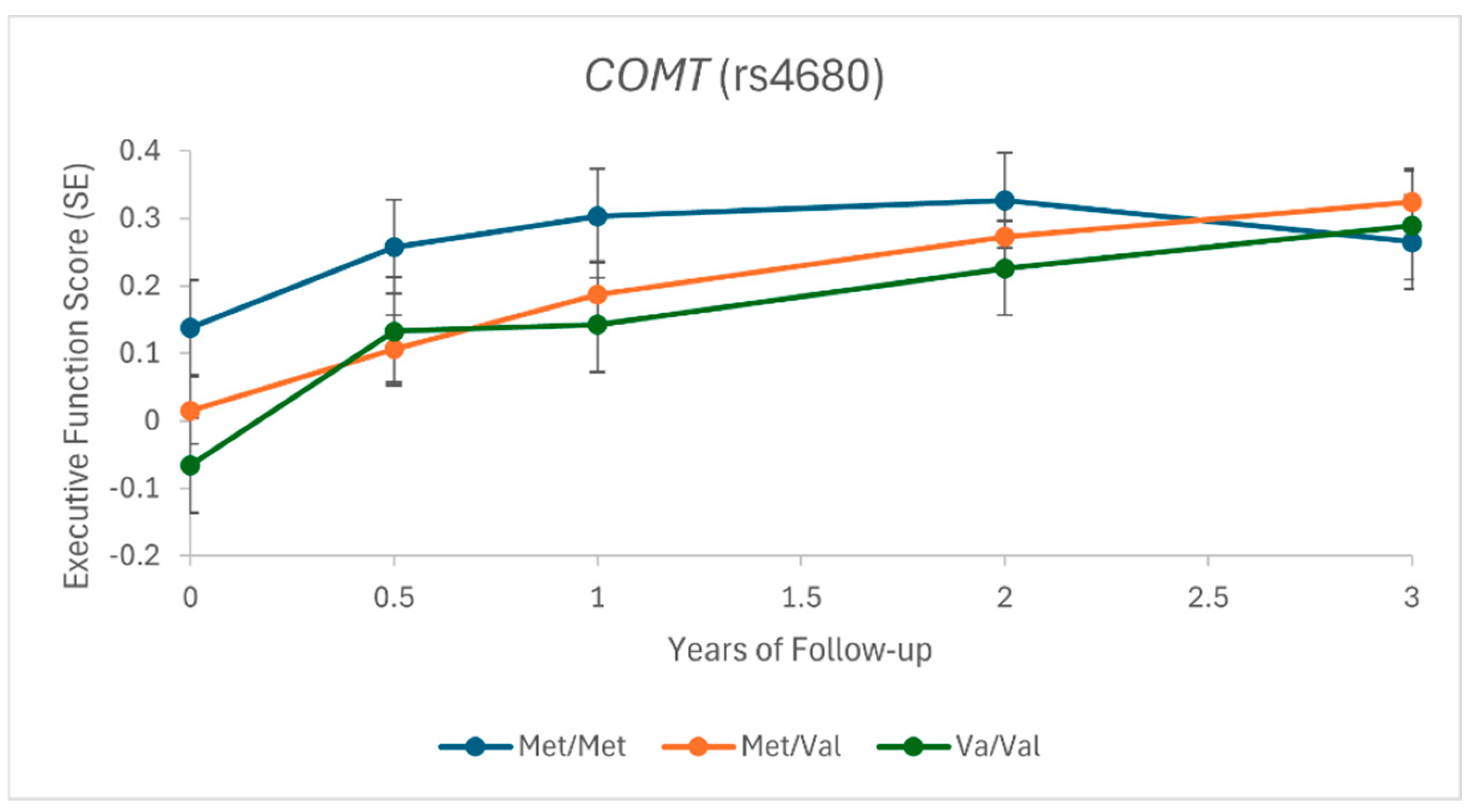
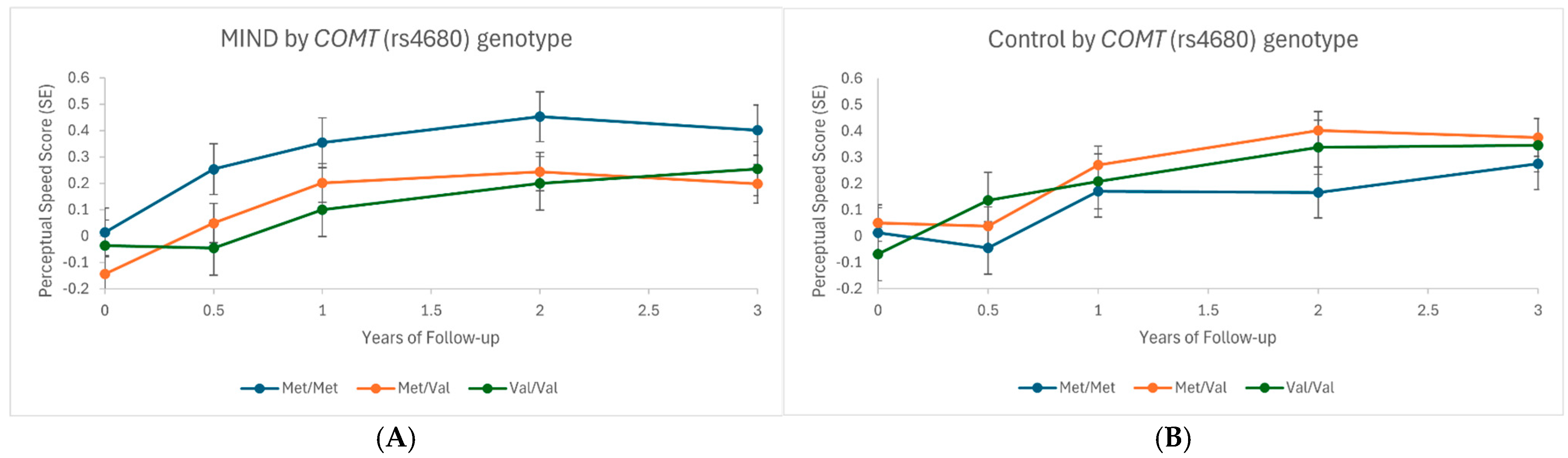
Background: The Mediterranean–DASH Intervention for Neurodegenerative Delay (MIND) study was a 3-year randomized controlled trial to test the effects of the MIND diet on cognitive decline in individuals at risk for Alzheimer’s dementia (AD). Here we examine whether genetic differences in (a) AD predisposition and (b) nutrient metabolism modify the effect of MIND on cognitive change. Methods: This secondary analysis included 494 trial participants of genetically inferred European ancestry with genetic data. Genetic scores (GS) were derived from prior genome-wide studies of AD and nutrient biomarkers. Linear regression and linear mixed models were used to examine the main effects of GS and interactions with diet assignment on cognition. An exploratory genome-wide interaction analysis was also performed. Results: We observed a statistically significant interaction (p = 0.002) between the COMT Val158Met variant and diet assignment for the 3-year change in perceptual speed. Met/Met (lower enzyme activity) carriers’ perceptual speed improved more on the MIND than the control diet, while no difference by diet was observed for Val carriers. Conclusions: Catechol-O-methyltransferase (COMT) metabolizes catecholamines as well as polyphenols unique to the MIND diet. Individuals with genetically impaired COMT activity may be especially responsive to the cognitive benefits of the MIND diet.
Keywords: diet pattern; dementia; genotype; cognitive decline; clinical trial diet pattern; dementia; genotype; cognitive decline; clinical trial