Characterization of Children with Intellectual Disabilities and Relevance of Mushroom Hericium Biomass Supplement to Neurocognitive Behavior


Abstract
1. Introduction
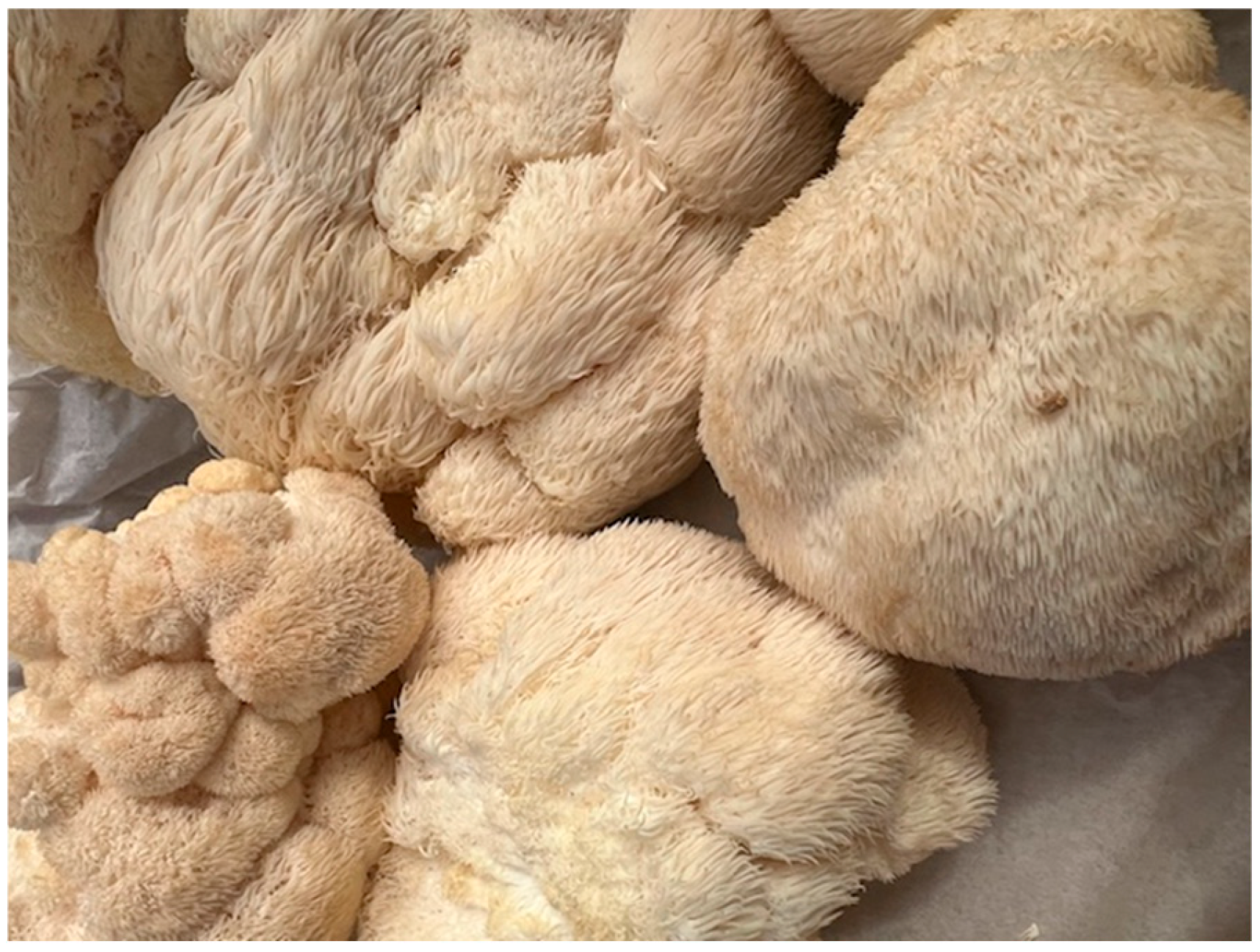
1.1. Hericium Erinaceus Biomass
1.2. Hericium Glucan Constituents. Influence on Gut Microbiota
1.3. Increase in Anti-Inflammatory Mediator Lipoxin A4
1.4. Polyphenols Reducing ROS Levels
1.5. Disruption of Inflammation
1.6. Crossing the Blood–Brain Barrier and qEEG
2. Materials and Methods
2.1. Participants
2.1.1. Inclusion Criteria for Control Group (CG)
2.1.2. Inclusion Criteria for the Experimental Group (EG)
2.1.3. Study Timeline
- Baseline (Month 0): qEEG recordings were taken for all participants (CG and EG).
- 6-Month Intervention (Month 6): EG participants underwent repeated qEEG analysis after 6 months of daily supplementation with H. erinaceus biomass (designated as EG-6).
- 12-Month Intervention (Month 12): A final qEEG assessment was performed after 12 months of continuous supplementation (EG-12).
2.2. Hericium Erinaceus Biomass Preparation
2.3. Methods
3. Results
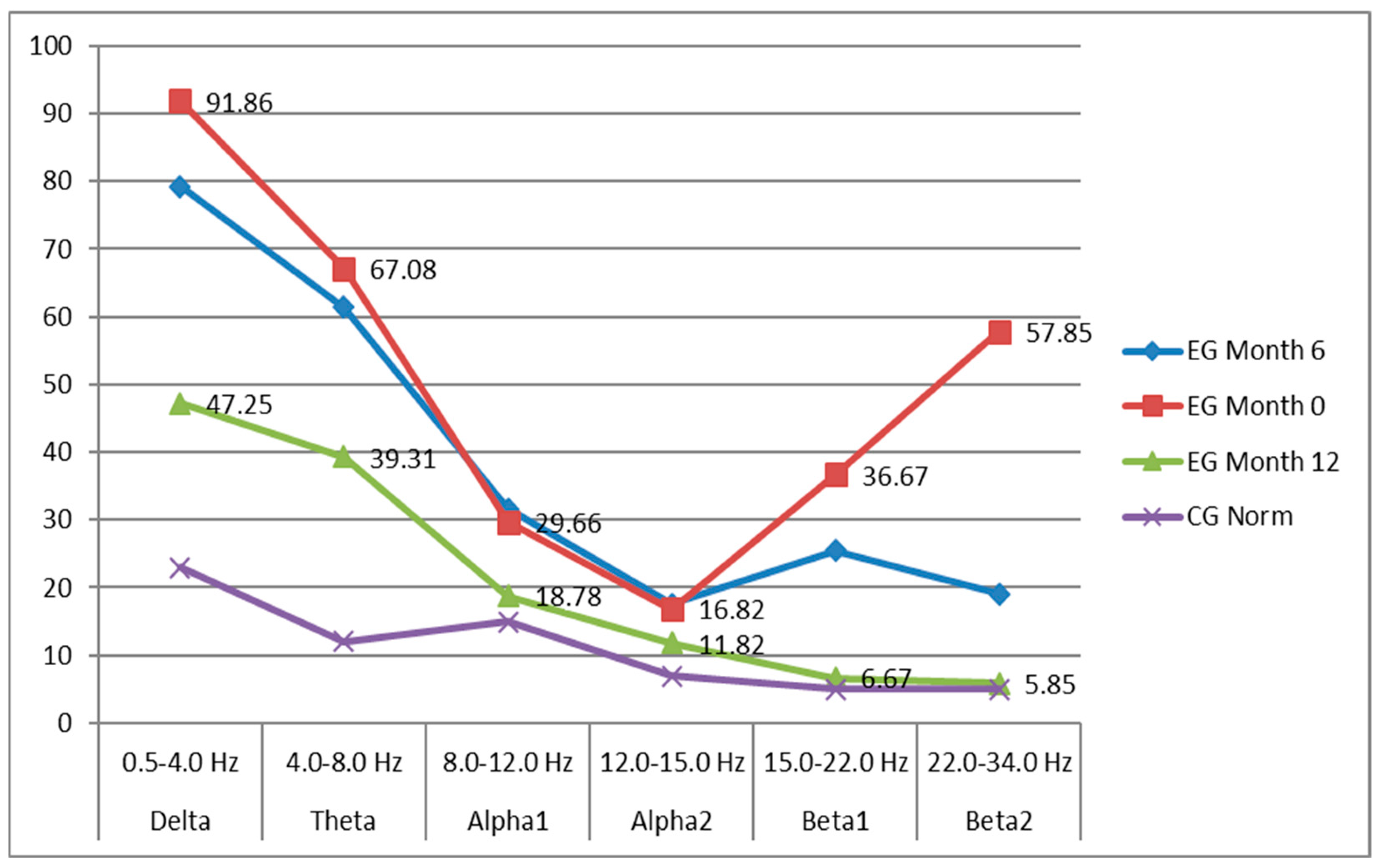
- Baseline (EG Month 0, red line). At the starting point, qEEG analysis revealed the following patterns:
- Control Group (CG): Children with neurotypical development displayed age-appropriate qEEG features, including dominant posterior alpha activity (8–12 Hz), balanced theta/alpha ratio, and relatively low-amplitude delta activity, reflecting normal cortical maturation.
- Experimental Group (EG): Children with ASD/Asperger’s showed marked deviations, consistent with previous literature [57]:
- ▪
- Increased theta activity (4–8 Hz), particularly frontally and centrally, suggestive of immature cortical networks and reduced attentional stability.
- ▪
- Elevated delta activity (0.5–4 Hz), often reflecting functional disconnection and reduced cortical efficiency.
- ▪
- Reduced alpha power (8–12 Hz), indicative of weaker resting-state synchronization.
- ▪
- Variability in beta activity (15–22 Hz), with some children showing hyperarousal (excess beta) and others hypoactivation (reduced beta).
- 2.
- After 6 Months (EG Month 6, blue line) in the 57 children:
- Theta power showed a reduction in the frontal and central regions (approx. 12–15% decrease in relative power compared to baseline).
- Alpha activity demonstrated partial normalization, with increased posterior alpha power, supporting improvements in cortical synchronization and attention regulation.
- Delta activity showed a modest but statistically significant reduction, indicating better cortical activation.
- Beta power demonstrated stabilization: children with initial excess beta showed normalization, while those with reduced beta displayed a mild increase.
- 3.
- After 12 Months (EG Month 12, green line) in the same 57 participants, improvements were more pronounced and stable:
- ▪
- Theta/alpha ratio approached values seen in neurotypical controls, suggesting better balance between cortical excitation and inhibition.
- ▪
- Alpha coherence (especially inter-hemispheric posterior alpha) increased, a marker of improved integrative processing and functional connectivity.
- ▪
- Delta power decreased further, aligning more closely with control norms.
- ▪
- Beta1 activity increased moderately in frontal regions, reflecting enhanced executive control and working memory.
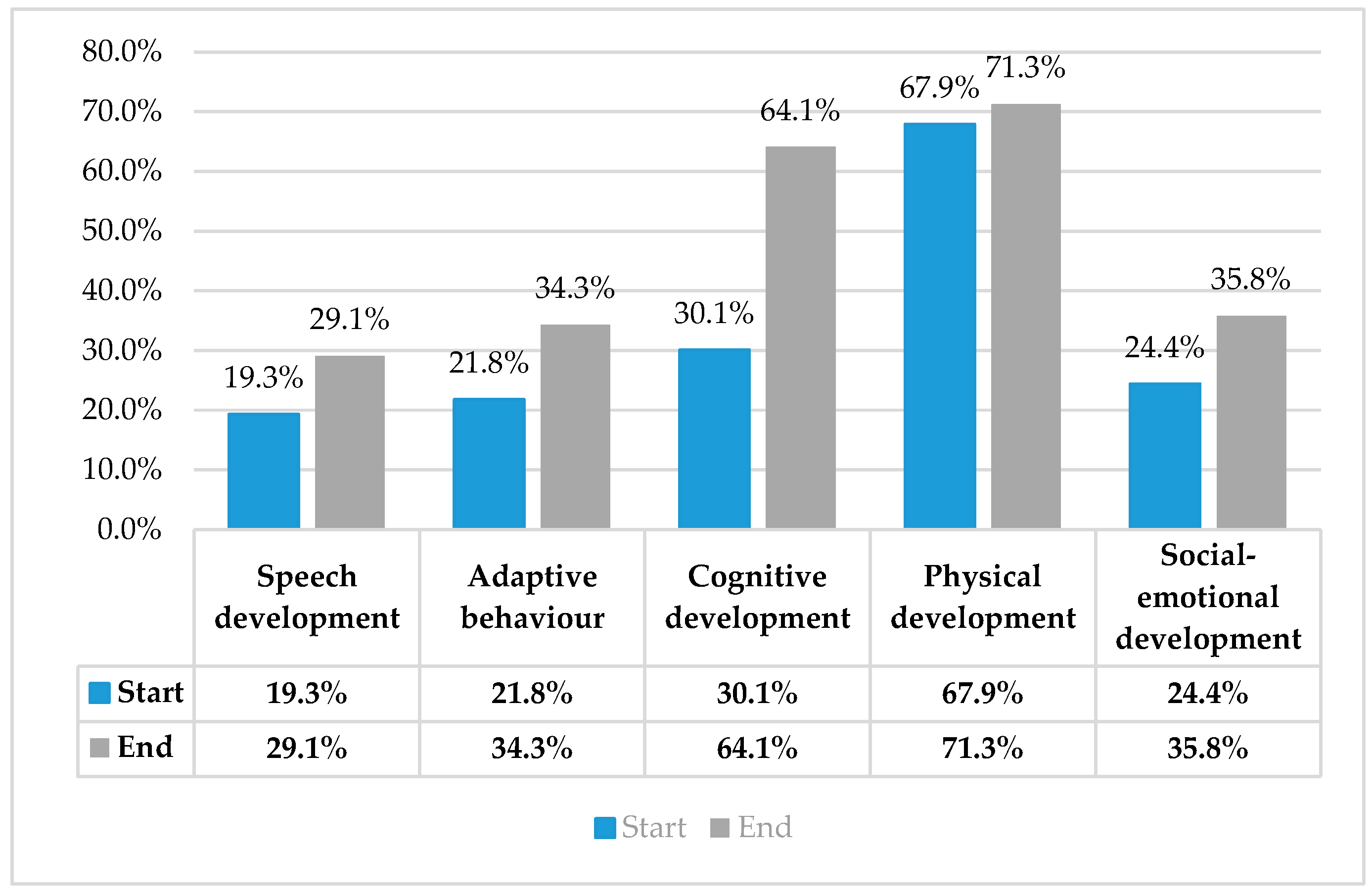
Key Observations by Domain
- All domains improved between baseline start and end, indicating that the treatment with H. erinaceus biomass had a positive global effect on child development.
- Cognitive development showed the largest relative gain, suggesting strong responsiveness to structured cognitive stimulation.
- Speech, adaptive behavior, and social–emotional domains improved moderately, but their progress is still behind cognitive and physical growth; these areas may require more targeted interventions.
- Physical development remained the highest across both points, indicating that motor skills were less affected and less dependent on intervention compared to other domains.
4. Discussion
5. Limitations and Future Perspectives
6. Conclusions
- A reduction in pathological slow-wave activity (theta, delta).
- Enhancement of alpha synchronization and interhemispheric coherence.
- Stabilization and normalization of beta rhythms.
- Overall cortical electrophysiological maturation, approaching the patterns observed in neurotypical children.
Author Contributions
Funding
Institutional Review Board Statement
Informed Consent Statement
Data Availability Statement
Acknowledgments
Conflicts of Interest
References
- Orío-Aparicio, C.; López-Escribano, C.; Bel-Fenellós, C. Borderline Intellectual Functioning: A Scoping Review. J. Intellect. Disabil. Res. 2025, 69, 437–456. [Google Scholar] [CrossRef]
- Bach, B.; Vestergaard, M. Differential Diagnosis of ICD-11 Personality Disorder and Autism Spectrum Disorder in Adolescents. Children 2023, 10, 992. [Google Scholar] [CrossRef] [PubMed]
- McKenzie, K.; Metcalfe, D.; Murray, A.L. Screening for Intellectual Disability in Autistic People: A Brief Report. Res. Autism Spectr. Disord. 2023, 100, 102076. [Google Scholar] [CrossRef]
- Thurm, A.; Farmer, C.; Salzman, E.; Lord, C.; Bishop, S. State of the Field: Differentiating Intellectual Disability From Autism Spectrum Disorder. Front. Psychiatry 2019, 10, 526. [Google Scholar] [CrossRef] [PubMed]
- Doody, O.; Cithambaram, K.; Ryan, J.; Ryan, R.; Conway, M.; Corby, D. Indicators for Intellectual Disability Where No Formal Diagnosis Exists but Nursing Knowledge Demonstrates Grounds for a Formal Assessment: A Scoping Review. Healthcare 2025, 13, 1489. [Google Scholar] [CrossRef]
- Patel, D.R.; Apple, R.; Kanungo, S.; Akkal, A. Narrative Review of Intellectual Disability: Definitions, Evaluation and Principles of Treatment. Pediatr. Med. 2018, 1, 11. [Google Scholar] [CrossRef]
- Amunts, K.; Axer, M.; Banerjee, S.; Bitsch, L.; Bjaalie, J.G.; Brauner, P.; Brovelli, A.; Calarco, N.; Carrere, M.; Caspers, S.; et al. The Coming Decade of Digital Brain Research: A Vision for Neuroscience at the Intersection of Technology and Computing. Imaging Neurosci. 2024, 2, 1–35. [Google Scholar] [CrossRef]
- Reiss, A.L.; Abrams, M.T.; Singer, H.S.; Ross, J.L.; Denckla, M.B. Brain Development, Gender and IQ in Children. A Volumetric Imaging Study. Brain 1996, 119, 1763–1774. [Google Scholar] [CrossRef]
- Cainelli, E.; Vedovelli, L.; Bisiacchi, P. The Mother–Child Interface: A Neurobiological Metamorphosis. Neuroscience 2024, 561, 92–106. [Google Scholar] [CrossRef]
- Morton, S.U.; Brodsky, D. Fetal Physiology and the Transition to Extrauterine Life. Clin. Perinatol. 2016, 43, 395–407. [Google Scholar] [CrossRef]
- Cainelli, E.; Stramucci, G.; Bisiacchi, P. A Light in the Darkness: Early Phases of Development and the Emergence of Cognition. Dev. Cogn. Neurosci. 2025, 72, 101527. [Google Scholar] [CrossRef] [PubMed]
- Clemente-Suárez, V.J.; Martín-Rodríguez, A.; Curiel-Regueros, A.; Rubio-Zarapuz, A.; Tornero-Aguilera, J.F. Neuro-Nutrition and Exercise Synergy: Exploring the Bioengineering of Cognitive Enhancement and Mental Health Optimization. Bioengineering 2025, 12, 208. [Google Scholar] [CrossRef] [PubMed]
- Modafferi, S.; Lupo, G.; Tomasello, M.; Rampulla, F.; Ontario, M.; Scuto, M.; Salinaro, A.T.; Arcidiacono, A.; Anfuso, C.D.; Legmouz, M.; et al. Antioxidants, Hormetic Nutrition, and Autism. Curr. Neuropharmacol. 2024, 22, 1156–1168. [Google Scholar] [CrossRef] [PubMed]
- Teleanu, D.M.; Niculescu, A.G.; Lungu, I.I.; Radu, C.I.; Vladâcenco, O.; Roza, E.; Costăchescu, B.; Grumezescu, A.M.; Teleanu, R.I. An Overview of Oxidative Stress, Neuroinflammation, and Neurodegenerative Diseases. Int. J. Mol. Sci. 2022, 23, 5938. [Google Scholar] [CrossRef]
- Hodis, B.; Mughal, S.; Saadabadi, A. Autism Spectrum Disorder; StatPearls Publishing: Treasure Island, FL, USA, 2025. [Google Scholar] [PubMed]
- American Psychiatric Association. Diagnostic and Statistical Manual of Mental Disorders: DSM-5-TR; American Psychiatric Association: Washington, DC, USA, 2025; ISBN 978-0890425763. [Google Scholar]
- Carneiro, L.; Pellerin, L. Nutritional Impact on Metabolic Homeostasis and Brain Health. Front. Neurosci. 2022, 15, 767405. [Google Scholar] [CrossRef]
- Nguyen, L.A.M.; Simons, C.W.; Thomas, R. Nootropic Foods in Neurodegenerative Diseases: Mechanisms, Challenges, and Future. Transl. Neurodegener. 2025, 14, 1–25. [Google Scholar] [CrossRef]
- Jayashree, R.; Gayathri, G.; Udayakumar, N. Nutritional Supplements in Autism Spectrum Disorder: A Scoping Review. Int. J. Nutr. Pharmacol. Neurol. Dis. 2024, 14, 153–156. [Google Scholar] [CrossRef]
- Serafim, S.D.S.; Sant′anna, L.M.; Rover, M.R.M. Dietary Supplements in the Management of Symptoms Associated With Autism Spectrum Disorder: A Scoping Review. Nutr. Rev. 2025, 83, 2439–2455. [Google Scholar] [CrossRef]
- Das, A.K.; Nanda, P.K.; Dandapat, P.; Bandyopadhyay, S.; Gullón, P.; Sivaraman, G.K.; McClements, D.J.; Gullón, B.; Lorenzo, J.M. Edible Mushrooms as Functional Ingredients for Development of Healthier and More Sustainable Muscle Foods: A Flexitarian Approach. Molecules 2021, 26, 2463. [Google Scholar] [CrossRef]
- Araújo-Rodrigues, H.; Amorim, M.; Sousa, C.; Salsinha, A.S.; Marçal, S.; de Freitas, V.; Relvas, J.B.; Tavaria, F.K.; Pintado, M.E. Chemical Composition of Trametes Versicolor, Hericium Erinaceus, and Pleurotus Ostreatus Mushroom Biomass: Deciphering Their Rich α-Glucan Composition and Nutritional Value. J. Food Compos. Anal. 2025, 143, 107612. [Google Scholar] [CrossRef]
- Li, I.C.; Lee, L.Y.; Tzeng, T.T.; Chen, W.P.; Chen, Y.P.; Shiao, Y.J.; Chen, C.C. Neurohealth Properties of Hericium Erinaceus Mycelia Enriched with Erinacines. Behav. Neurol. 2018, 2018, 5802634. [Google Scholar] [CrossRef] [PubMed]
- Qiu, Y.; Lin, G.; Liu, W.; Zhang, F.; Linhardt, R.J.; Wang, X.; Zhang, A. Bioactive Compounds in Hericium Erinaceus and Their Biological Properties: A Review. Food Sci. Hum. Wellness 2024, 13, 1825–1844. [Google Scholar] [CrossRef]
- Ge, F.; Chen, Y.; Wang, B.; Zhou, W.; Du, B.; Hou, L. Bioactive Polysaccharides from Hericium Erinaceus: Extraction, Structure, Bioactivities, and Applications. Molecules 2025, 30, 1850. [Google Scholar] [CrossRef] [PubMed]
- Roda, E.; Ratto, D.; De Luca, F.; Desiderio, A.; Ramieri, M.; Goppa, L.; Savino, E.; Bottone, M.G.; Locatelli, C.A.; Rossi, P. Searching for a Longevity Food, We Bump into Hericium Erinaceus Primordium Rich in Ergothioneine: The “Longevity Vitamin” Improves Locomotor Performances during Aging. Nutrients 2022, 14, 1177. [Google Scholar] [CrossRef]
- Zhong, X.; Wang, G.; Li, F.; Fang, S.; Zhou, S.; Ishiwata, A.; Tonevitsky, A.G.; Shkurnikov, M.; Cai, H.; Ding, F. Immunomodulatory Effect and Biological Significance of β-Glucans. Pharmaceutics 2023, 15, 1615. [Google Scholar] [CrossRef]
- Karmali, A. Comparative Differences in β-1,3-1,6 Glucan Content between Ganoderma Lucidum (Reishi) Mushrooms (Biomass vs Extracted) in the Presence of Proteolytic Enzymes. Clin. J. Mycol. 2014, 4, 1–8. [Google Scholar]
- Novak, M.; Vetvicka, V. β-Glucans, History, and the Present: Immunomodulatory Aspects and Mechanisms of Action. J. Immunotoxicol. 2008, 5, 47–57. [Google Scholar] [CrossRef]
- Sharma, A.; Sharma, G.; Im, S.H. Gut Microbiota in Regulatory T Cell Generation and Function: Mechanisms and Health Implications. Gut Microbes 2025, 17, 2516702. [Google Scholar] [CrossRef]
- Wang, X.; Sun, Z.; Yang, T.; Lin, F.; Ye, S.; Yan, J.; Li, T.; Chen, J. Sodium Butyrate Facilitates CRHR2 Expression to Alleviate HPA Axis Hyperactivity in Autism-like Rats Induced by Prenatal Lipopolysaccharides through Histone Deacetylase Inhibition. mSystems 2023, 8, e0091523. [Google Scholar] [CrossRef]
- Scattoni, M.L.; Puopolo, M. Study Details|NCT06514573|Butyrate Supplementation in Children with Autism Spectrum Disorder (ASD) and Functional Gastrointestinal Disorders|ClinicalTrials.Gov. Available online: https://clinicaltrials.gov/study/NCT06514573 (accessed on 13 December 2025).
- Chi, J.; Cheng, J.; Wang, S.; Li, C.; Chen, M. Promising Anti-Inflammatory Tools: Biomedical Efficacy of Lipoxins and Their Synthetic Pathways. Int. J. Mol. Sci. 2023, 24, 13282. [Google Scholar] [CrossRef]
- Trovato, A.; Siracusa, R.; Di Paola, R.; Scuto, M.; Ontario, M.L.; Bua, O.; Di Mauro, P.; Toscano, M.A.; Petralia, C.C.T.; Maiolino, L.; et al. Redox Modulation of Cellular Stress Response and Lipoxin A4 Expression by Hericium Erinaceus in Rat Brain: Relevance to Alzheimer’s Disease Pathogenesis. Immun. Ageing 2016, 13, 23. [Google Scholar] [CrossRef] [PubMed]
- Cordaro, M.; Modafferi, S.; D’Amico, R.; Fusco, R.; Genovese, T.; Peritore, A.F.; Gugliandolo, E.; Crupi, R.; Interdonato, L.; Di Paola, D.; et al. Natural Compounds Such as Hericium Erinaceus and Coriolus Versicolor Modulate Neuroinflammation, Oxidative Stress and Lipoxin A4 Expression in Rotenone-Induced Parkinson’s Disease in Mice. Biomedicines 2022, 10, 2505. [Google Scholar] [CrossRef] [PubMed]
- Jahedi, A.; Ahmadifar, S.; Mohammadi, R.; Goltapeh, E.M. The Lignicolous Fungus Hericium Erinaceus (Lion’s Mane Mushroom): A Promising Natural Source of Antiradical and DPPH Inhibitory Agents. Sci. World J. 2025, 2025, 5964432. [Google Scholar] [CrossRef] [PubMed]
- Al Mamun, A.; Shao, C.; Geng, P.; Wang, S.; Xiao, J. Polyphenols Targeting NF-ΚB Pathway in Neurological Disorders: What We Know So Far? Int. J. Biol. Sci. 2024, 20, 1332–1355. [Google Scholar] [CrossRef]
- Nasiry, D.; Khalatbary, A.R. Natural Polyphenols for the Management of Autism Spectrum Disorder: A Review of Efficacy and Molecular Mechanisms. Nutr. Neurosci. 2024, 27, 241–251. [Google Scholar] [CrossRef]
- Jalouli, M.; Rahman, M.A.; Biswas, P.; Rahman, H.; Harrath, A.H.; Lee, I.S.; Kang, S.; Choi, J.; Park, M.N.; Kim, B. Targeting Natural Antioxidant Polyphenols to Protect Neuroinflammation and Neurodegenerative Diseases: A Comprehensive Review. Front. Pharmacol. 2025, 16, 1492517. [Google Scholar] [CrossRef]
- Cao, Y.; Wang, Q.; Li, L.; Jiang, H.; Zhang, B.; Wu, Y.; Zhou, F.; Hua, C.; Huo, G.; Li, S.; et al. Neuroprotective Terpenoids Derived from Hericium Erinaceus Fruiting Bodies: Isolation, Structural Elucidation, and Mechanistic Insights. Int. J. Mol. Sci. 2025, 26, 6606. [Google Scholar] [CrossRef]
- Contato, A.G.; Conte-Junior, C.A. Lion’s Mane Mushroom (Hericium Erinaceus): A Neuroprotective Fungus with Antioxidant, Anti-Inflammatory, and Antimicrobial Potential—A Narrative Review. Nutrients 2025, 17, 1307. [Google Scholar] [CrossRef]
- Szućko-Kociuba, I.; Trzeciak-Ryczek, A.; Kupnicka, P.; Chlubek, D. Neurotrophic and Neuroprotective Effects of Hericium Erinaceus. Int. J. Mol. Sci. 2023, 24, 15960. [Google Scholar] [CrossRef]
- Doar, E.; Kishiyama, J.; Bair, Z.; Beathard, C. Calm Under Challenge: Immune Balancing and Stress Quenching Effects of Hericium Erinaceus Mycelium in Human Immune Cells. Immuno 2025, 6, 2. [Google Scholar] [CrossRef]
- He, X.; Wang, X.; Fang, J.; Chang, Y.; Ning, N.; Guo, H.; Huang, L.; Huang, X.; Zhao, Z. Structures, Biological Activities, and Industrial Applications of the Polysaccharides from Hericium Erinaceus (Lion’s Mane) Mushroom: A Review. Int. J. Biol. Macromol. 2017, 97, 228–237. [Google Scholar] [CrossRef] [PubMed]
- Dimpfel, W. Characterization of Atypical Antipsychotic Drugs by a Late Decrease of Striatal Alpha1 Spectral Power in the Electropharmacogram of Freely Moving Rats. Br. J. Pharmacol. 2007, 152, 538. [Google Scholar] [CrossRef] [PubMed]
- Kapanaiah, S.K.T.; Rosenbrock, H.; Hengerer, B.; Kätzel, D. Neural Effects of Dopaminergic Compounds Revealed by Multi-Site Electrophysiology and Interpretable Machine-Learning. Front. Pharmacol. 2024, 15, 1412725. [Google Scholar] [CrossRef] [PubMed]
- Kopańska, M.; Trojniak, J. From Aberrant Brainwaves to Altered Plasticity: A Review of QEEG Biomarkers and Neurofeedback in the Neurobiological Landscape of ADHD. Cells 2025, 14, 1339. [Google Scholar] [CrossRef]
- Dimpfel, W. Pharmacological Modulation of Dopaminergic Brain Activity and Its Reflection in Spectral Frequencies of the Rat Electropharmacogram. Neuropsychobiology 2009, 58, 178–186. [Google Scholar] [CrossRef]
- Dimpfel, W.; Wiebe, J.; Gericke, N. Central Nervous System Profiling of Hericium Erinaceus Biomass Powder by an Electropharmacogram Using Spectral Field Power in Conscious Freely Moving Rats. Clin. J. Mycol. 2022, 6. [Google Scholar] [CrossRef]
- Brandalise, F.; Priori, E.C.; Giammello, F.; Venuti, M.T.; Ratto, D.; Goppa, L.; Locatelli, C.A.; Savino, E.; Roda, E.; Rossi, P. Hericium Erinaceus Extracts Promote Neuronal Differentiation and Excitability through Nootropic Metabolite Activity. Biomed. Pharmacother. 2025, 188, 118204. [Google Scholar] [CrossRef]
- Al-Zamil, M.; Kulikova, N.G.; Minenko, I.A.; Shurygina, I.P.; Petrova, M.M.; Mansur, N.; Kuliev, R.R.; Blinova, V.V.; Khripunova, O.V.; Shnayder, N.A. Comparative Analysis of High-Frequency and Low-Frequency Transcutaneous Electrical Stimulation of the Right Median Nerve in the Regression of Clinical and Neurophysiological Manifestations of Generalized Anxiety Disorder. J. Clin. Med. 2024, 13, 3026. [Google Scholar] [CrossRef]
- Mahadevan, K.; Daoust, J.; Brendler, T.; Chaudhary, A.; Saifi, A.; Garg, V.K. A Toxicological Assessment of Hericium Erinaceus (Lion’s Mane) and Trametes Versicolor (Turkey Tail) Mushroom Powders. Front. Toxicol. 2025, 7, 1651442. [Google Scholar] [CrossRef]
- Mori, K.; Inatomi, S.; Ouchi, K.; Azumi, Y.; Tuchida, T. Improving Effects of the Mushroom Yamabushitake (Hericium Erinaceus) on Mild Cognitive Impairment: A Double-Blind Placebo-Controlled Clinical Trial. Phyther. Res. 2009, 23, 367–372. [Google Scholar] [CrossRef]
- Jasper, H.H. The Ten-Twenty Electrode System of the International Federation. Electroencephalogr. Clin. Neurophysiol. 1958, 10, 371–375. [Google Scholar]
- Klem, G.H.; Lüders, H.O.; Jasper, H.H.; Elger, C. The Ten-Twenty Electrode System of the International Federation. The International Federation of Clinical Neurophysiology. Electroencephalogr. Clin. Neurophysiol. 1999, 52, 3–6. [Google Scholar]
- Cohen, J. Statistical Power Analysis for the Behavioral Sciences; Routledge: Oxford, UK, 1988; ISBN 9780203771587. [Google Scholar]
- Bitsika, V.; Sharpley, C.F.; Evans, I.D.; Vessey, K.A. Neurological Validation of ASD Diagnostic Criteria Using Frontal Alpha and Theta Asymmetry. J. Clin. Med. 2024, 13, 4876. [Google Scholar] [CrossRef] [PubMed]
- Swartzmiller, M.D. Test Review: Developmental Assessment of Young Children–Second Edition (DAYC-2). J. Psychoeduc. Assess. 2014, 32, 577–580. [Google Scholar] [CrossRef]
- Exposito-Alonso, D.; Rico, B. Mechanisms Underlying Circuit Dysfunction in Neurodevelopmental Disorders. Annu. Rev. Genet. 2022, 56, 391–422. [Google Scholar] [CrossRef]
- Gkintoni, E.; Vantarakis, A.; Gourzis, P. Neuroimaging Insights into the Public Health Burden of Neuropsychiatric Disorders: A Systematic Review of Electroencephalography-Based Cognitive Biomarkers. Medicina 2025, 61, 1003. [Google Scholar] [CrossRef]
- Singh, A.; Saini, R.K.; Kumar, A.; Chawla, P.; Kaushik, R. Mushrooms as Nutritional Powerhouses: A Review of Their Bioactive Compounds, Health Benefits, and Value-Added Products. Foods 2025, 14, 741. [Google Scholar] [CrossRef]
- Bell, V.; Dimitrov, P.; Fernandes, T. Supporting Neurologic Health with Mushroom Nutrition. Nutrients 2025, 17, 1568. [Google Scholar] [CrossRef]
- Bell, V.; Ferrão, J.; Chaquisse, E.; Manuel, B.A.; Fernandes, T.H. Role of Mushrooms in Autism. Austin J. Nutr. Food Sci. 2019, 7, 1128. [Google Scholar]
- Robinson-Agramonte, M.d.L.A.; García, E.N.; Guerra, J.F.; Hurtado, Y.V.; Antonucci, N.; Semprún-Hernández, N.; Schultz, S.; Siniscalco, D. Immune Dysregulation in Autism Spectrum Disorder: What Do We Know about It? Int. J. Mol. Sci. 2022, 23, 3033. [Google Scholar] [CrossRef]
- Whitford, T.J.; Rennie, C.J.; Grieve, S.M.; Clark, C.R.; Gordon, E.; Williams, L.M. Brain Maturation in Adolescence: Concurrent Changes in Neuroanatomy and Neurophysiology. Hum. Brain Mapp. 2007, 28, 228–237. [Google Scholar] [CrossRef] [PubMed]
- Ünsal, E.; Duygun, R.; Yemeniciler, İ.; Bingöl, E.; Ceran, Ö.; Güntekin, B. From Infancy to Childhood: A Comprehensive Review of Event- and Task-Related Brain Oscillations. Brain Sci. 2024, 14, 837. [Google Scholar] [CrossRef] [PubMed]
- Gonzalez-Herrero, B.; Happé, F.; Nicholson, T.R.; Morgante, F.; Pagonabarraga, J.; Deeley, Q.; Edwards, M.J. Functional Neurological Disorder and Autism Spectrum Disorder: A Complex and Potentially Significant Relationship. Brain Behav. 2024, 14, e701683. [Google Scholar] [CrossRef] [PubMed]
- Pedemonte, M.; Velluti, R.A. Sleep Hippocampal Theta Rhythm and Sensory Processing. Available online: https://www.ncbi.nlm.nih.gov/books/NBK6516/ (accessed on 29 October 2025).
- Coelho, F.; Rando, B.; Salgado, M.; Abreu, A.M. Sensory Processing of Time and Space in Autistic Children. Children 2025, 12, 1366. [Google Scholar] [CrossRef]
- Albarrán-Cárdenas, L.; Silva-Pereyra, J.; Martínez-Briones, B.J.; Bosch-Bayard, J.; Fernández, T. Neurofeedback Effects on EEG Connectivity among Children with Reading Disorders: I. Coherence. Appl. Sci. 2023, 13, 2825. [Google Scholar] [CrossRef]
- Boxum, M.; Voetterl, H.; van Dijk, H.; Gordon, E.; DeBeus, R.; Arnold, L.E.; Arns, M. Challenging the Diagnostic Value of Theta/Beta Ratio: Insights From an EEG Subtyping Meta-Analytical Approach in ADHD. Appl. Psychophysiol. Biofeedback 2024, 50, 655–666. [Google Scholar] [CrossRef]
- Pscherer, C.; Bluschke, A.; Prochnow, A.; Eggert, E.; Mückschel, M.; Beste, C. Resting Theta Activity Is Associated with Specific Coding Levels in Event-Related Theta Activity during Conflict Monitoring. Hum. Brain Mapp. 2020, 41, 5114–5127. [Google Scholar] [CrossRef]
- Brown, R.E.; Basheer, R.; McKenna, J.T.; Strecker, R.E.; McCarley, R.W. Control of Sleep and Wakefulness. Physiol. Rev. 2012, 92, 1087–1187. [Google Scholar] [CrossRef]
- Arguinchona, J.H.; Tadi, P. Neuroanatomy, Reticular Activating System; StatPearls Publishing: Tampa, FL, USA, 2023. [Google Scholar]
- Uygun, D.S.; Basheer, R. Circuits and Components of Delta Wave Regulation. Brain Res. Bull. 2022, 188, 223–232. [Google Scholar] [CrossRef]
- Bernhardt, B.C.; Valk, S.L.; Hong, S.J.; Soulières, I.; Mottron, L. Autism-Related Shifts in the Brain’s Information Processing Hierarchy. Trends Cogn. Sci. 2025, 29, 942–955. [Google Scholar] [CrossRef]
- Casanova, M.F.; Opris, I. (Eds.) Recent Advances on the Modular Organization of the Cortex; Springer: Dordrecht, The Netherlands, 2015; ISBN 9789401799003. [Google Scholar]
- Barnes, S.J.K.; Thomas, M.; McClintock, P.V.E.; Stefanovska, A. Theta and Alpha Connectivity in Children with Autism Spectrum Disorder. Brain Commun. 2025, 7, fcaf084. [Google Scholar] [CrossRef]
- Cauda, F.; Geminiani, G.C.; Vercelli, A. Evolutionary Appearance of von Economo’s Neurons in the Mammalian Cerebral Cortex. Front. Hum. Neurosci. 2014, 8, 104. [Google Scholar] [CrossRef]
- Dijkstra, A.A.; Lin, L.C.; Nana, A.L.; Gaus, S.E.; Seeley, W.W. Von Economo Neurons and Fork Cells: A Neurochemical Signature Linked to Monoaminergic Function. Cereb. Cortex 2018, 28, 131–144. [Google Scholar] [CrossRef]
- Verwey, W.B. The Neural Basis of Cognitive Processing: A Review and a Speculative Architecture. Brain Cogn. 2025, 189, 106351. [Google Scholar] [CrossRef]
- Halkiopoulos, C.; Gkintoni, E.; Aroutzidis, A.; Antonopoulou, H. Advances in Neuroimaging and Deep Learning for Emotion Detection: A Systematic Review of Cognitive Neuroscience and Algorithmic Innovations. Diagnostics 2025, 15, 456. [Google Scholar] [CrossRef]
- Snipes, S.; Krugliakova, E.; Meier, E.; Huber, R. The Theta Paradox: 4-8 Hz EEG Oscillations Reflect Both Sleep Pressure and Cognitive Control. J. Neurosci. 2022, 42, 8569–8586. [Google Scholar] [CrossRef]



| Ages 3 to 6 Years | Male n (%) | Female n (%) | |
|---|---|---|---|
| A | Control Group (CG) | 60 (66.7%) | 30 (33.3%) |
| B | Supplemented/Experimental Group (EG) | ||
| Asperger Syndrome (F84.5) | 16 (28.1%) | 9 (15.8%) | |
| Autistic Spectrum Disorder (F84.0) | 21 (36.8%) | 11 (19.3%) | |
| 37 (64.9%) | 20 (35.1%) |
| Delta | Theta | Alpha1 | Alpha2 | Beta1 | Beta2 |
|---|---|---|---|---|---|
| 0.5–4.0 | 4.0–8.0 | 8.0–12.0 | 12.0–15.0 | 15.0–22.0 | 22.0–34.0 |
| Sum of Squares | Mean Square | F | Sig. | ||
|---|---|---|---|---|---|
| Delta | Between Groups | 0.529 | 0.264 | 64.056 | |
| Within Groups | 1.085 | 0.004 | p < 0.001 | ||
| Theta | Between Groups | 0.045 | 0.022 | 13.650 | p < 0.001 |
| Within Groups | 0.33 | 0.002 | |||
| Alpha1 | Between Groups | 0.195 | 0.097 | 53.516 | p < 0.001 |
| Within Groups | 0.479 | 0.002 | |||
| Alpha2 | Between Groups | 0.063 | 0.031 | 53.124 | p < 0.001 |
| Within Groups | 0.155 | 0.001 | |||
| Beta1 | Between Groups | 0.046 | 0.023 | 26.774 | p < 0.001 |
| Within Groups | 0.225 | 0.001 | |||
| Beta2 | Between Groups | 0.091 | 0.045 | 33.547 | p < 0.001 |
| Within Groups | 0.356 | 0.001 | |||
| Left Hemisphere | Right Hemisphere | |||
|---|---|---|---|---|
| CG/EG6/EG12 | EG6/EG12 | CG/EG6/EG12 | EG6/EG12 | |
| Delta | 64.06 | 1.94 | 75.99 | 5.51 |
| Theta | 13.65 | 26.11 | 14.38 | 29.55 |
| Alpha1 | 53.52 | 53.62 | 43.78 | 41.85 |
| Alpha2 | 53.12 | 1.35 | 46.41 | 1.54 |
| Beta1 | 26.74 | 10.36 | 32.72 | 3.28 |
| Beta2 | 33.55 | 64.98 | 25.88 | 57.70 |
Disclaimer/Publisher’s Note: The statements, opinions and data contained in all publications are solely those of the individual author(s) and contributor(s) and not of MDPI and/or the editor(s). MDPI and/or the editor(s) disclaim responsibility for any injury to people or property resulting from any ideas, methods, instructions or products referred to in the content. |
© 2026 by the authors. Licensee MDPI, Basel, Switzerland. This article is an open access article distributed under the terms and conditions of the Creative Commons Attribution (CC BY) license.
Share and Cite
Dimitrov, P.; Petrova, A.; Bell, V.; Fernandes, T. Characterization of Children with Intellectual Disabilities and Relevance of Mushroom Hericium Biomass Supplement to Neurocognitive Behavior. Nutrients 2026, 18, 248. https://doi.org/10.3390/nu18020248
Dimitrov P, Petrova A, Bell V, Fernandes T. Characterization of Children with Intellectual Disabilities and Relevance of Mushroom Hericium Biomass Supplement to Neurocognitive Behavior. Nutrients. 2026; 18(2):248. https://doi.org/10.3390/nu18020248
Chicago/Turabian StyleDimitrov, Plamen, Alexandra Petrova, Victoria Bell, and Tito Fernandes. 2026. "Characterization of Children with Intellectual Disabilities and Relevance of Mushroom Hericium Biomass Supplement to Neurocognitive Behavior" Nutrients 18, no. 2: 248. https://doi.org/10.3390/nu18020248
APA StyleDimitrov, P., Petrova, A., Bell, V., & Fernandes, T. (2026). Characterization of Children with Intellectual Disabilities and Relevance of Mushroom Hericium Biomass Supplement to Neurocognitive Behavior. Nutrients, 18(2), 248. https://doi.org/10.3390/nu18020248