Blueberry Bioactives as Adjunctive Nutritional Strategies for Pediatric Neurodevelopmental and Emotional–Behavioral Health: Mechanisms, Evidence, and Translational Challenges

 ,
,
Abstract
1. Introduction
Literature Search and Selection
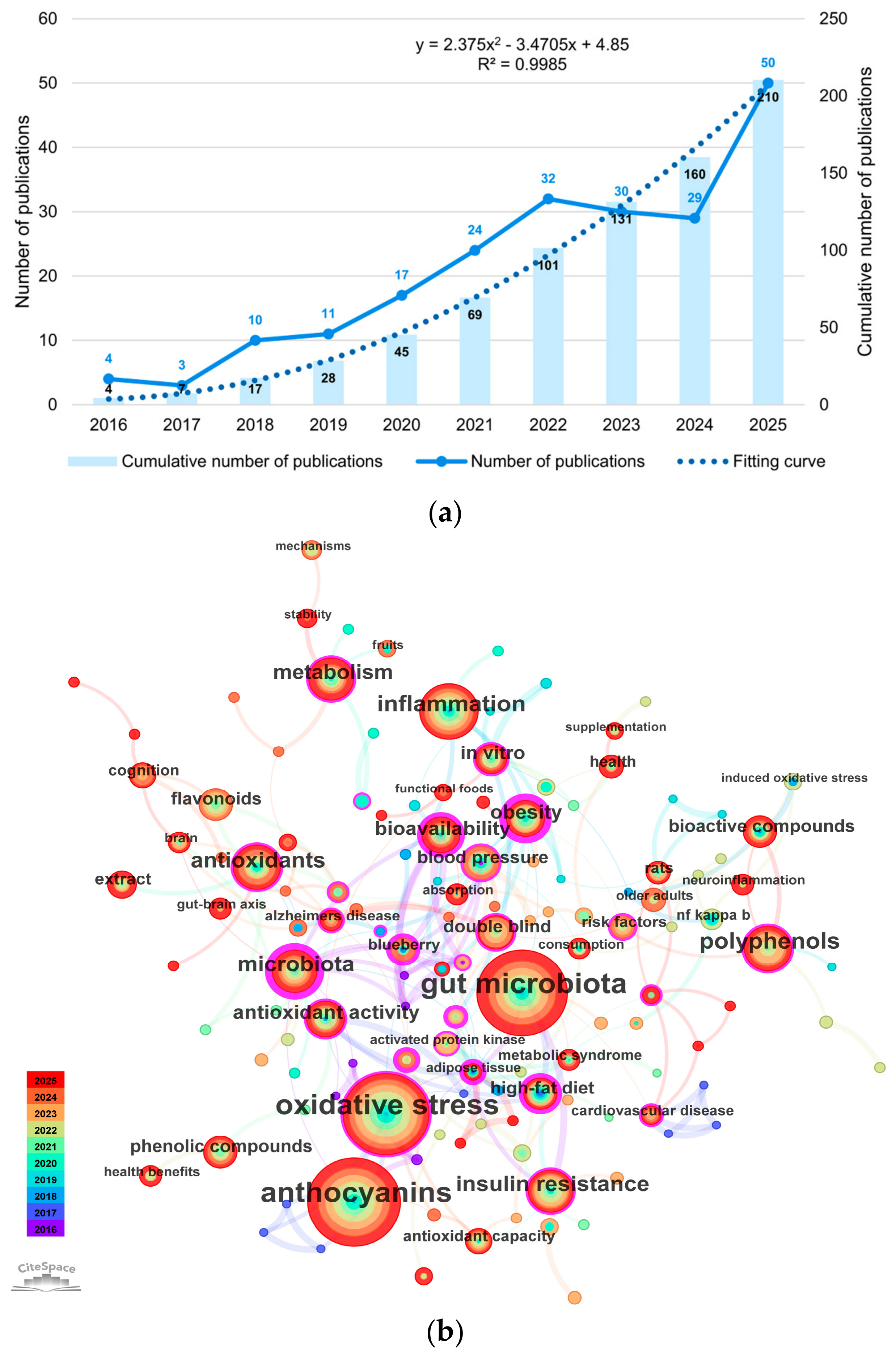
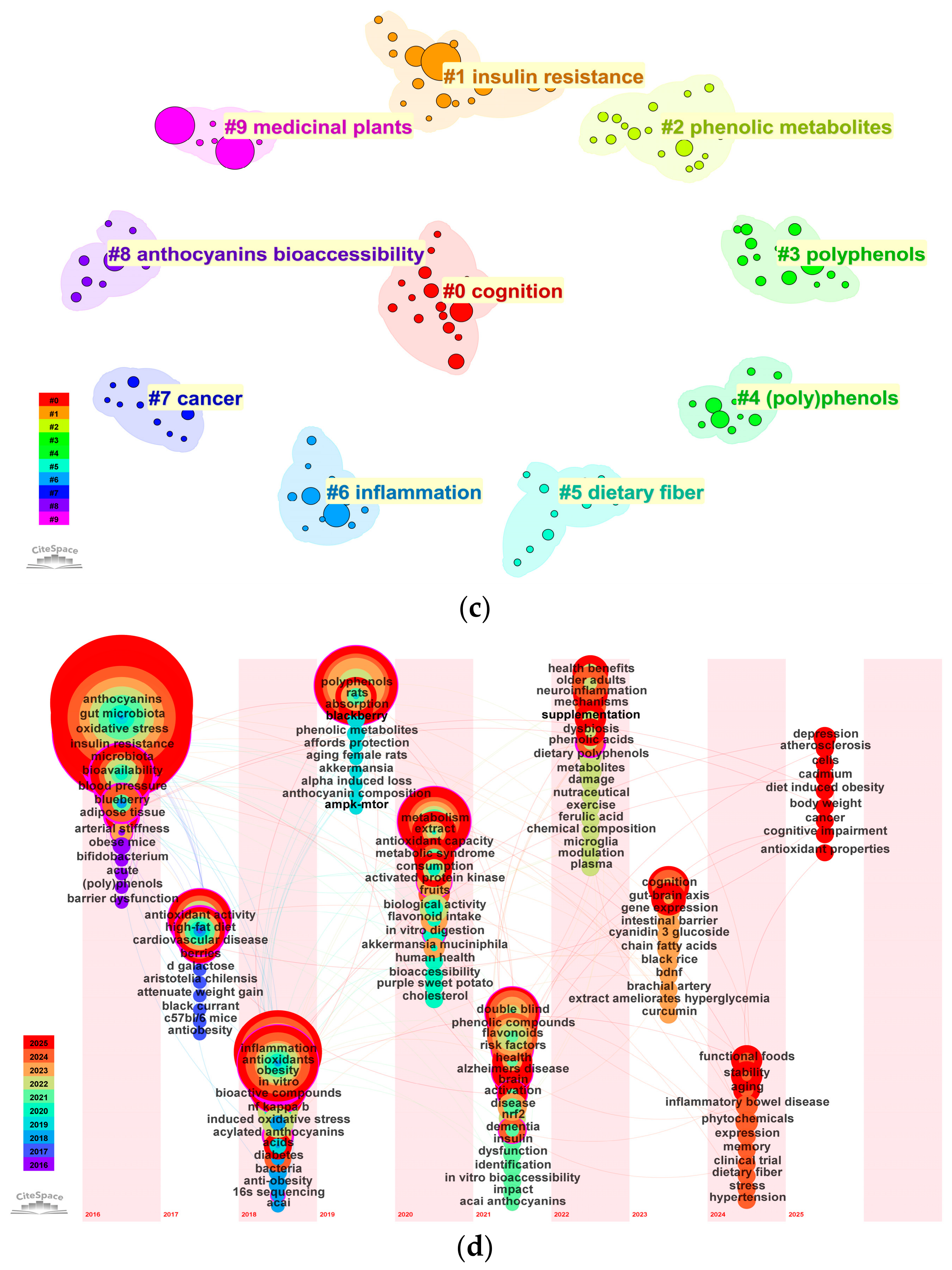
2. Research Landscape and Evolution of Hotspots in the Anthocyanin–Gut Microbiota–Brain Health Interface over the Past Decade
3. Bioactive Components of Blueberries
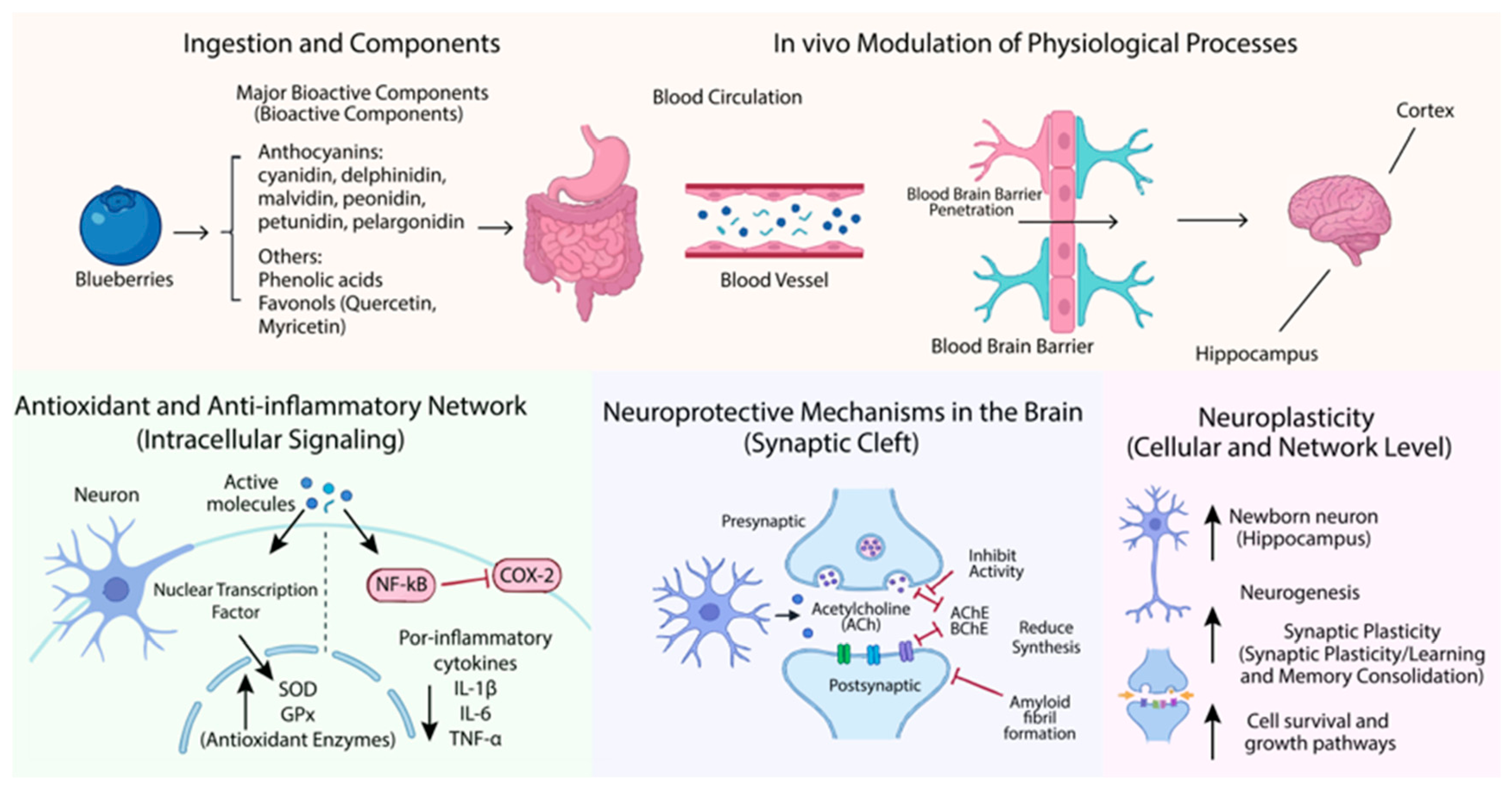
3.1. A Profile of Neuroprotective Compounds in Blueberries
3.2. Bioavailability, Metabolism, and Central Nervous System Penetration
4. The Neuroprotective Effects of Bioactive Substances in Blueberries
4.1. Antioxidant and Anti-Inflammatory Actions
4.2. Enhancement of Neuronal Signaling and Plasticity
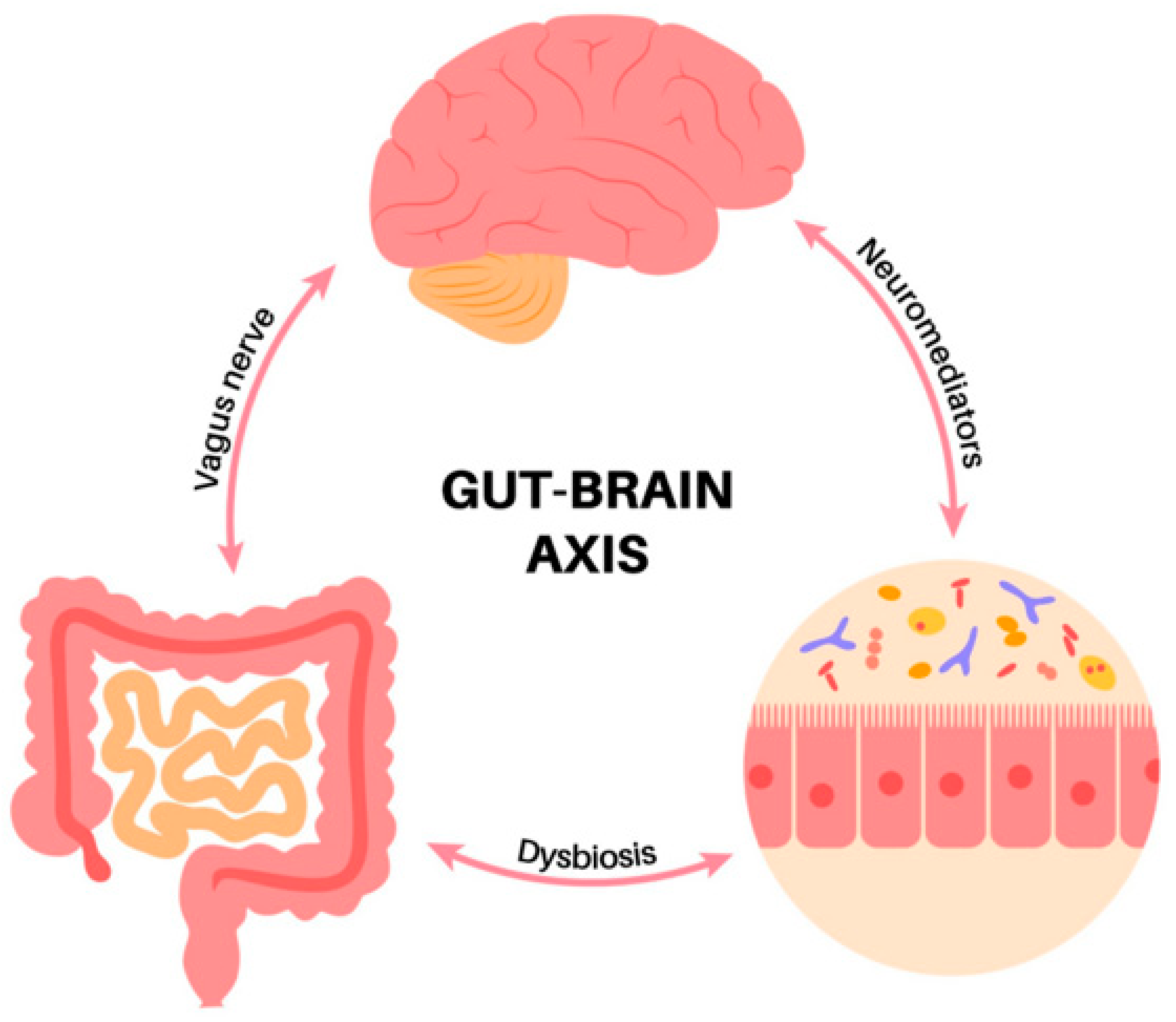
4.3. Neuroprotection Mediated by Gut Microbiota
5. Pediatric Evidence for Blueberry Bioactives: Gut Microbiota, Mood, and Cognition
5.1. Intervention and Impact on Gut Microbiota
5.2. The Impact on Emotional Disorders
5.3. The Impact on Memory and Cognition
5.3.1. Effects on Memory
5.3.2. Attention and Processing Speed
5.3.3. Dose–Response and Time-Course Effects
6. The Potential Mechanism of Bioactive Components in Blueberries in Children’s Neurological and Mental Health
6.1. Characteristics of Gut Microbiota in Neurodevelopmental Disorders and Potential Intervention of Blueberries
6.2. Antioxidant and Anti-Inflammatory Neuroprotective Mechanisms Based on Model Conditions
6.3. The Regulatory Mechanism of Synaptic Plasticity and Neurogenesis
7. Current Applications and Challenges
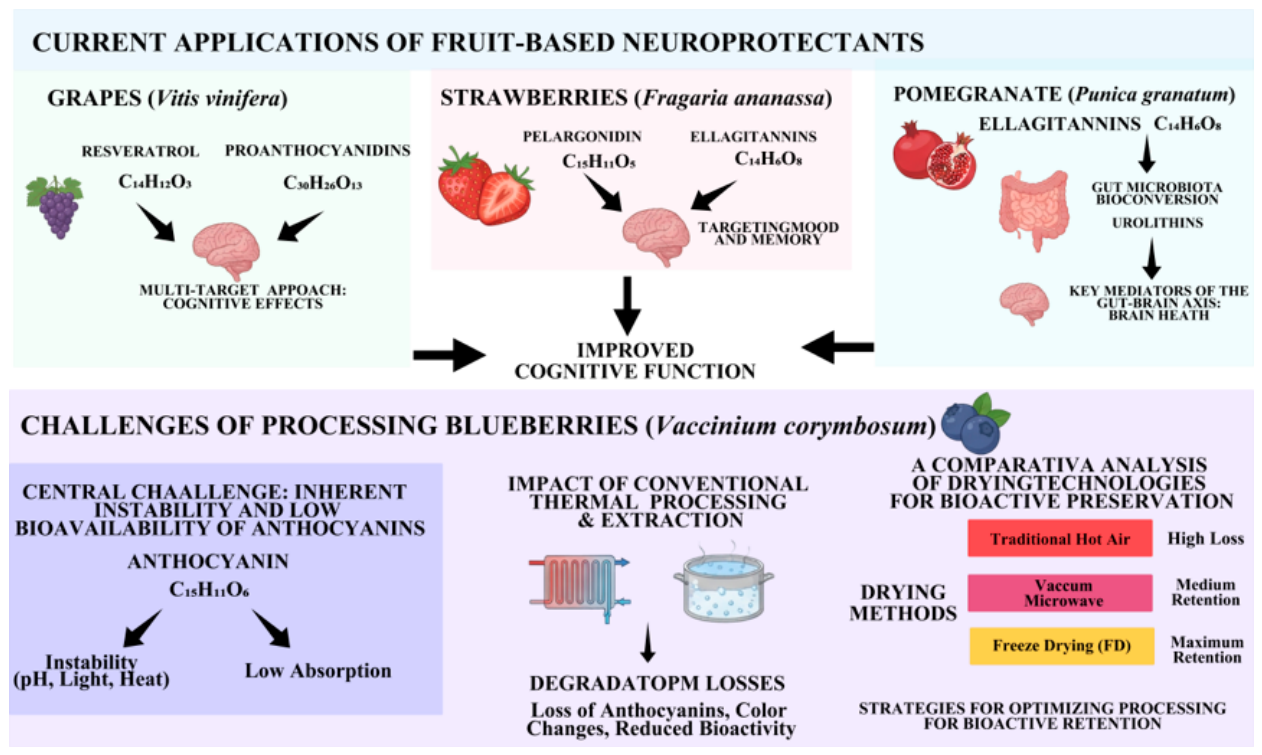
7.1. Comparative Bioactive Profiles of Berry-Derived Polyphenols
7.2. Building a Sustainable Food-Engineering System for Mental Health
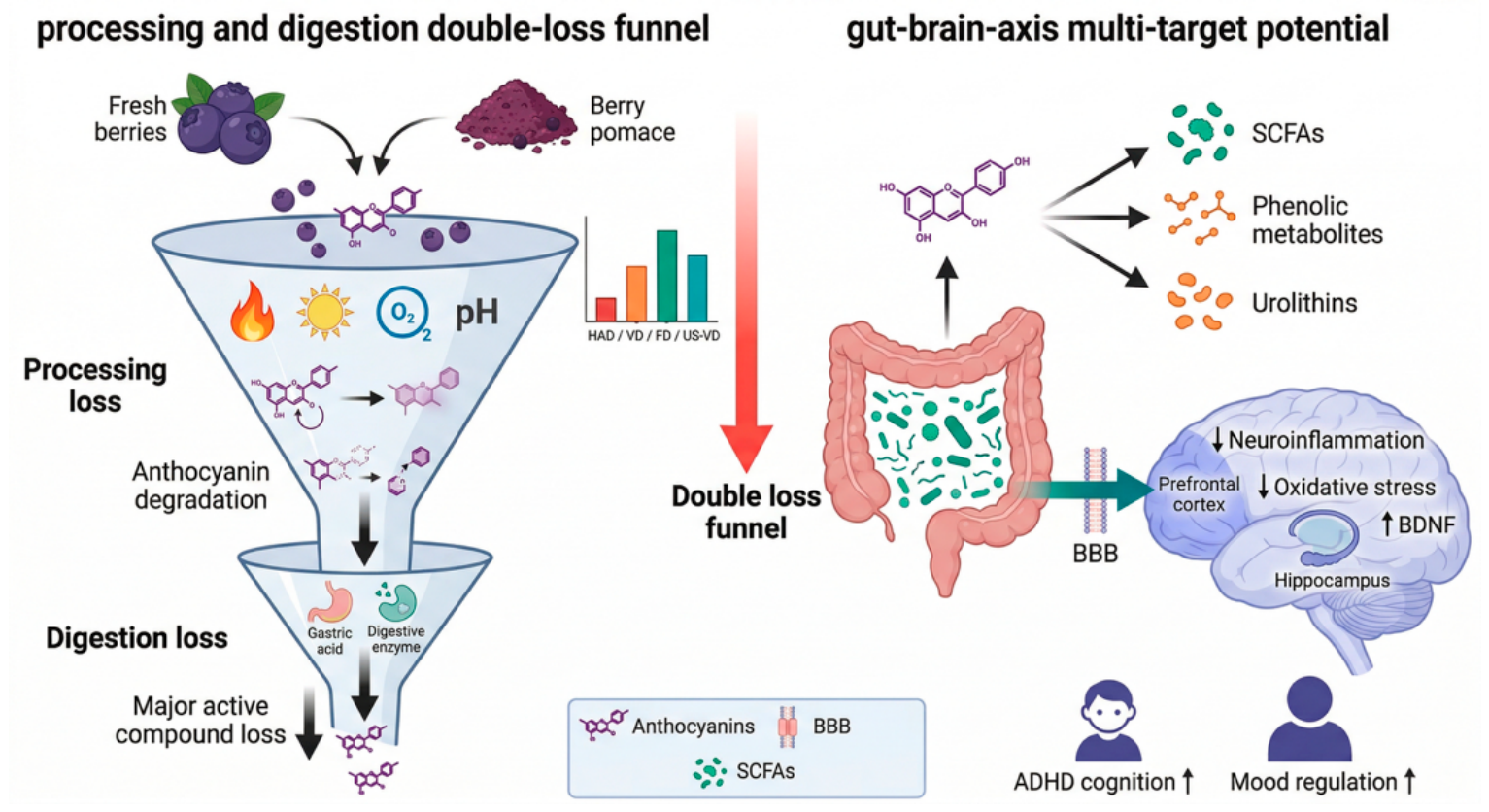
7.2.1. Dual Barriers of Processing Instability and Low Bioavailability

| Drying Technology | Core Process Principle | Anthocyanin Retention | Total Phenol Retention | Key Processing and Sustainability Advantages | Main Environmental/Economic Limitations | References |
|---|---|---|---|---|---|---|
| Hot air drying (HAD) | Moisture evaporation through convective heat transfer | Lowest | Marked loss | Very low equipment investment; simple operation | Long drying duration causes severe thermal damage and pigment degradation | [78] |
| Vacuum drying (VD) | Moisture evaporation under reduced pressure | Moderate | Moderate retention | Low temperature reduces oxidation risk; moderate operating cost | Higher cost than HAD; possible structural collapse | [80] |
| Freeze drying (FD) | Ice sublimation under deep vacuum | Highest | Maximum retention | Excellent preservation of bioactives, color, and porous microstructure | High energy demand and equipment investment; limited sustainable scalability | [18,80] |
| Ultrasound-assisted vacuum drying (US-VD) | Acoustic cavitation generates microchannels to assist vacuum evaporation | Relatively high | High retention | Shortens drying time and carbon footprint; reduces thermal damage | Complex hybrid equipment; higher initial capital investment than conventional processes | [18,78] |
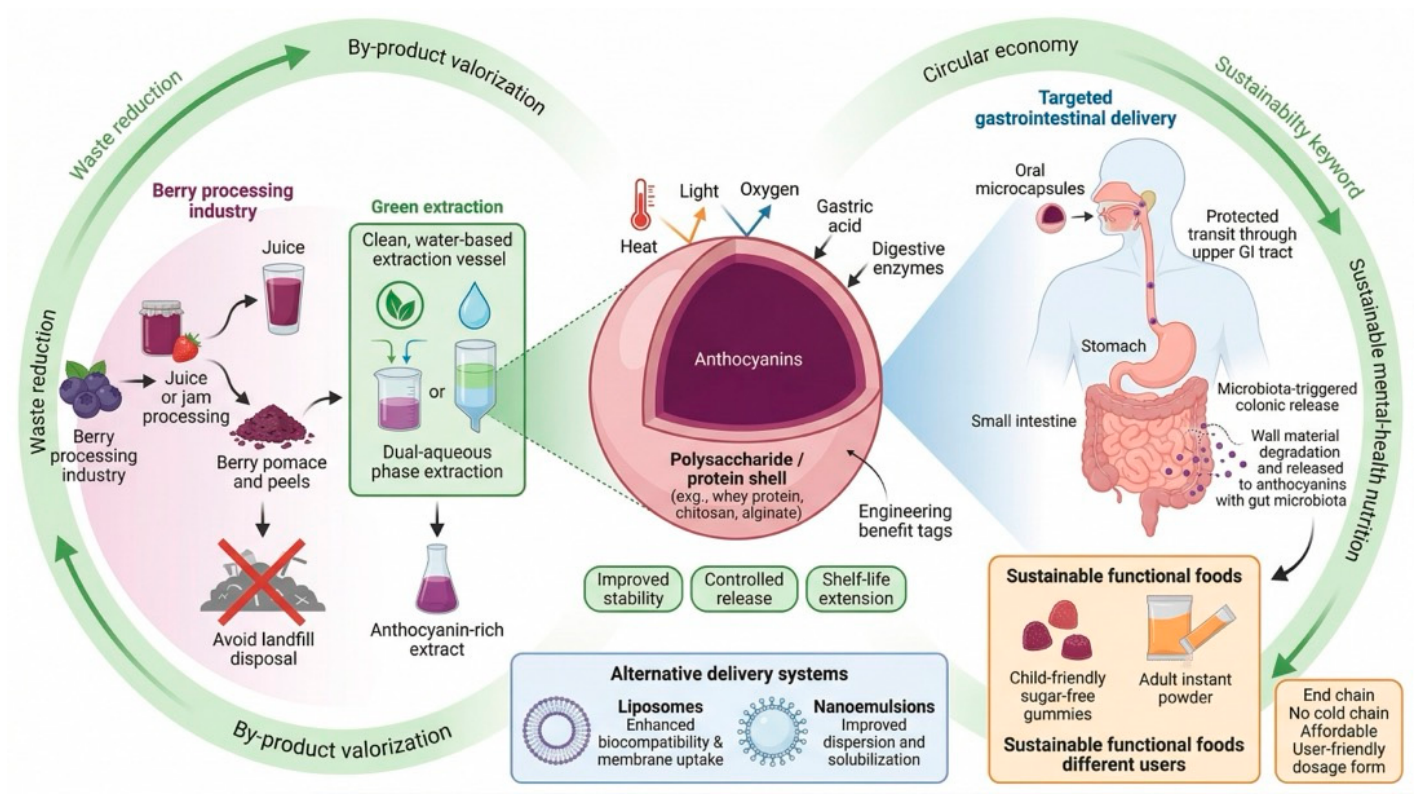
7.2.2. Green High-Value Utilization of Agricultural By-Products: Implementing a Zero-Waste Circular Economy
7.2.3. Overcoming Delivery Barriers: Advanced Colon-Targeted Microencapsulation Systems
7.2.4. Constructing a Zero-Waste Sustainable Food-Engineering Closed-Loop Model
7.3. Safety, Tolerability, and Considerations for Clinical Use in Children
8. Conclusions
Outcome Measures
Author Contributions
Funding
Institutional Review Board Statement
Informed Consent Statement
Data Availability Statement
Conflicts of Interest
Abbreviations
| MBDD | Behavioral and developmental disorders |
| Nrf2 | Nuclear factor erythroid 2-related factor 2 |
| SOD | Superoxide dismutase |
| GPx | Glutathione peroxidase |
| ADHD | Attention-deficit/hyperactivity disorder |
| Trk | Tropomyosin receptor kinase |
| NDDs | Neurodevelopmental disorders |
| ASD | Autism spectrum disorder |
| ROS | Reactive oxygen species |
| TNF-α | Tumor necrosis factor-alpha |
| IL-1β | Interleukin-1 beta |
References
- Leeb, R.T.; Danielson, M.L.; Claussen, A.H.; Robinson, L.R.; Lebrun-Harris, L.A.; Ghandour, R.; Brown, J. Trends in mental, behavioral, and developmental disorders among children and adolescents in the US, 2016–2021. Prev. Chronic Dis. 2024, 21, E96. [Google Scholar] [CrossRef] [PubMed]
- Heslon, K.; Hanson, J.H.; Ogourtsova, T. Mental health in children with disabilities and their families: Red flags, services’ impact, facilitators, barriers, and proposed solutions. Front. Rehabil. Sci. 2024, 5, 1347412. [Google Scholar] [CrossRef] [PubMed]
- Yu, J.A.; McKernan, G.; Hagerman, T.; Schenker, Y.; Houtrow, A. Most children with medical complexity do not receive care in well-functioning health care systems. Hosp. Pediatr. 2021, 11, 183–191. [Google Scholar] [CrossRef] [PubMed]
- Ghafari, M.; Nadi, T.; Bahadivand-Chegini, S.; Doosti-Irani, A. Global prevalence of unmet need for mental health care among adolescents: A systematic review and meta-analysis. Arch. Psychiat Nurs. 2022, 36, 1–6. [Google Scholar] [CrossRef] [PubMed]
- Rathor, P.; Ch, R. The Impacts of Dietary Intervention on Brain Metabolism and Neurological Disorders: A Narrative Review. Dietetics 2024, 3, 289–307. [Google Scholar] [CrossRef]
- Kalt, W.; Cassidy, A.; Howard, L.R.; Krikorian, R.; Stull, A.J.; Tremblay, F.; Zamora-Ros, R. Recent research on the health benefits of blueberries and their anthocyanins. Advin Nutr. 2020, 11, 224–236. [Google Scholar] [CrossRef] [PubMed]
- Hosseinian, F.S.; Beta, T. Saskatoon and wild blueberries have higher anthocyanin contents than other Manitoba berries. J. Agric. Food Chem. 2007, 55, 10832–10838. [Google Scholar] [CrossRef] [PubMed]
- Sharma, K.; Malathi, V.M.; Thappa, C.; Kour, N.; Abhimannue, A.P. Bioactive Compounds in Blueberry Fruit and Their Antidiabetic Activity. Curr. Food Sci. Technol. Rep. 2024, 2, 309–318. [Google Scholar] [CrossRef]
- Subash, S.; Essa, M.M.; Al-Adawi, S.; Memon, M.A.; Manivasagam, T.; Akbar, M. Neuroprotective effects of berry fruits on neurodegenerative diseases. Neural Regen. Res. 2014, 9, 1557–1566. [Google Scholar] [CrossRef] [PubMed]
- Zaa, C.A.; Marcelo, Á.J.; An, Z.; Medina-Franco, J.L.; Velasco-Velázquez, M.A. Anthocyanins: Molecular aspects on their neuroprotective activity. Biomolecules 2023, 13, 1598. [Google Scholar] [CrossRef] [PubMed]
- Khalid, S.; Barfoot, K.L.; May, G.; Lamport, D.J.; Reynolds, S.A.; Williams, C.M. Effects of acute blueberry flavonoids on mood in children and young adults. Nutrients 2017, 9, 158. [Google Scholar] [CrossRef] [PubMed]
- Travica, N.; D’Cunha, N.M.; Naumovski, N.; Kent, K.; Mellor, D.D.; Firth, J.; Marx, W. The effect of blueberry interventions on cognitive performance and mood: A systematic review of randomized controlled trials. Brain Behav. Immun. 2020, 85, 96–105. [Google Scholar] [CrossRef] [PubMed]
- Zhong, H.; Xu, J.; Yang, M.; Hussain, M.; Liu, X.; Feng, F.; Guan, R. Protective effect of anthocyanins against neurodegenerative diseases through the microbial-intestinal-brain axis: A critical review. Nutrients 2023, 15, 496. [Google Scholar] [CrossRef] [PubMed]
- Ma, L.; Sun, Z.; Zeng, Y.; Luo, M.; Yang, J. Molecular mechanism and health role of functional ingredients in blueberry for chronic disease in human beings. Int. J. Mol. Sci. 2018, 19, 2785. [Google Scholar] [CrossRef] [PubMed]
- Mattioli, R.; Francioso, A.; Mosca, L.; Silva, P. Anthocyanins: A comprehensive review of their chemical properties and health effects on cardiovascular and neurodegenerative diseases. Molecules 2020, 25, 3809. [Google Scholar] [CrossRef] [PubMed]
- Singh, L.; Wani, A.W.; Shaifali; Sadawarti, R.K.; Kaur, H.; Bashir, O.; Farid, A. A comprehensive review on neurotrophic receptors and their implications in brain health: Exploring the neuroprotective potential of berries. J. Berry Res. 2025, 15, 48–64. [Google Scholar] [CrossRef]
- Venter, C.; Boden, S.; Pickett-Nairne, K.; O’Mahony, L.; Glime, G.N.; Matzeller, K.L.; Tang, M. Blueberry Consumption in Early Life and Its Effects on Allergy, Immune Biomarkers, and Their Association with the Gut Microbiome. Nutrients 2025, 17, 2795. [Google Scholar] [CrossRef] [PubMed]
- Wang, L.; Lan, W.; Chen, D. Blueberry (Vaccinium spp.) Anthocyanins and Their Functions, Stability, Bioavailability, and Applications. Foods 2024, 13, 2851. [Google Scholar] [CrossRef] [PubMed]
- Salehi, B.; Sharifi-Rad, J.; Cappellini, F.; Reiner, Ž.; Zorzan, D.; Imran, M.; Maroyi, A. The therapeutic potential of anthocyanins: Current approaches based on their molecular mechanism of action. Front. Pharmacol. 2020, 11, 1300. [Google Scholar] [CrossRef] [PubMed]
- Ghosh, A.; Biswas, S.; De, S.; Ingale, S. Molecular and Functional Aspects of Anthocyanins: A Narrative Review on Their Antioxidant and Anti-inflammatory Mechanism. Curr. Res. Nutr. Food Sci. J. 2025, 13, 97–112. [Google Scholar] [CrossRef]
- Visternicu, M.; Rarinca, V.; Burlui, V.; Halitchi, G.; Ciobică, A.; Singeap, A.M.; Trifan, A. Investigating the impact of nutrition and oxidative stress on attention deficit hyperactivity disorder. Nutrients 2024, 16, 3113. [Google Scholar] [CrossRef] [PubMed]
- Bellavite, P. Neuroprotective potentials of flavonoids: Experimental studies and mechanisms of action. Antioxidants 2023, 12, 280. [Google Scholar] [CrossRef] [PubMed]
- Giacalone, M.; Di Sacco, F.; Traupe, I.; Pagnucci, N.; Forfori, F.; Giunta, F. Blueberry polyphenols and neuroprotection. In Bioactive Nutraceuticals and Dietary Supplements in Neurological and Brain Disease; Academic Press: Cambridge, MA, USA, 2015; pp. 17–28. [Google Scholar]
- Li, H.; Xiao, C.; Wang, F.; Guo, X.; Zhou, Z.; Jiang, Y. Blueberry–mulberry extract alleviates cognitive impairment, regulates gut metabolites, and inhibits inflammation in aged mice. Foods 2023, 12, 860. [Google Scholar] [CrossRef] [PubMed]
- Igwe, E.O.; Charlton, K.E.; Probst, Y.C.; Kent, K.; Netzel, M.E. A systematic literature review of the effect of anthocyanins on gut microbiota populations. J. Hum. Nutr. Diet. 2019, 32, 53–62. [Google Scholar] [PubMed]
- Barfoot, K.L.; Istas, G.; Feliciano, R.P.; Lamport, D.J.; Riddell, P.; Rodriguez-Mateos, A.; Williams, C.M. Effects of daily consumption of wild blueberry on cognition and urinary metabolites in school-aged children: A pilot study. Eur. J. Nutr. 2021, 60, 4263–4278. [Google Scholar] [CrossRef] [PubMed]
- Gato, E.; Rosalowska, A.; Martinez-Guitian, M.; Lores, M.; Bou, G.; Perez, A. Anti-adhesive activity of a Vaccinium corymbosum polyphenolic extract targeting intestinal colonization by Klebsiella pneumoniae. Biomed. Pharmacother. 2020, 132, 110885. [Google Scholar] [CrossRef] [PubMed]
- Horasan Sagbasan, B.; Williams, C.M.; Bell, L.; Barfoot, K.L.; Poveda, C.; Walton, G.E. Inulin and freeze-dried blueberry intervention lead to changes in the microbiota and metabolites within in vitro studies and in cognitive function within a small pilot trial on healthy children. Microorganisms 2024, 12, 1501. [Google Scholar] [CrossRef] [PubMed]
- Lewandowska-Pietruszka, Z.; Figlerowicz, M.; Mazur-Melewska, K. Microbiota in autism spectrum disorder: A systematic review. Int. J. Mol. Sci. 2023, 24, 16660. [Google Scholar] [CrossRef] [PubMed]
- Serra, D.; Henriques, J.F.; Sousa, F.J.; Laranjo, M.; Resende, R.; Ferreira-Marques, M.; Almeida, L.M. Attenuation of autism-like behaviors by an anthocyanin-rich extract from portuguese blueberries via microbiota–gut–brain axis modulation in a valproic acid mouse model. Int. J. Mol. Sci. 2022, 23, 9259. [Google Scholar] [CrossRef] [PubMed]
- Yang, Y.; Zhao, S.; Zhang, M.; Xiang, M.; Zhao, J.; Chen, S.; Ran, J. Prevalence of neurodevelopmental disorders among US children and adolescents in 2019 and 2020. Front. Psychol. 2022, 13, 997648. [Google Scholar] [CrossRef] [PubMed]
- Colombage, R.L.; Barfoot, K.L.; Lamport, D.J. Effects of dietary flavonoids on mood and mental health: A systematic review. Nutr. Rev. 2026, 84, 734–750. [Google Scholar] [PubMed]
- Venable, K.E.; Lee, C.C.; Francis, J. Addressing mental health in rural settings: A narrative review of blueberry supplementation as a natural intervention. Nutrients 2024, 16, 3539. [Google Scholar] [CrossRef] [PubMed]
- Whyte, A.R.; Schafer, G.; Williams, C.M. Cognitive effects following acute wild blueberry supplementation in 7-to 10-year-old children. Eur. J. Nutr. 2016, 55, 2151–2162. [Google Scholar] [PubMed]
- Barfoot, K.L.; May, G.; Lamport, D.J.; Ricketts, J.; Riddell, P.M.; Williams, C.M. The effects of acute wild blueberry supplementation on the cognition of 7–10-year-old schoolchildren. Eur. J. Nutr. 2019, 58, 2911–2920. [Google Scholar] [PubMed]
- Bell, L.; Williams, C.M. Blueberry benefits to cognitive function across the lifespan. Int. J. Food Sci. Nutr. 2021, 72, 650–652. [Google Scholar] [PubMed]
- Whyte, A.R.; Cheng, N.; Fromentin, E.; Williams, C.M. A randomized, double-blinded, placebo-controlled study to compare the safety and efficacy of low dose enhanced wild blueberry powder and wild blueberry extract (ThinkBlue™) in maintenance of episodic and working memory in older adults. Nutrients 2018, 10, 660. [Google Scholar] [CrossRef] [PubMed]
- Krikorian, R.; Shidler, M.D.; Nash, T.A.; Kalt, W.; Vinqvist-Tymchuk, M.R.; Shukitt-Hale, B.; Joseph, J.A. Blueberry supplementation improves memory in older adults. J. Agric. Food Chem. 2010, 58, 3996–4000. [Google Scholar] [CrossRef] [PubMed]
- Whyte, A.R.; Williams, C.M. Effects of a single dose of a flavonoid-rich blueberry drink on memory in 8 to 10 y old children. Nutrition 2015, 31, 531–534. [Google Scholar] [CrossRef] [PubMed]
- Whyte, A.R.; Lamport, D.J.; Schafer, G.; Williams, C.M. The cognitive effects of an acute wild blueberry intervention on 7-to 10-year-olds using extended memory and executive function task batteries. Food Funct. 2020, 11, 4793–4801. [Google Scholar] [CrossRef] [PubMed]
- Fisk, J.; Khalid, S.; Reynolds, S.A.; Williams, C.M. Effect of 4 weeks daily wild blueberry supplementation on symptoms of depression in adolescents. Br. J. Nutr. 2020, 124, 181–188. [Google Scholar] [CrossRef] [PubMed]
- May, G. The Acute and Chronic Effects of a Freeze-Dried Wild Blueberry Powder (253 mg Anthocyanins) on Cognition, Reading Behaviour, and Mood, in Healthy Seven to Ten-Year Olds. Doctoral Dissertation, University of Reading, Reading, UK, 2021. [Google Scholar]
- Li, Q.; Han, Y.; Dy, A.B.C.; Hagerman, R.J. The gut microbiota and autism spectrum disorders. Front. Cell. Neurosci. 2017, 11, 244313. [Google Scholar] [CrossRef] [PubMed]
- Liang, A.; Leonard, W.; Beasley, J.T.; Fang, Z.; Zhang, P.; Ranadheera, C.S. Anthocyanins-gut microbiota-health axis: A review. Crit. Rev. Food Sci. 2024, 64, 7563–7588. [Google Scholar]
- Liu, S.; Li, E.; Sun, Z.; Fu, D.; Duan, G.; Jiang, M.; Zheng, P. Altered gut microbiota and short chain fatty acids in Chinese children with autism spectrum disorder. Sci. Rep. 2019, 9, 287. [Google Scholar] [CrossRef] [PubMed]
- Kang, D.W.; Adams, J.B.; Coleman, D.M.; Pollard, E.L.; Maldonado, J.; McDonough-Means, S.; Krajmalnik-Brown, R. Long-term benefit of Microbiota Transfer Therapy on autism symptoms and gut microbiota. Sci. Rep. 2019, 9, 5821. [Google Scholar] [CrossRef] [PubMed]
- Penn, A.H.; Carver, L.J.; Herbert, C.A.; Lai, T.S.; McIntire, M.J.; Howard, J.T.; Dobkins, K.R. Breast milk protects against gastrointestinal symptoms in infants at high risk for autism during early development. J. Pediatr. Gastr. Nutr. 2016, 62, 317–327. [Google Scholar] [CrossRef] [PubMed]
- Glime, G.N.; Matzeller, K.L.; Frank, D.N.; Kotter, C.; Kofonow, J.M.; Robertson, C.E.; Tang, M. Introducing blueberry powder as one of the first complementary foods changes the gut microbiota composition and diversity in US human milk-fed infants: A double-blind, randomized controlled trial. Front. Nutr. 2025, 12, 1623521. [Google Scholar] [CrossRef] [PubMed]
- Guo, Q.; Kim, Y.N.; Lee, B.H. Protective effects of blueberry drink on cognitive impairment induced by chronic mild stress in adult rats. Nutr. Res. Pract. 2017, 11, 25–32. [Google Scholar] [CrossRef] [PubMed]
- Shukitt-Hale, B.; Thangthaeng, N.; Miller, M.G.; Poulose, S.M.; Carey, A.N.; Fisher, D.R. Blueberries improve neuroinflammation and cognition differentially depending on individual cognitive baseline status. J. Gerontol. Ser. A 2019, 74, 977–983. [Google Scholar] [CrossRef] [PubMed]
- Norouzkhani, N.; Afshari, S.; Sadatmadani, S.F.; Mollaqasem, M.M.; Mosadeghi, S.; Ghadri, H.; Poudineh, M. Therapeutic potential of berries in age-related neurological disorders. Front. Pharmacol. 2024, 15, 1348127. [Google Scholar] [CrossRef] [PubMed]
- Wei, J.; Zhang, G.; Zhang, X.; Xu, D.; Gao, J.; Fan, J.; Zhou, Z. Anthocyanins from black chokeberry (Aronia melanocarpa Elliot) delayed aging-related degenerative changes of brain. J. Agric. Food Chem. 2017, 65, 5973–5984. [Google Scholar] [CrossRef] [PubMed]
- Barros, D.; Amaral, O.B.; Izquierdo, I.; Geracitano, L.; Raseira, M.D.C.B.; Henriques, A.T.; Ramirez, M.R. Behavioral and genoprotective effects of Vaccinium berries intake in mice. Pharmacol. Biochem. Behav. 2006, 84, 229–234. [Google Scholar] [CrossRef] [PubMed]
- Gutierres, J.M.; Carvalho, F.B.; Schetinger, M.R.C.; Agostinho, P.; Marisco, P.C.; Vieira, J.M.; Mazzanti, C.M. Neuroprotective effect of anthocyanins on acetylcholinesterase activity and attenuation of scopolamine-induced amnesia in rats. Int. J. Dev. Neurosci. 2014, 33, 88–97. [Google Scholar] [PubMed]
- Shewale, P.B.; Patil, R.A.; Hiray, Y.A. Antidepressant-like activity of anthocyanidins from Hibiscus rosa-sinensis flowers in tail suspension test and forced swim test. Indian J. Pharmacol. 2012, 44, 454–457. [Google Scholar] [CrossRef] [PubMed]
- Cheng, N. The Acute Effects of Wild Blueberry Extract on Cognition in Healthy Older Adults. Doctoral Dissertation, University of Reading, Reading, UK, 2024. [Google Scholar]
- Bensalem, J.; Dudonné, S.; Gaudout, D.; Servant, L.; Calon, F.; Desjardins, Y.; Pallet, V. Polyphenol-rich extract from grape and blueberry attenuates cognitive decline and improves neuronal function in aged mice. J. Nutr. Sci. 2018, 7, e19. [Google Scholar] [CrossRef] [PubMed]
- De Amicis, R.; Mambrini, S.P.; Pellizzari, M.; Foppiani, A.; Bertoli, S.; Battezzati, A.; Leone, A. Systematic review on the potential effect of berry intake in the cognitive functions of healthy people. Nutrients 2022, 14, 2977. [Google Scholar] [CrossRef] [PubMed]
- Krikorian, R.; Skelton, M.R.; Summer, S.S.; Shidler, M.D.; Sullivan, P.G. Blueberry supplementation in midlife for dementia risk reduction. Nutrients 2022, 14, 1619. [Google Scholar] [CrossRef] [PubMed]
- Zheng, T.; Bielinski, D.F.; Fisher, D.R.; Zhang, J.; Shukitt-Hale, B. Protective effects of a polyphenol-rich blueberry extract on adult human neural progenitor cells. Molecules 2022, 27, 6152. [Google Scholar] [CrossRef] [PubMed]
- Casadesus, G.; Shukitt-Hale, B.; Stellwagen, H.M.; Zhu, X.; Lee, H.G.; Smith, M.A.; Joseph, J.A. Modulation of hippocampal plasticity and cognitive behavior by short-term blueberry supplementation in aged rats. Nutr. Neurosci. 2004, 7, 309–316. [Google Scholar] [CrossRef] [PubMed]
- Georgiev, V.; Ananga, A.; Tsolova, V. Recent advances and uses of grape flavonoids as nutraceuticals. Nutrients 2014, 6, 391–415. [Google Scholar] [CrossRef] [PubMed]
- Sabra, A.; Netticadan, T.; Wijekoon, C. Grape bioactive molecules, and the potential health benefits in reducing the risk of heart diseases. Food Chem. X 2021, 12, 100149. [Google Scholar] [CrossRef] [PubMed]
- Ibrahim Fouad, G.; Zaki Rizk, M. Possible neuromodulating role of different grape (Vitis vinifera L.) derived polyphenols against Alzheimer’s dementia: Treatment and mechanisms. Bull. Natl. Res. Cent. 2019, 43, 108. [Google Scholar] [CrossRef]
- Pasinetti, G.M.; Wang, J.; Ho, L.; Zhao, W.; Dubner, L. Roles of resveratrol and other grape-derived polyphenols in Alzheimer’s disease prevention and treatment. Biochim. Biophys. Acta (BBA)-Mol. Basis Dis. 2015, 1852, 1202–1208. [Google Scholar] [CrossRef] [PubMed]
- Zhang, Y.; Yu, W.; Zhang, L.; Wang, M.; Chang, W. The interaction of polyphenols and the gut microbiota in neurodegenerative diseases. Nutrients 2022, 14, 5373. [Google Scholar] [CrossRef] [PubMed]
- Sarubbo, F.; Moranta, D.; Tejada, S.; Jiménez, M.; Esteban, S. Impact of gut microbiota in brain ageing: Polyphenols as beneficial modulators. Antioxidants 2023, 12, 812. [Google Scholar] [CrossRef] [PubMed]
- Krikorian, R.; Shidler, M.D.; Summer, S.S. Early intervention in cognitive aging with strawberry supplementation. Nutrients 2023, 15, 4431. [Google Scholar] [CrossRef] [PubMed]
- Ekathat, T. Effect of Supplementation of Flavonoid-Rich Fruits on Cognitive Performance and Mood in Children Aged 11–13 Years Old. Ph.D. Thesis, University of Reading, Reading, UK, 2018. [Google Scholar]
- Sivamani, R.K.; Chakkalakal, M.; Pan, A.; Nadora, D.; Min, M.; Dumont, A.; Chambers, C.J. Prospective randomized, double-blind, placebo-controlled study of a standardized oral pomegranate extract on the gut microbiome and short-chain fatty acids. Foods 2023, 13, 15. [Google Scholar] [CrossRef] [PubMed]
- Bandow, B.; Shaaban, E.S.; Rajakaruna, S.; Saleh, Z.; Abdelaziz, S.A.; Hussein, L.; Paliy, O. Diet Supplementation with Pomegranate Fruit Alters Distal Gut Microbiota of Healthy Female College Students. Microorganisms 2025, 13, 305. [Google Scholar] [CrossRef] [PubMed]
- An, L.; Lu, Q.; Wang, K.; Wang, Y. Urolithins: A prospective alternative against brain aging. Nutrients 2023, 15, 3884. [Google Scholar] [CrossRef] [PubMed]
- Kujawska, M.; Jourdes, M.; Kurpik, M.; Szulc, M.; Szaefer, H.; Chmielarz, P.; Jodynis-Liebert, J. Neuroprotective effects of pomegranate juice against Parkinson’s disease and presence of ellagitannins-derived metabolite—Urolithin A—In the brain. Int. J. Mol. Sci. 2019, 21, 202. [Google Scholar] [CrossRef] [PubMed]
- Duarte, L.; Bustamante, A.; Orellana, J.F.; Valenzuela, R.; Magne, F.; Fuentes, J.; Echeverría, F. Impact of pomegranate peel extract on gut microbiota composition and metabolic health parameters in high-fat diet-fed mice. Food Biosci. 2024, 61, 104663. [Google Scholar] [CrossRef]
- Tran, P.H.L.; Tran, T.T.D. Blueberry Supplementation in Neuronal Health and Protective Technologies for Efficient Delivery of Blueberry Anthocyanins. Biomolecules 2021, 11, 102. [Google Scholar] [CrossRef] [PubMed]
- Ramzan, R.; Muhammad, Z.; Amjad, A.; Sharif, H.R.; Zhang, G.; Chen, A. Enhanced Bioavailability and Health Benefits of Blueberry Anthocyanins: An Updated Review on Mechanisms and Approaches. Molecules 2026, 31, 793. [Google Scholar] [CrossRef] [PubMed]
- Lee, J.; Durst, R.W.; Wrolstad, R.E. Impact of Juice Processing on Blueberry Anthocyanins and Polyphenolics: Comparison of Two Pretreatments. J. Food Sci. 2002, 67, 1660–1667. [Google Scholar] [CrossRef]
- Akcicek, A.; Avci, E.; Tekin-Cakmak, Z.H.; Kasapoglu, M.Z.; Sagdic, O.; Karasu, S. Influence of Different Drying Techniques on the Drying Kinetics, Total Bioactive Compounds, Anthocyanin Profile, Color, and Microstructural Properties of Blueberry Fruit. ACS Omega 2023, 8, 41603–41611. [Google Scholar] [CrossRef] [PubMed]
- Herrera-Balandrano, D.D.; Chai, Z.; Beta, T.; Feng, J.; Huang, W. Blueberry anthocyanins: An updated review on approaches to enhancing their bioavailability. Trends Food Sci. Technol. 2021, 118, 808–821. [Google Scholar] [CrossRef]
- Uribe, E.; Vega-Galvez, A.; Pasten, A.; Ah-Hen, K.S.; Mejias, N.; Sepúlveda, L.; Poblete, J.; Gomez-Perez, L.S. Drying: A Practical Technology for Blueberries (Vaccinium corymbosum L.)—Processes and their Effects on Selected Health-Promoting Properties. Antioxidants 2024, 13, 1554. [Google Scholar] [CrossRef] [PubMed]
- Cheng, Y.; Wu, T.; Chu, X.; Tang, S.; Cao, W.; Liang, F.; Fang, Y.; Pan, S.; Xu, X. Fermented blueberry pomace with antioxidant properties improves fecal microbiota community structure and short chain fatty acids production in an in vitro mode. LWT 2020, 125, 109260. [Google Scholar] [CrossRef]
- Gao, Y.; Ji, Y.; Wang, F.; Li, W.; Zhang, X.; Niu, Z.; Wang, Z. Optimization the extraction of anthocyanins from blueberry residue by dual-aqueous phase method and cell damage protection study. Food Sci. Biotechnol. 2021, 30, 1709–1719. [Google Scholar] [CrossRef] [PubMed]


| Delivery Technology | Common Food-Grade Wall Materials | Core Food-Engineering and Physical Advantages | Translational Potential in Gut–Brain Axis Intervention | References |
|---|---|---|---|---|
| Microencapsulation | Proteins such as whey protein; polysaccharides such as chitosan and alginate | Builds a robust thermodynamic barrier; markedly improves baking and light stability; broadly applicable processing cost | Resists gastric acid and enables colon-targeted release for microbial fermentation and SCFA generation | [75,79] |
| Liposomes | Phospholipids from natural plant sources | Excellent biocompatibility; supports co-encapsulation of hydrophilic anthocyanins and lipophilic ingredients | Improves permeability and absorption of polar metabolites across intestinal epithelial membranes | [75,79] |
| Nanoemulsions | Composite systems of lipids and surfactants | Large interfacial surface area; high dispersion and clear optical properties in liquid systems | Overcomes solubility limits of poorly soluble phenolic polymers and enhances metabolic conversion at intestinal targets | [18,75] |
Disclaimer/Publisher’s Note: The statements, opinions and data contained in all publications are solely those of the individual author(s) and contributor(s) and not of MDPI and/or the editor(s). MDPI and/or the editor(s) disclaim responsibility for any injury to people or property resulting from any ideas, methods, instructions or products referred to in the content. |
© 2026 by the authors. Licensee MDPI, Basel, Switzerland. This article is an open access article distributed under the terms and conditions of the Creative Commons Attribution (CC BY) license.
Share and Cite
Fan, L.; Wei, S.; Yang, X.; Ma, Y.; Zhu, C.; Su, T.; Shi, D.; Song, K. Blueberry Bioactives as Adjunctive Nutritional Strategies for Pediatric Neurodevelopmental and Emotional–Behavioral Health: Mechanisms, Evidence, and Translational Challenges. Nutrients 2026, 18, 2039. https://doi.org/10.3390/nu18132039
Fan L, Wei S, Yang X, Ma Y, Zhu C, Su T, Shi D, Song K. Blueberry Bioactives as Adjunctive Nutritional Strategies for Pediatric Neurodevelopmental and Emotional–Behavioral Health: Mechanisms, Evidence, and Translational Challenges. Nutrients. 2026; 18(13):2039. https://doi.org/10.3390/nu18132039
Chicago/Turabian StyleFan, Lina, Shuwei Wei, Xing Yang, Yunmei Ma, Chunting Zhu, Tong Su, Dongfang Shi, and Kai Song. 2026. "Blueberry Bioactives as Adjunctive Nutritional Strategies for Pediatric Neurodevelopmental and Emotional–Behavioral Health: Mechanisms, Evidence, and Translational Challenges" Nutrients 18, no. 13: 2039. https://doi.org/10.3390/nu18132039
APA StyleFan, L., Wei, S., Yang, X., Ma, Y., Zhu, C., Su, T., Shi, D., & Song, K. (2026). Blueberry Bioactives as Adjunctive Nutritional Strategies for Pediatric Neurodevelopmental and Emotional–Behavioral Health: Mechanisms, Evidence, and Translational Challenges. Nutrients, 18(13), 2039. https://doi.org/10.3390/nu18132039