


Abstract
Background: Menopause is a biological process characterised by the cessation of menstruation and substantial changes in ovarian hormone production. As many women seek non-hormonal alternatives to hormone replacement therapy, interest in herbal supplements has increased. However, the evidence for their effectiveness remains inconsistent due to the diversity of available supplements. This systematic review aimed to evaluate whether oral herbal supplements improve menopausal symptoms in women. Methods: A systematic search of PubMed, Scopus, Embase and PsycINFO was conducted in October 2025 to identify randomised controlled trials (RCTs) assessing non-soy oral herbal supplements for menopausal symptoms. The primary outcomes examined included neurological symptoms, sleep quality, and vasomotor symptoms. The secondary outcomes were overall quality of life and reported adverse effects. Results: Thirty RCTs met the inclusion criteria. Of these, 28 reported improvements in menopausal symptoms, particularly reductions in the severity and frequency of vasomotor symptoms. Nineteen distinct herbal interventions were identified. The two RCTs using black cohosh and dong quai found no measurable effects. Two studies demonstrated significant improvements in specific cognitive domains, although evidence for broader cognitive benefits was limited. Overall quality of life was generally improved, and no major adverse effects were reported. Conclusions: The substantial heterogeneity in the studies identified from this review across multiple factors, including different herbal interventions, doses, duration, and assessment methods, makes it difficult to come to an overall conclusion on whether or not herbal supplementation is effective for treating menopausal symptoms. Further well-designed trials are needed to clarify the efficacy and optimal dosing of herbal treatments.
1. Introduction
Menopause is a natural biological transition marked by the cessation of menstruation and is accompanied by physiological changes and symptoms arising from the reduction in hormones in the body. According to the Stages of Reproductive Ageing Workshop (STRAW) [1], this is a staged process which includes a transition from perimenopause, which is characterised by irregular menstrual cycles and rising follicle-stimulating hormone (FSH) concentrations, to menopause, characterised by the cessation of menstruation; and then to post menopause, characterised by reduced oestrogen and progesterone and high concentrations of FSH [2].
Oestrogen is a critical hormone in various biological processes, including protein synthesis, regulation of reproductive health, and supporting the brain, heart, and musculoskeletal health [3]. The decline in oestrogen results in a wide range of symptoms that can have a dramatic impact on quality of life [4]. Generally, there are four interlinked categories of menopausal symptoms: vasomotor symptoms, vaginal dryness, sleep difficulties and psychological impacts [5]. While the causative mechanisms that underlie these effects can be attributed to declining oestrogen concentrations, the exact molecular mechanisms have not been fully elucidated.
The cumulative health burden associated with these symptoms is substantial, particularly as global life expectancy increases and more women spend longer years in the postmenopausal stage [6]. Hormone replacement therapy (HRT) has long been considered the most effective treatment for menopausal symptoms; however, there is some evidence demonstrating risks in certain individuals, particularly in relation to stroke and thrombosis [7]. The British Menopause Society has recommended low-dose natural phytoestrogens as a safer alternative treatment for menopausal symptoms [8]. Despite interpersonal differences, some studies show that herbal supplementation has positive effects like reducing vasomotor symptoms, sleep disturbances, vaginal symptoms, and improving mood, well-being and the overall quality of life in menopausal women [9].
Many of these herbs contain phytoestrogenic compounds. These bioactives differ structurally from oestrogen but have the ability to bind to β-oestrogen receptors [10]. Phytoestrogens are increasingly recognised for their role in maintaining hormonal balance and benefiting menopausal women through mood regulation, neurological regulation, cardiovascular protection, bone strengthening and thermoregulation [11].
A number of studies have examined the effectiveness of medicinal herbs in treating menopausal symptoms, their mechanism of action and any adverse effects that may be associated with them, but the results are often contradictory. This is possibly due to the different methods of herbal preparations, variability in active constituents, and other confounding factors such as treatment duration, which complicates the process of establishing clear therapeutic guidelines. Additionally, numerous herbal supplement options exist on the market, which may be overwhelming for individuals seeking menopause support.
The aim of this review was to evaluate whether oral herbal supplements have positive effects on the menopausal symptoms of women, such as vasomotor symptoms (such as hot flashes and night sweats), neurological symptoms (such as mood and cognition), sleep quality, quality of life measures and adverse effects.
2. Materials and Methods
2.1. Protocol
A protocol for this systematic review was developed a priori in accordance with the Preferred Reporting Items for Systematic Reviews and Meta-Analyses (PRISMA) guidelines and guided all stages of the review process; however, it was not registered in PROSPERO [12].
2.2. Eligibility Criteria
PICOS (population, intervention, comparator, outcomes, and study design) criteria were utilised when establishing the exclusion and inclusion criteria (see Table 1). Soy-based interventions were excluded because soy isoflavones represent a distinct and extensively studied category of dietary phytoestrogen therapies in menopause, often addressed in dedicated systematic reviews [13,14]. Their inclusion would have substantially broadened the scope of this review and diverted focus from non-soy herbal supplements.
Table 1.
Eligibility criteria based on PICOS terms.
2.3. Search Methods
Searches were conducted between 1 October 2025 and 11 October 2025. Information sources used included four online databases: PubMed, PsycINFO, EMBASE and Scopus. A search protocol with keywords and medical subject headings (MeSH Terms) was developed to identify relevant studies, and the search string was slightly adapted for each database (Supplementary Materials). All relevant studies identified were then imported into EndNote as references and then imported into Covidence for abstract and full-text screening. The screening process was done independently by two reviewers, C.M.R. and G.J. Where a conflict arose, a meeting was held to discuss the final decision.
2.4. Data Extraction
Data extraction was performed by one reviewer (G.J.), independently using Microsoft Excel (Table in Section 3.2). A total of 20% of papers were checked by C.M.R. to ensure consistency and reproducibility. Relevant items included first author and year of publication, study design, duration, sample size, intervention and control group, setting, outcomes and main findings. The results were reported narratively.
2.5. Risk-of-Bias Assessment
All eligible RCT studies were then assessed for risk of bias using the Cochrane Risk of Bias Tool 2.0 (RoB2) under the five domains [15] and were classified as either low risk of bias, having some concerns or high risk of bias. Studies were not excluded based on their risk of bias.
3. Results
3.1. Study Selection
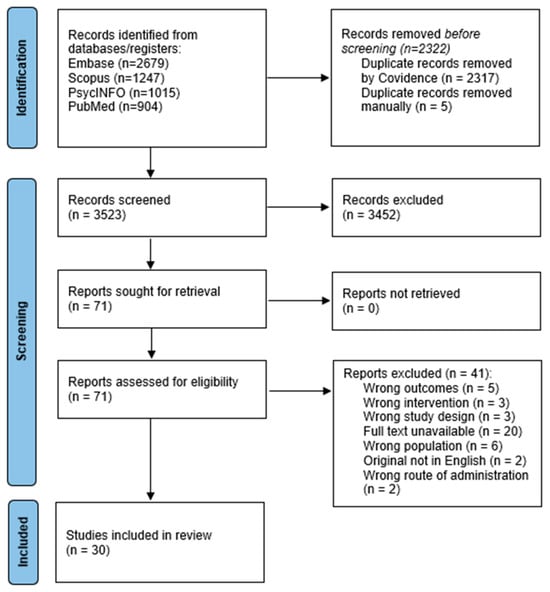
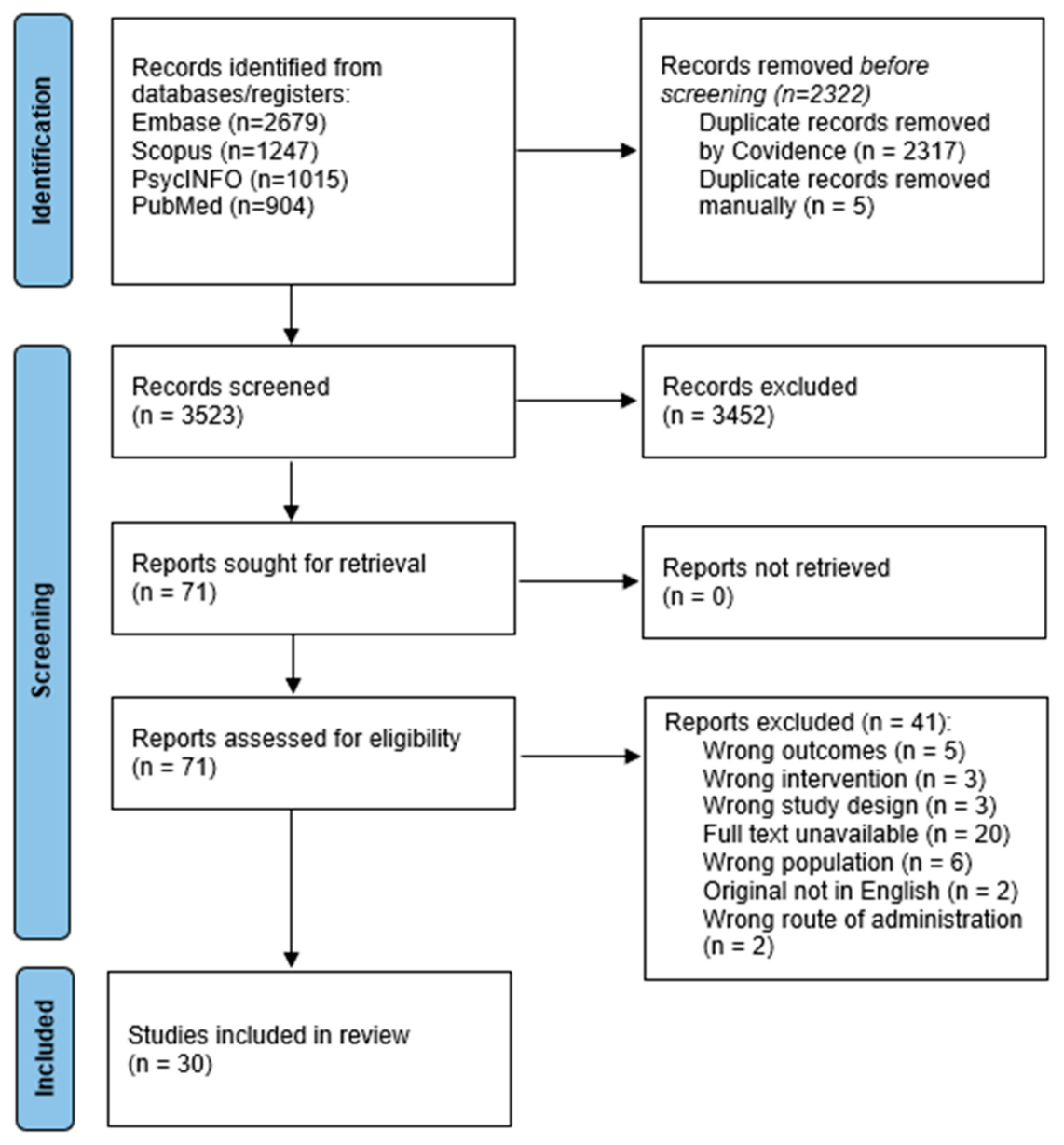
The systematic literature search captured 5845 studies across the four databases. After full-text screening, a total of 30 studies published between 1997 and 2024 were considered as eligible for this systematic review, involving 2541 participants. The details of the duplicated papers and reasons for exclusion are shown in Figure 1.
Figure 1.
PRISMA flow diagram illustrating the abstract screening process and reasons for full-text exclusion.
3.2. Data Extraction of Studies
Table 2 is a summary of all the relevant studies. A total of nineteen different herbal supplements were identified, of which the most common were black cohosh (Cimicifuga racemosa; four studies) [16,17,18,19], evening primrose oil (four studies) [20,21,22,23], hop (Humulus lupulus; three studies) [24,25,26], red clover (three studies) [27,28,29], sage (Salvia officinalis; two studies) [30,31] and valerian (two studies) [32,33]. Other herbal interventions included yam (Diascorea alata) [34], fennel [21], jujube seed [35], liquorice [36], basil (Ocimum basilicum) [37], pomegranate [38], French maritime pine extract, rhubarb (Rheum ribes root) [39], five-flavour berry (Schisandra chinensis) [40], milk thistle (Silybum marianum) [41], Sophora japonica fruit extract [42], St John’s wort (Hypericum perforatum) [43], and dong quai [44]. The population was primarily healthy peri-menopausal, menopausal, and post-menopausal women aged over 40 years. The study duration widely ranged from 3 weeks to 12 months. The most common tools used to measure the outcomes were Kupperman’s Index (KI), the Menopause-Specific Quality of Life Questionnaire (MENQOL), the Greene Climacteric Scale (GCS), the Menopause Rating Scale (MRS), the Hot Flush Severity Score (HFS), and the Pittsburgh Sleep Quality Index (PSQI).
Table 2.
Study characteristics including first author, year of publication, study design, study duration, sample size, intervention and placebo groups, setting, outcome measured (abbreviation in brackets indicating the appropriate measuring tool used; see footnote for full names), and the main findings of this study.
3.3. Menopause-Related Subjective Questionnaires
3.3.1. Kupperman’s Index (KI)
KI is a 13-item questionnaire assessing menopausal symptoms, including sweating, hot flashes, insomnia, melancholia, nervousness, palpitation, sexual complaints and urinary tract symptoms [47], and was used in 13 studies [18,25,26,27,29,32,38,39,40,42,43]. The herbal supplements used were pomegranate, St John’s wort, hop, dong quai, valerian, sophora japonica fruit extract, red clover, five-flavour berry (Schisandra chinensis), black cohosh and rhubarb. Eleven of these studies reported significant improvements in the overall KI scores in the intervention groups compared with placebo. These improvements were particularly evident in the vasomotor and psychological symptom domains. However, two studies reported no significant changes; these studies investigated dong quai and black cohosh [19,44].
3.3.2. Greene Climacteric Scale (GCS)
Four studies used GCS, which is a scale composed of 21 questions, measuring menopausal-related mental (anxiety and depression), physical and vasomotor symptoms, all of which reported significant benefits after supplementation in total GCS scores and with analysis of subcategories from the GCS [17,24,34,41]. The herbal supplements used in the four studies were hop, yam (Diascorea alata), milk thistle (Silybum marianum) and black cohosh.
3.3.3. Menopause Rating Scale (MRS)
The MRS is an 11-item tool covering three menopausal symptom categories—somatic, psychological and urogenital symptoms—and was used in five studies, all of which reported significant differences between the intervention and placebo groups (p < 0.05) using basil, fennel, evening primrose oil (EPO) and Salvia officinalis [21,23,30,31,37]. An additional study used MRS in combination with KI and did not see a significant difference in the MRS scores between the placebo and hop supplement groups (p = 0.06) [26].
3.3.4. Other Measurement Questionnaires
Other minority tools were used to assess hot flashes. This included the Hot Flush Severity Score (HFS), which was used by Wilfried et al. [30] and showed a 55.3% reduction in the score (p < 0.028). A common method to assess vasomotor symptoms was a hot flush self-reported diary; this was used in three studies examining hop [25], dong quoi [44] and red clover [29] and demonstrated significant benefits in the supplement groups compared with placebo. Hot flashes were also assessed using the Wiklund Vasomotor Symptom Subscale score in a study that examined EPO supplementation and found that while there was no difference in hot flashes, the incidence of night sweats was reduced [22]. Women’s Health Questionnaire (WHQ) was used to record symptoms following supplementation with Pycnogenol (French Maritime Bark extract) and showed significant reduction across climacteric symptoms [46]. The Hot Flash-Related Daily Interference Scale (HFRDIS) was used to assess the impact of EPO supplementation on QoL and showed significant differences in several subdomains including social activities, relations with others and sexuality [20]. Mirabi et al. collected information on hot flash incidence and severity in response to valerian root extract supplementation using a researcher-developed questionnaire [33] and found a significant reduction in the incidence and severity of hot flashes. Similarly, Nahidi used a researcher-developed questionnaire and found significant differences in hot flash incidence during the supplementation period and for 2 weeks following follow-up [36].
3.3.5. Sleep Specific Outcomes
Four studies reported specific sleep-related outcomes using tools such as the Pittsburgh Sleep Quality Index (PSQI) and quantitative electroencephalography (qEEG). Jiang et al. found that black cohosh supplementation led to non-significant polysomnographic changes (p = 0.051) after 6 months [45]; Zeidabadi et al. and Mahmoudi et al. reported that the mean score of PSQI significantly improved in the intervention groups taking sage or jujube seed supplements, respectively (p < 0.05 and p < 0.001, respectively) [31,35], while Wilfried et al. found a positive impact of taking sage extract for 4 weeks on sleep quality, using qEEG (p < 0.05) [30].
3.3.6. Neurological Outcomes
One study used the Hamilton Depression Rating Scale (HDRS) to assess the mood of participants and found that 80% of women in the intervention group taking St John’s wort (otherwise known as Hypericum perforatum) did not display depressive symptoms (p < 0.001) [43]. Moreover, the only study using cognitive-specific questionnaires concluded that red clover supplementation improved the results of block design tests in menopausal women, but no other major short-term cognitive effects were seen [28]. Additionally, Yang et al. demonstrated that taking French maritime pine bark extract for 6 months resulted in improved self-reported memory, reported as a subsection of the WHQ [46].
3.3.7. Hormonal Analysis
Two studies measured hormonal profiles. Hsu et al. concluded that compared with the placebo group, there were positive effects on serum follicle-stimulating hormone (FSH) (p = 0.009) and oestradiol (p = 0.043) concentrations after 12 months of Diascorea treatment [34]. Similarly, Ghavi et al. also found significant positive changes in the mean FSH and oestradiol levels in both of their intervention groups after 8 weeks of fennel or EPO supplementation (p < 0.001) [21].
3.4. Quality of Life (QoL)
The Menopause-Specific Quality of Life Questionnaire includes four subsets of questionnaires: vasomotor, psychosocial status, physical status and sexual status. Out of the four studies that used the MENQOL, one found no improvement after taking black cohosh for 12 weeks [17]; one found improvements in the vasomotor and physical domains only after 6 months of black cohosh supplementation; and two show significant improvements (p < 0.05) after either 4 weeks of pomegranate [38] or 12 weeks of black cohosh treatment [18].
Most papers did not report adverse effects or only reported minor adverse effects, which were relieved after 1–3 days, which was considered an unlikely result of the intervention. However, Schellenberg et al. reported that 21 nonserious adverse events occurred in 20 patients, nine of which were possibly treatment-related, after 12 weeks of black cohosh supplementation [18].
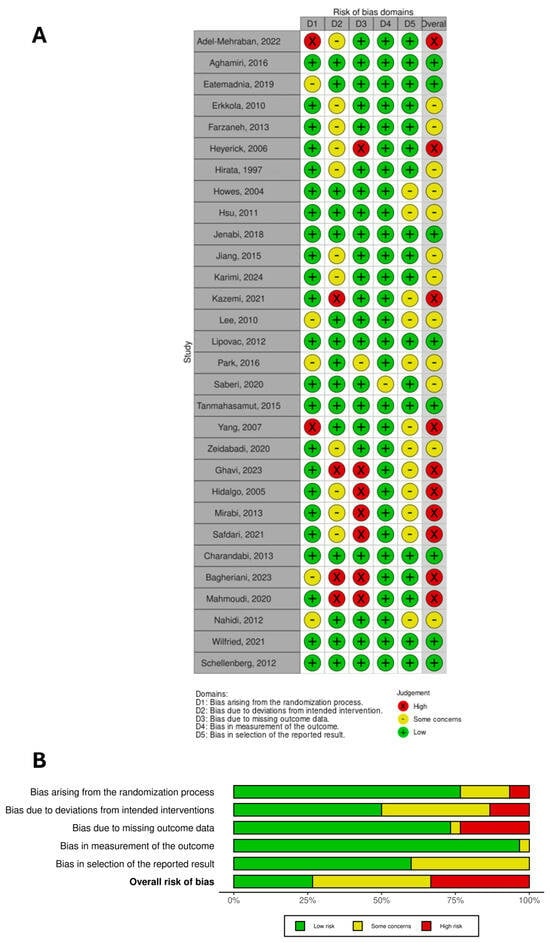
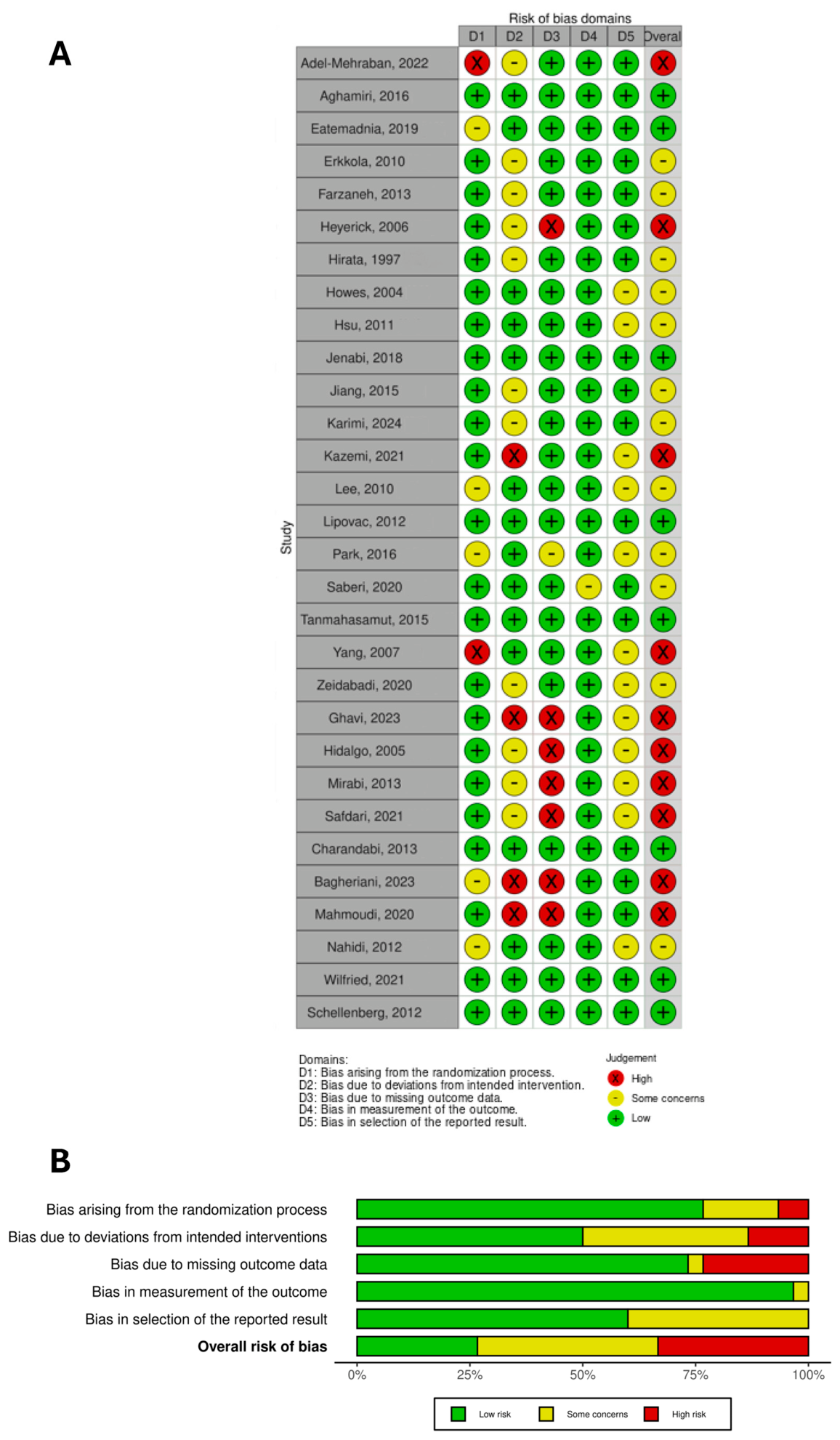
Out of the 30 studies, 10 studies were characterised as having a high risk of bias; 12 studies had some concerns; and eight studies were classified as having a low risk of bias (see Figure 2A,B). Across the five risk-of-bias domains, most studies were judged as having some concerns, particularly for deviation from the intended study and selective reporting. Bias in measurement of the outcome remained the lowest. A high risk of bias was mostly associated with the randomisation process, deviation from the intended interventions and missing outcome data.
Figure 2.
The overall risk of bias and the risk of bias for each domain of the eligible papers (A), and the details of risk of bias for each eligible study (B), assessed using the Cochrane Risk of Bias Tool 2.0 (RoB2) [17,18,19,20,21,22,23,24,25,26,27,28,29,30,31,32,33,34,35,36,37,38,39,40,41,42,43,44,45,46].
4. Discussion
Herbal interventions for menopausal symptoms sit within the broader research field of phytotherapy, an area grounded in traditional herbal medicine that has historically been used to manage conditions ranging from acute illnesses to chronic diseases for both men and women. The bioactive phytocompounds present in plants, including steroids, tannins, and flavonoids, are extensively used by practitioners and may have antimicrobial, anti-inflammatory, antioxidant, neuroprotective, cardioprotective and immunomodulatory properties [48]. Given the long history of herbal medicine, many herbs with or without phytoestrogenic properties have been studied for their potential to alleviate symptoms experienced by menopausal women.
Evidence shows that phytoestrogens have other benefits, including the prevention of osteoporosis and protecting women from oestrogen carcinogenesis, as they are aromatase inhibitors and possess antioxidant and anti-inflammatory properties [49]. The studies presented in this review showed a considerable range of supplements, and the variation in their effectiveness may be due to different bioactive mechanisms. However, the strength of mechanistic evidence varied between herbal supplements, and some proposed pathways remain uncertain due to limited clinical validation. For example, black cohosh has both oestrogenic and serotonergic effects [49]. Black cohosh is also known to have vasorelaxant qualities that may confer therapeutic value [16]. Indeed, three of the four black cohosh studies in this review reported beneficial effects on menopausal symptoms, including increased sleep quality, vasomotor and physical symptoms. An additional study utilising an extract of black cohosh (Ze 450) was also identified; this study demonstrated a dose-dependent reduction in the severity of symptoms and QoL using the KI tool [18]. However, the risk of bias was low in only three of these studies, and the evidence should be interpreted with caution. Furthermore, given the heterogeneity in dose (studies ranged between 2.5 g and 40 mg) and questionnaires used to assess symptoms (KI, GCS, MENQoL, and PSQI), it is not possible to make any recommendation in relation to the use of black cohosh as a supplement for treatment of menopausal symptoms. This aligns with the broader literature. A previous systematic review concluded that there is insufficient evidence to support the use of black cohosh for menopausal symptoms, and recent menopause guidance does not recommend black cohosh for vasomotor symptoms because of inconsistent efficacy data [50]. An additional limitation is that black cohosh preparations are not always chemically equivalent; extracts may differ in plant part, extraction method, standardisation of active constituents, and commercial formulation. Therefore, findings from one preparation, such as Ze 450, may not be generalisable to all black cohosh products. Although black cohosh was generally well tolerated in the trials included in this review, rare cases of liver injury have been reported in association with products labelled as black cohosh [51], meaning safety conclusions should also be interpreted cautiously.
Other oestrogenic supplements were identified in this review. Red clover contains bioactive isoflavones such as biochanin A, formononetin, daidzein and genistein. These compounds possess structural similarities to oestradiol and can weakly bind and activate oestrogen receptors [52]. Three studies examined red clover supplementation for menopausal symptoms. Howes et al. specifically investigated cognitive outcomes using aglycone isoflavones derived from red clover [28]. Although a small improvement was observed in block design test performance, worsening was reported in digit recall and verbal memory assessments, leading the authors to conclude that there were no overall cognitive benefits after 6 months of supplementation. In contrast, two studies examining 80 mg of red clover supplementation reported significant reductions in vasomotor symptom frequency and severity using the KI questionnaire [27,29]. Collectively, these findings suggest that any benefits associated with red clover may be symptom-specific, with more consistent evidence for vasomotor symptoms than cognitive outcomes. However, evidence remains limited by the small number of studies, variation in formulations, and uncertainty regarding the clinical significance of phytoestrogen-mediated mechanisms.
In addition to red clover, this review also identified studies examining hops. These studies were specifically focused on extracts that were enriched for 8-prenylnarigenin. This is a prenylated flavonoid phytoestrogen which can bind to both the alpha and beta oestrogen receptor. While it binds more weakly than oestradiol, it is thought to compensate when oestradiol concentrations begin to decline. Of the studies that examined climacteric effects, hop supplementation appeared to be more consistent, with both studies demonstrating significant improvements in vasomotor menopausal symptoms as well as beneficial effects in relation to sleep quality and fatigue [24,26]. This is supported by other studies, albeit mechanistic pre-clinical studies, that demonstrated that the activation of GABA receptors by bioactives such as humulone in hops can promote sleep [53,54]. The mechanistic understanding in relation to menopausal symptoms was not investigated, but it may be possible that it is a combination of multiple molecular pathways that contribute to the observed effects. However, as with other supplements, factors such as small sample sizes, variation in outcome measures and, in some cases, high risk of bias make it difficult to generalise these findings.
In addition to these more commonly studied supplements, this review identified several other individual studies examining other oestrogenic compounds. This included fennel, which contains oestrogenic bioactives, including anethole, dianethole and photoanethole, and demonstrated alterations in FSH and oestradiol as well as a reduction in the MRS score [21]. Pomegranate was also used as a supplement; however, the bioactive compounds such as ellagitannins, polyphenols and lignans are weaker oestrogen receptor agonists than those found in hops or red clover. Pomegranate is likely to activate multiple molecular pathways (inflammatory, antioxidant, etc.) rather than reliance on oestrogenic effects. A recent scoping review showed reduced testosterone, oxidative stress and inflammation in women with PCOS as well as positive effects on bone formation and vaginal atrophy in a murine ovariectomy model [55]. Interestingly, supplementation resulted in reduced menopausal symptoms and increased QoL [38]. Similarly, liquorice and rhubarb may exert beneficial effects through multiple pathways beyond simple phytoestrogenic activity. Liquorice contains flavonoids capable of weak oestrogen receptor modulation alongside potential effects on cortisol metabolism and inflammatory signalling [36], whereas rhubarb contains stilbene compounds with proposed selective oestrogen receptor modulatory activity that may influence thermoregulation and vasomotor symptoms. Indeed, these effects have also been demonstrated in a pre-clinical mouse model [56]. Yams were also used as a supplement to alleviate menopausal symptoms, with one study finding improved GCS scores as well as alterations in FSH and oestradiol concentrations [34]. While yams are known to contain the oestrogenic diosgenin, there is evidence to suggest that this bioactive does not have strong oestrogen receptor effects in reproductive tissues [57]. Similarly, supplementation with milk thistle or sophoro janoica fruit resulted in significant alleviation of menopausal symptoms. While there is some suggestion that these supplements have oestrogenic activity, it is more likely that their effects are due to their anti-inflammatory and antioxidant effects. Collectively, these studies highlight the complexity of interpreting proposed phytoestrogenic mechanisms in menopause. Across these interventions, evidence was typically limited to single studies with relatively small sample sizes, heterogeneity in outcome measures, and, in some cases, high risk of bias, limiting confidence in the generalisability of these findings. Therefore, although these interventions may show promise, current evidence remains insufficient to determine whether they represent effective alternatives for the management of menopausal symptoms.
Additionally, several supplements without oestrogenic effects were identified. EPO contains linoleic acid and γ-linolenic acid, which are converted into prostaglandins (particularly PGE1) and regulate physiological processes such as temperature control, nerve sensitivity and inflammation. EPO is widely used as a supplement in rheumatic diseases, dermatitis and menopausal symptoms [23]. However, it is important to note that while these mechanisms are biologically plausible, the understanding of how these compounds impact menopausal symptoms is limited. Four studies examining EPO were identified in this review; however, there were conflicting results. Of the four studies identified, several different self-reporting tools were used. MRS was used for two of these studies; however, the dose and formulation were not consistent (140 mg of GLA extracted from EPO versus 2000 mg of EPO). While dose relationships should be considered, the studies identified did not show greater impacts with higher doses. There was some evidence of moderate effects on hot flushes and night sweats, as well as alterations in both FSH and oestradiol concentrations and improvement of psychological and sexual aspects of quality of life. The clinical implications of these changes in hormonal concentrations were not defined. When interpreting these studies, the geographical location must also be considered, as all four studies were carried out in Iran, which may limit translatability. Furthermore, three of the studies were considered to be of high risk of bias, with the remaining study noted as having some concerns. It is also worth noting that these studies had relatively small sample sizes, which can further reduce confidence in the generalisability of these results. Taken together, methodological limitations, geographical concentration, heterogeneity in dosing and outcome assessment, and risk of bias substantially limit confidence in the evidence base supporting EPO supplementation for menopausal symptoms [58].
Valerenic acid from valerian root, thujone from sage extracts, and flavonoids from jujube seeds have been proposed to modulate γ-aminobutyric acid (GABA) signalling pathways [48], potentially contributing to anxiolytic, sedative, and neuroprotective effects. Although studies investigating these supplements generally reported improvements in menopausal symptoms, particularly sleep-related outcomes, direct evidence linking these mechanistic pathways to clinical benefit remains limited.
One other key source of heterogeneity, other than the intervention used, was the overlap and inconsistency in the measurement scales used across studies. Although variability in measurement tools makes comparison challenging, multidimensional questionnaires appear to be more informative for capturing the complexity of menopausal symptoms. One narrative review comparing four commonly used questionnaires, KI, MRS, MENQOL and GCS, concluded that although all except KI have undergone validation and have been translated into different languages, notable limitations remain. These include insufficient consideration of ethnic and cultural differences and the absence of clearly defined thresholds for initiating and monitoring treatment [59]. Although they have been compared in terms of structure, validity and applicability, current evidence does not clearly identify a single superior measurement tool. However, MRS and MENQOL demonstrate high methodological quality, with good reliability and validity, and MRS is also suitable for comparisons between cohorts from different countries; GCS, meanwhile, has also been used in recent research to show associations between its symptoms score, body mass index and the risk of developing osteoporosis [59]. Ultimately, the choice of questionnaire depends on the study aims, symptom domains of interest and practical considerations. One aspect that should also be considered is that these scales are self-reported and may, therefore, be subject to reporting bias, recall bias and individual differences in symptom perception and interpretation. Only two of the studies included in this review had biochemical insights, with many studies solely relying on questionnaires.
Across the included studies, comparison between the same herbal supplementation cannot be made due to substantial variability in dosage, extraction methods, and standardisation of the active compound, highlighting the importance of phytochemical consistency in herbal research. Differences in bioavailability and metabolism further complicate interpretation, as many phytoestrogenic compounds require extensive metabolism before becoming biologically active and may, therefore, produce heterogeneous responses between individuals. Furthermore, direct comparisons with HRT were also not possible, as none of the studies included an HRT reference group. Although evidence from an excluded US RCT paper suggests that herbal treatments generally produce milder effects than those typically reported for HRT [60], herbal therapy may still have value for women seeking alternative treatments to HRT. The absence of direct comparative trials remains a major research gap.
More broadly, this review highlights a clear research gap regarding the effects of herbal supplementation on cognitive functions, mood and sleep quality, with several included trials representing the first study of a herb, for example, the Schisandra chinensis study in 2016 [40]. What was clear was the lack of data in relation to neurological symptoms such as mood and cognition and sleep quality, with vasomotor symptoms representing the predominant focus of the identified studies. Future research in this area should incorporate dietary information of the participants to further understand the relationship between dietary supplements and a wider variety of menopausal symptoms. Also, dose-dependent interventions should be used in order to find the optimum dosage for the herbal treatments. Larger sample sizes with more ethnically diverse groups, as well as older women in post-menopausal stages, should be included. Longer study durations with follow-up assessments are also necessary to establish long-term safety and adverse effect profiles. Ideally, studies should also include objective measures, such as blood tests or hormonal assays (e.g., oestrogen levels), and consideration of bioavailability, stability, and biodiversity preservation would strengthen the evidence base for herbal therapies in menopause.
Participant characteristics also limit the generalisability of findings. Most samples consisted of well-educated women with sufficient literacy to complete symptom questionnaires, potentially excluding populations with lower literacy or different socioeconomic backgrounds. Geographically, although this review included studies from multiple regions worldwide, a substantial proportion of the included trials were conducted in Iran, with comparatively fewer studies from Europe, Australia, East Asia, North America, and South America. This uneven geographical distribution introduces the possibility of regional or cultural bias, as menopausal symptom perception, dietary patterns, healthcare practices, and genetic factors may influence both symptom presentation and responsiveness to herbal interventions. Consequently, the findings may not be fully generalisable to the broader global menopausal population. Future studies should aim to include more geographically and ethnically diverse populations to improve external validity.
5. Conclusions
Overall, this systematic review identified evidence suggesting that certain herbal supplementations may have the potential to improve some menopausal symptoms, particularly vasomotor symptoms and aspects of sleep and quality of life. However, interpretation of these findings should be cautious given the substantial heterogeneity across interventions, study populations, formulations, outcome measures and methodological approaches. Furthermore, the presence of studies with high or unclear risk of bias, relatively small sample sizes, geographical concentration, and reliance on predominantly self-reported outcomes substantially limits confidence in the evidence base.
Importantly, the findings do not support broad conclusions regarding the clinical effectiveness, comparative efficacy, or long-term safety of herbal supplementation for menopausal symptom management. Although some interventions demonstrated biologically plausible mechanisms, current evidence remains insufficient to recommend specific herbal interventions, formulations or dosing strategies. Future research should prioritise adequately powered randomised controlled trials using standardised preparations, objective outcome measures, longer follow-up periods and more geographically diverse populations. Improving methodological consistency and evidence certainty will be essential before the role of herbal supplementation in menopausal management can be more clearly established.
Supplementary Materials
The following supporting information can be downloaded at: https://www.mdpi.com/article/10.3390/nu18132037/s1.
Author Contributions
Conceptualisation, C.M.R.; methodology, C.M.R., G.J. and C.M.K.; formal analysis, G.J.; resources, C.M.R.; writing—original draft preparation, G.J.; writing—review and editing, C.M.R.; supervision, C.M.R. All authors have read and agreed to the published version of the manuscript.
Funding
This research received no external funding.
Data Availability Statement
No new data were created or analyzed in this study. Data sharing is not applicable to this article.
Conflicts of Interest
The authors declare no conflicts of interest.
References
- Harlow, S.D.; Gass, M.; Hall, J.E.; Lobo, R.; Maki, P.; Rebar, R.W.; Sherman, S.; Sluss, P.M.; de Villiers, T.J.; STRAW + 10 Collaborative Group. Executive Summary of the Stages of Reproductive Aging Workshop + 10: Addressing the Unfinished Agenda of Staging Reproductive Aging. J. Clin. Endocrinol. Metab. 2012, 97, 1159–1168. [Google Scholar] [CrossRef] [Scilit] [PubMed]
- Nelson, H.D. Menopause. Lancet 2008, 371, 760–770. [Google Scholar] [CrossRef] [Scilit] [PubMed]
- Zhu, J.; Zhou, Y.; Jin, B.; Shu, J. Role of Estrogen in the Regulation of Central and Peripheral Energy Homeostasis: From a Menopausal Perspective. Ther. Adv. Endocrinol. Metab. 2023, 14, 20420188231199359. [Google Scholar] [CrossRef] [Scilit] [PubMed]
- Yang, J.L.; Hodara, E.; Sriprasert, I.; Shoupe, D.; Stanczyk, F.Z. Estrogen Deficiency in the Menopause and the Role of Hormone Therapy: Integrating the Findings of Basic Science Research with Clinical Trials. Menopause 2024, 31, 926–939. [Google Scholar] [CrossRef] [Scilit] [PubMed]
- Santoro, N.; Epperson, C.N.; Mathews, S.B. Menopausal Symptoms and Their Management. Endocrinol. Metab. Clin. N. Am. 2015, 44, 497–515. [Google Scholar] [CrossRef] [Scilit] [PubMed]
- Ta, T.; Km, J. Menopause. Med. Clin. N. Am. 2015, 99, 521–534. [Google Scholar] [CrossRef] [Scilit] [PubMed]
- Gu, Y.; Han, F.; Xue, M.; Wang, M.; Huang, Y. The Benefits and Risks of Menopause Hormone Therapy for the Cardiovascular System in Postmenopausal Women: A Systematic Review and Meta-Analysis. BMC Womens Health 2024, 24, 60. [Google Scholar] [CrossRef] [Scilit] [PubMed]
- Hu, H.; Song, J.; MacGregor, G.A.; He, F.J. Consumption of Soft Drinks and Overweight and Obesity Among Adolescents in 107 Countries and Regions. JAMA Netw. Open 2023, 6, e2325158. [Google Scholar] [CrossRef] [Scilit] [PubMed]
- Kim, J.-H.; Yu, H.-J. Nonpharmacological Intervention Effects on Middle-Aged Women with Menopausal Symptoms: A Systematic Review and Meta-Analysis. Healthcare 2025, 13, 3206. [Google Scholar] [CrossRef] [Scilit] [PubMed]
- Salari, N.; Darvishi, N.; Bartina, Y.; Larti, M.; Kiaei, A.; Hemmati, M.; Shohaimi, S.; Mohammadi, M. Global Prevalence of Osteoporosis among the World Older Adults: A Comprehensive Systematic Review and Meta-Analysis. J. Orthop. Surg. Res. 2021, 16, 669. [Google Scholar] [CrossRef] [Scilit] [PubMed]
- Hu, Y.; Hu, Y.; Li, T.; Shi, R. Beyond Hormone Replacement: Multifaceted Effects of Phytoestrogens for Optimizing Kinesiological and Physiological Adaptations in Postmenopausal Women. Clin. Interv. Aging 2025, 20, 1695–1711. [Google Scholar] [CrossRef] [Scilit] [PubMed]
- Page, M.J.; McKenzie, J.E.; Bossuyt, P.M.; Boutron, I.; Hoffmann, T.C.; Mulrow, C.D.; Shamseer, L.; Tetzlaff, J.M.; Akl, E.A.; Brennan, S.E.; et al. The PRISMA 2020 Statement: An Updated Guideline for Reporting Systematic Reviews. Syst. Rev. 2021, 10, 89. [Google Scholar] [CrossRef] [Scilit] [PubMed]
- Gençtürk, N.; Bilgiç, F.Ş.; Kaban, H.U. The Effect of Soy Isoflavones given to Women in the Climacteric Period on Menopausal Symptoms and Quality of Life: Systematic Review and Meta-Analysis of Randomized Controlled Trials. Explore 2024, 20, 103012. [Google Scholar] [CrossRef] [Scilit] [PubMed]
- Luan, H.; Liu, Q.; Guo, Y.; Fan, H.; Sileng, A.; Lin, J. Effects of Soy Isoflavones on Menopausal Symptoms in Perimenopausal Women: A Systematic Review and Meta-Analysis. PeerJ 2025, 13, e19715. [Google Scholar] [CrossRef] [Scilit] [PubMed]
- Sterne, J.A.C.; Savović, J.; Page, M.J.; Elbers, R.G.; Blencowe, N.S.; Boutron, I.; Cates, C.J.; Cheng, H.-Y.; Corbett, M.S.; Eldridge, S.M.; et al. RoB 2: A Revised Tool for Assessing Risk of Bias in Randomised Trials. BMJ 2019, 366, l4898. [Google Scholar] [CrossRef] [Scilit] [PubMed]
- Hedaoo, K.; Badge, A.K.; Tiwade, Y.R.; Bankar, N.J.; Mishra, V.H. Exploring the Efficacy and Safety of Black Cohosh (Cimicifuga racemosa) in Menopausal Symptom Management. J. Midlife Health 2024, 15, 5–11. [Google Scholar] [CrossRef] [Scilit] [PubMed]
- Mohammad-Alizadeh-Charandabi, S.; Shahnazi, M.; Nahaee, J.; Bayatipayan, S. Efficacy of Black Cohosh (Cimicifuga racemosa L.) in Treating Early Symptoms of Menopause: A Randomized Clinical Trial. Chin. Med. 2013, 8, 20. [Google Scholar] [CrossRef] [Scilit] [PubMed]
- Schellenberg, R.; Saller, R.; Hess, L.; Melzer, J.; Zimmermann, C.; Drewe, J.; Zahner, C. Dose-Dependent Effects of the Cimicifuga racemosa Extract Ze 450 in the Treatment of Climacteric Complaints: A Randomized, Placebo-Controlled Study. Evid. Based Complement. Altern. Med. 2012, 2012, 260301. [Google Scholar] [CrossRef] [Scilit] [PubMed]
- Tanmahasamut, P.; Vichinsartvichai, P.; Rattanachaiyanont, M.; Techatraisak, K.; Dangrat, C.; Sardod, P. Cimicifuga racemosa Extract for Relieving Menopausal Symptoms: A Randomized Controlled Trial. Climacteric 2015, 18, 79–85. [Google Scholar] [CrossRef] [Scilit] [PubMed]
- Farzaneh, F.; Fatehi, S.; Sohrabi, M.-R.; Alizadeh, K. The effect of oral evening primrose oil on menopausal hot flashes: A randomized clinical trial. Arch. Gynecol. Obstet. 2013, 288, 1075–1079. [Google Scholar] [CrossRef] [Scilit] [PubMed]
- Ghavi, F.; Shakeri, F.; Farahnaz, H.; Abdolahian, S. Comparison of the Effect of Fennel and Evening Primrose Oil on Menopausal Problems and Hormonal Levels: A Randomized Controlled Trial. Iran. J. Nurs. Midwifery Res. 2023, 28, 430–435. [Google Scholar] [CrossRef] [Scilit] [PubMed]
- Kazemi, F.; Masoumi, S.Z.; Shayan, A.; Oshvandi, K. The Effect of Evening Primrose Oil Capsule on Hot Flashes and Night Sweats in Postmenopausal Women: A Single-Blind Randomized Controlled Trial. J. Menopausal Med. 2021, 27, 8–14. [Google Scholar] [CrossRef] [Scilit] [PubMed]
- Safdari, F.; Motaghi Dastenaei, B.; Kheiri, S.; Karimiankakolaki, Z. Effect of Evening Primrose Oil on Postmenopausal Psychological Symptoms: A Triple-Blind Randomized Clinical Trial. J. Menopausal Med. 2021, 27, 58–65. [Google Scholar] [CrossRef] [Scilit] [PubMed]
- Aghamiri, V.; Mirghafourvand, M.; Mohammad-Alizadeh-Charandabi, S.; Nazemiyeh, H. The Effect of Hop (Humulus lupulus L.) on Early Menopausal Symptoms and Hot Flashes: A Randomized Placebo-Controlled Trial. Complement. Ther. Clin. Pract. 2016, 23, 130–135. [Google Scholar] [CrossRef] [Scilit] [PubMed]
- Heyerick, A.; Vervarcke, S.; Depypere, H.; Bracke, M.; De Keukeleire, D. A First Prospective, Randomized, Double-Blind, Placebo-Controlled Study on the Use of a Standardized Hop Extract to Alleviate Menopausal Discomforts. Maturitas 2006, 54, 164–175. [Google Scholar] [CrossRef] [Scilit] [PubMed]
- Erkkola, R.; Vervarcke, S.; Vansteelandt, S.; Rompotti, P.; De Keukeleire, D.; Heyerick, A. A Randomized, Double-Blind, Placebo-Controlled, Cross-over Pilot Study on the Use of a Standardized Hop Extract to Alleviate Menopausal Discomforts. Phytomedicine 2010, 17, 389–396. [Google Scholar] [CrossRef] [Scilit] [PubMed]
- Hidalgo, L.A.; Chedraui, P.A.; Morocho, N.; Ross, S.; San Miguel, G. The Effect of Red Clover Isoflavones on Menopausal Symptoms, Lipids and Vaginal Cytology in Menopausal Women: A Randomized, Double-Blind, Placebo-Controlled Study. Gynecol. Endocrinol. 2005, 21, 257–264. [Google Scholar] [CrossRef] [Scilit] [PubMed]
- Howes, J.B.; Bray, K.; Lorenz, L.; Smerdely, P.; Howes, L.G. The Effects of Dietary Supplementation with Isoflavones from Red Clover on Cognitive Function in Postmenopausal Women. Climacteric 2004, 7, 70–77. [Google Scholar] [CrossRef] [Scilit] [PubMed]
- Lipovac, M.; Chedraui, P.; Gruenhut, C.; Gocan, A.; Kurz, C.; Neuber, B.; Imhof, M. The Effect of Red Clover Isoflavone Supplementation over Vasomotor and Menopausal Symptoms in Postmenopausal Women. Gynecol. Endocrinol. 2012, 28, 203–207. [Google Scholar] [CrossRef] [Scilit] [PubMed]
- Wilfried, D.; Nina, C.D.G.; Silvia, B. Effectiveness of Menosan® Salvia Officinalis in the Treatment of a Wide Spectrum of Menopausal Complaints. A Double-Blind, Randomized, Placebo-Controlled, Clinical Trial. Heliyon 2021, 7, e05910. [Google Scholar] [CrossRef] [Scilit] [PubMed]
- Zeidabadi, A.; Yazdanpanahi, Z.; Dabbaghmanesh, M.H.; Sasani, M.R.; Emamghoreishi, M.; Akbarzadeh, M. The Effect of Salvia Officinalis Extract on Symptoms of Flushing, Night Sweat, Sleep Disorders, and Score of Forgetfulness in Postmenopausal Women. J. Fam. Med. Prim. Care 2020, 9, 1086–1092. [Google Scholar] [CrossRef] [Scilit] [PubMed]
- Jenabi, E.; Shobeiri, F.; Hazavehei, S.M.M.; Roshanaei, G. The Effect of Valerian on the Severity and Frequency of Hot Flashes: A Triple-Blind Randomized Clinical Trial. Women Health 2018, 58, 297–304. [Google Scholar] [CrossRef] [Scilit] [PubMed]
- Mirabi, P.; Mojab, F. The Effects of Valerian Root on Hot Flashes in Menopausal Women. Iran. J. Pharm. Res. 2013, 12, 217–222. [Google Scholar] [PubMed]
- Hsu, C.-C.; Kuo, H.-C.; Chang, S.-Y.; Wu, T.-C.; Huang, K.-E. The Assessment of Efficacy of Diascorea Alata for Menopausal Symptom Treatment in Taiwanese Women. Climacteric 2011, 14, 132–139. [Google Scholar] [CrossRef] [Scilit] [PubMed]
- Mahmoudi, R.; Ansari, S.; Haghighizadeh, M.H.; Maram, N.S.; Montazeri, S. Investigation the Effect of Jujube Seed Capsule on Sleep Quality of Postmenopausal Women: A Double-Blind Randomized Clinical Trial. BioMedicine 2020, 10, 42–48. [Google Scholar] [CrossRef] [Scilit] [PubMed]
- Nahidi, F.; Zare, E.; Mojab, F.; Alavi-majd, H. Effects of Licorice on Relief and Recurrence of Menopausal Hot Flashes. Iran. J. Pharm. Res. 2012, 11, 541–548. [Google Scholar] [PubMed]
- Karimi, F.Z.; Hosseini, H.; Mazlom, S.R.; Rakhshandeh, H. The Effect of Oral Capsules Containing Ocimum Basilicum Leaf Extract on Menopausal Symptoms in Women: A Triple-Blind Randomized Clinical Trial. Eur. J. Med. Res. 2024, 29, 367. [Google Scholar] [CrossRef] [Scilit] [PubMed]
- Adel-Mehraban, M.S.; Tansaz, M.; Mohammadi, M.; Yavari, M. Effects of Pomegranate Supplement on Menopausal Symptoms and Quality of Life in Menopausal Women: A Double-Blind Randomized Placebo-Controlled Trial. Complement. Ther. Clin. Pract. 2022, 46, 101544. [Google Scholar] [CrossRef] [Scilit] [PubMed]
- Bagheriani, N.; Bahrami, M.; Kamalinejad, M.; Rampisheh, Z.; Kashanian, M.; Akhtari, E. The Effect of Rheum Ribes Root (Rhubarb) on Menopausal Hot Flashes: A Randomized Double-Blind, Placebo-Controlled Trial. Res. J. Pharmacogn. 2023, 10, 41–50. [Google Scholar] [CrossRef]
- Park, J.Y.; Kim, K.H. A Randomized, Double-Blind, Placebo-Controlled Trial of Schisandra Chinensis for Menopausal Symptoms. Climacteric 2016, 19, 574–580. [Google Scholar] [CrossRef] [Scilit] [PubMed]
- Saberi, Z.; Gorji, N.; Memariani, Z.; Moeini, R.; Shirafkan, H.; Amiri, M. Evaluation of the Effect of Silybum Marianum Extract on Menopausal Symptoms: A Randomized, Double-Blind Placebo-Controlled Trial. Phytother. Res. 2020, 34, 3359–3366. [Google Scholar] [CrossRef] [Scilit] [PubMed]
- Lee, J.; Kim, K.W.; Kim, H.-K.; Chae, S.-W.; Jung, J.-C.; Kwon, S.H.; Rheu, C.H. The Effect of Rexflavone (Sophorae fructus Extract) on Menopausal Symptoms in Postmenopausal Women: A Randomized Double-Blind Placebo Controlled Clinical Trial. Arch. Pharm. Res. 2010, 33, 523–530. [Google Scholar] [CrossRef] [Scilit] [PubMed]
- Eatemadnia, A.; Ansari, S.; Abedi, P.; Najar, S. The Effect of Hypericum Perforatum on Postmenopausal Symptoms and Depression: A Randomized Controlled Trial. Complement. Ther. Med. 2019, 45, 109–113. [Google Scholar] [CrossRef] [Scilit] [PubMed]
- Hirata, J.D.; Swiersz, L.M.; Zell, B.; Small, R.; Ettinger, B. Does Dong Quai Have Estrogenic Effects in Postmenopausal Women? A Double-Blind, Placebo-Controlled Trial. Fertil. Steril. 1997, 68, 981–986. [Google Scholar] [CrossRef] [Scilit] [PubMed]
- Jiang, K.; Jin, Y.; Huang, L.; Feng, S.; Hou, X.; Du, B.; Zheng, J.; Li, L. Black Cohosh Improves Objective Sleep in Postmenopausal Women with Sleep Disturbance. Climacteric 2015, 18, 559–567. [Google Scholar] [CrossRef] [Scilit] [PubMed]
- Yang, H.-M.; Liao, M.-F.; Zhu, S.-Y.; Liao, M.-N.; Rohdewald, P. A Randomised, Double-Blind, Placebo-Controlled Trial on the Effect of Pycnogenol on the Climacteric Syndrome in Peri-Menopausal Women. Acta Obstet. Gynecol. Scand. 2007, 86, 978–985. [Google Scholar] [CrossRef] [Scilit] [PubMed]
- Kennard, A.; Saunders, K.T. Integrative Approaches to Perimenopause. Am. J. Med. 2026, 139, 522–529. [Google Scholar] [CrossRef] [Scilit] [PubMed]
- Latif, R.; Nawaz, T. Medicinal Plants and Human Health: A Comprehensive Review of Bioactive Compounds, Therapeutic Effects, and Applications. Phytochem. Rev. 2025, 25, 2299–2342. [Google Scholar] [CrossRef] [Scilit]
- Stute, P.; Currie, H.; Palacios, S. The Value of Over-the-Counter Products/Services in the Management of Mild-to-Moderate Menopausal Symptoms. Climacteric 2025, 28, 741–750. [Google Scholar] [CrossRef] [Scilit] [PubMed]
- Leach, M.J.; Moore, V. Black Cohosh (Cimicifuga spp.) for Menopausal Symptoms. Cochrane Database Syst. Rev. 2012, 2012, CD007244. [Google Scholar] [CrossRef] [Scilit] [PubMed]
- Muqeet Adnan, M.; Khan, M.; Hashmi, S.; Hamza, M.; AbdulMujeeb, S.; Amer, S. Black Cohosh and Liver Toxicity: Is There a Relationship? Case Rep. Gastrointest. Med. 2014, 2014, 860614. [Google Scholar] [CrossRef] [Scilit] [PubMed]
- Mikulić, M.; Atanacković Krstonošić, M.; Kladar, N.; Vasiljević, S.; Katanski, S.; Mamlić, Z.; Rakić, D.; Cvejić, J. Phytochemical Composition of Different Red Clover Genotypes Based on Plant Part and Genetic Traits. Foods 2023, 13, 103. [Google Scholar] [CrossRef] [Scilit] [PubMed]
- Lee, H.; Chung, S.H.; Kwon, D.-J.; Nam, M.-J.; Choi, J.-H.; Suh, H.J.; Choi, H.-S.; Han, S.H. Sleep-Enhancing Effect of Hongcheon-Hop (Humulus lupulus L.) Extract Containing Xanthohumol and Humulone through GABAA Receptor. J. Ethnopharmacol. 2025, 338, 119019. [Google Scholar] [CrossRef] [Scilit] [PubMed]
- Benkherouf, A.Y.; Eerola, K.; Soini, S.L.; Uusi-Oukari, M. Humulone Modulation of GABAA Receptors and Its Role in Hops Sleep-Promoting Activity. Front. Neurosci. 2020, 14, 594708. [Google Scholar] [CrossRef] [Scilit] [PubMed]
- Sayed, S.E.; Macri, V.I.; Singh, B.; Segars, J.H.; Islam, M.S. Beneficial Effects of Pomegranate Extracts for Benign Gynecologic Disorders. Reprod. Sci. 2025, 32, 600–617. [Google Scholar] [CrossRef] [Scilit] [PubMed]
- Wilson, M.; Konda, V.; Heidt, K.; Rathinasabapathy, T.; Desai, A.; Komarnytsky, S. Rheum Rhaponticum Root Extract Improves Vasomotor Menopausal Symptoms and Estrogen-Regulated Targets in Ovariectomized Rat Model. Int. J. Mol. Sci. 2021, 22, 1032. [Google Scholar] [CrossRef] [Scilit] [PubMed]
- Zeng, M.; Zhang, L.; Li, M.; Zhang, B.; Zhou, N.; Ke, Y.; Feng, W.; Zheng, X. Estrogenic Effects of the Extracts from the Chinese Yam (Dioscorea Opposite Thunb.) and Its Effective Compounds in Vitro and in Vivo. Molecules 2018, 23, 11. [Google Scholar] [CrossRef] [Scilit] [PubMed]
- Thevi, T.; De, S.; Soe, H.H.K. Evening Primrose Oil for Menopause Hot Flashes: Systematic Review and Meta-Analysis. J. Menopausal Med. 2024, 30, 127–134. [Google Scholar] [CrossRef] [Scilit] [PubMed]
- Sourouni, M.; Zangger, M.; Honermann, L.; Foth, D.; Stute, P. Assessment of the Climacteric Syndrome: A Narrative Review. Arch. Gynecol. Obstet. 2021, 304, 855–862. [Google Scholar] [CrossRef] [Scilit] [PubMed]
- Newton, K.M.; Reed, S.D.; LaCroix, A.Z.; Grothaus, L.C.; Ehrlich, K.; Guiltinan, J. Treatment of Vasomotor Symptoms of Menopause with Black Cohosh, Multibotanicals, Soy, Hormone Therapy, or Placebo: A Randomized Trial. Ann. Intern. Med. 2006, 145, 869–879. [Google Scholar] [CrossRef] [Scilit] [PubMed]

Disclaimer/Publisher’s Note: The statements, opinions and data contained in all publications are solely those of the individual author(s) and contributor(s) and not of MDPI and/or the editor(s). MDPI and/or the editor(s) disclaim responsibility for any injury to people or property resulting from any ideas, methods, instructions or products referred to in the content. |
© 2026 by the authors. Licensee MDPI, Basel, Switzerland. This article is an open access article distributed under the terms and conditions of the Creative Commons Attribution (CC BY) license.