Phytochemistry, Bioavailability, and Molecular Mechanisms Underlying Multitarget Anticancer Activity of Aloe vera

 , , , ,
 and
and
Abstract
1. Introduction
2. Materials and Methods
3. Geographical and Morphological Description
4. Phytochemical Composition
5. Bioavailability
6. Antioxidant Potential
7. Anticancer
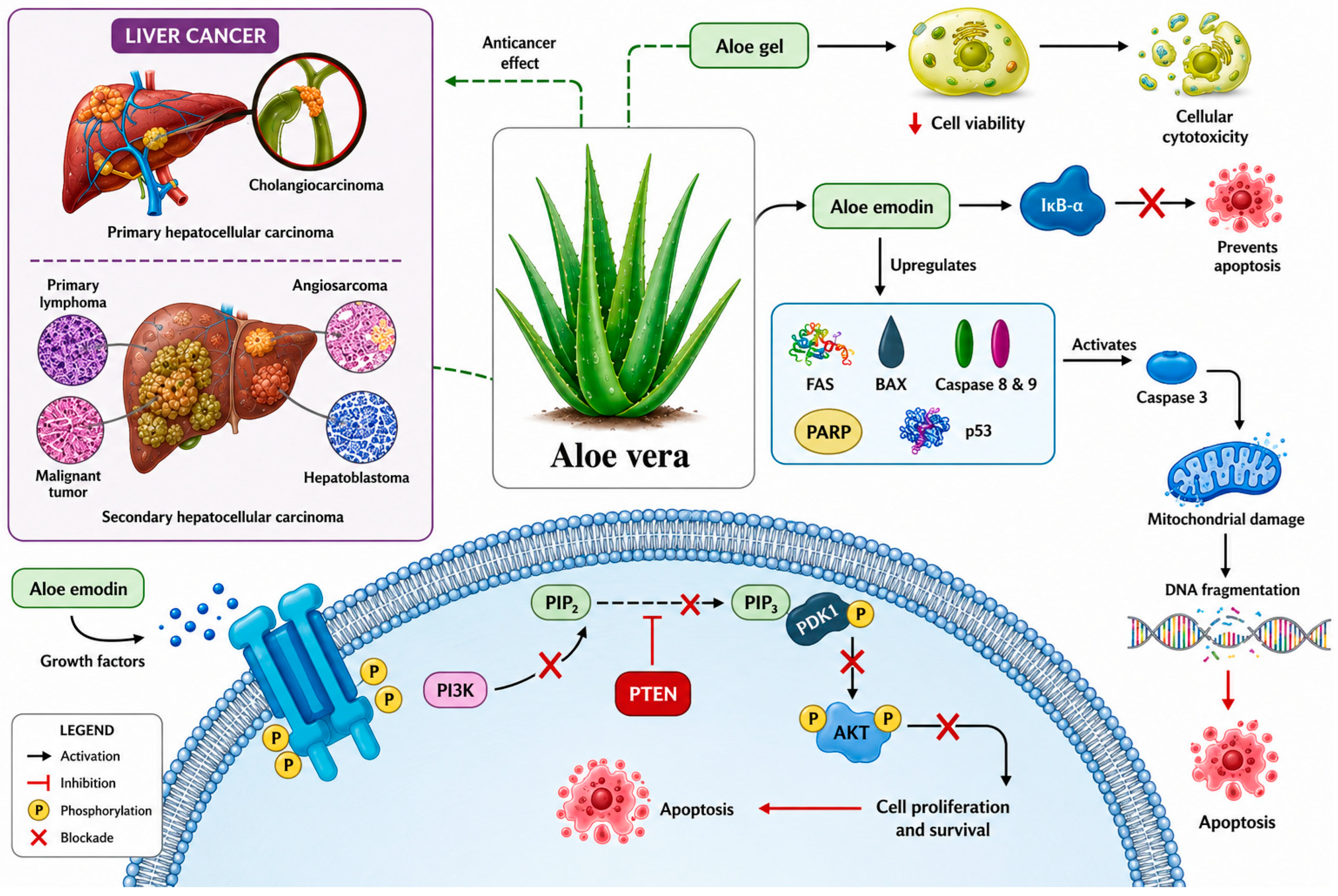
7.1. Hepatocellular Carcinoma
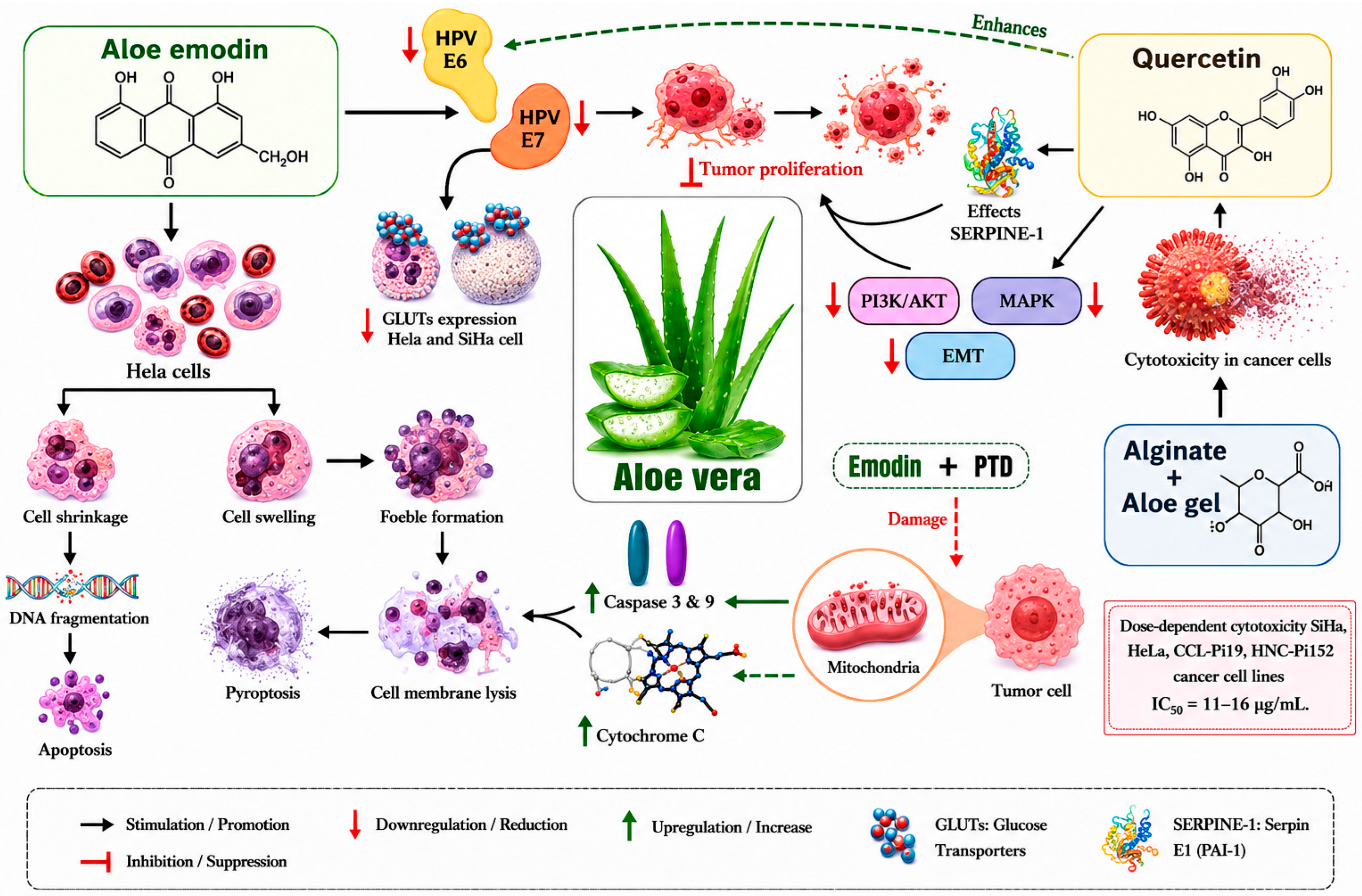
7.2. Cervical Cancer
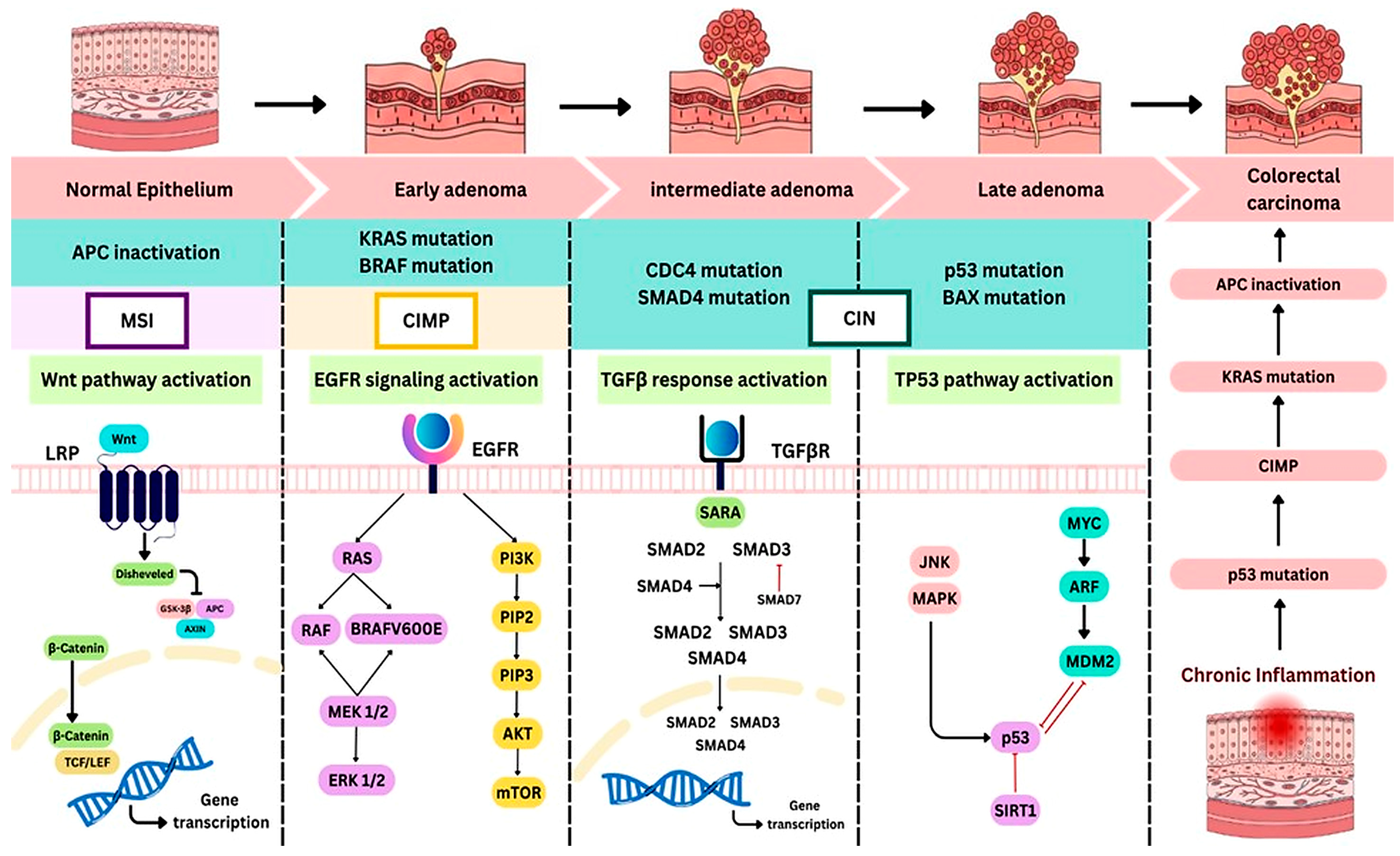
7.3. Colorectal Cancer
7.4. Lung Cancer
7.5. Blood Cancer
7.6. Breast Cancer
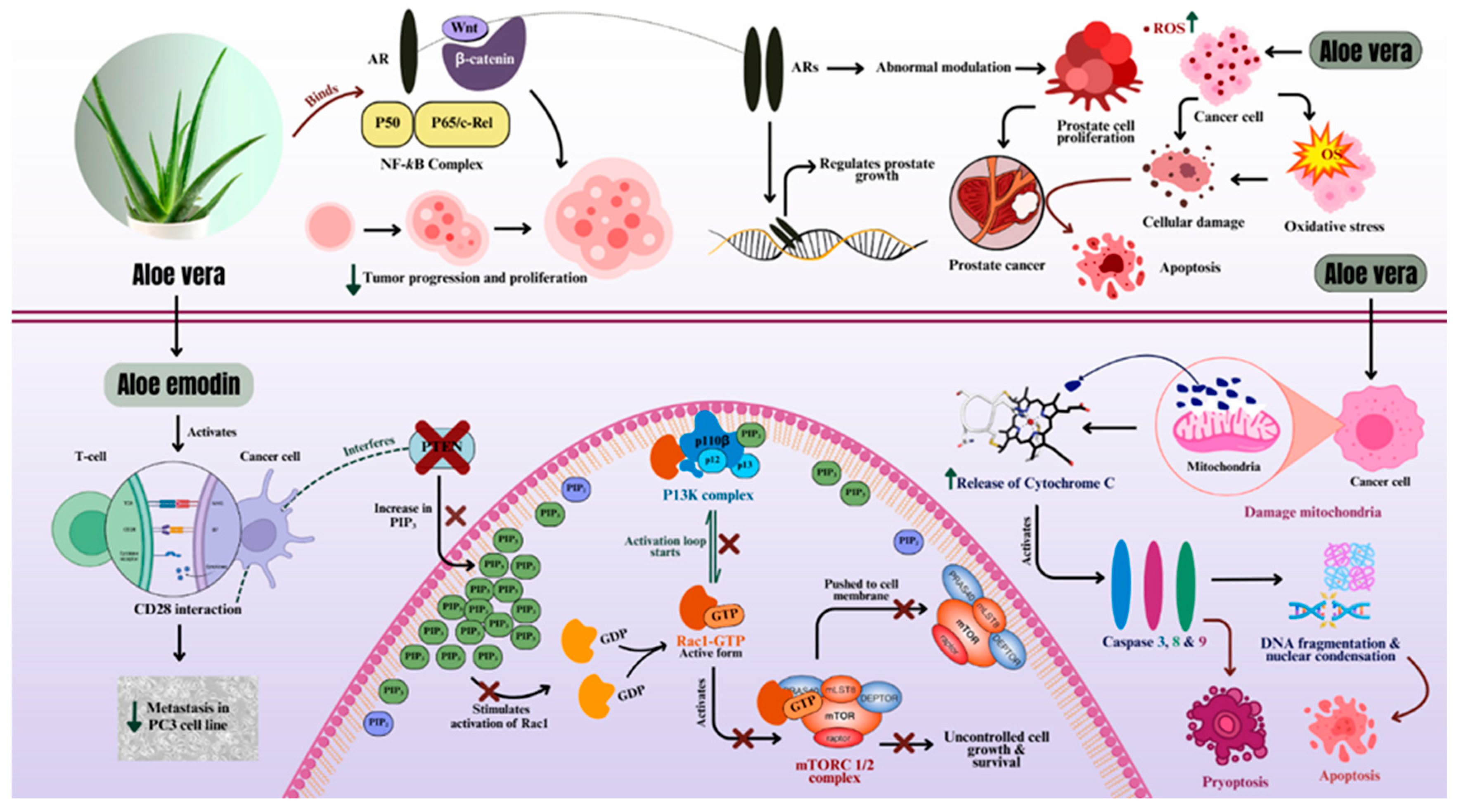
7.7. Prostate Cancer
8. Other Cancers
9. Synergistic Effect of Aloe vera with Other Plants and Phytochemicals
10. Aloe vera and Aloe-Derived Compounds with Chemotherapy and Radiotherapy
11. Human Study and Clinical Evidence
12. Limitations and Future Perspectives
13. Conclusions
Author Contributions
Funding
Institutional Review Board Statement
Informed Consent Statement
Data Availability Statement
Conflicts of Interest
References
- Rahman, S.; Jan, G.; Jan, F.G.; Hashmi, S.J.; Rahim, H.U. Exploration of ethnomedicinal plants, diversity and their practices in human healthcare in Tehsil Mandan, District Buner, Khyber Pakhtunkhwa, Pakistan. Ecol. Front. 2024, 44, 143–154. [Google Scholar]
- Pandey, S.; Mathur, D. Herbs in Traditional Medicine: The Roots of Healing. In Herb-Drug Interactions: A Medicinal Approach; Bentham Science Publishers: Sharjah, United Arab Emirates, 2025; pp. 1–29. [Google Scholar]
- Manisha, D.R.B.; Begam, A.M.; Chahal, K.S.; Ashok, M.A. Medicinal plants and traditional uses and modern applications. J. Neonatal Surg. 2025, 14, 162–175. [Google Scholar] [CrossRef]
- Maaz, M.; Sultan, M.T.; Ahmad, K.; Noman, A.M.; Khalid, M.U.; Raza, A.; Ahmad, I.; Kashif, M. Citrullus Colocynthis and Human Health: Transforming Nature Bitterness to Healing Medicine. Appl. Food Res. 2025, 5, 101477. [Google Scholar] [CrossRef]
- Kumar, S.; Kalita, S.; Basumatary, I.B.; Kumar, S.; Ray, S.; Mukherjee, A. Recent advances in therapeutic and biological activities of Aloe vera. Biocatal. Agric. Biotechnol. 2024, 57, 103084. [Google Scholar] [CrossRef]
- Abid, A.; Javed, M.; Zafar, S.; Hamdani, S.A.Z.; Shah, S.H.B.U.; Abid, J.; Ahmad, A.M. The green healer: An updated review on the phytochemical profile and therapeutic potential of Aloe vera. Front. Nutr. 2025, 12, 1689700. [Google Scholar] [CrossRef] [PubMed]
- Yoruk, N.G.; Paksoy, Ö.I. GC/MS evaluation of the composition of the Aloe vera gel and extract. Food Chem. X 2024, 23, 101536. [Google Scholar] [CrossRef] [PubMed]
- Al-Mahbashi, H.M.; El Shaibany, A.M.; Al-Ghazali, M.A.; Al-Shamahy, H.A.; Al-Ankoshy, A.A.M. Cytotoxic activities in vitro of flower extracts of three species of aloe growing in Yemen: Aloe Rubroviolaceae, Aloe vera and Aloe Sabaea, against eleven types of cancer cell lines. Univers. J. Pharm. Res. 2021, 6. [Google Scholar] [CrossRef]
- Khedraoui, M.; Guerguer, F.Z.; Errougui, A.; Chtita, S. In silico exploration of Aloe vera leaf compounds as dual AChE and BChE inhibitors for Alzheimer’s disease therapy. Curr. Pharm. Anal. 2025, 21, 238–248. [Google Scholar]
- Muharraran, F.; Rusip, G.; Dalimunthe, R.P. Potential of hydrogel acemannan Aloe vera (Aloe vera) on wound healing after tooth extraction in vivo via regulation of inflammatory response. Biosci. Med. J. Biomed. Transl. Res. 2022, 6, 1908–1913. [Google Scholar] [CrossRef]
- Chelu, M.; Musuc, A.M.; Aricov, L.; Ozon, E.A.; Iosageanu, A.; Stefan, L.M.; Prelipcean, A.M.; Popa, M.; Moreno, J.C. Antibacterial Aloe vera based biocompatible hydrogel for use in dermatological applications. Int. J. Mol. Sci. 2023, 24, 3893. [Google Scholar] [CrossRef] [PubMed]
- Arbab, S.; Ullah, H.; Weiwei, W.; Wei, X.; Ahmad, S.U.; Wu, L.; Zhang, J. Comparative study of antimicrobial action of Aloe vera and antibiotics against different bacterial isolates from skin infection. Vet. Med. Sci. 2021, 7, 2061–2067. [Google Scholar] [CrossRef] [PubMed]
- Yazdani, N.; Hossini, S.E.; Edalatmanesh, M.A. Anti-inflammatory effect of Aloe vera extract on inflammatory cytokines of rats fed with a high-fat diet (HFD). Jundishapur J. Nat. Pharm. Prod. 2022, 17, e118820. [Google Scholar]
- Klaikeaw, N.; Wongphoom, J.; Werawatganon, D.; Chayanupatkul, M.; Siriviriyakul, P. Anti-inflammatory and anti-oxidant effects of Aloe vera in rats with non-alcoholic steatohepatitis. World J. Hepatol. 2020, 12, 363. [Google Scholar] [PubMed]
- Kumar, R.; Hussain, F.; Ilyas, M.; Lavina; Ahmed, A.; Hassan, S.G.; Shams, S. Efficacy of Aloe vera Gel in Dry Socket After Removal of Mandibuler Third Molar. Pak. J. Med. Health Sci. 2021, 15, 3530–3532. [Google Scholar] [CrossRef]
- Taştan, Z.; Gulcin, A.L.P.; Kilic, T.U.; Avci, E. In vitro evaluation of the biological activity potential of Aloe vera gel: Antioxidant activity and cytotoxic effects in Hepg2 and L929. J. Microbiol. Biotechnol. Food Sci. 2024, 13, e10668. [Google Scholar] [CrossRef]
- Khan, A.; Tanvir, L.; Razzaq, H.; Abubakar, M.; Qaiser, N.; Rahman, A.; Khalid, H.; Asim, M. Cytotoxicity of aloe vera extract on chronic myeloid leukemia cells; In vitro study on cytotoxicity on hl-60 cells. Biol. Clin. Sci. Res. J. 2024, 2024, 1043. [Google Scholar] [CrossRef]
- Malek Hosseini, A.; Rostam Khani, M.; Abdi, S.; Abdi, S.; Sharifi, N. Comparison of Aloe vera gel dressing with conventional dressing on pressure ulcer pain reduction: A clinical trial. BMC Res. Notes 2024, 17, 25. [Google Scholar] [CrossRef] [PubMed]
- Shen, X.; Gong, L.; Li, R.; Huang, N.; Zhang, H.; Chen, S.; Liu, Y.; Sun, R. Treatment of constipation with Aloe and its compatibility prescriptions. Chin. Herb. Med. 2024, 16, 561–571. [Google Scholar] [CrossRef] [PubMed]
- Tong, X.; Li, M.; Li, D.; Lao, C.; Chen, J.; Xu, W.; Du, J.; Zhang, M.; Yang, X.; Li, J. Aloe vera gel extract: Safety evaluation for acute and chronic oral administration in Sprague-Dawley rats and anticancer activity in breast and lung cancer cells. J. Ethnopharmacol. 2021, 280, 114434. [Google Scholar] [CrossRef] [PubMed]
- Kanwal, L.; Ali, S.; Rasul, A.; Tahir, H.M. Smilax china root extract as a novel Glucose-6-phosphate dehydrogenase inhibitor for the treatment of hepatocellular carcinoma. Saudi J. Biol. Sci. 2022, 29, 103400. [Google Scholar] [PubMed]
- Missiroli, S.; Perrone, M.; Genovese, I.; Pinton, P.; Giorgi, C. Cancer metabolism and mitochondria: Finding novel mechanisms to fight tumours. EBioMedicine 2020, 59, 102943. [Google Scholar] [CrossRef] [PubMed]
- Maaz, M.; Sultan, M.T.; Khalid, M.U.; Raza, H.; Imran, M.; Hussain, M.; Al Abdulmonem, W.; Alsagaby, S.A.; Abdelgawad, M.A.; Ghoneim, M.M.; et al. A comprehensive review on the molecular mechanism of lycopene in cancer therapy. Food Sci. Nutr. 2025, 13, e70608. [Google Scholar] [CrossRef] [PubMed]
- Hanahan, D.; Weinberg, R.A. Hallmarks of cancer: The next generation. Cell 2011, 144, 646–674. [Google Scholar] [CrossRef] [PubMed]
- Zafar, A.; Khatoon, S.; Khan, M.J.; Abu, J.; Naeem, A. Advancements and limitations in traditional anti-cancer therapies: A comprehensive review of surgery, chemotherapy, radiation therapy, and hormonal therapy. Discov. Oncol. 2025, 16, 607. [Google Scholar] [CrossRef] [PubMed]
- Khan, A.; Ali, S.; Murad, W.; Hayat, K.; Siraj, S.; Jawad, M.; Khan, R.A.; Uddin, J.; Al-Harrasi, A.; Khan, A. Phytochemical and pharmacological uses of medicinal plants to treat cancer: A case study from Khyber Pakhtunkhwa, North Pakistan. J. Ethnopharmacol. 2021, 281, 114437. [Google Scholar] [CrossRef] [PubMed]
- Catalano, A.; Ceramella, J.; Iacopetta, D.; Marra, M.; Conforti, F.; Lupi, F.R.; Gabriele, D.; Borges, F.; Sinicropi, M.S. Aloe vera―An extensive review focused on recent studies. Foods 2024, 13, 2155. [Google Scholar] [CrossRef] [PubMed]
- Chandel, N.S.; Singh, H.B.; Vaishnav, A. Disentangling the functioning of native soil microbes in enhancing nutritional value of Aloe vera and soil health parameters. Front. Soil Sci. 2025, 5, 1576176. [Google Scholar] [CrossRef]
- Pandey, S. Aloe vera: Importance, Cultivation and Used in Folk Medicine. Agric. Food E-Newsl. 2021, 3, 46–49. Available online: https://www.researchgate.net/publication/383669010_Aloe_Vera_Importance_Cultivation_and_Used_in_Folk_Medicine (accessed on 15 June 2026).
- Ren, J.J.; Wang, J.; Lee, K.K.; Deng, H.; Xue, H.; Zhang, N.; Zhao, J.C.; Cao, T.; Cui, C.L.; Zhang, X.H. The complete chloroplast genome of Aloe vera from China as a Chinese herb. Mitochondrial DNA Part B 2020, 5, 1092–1093. [Google Scholar] [CrossRef] [PubMed]
- Pegu, A.J.; Sharma, M.A. Review on Aloe vera. Int. J. Trend Sci. Res. Dev. 2019, 3, 35–40. [Google Scholar] [CrossRef]
- Derouiche, M.; Chkird, F.; Alla, A.; Hamdaoui, H.; Ouahhoud, S.; Benabess, R.; Mzabri, I.; Berrichi, A.; Younous, Y.A.; Badhe, P.; et al. Comparative study of the effect of water stress on morphological, physiological and biochemical parameters of three Aloe species. Cogent Food Agric. 2025, 11, 2496691. [Google Scholar] [CrossRef]
- Delatorre-Castillo, J.P.; Delatorre-Herrera, J.; Lay, K.S.; Arenas-Charlín, J.; Sepúlveda-Soto, I.; Cardemil, L.; Ostria-Gallardo, E. Preconditioning to water deficit helps Aloe vera to overcome long-term drought during the driest season of Atacama desert. Plants 2022, 11, 1523. [Google Scholar] [CrossRef] [PubMed]
- Grace, O.M.; Buerki, S.; Symonds, M.R.; Forest, F.; van Wyk, A.E.; Smith, G.F.; Klopper, R.R.; Bjorå, C.S.; Neale, S.; Demissew, S.; et al. Evolutionary history and leaf succulence as explanations for medicinal use in aloes and the global popularity of Aloe vera. BMC Evol. Biol. 2015, 15, 29. [Google Scholar] [CrossRef] [PubMed]
- Noman, A.M.; Sultan, M.T.; Maaz, M.; Mazhar, A.; Tariq, N.; Imran, M.; Hussain, M.; Mujtaba, A.; Abdelgawad, M.A.; Mostafa, E.M.; et al. Nutraceutical potential of anthocyanins: A comprehensive treatise. Food Sci. Nutr. 2025, 13, e70164. [Google Scholar] [CrossRef] [PubMed]
- Matei, C.E.; Visan, A.I.; Cristescu, R. Aloe vera polysaccharides as therapeutic agents: Benefits versus side effects in biomedical applications. Polysaccharides 2025, 6, 36. [Google Scholar] [CrossRef]
- Robert, A.; Isaac, I. Phytochemical Analysis and Antibacterial Activity of Aloe vera Leaf Extracts Across Different Leaf Ages. J. Dis. Med. Plants 2024, 10, 60–68. [Google Scholar] [CrossRef]
- Nalado, Y.A.; Tijjani, A. Qualitative and quantitative phytochemical analysis of Aloe barbadensis Miller leaf extracts. UMYU Sci. 2023, 2, 24–30. [Google Scholar] [CrossRef]
- Talukdar, D.; Talukdar, P.; Luwang, A.D.; Sarma, K.; Deka, D.; Sharma, D.; Das, B. Phytochemical and nutrient composition of Aloe vera (Aloe barbadensis Miller) in an agro-climatic condition of Mizoram, India. Asian J. Dairy Food Res. 2023, 1, 1–6. [Google Scholar]
- Andrea, B.; Dumitrița, R.; Florina, C.; Francisc, D.; Anastasia, V.; Socaci, S.; Adela, P. Comparative analysis of some bioactive compounds in leaves of different Aloe species. BMC Chem. 2020, 14, 67. [Google Scholar] [CrossRef] [PubMed]
- Schön, C.; Wacker, R.; Micka, A.; Steudle, J.; Lang, S.; Bonnländer, B. Bioavailability study of maqui berry extract in healthy subjects. Nutrients 2018, 10, 1720. [Google Scholar] [CrossRef] [PubMed]
- Méndez, C.H.H.; López, V.M.T.; y Vargas, M.V.; Muñoz, G.R.; Manrique, J.M.T.; Solís, G.R. Kinetics Of Mass Transfer In Osmotic Dehydration Of Aloe vera Gel (Aloe vera Barbadensis Miller). Int. J. Agric. Environ. Res. 2025, 11, 1461–1479. [Google Scholar] [CrossRef]
- Wang, D.; Wang, X.H.; Yu, X.; Cao, F.; Cai, X.; Chen, P.; Li, M.; Feng, Y.; Li, H.; Wang, X. Pharmacokinetics of anthraquinones from medicinal plants. Front. Pharmacol. 2021, 12, 638993. [Google Scholar] [CrossRef] [PubMed]
- Wang, J.; Wang, P.; Yang, Y.; Meng, X.; Zhang, Y. Intestinal absorption of aloe-emodin using single-passintestinal perfusion method in rat. Zhongguo Zhong Yao Za Zhi 2011, 36, 2393–2398. [Google Scholar] [PubMed]
- Luo, H.; Ji, X.; Zhang, M.; Ren, Y.; Tan, R.; Jiang, H.; Wu, X. Update on Pharmacological Activities, Security, and Pharmacokinetics of Aloe-emodin. Authorea Prepr. 2023. [Google Scholar] [CrossRef] [PubMed]
- Park, M.Y.; Kwon, H.J.; Sung, M.K. Intestinal absorption of aloin, aloe-emodin, and aloesin; a comparative study using two in vitro absorption models. Nutr. Res. Pract. 2009, 3, 9–14. [Google Scholar] [CrossRef] [PubMed]
- Sultan, M.T.; Butt, M.S.; Anjum, F.M.; Jamil, A. Influence of black cumin fixed and essential oil supplementation on markers of myocardial necrosis in normal and diabetic rats. Pak. J. Nutr. 2009, 8, 1450–1455. [Google Scholar] [CrossRef][Green Version]
- Huang, W.R.; Fang, Q.H.; Yu, X.B.; Ge, W.H.; Yu, Y. The potential application of Aloe barbadensis mill. as Chinese medicine for constipation: Mini-review. Drug Des. Dev. Ther. 2024, 18, 307–324. [Google Scholar] [CrossRef] [PubMed]
- Haasbroek, A.; Willers, C.; Glyn, M.; Du Plessis, L.; Hamman, J. Intestinal drug absorption enhancement by Aloe vera gel and whole leaf extract: In vitro investigations into the mechanisms of action. Pharmaceutics 2019, 11, 36. [Google Scholar] [CrossRef] [PubMed]
- Witaszczyk, A.; Klimowicz, A. Usefulness of Aloe vera (Aloe vera) as a potential ingredient of cosmetic preparations. Pomeranian J. Life Sci. 2023, 69, 76–87. [Google Scholar] [CrossRef]
- Sies, H. Oxidative stress: Concept and some practical aspects. Antioxidants 2020, 9, 852. [Google Scholar] [CrossRef] [PubMed]
- Waris, F.; Pilavtepe-Celik, M. Effect of Aloe vera Gel as a Natural Antioxidant on the Quality of Cold-Stored Sea Bass (Dicentrarchus labrax). Foods 2025, 14, 1185. [Google Scholar] [CrossRef] [PubMed]
- Zimbone, S.; Romanucci, V.; Zarrelli, A.; Giuffrida, M.L.; Sciacca, M.F.M.; Lanza, V.; Campagna, T.; Maugeri, L.; Petralia, S.; Consoli, G.M.; et al. Exploring the therapeutic potential of Aloin: Unraveling neuroprotective and anticancer mechanisms, and strategies for enhanced stability and delivery. Sci. Rep. 2024, 14, 16731. [Google Scholar] [CrossRef] [PubMed]
- Riyanto, R.; Wariyah, C. The antioxidative-activity stability of Aloe vera (Aloe vera var. chinensis) instant during storage. Food Res. 2021, 5, 288–293. [Google Scholar] [CrossRef] [PubMed]
- Kim, M.K.; Choi, Y.C.; Cho, S.H.; Choi, J.S.; Cho, Y.W. The antioxidant effect of small extracellular vesicles derived from Aloe vera peels for wound healing. Tissue Eng. Regen. Med. 2021, 18, 561–571. [Google Scholar] [CrossRef] [PubMed]
- Yadav, A.; Singh, S.; Sohi, H.; Dang, S. Advances in delivery of chemotherapeutic agents for cancer treatment. AAPS PharmSciTech 2021, 23, 25. [Google Scholar] [CrossRef] [PubMed]
- Min, H.Y.; Lee, H.Y. Molecular targeted therapy for anticancer treatment. Exp. Mol. Med. 2022, 54, 1670–1694. [Google Scholar] [CrossRef] [PubMed]
- Naeem, A.; Hu, P.; Yang, M.; Zhang, J.; Liu, Y.; Zhu, W.; Zheng, Q. Natural products as anticancer agents: Current status and future perspectives. Molecules 2022, 27, 8367. [Google Scholar] [CrossRef] [PubMed]
- Petroni, G.; Buqué, A.; Zitvogel, L.; Kroemer, G.; Galluzzi, L. Immunomodulation by targeted anticancer agents. Cancer Cell. 2021, 39, 310–345. [Google Scholar] [CrossRef] [PubMed]
- Albahri, G.; Badran, A.; Abdel Baki, Z.; Alame, M.; Hijazi, A.; Daou, A.; Baydoun, E. Potential anti-tumorigenic properties of diverse medicinal plants against the majority of common types of cancer. Pharmaceuticals 2024, 17, 574. [Google Scholar] [CrossRef] [PubMed]
- Kibar, G.; Dutta, S.; Rege, K.; Usta, O.B. Evaluation of drug carrier hepatotoxicity using primary cell culture models. Nanomedicine 2023, 48, 102651. [Google Scholar] [CrossRef] [PubMed]
- Tevlek, A.; Kibar, G.; Cetin, B. Assessment of anticancer effects of Aloe vera on 3D liver tumor spheroids in a microfluidic platform. Biotechnol. Bioeng. 2025, 122, 2592–2608. [Google Scholar] [CrossRef] [PubMed]
- Xie, J.; Wu, J.; Yang, S.; Zhou, H. Network Pharmacology-Based Study on the Mechanism of Aloe vera for Treating Cancer. Evid. Based Complement. Altern. Med. 2021, 2021, 6077698. [Google Scholar] [CrossRef] [PubMed]
- Laux, A.; Hamman, J.; Svitina, H.; Wrzesinski, K.; Gouws, C. In vitro evaluation of the anti-melanoma effects (A375 cell line) of the gel and whole leaf extracts from selected aloe species. J. Herb. Med. 2022, 31, 100539. [Google Scholar] [CrossRef]
- Shih, P.C.; Lin, C.H.; Chokkalingam, U.; Prakash, E.; Kao, C.N.; Chang, C.F.; Lin, W.L. The Aloe vera acemannan polysaccharides inhibit phthalate-induced cell viability, metastasis, and stemness in colorectal cancer cells. Ecotoxicol. Environ. Saf. 2024, 288, 117351. [Google Scholar] [CrossRef] [PubMed]
- Tomasin, R.; Ferreira, I.C.; Sawaya, A.C.H.F.; Mazzafera, P.; Pascoal, A.C.R.F.; Salvador, M.J.; Gomes-Marcondes, M.C. Honey and Aloe vera Solution Increases Survival and Modulates the Tumor Size In Vivo. Mol. Nutr. Food Res. 2024, 68, 2400378. [Google Scholar] [CrossRef] [PubMed]
- Algarni, A. Cytotoxic Activity of Ethanolic Extract of Aloe saudiarabica and Aloe shadensis Against Three Human Cancer Cell Line. J. Pharm. Res. Int. 2021, 33, 138–146. [Google Scholar] [CrossRef]
- Zhu, M.; He, Q.; Wang, Y.; Duan, L.; Rong, K.; Wu, Y.; Ding, Y.; Mi, Y.; Ge, X.; Yang, X.; et al. Exploring the mechanism of aloe-emodin in the treatment of liver cancer through network pharmacology and cell experiments. Front. Pharmacol. 2023, 14, 1238841. [Google Scholar] [CrossRef] [PubMed]
- Choi, Y.H. Aloe-emodin inhibits cell proliferation by inducing AMPK-mediated mitochondrial autophagy in the human hepatocellular carcinoma cell line Hep3B. Mol. Cell. Toxicol. 2025, 23, 1–2. [Google Scholar]
- Jin, Q.; Jiao, W.; Lian, Y.; Chitrakar, B.; Sang, Y.; Wang, X. Study on antihepatocellular carcinoma effect of 6-shogaol and curcumin through network-based pharmacological and cellular assay. Front. Pharmacol. 2024, 15, 1367417. [Google Scholar] [CrossRef] [PubMed]
- Wei, J.; Chen, H.; Xu, M.; Zhang, Z.; Wang, J.; Jiang, W.; Zhou, W.; Xiong, M. Prediction of potential targets of aloe-emodin in the treatment of hepatocellular carcinoma using network pharmacology combined with bioinformatics. Discov. Oncol. 2025, 16, 464. [Google Scholar] [CrossRef] [PubMed]
- Thanh, V.S.; Mach, B.N. Evaluation of Antineoplastic Activity of Aloe vera latex extract on Human Hepatic Cancer Cell Line. Tạp Chí Khoa Học V.à Công Nghệ 2023, 5, 6. [Google Scholar] [CrossRef]
- Powley, I.R.; Hughes, M.A.; Cain, K.; MacFarlane, M. Caspase-8 tyrosine-380 phosphorylation inhibits CD95 DISC function by preventing procaspase-8 maturation and cycling within the complex. Oncogene 2016, 35, 5629–5640. [Google Scholar] [CrossRef] [PubMed]
- Wang, Y.; Karki, R.; Zheng, M.; Kancharana, B.; Lee, S.; Kesavardhana, S.; Hansen, B.S.; Pruett-Miller, S.M.; Kanneganti, T.D. Cutting edge: Caspase-8 is a linchpin in caspase-3 and gasdermin D activation to control cell death, cytokine release, and host defense during influenza A virus infection. J. Immunol. 2021, 207, 2411–2416. [Google Scholar] [CrossRef] [PubMed]
- Perumal, P.; Arthanari, U.; Sanniyasi, E. Understanding the molecular mechanism of emodin in inhibiting hepatocellular carcinoma: An in vitro and in vivo approach. Chem. Pap. 2025, 79, 3381–3395. [Google Scholar] [CrossRef]
- Sehitoglu, M.H.; Karaboga, I.; Kiraz, A.; Kiraz, H.A. The hepatoprotective effect of Aloe vera on ischemia-reperfusion injury in rats. North Clin. Istanb. 2019, 6, 203–209. [Google Scholar] [PubMed]
- Bray, F.; Laversanne, M.; Sung, H.; Ferlay, J.; Siegel, R.L.; Soerjomataram, I.; Jemal, A. Global cancer statistics 2022: GLOBOCAN estimates of incidence and mortality worldwide for 36 cancers in 185 countries. CA Cancer J. Clin. 2024, 74, 229–263. [Google Scholar] [CrossRef] [PubMed]
- Charron, P.N.; Tahir, I.; McConnell, S.; Sedler, D.; Floreani, R.A. Physico-mechanical and ex vivo analysis of aloe-alginate hydrogels for cervical cancer treatment. J. Bioact. Compat. Polym. 2023, 38, 158–177. [Google Scholar]
- Gao, R.; Wu, X.; Huang, Z.; Wang, B.; Li, F.; Xu, H.; Ran, L. Anti-tumor effect of aloe-emodin on cervical cancer cells was associated with human papillomavirus E6/E7 and glucose metabolism. Onco Targets Ther. 2019, 12, 3713–3721. [Google Scholar] [PubMed]
- De Martel, C.; Georges, D.; Bray, F.; Ferlay, J.; Clifford, G.M. Global burden of cancer attributable to infections in 2018: A worldwide incidence analysis. Lancet Glob. Health 2020, 8, e180–e190. [Google Scholar] [CrossRef] [PubMed]
- Shen, J.; Zhang, D.; Zheng, Q.; Zhang, Z.; Zhu, T.; Du, Y.; Zhang, F.; Guan, Y. ClC-3 inhibition induces autophagy to reverse cisplatin resistance in cervical cancer via the Akt/mTOR pathway. Biochim. Biophys. Acta (BBA) Mol. Basis Dis. 2026, 1872, 168030. [Google Scholar] [CrossRef]
- Galiardi-Campoy, A.E.B.; Machado, F.C.; Carvalho, T.; Tedesco, A.C.; Rahal, P.; Calmon, M.F. Effects of photodynamic therapy mediated by emodin in cervical carcinoma cells. Photodiagnosis Photodyn. Ther. 2021, 35, 102394. [Google Scholar] [CrossRef] [PubMed]
- Zhu, K.; Han, Y.; Zhu, Y.; Zhu, X.; Huang, S.; Wang, K. Mechanism of action of Aloe vera against human papillomavirus-positive head and neck squamous cell carcinoma. Oncol. Lett. 2025, 30, 475. [Google Scholar] [PubMed]
- Rana, P.S.; Model, M.A. A reverse-osmosis model of apoptotic shrinkage. Front. Cell Dev. Biol. 2020, 8, 588721. [Google Scholar] [CrossRef] [PubMed]
- Fang, Y.; Tian, S.; Pan, Y.; Li, W.; Wang, Q.; Tang, Y.; Yu, T.; Wu, X.; Shi, Y.; Ma, P.; et al. Pyroptosis: A new frontier in cancer. Biomed. Pharmacother. 2020, 121, 109595. [Google Scholar] [CrossRef] [PubMed]
- Li, T.; Shi, L.; Liu, W.; Hu, X.; Hui, Y.; Di, M.; Xue, S.; Zheng, Y.; Yao, M.; Li, C.; et al. Aloe-emodin induces mitochondrial dysfunction and pyroptosis by activation of the caspase-9/3/gasdermin e axis in HeLa cells. Front. Pharmacol. 2022, 13, 854526. [Google Scholar] [PubMed]
- Shi, J.; Zhao, Y.; Wang, K.; Shi, X.; Wang, Y.; Huang, H.; Zhuang, Y.; Cai, T.; Wang, F.; Shao, F. Cleavage of GSDMD by inflammatory caspases determines pyroptotic cell death. Nature 2015, 526, 660–665. [Google Scholar] [CrossRef] [PubMed]
- Yan, J.; Karmakar, B.; Zaki, M.S.A.; Osman, R.; Abdalla, A.M.; Shati, A.A.; El-kott, A.F.; Yousef, F.M.; Aggad, S.S.; Batiha, G.E. Introducing a bionanocomposite (Ultrasound-assisted synthesis of Ag nanoparticles embedded Aloe vera gel) for the treatment of cervical carcinoma. J. Exp. Nanosci. 2022, 17, 617–630. [Google Scholar] [CrossRef]
- Roshandel, G.; Ghasemi-Kebria, F.; Malekzadeh, R. Colorectal cancer: Epidemiology, risk factors, and prevention. Cancers 2024, 16, 1530. [Google Scholar] [CrossRef] [PubMed]
- Zhang, J.; Ou, D.; Xie, A.; Chen, D.; Li, X. Global burden and cross-country health inequalities of early-onset colorectal cancer and its risk factors from 1990 to 2021 and its projection until 2036. BMC Public Health 2024, 24, 3124. [Google Scholar] [PubMed]
- Matsuda, T.; Fujimoto, A.; Igarashi, Y. Colorectal cancer: Epidemiology, risk factors, and public health strategies. Digestion 2025, 106, 91–99. [Google Scholar] [CrossRef] [PubMed]
- Li, J.; Pan, J.; Wang, L.; Ji, G.; Dang, Y. Colorectal cancer: Pathogenesis and targeted therapy. MedComm 2025, 6, e70127. [Google Scholar] [CrossRef] [PubMed]
- Sougiannis, A.T.; VanderVeen, B.; Chatzistamou, I.; Kubinak, J.L.; Nagarkatti, M.; Fan, D.; Murphy, E.A. Emodin reduces tumor burden by diminishing M2-like macrophages in colorectal cancer. Am. J. Physiol.-Gastrointest. Liver Physiol. 2022, 322, G383–G395. [Google Scholar] [CrossRef] [PubMed]
- Lima, A.; Batista-Santos, P.; Veríssimo, E.; Rebelo, P.; Ferreira, R.B. Differential inhibition of gelatinase activity in human colon adenocarcinoma cells by Aloe vera and Aloe arborescens extracts. BMC Complement. Med. Ther. 2020, 20, 379. [Google Scholar] [CrossRef] [PubMed]
- Lin, K.Y.; Uen, Y.H. Aloe-emodin, an anthraquinone, in vitro inhibits proliferation and induces apoptosis in human colon carcinoma cells. Oncol. Lett. 2010, 1, 541–547. [Google Scholar] [CrossRef] [PubMed]
- Zhang, W.J.; Luo, C.; Huang, C.; Pu, F.Q.; Zhu, J.F.; Zhu, Z.M. PI3K/Akt/GSK-3β signal pathway is involved in P2X7 receptor-induced proliferation and EMT of colorectal cancer cells. Eur. J. Pharmacol. 2021, 899, 174041. [Google Scholar] [PubMed]
- Macharia, J.M.; Varjas, T.; Mwangi, R.W.; Káposztás, Z.; Rozmann, N.; Pintér, M.; Wagara, I.N.; Raposa, B.L. Modulatory Properties of Aloe secundiflora’s Methanolic Extracts on Targeted Genes in Colorectal Cancer Management. Cancers 2023, 15, 5002. [Google Scholar] [CrossRef] [PubMed]
- Ma, Y.S.; Weng, S.W.; Lin, M.W.; Lu, C.C.; Chiang, J.H.; Yang, J.S.; Lai, K.C.; Lin, J.P.; Tang, N.Y.; Lin, J.G.; et al. Antitumor effects of emodin on LS1034 human colon cancer cells in vitro and in vivo: Roles of apoptotic cell death and LS1034 tumor xenografts model. Food Chem. Toxicol. 2012, 50, 1271–1278. [Google Scholar] [CrossRef] [PubMed]
- Pan, Q.; Pan, H.; Lou, H.; Xu, Y.; Tian, L. Inhibition of the angiogenesis and growth of Aloin in human colorectal cancer in vitro and in vivo. Cancer Cell Int. 2013, 13, 69. [Google Scholar] [CrossRef] [PubMed]
- Lee, K.H.; Lee, M.S.; Cha, E.Y.; Sul, J.Y.; Lee, J.S.; Kim, J.S.; Park, J.B.; Kim, J.Y. Inhibitory effect of emodin on fatty acid synthase, colon cancer proliferation and apoptosis. Mol. Med. Rep. 2017, 15, 2163–2173. [Google Scholar] [CrossRef] [PubMed]
- Cheng, C.; Dong, W. Aloe-emodin induces endoplasmic reticulum stress-dependent apoptosis in colorectal cancer cells. Med. Sci. Monit. 2018, 24, 6331. [Google Scholar] [PubMed]
- Saunders, I.T.; Mir, H.; Kapur, N.; Singh, S. Emodin inhibits colon cancer by altering BCL-2 family proteins and cell survival pathways. Cancer Cell Int. 2019, 19, 98. [Google Scholar] [CrossRef] [PubMed]
- Froldi, G.; Baronchelli, F.; Marin, E.; Grison, M. Antiglycation activity and HT-29 cellular uptake of aloe-emodin, aloin, and aloe arborescens leaf extracts. Molecules 2019, 24, 2128. [Google Scholar] [CrossRef] [PubMed]
- Koprulu, T.K. Enhanced anticancer potency of Aloe vera in combination with Royal jelly in non-small cell lung cancer and colorectal adenocarcinoma. Ann. Med. Res. 2023, 30, 1239–1244. [Google Scholar] [CrossRef]
- Chen, S.; Zhang, Z.; Zhang, J. Emodin enhances antitumor effect of paclitaxel on human non-small-cell lung cancer cells in vitro and in vivo. Drug Des. Dev. Ther. 2019, 13, 1145–1153. [Google Scholar]
- Kim, H.J.; Choi, J.W.; Ree, J.; Lim, J.S.; Lee, J.; Kim, J.I.; Thapa, S.B.; Sohng, J.K.; Park, Y.I. Aloe emodin 3-O-glucoside inhibits cell growth and migration and induces apoptosis of non-small-cell lung cancer cells via suppressing MEK/ERK and Akt signalling pathways. Life Sci. 2022, 300, 120495. [Google Scholar] [PubMed]
- Bhat, A.A.; Moglad, E.; Bansal, P.; Kaur, H.; Deorari, M.; Thapa, R.; Almalki, W.H.; Kazmi, I.; Alzarea, S.I.; Kukreti, N.; et al. Pollutants to pathogens: The role of heavy metals in modulating TGF-β signaling and lung cancer risk. Pathol.-Res. Pract. 2024, 256, 155260. [Google Scholar] [CrossRef] [PubMed]
- Shen, F.; Ge, C.; Yuan, P. Aloe-emodin induces autophagy and apoptotic cell death in non-small cell lung cancer cells via Akt/mTOR and MAPK signaling. Eur. J. Pharmacol. 2020, 886, 173550. [Google Scholar] [PubMed]
- Lee, H.Z.; Hsu, S.L.; Liu, M.C.; Wu, C.H. Effects and mechanisms of aloe-emodin on cell death in human lung squamous cell carcinoma. Eur. J. Pharmacol. 2001, 431, 287–295. [Google Scholar] [CrossRef] [PubMed]
- Yeh, F.; Wu, C.; Lee, H. Signaling pathway for aloe-emodin-induced apoptosis in human H460 lung nonsmall carcinoma cell. Int. J. Cancer 2003, 106, 26–33. [Google Scholar] [PubMed]
- Lee, H.Z.; Yang, W.H.; Hour, M.J.; Wu, C.Y.; Peng, W.H.; Bao, B.Y.; Han, P.H.; Bau, D.T. Photodynamic activity of aloe-emodin induces resensitization of lung cancer cells to anoikis. Eur. J. Pharmacol. 2010, 648, 50–58. [Google Scholar] [CrossRef] [PubMed]
- Ko, J.C.; Tsai, M.S.; Kuo, Y.H.; Chiu, Y.F.; Weng, S.H.; Su, Y.C.; Lin, Y.W. Modulation of Rad51, ERCC1, and thymidine phosphorylase by emodin result in synergistic cytotoxic effect in combination with capecitabine. Biochem Pharmacol. 2011, 81, 680–690. [Google Scholar] [CrossRef] [PubMed]
- Wei, W.T.; Lin, S.Z.; Liu, D.L.; Wang, Z.H. The distinct mechanisms of the antitumor activity of emodin in different types of cancer. Oncol. Rep. 2013, 30, 2555–2562. [Google Scholar] [CrossRef] [PubMed]
- Li, W.Y.; Ng, Y.F.; Zhang, H.; Guo, Z.D.; Guo, D.J.; Kwan, Y.W.; Leung, G.P.; Lee, S.M.; Yu, P.H.; Chan, S.W. Emodin elicits cytotoxicity in human lung adenocarcinoma A549 cells through inducing apoptosis. Inflammopharmacology 2014, 22, 127–134. [Google Scholar] [PubMed]
- Wan, L.; Zhang, L.; Fan, K.; Wang, J. Aloin promotes A549 cell apoptosis via the reactive oxygen species mitogen activated protein kinase signaling pathway and p53 phosphorylation. Mol. Med. Rep. 2017, 16, 5759–5768. [Google Scholar] [CrossRef] [PubMed]
- Zhang, Z.; Rui, W.; Wang, Z.C.; Liu, D.X.; Du, L. Anti-proliferation and anti-metastasis effect of barbaloin in non-small cell lung cancer via inactivating p38MAPK/Cdc25B/Hsp27 pathway. Oncol. Rep. 2017, 38, 1172–1180. [Google Scholar] [PubMed]
- Karpagam, T.; Firdous, J.; Priya, S.; Varalakshmi, B.; Gomathi, S.; Geetha, S.; Muhamad, N. Anti-cancer activity of Aloe vera ethanolic leaves extract against in vitro cancer cells. Res. J. Pharm. Technol. 2019, 12, 2167–2170. [Google Scholar] [CrossRef]
- Passera, R.; Zamagni, G.; Fabbro, E.; Bauckneht, M.; Carreras, G.; Jakovljevic, M.; La Vecchia, C.; Ledda, C.; Minervini, G.; Monasta, L. The national and subnational burden of Hodgkin Lymphoma (HL) in Italy from 1990 to 2023: Results from the Global Burden of Disease Study 2023. EClinicalMedicine 2025, 88, 103340. [Google Scholar] [CrossRef] [PubMed]
- Ola, O.S. Anti-leukemogenic efficacy of Aloe vera gel on benzene-induced leukemia in Wistar rats. J. Cancer Tumor Int. 2021, 11, 38–49. [Google Scholar]
- Miles, L.A.; Bowman, R.L.; Merlinsky, T.R.; Csete, I.S.; Ooi, A.T.; Durruthy-Durruthy, R.; Bowman, M.; Famulare, C.; Patel, M.A.; Mendez, P.; et al. Single-cell mutation analysis of clonal evolution in myeloid malignancies. Nature 2020, 587, 477–482. [Google Scholar] [CrossRef] [PubMed]
- Morita, K.; Wang, F.; Jahn, K.; Hu, T.; Tanaka, T.; Sasaki, Y.; Kuipers, J.; Loghavi, S.; Wang, S.A.; Yan, Y.; et al. Clonal evolution of acute myeloid leukemia revealed by high-throughput single-cell genomics. Nat. Commun. 2020, 11, 5327. [Google Scholar] [PubMed]
- Kuruca, S.E.; Çandöken, E.; Akev, N. Investigation of aloe-emodin and Aloe vera gel extract on apoptosis dependent pathways in leukemia and lymphoma cell lines. İStanbul J. Pharm. 2020, 50, 42–48. [Google Scholar] [CrossRef]
- Xiong, X.; Zheng, L.W.; Ding, Y.; Chen, Y.F.; Cai, Y.W.; Wang, L.P.; Huang, L.; Liu, C.C.; Shao, Z.M.; Yu, K.D. Breast cancer: Pathogenesis and treatments. Signal Transduct. Target Ther. 2025, 10, 49. [Google Scholar] [CrossRef] [PubMed]
- Verduzco-Aguirre, H.; Favorito, F.M.; de Moraes, F.Y.; Marta, G.; Tagle, C.; Dos Anjos, C.H.; Mattar, A.; Wilson, B.E. Twenty years of breast cancer epidemiology and treatment patterns in São Paulo, Brazil—Observed versus expected treatment utilization in a retrospective cohort. Lancet Reg. Health–Americas 2025, 47, 101115. [Google Scholar] [CrossRef] [PubMed]
- Zhao, L.; Cheng, H.; He, D.; Zhang, Y.; Chai, Y.; Song, A.; Sun, G. Decoding male breast cancer: Epidemiological insights, cutting-edge treatments, and future perspectives. Discov. Oncol. 2025, 16, 360. [Google Scholar] [CrossRef] [PubMed]
- Majumder, R.; Parida, P.; Paul, S.; Basak, P. In vitro and in silico study of Aloe vera leaf extract against human breast cancer. Nat. Prod. Res. 2020, 34, 2363–2366. [Google Scholar] [PubMed]
- Mandrich, L.; Piccolella, S.; Esposito, A.V.; Costa, S.; Mercadante, V.; Pacifico, S.; Caputo, E. Different extraction procedures revealed the anti-proliferation activity from vegetable semi-purified sources on breast cancer cell lines. Antioxidants 2023, 12, 1242. [Google Scholar] [PubMed]
- Gillies, M.; Haylock, R.; Hunter, N.; Zhang, W. Risk of leukemia associated with protracted low-dose radiation exposure: Updated results from the national registry for radiation workers study. Radiat. Res. 2019, 192, 527–537. [Google Scholar] [CrossRef] [PubMed]
- Zhao, J.; Sui, P.; Wu, B.; Chen, A.; Lu, Y.; Hou, F.; Cheng, X.; Cui, S.; Song, J.; Huang, G.; et al. Benzene induces rapid leukemic transformation after prolonged hematotoxicity in a murine model. Leukemia 2020, 35, 595. [Google Scholar] [CrossRef] [PubMed]
- Hussain, A.; Sharma, C.; Khan, S.; Shah, K.; Haque, S. Aloe vera inhibits proliferation of human breast and cervical cancer cells and acts synergistically with cisplatin. Asian Pac. J. Cancer Prev. 2015, 16, 2939–2946. [Google Scholar] [CrossRef] [PubMed]
- Majumder, R.; Das, C.K.; Banerjee, I.; Jena, B.C.; Mandal, A.; Das, P.; Basak, P.; Das, S.K.; Emdad, L. Screening of the Prime bioactive compounds from Aloe vera as potential anti-proliferative agents targeting DNA. Comput Biol. Med. 2022, 141, 105052. [Google Scholar] [CrossRef] [PubMed]
- Shahbandeh, M.; Eghdami, A. Investigation of the anti-proliferative and apoptotic effects of Aloe vera extracts on hl60 human acute myeloid leukemia and MCF-7 breast cancer cell lines. J. Appl. Biotechnol. Rep. 2017, 4, 701–706. [Google Scholar]
- Huang, P.H.; Huang, C.Y.; Chen, M.C.; Lee, Y.T.; Yue, C.H.; Wang, H.Y.; Lin, H. Emodin and aloe-emodin suppress breast cancer cell proliferation through ERα inhibition. Evid. Based Complement. Altern. Med. 2013, 2013, 376123. [Google Scholar] [CrossRef] [PubMed]
- Srihari, R.; Surendranath, A.R.; Kasturacharya, N.; Shivappa, K.C.; Sivasitambaram, N.D.; Dhananjaya, B. Evaluating the cytotoxic potential of methonolic leaf extract of Aloe vera on MCF-7 breast cancer cell lines. Int. J. Pharm. Pharm. Sci. 2015, 7, 81–83. [Google Scholar]
- Jiang, X.; Liu, Y.; Zhang, G.; Lin, S.; Wu, J.; Yan, X.; Ma, Y.; Ma, M. Aloe-Emodin Induces Breast Tumor Cell Apoptosis through Upregulation of miR-15a/miR-16-1 That Suppresses BCL2. Evid. Based Complement. Altern. Med. 2020, 2020, 5108298. [Google Scholar]
- Hosseini, M.S.; Hosseini, F.; Ahmadi, A.; Mozafari, M.; Amjadi, I. Antiproliferative Activity of Hypericum perforatum, Achillea millefolium, and Aloe vera in Interaction with the Prostatic Activity of CD82. Rep. Biochem Mol. Biol. 2019, 8, 260. [Google Scholar] [PubMed]
- Zhao, J.; Sun, Y.; Ren, L.; Huang, S.; Zhang, J. Antagonism of androgen receptor signaling by aloe-emodin. Food Chem. Toxicol. 2023, 181, 114092. [Google Scholar] [CrossRef] [PubMed]
- Hussain, T.; Alafnan, A.; Almazni, I.A.; Helmi, N.; Moin, A.; Baeissa, H.M.; Awadelkareem, A.M.; Elkhalifa, A.O.; Bakhsh, T.; Alzahrani, A.; et al. Aloe-emodin exhibits growth-suppressive effects on androgen-independent human prostate cancer DU145 cells via inhibiting the Wnt/β-catenin signaling pathway: An in vitro and in silico study. Front. Pharmacol. 2024, 14, 1325184. [Google Scholar] [PubMed]
- Rawla, P. Epidemiology of prostate cancer. World J. Oncol. 2019, 10, 63. [Google Scholar] [CrossRef] [PubMed]
- Koushyar, S.; Meniel, V.S.; Phesse, T.J.; Pearson, H.B. Exploring the Wnt pathway as a therapeutic target for prostate cancer. Biomolecules 2022, 12, 309. [Google Scholar] [CrossRef] [PubMed]
- Ehsani, M.; David, F.O.; Baniahmad, A. Androgen receptor-dependent mechanisms mediating drug resistance in prostate cancer. Cancers 2021, 13, 1534. [Google Scholar] [CrossRef] [PubMed]
- Arfin, S.; Jha, N.K.; Jha, S.K.; Kesari, K.K.; Ruokolainen, J.; Roychoudhury, S.; Rathi, B.; Kumar, D. Oxidative stress in cancer cell metabolism. Antioxidants 2021, 10, 642. [Google Scholar] [CrossRef] [PubMed]
- Zhu, M.; Yu, X.; Zheng, Z.; Huang, J.; Yang, X.; Shi, H. Capsaicin suppressed activity of prostate cancer stem cells by inhibition of Wnt/β-catenin pathway. Phyther. Res. 2020, 34, 817–824. [Google Scholar]
- Tran, N.K.S.; Nguyen, N.Q.; Lee, S.; Kim, S.H.; Jeong, D.; Seo, E.; Park, J.J.; Cho, J.; Kang, K.S. Anticancer effects of aloe-emodin from Rheum undulatum L. through activation of the p53 pathway in human prostate cancer cells. Appl. Biol. Chem. 2024, 67, 102. [Google Scholar] [CrossRef]
- Basch, E.; Deal, A.M.; Kris, M.G.; Scher, H.I.; Hudis, C.A.; Sabbatini, P.; Rogak, L.; Bennett, A.V.; Dueck, A.C.; Atkinson, T.M.; et al. Symptom monitoring with patient-reported outcomes during routine cancer treatment: A randomized controlled trial. J. Clin. Oncol. 2016, 34, 557–565. [Google Scholar] [CrossRef] [PubMed]
- Shalash, W.K. Antitumor and antioxidant activity of Aloe vera leaf gel extract. Eco. Env. Cons. 2022, 28, 35–40. [Google Scholar] [CrossRef]
- Lin, J.G.; Chen, G.W.; Li, T.M.; Chouh, S.T.; Tan, T.W.; Chung, J.G. Aloe-emodin induces apoptosis in T24 human bladder cancer cells through the p53 dependent apoptotic pathway. J. Urol. 2006, 175, 343–347. [Google Scholar] [CrossRef] [PubMed]
- Robinson, D.; Van Allen, E.M.; Wu, Y.M.; Schultz, N.; Lonigro, R.J.; Mosquera, J.M.; Montgomery, B.; Taplin, M.E.; Pritchard, C.C.; Attard, G.; et al. Integrative clinical genomics of advanced prostate cancer. Cell 2015, 161, 1215–1228. [Google Scholar] [CrossRef] [PubMed]
- Wang, Z.; Tang, T.; Wang, S.; Cai, T.; Tao, H.; Zhang, Q.; Qi, S.; Qi, Z. Aloin inhibits the proliferation and migration of gastric cancer cells by regulating NOX2–ROS-mediated pro-survival signal pathways. Drug Des. Dev. Ther. 2020, 14, 145–155. [Google Scholar]
- Akev, N.; Candoken, E.; Kuruca, D. Evaluation of Aloe vera leaf extracts and aloe emodin on several cancer cell lines. Farmacia 2020, 68, 1155–1165. [Google Scholar] [CrossRef]
- Du, M.; Shen, P.; Tan, R.; Wu, D.; Tu, S. Aloe-emodin inhibits the proliferation, migration, and invasion of melanoma cells via inactivation of the Wnt/beta-catenin signaling pathway. Ann. Transl. Med. 2021, 9, 1722. [Google Scholar] [PubMed]
- Yonehara, A.; Tanaka, Y.; Kulkeaw, K.; Era, T.; Nakanishi, Y.; Sugiyama, D. Aloe vera extract suppresses proliferation of neuroblastoma cells in vitro. Anticancer Res. 2015, 35, 4479–4485. [Google Scholar] [PubMed]
- Li, Q.; Wen, J.; Yu, K.; Shu, Y.; He, W.; Chu, H.; Zhang, B.; Ge, C. Aloe-emodin induces apoptosis in human oral squamous cell carcinoma SCC15 cells. BMC Complement. Altern. Med. 2018, 18, 296. [Google Scholar] [CrossRef] [PubMed]
- He, M.; Xie, L.; Huang, J.; Su, H.; Hu, J.; Xie, L.; Li, M.; Zeng, X.; Tang, J. Aloe-emodin mediates the inhibitory effect of LncRNA D63785 on the PI3K/Akt/mTOR pathway in nasopharyngeal carcinoma. Front. Pharmacol. 2025, 16, 1573408. [Google Scholar] [PubMed]
- Nowak-Perlak, M.; Bromke, M.A.; Ziółkowski, P.; Woźniak, M. The comparison of the efficiency of emodin and aloe-emodin in photodynamic therapy. Int. J. Mol. Sci. 2022, 23, 6276. [Google Scholar] [CrossRef] [PubMed]
- Masaldan, S.; Iyer, V.V. Antioxidant and antiproliferative activities of methanolic extract of Aloe vera leaves in human cancer cell lines. J. Pharm. Res. 2011, 4, 2791–2796. [Google Scholar]
- Zhao, Y.; Zhang, T.; Liang, Y.; Xie, X.; Pan, H.; Cao, M.; Wang, S.; Wu, D.; Wang, J.; Wang, C.; et al. Combination of aloe emodin, emodin, and rhein from Aloe with EDTA sensitizes the resistant Acinetobacter baumannii to polymyxins. Front. Cell Infect. Microbiol. 2024, 14, 1467607. [Google Scholar] [CrossRef] [PubMed]
- Razia, S.; Park, H.; Shin, E.; Shim, K.S.; Cho, E.; Kang, M.C.; Kim, S.Y. Synergistic effect of Aloe vera flower and Aloe gel on cutaneous wound healing targeting MFAP4 and its associated signaling pathway: In-vitro study. J. Ethnopharmacol. 2022, 290, 115096. [Google Scholar] [CrossRef] [PubMed]
- Sarrafha, M.; Javadi, I. Investigation of the effect of metformin and Aloe vera on the reduction of pulmonary fibrosis caused by bleomycin in rat models. Arch. Pharm. Pract. 2020, 11, 92–97. [Google Scholar]
- Sola-Aremu, A.D.; Ologunowa, A.J. Synergistic antibacterial efficacy of Aloe vera and Cymbopogon Citratus extracts for treating skin infections. Artic. Int. J. Pharmacogn. Phytochem. Res. 2025, 7, 01–05. [Google Scholar] [CrossRef]
- Ahmed, M.N.; Elnasser, O.A.; Farghali, S.A.; Ibrahim, O.A.; Ali, H.R.; Barakat, O.S. Formulation and evaluation of therapeutic antimicrobial citrus and Manuka honey creams with Aloe vera, mint essential oil, and Indian costus. Sci. Rep. 2025, 15, 7477. [Google Scholar] [CrossRef] [PubMed]
- Al Khazraji, N.N.J.; Al-juboory, Y.H.O.; Hassan, R.H. Synergistic Effect of Aloe vera L. Extract Methanolic With Some Antibiotics Against S. Aureus, E-Coli and Klebslia Isolated From the Eye Affected by Inflammation. South East Eur. J. Public Health 2024, 5, 106–115. [Google Scholar] [CrossRef]
- Rizwan, M.; Hanif, M.; Abid, H.M.U.; Shabbir, M.K.; Khan, F. COMPARATIVE EFFICACY OF ALOE VERA (ALOBARBADENSIS) AND TURMERIC (CURCUMA LONGA) ON BURN WOUND HEALING IN RABBIT MODEL. J. Popul. Ther. Clin. Pharmacol. 2024, 31, 526–534. [Google Scholar] [CrossRef]
- Shah, M.; Nadeem, F.; Kalhoro, R.; Javed, S.; Sajid, B.; Irfan, K. HISTOPATHOLOGICAL EVALUATION OF EFFECTS OF CURCUMIN AND ALOE VERA GEL ON CUTANEOUS WOUND HEALING IN ALBINO WISTAR RATS. Pak. J. Physiol. 2024, 20, 13–16. [Google Scholar] [CrossRef]
- Filatov, V.; Sokolova, A.; Savitskaya, N.; Olkhovskaya, M.; Varava, A.; Ilin, E.; Patronova, E. Synergetic effects of Aloe vera extract with trimethylglycine for targeted aquaporin 3 regulation and long-term skin hydration. Molecules 2024, 29, 1540. [Google Scholar] [CrossRef] [PubMed]
- Köprülü, T.K.; Balkan, J. Investigation of Antiproliferative, Apoptotic, and Migration Activity of Combination of Paclitaxel and Aloe vera in Non-Small Cell Lung Cancer and Breast Cancer. Haydarpaşa Numune Med. J. 2024, 64, 398. [Google Scholar] [CrossRef]
- Kul Köprülü, T.; Balkan, J.; Gezer, B.; Erkal Çam, B. Glycolytic pathway analysis and gene expression profiles of combination of Aloe vera and paclitaxel on non-small cell lung cancer and breast cancer. Med. Oncol. 2024, 41, 277. [Google Scholar] [CrossRef] [PubMed]
- Peng, S.; Wang, J.; Lu, C.; Xu, Z.; Chai, J.J.; Ke, Q.; Deng, X.Z. Emodin enhances cisplatin sensitivity in non-small cell lung cancer through Pgp downregulation. Oncol. Lett. 2021, 21, 230. [Google Scholar] [CrossRef] [PubMed]
- Peng, M.; Zheng, Z.; Chen, S.; Fang, L.; Feng, R.; Zhang, L.; Tang, Q.; Liu, X. Sensitization of non-small cell lung cancer cells to gefitinib and reversal of epithelial–mesenchymal transition by Aloe-Emodin via PI3K/Akt/TWIS1 signal blockage. Front. Oncol. 2022, 12, 908031. [Google Scholar] [PubMed]
- Sahebjamee, M.; Mansourian, A.; Hajimirzamohammad, M.; Zadeh, M.T.; Bekhradi, R.; Kazemian, A.; Manifar, S.; Ashnagar, S.; Doroudgar, K. Comparative efficacy of Aloe vera and benzydamine mouthwashes on radiation-induced oral mucositis: A triple-blind, randomised, controlled clinical trial. Oral Health Prev. Dent. 2015, 13, 309–315. [Google Scholar] [PubMed]
- Mansouri, P.; Haghighi, M.; Beheshtipour, N.; Ramzi, M. The effect of Aloe vera solution on chemotherapy-induced stomatitis in clients with lymphoma and leukemia: A randomized controlled clinical trial. Int. J. Community Based Nurs. Midwifery 2016, 4, 119. [Google Scholar] [PubMed]
- Alkhouli, M.; Laflouf, M.; Alhaddad, M. Efficacy of aloe-vera use for prevention of chemotherapy-induced oral mucositis in children with acute lymphoblastic leukemia: A randomized controlled clinical trial. Compr. Child Adolesc. Nurs. 2021, 44, 49–62. [Google Scholar] [PubMed]
- Alkhouli, M.; Laflouf, M.; Comisi, J.C. Assessing the topical application efficiency of two biological agents in managing chemotherapy-induced oral mucositis in children: A randomized clinical trial. J. Oral Biol. Craniofacial Res. 2021, 11, 373–378. [Google Scholar] [CrossRef] [PubMed]
- Marucci, L.; Farneti, A.; Di Ridolfi, P.; Pinnaro, P.; Pellini, R.; Giannarelli, D.; Vici, P.; Conte, M.; Landoni, V.; Sanguineti, G. Double-blind randomized phase III study comparing a mixture of natural agents versus placebo in the prevention of acute mucositis during chemoradiotherapy for head and neck cancer. Head. Neck 2017, 39, 1761–1769. [Google Scholar] [CrossRef] [PubMed]
- Najafizade, N.; Dehkordi, R.M.; Hemati, S. Investigating the effect of Aloe vera on the prevention and treatment of radiotherapy-induced oral mucositis in patients with head-and-neck cancer. J. Res. Med. Sci. 2024, 29, 16. [Google Scholar] [PubMed]
- Zhang, Z.; Song, J.; Li, L.; Yuan, L. The effect of different mouthwashes to prevent oral mucositis in patients with radiotherapy and chemotherapy: A network meta-analysis. BMC Complement. Med. Ther. 2025, 25, 227. [Google Scholar] [CrossRef] [PubMed]
- Ahmadloo, N.; Kadkhodaei, B.; Omidvari, S.; Mosalaei, A.; Ansari, M.; Nasrollahi, H.; Hamedi, S.H.; Mohammadianpanah, M. Lack of prophylactic effects of Aloe vera gel on radiation induced dermatitis in breast cancer patients. Asian Pac. J. Cancer Prev. APJCP 2017, 18, 1139. [Google Scholar] [CrossRef] [PubMed]
- Tungkasamit, T.; Chakrabandhu, S.; Samakgarn, V.; Kunawongkrit, N.; Jirawatwarakul, N.; Chumachote, A.; Chitapanarux, I. Reduction in severity of radiation-induced dermatitis in head and neck cancer patients treated with topical Aloe vera gel: A randomized multicenter double-blind placebo-controlled trial. Eur. J. Oncol. Nurs. 2022, 59, 102164. [Google Scholar] [PubMed]
- Wang, T.; Liao, J.; Zheng, L.; Zhou, Y.; Jin, Q.; Wu, Y. Aloe vera for prevention of radiation-induced dermatitis: A systematic review and cumulative analysis of randomized controlled trials. Front. Pharmacol. 2022, 13, 976698. [Google Scholar] [CrossRef] [PubMed]
- Villegas-Becerril, E.; Jimenez-Garcia, C.; Perula-de Torres, L.A.; Espinosa-Calvo, M.; Bueno-Serrano, C.M.; Romero-Ruperto, F.; Gines-Santiago, F.; Moreno-Manzanaro, M.C.; Muñoz-Gavilan, J.J.; Montes-Redondo, G.; et al. Efficacy of an Aloe vera, chamomile, and thyme cosmetic cream for the prophylaxis and treatment of mild dermatitis induced by radiation therapy in breast cancer patients (the Alantel study). Contemp. Clin. Trials Commun. 2024, 39, 101288. [Google Scholar] [CrossRef] [PubMed]



| Study Type | Colorectal Cell Line | Extract/Compound | Dose | Key Outcomes | Reference |
|---|---|---|---|---|---|
| In vitro | DLD-1, WiDr | Aloe-emodin | 0.30–0.37 mM | AE induced apoptosis, release of AIF and cytochrome-c, ↑ caspase-3, ↓ and casein kinase II | [101] |
| In vitro and in vivo | LS1034 | Emodin | 50 μM | Emodin induced ROS, mitochondrial dysfunction, ↑ Bax, ↓ Bcl-2, ↑ apoptosis, and ↓ xenograft tumor growth. | [102] |
| In vitro and in vivo | HT-29 | Aloin (AL) | 10–40 µM | ↓tumor angiogenesis, growth via ↓ STAT3 activation, ↓ VEGF/angiogenic signaling, and tumor size | [103] |
| In vitro | HCT116, SW480, SNU-C2A, SNU-C5 | Emodin | 25 and 50 µM | ↓ proliferation, FASN expression, and impaired colon cancer cell growth | [104] |
| In vitro | SW620, HT-29 | Aloe-emodin (AE) | 10, 20, and 40 μM | ↑ ER stress, PERK, eIF2α, CHOP signaling, mitochondrial apoptosis and ↓ SW620 and HT-29 cells migration | [105] |
| In vitro | DLD-1 and COLO-20 | Emodin | 10, 20, 40, and 80 μM | ↓ viability, ↑ apoptosis via caspase activation, and altered Bcl-2 family expression; selective cytotoxicity toward cancer | [106] |
| In vitro | HT-29 | Aloe arborescens leaf extracts, aloe-emodin, aloin | A. arborescens Extracts: 0.1–1 mg/mL Aloin: 5 µM Aloe-emodin: 5 µM | ↓ cell viability, dose-dependent inhibition of HT-29 | [107] |
| Study Type | Lung Cell Line | Extract/Compound | Dose | Key Outcomes | Reference |
|---|---|---|---|---|---|
| In vitro | CH27 | Aloe-emodin | 40 µM | Induced apoptosis, DNA fragmentation, caspase activation, and mitochondrial pathways | [115] |
| In vitro | H460 | Aloe-emodin | 40 µM | Induced apoptosis via modulation of PKA, PKC, Bcl-2, caspase-3, and p38 | [20] |
| In vitro (photodynamic study) | H460 | Aloe-emodin | 20 μM | Induced photocytotoxicity/anoikis in H460 cells via mitochondrial changes and caspase pathways | [116] |
| In vitro (mechanistic) | Human NSCLC cell lines, A549, H1703 | Emodin | 25–200 μM | Induced cytotoxicity via ERK1/2 inactivation, down-regulation of Rad51 and ERCC1, and upregulation of thymidine phosphorylase (TP) | [117] |
| In vitro | A549, H1650 | Emodin | 2–10 µM | Enhanced gefitinib cytotoxicity, reduced p-ERK1/2 and Rad51 | [118] |
| In vitro | A549 | Emodin | 10–80 µM | Inhibited A549 growth, reduced colony formation, and induced apoptosis | [119] |
| In vitro | A549 | Emodin | 60 µM | Inhibited A549 proliferation, reduced colony formation, and altered apoptosis-related gene expression | [119] |
| In vitro | A549 | Aloin | 100, 200, 300, and 400 µM | Induced apoptosis in A549 via ROS, MAPK signaling, and p53 phosphorylation | [120] |
| In vitro + In vivo | A549 | Barbaloin | 50 and 100 µM | inhibited A549 proliferation, induced G2/M arrest, increased caspase activation, reduced migration, and suppressed tumor growth and hepatic metastasis | [121] |
| In vitro | A549 | Whole ethanolic Aloe vera leaf extract | 3.9, 7.8, 15.6, 31.2, 62.5, 125, 250, and 500 µg/mL | Inhibited proliferation of the A549 cell line | [122] |
| Study Type | Cancer Cell Line | Extract/Compound | Concentration | Key Outcomes | Citation |
|---|---|---|---|---|---|
| In vitro | HL-60 human acute myeloid leukemia cells | Aloe vera crude extract | IC50: 1 mg/mL after 24 h | ↓ cell viability, apoptotic modifications, TUNEL-positive cells, no reported cytotoxicity | [132] |
| In vitro | HL-60 human leukemia cells | Aloe vera extract | IC50: 13.1 µM | ↑ cytotoxicity against HL-60 cells, ↑ Caspase-3 and Caspase-9 gene-expression | [17] |
| In vitro | K562 chronic myelogenous leukemia and P3HR-1 Burkitt’s lymphoma cells | Aloe-emodin | IC50: 60.9 µM for K562; 28 µM for P3HR-1 | ↑ Cytotoxicity in K562 and P3HR-1 cells, ↑ apoptotic induction | [122] |
| In vitro | K562 chronic myelogenous leukemia cells | Aloe vera gel | IC50: 243.2 µg/mL | ↑ Cytotoxicity in K562 cells, ↑ apoptotic cells reached 46.7% in K562 cells | [122] |
| In vivo | Benzene-induced leukemia in male Wistar rats | Aloe vera gel | 150 mg/kg for 7 days | Restored hematological parameters toward normal, ↓ anisocytosis, poikilocytosis, blast-cell occurrence, bone-marrow dysplasia, and micronucleus frequency | [119] |
| Study Type | Breast Cell Line | Extract/Compound | Dose/Concentration | Key Outcomes | Reference |
|---|---|---|---|---|---|
| In vitro | MCF-7, MDA-MB-453 | Aloe-emodin and emodin | Emodin: 25–100 µM; Aloe-emodin: 6–100 µM | Dose-dependent suppression of MCF-7 proliferation via down-regulation of ERα protein stability, aloe-emodin promoted HSP90/ERα dissociation and ubiquitination. | [139] |
| In vitro | MCF-7 | Methanolic extract of Aloe vera leaf | 0–500 µg/mL; IC50 74.33 µg/mL | Dose-dependent cytotoxic effect on MCF-7 cells; time- and concentration-dependent growth inhibition. | [140] |
| In vitro | MCF-7 | Crude extract of Aloe vera (ACE) | 1–60% | ACE caused significant viability loss; when combined with cisplatin, synergy was observed. Down-regulation of cyclin D1 and up-regulation of Bax/p21. | [141] |
| In vitro | MCF-10AT, MCF-7 | Aloe-emodin | 0–100 µM | Inhibition of proliferation and induction of apoptosis by up-regulating miR-15a and miR-16-1, which suppresses Bcl-2. | [142] |
| Cancer Type and Cell Line | Agent | Main Results | Author |
|---|---|---|---|
| Bladder cancer | Aloe-emodin | ↓ viability of T24 cells, ↑ G2/M arrest, ↑ p53, p21, Bax expression, ↓ Bcl-2, ↑ caspase-3 activation via Fas/APO-1 portal | [154] |
| Gastric cancer | Aloin | ↓ ROS production, Akt/mTOR/Stat3/NF-κB signaling, tumor proliferation and migration of HGC-27 and BGC-823 cells, ↓ cyclin D1, N-cadherin, MMP-2/9; ↑ E-cadherin | [157] |
| Colon cancer | Aloe vera leaf/gel extracts | cytotoxic effect of extracts on HCT116 colon cells via ↓ cell viability | [158] |
| Leukemia (HL-60) and breast cancer (MCF-7) cell lines | Crude Aloe vera extract | cytotoxicity in HL-60 and MCF-7 cells (leukemia and breast) via apoptosis induction | [159] |
| Skin cancer (A375 and SK-MEL-28 cells) | Aloe-emodin | inhibited proliferation, migration, and invasion of melanoma cells; induced G2 phase cell cycle arrest and apoptosis; suppressed tumor growth, an effect tied to the Wnt/β-catenin pathway | [160] |
| Human neuroblastoma cell lines (IMR-32, TGW, CHP-126, NBL) | Aloe vera protein extract | suppressed proliferation | [161] |
| Oral cancer (SCC15 cells) | Aloe-emodin | inhibited SCC15 cell viability (IC50 ~60.90 µM), induced apoptosis via increased caspase-9 and caspase-3. | [162] |
| Skin cancer (cutaneous squamous carcinoma SCC-25 and melanoma MUG-Mel2) | Aloe-emodin vs. emodin + photodynamic therapy | Aloe-emodin is more effective than emodin in reducing the viability of skin cancer cells, especially under PDT | [163] |
| Uterine cancer (HeLaS3) | Methanolic extract of Aloe vera leaves | Anti-proliferative effect on HeLaS3 cells | [164] |
| Nasopharyngeal carcinoma (CNE1 and C666-1) | aloe-emodin | inhibited proliferation, migration, colony formation; downregulated lncRNA D63785, suppressed PI3K/Akt/mTOR signaling; reduced tumor growth | [165] |
| Property | Aloe vera Combination | Main Findings (Synergistic Role) | Reference |
|---|---|---|---|
| Antibacterial activity | Aloe vera gel + Cymbopogon (lemongrass) essential oil | ↑antibacterial activity against multiple skin infections and pathogens | [168] |
| Aloe vera + Manuka honey/Citrus honey + Mint essential oil + Indian costus | Enhanced antimicrobial and antibiofilm activity against pathogens (MRSA, P. aeruginosa) | [169] | |
| Aloe vera extract + Antibiotics (Ciprofloxacine) | Aloe vera methanolic extract showed enhanced antibacterial activity alongside standard antibiotics against S. aureus, E. coli, and Klebsiella | [170] | |
| Wound healing | Aloe vera + Turmeric (Curcuma longa) | Accelerated wound contraction, faster healing, and enhanced tissue regeneration | [171] |
| Aloe vera + Curcumin | Better wound healing properties (earlier tissue regeneration and collagen deposition) | [172] | |
| Dermatological effect | Aloe vera + Trimethylglycine | upregulated Aquaporin-3 expression and improved skin hydration | [173] |
| Study Type | Cancer Model | Extract/Compounds | Conventional Therapy Combined | Dose | Proposed Mechanism | Citation |
|---|---|---|---|---|---|---|
| In vitro | MCF-7 and HeLa cell lines | Aloe vera crude extract | Cisplatin | Low-dose extract combined with cisplatin | ↑ Bax and p21, ↓ cyclin D1, CYP1A1, and CYP1A2, ↑ apoptosis induction | [130] |
| In vitro | A549 and MCF-7 cancer cells | Aloe vera extract | Paclitaxel | 24 µg/mL Aloe vera extract + 5 µM paclitaxel | ↑ Apoptosis induction and anti-migratory activity | [166] |
| In vitro | A549 and MCF-7 cancer cells | Aloe vera extract | Paclitaxel | 24 µg/mL Aloe vera extract + 5 µM paclitaxel | ↓ ECAR, ↑ BAX, ↑ apoptosis regulation, cell-cycle, ribosomal, and translational pathways | [166] |
| In vitro | A549 and H460 cancer cells | Emodin | Cisplatin | Low-dose emodin combined with cisplatin | ↓ P-glycoprotein, ↑ caspase-mediated apoptosis | [168] |
| In vitro and in vivo | Gefitinib-resistant non-small cell lung cancer cells | Aloe-emodin | Gefitinib | Aloe-emodin combined with gefitinib | Reversal of EMT, ↓ PI3K/Akt/Twist1 signaling | [169] |
Disclaimer/Publisher’s Note: The statements, opinions and data contained in all publications are solely those of the individual author(s) and contributor(s) and not of MDPI and/or the editor(s). MDPI and/or the editor(s) disclaim responsibility for any injury to people or property resulting from any ideas, methods, instructions or products referred to in the content. |
© 2026 by the authors. Licensee MDPI, Basel, Switzerland. This article is an open access article distributed under the terms and conditions of the Creative Commons Attribution (CC BY) license.
Share and Cite
Haroon, N.; Amjad, A.; Maaz, M.; Noman, A.M.; Anees, N.; Muhammad, Z.; Shah, M.; Abdulmonem, W.A. Phytochemistry, Bioavailability, and Molecular Mechanisms Underlying Multitarget Anticancer Activity of Aloe vera. Nutrients 2026, 18, 2034. https://doi.org/10.3390/nu18122034
Haroon N, Amjad A, Maaz M, Noman AM, Anees N, Muhammad Z, Shah M, Abdulmonem WA. Phytochemistry, Bioavailability, and Molecular Mechanisms Underlying Multitarget Anticancer Activity of Aloe vera. Nutrients. 2026; 18(12):2034. https://doi.org/10.3390/nu18122034
Chicago/Turabian StyleHaroon, Nimra, Adnan Amjad, Muhammad Maaz, Ahmad Mujtaba Noman, Nimra Anees, Zafarullah Muhammad, Mohibullah Shah, and Waleed Al Abdulmonem. 2026. "Phytochemistry, Bioavailability, and Molecular Mechanisms Underlying Multitarget Anticancer Activity of Aloe vera" Nutrients 18, no. 12: 2034. https://doi.org/10.3390/nu18122034
APA StyleHaroon, N., Amjad, A., Maaz, M., Noman, A. M., Anees, N., Muhammad, Z., Shah, M., & Abdulmonem, W. A. (2026). Phytochemistry, Bioavailability, and Molecular Mechanisms Underlying Multitarget Anticancer Activity of Aloe vera. Nutrients, 18(12), 2034. https://doi.org/10.3390/nu18122034