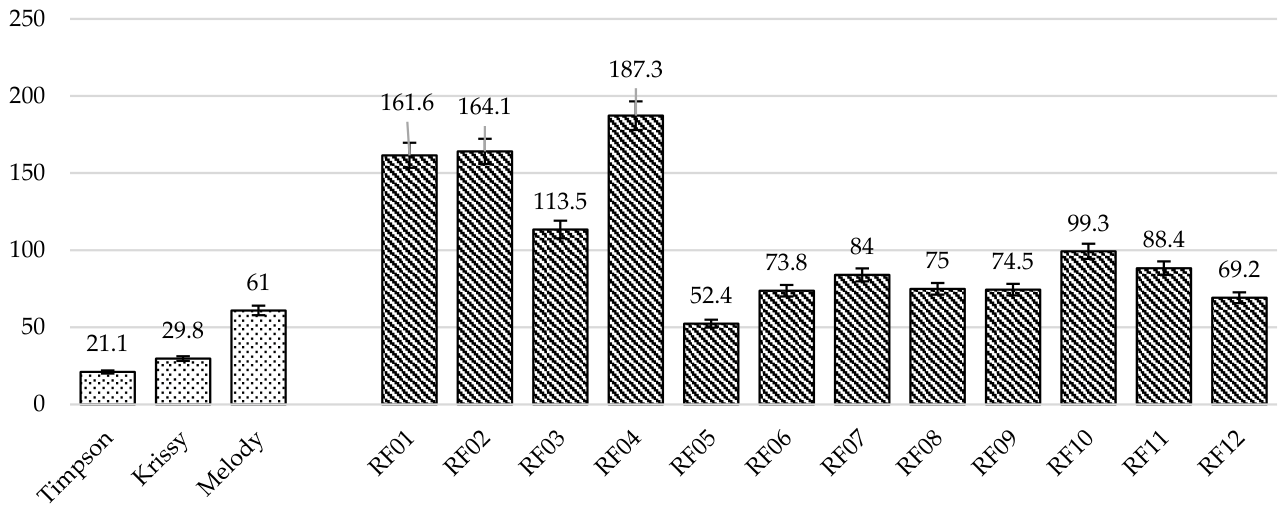
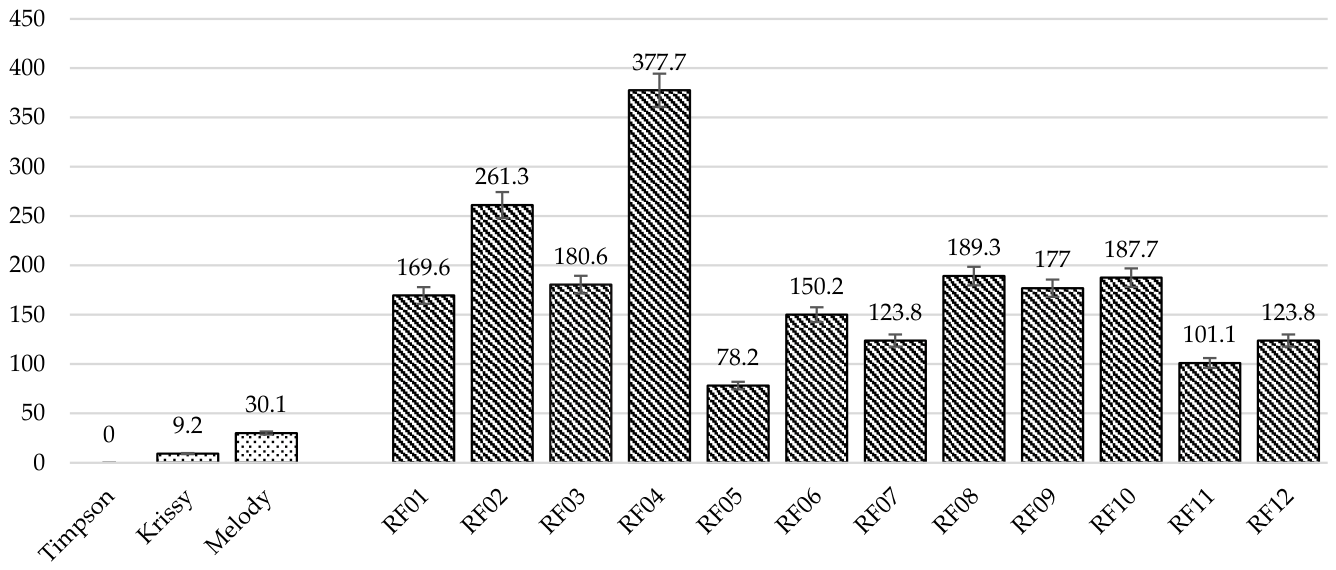
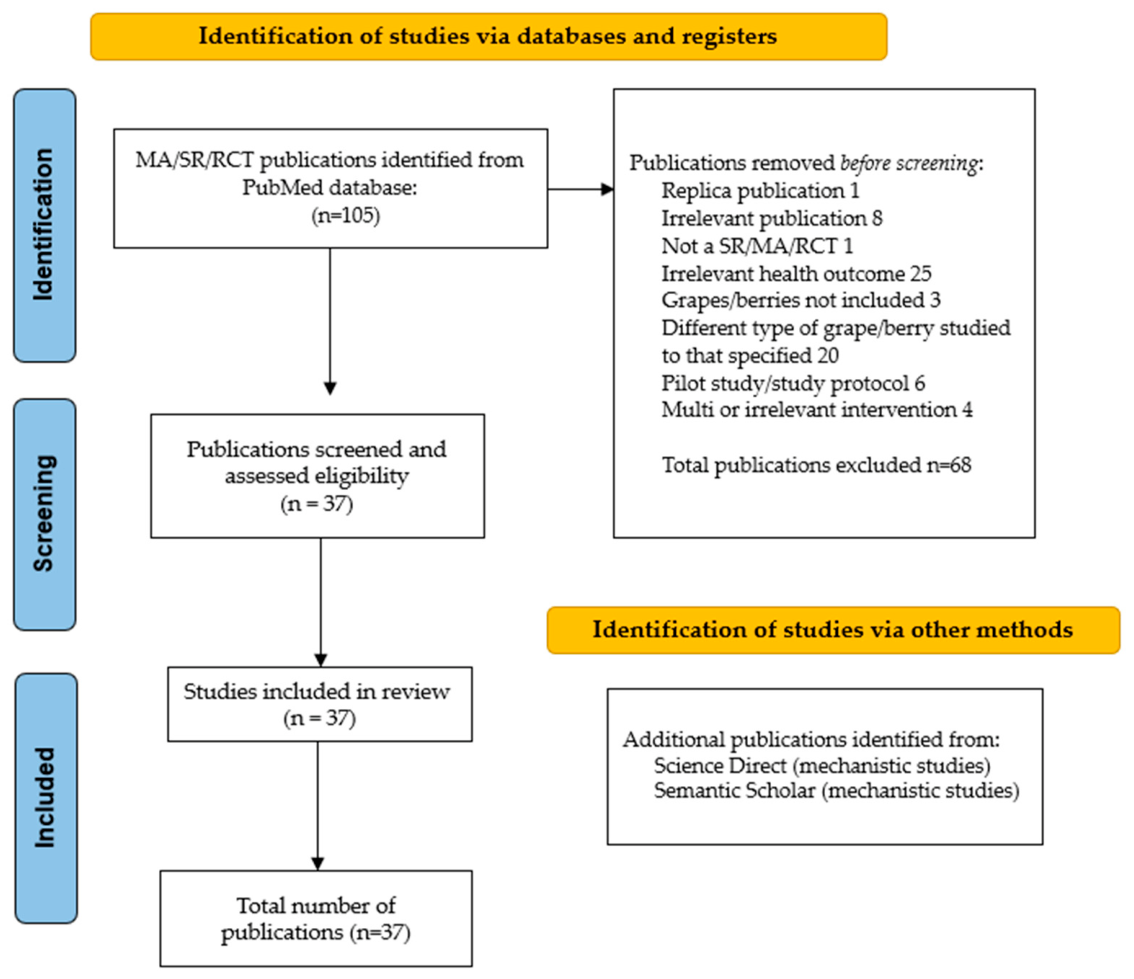
Polyphenols and Cardiovascular Health: Emerging Relevance for Blueberries, Grapes, and Red-Fleshed Table Grapes



Abstract
1. Introduction
2. Materials and Methods
2.1. Search Strategy
2.2. Inclusion and Exclusion Criteria
2.3. Quality of Publications
3. Results
3.1. Meta-Analysis and Systematic Review Publications

| Study (Author, Year, Location) | Study Design | Sample Size | Bioactive Source | Bioactive Compound(s) | Intervention (Dosage/Amount) | Outcomes | Main Cardiovascular Findings | AMSTAR-2 Quality |
|---|---|---|---|---|---|---|---|---|
| Shen et al. (2026) [25], Taiwan | SR | 40 RCTs, n = 2551 | Supplementation | Resveratrol | N/A | CV markers | Resveratrol significantly ↓ HOMA-IR, TC, TG, LDL cholesterol, SBP, DBP, hs-CRP, TNF-α and IL-6 | CLQ |
| Lagou et al. (2025) [23], Netherlands | SR and MA of RCTs | 109 studies including 145 RCTs, n = 5205 | Epicatechin, EGCG, cocoa products, tea, grape extract, and apple interventions | Flavan-3-ols | Flavan-3-ol interventions delivering 586 mg | BP and endothelial function | Flavan-3-ol-rich foods ↓ elevated BP and improved endothelial function, supporting their use for CV prevention | MQ |
| Ashoori et al. (2023) [24], Iran | SR and MA | 30 RCTs | Whole grape products | Various—not specified | N/A | BP and vascular function | Grape product consumption: ↓ SBP (−3.17 mmHg; p = 0.004) ↑ VCAM-1 (+34.11 ng/mL; p = 0.04) | MQ |
| da Silva et al. (2023) [35], Brazil | SR and MA | 27 RCTs | Grape products | Various—not specified | N/A | MetS risk factors | Grape products ↓ total and LDL cholesterol and TG levels, grape supplementation also ↓ SBP and DBP | LQ |
| Martini et al. (2023) [26], Italy | SR | 45 human intervention studies | Blueberries | Polyphenols | N/A | CV function markers, oxidative stress, and inflammation | Blueberries may play a role in the improvement of markers of vascular function postprandially and long-term, especially in subjects with disease conditions or risk factors | CLQ |
| Foshati et al. (2021) [27] | SR and MA RCTs | SR n = 23 studies MA n = 19 studies | Grape seed extract | Various—not specified | N/A | Inflammation and oxidative stress | ↓ in MDA (−1.04, 95% CI: −1.65, −0.42), ↓ oxidised LDL (−0.44, 95% CI: −0.75, −0.13), ↓ hs-CRP (−0.48 mg/L, 95% CI: −0.94, −0.03), ↑ TOD (0.49, 95% CI: −0.05, 1.04) | LQ |
| Sarkhosh-Khorasani et al. (2021) [21], Iran | SR and MA | 17 RCTs, n = 668 | Grape, grape seed, grape seed extract, and wine | Polyphenols | Higher doses of grape polyphenols (>500 mg/d) and longer intervention periods (≥12 weeks) had significant effects | CRP levels | ↓ CRP (SMD = −0·229; 95% CI −0·41, −0·05; p = 0·013) | HQ |
| Weaver et al. (2021) [22], UK | SR and MA | 48 animal and 37 human studies | Red wine | Polyphenols | N/A | Vascular health | Human studies = significant improvements in SBP overall (−2.6 mmHg, 95% CI: [−4.8, −0.4]), with a greater improvement in pure-resveratrol studies alone (−3.7 mmHg, 95% CI: [−7.3, −0.0]) | HQ |
| Haghighatdoost et al. (2020) [29], Iran | SR and MA | 8–9 publications included | Grape, grape extract, grape juice, and grape seed extract | Polyphenols | N/A | Inflammatory mediators | No beneficial effects of grape polyphenols on selected inflammatory mediators were observed | CLQ |
| Koushki et al. (2020) [28], Iran | SR and MA | 12 RCTs | Grapes and red wine | Resveratrol | N/A | Oxidative stress | RCTs did not show any benefit of resveratrol supplementation on SOD, CAT, or GPx except for TAC | LQ |
| Mashhadi et al. (2020) [30], Iran | SR | 5 studies n = 229 hypertensive and pre-hypertensive patients | Various | Resveratrol | N/A | BP | Resveratrol appears to play an important role in reducing BP and there was an indication of a small ↑ in FMD with berries | CLQ |
| Ghaedi et al. (2019) [31], Iran | SR and MA | 48 RCTs (59 arms) | Grape products | Various—not specified | N/A | Blood lipids | Grape products ↓ the concentration of TC (MD: −6.196 mg dL−1, 95% CI: −9.203, −3.189), LDL cholesterol (MD: −4.964 mg dL−1, 95% CI: −7.594, −2.334), and TG (MD: −7.641 mg dL−1, 95% CI: −12.120, −3.162) | LQ |
| Garcia-Conesa et al. (2018) [37], Spain | MA | 128 studies | Berries and red grapes/wine | Anthocyanins | N/A | Cardiometabolic biomarkers | BP was significantly reduced by the two main sources of anthocyanins, berries, and red grapes/wine | CLQ |
| Marx et al. (2017) [32], Australia | SR and MA | 12 studies | Polyphenol-rich interventions including grape, soy, cocoa, pomegranate, and turmeric | Polyphenols | N/A | CV risk factors in haemodialysis, BP, TG, and vascular function | Polyphenol-rich interventions significantly improved DBP (MD: −5.62 mmHg, 95% CI: −8.47, −2.78; I2 = 2%; p = 0.0001) and TG levels (MD: −26.52 mg/dL, 95% CI: −47.22, −5.83; I2 = 57%; p = 0.01) | LQ |
| Woerdeman et al. (2017) [33], Netherlands | SR | 39 studies | Grapes | Polyphenols | N/A | MetS | One out of two high-quality studies noted improvements in insulin sensitivity. Seven out of twenty-two studies had a significant ↓ in BP, but only one was of high quality | LQ |
| Zhu et al. (2017) [34], China | SR and MA RCTs | 6 RCTs n = 204 | Blueberries | Polyphenols/anthocyanins | N/A | BP (SBP, DBP) | There was no significant effect of blueberry supplementation on changes in BP relative to the baseline | CLQ |
| Li et al. (2015) [36], China | MA of RCTs | 10 studies | Grapes | Polyphenols | N/A | BP | Daily grape polyphenol intake significantly reduced systolic blood pressure by 1.48 mmHg when compared to control subjects (p = 0.03) | CLQ |
3.2. Randomised Controlled Trials
4. Bioactives—Potential Mechanisms of Action
5. Polyphenol Composition of Red-Fleshed Table Grapes
5.1. Total Phenolic Content
5.2. Total Anthocyanins
5.3. Stilbene/Resveratrol Profiles
6. Whole-Food Dietary Patterns and Heart Health
7. Discussion
8. Conclusions
Author Contributions
Funding
Data Availability Statement
Conflicts of Interest
Abbreviations
| AMSTAR 2 | A measurement tool to assess systematic reviews (version 2) |
| BP | Blood pressure |
| CRP | C-reactive protein |
| CV | Cardiovascular |
| CVD | Cardiovascular disease |
| FMD | Flow-mediated dilation |
| IL-6 | Interleukin-6 |
| LDL | Low-density lipoprotein |
| MA | Meta-analysis |
| PRISMA | Preferred Reporting Items for Systematic Reviews and Meta-Analyses |
| SR | Systematic review |
| sICAM-1 | Soluble intercellular adhesion molecule-1 |
| TBARS | Thiobarbituric acid reactive substances |
| TNF-α | Tumour necrosis factor alpha |
| UK | United Kingdom |
Appendix A
| Berry fruit/bioactive | ((“Grapes”[Mesh] OR grapes OR “red-fleshed grapes”) OR (“Vaccinium”[Mesh] OR blueberries OR blueberry)) |
| AND (“Polyphenols”[Mesh] OR “Flavonoids”[Mesh] OR flavonoids OR anthocyanins OR polyphenols) | |
| CVD outcome | AND (“Cardiovascular Diseases”[Mesh] OR “Endothelium, Vascular”[Mesh] OR “Blood Pressure”[Mesh] OR “Platelet Aggregation”[Mesh] OR “Thrombosis”[Mesh] OR “Dyslipidemias”[Mesh] OR endothelial function OR “LDL oxidation” OR inflammation OR “lipid profile” OR “oxidative stress” OR “flow-mediated dilation” OR “arterial stiffness”) |
| Type of publication | AND (“Randomized Controlled Trial”[Publication Type] OR “Meta-Analysis”[Publication Type] OR “Systematic Review”[Publication Type] OR RCT) |
References
- Thiriet, M. Cardiovascular Disease: An Introduction. Vasculopathies 2019, 8, 1–90. [Google Scholar]
- Townsend, N.; Kazakiewicz, D.; Lucy Wright, F.; Timmis, A.; Huculeci, R.; Torbica, A.; Gale, C.P.; Achenbach, S.; Weidinger, F.; Vardas, P. Epidemiology of cardiovascular disease in Europe. Nat. Rev. Cardiol. 2022, 19, 133–143. [Google Scholar] [CrossRef] [Scilit] [PubMed]
- Sacramento-Pacheco, J.; Sanchez-Gomez, M.B.; Duarte-Climents, G.; Gomez-Salgado, J.; Novo-Munoz, M.M. Prevalence of Cardiovascular Risk Factors Among Adults in the European Union: A Systematic Review with Meta-Analysis. J. Clin. Med. 2025, 14, 5752. [Google Scholar] [CrossRef] [Scilit] [PubMed]
- Luengo-Fernandez, R.; Walli-Attaei, M.; Gray, A.; Torbica, A.; Maggioni, A.P.; Huculeci, R.; Bairami, F.; Aboyans, V.; Timmis, A.D.; Vardas, P.; et al. Economic burden of cardiovascular diseases in the European Union: A population-based cost study. Eur. Heart J. 2023, 44, 4752–4767. [Google Scholar] [CrossRef] [Scilit] [PubMed]
- Conrad, N.; Molenberghs, G.; Verbeke, G.; Zaccardi, F.; Lawson, C.; Friday, J.M.; Su, H.; Jhund, P.S.; Sattar, N.; Rahimi, K.; et al. Trends in cardiovascular disease incidence among 22 million people in the UK over 20 years: Population based study. BMJ 2024, 385, e078523. [Google Scholar] [CrossRef] [Scilit] [PubMed]
- Aggarwal, M.; Aggarwal, B.; Rao, J. Integrative Medicine for Cardiovascular Disease and Prevention. Med. Clin. N. Am. 2017, 101, 895–923. [Google Scholar] [CrossRef] [Scilit] [PubMed]
- Diab, A.; Dastmalchi, L.N.; Gulati, M.; Michos, E.D. A Heart-Healthy Diet for Cardiovascular Disease Prevention: Where Are We Now? Vasc. Health Risk Manag. 2023, 19, 237–253. [Google Scholar] [CrossRef] [Scilit] [PubMed]
- Marques-Vidal, P.; Tsampasian, V.; Cassidy, A.; Biondi-Zoccai, G.; Chrysohoou, C.; Koskinas, K.; Verschuren, W.M.M.; Czapla, M.; Kavousi, M.; Kouvari, M.; et al. Diet and nutrition in cardiovascular disease prevention: A scientific statement of the European Association of Preventive Cardiology and the Association of Cardiovascular Nursing & Allied Professions of the European Society of Cardiology. Eur. J. Prev. Cardiol. 2025, 32, 1540–1552. [Google Scholar] [CrossRef] [Scilit] [PubMed]
- Mandatori, D.; Pandolfi, A. Dietary Bioactives: Their Role in the Prevention and Treatment of Cardiovascular and Metabolic Bone Diseases. Nutrients 2022, 14, 2459. [Google Scholar] [CrossRef] [Scilit] [PubMed]
- Wightman, J.D.; Heuberger, R.A. Effect of grape and other berries on cardiovascular health. J. Sci. Food Agric. 2015, 95, 1584–1597. [Google Scholar] [CrossRef] [Scilit] [PubMed]
- Ulaszewska, M.; Garcia-Aloy, M.; Vazquez-Manjarrez, N.; Soria-Florido, M.T.; Llorach, R.; Mattivi, F.; Manach, C. Food intake biomarkers for berries and grapes. Genes Nutr. 2020, 15, 17. [Google Scholar] [CrossRef] [Scilit] [PubMed]
- Xia, E.Q.; Deng, G.F.; Guo, Y.J.; Li, H.B. Biological activities of polyphenols from grapes. Int. J. Mol. Sci. 2010, 11, 622–646. [Google Scholar] [CrossRef] [Scilit] [PubMed]
- Yadav, M.; Jain, S.; Bhardwaj, A.; Nagpal, R.; Puniya, M.; Tomar, R.; Singh, V.; Parkash, O.; Prasad, G.B.; Marotta, F.; et al. Biological and medicinal properties of grapes and their bioactive constituents: An update. J. Med. Food 2009, 12, 473–484. [Google Scholar] [CrossRef] [Scilit] [PubMed]
- Yang, J.; Xiao, Y.Y. Grape phytochemicals and associated health benefits. Crit. Rev. Food Sci. Nutr. 2013, 53, 1202–1225. [Google Scholar] [CrossRef] [Scilit] [PubMed]
- Murillo, A.G.; Fernandez, M.L. The Relevance of Dietary Polyphenols in Cardiovascular Protection. Curr. Pharm. Des. 2017, 23, 2444–2452. [Google Scholar] [CrossRef] [Scilit] [PubMed]
- Page, M.J.; McKenzie, J.E.; Bossuyt, P.M.; Boutron, I.; Hoffmann, T.C.; Mulrow, C.D.; Shamseer, L.; Tetzlaff, J.M.; Akl, E.A.; Brennan, S.E.; et al. The PRISMA 2020 statement: An updated guideline for reporting systematic reviews. BMJ 2021, 372, n71. [Google Scholar] [CrossRef] [Scilit] [PubMed]
- Tian, B.; Liu, J. Resveratrol: A review of plant sources, synthesis, stability, modification and food application. J. Sci. Food Agric. 2020, 100, 1392–1404. [Google Scholar] [CrossRef] [Scilit] [PubMed]
- Shea, B.J.; Reeves, B.C.; Wells, G.; Thuku, M.; Hamel, C.; Moran, J.; Moher, D.; Tugwell, P.; Welch, V.; Kristjansson, E.; et al. AMSTAR 2: A critical appraisal tool for systematic reviews that include randomised or non-randomised studies of healthcare interventions, or both. BMJ 2017, 358, j4008. [Google Scholar] [CrossRef] [Scilit] [PubMed]
- Shea, B.J.; Hamel, C.; Wells, G.A.; Bouter, L.M.; Kristjansson, E.; Grimshaw, J.; Henry, D.A.; Boers, M. AMSTAR is a reliable and valid measurement tool to assess the methodological quality of systematic reviews. J. Clin. Epidemiol. 2009, 62, 1013–1020. [Google Scholar] [CrossRef] [Scilit] [PubMed]
- Jadad, A.R.; Moore, R.A.; Carroll, D.; Jenkinson, C.; Reynolds, D.J.; Gavaghan, D.J.; McQuay, H.J. Assessing the quality of reports of randomized clinical trials: Is blinding necessary? Control Clin. Trials 1996, 17, 1–12. [Google Scholar] [CrossRef] [Scilit] [PubMed]
- Sarkhosh-Khorasani, S.; Hosseinzadeh, M. The effect of grape products containing polyphenols on C-reactive protein levels: A systematic review and meta-analysis of randomised controlled trials. Br. J. Nutr. 2021, 125, 1230–1245. [Google Scholar] [CrossRef] [Scilit] [PubMed]
- Weaver, S.R.; Rendeiro, C.; McGettrick, H.M.; Philp, A.; Lucas, S.J.E. Fine wine or sour grapes? A systematic review and meta-analysis of the impact of red wine polyphenols on vascular health. Eur. J. Nutr. 2021, 60, 1–28. [Google Scholar] [CrossRef] [Scilit] [PubMed]
- Lagou, V.; Greyling, A.; Ferruzzi, M.G.; Skene, S.S.; Dubost, J.; Demirkan, A.; Prokopenko, I.; Shlisky, J.; Rodriguez-Mateos, A.; Heiss, C. Impact of flavan-3-ols on blood pressure and endothelial function in diverse populations: A systematic review and meta-analysis of randomized controlled trials. Eur. J. Prev. Cardiol. 2025, 32, 1322–1334. [Google Scholar] [CrossRef] [Scilit] [PubMed]
- Ashoori, M.; Soltani, S.; Kolahdouz-Mohammadi, R.; Moghtaderi, F.; Clayton, Z.; Abdollahi, S. The effect of whole grape products on blood pressure and vascular function: A systematic review and meta-analysis of randomized controlled trials. Nutr. Metab. Cardiovasc. Dis. 2023, 33, 1836–1848. [Google Scholar] [CrossRef] [Scilit] [PubMed]
- Shen, C.Y.; Li, C.P.; Yu, J.T.; Ho, Y.J.; Tsai, R.Y. Resveratrol Supplementation and its Potential Benefits in Obesity-related Non-communicable Diseases. In Vivo 2026, 40, 748–783. [Google Scholar] [CrossRef] [Scilit] [PubMed]
- Martini, D.; Marino, M.; Venturi, S.; Tucci, M.; Klimis-Zacas, D.; Riso, P.; Porrini, M.; Del Bo, C. Blueberries and their bioactives in the modulation of oxidative stress, inflammation and cardio/vascular function markers: A systematic review of human intervention studies. J. Nutr. Biochem. 2023, 111, 109154. [Google Scholar] [CrossRef] [Scilit] [PubMed]
- Foshati, S.; Rouhani, M.H.; Amani, R. The effect of grape seed extract supplementation on oxidative stress and inflammation: A systematic review and meta-analysis of controlled trials. Int. J. Clin. Pract. 2021, 75, e14469. [Google Scholar] [CrossRef] [Scilit] [PubMed]
- Koushki, M.; Lakzaei, M.; Khodabandehloo, H.; Hosseini, H.; Meshkani, R.; Panahi, G. Therapeutic effect of resveratrol supplementation on oxidative stress: A systematic review and meta-analysis of randomised controlled trials. Postgrad. Med. J. 2020, 96, 197–205. [Google Scholar] [CrossRef] [Scilit] [PubMed]
- Haghighatdoost, F.; Gholami, A.; Hariri, M. Effect of grape polyphenols on selected inflammatory mediators: A systematic review and meta-analysis randomized clinical trials. EXCLI J. 2020, 19, 251–267. [Google Scholar] [CrossRef] [Scilit] [PubMed]
- Mashhadi, F.D.; Salari, R.; Ghorbanzadeh, H. The Effect of Resveratrol dose and Duration of Treatment on Blood Pressure in Patients with Cardiovascular Disorders: A Systematic Review. Curr. Drug Discov. Technol. 2020, 17, 325–331. [Google Scholar] [CrossRef] [Scilit] [PubMed]
- Ghaedi, E.; Moradi, S.; Aslani, Z.; Kord-Varkaneh, H.; Miraghajani, M.; Mohammadi, H. Effects of grape products on blood lipids: A systematic review and dose-response meta-analysis of randomized controlled trials. Food Funct. 2019, 10, 6399–6416. [Google Scholar] [CrossRef] [Scilit] [PubMed]
- Marx, W.; Kelly, J.; Marshall, S.; Nakos, S.; Campbell, K.; Itsiopoulos, C. The Effect of Polyphenol-Rich Interventions on Cardiovascular Risk Factors in Haemodialysis: A Systematic Review and Meta-Analysis. Nutrients 2017, 9, 1345. [Google Scholar] [CrossRef] [Scilit] [PubMed]
- Woerdeman, J.; van Poelgeest, E.; Ket, J.C.F.; Eringa, E.C.; Serne, E.H.; Smulders, Y.M. Do grape polyphenols improve metabolic syndrome components? A systematic review. Eur. J. Clin. Nutr. 2017, 71, 1381–1392. [Google Scholar] [CrossRef] [Scilit] [PubMed]
- Zhu, Y.; Sun, J.; Lu, W.; Wang, X.; Wang, X.; Han, Z.; Qiu, C. Effects of blueberry supplementation on blood pressure: A systematic review and meta-analysis of randomized clinical trials. J. Hum. Hypertens. 2017, 31, 165–171. [Google Scholar] [CrossRef] [Scilit] [PubMed]
- da Silva, A.; Izidoro, N.; de Macedo, L.; de Matos, I.; Silva, M. The effects of grape products on metabolic syndrome risk factors: A systematic review and meta-analysis. PharmaNutrition 2023, 24, 100339. [Google Scholar] [CrossRef] [Scilit]
- Li, S.H.; Zhao, P.; Tian, H.B.; Chen, L.H.; Cui, L.Q. Effect of Grape Polyphenols on Blood Pressure: A Meta-Analysis of Randomized Controlled Trials. PLoS ONE 2015, 10, e0137665. [Google Scholar] [CrossRef] [Scilit] [PubMed]
- Garcia-Conesa, M.T.; Chambers, K.; Combet, E.; Pinto, P.; Garcia-Aloy, M.; Andres-Lacueva, C.; de Pascual-Teresa, S.; Mena, P.; Konic Ristic, A.; Hollands, W.J.; et al. Meta-Analysis of the Effects of Foods and Derived Products Containing Ellagitannins and Anthocyanins on Cardiometabolic Biomarkers: Analysis of Factors Influencing Variability of the Individual Responses. Int. J. Mol. Sci. 2018, 19, 694. [Google Scholar] [CrossRef] [Scilit] [PubMed]
- Ono-Moore, K.D.; Snodgrass, R.G.; Huang, S.; Singh, S.; Freytag, T.L.; Burnett, D.J.; Bonnel, E.L.; Woodhouse, L.R.; Zunino, S.J.; Peerson, J.M.; et al. Postprandial Inflammatory Responses and Free Fatty Acids in Plasma of Adults Who Consumed a Moderately High-Fat Breakfast with and without Blueberry Powder in a Randomized Placebo-Controlled Trial. J. Nutr. 2016, 146, 1411–1419. [Google Scholar] [CrossRef] [Scilit] [PubMed]
- Bardagjy, A.S.; Hu, Q.; Giebler, K.A.; Ford, A.; Steinberg, F.M. Effects of grape consumption on biomarkers of inflammation, endothelial function, and PBMC gene expression in obese subjects. Arch. Biochem. Biophys. 2018, 646, 145–152. [Google Scholar] [CrossRef] [Scilit] [PubMed]
- Taladrid, D.; de Celis, M.; Belda, I.; Bartolome, B.; Moreno-Arribas, M.V. Hypertension- and glycaemia-lowering effects of a grape-pomace-derived seasoning in high-cardiovascular risk and healthy subjects. Interplay with the gut microbiome. Food Funct. 2022, 13, 2068–2082. [Google Scholar] [CrossRef] [Scilit] [PubMed]
- Odai, T.; Terauchi, M.; Kato, K.; Hirose, A.; Miyasaka, N. Effects of Grape Seed Proanthocyanidin Extract on Vascular Endothelial Function in Participants with Prehypertension: A Randomized, Double-Blind, Placebo-Controlled Study. Nutrients 2019, 11, 2844. [Google Scholar] [CrossRef] [Scilit] [PubMed]
- Wood, E.; Hein, S.; Mesnage, R.; Fernandes, F.; Abhayaratne, N.; Xu, Y.; Zhang, Z.; Bell, L.; Williams, C.; Rodriguez-Mateos, A. Wild blueberry (poly)phenols can improve vascular function and cognitive performance in healthy older individuals: A double-blind randomized controlled trial. Am. J. Clin. Nutr. 2023, 117, 1306–1319. [Google Scholar] [CrossRef] [Scilit] [PubMed]
- Park, E.; Edirisinghe, I.; Choy, Y.Y.; Waterhouse, A.; Burton-Freeman, B. Effects of grape seed extract beverage on blood pressure and metabolic indices in individuals with pre-hypertension: A randomised, double-blinded, two-arm, parallel, placebo-controlled trial. Br. J. Nutr. 2016, 115, 226–238. [Google Scholar] [CrossRef] [Scilit] [PubMed]
- Vaisman, N.; Niv, E. Daily consumption of red grape cell powder in a dietary dose improves cardiovascular parameters: A double blind, placebo-controlled, randomized study. Int. J. Food Sci. Nutr. 2015, 66, 342–349. [Google Scholar] [CrossRef] [Scilit] [PubMed]
- Johnson, S.A.; Figueroa, A.; Navaei, N.; Wong, A.; Kalfon, R.; Ormsbee, L.T.; Feresin, R.G.; Elam, M.L.; Hooshmand, S.; Payton, M.E.; et al. Daily blueberry consumption improves blood pressure and arterial stiffness in postmenopausal women with pre- and stage 1-hypertension: A randomized, double-blind, placebo-controlled clinical trial. J. Acad. Nutr. Diet. 2015, 115, 369–377. [Google Scholar] [CrossRef] [Scilit] [PubMed]
- Curtis, P.J.; Berends, L.; van der Velpen, V.; Jennings, A.; Haag, L.; Chandra, P.; Kay, C.D.; Rimm, E.B.; Cassidy, A. Blueberry anthocyanin intake attenuates the postprandial cardiometabolic effect of an energy-dense food challenge: Results from a double blind, randomized controlled trial in metabolic syndrome participants. Clin. Nutr. 2022, 41, 165–176. [Google Scholar] [CrossRef] [Scilit] [PubMed]
- Yousefi, R.; Parandoosh, M.; Khorsandi, H.; Hosseinzadeh, N.; Madani Tonekaboni, M.; Saidpour, A.; Babaei, H.; Ghorbani, A. Grape seed extract supplementation along with a restricted-calorie diet improves cardiovascular risk factors in obese or overweight adult individuals: A randomized, placebo-controlled trial. Phytother. Res. 2021, 35, 987–995. [Google Scholar] [CrossRef] [Scilit] [PubMed]
- Argani, H.; Ghorbanihaghjo, A.; Vatankhahan, H.; Rashtchizadeh, N.; Raeisi, S.; Ilghami, H. The effect of red grape seed extract on serum paraoxonase activity in patients with mild to moderate hyperlipidemia. Sao Paulo Med. J. 2016, 134, 234–239. [Google Scholar] [CrossRef] [Scilit] [PubMed]
- Rahbar, A.R.; Mahmoudabadi, M.M.; Islam, M.S. Comparative effects of red and white grapes on oxidative markers and lipidemic parameters in adult hypercholesterolemic humans. Food Funct. 2015, 6, 1992–1998. [Google Scholar] [CrossRef] [Scilit] [PubMed]
- Tucci, M.; Del Bo, C.; Martini, D.; Perna, S.; Marino, M.; Rendine, M.; Gardana, C.; Battezzati, A.; Leone, A.; Bertoli, S.; et al. A serving of blueberry (Vaccinium corymbosum) improves peripheral vascular function but not metabolic and functional markers in older subjects: A randomized, controlled, crossover study. Food Res. Int. 2024, 197, 115189. [Google Scholar] [CrossRef] [Scilit] [PubMed]
- Woolf, E.K.; Terwoord, J.D.; Litwin, N.S.; Vazquez, A.R.; Lee, S.Y.; Ghanem, N.; Michell, K.A.; Smith, B.T.; Grabos, L.E.; Ketelhut, N.B.; et al. Daily blueberry consumption for 12 weeks improves endothelial function in postmenopausal women with above-normal blood pressure through reductions in oxidative stress: A randomized controlled trial. Food Funct. 2023, 14, 2621–2641. [Google Scholar] [CrossRef] [Scilit] [PubMed]
- Curtis, P.J.; van der Velpen, V.; Berends, L.; Jennings, A.; Feelisch, M.; Umpleby, A.M.; Evans, M.; Fernandez, B.O.; Meiss, M.S.; Minnion, M.; et al. Blueberries improve biomarkers of cardiometabolic function in participants with metabolic syndrome-results from a 6-month, double-blind, randomized controlled trial. Am. J. Clin. Nutr. 2019, 109, 1535–1545. [Google Scholar] [CrossRef] [Scilit] [PubMed]
- Keramatzadeh, S.; Hosseini, S.A.; Majdinasab, N.; Cheraghian, B.; Zilaee, M. Effects of resveratrol supplementation on inflammatory markers, fatigue scale, fasting blood sugar and lipid profile in relapsing-remitting multiple sclerosis patients: A double-blind, randomized placebo-controlled trial. Nutr. Neurosci. 2025, 28, 854–862. [Google Scholar] [CrossRef] [Scilit] [PubMed]
- Cheng, N.; Barfoot, K.L.; Le Cozannet, R.; Fanca-Berthon, P.; Lamport, D.J.; Williams, C.M. Wild Blueberry Extract Intervention in Healthy Older Adults: A Multi-Study, Randomised, Controlled Investigation of Acute Cognitive and Cardiovascular Effects. Nutrients 2024, 16, 1180. [Google Scholar] [CrossRef] [Scilit] [PubMed]
- Wang, Y.; Gallegos, J.L.; Haskell-Ramsay, C.; Lodge, J.K. Effects of Blueberry Consumption on Cardiovascular Health in Healthy Adults: A Cross-Over Randomised Controlled Trial. Nutrients 2022, 14, 1180. [Google Scholar] [CrossRef] [Scilit] [PubMed]
- Schon, C.; Allegrini, P.; Engelhart-Jentzsch, K.; Riva, A.; Petrangolini, G. Grape Seed Extract Positively Modulates Blood Pressure and Perceived Stress: A Randomized, Double-Blind, Placebo-Controlled Study in Healthy Volunteers. Nutrients 2021, 13, 654. [Google Scholar] [CrossRef] [Scilit] [PubMed]
- Martinez-Maqueda, D.; Zapatera, B.; Gallego-Narbon, A.; Vaquero, M.P.; Saura-Calixto, F.; Perez-Jimenez, J. A 6-week supplementation with grape pomace to subjects at cardiometabolic risk ameliorates insulin sensitivity, without affecting other metabolic syndrome markers. Food Funct. 2018, 9, 6010–6019. [Google Scholar] [CrossRef] [Scilit] [PubMed]
- Zuraini, N.Z.A.; Sekar, M.; Wu, Y.S.; Gan, S.H.; Bonam, S.R.; Mat Rani, N.N.I.; Begum, M.Y.; Lum, P.T.; Subramaniyan, V.; Fuloria, N.K.; et al. Promising Nutritional Fruits Against Cardiovascular Diseases: An Overview of Experimental Evidence and Understanding Their Mechanisms of Action. Vasc. Health Risk Manag. 2021, 17, 739–769. [Google Scholar] [CrossRef] [Scilit] [PubMed]
- Golovinskaia, O.; Wang, C.K. Review of Functional and Pharmacological Activities of Berries. Molecules 2021, 26, 3904. [Google Scholar] [CrossRef] [Scilit] [PubMed]
- Iqbal, I.; Wilairatana, P.; Saqib, F.; Nasir, B.; Wahid, M.; Latif, M.F.; Iqbal, A.; Naz, R.; Mubarak, M.S. Plant Polyphenols and Their Potential Benefits on Cardiovascular Health: A Review. Molecules 2023, 28, 6403. [Google Scholar] [CrossRef] [Scilit] [PubMed]
- Dohadwala, M.M.; Vita, J.A. Grapes and cardiovascular disease. J. Nutr. 2009, 139, 1788S–1793S. [Google Scholar] [CrossRef] [Scilit] [PubMed]
- Laudani, S.; Godos, J.; Di Domenico, F.M.; Barbagallo, I.; Randazzo, C.L.; Leggio, G.M.; Galvano, F.; Grosso, G. Anthocyanin Effects on Vascular and Endothelial Health: Evidence from Clinical Trials and Role of Gut Microbiota Metabolites. Antioxidants 2023, 12, 1773. [Google Scholar] [CrossRef] [Scilit] [PubMed]
- Gal, R.; Deres, L.; Toth, K.; Halmosi, R.; Habon, T. The Effect of Resveratrol on the Cardiovascular System from Molecular Mechanisms to Clinical Results. Int. J. Mol. Sci. 2021, 22, 10152. [Google Scholar] [CrossRef] [Scilit] [PubMed]
- Williamson, G. The role of polyphenols in modern nutrition. Nutr. Bull. 2017, 42, 226–235. [Google Scholar] [CrossRef] [Scilit] [PubMed]
- El Rayess, Y.; Nehme, N.; Azzi-Achkouty, S.; Julien, S.G. Wine Phenolic Compounds: Chemistry, Functionality and Health Benefits. Antioxidants 2024, 13, 1312. [Google Scholar] [CrossRef] [Scilit] [PubMed]
- Nassiri-Asl, M.; Hosseinzadeh, H. Review of the Pharmacological Effects of Vitis vinifera (Grape) and its Bioactive Constituents: An Update. Phytother. Res. 2016, 30, 1392–1403. [Google Scholar] [CrossRef] [Scilit] [PubMed]
- Zhou, D.D.; Li, J.; Xiong, R.G.; Saimaiti, A.; Huang, S.Y.; Wu, S.X.; Yang, Z.J.; Shang, A.; Zhao, C.N.; Gan, R.Y.; et al. Bioactive Compounds, Health Benefits and Food Applications of Grape. Foods 2022, 11, 2755. [Google Scholar] [CrossRef] [Scilit] [PubMed]
- Bautista-Ortin, A.B.; Martinez-Moreno, A.; Perez-Mendoza, A.L.; Carrasco-Palazon, M.J.; Osete-Alcaraz, L.; Soriano-Romani, L.; Diez-Sanchez, E.; Nieto, J.A.; Soto-Jover, S.; Gomez-Plaza, E. Development of New Red-Fleshed Seedless Table Grapes: In Vitro Insights on Glucose Absorption and Insulin Resistance Biomarkers. Foods 2025, 14, 4035. [Google Scholar] [CrossRef] [Scilit] [PubMed]
- Singleton, V.; Orthofer, R.; Lamuela-Raventos, R. Analysis of total phenols and other oxidation substrates and antioxidants by means of folin-ciocalteu reagent. Methods Enzymol. 1999, 299, 152–178. [Google Scholar] [CrossRef] [Scilit]
- Haminiuk, C.; Maciel, G.; Plata-Oviedo, M.; Peralta, R. Phenolic compounds in fruits—An overview. Int. J. Food Sci. Technol. 2012, 47, 2023–2044. [Google Scholar] [CrossRef] [Scilit]
- Sayago-Ayerdi, S.; Garcia-Martinez, D.L.; Ramirez-Castillo, A.C.; Ramirez-Concepcion, H.R.; Viuda-Martos, M. Tropical Fruits and Their Co-Products as Bioactive Compounds and Their Health Effects: A Review. Foods 2021, 10, 1952. [Google Scholar] [CrossRef] [Scilit] [PubMed]
- Wang, Y.; Gao, H.; Guo, Z.; Peng, Z.; Li, S.; Zhu, Z.; Grimi, N.; Xiao, J. Free and Bound Phenolic Profiles and Antioxidant Activities in Melon (Cucumis melo L.) Pulp: Comparative Study on Six Widely Consumed Varieties Planted in Hainan Province. Foods 2023, 12, 4446. [Google Scholar] [CrossRef] [Scilit] [PubMed]
- Shibata, Y.; Ohara, K.; Matsumoto, K.; Hasegawa, T.; Akimoto, M. Total Anthocyanin Content, Total Phenolic Content, and Antioxidant Activity of Various Blueberry Cultivars Grown in Togane, Chiba Prefecture, Japan. J. Nutr. Sci. Vitaminol. 2021, 67, 201–209. [Google Scholar] [CrossRef] [Scilit] [PubMed]
- Tsao, R.; Yang, R.; Xie, S.; Sockovie, E.; Khanizadeh, S. Which polyphenolic compounds contribute to the total antioxidant activities of apple? J. Agric. Food Chem. 2005, 53, 4989–4995. [Google Scholar] [CrossRef] [Scilit] [PubMed]
- Huang, W.Y.; Zhang, H.C.; Liu, W.X.; Li, C.Y. Survey of antioxidant capacity and phenolic composition of blueberry, blackberry, and strawberry in Nanjing. J. Zhejiang Univ. Sci. B 2012, 13, 94–102. [Google Scholar] [CrossRef] [Scilit] [PubMed]
- Mattila, P.; Hellstrom, J.; Torronen, R. Phenolic acids in berries, fruits, and beverages. J. Agric. Food Chem. 2006, 54, 7193–7199. [Google Scholar] [CrossRef] [Scilit] [PubMed]
- Milosavljevic, D.M.; Maksimovic, V.M.; Milivojevic, J.M.; Nakarada, D.J.; Mojovic, M.D.; Dragisic Maksimovic, J.J. Rich in Phenolics-Strong Antioxidant Fruit? Comparative Study of 25 Strawberry Cultivars. Plants 2022, 11, 3566. [Google Scholar] [CrossRef] [Scilit] [PubMed]
- Zielinska, D.; Turemko, M. Electroactive Phenolic Contributors and Antioxidant Capacity of Flesh and Peel of 11 Apple Cultivars Measured by Cyclic Voltammetry and HPLC-DAD-MS/MS. Antioxidants 2020, 9, 1054. [Google Scholar] [CrossRef] [Scilit] [PubMed]
- Kähkönen, M.; Heinämäki, J.; Ollilainen, V.; Heinonen, M. Berry anthocyanins: Isolation, identification and antioxidant activities. J. Sci. Food Agric. 2003, 83, 1403–1411. [Google Scholar] [CrossRef] [Scilit]
- Casedas, G.; Les, F.; Lopez, V. Anthocyanins: Plant Pigments, Food Ingredients or Therapeutic Agents for the CNS? A Mini-Review Focused on Clinical Trials. Curr. Pharm. Des. 2020, 26, 1790–1798. [Google Scholar] [CrossRef] [Scilit] [PubMed]
- Avula, B.; Katragunta, K.; Osman, A.G.; Ali, Z.; John Adams, S.; Chittiboyina, A.G.; Khan, I.A. Advances in the Chemistry, Analysis and Adulteration of Anthocyanin Rich-Berries and Fruits: 2000–2022. Molecules 2023, 28, 560. [Google Scholar] [CrossRef] [Scilit] [PubMed]
- Renard, R.; Cottereau, P.; Cayla, L. Estimation de la maturité phénolique des raisins rouges par la méthode I.T.V. standard. Rev. Fr. D’oenologie 2002, 193, 10–16. [Google Scholar]
- Custodio-Mendoza, J.A.; Aktas, H.; Zalewska, M.; Wyrwisz, J.; Kurek, M.A. A Review of Quantitative and Topical Analysis of Anthocyanins in Food. Molecules 2024, 29, 1735. [Google Scholar] [CrossRef] [Scilit] [PubMed]
- Hasan, M.; Bae, H. An Overview of Stress-Induced Resveratrol Synthesis in Grapes: Perspectives for Resveratrol-Enriched Grape Products. Molecules 2017, 22, 294. [Google Scholar] [CrossRef] [Scilit] [PubMed]
- Geana, E.I.; Dinca, O.R.; Ionete, R.E.; Artem, V.; Niculescu, V.C. Monitoring trans-Resveratrol in Grape Berry Skins During Ripening and in Corresponding Wines by HPLC. Food Technol. Biotechnol. 2015, 53, 73–80. [Google Scholar] [CrossRef] [Scilit] [PubMed]
- Căpruciu, R. Resveratrol in Grapevine Components, Products and By-Products—A Review. Horticulturae 2025, 11, 111. [Google Scholar] [CrossRef] [Scilit]
- Jaa, A.; de Moura, P.H.B.; Ruiz-Larrea, M.B.; Ruiz Sanz, J.I.; Richard, T. Potential Transformation of Food Resveratrol: Mechanisms and Biological Impact. Molecules 2025, 30, 536. [Google Scholar] [CrossRef] [Scilit] [PubMed]
- Sebastia, N.; Montoro, A.; Leon, Z.; Soriano, J.M. Searching trans-resveratrol in fruits and vegetables: A preliminary screening. J. Food Sci. Technol. 2017, 54, 842–845. [Google Scholar] [CrossRef] [Scilit] [PubMed]
- Veiga, M.; Costa, E.M.; Silva, S.; Pintado, M. Impact of plant extracts upon human health: A review. Crit. Rev. Food Sci. Nutr. 2020, 60, 873–886. [Google Scholar] [CrossRef] [Scilit]
- Colombo, F.; Di Lorenzo, C.; Regazzoni, L.; Fumagalli, M.; Sangiovanni, E.; Peres de Sousa, L.; Bavaresco, L.; Tomasi, D.; Bosso, A.; Aldini, G.; et al. Phenolic profiles and anti-inflammatory activities of sixteen table grape (Vitis vinifera L.) varieties. Food Funct. 2019, 10, 1797–1807. [Google Scholar] [CrossRef] [Scilit] [PubMed]
- Wang, L.; Xu, M.; Liu, C.; Wang, J.; Xi, H.; Wu, B.; Loescher, W.; Duan, W.; Fan, P.; Li, S. Resveratrols in grape berry skins and leaves in vitis germplasm. PLoS ONE 2013, 8, e61642. [Google Scholar] [CrossRef] [Scilit] [PubMed]
- Guerrero, R.F.; Cantos-Villar, E.; Puertas, B.; Richard, T. Daily Preharvest UV-C Light Maintains the High Stilbenoid Concentration in Grapes. J. Agric. Food Chem. 2016, 64, 5139–5147. [Google Scholar] [CrossRef] [Scilit] [PubMed]
- Marques, B.; Trindade, M.; Aquino, J.C.F.; Cunha, A.R.; Gismondi, R.O.; Neves, M.F.; Oigman, W. Beneficial effects of acute trans-resveratrol supplementation in treated hypertensive patients with endothelial dysfunction. Clin. Exp. Hypertens. 2018, 40, 218–223. [Google Scholar] [CrossRef] [Scilit] [PubMed]
- Walker, J.M.; Eckardt, P.; Aleman, J.O.; da Rosa, J.C.; Liang, Y.; Iizumi, T.; Etheve, S.; Blaser, M.J.; Breslow, J.L.; Holt, P.R. The effects of trans-resveratrol on insulin resistance, inflammation, and microbiota in men with the metabolic syndrome: A pilot randomized, placebo-controlled clinical trial. J. Clin. Transl. Res. 2019, 4, 122–135. [Google Scholar] [PubMed]
- Scalbert, A.; Williamson, G. Dietary intake and bioavailability of polyphenols. J. Nutr. 2000, 130, 2073S–2085S. [Google Scholar] [CrossRef] [Scilit] [PubMed]
- Helsenorge. Dietary Guidelines. Available online: https://www.helsenorge.no/en/kosthold-og-ernaring/dietary-guidelines/ (accessed on 13 May 2026).
- PHE. The Eatwell Guide: Helping You Eat a Healthy, Balanced Diet; Public Health England: London, UK, 2024. Available online: https://assets.publishing.service.gov.uk/media/5ba8a50540f0b605084c9501/Eatwell_Guide_booklet_2018v4.pdf (accessed on 13 May 2026).
- Blumfield, M.; Mayr, H.; De Vlieger, N.; Abbott, K.; Starck, C.; Fayet-Moore, F.; Marshall, S. Should We ‘Eat a Rainbow’? An Umbrella Review of the Health Effects of Colorful Bioactive Pigments in Fruits and Vegetables. Molecules 2022, 27, 4061. [Google Scholar] [CrossRef] [Scilit] [PubMed]
- Minich, D.M. A Review of the Science of Colorful, Plant-Based Food and Practical Strategies for “Eating the Rainbow”. J. Nutr. Metab. 2019, 2019, 2125070. [Google Scholar] [CrossRef] [Scilit] [PubMed]
- Mozaffarian, D. Dietary and Policy Priorities for Cardiovascular Disease, Diabetes, and Obesity: A Comprehensive Review. Circulation 2016, 133, 187–225. [Google Scholar] [CrossRef] [Scilit] [PubMed]
- Satija, A.; Hu, F.B. Plant-based diets and cardiovascular health. Trends Cardiovasc. Med. 2018, 28, 437–441. [Google Scholar] [CrossRef] [Scilit] [PubMed]
- Ho, K.; Ferruzzi, M.G.; Wightman, J.D. Potential health benefits of (poly)phenols derived from fruit and 100% fruit juice. Nutr. Rev. 2020, 78, 145–174. [Google Scholar] [CrossRef] [Scilit] [PubMed]
- Lichtenstein, A.H.; Appel, L.J.; Vadiveloo, M.; Hu, F.B.; Kris-Etherton, P.M.; Rebholz, C.M.; Sacks, F.M.; Thorndike, A.N.; Van Horn, L.; Wylie-Rosett, J. 2021 Dietary Guidance to Improve Cardiovascular Health: A Scientific Statement from the American Heart Association. Circulation 2021, 144, e472–e487. [Google Scholar] [CrossRef] [Scilit] [PubMed]
- HeartUK. Foods for a Heart Healthy Diet. 2026. Available online: https://www.heartuk.org.uk/low-cholesterol-foods/choose-low-cholesterol-foods (accessed on 13 May 2026).
- BHF. Fruits and Vegetables: Which Is Healthiest? British Heart Foundation: Birmingham, UK, 2023; Available online: https://www.bhf.org.uk/informationsupport/heart-matters-magazine/nutrition/ask-the-expert/fruit-vs-vegetables? (accessed on 13 May 2026).
- Brown, R.M.; Tamazi, S.; Weinberg, C.R.; Dwivedi, A.; Mieres, J.H. Racial Disparities in Cardiovascular Risk and Cardiovascular Care in Women. Curr. Cardiol. Rep. 2022, 24, 1197–1208. [Google Scholar] [CrossRef] [Scilit] [PubMed]
- Chong, B.; Jayabaskaran, J.; Jauhari, S.M.; Chan, S.P.; Goh, R.; Kueh, M.T.W.; Li, H.; Chin, Y.H.; Kong, G.; Anand, V.V.; et al. Global burden of cardiovascular diseases: Projections from 2025 to 2050. Eur. J. Prev. Cardiol. 2025, 32, 1001–1015. [Google Scholar] [CrossRef] [Scilit] [PubMed]
- Aune, D.; Giovannucci, E.; Boffetta, P.; Fadnes, L.T.; Keum, N.; Norat, T.; Greenwood, D.C.; Riboli, E.; Vatten, L.J.; Tonstad, S. Fruit and vegetable intake and the risk of cardiovascular disease, total cancer and all-cause mortality-a systematic review and dose-response meta-analysis of prospective studies. Int. J. Epidemiol. 2017, 46, 1029–1056. [Google Scholar] [CrossRef] [Scilit] [PubMed]
- Mente, A.; Dehghan, M.; Rangarajan, S.; O’Donnell, M.; Hu, W.; Dagenais, G.; Wielgosz, A.; Lear, S.A.; Wei, L.; Diaz, R.; et al. Diet, cardiovascular disease, and mortality in 80 countries. Eur. Heart J. 2023, 44, 2560–2579. [Google Scholar] [CrossRef] [Scilit] [PubMed]
- Sabra, A.; Netticadan, T.; Wijekoon, C. Grape bioactive molecules, and the potential health benefits in reducing the risk of heart diseases. Food Chem. X 2021, 12, 100149. [Google Scholar] [CrossRef] [Scilit] [PubMed]
- Pedret, A.; Companys, J.; Calderon-Perez, L.; Llaurado, E.; Pla-Paga, L.; Salamanca, P.; Sandoval-Ramirez, B.A.; Catalan, U.; Fernandez-Castillejo, S.; Yuste, S.; et al. A red-fleshed apple rich in anthocyanins improves endothelial function, reduces inflammation, and modulates the immune system in hypercholesterolemic subjects: The AppleCOR study. Food Funct. 2024, 15, 5825–5841. [Google Scholar] [CrossRef] [Scilit] [PubMed]
- Lee, B.; Kim, C.Y. Dietary Bioactive Compounds and Health. Foods 2022, 11, 2395. [Google Scholar] [CrossRef] [Scilit] [PubMed]
- Xu, Y.; Li, Y.; Hu, J.; Gibson, R.; Rodriguez-Mateos, A. Development of a novel (poly)phenol-rich diet score and its association with urinary (poly)phenol metabolites. Food Funct. 2023, 14, 9635–9649. [Google Scholar] [CrossRef] [Scilit] [PubMed]
- McCarty, M.F. Proposal for a dietary “phytochemical index”. Med. Hypotheses 2004, 63, 813–817. [Google Scholar] [CrossRef] [Scilit] [PubMed]
- Iriti, M.; Faoro, F. Grape phytochemicals: A bouquet of old and new nutraceuticals for human health. Med. Hypotheses 2006, 67, 833–838. [Google Scholar] [CrossRef] [Scilit] [PubMed]
- Heinonen, T.M.; Aamer, M.; Marshall, C.; Black, D.M.; Tardif, J.C. Cardiovascular biomarkers and surrogate end points: Key initiatives and clinical trial challenges. Expert Rev. Cardiovasc. Ther. 2012, 10, 989–994. [Google Scholar] [CrossRef] [Scilit] [PubMed]
- Albert, M.A. Biomarkers and heart disease. J. Clin. Sleep. Med. 2011, 7, S9–S11. [Google Scholar] [CrossRef] [Scilit] [PubMed]
- Vors, C.; Rancourt-Bouchard, M.; Couillard, C.; Gigleux, I.; Couture, P.; Lamarche, B. Sex May Modulate the Effects of Combined Polyphenol Extract and L-citrulline Supplementation on Ambulatory Blood Pressure in Adults with Prehypertension: A Randomized Controlled Trial. Nutrients 2021, 13, 399. [Google Scholar] [CrossRef] [Scilit] [PubMed]
- Miraldi, E.; Baini, G.; Biagi, M.; Cappellucci, G.; Giordano, A.; Vaccaro, F.; Bertelli, A.A.E. Wine, Polyphenols, and the Matrix Effect: Is Alcohol Always the Same? Int. J. Mol. Sci. 2024, 25, 9796. [Google Scholar] [CrossRef] [Scilit] [PubMed]
- Burda, B.U.; Holmer, H.K.; Norris, S.L. Limitations of A Measurement Tool to Assess Systematic Reviews (AMSTAR) and suggestions for improvement. Syst. Rev. 2016, 5, 58. [Google Scholar] [CrossRef] [Scilit] [PubMed]
- Clark, H.D.; Wells, G.A.; Huet, C.; McAlister, F.A.; Salmi, L.R.; Fergusson, D.; Laupacis, A. Assessing the quality of randomized trials: Reliability of the Jadad scale. Control Clin. Trials 1999, 20, 448–452. [Google Scholar] [CrossRef] [Scilit] [PubMed]
- Lunny, C.; Thirugnanasampanthar, S.S.; Kanji, S.; Ferri, N.; Pieper, D.; Whitelaw, S.; Tasnim, S.; Nelson, H.; Reid, E.K.; Zhang, J.H.J.; et al. How can clinicians choose between conflicting and discordant systematic reviews? A replication study of the Jadad algorithm. BMC Med. Res. Methodol. 2022, 22, 276. [Google Scholar] [CrossRef] [Scilit] [PubMed]
- Koskinas, K.C.; Van Craenenbroeck, E.M.; Antoniades, C.; Bluher, M.; Gorter, T.M.; Hanssen, H.; Marx, N.; McDonagh, T.A.; Mingrone, G.; Rosengren, A.; et al. Obesity and cardiovascular disease: An ESC clinical consensus statement. Eur. J. Prev. Cardiol. 2025, 32, 184–220. [Google Scholar] [CrossRef] [Scilit] [PubMed]


| Study (Author, Year, Location) | Study Design | Sample Size | Bioactive Source | Bioactive Compound(s) | Intervention (Dosage/Amount) | Outcomes | Main Cardiovascular Findings | Jadad Quality |
|---|---|---|---|---|---|---|---|---|
| Keramatzadeh et al. (2025) [53] | 8-week DB RCT | n = 55 with MS | Supplementation | Resveratrol | 500 mg/d or placebo | Lipid profile and inflammatory markers | Resveratrol treatment significantly ↓ TNF-α (p < 0.001), and MDA (p < 0.001) vs. placebo | MQ |
| Cheng et al. (2024) [54], UK | 5-week RCT | n = 28, 68–74 years | WBB extract | Not specified | 111 mg, 222 mg, 444 mg, 888 mg/d, or placebo | CV effects | WBB extract at 222 mg produced acute ↓ in SBP and DBP compared with placebo | M to HQ |
| Tucci et al. (2024) [50], Italy | Laboratory RCT | n = 20, >60 years | Blueberry mousse | Anthocyanins | 250 g, providing 480 mg of ACNs or a control | Vascular function | Blueberry consumption significantly ↑ RHI compared to control (mean difference + 0.42, 95% CI: 0.01–0.082, p < 0.05) | MQ |
| Woolf et al. (2023) [51] | 12-week RCT | n = 43, 45–65 years | Blueberry | Polyphenols (metabolites) | 22 g/d of freeze-dried highbush blueberry powder or placebo powder | Endothelial function | FMD/SRAUC increased by 96% from baseline with blueberry (p < 0.05), with no change in placebo; between-group difference favoured blueberry (p < 0.03) | M to HQ |
| Wood et al. (2023) [42], UK | 12-week DB RCT | n = 61, 65–80 years | WBB freeze dried | Polyphenols/anthocyanins | 26 g/d freeze-dried WBB (302 mg ACNs) | Vascular function | FMD ↑ and 24 h ambulatory SBP ↓ with WBB vs. placebo (0.86%, p < 0.001; −3.59 mmHg, p = 0.037) | HQ |
| Curtis et al. (2022) [46], UK | DB RCT | n = 45, 63.4 ± 7.4 years | Energy-dense drink and freeze-dried blueberries | Anthocyanins | 26 g/d freeze-dried blueberries (equivalent to 1 cup/150 g fresh blueberries) or placebo | Cardiometabolic effects | Single-dose blueberry attenuated 24 h postprandial metabolic disturbances, ↓ glucose, insulin and TC, and ↑ HDL-C, HDL-P, and Apo-A1 (p ≤ 0.04) | HQ |
| Taladrid et al. (2022) [40], Spain | 6-week randomised intervention | n = 29 | Grape pomace seasoning | Polyphenols | 2 g/d of GP seasoning or control (no seasoning) | Hypertension and glycaemia | BP and fasting blood glucose significantly ↓ (p < 0.05) after the seasoning intervention, but not for the control group | L to MQ |
| Wang et al. (2022) [55], UK | 1-week crossover RCT | n = 37, 25.8 ± 6.8 years | Fresh blueberry, blueberry powder, and the control arm | Polyphenols | 160 g/d of fresh whole blueberries (two adult portion sizes) or 20 g/d of freeze-dried blueberry powder (equivalent to 160 g of whole fresh blueberry), or a control capsule | CV health | Plasma NO2− ↑ with whole blueberry (+68.66%) and powder (+4.34%) vs. baseline; ↓ in control (−9.10%) | M to HQ |
| Schon et al. (2021) [56], Germany | 16-week DB PC RCT | n = 80, 40–70 years | GSE tablets | Polyphenols | 300 mg/d or placebo | Blood pressure | GSE ↓ sICAM-1 and endothelin-1 secretion in HUVECs | H to MQ |
| Yousefi et al. (2021) [47], Canada | 12-week PC RCT | n = 40, overweight | GSE | Flavonoids | 300 mg/d or placebo, plus RCD | CV risk factors | GSE ↑ HDL-C and HDL-C/LDL-C ratio, ↓ LDL-C vs. placebo (p ≤ 0.04); also ↓ VAI, AIP, TC, and TG vs. baseline (p ≤ 0.04) | MQ |
| Curtis et al. (2019) [52], UK | 6-month DB RCT | n = 115 older males | Blueberries | Anthocyanins | ½ and 1 cup (75/150 g) | Cardiometabolic function | A daily intake of one cup of blueberries improved endothelial function (flow-mediated dilatation: p = 0.003) and systemic arterial stiffness (p = 0.04) | HQ |
| Odai et al. (2019) [41], Japan | 12-week DB PC RCT | n = 30, 40–64 years with prehypertension | GSPE | Not specified | 200 mg/d, 400 mg/d, or placebo | Vascular endothelial function | SBP ↓ 13 mmHg at 12 weeks (p = 0.028); FMD unchanged. In non-smokers, SBP, DBP, and arterial stiffness indices improved; Einc and PWV greater vs. placebo (p ≤ 0.03) | M to HQ |
| Bardagjy et al. (2018) [39], USA | 4-week DB PC RCT (crossover) | n = 24, 18–55 years | Freeze-dried polyphenol-rich whole grape powder | Polyphenols | 60 g/d freeze-dried polyphenol-rich whole GP or placebo and HFHC meal challenge | Endothelial function, inflammation, and PBMC gene expression | GP ↓ plasma endothelin-1 at 5 h (p < 0.05) and ↑ oxidative stress-related gene expression after HFHC meal | M to HQ |
| Martinez-Maqueda et al. (2018) [57], Spain | 6-week intervention | n = 22, 20–65 years, two MetS risk factors | Grape pomace | Polyphenols | 8 g/d of dried grape pomace or control | Insulin sensitivity and metabolic markers | Grape pomace improved fasting insulinaemia (p < 0.01), with no change in other cardiometabolic risk markers | L to MQ |
| Argani et al. (2016) [48], Iran | 8-week DB PC RCT | n = 70, 21–64 years, mild to moderate hyperlipidaemia | RGSE | Proanthocyanidin complexes/flavonoids | 200 mg/d of RGSE or placebo | Serum PON activity | ↑ Apo-A1, HDL-C, and PON activity (p ≤ 0.001); ↓ TC, TG, and LDL-C (p ≤ 0.015) | MQ |
| Ono-Moore et al. (2016) [38], USA | Acute postprandial PC RCT | n = 23, 30 ± 3 years | Blueberry powder | Polyphenols | 24.1 g and 48.2 g (equivalent to 204 servings fresh blueberries) | Inflammatory markers | Blueberry intake ↓ IL-1β and IL-6 in LPL-treated postprandial blood | M to HQ |
| Park et al. (2016) [43], USA | 6-week DB PC RCT | n = 29 | GSE | Not specified | Juice containing 300 mg/d GSE | BP and metabolic indices | Subjects with higher initial BP experienced greater BP reduction, nearly double the effect size | HQ |
| Johnson et al. (2015) [45], USA | 8-week DB PC RCT | n = 48 postmenopausal women | Freeze-dried blueberry powder | Not specified | 22 g freeze-dried blueberry powder | Blood pressure and arterial stiffness | ↓ SBP and BP (p < 0.05 and p < 0.01, respectively) and arterial stiffness (p < 0.01), which may be due to increased nitric oxide production | HQ |
| Rahbar et al. (2015) [49], Iran | 8-week RCT | n = 69 adults with hypercholesterolaemia | Red and white whole grapes | Not specified | 500 g Condori red or Shahroodi white grapes or a control group | Oxidative markers and lipidemic parameters | Whole grapes ↓ oxidative stress (↓ TBARS, ↑ TAC); red grapes additionally ↓ total cholesterol and LDL-C, with no effect on glucose, TG, or HDL-C | LQ |
| Vaisman and Niv (2015) [44], Israel | 12-week DB PC RCT | n = 50 with pre/mild hypertension | Red grape cell powder | Polyphenols | 200 or 400 mg red grape cell powder | CV parameters | RGC consumption improved FMD (p = 0.013), reduced lipid peroxidation after 12 weeks (p = 0.013), and lowered diastolic BP in the 200 mg group vs. placebo (p = 0.032) | MQ |
Disclaimer/Publisher’s Note: The statements, opinions and data contained in all publications are solely those of the individual author(s) and contributor(s) and not of MDPI and/or the editor(s). MDPI and/or the editor(s) disclaim responsibility for any injury to people or property resulting from any ideas, methods, instructions or products referred to in the content. |
© 2026 by the authors. Licensee MDPI, Basel, Switzerland. This article is an open access article distributed under the terms and conditions of the Creative Commons Attribution (CC BY) license.
Share and Cite
Derbyshire, E.J.; Abellán-Alemán, J.A.; Aslam, N. Polyphenols and Cardiovascular Health: Emerging Relevance for Blueberries, Grapes, and Red-Fleshed Table Grapes. Nutrients 2026, 18, 1968. https://doi.org/10.3390/nu18121968
Derbyshire EJ, Abellán-Alemán JA, Aslam N. Polyphenols and Cardiovascular Health: Emerging Relevance for Blueberries, Grapes, and Red-Fleshed Table Grapes. Nutrients. 2026; 18(12):1968. https://doi.org/10.3390/nu18121968
Chicago/Turabian StyleDerbyshire, Emma J., José A. Abellán-Alemán, and Nisa Aslam. 2026. "Polyphenols and Cardiovascular Health: Emerging Relevance for Blueberries, Grapes, and Red-Fleshed Table Grapes" Nutrients 18, no. 12: 1968. https://doi.org/10.3390/nu18121968
APA StyleDerbyshire, E. J., Abellán-Alemán, J. A., & Aslam, N. (2026). Polyphenols and Cardiovascular Health: Emerging Relevance for Blueberries, Grapes, and Red-Fleshed Table Grapes. Nutrients, 18(12), 1968. https://doi.org/10.3390/nu18121968