Integrating Nutrition and Physical Activity into the EXEMIG/01 Interdisciplinary Model for Chronic and High-Frequency Migraine

 , ,
, ,  , , , , and
Abstract
1. Introduction
2. Materials and Methods
2.1. Study Design
2.2. Project Phases
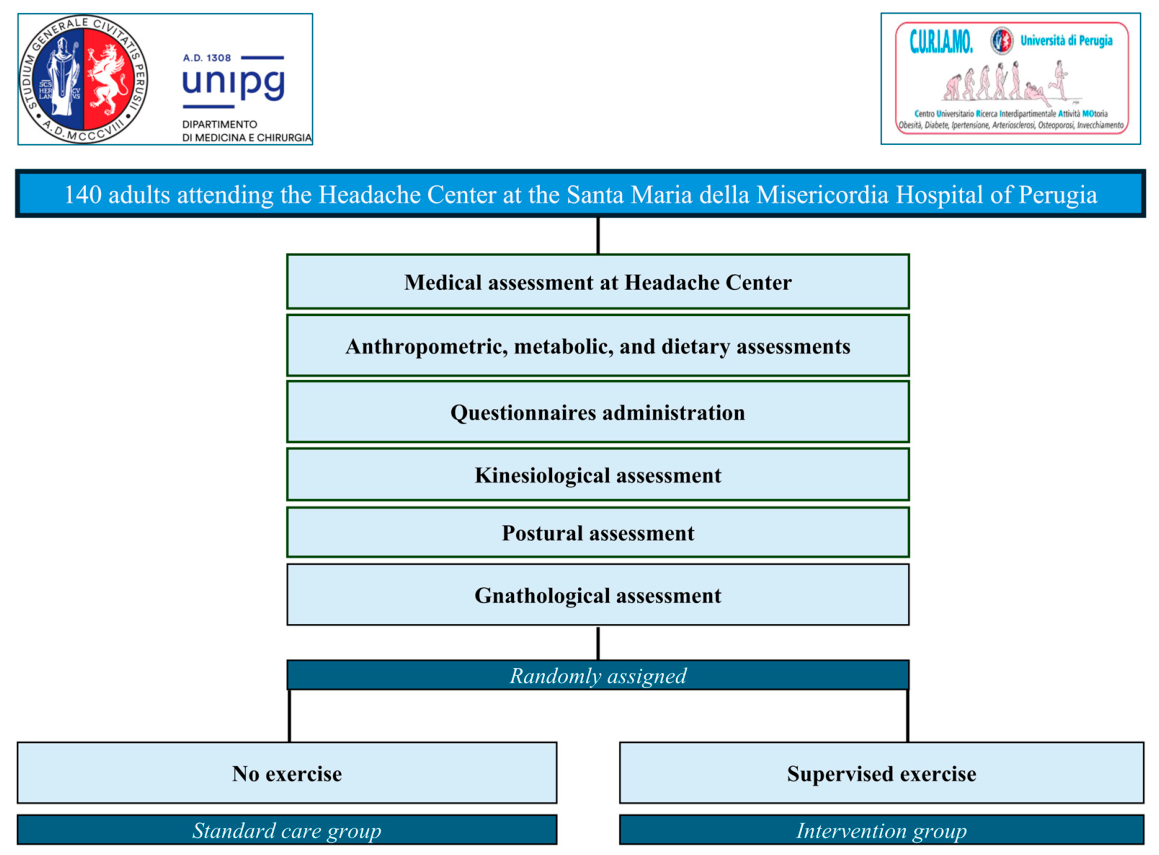
2.2.1. Phase 1: Enrollment and Medical Assessment
2.2.2. Phase 2: Integrated Evaluation
- Headache progression, disabilities, allodynia, fear of movement related to headaches, and overall quality of life.
- Sleep quality, duration, and circadian rhythms.
- Presence of psychopathological disorders.
- Levels of PA and sedentary behavior among participants, related to the last seven days.
- Gnathological aspects pertinent to AXIS 1 and AXIS 2.
2.2.3. Phase 3: EXE Intervention
2.2.4. Phase 4: The Follow-Up
2.3. Measures
2.3.1. Phase 1: Medical Assessment
2.3.2. Phase 2: Anthropometric, Metabolic, and Dietary Assessment
- Anthropometric and blood pressure measurements. Weight, body mass index (BMI), fat mass, lean mass, and basal metabolism will be assessed using an impedance platform (Tanita Body Composition Analyzer BC-420MA; Tokyo, Japan) or an air plethysmograph (BOD POD® Composition System; COSMED Srl, Albano Laziale, Rome, Italy). Height and waist circumference will be measured using a portable stadiometer (Seca 213, Seca GmbH & Co. KG, Hamburg, Germany) and an automatically retractable measuring tape (Seca 201, Seca GmbH & Co. KG, Hamburg, Germany), respectively. Systolic and diastolic blood pressures will be recorded using a digital column sphygmomanometer designed for professional auscultatory blood pressure measurement (UM-101, A&D Medical, Tokyo, Japan).
- Hematobiochemical values. We will evaluate several parameters, including glycemia, glycated hemoglobin (also referred to as glycosylated hemoglobin or HbA1c), lipid profile (which encompasses total cholesterol, HDL, LDL, and triglycerides), CRP, and medium- to long-term coronary heart disease (CHD) risk scores.
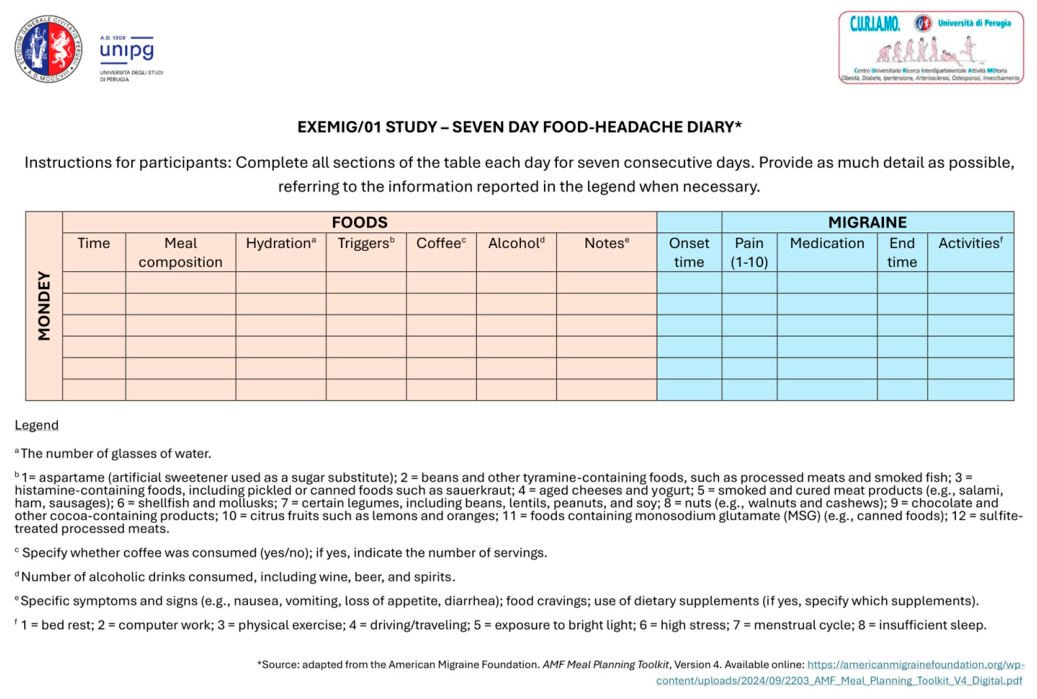
- Dietary information. Participants will be given a seven-day food and headache diary (adapted from the American Migraine Foundation model [55]), reported in Figure 2, in order to provide a detailed and structured overview of EH and their potential relationship with MIG episodes. Participants will report their usual meal composition and timing, hydration, caffeine and alcohol intake, specific notes such as symptoms and signs (e.g., nausea, vomiting, and taking supplements), and potential food triggers, in addition to the MIG attack’s characteristics (onset, intensity, duration, and medication use). Attention will be given to identify potential dietary triggers such as alcohol, caffeine, processed meats, and food containing additives like glutamate. EH that may contribute to MIG onset or exacerbation will also be considered, such as prolonged fasting, irregular mealtimes, and inadequate hydration. In line with the latest review [62], participants will receive a brochure with nutritional tips focused on the point described above, as part of SC.
2.3.3. Phase 3: Self-Administered (Online) and Researcher-Administered Questionnaire Values
- Headache progression, disabilities, allodynia, fear of movement related to headaches, and overall quality of life. Headache-related disability will be evaluated using the Migraine Disability Assessment Score (MIDAS) [64], and the Headache Impact Test-6 (HIT-6) scores [65]. The HIT-6 is a 6-item questionnaire used to assess the impact and severity of MIG.
- Measurement of Sleep Quality, Sleep Time, and Circadian Rhythms.
- Psychopathological measures. The following evaluation focuses on identifying psychopathological disorders, particularly anxious depressive symptoms, obsessive–compulsive disorder, and bipolar disorder.
- Levels of PA and sedentary behavior. The International Physical Activity Questionnaire (IPAQ) short form [83] assesses PA levels (expressed in MET-hours/week) by studying time spent in different types/intensity PA subgroups (moderate, vigorous, walking) and sedentary activities (<1.5 METs) over the past 7 days [83]. It is a self-report questionnaire whose responses are used to calculate metabolic equivalent task (MET) minutes per week, which allows classification of participants into low, moderate, or high PA levels.
- Gnathological aspects pertinent to AXIS 1 and AXIS 2. Gnathological assessment will be conducted according to the DC/TMD framework, evaluating both Axis I (physical and clinical features) and Axis II (psychosocial and behavioral factors).
- ASSE II: pain intensity and disability will be assessed using the GCPS Chronic Pain Scale (CGPS 2.0 [86]); changes in functional limitation will be assessed using the Jaw Functional Limitation Scale (JFLS-8) [87]; severity of depression will be measured using the Patient Health Questionnaire (PHQ-4) [88]; and the frequency and quantification of jaw overuse behaviors will be assessed with the Oral Behavior List (OBC) [89].
2.3.4. Phase 4: Assessment by a Kinesiologist
2.3.5. Phase 5: Postural Assessment
2.3.6. Phase 6: Comprehensive Gnathological Assessment
2.3.7. Follow-Up Assessment
2.4. Statistical Analysis
3. Expected Results
4. Discussion
5. Conclusions
Author Contributions
Funding
Institutional Review Board Statement
Informed Consent Statement
Data Availability Statement
Conflicts of Interest
Abbreviations
| 1-RM | One-Repetition Maximum |
| ASC | Allodynia Symptom Checklist |
| BDI-II | Beck Depression Inventory Version II |
| BMI | Body Mass Index |
| CHD | Coronary Heart Disease |
| DRS | Diet Risk Score |
| EF | Emotional Function |
| EH | Eating Habits |
| EXE | Exercise |
| GCPS | Graded Chronic Pain Scale |
| GSI | Global Severity Index |
| HDL | High-Density Lipoprotein |
| HRSD | Hamilton Rating Scale for Depression |
| ISI | Insomnia Severity Index |
| IPAQ | International Physical Activity Questionnaire |
| JFLS-8 | Jaw Functional Limitation Scale |
| LDL | Low-Density Lipoprotein |
| MEQ-SA | Morningness–Eveningness Questionnaire |
| MIDAS | Migraine Disability Assessment Score |
| MSQoL | Migraine-Specific Quality of Life |
| MRS | Mania Rating Scale |
| MOS | Medical Outcomes Study Sleep Scale |
| OBC | Oral Behavior Checklist |
| OCI-R | Obsessive-Compulsive Inventory–Revised |
| PA | Physical Activity |
| PGIC | Patient Global Impression of Change |
| PHQ-4 | Patient Health Questionnaire-4 |
| PSDI | Positive Symptom Distress Index |
| PST | Positive Symptom Total |
| RPE | Borg Rating of Perceived Exertion |
| RP | Role Function–Preventive |
| RR | Role Function–Restrictive |
| SF-36 | Short Form 36 Health Survey |
| STAI-Y | Spielberger State-Trait Anxiety Inventory |
| TG | Triglycerides |
| TMD | Temporomandibular Disorder |
| TPE | Therapeutic Patient Education |
| VAS | Visual Analog Scale |
| WHO-5 | World Health Organization-Five Well-Being Index |
References
- Peres, M.F.P.; Sacco, S.; Pozo-Rosich, P.; Tassorelli, C.; Ahmed, F.; Burstein, R.; Ashina, S.; Uluduz, D.; Husøy, A.K.; Steiner, T.J. Migraine is the most disabling neurological disease among children and adolescents, and second after stroke among adults: A call to action. Cephalalgia 2024, 44, 03331024241267309. [Google Scholar] [CrossRef]
- Dong, L.; Dong, W.; Jin, Y.; Jiang, Y.; Li, Z.; Yu, D. The Global Burden of Migraine: A 30-Year Trend Review and Future Projections by Age, Sex, Country, and Region. Pain Ther. 2025, 14, 297–315. [Google Scholar] [CrossRef]
- Wang, Q.; Luo, R.; Wen, Q. Rising trends in the burden of migraine among children and adolescents: A comprehensive analysis from 1990 to 2021 with future predictions. Front. Public Health 2025, 13, 1634098. [Google Scholar] [CrossRef] [PubMed]
- Zhao, X.; Zhou, J.; Zhang, X.; Ye, Z.; Lin, Z.; Yu, L.; Chen, W. Burden of migraine in Asia from 1990 to 2021 and its projection to 2040. Pain 2025, 166, 100–109. [Google Scholar] [CrossRef]
- Sacco, S.; Lampl, C.; Maassen van den Brink, A.; Caponnetto, V.; Braschinsky, M.; Ducros, A.; Little, P.; Pozo-Rosich, P.; Reuter, U.; Ruiz de la Torre, E.; et al. Burden and attitude to resistant and refractory migraine: A survey from the European Headache Federation with the endorsement of the European Migraine & Headache Alliance. J. Headache Pain 2021, 22, 39. [Google Scholar] [CrossRef]
- Ashina, M. Migraine. N. Engl. J. Med. 2021, 383, 1866–1876. [Google Scholar] [CrossRef]
- GBD 2021 Headache Collaborators. Global, regional, and national burden of migraine and tension-type headache, 1990–2021. Lancet Neurol. 2023, 22, 100–120.
- American Headache Society. The American Headache Society position statement on integrating new migraine treatments into clinical practice. Headache 2019, 59, 1–18. [Google Scholar]
- Demarquay, G.; Mawet, J.; Guégan-Massardier, E.; de Gaalon, S.; Donnet, A.; Giraud, P.; Lantéri-Minet, M.; Lucas, C.; Moisset, X.; Roos, C.; et al. Revised guidelines of the French headache society for the diagnosis and management of migraine in adults. Part 3: Non-pharmacological treatment. Rev. Neurol. 2021, 177, 753–759. [Google Scholar] [CrossRef] [PubMed]
- Schytz, H.W.; Amin, F.M.; Jensen, R.H.; Carlsen, L.; Maarbjerg, S.; Lund, N.; Aegidius, K.; Thomsen, L.L.; Bach, F.W.; Beier, D.; et al. Reference programme: Diagnosis and treatment of headache disorders and facial pain. Danish Headache Society, 3rd edition, 2020. J. Headache Pain 2021, 22, 22. [Google Scholar] [CrossRef] [PubMed] [PubMed Central]
- Bendtsen, L.; Evers, S.; Linde, M.; Mitsikostas, D.D.; Sandrini, G.; Schoenen, J. EFNS guideline on the treatment of tension-type headache: Report of an EFNS task force. Eur. J. Neurol. 2010, 17, 1318–1325. [Google Scholar] [CrossRef]
- Seng, E.K.; Martin, P.R.; Houle, T.T. Lifestyle factors and migraine. Lancet Neurol. 2022, 21, 911–921. [Google Scholar] [CrossRef]
- Ashina, M.; Buse, D.C.; Ashina, H.; Pozo-Rosich, P.; Peres, M.F.P.; Lee, M.J.; Terwindt, G.M.; Halker Singh, R.; Tassorelli, C.; Do, T.P.; et al. Migraine: Integrated approaches to clinical management and emerging treatments. Lancet 2021, 397, 1505–1518. [Google Scholar] [CrossRef] [PubMed]
- Agbetou, M.; Adoukonou, T. Lifestyle modifications for migraine management. Front. Neurol. 2022, 13, 719467. [Google Scholar] [CrossRef] [PubMed]
- Pardo, K.; Mermelstein, M.; Tsur, G.; Yust-Katz, S. Do patients with migraine and obesity receive different treatments? Insights from real-world data. Headache 2026, 66, 88–95. [Google Scholar] [CrossRef]
- Braca, S.; Russo, C.V.; Stornaiuolo, A.; Cretella, G.; Miele, A.; Giannini, C.; De Simone, R. Effectiveness and tolerability of liraglutide as add-on treatment in patients with obesity and high-frequency or chronic migraine: A prospective pilot study. Headache 2025, 65, 1831–1838. [Google Scholar] [CrossRef] [PubMed]
- Ogrezeanu, D.C.; Núñez-Cortés, R.; Salazar-Méndez, J.; Giovanardi, G.; Raggi, A.; Ferrari, M.D.; Louter, M.A.; Karsan, N.; Lambru, G. How much aerobic exercise is needed to reduce migraine? A dose–response meta-analysis of pain intensity and frequency. Headache 2026, 66, 40–52. [Google Scholar] [CrossRef]
- Łyżwa, J.; Strzępek, A.; Majchrzyk, A.; Chmurska, A.; Janaszek, A.; Frączek, K.; Smerdzyński, M.; Kałwa, N.; Kałuża, K.; Pater, M. Exercise as Medicine in Migraine: Clinical Outcomes, Mechanisms, and Long-Term Therapeutic Potential. J. Educ. Health Sport 2026, 90, 70223. [Google Scholar] [CrossRef]
- Varkey, E.; Varkey, E.; Cider, A.; Carlsson, J.; Linde, M. Exercise as migraine prophylaxis: A randomized study. Cephalalgia 2019, 39, 1418–1428. [Google Scholar]
- Behrouz, V.; Hakimi, E.; Mir, E. Impact of dietary patterns on migraine management: Mechanisms of action and recent literature insights. Brain Behav. 2025, 15, e70652. [Google Scholar] [CrossRef]
- Cavestro, C. Metabolic dysfunction and dietary interventions in migraine management: The role of insulin resistance and neuroinflammation—A narrative and scoping review. Brain Sci. 2025, 15, 474. [Google Scholar] [CrossRef]
- Di Lorenzo, C.; Coppola, G.; Bracaglia, M.; Di Lenola, D.; Evangelista, M.; Curto, M.; Grieco, G.S.; Pierelli, F. Diet and migraine: Emerging evidence and therapeutic implications. Nutrients 2023, 15, 1123. [Google Scholar] [CrossRef]
- Johnston, E.A.; Petersen, K.S.; Beasley, J.M.; Dawkins, N.S.; Venn, B.J.; Beck, K.L. Relative validity and reliability of a diet risk score (DRS) for clinical practice. BMJ Nutr. Prev. Health 2020, 3, 263–269. [Google Scholar] [CrossRef]
- Chen, T.-B.; Yang, C.-C.; Tsai, I.-J.; Yang, H.-W.; Hsu, Y.-C.; Chang, C.-M.; Yang, C.-P. Neuroimmunological effects of omega-3 fatty acids on migraine: A review. Front. Neurol. 2024, 15, 1366372. [Google Scholar] [CrossRef] [PubMed]
- Arab, A.; Khorvash, F.; Karimi, E.; Hadi, A.; Askari, G. Associations between adherence to Mediterranean dietary pattern and frequency, duration, and severity of migraine headache: A cross-sectional study. Nutr. Neurosci. 2023, 26, 1–10. [Google Scholar] [CrossRef]
- Poboży, T.; Janowski, K.; Michalak, K.; Grzywacz, A.; Kaczmarek, M.; Nowak, M. Food and migraine management: Dietary interventions in the pathophysiology and prevention of headaches—A narrative review. Nutrients 2025, 17, 3471. [Google Scholar] [CrossRef] [PubMed]
- Woldeamanuel, Y.W.; Oliveira, A.B.D. What is the efficacy of aerobic exercise versus strength training in the treatment of migraine? A systematic review and network meta-analysis of clinical trials. J. Headache Pain 2022, 23, 134. [Google Scholar] [CrossRef] [PubMed]
- Amons, A.L.; Castien, R.F.; De Hertogh, W.; Coppieters, M.W.; Staal, J.B.; Scholten-Peeters, G.G.M. Efficacy of cervical physical therapy on pain sensitivity in patients with migraine compared to no treatment, sham treatment or usual medical care: A systematic review and meta-analysis. J. Man. Manip. Ther. 2026, 18, 1–13. [Google Scholar] [CrossRef]
- Ashina, M. Targeting enkephalins and pituitary adenylate cyclase-activating polypeptide (PACAP) in migraine. Brain 2022, 145, 2619–2620. [Google Scholar] [CrossRef]
- Hanssen, H.; Minghetti, A.; Magon, S.; Hertig- Godeschalk, A.; Griep, L.; Bruggmann, P.; Seiler, S.; Schindler, C.; Schmidt-Trucksäss, A. Superior effects of high-intensity interval training vs moderate continuous training on arterial stiffness in episodic migraine: A randomized controlled trial. Front. Physiol. 2017, 8, 1086. [Google Scholar] [CrossRef]
- Chow, L.S.; Gerszten, R.E.; Taylor, J.M.; Pedersen, B.K.; van Praag, H.; Trappe, S.; Febbraio, M.A.; Smith, J.C.; Zierath, J.R.; Kiens, B. Exerkines in health, resilience and disease. Nat. Rev. Endocrinol. 2022, 18, 273–289. [Google Scholar] [CrossRef]
- Lillo Vizin, R.C.; Kopruszinski, C.M.; Redman, P.M.; Yang, J.; Horne, J.A.; Bender, R.; Roehrs, T.; Roth, T. Unraveling the directional relationship of sleep and migraine-like pain. Brain Commun. 2024, 6, fcae051. [Google Scholar] [CrossRef] [PubMed]
- Yakkaphan, P.; Elias, L.A.; Ravindranath, P.T.; Renton, T. Is painful temporomandibular disorder a real headache for many patients? Br. Dent. J. 2024, 236, 475–482. [Google Scholar] [CrossRef]
- Gazerani, P. Migraine and Diet. Nutrients 2020, 12, 1658. [Google Scholar] [CrossRef]
- Roldán-Ruiz, A.; Bertotti, G.; López-Moreno, M. Effects of Dietary Interventions in Patients With Migraine: A Systematic Review. Nutr. Rev. 2025, 83, e1815–e1827. [Google Scholar] [CrossRef]
- Reina-Varona, Á.; Madroñero-Miguel, B.; Fierro-Marrero, J.; Rodríguez-Alonso, M.; Gutiérrez-Camacho, J.; Martín-García, S.; López-Muñoz, F.; García-Moreno, S.; Sánchez-García, J.; Pérez-Sánchez, R. Efficacy of exercise interventions for migraine treatment. Headache 2024, 64, 873–900. [Google Scholar] [CrossRef] [PubMed]
- Nguyen, K.V.; Schytz, H.W. The evidence for diet as a treatment in migraine—A review. Nutrients 2024, 16, 3415. [Google Scholar] [CrossRef]
- Bhuvan, K.C.; Christopher, C.M. Optimizing headache management: Integrating primary care and patient-centered approaches. Pain Manag. 2026, 16, 257–260. [Google Scholar] [CrossRef]
- Golovacheva, V.A.; Golovacheva, A.A.; Parfenov, V.A. Optimizing the management of patients with chronic migraine and neck pain: A prospective randomized trial with long-term follow-up. Russ. Neurol. J. 2025, 29, 35–43. [Google Scholar] [CrossRef]
- Sujan, M.U.; Inbaraj, G.; Raghavendra, R.M.; Vadiraja, H.S.; Madhu, J.V.; Mulakur, S.; Kisan, R.; Adoor, M.; Raghuram, M.S.; Nandakumar, B.; et al. Yoga-based breathing and relaxation as adjunctive therapy for chronic migraine: A randomized controlled trial on clinical outcomes and autonomic regulation. Complement. Ther. Med. 2025, 95, 103291. [Google Scholar] [CrossRef] [PubMed]
- Tahzeeb, S.; Ashfaq, A.; Saquib, H.; Aslam, M.A.; Naqvi, S.B.Z.; Abdul Waheed, N.; Saeed, J. Prevalence of Temporomandibular Joint Disorders in Patients with Chronic Migraine. Insights J. Health Rehabil. 2025, 3, 396–402. [Google Scholar] [CrossRef]
- Hisham, S.; Manzour, A.; Fouad, M.M.; Amin, R.M.; Hatata, H.A.; Marzouk, D.A. Effectiveness of integrated education and relaxation program on migraine-related disability: A randomized controlled trial. Egypt. J. Neurol. Psychiatry Neurosurg. 2023, 59, 142. [Google Scholar] [CrossRef]
- Helmerson, B.; Sundholm, A.; Hedborg, K.; Waldenlind, E.; Kierkegaard, M.; Remahl, A.I.M.N. A pilot study of the feasibility of a Swedish multimodal group intervention for severe migraine—The migraine patient school. Cephalalgia Rep. 2021, 4, 25158163211020447. [Google Scholar] [CrossRef]
- Golovacheva, V.A.; Golovacheva, A.A. Treatment of chronic migraine and neck pain with cognitive-behavioral therapy. Case report. Cons. Medicum 2021, 23, 852–857. [Google Scholar] [CrossRef]
- De Almeida Tolentino, G.; Lima Florencio, L.; Ferreira Pinheiro, C.; Chaves, T.C.; Costa, L.O.P.; Fernández-de-Las-Peñas, C. Effects of combining manual therapy, neck muscle exercises, and therapeutic pain neuroscience education in patients with migraine: A study protocol for a randomized clinical trial. BMC Neurol. 2021, 21, 249. [Google Scholar] [CrossRef]
- Evans, W.E.; Raynor, H.A.; Howie, W.J.; Lipton, R.B.; Thomas, G.J.; Wing, R.R.; Pavlovic, J.; Farris, S.G.; Bond, D.S. Associations between lifestyle intervention-related changes in dietary targets and migraine headaches among women in the Women’s Health and Migraine (WHAM) randomized controlled trial. Obes. Sci. Pract. 2020, 6, 119–125. [Google Scholar] [CrossRef]
- Aguirrezabal, I.; Pérez de San Román, M.S.; Cobos-Campos, R.; Orruño, E.; Goicoechea, A.; Martínez de la Eranueva, R.; Arroniz, M.; Uzquiza, E. Effectiveness of a primary care-based group educational intervention in the management of patients with migraine: A randomized controlled trial. Prim. Health Care Res. Dev. 2019, 20, e155. [Google Scholar] [CrossRef] [PubMed] [PubMed Central]
- Cramer, H.; Hehlke, M.; Vasmer, J.; Schumann, D.; Dobos, G.; Lauche, R. Integrated care for migraine and chronic tension-type headaches: A prospective observational study. Complement. Ther. Clin. Pract. 2019, 36, 1–6. [Google Scholar] [CrossRef]
- Gaul, C.; Brömstrup, J.; Fritsche, G.; Diener, H.C.; Katsarava, Z. Evaluating integrated headache care: A one-year follow-up observational study in patients treated at the Essen headache centre. BMC Neurol. 2011, 11, 124. [Google Scholar] [CrossRef]
- Magnusson, J.E.; Riess, C.M.; Becker, W.J. Effectiveness of a Multidisciplinary Treatment Program for Chronic Daily Headache. Can. J. Neurol. Sci. 2004, 31, 72–79. [Google Scholar] [CrossRef]
- De Feo, P.; Fatone, C.; Burani, P.; Piana, N.; Pazzagli, C.; Battistini, D.; Capezzali, D.; Pippi, R.; Chipi, B.; Mazzeschi, C. An innovative model for changing the lifestyles of persons with obesity and/or Type 2 diabetes mellitus. J. Endocrinol. Investig. 2011, 34, e349–e354. [Google Scholar]
- Mazzeschi, C.; Pazzagli, C.; Laghezza, L.; Battistini, D.; Reginato, E.; Perrone, C.; Ranucci, C.; Fatone, C.; Pippi, R.; Giaimo, M.D.; et al. Description of the EUROBIS program: A combination of an Epode community-based and a clinical care intervention to improve the lifestyles of children and adolescents with overweight or obesity. BioMed Res. Int. 2014, 2014, 546262. [Google Scholar] [CrossRef] [PubMed] [PubMed Central]
- Headache Classification Committee of the International Headache Society (IHS). The International Classification of Headache Disorders, 3rd edition. Cephalalgia 2018, 38, 1–211. [Google Scholar] [CrossRef] [PubMed]
- World Health Organization. WHO Guidelines on Physical Activity and Sedentary Behaviour; World Health Organization: Geneva, Switzerland, 2020. Available online: https://pubmed.ncbi.nlm.nih.gov/33369898/ (accessed on 10 February 2026).
- American Migraine Foundation. AMF Meal Planning Toolkit, V4; American Migraine Foundation: New York, NY, USA, 2024; Available online: https://americanmigrainefoundation.org/wp-content/uploads/2024/09/2203_AMF_Meal_Planning_Toolkit_V4_Digital.pdf (accessed on 3 April 2026).
- Tu, Y.H.; Chang, C.M.; Yang, C.C.; Huang, Y.C.; Chen, T.B.; Tsai, I.J.; Yang, H.W.; Hsu, Y.C.; Chang, C.M.; Yang, C.P. Dietary patterns and migraine: Insights and impact. Nutrients 2025, 17, 669. [Google Scholar] [CrossRef]
- Simonetti, S. La Valutazione Posturale, Esame Chinesiologico Obiettivo, Strumentale, Funzionale e Neuromotorio; Futura Edizioni: Rome, Italy, 2021. [Google Scholar]
- Schiffman, E.; Ohrbach, R.; Truelove, E.; Look, J.; Anderson, G.; Goulet, J.P.; List, T.; Svensson, P.; Gonzalez, Y.; Lobbezoo, F.; et al. Diagnostic criteria for temporomandibular disorders (DC/TMD) for clinical and research applications. J. Oral Facial Pain Headache 2014, 28, 6–27. [Google Scholar] [CrossRef]
- Saracutu, O.I.; Pollis, M.; Cagidiaco, E.F.; Ferrari, M.; Manfredini, D. Repeatability of Teethan® indexes analysis of the masseter and anterior temporalis muscles during maximum clenching: A pilot study. Clin. Oral Investig. 2023, 27, 5309–5316. [Google Scholar] [CrossRef] [PubMed]
- Pittari, L.; Gamba, L.; Monticciolo, F.M.; De Sio, C.; Bianchi, S.; Marini, I.; Saggini, R.; Macchia, S.; Di Pietro, L.; Testa, M. Cervical range of motion analysis performed with an accelerometer: A study of intersession reliability for dental practice. Healthcare 2023, 11, 1428. [Google Scholar] [CrossRef] [PubMed]
- Wang, J.; Wang, R.; Zhao, P.; Han, T.; Cui, X.; He, Y.; Li, M. The reliability and validity of a novel wearable inertial sensor to measure the cervical proprioception. Med. Eng. Phys. 2024, 125, 104125. [Google Scholar] [CrossRef] [PubMed]
- Pippi, R.; Prete, D.; Alabiso, M.; Sarchielli, P. Nutrition and physical activity in an interdisciplinary approach to migraine: A narrative review. Nutrients 2025, 17, 3869. [Google Scholar] [CrossRef]
- Schröder, H.; Fitó, M.; Estruch, R.; Martínez-González, M.A.; Corella, D.; Salas-Salvadó, J.; Lamuela-Raventós, R.; Ros, E.; Salaverría, I.; Fiol, M.; et al. A short screener is valid for assessing Mediterranean diet adherence among older Spanish men and women. J. Nutr. 2011, 141, 1140–1145. [Google Scholar] [CrossRef] [PubMed]
- Stewart, W.F.; Lipton, R.B.; Kolodner, K.B.; Sawyer, J.; Lee, C.; Liberman, J.N. Validity of the Migraine Disability Assessment (MIDAS) score. Pain 2000, 88, 41–52. [Google Scholar] [CrossRef]
- Kosinski, M.; Bayliss, M.S.; Bjorner, J.B.; Ware, J.E., Jr.; Garber, W.H.; Batenhorst, A.; Cady, R.; Dahlöf, C.G.; Dowson, A.; Tepper, S. A six-item short-form survey for measuring headache impact: The HIT-6. Qual. Life Res. 2003, 12, 963–974. [Google Scholar] [CrossRef] [PubMed]
- Raggi, A.; Giovannetti, A.M.; Schiavolin, S.; Quintas, R.; Leonardi, M.; Curone, M.; Bussone, G. Validating the Migraine-Specific Quality of Life Questionnaire v2.1 in Italian patients. Qual. Life Res. 2014, 23, 1273–1277. [Google Scholar] [CrossRef]
- Lipton, R.B.; Bigal, M.E.; Ashina, S.; Burstein, R.; Silberstein, S.; Reed, M.L.; Serrano, D.; Stewart, W.F. Cutaneous allodynia in the migraine population. Ann. Neurol. 2008, 63, 148–158. [Google Scholar] [CrossRef] [PubMed]
- Tolentino, G.A.; Florencio, L.L.; Pinheiro-Araújo, C.F.; Carvalho, G.F.; Chaves, T.C.; Fernández-de-las-Peñas, C. Evaluation of maladaptive beliefs in patients with migraine. Braz. J. Phys. Ther. 2024, 28, 101093. [Google Scholar] [CrossRef]
- Hurst, H.; Bolton, J. Assessing the clinical significance of change scores recorded on subjective outcome measures. J. Manip. Physiol. Ther. 2004, 27, 26–35. [Google Scholar] [CrossRef] [PubMed]
- Apolone, G.; Mosconi, P. The Italian SF-36 Health Survey: Translation, validation and norming. J. Clin. Epidemiol. 1998, 51, 1025–1036. [Google Scholar] [CrossRef]
- Psychiatric Research Unit. The World Health Organization-Five Well-Being Index (WHO-5): Italian Translation; WHO: Geneva, Switzerland, 1998; Available online: https://cdn.who.int/media/docs/default-source/mental-health/five-well-being-index-(who-5)/who-5_italian.pdf (accessed on 10 February 2026).
- de Tommaso, M.; Delussi, M.; Vecchio, E.; Sciruicchio, V.; Invitto, S.; Livrea, P. Sleep features and central sensitization symptoms in primary headache patients. J. Headache Pain 2014, 15, 64. [Google Scholar] [CrossRef] [PubMed] [PubMed Central]
- Bastien, C.H.; Vallières, A.; Morin, C.M. Validation of the Insomnia Severity Index. Sleep. Med. 2001, 2, 297–307. [Google Scholar] [CrossRef]
- Horne, J.A.; Ostberg, O. A self-assessment questionnaire to determine morningness-eveningness. Int. J. Chronobiol. 1976, 4, 97–110. [Google Scholar]
- Gomez, R.; Stavropoulos, V.; Zarate, D.; Palikara, O. Symptom Checklist-90-Revised: A structural examination in relation to family functioning. PLoS ONE 2021, 16, e0247902. [Google Scholar] [CrossRef]
- Beck, A.T.; Steer, R.A.; Ball, R.; Ranieri, W. Comparison of Beck Depression Inventories-IA and -II. J. Pers. Assess. 1996, 67, 588–597. [Google Scholar] [CrossRef]
- Hamilton, M. A rating scale for depression. J. Neurol. Neurosurg. Psychiatry 1960, 23, 56–62. [Google Scholar] [CrossRef]
- Hamilton, M. The assessment of anxiety states by rating. Br. J. Med. Psychol. 1959, 32, 50–55. [Google Scholar] [CrossRef]
- Spielberger, C.D. Manual for the State-Trait Anxiety Inventory; Consulting Psychologists Press: Palo Alto, CA, USA, 1983. [Google Scholar]
- Young, R.C.; Biggs, J.T.; Ziegler, V.E.; Meyer, D.A. A rating scale for mania. Br. J. Psychiatry 1978, 133, 429–435. [Google Scholar] [CrossRef]
- Hirschfeld, R.M. The Mood Disorder Questionnaire. Prim. Care Companion J. Clin. Psychiatry 2002, 4, 9–11. [Google Scholar] [CrossRef]
- Foa, E.B.; Huppert, J.D.; Leiberg, S.; Langner, R.; Kichic, R.; Hajcak, G.; Salkovskis, P.M. The Obsessive-Compulsive Inventory: Short version. Psychol. Assess. 2002, 14, 485–496. [Google Scholar] [CrossRef]
- Mannocci, A.; Di Thiene, D.; Del Cimmuto, A.; Masala, D.; Boccia, A.; De Vito, E.; La Torre, G. International Physical Activity Questionnaire validation in an Italian sample. Ital. J. Public Health 2010, 7, 369–376. [Google Scholar] [CrossRef]
- Gonzalez, Y.M.; Schiffman, E.; Gordon, G.J.; Seago, B.; Truelove, E.L.; Slade, G.; Ohrbach, R. Development of a brief temporomandibular disorder pain screening questionnaire. J. Am. Dent. Assoc. 2011, 142, 1183–1191. [Google Scholar] [CrossRef]
- International RDC/TMD Consortium Network. Diagnostic Criteria for Temporomandibular Disorders: Assessment Instruments (Italian). 2014. Available online: https://www.aignatologia.it/web/app/uploads/2020/04/DC-TMD-Italian-Assessment-Instruments_2017-02-10-2.pdf (accessed on 10 February 2026).
- Von Korff, M. Assessment of chronic pain in epidemiological and health services research: Empirical bases and new directions. In Handbook of Pain Assessment, 3rd ed.; Turk, D.C., Melzack, R., Eds.; Guilford Press: New York, NY, USA, 2011; pp. 455–473. [Google Scholar]
- Ohrbach, R.; Larsson, P.; List, T. The Jaw Functional Limitation Scale: Development, reliability, and validity. J. Orofac. Pain 2008, 22, 219–230. [Google Scholar]
- Kroenke, K.; Spitzer, R.L.; Williams, J.B.; Löwe, B. An ultra-brief screening scale for anxiety and depression: The PHQ-4. Psychosomatics 2009, 50, 613–621. [Google Scholar]
- Ohrbach, R.; Markiewicz, M.R.; McCall, W.D. Waking-state oral parafunctional behaviors: Specificity and validity as assessed by electromyography. Eur. J. Oral Sci. 2008, 116, 438–444. [Google Scholar] [CrossRef]
- Karaca, A.; Demirci, N.; Yılmaz, V.; Çolak, M.; Erdem, M.; Şahin, S.; Öztürk, S. Validation of the ActiGraph wGT3X-BT Accelerometer for step counts at five different body locations in laboratory settings. Meas. Phys. Educ. Exerc. Sci. 2022, 26, 63–72. [Google Scholar] [CrossRef]
- ATS Committee. ATS statement: Guidelines for the six-minute walk test. Am. J. Respir. Crit. Care Med. 2002, 166, 111–117. [Google Scholar] [CrossRef]
- Brzycki, M. Strength testing—Predicting a one-rep max from reps-to-fatigue. J. Phys. Educ. Recreat. Danc. 1993, 64, 88–90. [Google Scholar] [CrossRef]
- Spijkerman, D.C.; Snijders, C.J.; Stijnen, T.; Lankhorst, G.J. Standardization of grip strength measurements. Scand. J. Rehabil. Med. 1991, 23, 203–206. [Google Scholar] [CrossRef]
- Borg, G. Perceived exertion as an indicator of somatic stress. Scand. J. Rehabil. Med. 1970, 2, 92–98. [Google Scholar] [CrossRef]
- Clarkson, H.M. Valutazione Cinesiologica: Articolarità, Test Muscolari e Valutazione Funzionale; Piccin Editore: Padua, Italy, 2023. [Google Scholar]
- Ferrario, A.; Monti, G.B.; Jelmoni, G.P. Traumatologia Dello Sport: Clinica e Terapia; Edi Ermes: Milan, Italy, 2005. [Google Scholar]
- Kendall, F.P.; Kendall McCreary, E. I Muscoli: Funzioni e Test con Postura e Dolore, 5th ed.; Verducci Editore: Rome, Italy, 2005. [Google Scholar]
- Krøll, L.S.; Hammarlund, C.S.; Linde, M.; Gard, G.; Jensen, R.H. Effects of aerobic exercise for persons with migraine and co-existing tension-type headache and neck pain. Cephalalgia 2018, 38, 1805–1816. [Google Scholar] [CrossRef]
- Lemstra, M.; Stewart, B.; Olszynski, W.P. Effectiveness of multidisciplinary intervention in migraine treatment. Headache 2002, 42, 845–854. [Google Scholar] [CrossRef]
- Treadwell, J.R.; Tsou, A.Y.; Rouse, B.; Ivlev, I.; Fricke, J.; Buse, D.C.; Powers, S.W.; Minen, M.; Szperka, C.L.; Mull, N.K. Behavioral interventions for migraine prevention: A systematic review and meta-analysis. Headache 2025, 65, 668–694. [Google Scholar] [CrossRef]
- Fernández-de-las-Peñas, C.; Alonso-Blanco, C.; de-la-Llave-Rincón, A.I.; Zarco-Moreno, P.; Galán-del-Río, F.; Svensson, P.; Arendt-Nielsen, L.; Jiménez-García, R.; Ortega-Santiago, R.; Fernández-Carnero, J. TMD and headache relationship. J. Oral Rehabil. 2012, 39, 893–901. [Google Scholar] [CrossRef]
- Sforza, M.; Mariani, I.; Fazzini, F.; Genovese, F.; Salibba, A.; Filippi, M.; Proserpio, P.; Galbiati, A.; Messina, R.; Ferini-Strambi, L. Interventions for Migraine and Sleep: A Systematic Review Exploring Their Bidirectional Association. Eur. J. Neurol. 2026, 33, e70420. [Google Scholar] [CrossRef] [PubMed] [PubMed Central]
- Jahromi, S.R.; Martami, F.; Morad Soltani, K.; Togha, M. Migraine and obesity: What is the real direction of their association? Expert. Rev. Neurother. 2023, 23, 75–84. [Google Scholar] [CrossRef]
- Bond, D.S.; Thomas, J.G.; Lipton, R.B.; Roth, J.; Pavlovic, J.M.; Rathier, L.; O’Leary, K.C.; Evans, E.W.; Wing, R.R. Behavioral Weight Loss Intervention for Migraine: A Randomized Controlled Trial. Obesity 2018, 26, 81–87. [Google Scholar] [CrossRef] [PubMed] [PubMed Central]
- Hunter, J.R.; Gordon, B.A.; Birdm, S.R.; Benson, A.C. Exercise Supervision Is Important for Cardiometabolic Health Improvements: A 16-Week Randomized Controlled Trial. J. Strength. Cond. Res. 2020, 34, 866–877. [Google Scholar] [CrossRef]
- Hafeez, S.; Rehman, S.S.U.; Riaz, S.; Hafeez, I.; Hafeez, Z.; Mumtaz, H. Impact of Exercise Manual Program on Biochemical Markers in Sedentary Prediabetic Patients: A Randomized Controlled Trial. Medicina 2025, 61, 190. [Google Scholar] [CrossRef]
- Burstein, R.; Yarnitsky, D.; Goor-Aryeh, I.; Ransil, B.J.; Bajwa, Z.H. An association between migraine and cutaneous allodynia. Ann. Neurol. 2000, 47, 614–624. [Google Scholar] [CrossRef]
- Santangelo, D.; Lobianco, C.; Burrafato, R.E.; Tosto, F.; Magro, G.; Pascarella, A. Dietary Modulation of Migraine: Metabolic, Neuroinflammatory and Microbiota-Mediated Mechanisms. J. Clin. Med. 2026, 15, 1476. [Google Scholar] [CrossRef]
- Ferrari, M.D.; Goadsby, P.J.; Burstein, R.; Kurth, T.; Ayata, C.; Charles, A.; Ashina, M.; van den Maagdenberg, A.M.J.M.; Dodick, D.W.; Diener, H.C.; et al. Migraine. Nat. Rev. Dis. Prim. 2022, 8, 2. [Google Scholar] [CrossRef]
- Young, W.B. The historical context of migraine stigma. Brain 2024, 147, 327–329. [Google Scholar] [CrossRef]
- Shapiro, R.E.; Nicholson, R.A.; Seng, E.K.; Buse, D.C.; Reed, M.L.; Zagar, A.J.; Ashina, S.; Muenzel, E.J.; Hutchinson, S.; Pearlman, E.M.; et al. Migraine-Related Stigma and Its Relationship to Disability, Interictal Burden, and Quality of Life: Results of the OVERCOME (US) Study. Neurology 2024, 102, e208074. [Google Scholar] [CrossRef] [PubMed] [PubMed Central]
- Casas-Limón, J.; Quintas, S.; López-Bravo, A.; Alpuente, A.; Andrés-López, A.; Castro-Sánchez, M.V.; Membrilla, J.A.; Morales-Hernández, C.; González-García, N.; Irimia, P. Unravelling Migraine Stigma: A Comprehensive Review of Its Impact and Strategies for Change. J. Clin. Med. 2024, 13, 5222. [Google Scholar] [CrossRef] [PubMed] [PubMed Central]
- Biagioli, V.; Mela, F.; Ferraro, P.; Villano, G.; Orsini, A.; Diana, M.C.; Striano, P.; Santangelo, A. The interplay between gut microbiota, adipose tissue, and migraine: A narrative review. Nutrients 2025, 17, 337. [Google Scholar] [CrossRef] [PubMed]
- Deodato, M.; Granato, A.; Del Frate, J.; Martini, M.; Manganotti, P. Differences in musculoskeletal dysfunctions and in postural alterations between chronic migraine and chronic tension type headache: A cross-sectional study. J. Bodyw. Mov. Ther. 2024, 37, 404–411. [Google Scholar] [CrossRef] [PubMed]
- Raudenská, J.; Macko, T.; Vodičková, Š.; Buse, D.C.; Javůrková, A. Anxiety Disorders, Anxious Symptomology and Related Behaviors Associated With Migraine: A Narrative Review of Prevalence and Impact. Curr. Pain Headache Rep. 2025, 29, 40. [Google Scholar] [CrossRef] [PubMed] [PubMed Central]
- Hindiyeh, N.A.; Zhang, N.; Farrar, M.; Banerjee, P.; Lombard, L.; Aurora, S.K. The role of diet and nutrition in migraine triggers and treatment: A systematic literature review. Headache 2020, 60, 1300–1316. [Google Scholar] [CrossRef]
- Alpay, K.; Ertas, M.; Orhan, E.K.; Ustay, D.K.; Lieners, C.; Baykan, B. Diet restriction in migraine, based on IgG against foods: A clinical double-blind, randomised, cross-over trial. Cephalalgia 2010, 30, 829–837. [Google Scholar] [CrossRef]
- Zhao, Z.; Yang, M.; Wan, F.; Ning, B.; Song, T.; Fu, J.; Zhang, L. Food-specific IgG-based elimination diet decreased IL-6, TNF-α, and CGRP and improved symptoms in adults with migraine. Front. Nutr. 2025, 12, 1720389. [Google Scholar] [CrossRef] [PubMed] [PubMed Central]
- Fila, M.; Chojnacki, C.; Chojnacki, J.; Blasiak, J. Nutrients to improve mitochondrial function to reduce brain energy deficit and oxidative stress in migraine. Nutrients 2021, 13, 4433. [Google Scholar] [CrossRef]
- Leale, I.; Di Stefano, V.; Torrente, A.; Alonge, P.; Monastero, R.; Roccella, M.; Brighina, F.; Giustino, V.; Battaglia, G. Telecoaching and Migraine: Digital Approach to Physical Activity in Migraine Management. A Scoping Review. J. Clin. Med. 2025, 14, 861. [Google Scholar] [CrossRef]
- Romero-Reyes, M.; Akerman, S.; Rapoport, A.M. Optimising combined treatment for migraine and temporomandibular disorders. Cephalalgia 2025, 45, 03331024251368882. [Google Scholar] [CrossRef] [PubMed]
- Chowdhury, D.; Garg, M.; Duggal, A. Combining therapeutic patient education with standard care for chronic migraine. Cephalalgia Rep. 2025, 8, 25158163251391185. [Google Scholar] [CrossRef]
- Correia, J.C.; Waqas, A.; Aujoulat, I.; Davies, M.J.; Assal, J.P.; Golay, A.; Pataky, Z. Evolution of Therapeutic Patient Education: A Systematic Scoping Review and Scientometric Analysis. Int. J. Environ. Res. Public Health 2022, 19, 6128. [Google Scholar] [CrossRef] [PubMed] [PubMed Central]
- Rogers, D.G.; Bond, D.S.; Bentley, J.P.; Smitherman, T.A. Objectively measured physical activity in migraine. Headache 2020, 60, 1930–1938. [Google Scholar] [CrossRef] [PubMed]
- Benatto, M.T.; Bevilaqua-Grossi, D.; Carvalho, G.F.; Bragatto, M.M.; Pinheiro, C.F.; Straceri Lodovichi, S.; Dach, F.; Fernández-de-Las-Peñas, C.; Florencio, L.L. Kinesiophobia Is Associated with Migraine. Pain Med. 2019, 20, 846–851. [Google Scholar] [CrossRef] [PubMed]
- Elmazny, A.; Magdy, R.; Hussein, M.; Ismaeel, A.Y.; Essmat, A.; Elbeltagy, K.E.; Hussein, S.M.M.; Hassan, N.S.; Elbehiry, N.M.; Osama, W.; et al. Migraine triggers and lifestyle modifications: An assessment of patients’ awareness and the role of healthcare providers in patient education. J. Headache Pain 2025, 26, 189. [Google Scholar] [CrossRef] [PubMed] [PubMed Central]
- Vandoni, M.; Codella, R.; Pippi, R.; Carnevale Pellino, V.; Lovecchio, N.; Marin, L.; Silvestri, D.; Gatti, A.; Magenes, V.C.; Regalbuto, C.; et al. Combatting Sedentary Behaviors by Delivering Remote Physical Exercise in Children and Adolescents with Obesity in the COVID-19 Era: A Narrative Review. Nutrients 2021, 13, 4459. [Google Scholar] [CrossRef]
- Pradelli, L.; Risoli, C.; Summer, E.; Bellini, G.; Mozzarelli, F.; Anderson, G.; Guasconi, M.; Artioli, G.; Bonacaro, A.; Sarli, L. Healthcare professional perspective on barriers and facilitators of multidisciplinary team working in acute care setting: A systematic review and meta-synthesis. BMJ Open 2025, 15, e087268. [Google Scholar] [CrossRef] [PubMed]



| Authors (Year) | Study Type | Specialists Involved |
|---|---|---|
| Golovacheva et al. (2025) [39] | Randomized Controlled Trial (RCT) | Neurologists, CBT specialists, and therapeutic gymnastics specialists. |
| Sujan et al. (2025) [40] | RCT | Yoga instructors (in addition to standard neurological care). |
| Tahzeeb et al. (2025) [41] | Cross-sectional Study | Recommends a team including Neurologists and Dentists/Gnathologists for TMD comorbidity. |
| Hisham et al. (2023) [42] | RCT | Neurologists, researchers, and experts in relaxation training |
| Helmerson et al. (2021) [43] | Pilot Study | Team for a group-based “migraine school” (like nurses, physiotherapists, psychologists). |
| Golovacheva et al. (2021) [44] | Case Report | Neurologist, CBT specialist. |
| De Almeida Tolentino et al. (2021) [45] | RCT | Neurologists, Physiotherapists (including those trained in pain neuroscience education), and researchers |
| Evans et al. (2020) [46] | RCT | Nutrition scientists, Neurologists, Psychologists, and obesity Specialists |
| Aguirrezabal et al. (2019) [47] | RCT | Family doctors and neurologists |
| Cramer et al. (2019) [48] | Prospective Observational Study | Team delivering conventional and complementary medicine (exact composition not specified). |
| Gaul et al. (2011) [49] | Observational Study | Neurologists, behavioral psychologists, physiotherapists, sports therapists, and specialist headache nurses. |
| Magnusson et al. (2004) [50] | Comparative Study | Neurologist, psychologist, occupational therapist, and physiotherapist. |
| Topic and Authors | Practical Recommendations for Patients with MIG |
|---|---|
| Mediterranean dietary pattern Behrouz V. et al. (2025); Di Lorenzo C. et al. (2023); Arab A. et al. (2023) [20,22,25] | Encourage adherence to a Mediterranean-style dietary pattern rich in vegetables, fruit, legumes, whole grains, nuts, extra-virgin olive oil, and fish; limit ultra-processed foods and excessive saturated fats. |
| Meal regularity Seng E.K. et al. (2022) [12] | Maintain regular meal timing and avoid prolonged fasting or skipping meals, especially breakfast. |
| Hydration Ashina M. (2021) [6] | Promote adequate daily hydration and regular fluid intake throughout the day. |
| Caffeine intake Seng E.K. et al. (2022); Gazerani P. (2020); Nguyen K.V. & Schytz H.W. (2024) [12,34,37] | Moderate and consistent caffeine intake is preferred; excessive consumption or abrupt withdrawal should be avoided. Patients should monitor individual sensitivity. |
| Alcohol consumption Poboży T. et al. (2025) [26] | Limit alcohol intake, particularly red wine and binge drinking; identify individual trigger patterns. |
| Ultra-processed foods Cavestro C. et al. (2025); Tu Y.H. et al. (2025) [21,56] | Reduce intake of ultra-processed foods, processed meats, and foods rich in additives when individually associated with attacks. |
| Trigger foods Poboży T. et al. (2025); Roldán-Ruiz A. et al. (2025); Nguyen K.V. & Schytz H.W. (2024) [26,35,37] | Encourage individualized identification of potential trigger foods using headache and food diaries rather than generalized restrictive diets. |
| Omega-3-rich foods Di Lorenzo C. et al. (2023); Chen, T.B. et al. (2024) [22,24] | Increase intake of omega-3-rich foods such as fatty fish, walnuts, and seeds. |
| Weight management Cavestro C. et al. (2025) [21] | Promote healthy body weight through sustainable dietary and physical activity interventions. |
| Behavioral self-management Demarquay G. et al. (2021); Hisham S. et al. (2023) [9,42] | Integrate dietary education with stress management, relaxation techniques, and therapeutic patient education. |
Disclaimer/Publisher’s Note: The statements, opinions and data contained in all publications are solely those of the individual author(s) and contributor(s) and not of MDPI and/or the editor(s). MDPI and/or the editor(s) disclaim responsibility for any injury to people or property resulting from any ideas, methods, instructions or products referred to in the content. |
© 2026 by the authors. Licensee MDPI, Basel, Switzerland. This article is an open access article distributed under the terms and conditions of the Creative Commons Attribution (CC BY) license.
Share and Cite
Pippi, R.; Prete, D.; Pagano, S.; Valenti, C.; Simonetti, S.; Prati, S.; Alabiso, M.; Settembrini, G.; Fruttini, D.; Sarchielli, P. Integrating Nutrition and Physical Activity into the EXEMIG/01 Interdisciplinary Model for Chronic and High-Frequency Migraine. Nutrients 2026, 18, 1893. https://doi.org/10.3390/nu18121893
Pippi R, Prete D, Pagano S, Valenti C, Simonetti S, Prati S, Alabiso M, Settembrini G, Fruttini D, Sarchielli P. Integrating Nutrition and Physical Activity into the EXEMIG/01 Interdisciplinary Model for Chronic and High-Frequency Migraine. Nutrients. 2026; 18(12):1893. https://doi.org/10.3390/nu18121893
Chicago/Turabian StylePippi, Roberto, Deborah Prete, Stefano Pagano, Chiara Valenti, Simonetta Simonetti, Sandro Prati, Marco Alabiso, Giulia Settembrini, Daniela Fruttini, and Paola Sarchielli. 2026. "Integrating Nutrition and Physical Activity into the EXEMIG/01 Interdisciplinary Model for Chronic and High-Frequency Migraine" Nutrients 18, no. 12: 1893. https://doi.org/10.3390/nu18121893
APA StylePippi, R., Prete, D., Pagano, S., Valenti, C., Simonetti, S., Prati, S., Alabiso, M., Settembrini, G., Fruttini, D., & Sarchielli, P. (2026). Integrating Nutrition and Physical Activity into the EXEMIG/01 Interdisciplinary Model for Chronic and High-Frequency Migraine. Nutrients, 18(12), 1893. https://doi.org/10.3390/nu18121893