n-3 Polyunsaturated Fatty Acids and Sarcopenia: Recent Advances and Mechanistic Research


Abstract
1. Introduction
2. Sarcopenia
2.1. Overview of Sarcopenia
2.2. Pathogenesis of Sarcopenia
2.2.1. Decreased MuSC Function
2.2.2. Chronic Inflammation and Oxidative Stress
2.2.3. Metabolic Disorders
2.3. Prevention and Treatment Strategies for Sarcopenia
2.3.1. Exercise Intervention
2.3.2. Nutritional Intervention
2.3.3. Combined Intervention
3. n-3 PUFAs
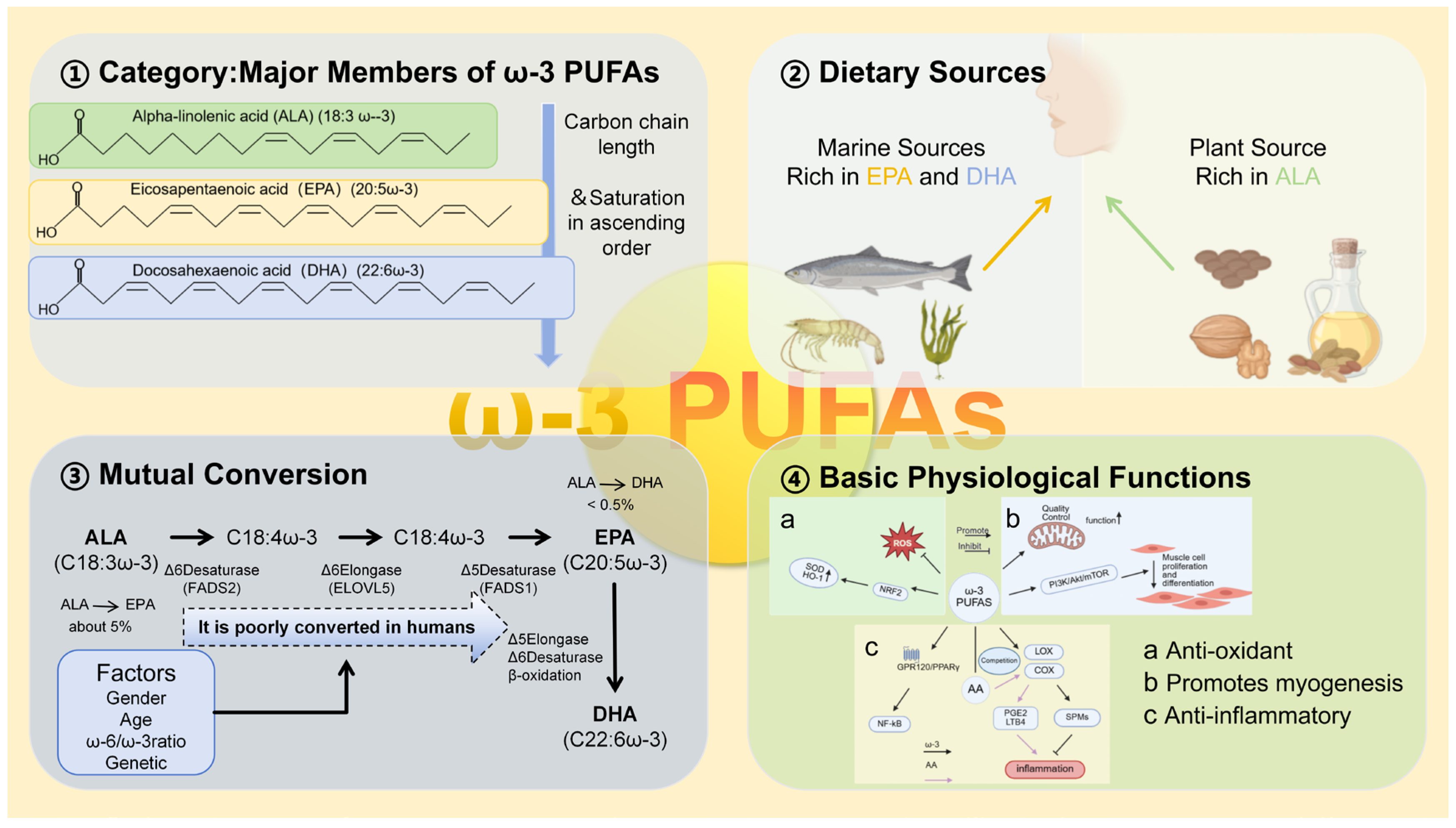
3.1. Differences in Chemical Structure and Function
3.2. Dietary Sources, Bioavailability, and Metabolism
3.3. Basic Physiological Functions
3.4. Dietary Reference Intakes and Current Population Intake
4. n-3 PUFAs Improve Sarcopenia
4.1. Mechanisms of n-3 PUFAs in Improving Sarcopenia
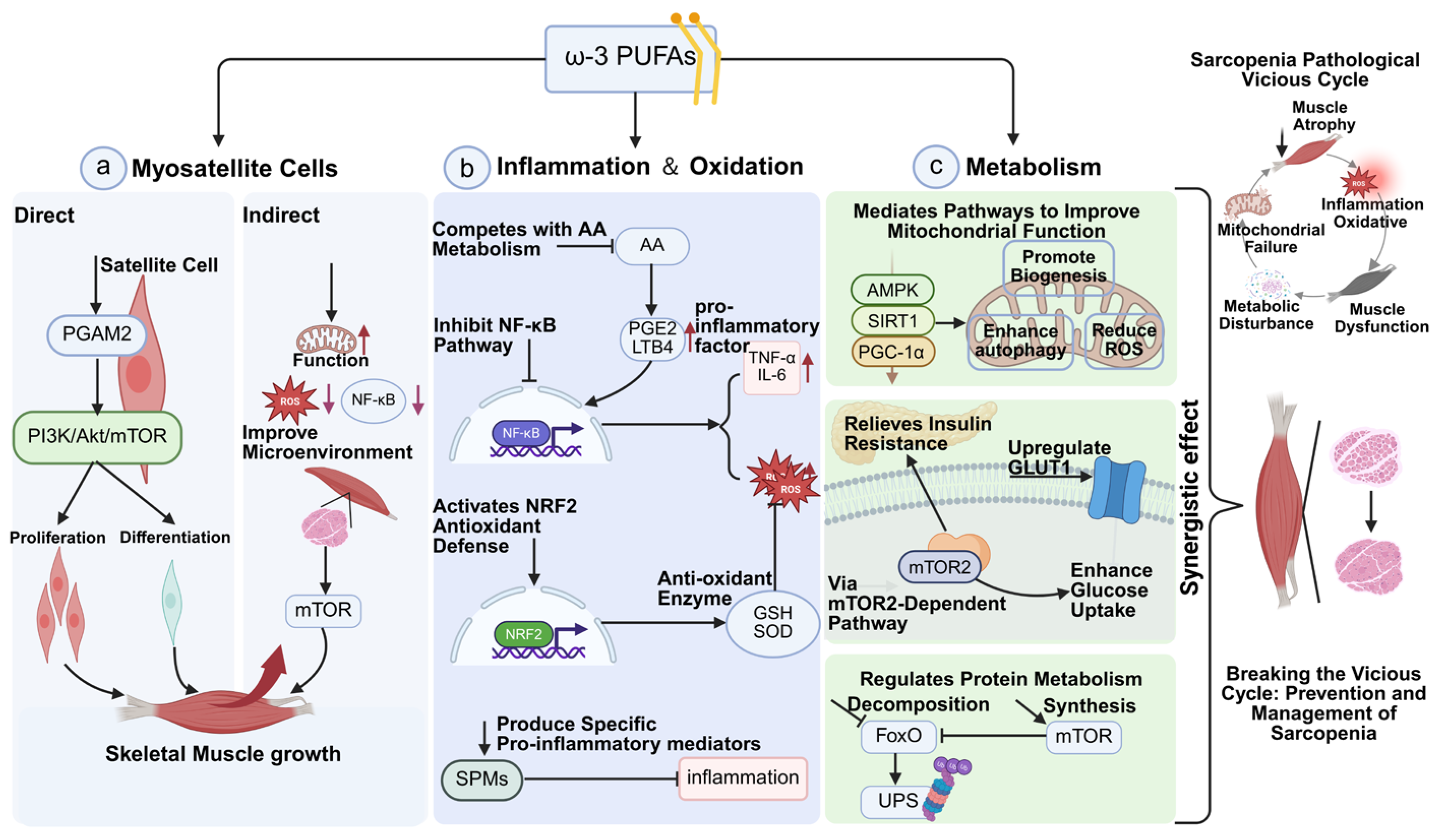
4.1.1. n-3 PUFAs Improve Sarcopenia by Improving MuSC Activity
Direct Regulatory Effects of n-3 PUFAs on MuSC Activity
Indirect Regulation of MuSC Activity by n-3 PUFAs
4.1.2. n-3 PUFAs Improve Sarcopenia by Inhibiting Chronic Inflammation and Oxidative Stress
n-3 PUFAs Directly Inhibit Inflammation and Oxidative Stress
Indirect Regulation of Inflammation and Oxidative Stress by n-3 PUFAs
4.1.3. n-3 PUFAs Improve Sarcopenia by Regulating Metabolic Disorders
Direct Regulation of Metabolic Dysfunction by n-3 PUFAs
n-3 PUFAs Indirectly Protect Muscle by Improving the Metabolic Environment
4.2. Clinical Evidence for n-3 PUFAs in Sarcopenia Prevention and Treatment
4.2.1. The Interventional Effects of n-3 PUFAs Supplementation on Muscle Mass and Function in Older Individuals
4.2.2. Potential Sources of Heterogeneity in Research
Differences in Intervention Protocols and Endpoint Definitions
Differences in Baseline Characteristics of Subjects
Individual Differences in n-3 PUFAs Metabolism
4.3. Research Hotspots and Future Directions of n-3 PUFAs in the Prevention and Treatment of Sarcopenia
4.3.1. SPMs
4.3.2. Organ Axis
4.3.3. Combined Interventions
4.3.4. Precision Nutrition
5. Limitations and Future Prospects
Author Contributions
Funding
Institutional Review Board Statement
Informed Consent Statement
Data Availability Statement
Conflicts of Interest
References
- Cruz-Jentoft, A.J.; Baeyens, J.P.; Bauer, J.M.; Boirie, Y.; Cederholm, T.; Landi, F.; Martin, F.C.; Michel, J.P.; Rolland, Y.; Schneider, S.M.; et al. Sarcopenia: European consensus on definition and diagnosis: Report of the European Working Group on Sarcopenia in Older People. Age Ageing 2010, 39, 412–423. [Google Scholar] [CrossRef] [Scilit]
- Fielding, R.A.; Vellas, B.; Evans, W.J.; Bhasin, S.; Morley, J.E.; Newman, A.B.; Abellan van Kan, G.; Andrieu, S.; Bauer, J.; Breuille, D.; et al. Sarcopenia: An undiagnosed condition in older adults. Current consensus definition: Prevalence, etiology, and consequences. International working group on sarcopenia. J. Am. Med. Dir. Assoc. 2011, 12, 249–256. [Google Scholar] [CrossRef] [Scilit] [PubMed]
- Studenski, S.A.; Peters, K.W.; Alley, D.E.; Cawthon, P.M.; McLean, R.R.; Harris, T.B.; Ferrucci, L.; Guralnik, J.M.; Fragala, M.S.; Kenny, A.M.; et al. The FNIH sarcopenia project: Rationale, study description, conference recommendations, and final estimates. J. Gerontol. A Biol. Sci. Med. Sci. 2014, 69, 547–558. [Google Scholar] [CrossRef] [Scilit]
- Anker, S.D.; Morley, J.E.; von Haehling, S. Welcome to the ICD-10 code for sarcopenia. J. Cachexia Sarcopenia Muscle 2016, 7, 512–514. [Google Scholar] [CrossRef] [Scilit]
- Schols, A.M.; Ferreira, I.M.; Franssen, F.M.; Gosker, H.R.; Janssens, W.; Muscaritoli, M.; Pison, C.; Rutten-van Mölken, M.; Slinde, F.; Steiner, M.C.; et al. Nutritional assessment and therapy in COPD: A European Respiratory Society statement. Eur. Respir. J. 2014, 44, 1504–1520. [Google Scholar] [CrossRef] [Scilit]
- Granic, A.; Sayer, A.A.; Cooper, R.; Robinson, S.M. Nutrition in the prevention and treatment of skeletal muscle ageing and sarcopenia: A single nutrient, a whole food and a whole diet approach. Proc. Nutr. Soc. 2025, 84, 340–355. [Google Scholar] [CrossRef] [Scilit]
- McKendry, J.; Coletta, G.; Nunes, E.A.; Lim, C.; Phillips, S.M. Mitigating disuse-induced skeletal muscle atrophy in ageing: Resistance exercise as a critical countermeasure. Exp. Physiol. 2024, 109, 1650–1662. [Google Scholar] [CrossRef] [Scilit]
- Huang, L.; Wang, Z.; Hu, Z.; Wang, D.; Luo, Y. Barriers and facilitators to resistance and aerobic exercise among older adults with sarcopenic obesity: A qualitative study. BMC Geriatr. 2026, 26, 209. [Google Scholar] [CrossRef] [Scilit]
- Tu, S.; Hao, X.; Xu, S.; Jin, X.; Liao, W.; Xia, H.; Wang, S.; Sun, G. Sarcopenia: Current Insights into Molecular Mechanisms, Diagnostics, and Emerging Interventional Approaches. Int. J. Mol. Sci. 2025, 26, 6740. [Google Scholar] [CrossRef] [Scilit]
- Robinson, S.; Granic, A.; Cruz-Jentoft, A.J.; Sayer, A.A. The role of nutrition in the prevention of sarcopenia. Am. J. Clin. Nutr. 2023, 118, 852–864. [Google Scholar] [CrossRef] [Scilit] [PubMed]
- Calder, P.C. Omega-3 fatty acids and inflammatory processes: From molecules to man. Biochem Soc. Trans. 2017, 45, 1105–1115. [Google Scholar] [CrossRef] [Scilit]
- Therdyothin, A.; Phiphopthatsanee, N.; Isanejad, M. The Effect of Omega-3 Fatty Acids on Sarcopenia: Mechanism of Action and Potential Efficacy. Mar. Drugs 2023, 21, 399. [Google Scholar] [CrossRef] [Scilit]
- Nilsson, M.I.; Mikhail, A.; Lan, L.; Di Carlo, A.; Hamilton, B.; Barnard, K.; Hettinga, B.P.; Hatcher, E.; Tarnopolsky, M.G.; Nederveen, J.P.; et al. A Five-Ingredient Nutritional Supplement and Home-Based Resistance Exercise Improve Lean Mass and Strength in Free-Living Elderly. Nutrients 2020, 12, 2391. [Google Scholar] [CrossRef] [Scilit]
- Xu, D.; Lu, Y.; Yang, X.; Pan, D.; Wang, Y.; Yin, S.; Wang, S.; Sun, G. Effects of fish oil-derived n-3 polyunsaturated fatty acid on body composition, muscle strength and physical performance in older people: A secondary analysis of a randomised, double-blind, placebo-controlled trial. Age Ageing 2022, 51, afac274. [Google Scholar] [CrossRef] [Scilit]
- Murphy, C.H.; Flanagan, E.M.; De Vito, G.; Susta, D.; Mitchelson, K.A.J.; de Marco Castro, E.; Senden, J.M.G.; Goessens, J.P.B.; Mikłosz, A.; Chabowski, A.; et al. Does supplementation with leucine-enriched protein alone and in combination with fish-oil-derived n-3 PUFA affect muscle mass, strength, physical performance, and muscle protein synthesis in well-nourished older adults? A randomized, double-blind, placebo-controlled trial. Am. J. Clin. Nutr. 2021, 113, 1411–1427. [Google Scholar] [CrossRef] [Scilit]
- Andrieu, S.; Guyonnet, S.; Coley, N.; Cantet, C.; Bonnefoy, M.; Bordes, S.; Bories, L.; Cufi, M.N.; Dantoine, T.; Dartigues, J.F.; et al. Effect of long-term omega 3 polyunsaturated fatty acid supplementation with or without multidomain intervention on cognitive function in elderly adults with memory complaints (MAPT): A randomised, placebo-controlled trial. Lancet Neurol. 2017, 16, 377–389. [Google Scholar] [CrossRef] [Scilit]
- Posnakidis, G.; Giannaki, C.D.; Mougios, V.; Pantzaris, M.; Patrikios, I.; Calder, P.C.; Sari, D.K.; Bogdanis, G.C.; Aphamis, G. Effects of Supplementation with Omega-3 and Omega-6 Polyunsaturated Fatty Acids and Antioxidant Vitamins, Combined with High-Intensity Functional Training, on Exercise Performance and Body Composition: A Randomized, Double-Blind, Placebo-Controlled Trial. Nutrients 2024, 16, 2914. [Google Scholar] [CrossRef] [Scilit] [PubMed]
- Yuan, S.; Larsson, S.C. Epidemiology of sarcopenia: Prevalence, risk factors, and consequences. Metab.-Clin. Exp. 2023, 144, 155533. [Google Scholar] [CrossRef] [Scilit] [PubMed]
- Cho, M.R.; Lee, S.; Song, S.K. A Review of Sarcopenia Pathophysiology, Diagnosis, Treatment and Future Direction. J. Korean Med. Sci. 2022, 37, e146. [Google Scholar] [CrossRef] [Scilit]
- Chen, L.K.; Hsiao, F.Y.; Akishita, M.; Assantachai, P.; Lee, W.J.; Lim, W.S.; Muangpaisan, W.; Kim, M.; Merchant, R.A.; Peng, L.N.; et al. A focus shift from sarcopenia to muscle health in the Asian Working Group for Sarcopenia 2025 Consensus Update. Nat. Aging 2025, 5, 2164–2175. [Google Scholar] [CrossRef] [Scilit] [PubMed]
- De Micheli, A.J.; Laurilliard, E.J.; Heinke, C.L.; Ravichandran, H.; Fraczek, P.; Soueid-Baumgarten, S.; De Vlaminck, I.; Elemento, O.; Cosgrove, B.D. Single-Cell Analysis of the Muscle Stem Cell Hierarchy Identifies Heterotypic Communication Signals Involved in Skeletal Muscle Regeneration. Cell Rep. 2020, 30, 3583–3595. [Google Scholar] [CrossRef] [Scilit]
- Sousa-Victor, P.; García-Prat, L.; Muñoz-Cánoves, P. Control of satellite cell function in muscle regeneration and its disruption in ageing. Nat. Rev. Mol. Cell Biol. 2022, 23, 204–226. [Google Scholar] [CrossRef] [Scilit]
- Relaix, F.; Bencze, M.; Borok, M.J.; Der Vartanian, A.; Gattazzo, F.; Mademtzoglou, D.; Perez-Diaz, S.; Prola, A.; Reyes-Fernandez, P.C.; Rotini, A.; et al. Perspectives on skeletal muscle stem cells. Nat. Commun. 2021, 12, 692. [Google Scholar] [CrossRef] [Scilit]
- Gioftsidi, S.; Relaix, F.; Mourikis, P. The Notch signaling network in muscle stem cells during development, homeostasis, and disease. Skelet. Muscle 2022, 12, 9. [Google Scholar] [CrossRef] [Scilit]
- Liu, L.; Charville, G.W.; Cheung, T.H.; Yoo, B.; Santos, P.J.; Schroeder, M.; Rando, T.A. Impaired Notch Signaling Leads to a Decrease in p53 Activity and Mitotic Catastrophe in Aged Muscle Stem Cells. Cell Stem Cell 2018, 23, 544–556.e544. [Google Scholar] [CrossRef] [Scilit] [PubMed]
- Chu, Y.; Yuan, X.; Tao, Y.; Yang, B.; Luo, J. Autophagy in Muscle Regeneration: Mechanisms, Targets, and Therapeutic Perspective. Int. J. Mol. Sci. 2024, 25, 11901. [Google Scholar] [CrossRef] [Scilit]
- Henze, H.; Jung, M.J.; Ahrens, H.E.; Steiner, S.; von Maltzahn, J. Skeletal muscle aging-Stem cells in the spotlight. Mech. Ageing Dev. 2020, 189, 111283. [Google Scholar] [CrossRef] [Scilit]
- Li, F.; Zhang, F.; Shi, H.; Xia, H.; Wei, X.; Liu, S.; Wu, T.; Li, Y.; Shu, F.; Chen, M.; et al. Aerobic exercise suppresses CCN2 secretion from senescent muscle stem cells and boosts muscle regeneration in aged mice. J. Cachexia Sarcopenia Muscle 2024, 15, 1733–1749. [Google Scholar] [CrossRef] [Scilit]
- Ma, L.; Meng, Y.; An, Y.; Han, P.; Zhang, C.; Yue, Y.; Wen, C.; Shi, X.; Jin, J.; Yang, G.; et al. Single-cell RNA-seq reveals novel interaction between muscle satellite cells and fibro-adipogenic progenitors mediated with FGF7 signalling. J. Cachexia Sarcopenia Muscle 2024, 15, 1388–1403. [Google Scholar] [CrossRef] [Scilit] [PubMed]
- Kanai, M.; Ganbaatar, B.; Endo, I.; Ohnishi, Y.; Teramachi, J.; Tenshin, H.; Higa, Y.; Hiasa, M.; Mitsui, Y.; Hara, T.; et al. Inflammatory Cytokine-Induced Muscle Atrophy and Weakness Can Be Ameliorated by an Inhibition of TGF-β-Activated Kinase-1. Int. J. Mol. Sci. 2024, 25, 5715. [Google Scholar] [CrossRef] [Scilit] [PubMed]
- Li, H.; Chen, C.; Liu, S.; Shi, Y.; Kuang, X.; Song, X.; Li, D.; Li, K. Differential Effects of n-3 and n-6 Polyunsaturated Fatty Acids on Placental and Embryonic Growth and Development in Diabetic Pregnant Mice. Nutrients 2024, 16, 1182. [Google Scholar] [CrossRef] [Scilit] [PubMed]
- Huang, N.; Kny, M.; Riediger, F.; Busch, K.; Schmidt, S.; Luft, F.C.; Slevogt, H.; Fielitz, J. Deletion of Nlrp3 protects from inflammation-induced skeletal muscle atrophy. Intensive Care Med. Exp. 2017, 5, 3. [Google Scholar] [CrossRef] [Scilit]
- Bano, G.; Trevisan, C.; Carraro, S.; Solmi, M.; Luchini, C.; Stubbs, B.; Manzato, E.; Sergi, G.; Veronese, N. Inflammation and sarcopenia: A systematic review and meta-analysis. Maturitas 2017, 96, 10–15. [Google Scholar] [CrossRef] [Scilit]
- Xu, H.; Brown, J.L.; Bhaskaran, S.; Van Remmen, H. Reactive oxygen species in the pathogenesis of sarcopenia. Free Radic. Biol. Med. 2025, 227, 446–458. [Google Scholar] [CrossRef] [Scilit]
- Yu, M.; Zhao, R.; Ge, L.; Yu, T.; Shen, H.; Dai, C.; Wang, H. Immune-mediated interactions between sarcopenia and atherosclerosis in aging. Immun. Ageing 2025, 22, 43. [Google Scholar] [CrossRef] [Scilit] [PubMed]
- Kim, M.B.; Lee, H.; Kang, J.; Kim, B.; Hwang, J.K. Protective Effects of Quinic Acid Against Disuse-Induced Skeletal Muscle Atrophy via Regulation of Inflammation and Oxidative Stress. Foods 2025, 14, 3833. [Google Scholar] [CrossRef] [Scilit]
- Nishikawa, H.; Asai, A.; Fukunishi, S.; Nishiguchi, S.; Higuchi, K. Metabolic Syndrome and Sarcopenia. Nutrients 2021, 13, 3519. [Google Scholar] [CrossRef] [Scilit] [PubMed]
- Al Saedi, A.; Debruin, D.A.; Hayes, A.; Hamrick, M. Lipid metabolism in sarcopenia. Bone 2022, 164, 116539. [Google Scholar] [CrossRef] [Scilit]
- Liu, D.; Wang, S.; Liu, S.; Wang, Q.; Che, X.; Wu, G. Frontiers in sarcopenia: Advancements in diagnostics, molecular mechanisms, and therapeutic strategies. Mol. Asp. Med. 2024, 97, 101270. [Google Scholar] [CrossRef] [Scilit]
- Xenos, D.; Mancinetti, F.; Mecocci, P.; Boccardi, V. The muscle-brain axis in type 2 diabetes: Molecular pathways linking sarcopenia and cognitive decline. Ageing Res. Rev. 2026, 113, 102955. [Google Scholar] [CrossRef] [Scilit]
- Coggins, C.; Patel, S.; Nigam, S.; Rai, V. Hormonal changes during aging and their effects on quality of life. Explor. Endocr. Metab. Dis. 2025, 2, 101447. [Google Scholar] [CrossRef] [Scilit]
- Cannataro, R.; Carbone, L.; Petro, J.L.; Cione, E.; Vargas, S.; Angulo, H.; Forero, D.A.; Odriozola-Martínez, A.; Kreider, R.B.; Bonilla, D.A. Sarcopenia: Etiology, Nutritional Approaches, and miRNAs. Int. J. Mol. Sci. 2021, 22, 9724. [Google Scholar] [CrossRef] [Scilit]
- Jude, M.; Rajasingh, S.; Alway, S.; Rajasingh, J. Molecular basis of muscle wasting and emerging therapeutic strategies targeting degenerative muscle disorders. Exp. Cell Res. 2026, 457, 114969. [Google Scholar] [CrossRef] [Scilit]
- Damluji, A.A.; Alfaraidhy, M.; AlHajri, N.; Rohant, N.N.; Kumar, M.; Al Malouf, C.; Bahrainy, S.; Ji Kwak, M.; Batchelor, W.B.; Forman, D.E.; et al. Sarcopenia and Cardiovascular Diseases. Circulation 2023, 147, 1534–1553. [Google Scholar] [CrossRef] [Scilit] [PubMed]
- Rolland, Y.; Dray, C.; Vellas, B.; Barreto, P.S. Current and investigational medications for the treatment of sarcopenia. Metabolism 2023, 149, 155597. [Google Scholar] [CrossRef] [Scilit]
- Nederveen, J.P.; Nilsson, M.I.; Tarnopolsky, M.A. Multi-ingredient supplementation for combating sarcopenia and polymorbidity. Curr. Opin. Clin. Nutr. Metab. Care 2025, 28, 452–462. [Google Scholar] [CrossRef] [Scilit]
- Fallon, C.M.; Cunningham, C.G.; Horner, K.; Corish, C.A. Oral nutritional supplement combined with an online resistance training programme to improve physical function and nutritional status in older adults receiving home care and at risk of sarcopenia: Protocol for the randomised controlled POWER trial. HRB Open Res. 2025, 8, 41. [Google Scholar] [CrossRef] [Scilit]
- Sun, R.; Wan, J.; Tang, J.; Deng, Y.; Zhang, M.; Liu, C.; Li, J.; Zhang, Q. Effectiveness of resistance training on body composition, muscle strength, and biomarker in sarcopenic older adults: A meta-analysis of randomized controlled trials. Arch. Gerontol. Geriatr. 2025, 128, 105595. [Google Scholar] [CrossRef] [Scilit]
- Zhao, H.; Cheng, R.; Song, G.; Teng, J.; Shen, S.; Fu, X.; Yan, Y.; Liu, C. The Effect of Resistance Training on the Rehabilitation of Elderly Patients with Sarcopenia: A Meta-Analysis. Int. J. Env. Res. Public Health 2022, 19, 15491. [Google Scholar] [CrossRef] [Scilit]
- Kim, D.; Morikawa, S.; Miyawaki, M.; Nakagawa, T.; Ogawa, S.; Kase, Y. Sarcopenia prevention in older adults: Effectiveness and limitations of non-pharmacological interventions. Osteoporos. Sarcopenia 2025, 11, 65–72. [Google Scholar] [CrossRef] [Scilit] [PubMed]
- Shen, Y.; Shi, Q.; Nong, K.; Li, S.; Yue, J.; Huang, J.; Dong, B.; Beauchamp, M.; Hao, Q. Exercise for sarcopenia in older people: A systematic review and network meta-analysis. J. Cachexia Sarcopenia Muscle 2023, 14, 1199–1211. [Google Scholar] [CrossRef] [Scilit]
- Yan, R.; Jia, S.; Lu, D.; Song, W.; Zhang, W.; Sun, J.; Li, D. Comparative Effectiveness of Exercise and Protein-Based Interventions on Muscle Strength, Mass, and Function in Sarcopenia: A Systematic Review and Network Meta-Analysis. J. Nutr. Health Aging 2025, 29, 100718. [Google Scholar] [CrossRef] [Scilit] [PubMed]
- Tessier, A.J.; Chevalier, S. An Update on Protein, Leucine, Omega-3 Fatty Acids, and Vitamin D in the Prevention and Treatment of Sarcopenia and Functional Decline. Nutrients 2018, 10, 1099. [Google Scholar] [CrossRef] [Scilit]
- Bauer, J.; Biolo, G.; Cederholm, T.; Cesari, M.; Cruz-Jentoft, A.J.; Morley, J.E.; Phillips, S.; Sieber, C.; Stehle, P.; Teta, D.; et al. Evidence-based recommendations for optimal dietary protein intake in older people: A position paper from the PROT-AGE Study Group. J. Am. Med. Dir. Assoc. 2013, 14, 542–559. [Google Scholar] [CrossRef] [Scilit] [PubMed]
- Hettiarachchi, J.; Reijnierse, E.M.; Kew, N.; Fetterplace, K.; Tan, S.Y.; Maier, A.B. The effect of dose, frequency, and timing of protein supplementation on muscle mass in older adults: A systematic review and meta-analysis. Ageing Res. Rev. 2024, 99, 102325. [Google Scholar] [CrossRef] [Scilit]
- Kreider, R.B.; Stout, J.R. Creatine in Health and Disease. Nutrients 2021, 13, 447. [Google Scholar] [CrossRef] [Scilit]
- Lin, H.; Ke, Y.; Mobin, M.; Ul Ain, H.Q.; Jawed, I.; Imam, W.; Tufail, M.; Zahid, K.; Bin Gulzar, A.H.; Al-Emam, A. Synergistic Effects of Vitamin D Supplementation and Resistance Training on Insulin-Like Growth Factor 1 and Muscle Health: A Systematic Review. Am. J. Phys. Med. Rehabil. 2026, 105, 404–411. [Google Scholar] [CrossRef] [Scilit]
- Fuentes-Barría, H.; Aguilera-Eguía, R.; Angarita-Davila, L.; Rojas-Gómez, D.; Alarcón-Rivera, M.; López-Soto, O.; Maureira-Sánchez, J.; Bermúdez, V.; Rivera-Porras, D.; Contreras-Velázquez, J.C. Vitamin D and Sarcopenia: Implications for Muscle Health. Biomedicines 2025, 13, 1863. [Google Scholar] [CrossRef] [Scilit] [PubMed]
- Lalia, A.Z.; Dasari, S.; Robinson, M.M.; Abid, H.; Morse, D.M.; Klaus, K.A.; Lanza, I.R. Influence of omega-3 fatty acids on skeletal muscle protein metabolism and mitochondrial bioenergetics in older adults. Aging 2017, 9, 1096–1129. [Google Scholar] [CrossRef] [Scilit]
- Dupont, J.; Dedeyne, L.; Dalle, S.; Koppo, K.; Gielen, E. The role of omega-3 in the prevention and treatment of sarcopenia. Aging Clin. Exp. Res. 2019, 31, 825–836. [Google Scholar] [CrossRef] [Scilit]
- Tseng, P.T.; Zeng, B.Y.; Zeng, B.S.; Liao, Y.C.; Stubbs, B.; Kuo, J.S.; Sun, C.K.; Cheng, Y.S.; Chen, Y.W.; Chen, T.Y.; et al. Omega-3 polyunsaturated fatty acids in sarcopenia management: A network meta-analysis of randomized controlled trials. Ageing Res. Rev. 2023, 90, 102014. [Google Scholar] [CrossRef] [Scilit]
- Eggimann, A.K.; de Godoi Rezende Costa Molino, C.; Freystaetter, G.; Vellas, B.; Kanis, J.A.; Rizzoli, R.; Kressig, R.W.; Armbrecht, G.; Da Silva, J.A.P.; Dawson-Hughes, B.; et al. Effect of vitamin D, omega-3 supplementation, or a home exercise program on muscle mass and sarcopenia: DO-HEALTH trial. J. Am. Geriatr. Soc. 2025, 73, 1049–1059. [Google Scholar] [CrossRef] [Scilit]
- Dam, D.L.; Christensen, J.A.; Olsen, P.Ø.; Wilson, J.J.; Tully, M.A.; Buhl, S.F.; Caserotti, P. Impact of Omega-3 Fatty Acids Supplementation Combined with Resistance Training on Muscle Mass, Neuromuscular and Physical Function in Older Adults: A Systematic Review and Meta-Analysis of Randomized Clinical Trials. J. Ageing Longev. 2025, 5, 4. [Google Scholar] [CrossRef] [Scilit]
- Su, H.; Zhou, H.; Gong, Y.; Xiang, S.; Shao, W.; Zhao, X.; Ling, H.; Chen, G.; Tong, P.; Li, J. The effects of β-hydroxy-β-methylbutyrate or HMB-rich nutritional supplements on sarcopenia patients: A systematic review and meta-analysis. Front. Med. 2024, 11, 1348212. [Google Scholar] [CrossRef] [Scilit]
- Batitucci, G.; Abud, G.F.; Ortiz, G.U.; Belisário, L.F.; Travieso, S.G.; de Lima Viliod, M.C.; Venturini, A.C.R.; de Freitas, E.C. Sarcobesity: New paradigms for healthy aging related to taurine supplementation, gut microbiota and exercise. Ageing Res. Rev. 2024, 101, 102460. [Google Scholar] [CrossRef] [Scilit]
- Bodur, M.; Yilmaz, B.; Ağagündüz, D.; Ozogul, Y. Immunomodulatory Effects of Omega-3 Fatty Acids: Mechanistic Insights and Health Implications. Mol. Nutr. Food Res. 2025, 69, e202400752. [Google Scholar] [CrossRef] [Scilit] [PubMed]
- Wang, B.; Liu, P.; Gao, X.; Yang, F.; Sun, J.; He, F. Exploring the ameliorative effects of omega-3 fatty acid supplementation on maternal behavioral abnormalities induced by prenatal chronic restraint stress. Behav. Brain Res. 2025, 483, 115458. [Google Scholar] [CrossRef] [Scilit]
- Sherratt, S.C.R.; Libby, P.; Budoff, M.J.; Bhatt, D.L.; Mason, R.P. Role of Omega-3 Fatty Acids in Cardiovascular Disease: The Debate Continues. Curr. Atheroscler. Rep. 2023, 25, 1–17. [Google Scholar] [CrossRef] [Scilit]
- Mason, R.P.; Jacob, R.F.; Shrivastava, S.; Sherratt, S.C.R.; Chattopadhyay, A. Eicosapentaenoic acid reduces membrane fluidity, inhibits cholesterol domain formation, and normalizes bilayer width in atherosclerotic-like model membranes. Biochim Biophys. Acta 2016, 1858, 3131–3140. [Google Scholar] [CrossRef] [Scilit]
- Jacobs, M.L.; Faizi, H.A.; Peruzzi, J.A.; Vlahovska, P.M.; Kamat, N.P. EPA and DHA differentially modulate membrane elasticity in the presence of cholesterol. Biophys. J. 2021, 120, 2317–2329. [Google Scholar] [CrossRef] [Scilit] [PubMed]
- Bhargava, R.; Pandey, K.; Ranjan, S.; Mehta, B.; Malik, A. Omega-3 fatty acids supplements for dry eye—Are they effective or ineffective? Indian J. Ophthalmol. 2023, 71, 1619–1625. [Google Scholar] [CrossRef] [Scilit]
- Innis, S.M. Dietary (n-3) fatty acids and brain development. J. Nutr. 2007, 137, 855–859. [Google Scholar] [CrossRef] [Scilit]
- Dyall, S.C. Long-chain omega-3 fatty acids and the brain: A review of the independent and shared effects of EPA, DPA and DHA. Front. Aging Neurosci. 2015, 7, 52. [Google Scholar] [CrossRef] [Scilit]
- Vergara Nieto Á, A.; Díaz, A.H.; Hernández Millán, M.; Sagredo, D. Molecular Features, Effective Sources, and Physiological Effects of Omega-3 Unsaturated Fatty Acids on Cardiovascular, Neurological, and Muscular Health, and Clinical Relevance for Several Conditions: A Narrative Review. Nutr. Rev. 2025, 83, nuaf201. [Google Scholar] [CrossRef] [Scilit]
- Sharma, T.; Das, N.; Mehta Kakkar, P.; Mohapatra, R.K.; Pamidimarri, S.; Singh, R.K.; Kumar, M.; Guldhe, A.; Nayak, M. Microalgae as an emerging alternative raw material of docosahexaenoic acid and eicosapentaenoic acid—A review. Crit. Rev. Food Sci. Nutr. 2025, 65, 7883–7902. [Google Scholar] [CrossRef] [Scilit]
- Lewis, E.; Steenson, S.; Haslam, R.P.; McDonald, E.; Sharman, M.; Traka, M.; Stanton, A.; Napier, J.A.; Sweeting, A.; Saleh, R.N.M.; et al. Sustainable and available sources of omega-3 fatty acids for health: Are the current dietary recommendations, food sources and legislation fit for purpose? Nutr. Res. Rev. 2025, 38, 843–858. [Google Scholar] [CrossRef] [Scilit]
- Alijani, S.; Hahn, A.; Harris, W.S.; Schuchardt, J.P. Bioavailability of EPA and DHA in humans—A comprehensive review. Prog. Lipid Res. 2025, 97, 101318. [Google Scholar] [CrossRef] [Scilit] [PubMed]
- Pham, T.P.; Hoang, T.V.; Cao, P.T.; Le, T.T.; Ho, V.T.; Vu, T.M.; Le, T.H.; Pham, H.T.; Tran, T.T.; Mafruhah, O.R.; et al. Comparison of Omega-3 polyunsaturated fatty acids bioavailability in fish oil and krill oil: Network Meta-analyses. Food Chem. X 2024, 24, 101880. [Google Scholar] [CrossRef] [Scilit]
- Plourde, M.; Cunnane, S.C. Extremely limited synthesis of long chain polyunsaturates in adults: Implications for their dietary essentiality and use as supplements. Appl. Physiol. Nutr. Metab. 2007, 32, 619–634. [Google Scholar] [CrossRef] [Scilit] [PubMed]
- Takic, M.; Pokimica, B.; Petrovic-Oggiano, G.; Popovic, T. Effects of Dietary α-Linolenic Acid Treatment and the Efficiency of Its Conversion to Eicosapentaenoic and Docosahexaenoic Acids in Obesity and Related Diseases. Molecules 2022, 27, 4471. [Google Scholar] [CrossRef] [Scilit] [PubMed]
- Williams, C.M.; Burdge, G. Long-chain n-3 PUFA: Plant v. marine sources. Proc. Nutr. Soc. 2006, 65, 42–50. [Google Scholar] [CrossRef] [Scilit]
- Burdge, G.C.; Finnegan, Y.E.; Minihane, A.M.; Williams, C.M.; Wootton, S.A. Effect of altered dietary n-3 fatty acid intake upon plasma lipid fatty acid composition, conversion of [13C]alpha-linolenic acid to longer-chain fatty acids and partitioning towards beta-oxidation in older men. Br. J. Nutr. 2003, 90, 311–321. [Google Scholar] [CrossRef] [Scilit] [PubMed]
- Loukil, I.; Mutch, D.M.; Plourde, M. Genetic association between FADS and ELOVL polymorphisms and the circulating levels of EPA/DHA in humans: A scoping review. Genes Nutr. 2024, 19, 11. [Google Scholar] [CrossRef] [Scilit]
- Wang, L.; Cheng, C.; Yu, X.; Guo, L.; Wan, X.; Xu, J.; Xiang, X.; Yang, J.; Kang, J.; Deng, Q. Conversion of α-linolenic acid into n-3 long-chain polyunsaturated fatty acids: Bioavailability and dietary regulation. Crit. Rev. Food Sci. Nutr. 2025, 65, 6470–6502. [Google Scholar] [CrossRef] [Scilit]
- Mariamenatu, A.H.; Abdu, E.M. Overconsumption of Omega-6 Polyunsaturated Fatty Acids (PUFAs) versus Deficiency of Omega-3 PUFAs in Modern-Day Diets: The Disturbing Factor for Their "Balanced Antagonistic Metabolic Functions" in the Human Body. J. Lipids 2021, 2021, 8848161. [Google Scholar] [CrossRef] [Scilit]
- Taheri, M.; Chilibeck, P.D.; Cornish, S.M. A Brief Narrative Review of the Underlying Mechanisms Whereby Omega-3 Fatty Acids May Influence Skeletal Muscle: From Cell Culture to Human Interventions. Nutrients 2023, 15, 2926. [Google Scholar] [CrossRef] [Scilit]
- Calder, P.C.; Cawood, A.L.; James, C.; Page, F.; Putnam, S.; Minihane, A.M. An overview of national and international long chain omega-3 polyunsaturated fatty acid intake recommendations for healthy populations. Nutr. Res. Rev. 2025, 39, e6. [Google Scholar] [CrossRef] [Scilit] [PubMed]
- Regidor, P.A.; Eiblwieser, J.; Steeb, T.; Rizo, J.M. Omega-3 long chain fatty acids and their metabolites in pregnancy outcomes for the modulation of maternal inflammatory- associated causes of preterm delivery, chorioamnionitis and preeclampsia. F1000Research 2024, 13, 882. [Google Scholar] [CrossRef] [Scilit] [PubMed]
- Su, Y.; Choi, H.S.; Kwon, S.K.; Han, Y.; Cho, S.C.; Shin, J.H.; Jang, Y.S.; Choi, J.H.; Seo, J.W. Lipid mediators obtained from docosahexaenoic acid by soybean lipoxygenase alleviate ovalbumin-induced allergic asthma in mice by reducing airway inflammation and oxidative stress. Mol. Med. Rep. 2025, 31, 86. [Google Scholar] [CrossRef] [Scilit]
- Roşian, Ş.H.; Boarescu, I.; Boarescu, P.M. Antioxidant and Anti-Inflammatory Effects of Bioactive Compounds in Atherosclerosis. Int. J. Mol. Sci. 2025, 26, 1379. [Google Scholar] [CrossRef] [Scilit]
- Rimm, E.B.; Appel, L.J.; Chiuve, S.E.; Djoussé, L.; Engler, M.B.; Kris-Etherton, P.M.; Mozaffarian, D.; Siscovick, D.S.; Lichtenstein, A.H. Seafood Long-Chain n-3 Polyunsaturated Fatty Acids and Cardiovascular Disease: A Science Advisory From the American Heart Association. Circulation 2018, 138, e35–e47. [Google Scholar] [CrossRef] [Scilit]
- Russ, D.W.; Sehested, C.; Banford, K.; Weisleder, N.L. Fish Oil Supplement Mitigates Muscle Injury In Vivo and In Vitro: A Preliminary Report. Nutrients 2024, 16, 3511. [Google Scholar] [CrossRef] [Scilit] [PubMed]
- Saini, A.; Sharples, A.P.; Al-Shanti, N.; Stewart, C.E. Omega-3 fatty acid EPA improves regenerative capacity of mouse skeletal muscle cells exposed to saturated fat and inflammation. Biogerontology 2017, 18, 109–129. [Google Scholar] [CrossRef] [Scilit]
- Isesele, P.O.; Mazurak, V.C. Regulation of Skeletal Muscle Satellite Cell Differentiation by Omega-3 Polyunsaturated Fatty Acids: A Critical Review. Front. Physiol. 2021, 12, 682091. [Google Scholar] [CrossRef] [Scilit]
- de Carvalho, S.C.; Hindi, S.M.; Kumar, A.; Marques, M.J. Effects of omega-3 on matrix metalloproteinase-9, myoblast transplantation and satellite cell activation in dystrophin-deficient muscle fibers. Cell Tissue Res. 2017, 369, 591–602. [Google Scholar] [CrossRef] [Scilit]
- Li, C.; Cao, H.; Ren, Y.; Jia, J.; Yang, G.; Jin, J.; Shi, X. Eicosapentaenoic acid-mediated activation of PGAM2 regulates skeletal muscle growth and development via the PI3K/AKT pathway. Int. J. Biol. Macromol. 2024, 268, 131547. [Google Scholar] [CrossRef] [Scilit] [PubMed]
- Torres, C.; Mancinelli, G.; Chen, J.E.; Cordoba-Chacon, J.; Pins, D.; Saeed, S.; McKinney, R.; Castellanos, K.; Orsi, G.; Singhal, M.; et al. Cell Membrane Fatty Acids and PIPs Modulate the Etiology of Pancreatic Cancer by Regulating AKT. Nutrients 2024, 17, 150. [Google Scholar] [CrossRef] [Scilit]
- Castro, É.; Vieira, T.S.; Peixoto, Á.S.; Leonardi, B.F.; Tomazelli, C.A.; Lino, C.A.; Oliveira, T.E.; Pessoa, N.M.; Pessoa, E.V.M.; Abe-Honda, M.A.; et al. Fish Oil and EPA Improve Insulin Sensitivity, in Part Through Adipocyte mTORC2 Activation in Diet-Induced Obese Male Mice. Mol. Nutr. Food Res. 2025, 69, e70001. [Google Scholar] [CrossRef] [Scilit]
- Tripodi, L.; Molinaro, D.; Farini, A.; Cadiao, G.; Villa, C.; Torrente, Y. Flavonoids and Omega3 Prevent Muscle and Cardiac Damage in Duchenne Muscular Dystrophy Animal Model. Cells 2021, 10, 2917. [Google Scholar] [CrossRef] [Scilit]
- Rieger, L.; Molina, T.; Fabre, P.; Greffard, K.; Pellerito, O.; Dort, J.; Bilodeau, J.F.; Dumont, N.A. Transcriptomic and lipidomic profiling reveals distinct bioactive lipid signatures in slow and fast muscles and highlights the role of resolvin-D2 in fiber type determination during myogenesis. Faseb J. 2024, 38, e70250. [Google Scholar] [CrossRef] [Scilit] [PubMed]
- Reyes-Pérez, S.D.; Cambron-Mora, D.; Torres-Vanegas, J.; Mojica-Zamudio, K.L.; Olaez-Ramos, C.E.; Lauriano-Rivera, R.G.; Rivera-Valdés, J.J.; Torres-Castillo, N.; Valencia-Sosa, E.; Rodriguez-Echevarria, R.; et al. Marine ω-3 PUFA Supplementation Enhances FFAR4 Activation and Reduces Inflammatory Markers in PBMC of Subjects with Obesity: A Randomized Controlled Trial (EPICO). Nutrients 2025, 17, 3630. [Google Scholar] [CrossRef] [Scilit]
- Li, G.; Liu, B.; Yang, H.; Zhang, D.; Wang, S.; Zhang, Z.; Zhao, Z.; Zhang, Y.; Zhou, H.; Wang, Y. Omega-3 polyunsaturated fatty acids alleviate renal fibrosis in chronic kidney disease by reducing macrophage activation and infiltration through the JAG1-NOTCH1/2 pathway. Int. Immunopharmacol. 2025, 152, 114454. [Google Scholar] [CrossRef] [Scilit]
- Bian, D.; Su, S.; Cheng, X.; Shi, Y.; Wang, X.; Yan, Y. n-3 Polyunsaturated fatty acids improve sarcopenia by mitochondrial quality control. Food Biosci. 2025, 71, 107221. [Google Scholar] [CrossRef] [Scilit]
- Long, C.; Yin, X.F.; Sheng, X.H.; Wang, X.G.; Xiao, L.F.; Qi, X.L. Dietary alpha-linolenic acid supplementation enhances semen quality, antioxidant capacity, and sperm survival in aging breeder roosters. Poult. Sci. 2024, 103, 104252. [Google Scholar] [CrossRef] [Scilit] [PubMed]
- Filaferro, M.; Avallone, R.; Rustichelli, C.; Vitale, G. Characterization of Walnut Oil and Evaluation of Its Neuroprotective Effects in an In Vitro Model of Parkinson’s Disease. Molecules 2024, 29, 5718. [Google Scholar] [CrossRef] [Scilit] [PubMed]
- Gortan Cappellari, G.; Aleksova, A.; Dal Ferro, M.; Cannatà, A.; Semolic, A.; Guarnaccia, A.; Zanetti, M.; Giacca, M.; Sinagra, G.; Barazzoni, R. n-3 PUFA-Enriched Diet Preserves Skeletal Muscle Mitochondrial Function and Redox State and Prevents Muscle Mass Loss in Mice with Chronic Heart Failure. Nutrients 2023, 15, 3108. [Google Scholar] [CrossRef] [Scilit]
- Azzolino, D.; Bertoni, C.; De Cosmi, V.; Spolidoro, G.C.I.; Agostoni, C.; Lucchi, T.; Mazzocchi, A. Omega-3 polyunsatured fatty acids and physical performance across the lifespan: A narrative review. Front. Nutr. 2024, 11, 1414312. [Google Scholar] [CrossRef] [Scilit]
- Byun, M.; Armon, R.; Souza, T.; Anderson, H.; Saleem, A.; Pauls, S.D. Omega-3 polyunsaturated fatty acids modify glucose metabolism in THP-1 monocytes. Biochem Cell Biol. 2025, 103, 1–10. [Google Scholar] [CrossRef] [Scilit] [PubMed]
- Elçi, M.P.; Fatsa, T.; Ören, S.; Miser Salihoğlu, E.; Akaydın, S. Investigation of the Effects of Polyunsaturated Fatty Acid Ratios in Human SH-SY5Y Cells by in vitro Methods. Turk. J. Pharm. Sci. 2025, 22, 10–18. [Google Scholar] [CrossRef] [Scilit]
- Bascuñán, K.A.; Araya, M.; Rodríguez, J.M.; Roncoroni, L.; Elli, L.; Alvarez, J.; Valenzuela, R. Interplay of n-3 Polyunsaturated Fatty Acids, Intestinal Inflammation, and Gut Microbiota in Celiac Disease Pathogenesis. Nutrients 2025, 17, 621. [Google Scholar] [CrossRef] [Scilit]
- Uthaiah, N.M.; Venkataramareddy, S.R.; Mudhol, S.; Sheikh, A.Y. EPA-rich Nannochloropsis oceanica biomass regulates gut microbiota, alleviates inflammation and ameliorates liver fibrosis in rats. Food Res. Int. 2025, 202, 115733. [Google Scholar] [CrossRef] [Scilit]
- Ahmadi, M.; Hoorang, N.; Imanian, B.; Hemmatinafar, M.; Rezaei, R.; Nemati, J.; Eftekhari, F.; Alkasasbeh, W.J. Boosting Recovery: Omega-3 and Whey Protein Enhance Strength and Ease Muscle Soreness in Female Futsal Players. Nutrients 2024, 16, 4263. [Google Scholar] [CrossRef] [Scilit] [PubMed]
- Okada, L.; Oliveira, C.P.; Stefano, J.T.; Nogueira, M.A.; Silva, I.; Cordeiro, F.B.; Alves, V.A.F.; Torrinhas, R.S.; Carrilho, F.J.; Puri, P.; et al. Omega-3 PUFA modulate lipogenesis, ER stress, and mitochondrial dysfunction markers in NASH—Proteomic and lipidomic insight. Clin. Nutr. 2018, 37, 1474–1484. [Google Scholar] [CrossRef] [Scilit] [PubMed]
- Ren, Z.; Cai, M.; Liu, X.; Li, X.; Shi, W.; Lu, H.; Shen, H.; Miao, G.; Zhou, Q.; Li, H. Omega-3 PUFAs improve cognitive function in heat-stressed mice by enhancing autophagy via inhibition of the phosphorylation of the PI3K-Akt-mTOR pathway. Food Funct. 2025, 16, 1931–1946. [Google Scholar] [CrossRef] [Scilit] [PubMed]
- Allen, S.L.; Quinlan, J.; Dhaliwal, A.; Armstrong, M.J.; Elsharkawy, A.M.; Greig, C.A.; Lord, J.M.; Lavery, G.G.; Breen, L. Sarcopenia in chronic liver disease: Mechanisms and countermeasures. Am. J. Physiol.-Gastroint. Liver Physiol. 2020, 320, G241–G257. [Google Scholar] [CrossRef] [Scilit]
- Ye, C.; Kong, L.; Wang, Y.; Zheng, J.; Xu, M.; Xu, Y.; Li, M.; Zhao, Z.; Lu, J.; Chen, Y.; et al. Causal associations of sarcopenia-related traits with cardiometabolic disease and Alzheimer’s disease and the mediating role of insulin resistance: A Mendelian randomization study. Aging Cell 2023, 22, e13923. [Google Scholar] [CrossRef] [Scilit]
- Lobato, T.B.; Santos, E.S.S.; Iser-Bem, P.N.; Falcão, H.S.; Gimenes, G.M.; Pauferro, J.R.B.; Rodrigues, G.T.; Correa, I.S.; Pereira, A.C.G.; Passos, M.E.P.; et al. Omega-3 Fatty Acids Weaken Lymphocyte Inflammatory Features and Improve Glycemic Control in Nonobese Diabetic Goto-Kakizaki Rats. Nutrients 2024, 16, 4106. [Google Scholar] [CrossRef] [Scilit]
- Liu, X.; Zhang, X.; He, Q.; Sun, X.; Wang, W.; Li, S. Effects of increasing n3:n6 ratio by replacing extruded soybeans with extruded flaxseed on dry matter intake, rumen fluid bacteria, and liver lipid metabolism in transition cows. BMC Microbiol. 2025, 25, 138. [Google Scholar] [CrossRef] [Scilit]
- Roque-Jiménez, J.A.; Oviedo-Ojeda, M.F.; Whalin, M.; Lee-Rangel, H.A.; Relling, A.E. Ewe early gestation supplementation with eicosapentaenoic and docosahexaenoic acids affects the liver, muscle, and adipose tissue fatty acid profile and liver mRNA expression in the offspring. J. Anim. Sci. 2023, 101, skad144. [Google Scholar] [CrossRef] [Scilit]
- Zeng, Z.; Liang, J.; Wu, L.; Zhang, H.; Lv, J.; Chen, N. Exercise-Induced Autophagy Suppresses Sarcopenia Through Akt/mTOR and Akt/FoxO3a Signal Pathways and AMPK-Mediated Mitochondrial Quality Control. Front. Physiol. 2020, 11, 583478. [Google Scholar] [CrossRef] [Scilit]
- DeFronzo, R.A.; Tripathy, D. Skeletal muscle insulin resistance is the primary defect in type 2 diabetes. Diabetes Care 2009, 32, S157–S163. [Google Scholar] [CrossRef] [Scilit]
- Michels, G.; Mattos Rosa, G.; Renke, G.; Starling-Soares, B. Steatosarcopenia: A New Terminology for Clinical Conditions Related to Body Composition Classification. Life 2024, 14, 1383. [Google Scholar] [CrossRef] [Scilit]
- Krause, M.P.; Milne, K.J.; Hawke, T.J. Adiponectin-Consideration for its Role in Skeletal Muscle Health. Int. J. Mol. Sci. 2019, 20, 1528. [Google Scholar] [CrossRef] [Scilit]
- Inoue, A.; Cheng, X.W.; Huang, Z.; Hu, L.; Kikuchi, R.; Jiang, H.; Piao, L.; Sasaki, T.; Itakura, K.; Wu, H.; et al. Exercise restores muscle stem cell mobilization, regenerative capacity and muscle metabolic alterations via adiponectin/AdipoR1 activation in SAMP10 mice. J. Cachexia Sarcopenia Muscle 2017, 8, 370–385. [Google Scholar] [CrossRef] [Scilit]
- Paris, M.T.; Bell, K.E.; Mourtzakis, M. Myokines and adipokines in sarcopenia: Understanding cross-talk between skeletal muscle and adipose tissue and the role of exercise. Curr. Opin. Pharmacol. 2020, 52, 61–66. [Google Scholar] [CrossRef] [Scilit]
- Jang, S.Y.; Choi, K.M. Impact of Adipose Tissue and Lipids on Skeletal Muscle in Sarcopenia. J. Cachexia Sarcopenia Muscle 2025, 16, e70000. [Google Scholar] [CrossRef] [Scilit]
- Wiedmer, P.; Jung, T.; Castro, J.P.; Pomatto, L.C.D.; Sun, P.Y.; Davies, K.J.A.; Grune, T. Sarcopenia—Molecular mechanisms and open questions. Ageing Res. Rev. 2021, 65, 101200. [Google Scholar] [CrossRef] [Scilit]
- Huang, T.; Liu, C.; Cui, C.; Zhang, N.; Cheung, W.H.; Wong, R.M.Y. Potential of Fatty Acids in Treating Sarcopenia: A Systematic Review. Nutrients 2023, 15, 3613. [Google Scholar] [CrossRef] [Scilit]
- Boutry-Regard, C.; Vinyes-Parés, G.; Breuillé, D.; Moritani, T. Supplementation with Whey Protein, Omega-3 Fatty Acids and Polyphenols Combined with Electrical Muscle Stimulation Increases Muscle Strength in Elderly Adults with Limited Mobility: A Randomized Controlled Trial. Nutrients 2020, 12, 1866. [Google Scholar] [CrossRef] [Scilit]
- Alkhedhairi, S.A.; Aba Alkhayl, F.F.; Ismail, A.D.; Rozendaal, A.; German, M.; MacLean, B.; Johnston, L.; Miller, A.A.; Hunter, A.M.; Macgregor, L.J.; et al. The effect of krill oil supplementation on skeletal muscle function and size in older adults: A randomised controlled trial. Clin. Nutr. 2022, 41, 1228–1235. [Google Scholar] [CrossRef] [Scilit]
- Kunz, H.E.; Michie, K.L.; Gries, K.J.; Zhang, X.; Ryan, Z.C.; Lanza, I.R. A Randomized Trial of the Effects of Dietary n3-PUFAs on Skeletal Muscle Function and Acute Exercise Response in Healthy Older Adults. Nutrients 2022, 14, 3537. [Google Scholar] [CrossRef] [Scilit]
- Rondanelli, M.; Cereda, E.; Klersy, C.; Faliva, M.A.; Peroni, G.; Nichetti, M.; Gasparri, C.; Iannello, G.; Spadaccini, D.; Infantino, V.; et al. Improving rehabilitation in sarcopenia: A randomized-controlled trial utilizing a muscle-targeted food for special medical purposes. J. Cachexia Sarcopenia Muscle 2020, 11, 1535–1547. [Google Scholar] [CrossRef] [Scilit]
- Dalle, S.; Van Roie, E.; Hiroux, C.; Vanmunster, M.; Coudyzer, W.; Suhr, F.; Bogaerts, S.; Van Thienen, R.; Koppo, K. Omega-3 Supplementation Improves Isometric Strength But Not Muscle Anabolic and Catabolic Signaling in Response to Resistance Exercise in Healthy Older Adults. J. Gerontol. A Biol. Sci. Med. Sci. 2021, 76, 406–414. [Google Scholar] [CrossRef] [Scilit]
- Da Boit, M.; Sibson, R.; Sivasubramaniam, S.; Meakin, J.R.; Greig, C.A.; Aspden, R.M.; Thies, F.; Jeromson, S.; Hamilton, D.L.; Speakman, J.R.; et al. Sex differences in the effect of fish-oil supplementation on the adaptive response to resistance exercise training in older people: A randomized controlled trial. Am. J. Clin. Nutr. 2017, 105, 151–158. [Google Scholar] [CrossRef] [Scilit]
- Šmíd, V.; Dvořák, K.; Šedivý, P.; Kosek, V.; Leníček, M.; Dezortová, M.; Hajšlová, J.; Hájek, M.; Vítek, L.; Bechyňská, K.; et al. Effect of Omega-3 Polyunsaturated Fatty Acids on Lipid Metabolism in Patients With Metabolic Syndrome and NAFLD. Hepatol. Commun. 2022, 6, 1336–1349. [Google Scholar] [CrossRef] [Scilit]
- Wu, Z.J.; Li, Y.C.; Zheng, Y.; Zhou, M.Q.; Li, H.; Wu, S.X.; Zhao, X.Y.; Yang, Y.H.; Du, L. Differential effects of EPA and DHA on aging-related sarcopenia in mice and possible mechanisms involved. Food Funct. 2025, 16, 601–616. [Google Scholar] [CrossRef] [Scilit]
- Marzuca-Nassr, G.N.; Vitzel, K.F.; De Sousa, L.G.; Murata, G.M.; Crisma, A.R.; Rodrigues Junior, C.F.; Abreu, P.; Torres, R.P.; Mancini-Filho, J.; Hirabara, S.M.; et al. Effects of high EPA and high DHA fish oils on changes in signaling associated with protein metabolism induced by hindlimb suspension in rats. Physiol. Rep. 2016, 4, e12958. [Google Scholar] [CrossRef] [Scilit]
- Isanejad, M.; Tajik, B.; McArdle, A.; Tuppurainen, M.; Sirola, J.; Kröger, H.; Rikkonen, T.; Erkkilä, A. Dietary omega-3 polyunsaturated fatty acid and alpha-linolenic acid are associated with physical capacity measure but not muscle mass in older women 65-72 years. Eur. J. Nutr. 2022, 61, 1813–1821. [Google Scholar] [CrossRef] [Scilit]
- Kim, Y.; Park, Y. Intake of omega-3 polyunsaturated fatty acids and fish associated with prevalence of low lean mass and muscle mass among older women: Analysis of Korea National Health and Nutrition Examination Survey, 2008–2011. Front. Nutr. 2023, 10, 1119719. [Google Scholar] [CrossRef] [Scilit]
- Van Heden, S.; Chan, Y.M.; Baoubbou, Z.; Bruyère, O.; Reginster, J.Y.; Surquin, M.; Sanchez-Rodriguez, D.; Beaudart, C. Towards a core outcome set for sarcopenia intervention studies: A scoping review identifying the most frequently reported outcomes across randomized controlled trials in sarcopenia. Eur. Geriatr. Med. 2025, 16, 2033–2045. [Google Scholar] [CrossRef] [Scilit]
- von Haehling, S.; Langer, H.T.; Heymsfield, S.B.; Evans, W.J.; Anker, S.D. Sarcopenia in Ageing and Chronic Illness: Trial Endpoints and Regulatory Issues. J. Cachexia Sarcopenia Muscle 2025, 16, e13841. [Google Scholar] [CrossRef] [Scilit] [PubMed]
- Félix-Soriano, E.; Martínez-Gayo, A.; Cobo, M.J.; Pérez-Chávez, A.; Ibáñez-Santos, J.; Palacios Samper, N.; Goikoetxea Galarza, I.; Cuervo, M.; García-Unciti, M.; González-Muniesa, P.; et al. Effects of DHA-Rich n-3 Fatty Acid Supplementation and/or Resistance Training on Body Composition and Cardiometabolic Biomarkers in Overweight and Obese Post-Menopausal Women. Nutrients 2021, 13, 2465. [Google Scholar] [CrossRef] [Scilit]
- Wu, S.K.; Yang, K.J.; Liu, W.C.; Malau, I.A.; Zailani, H.; Chang, C.H.; Huang, S.Y.; Chang, J.P.; Chiu, W.C.; Su, K.P. The Efficacy of Omega-3 Fatty Acids as the Monotherapy for Depression: A Randomized, Double-Blind, Placebo-Controlled Pilot Study. Nutrients 2024, 16, 3688. [Google Scholar] [CrossRef] [Scilit]
- Lin, P.Y.; Cheng, C.; Satyanarayanan, S.K.; Chiu, L.T.; Chien, Y.C.; Chuu, C.P.; Lan, T.H.; Su, K.P. Omega-3 fatty acids and blood-based biomarkers in Alzheimer’s disease and mild cognitive impairment: A randomized placebo-controlled trial. Brain Behav. Immun. 2022, 99, 289–298. [Google Scholar] [CrossRef] [Scilit]
- Mitrović, N.; Adžić Bukvić, M.; Zarić Kontić, M.; Dragić, M.; Petrović, S.; Paunović, M.; Vučić, V.; Grković, I. Flaxseed Oil Alleviates Trimethyltin-Induced Cell Injury and Inhibits the Pro-Inflammatory Activation of Astrocytes in the Hippocampus of Female Rats. Cells 2024, 13, 1184. [Google Scholar] [CrossRef] [Scilit] [PubMed]
- Abbas Torki, S.; Roumi, Z.; Tahavorgar, A.; Salimi, Z.; Mohammadi, S.; Shekari, S.; Saeedirad, Z.; Amjadi, A.; Mirzaee, P.; Shafaei, H.; et al. Effect of omega-3 fatty acids supplementation on muscle mass, fat mass, and visceral fat of hemodialysis patients; A randomized clinical trial. J. Basic Clin. Physiol. Pharmacol. 2024, 35, 347–352. [Google Scholar] [CrossRef] [Scilit]
- Bahraini, F.; Sayadi, M.; Safarpour, H.; Zarban, A.; Mesbahzadeh, B.; Sajjadi, S.M. n-3 polyunsaturated fatty acids enhanced efficacy of cytarabine in iron-overloaded NALM-6 cells via apoptotic and oxidative pathways. Toxicol. Vitr. 2025, 103, 105976. [Google Scholar] [CrossRef] [Scilit]
- Alsowail, A.T.; Guerrero Wyss, M.T.; Ho, F.K.; Celis-Morales, C.; Gray, S.R. The associations of n-3 fatty acid intake with handgrip strength and muscle mass indices in older adults: A cross-sectional study from UK Biobank. Exp. Gerontol. 2024, 197, 112612. [Google Scholar] [CrossRef] [Scilit]
- Mora, I.; Arola, L.; Caimari, A.; Escoté, X.; Puiggròs, F. Structured Long-Chain Omega-3 Fatty Acids for Improvement of Cognitive Function during Aging. Int. J. Mol. Sci. 2022, 23, 3472. [Google Scholar] [CrossRef] [Scilit]
- Khan, I.; Hussain, M.; Jiang, B.; Zheng, L.; Pan, Y.; Hu, J.; Khan, A.; Ashraf, A.; Zou, X. Omega-3 long-chain polyunsaturated fatty acids: Metabolism and health implications. Prog. Lipid Res. 2023, 92, 101255. [Google Scholar] [CrossRef] [Scilit] [PubMed]
- Xie, D.; Chen, Y.; Yu, J.; Yang, Z.; Wang, X.; Wang, X. Progress in enrichment of n-3 polyunsaturated fatty acid: A review. Crit. Rev. Food Sci. Nutr. 2023, 63, 11310–11326. [Google Scholar] [CrossRef] [Scilit]
- Zhang, M.; Chen, Z.; Shen, Q. Effect of purification methods on functional properties of sardine oil ethyl esters. J. Food Process. Preserv. 2022, 46, e16179. [Google Scholar] [CrossRef] [Scilit]
- Abdelhafez, A.; Khabir, Z.; Prestidge, C.A.; Garcia-Bennett, A.; Joyce, P. The impact of formulation design on the oral bioavailability of omega-3 polyunsaturated fatty acids. Food Res. Int. 2025, 208, 116171. [Google Scholar] [CrossRef] [Scilit] [PubMed]
- MacLeod, B.; Wang, C.; Brown, L.H.; Borkowski, E.; Nakamura, M.T.; Wells, K.R.; Brunt, K.R.; Harasim-Symbor, E.; Chabowski, A.; Mutch, D.M. Fads2 knockout mice reveal that ALA prevention of hepatic steatosis is dependent on delta-6 desaturase activity. J. Lipid Res. 2024, 65, 100642. [Google Scholar] [CrossRef] [Scilit] [PubMed]
- Hussein, N.; Ah-Sing, E.; Wilkinson, P.; Leach, C.; Griffin, B.A.; Millward, D.J. Long-chain conversion of [13C]linoleic acid and alpha-linolenic acid in response to marked changes in their dietary intake in men. J. Lipid Res. 2005, 46, 269–280. [Google Scholar] [CrossRef] [Scilit]
- Poudyal, H.; Panchal, S.K.; Diwan, V.; Brown, L. Omega-3 fatty acids and metabolic syndrome: Effects and emerging mechanisms of action. Prog. Lipid Res. 2011, 50, 372–387. [Google Scholar] [CrossRef] [Scilit]
- Bae, J.H.; Lim, H.; Lim, S. The Potential Cardiometabolic Effects of Long-Chain ω-3 Polyunsaturated Fatty Acids: Recent Updates and Controversies. Adv. Nutr. 2023, 14, 612–628. [Google Scholar] [CrossRef] [Scilit] [PubMed]
- Emken, E.A.; Adlof, R.O.; Gulley, R.M. Dietary linoleic acid influences desaturation and acylation of deuterium-labeled linoleic and linolenic acids in young adult males. Biochim Biophys. Acta 1994, 1213, 277–288. [Google Scholar] [CrossRef] [Scilit]
- Burdge, G.C.; Jones, A.E.; Wootton, S.A. Eicosapentaenoic and docosapentaenoic acids are the principal products of alpha-linolenic acid metabolism in young men. Br. J. Nutr. 2002, 88, 355–363. [Google Scholar] [CrossRef] [Scilit]
- Burdge, G. Alpha-linolenic acid metabolism in men and women: Nutritional and biological implications. Curr. Opin. Clin. Nutr. Metab. Care 2004, 7, 137–144. [Google Scholar] [CrossRef] [Scilit]
- Tomczyk, M. Omega-3 Fatty Acids and Muscle Strength-Current State of Knowledge and Future Perspectives. Nutrients 2024, 16, 4075. [Google Scholar] [CrossRef] [Scilit]
- Mozaffarian, D.; Wu, J.H. Omega-3 fatty acids and cardiovascular disease: Effects on risk factors, molecular pathways, and clinical events. J. Am. Coll. Cardiol. 2011, 58, 2047–2067. [Google Scholar] [CrossRef] [Scilit]
- Hibbeln, J.R.; Spiller, P.; Brenna, J.T.; Golding, J.; Holub, B.J.; Harris, W.S.; Kris-Etherton, P.; Lands, B.; Connor, S.L.; Myers, G.; et al. Relationships between seafood consumption during pregnancy and childhood and neurocognitive development: Two systematic reviews. Prostaglandins Leukot. Essent. Fat. Acids 2019, 151, 14–36. [Google Scholar] [CrossRef] [Scilit]
- Loukil, I.; Ku, D.; Vachon, A.; Metherel, A.; Plourde, M. Omega-3 supplementation increases 13C-EPA but not 13C-DHA kinetics in healthy older adults after 13C-DHA single dose intake: A secondary analysis. Nutrition 2025, 136, 112803. [Google Scholar] [CrossRef] [Scilit]
- Cannataro, R.; Abrego-Guandique, D.M.; Straface, N.; Cione, E. Omega-3 and Sports: Focus on Inflammation. Life 2024, 14, 1315. [Google Scholar] [CrossRef] [Scilit]
- Xiaoyu, L.; Dandan, L.; Tianzhao, O.; Ziyou, Z.; Zhenlin, L.; Zhuang, L.; Mingrui, L.; Yusong, H.; Yangyang, Z.; Yanjiao, L.; et al. Resolvin D1 combined with exercise rehabilitation alleviates neurological injury in mice with intracranial hemorrhage via the BDNF/TrkB/PI3K/AKT pathway. Sci. Rep. 2024, 14, 31447. [Google Scholar] [CrossRef] [Scilit]
- Markworth, J.F.; Brown, L.A.; Lim, E.; Floyd, C.; Larouche, J.; Castor-Macias, J.A.; Sugg, K.B.; Sarver, D.C.; Macpherson, P.C.; Davis, C.; et al. Resolvin D1 supports skeletal myofiber regeneration via actions on myeloid and muscle stem cells. JCI Insight 2020, 5, e137713. [Google Scholar] [CrossRef] [Scilit]
- Sun, S.; Zhang, T.; Liu, L.; Zhou, H.; Yin, P.; Wang, L. Maresin1 restrains chronic inflammation and Aβ production to ameliorate Alzheimer’s disease via modulating ADAM10/17 and its associated neuroprotective signal pathways: A pilot study. Arch. Biochem Biophys. 2024, 759, 110109. [Google Scholar] [CrossRef] [Scilit]
- Rodríguez, M.J.; Sabaj, M.; Tolosa, G.; Herrera Vielma, F.; Zúñiga, M.J.; González, D.R.; Zúñiga-Hernández, J. Maresin-1 Prevents Liver Fibrosis by Targeting Nrf2 and NF-κB, Reducing Oxidative Stress and Inflammation. Cells 2021, 10, 3406. [Google Scholar] [CrossRef] [Scilit]
- Kim, J.; Park, H.M.; Lim, C.M.; Jeon, K.B.; Kim, S.; Lee, J.; Lee, J.; Hong, J.T.; Oh, D.K.; Yang, Y.; et al. Specialized pro-resolving mediator 7S MaR1 inhibits IL-6 expression via modulating ROS/p38/ERK/NF-κB pathways in PM10-exposed keratinocytes. BMB Rep. 2024, 57, 490–496. [Google Scholar] [CrossRef] [Scilit]
- Kalinkovich, A.; Livshits, G. The cross-talk between the cGAS-STING signaling pathway and chronic inflammation in the development of musculoskeletal disorders. Ageing Res. Rev. 2025, 104, 102602. [Google Scholar] [CrossRef] [Scilit]
- Wang, T.; Chen, S.; Zhou, D.; Hong, Z. Exploring receptors for pro-resolving and non-pro-resolving mediators as therapeutic targets for sarcopenia. Metabolism 2025, 165, 156148. [Google Scholar] [CrossRef] [Scilit]
- Kranrod, J.; Konkel, A.; Valencia, R.; Darwesh, A.M.; Fischer, R.; Schunck, W.H.; Seubert, J.M. Cardioprotective properties of OMT-28, a synthetic analog of omega-3 epoxyeicosanoids. J. Biol. Chem. 2024, 300, 107372. [Google Scholar] [CrossRef] [Scilit]
- Zhuang, P.; Li, H.; Jia, W.; Shou, Q.; Zhu, Y.; Mao, L.; Wang, W.; Wu, F.; Chen, X.; Wan, X.; et al. Eicosapentaenoic and docosahexaenoic acids attenuate hyperglycemia through the microbiome-gut-organs axis in db/db mice. Microbiome 2021, 9, 185. [Google Scholar] [CrossRef] [Scilit]
- Sui, K.; Yasrebi, A.; Malonza, N.; Jaffri, Z.H.; Fisher, S.E.; Seelenfreund, I.; McGuire, B.D.; Martinez, S.A.; MacDonell, A.T.; Tveter, K.M.; et al. Saturated Fatty Acids and Omega-3 Polyunsaturated Fatty Acids Improve Metabolic Parameters in Ovariectomized Female Mice. Endocrinology 2023, 164, bqad059. [Google Scholar] [CrossRef] [Scilit]
- Samy, S.; Zaineldin, A.I.; Nassef, E.; Bakr, A.; Hegazi, S. Assessing the Effects of Organic Zinc And/Or Omega 3 Fatty Acid Supplementation on Immunity, Lipoproteins, Cortisol, and Testosterone Production in Zoo-Housed African Lions (Panthera Leo). J. Appl. Anim. Welf. Sci. 2025, 28, 689–702. [Google Scholar] [CrossRef] [Scilit]
- Narasimhulu, C.A.; Singla, D.K. Amelioration of diabetes-induced inflammation mediated pyroptosis, sarcopenia, and adverse muscle remodelling by bone morphogenetic protein-7. J. Cachexia Sarcopenia Muscle 2021, 12, 403–420. [Google Scholar] [CrossRef] [Scilit]
- Chilton, F.H.; Dutta, R.; Reynolds, L.M.; Sergeant, S.; Mathias, R.A.; Seeds, M.C. Precision Nutrition and Omega-3 Polyunsaturated Fatty Acids: A Case for Personalized Supplementation Approaches for the Prevention and Management of Human Diseases. Nutrients 2017, 9, 1165. [Google Scholar] [CrossRef] [Scilit]
- Chilton, F.H.; Manichaikul, A.; Yang, C.; O’Connor, T.D.; Johnstone, L.M.; Blomquist, S.; Schembre, S.M.; Sergeant, S.; Zec, M.; Tsai, M.Y.; et al. Interpreting Clinical Trials With Omega-3 Supplements in the Context of Ancestry and FADS Genetic Variation. Front. Nutr. 2021, 8, 808054. [Google Scholar] [CrossRef] [Scilit]
- Murphy, C.H.; McCarthy, S.N.; Roche, H.M. Nutrition strategies to counteract sarcopenia: A focus on protein, LC n-3 PUFA and precision nutrition. Proc. Nutr. Soc. 2023, 82, 419–431. [Google Scholar] [CrossRef] [Scilit]


| References | Research Design | Composition and Dosage of n-3 Supplements (Daily) | Baseline n-3 PUFA Measurement (Yes/No) | Outcome Measures and Overall Effects |
|---|---|---|---|---|
| Xu, D. [14] | Supplementation Alone RCT 6 month Chinese elderly (>60 years old) Experimental group (n = 97) Control group (n = 90) | fish oil capsules 4000 mg (EPA 1340 mg and DHA 1070 mg) | No | Mixed effect The outcomes were as follows: Thigh circumference: improved TLM: improved ALM: improved Handgrip strength: improved Timed up-and-go test: improved Serum triglycerides: improved HDL-C: improved TC: no change LDL-C: no change |
| Alkhedhairi, S. A. [130] | Supplementation Alone RCT 6 month Meets NCT04048096 standard 71.2 ± 5.1 years Krill oil group (n = 49, 26 women and 23 men) Placebo group (n = 45, 27 women and 18 men) | krill oil 4000 mg (LCn-3 PUFAs total content 322 mg/g, EPA 193 mg/g, DHA 96 mg/g) | Yes | Mixed effect The outcomes were as follows: Maximal knee extensor torque: improved Handgrip strength: improved Vastus lateralis thickness: improved Erythrocyte EPA content: improved Erythrocyte DHA content: improved n-3 index: improved M-wave amplitude: improved Voluntary activation capacity: no change Short physical performance battery: no change Quality of life: no change Other secondary outcomes: no change |
| Kunz, H. E. [131] | Supplementation Alone RCT 6 month 63 older adults with low activity levels (65–85 years, 29 men and 34 women) n-3 PUFAS group (n = 30) Placebo group (n = 33) | capsule 1000 mg (approximately EPA 675 mg, DHA 300 mg) × 4 | Yes | Mixed effect The outcomes were as follows: Muscle strength: improved Mitochondrial function: no change Acute exercise response: no change |
| Da Boit, M. [134] | Supplementation Alone RCT 18 weeks The participants were medically stable, not taking daily painkillers or nutritional supplements, and not participating in any resistance training. (males: n = 27, 70.6 ± 4.5 years; females: n = 23, 70.7 ± 3.3 years) Long chain n-3 PUFAs group (n = 23) Placebo group (n = 27) | capsules 1000 mg (EPA 525 mg and DHA 150 mg) × 4 | Yes | Mixed effect The outcomes were as follows: Maximal isometric torque (women): improved Maximal isometric torque (men): no change TLM (women): improved TLM (men): no change Maximal isokinetic torque (30, 90, 240°·s−1): no change 4 m walk time: no change Standing time: no change Muscle anatomical cross-sectional area: no change Intramuscular fat: no change Plasma triglycerides: improved Blood glucose: no change Insulin: no change Inflammatory markers: no change |
| Mariangela Rondanelli [132] | Combined Intervention (Leucine and Probiotics LPPS23) RCT, 2 months The patient met the diagnostic criteria for sarcopenia (79.71 ± 4.84 years). Intervention Group (n = 22) Placebo Group (n = 28) | 500 mg (64.71% EPA, 29.41% DHA, and 5.88% other n-3 PUFAs) | Yes | Positive effect The outcomes were as follows: ALM: improved Tinetti score: improved SPPB total score: improved Handgrip strength: improved VAT: improved Amino acid profile (valine, leucine, isoleucine, and total amino acids): improved |
| Boutry-Regard [129] | Combined Intervention (whey protein isolate and curcumin softgels) RCT 12 weeks Seniors (60–90 years old) with limited mobility who are living at home CHO (n = 12) WPI (n = 15) WPI + BIO (n = 10) | 1500 mg fish oil (18% EPA and 7% DHA) | No | Positive effect The outcomes were as follows: Knee extension strength: improved Walking speed: improved |
| Nilsson, M. I. [13] | Combined Intervention (Protein, creatine Vitamin and train) RCT 12 weeks Older men with a sedentary or “low-activity” lifestyle and at risk of obesity: M5 (n = 16, 77.4 ± 2.8 years) PLA (n = 16, 74.4 ± 1.3 years) | Fish oil (EPA 1510 mg, DHA 950 mg) | No | Positive effect The outcomes were as follows: ASM: improved TLM: improved ASM/body fat percentage: improved TLM/body fat percentage: improved Maximal strength (handgrip strength; leg press): improved Physical function (5-time chair stand test): improved Quadriceps fast-twitch fiber cross-sectional area (type IIa; type IIx): improved |
| Dalle, S. [133] | Combined Intervention (Vitamin E and resistance exercise) RCT 14 weeks Healthy, free-living community-dwelling seniors (65–84 years old) n-3 group (n = 10) PLAC group (n = 11) | 1020 mg (DHA 410 mg, EPA 540 mg) × 3 | No | Mixed effect The outcomes were as follows: Isometric knee extensor strength: improved Lower limb push force: no change (both groups increased; time effect) Muscle volume: no change Muscle anabolic signaling (mTORC1): no change C-reactive protein: no change Serum IL-6: trend toward improved |
| Murphy, C. H. [15] | Combined Intervention (Leucine and Protein) RCT 24 weeks 107 elderly patients at risk of sarcopenia from University College Dublin (UCD), Ireland: CON group (n = 31, 73 ± 7 years) LEU-PRO group (n = 38, 70 ± 5 years) LEU-PRO + ω–3 group (n = 38, 73 ± 6 years) | (EPA 800 mg, DHA 1100 mg) × 2 | Yes | Mixed effect The outcomes were as follows: Peak torque during isometric knee flexion: no change Serum triglycerides: improved Total adiponectin: no change HOMA-IR: no change eGFR: improved Cystatin C: improved ALM: no change Handgrip strength: no change Knee extensor strength: no change Physical function: no change Muscle cell apoptosis: no change |
| Eggimann, A. K. [62] | Combined Intervention (Vitamin D) Large-scale RCT over 3 years. Participants from five European countries were physically active community adults aged 70 and older (n = 1495). Participants were randomly assigned to eight treatment groups, including three interventions: (1) Vitamin D versus Vitamin D placebo control group; (2) n-3 fatty acids versus n-3 fatty acid placebo control group; (3) Strength training versus attention-controlled exercise emphasizing joint flexibility. | 1000 mg (EPA 330 mg, DHA 660 mg) | Yes | Mixed effect The outcomes were as follows: ALMI (change over 3 years): no change ALMI (change at year 1): improved Incident sarcopenia (over 3 years): no change |
| Félix-Soriano, E [142] | Combined Intervention (train) RCT 16 weeks Women aged 55–70 years, postmenopausal, overweight type II/obese type I P(n = 17) n-3(n = 15) P+RT(n = 19) n-3 + RT(n = 16) | fish oil concentrate capsules 500 mg (DHA 275 mg and EPA 25 mg) × 6 | No | Mixed effect The outcomes were as follows: Body weight and fat mass (declined in all groups, no between-group difference): no change Bone mineral content (strength training vs. non-training): improved Upper limb lean mass (strength training vs. non-training): improved Lower limb fat mass (strength training vs. non-training): improved Muscle strength and quality (strength training vs. non-training): improved Glucose tolerance (strength training vs. non-training): improved Diastolic blood pressure (n-3-enriched supplement vs. control): improved Serum triglycerides (n-3-enriched supplement vs. control): improved Lower limb muscle mass (n-3-enriched supplement vs. control): improved |
Disclaimer/Publisher’s Note: The statements, opinions and data contained in all publications are solely those of the individual author(s) and contributor(s) and not of MDPI and/or the editor(s). MDPI and/or the editor(s) disclaim responsibility for any injury to people or property resulting from any ideas, methods, instructions or products referred to in the content. |
© 2026 by the authors. Licensee MDPI, Basel, Switzerland. This article is an open access article distributed under the terms and conditions of the Creative Commons Attribution (CC BY) license.
Share and Cite
Li, H.; Xu, W.; Hu, Y.; Hu, Y.; Li, T.; Shi, R. n-3 Polyunsaturated Fatty Acids and Sarcopenia: Recent Advances and Mechanistic Research. Nutrients 2026, 18, 1660. https://doi.org/10.3390/nu18111660
Li H, Xu W, Hu Y, Hu Y, Li T, Shi R. n-3 Polyunsaturated Fatty Acids and Sarcopenia: Recent Advances and Mechanistic Research. Nutrients. 2026; 18(11):1660. https://doi.org/10.3390/nu18111660
Chicago/Turabian StyleLi, Haoran, Wenlong Xu, Yingjia Hu, Yi Hu, Tao Li, and Rengfei Shi. 2026. "n-3 Polyunsaturated Fatty Acids and Sarcopenia: Recent Advances and Mechanistic Research" Nutrients 18, no. 11: 1660. https://doi.org/10.3390/nu18111660
APA StyleLi, H., Xu, W., Hu, Y., Hu, Y., Li, T., & Shi, R. (2026). n-3 Polyunsaturated Fatty Acids and Sarcopenia: Recent Advances and Mechanistic Research. Nutrients, 18(11), 1660. https://doi.org/10.3390/nu18111660