Methodological Approaches to Assess Disordered Eating Behaviors Related to Gluten-Free Diet Management in Children and Adolescents with Celiac Disease: A Scoping Review

 , and
, and 
Abstract
1. Introduction
2. Materials and Methods
2.1. Study Design and Registration
2.2. Eligibility Criteria
2.3. Search Strategy
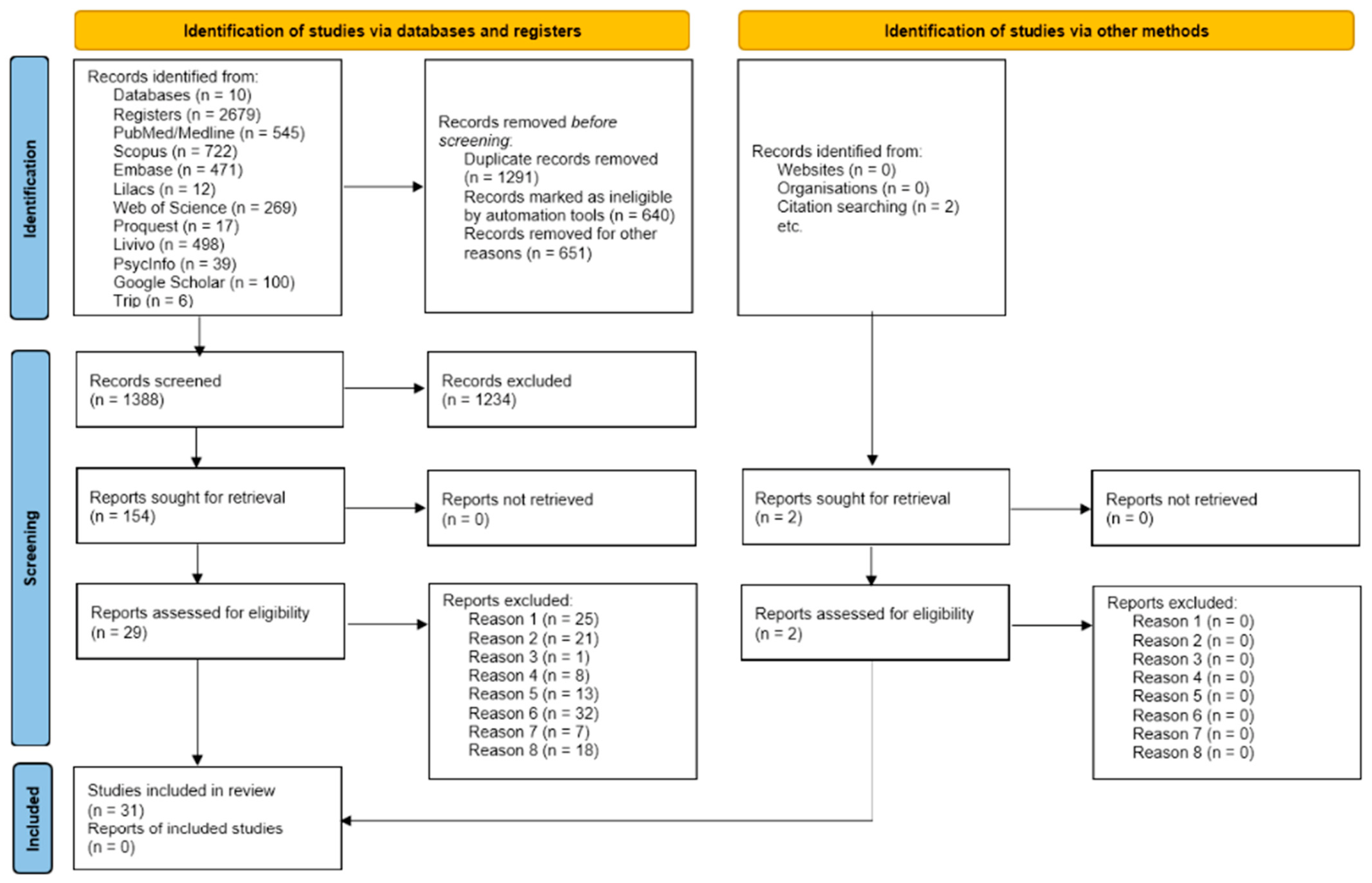
2.4. Selection Process
2.5. Data Extraction
2.6. Data Analysis and Synthesis
3. Results and Discussion
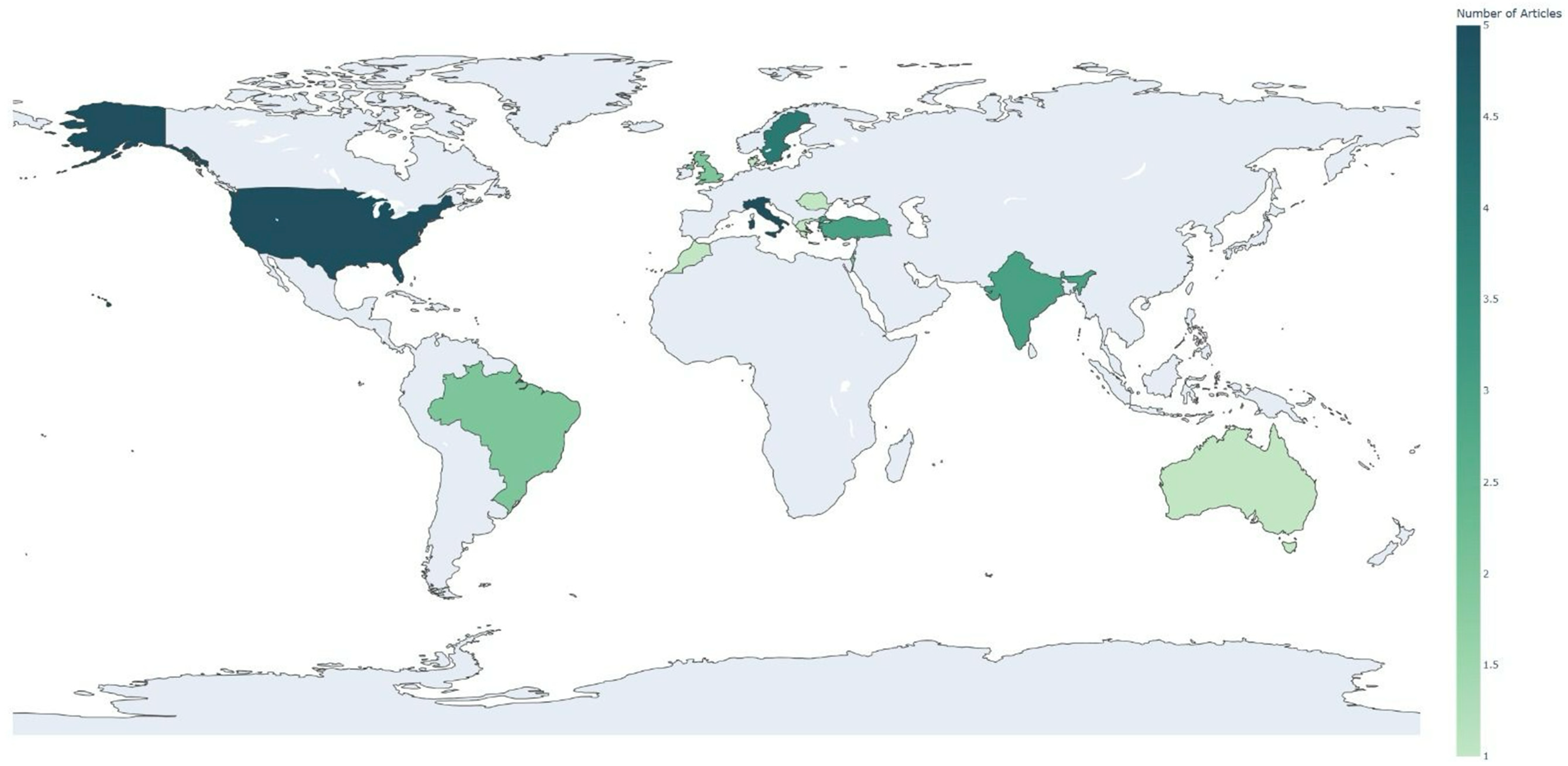
3.1. Study Characteristics
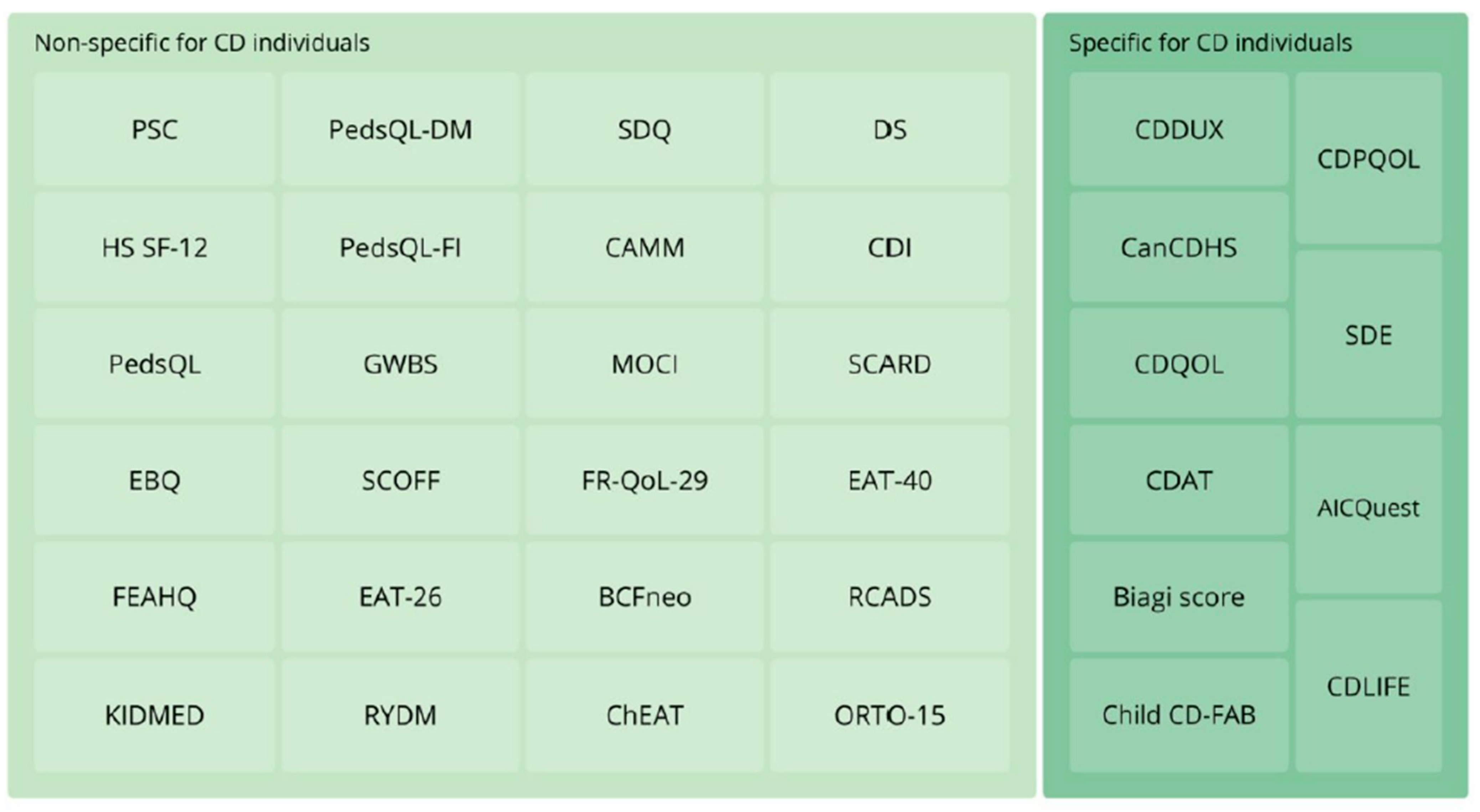
3.2. Characterization of Methodological Approaches
3.3. Quantitative Studies
3.4. Qualitative Studies
3.5. Mixed-Methods Studies
4. Conclusions
Supplementary Materials
Author Contributions
Funding
Institutional Review Board Statement
Informed Consent Statement
Data Availability Statement
Acknowledgments
Conflicts of Interest
Abbreviations
| BMI | Body mass index |
| CD | Celiac disease |
| CDDUX | Celiac Disease Dutch Questionnaire |
| CD-FAB | Coeliac Disease Food Attitudes and Behaviours Scale |
| CDLIFE | Celiac Disease Life Inventory of Family Experiences |
| DEB | Disordered Eating Behaviors |
| EAT | Eating Attitudes Test |
| FEAHQ | Family Eating and Activity Habits Questionnaire |
| GFD | Gluten-free diet |
| HRQOL | Health-related quality of life |
| JBI | Joana Briggs Institute |
| OSF | Open Science Framework |
| PedsQL | Pediatric Quality of Life Inventory |
| PRISMA-ScR | Preferred Reporting Items for Systematic Reviews and Meta-Analyses extension for Scoping Reviews |
| PCC | Patient, Concept, and Context |
| PSC | Pediatric Symptom Checklist |
| QOL | Quality of life |
| SD | Standard deviation |
| T1D | Type 1 diabetes |
References
- Lebwohl, B.; Sanders, D.S.; Green, P.H.R. Coeliac Disease. Lancet 2018, 391, 70–81. [Google Scholar] [CrossRef]
- Sahin, Y. Celiac Disease in Children: A Review of the Literature. World J. Clin. Pediatr. 2021, 10, 53–71. [Google Scholar] [CrossRef]
- Luque, V.; Crespo-Escobar, P.; Hård af Segerstad, E.M.; Koltai, T.; Norsa, L.; Roman, E.; Vreugdenhil, A.; Fueyo-Díaz, R.; Ribes-Koninckx, C. Gluten-Free Diet for Pediatric Patients with Coeliac Disease: A Position Paper from the ESPGHAN Gastroenterology Committee, Special Interest Group in Coeliac Disease. J. Pediatr. Gastroenterol. Nutr. 2024, 78, 973–995. [Google Scholar] [CrossRef]
- de Oliveira, D.C.L.; da Silva, V.M.B.; Silva, L.M.C. da Desafios Da Adesão à Dieta Sem Glúten. Res. Soc. Dev. 2022, 11, e34411226008. [Google Scholar] [CrossRef]
- Wieser, H.; Ruiz-Carnicer, Á.; Segura, V.; Comino, I.; Sousa, C. Challenges of Monitoring the Gluten-Free Diet Adherence in the Management and Follow-up of Patients with Celiac Disease. Nutrients 2021, 13, 2274. [Google Scholar] [CrossRef]
- Myléus, A.; Reilly, N.R.; Green, P.H.R. Rate, Risk Factors, and Outcomes of Nonadherence in Pediatric Patients With Celiac Disease: A Systematic Review. Clin. Gastroenterol. Hepatol. 2020, 18, 562–573. [Google Scholar] [CrossRef]
- Maddison-Roberts, H. A Thesis of Clinical Research and Practice: Part A: Understanding the Psychological Experiences of Children and Young People with Coeliac Disease and Their Relationship with Food; Part B: Development and Preliminary Validation of the Child Coeliac Disease Food Attitudes and Behaviours Scale (Child CD-FAB); Part C: Summary of Clinical Practice and Assessments. Ph.D. Thesis, University of Surrey, Guildford, UK, 2023. Available online: https://openresearch.surrey.ac.uk/esploro/outputs/doctoral/A-Thesis-of-Clinical-Research-and/99821864502346 (accessed on 20 May 2026).
- Falcomer, A.L.; Luchine, B.A.; Gadelha, H.R.; Szelmenczi, J.R.; Nakano, E.Y.; Farage, P.; Zandonadi, R.P. Worldwide Public Policies for Celiac Disease: Are Patients Well Assisted? Int. J. Public Health 2020, 65, 937–945. [Google Scholar] [CrossRef]
- Mayer, H.; Araújo, C.; Coelho, W.M.; Braz, R.; Botelho, A.; Zandonadi, R.P. Doença Celíaca, Hábitos e Práticas Alimentares e Qualidade de Vida [Celiac Disease, Eating Habits and Practices and Life Quality of Life]. Rev. Nutr. Camp. 2010, 23, 467–474. [Google Scholar]
- Rocha, S.; Gandolfi, L.; Dos Santos, J.E. Os Impactos Psicossociais Gerados Pelo Diagnóstico e Tratamento Da Doença Celíaca [The Psychosocial Impacts Caused by Diagnosis and Treatment of Coeliac Disease]. Rev. Esc. Enferm. 2016, 50, 65–70. [Google Scholar] [CrossRef]
- Matran, R.E.; Diaconu, A.-M.; Iordache, A.M.; Pacurar, D.; Becheanu, C.A. Food Related Quality of Life in Children with Chronic Gastrointestinal Disorders: Comparative Study Between Inflammatory Bowel Disease and Celiac Disease—Reports from a Romanian Center. Nutrients 2024, 17, 51. [Google Scholar] [CrossRef]
- Meyer, S. Promoting Effective Self-Management of the Gluten-Free Diet: Children’s and Adolescents’ Self-Generated Do’s and Don’ts. Int. J. Environ. Res. Public Health 2022, 19, 4051. [Google Scholar] [CrossRef]
- Meyer, S.; Rosenblum, S. Daily Experiences and Challenges among Children and Adolescents with Celiac Disease: Focus Group Results. J. Pediatr. Gastroenterol. Nutr. 2018, 66, 58–63. [Google Scholar] [CrossRef]
- Alvarenga, M.d.S.; Figueiredo, M.; Timerman, F.; Antonaccio, C.M.A.; Godoy, C.; Macedo, S. Nutrição Comportamental, 2nd ed.; Manole: Barueri, Brazil, 2019. [Google Scholar]
- Alvarenga, M.d.S.; Souza, L.D.J.d.; Moraes, C.H.d.C.; Moraes, J.M.M.; Ramos, D.C.S. Ciência Do Comportamento Alimentar; Manole: Barueri, Brazil, 2021. [Google Scholar]
- Toral, N.; Slater, B. Abordagem Do Modelo Transteórico No Comportamento Alimentar [Transtheoretical Model Approach in Eating Behavior]. Cien. Saude Colet. 2007, 6, 1641–2007. [Google Scholar] [CrossRef]
- Aromataris, E.; Lockwood, C.; Porritt, K.; Pilla, B.; Jordan, Z. JBI Manual for Evidence Synthesis. Available online: https://synthesismanual.jbi.global (accessed on 27 May 2025).
- Tricco, A.C.; Lillie, E.; Zarin, W.; O’Brien, K.K.; Colquhoun, H.; Levac, D.; Moher, D.; Peters, M.D.J.; Horsley, T.; Weeks, L.; et al. PRISMA Extension for Scoping Reviews (PRISMA-ScR): Checklist and Explanation. Ann. Intern. Med. 2018, 169, 467–473. [Google Scholar] [CrossRef]
- World Health Organization. United Nations Children’s Fund Investing in Our Future: A Comprehensive Agenda for the Health and Well-Being of Children and Adolescents; World Health Organization: Geneva, Switzerland, 2021. [Google Scholar]
- Pollock, D.; Peters, M.D.J.; Khalil, H.; McInerney, P.; Alexander, L.; Tricco, A.C.; Evans, C.; de Moraes, É.B.; Godfrey, C.M.; Pieper, D.; et al. Recommendations for the Extraction, Analysis, and Presentation of Results in Scoping Reviews. JBI Evid. Synth. 2023, 21, 520–532. [Google Scholar] [CrossRef]
- Olsson, C.; Hörnell, A.; Ivarsson, A.; Sydner, Y.M. The Everyday Life of Adolescent Coeliacs: Issues of Importance for Compliance with the Gluten-free Diet. J. Hum. Nutr. Diet. 2008, 21, 359–367. [Google Scholar] [CrossRef]
- Olsson, C.; Lyon, P.; Hörnell, A.; Ivarsson, A.; Sydner, Y.M. Food That Makes You Different: The Stigma Experienced by Adolescents with Celiac Disease. Qual. Health Res. 2009, 19, 976–984. [Google Scholar] [CrossRef]
- Chauhan, J.C.; Kumar, P.; Dutta, A.K.; Basu, S.; Kumar, A. Assessment of Dietary Compliance to Gluten Free Diet and Psychosocial Problems in Indian Children with Celiac Disease. Indian J. Pediatr. 2010, 77, 649–654. [Google Scholar] [CrossRef]
- Altobelli, E.; Paduano, R.; Gentile, T.; Caloisi, C.; Marziliano, C.; Necozione, S.; di Orio, F. Health-Related Quality of Life in Children and Adolescents with Celiac Disease: Survey of a Population from Central Italy. Health Qual. Life Outcomes 2013, 11, 204. [Google Scholar] [CrossRef]
- Biagetti, C.; Naspi, G.; Catassi, C. Health-Related Quality of Life in Children with Celiac Disease: A Study Based on the Critical Incident Technique. Nutrients 2013, 5, 4476–4485. [Google Scholar] [CrossRef]
- Garg, A.; Gupta, R. Predictors of Compliance to Gluten-Free Diet in Children with Celiac Disease. Int. Sch. Res. Not. 2014, 2014, 248402. [Google Scholar] [CrossRef]
- Nordyke, K.; Rosén, A.; Emmelin, M.; Ivarsson, A. Internalizing the Threat of Risk-a Qualitative Study about Adolescents’ Experience Living with Screening-Detected Celiac Disease 5 Years after Diagnosis. Health Qual. Life Outcomes 2014, 12. [Google Scholar] [CrossRef]
- Skjerning, H.; Mahony, R.O.; Husby, S.; Dunngalvin, A. Health-Related Quality of Life in Children and Adolescents with Celiac Disease: Patient-Driven Data from Focus Group Interviews. Qual. Life Res. 2014, 23, 1883–1894. [Google Scholar] [CrossRef]
- Bacigalupe, G.; Plocha, A. Celiac Is a Social Disease: Family Challenges and Strategies. Fam. Syst. Health 2015, 33, 46–54. [Google Scholar] [CrossRef]
- Brancaglioni, B.d.C.A.; Rodrigues, G.C.; Damião, E.B.C.; Queiroz, M.S.; Nery, M. Children and Adolescents Living with Diabetes and Celiac Disease. Rev. Gauch. Enferm. 2016, 37, e53787. [Google Scholar] [CrossRef]
- Pham-Short, A.; Donaghue, K.C.; Ambler, G.; Garnett, S.; Craig, M.E. Quality of Life in Type 1 Diabetes and Celiac Disease: Role of the Gluten-Free Diet. J. Pediatr. 2016, 179, 131–138.e1. [Google Scholar] [CrossRef]
- Kautto, E.; Olsson, C.; Ivarsson, A.; Lyon, P.; Hornell, A.; Alex, L. Living with Celiac Disease: Norms of Femininity and the Complications of Everyday Life. Int. J. Celiac Dis. 2017, 5, 115–124. [Google Scholar]
- Levran, N.; Wilschanski, M.; Livovsky, J.; Shachar, E.; Moskovitz, M.; Assaf-Jabrin, L.; Shteyer, E. Obesogenic Habits among Children and Their Families in Response to Initiation of Gluten-Free Diet. Eur. J. Pediatr. 2018, 177, 859–866. [Google Scholar] [CrossRef]
- Wolf, R.L.; Lebwohl, B.; Lee, A.R.; Zybert, P.; Reilly, N.R.; Cadenhead, J.; Amengual, C.; Green, P.H.R. Hypervigilance to a Gluten-Free Diet and Decreased Quality of Life in Teenagers and Adults with Celiac Disease. Dig. Dis. Sci. 2018, 63, 1438–1448. [Google Scholar] [CrossRef]
- Cadenhead, J.W.; Wolf, R.L.; Lebwohl, B.; Lee, A.R.; Zybert, P.; Reilly, N.R.; Schebendach, J.; Satherley, R.; Green, P.H.R. Diminished Quality of Life among Adolescents with Coeliac Disease Using Maladaptive Eating Behaviours to Manage a Gluten-Free Diet: A Cross-Sectional, Mixed-Methods Study. J. Hum. Nutr. Diet. 2019, 32, 311–320. [Google Scholar] [CrossRef]
- Chellan, D.; Muktesh, G.; Vaiphei, K.; Berry, N.; Dhaka, N.; Sinha, S.K.; Thapa, B.R.; Kochhar, R. Effect of Gluten-free Diet and Compliance on Quality of Life in Pediatric Celiac Disease Patients. JGH Open 2019, 3, 388–393. [Google Scholar] [CrossRef]
- Tokatly Latzer, I.; Lerner-Geva, L.; Stein, D.; Weiss, B.; Pinhas-Hamiel, O. Disordered Eating Behaviors in Adolescents with Celiac Disease. Eat. Weight Disord. 2020, 25, 365–371. [Google Scholar] [CrossRef]
- Zriouel, A.; Cherkani-Hassani, A.; Khadmaoui, A. Evaluation of Dietary Habits and Assessment of Eating Disorders among Adolescents with Celiac Disease in Morocco. Indian J. Public Health Res. Dev. 2020, 11, 1857–1862. [Google Scholar] [CrossRef]
- Bozas, A.; Karakatsoulis, G.; Panagopoulou, E.; Xinias, I.; Fotoulaki, M. Charting the Path: Psychological Factors and Diet Adherence in Adolescents With Celiac Disease. Cureus 2024, 16, e74103. [Google Scholar] [CrossRef]
- Efe, A.; Tok, A. Obsessive–Compulsive Symptomatology and Disgust Propensity in Disordered Eating Behaviors of Adolescents with Celiac Disease. Int. J. Behav. Med. 2024, 31, 85–96. [Google Scholar] [CrossRef]
- Fiori, F.; Bravo, G.; Neuhold, S.; Bartolone, G.; Pilo, C.; Parpinel, M.; Pellegrini, N. Compliance and Attitudes towards the Gluten-Free Diet in Celiac Patients in Italy: What Has Changed after a Decade? Nutrients 2024, 16, 2493. [Google Scholar] [CrossRef]
- Corposanto, C.; Molinari, B.; Neuhold, S. Celiac Disease Seen with the Eyes of the Principle Component Analysis and Analyse Des Donnéss. Open J. Stat. 2015, 05, 211–222. [Google Scholar] [CrossRef]
- Nogueira Firme, J.; dos Santos, E.B.; Zandonadi, R.P.; Nakano, E.Y.; Botelho, R.B.A. Dietary Challenges in Children with Gluten-Related Disorders: A Study on Food Neophobia. Nutrients 2024, 16, 3924. [Google Scholar] [CrossRef]
- Sahın, Ö.O.; Tasdelen, Y.; Kutahyalıoglu, N.S.; Guney, E.U.; Ozer, K. School Experiences in the Disease Management of Children With Celiac Disease: A Qualitative Study. Child Care Health Dev. 2024, 50, e70010. [Google Scholar] [CrossRef]
- Crocco, M.; Malerba, F.; Calvi, A.; Zampatti, N.; Valitutti, F.; Pisciotta, L.; Borgarelli, C.; Montuori, M.; Oliva, S.; Catassi, G.; et al. Predictive Factors of Health Related Quality of Life in Children and Adolescents with Celiac Disease: An Italian Multicenter Study on Behalf of the SIGENP. Dig. Liver Dis. 2025, 57, 833–841. [Google Scholar] [CrossRef]
- Franceschi, R.; Marigliano, M.; Mozzillo, E.; Casertano, A.; Morotti, E.; Iafusco, D.; Passanisi, S.; Lombardo, F.; Delvecchio, M.; Pertile, R.; et al. Disordered Eating Behaviors and Predictors in Youth with Type 1 Diabetes and Celiac Disease. J. Health Psychol. 2025, 31, 1027–1037. [Google Scholar] [CrossRef]
- Coburn, S.; Trojanowski, P.J.; Vagadori, J.; Hinds, P.; Germone, M.; Liu, E.; Streisand, R.; Bost, J. Development and Validation of a Pediatric Celiac Disease-Specific Quality of Life Measure. Am. J. Gastroenterol. 2025, 120, 1116–1126. [Google Scholar] [CrossRef]
- Gercek, H.G.; İpek Bas, S.A.; Kara, A.; Bukulmez, A. Examination of Eating Attitudes and Symptoms of Orthorexia Nervosa in Adolescents with and without Celiac Disease. J. Eat. Disord. 2025, 13, 102. [Google Scholar] [CrossRef]
- Maddison-Roberts, H.; Jones, C.; Satherley, R.M. Gluten-Free Diet Management and Well-Being in Children with Celiac Disease: A Qualitative Study. Pediatr. Allergy Immunol. 2025, 36, e70061. [Google Scholar] [CrossRef]
- Vagadori, J.; Trojanowski, P.J.; Keenan, C.; Bui, H.N.T.; Raber, C.; Perez-Junkera, G.; Hinds, P.; Streisand, R.; Harlan, M.; Coburn, S. Behavioral Telehealth Intervention Development for Adolescents with Celiac Disease and Their Caregivers: The Gluten-Free Resilience and Overall Wellness (GROW) Project. Nutr. Health 2025, 32, 869–885. [Google Scholar] [CrossRef]
- Ghafar, Z.N. Evaluation Research: A Comparative Analysis of Qualitative and Quantitative Research Methods. J. Lang. Lit. Soc. Cult. Stud. 2024, 2, 1–10. [Google Scholar] [CrossRef]
- van Doorn, R.K.; Winkler, L.M.; Zwinderman, K.H.; Mearin, M.L.; Koopman, H.M. CDDUX: A Disease-specific Health-related Quality-of-life Questionnaire for Children with Celiac Disease. J. Pediatr. Gastroenterol. Nutr. 2008, 47, 147–152. [Google Scholar] [CrossRef]
- Rashid, M.; Cranney, A.; Zarkadas, M.; Graham, I.D.; Switzer, C.; Case, S.; Molloy, M.; Warren, R.E.; Burrows, V.; Butzner, J.D. Celiac Disease: Evaluation of the Diagnosis and Dietary Compliance in Canadian Children. Pediatrics 2005, 116, e754–e759. [Google Scholar] [CrossRef]
- Dorn, S.D.; Hernandez, L.; Minaya, M.T.; Morris, C.B.; Hu, Y.; Leserman, J.; Lewis, S.; Lee, A.R.; Bangdiwala, S.I.; Green, P.H.R.; et al. The Development and Validation of a New Coeliac Disease Quality of Life Survey (CD-QOL). Aliment. Pharmacol. Ther. 2010, 31, 666–675. [Google Scholar] [CrossRef]
- Jordan, N.E.; Li, Y.; Magrini, D.; Simpson, S.; Reilly, N.R.; Defelice, A.R.; Sockolow, R.; Green, P.H.R. Development and Validation of a Celiac Disease Quality of Life Instrument for North American Children. J. Pediatr. Gastroenterol. Nutr. 2013, 57, 477–486. [Google Scholar] [CrossRef]
- Leffler, D.A.; Dennis, M.; Edwards George, J.B.; Jamma, S.; Magge, S.; Cook, E.F.; Schuppan, D.; Kelly, C.P. A Simple Validated Gluten-Free Diet Adherence Survey for Adults With Celiac Disease. Clin. Gastroenterol. Hepatol. 2009, 7, 530–536. [Google Scholar] [CrossRef]
- Biagi, F.; Bianchi, P.I.; Marchese, A.; Trotta, L.; Vattiato, C.; Balduzzi, D.; Brusco, G.; Andrealli, A.; Cisaro, F.; Astegiano, M.; et al. A Score That Verifies Adherence to a Gluten-Free Diet: A Cross-Sectional, Multicentre Validation in Real Clinical Life. Br. J. Nutr. 2012, 108, 1884–1888. [Google Scholar] [CrossRef]
- Biagi, F.; Andrealli, A.; Bianchi, P.I.; Marchese, A.; Klersy, C.; Corazza, G.R. A Gluten-Free Diet Score to Evaluate Dietary Compliance in Patients with Coeliac Disease. Br. J. Nutr. 2009, 102, 882–887. [Google Scholar] [CrossRef]
- Jellinek, M.S.; Murphy, J.M.; Little, M.; Pagano, M.E.; Comer, D.M.; Kelleher, K.J. Use of the Pediatric Symptom Checklist to Screen for Psychosocial Problems in Pediatric Primary Care. Arch. Pediatr. Adolesc. Med. 1999, 153, 254–260. [Google Scholar] [CrossRef]
- Ware, J.E.; Kosinski, M.; Keller, S.D. A 12-Item Short-Form Health Survey. Med. Care 1996, 34, 220–233. [Google Scholar] [CrossRef]
- Varni, J.W.; Seid, M.; Kurtin, P.S. PedsQLTM 4.0: Reliability and Validity of the Pediatric Quality of Life InventoryTM Version 4.0 Generic Core Scales in Healthy and Patient Populations. Med. Care 2001, 39, 800–812. [Google Scholar] [CrossRef]
- Varni, J.W.; Delamater, A.M.; Hood, K.K.; Raymond, J.K.; Chang, N.T.; Driscoll, K.A.; Wong, J.C.; Yi-Frazier, J.P.; Grishman, E.K.; Faith, M.A.; et al. PedsQL 3.2 Diabetes Module for Children, Adolescents, and Young Adults: Reliability and Validity in Type 1 Diabetes. Diabetes Care 2018, 41, 2064–2071. [Google Scholar] [CrossRef]
- Varni, J.W.; Sherman, S.A.; Burwinkle, T.M.; Dickinson, P.E.; Dixon, P. The PedsQLTM Family Impact Module: Preliminary Reliability and Validity. Health Qual. Life Outcomes 2004, 2, 55. [Google Scholar] [CrossRef]
- Fazio, A.F. A Concurrent Validational Study of the NCHS General Well-Being Schedule. Vital Health Stat. 1977, 2, 1–53. [Google Scholar]
- Garnett, S.P.; Baur, L.A.; Noakes, M.; Steinbeck, K.; Woodhead, H.J.; Burrell, S.; Chisholm, K.; Broderick, C.R.; Parker, R.; De, S.; et al. Researching Effective Strategies to Improve Insulin Sensitivity in Children and Teenagers—RESIST. A Randomised Control Trial Investigating the Effects of Two Different Diets on Insulin Sensitivity in Young People with Insulin Resistance and/or Pre-Diabetes. BMC Public Health 2010, 10, 575. [Google Scholar] [CrossRef]
- Golan, M. Fifteen Years of the Family Eating and Activity Habits Questionnaire (FEAHQ): An Update and Review. Pediatr. Obes. 2014, 9, 92–101. [Google Scholar] [CrossRef]
- Serra-Majem, L.; Ribas, L.; Ngo, J.; Ortega, R.M.; García, A.; Pérez-Rodrigo, C.; Aranceta, J. Food, Youth and the Mediterranean Diet in Spain. Development of KIDMED, Mediterranean Diet Quality Index in Children and Adolescents. Public Health Nutr. 2004, 7, 931–935. [Google Scholar] [CrossRef]
- Morgan, J.F.; Reid, F.; Lacey, J.H. The SCOFF Questionnaire: Assessment of a New Screening Tool for Eating Disorders. BMJ 1999, 319, 1467–1468. [Google Scholar] [CrossRef]
- Garner, D.M.; Olmsted, M.P.; Bohr, Y.; Garfinkel, P.E. The Eating Attitudes Test: Psychometric Features and Clinical Correlates. Psychol. Med. 1982, 12, 871–878. [Google Scholar] [CrossRef]
- Hanson, T.L.; Kim, J.-O. Measuring Resilience and Youth Development: The Psychometric Properties of the Healthy Kids Survey; Regional Educational Laboratory West: Washington, DC, USA, 2007. [Google Scholar]
- Goodman, R. Psychometric Properties of the Strengths and Difficulties Questionnaire. J. Am. Acad. Child Adolesc. Psychiatry 2001, 40, 1337–1345. [Google Scholar] [CrossRef]
- Kuby, A.K.; McLean, N.; Allen, K. Validation of the Child and Adolescent Mindfulness Measure (CAMM) with Non-Clinical Adolescents. Mindfulness 2015, 6, 1448–1455. [Google Scholar] [CrossRef]
- Hodgson, R.J.; Rachman, S. Obsessional-Compulsive Complaints. Behav. Res. Ther. 1977, 15, 389–395. [Google Scholar] [CrossRef] [PubMed]
- Kovacs, M. Rating Scales to Assess Depression in School-Aged Children. Acta Paedopsychiatr. 1981, 46, 305–315. [Google Scholar]
- Hodges, K.K.; Siegel, L.J.; Mullins, L.; Griffin, N. Factor Analysis of the Children’s Depression Inventory. Psychol. Rep. 1983, 53, 759–763. [Google Scholar] [CrossRef] [PubMed]
- Birmaher, B.; Khetarpal, S.; Brent, D.; Cully, M.; Balach, L.; Kaufman, J.; Neer, S.M. The Screen for Child Anxiety Related Emotional Disorders (SCARED): Scale Construction and Psychometric Characteristics. J. Am. Acad. Child Adolesc. Psychiatry 1997, 36, 545–553. [Google Scholar] [CrossRef]
- Hughes, L.D.; King, L.; Morgan, M.; Ayis, S.; Direkze, N.; Lomer, M.C.; Lindsay, J.O.; Whelan, K. Food-Related Quality of Life in Inflammatory Bowel Disease: Development and Validation of a Questionnaire. J. Crohns Colitis 2016, 10, 194–201. [Google Scholar] [CrossRef] [PubMed]
- de Almeida, P.C.; Rosane, B.P.; Nakano, E.Y.; Vasconcelos, I.A.L.; Zandonadi, R.P.; Botelho, R.B.A. Instrument to Identify Food Neophobia in Brazilian Children by Their Caregivers. Nutrients 2020, 12, 1943. [Google Scholar] [CrossRef]
- Maloney, M.J.; McGuire, J.B.; Daniels, S.R. Reliability Testing of a Children’s Version of the Eating Attitude Test. J. Am. Acad. Child Adolesc. Psychiatry 1988, 27, 541–543. [Google Scholar] [CrossRef] [PubMed]
- Garner, D.M.; Garfinkel, P.E. The Eating Attitudes Test: An Index of the Symptoms of Anorexia Nervosa. Psychol. Med. 1979, 9, 273–279. [Google Scholar] [CrossRef]
- Chorpita, B.F.; Yim, L.; Moffitt, C.; Umemoto, L.A.; Francis, S.E. Assessment of Symptoms of DSM-IV Anxiety and Depression in Children: A Revised Child Anxiety and Depression Scale. Behav. Res. Ther. 2000, 38, 835–855. [Google Scholar] [CrossRef]
- Arusoğlu, G.; Kabakçi, E.; Köksal, G.; Merdol, T.K. Orthorexia Nervosa and Adaptation of ORTO-11 into Turkish. Turk Psikiyatr. Derg. 2008, 19, 283–291. [Google Scholar]
- Donini, L.M.; Marsili, D.; Graziani, M.P.; Imbriale, M.; Cannella, C. Orthorexia Nervosa: Validation of a Diagnosis Questionnaire. Eat. Weight. Disord.—Stud. Anorex. Bulim. Obes. 2005, 10, e28–e32. [Google Scholar] [CrossRef] [PubMed]
- Kaul, R.; Jansson-Knodell, C.; Simons, M.L.; Weekley, K.; Gardinier, D.; Rubio-Tapia, A. Avoidant/Restrictive Food Intake Disorder in Celiac Disease. Nutrients 2025, 17, 3197. [Google Scholar] [CrossRef]
- Gholmie, Y.; Lee, A.R.; Satherley, R.-M.; Schebendach, J.; Zybert, P.; Green, P.H.R.; Lebwohl, B.; Wolf, R. Maladaptive Food Attitudes and Behaviors in Individuals with Celiac Disease and Their Association with Quality of Life. Dig. Dis. Sci. 2023, 68, 2899–2907. [Google Scholar] [CrossRef]
- Glaser, B.G.; Strauss, A.L. The Discovery of Grounded Theory: Strategies for Qualitative Research; Aldine Transaction: Baltimore, MD, USA, 1967. [Google Scholar]
- Goffman, E. Stigma: Notes on the Management of Spoiled Identity; Simon & Schuster Inc.: New York, NY, USA, 1986. [Google Scholar]
- Meyer, S.; Lamash, L. Illness Identity in Adolescents with Celiac Disease. J. Pediatr. Gastroenterol. Nutr. 2021, 72, E42–E47. [Google Scholar] [CrossRef]
- Campos, C.J.G. Método de Análise de Conteúdo: Ferramenta Para a Análise de Dados Qualitativos No Campo Da Saúde. Rev. Bras. Enferm. 2004, 57, 611–614. [Google Scholar] [CrossRef] [PubMed]
- Graneheim, U.H.; Lundman, B. Qualitative Content Analysis in Nursing Research: Concepts, Procedures and Measures to Achieve Trustworthiness. Nurse Educ. Today 2004, 24, 105–112. [Google Scholar] [CrossRef] [PubMed]
- Holmbeck, G.N.; Devine, K.A. Editorial: An Author’s Checklist for Measure Development and Validation Manuscripts. J. Pediatr. Psychol. 2009, 34, 691–696. [Google Scholar] [CrossRef] [PubMed]
- Flanagan, J.C. The Critical Incident Technique. Psychol. Bull. 1954, 51, 327–358. [Google Scholar] [CrossRef]
- NIH Office of Behavioral and Social Sciences Research. Best Practices for Mixed Methods Research in the Health Sciences, 2nd ed.; Bethesda: Washington, DC, USA, 2018. [Google Scholar]
- Satherley, R.M.; Howard, R.; Higgs, S. Development and Validation of the Coeliac Disease Food Attitudes and Behaviours Scale. Gastroenterol. Res. Pract. 2018, 2018, 6930269. [Google Scholar] [CrossRef]
- Eccles, D.W.; Arsal, G. The Think Aloud Method: What Is It and How Do I Use It? Qual. Res. Sport Exerc. Health 2017, 9, 514–531. [Google Scholar] [CrossRef]



| Author, Year | Reference | Objective | Study Design | Population | Methodological Approaches |
|---|---|---|---|---|---|
| Olsson et al., 2008 | [21] | To explore how adolescents with CD perceive and manage their everyday lives in relation to a GFD. | Observational, cross-sectional study with a qualitative approach | Adolescents with CD (n = 47); 68.08% female; aged 15–18 years | Focus group interviews; data collection guided by a topic guide with open-ended questions; qualitative analysis based on Grounded Theory (open coding, categorization, and theme development) |
| Olsson et al., 2009 | [22,23] | To report adolescent experiences in circumstances in which their medical condition becomes visible to others if they choose or request only the gluten-free foods appropriate to their condition, and how they manage the consequences. | Observational, cross-sectional study with a qualitative approach | Adolescents with CD (n = 47); 68.08% female; aged 15–18 years | Focus group interviews; data collection guided by a topic guide with open-ended questions; qualitative reanalysis of focus group transcripts [21] using a stigma-based theoretical framework |
| Chauhan et al., 2010 | [23] | To assess dietary compliance with the GFD, to identify barriers to compliance and to study the impact of diet on the psychosocial behavior of children with CD. | Observational, cross-sectional study with a quantitative approach | Children and Adolescents with CD (n = 64); aged 2–17 years | Dietary assessment (detailed dietary history and clinical evaluation by a senior consultant); interview with a self-administered structured questionnaire covering demographic, clinical, and diet-related psychosocial factors; and the Pediatric Symptom Checklist |
| Altobelli et al., 2013 | [24] | To assess HRQOL in children and adolescents with CD and explore how several demographic and clinical characteristics and GFD adherence affect their perceived health status. | Observational, cross-sectional study with a quantitative approach | Children and Adolescents with CD (n = 140); 78,6% female; mean age (SD) 14.2 (2.5) | Structured questionnaire adapted from the Canadian Coeliac Health Surve; Questionnaire on the Health Status SF-12 (Italian version); and CD-specific self-report survey including demographic, clinical, and diet-related QOL data, complemented by clinician validation |
| Biagetti; Naspi; Catassi, 2013 | [25] | To evaluate the emotional impact of GFD on the everyday life of children affected by CD. | Observational, cross-sectional study with a qualitative approach | Children and Adolescents with CD (n = 76); 76,31% female; mean age (SD) 8.7 | Critical Incident Technique-based qualitative study using written open-ended reports of diet-related dilemmas and qualitative categorization of lived experiences |
| Garg; Gupta, 2014 | [26] | To identify the predictors of compliance with GFD in children with CD. | Observational, cross-sectional study with a quantitative approach | Children and Adolescents with CD (n = 134): Compliant group (n = 88), 69.8% female; mean age 6 years; Noncompliant group (n = 46), 30.2% female, mean age 8 years | Dietary compliance based on a 5-day dietary recall form; self-administered questionnaire on demographic, clinical, dietary compliance, and diet-related psychosocial factors; and Pediatric Symptom Checklist |
| Nordyke et al., 2014 | [27] | To describe adolescents’ experience living with screening-detected CD five years after diagnosis to explore how their perceptions, practices, and beliefs evolved. | Observational, cross-sectional study with a qualitative approach | Adolescents (n = 153), 53.59% female, mean age one year follow-up 14.6; mean age five-year follow-up 18.0 | Written narratives; qualitative content analysis with coding, categorization, and theme development |
| Skjerning et al., 2014 | [28] | To explore the impact of CD and GFD on HRQOL in the everyday living of children and adolescents. | Observational, cross-sectional study with a qualitative approach | Children and adolescents (n = 23; 69.6% female; aged 8–18 years Parents (n = 3) | Focus group interviews; data collection guided by a topic guide supported by visual food stimuli; and qualitative analysis based on Grounded Theory |
| Bacigalupe; Plocha, 2015 | [29] | To examine the barriers that families with a celiac child face and the strategies they use to adhere to the recommended diet. | Observational, cross-sectional study with a qualitative approach | Families (n = 10); children aged 6–12 years | Semi-structured family interviews with open-ended questions; qualitative analysis using grounded theory and narrative analysis |
| Brancaglioni et al., 2016 | [30] | To understand the experience of children and adolescents living with T1D and CD. | Observational, cross-sectional study with a qualitative approach | Children and Adolescents (n = 5), 60% female, aged 10–16 years | Semi-structured interviews; family and social context mapping using genogram and ecomap; qualitative content analysis conducted within a symbolic interactionism framework |
| Pham-Short et al., 2016 | [31,32] | To evaluate the QOL and glycemic control in youth with T1D and CD vs. T1D only. We hypothesized that QOL scores would be lower in youth with T1D and CD and in those who were nonadherent to the GFD. | Observational, cross-sectional study with a quantitative approach | Youth with T1D (n = 35), 54% female, mean age (SD) 13.6 (3.0); Youth with T1D and CD (n = 35), 57% female, mean age (SD) 13.7 (3.1) | Demographic and clinical data collection; Pediatric QOL Generic Core Scale (version 4.0); Pediatric QOL Inventory Diabetes Module (version 3.2); Pediatric QOL Inventory Family Impact Scale; General Well-Being Scale; modified Eating Behaviors Questionnaire; CD-specific DUX questionnaire; and GFD adherence assessed clinically and serologically |
| Kautto et al., 2017 | [32] | To study the experiences of the everyday life among Swedish young female patients who were diagnosed with CD through a screening study. | Observational, cross-sectional study with a qualitative approach | Young females with CD (n = 7); 100% female; aged 17–18 years | Semi-structured individual interviews; qualitative content analysis with inductive coding from manifest to latent themes and gender-informed interpretation |
| Levran et al., 2018 | [33] | To assess the influence of GFD on the child and his/her family’s eating habits and lifestyle behaviors. | Observational, prospective study with a quantitative approach | Children with CD (n = 40); 52.2% female; mean age (SD) 7.4 (2.8) | Demographic and anthropometric data collection; assessment of family obesogenic environment using the Family Eating and Activity Habits Questionnaire; symptoms and GFD compliance questionnaire |
| Wolf et al., 2018 | [34] | To examine the associations between QOL and energy levels and adherence to, and knowledge about, a GFD. | Observational, prospective study with a quantitative and qualitative approach | Teenagers (n = 30); 80% female; mean age (SD) 15.7 (1.5) Adults (n = 50); 84% female; mean age (SD) 23.3 (3.4) | Demographic and medical history data collection; CD-specific QOL instruments (CD QOL Questionnaire; CD Pediatric QOL Questionnaire); dietary adherence assessed by the Standardized Dietitian Evaluation instrument and one item from the CD Adherence Test; knowledge assessed by a food label quiz; and open-ended questions on barriers and facilitators to GFD adherence analyzed using thematic analysis |
| Cadenhead et al., 2019 | [35] | To understand adolescents’ approaches to managing a GFD and the association with QOL | Observational, prospective study with a quantitative and qualitative approach | Adolescents with CD (n = 30); 80% female; mean (SD) age 15.6 (1.5) years | Demographic and medical history data collection; CD Pediatric QOL questionnaire; Celiac Dietary Adherence Test; and semi-structured interviews exploring barriers and facilitators to GFD adherence, analyzed using a psychosocial rubric-guided qualitative approach |
| Chellan et al., 2019 | [36] | To study QOL in pediatric CD and the effect of a GFD in a North Indian population. | Observational, prospective study with a quantitative approach | Children with CD (n = 44); 31.8% female; mean age (SD) 6.03 (0.42) | Baseline demographic/clinical/biochemical assessment; Pediatric Symptom Checklist; and 6-month post-GFD disease-specific structured questionnaire adapted from Chauhan et al., assessing adherence, barriers, parental behaviors and perceptions, and children’s feelings |
| Tokatly Latzer et al., 2020 | [37] | To assess the incidence and risk factors for disordered eating behaviors (DEB) among individuals with CD, and to examine the association between adherence to GFD and DEBs. | Observational, cross-sectional study with a quantitative approach | Adolescents with CD (n = 136); 63% female; mean age (SD) 13.3 (1.2) | Web-based survey collecting demographic and clinical data; Eating Attitudes Test-26; and GFD adherence questionnaire (Biagi score) |
| Zriouel; Cherkani-Hassani; Khadmaoui, 2020 | [38] | To evaluate dietary habits, to screen for eating disorders, and to identify the factors associated with eating disorders among adolescents with CD. | Observational, cross-sectional study with a quantitative approach | Children and adolescents with CD (n = 132); 59.84% female; aged 10–16 years | Demographic and clinical data collection; Mediterranean diet quality assessment using the Mediterranean Food Quality Index for Children and Adolescents; eating disorders screening using the Sick Control Fat Food questionnaire; and anthropometric assessment (body mass index) |
| Maddison-Roberts, 2023 | [7] | To gain a comprehensive understanding of how children with CD experience and navigate the GFD, focusing on their dietary preferences, perceptions, and challenges, as well as the impact of these experiences. | Observational, cross-sectional study with a qualitative approach | Children and Adolescents (n = 15); 60% female; mean age 10.5 | Semi-structured online interviews guided by a theoretical model of eating behaviors in CD and family consultation; qualitative analysis based on reflexive thematic analysis |
| Bozas et al., 2024 | [39] | To investigate the impact of psychological factors on behavioral and dietary responses in adolescents with CD, utilizing repeated measures over time. | Observational, prospective study with a quantitative approach | Children and adolescents (n = 31), 61.3% female, mean age (SD) 13.6 (2.06); Parents (n = 27) | Baseline demographic and disease-related medical history and the Resilience Youth Development Module; longitudinal follow-up including the Celiac Dietary Adherence Test, Strengths, and Difficulties Questionnaire—child version, and Child and Adolescent Mindfulness Measure; and post-follow-up resilience reassessment and parent-reported Strengths and Difficulties Questionnaire |
| Efe; Tok, 2024 | [40] | To investigate the impact of obsessive–compulsive symptomatology and disgust propensity on disordered eating attitudes (DEA) and poor GFD compliance in adolescents with CD. | Observational, cross-sectional study with a quantitative approach | Celiac group (n = 148), 58,4% female, mean age (SD) 14.6 (0.33); Control group (n = 104), 71.1% female, mean age (SD) 14.63 (0.36) | Demographic, socioeconomic, family-related, and clinical data; Eating Attitudes Test-26; Maudsley Obsessive–Compulsive Inventory; Disgust Scale adapted; assessment of GFD adherence using serological markers and self-report; Children’s Depression Inventory; Screen for Child Anxiety and Related Disorders |
| Fiori et al., 2024 | [41] | To describe Italian celiac patients who agreed to participate in the latest web survey and their attitudes toward the GFD (compliance, perceived limitations, and worries) and to compare the answers given by the 2011 and 2022 responders. | Observational, cross-sectional study with a quantitative approach | Children and adolescents (n = 477): Group I: (n = 173), 69% female, aged ≤10 years; Group II: (n = 163), 63% female, aged 11–14 years; Group III: (n = 141), 61% female, aged 15–17 years | Self-administered structured questionnaire developed by the Associazione Italiana Celiachia, described in Corposanto et al. [42], comprising multiple-choice items, Likert-scale statements, and open-ended questions, with a subset of 50 items 50 used in the present study |
| Matran et al., 2024 | [11] | To evaluate comparative food-related QOL in light of these dietary interventions between these two conditions. | Observational, cross-sectional study with a quantitative approach | Children with chronic gastrointestinal disorders (n = 51): CD (n = 17), 58.8% female, median age (IQR) 13 (10.8–16.4); Crohn’s disease (n = 17), 47.1% female, median age (IQR) 16 (12–16.75); Ulcerative colitis (n = 17), 70.6% female, median age (IQR) 16 (14–117). | Demographic and clinical data; history of surgery and medical treatment regimens; adherence to the GFD (for patients with CD); anthropometric measures (weight, height) and body mass index; self-reported Food-Related QOL questionnaire, semantically adapted for CD. |
| Nogueira Firme et al., 2024 | [43] | To investigate and classify the prevalence of food neophobia among Brazilian children aged 4 to 11 years with gluten-related disorders. | Observational, cross-sectional study with a quantitative approach | Children with Gluten-Related Disorders (n = 209); 57.9% female; mean age (SD) 7.2 (2.3) | Sociodemographic, clinical data, and Food Neophobia questionnaire (caregiver-reported) |
| Sahın et al., 2024 | [44] | To examine in depth the disease management experiences of school- age children with CD and the effects of family, friends, and teachers on disease management at school. | Observational, cross-sectional study with a qualitative approach | Children and adolescents (n = 14); 71.4% female; mean age 12 | Semi-structured interviews; phenomenological qualitative approach with grounded theory-informed analysis |
| Crocco et al., 2025 | [45] | To assess HRQOL and further characterize the clinical factors associated with reduced HRQOL, in a large multicenter pediatric cohort with CD. | Observational, cross-sectional study with a quantitative approach | Children and adolescents (n = 857); 66.4% female; mean age (SD) 12.9 (2.9) | Clinical and sociodemographic data collection; The disease-specific questionnaire CD Dutch Questionnaire; and Generic questionnaire Pediatric QOL Inventory |
| Franceschi et al., 2025 | [46] | To analyze the prevalence of disordered eating behaviors in T1D + CD and T1D individuals, and to identify the main predictors. | Observational, cross-sectional study with a quantitative approach | Children and Adolescents with T1D and CD (n = 66), 51% female, mean age (SD) 13.8 (2.6); Children and adolescents with T1D only (n = 84), 39.3% female, mean age (SD) 13.3 (1.6) | Children’s Eating Attitude Test; Body Mass Index z-score; diabetes-related data; CD-related data; dietary interview conducted by expert dietitians. |
| Coburn et al., 2025 | [47] | To develop a CD-specific pediatric QOL measure (CD Life Inventory of Family Experiences) with parallel self-report and parent-report forms by generating items through concept elicitation interviews, iterative refinement using cognitive debriefing interviews and evaluating its psychometric properties and validity. | Observational, cross-sectional study with a quantitative and qualitative approach | Phase 1 (Concept Elicitation): 9 youth and 10 parents. Phase 2 (Item Refinement): 3 youth, 3 parents, and 8 clinicians. Phase 3 (Validation): Youth with CD (n = 102), 61.8% female, mean age (SD) 12.6 (3.0); Parent-proxy report (n = 103), 55.3% female, mean age (SD) 10.29 (3.74)] | Semi-structured concept elicitation interviews and qualitative content analysis for development of the CD Life Impact for Children; cognitive debriefing interviews for item refinement; and psychometric testing using the Patient-Reported Outcomes Measurement Information System, the Pediatric QOL Inventory and Family Impact Module, and the GFD–Visual Analog Scale, with self-report and parent-proxy versions |
| Gercek et al., 2025 | [48] | To compare orthorexia nervosa symptoms, eating attitudes, anxiety, depression, and obsessive–compulsive disorder symptoms between adolescents with and without CD in this study. | Observational, cross-sectional study with a quantitative approach | Adolescents CD (n = 30); 73.3% female; mean age (SD) 15.93 (1.14) Healthy controls (n = 30); 63.3% female; mean age (SD) 16.13 (1.00) | Sociodemographic data collection; GFD adherence; Eating Attitudes Test; Revised Child Anxiety and Depression Scale—child and parent versions; and questionnaire for the diagnosis of orthorexia-11 scale (short version of questionnaire for the diagnosis of orthorexia-15) |
| Maddison-Roberts; Jones; Satherley, 2025 | [49] | To increase understanding of children and adolescents’ approaches to GFD management and to improve identification of those with hypervigilant approaches. Part A: to improve understanding of interactions and experiences with food in children and adolescents with CD and explore how these relate to models of gluten-related distress and unhelpful eating developed in adults. Part B: to develop and validate a children and adolescent version of the CD–Food Attitudes and Behaviours to support the identification of children and adolescents with hypervigilant approaches to managing the GFD. The study also aims to improve understanding of the relationship between hypervigilance to the GFD in children and adolescents, CD-related health outcomes, and QOL. | Part A: Observational, cross-sectional study with a qualitative approach Part B: Observational, cross-sectional study with a quantitative approach | Part A: children and adolescents with CD (n = 15); 60% female; aged 8–13 years Part B: (a) Children and adolescents with CD (n = 15), 60% female, aged 8–13 years; (b) Children and adolescents with CD (n = 84), 61% female, mean age (SD) 11.35 (2.49) | Mixed-methods instrument development study using semi-structured online interviews and think-aloud cognitive interviewing analyzed through reflexive thematic and content analysis, followed by psychometric validation of the Child CD–Food Attitudes and Behaviours Scale, using the CD–Food Attitudes and Behaviours Scale, Pediatric QOL Inventory, State-Trait Anxiety Inventory for Children, Illness Perception Questionnaire–Revised, and Food Neophobia Test Tool. |
| Vagadori et al., 2025 | [50] | To develop and refine the Gluten-Free Resilience and Overall Wellness Project, the first family-centered, online behavioral intervention to improve QOL and GFD self-management in adolescents with CD and their parents. | Observational, prospective study with a qualitative approach | Adolescents with CD and their caregivers: Round 1: (n = 5), 80% female, mean age (SD) 14.2 (1.1); Round 2: (n = 4), 75% female, mean age (SD) 13.3 (0.5) | Semi-structured stakeholder interviews, conducted in two iterative rounds, to adapt and refine a group-based telehealth behavioral intervention (Gluten-Free Resilience and Overall Wellness Project); following an inductive approach to qualitative analysis |
| Instrument | Reference of the Studies Included that Used the Instrument | Target Population | Respondent | Structure and Scoring | Items and Domains | Specific to Evaluate Eating Attitudes/Behaviors |
|---|---|---|---|---|---|---|
| Specific for CD individuals | ||||||
| Focus group interview | [21,22,28] | Children and adolescents with CD | Self-report | Open-ended questions; qualitative thematic analysis; no scoring system | N/A | Yes |
| CD-specific DUX questionnaire [52] | [31,45] | Children and adolescents with CD aged 8–18 years | Self-report and parents-proxy | 5-point Likert scale (smiley answer categories); transformed to 0–100 scale | 12-item; 3 subscales: Diet (6 items), Communication (3 items), and Having CD (3items) | No |
| Canadian Coeliac Health Survey [53] | [24] | Children with CD aged <16 years | Parent-proxy | Mixed response formats; descriptive epidemiological survey; no standardized subscales or total score | 76-item; multiple thematic sections | No |
| Written narratives | [27] | Adolescents with screening-detected CD, aged 12–18 years | Self-report | Written narrative prompts; qualitative content analysis; no scoring system | No predefined items or domains; studies explore main thematic areas emerging from qualitative analysis. | Yes |
| Semi-structured interviews | [29,30,32,44,49,50] | Children, adolescents, and young adults with CD | Self-report | Open-ended questions; qualitative thematic or content analysis; no scoring system | No predefined items or domains; studies explore main thematic areas emerging from qualitative analysis. | Yes |
| CD-Specific QOL [54] | [34] | Adults and adolescents with CD | Self-report | 5-point Likert scale (“not at all” to “a great deal”); score range 0–100 points | 20-item; 4 clinically relevant subscales: Dysphoria (4 items), Limitations (9 items), Health Concerns (5 items), and Inadequate Treatment (2 items) | No |
| CD Pediatric QOL [55] | [34,35] | Children and adolescents with CD aged 8–18 years | Self-report | 5-point Likert scale (“never” to “almost always”) (0–4); score range 0–100 scale | Two age-specific versions: 8–12 years (13 items; subscales: negative emotions, school, enjoyment) and 13–18 years (17 items; subscales: social, uncertainty, isolation, and limitations. | No |
| Standardized Dietitian Evaluation [56] | [34] | Adolescents and adults with CD | Dietitian (Interview/Dietary Recall) | Interview and three 24 h dietary recalls; 6-point Likert scale; ranging 1 (excellent adherence) to 6 (not currently following a GFD) | N/A | No |
| CD Adherence Test [56] | [34,35,39] | Adults with CD | Self-report | 5-point Likert scale; score range 7–35 points | 7-item; unidimensional construct | No |
| Biagi score [57,58] | [37] | Patients with CD (primarily adults) | Self-report | Score range 0–4 | 4-item; unidimensional construct | No |
| Child CD Food Attitudes and Behaviors Scale [7] | [7] | Children and adolescents aged 8–16 | Children and adolescents (self-report) | 7-point Likert scale (1 “strongly agree” to 7 “strongly disagree”); Score ranges 14–98 points | 14 items; Unidimensional | Yes |
| Associazione Italiana Celiachia Structured Questionnaire [42] | [41] | Elderly, adults, adolescents and children with CD, aged 10 and over | Self-report | Semi-structured type questionnaire; mostly closed-ended questions with some open-ended items; no standardized scoring system | 50-item; five sections: personal details (master data), information about associationism, quality of life, eating habits and transgressions food; | No |
| CD Life Impact for Children [47] | [47] | Children and adolescents with CD | Self-report and parents- proxy | 5-point Likert scale; score range 1–5 (mean of items) | 21-item; 4 subscales: social impact, external support and functioning, adaptative vigilance and eating behaviors and adjustment; the proxy version includes a single item on financial resources | No |
| Non-specific for CD individuals | ||||||
| Pediatric Symptom Checklist [59] | [23,26,36] | Children and adolescents aged 4–15 years | Parent-proxy | 3-point frequency scale (never, sometimes, and often); score range 0–75 | 35-item; unidimensional construct | No |
| Health Status Questionnaire Short Form-12 [60] | [24] | General population and clinical adult populations | Self-report | Mixed, item-specific categorical response formats; two summary scores (physical health section and mental health section) based on weighted item combinations. | 12-item; 8 health concepts: physical functioning, role limitation-physical, bodily pain, general health, role limitation-emotional, vitality, mental health, social functioning | No |
| Pediatric QOL questionnaire Generic Core Scale (version 4.0) [61] | [31,45,47] | Children and adolescents aged 2–18 years | Self-report and parents-proxy | 5-point Likert scale; transformed to 0–100 scale | 23-item; 4 subscales: physical functioning (8 items), emotional functioning (5 items), social functioning (5 items), and school functioning (5 items) | No |
| Pediatric QOL questionnaire Diabetes Module (Version 3.2) [62] | [31] | Children, Adolescents, and Young Adults with T1D ages 2–25 years | Self-report and parents-proxy | 5-point Likert-type scale; transformed to a 0–100 scale | 33-item; 5 subdomains: diabetes symptoms (15 items), treatment barriers (5 items), treatment adherence (6 items), worry (3 items), and communication (4 items) | No |
| Pediatric QOL questionnaire Family Impact Scale (Module) [63] | [31,47] | Parents of children with complex chronic health conditions | Self-report | 5-point response scale scored (“never a problem” to “always a problem”); transformed to a 0–100 scale | 36-item; 8 Subdomains: physical functioning (6 items), emotional functioning (5 items), social functioning (4 items), cognitive functioning (5 items), communication (3 items), worry (5 items), daily activities (3 items), and family relationships (5 items) | No |
| General Well-Being Scale [64] | [31] | Adults aged 25–74 years | Self-report | 6-point ordinal scale (0–5); total score and subscale scores | 18-item; 6 subscales: anxiety (3 items), depressed mood (3 items), positive well-being (4 items), self-control (3 items), general health (3 items), vitality (2 items) | No |
| Eating Behaviors Questionnaire [31] [adapted from [65]] | [31] | Children with T1D, with or without CD | Self-report and parents-proxy | 5-option response format (“never” to “almost always”); score range 0–100 | 23-item; subdomains: individual child eating behaviors, family and social environment eating behavior, and diabetes-related eating behaviors | Yes |
| Family Eating and Activity Habits Questionnaire [66] | [33] | Families with children aged 6–12 years | Self-report | Scores calculated for each member of the family | 32-item; 4 separate scales: leisure time activity (items 1–4), eating habits and style (items 5–16), response to internal hunger and satiety cues (items 17–19), stimulus exposure and control (items 20–32) | Yes |
| Mediterranean Diet Quality Index in Children and Adolescents [67] | [38] | Children and adolescents aged 2–24 years | Self-report and proxy-report | Dichotomous (Yes/No); score range 0–12 | 16-question; unidimensional construct | No |
| Sick Control Fat Food questionnaire [68] | [38] | Adults | Self-report | Dichotomous (Yes/No); score range 0–5 | 5-question; unidimensional construct | Yes |
| Eating Attitudes Test-26 [69] | [37,40] | Adolescents and Young Women | Self-report | 6-point Likert scale (“never” to “always”) (0–3); score range 0–78 points | 26-item; 3 Subscales: dieting, bulimia and food preoccupation and oral control | Yes |
| Resilience Youth Development Module [70] | [39] | Adolescents aged 11–18 years | Self-report | 4-point Likert scale, (“not at all true” to “very much true”) | 51-item; 12 assets (8 Environmental assets and 4 Internal Assets) | No |
| Strength and Difficulties Questionnaire [71] | [39] | Parents and children aged 3–16 years | Self-report and proxy-report | 3-point Likert scale (“not true”, “somewhat true”, or “certainly true”) | 25-item; 5 scales (5 items each): hyperactivity/inattention, emotional symptoms, conduct problems, peer problems, prosocial behavior | No |
| Child and Adolescent Mindfulness Measure [72] | [39] | Children and adolescents aged 10–17 | Self-report | 5-point Likert scale (“never true” to “always true”); score range 0–40 points | 10-item; unidimensional construct | No |
| Maudsley Obsessive–Compulsive Inventory [73] | [40] | Adults | Self-report | Dichotomous scale (True/False); total score and subscale scores | 30-item; 4 subscales: checking, cleaning, slowness, doubt | No |
| Children’s Depression Inventory [74,75] | [40] | Children and adolescents | Self-report | 3-point rating scale (0–2); score range 0–54 | 27-items; unidimensional score | No |
| Screen for Child Anxiety and Related Disorders [76] | [40] | Children and adolescents | Self-report and parent-proxy | 3-point rating scale (0–2); total score and factor scores | 38-item; 5 factors: somatic/panic, general anxiety, separation anxiety, social phobia, and school phobia. | No |
| Food-Related QOL questionnaire-29 [77] | [11] | Patients with inflammatory bowel disease aged ≥16 | Patients (self-report) | 5-point Likert response scale (“definitively agree” to “definitively disagree”; score range 29–145 points | 29-item; Unidimensional | Yes |
| Food Neophobia questionnaire [78] | [43] | Caregivers of children aged 4–11 years, with gluten-related disorders | Caregivers of children (self-report) | 5-point Likert response scale (response options: “totally disagree” to “totally agree”; “not at all” to “extremely”; “certainly not” to “certainly”; “never” to “always”); scores calculated as the sum of item values, both as total score and domain-specific scores | 25-item three domains: neophobia in general; neophobia for fruits; neophobia for vegetables. | Yes |
| Children’s Eating Attitude Test [79] | [46] | Children aged 8–13 years | Self-report | 6-point Likert scale (“never” to “always”); score range 0–130 points | 26-items; 3 subscales: dieting, bulimia/food preoccupation, and oral control | Yes |
| Eating Attitudes Test [80] | [48] | Adolescents and adults’ women | Participants (self-report) | 6-point Likert-type scale (“always” to “never”) (0–3); score range 0–78 | 40-item; 7 factors reflecting: food preoccupation, body image for thinness, vomiting and laxative abuse, dieting, slow eating, clandestine eating, and perceived social pressure to gain weight | Yes |
| Revised Child Anxiety and Depression Scale [81] | [48] | Child and parent forms | self-report scale | four-point Likert scale | 47-item; 6 domains: Social Anxiety Disorder; Separation Anxiety; Generalized Anxiety Disorder; Panic Disorder; Obsessive–Compulsive Disorder Major Depressive Disorder | No. |
| Questionnaire for the diagnosis of orthorexia-11 scale [82] [short version of questionnaire for the diagnosis of orthorexia-15 [83] | [48] | Participants aged >16 | Participants (self-report) | 4-point Likert scale (0–3); scores range 15–60 | 15-item; 3 underlying factors: cognitive–rational (items 1, 5, 6, 11, 12, 14), clinical (items 3, 7, 8, 9, 15), and emotional (items 2, 4, 10, 13) | Yes |
Disclaimer/Publisher’s Note: The statements, opinions and data contained in all publications are solely those of the individual author(s) and contributor(s) and not of MDPI and/or the editor(s). MDPI and/or the editor(s) disclaim responsibility for any injury to people or property resulting from any ideas, methods, instructions or products referred to in the content. |
© 2026 by the authors. Licensee MDPI, Basel, Switzerland. This article is an open access article distributed under the terms and conditions of the Creative Commons Attribution (CC BY) license.
Share and Cite
Schwantes, M.d.C.; Dusi, R.; Uenishi, R.H.; Ribeiro, C.d.S.; Zandonadi, R.P. Methodological Approaches to Assess Disordered Eating Behaviors Related to Gluten-Free Diet Management in Children and Adolescents with Celiac Disease: A Scoping Review. Nutrients 2026, 18, 1661. https://doi.org/10.3390/nu18111661
Schwantes MdC, Dusi R, Uenishi RH, Ribeiro CdS, Zandonadi RP. Methodological Approaches to Assess Disordered Eating Behaviors Related to Gluten-Free Diet Management in Children and Adolescents with Celiac Disease: A Scoping Review. Nutrients. 2026; 18(11):1661. https://doi.org/10.3390/nu18111661
Chicago/Turabian StyleSchwantes, Marina de Cesaro, Rafaella Dusi, Rosa Harumi Uenishi, Camila dos Santos Ribeiro, and Renata Puppin Zandonadi. 2026. "Methodological Approaches to Assess Disordered Eating Behaviors Related to Gluten-Free Diet Management in Children and Adolescents with Celiac Disease: A Scoping Review" Nutrients 18, no. 11: 1661. https://doi.org/10.3390/nu18111661
APA StyleSchwantes, M. d. C., Dusi, R., Uenishi, R. H., Ribeiro, C. d. S., & Zandonadi, R. P. (2026). Methodological Approaches to Assess Disordered Eating Behaviors Related to Gluten-Free Diet Management in Children and Adolescents with Celiac Disease: A Scoping Review. Nutrients, 18(11), 1661. https://doi.org/10.3390/nu18111661