Marine-Algal-Derived Postbiotics Modulating the Gut Microbiota–Adipose Tissue Axis in Obesity: A New Frontier

 , , ,
, , , 
Abstract
1. Introduction
2. Search Strategy
3. Gut Microbiota–Adipose Tissue Axis in Obesity
4. Marine-Algal Postbiotics: Concepts and Mechanisms
Microalgae as Postbiotic Preparations
5. Marine-Algal Bioactive Compounds and Their Gut Microbiota-Mediated Anti-Obesity Effects
5.1. Brown Seaweeds (Phaeophyceae)
5.2. Red Seaweeds (Rhodophyta)
5.3. Green Seaweeds (Chlorophyta)
5.4. Microalgae and Cyanobacteria
6. Evidence from Human Trials
7. Regulatory and Safety Considerations
7.1. Regulatory Framework
7.2. Safety Issues

| Algae Type | Source | Side Effects | Dose Associated with Side Effects | References |
|---|---|---|---|---|
| Brown Algae (Laminaria, Kelp) | Kombu, Wakame, Hijiki | Excessive iodine intake leading to thyroid dysfunction (hyperthyroidism or hypothyroidism); iodine-induced thyrotoxicosis; potential heavy metal accumulation (arsenic, cadmium) | >1100 μg iodine/day (chronic intake) | [105,106,107] |
| Red Algae (Porphyra, Nori) | Nori sheets, dulse | Allergic reactions including urticaria, angioedema, and anaphylaxis; cross-reactivity with shellfish allergens; gastrointestinal discomfort | >15 g/day | [108,109] |
| Blue-Green Algae (Spirulina) | Dietary supplements, powder form | Contamination with microcystins causing hepatotoxicity; autoimmune reactions in susceptible individuals; nausea, diarrhea; potential phenylketonuria concerns due to phenylalanine content | Around 1 g daily for conditions like leukoplakia, up to 1500 mg daily for others. | [110,111] |
| Green Algae (Chlorella) | Chlorella supplements, tablets | Photosensitivity and skin reactions; gastrointestinal disturbances (bloating, gas, green discoloration of stool); potential exacerbation of immunodeficiency conditions | >16 g/day | [86] |
| Brown Algae (Fucus vesiculosus, Bladderwrack) | Weight loss supplements | Thyroid overstimulation; drug interactions with anticoagulants (high vitamin K content); acneiform eruptions; potential heavy metal toxicity | >600 μg iodine/day from supplements; vitamin K interactions with >500 mg/day | [100] |
| Red Algae (Carrageenan-producing) | Food additive, processed foods | Gastrointestinal inflammation and ulceration in animal studies; potential digestive issues; concerns about degraded carrageenan and colon cancer risk | Food-grade (undegraded) generally safe | [112] |
8. Conclusions and Future Directions
Author Contributions
Funding
Institutional Review Board Statement
Informed Consent Statement
Data Availability Statement
Acknowledgments
Conflicts of Interest
Abbreviations
| SCFA | Short-Chain Fatty Acid |
| LPS | Lipopolysaccharide |
| TLR4 | Toll-Like Receptor 4 |
| FXR | Farnesoid X Receptor |
| TGR5 | Takeda G-Protein Receptor 5 |
| GPR43/FFAR2 | G-Protein Coupled Receptor 43/Free Fatty Acid Receptor 2 |
| GPR41/FFAR3 | G-Protein Coupled Receptor 41/Free Fatty Acid Receptor 3 |
| GLP-1 | Glucagon-Like Peptide-1 |
| PYY | Peptide YY |
| HFD | High-Fat Diet |
| BMI | Body Mass Index |
| UCP1 | Uncoupling Protein 1 |
| PPARγ | Peroxisome Proliferator-Activated Receptor Gamma |
| C/EBPα | CCAAT/Enhancer-Binding Protein Alpha |
| SREBP-1c | Sterol Regulatory Element-Binding Protein 1c |
| TMAO | Trimethylamine-N-oxide |
| RS | Rhamnan Sulfate |
| UAOS | Unsaturated Alginate Oligosaccharides |
| F/B Ratio | Firmicutes/Bacteroidetes Ratio |
| GRAS | Generally Recognized as Safe |
| FOSHU | Food for Specified Health Use |
| RCT | Randomized Controlled Trial |
| PUFA | Polyunsaturated Fatty Acid |
| FAO | Food and Agriculture Organization |
| WHO | World Health Organization |
| ISAPP | International Scientific Association for Probiotics and Prebiotics |
| GI | Gastrointestinal |
References
- Kawai, T.; Autieri, M.V.; Scalia, R. Adipose Tissue Inflammation and Metabolic Dysfunction in Obesity. Am. J. Physiol. Cell Physiol. 2021, 320, C375–C391. [Google Scholar] [CrossRef]
- Bray, G.A.; Ryan, D.H. Beyond Obesity. Med. Sci. 2025, 13, 176. [Google Scholar] [CrossRef]
- Borozan, S.; Fernandez, C.J.; Samee, A.; Pappachan, J.M. Gut-Adipose Tissue Axis and Metabolic Health. Curr. Issues Mol. Biol. 2025, 47, 424. [Google Scholar] [CrossRef]
- Zang, L.; Baharlooeian, M.; Terasawa, M.; Shimada, Y.; Nishimura, N. Beneficial Effects of Seaweed-Derived Components on Metabolic Syndrome via Gut Microbiota Modulation. Front. Nutr. 2023, 10, 1173225. [Google Scholar] [CrossRef]
- Bender, M.; Santos, J.M.; Dufour, J.M.; Deshmukh, H.; Trasti, S.; Elmassry, M.M.; Shen, C.-L. Peanut Shell Extract Improves Markers of Glucose Homeostasis in Diabetic Mice by Modulating Gut Dysbiosis and Suppressing Inflammatory Immune Response. Nutrients 2024, 16, 4158. [Google Scholar] [CrossRef]
- Nurkolis, F.; Aldian, F.M.; Alfaray, R.I.; Johan, A.R.D.; Frediansyah, A.; Permatasari, H.K.; Taslim, N.A.; Tjandrawinata, R.R.; Mustika, A.; Kim, B.; et al. Integrative Pharmacoinformatic and Experimental Validation of Indonesian Red Algae as Novel Functional Food for Anti-Gastric Cancer Agents. Mol. Nutr. Food Res. 2025, e70282. [Google Scholar] [CrossRef] [PubMed]
- Lopez-Santamarina, A.; Cardelle-Cobas, A.; Mondragon, A.D.C.; Cepeda, A.; Rodriguez, J.A.; Miranda, J.M. Modulation of Gut Microbiota by Whole Encapsulated Brown Seaweed (Himanthalia Elongata) in Overweight Subjects: A Randomized Double-Blind Placebo-Controlled Trial. Nutrients 2025, 17, 2047. [Google Scholar] [CrossRef] [PubMed]
- Yadav, R.; Nigam, A.; Mishra, R.; Gupta, S.; Chaudhary, A.A.; Khan, S.-U.-D.; Almuqri, E.A.; Ahmed, Z.H.; Rustagi, S.; Singh, D.P.; et al. Novel Therapeutic Approach for Obesity: Seaweeds as an Alternative Medicine with the Latest Conventional Therapy. Med. Sci. 2024, 12, 55. [Google Scholar] [CrossRef] [PubMed]
- Salminen, S.; Collado, M.C.; Endo, A.; Hill, C.; Lebeer, S.; Quigley, E.M.M.; Sanders, M.E.; Shamir, R.; Swann, J.R.; Szajewska, H.; et al. The International Scientific Association of Probiotics and Prebiotics (ISAPP) Consensus Statement on the Definition and Scope of Postbiotics. Nat. Rev. Gastroenterol. Hepatol. 2021, 18, 649–667. [Google Scholar] [CrossRef]
- Scott, E.; De Paepe, K.; Van de Wiele, T. Postbiotics and Their Health Modulatory Biomolecules. Biomolecules 2022, 12, 1640. [Google Scholar] [CrossRef]
- Charoensiddhi, S.; Abraham, R.E.; Su, P.; Zhang, W. Chapter Four—Seaweed and Seaweed-Derived Metabolites as Prebiotics. In Advances in Food and Nutrition Research; Toldrá, F.B.T.-A., Ed.; Academic Press: San Diego, CA, USA, 2020; Volume 91, pp. 97–156. ISBN 10434526. [Google Scholar]
- Martelli, F.; Nicolotti, C.; Bottari, B. The Postbiotic Potential of Microalgae. Food Front. 2025, 6, 1701–1714. [Google Scholar] [CrossRef]
- Chakaroun, R.M.; Massier, L.; Kovacs, P. Gut Microbiome, Intestinal Permeability, and Tissue Bacteria in Metabolic Disease: Perpetrators or Bystanders? Nutrients 2020, 12, 1082. [Google Scholar] [CrossRef]
- Anhê, F.F.; Barra, N.G.; Cavallari, J.F.; Henriksbo, B.D.; Schertzer, J.D. Metabolic Endotoxemia Is Dictated by the Type of Lipopolysaccharide. Cell Rep. 2021, 36, 109691. [Google Scholar] [CrossRef]
- Kumar, P.; Schroder, E.A.; Rajaram, M.V.S.; Harris, E.N.; Ganesan, L.P. The Battle of LPS Clearance in Host Defense vs. Inflammatory Signaling. Cells 2024, 13, 1590. [Google Scholar] [CrossRef]
- He, Y.; Shaoyong, W.; Chen, Y.; Li, M.; Gan, Y.; Sun, L.; Liu, Y.; Wang, Y.; Jin, M. The Functions of Gut Microbiota-Mediated Bile Acid Metabolism in Intestinal Immunity. J. Adv. Res. 2025, 1–20. [Google Scholar] [CrossRef]
- Wu, D.; Wang, H.; Xie, L.; Hu, F. Cross-Talk Between Gut Microbiota and Adipose Tissues in Obesity and Related Metabolic Diseases. Front. Endocrinol. 2022, 13, 908868. [Google Scholar] [CrossRef] [PubMed]
- Turnbaugh, P.J.; Ley, R.E.; Mahowald, M.A.; Magrini, V.; Mardis, E.R.; Gordon, J.I. An Obesity-Associated Gut Microbiome with Increased Capacity for Energy Harvest. Nature 2006, 444, 1027–1031. [Google Scholar] [CrossRef] [PubMed]
- Davis, C.D. The Gut Microbiome and Its Role in Obesity. Nutr. Today 2016, 51, 167–174. [Google Scholar] [CrossRef]
- Kimura, I.; Ozawa, K.; Inoue, D.; Imamura, T.; Kimura, K.; Maeda, T.; Terasawa, K.; Kashihara, D.; Hirano, K.; Tani, T.; et al. The Gut Microbiota Suppresses Insulin-Mediated Fat Accumulation via the Short-Chain Fatty Acid Receptor GPR43. Nat. Commun. 2013, 4, 1829. [Google Scholar] [CrossRef] [PubMed]
- Canfora, E.E.; Jocken, J.W.; Blaak, E.E. Short-Chain Fatty Acids in Control of Body Weight and Insulin Sensitivity. Nat. Rev. Endocrinol. 2015, 11, 577–591. [Google Scholar] [CrossRef] [PubMed]
- Cani, P.D.; Amar, J.; Iglesias, M.A.; Poggi, M.; Knauf, C.; Bastelica, D.; Neyrinck, A.M.; Fava, F.; Tuohy, K.M.; Chabo, C.; et al. Metabolic Endotoxemia Initiates Obesity and Insulin Resistance. Diabetes 2007, 56, 1761–1772. [Google Scholar] [CrossRef]
- Boutagy, N.E.; McMillan, R.P.; Frisard, M.I.; Hulver, M.W. Metabolic Endotoxemia with Obesity: Is It Real and Is It Relevant? Biochimie 2016, 124, 11–20. [Google Scholar] [CrossRef] [PubMed]
- Violi, F.; Cammisotto, V.; Bartimoccia, S.; Pignatelli, P.; Carnevale, R.; Nocella, C. Gut-Derived Low-Grade Endotoxaemia, Atherothrombosis and Cardiovascular Disease. Nat. Rev. Cardiol. 2023, 20, 24–37. [Google Scholar] [CrossRef] [PubMed]
- Plovier, H.; Everard, A.; Druart, C.; Depommier, C.; Van Hul, M.; Geurts, L.; Chilloux, J.; Ottman, N.; Duparc, T.; Lichtenstein, L.; et al. A Purified Membrane Protein from Akkermansia Muciniphila or the Pasteurized Bacterium Improves Metabolism in Obese and Diabetic Mice. Nat. Med. 2017, 23, 107–113. [Google Scholar] [CrossRef] [PubMed]
- Everard, A.; Belzer, C.; Geurts, L.; Ouwerkerk, J.P.; Druart, C.; Bindels, L.B.; Guiot, Y.; Derrien, M.; Muccioli, G.G.; Delzenne, N.M.; et al. Cross-Talk between Akkermansia muciniphila and Intestinal Epithelium Controls Diet-Induced Obesity. Proc. Natl. Acad. Sci. USA 2013, 110, 9066–9071. [Google Scholar] [CrossRef]
- Ferrell, J.M.; Chiang, J.Y.L. Bile Acid Receptors and Signaling Crosstalk in the Liver, Gut and Brain. Liver Res. 2021, 5, 105–118. [Google Scholar] [CrossRef]
- Baars, A.; Oosting, A.; Knol, J.; Garssen, J.; van Bergenhenegouwen, J. The Gut Microbiota as a Therapeutic Target in IBD and Metabolic Disease: A Role for the Bile Acid Receptors FXR and TGR5. Microorganisms 2015, 3, 641–666. [Google Scholar] [CrossRef]
- Zhang, Y.; Zhu, X.; Yu, X.; Novák, P.; Gui, Q.; Yin, K. Enhancing Intestinal Barrier Efficiency: A Novel Metabolic Diseases Therapy. Front. Nutr. 2023, 10, 1120168. [Google Scholar] [CrossRef]
- Gojda, J.; Cahova, M. Gut Microbiota as the Link between Elevated BCAA Serum Levels and Insulin Resistance. Biomolecules 2021, 11, 1414. [Google Scholar] [CrossRef]
- Aziz, T.; Hussain, N.; Hameed, Z.; Lin, L. Elucidating the Role of Diet in Maintaining Gut Health to Reduce the Risk of Obesity, Cardiovascular and Other Age-Related Inflammatory Diseases: Recent Challenges and Future Recommendations. Gut Microbes 2024, 16, 2297864. [Google Scholar] [CrossRef]
- Heinrich-Sanchez, Y.; Vital, M. Trimethylamine-N-Oxide Formation, the Bacterial Taxa Involved and Intervention Strategies to Reduce Its Concentration in the Human Body. Ann. Med. 2025, 57, 2525403. [Google Scholar] [CrossRef]
- Guria, S.; Hoory, A.; Das, S.; Chattopadhyay, D.; Mukherjee, S. Adipose Tissue Macrophages and Their Role in Obesity-Associated Insulin Resistance: An Overview of the Complex Dynamics at Play. Biosci. Rep. 2023, 43, 1–19. [Google Scholar] [CrossRef] [PubMed]
- Guo, H.; Pan, L.; Wu, Q.; Wang, L.; Huang, Z.; Wang, J.; Wang, L.; Fang, X.; Dong, S.; Zhu, Y.; et al. Type 2 Diabetes and the Multifaceted Gut-X Axes. Nutrients 2025, 17, 2708. [Google Scholar] [CrossRef] [PubMed]
- Clark, A.; Mach, N. The Gut Mucin-Microbiota Interactions: A Missing Key to Optimizing Endurance Performance. Front. Physiol. 2023, 14, 1284423. [Google Scholar] [CrossRef] [PubMed]
- Gotteland, M.; Riveros, K.; Gasaly, N.; Carcamo, C.; Magne, F.; Liabeuf, G.; Beattie, A.; Rosenfeld, S. The Pros and Cons of Using Algal Polysaccharides as Prebiotics. Front. Nutr. 2020, 7, 163. [Google Scholar] [CrossRef]
- Moradi, S.; Ziaei, R.; Foshati, S.; Mohammadi, H.; Nachvak, S.M.; Rouhani, M.H. Effects of Spirulina Supplementation on Obesity: A Systematic Review and Meta-Analysis of Randomized Clinical Trials. Complement. Ther. Med. 2019, 47, 102211. [Google Scholar] [CrossRef]
- Zhou, Q.; Xie, Z.; Wu, D.; Liu, L.; Shi, Y.; Li, P.; Gu, Q. The Effect of Indole-3-Lactic Acid from Lactiplantibacillus plantarum ZJ316 on Human Intestinal Microbiota In Vitro. Foods 2022, 11, 3302. [Google Scholar] [CrossRef]
- Wan-Loy, C.; Siew-Moi, P. Marine Algae as a Potential Source for Anti-Obesity Agents. Mar. Drugs 2016, 14, 222. [Google Scholar] [CrossRef]
- Yang, Z.; Wang, H.; Liu, N.; Zhao, K.; Sheng, Y.; Pang, H.; Shao, K.; Zhang, M.; Li, S.; He, N. Algal Polysaccharides and Derivatives as Potential Therapeutics for Obesity and Related Metabolic Diseases. Food Funct. 2022, 13, 11387–11409. [Google Scholar] [CrossRef]
- Ummat, V.; Sivagnanam, S.P.; Rameshkumar, S.; Pednekar, M.; Fitzpatrick, S.; Rai, D.K.; Padamati, R.B.; O’Donnell, C.; Tiwari, B.K. Sequential Extraction of Fucoidan, Laminarin, Mannitol, Alginate and Protein from Brown Macroalgae Ascophyllum nodosum and Fucus vesiculosus. Int. J. Biol. Macromol. 2024, 256, 128195. [Google Scholar] [CrossRef]
- Kumar, L.R.G.; Paul, P.T.; Anas, K.K.; Tejpal, C.S.; Chatterjee, N.S.; Anupama, T.K.; Mathew, S.; Ravishankar, C.N. Phlorotannins-Bioactivity and Extraction Perspectives. J. Appl. Phycol. 2022, 34, 2173–2185. [Google Scholar] [CrossRef]
- Samoraj, M.; Çalış, D.; Trzaska, K.; Mironiuk, M.; Chojnacka, K. Advancements in Algal Biorefineries for Sustainable Agriculture: Biofuels, High-Value Products, and Environmental Solutions. Biocatal. Agric. Biotechnol. 2024, 58, 103224. [Google Scholar] [CrossRef]
- Yokota, T.; Nomura, K.; Nagashima, M.; Kamimura, N. Fucoidan Alleviates High-Fat Diet-Induced Dyslipidemia and Atherosclerosis in ApoE(Shl) Mice Deficient in Apolipoprotein E Expression. J. Nutr. Biochem. 2016, 32, 46–54. [Google Scholar] [CrossRef]
- Liu, M.; Ma, L.; Chen, Q.; Zhang, P.; Chen, C.; Jia, L.; Li, H. Fucoidan Alleviates Dyslipidemia and Modulates Gut Microbiota in High-Fat Diet-Induced Mice. J. Funct. Foods 2018, 48, 220–227. [Google Scholar] [CrossRef]
- Zhao, Y.; Yang, H.; Wu, P.; Yang, S.; Xue, W.; Xu, B.; Zhang, S.; Tang, B.; Xu, D. Akkermansia Muciniphila: A Promising Probiotic against Inflammation and Metabolic Disorders. Virulence 2024, 15, 2375555. [Google Scholar] [CrossRef]
- Shang, Q.; Song, G.; Zhang, M.; Shi, J.; Xu, C.; Hao, J.; Li, G.; Yu, G. Dietary Fucoidan Improves Metabolic Syndrome in Association with Increased Akkermansia Population in the Gut Microbiota of High-Fat Diet-Fed Mice. J. Funct. Foods 2017, 28, 138–146. [Google Scholar] [CrossRef]
- Karagöz, M.F.; Ünaldı, B.Ö.; Buhurcu, C.A.; Şen, N.; Aydoğdu, G.S.; Demirci, K.Ş.; Gündüz, Z.G.; Güler, M.S.; Ağagündüz, D.; Coreta-Gomes, F. Seaweed Polysaccharides and Their Potential Health Effects via Gut Microbiota Modulation. Carbohydr. Polym. 2025, 373, 124621. [Google Scholar] [CrossRef]
- Park, S.K.; Lee, Y.G.; Park, J.-H.; Park, S.-H. Fucoidan as a Promising Strategy for Anti-Obesity in Animal Models: A Systematic Review and Meta-Analysis. Algal Res. 2025, 90, 104199. [Google Scholar] [CrossRef]
- Li, S.; Wang, L.; Liu, B.; He, N. Unsaturated Alginate Oligosaccharides Attenuated Obesity-Related Metabolic Abnormalities by Modulating Gut Microbiota in High-Fat-Diet Mice. Food Funct. 2020, 11, 4773–4784. [Google Scholar] [CrossRef] [PubMed]
- Zheng, W.; Duan, M.; Jia, J.; Song, S.; Ai, C. Low-Molecular Alginate Improved Diet-Induced Obesity and Metabolic Syndrome through Modulating the Gut Microbiota in BALB/c Mice. Int. J. Biol. Macromol. 2021, 187, 811–820. [Google Scholar] [CrossRef] [PubMed]
- Wang, Y.; Li, L.; Ye, C.; Yuan, J.; Qin, S. Alginate Oligosaccharide Improves Lipid Metabolism and Inflammation by Modulating Gut Microbiota in High-Fat Diet Fed Mice. Appl. Microbiol. Biotechnol. 2020, 104, 3541–3554. [Google Scholar] [CrossRef] [PubMed]
- Li, R.; Andreu-Sánchez, S.; Kuipers, F.; Fu, J. Gut Microbiome and Bile Acids in Obesity-Related Diseases. Best Pract. Res. Clin. Endocrinol. Metab. 2021, 35, 101493. [Google Scholar] [CrossRef]
- Senturk Parreidt, T.; Müller, K.; Schmid, M. Alginate-Based Edible Films and Coatings for Food Packaging Applications. Foods 2018, 7, 170. [Google Scholar] [CrossRef] [PubMed]
- Karuppusamy, S.; Rajauria, G.; Fitzpatrick, S.; Lyons, H.; McMahon, H.; Curtin, J.; Tiwari, B.K.; O’Donnell, C. Biological Properties and Health-Promoting Functions of Laminarin: A Comprehensive Review of Preclinical and Clinical Studies. Mar. Drugs 2022, 20, 772. [Google Scholar] [CrossRef] [PubMed]
- Nguyen, S.G.; Kim, J.; Guevarra, R.B.; Lee, J.-H.; Kim, E.; Kim, S.-I.; Unno, T. Laminarin Favorably Modulates Gut Microbiota in Mice Fed a High-Fat Diet. Food Funct. 2016, 7, 4193–4201. [Google Scholar] [CrossRef]
- Guan, B.; Chen, K.; Tong, Z.; Chen, L.; Chen, Q.; Su, J. Advances in Fucoxanthin Research for the Prevention and Treatment of Inflammation-Related Diseases. Nutrients 2022, 14, 4768. [Google Scholar] [CrossRef]
- Maeda, H.; Hosokawa, M.; Sashima, T.; Murakami-Funayama, K.; Miyashita, K. Anti-Obesity and Anti-Diabetic Effects of Fucoxanthin on Diet-Induced Obesity Conditions in a Murine Model. Mol. Med. Rep. 2009, 2, 897–902. [Google Scholar] [CrossRef]
- Sun, X.; Zhao, H.; Liu, Z.; Sun, X.; Zhang, D.; Wang, S.; Xu, Y.; Zhang, G.; Wang, D. Modulation of Gut Microbiota by Fucoxanthin During Alleviation of Obesity in High-Fat Diet-Fed Mice. J. Agric. Food Chem. 2020, 68, 5118–5128. [Google Scholar] [CrossRef]
- Hashemi, D.; Fard, M.V.; Mohammadhasani, K.; Barati, M.; Nattagh-Eshtivani, E. Carotenoids Improve Obesity and Fatty Liver Disease via Gut Microbiota: A Narrative Review. Food Sci. Nutr. 2025, 13, e70092. [Google Scholar] [CrossRef]
- López-Ramos, A.; González-Ortiz, M.; Martínez-Abundis, E.; Pérez-Rubio, K.G. Effect of Fucoxanthin on Metabolic Syndrome, Insulin Sensitivity, and Insulin Secretion. J. Med. Food 2023, 26, 521–527. [Google Scholar] [CrossRef]
- Cotas, J.; Leandro, A.; Monteiro, P.; Pacheco, D.; Figueirinha, A.; Gonçalves, A.M.M.; da Silva, G.J.; Pereira, L. Seaweed Phenolics: From Extraction to Applications. Mar. Drugs 2020, 18, 384. [Google Scholar] [CrossRef]
- Chin, Y.X.; Mi, Y.; Cao, W.X.; Lim, P.E.; Xue, C.H.; Tang, Q.J. A Pilot Study on Anti-Obesity Mechanisms of Kappaphycus alvarezii: The Role of Native κ-Carrageenan and the Leftover sans-Carrageenan Fraction. Nutrients 2019, 11, 1133. [Google Scholar] [CrossRef] [PubMed]
- Gradisteanu Pircalabioru, G.; Chifiriuc, M.-C.; Picu, A.; Petcu, L.M.; Trandafir, M.; Savu, O. Snapshot into the Type-2-Diabetes-Associated Microbiome of a Romanian Cohort. Int. J. Mol. Sci. 2022, 23, 15023. [Google Scholar] [CrossRef] [PubMed]
- Wagner, R.; Buettner, J.; Heni, M.; Fritsche, L.; Kullmann, S.; Wagmüller, M.; Peter, A.; Preissl, H.; Machann, J.; Jumpertz von Schwartzenberg, R.; et al. Carrageenan and Insulin Resistance in Humans: A Randomised Double-Blind Cross-over Trial. BMC Med. 2024, 22, 558. [Google Scholar] [CrossRef] [PubMed]
- Hagan, M.; Fungwe, T. Investigating the Effect of Seaweed Bioactive Compounds on Gut Microbiota Composition and Dysbiosis: A Systematic Review. Agric. Food Bioact. Compd. 2025, 2, 86–104. [Google Scholar] [CrossRef]
- Nie, Q.; Hu, J.; Gao, H.; Li, M.; Sun, Y.; Chen, H.; Zuo, S.; Fang, Q.; Huang, X.; Yin, J. Bioactive Dietary Fibers Selectively Promote Gut Microbiota to Exert Antidiabetic Effects. J. Agric. Food Chem. 2021, 69, 7000–7015. [Google Scholar] [CrossRef]
- He, D.; Wu, Q.; Lu, C.; Wu, J.; Chen, P.; Wu, M.; Choi, J.; Tong, H. Pyropia Yezoensis Porphyran Alleviates Metabolic Disorders via Modulating Gut Microbiota in High-sucrose-fed Drosophila Melanogaster. J. Sci. Food Agric. 2022, 102, 4802–4812. [Google Scholar] [CrossRef]
- López-Santamarina, A.; Cardelle-Cobas, A.; Mondragón Portocarrero, A.D.C.; Cepeda Sáez, A.; Miranda, J.M. Modulatory Effects of Red Seaweeds (Palmaria palmata, Porphyra umbilicalis and Chondrus crispus) on the Human Gut Microbiota via an in Vitro Model. Food Chem. 2025, 476, 143437. [Google Scholar] [CrossRef]
- Das, D.; Arulkumar, A.; Paramasivam, S.; Lopez-Santamarina, A.; Del Carmen Mondragon, A.; Miranda Lopez, J.M. Phytochemical Constituents, Antimicrobial Properties and Bioactivity of Marine Red Seaweed (Kappaphycus alvarezii) and Seagrass (Cymodocea serrulata). Foods 2023, 12, 2811. [Google Scholar] [CrossRef]
- Ismail, M.M.; El Zokm, G.M.; Miranda Lopez, J.M. Nutritional, Bioactive Compounds Content, and Antioxidant Activity of Brown Seaweeds from the Red Sea. Front. Nutr. 2023, 10, 1210934. [Google Scholar] [CrossRef]
- Shimada, Y.; Terasawa, M.; Okazaki, F.; Nakayama, H.; Zang, L.; Nishiura, K.; Matsuda, K.; Nishimura, N. Rhamnan Sulphate from Green Algae Monostroma Nitidum Improves Constipation with Gut Microbiome Alteration in Double-Blind Placebo-Controlled Trial. Sci. Rep. 2021, 11, 13384. [Google Scholar] [CrossRef]
- Naumova, N.; Alikina, T.; Tupikin, A.; Kalmykova, A.; Soldatova, G.; Vlassov, V.; Kabilov, M. Human Gut Microbiome Response to Short-Term Bifidobacterium-Based Probiotic Treatment. Indian J. Microbiol. 2020, 60, 451–457. [Google Scholar] [CrossRef]
- Zhang, L.; Luo, J.; Li, X.; Guo, S.; Shi, D. 16S RRNA Sequencing and Metagenomics Study of Gut Microbiota: Implications of BDB on Type 2 Diabetes Mellitus. Mar. Drugs 2020, 18, 469. [Google Scholar] [CrossRef] [PubMed]
- Bonetti, G.; Herbst, K.L.; Donato, K.; Dhuli, K.; Kiani, A.K.; Aquilanti, B.; Velluti, V.; Matera, G.; Iaconelli, A.; Bertelli, M. Dietary Supplements for Obesity. J. Prev. Med. Hyg. 2022, 63, E160. [Google Scholar] [PubMed]
- Murakami, S.; Hirazawa, C.; Yoshikawa, R.; Mizutani, T.; Ohya, T.; Ma, N.; Ikemori, T.; Ito, T.; Matsuzaki, C. Edible Red Seaweed Campylaephora hypnaeoides J. Agardh Alleviates Obesity and Related Metabolic Disorders in Mice by Suppressing Oxidative Stress and Inflammatory Response. Nutr. Metab. 2022, 19, 4. [Google Scholar] [CrossRef] [PubMed]
- Zi-ang, Y.; Ling, X.; Yu, L.; Hai-ge, W. Effects of Two Kinds of Marine Algae Polysaccharides and Their Oligosaccharides on Lipid Metabolism and Gut Microbiota in High-Fat Diet Mice. Microbiol. Spectr. 2025, 13, 18. [Google Scholar] [CrossRef]
- Goushki, M.A.; Kharat, Z.; Fehrenbach, G.W.; Murphy, E.J.; Devine, D.; Gately, N.; Fuemayor, E. Exploring the Role of Polysaccharides from Macroalgae in Shaping Gut Microbiome and Promoting Anti-Obesity Outcomes. Food Hydrocoll. 2025, 160, 110758. [Google Scholar] [CrossRef]
- Shimada, Y.; Zang, L.; Ishimaru, T.; Nishiura, K.; Matsuda, K.; Uchida, R.; Nakayama, H.; Matsuoka, I.; Terasawa, M.; Nishimura, N. Lipid- and Glucose-Lowering Effects of Rhamnan Sulphate from Monostroma nitidum with Altered Gut Microbiota in Mice. Food Sci. Nutr. 2024, 12, 4342–4352. [Google Scholar] [CrossRef]
- Manabe, Y.; Sugawara, T. Potential of Siphonaxanthin, a Green Algal Carotenoid, to Prevent Obesity and Related Diseases. J. Nat. Med. 2025, 79, 1433–1446. [Google Scholar] [CrossRef]
- Hua, P.; Yu, Z.; Xiong, Y.; Liu, B.; Zhao, L. Regulatory Efficacy of Spirulina platensis Protease Hydrolyzate on Lipid Metabolism and Gut Microbiota in High-Fat Diet-Fed Rats. Int. J. Mol. Sci. 2018, 19, 4023. [Google Scholar] [CrossRef]
- Prerostova, S.; Dobrev, P.I.; Konradyova, V.; Knirsch, V.; Gaudinova, A.; Kramna, B.; Kazda, J.; Ludwig-Müller, J.; Vankova, R. Hormonal Responses to Plasmodiophora brassicae Infection in Brassica napus Cultivars Differing in Their Pathogen Resistance. Int. J. Mol. Sci. 2018, 19, 4024. [Google Scholar] [CrossRef]
- Yu, T.; Wang, Y.; Chen, X.; Xiong, W.; Tang, Y.; Lin, L. Spirulina platensis Alleviates Chronic Inflammation with Modulation of Gut Microbiota and Intestinal Permeability in Rats Fed a High-Fat Diet. J. Cell. Mol. Med. 2020, 24, 8603–8613. [Google Scholar] [CrossRef]
- Chen, H.; Zeng, F.; Li, S.; Liu, Y.; Gong, S.; Lv, X.; Zhang, J.; Liu, B. Spirulina Active Substance Mediated Gut Microbes Improve Lipid Metabolism in High-Fat Diet Fed Rats. J. Funct. Foods 2019, 59, 215–222. [Google Scholar] [CrossRef]
- DiNicolantonio, J.J.; Bhat, A.G.; OKeefe, J. Effects of Spirulina on Weight Loss and Blood Lipids: A Review. Open Heart 2020, 7, e001003. [Google Scholar] [CrossRef]
- Bito, T.; Okumura, E.; Fujishima, M.; Watanabe, F. Potential of Chlorella as a Dietary Supplement to Promote Human Health. Nutrients 2020, 12, 2524. [Google Scholar] [CrossRef]
- Wang, M.; Ma, H.; Guan, S.; Luo, T.; Zhao, C.; Cai, G.; Zheng, Y.; Jia, X.; Di, J.; Li, R. Astaxanthin from Haematococcus pluvialis Alleviates Obesity by Modulating Lipid Metabolism and Gut Microbiota in Mice Fed a High-Fat Diet. Food Funct. 2021, 12, 9719–9738. [Google Scholar] [CrossRef]
- Singh, S.B.; Carroll-Portillo, A.; Lin, H.C. Desulfovibrio in the Gut: The Enemy Within? Microorganisms 2023, 11, 1772. [Google Scholar] [CrossRef]
- Willett, M.; Campbell, M.; Schoenfeld, E.; Callcott, E. Review of Associated Health Benefits of Algal Supplementation in Cattle with Reference to Bovine Respiratory Disease Complex in Feedlot Systems. Animals 2022, 12, 1943. [Google Scholar] [CrossRef] [PubMed]
- Zhou, X.; Peng, Z.; Liao, Y.; Li, D.; Xu, S.; Wen, Y.; Gao, J.; Qi, X.; Zhang, X.; Feng, L.; et al. Weight Reduction Effect of Alginate Associated with Gut Microbiota and Bile Acids: A Double-Blind and Randomized Trial. J. Funct. Foods 2023, 108, 105774. [Google Scholar] [CrossRef]
- Fu, Z.; Zhou, S.; Gu, X. Effects of Spirulina Supplementation Alone or with Exercise on Cardiometabolic Health in Overweight and Obese Adults: A Systematic Review and Meta-Analysis. Front. Nutr. 2025, 12, 1–15. [Google Scholar] [CrossRef] [PubMed]
- Hall, A.C.; Fairclough, A.C.; Mahadevan, K.; Paxman, J.R. Ascophyllum Nodosum Enriched Bread Reduces Subsequent Energy Intake with No Effect on Post-Prandial Glucose and Cholesterol in Healthy, Overweight Males. A Pilot Study. Appetite 2012, 58, 379–386. [Google Scholar] [CrossRef]
- Sorsby, A.; Fairclough, A.; Mahadevan, K.; Paxman, J. Seaweed (Ascophyllum nodosum) Enriched Bread Is Acceptable to Consumers. Proc. Nutr. Soc. 2010, 69, 16–18. [Google Scholar] [CrossRef]
- Thorakkattu, P.; Khanashyam, A.C.; Shah, K.; Babu, K.S.; Mundanat, A.S.; Deliephan, A.; Deokar, G.S.; Santivarangkna, C.; Nirmal, N.P. Postbiotics: Current Trends in Food and Pharmaceutical Industry. Foods 2022, 11, 3094. [Google Scholar] [CrossRef]
- Shaughnessy, B.K.; Jackson, B.P.; Byrnes, J.E.K. Evidence of Elevated Heavy Metals Concentrations in Wild and Farmed Sugar Kelp (Saccharina latissima) in New England. Sci. Rep. 2023, 13, 17644. [Google Scholar] [CrossRef] [PubMed]
- Park, G.-Y.; Kang, D.-E.; Davaatseren, M.; Shin, C.; Kang, G.-J.; Chung, M.-S. Reduction of Total, Organic, and Inorganic Arsenic Content in Hizikia Fusiforme (Hijiki). Food Sci. Biotechnol. 2019, 28, 615–622. [Google Scholar] [CrossRef] [PubMed]
- Obeid, P.J.; El Khoury, B.; El-Nakat, J.H. Toxic Risk Assessment of Selected Metals in Infant Formula Milk Commercially Available in Lebanon: A Novel Approach Based on Feeding Parameters versus Toxicity. Emerg. Contam. 2025, 11, 100409. [Google Scholar] [CrossRef]
- Unosawa, K.; Aita, T.; Hamaguchi, S. Hypothyroidism Due to Seaweed Overconsumption. Cureus 2024, 16, e55231. [Google Scholar] [CrossRef]
- Bullen, J.; Yin, X.; Kissock, K.; Fisher, L.; Neal, B.; Trieu, K. Health Claims, Product Features and Instructions for Use on the Labels of Potassium-Enriched Salt Products: A Content Analysis. Curr. Dev. Nutr. 2024, 8, 104473. [Google Scholar] [CrossRef]
- Cherry, P.; O’Hara, C.; Magee, P.J.; McSorley, E.M.; Allsopp, P.J. Risks and Benefits of Consuming Edible Seaweeds. Nutr. Rev. 2019, 77, 307–329. [Google Scholar] [CrossRef] [PubMed]
- Houghton, D.; Wilcox, M.D.; Brownlee, I.A.; Chater, P.I.; Seal, C.J.; Pearson, J.P. Acceptability of Alginate Enriched Bread and Its Effect on Fat Digestion in Humans. Food Hydrocoll. 2019, 93, 395–401. [Google Scholar] [CrossRef]
- Withana, W.A.T.N.; Gunarathna, D.M.D.I.; Dissanayake, D.M.G.I.; Rathnayake, A.I.; de Zoysa, H.K.S.; Waisundara, V.Y. Microalgae Toxins in Food Products and Impact on Human Health: A Review. Front. Nutr. 2025, 12, 1603843. [Google Scholar] [CrossRef]
- Guglielmetti, S.; Boyte, M.-E.; Smith, C.L.; Ouwehand, A.C.; Paraskevakos, G.; Younes, J.A. Commercial and Regulatory Frameworks for Postbiotics: An Industry-Oriented Scientific Perspective for Non-Viable Microbial Ingredients Conferring Beneficial Physiological Effects. Trends Food Sci. Technol. 2025, 163, 105130. [Google Scholar]
- Tao, L.-T.; Lu, H.; Xiong, J.; Zhang, L.; Sun, W.-W.; Shan, X.-F. The Application and Potential of Postbiotics as Sustainable Feed Additives in Aquaculture. Aquaculture 2024, 592, 741237. [Google Scholar] [CrossRef]
- Smyth, P.P.A. Iodine, Seaweed, and the Thyroid. Eur. Thyroid J. 2021, 10, 101–108. [Google Scholar] [CrossRef]
- Huang, L.; Lee, J.-Y.; Park, Y.-K.; Lee, J. Heavy Metals in Seaweed: Implications for Health Benefits, Risks, and Safety Regulations. J. Agric. Food Res. 2025, 21, 101830. [Google Scholar] [CrossRef]
- Barandiaran, L.N.; Taylor, V.F.; Karagas, M.R. Exposure to Iodine, Essential and Non-Essential Trace Element through Seaweed Consumption in Humans. Sci. Rep. 2024, 14, 13698. [Google Scholar] [CrossRef] [PubMed]
- Thomas, I.; Siew, L.; Watts, T.; Haque, R. Seaweed Allergy. J. Allergy Clin. Immunol. Pract. 2018, 7, 714–715. [Google Scholar] [CrossRef] [PubMed]
- Dong, X.; Qiu, Y.; Jia, N.; Wu, Y.; Nie, Q.; Wen, J.; Zhao, C.; Zhai, Y. Recent Advances of Edible Marine Algae-Derived Sulfated Polysaccharides in Antiviral Treatments: Challenges vs. Opportunities. Front. Nutr. 2025, 12, 1561119. [Google Scholar] [CrossRef] [PubMed]
- Schmidt, J.R.; Wilhelm, S.W.; Boyer, G.L. The Fate of Microcystins in the Environment and Challenges for Monitoring. Toxins 2014, 6, 3354–3387. [Google Scholar] [CrossRef]
- Roy-Lachapelle, A.; Solliec, M.; Bouchard, M.F.; Sauvé, S. Detection of Cyanotoxins in Algae Dietary Supplements. Toxins 2017, 9, 76. [Google Scholar] [CrossRef]
- Mckim, J.; Ja, W.; Blakemore, W.; Weiner, M. Gastrointestinal Tract Digestion and Carrageenan: How Misconceptions Have Influenced the Understanding of Carrageenan Safety. J. Nutr. Biol. 2019, 5, 364–376. [Google Scholar] [CrossRef]
- Aakre, I.; Solli, D.D.; Markhus, M.W.; Mæhre, H.K.; Dahl, L.; Henjum, S.; Alexander, J.; Korneliussen, P.-A.; Madsen, L.; Kjellevold, M. Commercially Available Kelp and Seaweed Products—Valuable Iodine Source or Risk of Excess Intake? Food Nutr. Res. 2021, 65, 1–17. [Google Scholar] [CrossRef] [PubMed]


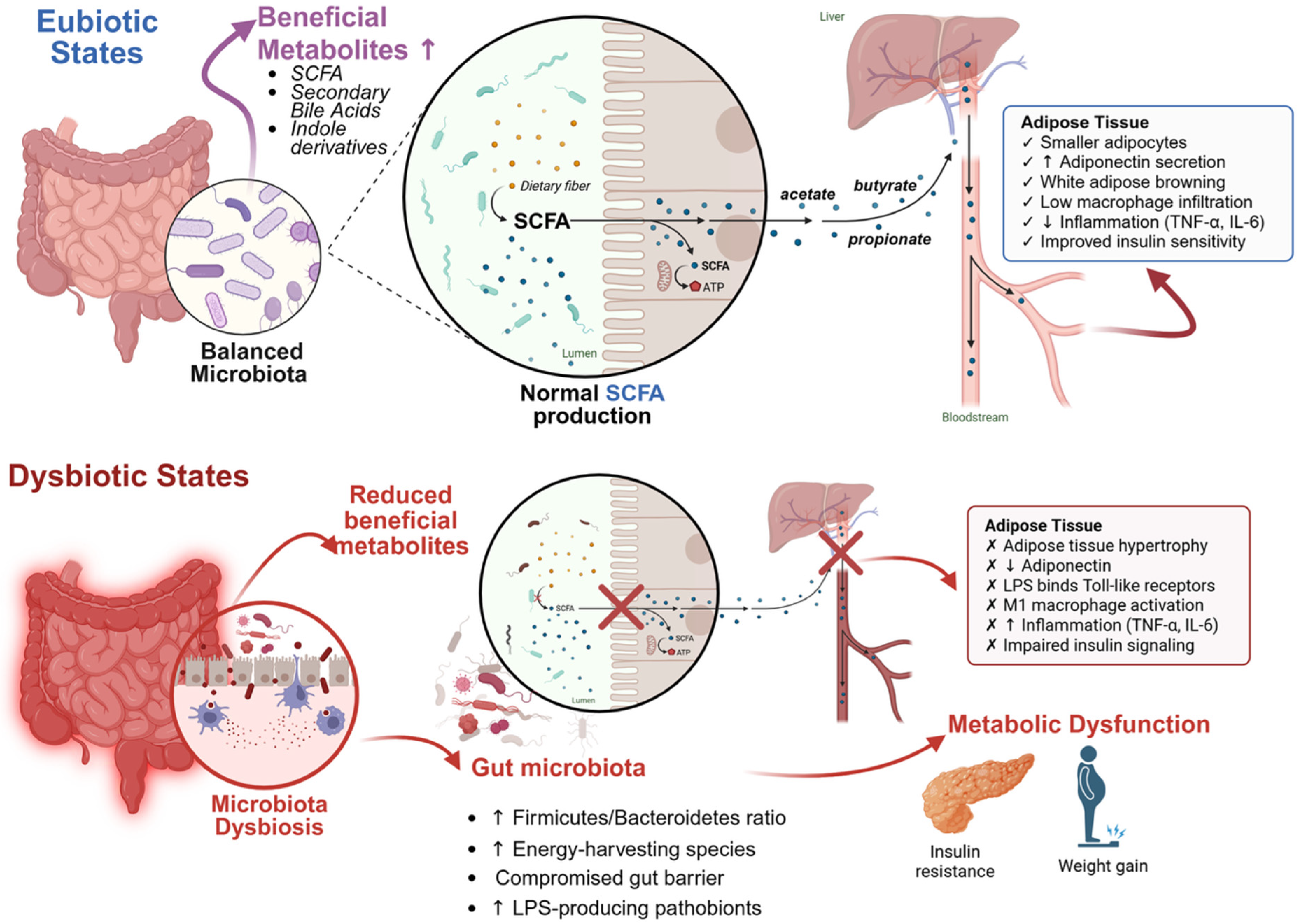
| Component | Role in Obesity | Mechanism | References |
|---|---|---|---|
| Firmicutes/Bacteroidetes Ratio | Increased ratio associated with obesity and enhanced energy harvest | Increased capacity for polysaccharide fermentation and SCFA production; enhanced caloric extraction from diet | [18,19] |
| Short-Chain Fatty Acids (SCFAs) | Dual role: energy source and metabolic regulators | Acetate, propionate, and butyrate serve as substrates for lipogenesis; activate GPR41/GPR43 receptors; influence satiety hormones (GLP-1, PYY) | [20,21] |
| Lipopolysaccharide (LPS) | Promotes metabolic endotoxemia and low-grade inflammation | Increased gut permeability leads to LPS translocation; activates TLR4 signaling in adipocytes; induces inflammatory cytokine production | [22,23,24] |
| Akkermansia muciniphila | Protective against obesity and metabolic dysfunction | Strengthens gut barrier integrity; reduces inflammation; improves glucose homeostasis; increases mucus layer thickness | [4,25,26] |
| Bile Acids | Regulate lipid and glucose metabolism | Modified by gut bacteria; act as signaling molecules via FXR and TGR5 receptors; influence energy expenditure in adipose tissue | [27,28] |
| Gut Barrier Dysfunction | Increased permeability promotes obesity-related inflammation | Disrupted tight junctions allow bacterial translocation; triggers immune activation in adipose tissue; promotes insulin resistance | [29] |
| Microbial Metabolites (Branched-Chain Amino Acids) | Elevated levels associated with insulin resistance and obesity | Produced by specific bacterial taxa; interfere with insulin signaling; promote inflammation in adipose tissue | [30] |
| Lactobacillus and Bifidobacterium species | Generally protective; reduced abundance in obesity | Produce antimicrobial compounds; strengthen gut barrier; reduce inflammation; modulate fat storage | [31] |
| Trimethylamine-N-oxide (TMAO) | Pro-obesogenic and pro-inflammatory metabolite | Derived from dietary choline/L-carnitine via microbial TMA production; promotes adipose tissue inflammation and insulin resistance | [32] |
| Adipose Tissue Macrophages | Infiltration increased by microbiota-derived signals | LPS and other bacterial products activate inflammatory pathways; M1 polarization promotes insulin resistance; chronic inflammation perpetuates obesity | [33] |
| Gut-Brain-Adipose Axis | Microbiota influences appetite and fat distribution via neural pathways | Bacterial metabolites affect vagal signaling; modulate hypothalamic appetite centers; influence sympathetic nervous system activity in adipose tissue | [34] |
| Mucin-Degrading Bacteria | Increased abundance in obesity disrupts gut barrier | Erosion of mucus layer increases host–microbiota proximity; facilitates LPS translocation and inflammation | [35] |
| Algae Type | Dose | Duration | Sample Size | Key Findings | References |
|---|---|---|---|---|---|
| Himanthalia elongata (whole brown seaweed) | 2 g/day | 30 days | 40 overweight adults | ↑ Parabacteroides, Bacteroides, SCFA-producers; improved microbiota diversity | [7] |
| Alginate | 15 g/day | 14 weeks | 96 overweight/obese adults | Significant weight loss (−1.8 kg vs. placebo); altered gut microbiota; ↑ fecal bile acid excretion | [90] |
| Spirulina | 1–8 g/day | 8–24 weeks | 11 RCTs, 450 participants | Mean weight reduction: −1.56 kg; greater effect in obese (−2.0 kg); ↓ body fat %, ↓ waist circumference | [37] |
| Fucoxanthin | 12 mg/day | 12 weeks | 28 metabolic syndrome patients | Weight loss: −1.5 kg; ↓ BMI, ↓ waist; improved insulin sensitivity; ↓ blood pressure and triglycerides | [61] |
| Ascophyllum nodosum enriched bread | 4% seaweed | 6 weeks | 38 overweight males | ↓ subsequent energy intake; ↑ Bifidobacterium; improved satiety | [92] |
| Rhamnan sulfate (green algae) | 100 mg/day | 2 weeks | 24 adults with constipation | ↑ stool frequency; ↑ Bacteroidetes, ↓ Clostridia; improved GI function | [72] |
Disclaimer/Publisher’s Note: The statements, opinions and data contained in all publications are solely those of the individual author(s) and contributor(s) and not of MDPI and/or the editor(s). MDPI and/or the editor(s) disclaim responsibility for any injury to people or property resulting from any ideas, methods, instructions or products referred to in the content. |
© 2025 by the authors. Licensee MDPI, Basel, Switzerland. This article is an open access article distributed under the terms and conditions of the Creative Commons Attribution (CC BY) license (https://creativecommons.org/licenses/by/4.0/).
Share and Cite
Limijadi, E.K.S.; Tjandra, K.C.; Permatasari, H.K.; Augusta, P.S.; Surya, R.; Harbuwono, D.S.; Nurkolis, F. Marine-Algal-Derived Postbiotics Modulating the Gut Microbiota–Adipose Tissue Axis in Obesity: A New Frontier. Nutrients 2025, 17, 3774. https://doi.org/10.3390/nu17233774
Limijadi EKS, Tjandra KC, Permatasari HK, Augusta PS, Surya R, Harbuwono DS, Nurkolis F. Marine-Algal-Derived Postbiotics Modulating the Gut Microbiota–Adipose Tissue Axis in Obesity: A New Frontier. Nutrients. 2025; 17(23):3774. https://doi.org/10.3390/nu17233774
Chicago/Turabian StyleLimijadi, Edward Kurnia Setiawan, Kevin Christian Tjandra, Happy Kurnia Permatasari, Piko Satria Augusta, Reggie Surya, Dante Saksono Harbuwono, and Fahrul Nurkolis. 2025. "Marine-Algal-Derived Postbiotics Modulating the Gut Microbiota–Adipose Tissue Axis in Obesity: A New Frontier" Nutrients 17, no. 23: 3774. https://doi.org/10.3390/nu17233774
APA StyleLimijadi, E. K. S., Tjandra, K. C., Permatasari, H. K., Augusta, P. S., Surya, R., Harbuwono, D. S., & Nurkolis, F. (2025). Marine-Algal-Derived Postbiotics Modulating the Gut Microbiota–Adipose Tissue Axis in Obesity: A New Frontier. Nutrients, 17(23), 3774. https://doi.org/10.3390/nu17233774