


Targeting Aging and Longevity with Exogenous Nucleotides (TALENTs): Rationale, Design, and Baseline Characteristics from a Randomized Controlled Trial in Older Adults

 , and
, and 
Abstract
1. Introduction
2. Methods
2.1. Trial Design
2.2. Ethic Committee Review and Approval
2.3. Sample Size Calculation
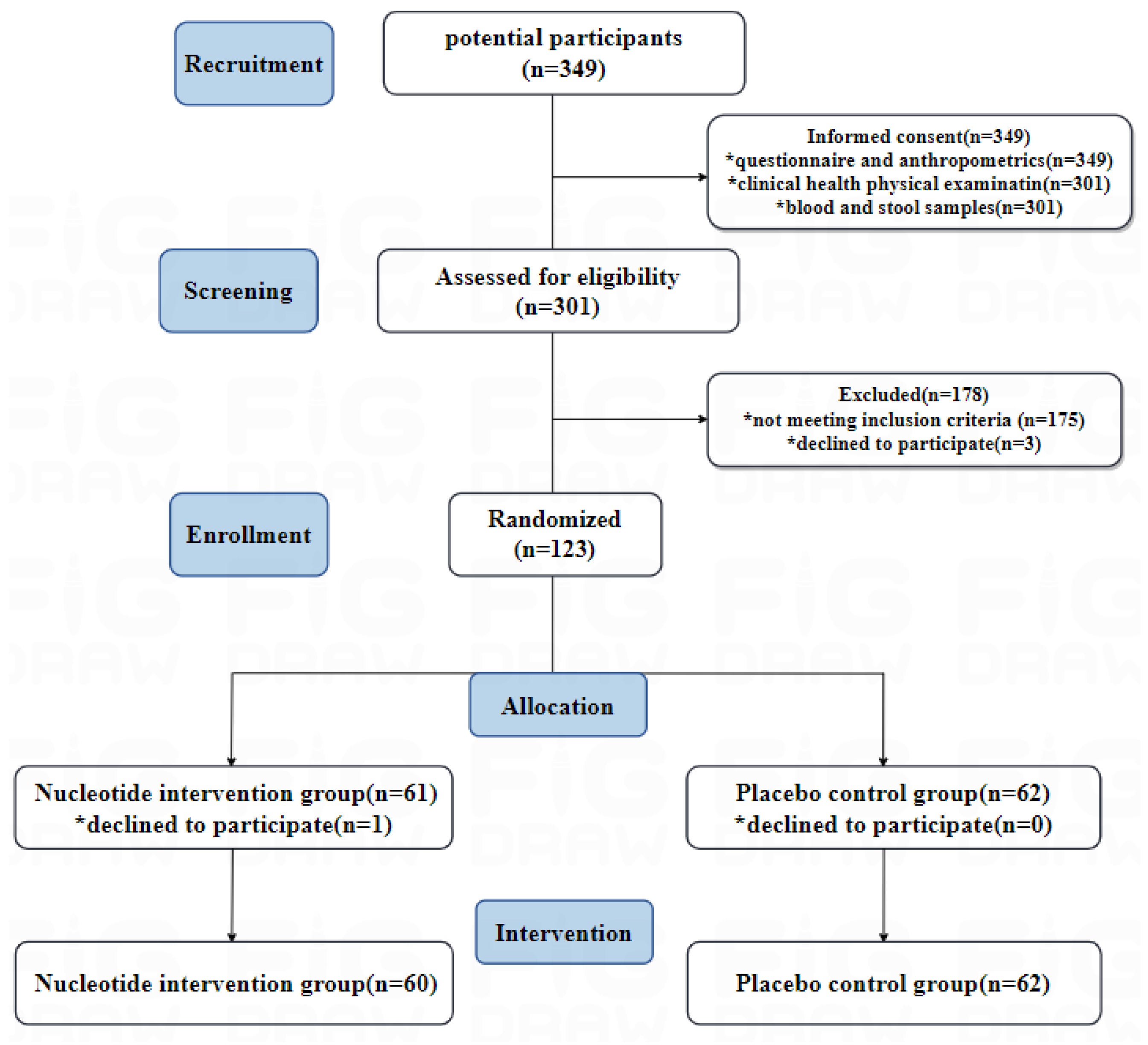
2.4. Recruitment and Eligibility Criteria
2.5. Interventions
2.6. Randomization and Blinding
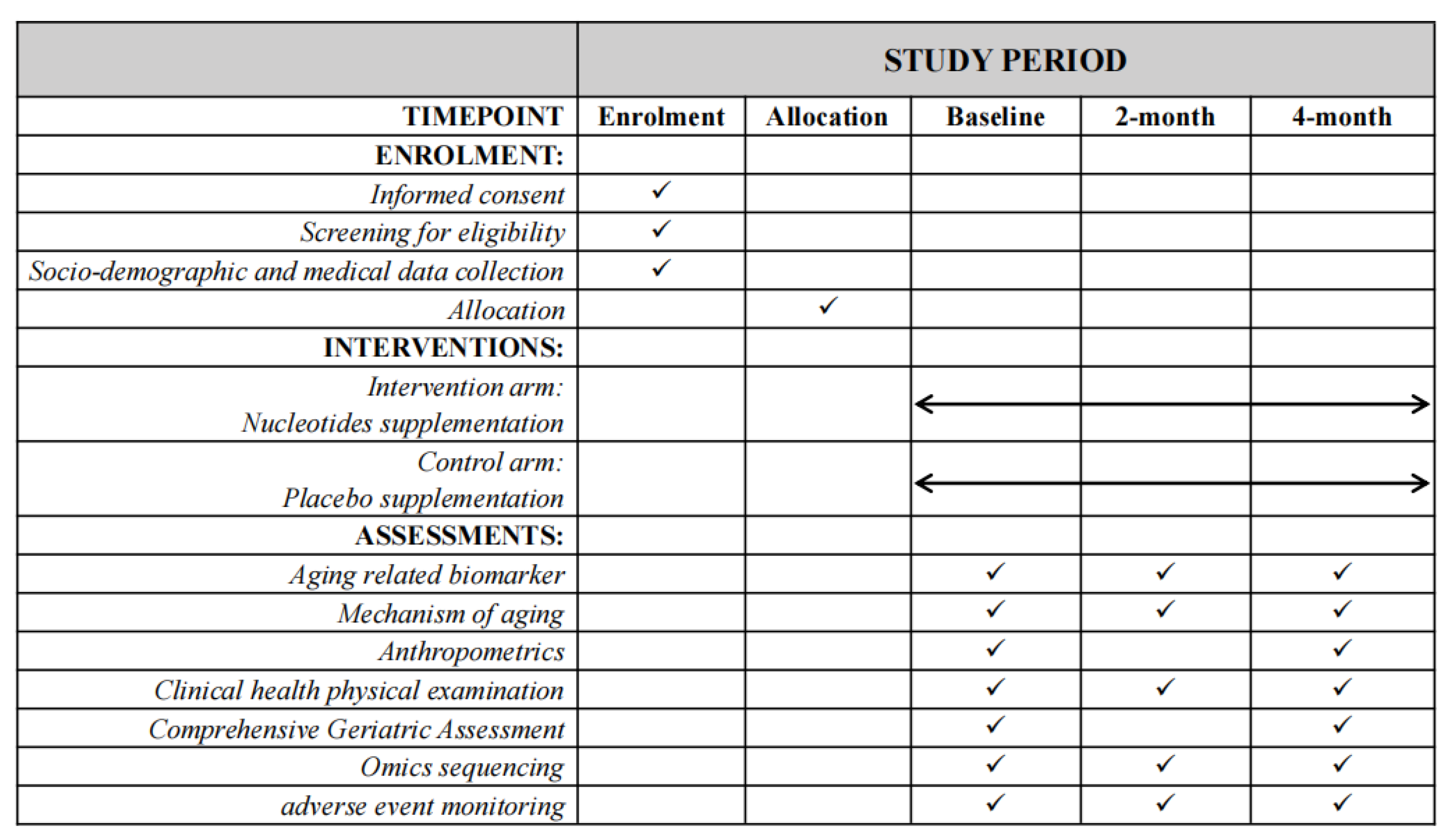
2.7. Follow-Up
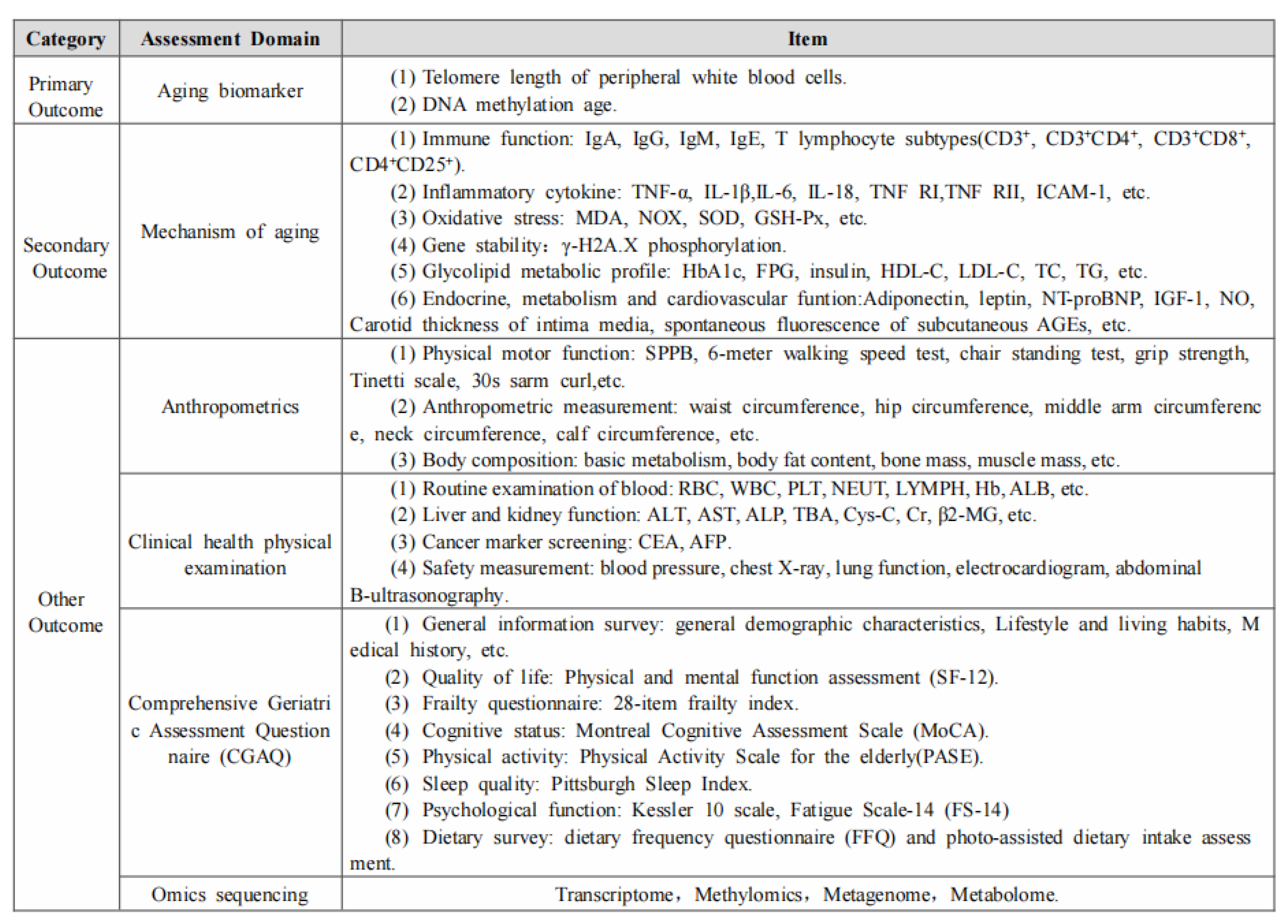
2.8. Outcomes
2.8.1. Primary Outcomes
- (1)
- Leukocyte telomere length: telomeres are repetitive nucleotide elements at the end of chromosomes that protect chromosomes from degradation and genetic information loss. In this study, leukocyte telomere length was measured using quantitative polymerase chain reaction assay and reported as T/S ratios (the relative ratio of telomere repeat copy number to single-copy gene) [41].
- (2)
- DNAm clocks: the DNAm clock, an algorithm that combines DNAm measurement information in the genome to quantify biological age changes, is considered a highly accurate molecular correlation of the true age of humans and can detect DNA methylation age reversal up to three months ahead of the respective individual clocks, so it has the potential to quantify biological aging and test life expectancy or assess intervention effectiveness [42,43,44].
2.8.2. Secondary Outcomes
- (1)
- Immune function: general parameters of immune health that are known to change with age were assessed as described, including IgA, IgG, IgM, IgE, and PBMCs (peripheral blood mononuclear cells) analyzed by FACS to assess the proportion and number of T lymphocyte subtypes (CD3+, CD3+CD4+, CD3+CD8+, CD4+CD25+);
- (2)
- Serum cytokine levels: SASP is a consequence of cell senescence and may occur in cells that, though undergoing cell cycle arrest, are still metabolically active and secrete proteins [45,46]. Luminex-based assays were be used, as these allow simultaneous measurement of different cytokines (TNF-α, IL-1β, IL-6, IL-18, TNF RI, TNF RII, ICAM-1, etc.);
- (3)
- Oxidative stress: enzyme-linked immunosorbent assay (ELISA) kits were used to detect the level of serum oxidative (MDA, NOX, SOD, GSH-Px, etc.);
- (4)
- (5)
- Glycolipid metabolic profile: glucose, insulin, total cholesterol, HDL-C, LDL-C, triglycerides, etc.;
- (6)
- Endocrine and cardiovascular function: adiponectin, leptin, NT-proBNP, IGF-1, NO, carotid thickness of intima-media, spontaneous fluorescence of subcutaneous AGEs. etc.
2.8.3. Other Outcomes
Geriatric Assessment Questionnaire (CGAQ)
- (1)
- General information survey: demographic characteristics, including date of birth, occupation, education level, economic status, family status, etc.; lifestyle and living habits (smoking, drinking, tea, sports, etc.); the number of available teeth (including dentures) and the loss of teeth in the past one year; medical history (hypertension, coronary heart disease, obesity and other diseases); health food consumption, drug application history; expenditure on health, including physical examination, medicine, hospital expenses, etc.;
- (2)
- Quality of life: assessment of physical and mental functioning (SF-12) [49];
- (3)
- Frailty questionnaire: 28-item frailty index [50];
- (4)
- Cognitive status: Montreal Cognitive Assessment Scale (MoCA) [51];
- (5)
- Physical activity: Physical Activity Scale for the Elderly (PASE) [52];
- (6)
- Sleep quality: Pittsburgh Sleep Index [53];
- (7)
- (8)
- Dietary survey: dietary data were collected at baseline and after intervention using a 3 day, 24 h photo-assisted dietary intake assessment method to assess dietary stability during the trial [56]. The Food Frequency Questionnaire (FFQ) was used to measure the intake of foods rich in nucleotides, including seasonings high in nucleotides, to assess daily dietary nucleotide intake.
Anthropometry and Physical Function
Clinical Health Physical Examination and Safety
Multi-Omics Sequencing
2.9. Statistical Analysis
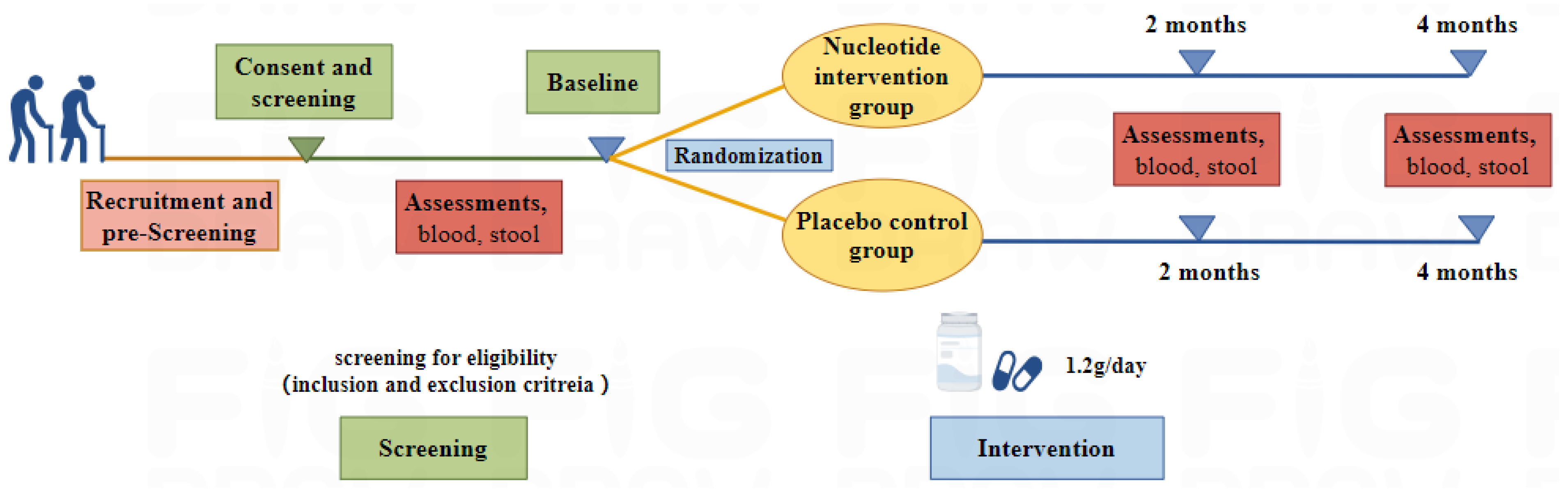
2.10. Procedures
- (1)
- Recruitment and screening period: physical examination in the partner hospital (blood and stool samples retained at the same time), questionnaire survey, and other items were completed. Questionnaires were completed by trained investigators and participants face-to-face. At the same time, participants were required to carry their past medical records and current medication and health supplements for on-site registration. According to the physical examination results, the subjects unfit to be enrolled were excluded;
- (2)
- Initiation and follow-up period: during the intervention period, follow-up staffs are responsible for dispensing, reviewing, and documenting medications. Intervention capsules were distributed biweekly by follow-up staff during home visits. Old packaging products were collected for verification purposes and compliance is documented. Participants’ physical activity levels, dietary patterns, changes in medication, and any adverse events experienced within the past two weeks were assessed and recorded by follow-up staff. At 2 and 4 months after the start of the intervention, physical examinations, questionnaires, and biological samples were obtained following the same procedures as at baseline.
- (3)
- Final period: 4 months after the intervention, the project ended. Participants who successfully complete the project will receive compensation. At the end of the trial, we unblinded.
2.11. Quality Control
- (1)
- Research design stage: review the relevant literature, understand the general situation of relevant research, and design the scheme according to the research purpose; simplify the study design process to minimize unnecessary inquiries and checks; For subjective data collection, standardized scales with high reliability, validity and responsiveness should were used as far as possible. The self-designed questionnaire and the medical records of the subjects were conducted in a small-scale pre-survey among the population before the formal experiment, and then discussed and evaluated with relevant experts and investigators. The final draft was revised several times according to the feedback;
- (2)
- Investigator training: the sample collection and data measurement of the subjects was carried out by professional medical workers or trained qualified investigators in the physical examination hospital, and the measurements of each indicator were completed by the same personnel. The investigators were trained and passed the examination;
- (3)
- Intervention follow-up stage: during the intervention period, we always communicated with the subjects, and subjects’ medication and lifestyle remained unchanged, we strengthened education to improve the correct understanding and complianceof subjects to the research protocol; simplified study procedures and reduced the number of questions and tests to improve patient patience. Daily supervision was strengthened during the follow-up period, and the compliance of subjects was improved through the daily punch card exchange reward mechanism. We provided a high quality and free medical question answering service for the subjects;
- (4)
- Data collection stage: we standardized the basic operation and process of implementation and organized the research subjects to carry out physical examination and questionnaire surveys on time. We strengthened the communication between investigators and research subjects, eliminated the concerns of survey subjects about this study, unified the measurement standards of indicators, reduced information bias, maintained a neutral investigation attitude, and improved the compliance of research subjects.
- (5)
- Result analysis stage: Epidata and excel built databases were used to ensure parallel double entry and verification of data. We selected correct statistical analysis methods, and used blind methods for technical personnel, including subject sample processing and statistical analysis, to reduce measurement bias.
- (6)
- Data management: according to the original observation records of the subjects, the researcher loaded the data into the physical examination data sheet and various questionnaires in a timely, complete, correct and clear manner. The survey form, which has been reviewed and signed by the Ombudsman, was sent to the research data manager in a timely manner. The corresponding database system was used for two-person and two-machine input, and then the database was compared twice. After all the physical examination data sheets and various questionnaires were entered and verified correctly, the data manager wrote the database inspection report, which included the study completion status (including the list of dropped subjects), inclusion/exclusion criteria, integrity checks, logical consistency checks, outlier data checks, time window checks, drug combination checks, and adverse event checks. After data entry and verification were completed as required, the physical examination data sheets and various questionnaires were filed and stored in numbered order and filled with search directories for reference. Electronic data files, including databases, inspection programs, analysis programs, analysis results, coding and explanatory files, should be classified and stored in different disks or recording media with multiple backups, properly stored to prevent damage. All original files were kept for the period specified accordingly.
3. Results
4. Discussions
5. Conclusions
Supplementary Materials
Author Contributions
Funding
Institutional Review Board Statement
Informed Consent Statement
Data Availability Statement
Acknowledgments
Conflicts of Interest
References
- Kennedy, B.K.; Berger, S.L.; Brunet, A.; Campisi, J.; Cuervo, A.M.; Epel, E.S.; Franceschi, C.; Lithgow, G.J.; Morimoto, R.I.; Pessin, J.E.; et al. Geroscience: Linking Aging to Chronic Disease. Cell 2014, 159, 708–712. [Google Scholar] [CrossRef] [Scilit]
- Kirkwood, T.B.L. Understanding the odd science of aging. Cell 2005, 120, 437–447. [Google Scholar] [CrossRef] [Scilit] [PubMed]
- Lopez-Otin, C.; Blasco, M.A.; Partridge, L.; Serrano, M.; Kroemer, G. Hallmarks of aging: An expanding universe. Cell 2023, 186, 243–278. [Google Scholar] [CrossRef] [Scilit]
- Campisi, J.; Kapahi, P.; Lithgow, G.J.; Melov, S.; Newman, J.C.; Verdin, E. From discoveries in ageing research to therapeutics for healthy ageing. Nature 2019, 571, 183–192. [Google Scholar] [CrossRef] [Scilit] [PubMed]
- Crimmins, E.; Vasunilashorn, S.; Kim, J.K.; Alley, D. Biomarkers related to aging in human populations. Adv. Clin. Chem. 2008, 46, 161–216. [Google Scholar] [PubMed]
- Gonzalez-Freire, M.; Diaz-Ruiz, A.; Hauser, D.; Martinez-Romero, J.; Ferrucci, L.; Bernier, M.; de Cabo, R. The road ahead for health and lifespan interventions. Ageing Res. Rev. 2020, 59, 101037. [Google Scholar] [CrossRef] [Scilit]
- Zhavoronkov, A.; Li, R.; Ma, C.; Mamoshina, P. Deep biomarkers of aging and longevity: From research to applications. Aging 2019, 11, 10771–10780. [Google Scholar] [CrossRef] [Scilit]
- Xu, K.; Guo, Y.; Li, Z.; Wang, Z. Aging Biomarkers and Novel Targets for Anti-Aging Interventions. Adv. Exp. Med. Biol. 2019, 1178, 39–56. [Google Scholar] [PubMed]
- Sánchez-Pozo, A.; Gil, A. Nucleotides as semiessential nutritional components. Br. J. Nutr. 2002, 87, S135–S137. [Google Scholar] [CrossRef] [Scilit]
- Ding, T.; Song, G.; Liu, X.; Xu, M.; Li, Y. Nucleotides as optimal candidates for essential nutrients in living organisms: A review. J. Funct. Foods 2021, 82, 104498. [Google Scholar] [CrossRef] [Scilit]
- Singhal, A.; Macfarlane, G.T.; Macfarlane, S.; Lanigan, J.; Kennedy, K.; Elias-Jones, A.; Stephenson, T.; Dudek, P.; Lucas, A. Dietary nucleotides and fecal microbiota in formula-fed infants: A randomized controlled trial. Am. J. Clin. Nutr. 2008, 87, 1785–1792. [Google Scholar] [CrossRef] [Scilit] [PubMed]
- Singhal, A.; Kennedy, K.; Lanigan, J.; Clough, H.; Jenkins, W.; Elias-Jones, A.; Stephenson, T.; Dudek, P.; Lucas, A. Dietary Nucleotides and Early Growth in Formula-Fed Infants: A Randomized Controlled Trial. Pediatrics 2010, 126, E946–E953. [Google Scholar] [CrossRef] [Scilit] [PubMed]
- Grimble, G.K.; Westwood, O.M. Nucleotides as immunomodulators in clinical nutrition. Curr. Opin. Clin. Nutr. Metab. Care 2001, 4, 57–64. [Google Scholar] [CrossRef] [Scilit] [PubMed]
- Wang, L.; Mu, S.; Xu, X.; Shi, Z.; Shen, L. Effects of dietary nucleotide supplementation on growth in infants: A meta-analysis of randomized controlled trials. Eur. J. Nutr. 2019, 58, 1213–1221. [Google Scholar] [CrossRef] [Scilit] [PubMed]
- Xu, M.; Ma, Y.; Xu, L.; Xu, Y.; Li, Y. Multigenerations Assessment of Dietary Nucleotides Consumption in Weaned Rats. Birth Defects Res. Part. B-Dev. Reprod. Toxicol. 2012, 95, 460–466. [Google Scholar] [CrossRef] [Scilit] [PubMed]
- Meihong, X.; Zhao, Y.M.; Xu, L.; Xu, Y.; Li, Y. Multi-Generations Assessment of Dietary Nucleotides Consumption in Maternal Rats. Birth Defects Res. Part. B-Dev. Reprod. Toxicol. 2014, 2, 800–805. [Google Scholar] [CrossRef] [Scilit]
- Xu, Y.; Li, Y. Safety assessment of exogenous nucleotides on embryonic and infant development: A multigeneration study in rats. Ann. Nutr. Metab. 2009, 55, 629. [Google Scholar]
- Xu, M.; Liang, R.; Guo, Q.; Wang, S.; Zhao, M.; Zhang, Z.; Wang, J.; Li, Y. Dietary nucleotides extend the life span in Sprague-Dawley rats. J. Nutr. Health Aging 2013, 17, 223–229. [Google Scholar] [CrossRef] [Scilit]
- Bryan, T.M. Nucleotide metabolism regulates human telomere length via telomerase activation. Nat. Genet. 2023, 55, 532–533. [Google Scholar] [CrossRef] [Scilit]
- Mannherz, W.; Agarwal, S. Thymidine nucleotide metabolism controls human telomere length. Nat. Genet. 2023, 55, 568–585. [Google Scholar] [CrossRef] [Scilit]
- Mao, D.; Xu, M.; Jiang, Q.; Sun, H.; Sun, F.; Yang, R.; Chai, Y.; Li, X.; Li, B.; Li, Y. A Single Nucleotide Mixture Enhances the Antitumor Activity of Molecular-Targeted Drugs Against Hepatocellular Carcinoma. Front. Pharmacol. 2022, 13, 951831. [Google Scholar] [CrossRef] [Scilit]
- Yamamoto, S.; Wang, M.F.; Adjei, A.A.; Ameho, C.K. Role of nucleosides and nucleotides in the immune system, gut reparation after injury, and brain function. Nutrition 1997, 13, 372–374. [Google Scholar] [CrossRef] [Scilit] [PubMed]
- Xu, M.; Zhao, M.; Yang, R.; Zhang, Z.; Li, Y.; Wang, J. Effect of dietary nucleotides on immune function in Balb/C mice. Int. Immunopharmacol. 2013, 17, 50–56. [Google Scholar] [CrossRef] [Scilit] [PubMed]
- Sudo, N.; Aiba, Y.; Takaki, A.; Tanaka, K.; Yu, X.N.; Oyama, N.; Koga, Y.; Kubo, C. Dietary nucleic acids promote a shift in Th1/Th2 balance toward Th1-dominant immunity. Clin. Exp. Allergy 2000, 30, 979–987. [Google Scholar] [CrossRef] [Scilit] [PubMed]
- Zhu, N.; Liu, X.; Xu, M.; Li, Y. Dietary Nucleotides Retard Oxidative Stress-Induced Senescence of Human Umbilical Vein Endothelial Cells. Nutrients 2021, 13, 3279. [Google Scholar] [CrossRef] [Scilit] [PubMed]
- Wang, X.; Liu, R.; Wei, C.; Xu, M.; Li, Y. Exogenous Nucleotides Improved the Oxidative Stress and Sirt-1 Protein Level of Brown Adipose Tissue on Senescence-Accelerated Mouse Prone-8 (SAMP8) Mice. Nutrients 2022, 14, 2796. [Google Scholar] [CrossRef] [Scilit] [PubMed]
- Dong, W.; Wu, Z.; Xu, L.; Fang, Y.; Xu, Y. Maternal supplementation of nucleotides improves the behavioral development of prenatal ethanol-exposed mice. Cogn. Affect. Behav. Neurosci. 2014, 14, 879–890. [Google Scholar] [CrossRef] [Scilit] [PubMed]
- Chen, T.H.; Wang, M.F.; Liang, Y.F.; Komatsu, T.; Chan, Y.C.; Chung, S.Y.; Yamamoto, S. A nucleoside-nucleotide mixture may reduce memory deterioration in old senescence-accelerated mice. J. Nutr. 2000, 130, 3085–3089. [Google Scholar] [CrossRef] [Scilit] [PubMed]
- Xu, M.; Liang, R.; Li, Y.; Wang, J. Anti-fatigue effects of dietary nucleotides in mice. Food Nutr. Res. 2017, 61, 1334485. [Google Scholar] [CrossRef] [Scilit]
- Cai, X.; Bao, L.; Wang, N.; Ren, J.; Chen, Q.; Xu, M.; Li, D.; Mao, R.; Li, Y. Dietary nucleotides protect against alcoholic liver injury by attenuating inflammation and regulating gut microbiota in rats. Food Funct. 2016, 7, 2898–2908. [Google Scholar] [CrossRef] [Scilit]
- Li, Y.; Xu, M.; Wang, J.; Mao, R. Long-term dietary nucleotides supplements and liver fibrosis in aging rats: A miRNA investigation. Ann. Nutr. Metab. 2017, 71, 1172. [Google Scholar]
- You, M.; Liu, R.; Wei, C.; Wang, X.; Yu, X.; Li, Z.; Mao, R.; Hu, J.; Zhu, N.; Liu, X.; et al. Exogenous Nucleotides Ameliorate Ageing-Related Intestinal Inflammation in Senescence-Accelerated Mouse Prone-8 (SAMP8) Mice. Nutrients 2023, 15, 2533. [Google Scholar] [CrossRef] [Scilit]
- Bao, L.; Xiao, Y.; Cai, X.; Wang, N.; Li, Y. Effects of 5’-nucleotides on the injury of colon function induced by chronic alcoholism in rats. Sci. Technol. Food Ind. 2017, 38, 299–303. [Google Scholar]
- Bebawy, M.; Rasmussen, C.; Sambasivam, S.; Bao, S. Dietary Nucleotide Supplements in Infant Formula Modify the Expression of P-glycoprotein in the Intestinal Epithelium in vitro. Int. J. Vitam. Nutr. Res. 2009, 79, 381–387. [Google Scholar] [CrossRef] [Scilit] [PubMed]
- Ding, T.; Li, Y. Promoting Effect and Mechanism of Exogenous Nucleotides on the Growth of Lactobacillus casei Q1. Food Sci. 2021, 42, 201–207. [Google Scholar]
- Ding, T.; Xu, M.; Li, Y. An Overlooked Prebiotic: Beneficial Effect of Dietary Nucleotide Supplementation on Gut Microbiota and Metabolites in Senescence-Accelerated Mouse Prone-8 Mice. Front. Nutr. 2022, 9, 820799. [Google Scholar] [CrossRef] [Scilit]
- Yi, M.A.; Linlin, X.U.; Yajun, X.U.; Yong, L.I. Effect of Exogenous Nucleotides on Development in Two-generation Rats. Sci. Technol. Rev. 2010, 28, 25–29. [Google Scholar]
- Xu, M.; Ma, Y.; Xu, L.; Xu, Y.; Li, Y. Developmental Effects of Dietary Nucleotides in Second-Generation Weaned Rats. J. Med. Food 2013, 16, 1146–1152. [Google Scholar] [CrossRef] [Scilit]
- Zhu, N.; Liu, R.; Xu, M.-H.; Li, Y. Neuroprotective Actions of Different Exogenous Nucleotides in H2O2-Induced Cell Death in Pc-12 Cells. Molecules 2023, 28, 1226. [Google Scholar] [CrossRef] [Scilit]
- Aird, K.M.; Zhang, G.; Li, H.; Tu, Z.; Bitler, B.G.; Garipov, A.; Wu, H.; Wei, Z.; Wagner, S.N.; Herlyn, M.; et al. Suppression of Nucleotide Metabolism Underlies the Establishment and Maintenance of Oncogene-Induced Senescence. Cell Rep. 2013, 3, 1252–1265. [Google Scholar] [CrossRef] [Scilit]
- Lin, J.; Epel, E.; Cheon, J.; Kroenke, C.; Sinclair, E.; Bigos, M.; Wolkowitz, O.; Mellon, S.; Blackburn, E. Analyses and comparisons of telomerase activity and telomere length in human T and B cells: Insights for epidemiology of telomere maintenance. J. Immunol. Methods 2010, 352, 71–80. [Google Scholar] [CrossRef] [Scilit] [PubMed]
- Horvath, S.; Raj, K. DNA methylation-based biomarkers and the epigenetic clock theory of ageing. Nat. Rev. Genet. 2018, 19, 371–384. [Google Scholar] [CrossRef] [Scilit] [PubMed]
- Weidner, C.I.; Lin, Q.; Koch, C.M.; Eisele, L.; Beier, F.; Ziegler, P.; Bauerschlag, D.O.; Joeckel, K.-H.; Erbel, R.; Muehleisen, T.W.; et al. Aging of blood can be tracked by DNA methylation changes at just three CpG sites. Genome Biol. 2014, 15, R24. [Google Scholar] [CrossRef] [Scilit] [PubMed]
- Levine, M.E. Modeling the Rate of Senescence: Can Estimated Biological Age Predict Mortality More Accurately Than Chronological Age? J. Gerontol. A Biol. Sci. Med. Sci. 2013, 68, 667–674. [Google Scholar] [CrossRef] [Scilit] [PubMed]
- Tchkonia, T.; Zhu, Y.; van Deursen, J.; Campisi, J.; Kirkland, J.L. Cellular senescence and the senescent secretory phenotype: Therapeutic opportunities. J. Clin. Invest. 2013, 123, 966–972. [Google Scholar] [CrossRef] [Scilit] [PubMed]
- Franceschi, C.; Bonafè, M.; Valensin, S.; Olivieri, F.; De Luca, M.; Ottaviani, E.; De Benedictis, G. Inflamm-aging: An evolutionary perspective on immunosenescence. Ann. N. Y Acad. Sci. 2000, 908, 244–254. [Google Scholar] [CrossRef] [Scilit] [PubMed]
- Wang, C.; Jurk, D.; Maddick, M.; Nelson, G.; Martin-Ruiz, C.; von Zglinicki, T. DNA damage response and cellular senescence in tissues of aging mice. Aging Cell 2009, 8, 311–323. [Google Scholar] [CrossRef] [Scilit] [PubMed]
- Kuo, L.J.; Yang, L.-X. γ-H2AX: A novel biomarker for DNA double-strand breaks. In Vivo 2008, 22, 305–309. [Google Scholar] [PubMed]
- Ware, J.E.; Kosinski, M.; Keller, S.D. A 12-item short-form health survey—Construction of scales and preliminary tests of reliability and validity. Med. Care 1996, 34, 220–233. [Google Scholar] [CrossRef] [Scilit]
- Fan, J.; Yu, C.; Guo, Y.; Bian, Z.; Sun, Z.; Yang, L.; Chen, Y.; Du, H.; Li, Z.; Lei, Y.; et al. Frailty index and all-cause and cause-specific mortality in Chinese adults: A prospective cohort study. Lancet Public. Health 2020, 5, E650–E660. [Google Scholar] [CrossRef] [Scilit]
- Nasreddine, Z.S.; Phillips, N.A.; Bédirian, V.; Charbonneau, S.; Whitehead, V.; Collin, I.; Cummings, J.L.; Chertkow, H. The montreal cognitive assessment, MoCA: A brief screening tool for mild cognitive impairment. J. Am. Geriatr. Soc. 2005, 53, 695–699. [Google Scholar] [CrossRef] [Scilit] [PubMed]
- Washburn, R.A.; Smith, K.W.; Jette, A.M.; Janney, C.A. The physical activity scale for the elderly (PASE): Development and evaluation. J. Clin. Epidemiol. 1993, 46, 153–162. [Google Scholar] [CrossRef] [Scilit]
- Buysse, D.J.; Reynolds, C.F.; Monk, T.H.; Berman, S.R.; Kupfer, D.J. The Pittsburgh Sleep Quality Index: A new instrument for psychiatric practice and research. Psychiatry Res. 1989, 28, 193–213. [Google Scholar] [CrossRef] [Scilit]
- Brooks, R.T.; Beard, J.; Steel, Z. Factor structure and interpretation of the K10. Psychol. Assess. 2006, 18, 62–70. [Google Scholar] [CrossRef] [Scilit] [PubMed]
- Chalder, T.; Berelowitz, G.; Pawlikowska, T.; Watts, L.; Wessely, S.; Wright, D.; Wallace, E.P. Development of a fatigue scale. J. Psychosom. Res. 1993, 37, 147–153. [Google Scholar] [CrossRef] [Scilit]
- Fan, R.; Chen, Q.; Song, L.; Wang, S.; You, M.; Cai, M.; Wang, X.; Li, Y.; Xu, M. The Validity and Feasibility of Utilizing the Photo-Assisted Dietary Intake Assessment among College Students and Elderly Individuals in China. Nutrients 2024, 16, 211. [Google Scholar] [CrossRef] [Scilit]
- Dong, Y.; Lee, W.Y.; Hilal, S.; Saini, M.; Wong, T.Y.; Chen, C.L.-H.; Venketasubramanian, N.; Ikram, M.K. Comparison of the Montreal Cognitive Assessment and the Mini-Mental State Examination in detecting multi-domain mild cognitive impairment in a Chinese sub-sample drawn from a population-based study. Int. Psychogeriatr. 2013, 25, 1831–1838. [Google Scholar] [CrossRef] [Scilit]
- Blay, S.L.; Andreoli, S.B.; Gastal, F.L. Prevalence of self-reported sleep disturbance among older adults and the association of disturbed sleep with service demand and medical conditions. Int. Psychogeriatr. 2008, 20, 582–595. [Google Scholar] [CrossRef] [Scilit]

| Overall (n = 122) | Intervention Group (n = 60) | Control Group (n = 62) | p for Diff | |
|---|---|---|---|---|
| Age, years; mean ± SD | 65.65 ± 2.59 | 65.55 ± 2.63 | 65.74 ± 2.58 | 0.685 |
| Female, n (%) | 82(67.21) | 41(68.33) | 41(66.13) | 0.950 |
| Nationality, n (%) | ||||
| Han nationality | 121(99.18) | 59(98.33) | 62(100) | 0.492 |
| Marital status, n (%) | ||||
| single | 2(1.64) | 2(1.64) | 0(0) | 0.347 |
| married | 103(84.43) | 50(83.33) | 53(85.48) | |
| divorced/widowed | 17(13.93) | 8(13.33) | 9(6.45) | |
| Education level, n (%) | ||||
| primary school and below | 5(4.10) | 3(5.00) | 2(3.23) | 0.116 |
| Junior high school | 45(36.89) | 25(41.67) | 20(32.26) | |
| High school/technical secondary school | 42(34.43) | 23(38.33) | 19(30.65) | |
| University/college or above | 30(24.59) | 9(15.00) | 21(33.87) | |
| Living condition, n (%) | ||||
| Live alone | 10(8.20) | 5(8.33) | 5(8.06) | 0.957 |
| Non-solitary | 112(91.80) | 55(91.67) | 57(91.94) | |
| Monthly disposable income, n (%) | ||||
| <2000 | 18(14.75) | 9(15.00) | 9(14.52) | 0.851 |
| 2000–3500 | 47(38.52) | 25(41.67) | 22(35.48) | |
| 3501–5000 | 28(22.95) | 14(23.33) | 14(22.58) | |
| 5001–6500 | 20(16.39) | 9(15.00) | 11(17.74) | |
| >6500 | 9(7.38) | 3(5.00) | 6(9.68) | |
| Smoking status, n (%) | ||||
| Never smoked | 107(87.70) | 49(81.67) | 58(93.55) | 0.135 |
| Have quit smoking | 7(5.74) | 5(8.33) | 2(3.23) | |
| smoking | 8(6.56) | 6(10.00) | 2(3.23) | |
| Alcohol consumption, n (%) | ||||
| Never drank alcohol | 99(81.15) | 48(80.00) | 51(82.26) | 0.676 |
| Have stopped drinking | 6(4.92) | 4(6.67) | 2(3.23) | |
| drinking | 17(13.93) | 8(13.33) | 9(14.52) | |
| Comorbidities, n (%) | ||||
| Hypertension | 36(29.51) | 20(33.33) | 16(25.81) | 0.362 |
| Dyslipidemia | 10(8.20) | 2(3.33) | 8(12.90) | 0.095 |
| Diabetes | 17(13.93) | 9(15.00) | 8(12.90) | 0.738 |
| Cardiovascular disease | 66(54.10) | 37(61.67) | 29(46.77) | 0.099 |
| Chronic respiratory diseases | 40(32.79) | 22(36.67) | 18(29.03) | 0.369 |
| Fatty liver | 45(36.89) | 22(36.67) | 23(37.10) | 0.961 |
| Renal disease | 49(40.16) | 20(33.33) | 29(46.77) | 0.130 |
| Frailty index, mean ± SD | 0.11 ± 0.06 | 0.11 ± 0.06 | 0.10 ± 0.06 | 0.528 |
| Frailty statust, n (%) | ||||
| Robust | 60(49.18) | 27(45.00) | 33(53.23) | 0.547 |
| Prefrail | 57(46.72) | 31(51.67) | 26(41.94) | |
| Frail | 5(4.10) | 2(3.33) | 3(4.84) | |
| PASE, mean ± SD | 169.26 ± 51.93 | 161.98 ± 51.47 | 176.3 ± 51.82 | 0.128 |
| SF-12, mean ± SD | 108.00 ± 7.53 | 107.56 ± 7.26 | 108.42 ± 7.83 | 0.532 |
| Physical health | 52.26 ± 4.38 | 51.92 ± 3.94 | 52.58 ± 4.78 | 0.407 |
| Mental health | 55.75 ± 6.3 | 55.65 ± 6.00 | 55.84 ± 6.62 | 0.864 |
| MoCA, mean ± SD | 21.92 ± 3.86 | 21.5 ± 3.87 | 22.32 ± 3.84 | 0.241 |
| PSQI, mean ± SD | 4.89 ± 3.59 | 4.57 ± 3.3 | 5.21 ± 3.85 | 0.324 |
| Kessler 10 scale, mean ± SD | 11.61 ± 2.79 | 11.37 ± 2.03 | 11.84 ± 3.37 | 0.353 |
| FS-14, mean ± SD | 4.65 ± 3.46 | 5.1 ± 3.64 | 4.21 ± 3.24 | 0.156 |
| Physical Fatigue | 2.46 ± 2.29 | 2.75 ± 2.42 | 2.18 ± 2.14 | 0.168 |
| Mental fatigue | 2.19 ± 1.61 | 2.35 ± 1.69 | 2.03 ± 1.53 | 0.277 |
Disclaimer/Publisher’s Note: The statements, opinions and data contained in all publications are solely those of the individual author(s) and contributor(s) and not of MDPI and/or the editor(s). MDPI and/or the editor(s) disclaim responsibility for any injury to people or property resulting from any ideas, methods, instructions or products referred to in the content. |
© 2024 by the authors. Licensee MDPI, Basel, Switzerland. This article is an open access article distributed under the terms and conditions of the Creative Commons Attribution (CC BY) license (https://creativecommons.org/licenses/by/4.0/).
Share and Cite
Wang, S.; Song, L.; Fan, R.; Chen, Q.; You, M.; Cai, M.; Wu, Y.; Li, Y.; Xu, M. Targeting Aging and Longevity with Exogenous Nucleotides (TALENTs): Rationale, Design, and Baseline Characteristics from a Randomized Controlled Trial in Older Adults. Nutrients 2024, 16, 1343. https://doi.org/10.3390/nu16091343
Wang S, Song L, Fan R, Chen Q, You M, Cai M, Wu Y, Li Y, Xu M. Targeting Aging and Longevity with Exogenous Nucleotides (TALENTs): Rationale, Design, and Baseline Characteristics from a Randomized Controlled Trial in Older Adults. Nutrients. 2024; 16(9):1343. https://doi.org/10.3390/nu16091343
Chicago/Turabian StyleWang, Shuyue, Lixia Song, Rui Fan, Qianqian Chen, Mei You, Meng Cai, Yuxiao Wu, Yong Li, and Meihong Xu. 2024. "Targeting Aging and Longevity with Exogenous Nucleotides (TALENTs): Rationale, Design, and Baseline Characteristics from a Randomized Controlled Trial in Older Adults" Nutrients 16, no. 9: 1343. https://doi.org/10.3390/nu16091343
APA StyleWang, S., Song, L., Fan, R., Chen, Q., You, M., Cai, M., Wu, Y., Li, Y., & Xu, M. (2024). Targeting Aging and Longevity with Exogenous Nucleotides (TALENTs): Rationale, Design, and Baseline Characteristics from a Randomized Controlled Trial in Older Adults. Nutrients, 16(9), 1343. https://doi.org/10.3390/nu16091343

