Article

Dietary Habits, Nutrition Intake, and Alcohol Consumption Based on Types of Smoking and Smoking Status: A Cross-Sectional Study


1
Field of Food and Nutrition, Department of Living Environment, Graduate School of Home Economics, Kyoto Women’s University, Kyoto 605-8501, Japan
2
Department of Food and Nutrition, Graduate School of Home Economics, Kyoto Women’s University, Kyoto 605-8501, Japan
*
Author to whom correspondence should be addressed.
Nutrients 2024, 16(22), 3881; https://doi.org/10.3390/nu16223881
Submission received: 28 October 2024 / Revised: 9 November 2024 / Accepted: 12 November 2024 / Published: 14 November 2024
(This article belongs to the Section Nutritional Epidemiology)

Abstract

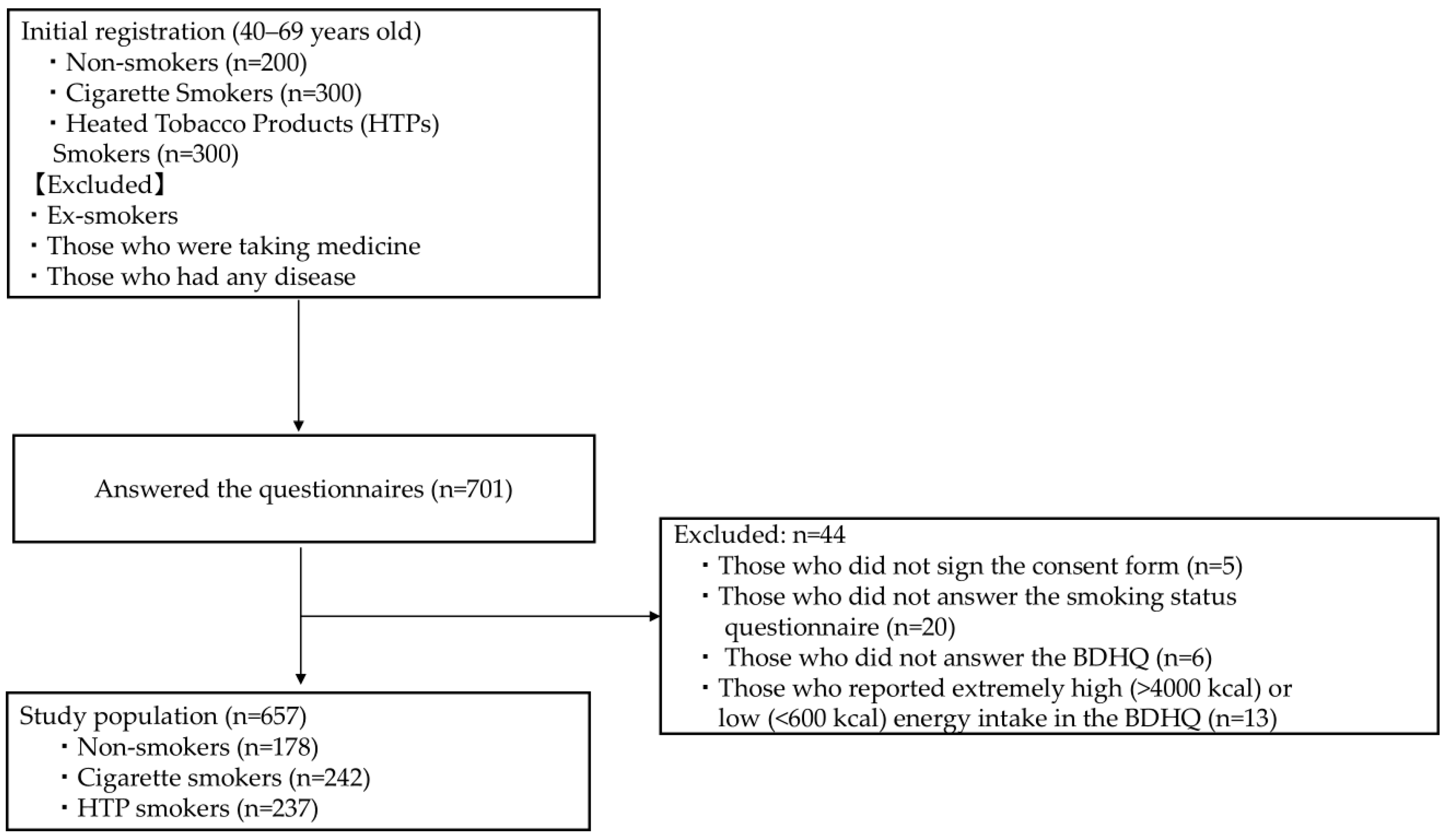
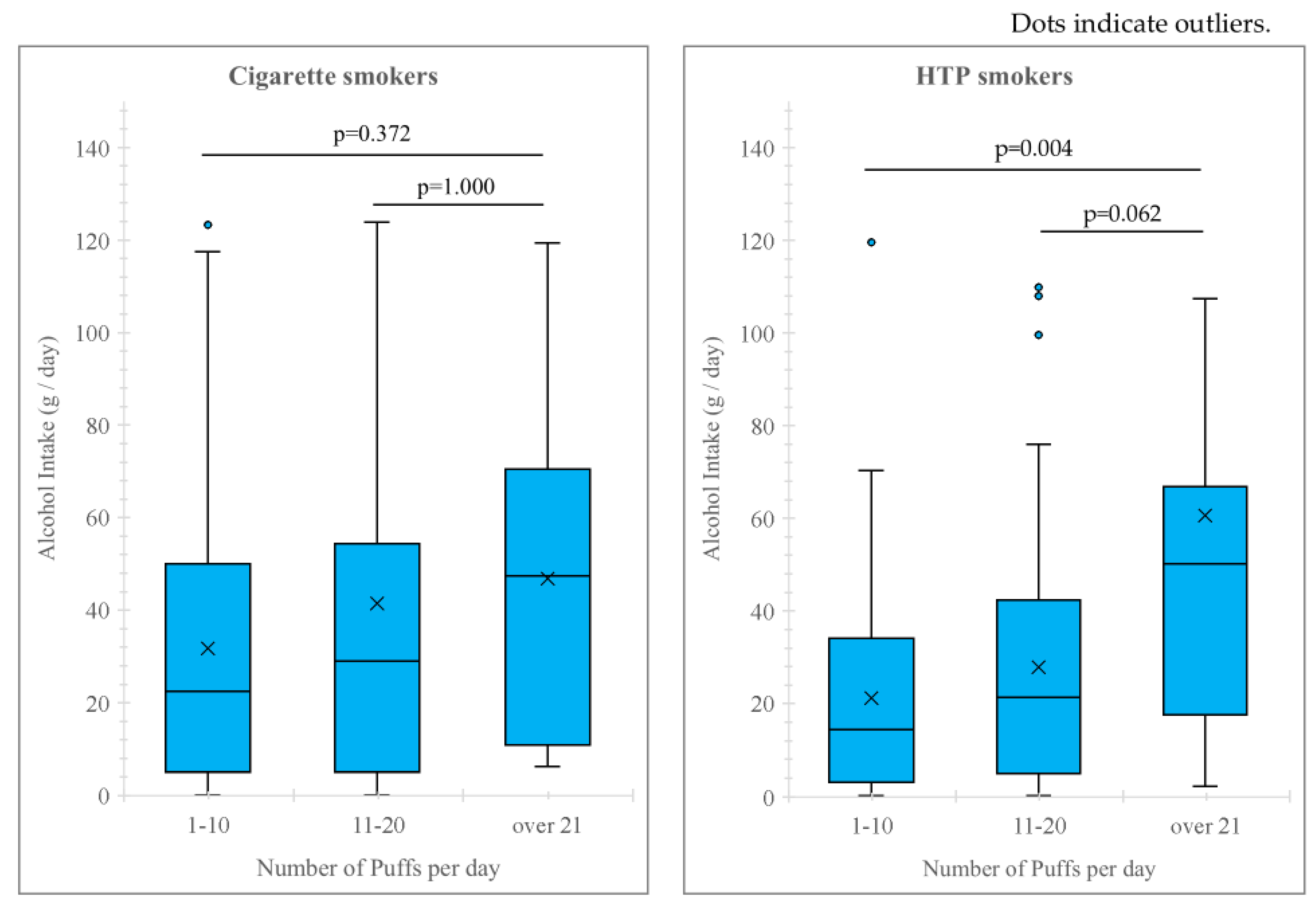
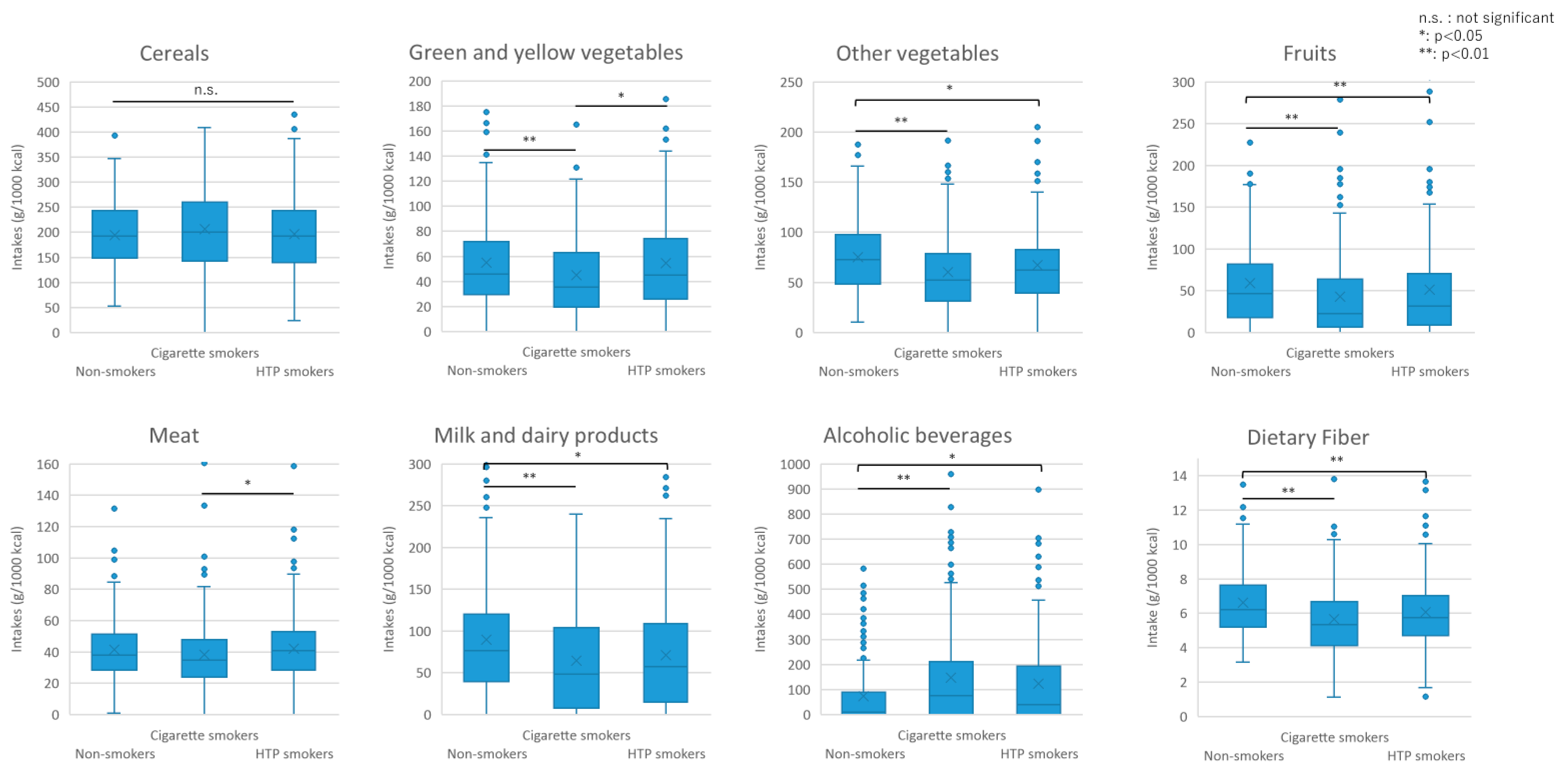
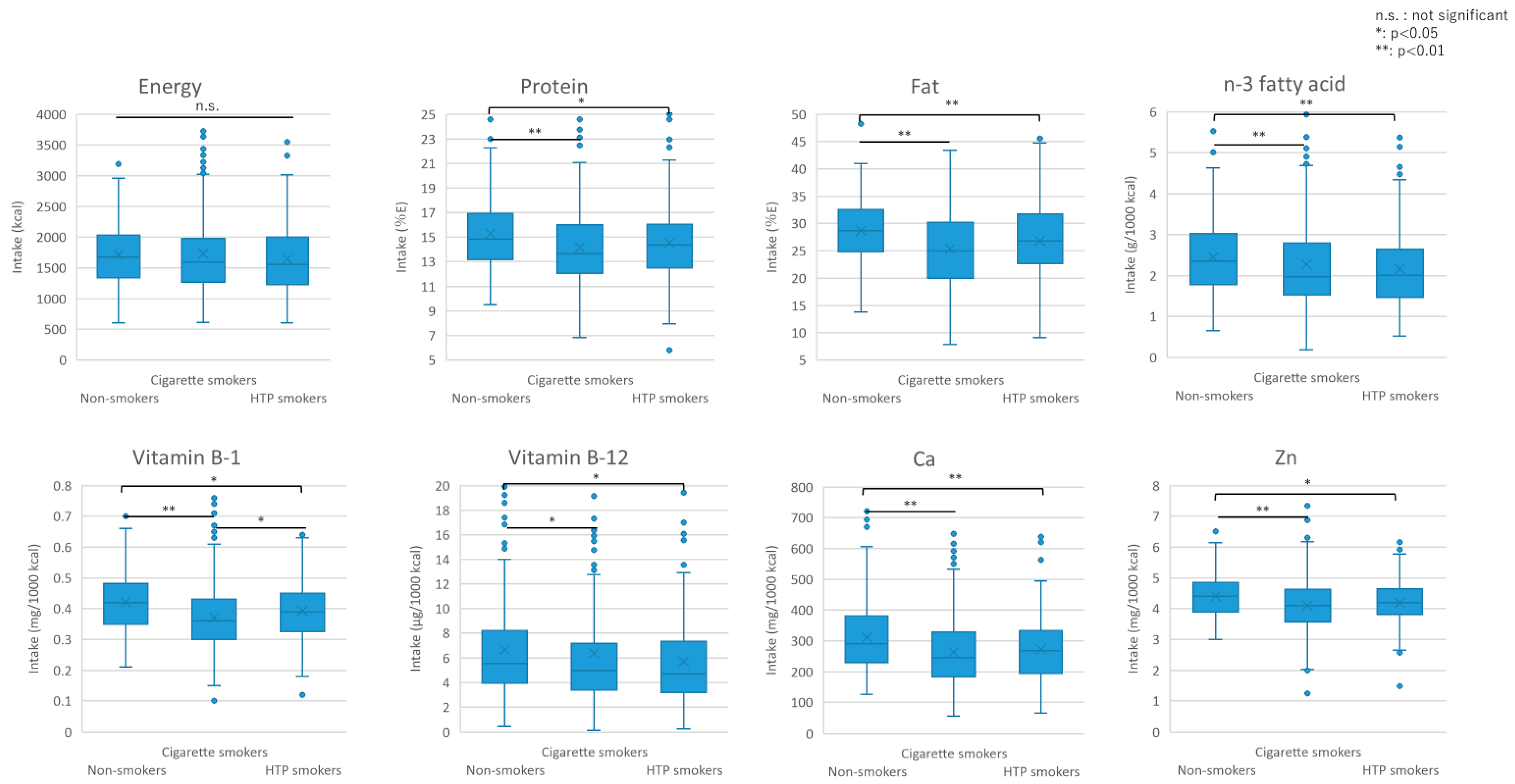
Background/objectives: Smoking increases the risk for multiple lifestyle-related diseases. In Japan, consumption of heated tobacco products (HTPs), a novel cigarette type, is rising. However, no studies have yet compared dietary habits among HTP smokers. This study assessed food and nutrient intake and alcohol consumption by smoking status (non-smokers, cigarette smokers, HTP smokers). Methods: This cross-sectional study included 237 HTP smokers, 242 cigarette smokers, and 178 non-smokers (50% each male and female). The Brief Self-Administered Diet History Questionnaire was administered as a nutritional survey, and smokers were asked about their smoking status, including smoking history and the number of puffs smoked per day. Results: A significantly higher intake of meat was seen in HTP smokers than in cigarette smokers (p = 0.038), and HTP smokers showed the lowest intake of vitamin D in all groups. HTP and cigarette smokers had a lower intake of certain vitamins, minerals, and dietary fiber compared with non-smokers. The rate of habitual drinkers (at least one drink a month) and their alcohol consumption (g/day) were significantly lower in non-smokers (58%, 1.3 g) than in HTP smokers (67%, 4.8 g) and cigarette smokers (70%, 7.1 g) (p = 0.031). Additionally, after adjusting for sex and smoking status in a multiple regression analysis, the number of puffs was a significant contributor to alcohol intake in HTP smokers (β = 0.296, p < 0.001). Conclusions: This study identified significant dietary, nutritional, and alcohol consumption differences based on smoking status, underscoring the need to consider both diet and smoking type in nutritional counseling and smoking cessation guidance.
Keywords: dietary intake; nutrition intake; heated tobacco product; smoker; alcohol dietary intake; nutrition intake; heated tobacco product; smoker; alcohol