Review

Vitamin D and Bone: A Story of Endocrine and Auto/Paracrine Action in Osteoblasts

by
Marjolein van Driel
* and
Johannes P. T. M. van Leeuwen
Department of Internal Medicine, Room Ee585c, Erasmus MC, Dr. Molewaterplein 40, 3015 GD Rotterdam, The Netherlands
*
Author to whom correspondence should be addressed.
Nutrients 2023, 15(3), 480; https://doi.org/10.3390/nu15030480
Submission received: 2 December 2022 / Revised: 11 January 2023 / Accepted: 12 January 2023 / Published: 17 January 2023

Abstract

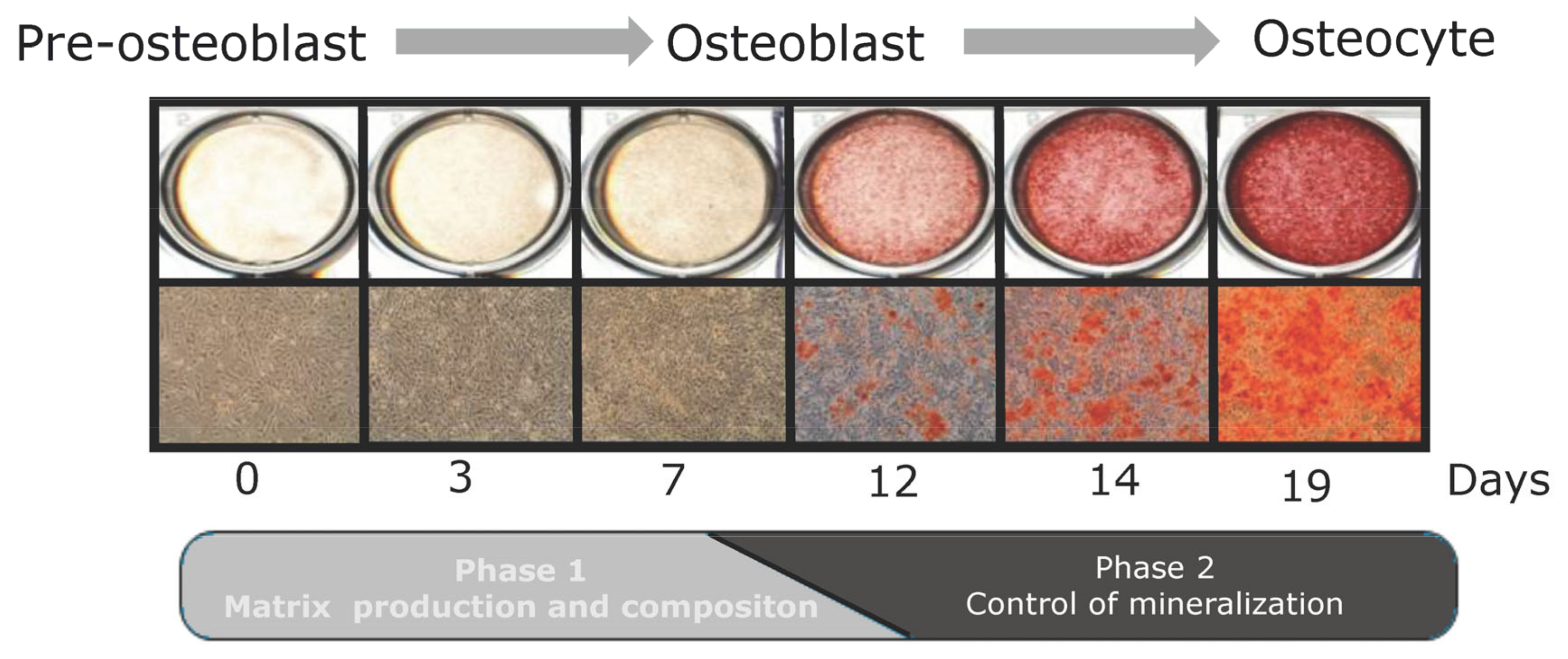
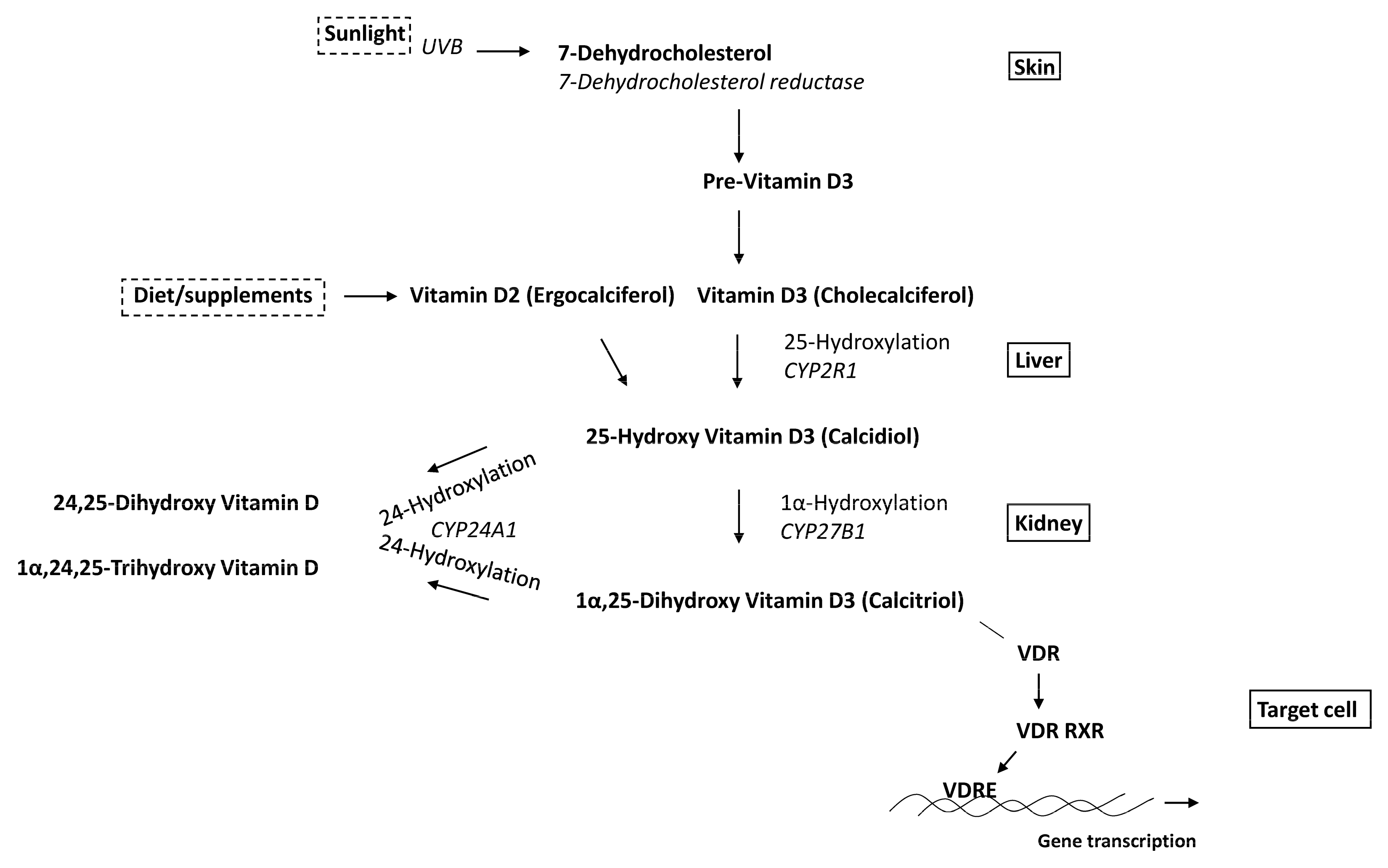
Despite its rigid structure, the bone is a dynamic organ, and is highly regulated by endocrine factors. One of the major bone regulatory hormones is vitamin D. Its renal metabolite 1α,25-OH2D3 has both direct and indirect effects on the maintenance of bone structure in health and disease. In this review, we describe the underlying processes that are directed by bone-forming cells, the osteoblasts. During the bone formation process, osteoblasts undergo different stages which play a central role in the signaling pathways that are activated via the vitamin D receptor. Vitamin D is involved in directing the osteoblasts towards proliferation or apoptosis, regulates their differentiation to bone matrix producing cells, and controls the subsequent mineralization of the bone matrix. The stage of differentiation/mineralization in osteoblasts is important for the vitamin D effect on gene transcription and the cellular response, and many genes are uniquely regulated either before or during mineralization. Moreover, osteoblasts contain the complete machinery to metabolize active 1α,25-OH2D3 to ensure a direct local effect. The enzyme 1α-hydroxylase (CYP27B1) that synthesizes the active 1α,25-OH2D3 metabolite is functional in osteoblasts, as well as the enzyme 24-hydroxylase (CYP24A1) that degrades 1α,25-OH2D3. This shows that in the past 100 years of vitamin D research, 1α,25-OH2D3 has evolved from an endocrine regulator into an autocrine/paracrine regulator of osteoblasts and bone formation.
Keywords: vitamin D metabolism; vitamin D receptor; bone; osteoblasts; differentiation and mineralization vitamin D metabolism; vitamin D receptor; bone; osteoblasts; differentiation and mineralization