Enteral Nutrition Prescription in Children and Adults with Inflammatory Bowel Diseases: Gaps in Current Gastroenterology Practice in Saudi Arabia
 , ,
, , Highlights
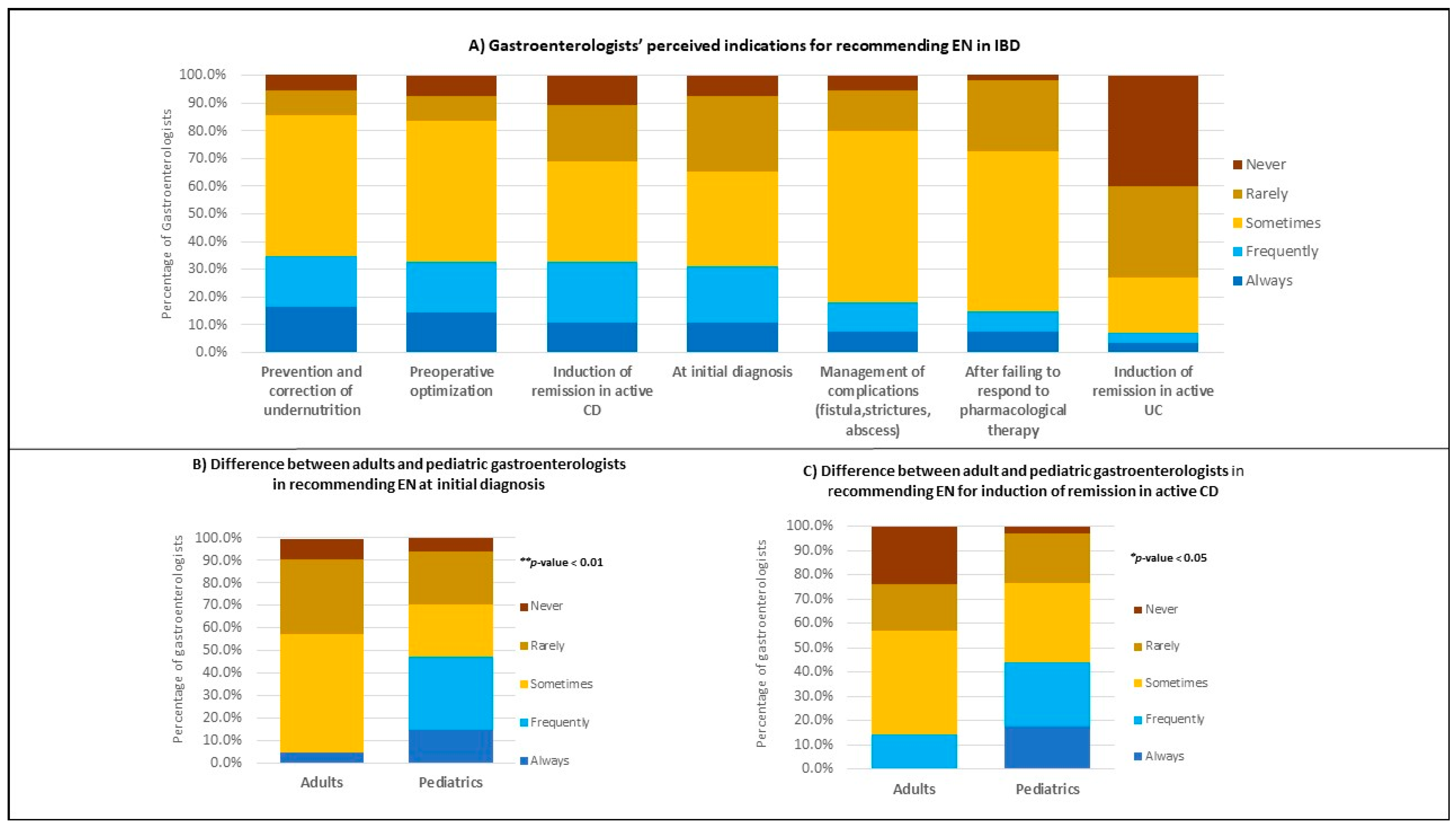
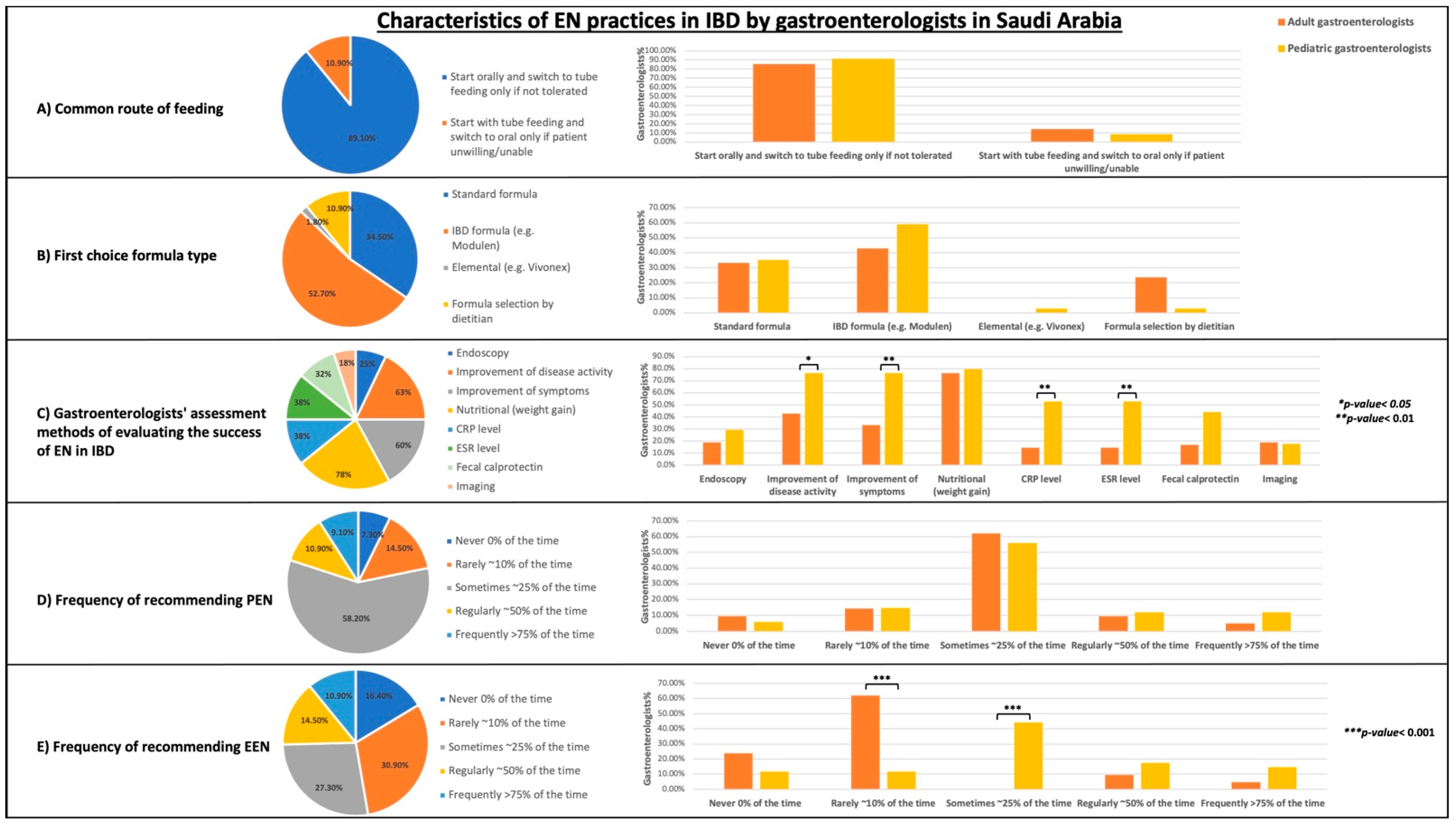
- EN practices in IBD vary significantly, with only 14.5% of gastroenterologists regularly prescribing EEN.
- Key barriers to using EN include nonadherence and lack of patient acceptance, dietitian support, and standardized protocols.
- The findings highlights the need for national guidelines and nutrition-focused training to improve EN practice by gastroenterologists.
- They also emphasize the importance of dietitian involvement and patient education for better EN implementation.
Abstract
Share and Cite
Ajabnoor, S.M.; Attar, A.; BinJahlan, N.; Almutairi, N.; Bashmail, S.; Hashim, A.; Forbes, A.; Jawa, H. Enteral Nutrition Prescription in Children and Adults with Inflammatory Bowel Diseases: Gaps in Current Gastroenterology Practice in Saudi Arabia. Nutrients 2023, 15, 232. https://doi.org/10.3390/nu15010232
Ajabnoor SM, Attar A, BinJahlan N, Almutairi N, Bashmail S, Hashim A, Forbes A, Jawa H. Enteral Nutrition Prescription in Children and Adults with Inflammatory Bowel Diseases: Gaps in Current Gastroenterology Practice in Saudi Arabia. Nutrients. 2023; 15(1):232. https://doi.org/10.3390/nu15010232
Chicago/Turabian StyleAjabnoor, Sarah M., Atheer Attar, Noof BinJahlan, Nawal Almutairi, Shimaa Bashmail, Almoutaz Hashim, Alastair Forbes, and Hani Jawa. 2023. "Enteral Nutrition Prescription in Children and Adults with Inflammatory Bowel Diseases: Gaps in Current Gastroenterology Practice in Saudi Arabia" Nutrients 15, no. 1: 232. https://doi.org/10.3390/nu15010232
APA StyleAjabnoor, S. M., Attar, A., BinJahlan, N., Almutairi, N., Bashmail, S., Hashim, A., Forbes, A., & Jawa, H. (2023). Enteral Nutrition Prescription in Children and Adults with Inflammatory Bowel Diseases: Gaps in Current Gastroenterology Practice in Saudi Arabia. Nutrients, 15(1), 232. https://doi.org/10.3390/nu15010232