Review

In Vitro Methodologies to Study the Role of Advanced Glycation End Products (AGEs) in Neurodegeneration


by
Marialena Chrysanthou
1,*,
Ignacio Miro Estruch
2,
Ivonne M. C. M. Rietjens
2,
Harry J. Wichers
1,3 and
Tamara Hoppenbrouwers
3,4
1
Department of Food Chemistry, Wageningen University and Research, Bornse Weilanden 9, 6708 WG Wageningen, The Netherlands
2
Department of Toxicology, Wageningen University and Research, Stippeneng 4, 6708 WE Wageningen, The Netherlands
3
Food and Biobased Research, Wageningen University and Research, Bornse Weilanden 9, 6708 WG Wageningen, The Netherlands
4
Department of Food Quality and Design, Wageningen University and Research, Bornse Weilanden 9, 6708 WG Wageningen, The Netherlands
*
Author to whom correspondence should be addressed.
Nutrients 2022, 14(2), 363; https://doi.org/10.3390/nu14020363
Submission received: 20 December 2021 / Revised: 11 January 2022 / Accepted: 12 January 2022 / Published: 15 January 2022

Abstract

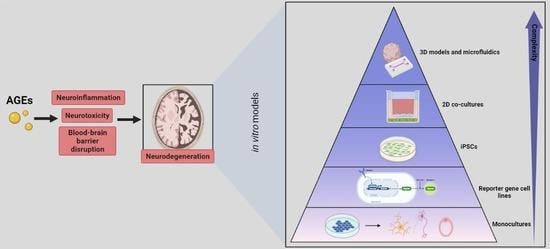
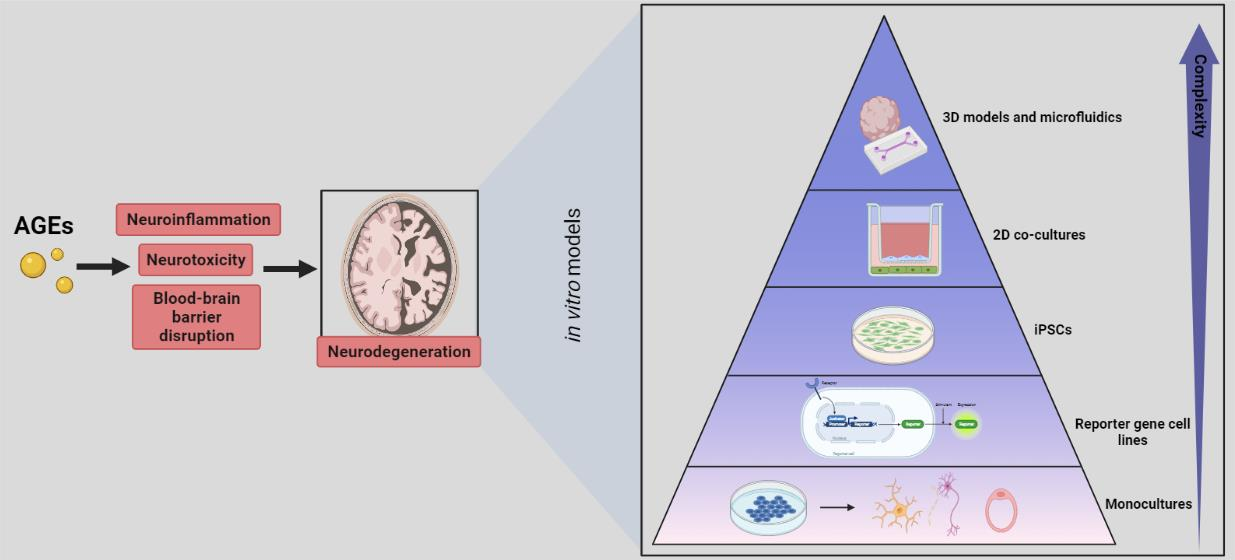
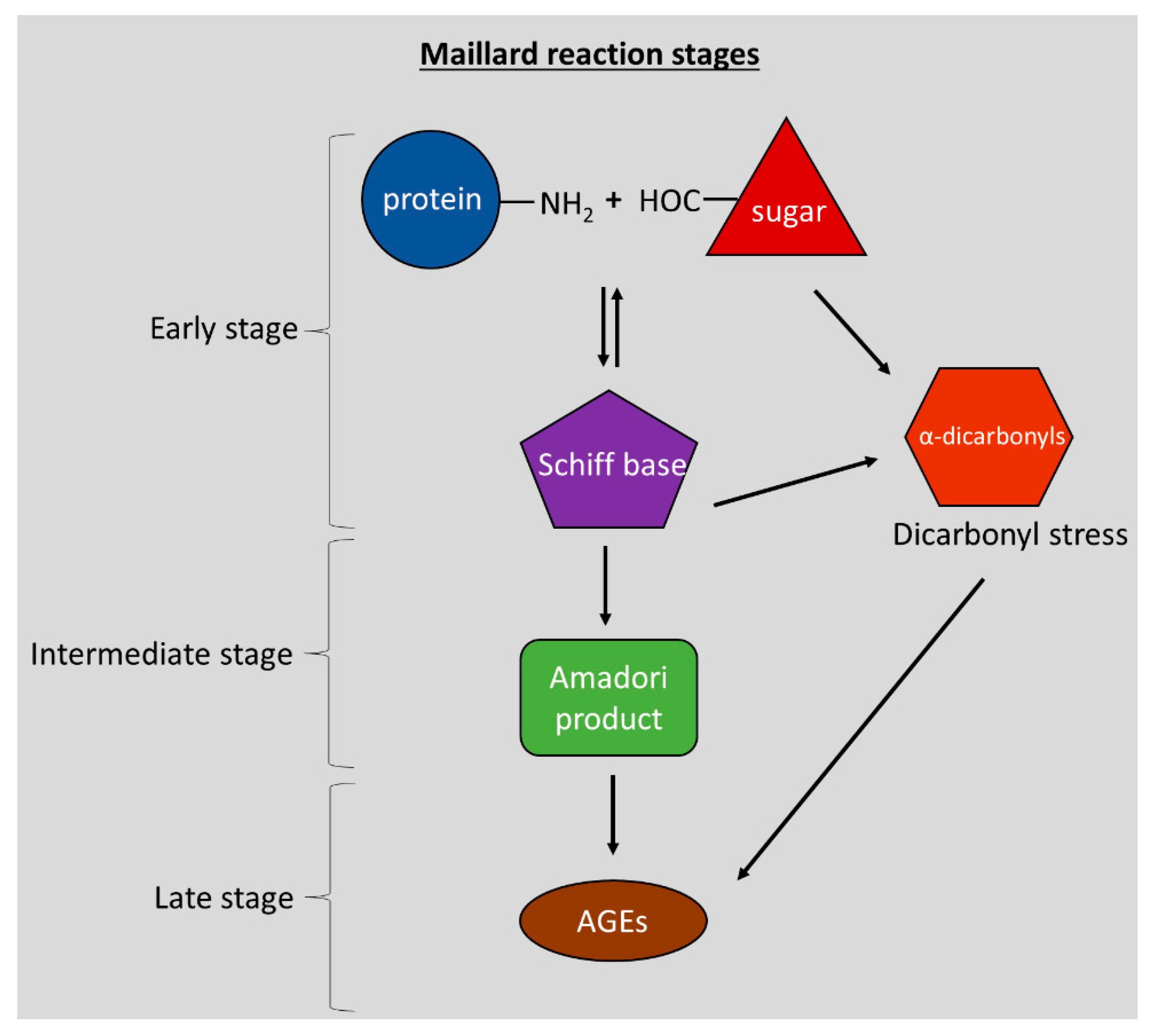
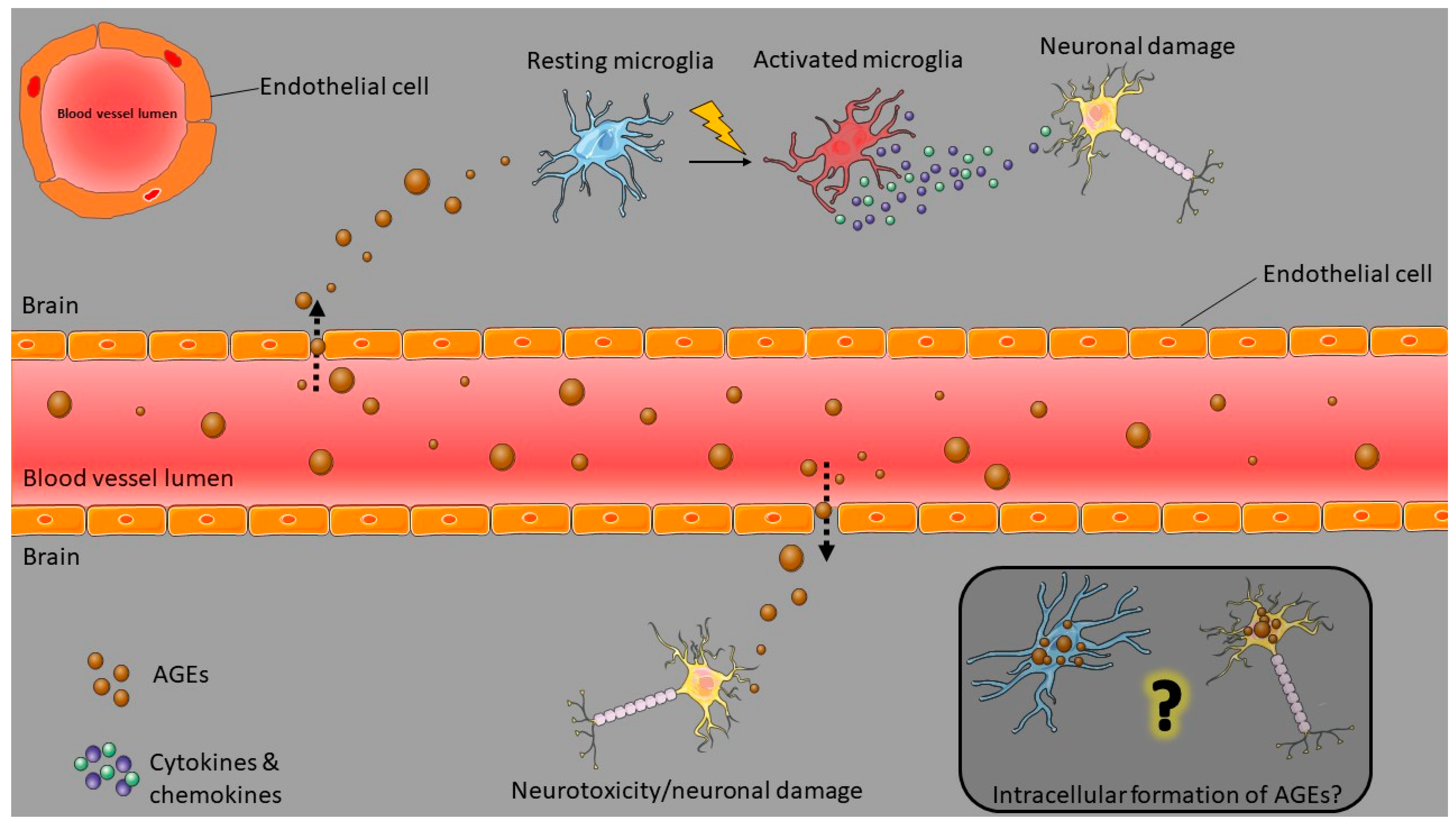
Advanced glycation end products (AGEs) can be present in food or be endogenously produced in biological systems. Their formation has been associated with chronic neurodegenerative diseases such as Alzheimer’s disease, Parkinson’s disease, multiple sclerosis, and amyotrophic lateral sclerosis. The implication of AGEs in neurodegeneration is related to their ability to bind to AGE-specific receptors and the ability of their precursors to induce the so-called “dicarbonyl stress”, resulting in cross-linking and protein damage. However, the mode of action underlying their role in neurodegeneration remains unclear. While some research has been carried out in observational clinical studies, further in vitro studies may help elucidate these underlying modes of action. This review presents and discusses in vitro methodologies used in research on the potential role of AGEs in neuroinflammation and neurodegeneration. The overview reveals the main concepts linking AGEs to neurodegeneration, the current findings, and the available and advisable in vitro models to study their role. Moreover, the major questions regarding the role of AGEs in neurodegenerative diseases and the challenges and discrepancies in the research field are discussed.
Keywords: advanced glycation end products; AGEs; neuro–immune axis; inflammation; neurodegeneration; neuroinflammation; blood–brain barrier; in vitro models advanced glycation end products; AGEs; neuro–immune axis; inflammation; neurodegeneration; neuroinflammation; blood–brain barrier; in vitro models
Graphical Abstract