MTCL-Net: A Multi-Task Contrastive Learning Network for Underwater Acoustic Source Ranging
 ,
,
Highlights
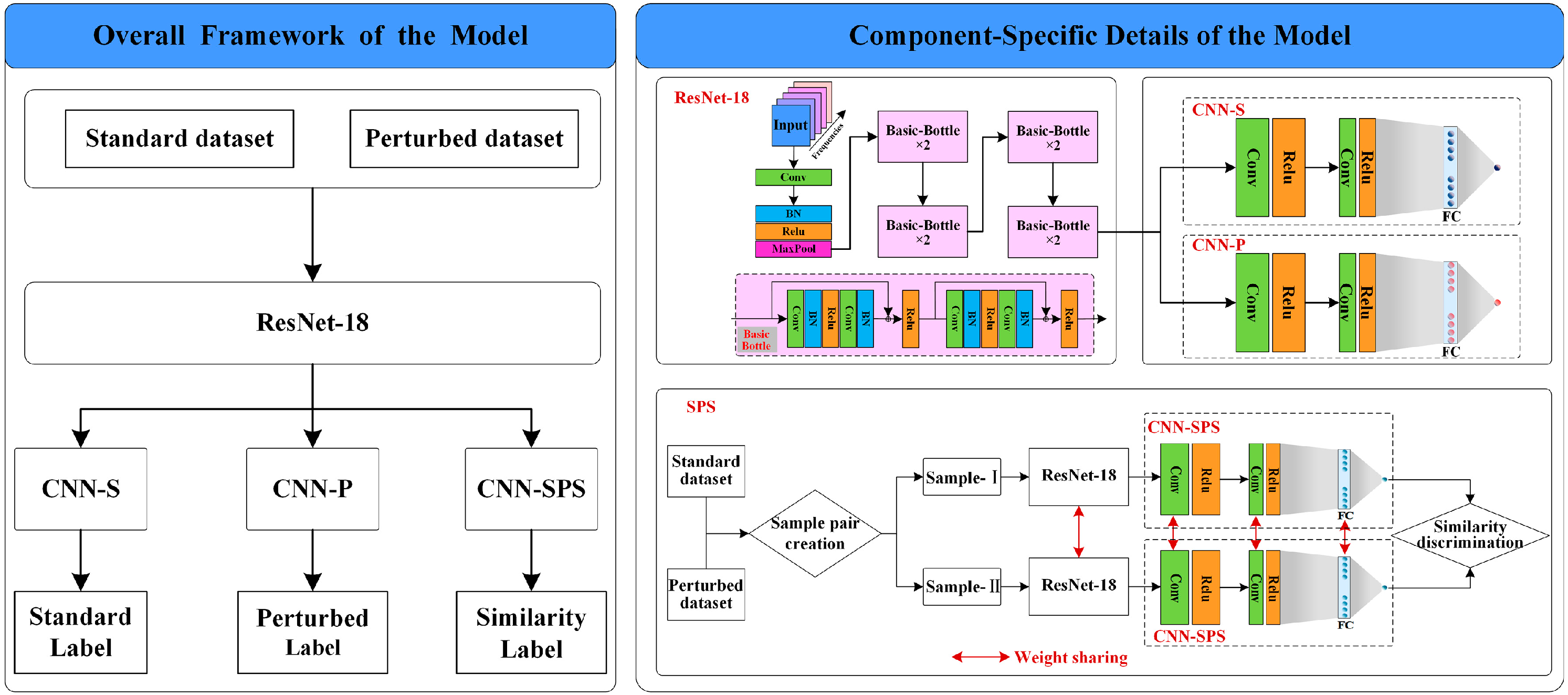
- A novel multi-task contrastive learning network (MTCL-Net) is proposed for underwater acoustic source ranging, with a Siamese contrastive learning auxiliary task for source position similarity discrimination.
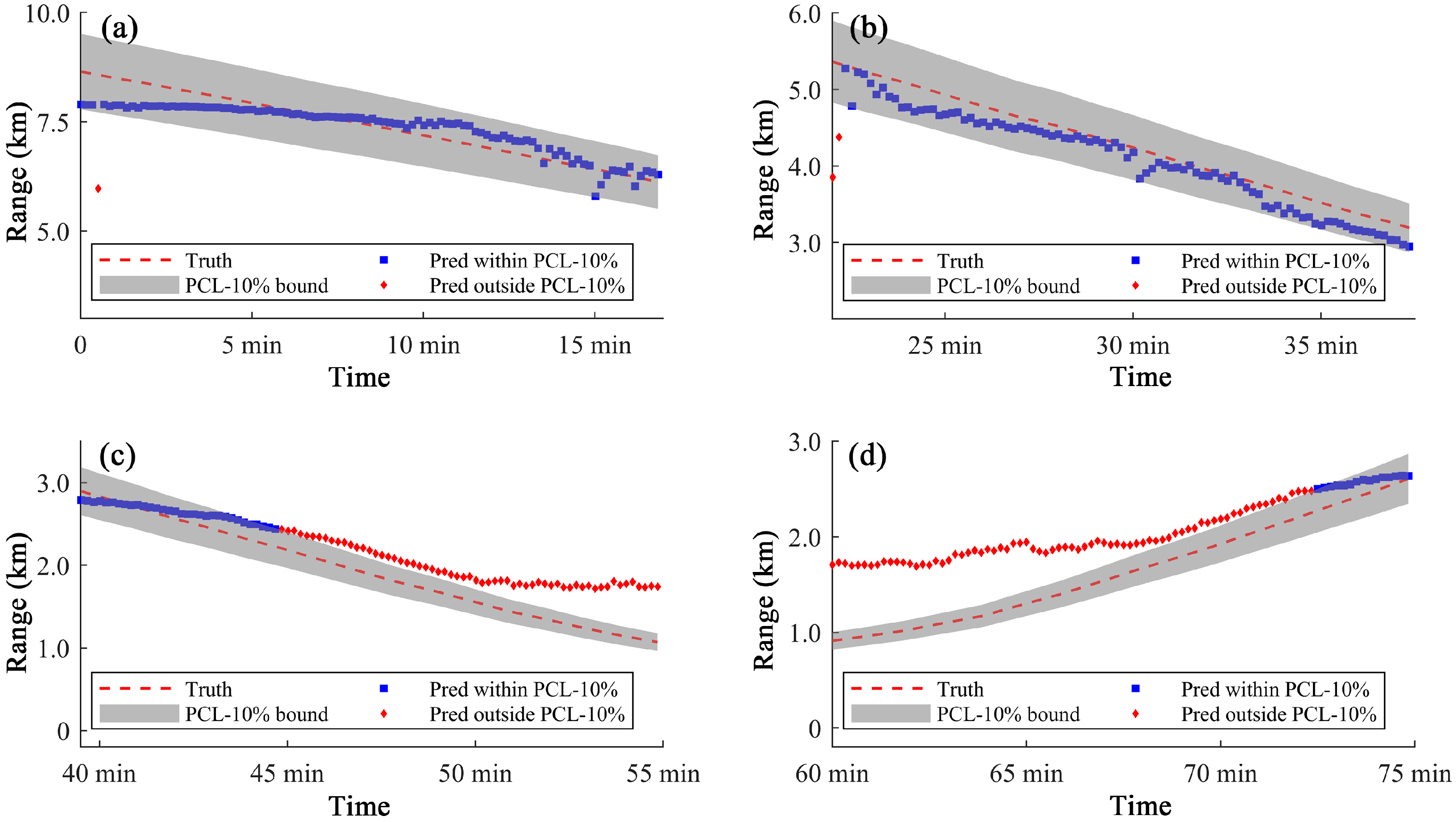
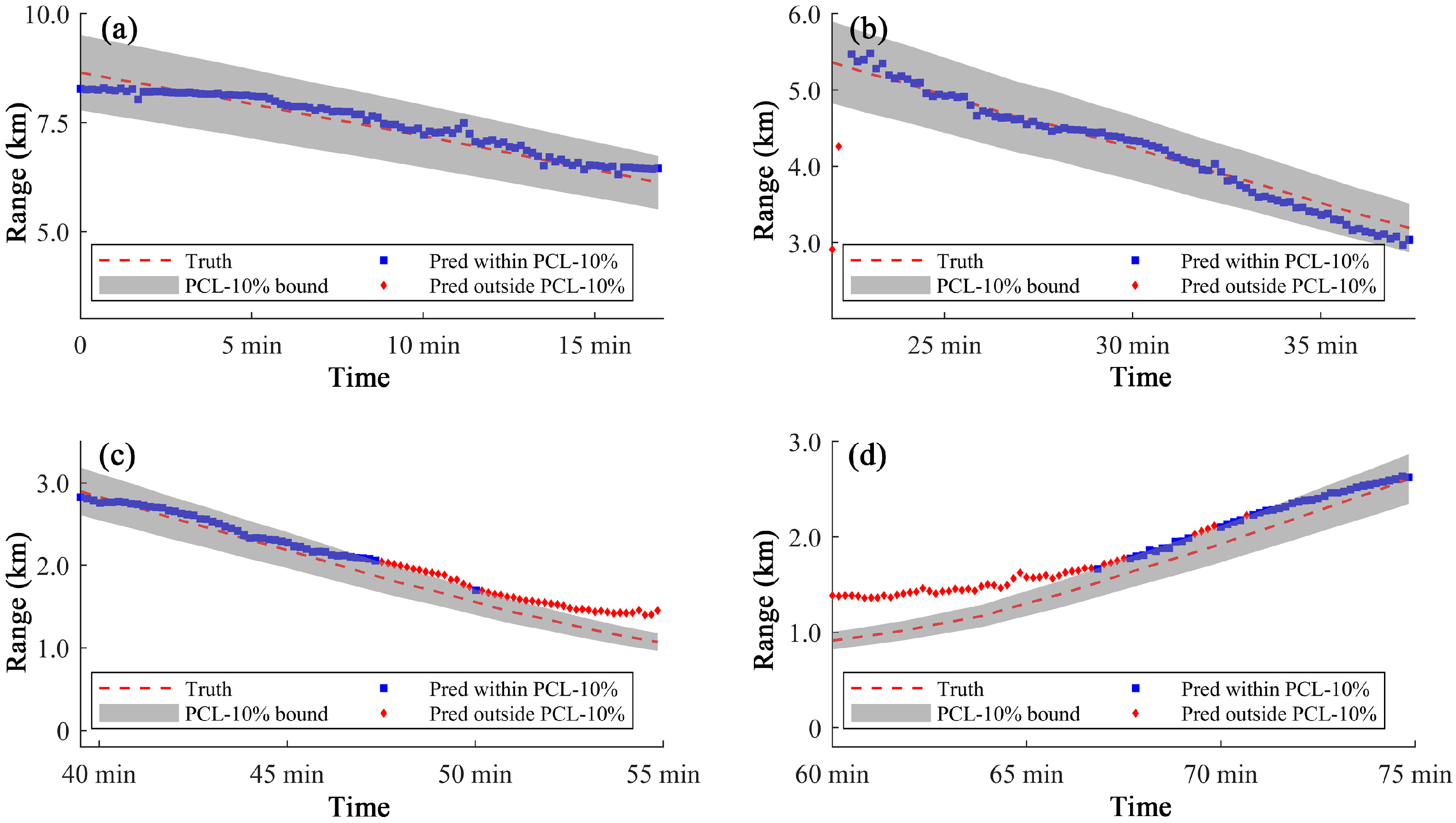
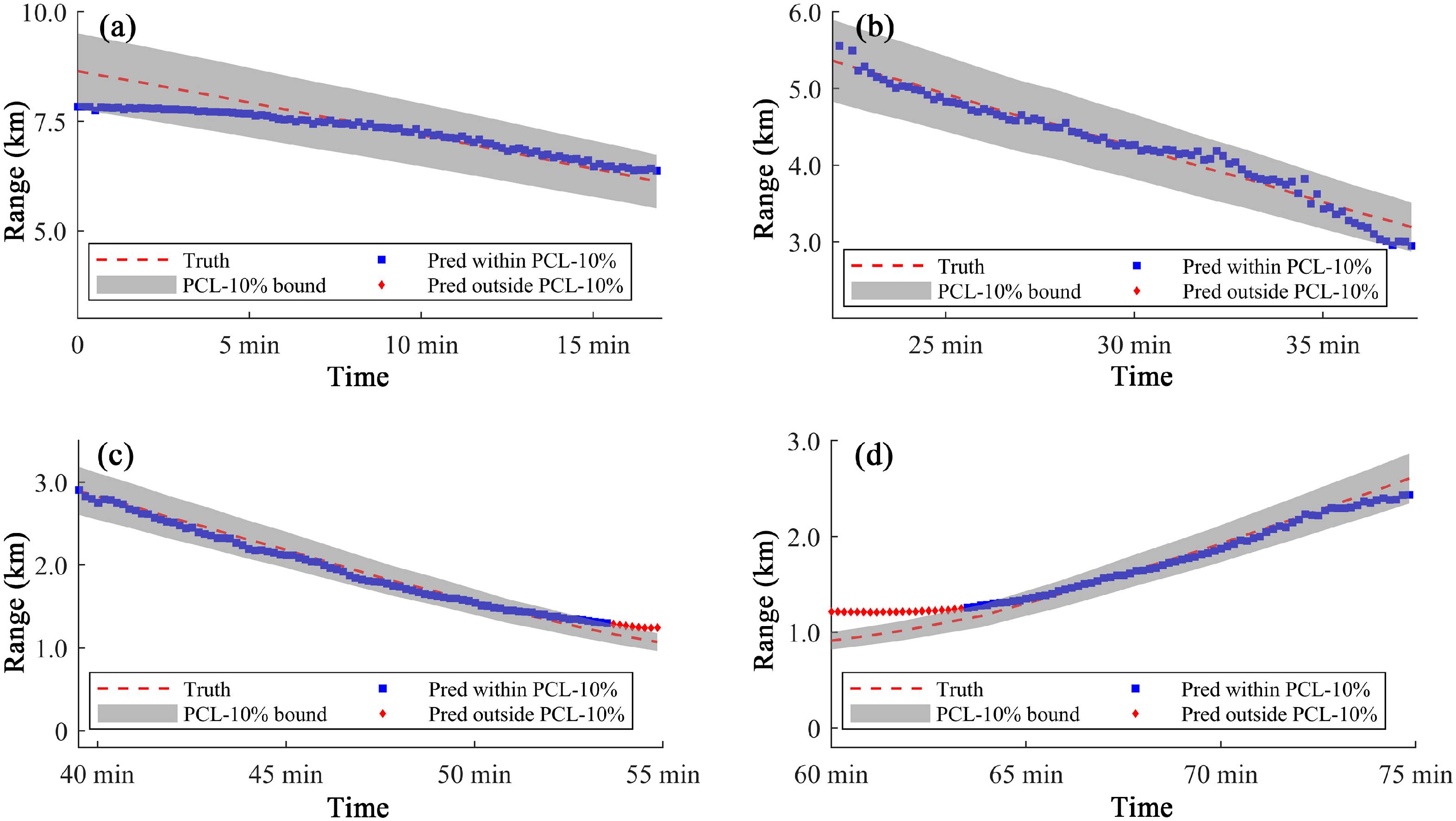
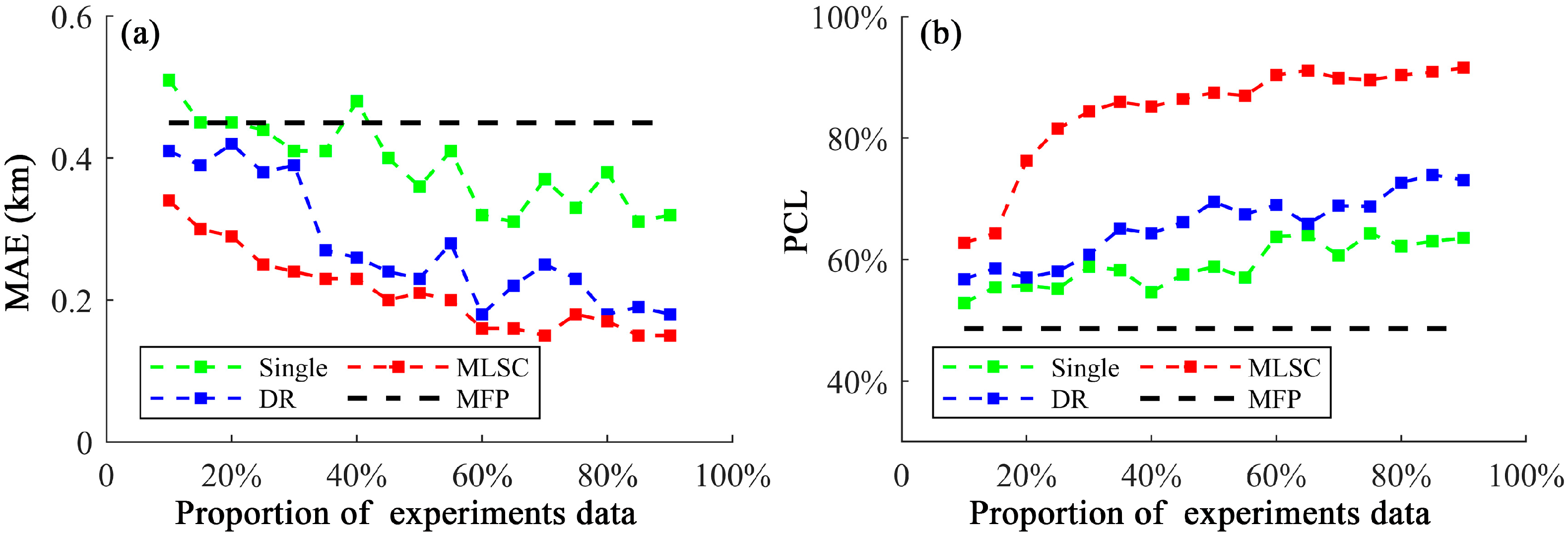
- The proposed MTCL-Net framework realizes a mean absolute error of 0.17 km and 90.36% probability of credible localization (PCL-10%) on the SWellEx-96 sea trial dataset and reaches an optimal ranging performance with only around 60% of measured samples for fine-tuning.
- This work overcomes the strong dependence of classical underwater source localization methods on precise marine environmental parameters, providing a novel solution for passive acoustic ranging in complex and uncertain ocean environments.
- The contrastive learning-enhanced multi-task learning paradigm established in this study offers a generalizable research path for few-shot learning and environmental mismatch mitigation in underwater acoustic signal processing.
Abstract
1. Introduction
- (1)
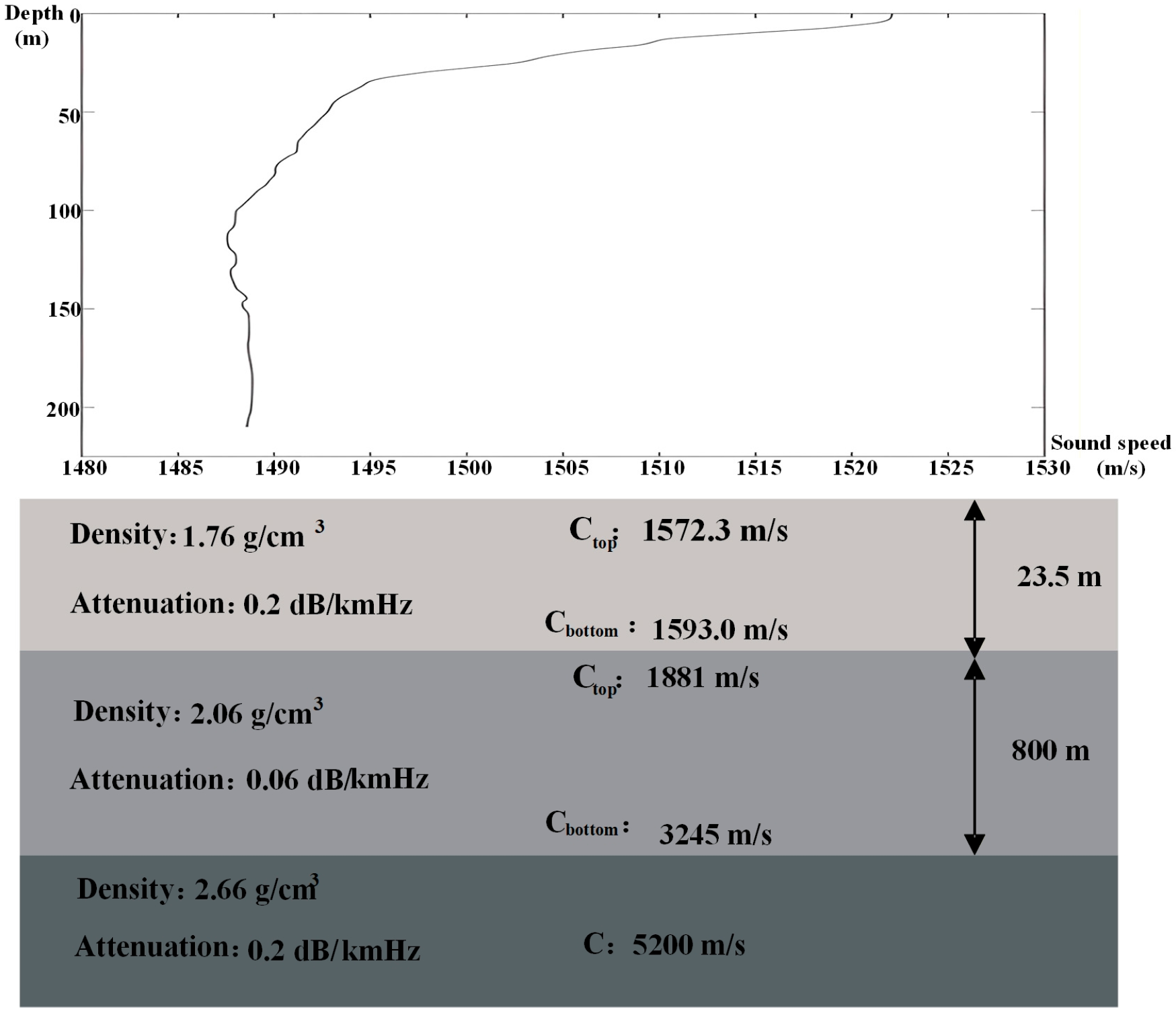
- To address real ocean environmental uncertainty without a sharp increase in training data scale, we build an environmental perturbed dataset by randomizing key environmental parameters, which is paired with a standard dataset under fixed nominal parameters to characterize real ocean environmental variability.
- (2)
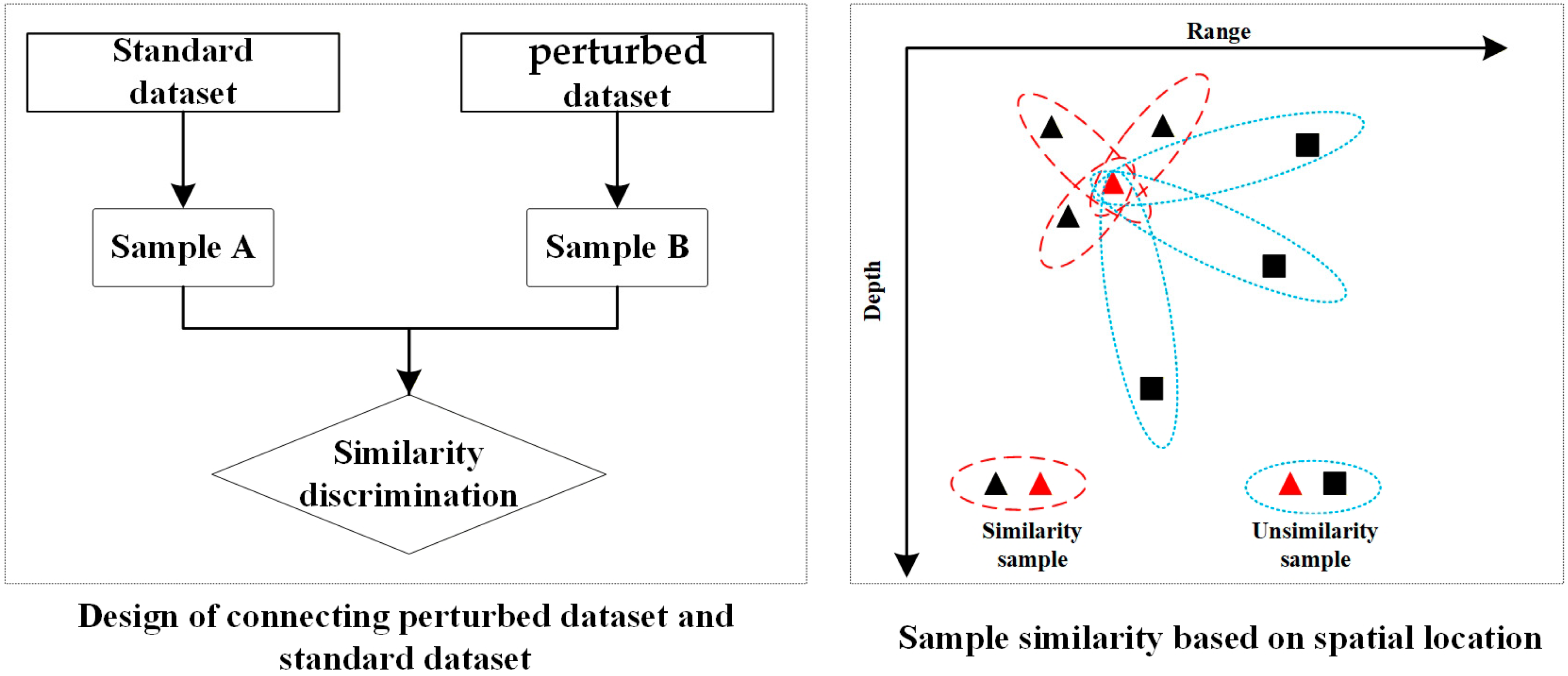
- Based on a Siamese dual-branch architecture, we design an acoustic source position similarity discrimination task via contrastive learning between the standard and perturbed datasets, which enabled the model to automatically learn position-related discriminative features and improve robustness to environmental mismatches.
- (3)
- A multi-task learning mechanism is designed to jointly optimize the primary localization tasks on both datasets and the auxiliary contrastive task. This joint training strengthens inter-task constraints and effectively enhances the model’s overall localization performance and environmental robustness.
2. Materials and Methods
2.1. Overview of the Proposed MTCL-Net Framework
2.2. Vertical Array Signal Preprocessing
2.3. Siamese Network Based on Acoustic Source Spatial Position Similarity
- (1)
- Randomly select a sample ssi in the “standard dataset” whose acoustic source position is (dsi, rsi);
- (2)
- Select a sample spi in the “perturbed dataset” whose acoustic source position is (dpi, rpi);
- (3)
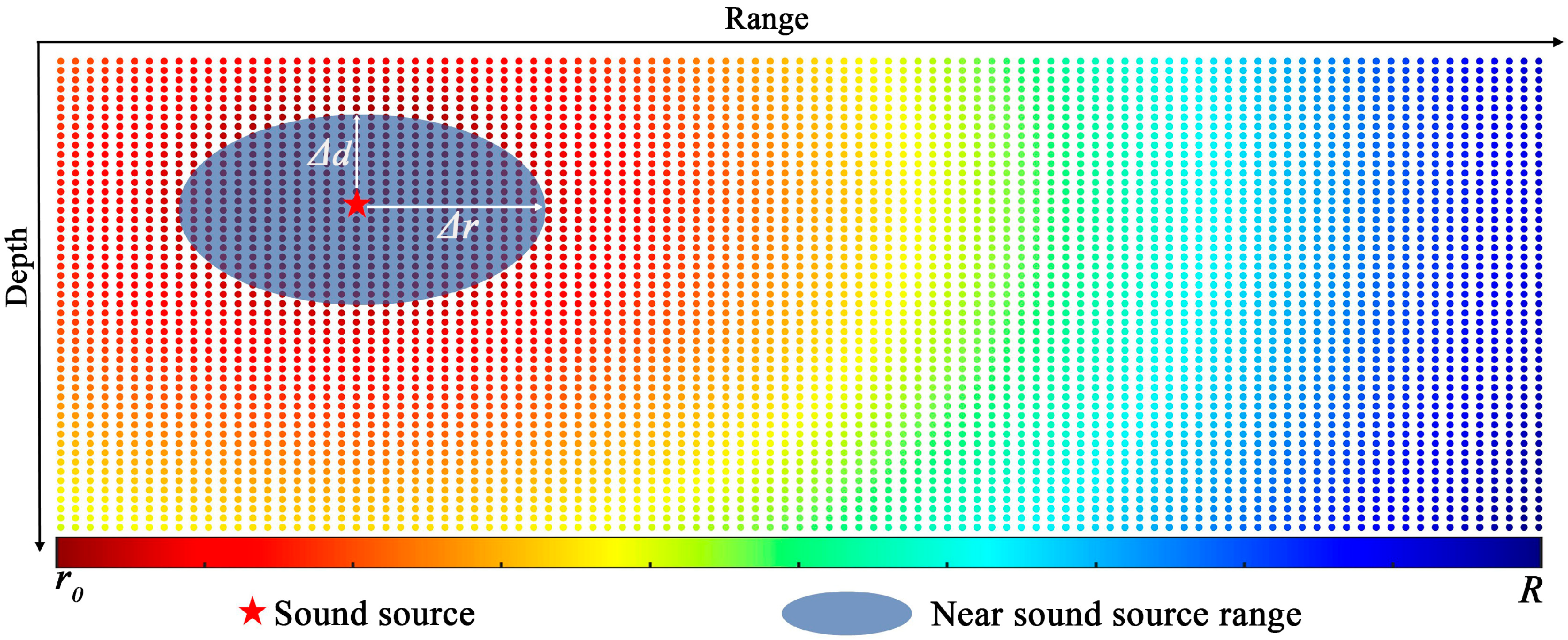
- As shown in the figure, if it is determined that the position of the spi acoustic source is within the neighborhood range (shaded area) of the ssi acoustic source position, then ssi and spi form a positive sample pair; otherwise, the two form a negative sample pair, that is
2.4. Multi-Task Learning Distance Estimation Based on Spatial Position Constraint of Acoustic Source
2.5. Performance Metrics
3. Experimental Results and Analysis
3.1. Simulation and Data Set
3.2. Simulation Results and Analysis
3.2.1. Simulation Results
3.2.2. Influence of Different Training Data Sets on Range Estimation Performance
3.2.3. Effect of Spatial Constraints on the Performance of Range Estimation
3.3. Sea Trial Experiments and Results
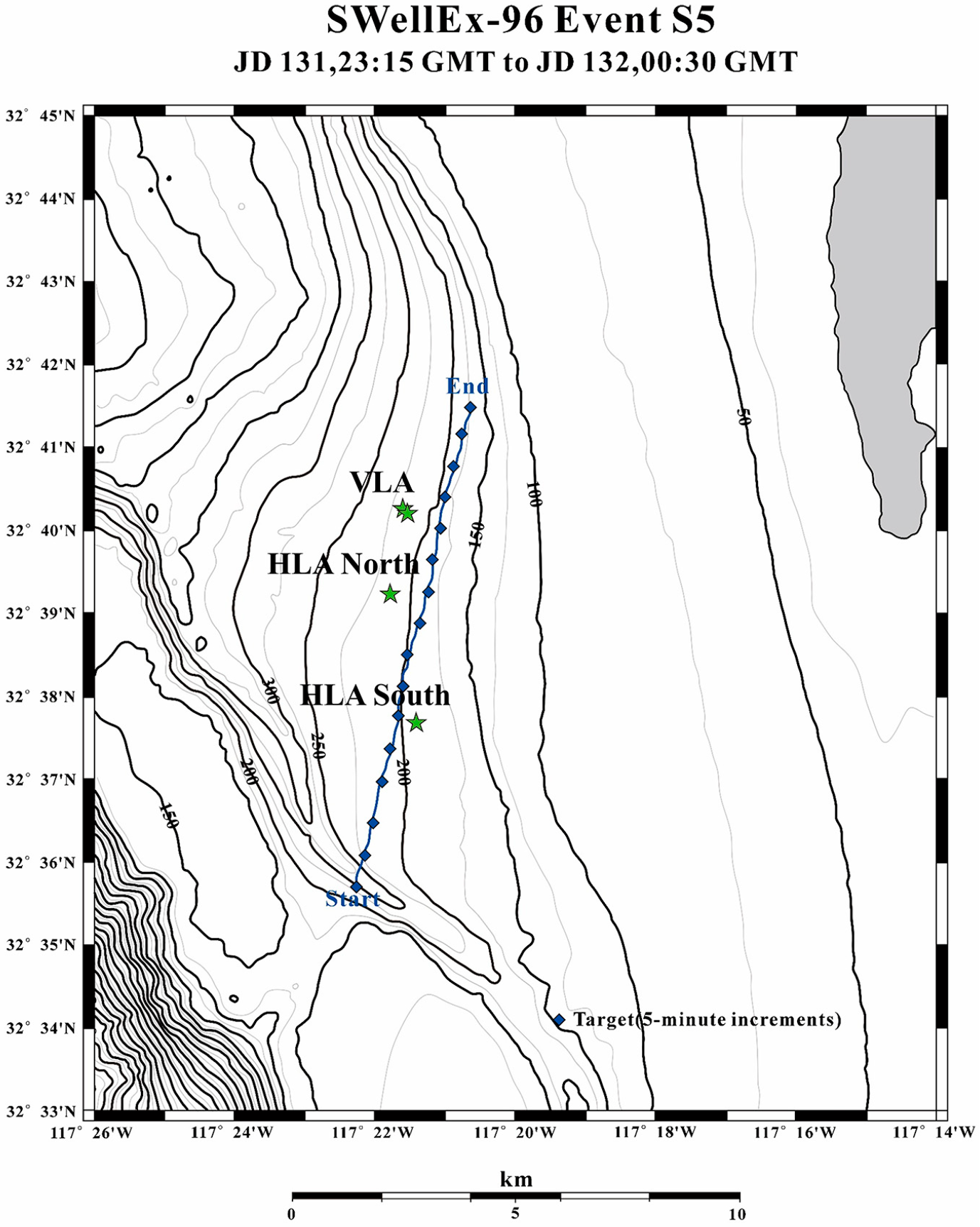
3.3.1. Overview of SWellEx-96 Experiment
3.3.2. Range Estimation Results and Analysis
4. Conclusions
Author Contributions
Funding
Data Availability Statement
Acknowledgments
Conflicts of Interest
References
- Baggeroer, A.B.; Kuperman, W.A.; Mikhalevsky, P.N. An Overview of Matched Field Methods in Ocean Acoustics. IEEE J. Ocean. Eng. 1993, 18, 401–424. [Google Scholar] [CrossRef] [Scilit]
- Sazontov, A.G.; Malekhanov, A.I. Matched Field Signal Processing in Underwater Sound Channels (Review). Acoust. Phys. 2015, 61, 213–230. [Google Scholar] [CrossRef] [Scilit]
- Kim, K.; Seong, W.; Lee, C. Matched Field Processing: Analysis of Feature Extraction Method with Ocean Experimental Data. In Proceedings of the 2004 International Symposium on Underwater Technology (IEEE Cat. No.04EX869), Taipei, Taiwan, 20–23 April 2004; pp. 181–185. [Google Scholar]
- Feuillade, C.; Del Balzo, D.R.; Rowe, M.M. Environmental Mismatch in Shallow-Water Matched-Field Processing: Geoacoustic Parameter Variability. J. Acoust. Soc. Am. 1989, 85, 2354–2364. [Google Scholar] [CrossRef] [Scilit]
- Hamson, R.M.; Heitmeyer, R.M. Environmental and System Effects on Source Localization in Shallow Water by the Matched-Field Processing of a Vertical Array. J. Acoust. Soc. Am. 1989, 86, 1950–1959. [Google Scholar] [CrossRef] [Scilit]
- Shang, E.C.; Wang, Y.Y. Environmental Mismatching Effects on Source Localization Processing in Mode Space. J. Acoust. Soc. Am. 1989, 86, S7–S8. [Google Scholar] [CrossRef] [Scilit]
- Li, X.; Xiang, L.; Zeng, Y.; Jia, H. Analysis of Mode Mismatch in Uncertain Shallow Ocean Environment. Appl. Acoust. 2018, 139, 149–155. [Google Scholar] [CrossRef] [Scilit]
- Grumiaux, P.-A.; Kitić, S.; Girin, L.; Guérin, A. A Survey of Sound Source Localization with Deep Learning Methods. J. Acoust. Soc. Am. 2022, 152, 107–151. [Google Scholar] [CrossRef] [Scilit] [PubMed]
- Wang, Y.; Peng, H. Underwater Acoustic Source Localization Using Generalized Regression Neural Network. J. Acoust. Soc. Am. 2018, 143, 2321–2331. [Google Scholar] [CrossRef] [Scilit]
- Niu, H.; Reeves, E.; Gerstoft, P. Source Localization in an Ocean Waveguide Using Supervised Machine Learning. J. Acoust. Soc. Am. 2017, 142, 1176–1188. [Google Scholar] [CrossRef] [Scilit]
- Yang, Z.; Zhu, Z.; Zhao, Y.; Tian, Y.; Fan, C.; Guo, R.; Lu, W.; Ge, J.; Chen, B.; Zhang, Y.; et al. A Comprehensive Survey on Underwater Acoustic Target Positioning and Tracking: Progress, Challenges, and Perspectives. arXiv 2025, arXiv:2506.14165. [Google Scholar] [CrossRef] [Scilit]
- Niu, H.; Gong, Z.; Ozanich, E.; Gerstoft, P.; Wang, H.; Li, Z. Deep-Learning Source Localization Using Multi-Frequency Magnitude-Only Data. J. Acoust. Soc. Am. 2019, 146, 211–222. [Google Scholar] [CrossRef] [Scilit]
- Liu, M.; Niu, H.; Li, Z.; Guo, Y. Source Depth Estimation with Feature Matching Using Convolutional Neural Networks in Shallow Water. J. Acoust. Soc. Am. 2024, 155, 1119–1134. [Google Scholar] [CrossRef] [Scilit] [PubMed]
- Wang, W.; Wang, Z.; Su, L.; Hu, T.; Ren, Q.; Gerstoft, P.; Ma, L. Source Depth Estimation Using Spectral Transformations and Convolutional Neural Network in a Deep-Sea Environment. J. Acoust. Soc. Am. 2020, 148, 3633–3644. [Google Scholar] [CrossRef] [Scilit] [PubMed]
- Long, R. Range Estimation in a Weakly Range-Dependent Waveguide in the South China Sea Using Single Hydrophone and Multi-Task Trained Deep Neural Network. Appl. Acoust. 2023, 213, 109630. [Google Scholar] [CrossRef] [Scilit]
- Liu, M.; Niu, H.; Li, Z. Implementation of Bartlett Matched-Field Processing Using Interpretable Complex Convolutional Neural Network. JASA Express Lett. 2023, 3, 026003. [Google Scholar] [CrossRef] [Scilit]
- Liu, Y.; Niu, H.; Li, Z. A Multi-Task Learning Convolutional Neural Network for Source Localization in Deep Ocean. J. Acoust. Soc. Am. 2020, 148, 873–883. [Google Scholar] [CrossRef] [Scilit]
- Liu, M.; Niu, H.; Li, Z.; Guo, Y.; Liu, Y.; Liu, J.; Wu, S.; Nie, L. A Convolutional Neural Network Combining Classification and Regression for Source Localization in Shallow Water. J. Phys. Conf. Ser. 2023, 2486, 012068. [Google Scholar] [CrossRef] [Scilit]
- Wang, W.; Ni, H.; Su, L.; Hu, T.; Ren, Q.; Gerstoft, P.; Ma, L. Deep Transfer Learning for Source Ranging: Deep-Sea Experiment Results. J. Acoust. Soc. Am. 2019, 146, EL317–EL322. [Google Scholar] [CrossRef] [Scilit]
- Liu, Y.; Niu, H.; Li, Z.; Wang, M. Deep-Learning Source Localization Using Autocorrelation Functions from a Single Hydrophone in Deep Ocean. JASA Express Lett. 2021, 1, 036002. [Google Scholar] [CrossRef] [Scilit]
- He, J.; Zhang, B.; Liu, P.; Li, X.; Wang, L.; Tang, R. Effective Underwater Acoustic Target Passive Localization of Using a Multi-Task Learning Model with Attention Mechanism: Analysis and Comparison under Real Sea Trial Datasets. Appl. Ocean Res. 2024, 150, 104072. [Google Scholar] [CrossRef] [Scilit]
- Zhu, X.; Dong, H.; Salvo Rossi, P.; Landrø, M. Feature Selection Based on Principal Component Regression for Underwater Source Localization by Deep Learning. Remote Sens. 2021, 13, 1486. [Google Scholar] [CrossRef] [Scilit]
- Jin, P.; Wang, B.; Li, L.; Chao, P.; Xie, F. Semi-Supervised Underwater Acoustic Source Localization Based on Residual Convolutional Autoencoder. EURASIP J. Adv. Signal Process. 2022, 2022, 107. [Google Scholar] [CrossRef] [Scilit]
- Zhu, X.; Dong, H.; Rossi, P.S.; Landro, M. Time-Frequency Fused Underwater Acoustic Source Localization Based on Contrastive Predictive Coding. IEEE Sens. J. 2022, 22, 13299–13308. [Google Scholar] [CrossRef] [Scilit]
- Wen, H.; Yang, C.; Dou, D.; Xu, L.; Jiao, Y. Underwater Source Ranging by Siamese Network Aided Semi-Supervised Learning. JASA Express Lett. 2023, 3, 094803. [Google Scholar] [CrossRef] [Scilit] [PubMed]
- Guo, T.; Song, Y.; Kong, Z.; Lim, E.; Lopez-Benitez, M.; Ma, F.; Yu, L. Underwater Target Detection and Localization with Feature Map and CNN-Based Classification. In Proceedings of the 2022 4th International Conference on Advances in Computer Technology, Information Science and Communications (CTISC), Suzhou, China, 22 April 2022; pp. 1–8. [Google Scholar]
- Liu, Y.; Niu, H.; Li, Z.; Zhai, D. Unsupervised Domain Adaptation for Source Localization Using Ships of Opportunity with a Deep Vertical Line Array. IEEE J. Ocean. Eng. 2024, 49, 180–196. [Google Scholar] [CrossRef] [Scilit]
- Huang, Z.; Xu, J.; Gong, Z.; Wang, H.; Yan, Y. Source Localization Using Deep Neural Networks in a Shallow Water Environment. J. Acoust. Soc. Am. 2018, 143, 2922–2932. [Google Scholar] [CrossRef] [Scilit]
- Ge, F.-X.; Bai, Y.; Li, M.; Zhu, G.; Yin, J. Label Distribution-Guided Transfer Learning for Underwater Source Localization. J. Acoust. Soc. Am. 2022, 151, 4140–4149. [Google Scholar] [CrossRef] [Scilit]
- Ferguson, E.L. Multitask Convolutional Neural Network for Acoustic Localization of a Transiting Broadband Source Using a Hydrophone Array. J. Acoust. Soc. Am. 2021, 150, 248–256. [Google Scholar] [CrossRef] [Scilit]
- Jin, K.; Xu, J.; Zhang, X.; Lu, C.; Xu, L.; Liu, Y. An Acoustic Tracking Model Based on Deep Learning Using Two Hydrophones and Its Reverberation Transfer Hypothesis, Applied to Whale Tracking. Front. Mar. Sci. 2023, 10, 1182653. [Google Scholar] [CrossRef] [Scilit]
- Yoon, S.; Yang, H.; Seong, W. Deep Learning-Based High-Frequency Source Depth Estimation Using a Single Sensor. J. Acoust. Soc. Am. 2021, 149, 1454–1465. [Google Scholar] [CrossRef] [Scilit]
- Wang, T.; Su, L.; Ren, Q.; Li, H.; Jia, Y.; Ma, L. A Hybrid–Source Ranging Method in Shallow Water Using Modal Dispersion Based on Deep Learning. J. Mar. Sci. Eng. 2023, 11, 561. [Google Scholar] [CrossRef] [Scilit]
- Qian, P. A Feature-Compressed Multi-Task Learning U-Net for Shallow-Water Source Localization in the Presence of Internal Waves. Appl. Acoust. 2023, 211, 109530. [Google Scholar] [CrossRef] [Scilit]
- Van Komen, D.F.; Neilsen, T.B.; Howarth, K.; Knobles, D.P.; Dahl, P.H. Seabed and Range Estimation of Impulsive Time Series Using a Convolutional Neural Network. J. Acoust. Soc. Am. 2020, 147, EL403–EL408. [Google Scholar] [CrossRef] [Scilit]
- Neilsen, T.B.; Escobar-Amado, C.D.; Acree, M.C.; Hodgkiss, W.S.; Van Komen, D.F.; Knobles, D.P.; Badiey, M.; Castro-Correa, J. Learning Location and Seabed Type from a Moving Mid-Frequency Source. J. Acoust. Soc. Am. 2021, 149, 692–705. [Google Scholar] [CrossRef] [Scilit]
- Van Komen, D.F.; Howarth, K.; Neilsen, T.B.; Knobles, D.P.; Dahl, P.H. A CNN for Range and Seabed Estimation on Normalized and Extracted Time-Series Impulses. IEEE J. Ocean. Eng. 2022, 47, 833–846. [Google Scholar] [CrossRef] [Scilit]
- Murray, J.; Ensberg, D. The Swellex-96 Experiment. 1996. Available online: http://swellex96.ucsd.edu/index.htm (accessed on 1 June 2025).
- Porter, M. The KRAKEN Normal Mode Program. 2018. Available online: http://oalib.hlsresearch.com/AcousticsToolbox/ (accessed on 1 June 2025).
- He, K.; Zhang, X.; Ren, S.; Sun, J. Deep Residual Learning for Image Recognition. In Proceedings of the 2016 IEEE Conference on Computer Vision and Pattern Recognition (CVPR), Las Vegas, NV, USA, 26 June–1 July 2016; pp. 770–778. [Google Scholar]
- Hadsell, R.; Chopra, S.; LeCun, Y. Dimensionality Reduction by Learning an Invariant Mapping. In Proceedings of the 2006 IEEE Computer Society Conference on Computer Vision and Pattern Recognition—Volume 2 (CVPR’06); IEEE: New York, NY, USA, 2006; Volume 2, pp. 1735–1742. [Google Scholar]
- Chen, R.; Schmidt, H. Model-Based Convolutional Neural Network Approach to Underwater Source-Range Estimation. J. Acoust. Soc. Am. 2021, 149, 405–420. [Google Scholar] [CrossRef] [Scilit]
- Tan, S.; Liu, L.; Peng, C.; Shao, L. Image-to-Class Distance Ratio: A Feature Filtering Metric for Image Classification. Neurocomputing 2015, 165, 211–221. [Google Scholar] [CrossRef] [Scilit]





| Parameter | Benchmark Parameters | Disturbance Parameters |
|---|---|---|
| Seawater sound velocity | data | ±5% |
| Sedimentary layer sound Velocity-1 | 1572.3–1953.0 m/s | ±5% |
| Sedimentary layer sound Velocity-2 | 1881–3245 m/s | ±5% |
| Density of sedimentary layer-1 | 1.76 g/cm3 | ±5% |
| Density of sedimentary layer-2 | 2.06 g/cm3 | ±5% |
| Sedimentary layer attenuation-1 | 0.2 dB/km Hz | ±0.05 dB/km Hz |
| Sedimentary layer attenuation-2 | 0.06 dB/km Hz | -- |
| Sedimentary layer thickness-1 | 23.5 m | ±2.35 m |
| Sedimentary layer thickness-2 | 800 m | ±20 m |
| Method | MAE | PCL-10% |
|---|---|---|
| MFP | 0.54 | 56.90% |
| STL-R | 0.72 | 58.38% |
| MTL-DR | 0.68 | 64.45% |
| MTCL-Net | 0.46 | 78.93% |
| Method | MAE | PCL-10% |
|---|---|---|
| STL-S | 1.38 km | 33.30% |
| STL-P | 1.04 km | 45.91% |
| MTL-DR-S | 1.06 km | 40.55% |
| MTL-DR-P | 0.81 km | 54.48% |
| MTCL-S | 1.30 km | 30.20% |
| MTCL-P | 0.54 km | 65.16% |
| Methods | MAE | PCL-10% |
|---|---|---|
| MFP | 0.45 km | 48.70% |
| STL | 0.38 km | 62.24% |
| MTL-DR | 0.18 km | 72.66% |
| MTCL-Net | 0.17 km | 90.36% |
Disclaimer/Publisher’s Note: The statements, opinions and data contained in all publications are solely those of the individual author(s) and contributor(s) and not of MDPI and/or the editor(s). MDPI and/or the editor(s) disclaim responsibility for any injury to people or property resulting from any ideas, methods, instructions or products referred to in the content. |
© 2026 by the authors. Licensee MDPI, Basel, Switzerland. This article is an open access article distributed under the terms and conditions of the Creative Commons Attribution (CC BY) license.
Share and Cite
Zhao, J.; Qin, Z.; Ma, B.; Lan, W.; Liu, B.; Pang, S. MTCL-Net: A Multi-Task Contrastive Learning Network for Underwater Acoustic Source Ranging. Remote Sens. 2026, 18, 1343. https://doi.org/10.3390/rs18091343
Zhao J, Qin Z, Ma B, Lan W, Liu B, Pang S. MTCL-Net: A Multi-Task Contrastive Learning Network for Underwater Acoustic Source Ranging. Remote Sensing. 2026; 18(9):1343. https://doi.org/10.3390/rs18091343
Chicago/Turabian StyleZhao, Jixiang, Zhiliang Qin, Benjun Ma, Wenjian Lan, Bingqi Liu, and Shuyi Pang. 2026. "MTCL-Net: A Multi-Task Contrastive Learning Network for Underwater Acoustic Source Ranging" Remote Sensing 18, no. 9: 1343. https://doi.org/10.3390/rs18091343
APA StyleZhao, J., Qin, Z., Ma, B., Lan, W., Liu, B., & Pang, S. (2026). MTCL-Net: A Multi-Task Contrastive Learning Network for Underwater Acoustic Source Ranging. Remote Sensing, 18(9), 1343. https://doi.org/10.3390/rs18091343