1. Introduction
“Precision agriculture” (PA) is a general term used here for the application of analytics from Earth observation (EO) satellite imagery to guide farming practices. This includes commercial applications and programs such as the Common Agricultural Policy (CAP) of the European Union (EU) [
1] that provides financial incentives and subsidies to encourage the adoption of digital data, especially using imagery supplied by Sentinel-2 (S2). PA is becoming critical in a world whose civil stability is largely determined by food security [
2].
We began the analysis for this paper with the premise that limited commercial applications of EO data in the USA have occurred because of the difficulty of obtaining reliable SR measurements of sufficient quantity to support a weekly cadence. Commercial application of PA has mostly bypassed the use of EO imagery, instead focusing primarily on ground-based data collection and applications such as automated steering, gridded soil sampling, and mechanically collected yields during harvesting, applied either directly or through variable rate treatments [
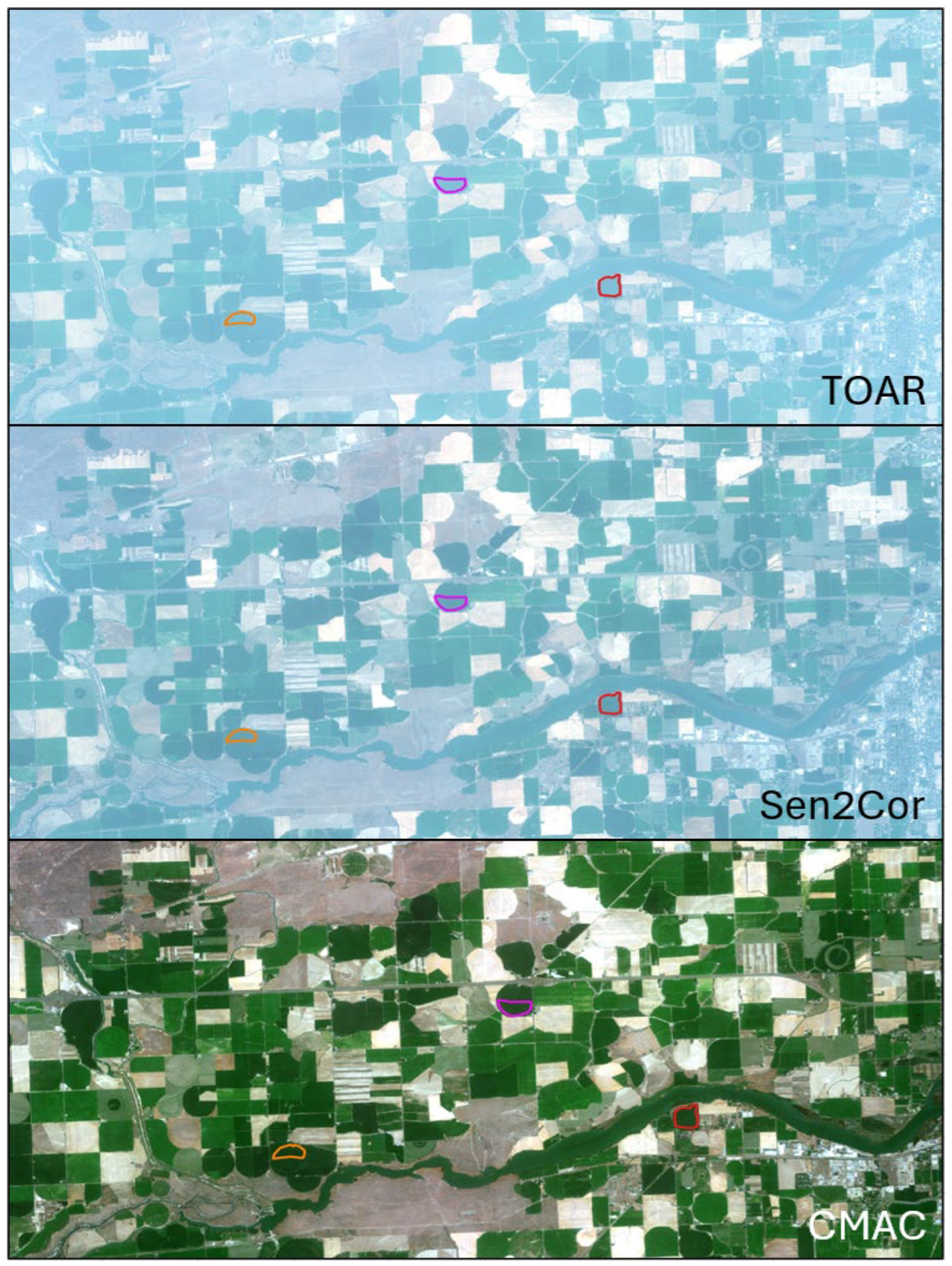
3]. As was touted in past decades, satellite imagery was expected to have a defining role for crop monitoring; however, because of the lack of reliable methods for removing atmospheric effects from EO imagery, the PA analytics developed from it contained confused and degraded utility (
Figure 1). When imagery has been used, it has been as a snapshot in time to evaluate variability across a field but not comparable to distant fields, to other years, or other cropping. The lack of reliable PA analytics under complete automation has likely been a significant impediment for successfully scaling in the market and why EO application for PA, though promising much, has delivered so little [
4].
EO imagery is adversely affected by the atmosphere. Through the process of atmospheric correction, top-of-atmosphere image reflectance (TOAR), affected by highly variable atmospheric conditions during transmission, can be returned to surface reflectance (SR), the desired end product for virtually all image applications. SR is analysis ready and the only metric in image process flows that can be measured; therefore, it is uniquely verifiable. This paper examines SR retrieved from TOAR for precision agriculture that included a new method: the closed-form method for a correction (CMAC) that was developed using S2 data as the testbed [
5,
6,
7].
S2 data have demonstrated value for commercial applications and for non-commercial programs such as the CAP. If outside the CAP or similar programs, for example, in the United States, farmers must elect to pay for the analytics. Economically priced software as a service (SaaS) to deliver PA analytics must be derived under complete automation for correctable data, and exclude uncorrectable levels of haze, clouds, or cloud shadows that can mimic crop problems when interpreted from EO imagery. Analyses here seek to assess the value and reliability of analytics from SR EO imagery to overcome farmer resistance whether from cost, skepticism, or questionable benefit. Even in a sponsored program, such as the CAP, the analytics must be reliable lest the mistaken identification of a crop problem creates worry and potentially misspent funds used for scouting the field.
S2 data are ideal for agriculture analytics [
8]: availability, public domain, data capture with a periodicity of five days or less for crop analytics, and optimal resolution for most applications (10 m—routine higher resolution is less economical). The S2 program is part of the European Space Agency’s (ESA’s) distinguished Copernicus program providing easy access to a variety of images.
In this paper, S2 SR of CMAC is compared to Sen2Cor [
9] developed by the S2 program and to FORCE, the “Framework for Operational Radiometric Correction for Environmental Monitoring” [
10] formulated to upgrade Sen2Cor; both apply SR retrieval workflows similar to LaSRC developed for Landsat data [
11]. Because of the ideal S2 data feed for agriculture, these two software packages are applied widely. For this paper, CMAC, Sen2Cor, and FORCE outputs are compared to evaluate accuracy and precision through an image time series to assess crop reflectance. Especially under intensive cultivation and irrigation, crops are likely the most reliable natural SR target that can be found.
The current mainstream methods for atmospheric correction are all based upon the radiative transfer (RT) theory that logically attempts to reverse the scatter and absorption effects from atmospheric transmission. All RT based methods follow the same foundational basis [
12]. The complexity and time required for RT calculations per image limits routine application. Instead, solutions are encoded in lookup tables for practicable surface reflectance estimation. Two different radiative transfer models are applied, Libtran, used by both Sen2Cor, and FORCE [
13] and 6S, used by LaSRC, and several other software packages [
14]. Rather than interpreting image effects from atmospheric transmission through the RT workflow, CMAC is based on a seminal observation of the effect from atmospheric transmission briefly described in
Section 2. CMAC is truly closed form, uses no lookup tables, and applies only the spectral data from the image itself.
Unresolved image uncertainty affects the quality of the output and its application, especially if the analytics contain false indications of crop problems due to clouds or cloud shadows. If not removed, such false alarms nullify trust and limit farmer participation. Restricted participation drives up the unit cost and possibly renders the PA service unsustainable. Fortunately, these factors are changing, and improved analytics through the conversion of EO images to SR can play a strong promotional role for interest, trust, and application of PA. Reaching the goal of sustainable agriculture likely hinges upon affordable and reliable EO-derived precision analytics.
The term “reliable” applied to SR retrieval infers a consistently accurate output with known limitations, no matter the environment or atmospheric conditions. As discussed in [
7], CMAC output for desert and grassland environments was compared to Landsat’s LaSRC to test a null hypothesis, rephrased here as “the same input, affected by the same conditions, will yield the same output.” LaSRC output exhibited up to 50% error where CMAC error was constrained below 1% [
7]. Deserts and grasslands, like oceans and water bodies, represent low spectral diversity, and in total make up about 80% of the Earth’s surface.
S2 data were used as the testbed for CMAC development. In this paper’s first analysis, the output of CMAC is compared to TOAR. In a second analysis, CMAC output is compared to Sen2Cor and FORCE. These comparisons were made to expose limitations to accurate SR retrieval and whether these three atmospheric correction methods are sufficiently accurate to support PA analytics. This especially includes whether they can be used under full automation to discriminate and remove the confounding results from clouds, cloud shadows, and excessive haze.
NDVI is used extensively as a test statistic in this paper in part because SR conversion has had a significant effect upon this index [
15]. NDVI was chosen as an indicator of surface reflectance retrieval accuracy for the evaluation here of methods and applications because it is the most applied analytical metric for PA and is impacted synergistically by the atmospheric effect upon the red and NIR bands as illustrated in
Figure 1. NDVI mathematically represents the vigor of vegetation cover and provides a scale for photosynthetic production, carbon uptake, and yield. NDVI is the most used vegetation index because it is both simple and reliable: NDVI = (NIR − Red)/(NIR + Red). When generated from surface reflectance, NDVI can be an especially sensitive indicator of photosynthetic capacity because NIR is highly reflected from healthy plant canopies while nearly all red and blue lights are absorbed for photosynthesis. The atmospheric effect of haze impacts NDVI, especially for vigorous crops because of the differential and opposing reflectance responses of the red and NIR bands from haze.
Many beneficial applications can be recognized for EO-based PA [
16], and through the enhancement of data reliability, SR retrieval can be highly promotional. This paper includes three analyses that explore a wide range of utilities that can potentially be enhanced by SR application. Two analyses address the recognized limitations for PA analytics: the potential negative impact from the application of broadband NIR that is influenced by atmospheric water vapor and quality control to remove clouds and cloud shadows whose effects mimic crop problems. A third analysis examined indexed crop start dates as a convenient automated replacement of growing degree day calculations [
17] for scheduling crop treatments and harvesting.
The S2 narrowband NIR 8A is used for the calculation of NDVI in the analyses presented in this paper and also compared to NIR broadband 8 that is common in sensor packages of smallsat constellations. SR NDVI calculated from these two bands are evaluated from a semi-arid environment and a humid climate to cover a wide range of atmospheric water vapor types to better understand what precision may be lost from using broadband NIR to determine NDVI.
Strict quality control (QC) is crucial for PA success because farmers generally tend to be tech averse, cost conscious, and communicate openly with their peers. QC for PA is principally for the detection and removal of cloud and cloud shadow effects that must be 100% reliable. Against this requirement, the literature records serious underperformance, especially in comparison to the stated goal here for 100% reliability determined through complete automation. For example, a cloud detection investigation [
18] recorded an omission error for Sen2Cor of 20% and commission error of 1%. FORCE was not evaluated but may be similar to LaSRC’s commission error of 4% and omission error of 8%. Cloud shadow identification for Sen2Cor was 84%, generated from a supervised active learning procedure [
19]. Cloud shadow identification, notoriously more difficult than cloud identification, was found to be strongly scene dependent, ranging from 45% to 95% [
20].
A challenge for PA is the timely delivery of EO imagery-based analytics. Again, surface reflectance can be a key provision to move the analytics under complete automation to the farmer through the internet. A rational approach for the analytical data feeds is to use free data first; if of high quality and supplied at least weekly, such data can be called “Tier 1.” This is now largely achieved by S2 imagery; however, S2’s five-day periodicity will often result in lengthy periods when data are not available due to cloud cover or when severe smoke haze is present. Commercially available smallsat constellations performing daily acquisitions can be regarded as “Tier 2,” to provide a crucial source of data infill when cloud cover prevents usable Tier 1 data capture. Tier 2 data, with a typically higher spatial resolution than S2, can be resampled to 10 m for efficiency, cost savings, and a direct comparison of Tier 1 and Tier 2. Accurate SR reversal enables full automation of the PA image stream and has the potential to greatly expand Tier 2 image sales, which can gradually lower the unit cost for the service. The provision of QC for Tier 2 data is a necessity. Through calibration, Tier 2 data can be returned to surface reflectance.
There are two prevalent sources of SR estimation errors: uncorrected atmospheric effect or unresolved radiometry of the TOAR input. Sensor radiometry is well known to change in orbit and is a potential impediment for application to smallsat constellations for precision agriculture. Sensor calibration is adversely affected by the orbital environment; hence occasional recalibration is performed for each satellite [
21]. For Tier 1 applications, S2 data are meticulously corrected [
22]—a fact that has allowed CMAC development—otherwise radiometric error would have hidden the atmospheric signal and its differentiation. Highly accurate radiometric calibration also enables a highly precise comparison of methods distinct from the confusion presented due to incorrect calibration. This is fortunate because Tier 2 applications are impacted by radiometric recalibration across many smallsat platforms and each constellation has faced overwhelming complexity judging from radiometric uncertainty in TOAR of smallsat constellations, as is briefly described in
Section 4. Because the TOAR input contains uncertainty, without changes in image processing, accurate SR retrieval for smallsat constellations cannot be accurate.
Two major objectives for this paper arise from the initial premise that data quality is an impediment for the widespread adoption of precision agriculture analytics. Objective 1 seeks to answer how accurately automated SR retrieval can be for Sentinel 2 data that provides the bulk of data used for Tier 1 PA analytics. This objective is addressed through an investigation of the accuracy of the three available SR retrieval software packages: Sen2Cor, FORCE, and CMAC as compared to TOAR. Objective 2 is to evaluate the potential new value-added aspects for the PA of accurate SR through three diverse use cases: (1) evaluation of potential loss of accuracy due to application of broad NIR band common to smallsats that is sensitive to water vapor; (2) quality control for PA analytics with a test application to discriminate cloud shadow; and (3) introduction and initial testing of an SR application to index crop start dates.
3. Results
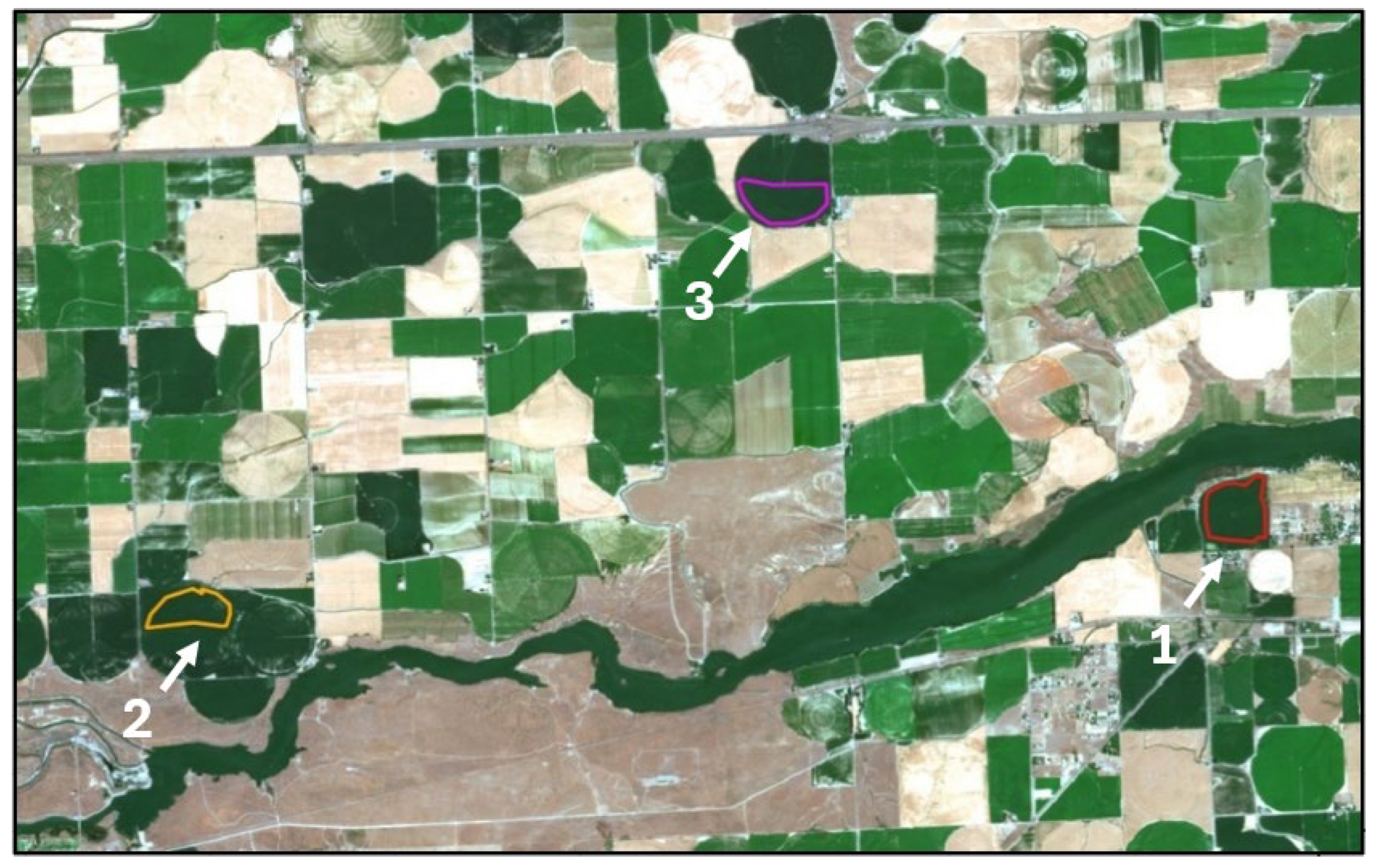
Median NDVI of the three atmospheric correction treatments were graphed by day of year (DOY) to expose NDVI trends of crop growth as time series to assess the two objectives to assess SR accuracy and then evaluate potential applications. NDVI is expected to present gradual changes as the subject corn canopies establish, reach maturity, and then begin senescence prior to harvesting.
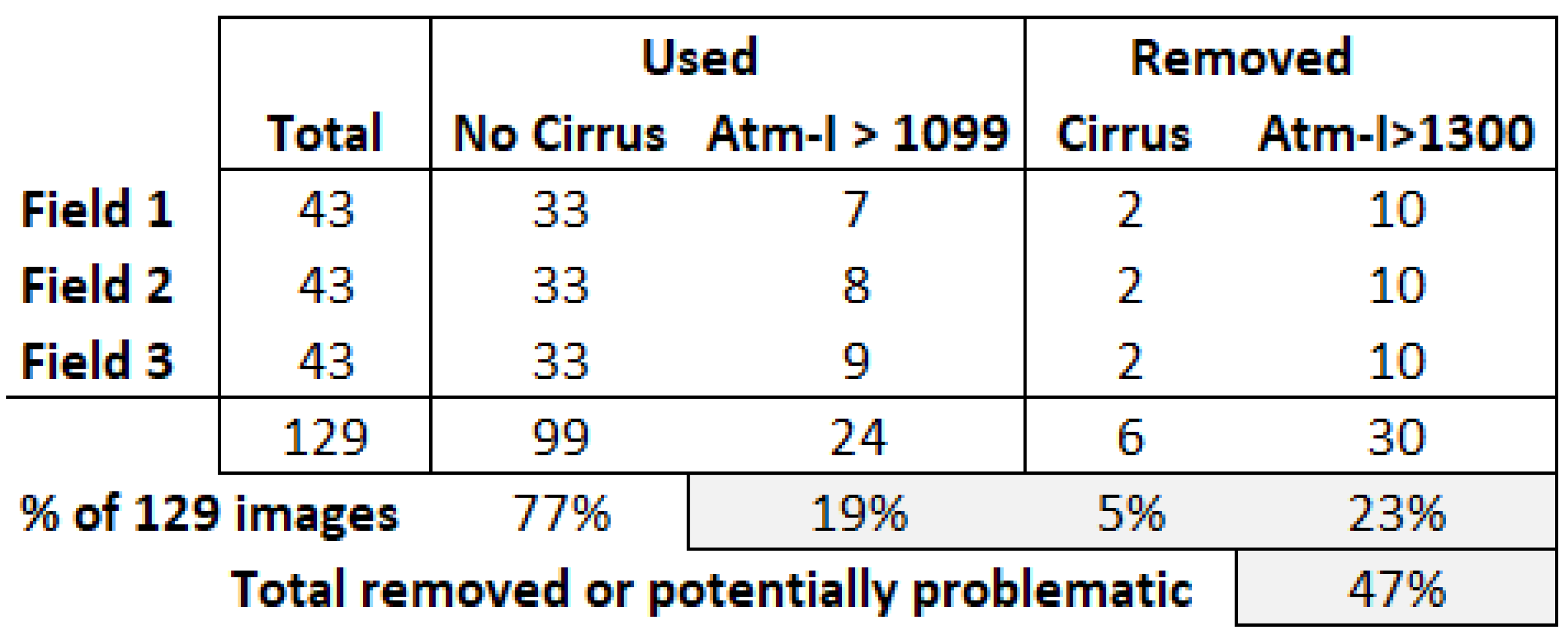
Of the potential 129 field images (3 fields × 43 image), 23 had median Atm-I levels exceeding 1300, a present limit to ensure accurate SR retrieval by CMAC.
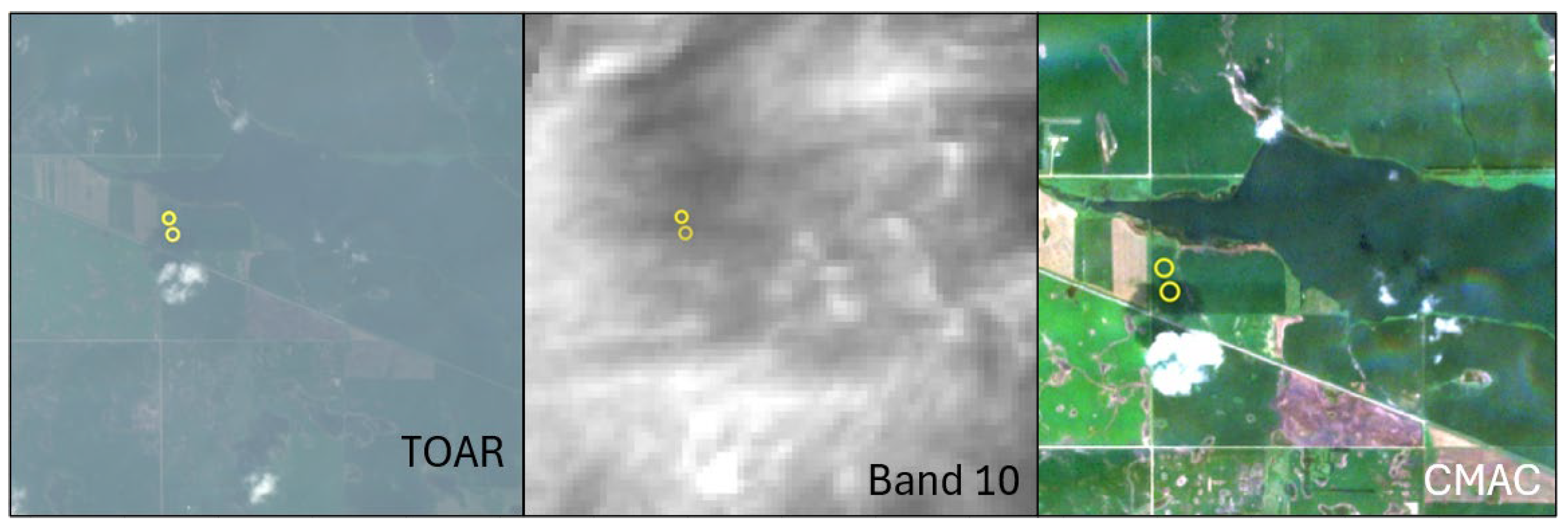
Figure 6 provides a synopsis of the imagery that includes impacts from haze and cirrus. Out of the 43 images downloaded, 10 were removed that exceeded 1300 Atm-I; these images included clouds or extreme haze. This large proportion of images occurred despite the Burley region being a semi-arid environment with predominantly sunny days. The pool of remaining field-images (acceptable images × 3 fields) totaled 105, including 19 field-images with median Atm-I exceeding 1099, an approximate threshold where the radiative transfer-based correction by Sen2Cor may degrade the output (images of two examples are shown in
Appendix B). Note that the data and analyses are available in multiple spreadsheets available through the
Supplementary Materials of this paper.
Two sets of images were removed due to cirrus clouds identified using S2 band 10 for all three fields. The 33 images per field that did not exceed 1300 nor contain cirrus (77%) were corrected by CMAC, Sen2Cor, and FORCE with no other attention except data extraction and subsequent analysis, thus constituting a clean dataset for the comparison of the three methods. The total number of field images removed due to high Atm-I was 30 (23% of the 129 field image count), including the six field images with cirrus. Sen2Cor encountered problems correcting 24 images exceeding Atm-I = 1099 but were correctable by CMAC (19%). The increasing impact of wildfire smoke is well-correlated with climate change [
31,
32] and causes haze for weeks at a time over the productive farmland in northern USA each growing season. This reinforces the value to PA of every image that can be atmospherically corrected and underscores the importance for correcting high Atm-I imagery. Wildfire smoke impact is expected to grow in frequency and extent [
33].
3.1. Objective 1 (Method Evaluation): NDVI Generated from CMAC Versus TOAR
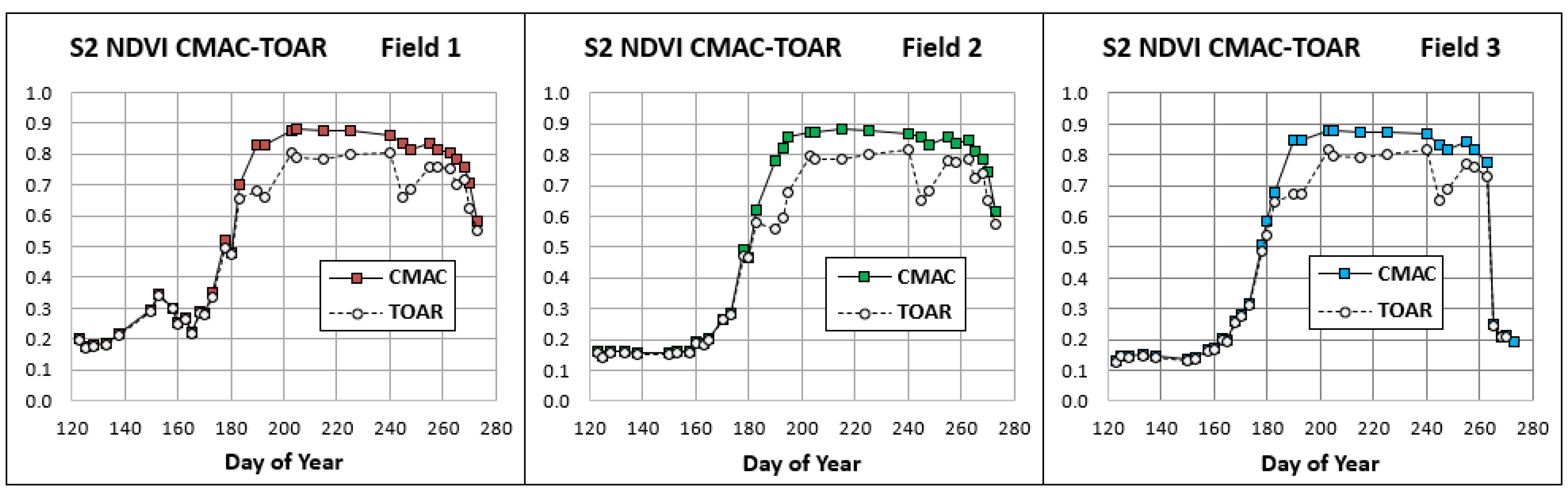
Figure 7 compares median NDVI TOAR and CMAC SR, both estimated using NIR band 8A. In comparison to CMAC, NDVI from median TOAR reflectance resulted in highly variable NDVI. SR NDVI values are much greater than TOAR NDVI because correction removes the atmospheric effect due to backscatter in red reflectance that decreases SR to about 300 scaled reflectance units (×10,000) for verdant cultivated crops.
The CMAC NDVI of the irrigated corn canopies provided smooth time series for each field. In comparison, the TOAR plots showed responses to the atmospheric signal as downward divergence. The initial series from DOY120 through DOY160 portrays TOAR NDVI values slightly lower than CMAC-corrected NDVI values, which is of interest relative to the accuracy of the three SR retrieval methods investigated for this objective. Correcting TOAR to SR reverses the atmospheric effects visible in
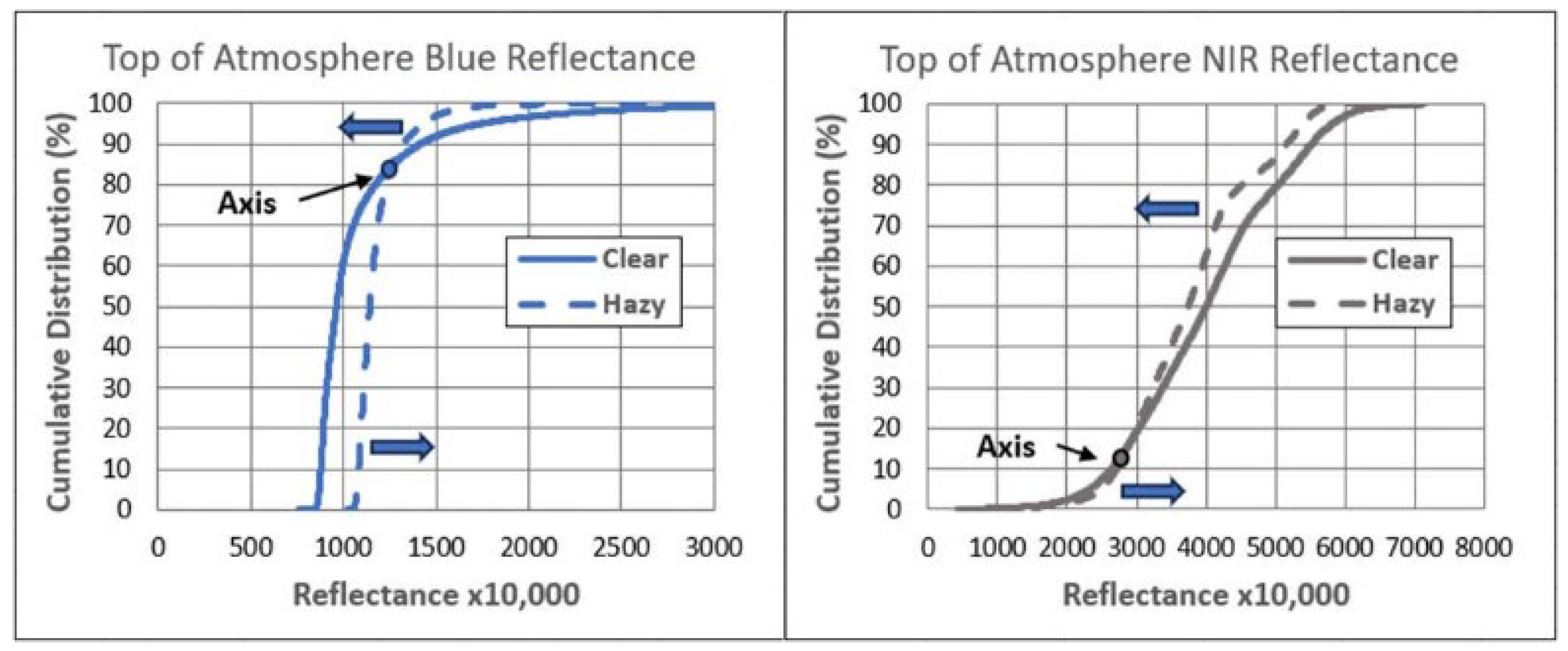
Figure 2: depending on its magnitude, bright reflectance may be slightly increased, which overcomes the atmospheric absorbance effect, while dark reflectance is decreased to remove the enhancing effect of aerosol backscatter. Because the red band is lowered and the NIR band is raised, the correction of TOAR to SR causes the NDVI value to increase. For highly vegetated canopies, the difference from TOAR to SR NDVI varies 0.1 or more as can be seen for the closed canopy corn crops in
Figure 7. For bare soil that may contain crop residue, NDVI is lower and the response is comparatively small but noticeable early in the season: when the NDVI of bare fields is low, the SR slightly increases the NDVI above that of TOAR. As TOAR NDVI increases, the difference from TOAR to SR increases dramatically, especially for images with high Atm-I.
As determined from prior analyses, the growth curves in
Figure 7 conform to the response of corn crops growing without obvious limitations on available nutrients or water. Once crop canopy closure occurred due to DOY200; CMAC NDVI for all three fields reached a plateau of almost 0.9 with only a few minor fluctuations due to residual uncertainty. Later in the growing season, the crop matures and the plants senesce. The CMAC NDVI calculated with NIR band 8A are also provided in other comparisons. In all cases for CMAC NDVI, these fluctuations are only a few percent of the NDVI distribution: the level of precision delivered by the CMAC SR is sufficiently accurate to support automated precision analytics derived from Sentinel 2 images. The graphic portrayal of the NDVI time series in
Figure 7 also provides conclusive evidence that TOAR NDVI results in a significant variable under-representation of NDVI; hence, it should not be used for PA applications requiring data free from atmospheric influence.
The data in
Figure 7 illustrate the interpretation of crop progress that can be made based on the shape of the time series curve. For example, the rise and fall of NDVI in CMAC Field 1 prior to DOY160 is likely due to the initial increase, then temporary decline in weeds before germination and establishment of the corn crop. This NDVI response can be interpreted as due to herbicide control of sparse weedy cover—a common treatment in production agriculture called a “burn down.” Another interpretive observation is the comparatively precipitous decline in NDVI for Field 3 beginning just after DOY260, when the crop was still in production but slowly declining: this constituted optimal conditions to harvest silage (harvested when still green, then stored anaerobically to ferment and partially predigest for livestock).
Rates of crop maturation and silage harvesting may be of interest for various agribusiness applications and so can be tracked regionally under automation. Similarly, growth responses versus harvesting can be censused regionally to track cultivar choices or provide data to enhance yield forecasts. If standardized, such interpretive surface reflectance applications would benefit from AI as an overview of the statistics resulting from precise and accurate surface reflectance. Such records can be tracked year after year and compared to yield, offering data for optimization considering the input cost of cultivation such as irrigation, fertilizer and seed, versus the return from the yield.
From the CMAC results in
Figure 7, it can be see that the imposed Atm-I limit of 1300 helps to ensure the reliability of SR retrieval to provide (1) acceptable SR accuracy for precision agriculture applications and (2) proof that CMAC NDVI is stable for elevated aerosol conditions up to that limit. Further calibration efforts are expected to increase this threshold. Higher levels of Atm-I can be problematic because the engineering tolerance for the correction becomes limiting; an Atm-I = 1300 threshold was chosen to be conservative. In addition, the TOAR series in
Figure 7 confirms that no correction presented slightly lower NDVI responses for early -season low NDVI conditions—this is useful as a conceptual model for the discussion of comparative performance for the three atmospheric correction methods. Specifically, when viewed as a time series, the apparent downward divergence of NDVI data from SR estimates represents under-correction and, conversely, upward divergence represents over-correction.
3.2. Objective 1 (Method Evaluation): Atmospheric Correction by CMAC, Sen2Cor, and FORCE
The red-to-NIR ratio built into NDVI provides a robust indication of the reliability of SR retrieval, since both red and NIR bands synergistically combine to increase NDVI. Sen2Cor and CMAC SR estimates are presented in
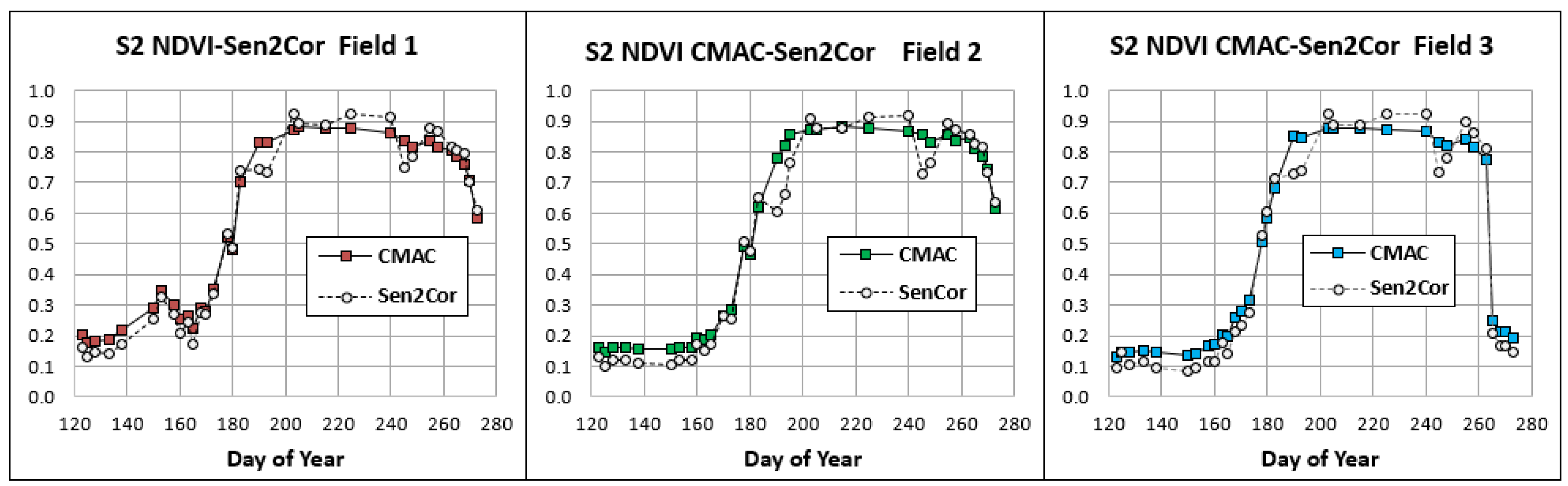
Figure 8. Divergences from a smooth NDVI time series indicate where the Sen2Cor results disagree with CMAC and the expected corn crop expression. Given the smooth NDVI time series represented by CMAC, divergences from the growth curve are taken to represent errors of under-correction (lower NDVI) and over-correction (higher NDVI). In
Figure 8, the degree of the Sen2Cor divergences can be seen to vary, even for the same DOY compared among the three fields—this variability likely is the result of unusually high or low Atm-I values, analyzed later using spectral band values. The variability of the divergent Sen2Cor NDVI likely results from the variability of atmospherically entrained wildfire smoke that may not be mapped by Sen2Cor with sufficient granularity. The S2 CMAC version generates 0.01 km
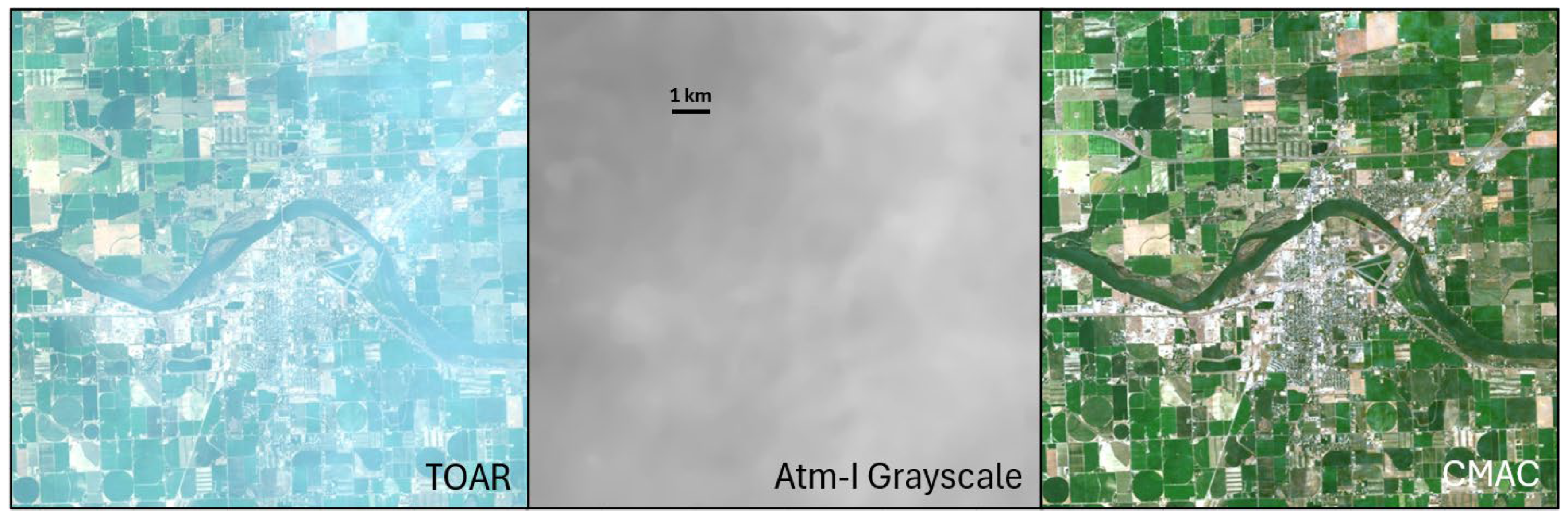
2 (100 m × 100 m) Atm-I grid cells that map subtle spatial differences in aerosol content for sensitive spatial data correction. Such granularity, illustrated in the Atm-I grayscale of
Figure 3, can result from the incomplete mixing of smoke plumes even a hundred kilometers downwind of an active wildfire.
Under-correction results in decreased NDVI when the aerosol backscatter of dark reflectance is not completely removed—this elevates dark reflectance in all bands, and is visible in the image as haze. The opposite is true for NIR—crops reflect brightly in NIR, so under-correction fails to compensate for the absorption that occurs for bright reflectance as illustrated for NIR in
Figure 2. Hence, under-corrected NIR for growing crops tends to be darker than actual SR, again, leading to under-correction, but the opposite of under-correction of visible bands—SR correction slightly
increases NIR brightness for crops. Under-correction of the red and NIR bands is the cause of the profound downward deviations of Sen2Cor NDVI in
Figure 8. An example is Atm-I = 1099 for Field 1 on DOY190: this provides an upper Atm-I limit for Sen2Cor correction in this dataset. Over-correction is visible where Sen2Cor NDVI deviates above the expected CMAC time series. The opposite of the mechanism of under-correction occurring from high Atm-I values was evident; all examples of Sen2Cor over-correction were field-images with low values of median Atm-I due to unusually clear conditions.
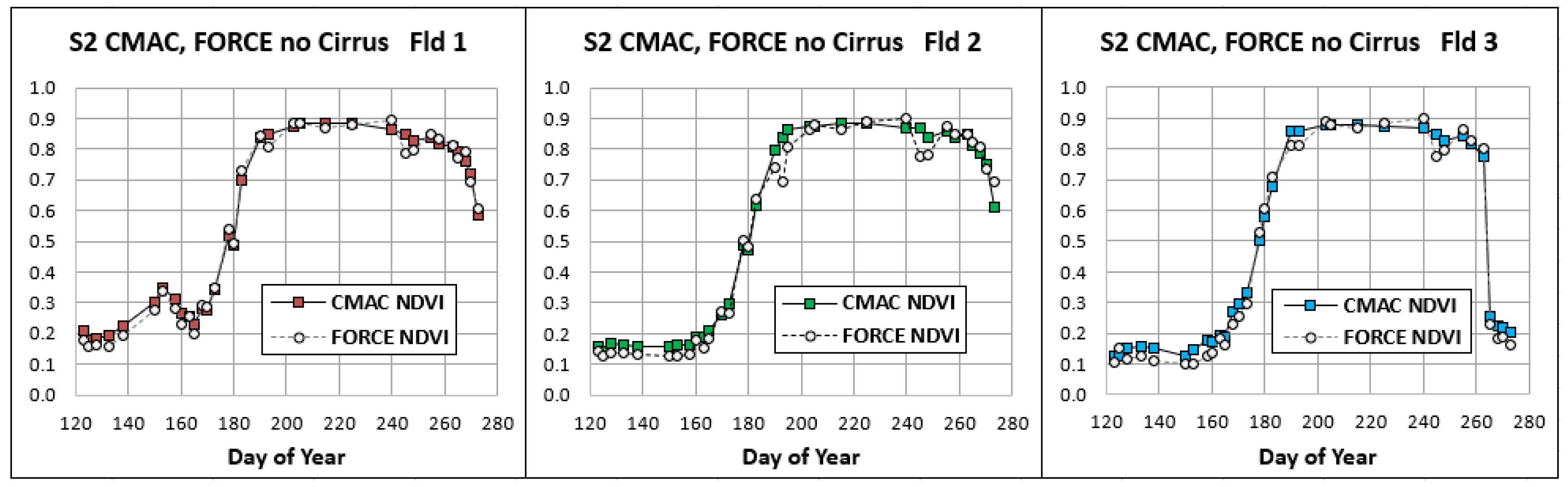
The 33-image time series NDVI dataset for the three-fields corrected by FORCE are displayed along with the CMAC time series in
Figure 9. The FORCE output achieved a better agreement with the smooth CMAC NDVI series. However, the same upward–downward discrepancies as with Sen2Cor are noticeable but markedly reduced, thus documenting greater accuracy from FORCE.
Early season (DOY120 to DOY160) NDVI from CMAC can be compared to TOAR (
Figure 7), Sen2Cor (
Figure 8), and FORCE (
Figure 9). Both Sen2Cor and FORCE violate the expectation that the NDVI values increase when corrected. Both
Figure 7 and
Figure 8 may capture systematic errors for the SR estimation of Sen2Cor and FORCE since, as in
Figure 2, SR retrieval expands the difference in band positions and the dynamic range of the bands themselves, thereby raising the NDVI value. For another look at this problem,
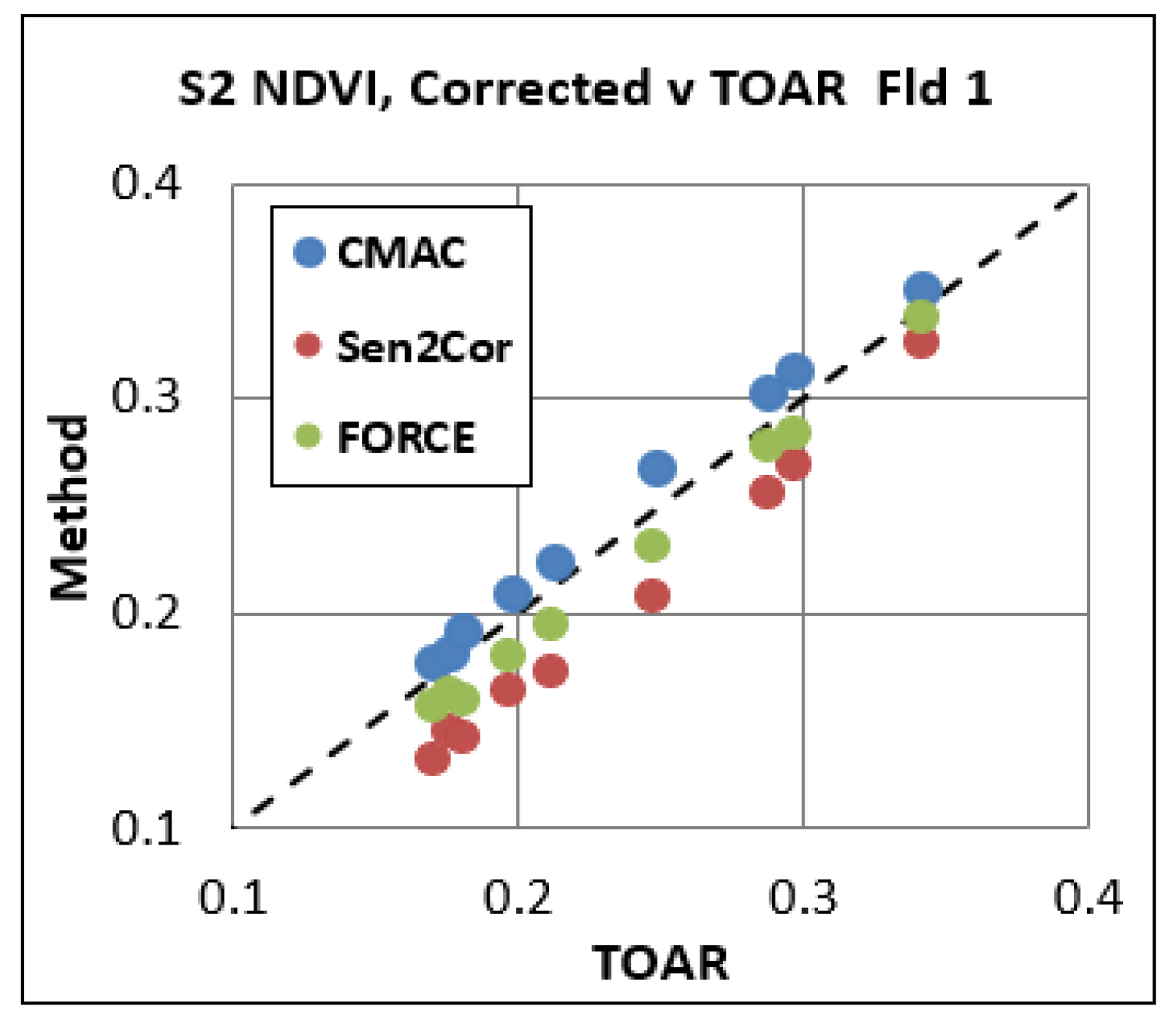
Figure 10 presents representative data from Field 1 confirming that, as expected, CMAC slightly increased NDVI from TOAR while both Sen2Cor and FORCE. NDVI fell below TOAR. The digital NDVI median values support this hypothesis—instead of an increase in NDVI, both Sen2Cor and FORCE values are lower than TOAR NDVI for Field 1.
The NDVI plots in
Figure 7 and
Figure 8 indicate a systematic divergence of SR estimates for Sen2Cor and FORCE over- and under-correcting compared to the smooth growth curves from the CMAC output. Multiple lines of evidence indicate that CMAC SR is stable and accurate: (1) smooth time series curves of NDVI as expected for a cultivated and irrigated crop; (2) SR values corresponding to theory (as in
Figure 10); (3) reproducible methods to vet SR estimates and remove images that are not (yet) correctable to SR (presently > Atm-I = 1300); and (4) the SR is derived from a conceptual framework based upon a readily observable phenomenon that illustrates patterns of scatter and absorption from the atmosphere (
Figure 2).
If CMAC correction is taken as delivering a true representation of SR, it can be applied to better understand the systematic divergences from the NDVI growth curves of Sen2Cor and FORCE. To explore these divergences. CMAC was treated as true surface reflectance and was employed as subtrahends individually from both Sen2Cor and FORCE.
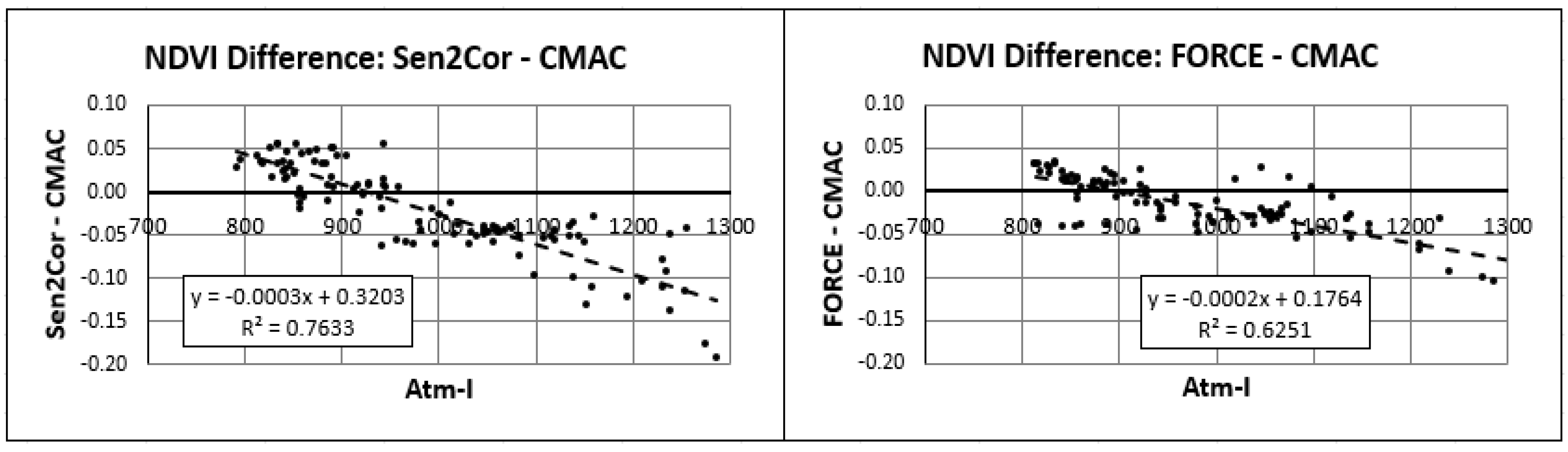
Figure 11 plots the differences of CMAC NDVI from Sen2Cor and FORCE NDVI according to the Atm-I of each field measured in the images. The relationships are strongly linear with negative slopes that cross the x-axis around Atm-I = 900. A flatter slope for the FORCE sample shows that the upgrades in the FORCE workflow are likely to contribute to greater accuracy. Evaluated in this manner, each point (
n = 99) represents an error.
The error in
Figure 11 is a serious problem that explains why Sen2Cor and FORCE cannot clear images from extreme levels of atmospheric effect. Beyond Atm-I values of about 1000 for Sen2Cor and about 1100 for FORCE, the errors fall below the x-axis, indicating under-corrections that leave haze in the image. Otherwise, such systematic errors would remain largely undetectable. The fact that both relationships cross the x axis at about 900 Atm-I strongly indicates that these errors are hardwired into the Libtran lookup tables used for both methods. Interestingly, from the correction and observation of hundreds of S2 images, an Atm-I of ~900 would likely be the Atm-I average for images that appear clear, and so could be expected to be the most accurate Atm-I range resulting from a lookup table approach.
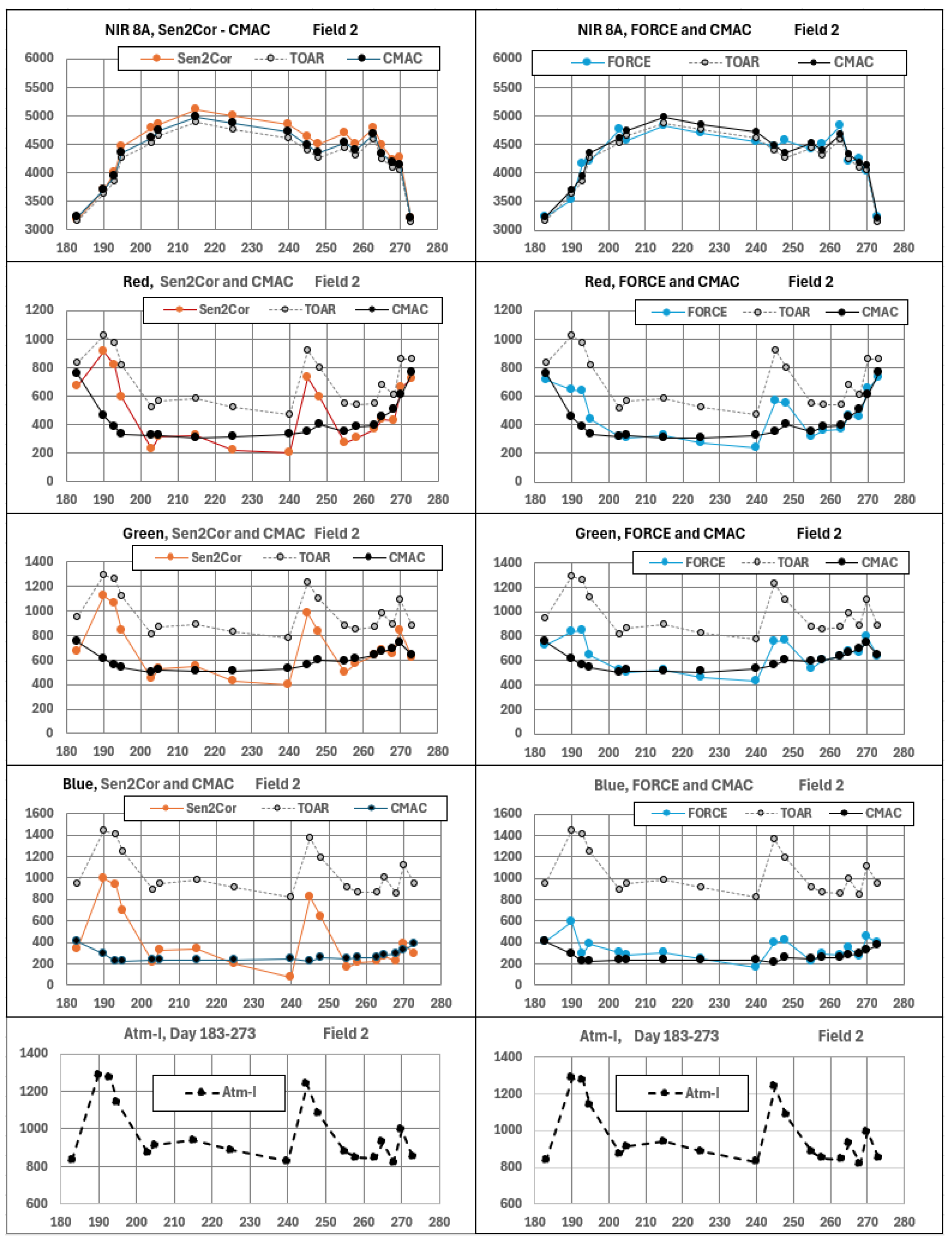
The time series plots in
Figure 8 and
Figure 9 showing over- and under-corrections of reflectance displayed as NDVI prompted a closer look at the individual spectral bands. These are provided in
Figure 12 for Field 2 that experienced the greatest dynamic range of Atm-I. Similar plots for Fields 1 and 3 are presented in
Appendix C.
A striking result from a bandwise comparison of reflectance in
Figure 12 represents the consistency through time of the CMAC data for the visible bands indicating a high degree of precision. Another striking feature of the comparisons is the degree of the atmospheric signal that remains in the corrected Sen2Cor that closely tracks the shape of Atm-I. The FORCE estimates were obviously improved; however, the ~200 scaled-reflectance unit divergences observed in the visible bands represent unacceptable results for accurate PA. Compared to the stable average mid-season values of CMAC, these represent approximate bandwise errors of 100% for blue, 40% for green, and 33% for red. The NIR band 8A closely follows TOAR, but has a slightly higher magnitude as determined from multiple calibration runs using RadCalNet surface reflectance measured on the Railroad Valley playa [
34].
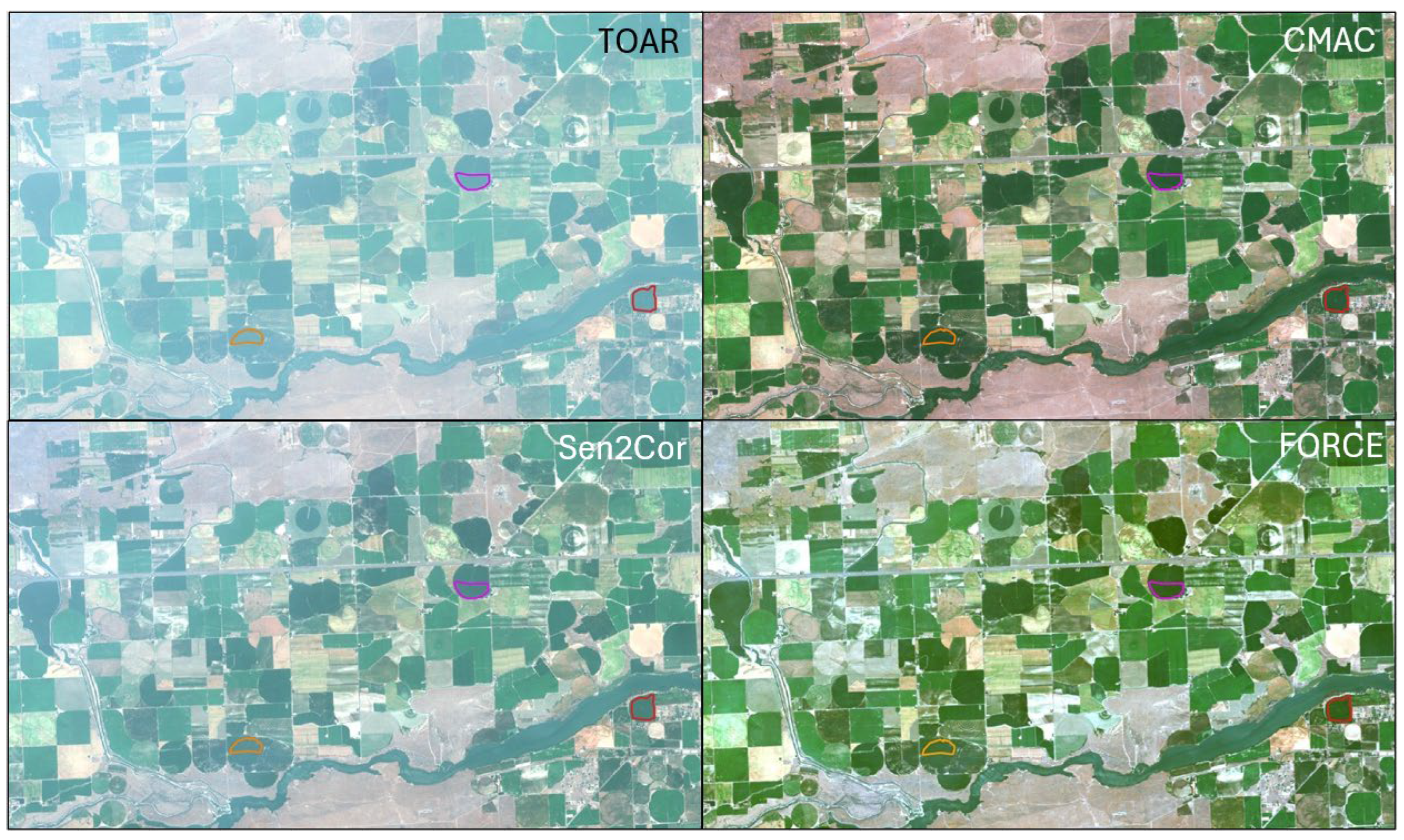
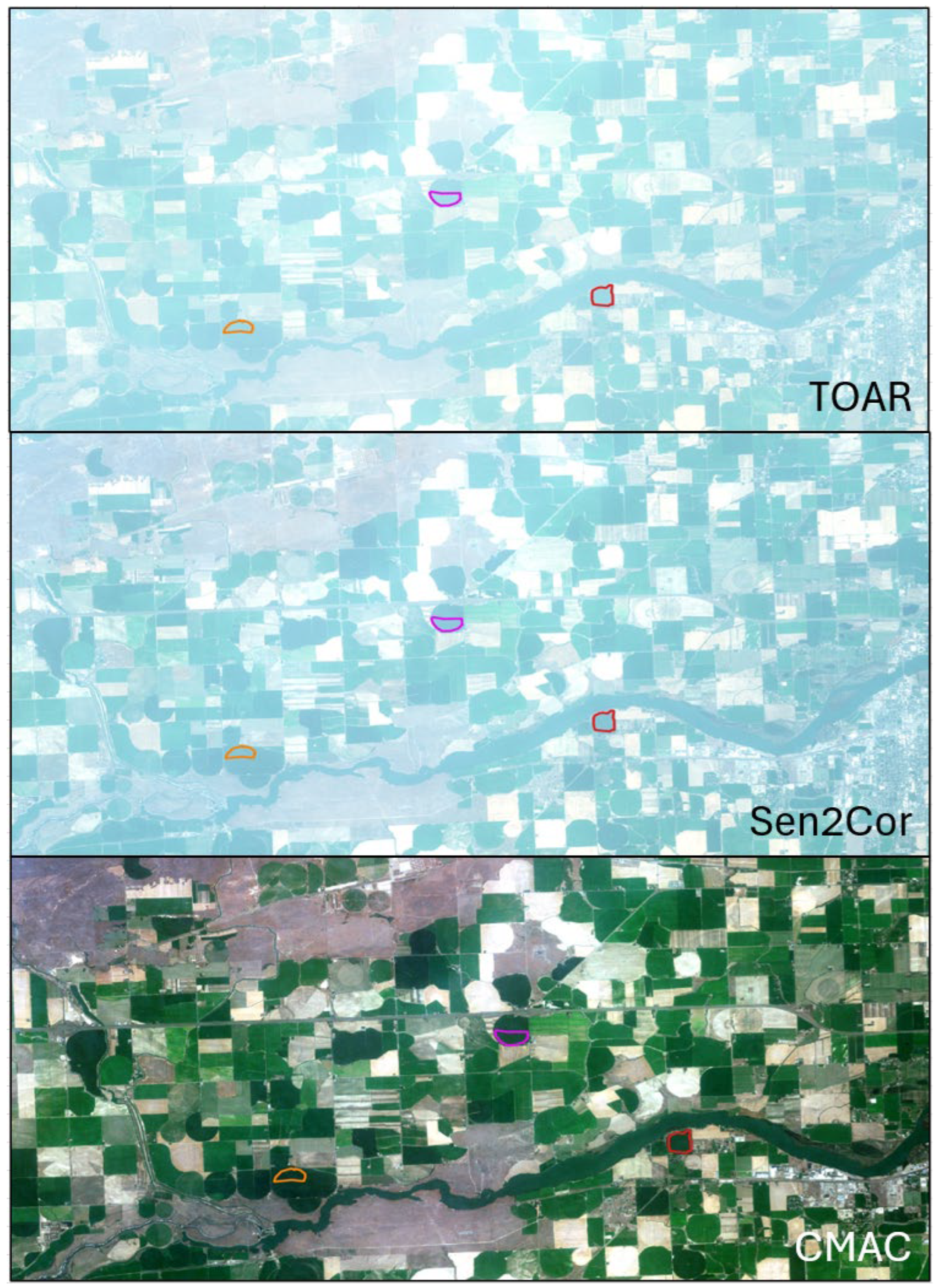
With caution, image display in GIS can provide feedback for the quality of the SR retrieval. A corrected image will appear clear with a correct color balance if the image at least approximates SR (
Figure 13). This provides quick qualitative confirmation that the data are reasonable approximations of SR. As noted earlier, extremely hazy images that exceed the Atm-I = 1300 threshold for reliable SR retrieval can be cleared to potentially support visual ISR application. Examples of two such images are presented in
Appendix B that document clarity but were removed from consideration.
In
Figure 13, haze is greatest in the TOAR image. Sen2Cor removed a significant portion of the haze, but not all of it. CMAC portrayal is clear and presents a natural color balance. The reddish coloration of the vacant unfarmed land in the CMAC image is natural, coming from senesced canopies of cheatgrass, an invasive species that dominates dryland habitats in Idaho. FORCE portrayal is mostly clear, although the color balance is noticeably lighter than CMAC—light haze is visible for the vacant land toward the left side of the image. Such remnant haze over brighter targets in the FORCE image corroborates the Atm-I model output that increases over bright targets, a result that is hypothetically related to forward scatter from brighter targets that backlight aerosols, thus increasing the apparent atmospheric effect. As can be seen, the calibration procedure for CMAC accommodated and removed the influence from forward scatter.
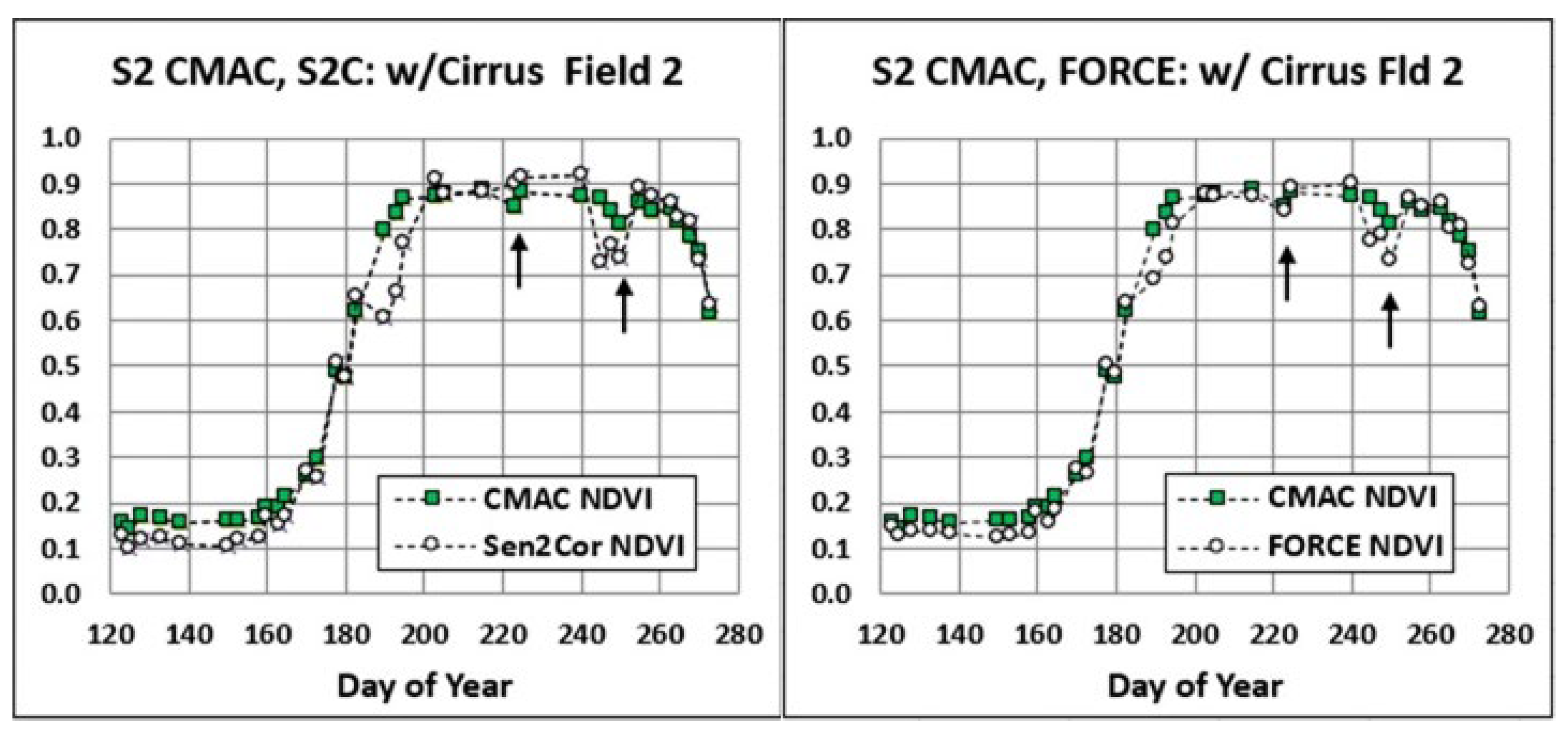
As mentioned previously, two cirrus-affected images were identified with S2 band 10 and removed to improve the smoothness of the NDVI time series in
Figure 7,
Figure 8 and
Figure 9. The NDVI curves for Field 2 in
Figure 8 and
Figure 9 are presented in
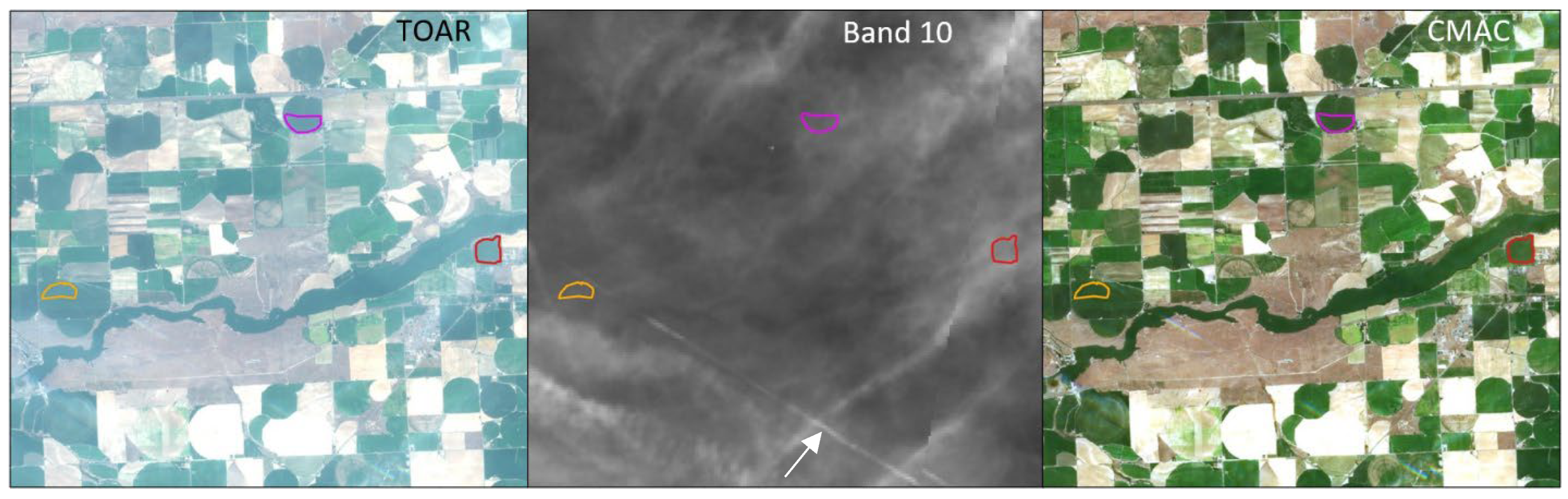
Figure 14 with the cirrus-affected images included. The DOY250 cirrus-affected image is illustrated in
Figure 15 that includes TOAR, the cirrus band grayscale, and the CMAC correction. While CMAC can largely correct cirrus effects (as in
Figure 14 and
Figure 15), for quality control purposes, cirrus-affected data are best excluded. S2 band 10 is available to support a Tier 1 program, but such data are not generally available for Tier 2 PA application because smallsat constellations generally lack a cirrus detection band (centered about 1377 nm).
Cirrus clouds are problematic for atmospheric correction because they are thin and allow the ground signal to be partially represented, but often impose diffraction effects that cannot be corrected, since the colors of light are separated. Separation of the bands of light violates the current assumption for CMAC that the spatial expression of reflected light is not separated into its constituent spectral bands. For Tier 2 application, since they can achieve daily image captures, a lower limit than Atm-I = 1300 can be imposed, thus reducing the greatest potential influence of cirrus if it is included. Additional attention is necessary for the management of Tier 2 and cirrus-related matters.
3.3. Objective 2 (Applications): SR NDVI of NIR Broadband 8 vs. Narrowband 8A
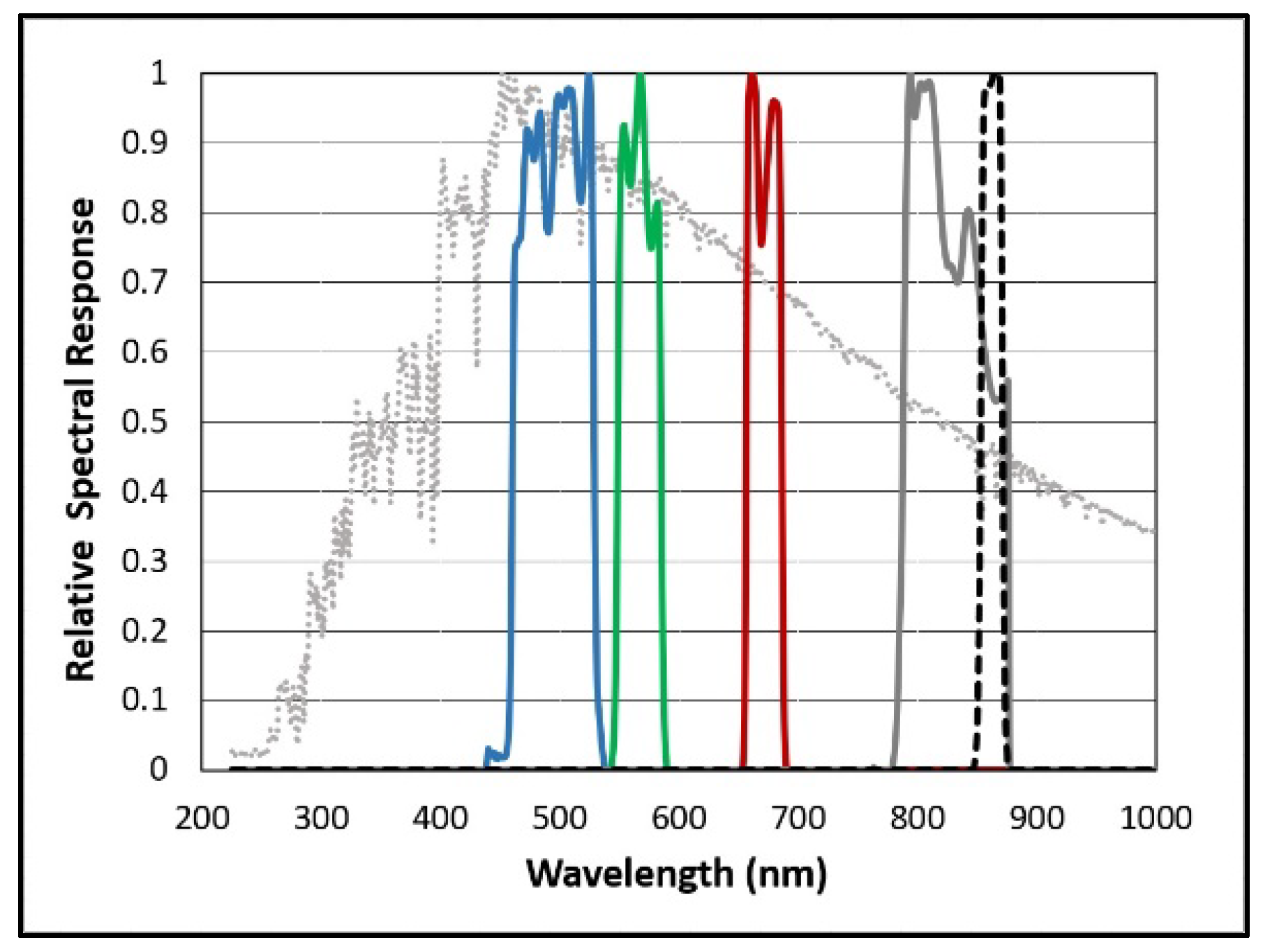
The narrow versus broad NIR spectral bands of S2 represent an engineering tradeoff. The highest level of energy from sunlight occurs in the shorter-wavelength ultraviolet into the blue–green region of the spectrum that decreases with wavelength (
Figure 5). To compensate for lower light energy, sensors can be engineered to have broader NIR windows to gather additional energy to affect improved instrument sensitivity. Depending on the instrument design, broadband NIR responses may be impacted by atmospheric water vapor because its window includes water absorption features that can affect NIR measurement. The S2 narrowband NIR, 8A, samples four times the area (20 m pixels) of broadband NIR band 8’s 10 m pixels. Visible bands of S2 also collect 10 m pixels; hence, the application of 20 m band 8A combined with the visible band data required resampling to 10 m resolution using weighted averaging. The higher-resolution pixels of band 8 compensate for the reduction in reflected energy than from the narrower band 8A. This analysis is provided as a proof of concept for the enhancement that accurate surface reflectance estimation can provide for PA analytics.
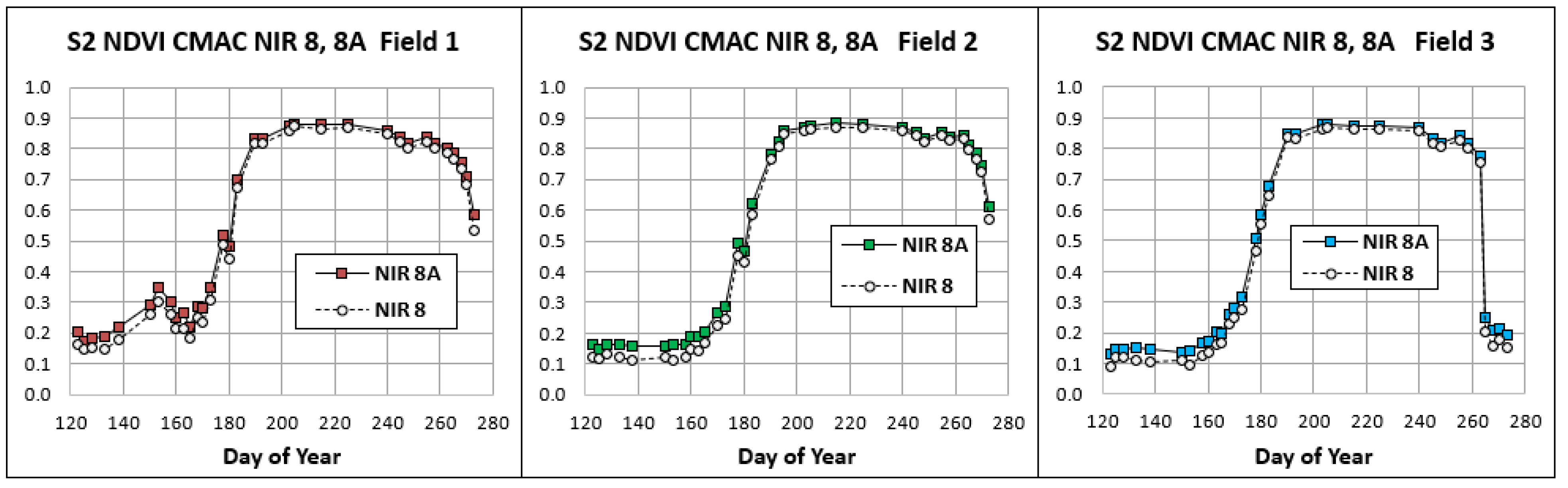
To evaluate this tradeoff, CMAC NDVI values of broad and narrowband atmospheric corrections are compared in
Figure 16. As a surrogate for Tier 2 smallsat data, the higher values of NDVI in
Figure 16 indicate a negligeable impact from the application of the broader bands of Tier 2 smallsats for full canopies. The NDVI values of band 8A versus NDVI of band 8 were in close agreement, except during the low early-season NDVI. Since the NDVI values in
Figure 16 are derived from TOAR without any other treatment, the difference between CMAC NDVI values for bands 8 and 8A, for example, the lack of agreement for early-season NDVI, are likely due to instrument responses.
In a semi-arid and inland continental location, such as Burley, Idaho (25 cm/yr precipitation), where a high concentration of atmospheric water vapor is unlikely, errors caused by using band 8 for an established crop can be expected to be low, so either band could be used if applied consistently. If the broadband NIR is used for Tier 2 smallsat infill when Tier 2 data are unavailable, broadband NIR 8 should also be used for Tier 1.
To test the tradeoff between broad and narrowband NIR for regions with high humidity, S2 imagery was selected from a humid climate in Rupganj, Bangladesh, during September and October 2025, timed to coincide with the end of the monsoon season when the atmospheric water vapor level is expected to be high, but the sky is potentially clear of clouds. Three AOIs were chosen that were cloud-free on five images. The assumption of high levels of monthly composite columnar water vapor was confirmed by a visual inspection of NASA Earth Observatory maps to be an average of about 5 cm in September (near the maximum 6 cm) and moderately high (~3 cm) in October [
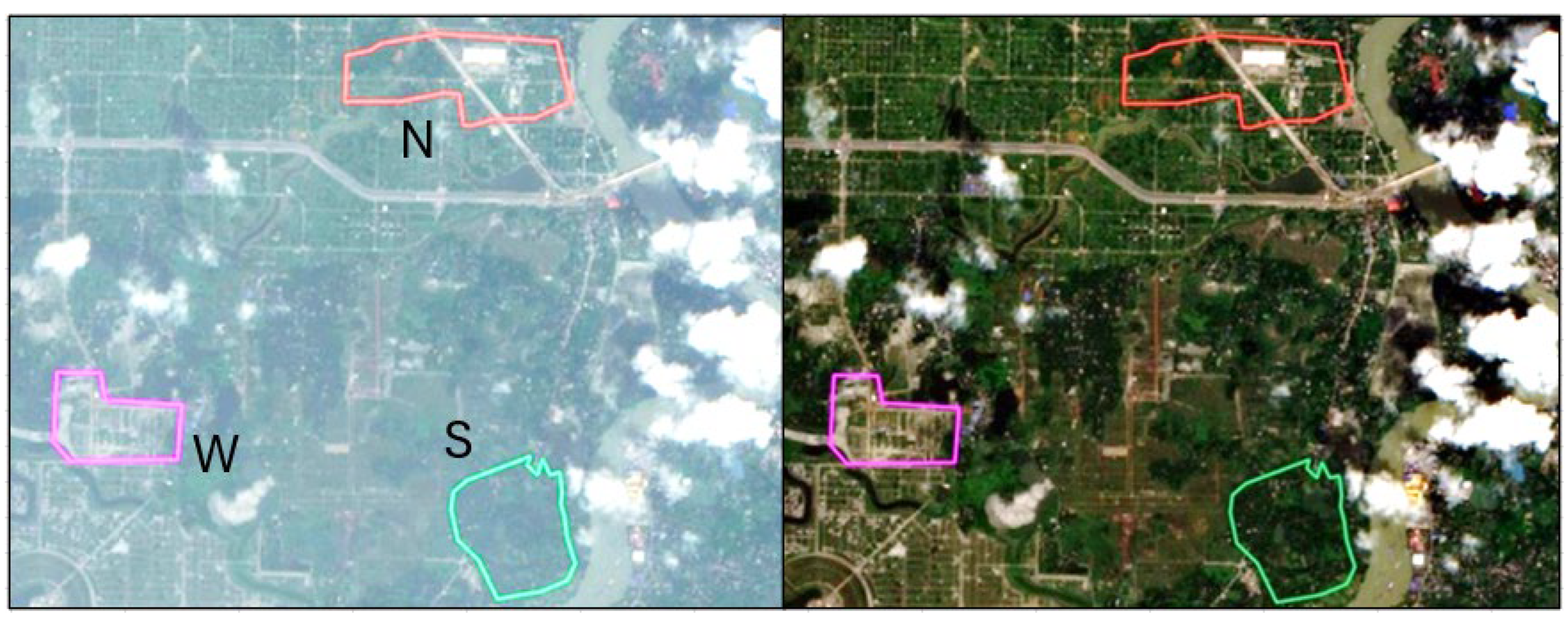
35]. These three AOIs sampled a range of vegetated cover: West, vegetated plus exposed soil; North, a mixture of structures and vegetation; and South, with continuous vegetation (
Figure 17).
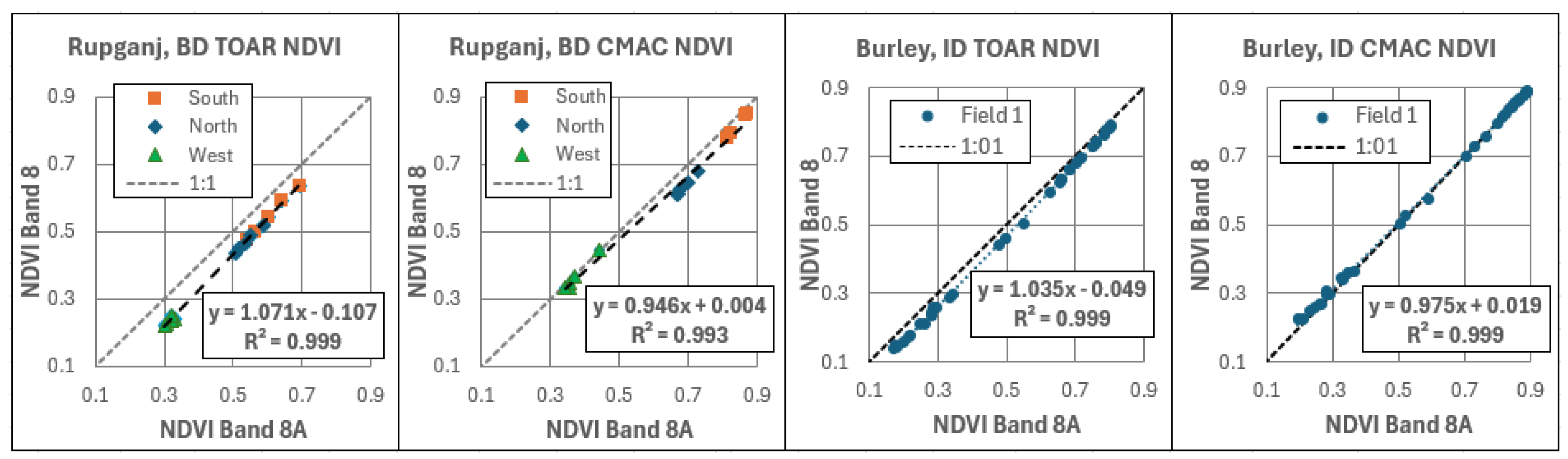
Graphic comparisons of NDVI calculated using NIR bands 8 and 8a are presented in
Figure 18 for the semi-arid Burley region along with the extracted and plotted data for the Rupganj AOIs shown in
Figure 17. CMAC SR values show relatively minor variability when plotted as in
Figure 18, representing an overview of band 8 versus band 8A applied across a nearly full range of arid to humid climates. A potentially negligeable loss of precision would occur in many, perhaps all, climates where the application of PA is most likely to occur, i.e., temperate grasslands where soil genesis over millennia now supports intensive production agriculture. The relationship between these two NIR bands is strongly linear, yieldingly coefficients of determination (R
2) close to or exceeding 0.999. Despite the variable cover, NDVI maintains this linearity as both the Burley and the Rupganj datasets contain values that vary from low to high. The CMAC plots indicate that NDVI from NIR band 8 will be well constrained in semi-arid conditions and several percent lower for humid conditions. These are encouraging results because the higher resolution of broadband NIR is desirable, especially if the narrowband NIR is unavailable in Tier 2 smallsat data. Also unavailable on smallsats are the bands necessary for the estimation of atmospheric water vapor content that would permit the adjustment of broadband NIR.
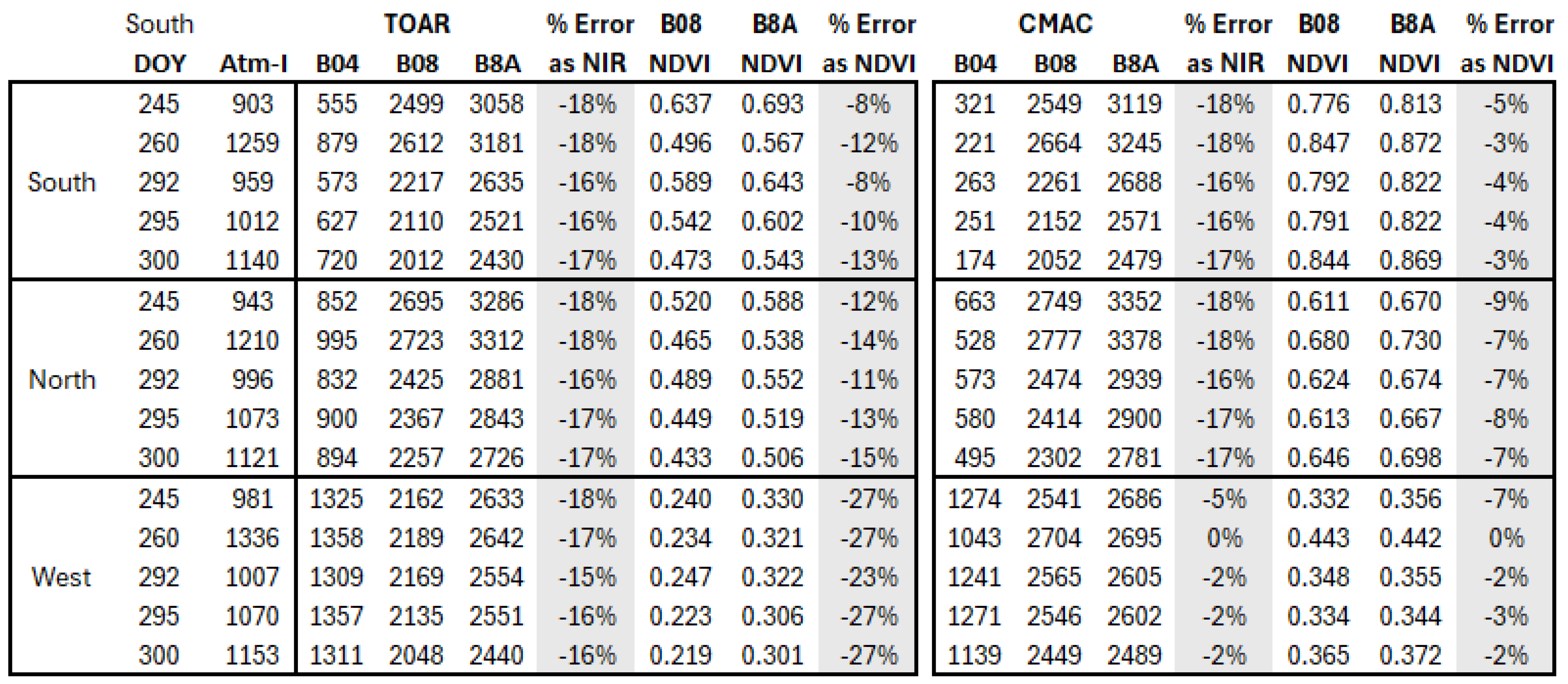
Environments with high water vapor content will pose a challenge for analyses that apply broadband NIR data.
Figure 19 illustrates the variability induced by water vapor. The NDVI data were processed to percent error using the band values presented in the table and treating band 8A NDVI as the standard % error = 100 × x(value − standard)/standard). The important lesson from
Figure 19 is that NIR broadband versus narrowband values will reduce uncertainty when converted to NDVI rather than applying NIR alone.
3.4. Objective 2: Quality Control: Verifying PA Analytics Standardized by SR
In
Section 3.2, FORCE and Sen2cor did not consistently yield accurate SR estimates and output data SR estimates with systematic errors and so were excluded from QC consideration. In a PA process flow, QC involves excluding data from fields where a drop in crop health could be mistaken, such as when clouds or shadows alter brightness across all or part of a field. This problem appears to be solvable with techniques such as the example offered here as proof of concept. If any part of the field is affected, the entire field should be eliminated from consideration. The analyses here are aimed toward an entire field; however, QC is applicable on a pixelwise statistical basis as well as the collective statistics of the entire field. All acceptable images are potentially valuable, especially ones that document a crop problem, so care must be taken not to misidentify and eliminate changes in the data that could signal an actual problem.
Clouds and extreme haze can be removed from entire images routinely using the Atm-I grayscale generated during the conversion of TOAR to SR. An Atm-I raster, generated initially for image correction can be stored in a buffer for the post-deployment of the dataset within the field boundary. The Atm-I threshold of 1300 allows the removal of clouds or severe haze in a single pass across the entire image. Using a 1300 threshold level will automatically filter out even diffuse clouds due to Atm-I’s haze detection capabilities. The Atm-I grayscale covers the full image, facilitating efficient initial quality checks to eliminate cloud effects over the entire image. Identification and removal of cloud shadow are notoriously difficult.
Using a shapefile to define field boundaries streamlines QC by focusing the analysis on the field area rather than the entire raster image. This treats the field’s reflectance values as a statistical unit for analysis. In the PA workflow, each field is represented by a shapefile that ensures that only relevant data within those boundaries are analyzed. The second step for QC can focus on each field identified exactly within a shapefile to then more sensitively detect localized partial or variable cloud cover. One effective technique is to employ the difference between the blue band SR maxima and minima as a threshold for elimination. However, QC may potentially prevent identification of a true problem and rather than eliminating the field at first glance or mobilizing scouting, the farmer can be informed that a potential problem is under evaluation but not yet of concern. A memory function plus digital elevation models can enhance the robustness of output as they can find locations that are falling behind due to drought or flooding. Such complexities are an ideal target for artificial intelligence application, but only after data conversion to SR.
Stringent QC is required to remove cloud shadows using automated detection methods. Tier 2 smallsat data may include only four VNIR bands, so for now, the solution must be restricted to detection by these bands. Cloud shadows reduce irradiance, complicating SR calculations that assume normal sunlit conditions. Because actual irradiance on the target is unknown and must be estimated from standard top-of-atmosphere values, the application of CMAC-derived reflectance for shaded areas diverges from sunlit conditions. SR conversion effectively standardizes sunlit responses so that even the most diffuse shadow can be differentiated.
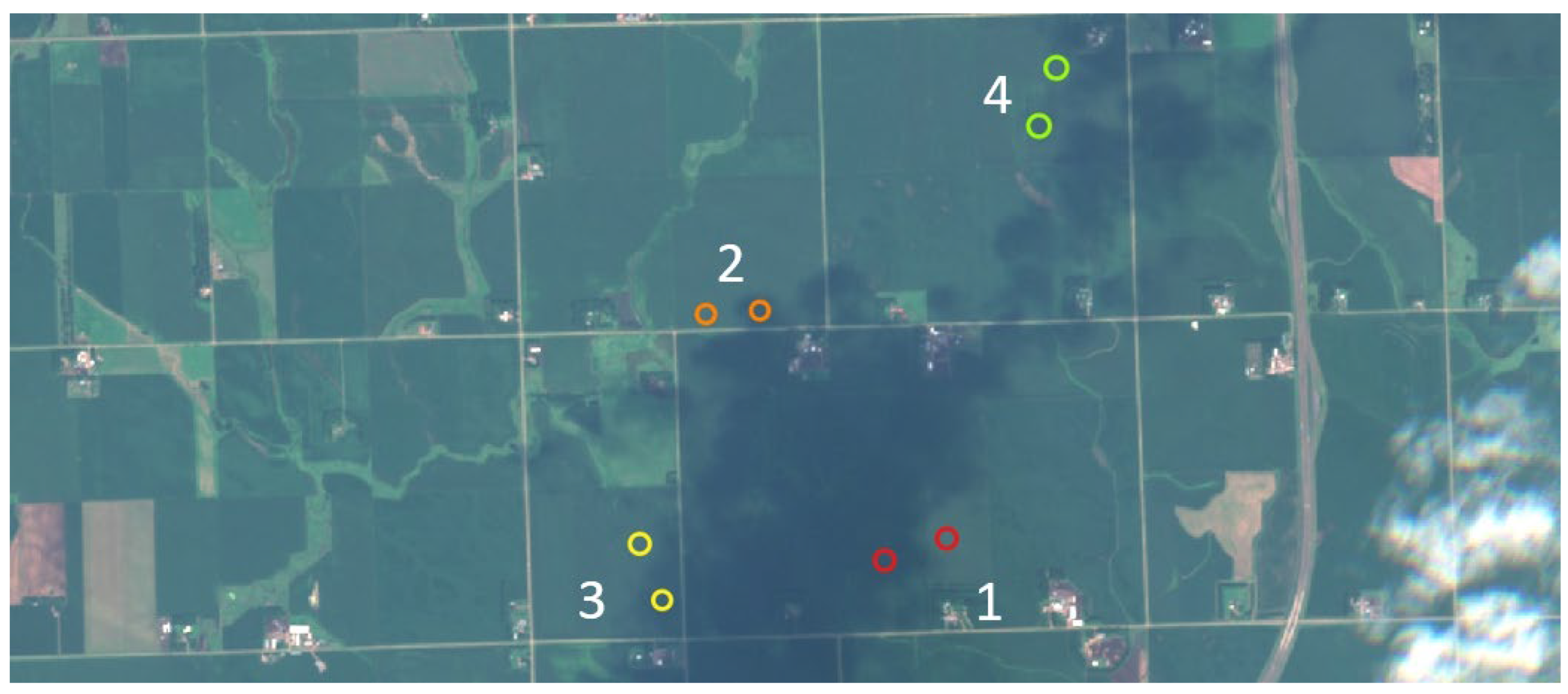
A provisional index was developed with data extracted from increasing levels of shadow and from adjacent sunlit samples. Sample locations for this investigation are mapped on an S2 TOAR image in
Figure 20 pairing AOIs of shadow and adjacent sunlit areas. The intensively cropped land cover of the 6 August 2018 S2 image near Sioux Falls, SD, is appropriate for sampling to study cloud shadow removal from managed full canopy crops.
Figure 20 contains four pairs of samples for test discrimination of cloud shadow for a range from full shadow to diffuse shadow cast by thin clouds.
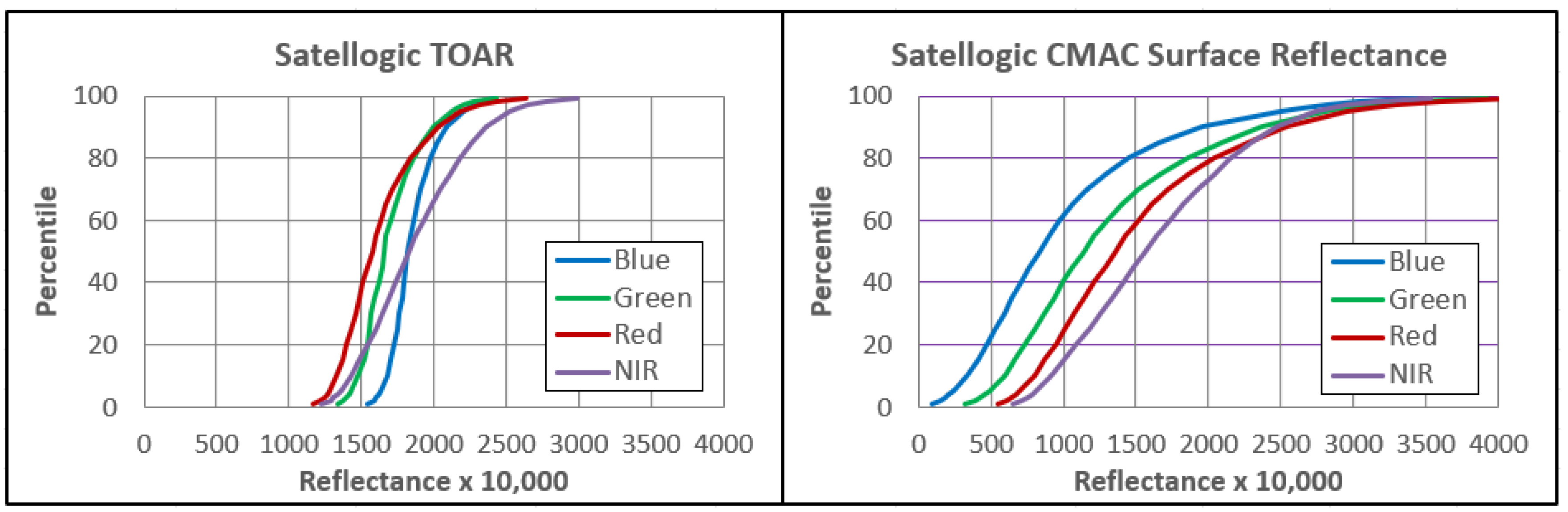
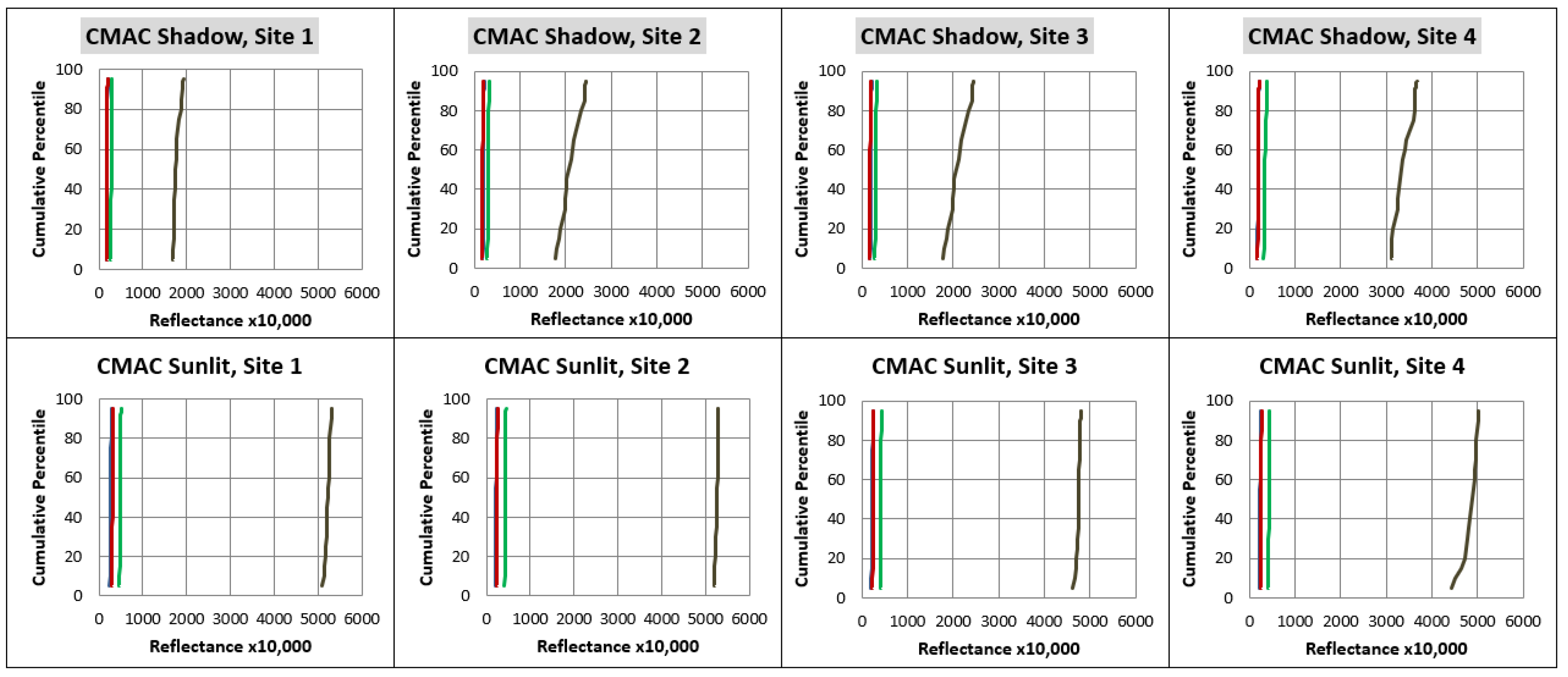
Ater CMAC conversion, the image data were extracted from the sample areas and displayed as CDFs for an overview of reflectance from shadowed and sunlit crops (
Figure 21). Because these CDFs sample healthy monoculture crop cover, the sample CDFs are nearly vertical. Their ordinal positions were used as indicators of the change from sunlit to cloud shadow for inspiration to design a mathematical representation of cloud shadow well-differentiated from sunlit cover. The reflectance CDFs for the four bands can be seen to change the most in NIR band 8A. While 8A was applied, band 8 provided nearly identical results for vigorous crop cover. Band 8 has the advantage of being applicable to Tier 2 smallsat data.
The CDFs from the paired AOIs in
Figure 21 indicate that effective discrimination can be developed from the blue, green, and NIR bands. To extend this function for higher levels of Atm-I, paired sampling was performed for locations of clouds within extreme levels of haze, as can be seen in
Figure 22, sampled on a 17 August 2024 S2 image near Carrington, North Dakota. That image presented unusual conditions where clouds and shadows could be seen together in hazy conditions. Sample areas across the image are not presented because the sampled areas were widely spaced across the image and their entire display would render them indistinct at scale. A general note here: clouds of water droplets in extreme haze are uncommon because high levels of smoke haze dampen atmospheric lifting conditions necessary for cumulus cloud formation.
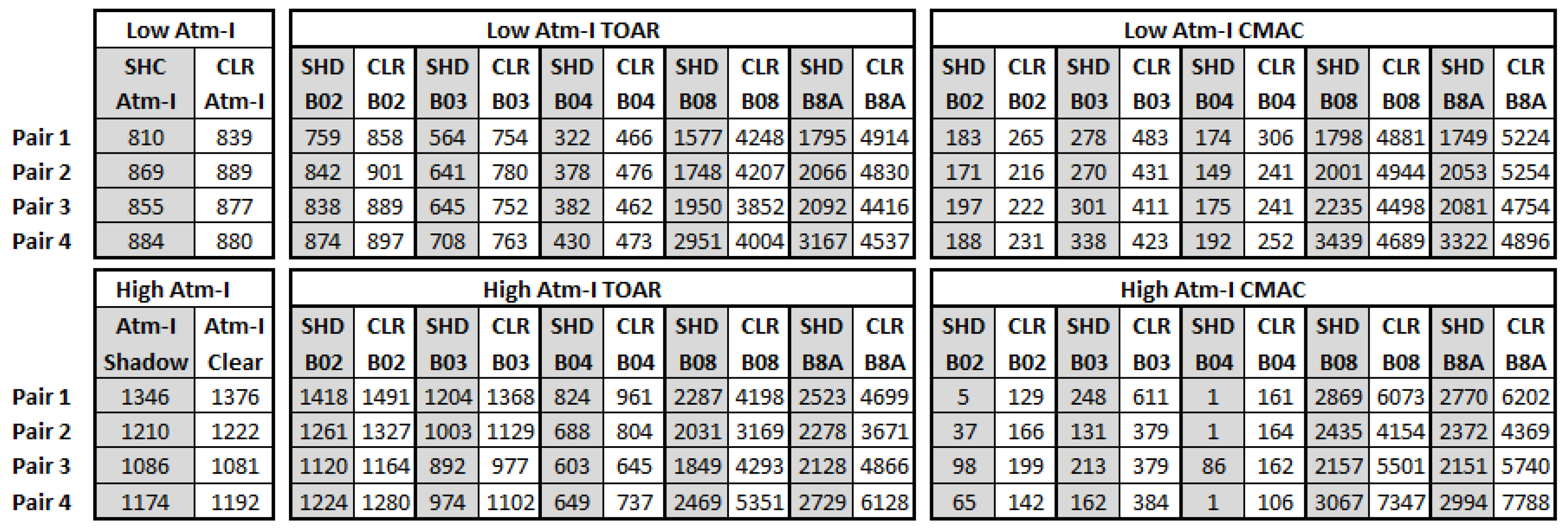
Figure 23 provides data from the corrected sunlit (CLR) and shadowed AOIs (SHD) of the conditions shown in
Figure 20 and
Figure 22, extracted from the sample AOIs to develop a cloud shadow detection algorithm.
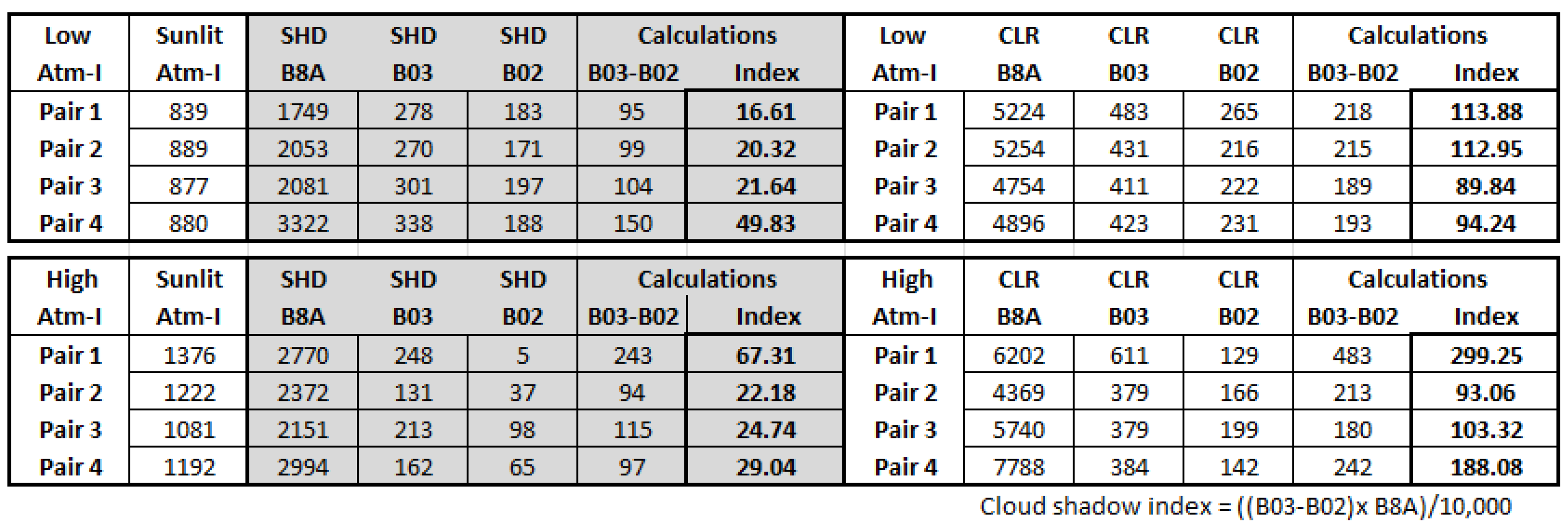
Figure 23 contains the data extracted from low- and high-Atm-I conditions combined according to the observed CDF responses in
Figure 21. The extracted blue, green, and NIR bands from
Figure 23 were used to calculate an index to differentiate sunlit from cloud shadow reflectance (
Figure 24).
The basic strategy for deriving indices for QC or for crop analytics is to quantitatively differentiate the reflectance response meaningfully from normal conditions. In this case, acceptable data must be differentiated even from highly diffuse shadow by applying the spectral bands in a manner that drives the responses apart. The term “meaningfully” recognizes the important role for selecting threshold values for the exclusion or inclusion of data, for example, the index for the low-Atm-I “CLR” condition values of Pairs 3 and 4 are much lower than for Pair 1—in actuality, the sunlit samples of these pairs may be affected by extremely thin clouds but not meaningfully because they are not detectable when considered alone.
From the data presented for this example, an appropriate threshold can be calculated as the center of the distance between the highest value for shadow and the lowest value for sunlit conditions: this index threshold is 80, the average of 67 and 93. Additional work can be done to test this differentiation with a wide variety of samples; for healthy, closed-canopy crops, this index is expected to be robust. The cloud shadow index can also be expected to work the same using the broadband NIR 8 as the narrowband 8A as indicated by testing presented in
Section 3.3. These and other applications need rigorous testing before final application.
3.5. Objective 2: An Advanced SR Application for Precision Agriculture
NDVI growth curve analysis can provide a potentially indispensable application of SR NDVI especially relevant for a centralized agricultural support system, such as the EU’s Common Agricultural Policy. Offered as a proof of concept,
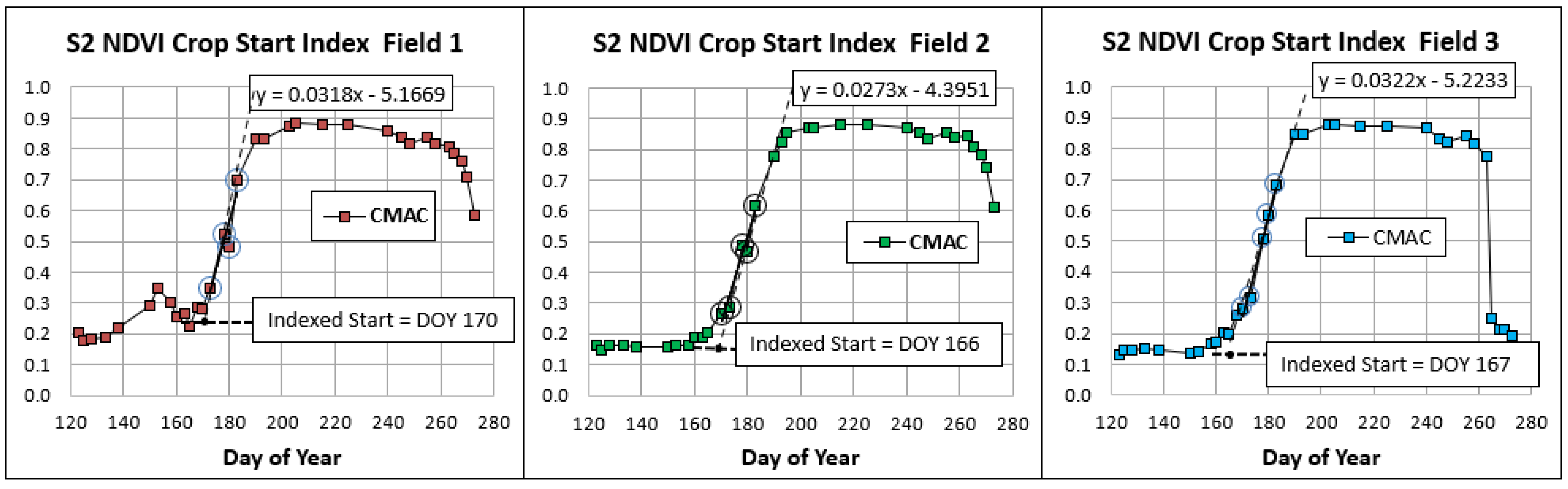
Figure 25 presents a method for the automated scheduling of agronomic treatments such as cotton growth inhibitors, crop fertilization, corn de-tasseling, vegetable harvest, canning, and packaging, etc. For corn and other crops, growth generally includes a linear phase that, when captured by SR NDVI, can provide a start date for when the crop was released from cool spring weather. For indexing a crop start date, NDVI values can be accumulated between some selected thresholds and regressed to fit a line to calculate the start date. While the three fields shown in
Figure 25 have start dates indexed within a several-day period, field planting and crop initiation in some climates and seasons can range up to several months, and perishable crops such as vegetables may be started multiple times during a single season.
Automated crop indexing using SR NDVI provides a convenient alternative to the existing method that tracks growing degree days [
17]. Such temperature-based measurements require charting the daily weather to determine the cumulative days that the temperature exceeded some baseline, which can differ for each crop type, then performing bookkeeping calculations to arrive at an estimate when the crop began its linear growth phase. This procedure is unnecessary if the image data are converted to SR NDVI. The linear growth phase provides data capable of the automated indexing of individual fields through measuring baseline values before crop start, selecting the NDVI values between, say, 0.3 and 0.7, regressing these values by DOY, and solving the equation for the baseline value arrives at an indexed DOY for crop start. The index can then be used to schedule the field’s treatments and harvest.
While the growing-degree-day concept finds wide application because it is the only method available, it is inconvenient but may suffer accuracy issues when weather stations are located remotely from the field of interest or the microclimate is influenced by complex terrain. An automated imagery-driven application that indexes field start dates offers convenience and application across millions of hectares to deliver potentially greater accuracy because each field can be tracked independently under automation using actual crop responses rather than a surrogate measure based only on temperature measured remotely. Accurate SR estimation potentially offers many additional EO-based methods to assist crop management, for example, precise remote irrigation amounts and timing based upon NDVI values calibrated to reference evapotranspiration, an application that the lead author of this paper invented and sold to a Monsanto subsidiary. Another beneficial application is to map soil capability to apportion soil sampling and the prescription of variable rate seeding or fertilization (
Appendix D). Similarly, SR analytics can support mapping crop insect infestation or disease, then applying the digital maps for automated spraying by drone or helicopter. These are just a few of many potential applications made possible by the reliable SR conversion of EO imagery.