Characterization of Scale Effects and Determination of Optimal Observation Scales for Bidirectional Reflectance in High-Resolution Remote Sensing of Land Surfaces

 ,
, 
Highlights
- In-depth characterization of the spatial scale effects inherent in high-resolution surface BRDF.
- Explicit analysis of the linkage between BRDF scale dependence and surface spatial heterogeneity.
- Quantitative determination of optimal observation scales for distinct terrestrial targets.
- Construction of prior BRDF knowledge for typical land features at their optimal scales to fulfill diverse remote sensing applications.
- These findings advance the practical application of remote sensing technology, offering significant implications for enhancing target detection accuracy and the authenticity of remote sensing products.
Abstract
1. Introduction
- Lack of systematic comparison: A systematic comparison of BRDF scale variation laws for diverse typical land covers under a unified technical framework remains absent at high spatial resolutions.
- Missing mechanistic link: The determination of optimal observation scales has not yet established a linkage mechanism between BRDF characteristics and spatial heterogeneity.
- Insufficient land cover representation: The limited coverage of land cover types fails to fully account for the structural differences between vegetation and bare soil, making it difficult to support diverse remote sensing application requirements.
2. Data and Methods
2.1. Data Acquisition
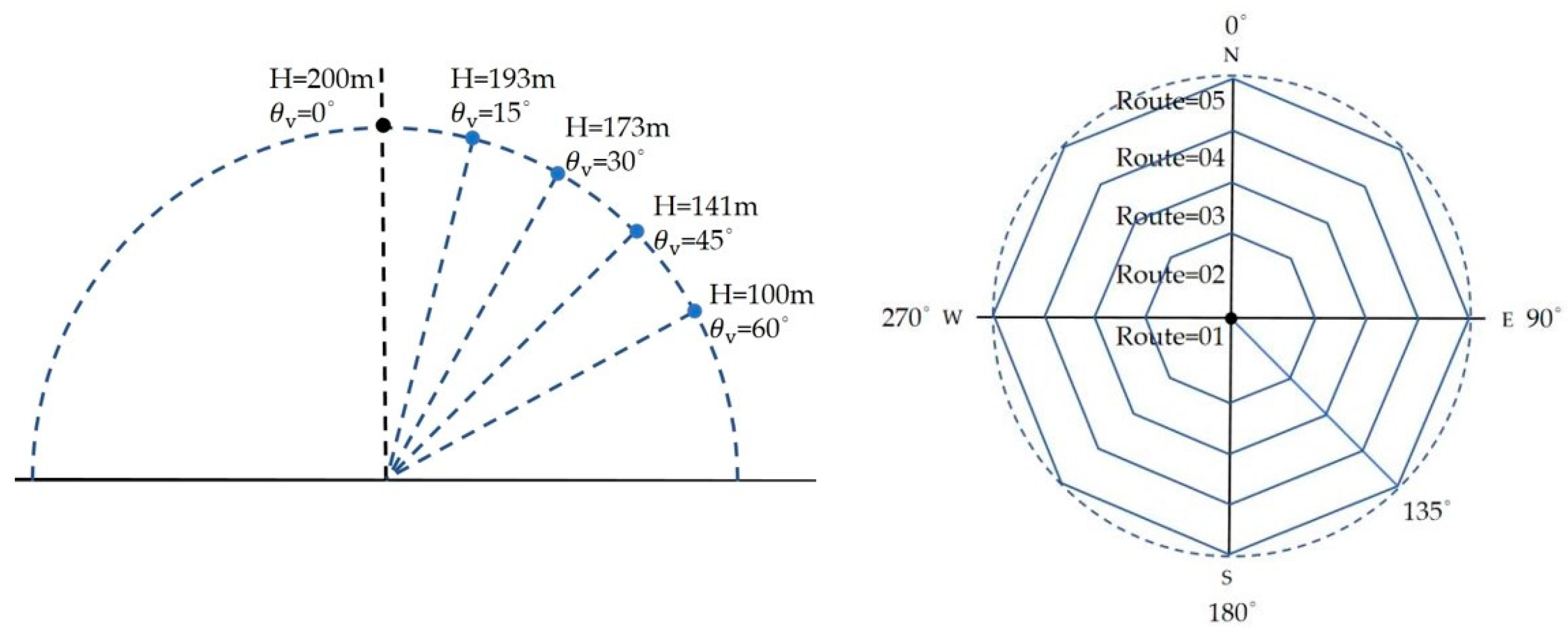
- Full 0° to 360° coverage is achieved with a sampling interval of 45°;
- Five zenith angles are sampled within the 0° to 60° range at 15° intervals, with the nadir observation corresponding to 0°;
- Throughout the observation process, a constant distance is maintained between the UAV and the target center. The sensor inclination is dynamically set based on the relative height, radius, and imaging resolution of the target area; this is achieved by coordinating the UAV’s hovering position with the gimbal system, ensuring the lens remains consistently oriented towards the target.
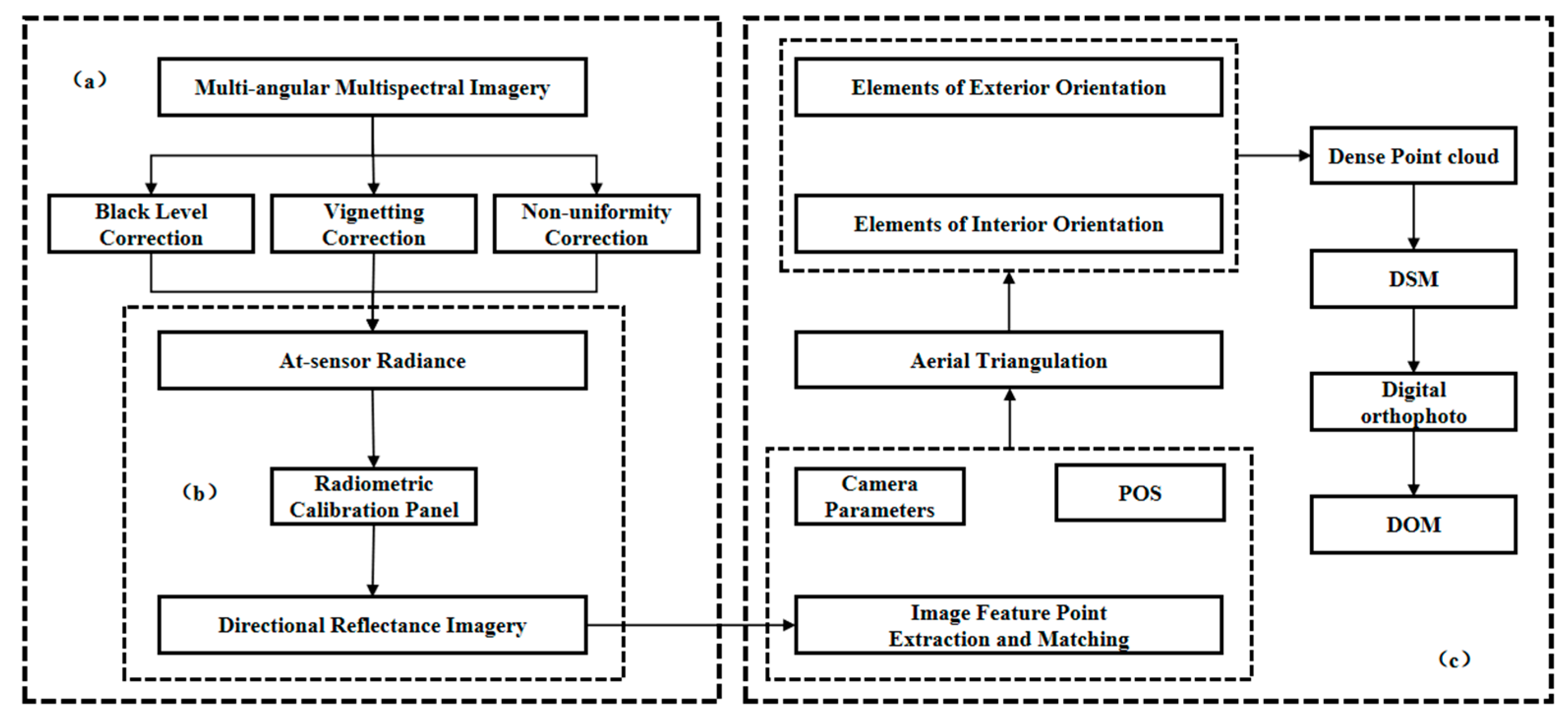
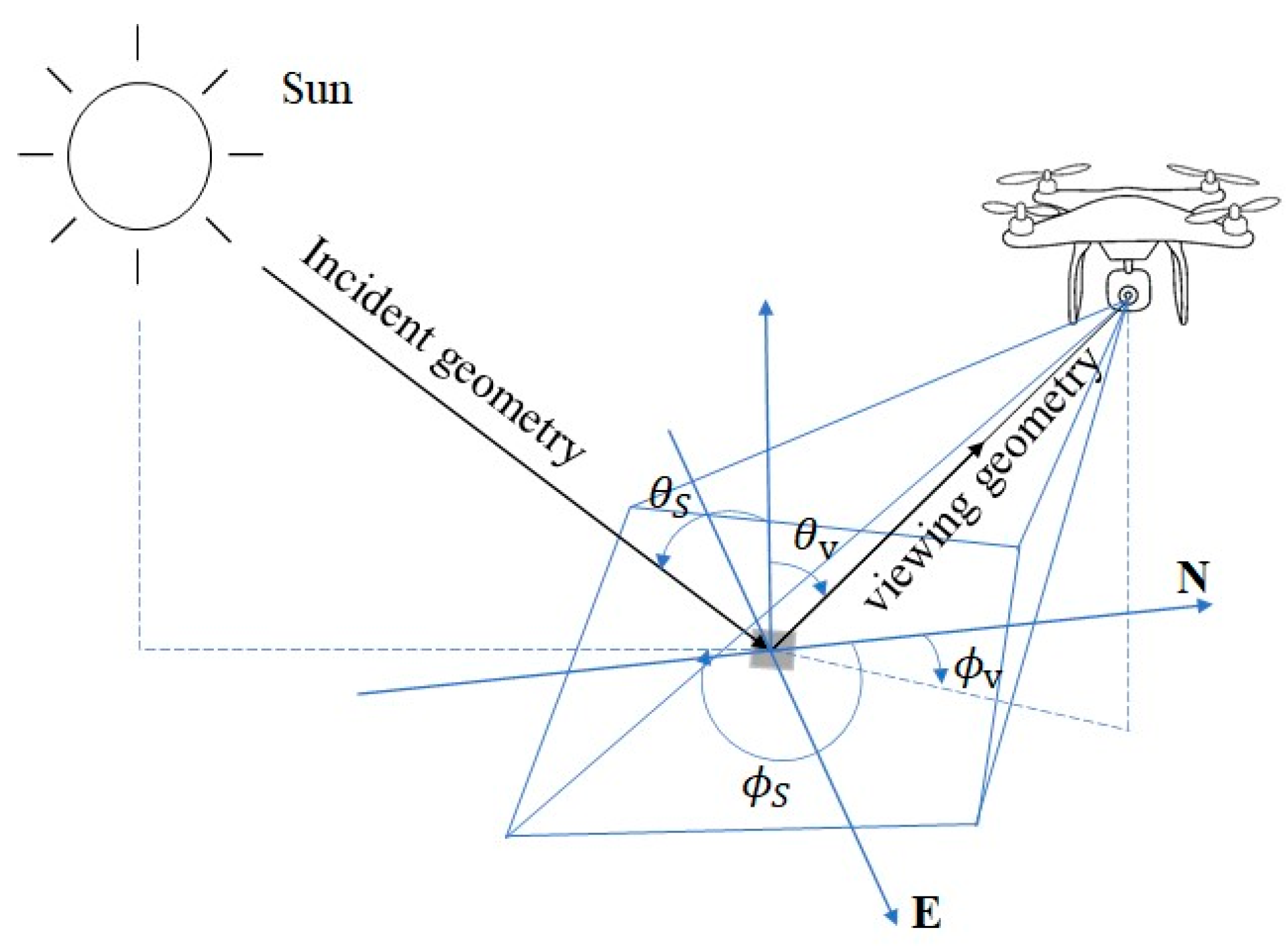
2.2. Calculation of Directional Reflectance Factor
2.3. BRDF Inversion Models and Characteristic Parameters
2.3.1. RPV Model
2.3.2. BRDF Characteristic Parameters
2.4. Spatial Scale Transformation
2.5. Quantification of Surface Heterogeneity
3. Result
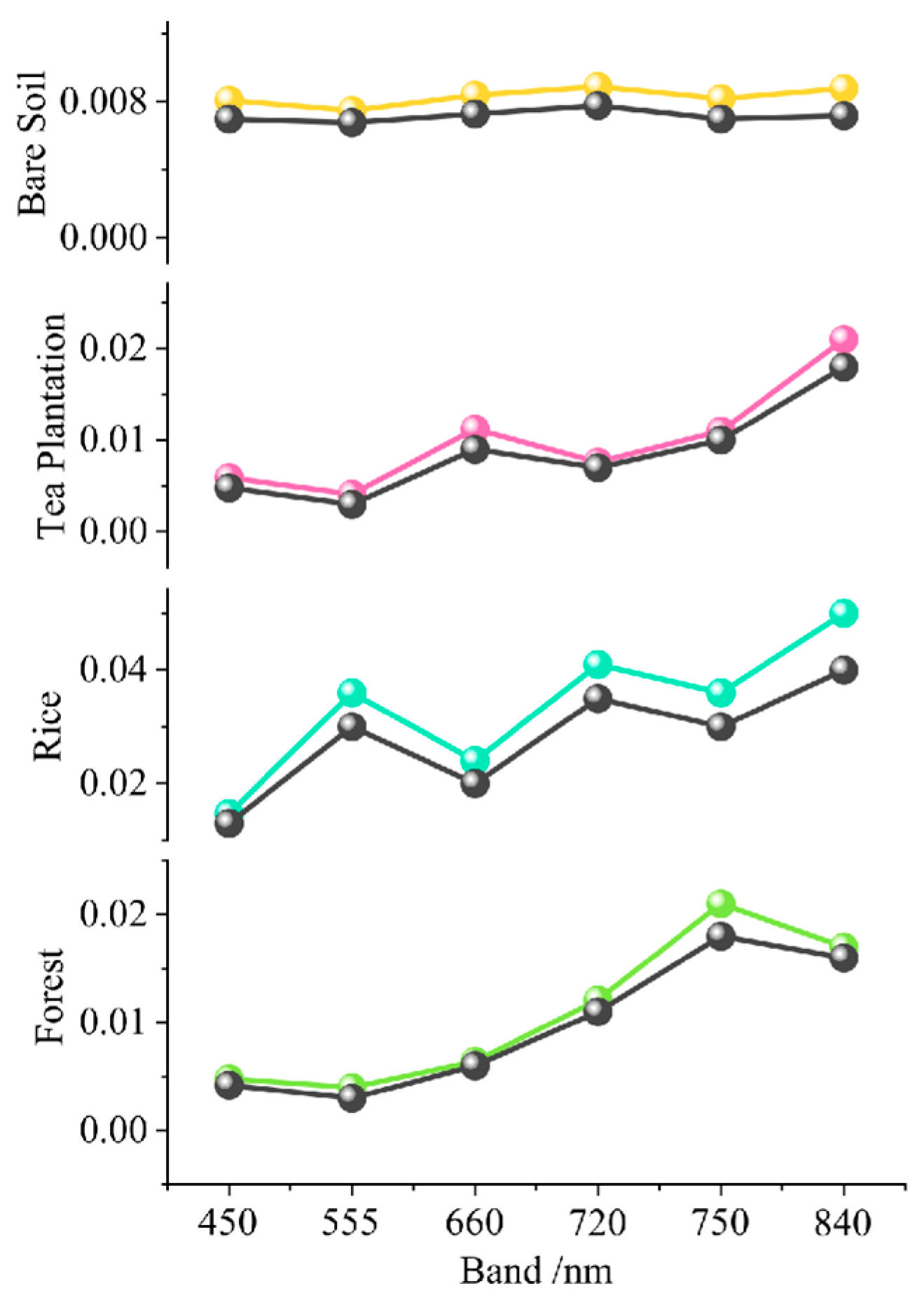
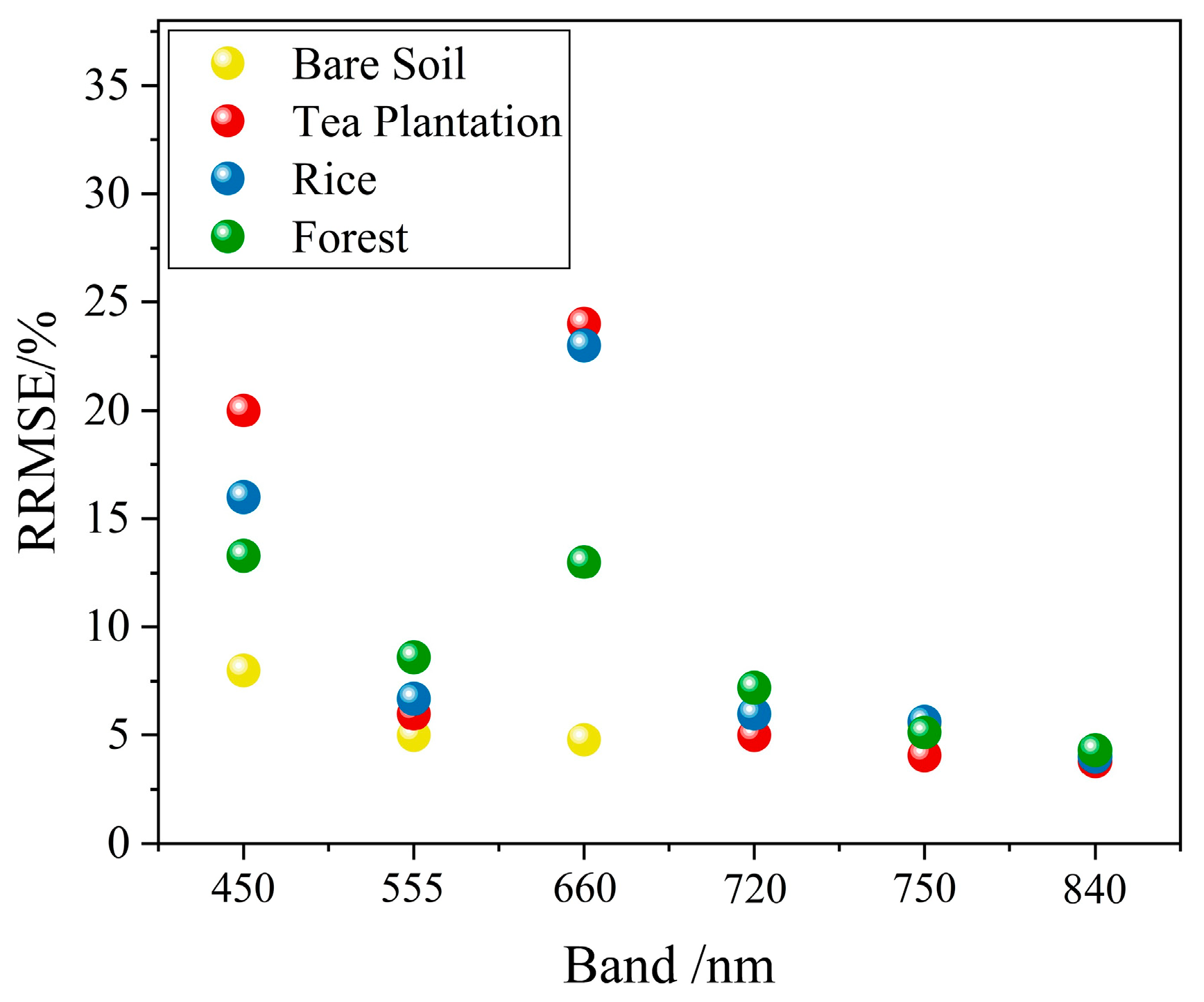
3.1. Model Inversion Accuracy
3.2. Scale Effects on BRDF
3.2.1. Scale Evolution of RPV Model Parameters
3.2.2. Scale Evolution of Near-Principal Plane Reflectance
3.2.3. Scale Evolution of BRDF Characteristic Parameters
3.3. The Physical Mechanism for Selecting the Optimal Observation Scale
3.3.1. Analysis of the Variogram
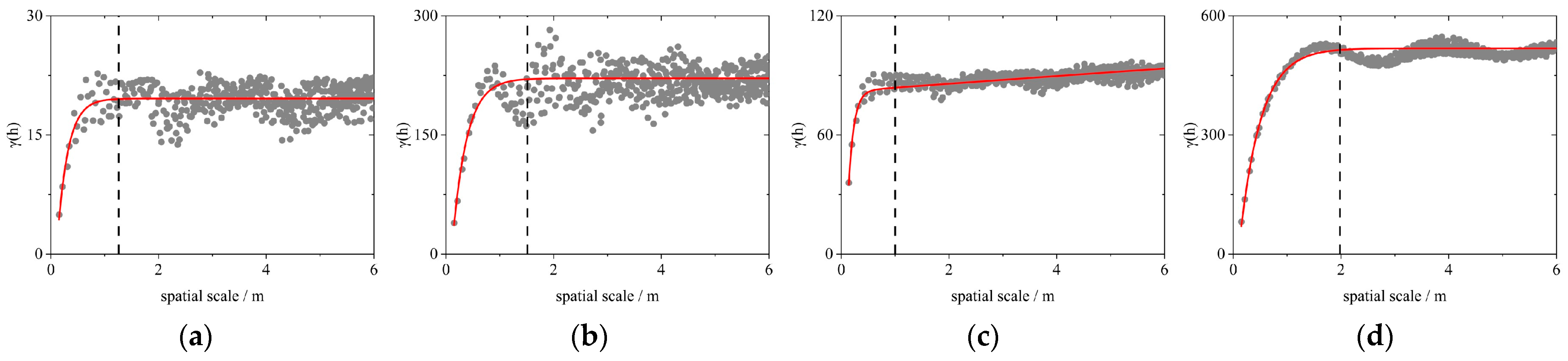
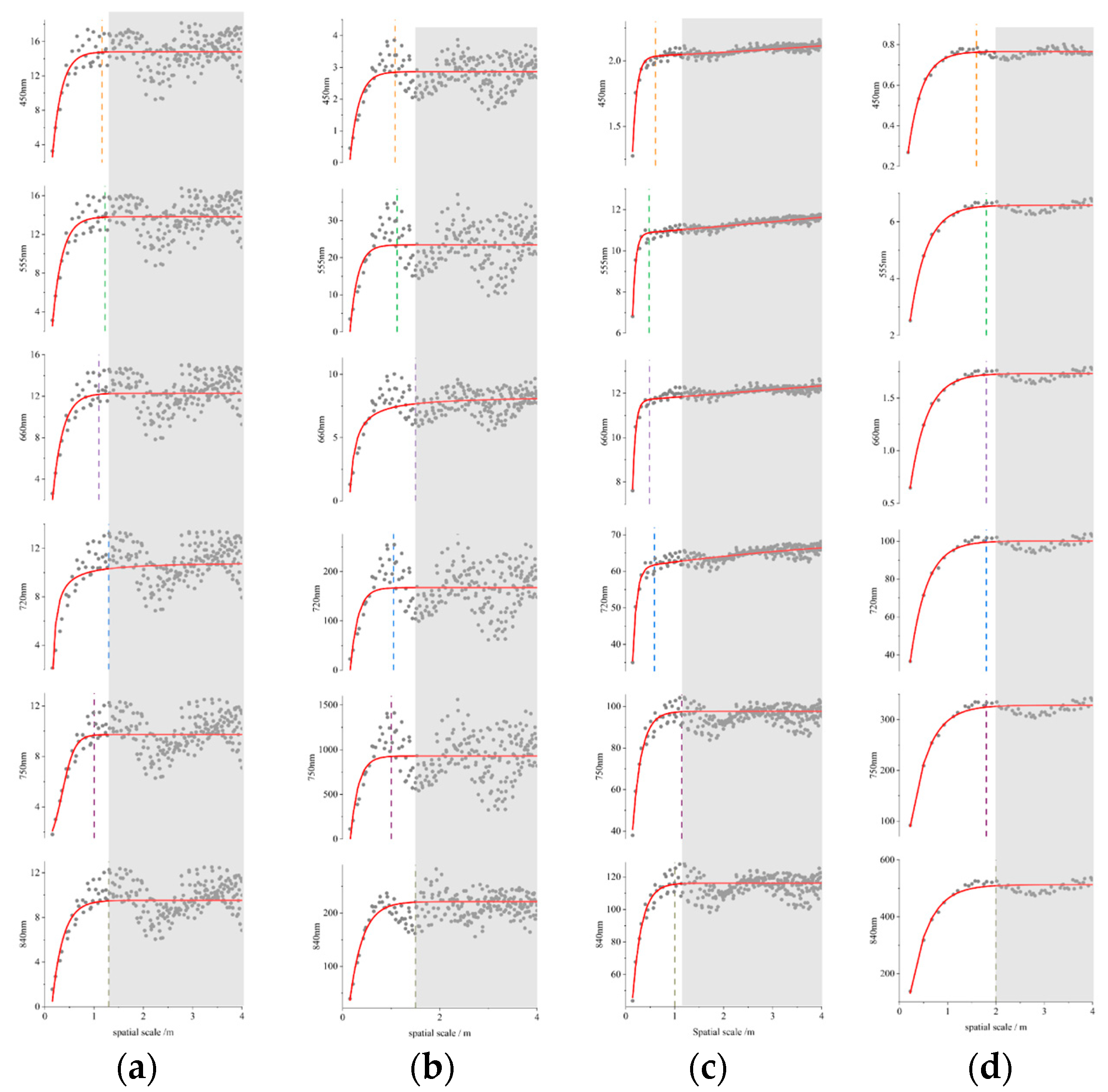
- The magnitude of spatial heterogeneity varies distinctively across different land cover types. Bare soil, characterized by a homogeneous cover composition and a smooth surface, exhibits relatively low spatial heterogeneity; in contrast, the heterogeneity of vegetation is generally higher than that of bare soil, primarily governed by factors such as plant density and leaf size. Furthermore, significant variations exist among specific vegetation types: the tea plants in this study were in their juvenile stage with small canopy volumes, making their heterogeneity analysis susceptible to the influence of the underlying soil background; forests exhibited high spatial heterogeneity, attributed to the diversity of tree species, variations in growth status, and extensive shadowing caused by leaf occlusion; and conversely, rice paddies demonstrated low spatial heterogeneity, as their dense growth minimizes the influence of the soil background, while their uniform growth status contributes to a spatially homogeneous texture.
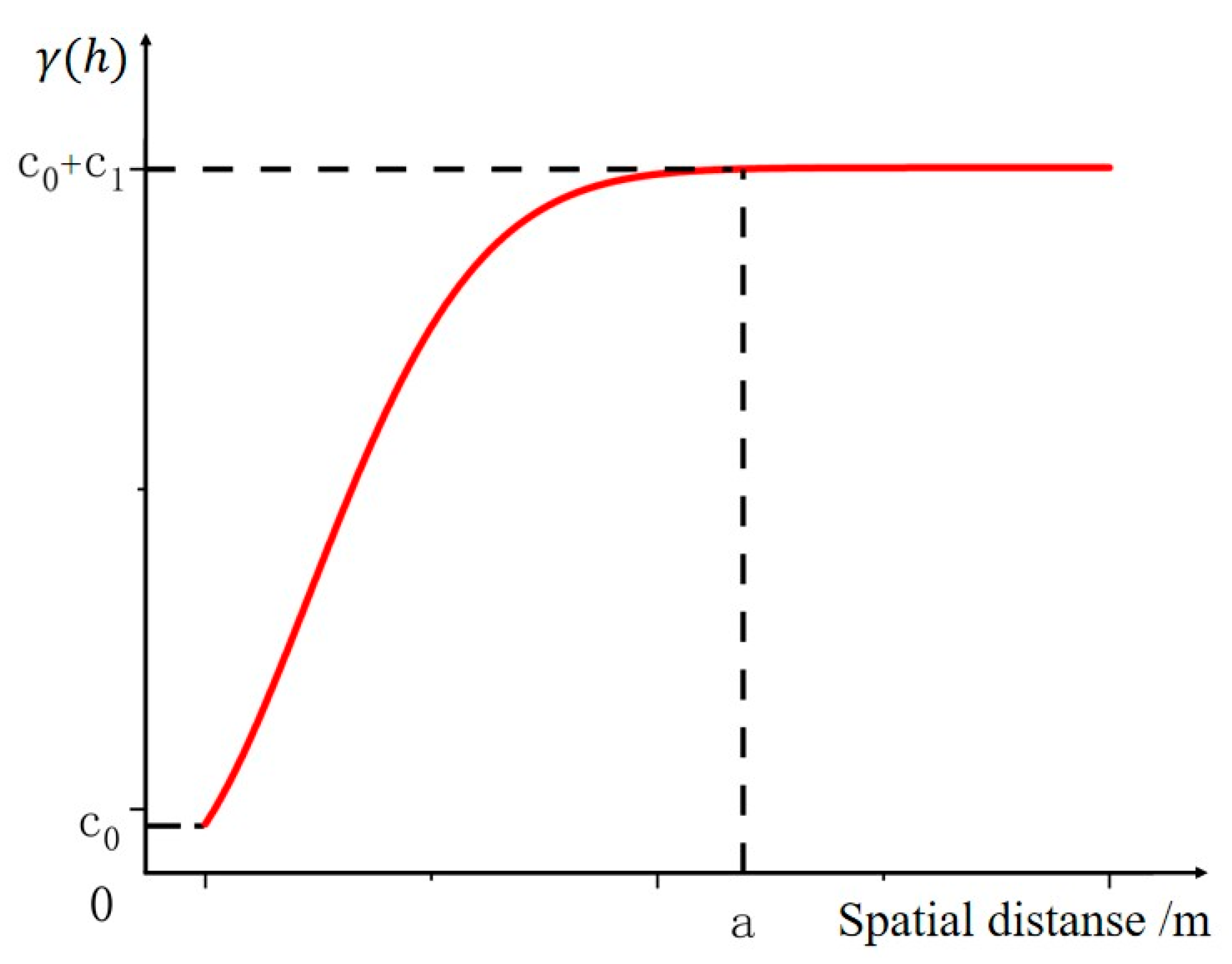
- Spatial heterogeneity exhibits a trend of initial increase followed by stabilization as the lag distance increases. At short lag distances, pixel pairs demonstrate strong homogeneity (or high spatial autocorrelation); however, heterogeneity progressively intensifies as the separation distance grows. When the heterogeneity reaches its stable plateau, the spatial correlation between points diminishes to its minimum, while the variability reaches its maximum. The lag distance corresponding to this point is defined as the Range, representing the maximum extent of spatial correlation.
- The magnitude of variation in spatial heterogeneity differs distinctively across land cover types. The bare soil within the study area corresponds to agricultural land, where the soil within a single plot exhibits uniform properties, such as moisture content and elemental composition; consequently, the variability between any two spatial points remains within the same order of magnitude. In contrast, variations in vegetation heterogeneity are driven not only by external factors like shadowing and background effects but also by intrinsic physicochemical parameters, including chlorophyll content and LAI. These factors collectively contribute to significantly larger differences between spatial points.
3.3.2. Relationship Between BRDF Scale Characteristics and Spatial Heterogeneity
- (1)
- Significant correlations. Whether for vegetation or bare soil, statistically significant correlations exist between their spatial heterogeneity and the BRDF model parameters. This is visually evidenced by the deeply saturated, flattened ellipses within the correlogram.
- (2)
- Discrepancies across land cover types. For the forest, spatial heterogeneity demonstrates a strong positive correlation with the RPV model parameters (highlighted by the red regions). Specifically, the correlation coefficient between and reaches up to 0.73. This suggests that the increasing structural heterogeneity of the forest canopy at larger observation scales directly drives the intensification of surface anisotropy. Conversely, for the tea plantation, the spatial heterogeneity exhibits a strong negative correlation with the RPV parameters (indicated by the blue regions), with the coefficient between and dropping to −0.84. This discrepancy is primarily attributed to the juvenile stage of the tea plants, where the bare soil background between the crop rows exerts a distinct interference mechanism on the illumination and shadowing patterns compared to tall woodlands. For the rice paddy, while the correlation remains significant, the overall coefficients are comparatively lower (e.g., 0.42 between and ), which is intrinsically linked to its naturally lower spatial heterogeneity.
- (3)
- Responses of the shape factors. The shape factors and also exhibit acute sensitivity to scale variations. Taking the tea plantation as an example, is negatively correlated with and positively correlated with . This implies that modifications in the spatial structure simultaneously stretch and compress the geometric shape of the BRDF.
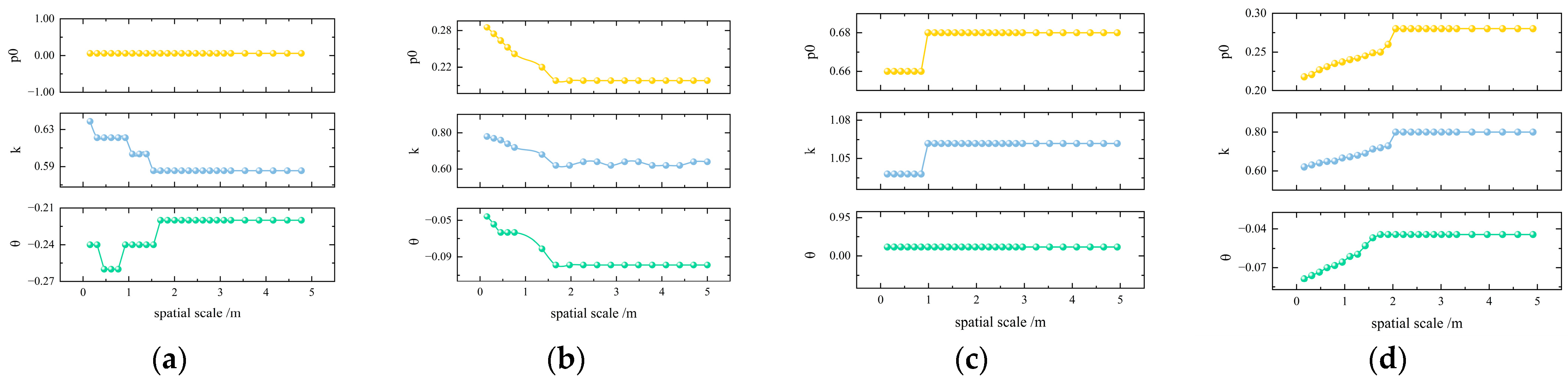
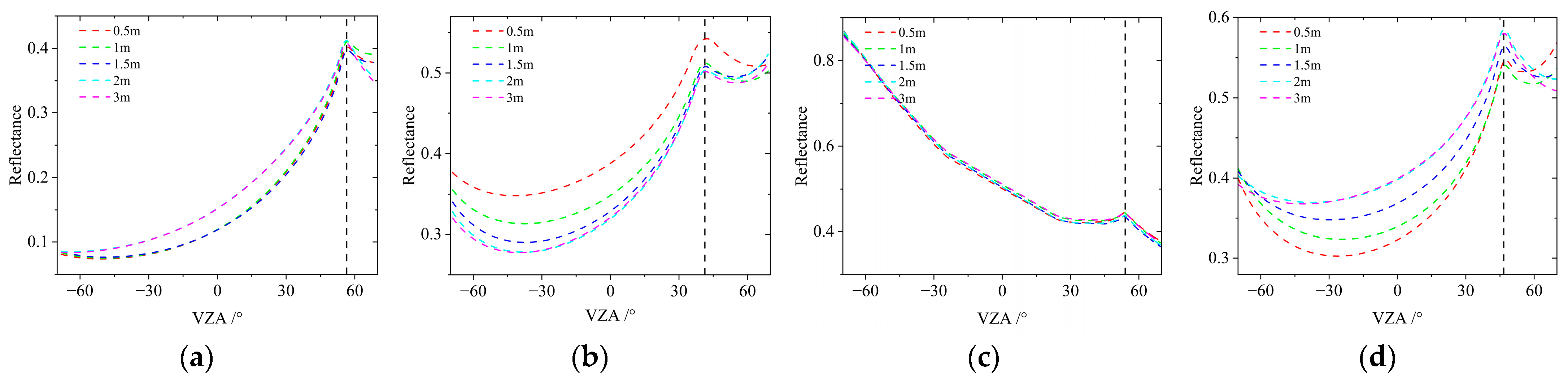
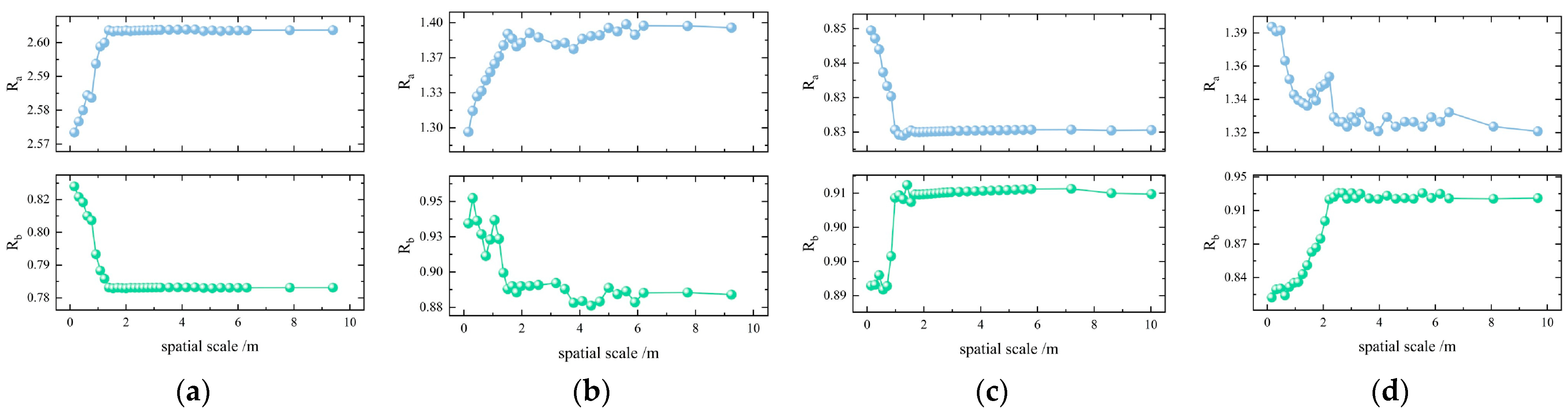
- In the initial stage of observation (at small spatial scales), land surface BRDF characteristics exhibit significant variations as the spatial scale increases; the magnitude and trend of these variations are primarily determined by the degree of spatial heterogeneity intrinsic to the land cover. For instance, land covers with high spatial heterogeneity (e.g., forests) display more drastic fluctuations in their BRDF characteristics with scale, whereas those with lower heterogeneity (e.g., rice, homogeneous bare soil) show relatively gradual scale-dependent changes. As the spatial scale continues to increase and reaches a specific threshold, the BRDF characteristics tend to stabilize, ceasing to show significant variations with further scale enlargement. The mechanism underlying this stabilization threshold is essentially the averaging out of internal spatial heterogeneity; at this point, the proportion of components within a single pixel tends to become fixed, the mixed pixel effect reaches a dynamic equilibrium, and the overall radiometric reflection patterns of the land surface are stably presented.
- The spatial scale at which BRDF characteristics stabilize (i.e., the optimal observation scale) exhibits a strict positive correlation with the degree of spatial heterogeneity. For land covers with high spatial heterogeneity, such as forests and tea plantations, the internal composition is diverse and highly variable; consequently, a larger observation scale is required to achieve the effective averaging out of these internal components. This results in a higher threshold for BRDF stabilization and, correspondingly, a larger optimal observation scale. Conversely, for land covers with low spatial heterogeneity, such as homogeneous bare soil or regularly planted monocultures (e.g., rice), the internal components are fewer and uniformly distributed. In these cases, a smaller observation scale suffices for the proportion of internal components to become fixed, allowing BRDF characteristics to stabilize earlier and resulting in a relatively smaller optimal observation scale.
4. Discussion
4.1. The LESS Model Simulation
4.2. Selection of the Optimal Observation Scale
- (1)
- Discrepancies in Sill Variance (): Distinct spectral bands exhibit substantial differences in the intensity of characterized surface heterogeneity once the variograms reach a stable state. Specifically, the sill value of the NIR band is significantly higher than that of the visible bands. The core mechanism lies in the high-reflectance characteristics of vegetation foliage in the NIR region, which creates a pronounced contrast with shadowed areas, thereby amplifying the captured surface heterogeneity information. In contrast, visible bands are modulated by the pigment absorption of leaves, resulting in relatively dampened reflectance gradients and consequently lower sill levels. Although minor fluctuations in sill values occur within the visible spectrum (blue, green, and red bands) due to varying absorption intensities, these internal variations are far less prominent than the discrepancy between the NIR and visible domains.
- (2)
- Discrepancies in Correlation Range (): As indicated by the colored vertical bars in Figure 16, the inflection points where the variogram curves stabilize (i.e., the range) vary significantly across bands, suggesting that the optimal observation scale is band-dependent. This finding underscores that the optimal observation scale is not solely governed by the physical geometry of the targets (such as crown diameter, tree spacing, and row spacing) but also possesses distinct spectral-scale characteristics.
5. Conclusions
Author Contributions
Funding
Data Availability Statement
Conflicts of Interest
Abbreviations
| BRDF | Bidirectional reflectance distribution function |
| UAV | Unmanned aerial vehicle |
| RMSE | Root mean square error |
| RRMSR | Relative root mean square error |
| VZA | View zenith angular |
| VAA | View azimuth angular |
| SZA | Solar zenith angular |
| SAA | Solar azimuth angular |
| T | Transpiration |
| LAI | Leaf area index |
| AGB | Forest aboveground biomass |
| NDVI | Normalized difference vegetation index |
| GPS | Global Position System |
| IMU | Inertial measurement units |
| RTK | Real-Time kinematic |
| GSD | Ground sample distance |
| FOV | Field of view |
| BBA | Bundle block adjustment |
| DOM | Digital orthophoto model |
| DSM | Digital surface model |
| LSM | Least squares method |
| LESS | Large-scale remote sensing data and image simulation framework |
References
- Nicodemus, F.E.; Richmond, J.C.; Hsia, J.J.; Ginsberg, I.W.; Limperis, T.; Harman, S.; Baruch, J.J. Geometrical Considerations and Nomenclature for Reflectance. 1977. Available online: https://api.semanticscholar.org/CorpusID:18645782 (accessed on 10 January 2026).
- Yang, H.; Li, X.; Gao, F. An Algorithm for the Retrieval of Albedo from Space Using New GO Kerne-l Driven BRDF Model. Natl. Remote Sens. Bull. 2021, 4, 246–251. [Google Scholar] [CrossRef]
- Pan, Z.; Zhang, H.; Min, X.; Xu, Z. Vicarious Calibration Correction of Large FOV Sensor Using BRDF Model Based on UAV Angular Spectrum Measurements. J. Appl. Remote Sens. 2020, 14, 1. [Google Scholar] [CrossRef]
- Roosjen, P.P.J.; Brede, B.; Suomalainen, J.M.; Bartholomeus, H.M.; Kooistra, L.; Clevers, J.G.P.W. Improved Estimation of Leaf Area Index and Leaf Chlorophyll Content of a Potato Crop Using Multi-Angle Spectral Data—Potential of Unmanned Aerial Vehicle Imagery. Int. J. Appl. Earth Obs. Geoinf. 2018, 66, 14–26. [Google Scholar] [CrossRef]
- Yan, Y.; Deng, L.; Liu, X.; Zhu, L. Application of UAV-Based Multi-Angle Hyperspectral Remote Sensing in Fine Vegetation Classification. Remote Sens. 2019, 11, 2753. [Google Scholar] [CrossRef]
- Hou, M.; Tian, F.; Ortega-Farias, S.; Riveros-Burgos, C.; Zhang, T.; Lin, A. Estimation of crop transpiration and its scale effect based on ground and UAV thermal infrared remote sensing images. Eur. J. Agron. 2021, 131, 126389. [Google Scholar] [CrossRef]
- Li, H.; Xu, Z.; Li, Y.; Sun, L.; Zhang, H.; Zhang, C.; Yang, Y.; Guo, X.; Li, Z.; Guan, F. Hyperspectral Remote Sensing Estimation and Spatial Scale Effect of Leaf Area Index in Moso Bamboo (Phyllostachys pubescens) Forests Under the Stress of Pantana phyllostachysae Chao. Forests 2025, 16, 575. [Google Scholar] [CrossRef]
- Yu, Y.; Pan, Y.; Yang, X.; Fan, W. Spatial scale effect and correction of forest aboveground biomass estimation using remote sensing. Remote Sens. 2022, 14, 2828. [Google Scholar] [CrossRef]
- Woodcock, C.E.; Strahler, A.H. The factor of scale in remote sensing. Remote Sens. Environ. 1987, 21, 311–332. [Google Scholar] [CrossRef]
- Goodchild, M.F.; Quattrochi, D.A. Scale, multiscaling, remote sensing and GIS. In Scale in Remote Sensing and GIS; CRC Press: Boca Raton, FL, USA, 1997. [Google Scholar] [CrossRef]
- Wu, H.; Li, Z.-L. Scale Issues in Remote Sensing: A Review on Analysis, Processing and Modeling. Sensors 2009, 9, 1768–1793. [Google Scholar] [CrossRef]
- Liang, S. Quantitative Remote Sensing of Land Surfaces; John Wiley & Sons: Hoboken, NJ, USA, 2003. [Google Scholar] [CrossRef]
- Jiao, Z.; Zhang, X.; Bréon, F.M.; Dong, Y.; Schaaf, C.B.; Román, M.; Wang, Z.; Cui, L.; Yin, S.; Ding, A. The influence of spatial resolution on the angular variation patterns of optical reflectance as retrieved from MODIS and POLDER measurements. Remote Sens. Environ. 2018, 215, 371–385. [Google Scholar] [CrossRef]
- Deng, L.; Chen, Y.; Zhao, Y.; Zhu, L.; Gong, H.-L.; Guo, L.-J.; Zou, H.-Y. An Approach for Reflectance Anisotropy Retrieval from UAV-Based Oblique Photogrammetry Hyperspectral Imagery. Int. J. Appl. Earth Obs. Geoinf. 2021, 102, 102442. [Google Scholar] [CrossRef]
- Ye, F.; Zhang, X.; Wang, Z.; Wang, Y.; Peng, Z.; Fu, T.; Jiao, Z.; Wu, Y.; Wang, Y.; Dong, Y. Variation of Bi-directional Reflectance at Multiple Spatial Resolutions over Different Land Cover Types Using UAV-Based Multi-Angle Images. IEEE J. Sel. Top. Appl. Earth Obs. Remote Sens. 2025, 18, 11128–11141. [Google Scholar] [CrossRef]
- Xie, J.; Zhang, H.; Pu, J.; Yan, Z.; Cai, Y.; Cui, L.; Cao, H. Multi-Scale BRDF Modeling and Scale Effect Analysis Using UAV Multi-Angle Remote Sensing. IEEE J. Sel. Top. Appl. Earth Obs. Remote Sens. 2025, 18, 23090–23106. [Google Scholar] [CrossRef]
- Grenzdörffer, G.J.; Niemeyer, F. UAV based BRDF-measurements of agricultural surfaces with pfiffikus. Int. Arch. Photogramm. Remote Sens. Spat. Inf. Sci. 2011, 38, 229–234. [Google Scholar] [CrossRef]
- Cao, H.; You, D.; Ji, D.; Gu, X.; Wen, J.; Wu, J.; Li, Y.; Cao, Y.; Cui, T.; Zhang, H. The Method of Multi-Angle Remote Sensing Observation Based on Unmanned Aerial Vehicles and the Validation of BRDF. Remote Sens. 2023, 15, 5000. [Google Scholar] [CrossRef]
- Rahman, H.; Verstraete, M.M.; Pinty, B. Coupled Surface-atmosphere Reflectance (CSAR) Model: 1. Model Description and Inversion on Synthetic Data. J. Geophys. Res. Atmos. 1993, 98, 20779–20789. [Google Scholar] [CrossRef]
- Biliouris, D.; Van der Zande, D.; Verstraeten, W.W.; Stuckens, J.; Muys, B.; Dutré, P.; Coppin, P. RPV Model Parameters Based on Hyperspectral Bidirectional Reflectance Measurementsof Fagus sylvatica L. Leaves. Remote Sens. 2009, 1, 92–106. [Google Scholar] [CrossRef]
- Roosjen, P.P.J.; Bartholomeus, H.M.; Clevers, J.G.P.W. Effects of soil moisture content on reflectance anisotropy—Laboratory goniometer measurements and RPV model inversions. Remote Sens. Environ. 2015, 170, 229–238. [Google Scholar] [CrossRef]
- Maignan, F.; Bréon, F.M.; Lacaze, R. Bidirectional reflectance of Earth targets: Evaluation of analytical models using a large set of spaceborne measurements with emphasis on the Hot Spot. Remote Sens. Environ. 2004, 90, 210–220. [Google Scholar] [CrossRef]
- Koukal, T.; Atzberger, C.; Schneider, W. Evaluation of semi-empirical BRDF models inverted against multi-angle data from a digital airborne frame camera for enhancing forest type classification. Remote Sens. Environ. 2014, 151, 27–43. [Google Scholar] [CrossRef]
- Hao, D.; Xiao, Q.; Wen, J.; You, D.; Wu, X.; Lin, X.; Wu, S. Advances in upscaling methods of quantitative remote sensing. J. Remote Sens. 2018, 22, 408–423. [Google Scholar] [CrossRef]
- Atkinson, P.M.; Curran, P.J. Choosing an appropriate spatial resolution for remote sensing investigations. Photogramm. Eng. Remote Sens. 1997, 63, 1345–1351. [Google Scholar] [CrossRef]
- Chang, Y.; Jiao, Z.; Dong, Y.; Zhang, X.; He, D.; Yin, S.; Cui, L.; Ding, A. Parameterization and correction of hotspot parameters of Ross-Li kernel driven models on POLDER dataset. Natl. Remote Sens. Bull. 2021, 23, 661–672. [Google Scholar] [CrossRef]
- Sandmeier, S.; Deering, D.W. Structure Analysis and Classification of Boreal Forests Using Airborne Hyperspectral BRDF Data from ASAS. Remote Sens. Environ. 1999, 69, 281–295. [Google Scholar] [CrossRef]
- Liang, S.; Strahler, A.H.; Barnsley, M.J.; Borel, C.C.; Gerstl, S.A.W.; Diner, D.J.; Prata, A.J.; Walthall, C.L. Multiangle remote sensing: Past, present and future. Remote Sens. Rev. 2000, 18, 83–102. [Google Scholar] [CrossRef]
- Qi, J.; Xie, D.; Xu, Y.; Yan, G. Principles and Applications of the 3D Radiative Transfer Model LESS. Remote Sens. Technol. Appl. 2019, 34, 914–924. [Google Scholar] [CrossRef]










| Parameter | Index |
|---|---|
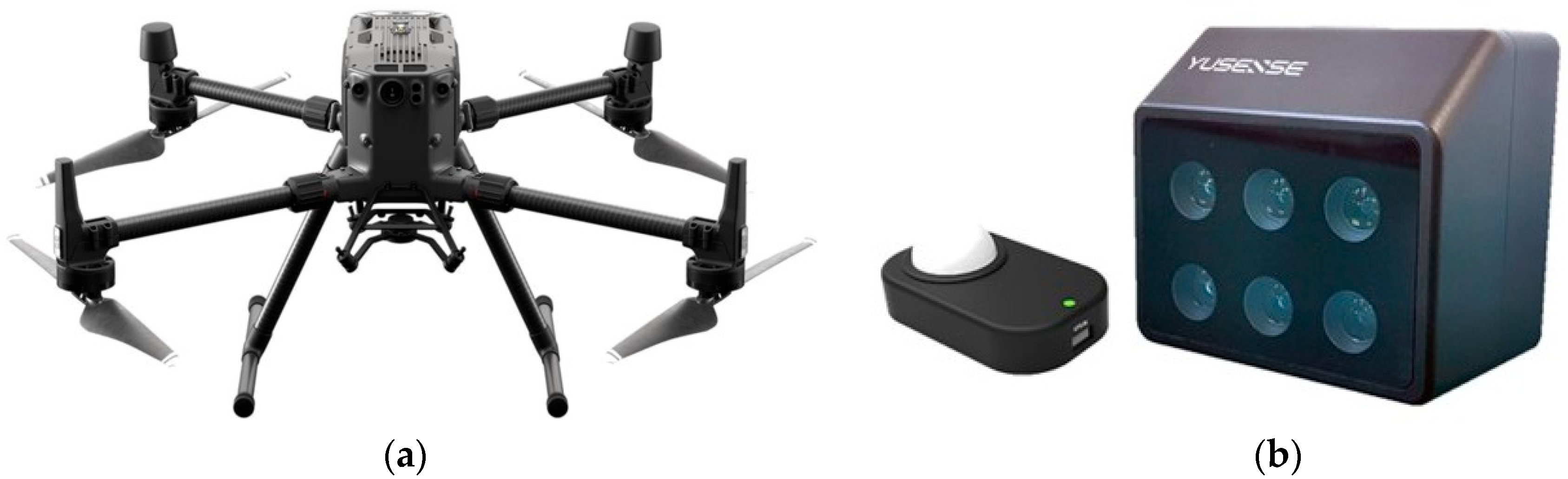
| Hovering Accuracy (Windless or light wind) | Vertical: ±0.1 m Horizontal: ±0.1 m |
| RTK Positioning Accuracy (RTK FIX) | Vertical: 1.5 cm + 1 ppm Horizontal: 1 cm + 1 ppm |
| Max Angular Velocity | Pitch: 300°/s Yaw: 100°/s |
| Max Pitch Angle | 30° |
| GNSS | GPS + GLONASS + BeiDou + Galileo |
| Parameter | Index |
|---|---|
| Spectral Channels | 450 nm@35 nm 555 nm@25 nm 660 nm@20 nm 720 nm@10 nm 750 nm@15 nm 840 nm@35 nm |
| Ground Sample Distance (GSD) | 7.5 cm@h120 m |
| Image Footprint | 96 m × 72 m@h120 m |
| Field of View (FOV) | HFOV: 43.6° VFOV: 33.4° |
| Image Resolution | 1280 × 960 |
| Integration Time | 1/200–1/500 |
| Gain | 16 |
| Task | Land Cover | Time | SZA(°) | SAA(°) | Spatial Resolution (m) |
|---|---|---|---|---|---|
| 1 | Bare Soil | 17 October 2023 14:21:52–14:36:11 | 55 | 230 | 0.17 |
| 2 | Tea Plantation | 16 October 2023 12:26:10–12:38:40 | 40 | 200 | 0.15 |
| 3 | Rice | 16 October 2023 14:12:14–14:25:11 | 55 | 230 | 0.14 |
| 4 | Forest | 18 October 2023 10:12:25–10:23:44 | 45 | 150 | 0.16 |
| Land Cover | Structural and Biophysical Parameters |
|---|---|
| Bare Soil | Type: Plowed and leveled farmland Roughness: RMS height = 5 mm; Surface relief = 17 mm Moisture: Volumetric Water Content (VWC) = 23% |
| Tea Plantation | Height: 0.7 m Crown Diameter: 1 m Row Spacing: 1.2 m LAI: 2.3 |
| Rice | Height: 0.5 m Density: 100 plants/m2 LAI: 3.1 |
| Forest | Type: Single broad-leaved forest Height: 17 m Crown Diameter: 3.4 m Row Spacing: 3 m LAI: 3.8 |
Disclaimer/Publisher’s Note: The statements, opinions and data contained in all publications are solely those of the individual author(s) and contributor(s) and not of MDPI and/or the editor(s). MDPI and/or the editor(s) disclaim responsibility for any injury to people or property resulting from any ideas, methods, instructions or products referred to in the content. |
© 2026 by the authors. Licensee MDPI, Basel, Switzerland. This article is an open access article distributed under the terms and conditions of the Creative Commons Attribution (CC BY) license.
Share and Cite
Zhang, W.; Cao, H.; Wu, J.; Gu, X.; Wang, C.; Zhang, M.; Wang, Y.; Zhang, C. Characterization of Scale Effects and Determination of Optimal Observation Scales for Bidirectional Reflectance in High-Resolution Remote Sensing of Land Surfaces. Remote Sens. 2026, 18, 888. https://doi.org/10.3390/rs18060888
Zhang W, Cao H, Wu J, Gu X, Wang C, Zhang M, Wang Y, Zhang C. Characterization of Scale Effects and Determination of Optimal Observation Scales for Bidirectional Reflectance in High-Resolution Remote Sensing of Land Surfaces. Remote Sensing. 2026; 18(6):888. https://doi.org/10.3390/rs18060888
Chicago/Turabian StyleZhang, Weikang, Hongtao Cao, Jianjun Wu, Xingfa Gu, Chang Wang, Menghao Zhang, Yanmei Wang, and Chengcheng Zhang. 2026. "Characterization of Scale Effects and Determination of Optimal Observation Scales for Bidirectional Reflectance in High-Resolution Remote Sensing of Land Surfaces" Remote Sensing 18, no. 6: 888. https://doi.org/10.3390/rs18060888
APA StyleZhang, W., Cao, H., Wu, J., Gu, X., Wang, C., Zhang, M., Wang, Y., & Zhang, C. (2026). Characterization of Scale Effects and Determination of Optimal Observation Scales for Bidirectional Reflectance in High-Resolution Remote Sensing of Land Surfaces. Remote Sensing, 18(6), 888. https://doi.org/10.3390/rs18060888