A Study on Integration of Topographic Clustering and Physical Constraints for Flood Propagation Simulation
 ,
,
Highlights
- A terrain clustering strategy based on TSLIC is introduced for flood simulation, enabling efficient representation of micro-topographic features while significantly reducing computational units.
- A simplified flood evolution model constrained by remote sensing-derived propagation characteristics is developed, improving temporal realism compared with traditional static inundation methods.
- The proposed framework improves computational efficiency by more than 60% while maintaining water level and inundation extent errors within 10%, supporting rapid flood simulation under emergency conditions.
- The method demonstrates the potential of combining high-resolution terrain data and remote sensing-derived flood dynamics to support flood regulation and decision-making in flood storage–detention basins.
Abstract
1. Introduction
2. Methods
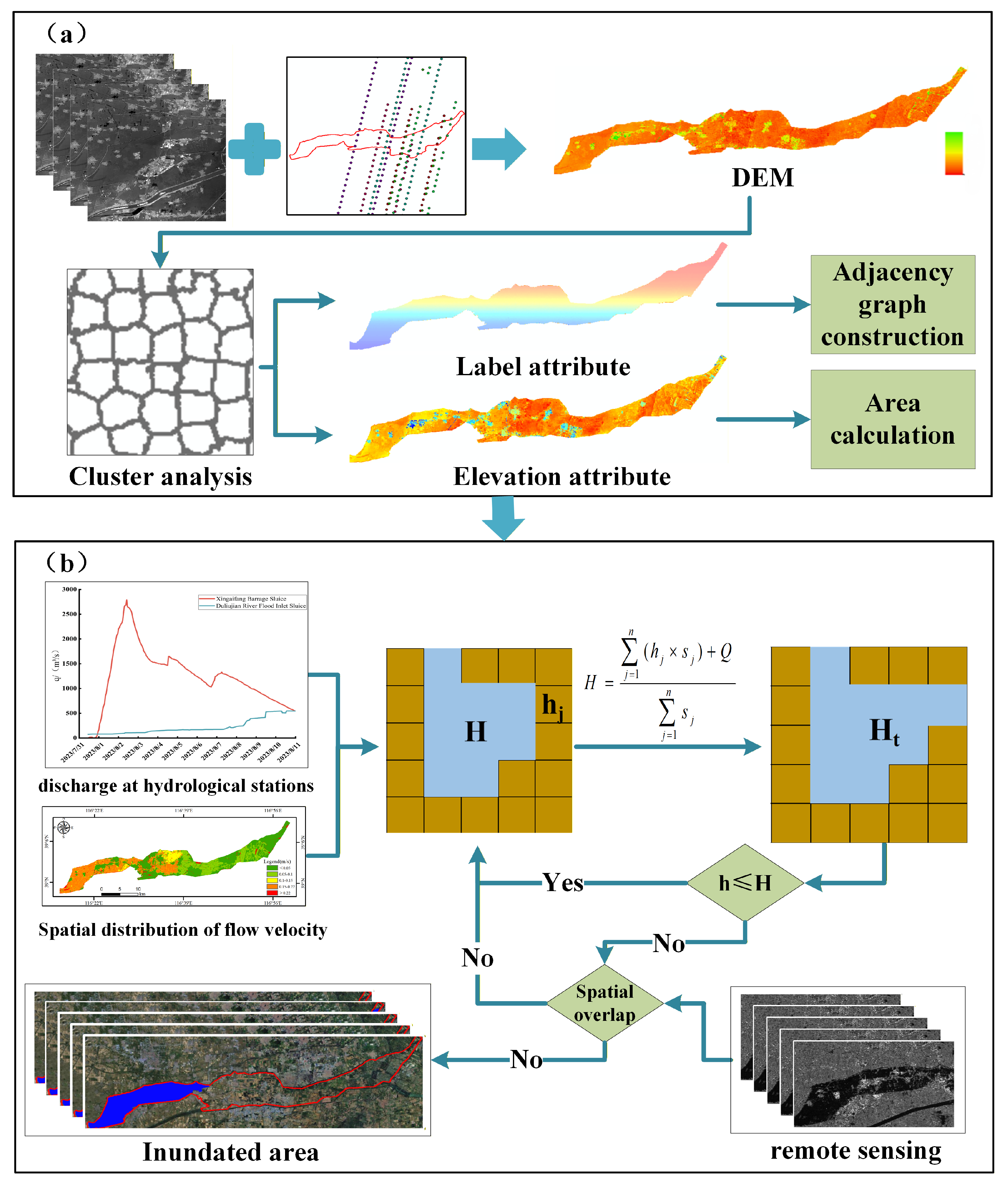
2.1. Overall Technical Workflow of the Study
- (1)
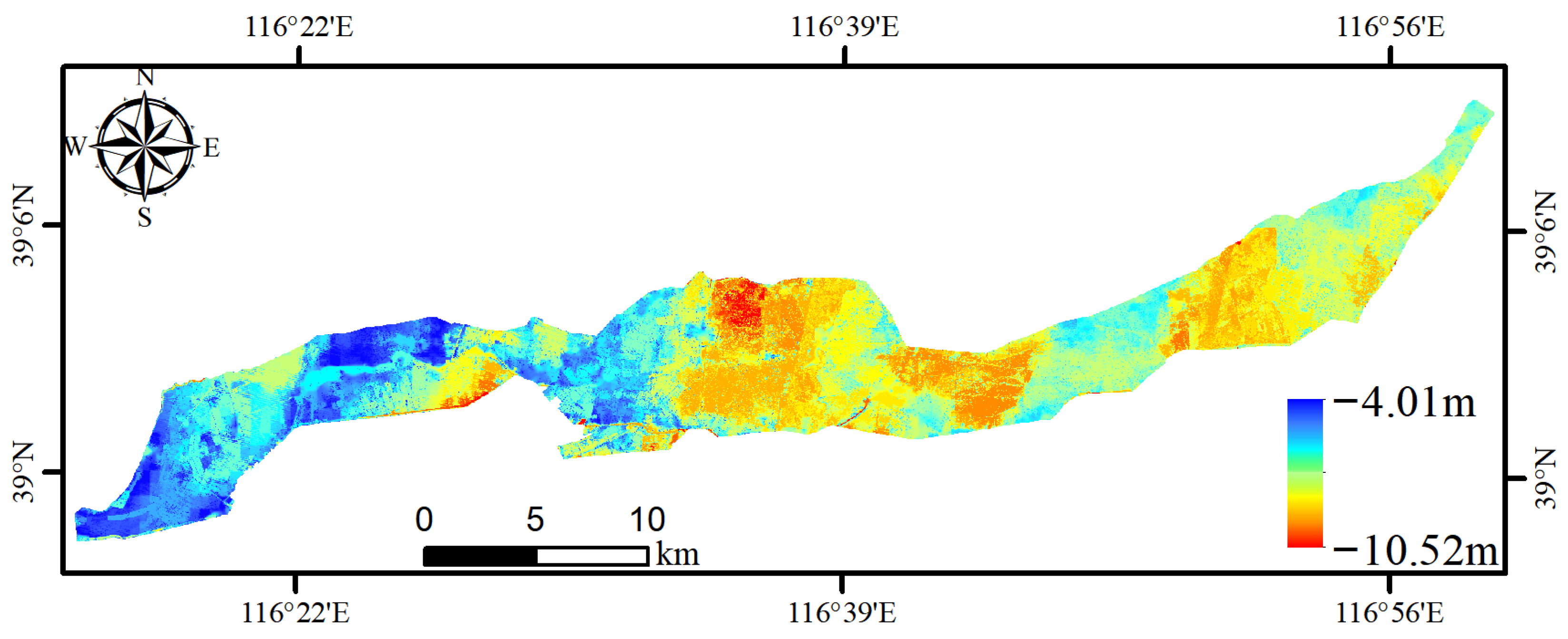
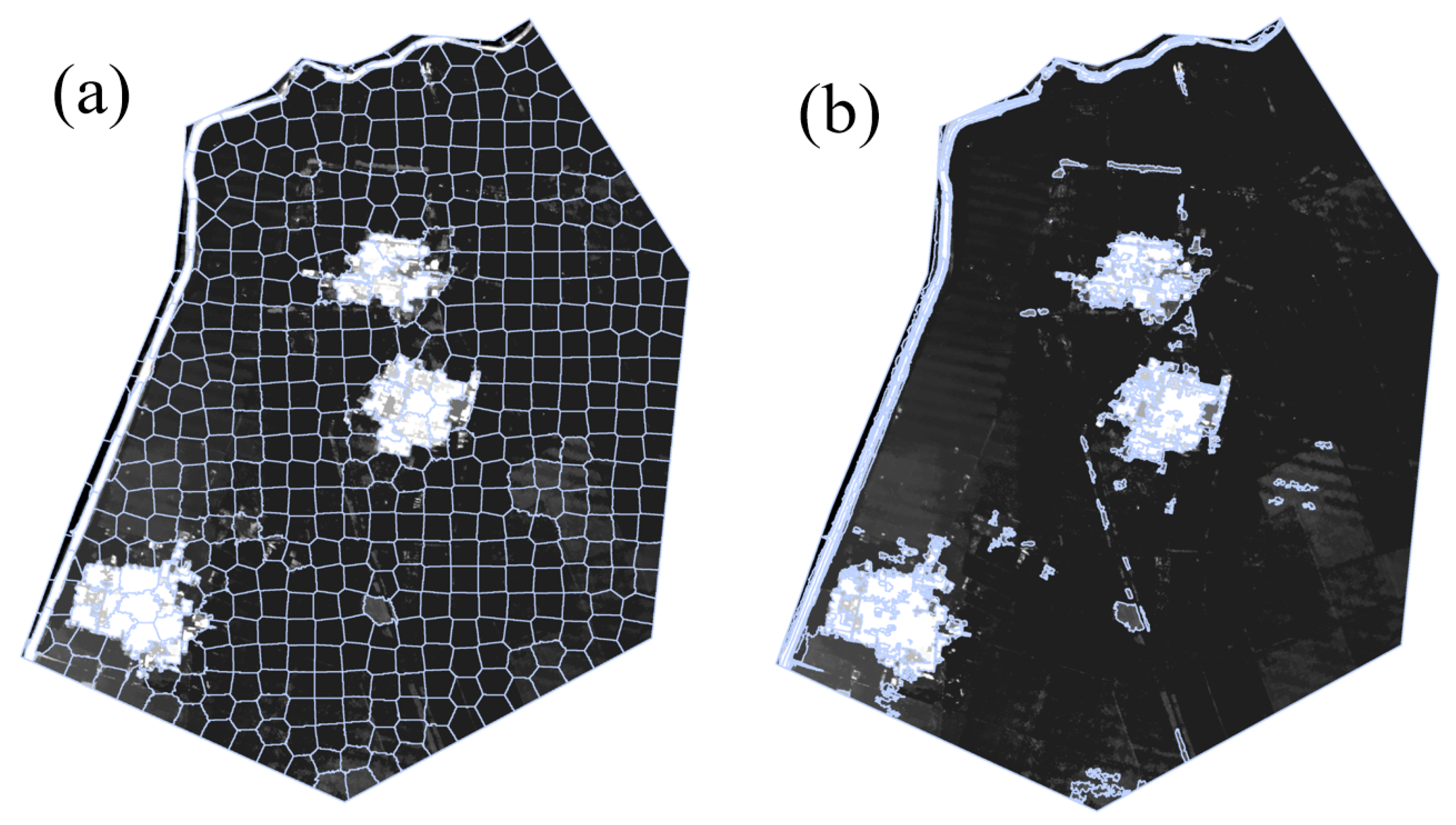
- Terrain clustering based on DEM data. First, a high-accuracy digital elevation model (DEM) is constructed using GF-7 stereo imagery and laser altimetry data to represent terrain variation within the FSDB accurately [36]. A terrain-based superpixel clustering method, Terrain-based Simple Linear Iterative Clustering (TSLIC), is then applied to spatially aggregate DEM grids into a set of terrain units with similar elevation characteristics and spatial continuity. This approach preserves the main terrain control features while significantly reducing terrain complexity and computational cost.
- (2)
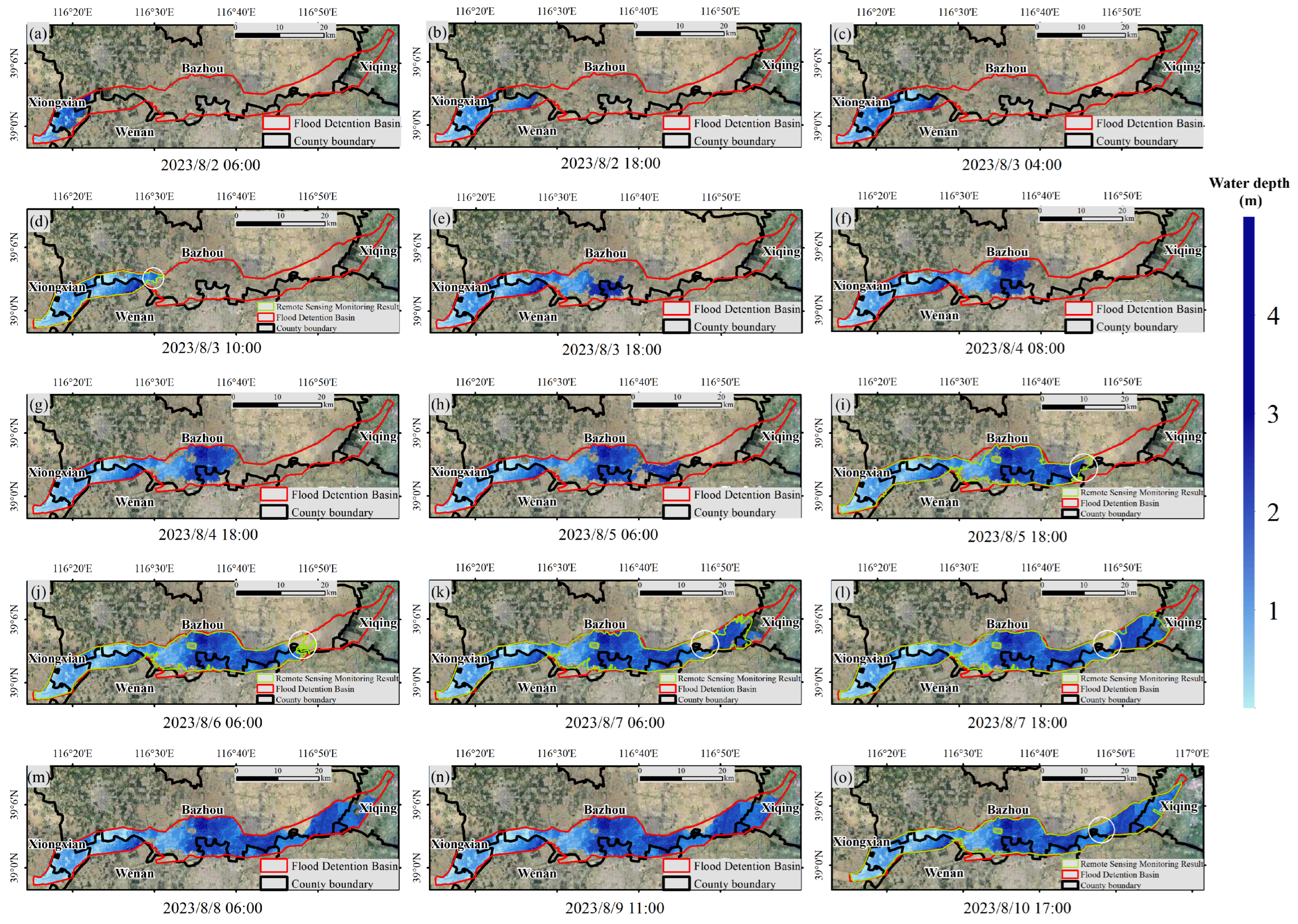
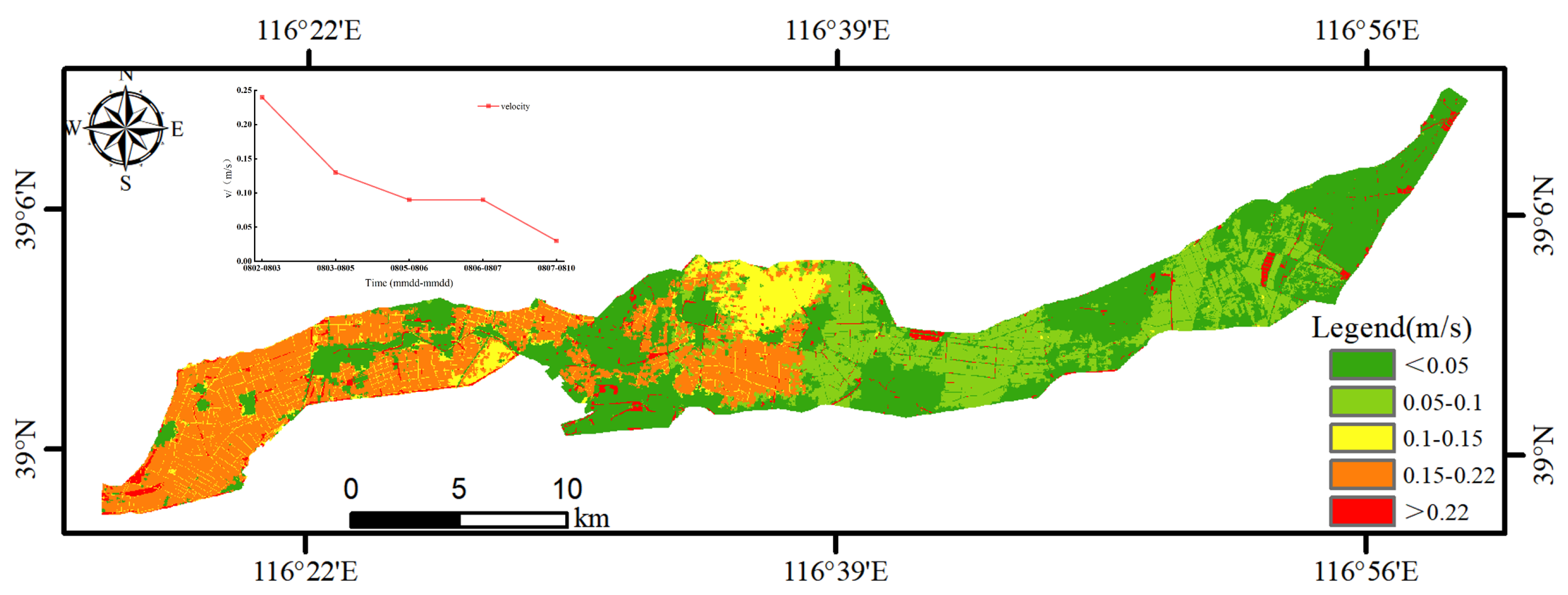
- Flood evolution simulation constrained by remote sensing data. A flood evolution simulation method that couples water balance with propagation time constraints, referred to as the Remote Sensing–Constrained Flood Propagation Model (RS-CFPM), is developed. The model uses the clustered terrain units as basic computational elements and applies water balance as the core principle. During time stepping, flood inundation extent and water level are updated simultaneously, while propagation time delays are introduced to constrain flood spreading speed and represent the temporal characteristics of flood propagation under real terrain conditions. Multi-temporal radar remote sensing-derived inundation extent and water level information are used for quantitative validation and analysis of the simulation results.
2.2. Terrain Clustering Method Based on DEM Data
2.3. Flood Evolution Method Constrained by Remote Sensing
3. Study Area and Data
3.1. Study Area
3.2. Data
3.2.1. Satellite Data
3.2.2. Other Data
4. Results
4.1. Analysis of Flood Simulation Results in the FSDB
4.2. Analysis of Flood Evolution Methods
4.2.1. Comparison of Terrain Clustering Methods
4.2.2. Comparison of Flood Evolution Methods
5. Discussion
5.1. Performance and Mechanistic Interpretation of the RS-CFPM Model
5.2. Applicability and Limitations of the RS-CFPM Model
6. Conclusions
- (1)
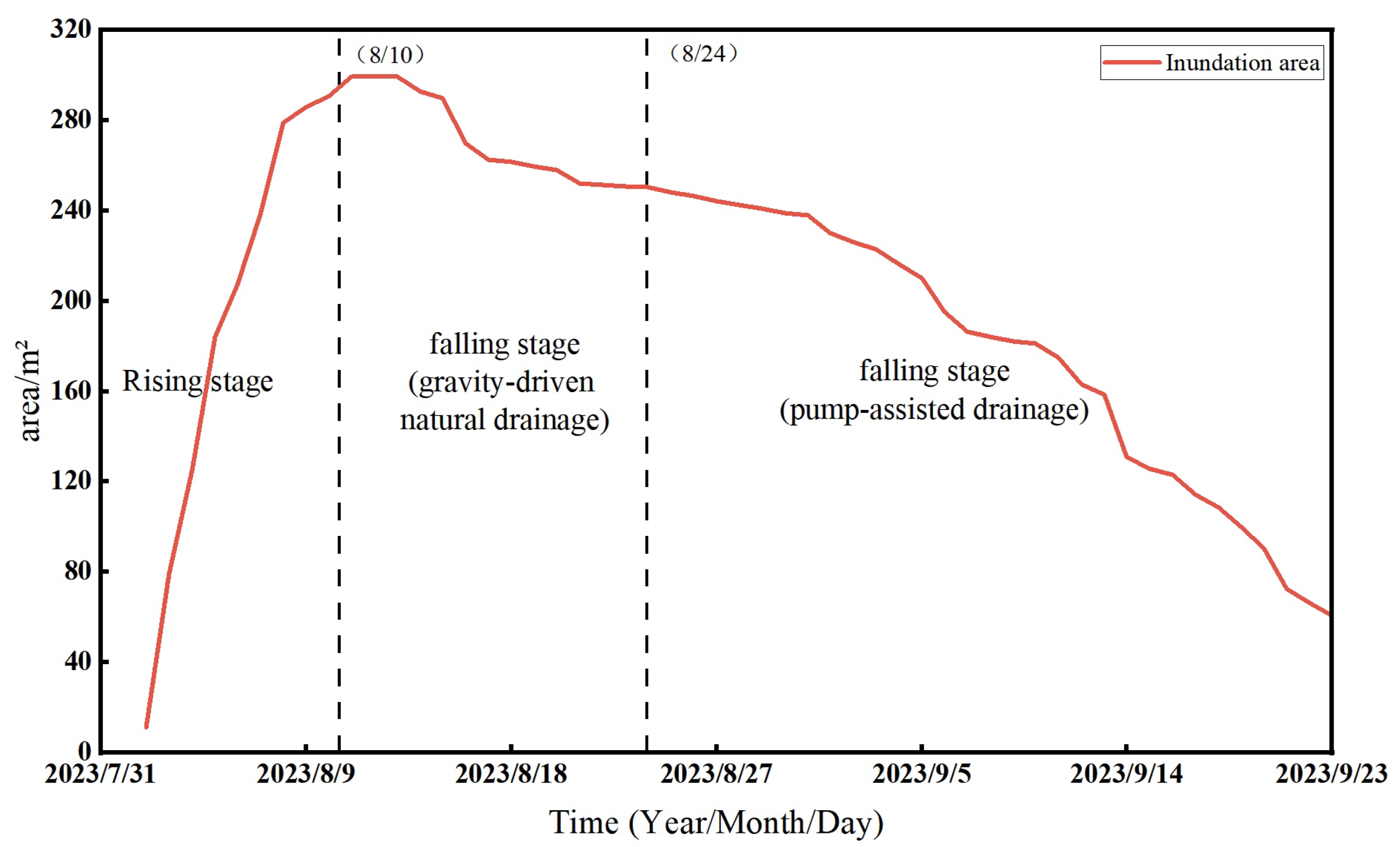
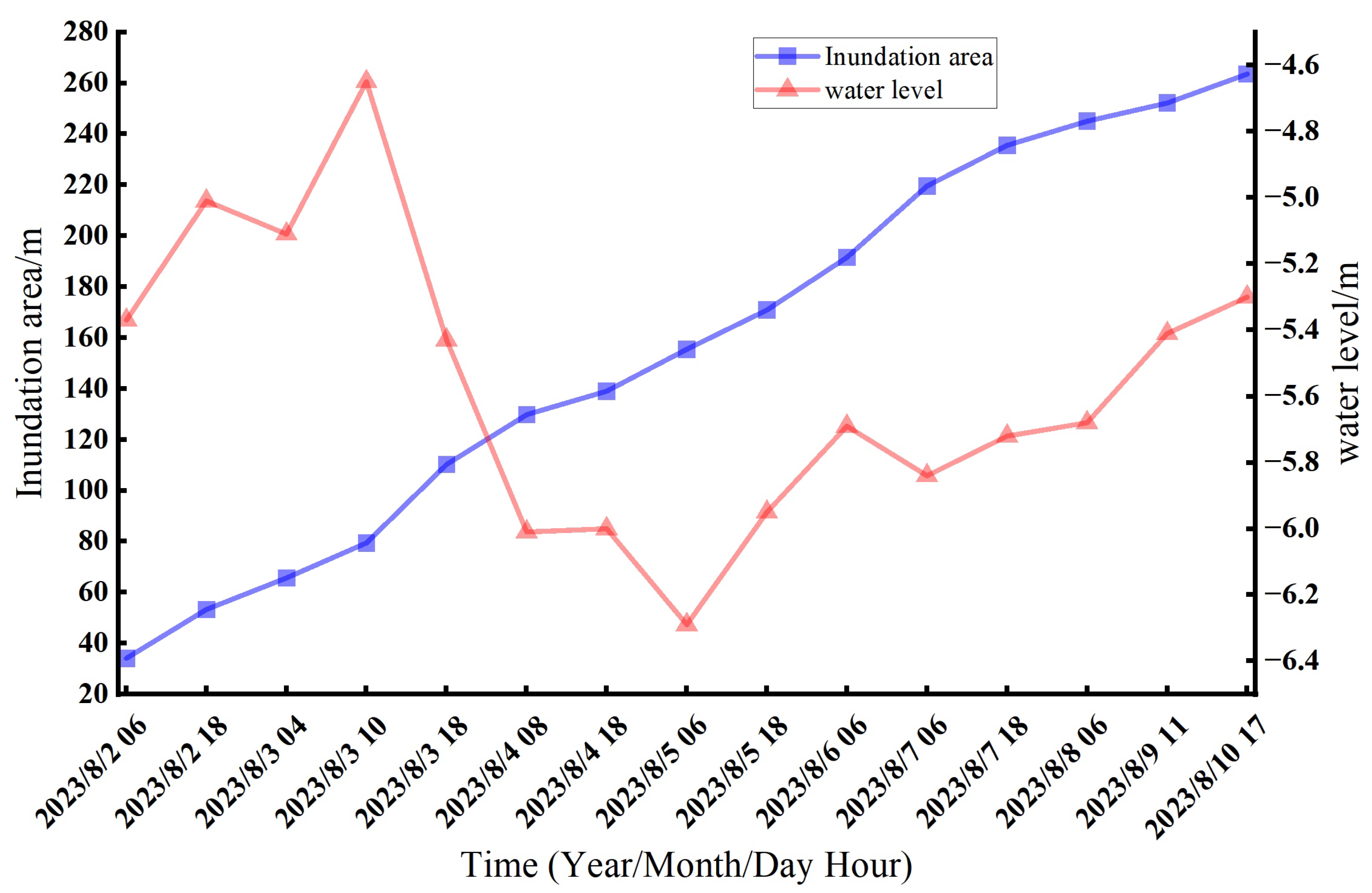
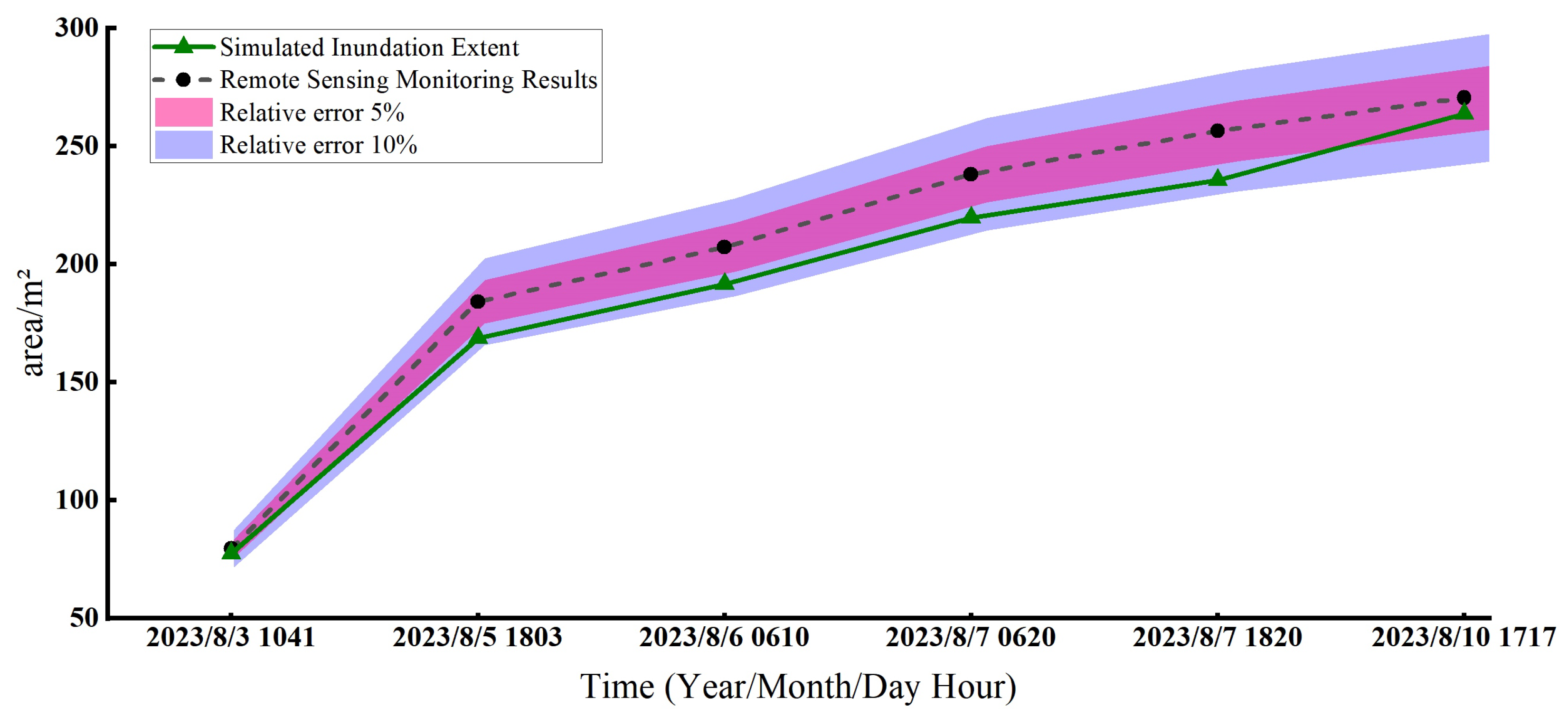
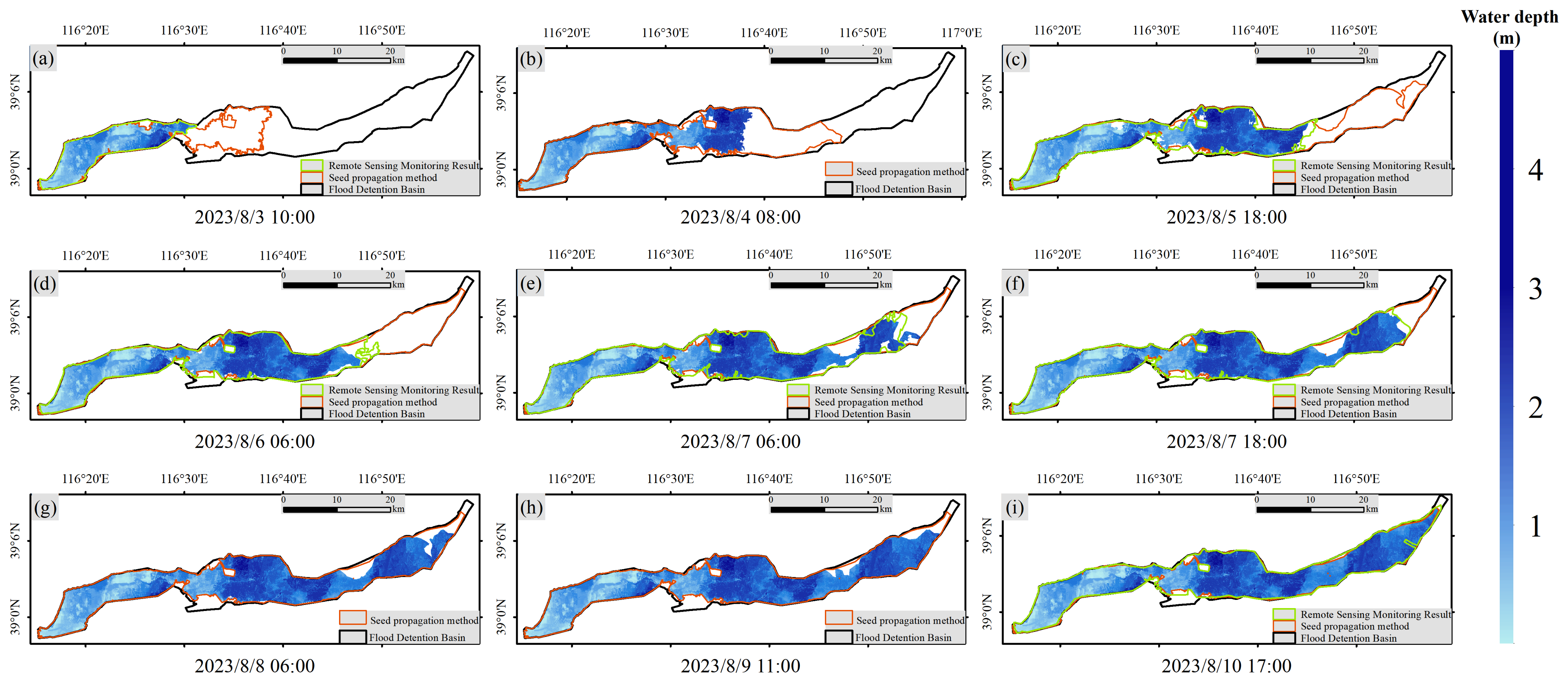
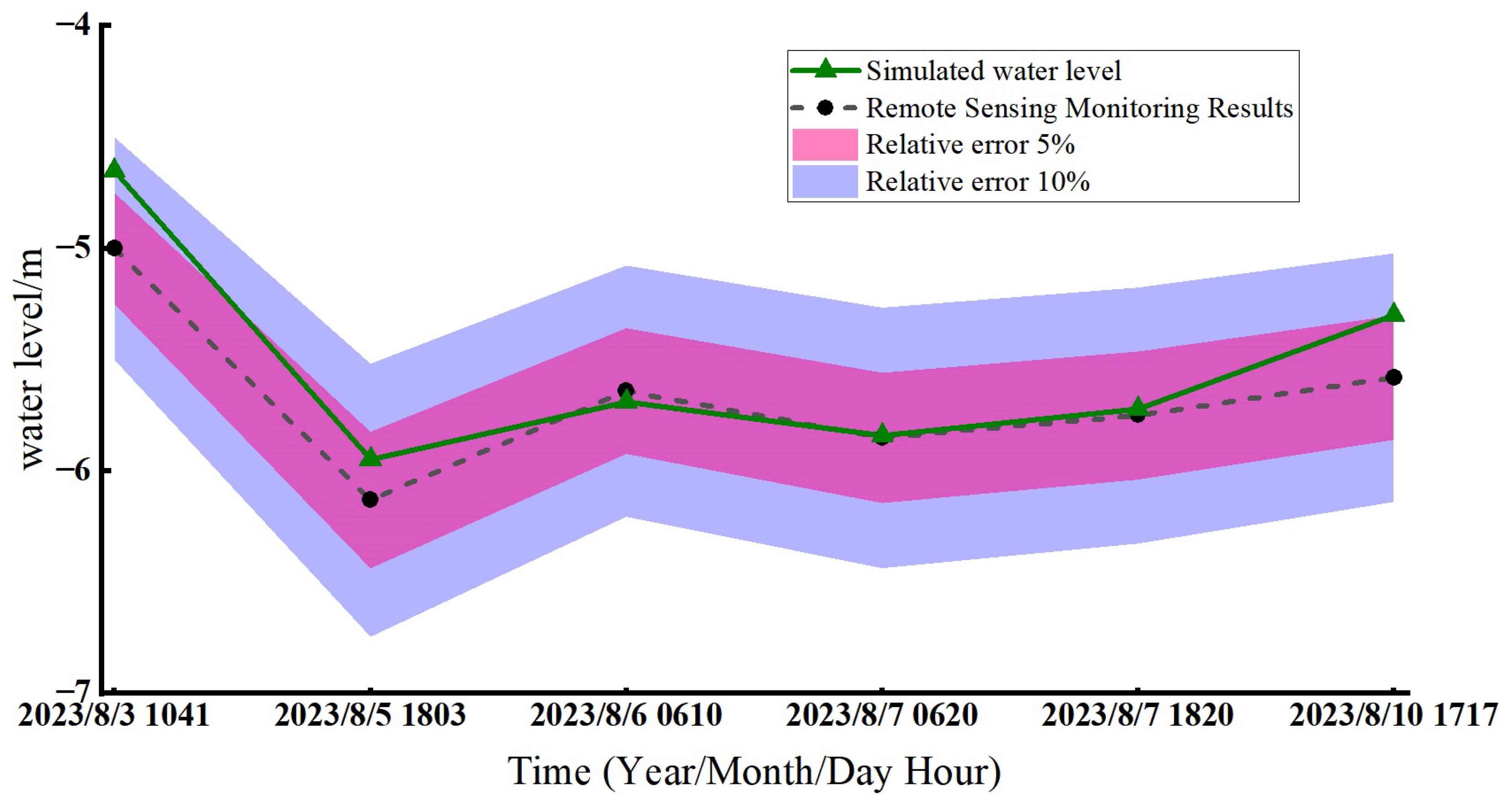
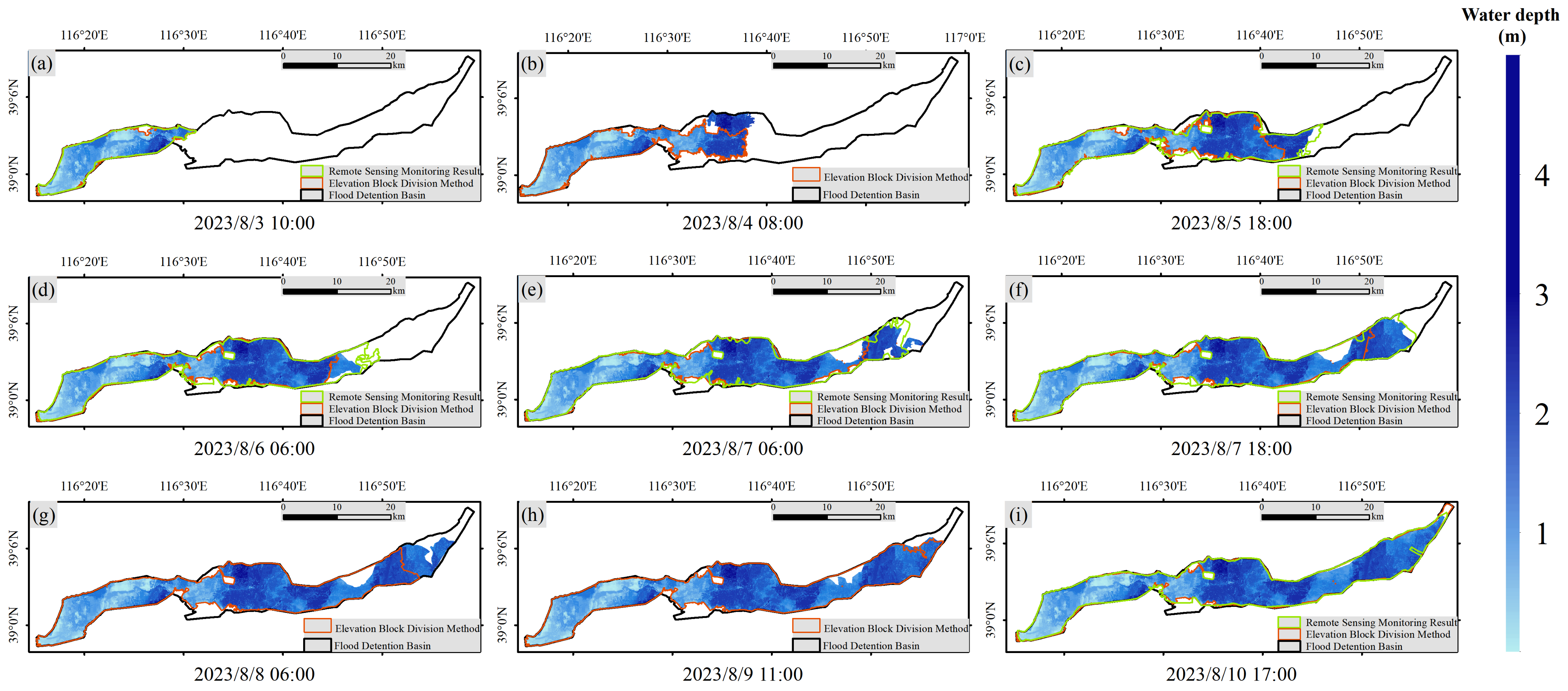
- The simulated inundation extent shows good agreement with inundation maps derived from synchronous remote sensing images. The simulation accuracy is comparable to that of the hydrodynamic model reported by Wu et al. [38], with relative errors in inundation area and water level both below 10%. Compared with traditional seed-spreading methods, the proposed method achieves a computational efficiency improvement of over 60%, confirming its applicability in flood storage–detention basin scenarios.
- (2)
- Compared with the traditional elevation-based Partitioning method, TSLIC-based terrain clustering significantly reduces inundation extent errors. The TSLIC-based results maintain errors below 10%; TSLIC can better identify micro-topographic features and generate compact and regular superpixel units, which avoids the fragmented and discontinuous regions produced by the traditional elevation-based Partitioning method.
- (3)
- When compared with the Bathtub Model, the RS-CFPM model shows more stable and accurate simulation results; inundation extent errors produced by the RS-CFPM model remain below 10%. By incorporating water balance and flow propagation velocity constraints, the RS-CFPM model produces flood evolution results that are consistent with observed flood regulation processes.
Author Contributions
Funding
Data Availability Statement
Acknowledgments
Conflicts of Interest
References
- Rentschler, J.; Avner, P.; Marconcini, M.; Su, R.; Strano, E.; Vousdoukas, M.; Hallegatte, S. Global evidence of rapid urban growth in flood zones since 1985. Nature 2023, 622, 87–92. [Google Scholar] [CrossRef] [PubMed]
- Qin, G.; Wang, S.; Wang, F.; Li, S.; Gu, X.; Chen, B.; Wang, X.; Wang, Z.; Hu, K.; Zhu, J. Rapid flood detection in global scene based on multimodal data collaboration. Int. J. Digit. Earth 2025, 18, 2554307. [Google Scholar] [CrossRef]
- Li, C.; Tian, J.; Shen, R. Review on assessment of flood and waterlogging risk. J. Catastrophol. 2020, 35, 131–136. [Google Scholar]
- Dang, P.; Zhu, J.; Dang, C.; Zhang, H. A method for assessing urban flood impacts by combining hydrodynamic models with entity semantic evolution. Int. J. Digit. Earth 2025, 18, 2515268. [Google Scholar] [CrossRef]
- Paprotny, D.; Tilloy, A.; Treu, S.; Buch, A.; Vousdoukas, M.I.; Feyen, L.; Kreibich, H.; Merz, B.; Frieler, K.; Mengel, M. Attribution of flood impacts shows strong benefits of adaptation in Europe since 1950. Sci. Adv. 2025, 11, eadt7068. [Google Scholar] [CrossRef]
- Duan, R.; Huang, G.; Zhou, X.; Lu, C.; Tian, C. Record-Breaking heavy rainfall around Henan Province in 2021 and future projection of extreme conditions under climate change. J. Hydrol. 2023, 625, 130102. [Google Scholar] [CrossRef]
- Shu, Z.; Li, W.; Zhang, J.; Jin, J.; Xue, Q.; Wang, Y.; Wang, G. Historical Changes and Future Trends of Extreme Precipitation and High Temperature in China. Strateg. Study Chin. Acad. Eng. 2022, 24, 116–125. [Google Scholar] [CrossRef]
- Du, H.; Zeng, S.; Zhang, Y.; Chen, Y.; Yang, L.; Xia, J. Climate change will lead to different over-threshold flood risks patterns of the riverside cities in the Yangtze River Basin. J. Hydrol. 2025, 661, 133664. [Google Scholar] [CrossRef]
- Zhao, Z.; Huo, A.; Liu, Q.; Yang, L.; Luo, C.; Ahmed, A.; Elbeltagi, A. Assessment of urban inundation and prediction of combined flood disaster in the middle reaches of Yellow river basin under extreme precipitation. J. Hydrol. 2024, 640, 131707. [Google Scholar] [CrossRef]
- Tang, Y.; Zhang, Y.; Zhang, G.; Li, S.; Gu, W.; Ou, M.; Zheng, Y. Study on the operation process of Dongdian Flood Detention and Storage Area in Haihe River Basin based on multi-source remote sensing images. Eng. J. Wuhan Univ. 2025, 58, 782–791+829. [Google Scholar]
- Wu, B.; Ma, F.; Hu, S.; Zhang, L.; Zhao, Y.; Song, W.; He, B.; Liu, H.; Yu, H. Retrospective Analysis of Flood Propagation in the Dongdian Flood Storage-Detention Area During the ‘23·7’ Extreme Flood Event in the Haihe River Basin. Water Resour. Prot. 2025, 41, 96–105. [Google Scholar]
- Liao, S.; Wang, W.; Wang, C.; Ji, R.; Cui, A.; Chen, D.; Zhang, X.; Chen, N. Land Use and Land Cover Change Assessment and Predictions in Flood Detention Areas of Yangtze River Basin Based on AIF-HOM-PLUS Model. Remote Sens. 2025, 17, 1857. [Google Scholar] [CrossRef]
- Amer, R. Machine Learning-Driven Rapid Flood Mapping for Tropical Storm Imelda Using Sentinel-1 SAR Imagery. Remote Sens. 2025, 17, 1869. [Google Scholar] [CrossRef]
- Ben, P.; Li, J.; Yu, B.; Hu, Y. Discussion on the Mode of Using Flood Storage Area Based on the Combination of Extreme Value and Flood Volume. J. China Hydrol. 2021, 41, 28–34. [Google Scholar]
- Shuihua, J.; Zhongfa, H.; Jinsong, H.; Ying, Z.; Xianhe, J. Flood evolution simulation in flood storage and detention area and evaluation methods for the dike-break losses. J. Water Resour. Water Eng. 2020, 31, 131–139+145. [Google Scholar]
- Zhu, J.; Wang, Z.; Li, Y. Analysis of Groundwater Impact Characteristics of ‘23·7’ Basin-wide Extraordinary Flood in Haihe River Basin. Water Resour. Power 2025, 43, 23–26. [Google Scholar]
- Hao, S.; Wang, W.; Ma, Q.; Li, C.; Liu, C. Analysis on the Disaster Mechanism of the ‘8·12’ Flash Flood in Liulin River Basin, Hubei Province. J. Basic Sci. Eng. 2024, 32, 133–144. [Google Scholar]
- Saha, A.; Stelling, G.; Vuik, C. Modified Horton’s infiltration model integrated with a Sub-Grid shallow water equation solver for High-Resolution flooding simulation. J. Hydrol. 2025, 660, 133326. [Google Scholar] [CrossRef]
- Ding, Z.; Li, J.; Li, L. Method for flood submergence analysis based on GIS grid model. J. Hydraul. Eng. 2004, 6, 56–60+67. [Google Scholar]
- Shen, Z.; Ding, Y.; Kong, Q. Application Study of Coupling Rainfall-runoff Modeling and Floodplain Inundation Mapping. J. Geo-Inf. Sci. 2021, 23, 1473–1483. [Google Scholar]
- Ma, Q.; Li, Z.; Dong, F.; Zhang, K.; Yang, B.; Liu, C. Flood modeling developed for digital twin water-shed: A case study of ‘23·7’ great flood assessment in Ziya River Basin. J. Hydraul. Eng. 2025, 56, 73–84. [Google Scholar]
- Zhang, H.; Wu, W.; Hu, C.; Hu, C.; Li, M.; Hao, X.; Liu, S. A distributed hydrodynamic model for urban storm flood risk assessment. J. Hydrol. 2021, 600, 126513. [Google Scholar] [CrossRef]
- Samadi, A.; Jafarzadegan, K.; Moradkhani, H. DEM-based pluvial flood inundation modeling at a metropolitan scale. Environ. Model. Softw. 2025, 183, 106226. [Google Scholar] [CrossRef]
- Que, J.; Tan, J. Research of Flood Routing Process in the Downstream of the Reservoir Based on DEM. Water Resour. Power 2024, 42, 212–215. [Google Scholar]
- Yang, A.; Song, S.; Wang, H.; Wu, D. Research and Application of Flood Inundation Analysis Algorithm Based on Digital Elevation Model. Geomat. Spat. Inf. Technol. 2023, 46, 44–47. [Google Scholar]
- Wijaya, O.T.; Yang, T.H.; Hsu, H.M.; Gourbesville, P. A rapid flood inundation model for urban flood analyses. MethodsX 2023, 10, 102202. [Google Scholar] [CrossRef]
- Wang, S.; Li, Y.; Liu, P.; Geng, Z.; Sun, X. Algorithm for Calculating Flood Submergence Range from DEM Data Based on Graph Traversal. Remote Sens. Inf. 2020, 35, 87–92. [Google Scholar]
- Yu, C.; Hu, D.; Zhang, Y.; Cao, S.; Wang, S. Research and Application of Flood Dynamic Evolution Algorithm by DEM Spatial Partition. Sci. Surv. Mapp. 2020, 45, 181–189. [Google Scholar]
- Teng, J.; Jakeman, A.J.; Vaze, J.; Croke, B.F.; Dutta, D.; Kim, S. Flood inundation modelling: A review of methods, recent advances and uncertainty analysis. Environ. Model. Softw. 2017, 90, 201–216. [Google Scholar] [CrossRef]
- Jamali, B.; Bach, P.M.; Cunningham, L.; Deletic, A. A Cellular Automata fast flood evaluation (CA-ffé) model. Water Resour. Res. 2019, 55, 4936–4953. [Google Scholar]
- Thrysøe, C.; Balstrøm, T.; Borup, M.; Löwe, R.; Jamali, B.; Arnbjerg-Nielsen, K. FloodStroem: A fast dynamic GIS-based urban flood and damage model. J. Hydrol. 2021, 600, 126521. [Google Scholar] [CrossRef]
- Yu, H.; Li, C.; Liu, Z.; Zhou, S.; Guo, Y. Remote sensing image dehazing algorithm based on adaptive SLIC. Natl. Remote Sens. Bull. 2024, 28, 3158–3172. [Google Scholar]
- Zhan, N.; Li, X.; Lu, J.; Xu, W. Water body information extraction by Sentinel -1 radar data based on SLIC. Yangtze River 2020, 51, 213–217+225. [Google Scholar]
- Tong, H.; Tong, F.; Zhou, W.; Zhang, Y. Purifying SLIC superpixels to optimize superpixel-based classification of high spatial resolution remote sensing image. Remote Sens. 2019, 11, 2627. [Google Scholar] [CrossRef]
- Wang, N.; Chen, F.; Yu, B.; Wang, L. A strategy of parallel slic superpixels for handling large-scale images over apache spark. Remote Sens. 2022, 14, 1568. [Google Scholar]
- Zhao, W.; Liu, Y.; Wu, X.; Jiao, P.; Zhang, X. Accuracy Verification of the Scale of 1:10,000 stereo Mapping Based on GaoFen-7 Satellite Imagery. Acta Geod. Cartogr. Sin. 2022, 47, 165–171+180. [Google Scholar]
- He, F.; Mahmud, M.P.; Kouzani, A.Z.; Anwar, A.; Jiang, F.; Ling, S.H. An improved SLIC algorithm for segmentation of microscopic cell images. Biomed. Signal Process. Control 2022, 73, 103464. [Google Scholar] [CrossRef]
- Liu, M.; Jin, S.; Gu, C.; Li, J.; Li, S.; Liu, L. Chinese Satellite-based Flood Mapping and Damage Assessment in Dongdian Flood Detention Basin, China. J. Resour. Ecol. 2024, 15, 1344–1357. [Google Scholar] [CrossRef]
- Wu, B.; Yu, W.; Ma, F.; Yu, H.; Mu, J.; Chai, F.; Li, M.; Song, W. Simulation and forecasting of flood evolution in Dongdian storage-detention area during Haihe “23 · 7” basin-wide extreme flood. China Flood Drought Manag. 2023, 33, 37–42+57. [Google Scholar]
- Li, G.; Tang, X.; Chen, J.; Yao, J.; Liu, Z.; Gao, X.; Zuo, Z.; Zhou, X. Processing and preliminary accuracy validation of the GF-7 satellite laser altimetry data. Acta Geod. Cartogr. Sin. 2021, 50, 1338–1348. [Google Scholar]
- Tang, X.; Liu, C.; Zhang, H.; Wang, X.; Li, G.; Mo, F.; Li, F. GF-7 Satellite Stereo Images Block Adjustment Assisted with Laser Altimetry Data. Geomat. Inf. Sci. Wuhan Univ. 2021, 46, 1423–1430. [Google Scholar]








| Serial Number | Data Type | Date | Serial Number | Data Type | Date | Serial Number | Data Type | Date |
|---|---|---|---|---|---|---|---|---|
| 1 | GF7 | 20 January 2023 | 8 | altimetry data | 19 January 2024 | 15 | GF3B | 5 August 2023 18:03 |
| 2 | GF7 | 23 May 2023 | 9 | altimetry data | 16 May 2024 | 16 | GF3B | 6 August 2023 06:10 |
| 3 | GF7 | 16 July 2023 | 10 | altimetry data | 14 July 2024 | 17 | GF3B | 7 August 2023 06:20 |
| 4 | GF7 | 16 July 2023 | 11 | altimetry data | 4 November 2024 | 18 | GF3B | 7 August 2023 18:20 |
| 5 | GF7 | 14 January 2024 | 12 | altimetry data | 9 November 2024 | 19 | GF3C | 10 August 2023 17:17 |
| 6 | GF7 | 11 May 2024 | 13 | altimetry data | 7 January 2025 | |||
| 7 | GF7 | 7 January 2025 | 14 | HJ2E | 3 August 2023 10:41 |
| Serial Number | Date | Inundation Area (km2) | Water Level (m) |
|---|---|---|---|
| 1 | 3 August 2023 10:41 | 79.47 | −5 |
| 2 | 5 August 2023 18:03 | 184.14 | −6.13 |
| 3 | 6 August 2023 06:10 | 207.21 | −5.64 |
| 4 | 7 August 2023 06:20 | 238.12 | −5.85 |
| 5 | 7 August 2023 18:20 | 256.48 | −5.75 |
| 6 | 10 August 2023 17:17 | 270.49 | −5.58 |
| Serial Number | Number of Grids | RS-CFPM (s) | Bathtub Mode (s) | Efficiency Improvement |
|---|---|---|---|---|
| 1 | 11.76 | 38.48 | 69.44% | |
| 2 | 23.05 | 62.68 | 63.23% | |
| 3 | 61.34 | 189.97 | 67.71% | |
| 4 | 127.43 | 343.11 | 62.86% |
Disclaimer/Publisher’s Note: The statements, opinions and data contained in all publications are solely those of the individual author(s) and contributor(s) and not of MDPI and/or the editor(s). MDPI and/or the editor(s) disclaim responsibility for any injury to people or property resulting from any ideas, methods, instructions or products referred to in the content. |
© 2026 by the authors. Licensee MDPI, Basel, Switzerland. This article is an open access article distributed under the terms and conditions of the Creative Commons Attribution (CC BY) license.
Share and Cite
Zhang, X.; Li, X.; Sun, Y.; Su, Q.; Yuan, S.; Yang, M.; Lou, Q.; Chen, B. A Study on Integration of Topographic Clustering and Physical Constraints for Flood Propagation Simulation. Remote Sens. 2026, 18, 885. https://doi.org/10.3390/rs18060885
Zhang X, Li X, Sun Y, Su Q, Yuan S, Yang M, Lou Q, Chen B. A Study on Integration of Topographic Clustering and Physical Constraints for Flood Propagation Simulation. Remote Sensing. 2026; 18(6):885. https://doi.org/10.3390/rs18060885
Chicago/Turabian StyleZhang, Xu, Xiaotao Li, Yingwei Sun, Qiaomei Su, Shifan Yuan, Mei Yang, Qianfang Lou, and Bingyuan Chen. 2026. "A Study on Integration of Topographic Clustering and Physical Constraints for Flood Propagation Simulation" Remote Sensing 18, no. 6: 885. https://doi.org/10.3390/rs18060885
APA StyleZhang, X., Li, X., Sun, Y., Su, Q., Yuan, S., Yang, M., Lou, Q., & Chen, B. (2026). A Study on Integration of Topographic Clustering and Physical Constraints for Flood Propagation Simulation. Remote Sensing, 18(6), 885. https://doi.org/10.3390/rs18060885