Spatiotemporal Evolution and Driving Mechanisms of Nighttime Lights and Population Coupling Coordination in China


Highlights
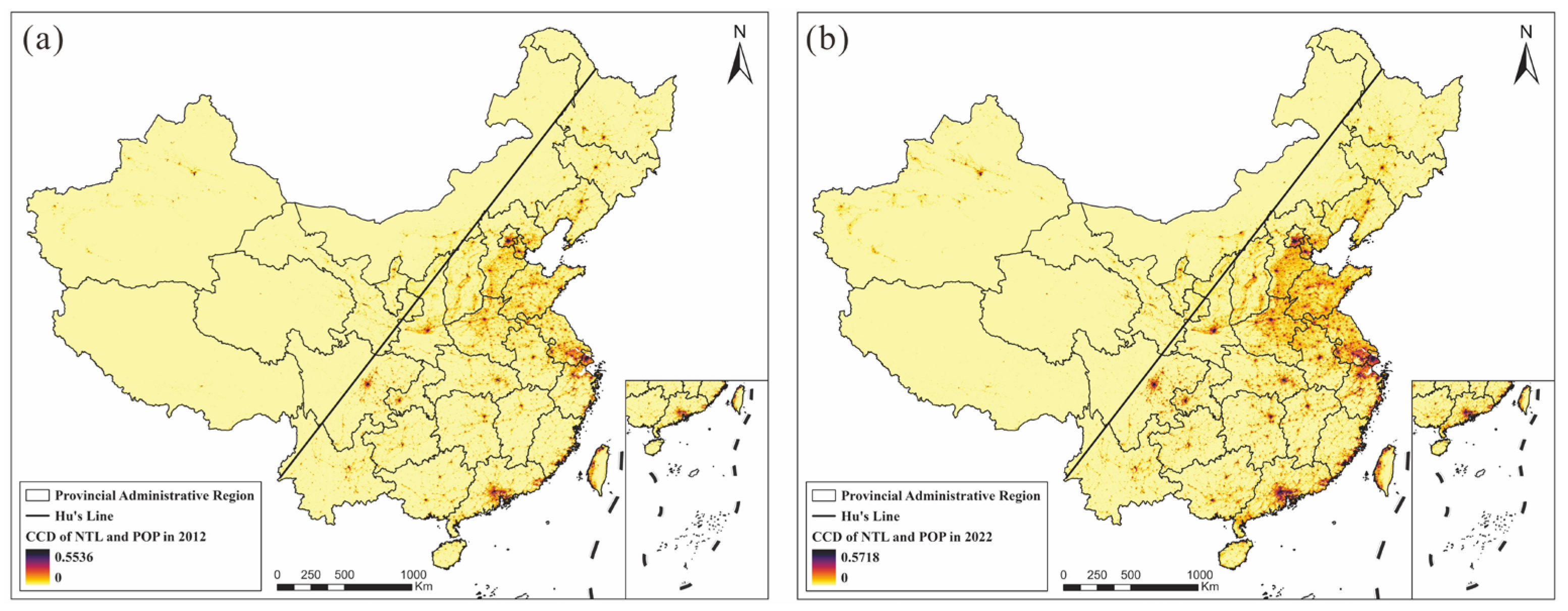
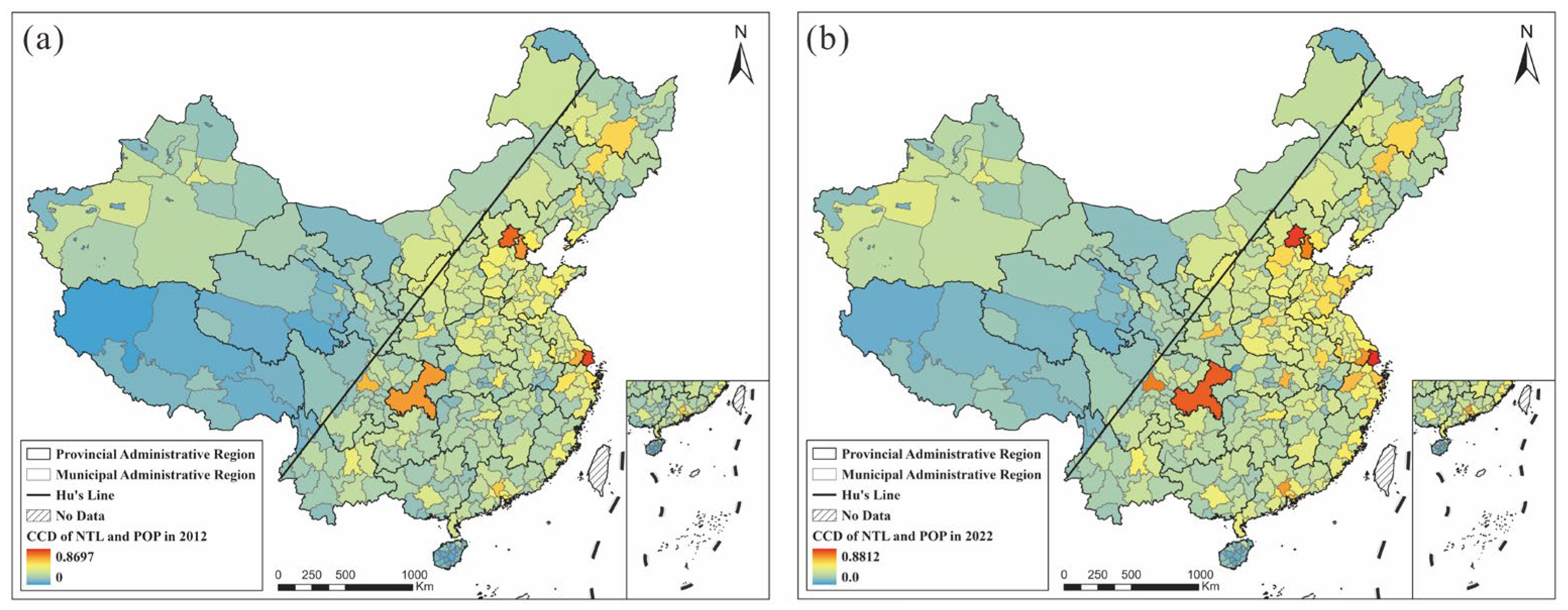
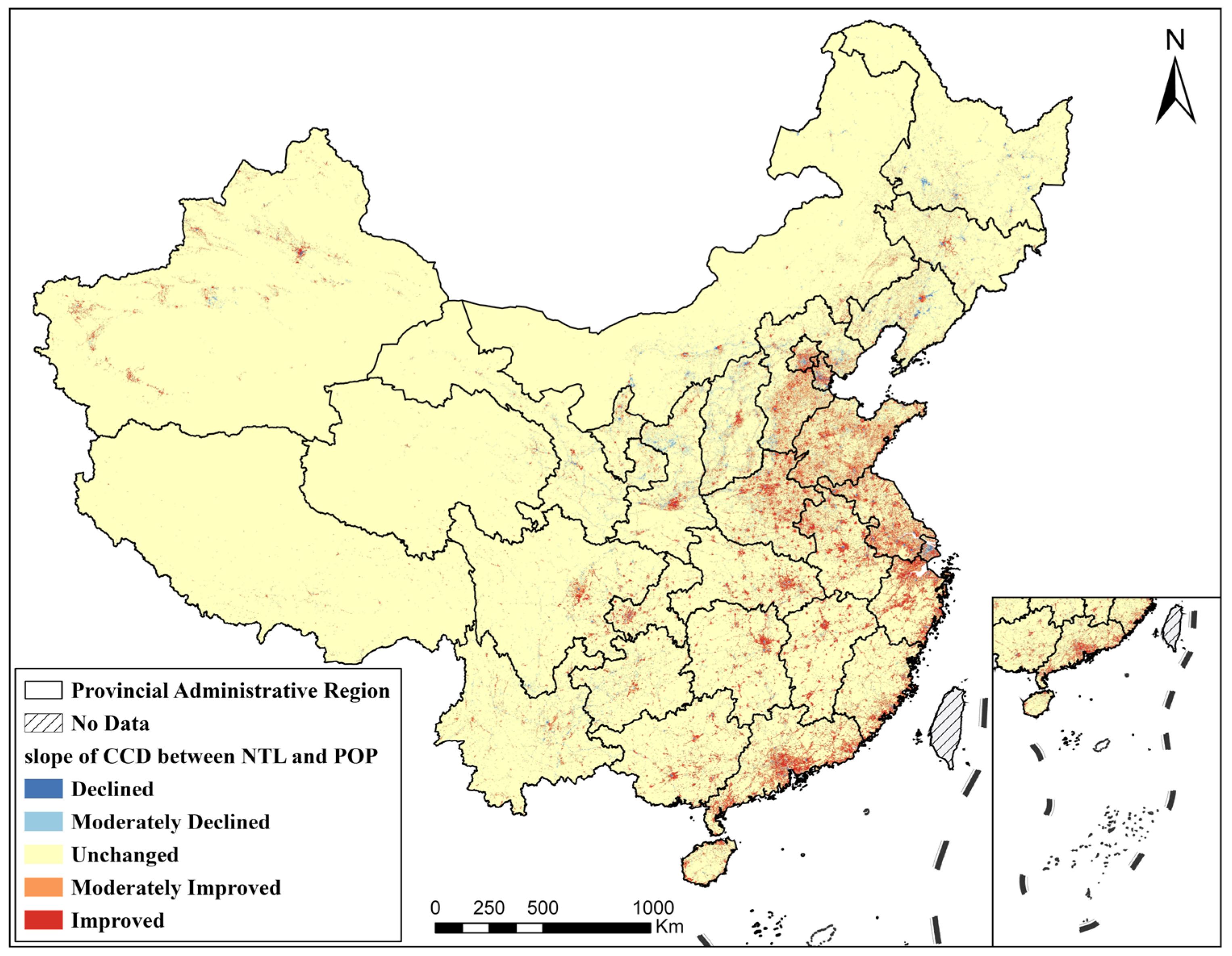
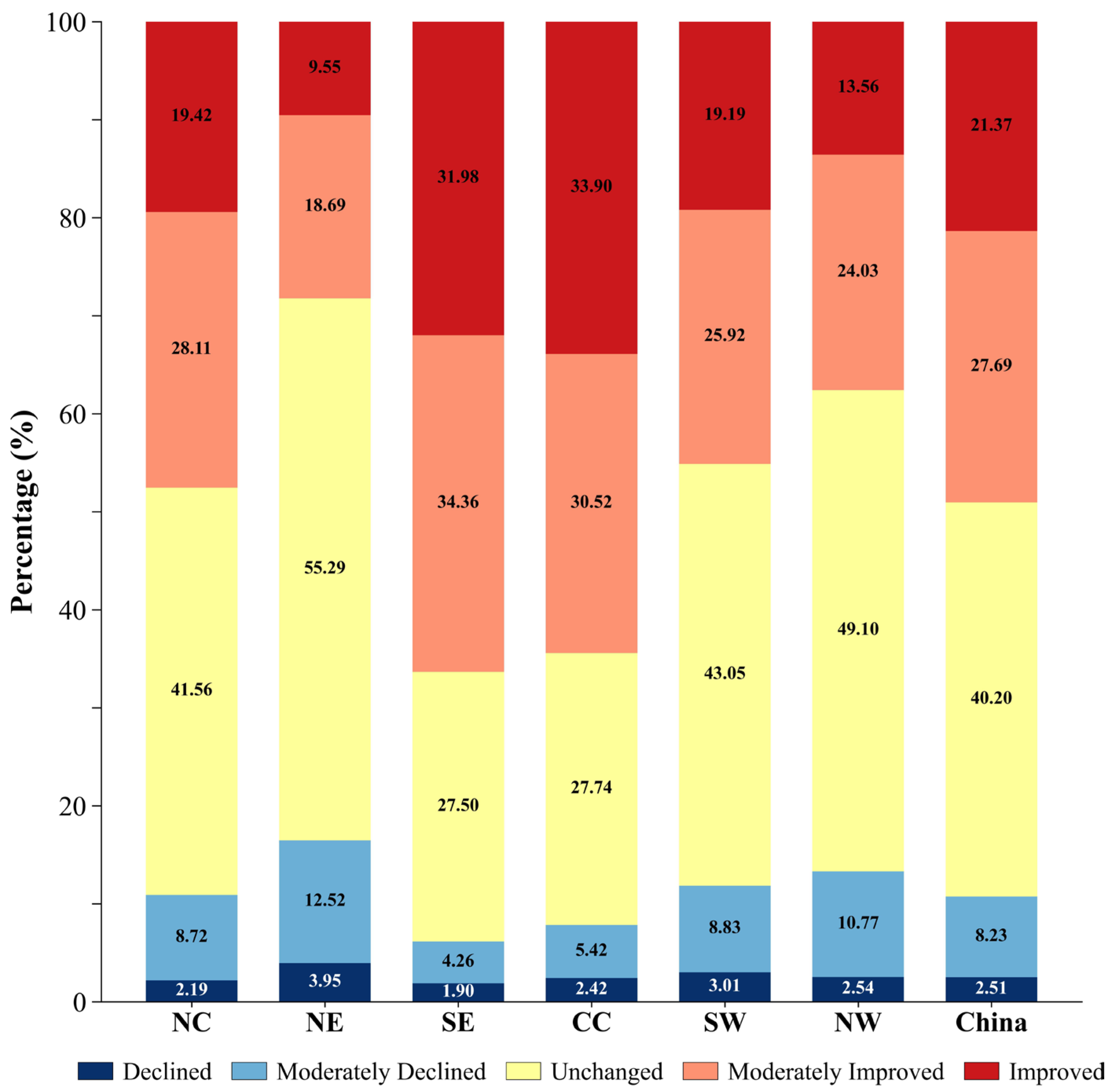
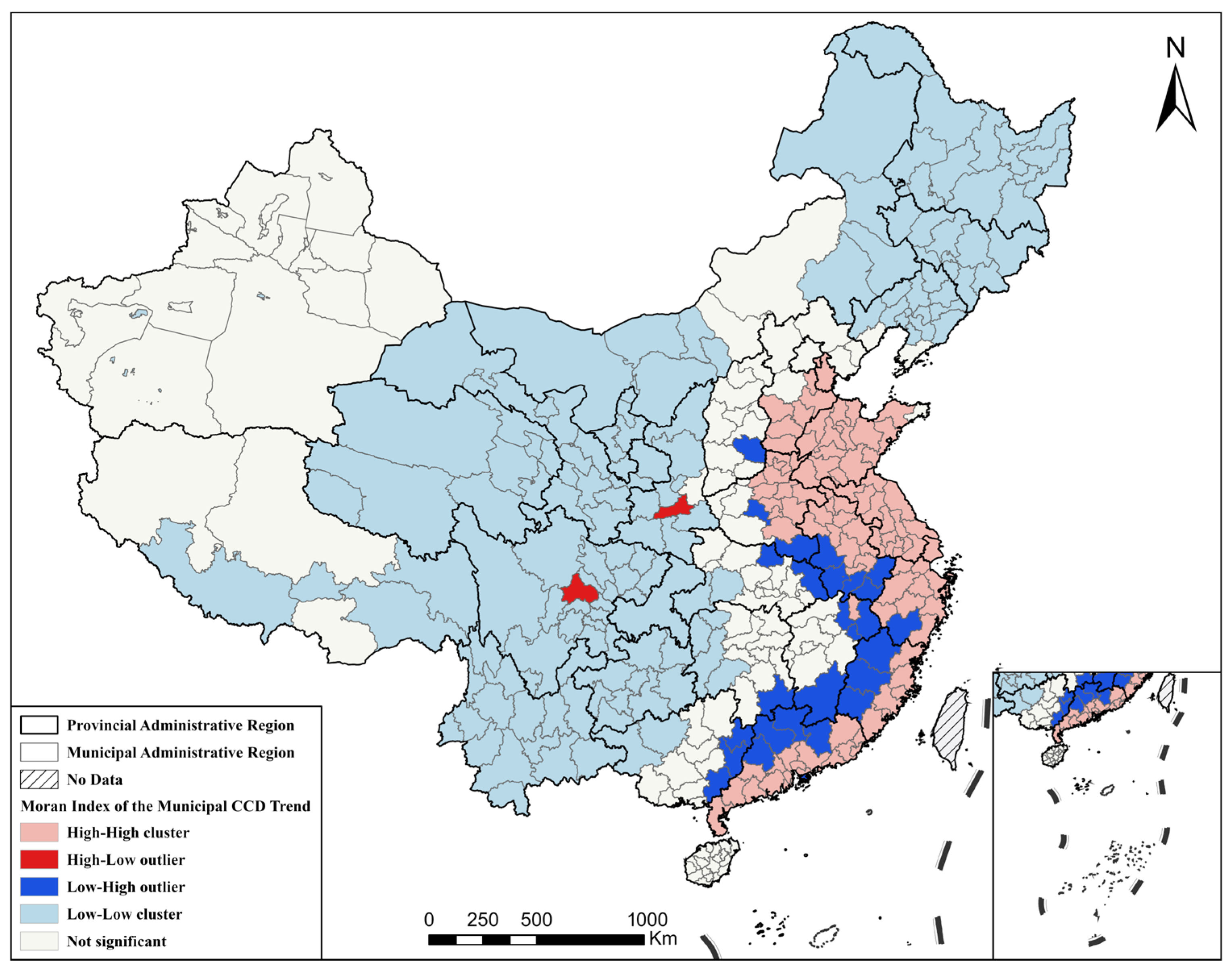
- From 2012–2022, the Nighttime Lights and Population Coupling Coordination Degree (NPCCD) increased in 49.07% of grid cells nationwide, with the strongest gains in Southeast and Central China and the weakest in Northeast China.
- Persistent coupled areas show substantially higher coordination than newly coupled areas.
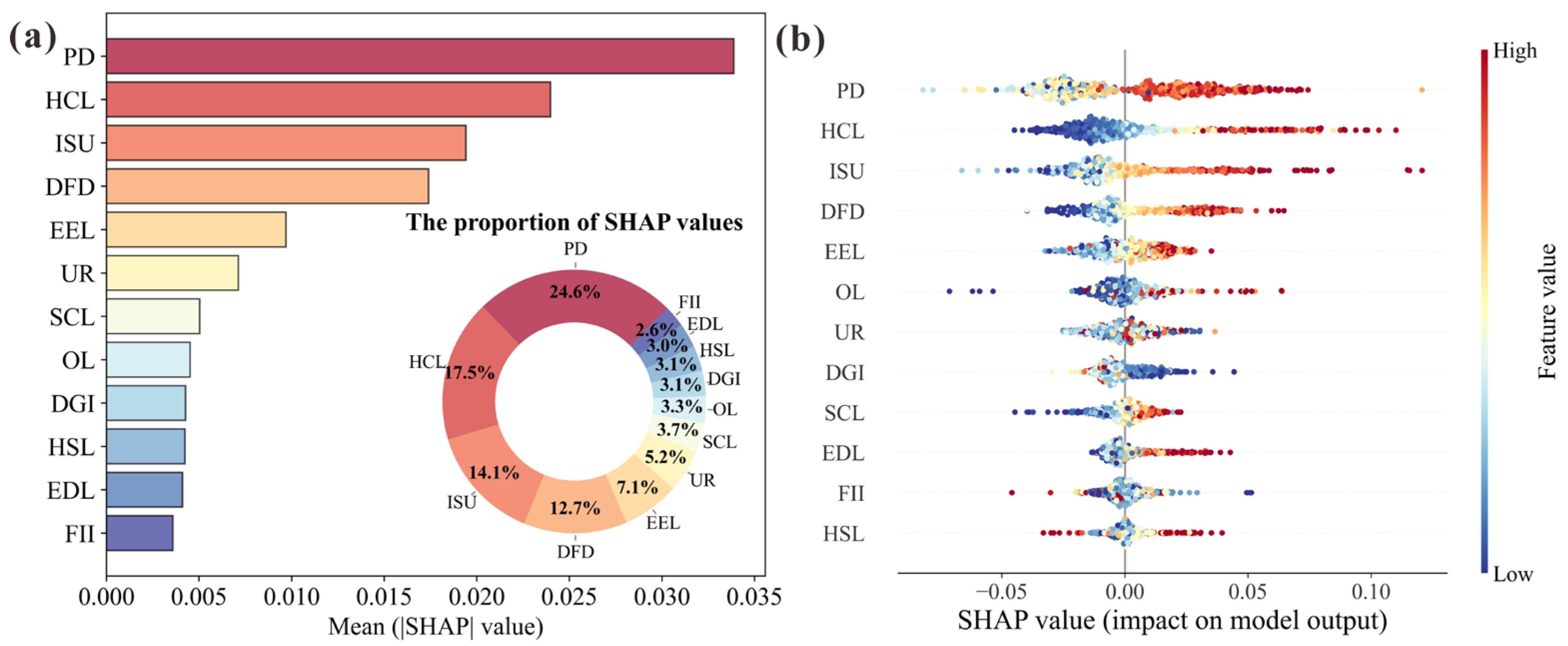
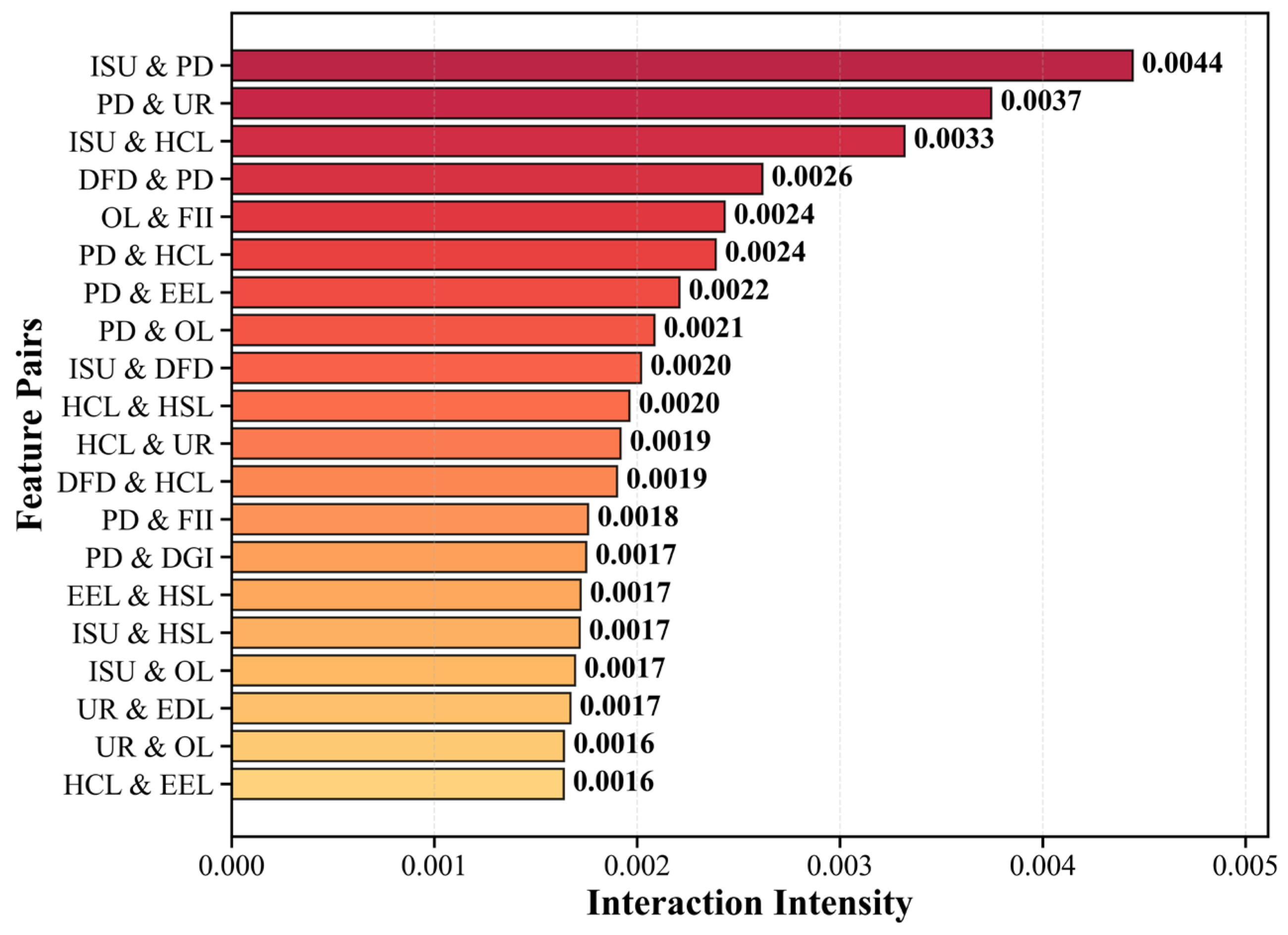
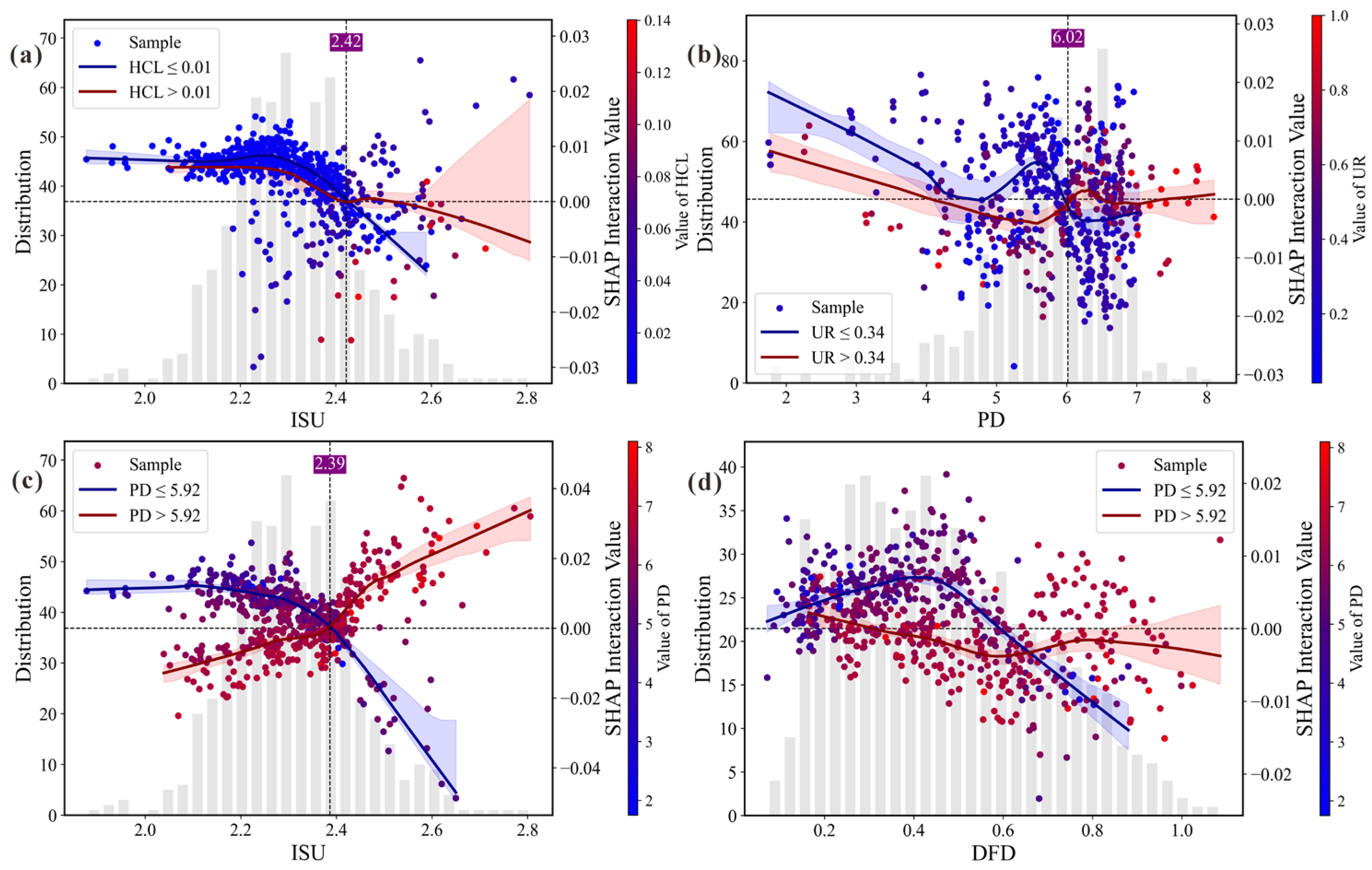
- An explainable gradient boosting model shows that population density, human capital, industrial upgrading and fiscal decentralization are dominant drivers with nonlinear thresholds and strong interactions.
- The findings suggest that policies should shift from pursuing growth in lights or population alone to improving the quality and stability of their coupling.
- Coordinated action on population distribution, industrial structure, education, public services and fiscal systems can be tailored to different city types to reduce regional gaps in coupling quality and support high-quality urbanization.
Abstract
1. Introduction
2. Materials and Methods
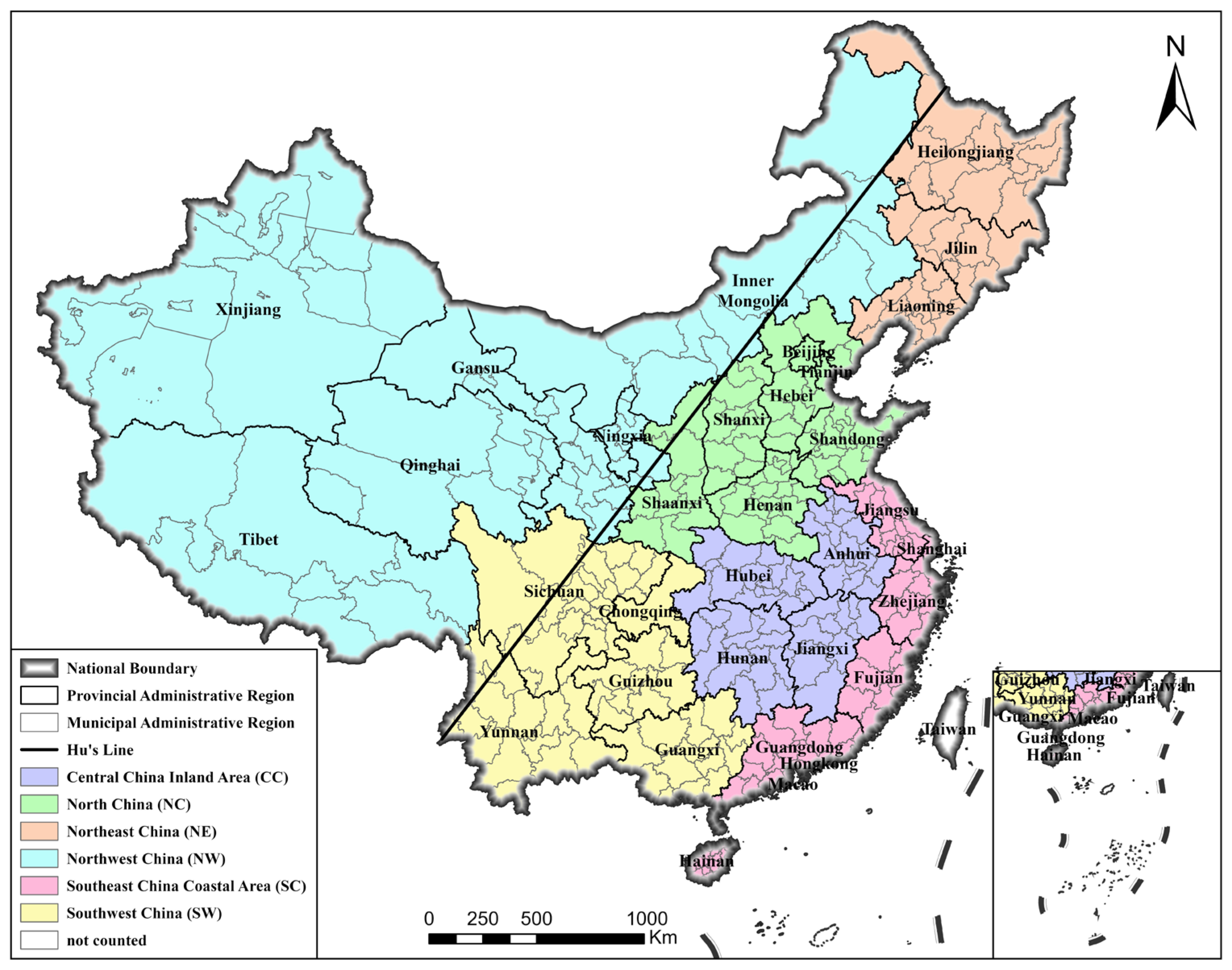
2.1. Study Area
2.2. Data Sources and Preprocessing
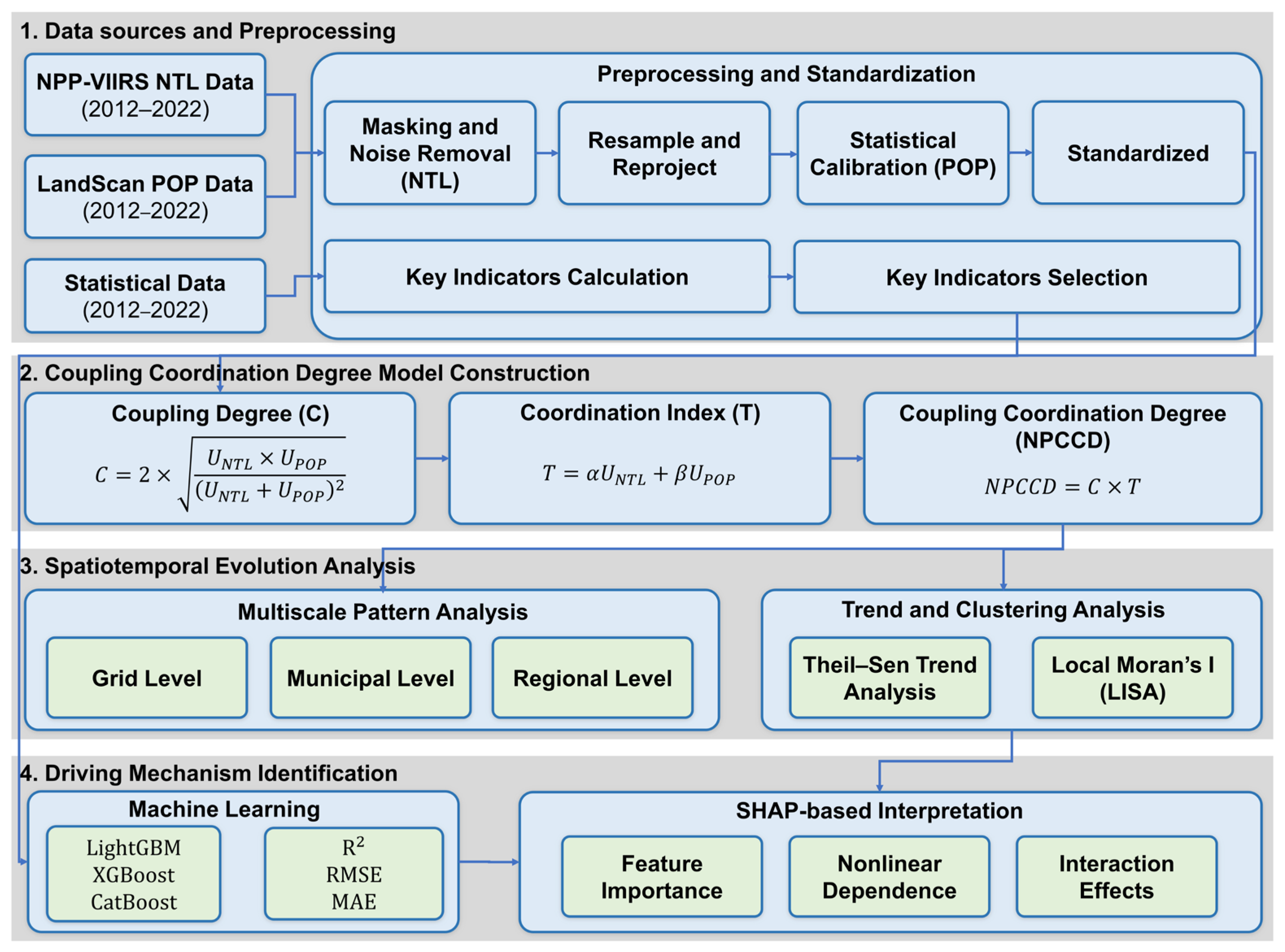
2.3. Methods
2.3.1. Coupling Coordination Degree Model
2.3.2. Theil–Sen Trend Analysis
2.3.3. Moran’s I for Spatial Autocorrelation
2.3.4. Machine Learning Models
2.3.5. Shapley Additive Explanations (SHAP)
2.3.6. Calculation of Key Indicators
3. Results
3.1. Spatiotemporal Evolution of Nighttime Lights and Population Couple Coordination Degree (NPCCD)
3.1.1. Spatiotemporal Evolution of NPCCD at Grid Level
3.1.2. Spatiotemporal Evolution of NPCCD at Municipal Level
3.2. Spatiotemporal Changes and Spatial Clustering of NPCCD
3.2.1. Trend Analysis of NPCCD
3.2.2. Local Spatial Clustering of NPCCD
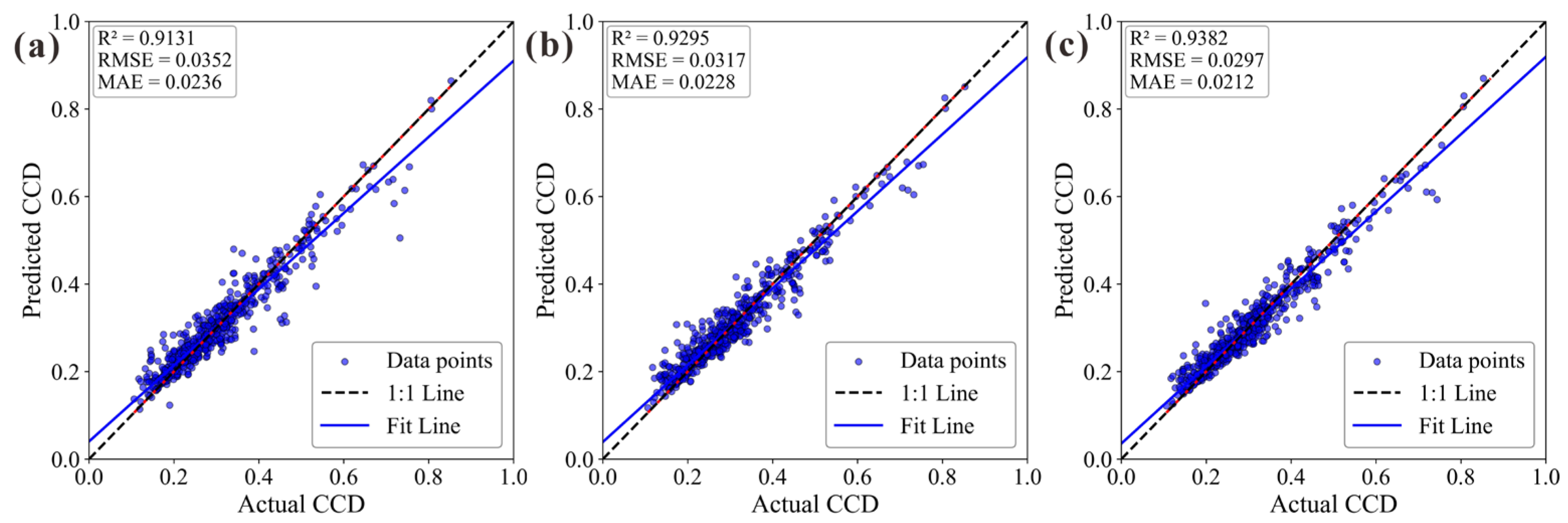
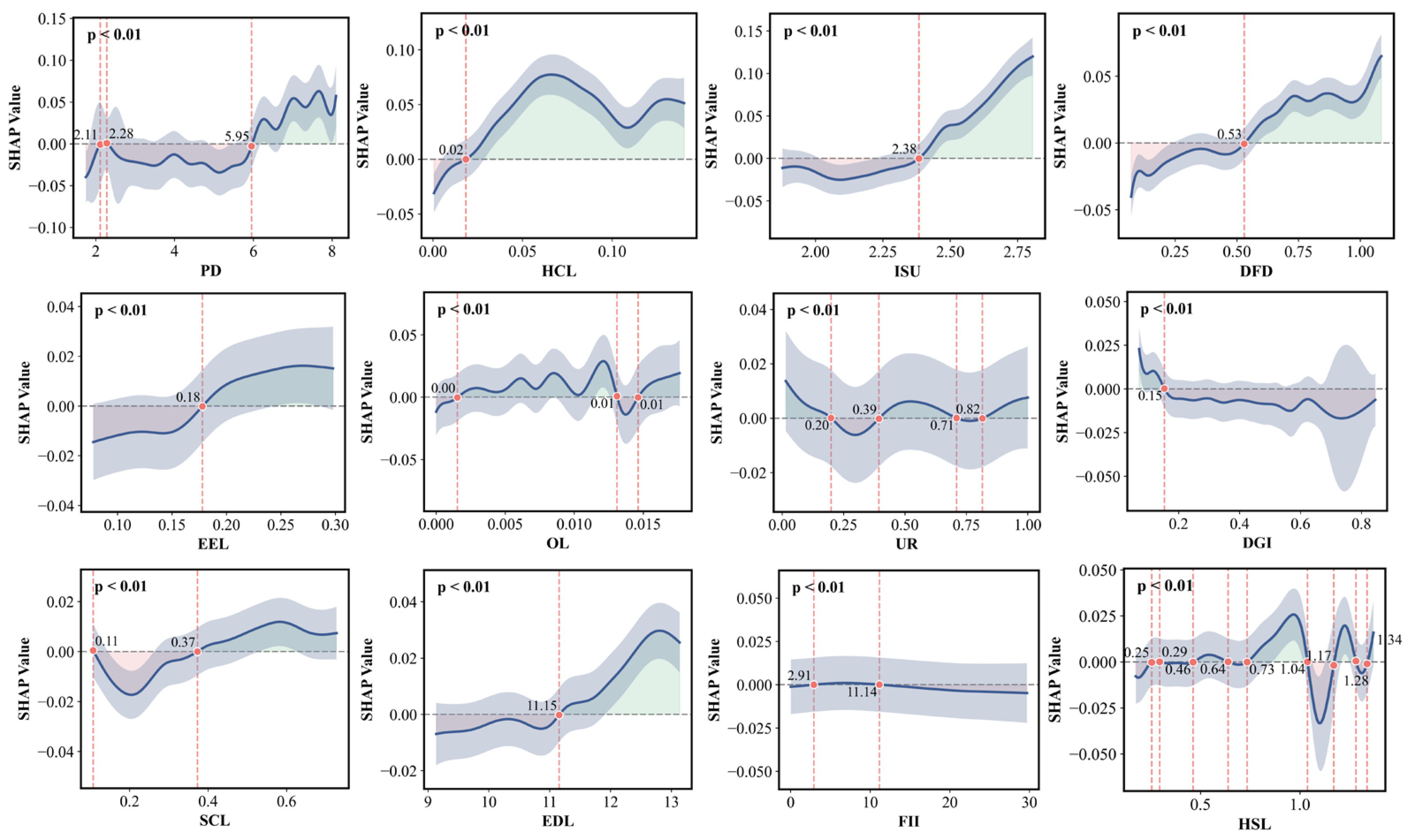
3.3. Performance of Machine Learning Model and SHAP-Based Interpretation
3.4. Interaction Analysis of Multiple Features
4. Discussion
4.1. Spatiotemporal Patterns and Regional Disparities of NPCCD
4.2. Driving Mechanisms and Interaction Effects
4.3. Limitations and Future Prospects
5. Conclusions
Author Contributions
Funding
Data Availability Statement
Conflicts of Interest
References
- Grimm, N.B.; Faeth, S.H.; Golubiewski, N.E.; Redman, C.L.; Wu, J.; Bai, X.; Briggs, J.M. Global change and the ecology of cities. Science 2008, 319, 756–760. [Google Scholar] [CrossRef] [PubMed]
- Seto, K.C.; Güneralp, B.; Hutyra, L.R. Global forecasts of urban expansion to 2030 and direct impacts on biodiversity and carbon pools. Proc. Natl. Acad. Sci. USA 2012, 109, 16083–16088. [Google Scholar] [CrossRef]
- Cohen, B. Urbanization in developing countries: Current trends, future projections, and key challenges for sustainability. Technol. Soc. 2006, 28, 63–80. [Google Scholar] [CrossRef]
- Bren d’Amour, C.; Reitsma, F.; Baiocchi, G.; Barthel, S.; Güneralp, B.; Erb, K.-H.; Haberl, H.; Creutzig, F.; Seto, K.C. Future urban land expansion and implications for global croplands. Proc. Natl. Acad. Sci. USA 2017, 114, 8939–8944. [Google Scholar] [CrossRef]
- Zhang, Q.; Guan, Y.; Wu, X.; Zhang, J.; Li, R.; Lin, K.; Wang, Y. Revealing the dynamic effects of land cover change on land surface temperature in global major bay areas. Build. Environ. 2025, 267, 112266. [Google Scholar] [CrossRef]
- Güneralp, B.; Ahasan, R. Urban land-change futures: Current understanding, challenges, and implications. npj Urban Sustain. 2025, 6, 7. [Google Scholar] [CrossRef]
- He, X.; Zhou, Y.; Yuan, X.; Zhu, M. The coordination relationship between urban development and urban life satisfaction in Chinese cities—An empirical analysis based on multi-source data. Cities 2024, 150, 105016. [Google Scholar] [CrossRef]
- Xiang, X.; Xiao, Y.; Chen, Y.; Huang, H. Assessment of coupling coordinated degree and driving mechanism of population-resource-environment-economy (PREE) system in Yellow River Basin, China. Sci. Rep. 2024, 14, 31135. [Google Scholar] [CrossRef]
- Zhao, J.; Xiao, Y.; Sun, S.; Sang, W.; Axmacher, J.C. Does China’s increasing coupling of ‘urban population’and ‘urban area’growth indicators reflect a growing social and economic sustainability? J. Environ. Manag. 2022, 301, 113932. [Google Scholar] [CrossRef] [PubMed]
- Guan, X.; Wei, H.; Lu, S.; Su, H. Mismatch distribution of population and industry in China: Pattern, problems and driving factors. Appl. Geogr. 2018, 97, 61–74. [Google Scholar] [CrossRef]
- Yin, C.; Meng, F.; Yang, X.; Yang, F.; Fu, P.; Yao, G.; Chen, R. Spatio-temporal evolution of urban built-up areas and analysis of driving factors—A comparison of typical cities in north and south China. Land Use Policy 2022, 117, 106114. [Google Scholar] [CrossRef]
- Yang, X.; Ye, T.; Zhao, N.; Chen, Q.; Yue, W.; Qi, J.; Zeng, B.; Jia, P. Population mapping with multisensor remote sensing images and point-of-interest data. Remote Sens. 2019, 11, 574. [Google Scholar] [CrossRef]
- Yu, T.; Ye, Y.; Fan, Z. Estimating GDP growth using VIIRS night-time light data. Int. J. Remote Sens. 2024, 45, 7939–7958. [Google Scholar] [CrossRef]
- Feng, P.; Ma, Z.; Yan, J.; Sun, L.; Wu, N.; Cheng, L.; Yan, D. High-resolution population mapping by fusing remote sensing and social sensing data considering the spatial scale mismatch issue. Int. J. Digit. Earth 2025, 18, 2479863. [Google Scholar] [CrossRef]
- Bai, Y.; Zhang, B.; Zhang, Z.; Zeng, S.; Liu, Z.; Mao, X. Weakly supervised deep learning for fine-grained socioeconomic development index inference based on satellite imagery. GeoInformatica 2025, 29, 927–950. [Google Scholar] [CrossRef]
- Dritsas, E.; Trigka, M. Remote sensing and geospatial analysis in the big data era: A survey. Remote Sens. 2025, 17, 550. [Google Scholar] [CrossRef]
- Elvidge, C.D.; Baugh, K.; Zhizhin, M.; Hsu, F.C.; Ghosh, T. VIIRS night-time lights. In Remote Sensing of Night-Time Light; Routledge: Abingdon, UK, 2021; pp. 6–25. [Google Scholar]
- Shi, K.; Ma, J.; Chen, Z.; Cui, Y.; Yu, B. Nighttime light remote sensing in characterizing urban spatial structure. Innov. Geosci. 2023, 1, 100043. [Google Scholar] [CrossRef]
- Wu, B.; Yu, B.; Yao, S.; Wu, Q.; Chen, Z.; Wu, J. A surface network based method for studying urban hierarchies by night time light remote sensing data. Int. J. Geogr. Inf. Sci. 2019, 33, 1377–1398. [Google Scholar] [CrossRef]
- Zheng, Q.; Seto, K.C.; Zhou, Y.; You, S.; Weng, Q. Nighttime light remote sensing for urban applications: Progress, challenges, and prospects. ISPRS J. Photogramm. Remote Sens. 2023, 202, 125–141. [Google Scholar] [CrossRef]
- Chen, X.; Nordhaus, W.D. Using luminosity data as a proxy for economic statistics. Proc. Natl. Acad. Sci. USA 2011, 108, 8589–8594. [Google Scholar] [CrossRef] [PubMed]
- Chen, X.; Nordhaus, W.D. VIIRS nighttime lights in the estimation of cross-sectional and time-series GDP. Remote Sens. 2019, 11, 1057. [Google Scholar] [CrossRef]
- Chen, Y.; Ursavaş, U.; Mendez, C. Can higher-quality nighttime lights predict sectoral GDP across subnational regions? Urban and rural luminosity across provinces in Türkiye. Lett. Spat. Resour. Sci. 2024, 17, 12. [Google Scholar] [CrossRef]
- Chakraborty, S.; Stokes, E.C. Adaptive modeling of satellite-derived nighttime lights time-series for tracking urban change processes using machine learning. Remote Sens. Environ. 2023, 298, 113818. [Google Scholar] [CrossRef]
- Chen, X.; Wang, Z.; Zhang, F.; Shen, G.; Chen, Q. A global annual simulated VIIRS nighttime light dataset from 1992 to 2023. Sci. Data 2024, 11, 1380. [Google Scholar] [CrossRef] [PubMed]
- Jhamb, P.; Ferreira, S.; Stephens, P.; Sundaram, M.; Wilson, J. Shedding light on development: Leveraging the new nightlights data to measure economic progress. PLoS ONE 2025, 20, e0318482. [Google Scholar] [CrossRef]
- Zhou, Y.; Ma, T.; Zhou, C.; Xu, T. Nighttime light derived assessment of regional inequality of socioeconomic development in China. Remote Sens. 2015, 7, 1242–1262. [Google Scholar] [CrossRef]
- Liu, C.; Wang, C.; Xu, Y.; Liu, C.; Li, M.; Zhang, D.; Liu, G.; Li, W.; Zhang, Q.; Li, Q. Correlation analysis between nighttime light data and socioeconomic factors on fine scales. IEEE Geosci. Remote Sens. Lett. 2022, 19, 3511805. [Google Scholar] [CrossRef]
- McAvoy, G.; Vadrevu, K.P. Nighttime lights and population variations in cities of South/Southeast Asia: Distance-decay effect and implications. Remote Sens. 2024, 16, 4458. [Google Scholar] [CrossRef]
- Elvidge, C.D.; Baugh, K.E.; Anderson, S.J.; Sutton, P.C.; Ghosh, T. The Night Light Development Index (NLDI): A spatially explicit measure of human development from satellite data. Soc. Geogr. 2012, 7, 23–35. [Google Scholar] [CrossRef]
- Xu, Y.; Chen, S.; Wang, Z.; Liu, B.; Wang, L. Multi-Scale Dynamics and Spatial Consistency of Economy and Population Based on NPP/VIIRS Nighttime Light Data and Population Imagery: A Case Study of the Yangtze River Delta. Remote Sens. 2024, 16, 2806. [Google Scholar] [CrossRef]
- Zhang, Q.; Liu, L.; Yang, X.; Sun, Z.; Ban, Y. Nighttime light development index: A new evaluation method for China’s construction land utilization level. Humanit. Soc. Sci. Commun. 2025, 12, 369. [Google Scholar] [CrossRef]
- Proville, J.; Zavala-Araiza, D.; Wagner, G. Night-time lights: A global, long term look at links to socio-economic trends. PLoS ONE 2017, 12, e0174610. [Google Scholar]
- Jean, N.; Burke, M.; Xie, M.; Alampay Davis, W.M.; Lobell, D.B.; Ermon, S. Combining satellite imagery and machine learning to predict poverty. Science 2016, 353, 790–794. [Google Scholar] [CrossRef]
- Yeh, C.; Perez, A.; Driscoll, A.; Azzari, G.; Tang, Z.; Lobell, D.; Ermon, S.; Burke, M. Using publicly available satellite imagery and deep learning to understand economic well-being in Africa. Nat. Commun. 2020, 11, 2583. [Google Scholar] [CrossRef]
- Lamichhane, B.R.; Isnan, M.; Horanont, T. Exploring machine learning trends in poverty mapping: A review and meta-analysis. Sci. Remote Sens. 2025, 11, 100200. [Google Scholar] [CrossRef]
- Zheng, X.; Zhang, W.; Deng, H.; Zhang, H. County-Level Poverty Evaluation Using Machine Learning, Nighttime Light, and Geospatial Data. Remote Sens. 2024, 16, 962. [Google Scholar]
- Liu, S.; Liu, W.; Zhou, Y.; Wang, S.; Wang, F.; Wang, Z. Mapping Gridded GDP Distribution of China Based on Remote Sensing Data and Machine Learning Methods. Remote Sens. 2025, 17, 1709. [Google Scholar] [CrossRef]
- Du, W.; Tong, S.; Zhang, M.; Xin, Y.; Zhang, D.; Xing, X.; An, Y.; Cui, G.; Liu, G. Revealing the spatiotemporal dynamics and nonlinear interaction-driven mechanisms of wetland ecosystem health in Northeast China using interpretable machine learning. Ecol. Indic. 2025, 178, 113878. [Google Scholar] [CrossRef]
- Xie, M.; Feng, Z.; Wang, S.; Wang, S.; Chang, X. Spatiotemporal Patterns and Nonlinear Drivers of Carbon Emission Intensity under Urban Shrinkage and Growth: A Machine Learning Approach with Interpretability. Sustain. Cities Soc. 2025, 130, 106593. [Google Scholar] [CrossRef]
- Shapley, L.S. A value for n-person games. In Contributions to the Theory of Games II; Princeton University Press: Princeton, NJ, USA, 1953. [Google Scholar]
- Tan, X.; Zhang, J.; Chen, J.; Wei, T.; Zhu, X. Beyond static brightness: Daily nighttime light fluctuations enrich nighttime vitality evaluation for urban zones. Sustain. Cities Soc. 2025, 136, 107043. [Google Scholar] [CrossRef]
- Xing, Z.; He, C.; Lin, J. Evolution and influencing factors of regional economic inequality in China based on data from nighttime lights. Sci. China Earth Sci. 2025, 68, 2003–2024. [Google Scholar] [CrossRef]
- Shao, Z.; Li, X. Multi-scale estimation of poverty rate using night-time light imagery. Int. J. Appl. Earth Obs. Geoinf. 2023, 121, 103375. [Google Scholar] [CrossRef]
- Pradhan, N.; Agrawal, A. Mapping fine-scale socioeconomic inequality using machine learning and remotely sensed data. PNAS Nexus 2025, 4, pgaf040. [Google Scholar] [CrossRef] [PubMed]
- Dobson, J.E.; Bright, E.A.; Coleman, P.R.; Durfee, R.C.; Worley, B.A. LandScan: A global population database for estimating populations at risk. Photogramm. Eng. Remote Sens. 2000, 66, 849–857. [Google Scholar]
- Li, W.; Yi, P. Assessment of city sustainability—Coupling coordinated development among economy, society and environment. J. Clean. Prod. 2020, 256, 120453. [Google Scholar] [CrossRef]
- Li, Z. Extracting spatial effects from machine learning model using local interpretation method: An example of SHAP and XGBoost. Comput. Environ. Urban Syst. 2022, 96, 101845. [Google Scholar] [CrossRef]
- Wang, Z.; Yu, Y.; Zhou, R. A longitudinal exploration of the spatiotemporal coupling relationship and driving factors between regional urban development and ecological quality of green space. Ecol. Indic. 2024, 164, 112134. [Google Scholar] [CrossRef]
- Li, Y.; Li, X.; Lu, T. Coupled coordination analysis between urbanization and eco-environment in ecologically fragile areas: A case study of Northwestern Sichuan, Southwest China. Remote Sens. 2023, 15, 1661. [Google Scholar] [CrossRef]
- Ji, J.; Tang, Z.; Zhang, W.; Liu, W.; Jin, B.; Xi, X.; Wang, F.; Zhang, R.; Guo, B.; Xu, Z. Spatiotemporal and multiscale analysis of the coupling coordination degree between economic development equality and eco-environmental quality in China from 2001 to 2020. Remote Sens. 2022, 14, 737. [Google Scholar] [CrossRef]
- Neeti, N.; Eastman, J.R. A contextual mann-kendall approach for the assessment of trend significance in image time series. Trans. GIS 2011, 15, 599–611. [Google Scholar] [CrossRef]
- Ma, S.; Kumakoshi, Y.; Koizumi, H.; Yoshimura, Y. Determining the association of the built environment and socioeconomic attributes with urban shrinking in Yokohama City. Cities 2022, 120, 103474. [Google Scholar] [CrossRef]
- Anselin, L. Spatial Econometrics: Methods and Models; Springer Science & Business Media: Berlin/Heidelberg, Germany, 1988; Volume 4. [Google Scholar]
- Ke, G.; Meng, Q.; Finley, T.; Wang, T.; Chen, W.; Ma, W.; Ye, Q.; Liu, T.-Y. LightGBM: A highly efficient gradient boosting decision tree. In Proceedings of the 31st International Conference on Neural Information Processing Systems, Long Beach, CA, USA, 4–9 December 2017; Curran Associates Inc.: Red Hook, NY, USA, 2017; pp. 3149–3157. [Google Scholar]
- Zhang, Q.; Gao, X.; Khan, S.U.; He, Z. SHAP-ing urban sustainability: Integrating NDDF and lightGBM to uncover coordinated pollution and carbon abatement costs in Chinese cities. Sustain. Cities Soc. 2025, 130, 106542. [Google Scholar] [CrossRef]
- Chen, T.Q.; Guestrin, C.; Assoc Comp, M. XGBoost: A Scalable Tree Boosting System. In Proceedings of the 22nd Acm Sigkdd International Conference on Knowledge Discovery and Data Mining, San Francisco, CA, USA, 13–17 August 2016; pp. 785–794. [Google Scholar]
- Zhao, Z.; Ding, Y.; Wang, M.; Qu, Y. A radiative transfer model-driven machine learning approach to estimate the snow surface albedo over the Greenland Ice Sheet. IEEE Trans. Geosci. Remote Sens. 2025, 63, 4301018. [Google Scholar] [CrossRef]
- Prokhorenkova, L.; Gusev, G.; Vorobev, A.; Dorogush, A.V.; Gulin, A. CatBoost: Unbiased Boosting with Categorical Features. In Proceedings of the 32nd International Conference on Neural Information Processing Systems, Red Hook, NY, USA, 3–8 December 2018; pp. 6639–6649. [Google Scholar]
- Wang, W.; Li, D.; Zhan, B.; Li, Z.; Su, J.; Lin, M. People-centered low-carbon transition: Revealing the synergy between urban low-carbon development and resident’s welfare improvement in China. Sustain. Cities Soc. 2025, 135, 107013. [Google Scholar] [CrossRef]
- Štrumbelj, E.; Kononenko, I. Explaining prediction models and individual predictions with feature contributions. Knowl. Inf. Syst. 2014, 41, 647–665. [Google Scholar] [CrossRef]
- Chatterjee, S.; Hadi, A.S. Regression Analysis by Example; John Wiley & Sons: Hoboken, NJ, USA, 2015. [Google Scholar]
- Wu, R.; Yang, D.; Dong, J.; Zhang, L.; Xia, F. Regional inequality in China based on NPP-VIIRS night-time light imagery. Remote Sens. 2018, 10, 240. [Google Scholar] [CrossRef]
- Yan, G.; Zou, L.; Liu, Y. The spatial pattern and influencing factors of China’s nighttime economy utilizing POI and remote sensing data. Appl. Sci. 2024, 14, 400. [Google Scholar] [CrossRef]
- Zhou, Y.; Li, C.; Zheng, W.; Rong, Y.; Liu, W. Identification of urban shrinkage using NPP-VIIRS nighttime light data at the county level in China. Cities 2021, 118, 103373. [Google Scholar] [CrossRef]
- Ma, X.; Yan, Q.; Pan, Q.; Chen, X.; Li, G. Identification and classification of urban shrinkage in Northeast China. Land 2023, 12, 1245. [Google Scholar] [CrossRef]
- Jiang, Y.; Sun, P. Does shrinkage have an impact on urban livability? An empirical analysis from Northeast China. Sustain. Cities Soc. 2024, 113, 105725. [Google Scholar] [CrossRef]
- Schiavina, M.; Melchiorri, M.; Corbane, C.; Freire, S.; Batista e Silva, F. Built-up areas are expanding faster than population growth: Regional patterns and trajectories in Europe. J. Land Use Sci. 2022, 17, 591–608. [Google Scholar] [CrossRef]
- Lou, S.; Huang, Y.; Zou, Y.; Xia, D. Mapping the mismatch between building and population growth: A global study of 1,700 cities. iScience 2025, 28, 113289. [Google Scholar] [CrossRef]
- Jiang, W.; He, G.; Long, T.; Wang, C.; Ni, Y.; Ma, R. Assessing light pollution in China based on nighttime light imagery. Remote Sens. 2017, 9, 135. [Google Scholar] [CrossRef]
- Henderson, J.V.; Storeygard, A.; Weil, D.N. Measuring economic growth from outer space. Am. Econ. Rev. 2012, 102, 994–1028. [Google Scholar] [CrossRef]
- Levin, N.; Zhang, Q. A global analysis of factors controlling VIIRS nighttime light levels from densely populated areas. Remote Sens. Environ. 2017, 190, 366–382. [Google Scholar]
- Cao, Y.; Zhang, R.; Zhang, D.; Zhou, C. Urban agglomerations in China: Characteristics and influencing factors of population agglomeration. Chin. Geogr. Sci. 2023, 33, 719–735. [Google Scholar] [CrossRef]
- Teng, F.; Wang, Y.; Wang, M.; Wang, L. Monitoring and analysis of population distribution in China from 2000 to 2020 based on remote sensing data. Remote Sens. 2022, 14, 6019. [Google Scholar] [CrossRef]
- Jiang, J.; Zhang, X.; Huang, C. Influence of population agglomeration on urban economic resilience in China. Sustainability 2022, 14, 10407. [Google Scholar] [CrossRef]
- Xia, H.; Qingchun, L.; Baptista, E.A. Spatial heterogeneity of internal migration in China: The role of economic, social and environmental characteristics. PLoS ONE 2022, 17, e0276992. [Google Scholar] [CrossRef]
- Li, Y.; Ye, H.; Gao, X.; Sun, D.; Li, Z.; Zhang, N.; Leng, X.; Meng, D.; Zheng, J. Spatiotemporal patterns of urbanization in the three most developed urban agglomerations in China based on continuous nighttime light data (2000–2018). Remote Sens. 2021, 13, 2245. [Google Scholar] [CrossRef]
- Wu, T.; Shao, W. How does digital economy drive industrial structure upgrading: An empirical study based on 249 prefecture-level cities in China. PLoS ONE 2022, 17, e0277787. [Google Scholar] [CrossRef]
- Kuai, P.; Yang, S.; Tao, A.; Zhang, S.; Khan, Z.D. Environmental effects of Chinese-style fiscal decentralization and the sustainability implications. J. Clean. Prod. 2019, 239, 118089. [Google Scholar] [CrossRef]
- Zhou, Q.; Qi, Z. Urban economic resilience and human capital: An exploration of heterogeneity and mechanism in the context of spatial population mobility. Sustain. Cities Soc. 2023, 99, 104983. [Google Scholar] [CrossRef]
- Bennett, M.M.; Smith, L.C. Advances in using multitemporal night-time lights satellite imagery to detect, estimate, and monitor socioeconomic dynamics. Remote Sens. Environ. 2017, 192, 176–197. [Google Scholar] [CrossRef]
- Luo, P.; Zhang, X.; Cheng, J.; Sun, Q. Modeling population density using a new index derived from multi-sensor image data. Remote Sens. 2019, 11, 2620. [Google Scholar] [CrossRef]
- Zong, L.; He, S.; Lian, J.; Bie, Q.; Wang, X.; Dong, J.; Xie, Y. Detailed mapping of urban land use based on multi-source data: A case study of Lanzhou. Remote Sens. 2020, 12, 1987. [Google Scholar] [CrossRef]
- Chen, H.; Ge, J.; He, W. Quantifying Urban Vitality in Guangzhou Through Multi-Source Data: A Comprehensive Analysis of Land Use Change, Streetscape Elements, POI Distribution, and Smartphone-GPS Data. Land 2025, 14, 1309. [Google Scholar] [CrossRef]
- Liang, H.; Yan, Q.; Yan, Y. A novel spatiotemporal framework for accessing green space accessibility change in adequacy and equity: Evidence from a rapidly urbanizing Chinese City in 2012–2021. Cities 2024, 151, 105112. [Google Scholar] [CrossRef]
- Xu, G.; Su, J.; Xia, C.; Li, X.; Xiao, R. Spatial mismatches between nighttime light intensity and building morphology in Shanghai, China. Sustain. Cities Soc. 2022, 81, 103851. [Google Scholar] [CrossRef]
- Zheng, Q.; Zhu, H.; Xia, Q.; Guo, Z.; Zhu, L. Spatial coupling coordination evaluation between land use efficiency and urbanization in the Chang-Zhu-Tan urban agglomeration, China. Adv. Space Res. 2025, 75, 8642–8656. [Google Scholar] [CrossRef]






| Variables | Definition | Calculation Method | VIF |
|---|---|---|---|
| PD | Population Density | ln (Registered Population/Land Area) * | 2.02 |
| EDL | Economic Development Level | ln (Gross Domestic Product/Population) * | 4.11 |
| OL | Opening-up Level | Foreign Direct Investment/Gross Domestic Product | 1.37 |
| UR | Urbanization Rate | Urban Population/Registered Population | 1.69 |
| DGI | Degree of Government Intervention | Local Fiscal Expenditure/Gross Domestic Product | 3.00 |
| FII | Fiscal Investment Intensity | Fixed Asset Investment/Government Expenditure | 1.32 |
| DFD | Degree of Fiscal Decentralization | Fiscal Revenue/Fiscal Expenditure | 3.91 |
| ISU | Industrial Structure Upgrading | 1·S1 + 2·S2 + 3·S3 (S1, S2, S3 = shares of primary/secondary/tertiary industries) | 2.89 |
| EEL | Educational Expenditure Level | Education Expenditure/Government Expenditure | 1.69 |
| HCL | Human Capital Level | Higher Education Students/Total Population | 2.01 |
| HSL | Health Service Level | Number of Hospital Beds per 100 persons | 2.78 |
| SCL | Social Consumption Level | Total Retail Sales/Gross Domestic Product | 1.48 |
| Region | Mean NPCCD in Effective Regions in 2012 | Mean NPCCD in Effective Regions in 2022 | Mean NPCCD in Persistent Regions in 2012 | Mean NPCCD in Persistent Regions in 2022 | Mean NPCCD in Newly Added Regions in 2022 | Mean NPCCD Trend in Effective Regions |
|---|---|---|---|---|---|---|
| NC | 0.0541 | 0.0551 | 0.0571 | 0.0673 | 0.0344 | 0.0010 |
| NE | 0.0502 | 0.0368 | 0.0547 | 0.0542 | 0.0223 | 0.0002 |
| SE | 0.0700 | 0.0723 | 0.0719 | 0.0941 | 0.0348 | 0.0016 |
| CC | 0.0529 | 0.0557 | 0.0569 | 0.0758 | 0.0366 | 0.0014 |
| SW | 0.0503 | 0.0495 | 0.0575 | 0.0677 | 0.0323 | 0.0009 |
| NW | 0.0358 | 0.0350 | 0.0426 | 0.0487 | 0.0237 | 0.0006 |
| China | 0.0535 | 0.0525 | 0.0583 | 0.0703 | 0.0308 | 0.0010 |
Disclaimer/Publisher’s Note: The statements, opinions and data contained in all publications are solely those of the individual author(s) and contributor(s) and not of MDPI and/or the editor(s). MDPI and/or the editor(s) disclaim responsibility for any injury to people or property resulting from any ideas, methods, instructions or products referred to in the content. |
© 2026 by the authors. Licensee MDPI, Basel, Switzerland. This article is an open access article distributed under the terms and conditions of the Creative Commons Attribution (CC BY) license.
Share and Cite
Wang, Z.; Chen, S.; Xu, Y. Spatiotemporal Evolution and Driving Mechanisms of Nighttime Lights and Population Coupling Coordination in China. Remote Sens. 2026, 18, 813. https://doi.org/10.3390/rs18050813
Wang Z, Chen S, Xu Y. Spatiotemporal Evolution and Driving Mechanisms of Nighttime Lights and Population Coupling Coordination in China. Remote Sensing. 2026; 18(5):813. https://doi.org/10.3390/rs18050813
Chicago/Turabian StyleWang, Zibo, Shengbo Chen, and Yucheng Xu. 2026. "Spatiotemporal Evolution and Driving Mechanisms of Nighttime Lights and Population Coupling Coordination in China" Remote Sensing 18, no. 5: 813. https://doi.org/10.3390/rs18050813
APA StyleWang, Z., Chen, S., & Xu, Y. (2026). Spatiotemporal Evolution and Driving Mechanisms of Nighttime Lights and Population Coupling Coordination in China. Remote Sensing, 18(5), 813. https://doi.org/10.3390/rs18050813