


Highlights
What are the main findings?
- DescrEVE Fogo, a relational PostGIS/SQL framework, groups multi-sensor (AVHRR, MODIS, VIIRS) active-fire detections from 2003 to present into daily fire fronts and multi-day fire events, deriving event-level physical and environmental metrics directly in the database in a consistent way across Brazil.
- Comparison with independent perimeters and GFEDv5 daily ignition counts for 2025 shows that the resulting event series preserves the temporal coherence of national-scale fire activity, reproducing the main day-to-day patterns of ignitions.
What are the implications of the main findings?
- The framework enables near-real-time derivation of event-level fire status and fire type to support integrated fire management response, as illustrated by the 2020 mega-fire in the Brazilian Pantanal.
- VIIRS integration only modestly increases the detection of long, multi-front events, while a three-class typology reveals a strongly concentrated regime in which fewer than 10% of wildfire events account for more than 40% of the area proxy and nearly 60% of maximum FRP, indicating that a small minority of events dominate energy release.
Abstract
Wildfire monitoring in tropical regions requires robust frameworks capable of transforming heterogeneous satellite detections into consistent, event-level information suitable for decision support. This study presents the DescrEVE Fogo (Descrição de Eventos de Fogo) framework, a relational and scalable system that models daily fire events in Brazil by integrating Advanced Very High Resolution Radiometer (AVHRR), Moderate-Resolution Imaging Spectroradiometer (MODIS), and Visible Infrared Imaging Radiometer Suite (VIIRS) active-fire detections within a unified Structured Query Language (SQL)/PostGIS environment. The framework formalizes a mathematical and computational model that defines and tracks fire fronts and multi-day fire events based on explicit spatio-temporal rules and geometry-based operations. Using database-native functions, DescrEVE Fogo aggregates daily fronts into events and computes intrinsic and environmental descriptors, including duration, incremental area, Fire Radiative Power (FRP), number of fronts, rainless days, and fire risk. Applied to the 2003–2025 archive of the Brazilian National Institute for Space Research (INPE) Queimadas Program, the framework reveals that the integration of VIIRS increases the fraction of multi-front events and enhances detectability of larger and longer-lived events, while the overall regime remains dominated by small, short-lived occurrences. A simple, prototype fire-type rule distinguishes new isolated fire events, possible incipient wildfires, and wildfires, indicating that fewer than 10% of events account for more than 40% of the area proxy and nearly 60% of maximum FRP. For the 2025 operational year, daily ignition counts show strong temporal coherence with the Global Fire Emissions Database version 5 (GFEDv5), albeit with a systematic positive bias reflecting differences in sensors and event definitions. A case study of the 2020 Pantanal wildfire illustrates how front-level metrics and environmental indicators can be combined to characterize persistence, spread, and climatic coupling. Overall, the database-native design provides a transparent and reproducible basis for large-scale, near-real-time wildfire analysis in Brazil, while current limitations in sensor homogeneity, typology, and validation point to clear avenues for future refinement and operational integration.
1. Introduction
Wildland fires are a major driver of land-cover change, biodiversity loss, and atmospheric emissions in Brazil [1,2], particularly in remote regions where fire occurrence often exceeds the capacity for rapid suppression [3]. These events arise from diverse anthropogenic ignitions (e.g., deforestation and agricultural burning, subsistence uses, and prescribed or cultural burning) [4,5,6,7,8] and may escalate into large wildfires. In this context, accurate and timely information is essential for supporting firefighting dispatch and reducing operational risks [9,10,11].
Brazil’s institutional framework for integrated fire management reinforces the need for actionable, event-level indicators to support prioritization and monitoring in near real time. Under the National Integrated Fire Management Policy (PNMIF) [12], coordinated decision-making requires consistent situational information. Importantly, normative instruments define what must be supported but do not prescribe how fire events should be modeled from satellite observations; methodological design remains a technical challenge guided by operational requirements and stakeholder dialogue. Additional contextual information of policies is provided in the Supplementary Materials (Section S1) [13,14].
Satellite-based active-fire detections provide frequent and spatially comprehensive indications of active combustion across biomes [9]. While such detection-based products have substantially strengthened the monitoring of fire occurrence in remote and rural areas, the same multi-sensor records also have the potential to represent the dynamics of fire occurrence when translated into event-level objects (e.g., persistence and spread). Existing operational systems in Brazil have historically relied on detection-level summaries, limiting the interpretation of event persistence, spread, and environmental coupling [15]. For example, since 2003, the Queimadas Program [16] has maintained a multi-sensor active-fire database built from AVHRR, MODIS, and VIIRS detections [17].
However, to make this possible, differences among sensors in spatial resolution, overpass timing, and detection algorithms introduce discontinuities that require a coherent, standardized mapping process to represent the fire occurrences dynamical and avoid artificial jumps in event statistics over time [18,19]. Within this context, the DescrEVE Fogo project was conceived by the INPE Queimadas Program as a methodological initiative to generate structured event-level information from its long-term active-fire dataset [17].
In this framework, a fire event is defined as the spatio-temporal aggregation of daily fire fronts (connected burning zones observed within the same daily time step) into a coherent multi-day burning process. Events may be single-day, and their minimum spatial footprint is implicitly determined by the detection geometry and the aggregation rules used to construct daily fronts and events. We focus on the complementary problem of near-real-time, event-level monitoring motivated by stakeholder needs in Brazil (Section S1), where traceable updates are required to support operational reporting and decision-making, specially in remote areas.
Global fire-event products such as Global Fire Atlas (GFA) [20] and Fire Events Delineation (FIRED) [21] and broad-scale datasets such as GFED are valuable for global assessments but generally are not available in real time. Further, the DescrEVE Fogo framework differs from prior approaches by implementing spatio-temporal logic directly within a relational–spatial database (PostgreSQL with the PostGIS extension), enabling deterministic rules, transparent traceability, low-latency updates, and long-term reproducibility—properties essential for operational fire monitoring [22,23,24].
Our dataset [16] supports not only the spatial identification of fire occurrences but also the derivation of operationally relevant event descriptors and prototype fire types—such as small, controlled ignitions, possible incipient wildfires, and large wildfires—reflecting proxies of Brazil’s diverse fire response regimes [25] to support fire combat operations. Indeed, we coupled the status attribute encoding the temporal evolution of each event in terms of operational states (new fire event, active, under observation, fusioned, extinct).
Ultimately, the framework serves two main purposes: (i) grouping multi-sensor detections into operationally meaningful fire perimeters and (ii) dynamically computing event-level environmental and response descriptors. By providing approximate areas that serve as reliable proxies for magnitude and propagation potential, DescrEVE enables the early identification of medium- and large-scale incidents, which is essential for effective triage and resource allocation.
We test the overarching hypothesis that a database-native, multi-sensor framework can generate stable and operationally useful fire events from active-fire detections during 2003–2025 in Brazil. Accordingly, the objectives of this paper are to: (i) present the mathematical and computational modeling of the DescrEVE Fogo framework for multi-sensor daily fire event generation; (ii) quantify how sensor evolution (AVHRR, MODIS, VIIRS) influences event detectability and structure; (iii) derive a prototype set of representative fire types and characterize their environmental conditions; (iv) evaluate the temporal coherence of DescrEVE Fogo events against GFEDv5; and (v) demonstrate the system’s operational applicability through a case study of the 2020 Pantanal megafire.
As detailed in the subsequent sections, our analyses provide an initial characterization of how the current framework behaves across sensors and fire regimes. We observe patterns that suggest increased ability to describe larger and more persistent events after VIIRS integration, alongside a prevailing dominance of small, short-lived fires and systematic differences relative to GFEDv5. These findings should be interpreted as a first, prototype assessment of event-level behavior in Brazil’s multi-sensor active-fire archive, given remaining uncertainties in sensor harmonization, fire-type rules, and the lack of independent event perimeters for validation.
2. Materials and Methods
The methodology of DescrEVE can be summarized by its operational capacity to link successive daily fire fronts (Section 2.2.1) that overlap in space and fall within defined temporal windows. By connecting these fronts as part of a single, evolving fire event, the system preserves temporal continuity while avoiding the artificial fragmentation of large incidents. A subsequent consolidation step merges fragmented fronts originating from the same fire object, ensuring each event is represented as a single spatial object with an evolving temporal footprint (Section 2.2.2). To guarantee reproducibility and maintain near-real-time latency, parameter thresholds for spatial overlap and temporal gaps are standardized across all biomes, prioritizing a stable and interpretable hierarchy of events over sensor-specific tuning [26,27].
In operational settings such as the Federal Integrated Multi-Agency Coordination Center (CIMAN) [14], situational awareness depends not only on where fires occur but also on indicators that qualify severity, persistence, and escalation potential. For this reason, DescrEVE couples each fire event’s geometry and temporal evolution with routinely used detection- and context-derived parameters, including Fire Radiative Power (FRP) as a proxy for intensity (when available) and meteorological indicators such as precipitation, consecutive rainless days, and the fire risk index. By attaching these variables directly to the event object, the system enables dynamic, event-centric interpretation and rapid user-driven queries; moreover, once events are filtered by fire type—particularly to isolate wildfire-like incidents (e.g., forest fires)—these coupled indicators provide immediate decision-relevant context on intensity and environmental stress, accelerating prioritization and supporting faster operational response. The value of this coupling is demonstrated in the Results section through event-level summaries and case-study analyses.
Building upon the multi-sensor historical records of the Queimadas Program (Section 2.1.1), this approach proposes a new paradigm for fire monitoring: an event-based interpretation, where a single or a set of ignitions can be characterized as either a small-scale burn or a major incident. In this context, the integration of VIIRS data primarily densifies the representation of small events—transitioning them from single-front detections to short multi-front sequences—while maintaining an overall regime dominated by events with few fronts. The impact of this sensor integration on the event generation chain is further analyzed in Section 3.2.
2.1. Data Sources
2.1.1. Queimadas Program Dataset
Figure 1 show the historical evolution perspective of all Earth observation satellites that have cooperated with the INPE’s Queimadas Program and highlights the transition from AVHRR toward MODIS and VIIRS over the 2003–2025 period, whereas Figure S1 in the Supplementary Materials (Section S1) presents the end-to-end architecture of INPE’s Queimadas Program, contextualizing the satellite data streams that sustain the active-fire detections used in this study.
Figure 1.
Timeline of Earth observation satellites used by INPE’s Queimadas Program to generate active-fire detections. Blue bars represent polar-orbiting satellites, orange bars indicate geostationary ones, green circles mark the start of operations, and red crosses indicate decommissioning. The figure highlights the simultaneous operation of multiple NOAA platforms carrying AVHRR sensors during the 2000s (e.g., NOAA-12 to NOAA-18) and their gradual deactivation up to 2011, followed by the transition to the VIIRS sensor family aboard the NOAA-20 and NOAA-21 missions. This evolution explains the observed decline in AVHRR detections and the subsequent dominance of VIIRS in the fire-event record.
We integrate multi-sensor active-fire detections from AVHRR, MODIS, and VIIRS distributed through the INPE BDQueimadas processing chain; operational details of the upstream data flow are provided in the Supplementary Materials (Section S1) [28,29,30,31,32]. Once the detections are consolidated, they are ingested into the BDQueimadas database, where several filtering and enrichment steps are performed. Jointly with other institutional members of CIMAN [14], a persistent non-fire source mask is applied to remove false detections associated with non-rural heat signatures (e.g., industrial facilities, solar photovoltaic plants, active volcanoes, mining areas, and reflective surfaces prone to sun glint) [33].
The mask is implemented as a spatial exclusion layer compiled from INPE’s spurious-source inventory and complemented with Brazilian Institute of Geography and Statistics (IBGE) layers (notably, built-up and mining), then buffered by 1 km to account for perimeter-construction effects; active-fire contained within this buffered mask are filtered out prior to event generation and reporting [33]. Independently of the platform, each active-fire record stores UTC timestamps and coordinates; satellite/sensor ID and confidence; and Fire Radiative Power (FRP, when available).
It is important to note that, despite the evolution of the satellite constellation, there are no multi-month gaps in polar-orbiting coverage over Brazil during 2003–2025: at any given date, at least one (and typically two or more) AVHRR, MODIS, or VIIRS platforms provide active-fire detections. Shorter-term gaps in individual detections, driven by orbital sampling, diurnal cycles, or persistent cloud cover, are handled implicitly by the seven-day continuity window K used in the event-linking rules (Section 2.2), which avoids spuriously splitting long-lived fires when detections temporarily cease.
Each detection is then spatially cross-referenced with authoritative territorial layers such as countries, states, and municipalities from IBGE’s official territorial meshes [34], as well as protected-area and land-tenure layers from the responsible federal agencies, including federal conservation units from the Chico Mendes Institute for Biodiversity Conservation (ICMBio) [35], the georeferenced database of the National Register of Protected Areas (CNUC) [36], Indigenous lands from the National Foundation for Indigenous Peoples (FUNAI) [37], and agrarian-reform/land-tenure layers from National Institute for Colonization and Agrarian Reform (INCRA) via its Acervo Fundiário [38]. This precomputed spatial association substantially reduces the computational cost of on-demand operations—such as spatial joins or intersection tests (ST_Intersects)—that would otherwise be required if queries were executed directly on the event polygons, especially during periods of intense fire activity when the number of geometries in the database is very large.
In addition, a set of environmental parameters is appended to every record to characterize the meteorological context at the time of detection. These parameters include mean precipitation, number of consecutive rainless days, and the fire risk) index—an operational product of INPE’s Queimadas Program that integrates precipitation, relative humidity, and vegetation dryness conditions [39]. The precipitation fields used in this process are obtained from the Weather Forecasting System (WFS) model, which provides short-term precipitation forecasts that are either processed or assimilated by INPE as part of the fire-risk computation chain [39]. Over the 2003–2025 analysis period, the WFS-driven precipitation fields and the derived fire-risk (RF) and rainless-day indicators were available daily over Brazil, so no explicit temporal gap-filling was required. Occasional localized gaps, when present, are flagged as missing in the environmental attributes but do not affect the geometric construction of fire fronts or events, which depends solely on the active-fire detections.
These fields also support the derivation of related indicators such as mean precipitation and the number of consecutive rainless days. The resulting enriched database constitutes the operational foundation of the Queimadas Program and the starting point for the multi-scale event delineation framework implemented by DescrEVE Fogo. At present, the program continuously generates active-fire detections from these platforms—equipped with the MODIS, VIIRS, and AVHRR sensors—which together provide the geometry detail and stable daily coverage required for reliable fire monitoring and for constructing fire events within the DescrEVE Fogo framework. Table 1 details the set of polar-orbiting platforms currently employed by the Queimadas Program. It lists their nominal equator-crossing times, spatial and temporal resolutions, and operational status over Brazil.
Table 1.
Polar-orbiting satellites used in this framework (2003–present). Equator-crossing times are nominal local times; revisit indicates typical daily passes over Brazil.
2.1.2. Ancillary Layers
The ancillary datasets described in this subsection support the assessment of temporal coherence across the different fire event sources used in this study, with particular emphasis on the daily ignition dynamics that characterize the evolution of fire activity over Brazil. As an external benchmark, we used the Global Fire Emissions Database (GFED, version 5) [40,41], which provides global burned-area and fire-emission estimates at a spatial resolution of approximately 550 m and daily temporal frequency.
GFED v5 integrates VIIRS satellite observations of burned areas and active-fire detections within a consistent modeling framework to produce continuous time series of fire occurrence and emissions. For comparability with DescrEVE Fogo outputs, we (i) cropped GFED data to Brazil, (ii) reprojected onto the Geocentric Reference System for the Americas (SIRGAS) 2000 reference system (EPSG:4674), and (iii) integrated the GFED fire perimeter dataset with the DescrEVE Fogo event database using Python v3.12.3, generating a unified dataframe in which fire-event counts from DescrEVE were temporally matched and summed per day.
We restricted the validation to the period from 1 January to 30 September 2025 (270 days), which spanned both low- and high-activity seasons across Brazilian biomes, thereby capturing the characteristic seasonal variability of fire use in Brazil. GFEDv5 daily fields for this analysis were obtained via the Amazon Fire Dashboard (SERVIR; https://amzfire.servirglobal.net/ (accessed on 1 October 2025)). Because the SERVIR Amazon Fire Dashboard currently provides GFEDv5 daily fields only for the ongoing year, this restriction means that the analysis should be interpreted as a pointwise evaluation of the present operational configuration of the DescrEVE event-delineation pipeline rather than as a full interannual validation of the 2003–2025 archive. Extending the comparison to the entire historical period will require direct access to the complete GFEDv5 time series, which we consider a natural next step in future work.
2.2. Mathematical Model and Computational Implementation Framework
Before presenting the mathematical modeling, Figure 2 offers a compact overview of the framework and synthesizes the key concepts. It condenses the end-to-end workflow into four frames: (i) INPUT, point active-fire detections from multiple sensors; (ii) TRACKING (daily fronts), fire detections buffered and united into daily fire fronts, refined to avoid double counting and summarized by metrics (Section 2.2.1); (iii) TRACKING (fire events, fire type, and status), multi-day fire event linked by spatial overlap within a 7-day continuity window, with monotone updates and merges, plus automatic fire type assignment and operational status to represent fire response management (Section 2.2.2); and (iv) OUTPUT, materialized tables fire_front and fire_event with key attributes aligned to auxiliary link tables and catalogs (Section 2.2.4). The bottom legend anchors visual blocks to SQL/PostGIS operators, easing the crosswalk between equations and implementation.
Figure 2.
Overview of the DescrEVE Fogo pipeline. INPUT: active-fire detections by multiple sensors. TRACKING: (i) daily fire fronts via buffering and union; (ii) multi-day event formation with overlap and continuity rules; (iii) automatic fire-type assignment. OUTPUT: materialized front/event tables and attributes in the database.
2.2.1. Daily Fire Fronts: Model and Implementation
Let be the universe of active-fire detections shown in Figure 2 as INPUT frame. Each is a spatio-temporal record with point geometry , timestamp , sensor , Fire Radiative Power , fire-risk score , number of rainless days , and precipitation . For operational processing and reproducibility, active-fire detections are ingested in UTC daily batches, and we adopt UTC days with a half-open 24 h window for day t. Importantly, this daily partition is used only to organize the input stream and to delineate daily fire fronts; it does not define independent fire events. Fire fronts delineated on consecutive UTC days are subsequently linked into the same multi-day event whenever their buffered perimeters intersect, under the -day continuity rule described in Section 2.2.2. The daily selection is
which corresponds to the filter in active fire as fire detection input. All geometry operations run in EPSG:4326 on the geography type to ensure geodesic buffering and area.
A critical abstraction in converting point detections into spatially explicit fire objects is the buffer radius, which controls the trade-off between geometric detail and connectivity in the reconstructed event footprint. Chen et al. [19] addressed an equivalent problem in VIIRS-based perimeter reconstruction by tuning the parameter of an -shape model against higher-quality reference perimeters, showing that intermediate values best balance fragmentation (too small) and over-expansion/merging (too large); in their case study, an optimal scale of km was reported. Motivated by this footprint-scale rationale, we adopted a single, operationally robust buffer radius of m as a cross-sensor compromise on the order of the nominal active-fire footprint, while acknowledging that sensor-specific tuning can be explored in future refinements.
This way, to translate points into explicit daily fire objects, we buffer each detection by a fixed radius with a square end-cap (balancing contour detail and continuity under irregular orbital sampling). Denoting by the geodesic buffer of radius for geometry g, we form the set of perimeter per-detection buffers
After this step, we generate the first aggregate, , which is the union of all the buffers occurring in the same day
In this case, we create the union based on the geometry (geom) of all buffers; the operation returns the biggest geometry with all geometries of the daily event. In the SQL routine, this Common Table Expression (CTE) utilizes ST_Buffer (500 m, endcap=square) followed by ST_Union. After this step, we merge the buffer overlaps, and then we can split the result. Theoretically, the resulting set may consist of multiple disjoint geometries. Let denote the family of connected components of , so that
where ⨆ denotes a disjoint union, and is the number of components on day t. In the implementation, this decomposition is obtained by applying ST_Dump to the geometry returned by ST_Union; each geometry geomk produced by ST_Dump corresponds to a connected component , that is, to a distinct daily fire front.
For each daily front , we define the associated set of detections
Next, we recompute front-level statistics. The cardinality of this detection set, particularly for overlapping perimeters (), is used below in Equation (6) and in the refined count of Equation (11). On this per-front subset, we compute standard aggregates (excluding via NULLIF), and we consider and only when necessary:
In particular, the number of rainless days associated with each detection is summarized at the front level by its maximum valid value, yielding the statistic . Beyond the within-day characterization, we must determine whether each daily fire front corresponds to the continuation of an existing multi-day event or to the onset of a new event. For a given day t and front , we therefore examine its spatial relation to all fronts delineated on previous days. Let denote an earlier day and the jth front on day . We define the set of overlapping previous fronts as
If , the front is spatially continuous with at least one front observed on earlier days and is thus interpreted as a candidate continuation of an existing fire event. Conversely, if , the front does not overlap any previously mapped front and is treated as the initial footprint of a new event.
For convenience, we introduce the binary indicator
which flags whether the daily front overlaps any earlier front. Operationally, the existence of such an overlap, , is tested via an EXISTS subquery with ST_Intersects between the current-day geometry f1.geomk (front ) and the geometries f2.geomk representing fronts from all previous days . When at least one intersection is found, the set of overlapping previous fronts in is subsequently aggregated with ST_Union and used in the refinement step described below, ensuring both consistent event linkage and the removal of spatially overlapping areas across days.
To avoid double-counting areas across days, each daily component is further refined against overlapping perimeters from previous days. Let denote an earlier day and the jth daily front on day . For a given front on day t, we define the accumulated previous-day footprint that overlaps it as
and obtain the refined daily geometry by subtracting this overlap:
where ∖ denotes set difference. In other words, retains only the portion of the front that was not already covered by any front from previous days, so that it represents the new area added to the event perimeter on day t.
This refinement step is implemented in a CTE by applying ST_Difference between the current-day geometry and the ST_Union of previous-day geometries. We use the EXISTS clause with ST_Intersects as overlap tests of whether a current front intersects any earlier front; if so, ST_Difference removes the overlapping portion; otherwise, the geometry is kept unchanged. Although the SQL implementation forms the union of all earlier fronts with , the subtraction is effectively restricted to those that intersect , since subtracting disjoint geometries has no effect. Geometrically, this cross-day refinement both prevents repeated area counting in multi-day fires and identifies fronts that are spatially continuous with previously observed fronts, a property later used to link daily fronts into multi-day fire events.
After refinement, we recount fire detections consistent with the refined geometry and compute the geodesic area:
where is the set cardinality; is the geodesic area in geography; and converts m2 to hectares (ha). In practice, these appear as a spatial count based on ST_Intersects and an area computation via ST_Area(::geography)/10,000 in the final materialization step.
Finally, refined fire fronts are materialized in the database with geometry , date t, refined fire detection count (11), geodesic area (12), and the aggregates from Equation (6). In this representation, explicitly captures only the incremental area newly affected on day t, whereas the and environmental aggregates from Equation (6) remain associated with the full burning surface represented by . This decoupling is intentional: , , and describe the energy release and meteorological context of the front as observed on that day, while quantifies how much the event perimeter expands in space.
The observing sensors are persisted via an auxiliary sensor-provenance linkage that, for each fire front, records the set of sensors that observed it (see Section 2.2.4 for the database mapping). This completes the day-t storyline: input selection → buffering and union → component formation and per-front metrics → cross-day refinement → recount and area → materialization.
Although geography-based buffering, union, and difference operations are more computationally demanding than their planar counterparts, in practice, the workload remains compatible with near-real-time monitoring. Daily processing is executed in time-partitioned batches (per UTC day) over spatially indexed tables (GiST on the geometry columns), and intermediate results are persisted in partitioned schemas. On the INPE infrastructure, these design choices keep the end-to-end runtime for a national-scale daily update within the operational latency required by the Queimadas Program, in line with other PostGIS-based event-tracking frameworks for environmental monitoring [22,23,24].
2.2.2. Multi-Day Fire Events: Mathematical Model
Daily refined fire fronts (polygonal components on geography) are associated across days to form multi-day fire events. A fire event e maintains an evolving perimeter (polygon on geography), a date interval in UTC, a fire front count , and accumulated attributes , , and , the latter being the maximum of days without rain. The fire event area follows the same geodesic convention as the daily fire fronts:
where is the geodesic area in geography, and converts ha to m2.
We use the overlap predicate and a continuity window
where ∩ is the geometric intersection, and ⌀ is the empty set. The choice of days is operational and stems from consultations with firefighters and brigade leaders involved in incident response: in their experience, reactivations of the same fire front after more than one week without active burning are rare, whereas a window of this length is sufficient to bridge short observational gaps caused by cloud cover or orbital sampling without spuriously splitting a continuing fire. Within this framework, intervals shorter than seven days are still considered part of the same operational occurrence, while new ignitions after longer quiescent periods are treated as independent events. A more formal sensitivity analysis of alternative values of across biomes is beyond the scope of this paper and will be addressed in future work; additional details on how interacts with the event-status rules are provided in Section 2.2.3.
Attachment (spatio-temporal continuity) is defined as
where a refined daily fire front attaches to the fire event e if it overlaps and occurs no later than days after the most recent activity . In practice, overlap is operated with ST_Intersects on geography. If Equation (14) is not satisfied, the fire front seeds a new event :
Upon attachment, the perimeter and dates evolve monotonically,
where the geometry union in Equation (16) is performed with ST_Union on geography. Attributes then accumulate,
where the mean in Equation (20) is intentionally unweighted. In this implementation, should be interpreted as a smoothed indicator of the typical fire-risk conditions experienced by the event over time, rather than as a statistically optimal estimator. Each front-level value already aggregates the risk over the detections that formed the front, and the event-level quantity simply compresses this temporal sequence into a compact descriptor for analytical and operational use.
2.2.3. Calculating Fire Response Management Conditions
Event Status Rule (id_status)
In addition to geometry and attributes, Figure 2 shows (in the TRACKING—Fire events frame) that each fire event e maintains explicit start and end dates, as well as a record of its most recent activity day, updated by Equations (18) and (27). The inclusion of such status information responds directly to stakeholder demands: decision-makers require a clear operational view of which fire occurrences are new, still active, under monitoring, definitively closed, or extinguished by fusion into another fire event. Being able to classify and separate fire events by status provides an immediate prioritization layer, supporting the definition of response strategies on a given day (e.g., which events demand urgent attention versus those that can be monitored).
Status categories also act as filters when spatializing events in a GIS environment, reducing visual clutter and enabling users to focus on the most relevant situations. While this rule set has been co-designed with operational stakeholders and is already being used in prototype dashboards, a systematic statistical assessment of status frequencies and transition patterns across regions lies beyond the scope of this paper. Consequently, Section 3 focuses on time-invariant event descriptors (area, duration, type, FRP, and environmental indicators), whereas the status attribute is primarily discussed in the context of near-real-time triage and visualization.
For each fire event e, we store the temporal span and update daily according to Equations (18) and (27). Let t be the processing day (UTC), and define the recency in days. The attribute encodes the operational phase of the event, enabling day-to-day prioritization and GIS filtering.
The status rule depends directly on recency and on the fire event’s start condition:
where t denotes the current processing day; differences are in days on UTC.
- Status 1 (new isolated fire front): The fire event starts on day t; hence, . By construction, this is the first detected day; on the next cycle, if new fire detections attach via Equation (14), it transitions to active.
- Status 2 (active): covers the current day and a one-day tolerance for orbital/sensor timing (e.g., day/night overpasses, brief fire detection gaps), avoiding spurious flips between active and under observation. This status also occurs immediately after valid attachments via Equation (14).
- Status 3 (under observation): With no new fire detections for 2 to 7 days (), the fire event remains monitored: it may be in late-stage burn/control or simply unobservable (e.g., cloud cover). This buffer prevents premature closure.
- Status 4 (extinct): Lack of activity for more than 7 days () characterizes operational extinction. The one-week threshold balances historical stability with removal of inactive fire events from dashboards.
As a result, status is not explored here as a long-term statistical variable; instead, it is introduced as a core mechanism for near-real-time tracking and situational awareness in dashboards and decision-support tools.
Merge Transition (Status = 5: Extinguished by Fusion)
To reconcile multiple ignitions of the same evolving occurrence—ranging from clusters of simultaneous controlled burns across neighboring properties to large wildfires that spawn several daily fire fronts which later coalesce—we allow event merges under recency. A more recent fire event is absorbed by an older event when their perimeters overlap and a seven-day recency holds (with a same-start tie resolved by absorbing the smaller-area event). Let be the more recent and the older fire event. A merge occurs if
where overlap is again evaluated via ST_Intersects. The surviving event is updated by
where Equation (25) uses ST_Union on geography, and Equation (32) recomputes area geodesically. The absorbed fire event becomes inactive:
In ties where , the smaller-area event is absorbed.
Fire-Type Rule (Automatic Classification)
Because no independent national dataset of event-level fire types exists and Report of Wildfire Occurrence (ROI) records from National Fire Information System (SISFOGO) are not yet consolidated, this classification is currently treated as a prototype, co-designed with operational partners rather than a fully validated typology. In this study, we define the rule and illustrate its behavior using the 2003–2025 archive, while explicitly acknowledging that its refinement will depend on future comparisons with labeled ROI data and field feedback.
Conceptually, fire type is defined by a hierarchical, mutually exclusive rule set based on event duration and area. Let denote the event duration in days and a cumulative burned-area proxy expressed in hectares. Events are assigned to fire types according to a simple if/else logic: new isolated fires correspond to single-day, typically small events; possible incipient wildfires are multi-day events that persist but remain below an upper area threshold of 200 ha; and wildfires are multi-day events whose area exceeds 200 ha. In the implementation, these conditions are evaluated sequentially so that each event is assigned to one and only one class. The rule is intentionally conservative in defining wildfires, isolating the extreme tail of the duration–area distribution where a relatively small number of events dominate extent area and radiative output, as later quantified in Section 3.3.
As also shown in Figure 2, each fire event is assigned an automatic fire type based on its duration and total area to support triage and response. We define the inclusive event duration in days and the event-level area proxy (in hectares) as:
where is the number of days between the first and last active-front detections associated with event e, and is the cumulative area proxy rounded down to integer hectares. Events are then assigned to fire types using a simple hierarchical rule:
where ∧ denotes logical conjunction. In the implementation, these conditions are evaluated sequentially (“if/else if”), so that each event is assigned to one and only one class. New isolated fire events correspond to single-day, typically small burns; possible incipient wildfires capture multi-day events that persist but remain below the upper area threshold of 200 ha; and wildfires isolate multi-day events that exceed this threshold, representing the extreme tail of the duration–area distribution that is of greatest concern for operational monitoring. The classification is executed within the event-formation routine and persisted in the database so that operational dashboards can filter by status and type on the same day.
2.2.4. Auxiliary and Normalized Tables (Database Mapping)
Beyond the core entities for fire fronts and fire events, the system relies on a compact set of auxiliary link tables and normalized catalogs that (i) preserve sensor provenance, (ii) attach events to consistent territorial and environmental contexts, and (iii) stabilize status/type semantics across services. This separation of concerns keeps the model compact while enabling referential integrity and straightforward GIS filtering (e.g., “active wildfires inside conservation units of some biome” reduces to one spatial join plus catalog filters).
The DescrEVE relational design separates (i) raw detections, (ii) daily fire fronts, and (iii) multi-day events, enabling traceability and consistent aggregation across sensors and territorial units. Auxiliary lookup tables store provenance and semantic attributes (e.g., satellite, event status/type) and maintain referential integrity. A detailed schema description and data dictionary are provided in the Supplementary Materials (Section S2; Table S1).
For readers interested in reproducing the workflow on independent infrastructures, it is not necessary to replicate the full BDQueimadas schema. Conceptually, the framework requires only (i) a table of active-fire detections with geometry, timestamp, FRP, and basic quality flags; (ii) a table of refined daily fire fronts linked to their constituent detections; (iii) a table of multi-day fire events linked to fronts and storing the aggregated descriptors defined in Section 2.2.2; and (iv) lookup tables for regions and fire types. Any implementation that preserves these logical relationships—whether in PostGIS, another spatial database, or a file-based system—will be functionally equivalent for the purposes of reproducing the analyses in Section 3.
2.3. Generation of Analytical Results
The structure of Section 3 was conceived to progressively validate the DescrEVE Fogo framework, from sensor performance to operational application. All results derive directly from the national-scale relational database produced by the mathematical model described in Section 2.2. Brazil as a whole was the territorial unit of analysis; no stratification by biome or administrative region was used. Unless stated otherwise, we considered the complete series of daily events from January 2003 to December 2024, corresponding to full calendar years under different satellite configurations (AVHRR, MODIS and VIIRS). Daily fire fronts and multi-day fire events (frente_fogo, evento_fogo) were queried through SQL/PostGIS functions, ensuring that every statistic and visualization stemmed from deterministic rules executed inside the database engine. This design guaranteed reproducibility and traceability of each metric.
In Section 3.1, event-level metrics are aggregated annually to assess the relative performance of different polar-orbiting sensors over Brazil between 2003 and 2024. Section 3.2 uses the same 2003–2024 archive but compares the distributions of event-structure metrics between two sensor regimes: a pre-VIIRS period (2003–2011) and a post-VIIRS period (2012–2024). Section 3.3 reuses the full 2003–2024 event set to characterize the intrinsic and environmental attributes of the three fire types defined in the DescrEVE Fogo framework. Section 3.4 focuses on near-real-time behavior by comparing daily ignition counts in 2025 (up to 30 September) with GFED-based ignitions. Finally, Section 3.5 zooms into a single large wildfire in the Pantanal, selected by its unique event identifier, to illustrate event-level dynamics.
Metrics and Statistical Methods
The sequence of results mirrors the analytical chain of the framework itself. For each analytical scale, quantitative evaluation relied on a combination of descriptive and inferential statistics implemented either through SQL aggregates or Python-based post-processing. We distinguished between (i) descriptive metrics, aimed at characterizing the distribution and evolution of fire activity in Brazil, and (ii) formal statistical comparisons between predefined groups (e.g., pre- vs. post-VIIRS periods or fire types). Given the very large number of events and the presence of temporal autocorrelation in daily series, we interpret p-values with caution and emphasize the magnitude and direction of changes in key metrics.
- Sensor performance metrics (Section 3.1): To evaluate how different polar-orbiting sensor families contributed to the national event record, we computed the percentage of fire events detected by each sensor family and by exclusive/intersecting sensor combinations using event–sensor join tables. For each year between 2003 and 2024, all events in Brazil were counted and summarized as annual totals and proportions relative to the number of events with at least one polar-orbiting detection. These metrics are purely descriptive and were used to assess temporal trends in sensor coverage and redundancy.
- Sensor-induced event variation (Section 3.2): The impact of VIIRS integration on fire event generation was evaluated by comparing the distributions of the number of fronts per event (qtd_frente) between two temporal regimes, a pre-VIIRS period (2003–2011) and a post-VIIRS period (2012–2024). All individual events in Brazil within the 2003–2024 archive were included. The null hypothesis was that the two periods shared the same event-structure distribution, while the alternative hypothesis was that the integration of VIIRS induced a systematic shift towards events composed of more fronts. Statistical differences in emphqtd_frente were assessed using the non-parametric Mann–Whitney U test, with as the nominal significance threshold. Given the very large sample sizes, even small deviations between distributions can yield extremely low p-values; we therefore complemented the test with descriptive summaries (means, medians, upper quantiles) and a breakdown of the relative frequencies of events with one, two, three and four or more fronts. In addition, we report the rank-biserial effect size associated with the Mann–Whitney statistic to quantify the magnitude of the shift. The interpretation in Section 3.2 thus focuses on the direction and practical relevance of the observed changes in the distributions, rather than on statistical significance alone, and formal hypothesis testing is restricted to this single, predefined temporal contrast.
- Fire-type analysis (Section 3.3): Descriptive statistics of intrinsic (maximum FRP, number of fire fronts, event duration and cumulative area proxy) and environmental parameters (mean fire risk and mean number of rainless days) were calculated for each fire type using the entire 2003–2024 national dataset. All events were classified according to the rules defined in Section 3.3 before aggregation. Boxplots summarized interquartile ranges, medians and 5–95% percentiles to expose variability across classes. To improve readability, a small fraction of extreme outliers—particularly for FRP and the number of fire fronts in very large events—was omitted from the plotted whiskers, while all events were retained in the computation of medians and other summary statistics. In addition to numerical summaries, representative spatial examples of fire events were mapped for each class, overlaying the DescrEVE Fogo event geometries on Sentinel-2 false-color composites (B11–B3–B2) to visually illustrate differences in size, shape and burn context. When differences between fire types were evaluated formally, we again relied on non-parametric rank-based tests and interpreted them in terms of effect magnitude and operational relevance.
- Temporal coherence with a global reference (Section 3.4): To evaluate whether the present configuration of the DescrEVE Fogo event-generation rules preserved realistic temporal patterns of fire activity, we compared the daily ignition counts of DescrEVE Fogo with those derived from the fifth version of the Global Fire Emissions Database (GFED5) [41] for the 2025 operational year. Daily fire ignition counts from 1 January to 30 September 2025 ( days) were extracted from both datasets using Brazil as a single spatial unit of aggregation (see Section 2.1.2). The two series were related by ordinary-least-squares linear regression , where x denotes the GFED5 daily ignition count and y the corresponding DescrEVE Fogo count, and we report the slope a, intercept b, coefficient of determination and associated p-value. In addition, we quantified systematic differences in amplitude using the mean bias both expressed in ignitions per dayand the mean absolute errorwhere N is the number of days in the comparison period, is the daily ignition count from DescrEVE Fogo, and is the corresponding daily ignition count from GFED5 on day t.These regressions and error metrics were interpreted as descriptive indicators of temporal coherence and systematic offsets between the products for the current year, rather than as formal time-series models: we did not attempt to correct for serial correlation in the residuals, and the analysis was not intended to be a full interannual validation of the 2003–2024 archive nor a calibration of DescrEVE Fogo to emulate GFED5.
- Fire event-level dynamics (Section 3.5): For the Pantanal 2020 case, we first identified a single large fire event in the evento_fogo table by its unique identifier and retrieved all associated daily fire fronts from the frente_fogo table via the foreign key id_evento. Multi-variable time series were then generated from event attributes—maximum daily FRP, daily expansion area (area), mean precipitation and smoothed fire risk (RF). These variables were normalized and plotted to illustrate the coupled energy–propagation–climate system, while the spatial progression was mapped from the chronological sequence of fire fronts. This case study was descriptive by design and aimed to demonstrate how the event-level attributes produced by the framework could support the reconstruction and interpretation of long-lived wildfire episodes.
Together, these components demonstrated how the mathematical and computational model of DescrEVE Fogo scaled from active-fire detections to national-scale fire-regime interpretation, providing a reproducible, multi-sensor foundation for both scientific analyses and operational applications.
3. Results
3.1. Performance of Polar-Orbiting Sensors in Fire Event Detection
We evaluated the contribution of the three polar-orbiting sensor families that compose the historical active-fire record of INPE’s Queimadas Program—AVHRR, MODIS, and VIIRS—measured at the fire-event level. The rationale for conducting a per-sensor analysis lies in the fact that differences in sensor characteristics and algorithm design can directly influence how active-fire detections are translated into fire events. All percentages were computed per year over the set of events that had at least one polar-orbiting detection; events observed exclusively by geostationary sensors were not part of the denominator.
Table S2 (Supplementary Materials) summarizes the distribution of fire events with at least one detection by each family of sensors. This any-sensor presence metric shows the progressive transition from a MODIS- and AVHRR-based record in the 2000s to a VIIRS-dominated record in the 2010s and 2020s. In the pre-VIIRS period (2003–2011), MODIS consistently covered around 200–280 thousand fire events annually, while AVHRR detections declined from more than 220,000 to about 53,000 by 2011 (see Table S2 in the Supplementary Materials) .
The decreasing AVHRR contribution is directly related to the gradual decommissioning of the NOAA satellite constellation that hosted this sensor family. As shown in Figure 1, multiple NOAA platforms carrying AVHRR instruments operated simultaneously in the early 2000s, starting with NOAA-12, already active before 2003, and followed by at least five subsequent missions (NOAA-14, 15, 16, 17, and 18) that overlapped in operation until around 2011. With the successive deactivations of these platforms and the eventual replacement of AVHRR by VIIRS onboard the newer NOAA-20 and NOAA-21 missions, the number of AVHRR-based detections dropped sharply and remained low thereafter.
VIIRS detections started in 2012 with over 300,000 fire events, immediately surpassing the other sensors, and have since remained above 260,000 fire events per year. This enhanced detectability is consistent with the higher spatial resolution of VIIRS. Schroeder et al. (2014) [32] demonstrated that the 375 m VIIRS active-fire product yielded substantially more detections than coarser alternatives, outperforming MODIS in mapping fire pixels and perimeters under varying conditions. By contrast, MODIS showed a gradual reduction in coverage, reflecting its aging sensors and narrower temporal overlap.
It is important to note that the “Total of Fire Events” column does not equal the sum of MODIS, AVHRR, and VIIRS, since fire events may be detected by multiple sensor families simultaneously. In other words, the table captures the presence of each family, but not their exclusive partitioning. This distinction is clarified in Figure 3, which disaggregates fire events into mutually exclusive categories: only VIIRS, only MODIS, only AVHRR, or combinations thereof. Before 2012, the record is dominated by MODIS-only events, with a significant though declining fraction of AVHRR-only and a smaller share of MODIS+AVHRR.
Figure 3.
Exclusive composition of polar-orbiting families by year (events sum to 100% within each year). Categories are mutually exclusive: only VIIRS, only MODIS, only AVHRR, VIIRS+MODIS, VIIRS+AVHRR, MODIS+AVHRR, and VIIRS+MODIS+AVHRR.
With the introduction of VIIRS in 2012, a marked shift occurs: VIIRS rapidly becomes central, generating both VIIRS-only and VIIRS+MODIS categories. Between 2016 and 2018, the latter pairing consolidates as evidence of operational complementarity, while AVHRR categories shrink further. From 2019 onwards, VIIRS-only events dominate (60–80%), followed by VIIRS+MODIS as a secondary category (10–20%), whereas MODIS-only and all AVHRR combinations become marginal.
3.2. Impact of VIIRS Integration on Fire Event Generation
To further assess how the integration of the VIIRS sensor in 2012 affected the generation of fire events within the DescrEVE Fogo framework, we analyzed the records stored in the frente_fogo table of the dataset. This table represents the daily fire fronts that constitute each fire event and thus provides a direct means of quantifying how changes in sensor sensitivity propagate through the event-generation chain. Given the higher spatial resolution and detection capability of VIIRS, our analysis focused on quantifying variations in the number of fire fronts and the resulting events before and after its inclusion in the multi-sensor record. Rather than assuming a priori that VIIRS would simply fragment existing events, the working hypothesis was that the enhanced sensitivity introduced by VIIRS would increase the total number of delineated fire fronts and induce measurable but subtle shifts in their internal structure.
To test this hypothesis, we examined the statistical distribution of the number of fronts per event (qtd_frente) across the pre- and post-VIIRS periods (2003–2011 and 2012–2024). Figure 4 presents both histograms and cumulative distribution functions (CDFs) side by side. The histogram, displayed on a logarithmic scale, highlights the strong concentration of events with very few fronts in both periods, as expected for a national multi-sensor record. The post-2012 curve, however, shows a slightly heavier right tail and a modest shift in the body of the distribution, with events composed of two or three fronts becoming more frequent. The CDF reinforces this pattern: although both curves rise steeply at low values, the post-2012 distribution places somewhat more probability mass on events with multiple fronts, while still being overwhelmingly dominated by small events.
Figure 4.
Comparison of the number of fronts per event (qtd_frente) before and after the introduction of VIIRS (2003–2011 vs. 2012–2024). Left: histogram (log scale) of qtd_frente. Right: cumulative distribution function (CDF) of the same variable. Both representations show that events remain strongly dominated by small numbers of fronts in both periods, with the post-VIIRS distribution exhibiting a modest shift towards events with two or three fronts.
At the national scale, the mean number of fronts per event increased from 1.39 in 2003–2011 to 1.69 in 2012–2024, a relative change of about 20.9%. In contrast, the median and upper quantiles remained stable: in both periods the median event had a single front, and the 90th and 95th percentiles corresponded to two and three fronts, respectively. A more detailed breakdown confirmed that the regime remained dominated by small events, but their internal structure became slightly more complex in the post-VIIRS period. Between 2003–2011 and 2012–2024, the proportion of single-front events decreased from 89.0% to 81.7%, while the share of events with two fronts almost doubled (from 5.8% to 10.2%). Events with three fronts increased from 2.1% to 3.3%, and those with four or more fronts from 3.1% to 4.8%. Thus, the VIIRS era is characterized by a redistribution from strictly minimal events to slightly more articulated ones, without a proliferation of very complex, multi-front events.
To assess the statistical significance and magnitude of these differences, we applied a non-parametric Mann–Whitney U test to the two samples. Given the very large number of events in each period ( and events, respectively), the test unsurprisingly yielded a very small p-value (), indicating that the pre- and post-VIIRS distributions were not identical. More informative, however, was the associated rank-biserial effect size, which was small (), consistent with a modest but systematic shift towards events with a larger number of fronts.
3.3. Fire Type Characterization Within the DescrEVE Framework
As mentioned before, to better understand the structural and environmental characteristics of the fire events identified by the DescrEVE Fogo system, we classified them into three categories: new isolated fire events, possible incipient wildfires, and wildfires. Building upon this classification, we investigated whether consistent patterns emerged in both the internal structure of the events (number of fire fronts and maximum Fire Radiative Power—FRP) and their surrounding environmental conditions (average fire risk and number of rainless days).
Figure 5 illustrates representative spatial examples of each fire type, while Figure 6 summarizes their statistical behavior through boxplots of the four key descriptors. Together, these visualizations provide a coherent view of how intrinsic and environmental attributes interact to differentiate fire types, supporting both analytical interpretation and operational decision-making within the DescrEVE framework. Each map panel depicts the fire-event perimeter derived from DescrEVE overlaid on a Sentinel-2 false-color composite (B11–B3–B2, RGB), which enhances the spectral contrast of burn scars, which may appear both inside and outside the fire event perimeters.
Figure 5.
Examples of fire events classified by DescrEVE. Sentinel-2 composite (B11–B3–B2).
Figure 6.
Statistical distribution of intrinsic and environmental descriptors of fire events according to DescrEVE classification: (a) maximum FRP (MW); (b) fire front count; (c) number of rainless days; (d) average fire risk index. Boxes represent interquartile ranges, horizontal orange lines indicate the median, whiskers extend to the 5–95 percentile range, and outliers are omitted for clarity.
In this sense, the event-level perimeter area used in our analyses should be interpreted as a proxy for the fire-affected region, not as a dedicated burned-area product. The new isolated fire event categoryb(Figure 5a) typically corresponds to small, spatially confined scars, often associated with controlled or prescribed burns. The possible incipient wildfire category (Figure 5b) exhibits a transitional pattern, where initial controlled burning appears to evolve into localized spread. Finally, the wildfire example (Figure 5c) displays an irregular, elongated perimeter characteristic of uncontrolled fire propagation across heterogeneous landscapes.
The spatial examples shown in Figure 5 visually suggest a clear gradient in fire size, shape, and intensity across the three types. This pattern is quantitatively confirmed by the boxplots in Figure 6, which summarize the distribution of intrinsic descriptors of each event. Regarding these properties, the maximum FRP (Figure 6a) provided a strong separation among classes. Median values were approximately 7 MW for new isolated fire events, 20 MW for possible incipient wildfires, and 50 MW for wildfires. The upper extremes (p99) exceeded 400 MW for wildfires, while remaining below 100 MW for incipient wildfires and 30 MW for isolated events.
This radiative power gradient reflects a consistent scaling from low-intensity, spatially confined ignitions to large, high-energy wildfires. A similar trend is evident in the fire front count (Figure 6b), which remains close to one for new isolated fire events, increases to 2–3 for incipient wildfires, and frequently surpasses five for full wildfires. Together, these indicators demonstrate that both radiative output and structural complexity rise systematically with fire type, confirming that multi-front organization is a defining hallmark of large, uncontrolled fires.
In addition to the intrinsic fire event properties, the environmental coupling variables also revealed marked contrasts among fire types. The number of rainless days preceding ignition (Figure 6c) showed median values of 4, 6, and 7 days for isolated fires, incipient wildfires, and wildfires, respectively, with upper extremes surpassing 20 days for the latter two categories. These results indicate that the occurrence of large fires is strongly associated with prolonged dry spells and cumulative water deficits in the days preceding ignition. The average fire risk index (Figure 6d) remained consistently high across all classes (median ∼0.9), but isolated fire events displayed a broader dispersion, suggesting that opportunistic ignitions can occur even under moderate risk conditions, whereas wildfires almost exclusively develop under persistently critical risk levels. Together, these environmental metrics contextualize the structural hierarchy of fire types within the broader climatic envelope that governs ignition probability and propagation potential.
To quantify the overall contribution of each fire type to the Brazilian fire regime, we further aggregated the 2003–2024 archive by class, summing the number of events, the event-level burned-area proxy and the sum of maximum FRP across events. Table 2 reports these statistics. New isolated fire events accounted for approximately two thirds of all events (66.3%), but only about one third of the total area proxy (32.9%) and 12.8% of the summed maximum FRP. Possible incipient wildfires represented 24.2% of events and contributed 25.5% of the total area and 28.3% of total FRP. In contrast, wildfires corresponded to less than 10% of the catalog (9.5%), yet they concentrated 41.5% of the cumulative area proxy and 58.9% of the summed maximum FRP.
Table 2.
Event counts, area and energy proxies by fire type for the 2003–2024 archive. Area statistics refer to the event-level burned-area proxy expressed in hectares; FRP refers to the sum of event-level maximum FRP values in their native units. Percentages are computed relative to the totals across all three types.
Over the 2003–2024 period analyzed, the DescrEVE database recorded approximately 8.5 million fire events, of which about 66% were classified as new isolated fire events, 24% as possible incipient wildfires, and 9.5% as wildfires. This predominance of new isolated events mirrors the pattern observed in the previous analysis, where most fire events were associated with detections from a single sensor family—an indication that the majority of ignitions are spatially limited and short-lived. At the same time, the statistics in Table 2 show that wildfires, although relatively infrequent, dominate both area and energy release, concentrating more than 40% of the total area proxy and nearly 60% of the summed maximum FRP.
Together, these results reinforce the view that small-scale, localized fires dominate the Brazilian fire landscape in terms of event counts, while large wildfires, although less common, are responsible for a disproportionate share of the burned area and associated atmospheric emissions [42,43,44]. In the following section, we assess whether the temporal evolution of DescrEVE-generated fire events remains coherent over time when compared with a reference dataset, providing an empirical evaluation of the system’s consistency in reproducing the observed patterns of fire detections.
3.4. Daily Dynamics of Fire Detection and Ignition Events
This section evaluates the temporal coherence of the fire events generated by the DescrEVE Fogo system in relation to an independent reference dataset. By aggregating fire events by ignition date and comparing their daily frequency with the reference record, we assess the system’s ability to maintain a stable and realistic temporal evolution of event creation under the present event-generation configuration. Figure 7 shows the relationship between daily ignition counts from both datasets for 2025 ( days).
Figure 7.
Scatter plot of daily ignition counts for 2025 comparing DescrEVE and GFEDv5 express in blue dots. The blue solid line shows the least-squares regression fit (; ), while the orange dashed line indicates the 1:1 reference. The panel also reports the p-value for the slope, the mean bias (DescrEVE–GFED) and the mean absolute error (MAE), all expressed in ignitions per day.
The fitted regression line () reveals a strong linear relationship (), indicating that days with higher GFED ignition counts tend to correspond to higher DescrEVE counts. The slope greater than unity indicates that DescrEVE systematically reports higher ignition counts than GFED during periods of intense fire activity, while the positive intercept suggests a baseline offset of roughly 100 ignitions per day. On average, DescrEVE reports about 300 ignitions day−1 more than GFED (Bias = ignitions day−1), and the mean absolute difference between the two series is ignitions day−1 (MAE).
Complementing the scatter plot, Figure 8 presents the time series of daily ignition counts for both datasets from January to September 2025. Note that national daily counts frequently exceed 2000 ignitions during the core fire season. Although absolute magnitudes differ, the two curves exhibit a nearly parallel temporal evolution: a decline in activity between March and May, followed by a rapid increase from July onward and a pronounced peak during September. This synchronized seasonal modulation confirms that, despite methodological and sensor-related differences, both DescrEVE and GFED capture the same underlying rhythm of fire occurrence across the annual cycle.
Figure 8.
Daily ignition counts for 2025 from GFEDv5 (blue) and DescrEVE (orange). Both datasets exhibit similar temporal dynamics throughout the year, although differences in event definition, aggregation and buffering methodology result in distinct absolute magnitudes.
The agreement in the timing and relative amplitude of the main peaks further substantiates the temporal coherence observed in the scatter-plot analysis and links back to the sensor-integration and event-generation behavior described in Section 3.1 and Section 3.2. This result for 2025 dataset suggests that the present implementation of the DescrEVE fire-event rules preserves the seasonal modulation captured by GFED and provides a consistent basis for multi-sensor ignition analysis at the national scale.
3.5. Operational Perspective on Wildfire Dynamics: The Pantanal 2020 Case Study
For this operational evaluation, the same descriptive variables explored in the previous subsection were analyzed at the fire_front level, allowing a finer-grained examination of intra-event behavior. As a representative example, we focused on a major wildfire that occurred in the Pantanal biome in 2020, the largest fire event recorded in the two-decade DescrEVE historical series in both duration and accumulated area. According to the aggregated metrics stored in the fire_event table (Figure 2), this event persisted for 220 days, from 9 June 2020 to 14 January 2021, comprising 29,738 individual fire fronts and accumulating a total extent area of approximately 3.6 million ha, with a maximum of 119 consecutive rainless days.
Within this broader context, the Pantanal 2020 wildfire provides an ideal case study to demonstrate how front-level variables—such as radiative power, spread rate, and climatic risk—can be applied to characterize the internal dynamics of long-lasting wildfires and to support tactical decision-making during complex fire emergencies.
The spatial distribution of fire fronts, shown in Figure 9, reveals a complex ignition pattern rather than a single point of origin. Early fire activity was characterized by multiple independent ignition clusters dispersed across the event’s extent, which progressively expanded and coalesced over time. The gradual color transition from reddish to grayish tones indicates this temporal progression, where early ignitions (June–August) merged into contiguous perimeters as the season advanced. In total, the event comprised 29,738 fire fronts over 220 days—an average of approximately 135 fronts generated per day—illustrating the extraordinary persistence and multiplicity of ignition sources that sustained the burning process. This spatial fragmentation is consistent with previous analyses of the 2020 Pantanal season, which reported numerous fire outbreaks distributed across 5 × 5 km grid cells before merging into extensive burning complexes [45].
Figure 9.
Spatial distribution of fire fronts for event 7,243,689, colored by the date of front occurrence. Red tones indicate earlier ignitions, while darker shades correspond to later fire fronts. The spatial pattern reveals multiple ignition points during the early phase (June–August), which later coalesced into a single, large fire perimeter extending over several hundred kilometers. The background is a Sentinel-2 RGB composite (B11, B3, B2) providing visual context to the burned area extent.
This merging behavior is governed by the fusion rule implemented in the DescrEVE Fogo system, whereby spatially and temporally adjacent events are combined into a single entity (id_status = 5), ensuring that large-scale wildfires are represented as continuous phenomena rather than fragmented occurrences. This capability is crucial for depicting the evolution of complex fires like the 2020 Pantanal event, which emerged from dispersed ignition sources but evolved into one of the most extensive and persistent wildfire complexes ever recorded in the biome. The map therefore not only visualizes the chronological spread of fire fronts but also exemplifies how the event fusion logic enables an integrated understanding of wildfire dynamics at the operational scale.
While the map in Figure 9 provides a spatial snapshot of the fire’s propagation and ignition complexity, the temporal behavior of the same event is captured in Figure 10. This chart integrates multiple variables—maximum Fire Radiative Power (FRP), daily expansion area variation (area), mean precipitation, and smoothed fire risk—thus complementing the spatial visualization with a dynamic, process-oriented perspective. Together, both representations illustrate how the Pantanal 2020 wildfire evolved as an interaction between climatic forcing, ignition recurrence, and energy release.
Figure 10.
Temporal evolution of the 2020 Pantanal wildfire (event 7,243,689) showing four coupled dimensions: (i) maximum Fire Radiative Power (FRP, red shading), (ii) daily extent area variation (area, gray shading), (iii) mean precipitation (blue bars, inverted), and (iv) 14-day smoothed mean fire risk (gold area). Together, they depict the full cycle of the wildfire under climatic influence, from ignition to suppression.
Following this critical phase, the chart also reveals a clear period of decline and suppression beginning in November, when the return of rainfall coincided with a sustained decrease in fire risk and FRP. According to the fire risk classification adopted by the INPE’s Queimadas Program [39], risk values above 0.70 correspond to high conditions and those exceeding 0.95 to critical levels. These thresholds align precisely with the period of maximum FRP and area expansion, while subsequent rainfall events brought RF values back to the low–moderate range (<0.70). The inverse correspondence between precipitation peaks and the reduction in both FRP and area quantitatively demonstrates the regulatory effect of climatic recovery on fire behavior. This coupling of environmental variables (fire risk and precipitation) with event-specific indicators (FRP and area) underscores the analytical power of multi-source integration: it captures the full fire cycle—from ignition and escalation to decay and extinction—within a single framework. Such temporal–environmental concatenation provides an operationally meaningful view of wildfire dynamics, supporting predictive and tactical assessments in integrated fire management systems [46].
4. Discussion
The analyses presented here collectively indicate that the DescrEVE Fogo framework achieves a useful compromise between methodological rigor and operational practicality in representing Brazil’s fire occurrence. By integrating active-fire detections from multiple polar-orbiting sensors under a single, stable set of rules, the system ensures long-term continuity and internal consistency in how fire events are constructed.
The transition from AVHRR and MODIS to VIIRS—previously identified as a major challenge for temporal harmonization in global fire products [42,47,48]—is not explicitly corrected or bias-adjusted in our implementation; instead, it is handled through uniform application of the event-building logic across the full studied period. As a result, the historical record is methodologically consistent, even if not fully homogenized in physical terms. In this sense, the database is particularly well suited for analyses focused on the temporal dynamics and spatial patterns of fire occurrence, while absolute long-term statistics must be interpreted with an awareness of sensor-induced changes in sensitivity [49].
From a methodological standpoint, DescrEVE Fogo occupies an intermediate position between purely buffer-based delineation and fully data-driven clustering approaches. The core of the framework relies on a fixed-radius buffer, geometric union and topological connectivity, combined with simple temporal rules for continuity and fusion. Recent comparative studies [22,27,50] have shown that buffer models are attractive for near-real-time monitoring due to their computational efficiency, but they tend to overestimate burned perimeters unless complemented by dissolution, hull-based refinement or additional constraints. Conversely, density-based methods such as DBSCAN and its spatio-temporal variants (ST-DBSCAN) [51] can capture fire propagation dynamics more explicitly, at the cost of increased parameter sensitivity and complexity. While these techniques may enhance perimeter precision, DescrEVE Fogo intentionally treats them as secondary. Rather than implementing a full clustering algorithm, DescrEVE Fogo borrows the idea of spatio-temporal coherence from these frameworks while retaining a relatively simple geometric backbone. This design choice favors reproducibility, traceability and operational robustness over algorithmic sophistication and distinguishes the system from research-oriented event models such as FIRED [21], Spotoroo [26] and TAFP [27].
The per-sensor analysis reinforces that differences in spatial resolution and algorithm design directly shape the temporal and structural composition of fire events. AVHRR’s coarse resolution and threshold-based contextual algorithm [28,52] often led to underdetection and occasional false positives in heterogeneous landscapes, while MODIS introduced improved contextual tests [31,44] that enhanced reliability and reduced false alarms. VIIRS, with its 375 m I-band channels, represents a substantial methodological leap, enabling higher sensitivity to low-intensity and edge-of-perimeter fires [18,32,47]. In DescrEVE Fogo, the post-2012 predominance of VIIRS detections thus reflects both satellite availability and genuine gains in detectability, particularly for small, short-lived burns that previously produced only a single day of detections.
Consistent with the theoretical expectation of a fixed 500 m kernel interacting with enhanced detectability, our per-event statistics indicate that VIIRS primarily shifts events from the minimal class of one front into short sequences with two or three fronts, while the upper quantiles of fronts per event remain essentially unchanged. This suggests that VIIRS tends to densify the temporal representation of small events—by filling gaps around the peak fire day and capturing low-intensity phases and edge pixels—rather than causing widespread fusion into very long or structurally complex events. Consequently, the sensor transition introduces a detectable change in the composition of small-event structures without overturning the national regime dominated by short events. For interannual trend analyses and long-term statistics, this sensor-driven heterogeneity still needs to be taken into account, for example by stratifying analyses by pre- and post-VIIRS periods or by combining our database with independent benchmarks.
When examined against the Global Fire Emissions Database (GFED), the analysis demonstrates that, for 2025, DescrEVE Fogo and GFEDv5 differ in their absolute ignition counts due to methodological choices (sensor diversity, buffering strategy and fire-event definition) but converge in depicting the intra-annual temporal variability of daily ignitions. The strong linear correlation and seasonal phase alignment between the two datasets support the idea that the current event-generation rules preserve the day-to-day modulation of fire occurrence captured by GFED. At the same time, this comparison is limited to a single year and to aggregated daily counts: it does not constitute a full interannual validation, nor does it imply that long-term statistics are directly interchangeable.
The clustering of points above the 1:1 reference line (dashed orange) in Figure 7 shows that these error magnitudes are moderate during high-activity periods but can represent sizeable relative differences on days of low activity, when absolute counts are small. This behavior is consistent with the design choices of the two products. More specifically, the two datasets count different observational units. In DescrEVE Fogo, an “event” is an ignition-driven object reconstructed from individual active-fire detections using an explicit spatial linking rule (buffer radius ) and a day-to-day continuity criterion; daily ignition counts therefore reflect the number of distinct objects initiated on each day under these rules. GFEDv5, in contrast, does not track discrete event objects: fire activity is represented through gridded burned-area/emissions estimates within the GFED5 modeling framework, and any “daily count” derived from GFED reflects aggregated grid-cell activity rather than object-level ignitions [41].
These different semantics also imply different aggregation effects: DescrEVE Fogo buffering can merge multiple nearby detections/ignitions into a single object, whereas GFED’s gridded representation aggregates fire within each cell and time step and may either (i) absorb multiple small ignitions into a single cell-level signal or (ii) spread a single large fire across multiple adjacent cells. Finally, the count discrepancy is expected to be more pronounced during periods in which VIIRS dominates the active-fire detection stream, because the higher sensitivity and finer sampling increase the number of short-lived and spatially fragmented detections that are captured by an ignition-tracking approach but may not translate into a proportional burned-area signal in a gridded product. Therefore, the scatter plot (See Figure 7) should be interpreted not as a contradiction between products but as an expected consequence of comparing an ignition-tracking, object-based methodology with a gridded, aggregation-driven framework: both capture the same seasonal fire dynamics, but they express it through different observational units and counting semantics.
Over the past two decades (2003–2025), the DescrEVE Fogo database has mapped more than eight million fire events across Brazil. The majority of these were classified as new isolated fire events, highlighting a major challenge for the coming years: distinguishing small, short-lived ignitions from controlled and prescribed burns, which will be systematically recorded by SISFOGO [53] under the National Integrated Fire Management Plan [12]. In its current form, the typology implemented in DescrEVE Fogo should therefore be viewed as an initial, rule-based scheme designed for operational screening rather than as a fully validated classification of fire behavior.
The category possible incipient wildfire, for example, represents a critical transition stage that deserves closer investigation to determine its real propensity to evolve into uncontrolled wildfires. Likewise, the wildfire class is tailored to identify persistent, multi-front events that are most relevant for crisis management and are already integrated into platforms such as CIMAN Virtual. Future work should therefore move beyond the current rule-based thresholds by incorporating Fire Radiative Power (FRP) and propagation rate proxies to better separate, for example, long-lasting but slowly spreading understory fires from brief, rapidly expanding grassland fires.
Several other studies have addressed fire typologies or fire-event classifications to better understand the dynamics and drivers of fire occurrence. For instance, Roy and Kumar [25] developed a MODIS-based typology for the Brazilian moist forest biome to differentiate between deforestation fires, maintenance burns and forest wildfires. In global contexts, Andela et al. [20] proposed a comprehensive set of parameters—size, duration, speed and direction—in the Global Fire Atlas to describe event-level dynamics and infer fire regime types. More recently, Oliveira et al. [5] characterized distinct fire-regime patterns in the Amazon according to land-cover interactions, while Mazzeo et al. [54] emphasized the operational distinction between agricultural burning, pasture management fires and large-scale wildfires. At a global scale, typological frameworks are increasingly being used to separate anthropogenic and natural ignitions [40,49], reinforcing both the potential and the need for structured classifications such as those implemented—in a preliminary form—in DescrEVE Fogo.
The Pantanal 2020 case study, the largest wildfire event in the two-decade DescrEVE Fogo record, illustrates both the strengths and the current boundaries of the framework. This exceptional fire season has been extensively documented as one of the most severe environmental crises ever recorded in the Pantanal [45,46,55]. Satellite-based analyses confirmed that the 2020 fires affected extensive wetland mosaics that historically acted as natural firebreaks [55], while institutional reports emphasized the unprecedented drought and the breakdown of hydrological connectivity that enabled large-scale propagation [45].
On the one hand, the system successfully captured more than 29,000 fire fronts over 220 days—an average of 135 fronts per day—and revealed how distributed ignition clusters coalesced into a single, biome-scale conflagration. The joint analysis of fire fronts, radiative power, burned area growth and climatic forcing underscores the potential of front-level metrics to support situational awareness in extended fire crises. On the other hand, this was a single, exceptional event in a specific wetland context; it cannot be taken as exhaustive validation of the model’s performance across all Brazilian biomes. Additional case studies, particularly in regions dominated by agricultural burning or forest degradation, will be necessary to test the generality of the patterns observed here and to refine the event-fusion rules under different fire regimes.
Finally, several limitations of the present implementation point to concrete avenues for improvement. First, we did not quantify omission and commission errors in event construction relative to independent perimeter datasets (e.g., high-resolution burn scars), nor did we systematically evaluate how cloud cover, smoke plumes or mixed-pixel effects propagated into event geometry and duration. Second, FRP availability remains uneven across sensors and years, which motivated our focus on fire-front counts for pre-/post-VIIRS comparisons but also constrained the analysis of intensity trends. Third, the current framework does not incorporate geostationary observations, which are increasingly being used to reconstruct sub-daily fire progression [56]. Addressing these gaps will require dedicated validation efforts and, potentially, modular extensions of the system to accommodate new data streams. Ultimately, however, the capacity of DescrEVE Fogo to merge analytical structure with operational usability—while explicitly acknowledging its limitations—marks a concrete step toward implementing Brazil’s Integrated Fire Management Policy and toward building a national fire-event record that is both scientifically informative and practically actionable.
5. Conclusions
The development of the DescrEVE Fogo framework represents a significant advance in the long-term characterization and operational understanding of fire dynamics in Brazil. By transforming more than two decades of active-fire detections from the INPE’s Queimadas Program into structured fire events, the system consolidates one of the most extensive national datasets of event-level fire occurrences to date, spanning 2003 to the present. This achievement underscores the strategic value of maintaining an open, continuous, and multi-sensor archive of thermal anomalies for Brazil’s fire monitoring capacity and policy development.
Beyond its temporal depth, DescrEVE Fogo leverages the environmental variables embedded in the active-fire dataset—such as fire risk, rainless days, and radiative power—to enhance the description of fire behavior and its climatic context. This integration enables a process-oriented interpretation of fire activity, bridging the gap between traditional hotspot monitoring and dynamic modeling of fire propagation. The resulting database offers a nuanced and spatially consistent representation of Brazil’s fire regime, aligning with international approaches while remaining tailored to national conditions.
From an operational standpoint, the system demonstrates how research-driven algorithms can be translated into decision-support tools. By providing near real-time indicators of persistence, spread, and climatic coupling, DescrEVE Fogo supports the implementation of Brazil’s Integrated Fire Management Policy (PNMIF) and strengthens operational platforms such as SISFOGO and CIMAN Virtual. Its modular architecture ensures scalability and interoperability, making it a cornerstone for the modernization of national fire intelligence systems.
The continuity and reliability of the Queimadas Program database have been essential to this progress. The availability of multi-sensor, daily updated active-fire data—combined with environmental metrics—enabled the construction of a temporally coherent, spatially explicit, and analytically rich record of fire activity. This foundation reflects both the scientific and institutional maturity of INPE’s long-term monitoring efforts, placing Brazil among a select group of countries capable of generating consistent, event-based fire information at the national scale.
While the present framework captures the main temporal and spatial patterns of fire occurrence, its current operational scope is primarily determined by the availability of input datasets. DescrEVE Fogo is currently instantiated using the INPE active-fire products, which are routinely distributed for South America, and it achieves its most complete characterization over Brazil because the fire risk (RF) layer is presently available only for the Brazilian territory. Importantly, this does not represent a conceptual limitation of the framework: the event-based relational design is general and can be deployed in other countries or at a global scale whenever equivalent active-fire detections and ancillary variables can be assembled. In this sense, scalability depends mainly on the joint accessibility of harmonized multi-sensor observations—particularly from polar-orbiting environmental satellites—and compatible covariates, rather than on any Brazil-specific assumption embedded in the methodology.
Future work will focus on strengthening both the empirical grounding and the operational specificity of the framework. First, the event-linking and fusion rules defined here should be systematically refined through comparisons with labeled Regions of Interest (ROIs) and independent field feedback, enabling quantitative calibration of key parameters and reducing ambiguity in edge cases. Second, the current fire-type typology—which is intentionally rule-based and conservative—should evolve by incorporating Fire Radiative Power (FRP) and spread-rate proxies so that long-lasting but slowly spreading understory fires can be distinguished from brief, rapidly expanding grassland events. Third, we will implement a quantitative validation protocol based on stratified sampling across major Brazilian biomes and across event size and persistence classes, using independent reference perimeters and burned-area maps derived from higher-resolution imagery (e.g., Sentinel-2, and operational perimeters where available). Validation will report (i) detection performance (omission/commission) at the event level, (ii) spatial agreement between reconstructed objects and reference perimeters (e.g., Intersection over Union/Jaccard), and (iii) temporal alignment of ignition timing and day-to-day persistence. Finally, continued improvements in cross-sensor consistency and targeted benchmarking against external fire products will further consolidate the database-native design as a transparent, reproducible backbone for large-scale, near-real-time fire intelligence and its integration into platforms such as SISFOGO and CIMAN Virtual.
Supplementary Materials
The following supporting information can be downloaded at: https://www.mdpi.com/article/10.3390/rs18040606/s1, Section S1: Operational and regulatory context; Section S2: Database mapping and data dictionary; Section S3: Extended tables; Section S4: References; Table S1: Auxiliary and normalized tables used in the database mapping. Core entities focos_bdq_c2, fire_front, fire_event are intentionally omitted. See the equations referenced in the main text; Table S2: Fire event-level presence by polar-orbiting sensor families (any-sensor criterion). For each year, counts indicate the number of fire events that had at least one detection by the specified family. The total corresponds to events with at least one polar-orbiting detection in the year; Figure S1: Processing chain of INPE’s Queimadas Program, showing the integration of data from AVHRR, MODIS, VIIRS, and geostationary sensors into the BDQueimadas database, with subsequent filtering and enrichment steps leading to the final active-fire dataset used in this study. References [13,14,28,29,30,31,32,53] are cited in the supplementary materials too.
Author Contributions
Conceptualization, H.B. and F.M.; methodology, H.B., F.M., G.d.S.B., W.M.d.S.S.S., S.L.V.d.M. and F.G.M.d.C.; validation, H.B., W.M.d.S.S.S. and F.G.M.d.C.; formal analysis, H.B.; investigation, H.B.; resources, F.M. and F.G.M.d.C.; data curation, F.M. and F.G.M.d.C.; writing—original draft preparation, H.B.; writing—review and editing, H.B., W.M.d.S.S.S., F.M. and F.G.M.d.C.; supervision, F.M.; project administration, F.M. and F.G.M.d.C. All authors have read and agreed to the published version of the manuscript.
Funding
This research was funded by the Projeto BiomasBR MCTI-Cerrado (Ação CT-INFRA 2021), Convênio/Termo 01.22.0254.00, with resources from the Fundo Nacional de Desenvolvimento Científico e Tecnológico (FNDCT) through the Financiadora de Estudos e Projetos (FINEP).
Data Availability Statement
The raw data supporting the conclusions of this article will be made available by the authors on request.
Acknowledgments
The authors thank the collaborators of the INPE’s Programa Queimadas for their continuous support in the internal activities that contributed to this work. We express our special thanks to Ítalo Garrot for preparing the illustration used in Figure 3 of this article. We also thank the professionals of IBAMA/PREVFOGO for the valuable insights that helped shape the conceptual framework of the DescrEVE Fogo system. During the preparation of this manuscript, the authors used OpenAI’s ChatGPT (GPT-5.1) to assist in text revision and refinement. The authors have reviewed and edited all AI-generated content and take full responsibility for the final version of this publication. Thanks to the National Council of Technological and Scientific Development—CNPq project number 422354/2023-6 (Monitoramento e avisos de mudanças de cobertura da terra nos Biomas Brasileiros—capacitação e semiautomatização do programa BiomasBR), supported by the National Institute for Space Research (INPE).
Conflicts of Interest
The authors declare no conflicts of interest. The funders had no role in the design of the study; in the collection, analyses, or interpretation of data; in the writing of the manuscript; or in the decision to publish the results.
Abbreviations
The following abbreviations are used in this manuscript:
| AVHRR | Advanced Very High Resolution Radiometer |
| BDQueimadas | INPE’s Operational Active-Fire Database |
| CDF | Cumulative Distribution Function |
| CTE | Common Table Expression |
| CIMAN | Federal Integrated Multi-Agency Operational Coordination Center |
| DBSCAN | Density-Based Spatial Clustering of Applications with Noise |
| DGI | Divisão de Geração de Imagens (INPE Ground Image Division) |
| EPSG | European Petroleum Survey Group (Spatial Reference Identifier) |
| FAPESP | Fundação de Amparo à Pesquisa do Estado de São Paulo |
| FINEP | Financiadora de Estudos e Projetos |
| FIRMS | Fire Information for Resource Management System (NASA) |
| FNDCT | Fundo Nacional de Desenvolvimento Científico e Tecnológico |
| FRP | Fire Radiative Power |
| GFED | Global Fire Emissions Database |
| GFA | Global Fire Atlas |
| GOES | Geostationary Operational Environmental Satellite |
| INPE | Instituto Nacional de Pesquisas Espaciais |
| MODIS | Moderate-Resolution Imaging Spectroradiometer |
| PNMIF | National Integrated Fire Management Policy (Lei nº 14.944/2024) |
| RF | Fire Risk (Risco de Fogo, INPE) |
| ROI | Report of Wildfire Occurrence (Re-0rte de Ocorrência Incêndio–SISFOGO) |
| SIRGAS | Sistema de Referência Geocêntrico para as Américas |
| SQL | Structured Query Language |
| ST_ | Spatial/Spatiotemporal PostGIS Functions (e.g., ST_Union, ST_Intersects) |
| TAFP | Temporal Active Fire Perimeter model |
| UTC | Coordinated Universal Time |
| VIIRS | Visible Infrared Imaging Radiometer Suite |
| WFS | Weather Forecasting System |
References
- Pereira, M.B.; Elias, F.; Teixeira, N.D.; Feldpausch, T.R.; Marimon-Junior, B.H.; Marimon, B.S. Post-fire changes in tree diversity, composition and carbon in Brazilian forests following recurrent fire. For. Ecol. Manag. 2025, 578, 122447. [Google Scholar] [CrossRef] [Scilit]
- Armenteras, D.; Dávalos, L.M.; Barreto, J.S.; Miranda, A.; Hernández-Moreno, A.; Zamorano-Elgueta, C.; González-Delgado, T.M.; Meza-Elizalde, M.C.; Retana, J. Fire-induced loss of the world’s most biodiverse forests: Frequency-driven risks of irreversible degradation. Sci. Adv. 2021, 7, eabd3357. [Google Scholar] [CrossRef] [Scilit]
- Oliveira, U.; Soares-Filho, B.; Rodrigues, H.; Figueira, D.; Gomes, L.; Leles, W.; Berlinck, C.; Morelli, F.; Bustamante, M.; Ometto, J.; et al. A near real-time web-system for predicting fire spread in the Brazilian Cerrado: Addressing high-impact fires beyond current capacity. Sci. Rep. 2023, 13, 30560. [Google Scholar] [CrossRef] [Scilit] [PubMed]
- Oliveira, U.; Soares-Filho, B.; Aragão, L.E.O.C.; Silva, C.V.J.; Ometto, J.P.; Rajão, R. Determinants of Fire Impact in the Brazilian Biomes. Front. For. Glob. Change 2022, 5, 735017. [Google Scholar] [CrossRef] [Scilit]
- Cano-Crespo, A.; Traxl, D.; Prat-Ortega, G.; Rolinski, S.; Thonicke, K. Characterization of land cover-specific fire regimes in the Brazilian Amazon. Reg. Environ. Change 2022, 23, 19. [Google Scholar] [CrossRef] [Scilit]
- FAPESP Agency. Fire in the Amazon is Associated more with Agricultural Burning and Deforestation than with Drought. Agência FAPESP. 2022. Available online: https://agencia.fapesp.br/fire-in-the-amazon-is-associated-more-with-agricultural-burning-and-deforestation-than-with-drought/39961 (accessed on 1 September 2025).
- Cortina de Fumaça Project. Agricultural Management Fires and Subsistence Agriculture in the Brazilian Amazon. Ambiental Media. 2023. Available online: https://cortinadefumaca.ambiental.media/en-en-home-english/ (accessed on 1 September 2025).
- Long, J.W.; Lake, F.K.; Goode, R.W. The importance of Indigenous cultural burning in forested regions of the Pacific West, USA. For. Ecol. Manag. 2021, 500, 119597. [Google Scholar] [CrossRef] [Scilit]
- Pletsch, M.A.J.S.; Körting, T.S.; Morita, F.C.; Silva-Junior, C.H.L.; Anderson, L.O.; Aragão, L.E.O.C. Near Real-Time Fire Detection and Monitoring in the Brazilian Biomes. Remote Sens. 2022, 14, 3141. [Google Scholar] [CrossRef] [Scilit]
- Moustakas, A.; Davlias, O. Minimal effect of prescribed burning on fire spread rate and intensity in savanna ecosystems: Insights from machine learning analysis of long-term fire records. arXiv 2020, arXiv:2005.07593. [Google Scholar]
- Chuvieco, E.; Kasischke, E.S. Remote sensing information for fire management and fire effects assessment. J. Geophys. Res. 2007, 112, G01S90. [Google Scholar] [CrossRef] [Scilit]
- Brazil (Federal Government). Law No. 14,944, of 31 July 2024: Establishes the National Integrated Fire Management Policy (PNMIF). In Official Gazette of the Union; Brasília, 1 August 2024. Available online: https://www.planalto.gov.br/ccivil_03/_ato2023-2026/2024/lei/L14944.htm (accessed on 20 October 2025).
- de Morais, J.C.M. Fighting forest fires in Brazil. In Proceedings of the Fourth International Symposium on Fire Economics, Planning, and Policy: Climate Change and Wildfires; USDA Forest Service, Pacific Southwest Research Station: Albany, CA, USA, 2013; pp. 179–190. [Google Scholar]
- Brazil (Federal Government). Decree No. 12,173 of 10 September 2024: Establishes the National Committee for Integrated Fire Management and the Federal Integrated Multi-Agency Operational Coordination Center (CIMAN Federal). Official Gazette of the Union, 11 September 2024. Available online: https://agenciagov.ebc.com.br/noticias/202409/decreto-cria-comite-de-combate-ao-fogo-com-participacao-da-sociedade-civil-1 (accessed on 2 September 2025). (In Portuguese)
- Laboratório de Aplicações de Satélites Ambientais (LASA). ALARMES (Alerta de Área Queimada com Monitoramento Estimado por Satélite). Available online: https://alarmes.lasa.ufrj.br/ (accessed on 23 January 2026).
- INPE—National Institute for Space Research. Queimadas Program: Active-Fire Database (BDQueimadas/TerraBrasilis). Available online: https://terrabrasilis.dpi.inpe.br/queimadas/ (accessed on 2 September 2025).
- FAPESP. How to Monitor Forest Fires. Pesquisa FAPESP. 2024. Available online: https://revistapesquisa.fapesp.br/en/how-to-monitor-forest-fires-2/ (accessed on 1 September 2025).
- Csiszar, I.; Schroeder, W.; Giglio, L.; Wind, B. Active Fires from the Suomi NPP Visible Infrared Imaging Radiometer Suite: Product status and first evaluation results. J. Geophys. Res. Atmos. 2014, 119, 117–123. [Google Scholar] [CrossRef] [Scilit]
- Chen, Y.; Hantson, S.; Andela, N.; Coffield, S.R.; Graff, C.A.; Morton, D.C.; Ott, L.E.; Foufoula-Georgiou, E.; Smyth, P.; Goulden, M.L.; et al. California wildfire spread derived using VIIRS satellite observations and an object-based tracking system. Sci. Data 2022, 9, 249. [Google Scholar] [CrossRef] [Scilit] [PubMed]
- Andela, N.; Morton, D.C.; Giglio, L.; Paugam, R.; Chen, Y.; Hantson, S.; Van Der Werf, G.R.; Randerson, J.T. The Global Fire Atlas of individual fire size, duration, speed and direction. Earth Syst. Sci. Data 2019, 11, 529–552. [Google Scholar] [CrossRef] [Scilit]
- Balch, J.K.; St, Denis, L.A.; Mahood, A.L.; Mietkiewicz, N.P.; Williams, T.M.; McGlinchy, J.; Cook, M.C. FIRED (Fire Events Delineation): An Open, Flexible Algorithm and Database of US Fire Events (2001–2019). Remote Sens. 2020, 12, 3498. [Google Scholar] [CrossRef] [Scilit]
- Simões, R.; Almeida, F.; Pereira, J. Efficient geospatial event tracking with SQL and PostGIS: Integrating spatial joins and temporal logic for real-time fire monitoring. Comput. Geosci. 2024, 191, 106169. [Google Scholar]
- Rossi, F.; Cazzola, C.; Falchi, A. Geospatial data management and analytics for environmental monitoring in PostGIS architectures. Int. J. Digit. Earth 2023, 16, 1563–1584. [Google Scholar]
- Dupont, J.; Desjardins, A.; Tremblay, P. PostgreSQL-based modeling of spatio-temporal wildfire clusters: Integrating satellite detections and event persistence. Fire 2025, 8, 112. [Google Scholar]
- Roy, D.P.; Kumar, S.S. Multi-year MODIS active fire type classification over the Brazilian Tropical Moist Forest Biome. Remote Sens. 2017, 10, 54–84. [Google Scholar] [CrossRef] [Scilit]
- Li, Z.; Dodwell, R.; Cook, G.D. Spotoroo: An R package for reconstructing fire spread from satellite active fire data. R J. 2023, 15, 160–176. [Google Scholar] [CrossRef] [Scilit]
- Dastour, H.; Bhuian, H.; Ahmed, M.R.; Hassan, Q.K. Active Fire Clustering and Spatiotemporal Dynamic Models for Forest Fire Management. Fire 2024, 7, 355. [Google Scholar] [CrossRef] [Scilit]
- Pereira, G.; Setzer, A.W.; Pereira, M.C. Detecção de Queimadas com o uso do Radiômetro AVHRR. In Aplicações Ambientais Brasileiras dos Satélites NOAA e TIROS-N; Pereira, G., Setzer, A.W., Eds.; Instituto Nacional de Pesquisas Espaciais (INPE): São José dos Campos, Brasil, 2004; Chapter 2; pp. 41–54. [Google Scholar]
- NASA Earthdata. FIRMS—Fire Information for Resource Management System. Available online: https://firms.modaps.eosdis.nasa.gov/ (accessed on 2 September 2025).
- Giglio, L.; Schroeder, W.; Justice, C.O. The Collection 6 MODIS active fire detection algorithm and fire products. Remote Sens. Environ. 2016, 178, 31–41. [Google Scholar] [CrossRef] [Scilit] [PubMed]
- Justice, C.O.; Giglio, L.; Korontzi, S.; Owens, J.; Morisette, J.T.; Roy, D.; Descloitres, J.; Alleaume, S.; Petitcolin, F.; Kaufman, Y. The MODIS fire products. Remote Sens. Environ. 2002, 83, 244–262. [Google Scholar] [CrossRef] [Scilit]
- Schroeder, W.; Oliva, P.; Giglio, L.; Csiszar, I.A. The New VIIRS 375 m Active Fire Detection Data Product: Algorithm Description and Initial Assessment. Remote Sens. Environ. 2014, 143, 85–96. [Google Scholar] [CrossRef] [Scilit]
- Antunes, E.H.; Ribeiro, V.R.S.; Nogueira, D.F.S.; Cunha, P.; Bernini, H.; Faria, D.R.G. Mapeamento de áreas espúrias para o Painel do Fogo. In Anais do XX Simpósio Brasileiro de Sensoriamento Remoto (SBSR 2023); Galoá Proceedings: Florianópolis, Brazil, 2023; Available online: https://proceedings.science/p/164486?lang=pt-br (accessed on 22 October 2025).
- Brazilian Institute of Geography and Statistics (IBGE). Malhas Territoriais (Territorial Meshes). Available online: https://www.ibge.gov.br/geociencias/organizacao-do-territorio/malhas-territoriais/15774-malhas.html (accessed on 21 January 2026).
- Instituto Chico Mendes de Conservação da Biodiversidade (ICMBio). Dados Geoespaciais: Limites das Unidades de Conservação Federais (SHP) e Geosserviços. Available online: https://www.gov.br/icmbio/pt-br/assuntos/dados_geoespaciais/mapa-tematico-e-dados-geoestatisticos-das-unidades-de-conservacao-federais (accessed on 21 January 2026).
- Ministério do Meio Ambiente e Mudança do Clima (MMA). Cadastro Nacional de Unidades de Conservação (CNUC): Dados Georreferenciados. Available online: https://www.gov.br/mma/pt-br/assuntos/biodiversidade-e-biomas/areas-protegidas/plataforma-cnuc-1/dados-georreferenciados (accessed on 21 January 2026).
- Fundação Nacional dos Povos Indígenas (FUNAI). Terras Indígenas: Dados Geoespaciais e Mapas (Shapefile e Outros Formatos). Available online: https://www.gov.br/funai/pt-br/atuacao/terras-indigenas/geoprocessamento-e-mapas (accessed on 21 January 2026).
- Instituto Nacional de Colonização e Reforma Agrária (INCRA). Acervo Fundiário: Acesso e Download de Dados Fundiários Geoespaciais (incl. Shapefiles). Available online: https://acervofundiario.incra.gov.br/ (accessed on 21 January 2026).
- Setzer, A.W.; Morelli, F.; Abreu, F.L.; Franchin, A.G.; Pereira, G. Cálculo do Risco de Fogo (RF) no Sistema de Monitoramento de Queimadas e Incêndios do INPE; Instituto Nacional de Pesquisas Espaciais (INPE): São José dos Campos, Brasil, 2019. Available online: https://queimadas.dgi.inpe.br/queimadas/documentos/RiscoFogo_INPE.pdf (accessed on 8 October 2025).
- Andela, N.; Morton, D.C.; Giglio, L.; Chen, Y.; van der Werf, G.R.; Kasibhatla, P.S.; DeFries, R.S.; Collatz, G.J.; Hantson, S.; Kloster, S.; et al. Global Fire Emissions Database (GFED) version 5: Improved representation of burned area and fire carbon emissions. Sci. Adv. 2022, 8, eabd2713. [Google Scholar] [CrossRef] [Scilit] [PubMed]
- van der Werf, G.R.; Randerson, J.T.; van Wees, D.; Chen, Y.; Giglio, L.; Hall, J.; Vernooij, R.; Mu, M.; Binte Shahid, S.; Barsanti, K.C.; et al. Landscape fire emissions from the 5th version of the Global Fire Emissions Database (GFED5). Sci. Data 2025, 12, 1870. [Google Scholar] [CrossRef] [Scilit]
- Andela, N.; Morton, D.C.; Giglio, L.; Chen, Y.; van der Werf, G.R.; Kasibhatla, P.S.; DeFries, R.S.; Collatz, G.J.; Hantson, S.; Kloster, S.; et al. A human-driven decline in global burned area. Science 2017, 356, 1356–1362. [Google Scholar] [CrossRef] [Scilit]
- van der Werf, G.R.; Randerson, J.T.; Giglio, L.; van Leeuwen, T.T.; Chen, Y.; Rogers, B.M.; Mu, M.; van Marle, M.J.E.; Morton, D.C.; Collatz, G.J.; et al. Global Fire Emissions Database (GFED4): Evaluation of burned area and fire carbon emissions. J. Geophys. Res. Biogeosci. 2017, 122, 617–668. [Google Scholar] [CrossRef] [Scilit]
- Giglio, L.; Boschetti, L.; Roy, D.P.; Humber, M.L.; Justice, C.O. The Collection 6 MODIS burned area mapping algorithm and product. Remote Sens. Environ. 2018, 217, 72–85. [Google Scholar] [CrossRef] [Scilit] [PubMed]
- Magalhaes Neto, N.; Evangelista, H. Human activity behind the Unprecedented 2020 Wildfire in Brazilian Wetlands (Pantanal). Instituto Nacional de Pesquisas Espaciais (INPE)–Programa Queimadas, Technical Report, 2022. Available online: https://dataserver-coids.inpe.br/queimadas/queimadas/Publicacoes-Impacto/material3os/2022_MagalhaesNeto_etal_UnprecedentedWildfire_FENVS_DE3os.pdf (accessed on 23 September 2025).
- Ribeiro, D.B.; Pereira, A.M.M. Solving the problem of wildfires in the Pantanal Wetlands. Perspect. Ecol. Conserv. 2023, 21, 271–273. [Google Scholar] [CrossRef] [Scilit]
- Wooster, M.J.; Roberts, G.J.; Giglio, L.; Roy, D.P.; Freeborn, P.H.; Boschetti, L.; Justice, C.; Ichoku, C.; Schroeder, W.; Davies, D.; et al. Satellite remote sensing of active fires: History and current status, applications and future requirements. Remote Sens. Environ. 2021, 267, 112694. [Google Scholar] [CrossRef] [Scilit]
- Puri, K.; Giglio, L.; Schroeder, W. Assessing the performance of MODIS and VIIRS active fire products across heterogeneous landscapes. iForest Biogeosciences For. 2024, 17, 1–12. [Google Scholar] [CrossRef] [Scilit]
- Yang, X.; Huang, Q.; Yu, M. Advancements in remote sensing for active fire detection: Sensors, algorithms, and emerging challenges. Sci. Total Environ. 2024, 930, 172621. [Google Scholar] [CrossRef] [Scilit]
- Bhuian, H.; Dastour, H.; Ahmed, M.R.; Hassan, Q.K. Comparison of Perimeter Delineation Methods for Remote Sensing Fire Spot Data in Near/Ultra-Real-Time Applications. Fire 2024, 7, 226. [Google Scholar] [CrossRef] [Scilit]
- Urfalı, T.; Eymen, A. Quantifying Wildfire Dynamics Through Spatio-Temporal Clustering and Remote Sensing Metrics: The 2023 Quebec Case Study. Fire 2025, 8, 308. [Google Scholar] [CrossRef] [Scilit]
- Flasse, S.P.; Ceccato, P. A contextual algorithm for AVHRR fire detection. Int. J. Remote Sens. 1996, 17, 419–424. [Google Scholar] [CrossRef] [Scilit]
- Instituto Brasileiro do Meio Ambiente e dos Recursos Naturais Renováveis (IBAMA). Sisfogo (Sistema Nacional de Informações sobre Fogo). Available online: https://sisfogo.ibama.gov.br/home (accessed on 23 January 2026).
- Mazzeo, G.; De Santis, F.; Falconieri, A.; Filizzola, C.; Lacava, T.; Lanorte, A.; Marchese, F.; Nolè, G.; Pergola, N.; Pietrapertosa, C.; et al. Integrated Satellite System for Fire Detection and Prioritization. Remote Sens. 2022, 14, 335. [Google Scholar] [CrossRef] [Scilit]
- Pletsch, M.A.J.S.; Silva Junior, C.H.L.; Penha, T.V.; Körting, T.S.; Silva, M.E.S.; Pereira, G.; Anderson, L.O.; Aragão, L.E.O.C. The 2020 Brazilian Pantanal Fires. An. Acad. Bras. Ciênc. 2021, 93. [Google Scholar] [CrossRef] [Scilit]
- Liu, T.; Randerson, J.T.; Chen, Y.; Morton, D.C.; Wiggins, E.B.; Smyth, P.; Foufoula-Georgiou, E.; Nadler, R.; Nevo, O. Systematically tracking the hourly progression of large wildfires using GOFER. Earth Syst. Sci. Data 2024, 16, 1395–1410. [Google Scholar] [CrossRef] [Scilit]
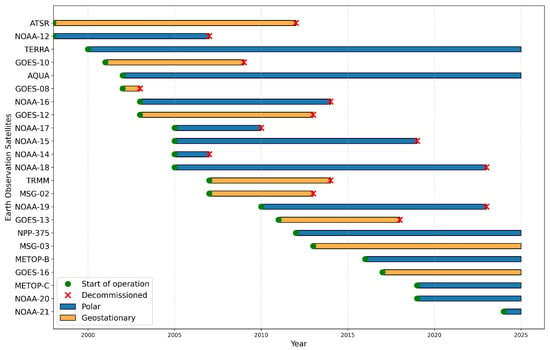
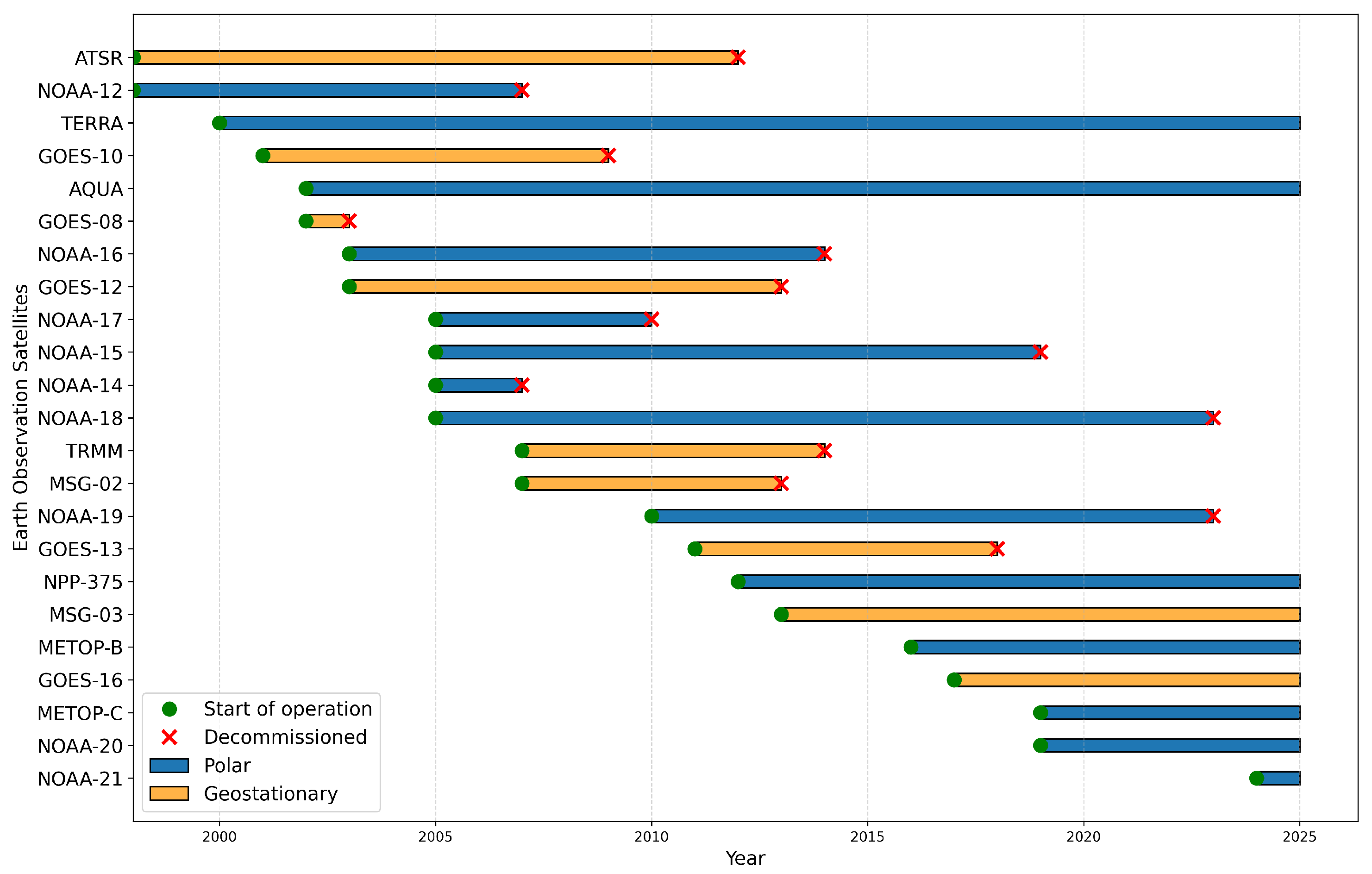
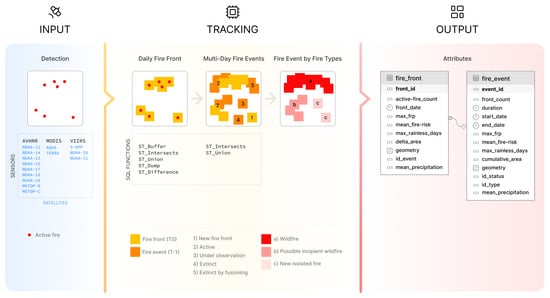
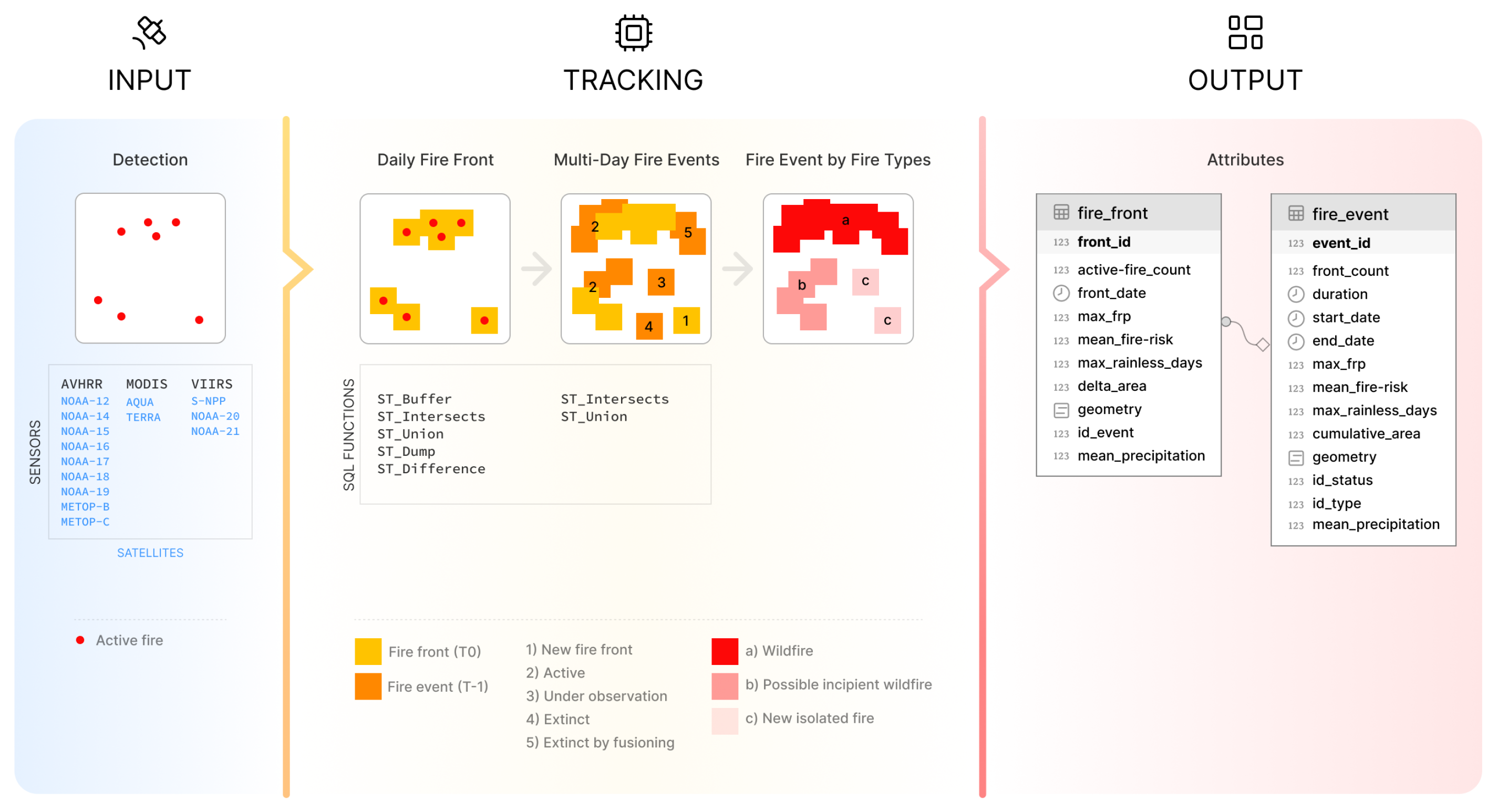
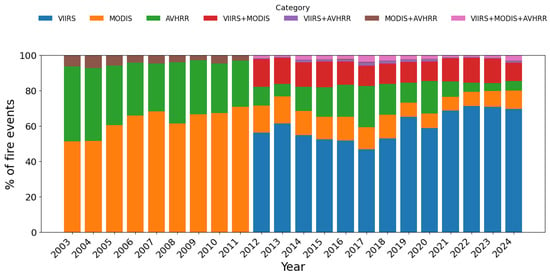
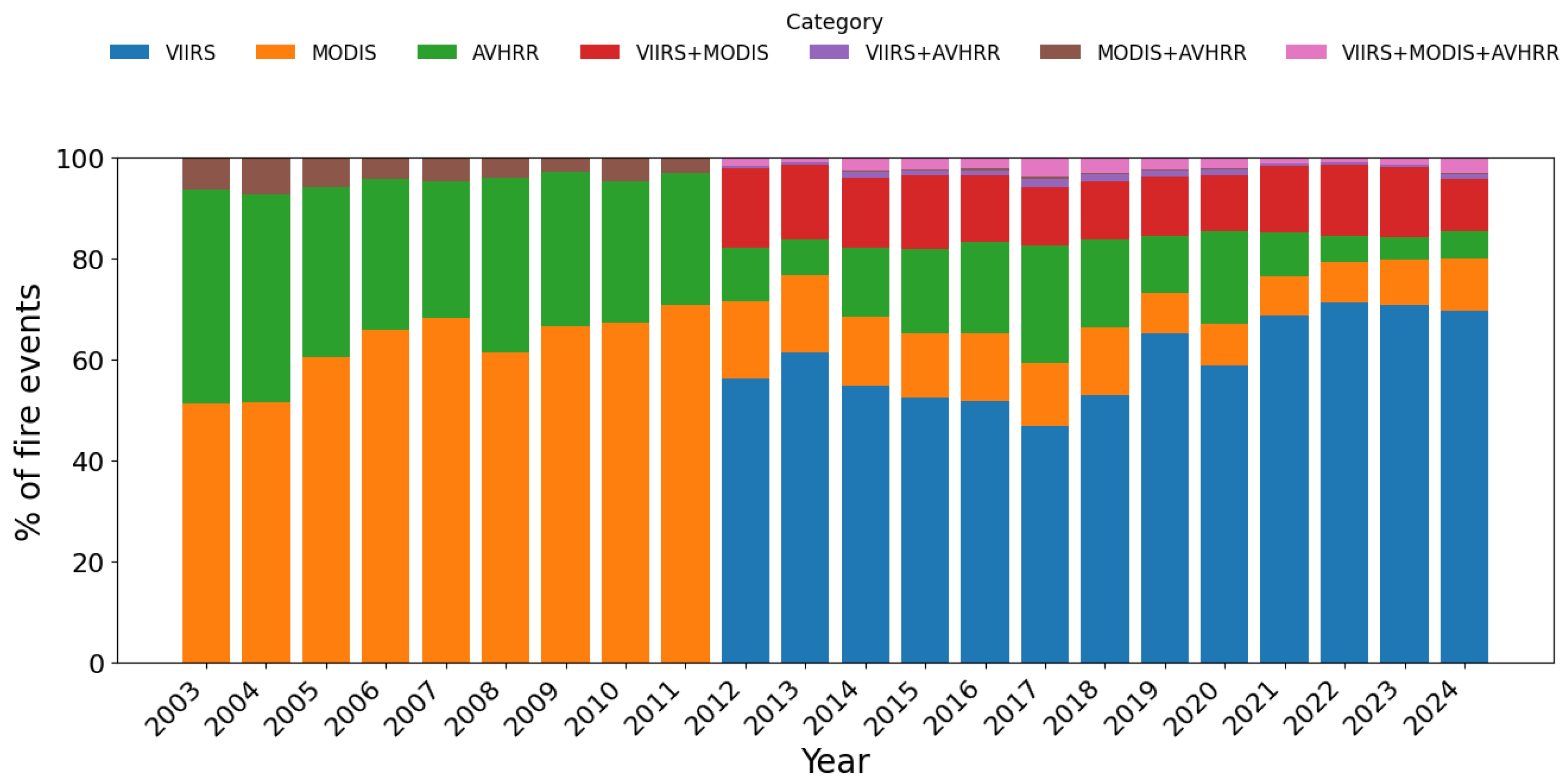
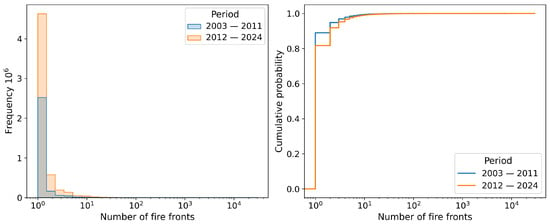
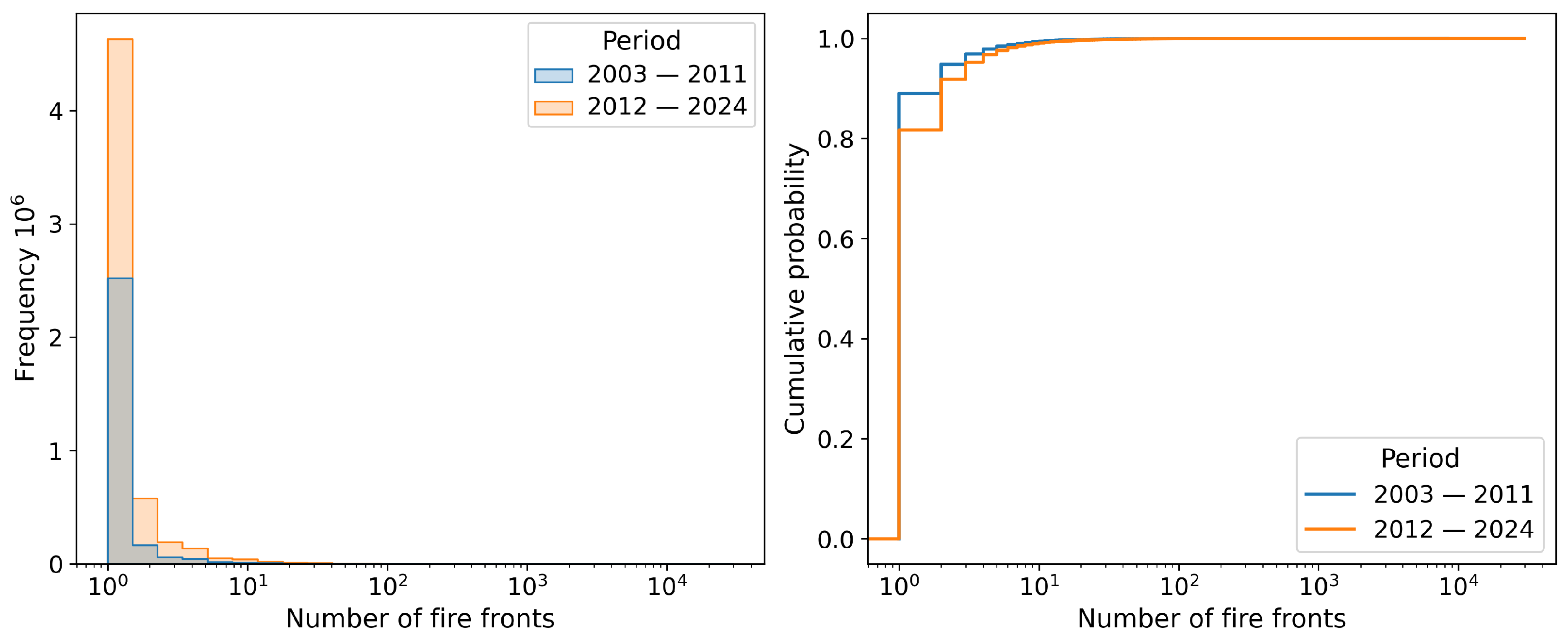
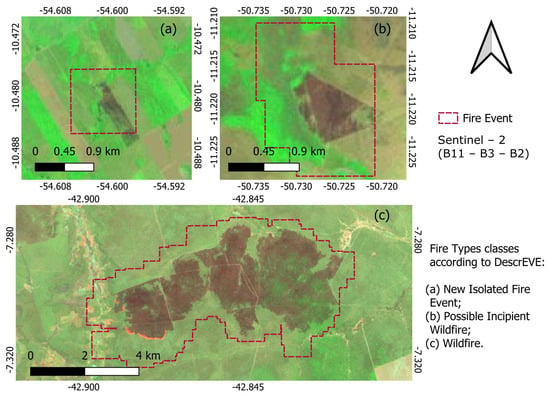
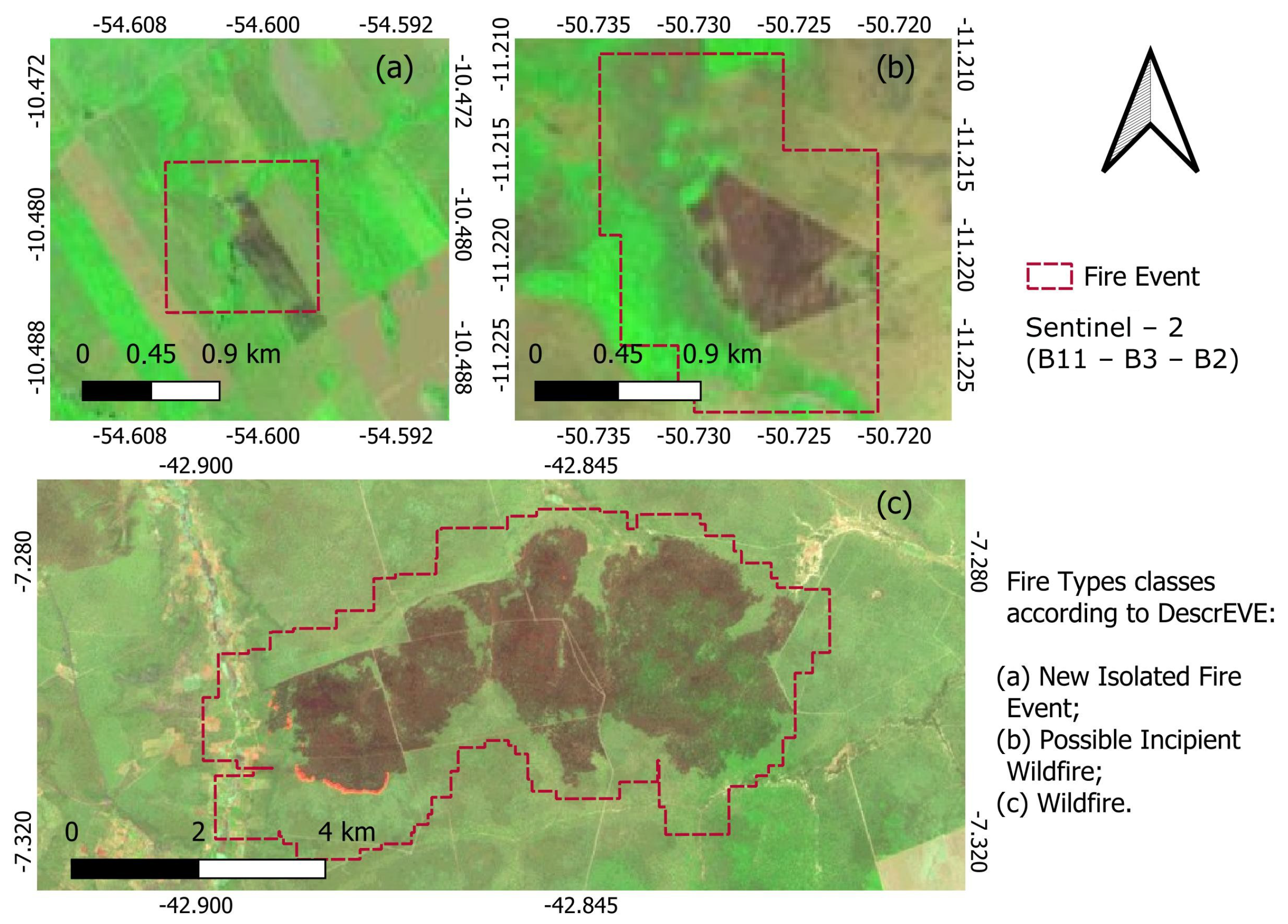
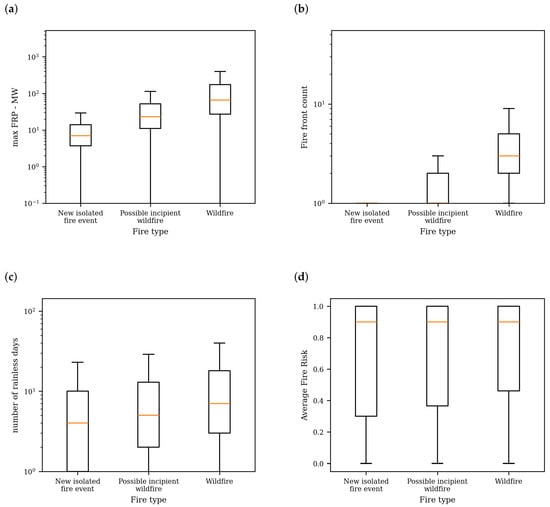
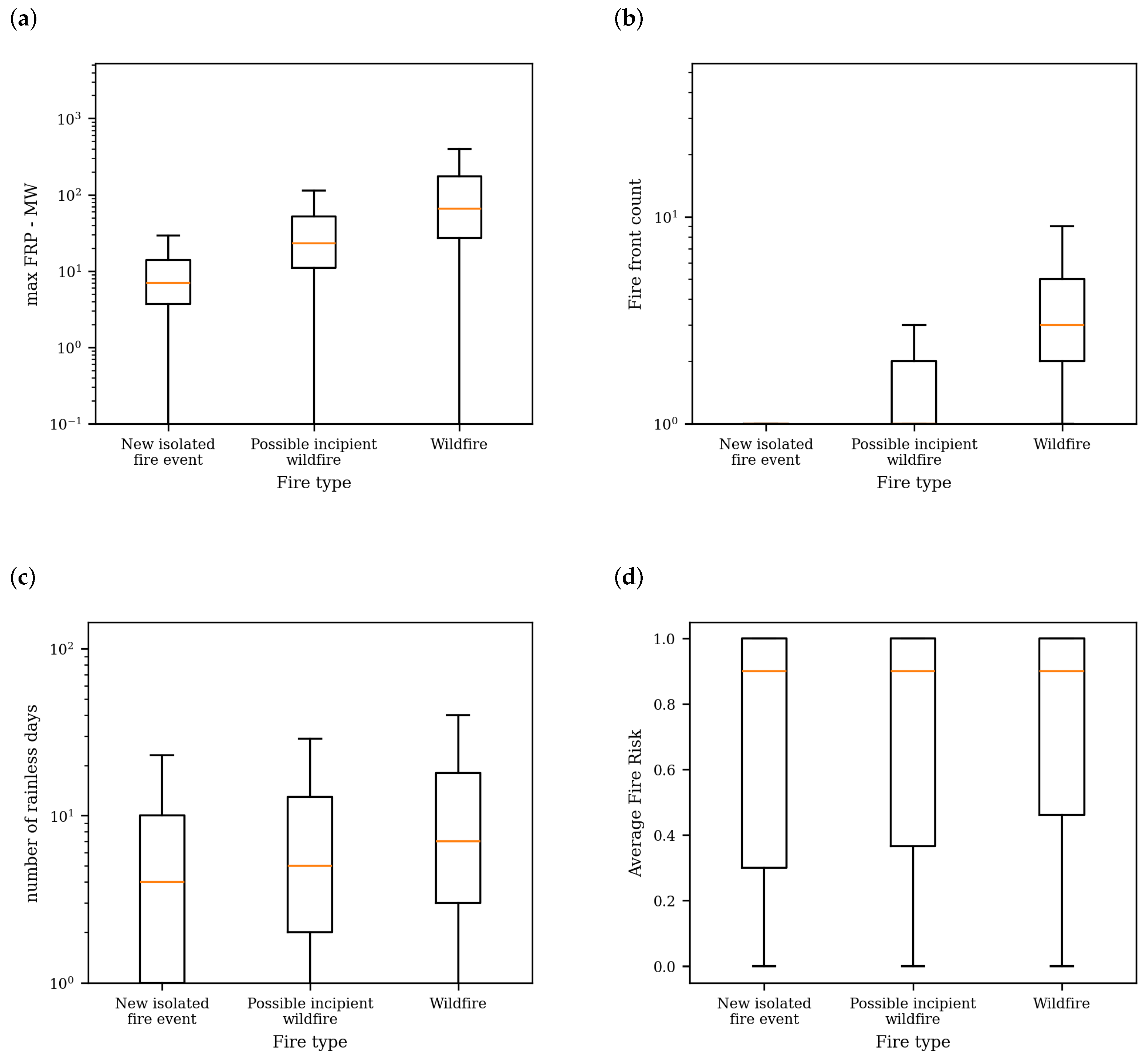
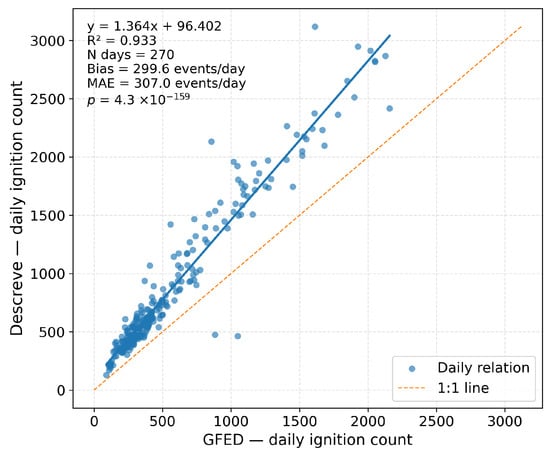
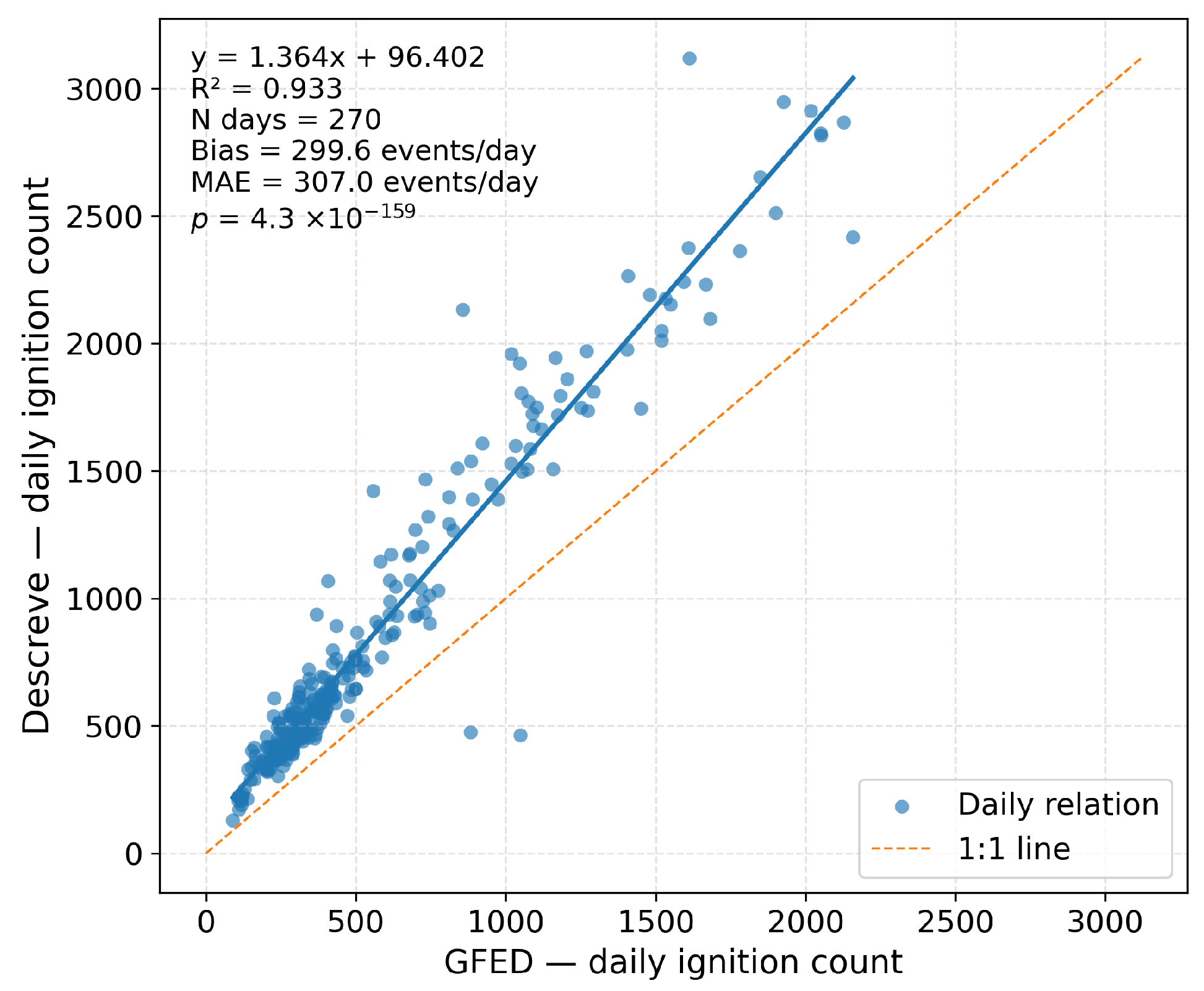
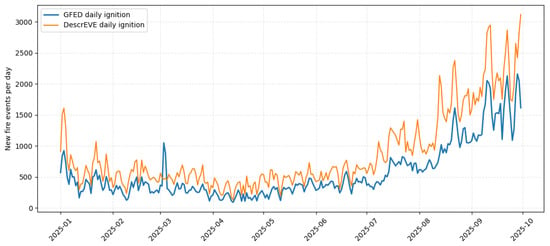
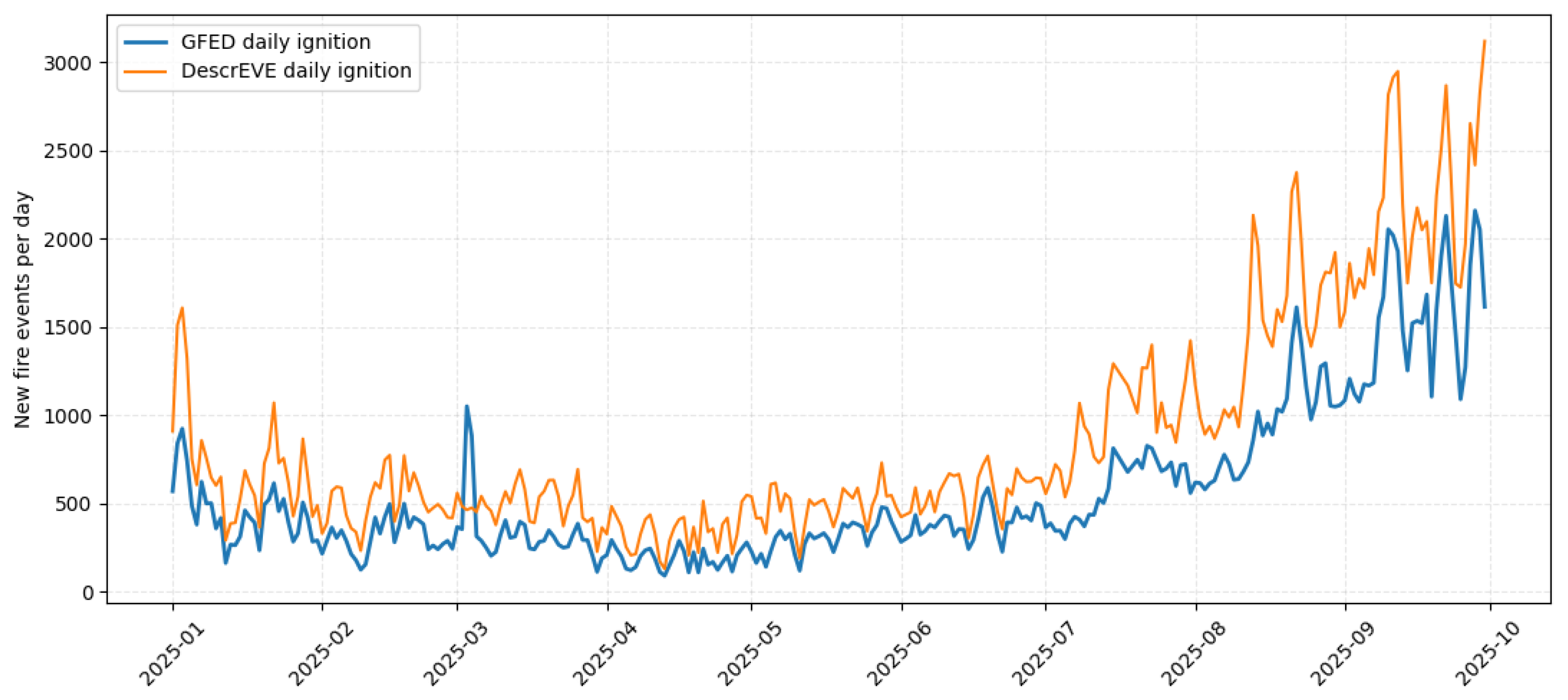
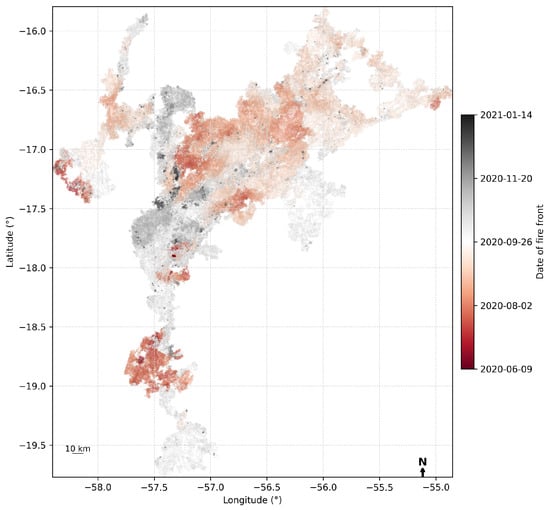
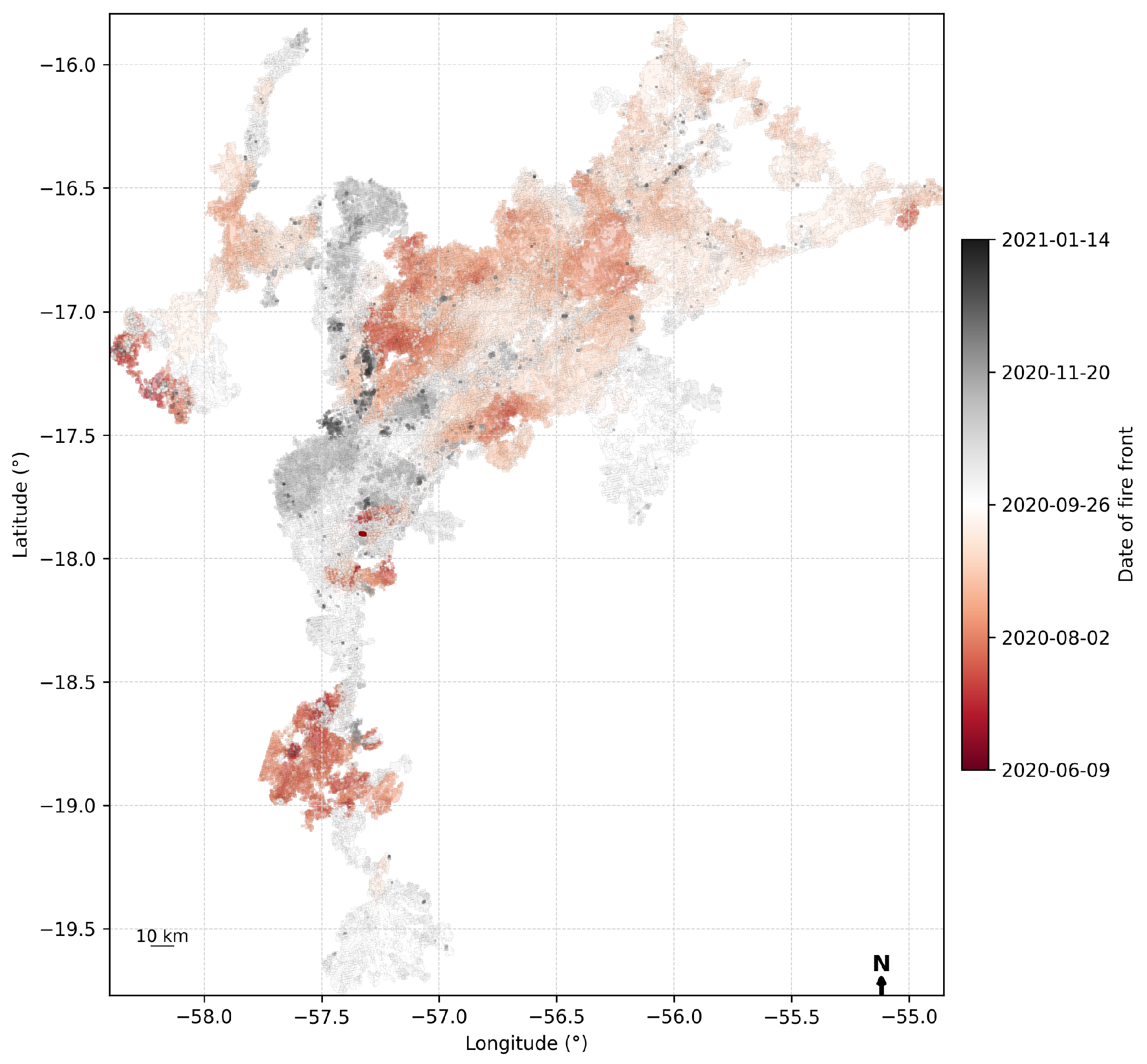
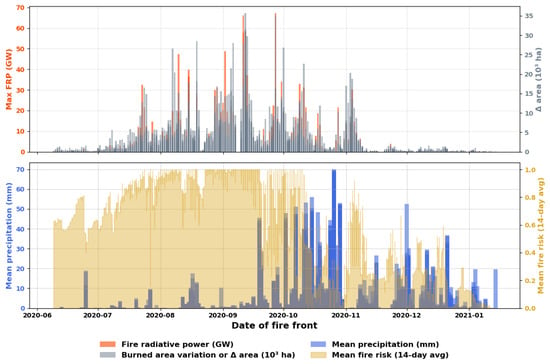
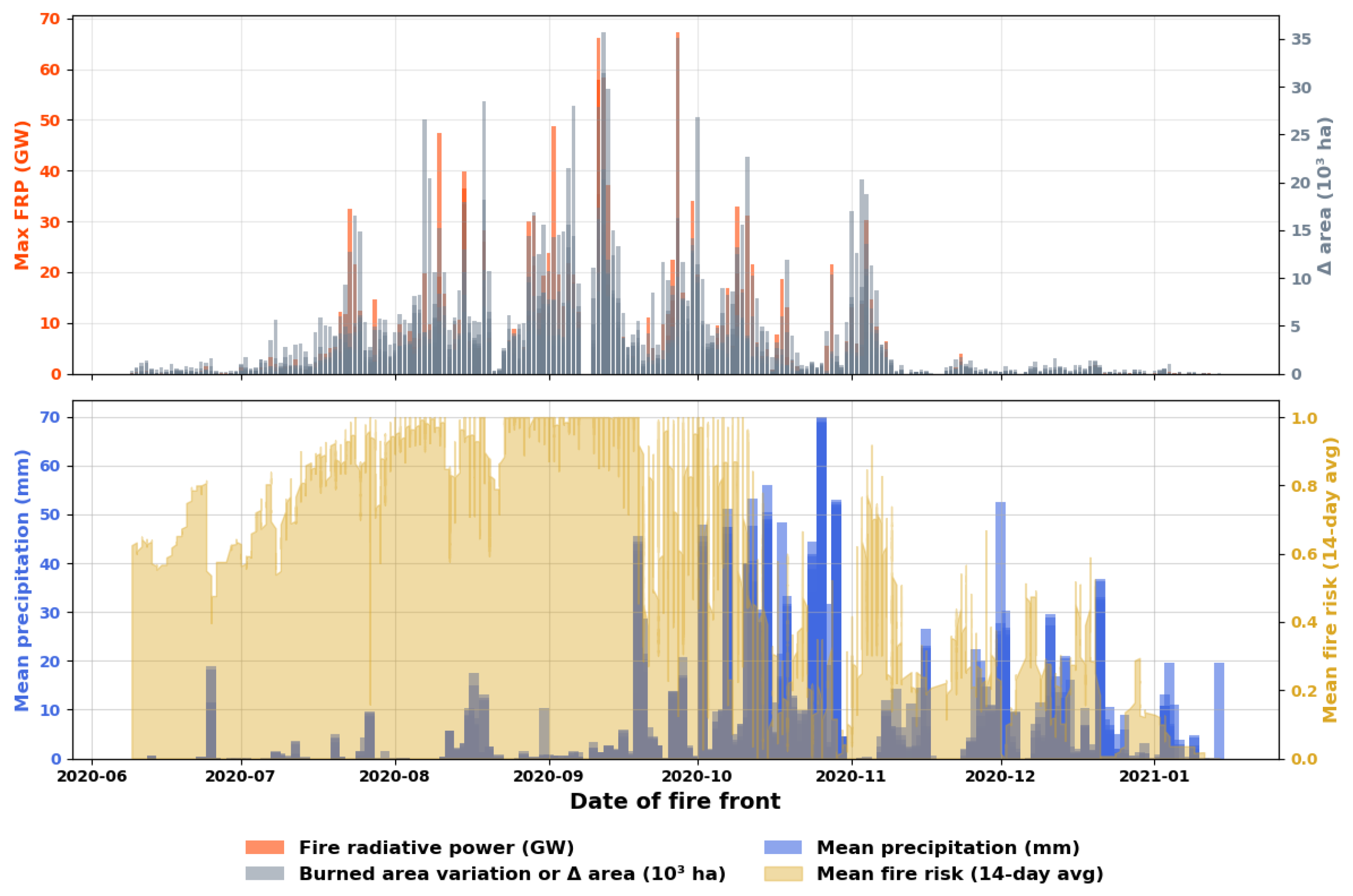

Disclaimer/Publisher’s Note: The statements, opinions and data contained in all publications are solely those of the individual author(s) and contributor(s) and not of MDPI and/or the editor(s). MDPI and/or the editor(s) disclaim responsibility for any injury to people or property resulting from any ideas, methods, instructions or products referred to in the content. |
© 2026 by the authors. Licensee MDPI, Basel, Switzerland. This article is an open access article distributed under the terms and conditions of the Creative Commons Attribution (CC BY) license.