1. Introduction
The detection and tracking of vessel targets on the sea surface represents a core requirement in fields such as marine environment monitoring, maritime traffic management, and maritime security, holding significant importance in both military and civilian applications [
1,
2,
3,
4]. High-Frequency Surface Wave Radar (HFSWR) utilizes the diffraction propagation characteristics of shortwave signals (3–30 MHz) along the Earth’s surface. With its unique advantages of over-the-horizon capability, wide coverage, and all-weather operation, HFSWR has become a key long-range detection asset for integrated and persistent sea–air surveillance and target awareness [
5]. Target detection using HFSWR generally relies on large receiving antenna arrays. However, challenges related to site selection, deployment, and maintenance have somewhat limited their widespread adoption. As a result, the development of compact HFSWR systems and corresponding target detection technologies has become an important research direction in recent years [
6]. Compact HFSWR systems require less space, offer flexible deployment, and are easier to maintain. They can be installed on islands or vessel platforms, thereby extending their application scope [
7]. Nevertheless, due to the reduced aperture of the receiving antenna array and lower transmission power, compact HFSWR systems exhibit decreased resolution in estimating target azimuth. This poses considerable challenges for target detection and tracking, particularly in environments with strong clutter and multiple targets.
In the field of target tracking, the core components include target detection, data association, and trajectory management [
8,
9]. Target detection aims to identify potential targets from radar echoes [
10,
11,
12,
13]. Meanwhile, high-frequency radar network systems have drawn attention due to their wide coverage and high probability of trajectory detection. Data association is a critical step in multi-target tracking, serving to match target observations obtained at different times with existing target trajectories [
14]. For instance, when multiple target trajectories are in close proximity or intersect, traditional methods—which rely solely on target position information for data association—are prone to causing track merging or even incorrect tracking [
15]. Trajectory management is responsible for maintaining and updating the motion trajectories of targets, ensuring the continuity and accuracy of tracking [
16]. In complex marine environments, factors such as sea clutter, ionospheric interference, and intersecting targets pose significant challenges in this field. Effectively resolving the data association problem for multiple targets in such complex backgrounds is essential; failure to do so would directly impact the overall development and practical effectiveness of radar target detection and tracking technology.
Current research on HFSWR data association techniques can be categorized into three types: deterministic association, probabilistic association, and learning-based methods [
17]. Deterministic association methods typically rely on fixed distance metrics or association cost matrices to identify optimal matches between measurements and targets. Common algorithms include Nearest Neighbor Data Association (NNDA) [
18,
19], Global Nearest Neighbor (GNN) [
20], and Multiple Hypothesis Tracking (MHT) [
21]. Some optimization algorithms constructs a cost matrix and employs methods such as the Hungarian algorithm and Jonker-Volgenant-Castanon (JVC) to solve for the globally optimal assignment [
22]. These methods are prone to false associations in dense target scenarios and are sensitive to measurement errors. Probabilistic association methods acknowledge the uncertainty in association by calculating the probabilistic weights of each measurement belonging to different tracks to update target states. Representative algorithms include Probabilistic Data Association (PDA) [
16], Joint Probabilistic Data Association (JPDA) [
23,
24], and Probabilistic Multiple Hypothesis Tracking (PMHT) [
25]. These methods can effectively manage clutter and track crossings [
26], but they also face significant computational burdens when tracking a large number of targets. Current research shows clear trends toward intelligent and integrated solutions. On one hand, learning-based methods, such as Graph Neural Networks (GNNs), Transformers [
27], and Long Short-Term Memory (LSTM) networks [
28], extract deep features in a data-driven manner to improve association discrimination. However, their reliance on annotated data, limited interpretability, generalization risks in unseen scenarios, and high computational costs pose challenges for practical application in radar tracking. On the other hand, multi-sensor fusion techniques [
29,
30] and feature-assisted point-to-track association methods [
31,
32,
33] have emerged as key approaches to enhance system robustness, effectively mitigating track discontinuities caused by signal occlusion. However, due to the randomness of moving targets on the sea surface and fluctuations in clutter echo power, the enhancement and stability of tracking performance provided by feature-assisted methods are limited.
In summary, to address the data association problem in multi-target tracking, researchers domestically and internationally have proposed various methods in the field of data association. The core idea is to solve the detection plot-to-track assignment problem by calculating the association cost or probability between detection plots and tracks. However, when HFSWR is applied to maritime target tracking scenarios, traditional association methods face severe challenges. Firstly, the issue of target maneuverability and track intersection: vessel navigation in coastal waters is complex, with frequent track crossings and parallel movements. Association methods relying solely on kinematic spatial features struggle to distinguish between different targets with similar motion states. Secondly, in multi-target scenarios, association competition between tracks is easily triggered, leading to track fragmentation and false tracking. Thirdly, in areas with strong background noise such as sea clutter interference and radio frequency interference, target spectral points are easily submerged in the clutter background, resulting in missing target plots in the measurement data and consequently causing track breakage. The aforementioned challenges collectively lead to poor performance of existing methods in track maintenance.
To address these challenges, this paper focuses on improving the data association process and proposes a multi-feature fusion adaptive association method. This method not only utilizes the kinematic features of the target but also effectively integrates them with the distribution characteristics of the track, constructing a more discriminative comprehensive association metric. Specifically, when the tracks of two targets are close, their historical heading and maneuver characteristics become key features for distinguishing them. The algorithm first integrates the directional cosine features and kinematic features to construct an improved association gate suitable for targets in uniform linear motion. For multiple plots falling within the association gate, the algorithm calculates the similarity between the plot and the track by constructing a comprehensive cost function. This function effectively fuses the great-circle distance, which characterizes the spatial position of the target, and the Mahalanobis distance, which characterizes the relationship between the plot and the track distribution. An adaptive weighting strategy is employed at different stages of the track to select the most similar plot for association, thereby enhancing the robustness and accuracy of the association method, suppressing track fragmentation and false tracking, and maintaining track continuity and stability. Finally, experiments were conducted using measured data to validate the effectiveness of the proposed method.
2. Materials and Methods
2.1. Selection of Target State Parameters
When compact HFSWR relies solely on range and azimuth as target state parameters for data association, significant limitations arise. The reduced aperture of its receiving antenna array leads to lower spatial resolution in target detection. In areas with densely clustered plots, such as busy harbor regions where multiple vessels are present, the range and azimuth parameters of numerous targets may be very similar. If data association is performed based only on these two parameters, misassociation is likely to occur, making it difficult to accurately distinguish between different target vessels and resulting in deviations in tracking performance.
To enhance the characterization capability for targets, this paper incorporates Doppler velocity along with range and azimuth as the spatial state parameters of a target. Compact HFSWR systems often employ a relatively long integration time when detecting maritime vessel targets, which enables the acquisition of high-resolution Doppler velocity. Since Doppler velocity contains information about the target’s radial speed, including it as part of the target state parameters provides additional dimensional information for data association. When two vessels are close in range and azimuth, their Doppler velocities are likely to differ. By incorporating all three parameters, different targets can be distinguished more accurately, thereby improving the accuracy of data association. Therefore, in this paper, a target measurement plot obtained by the radar at time is denoted as , where represents the Doppler velocity, range, azimuth, longitude, and latitude of the target at time k, indicates a transpose operation, treat as the target point and trace the great circle distance to the radar station, the longitude and latitude of the target point trace can be calculated using the spherical distance formula. The components of the state parameters will collectively contribute to the design of the associated wave gate and the multi-feature fusion section. The and components within the state parameters will be transformed into a Cartesian coordinate system for use in state estimation via Kalman filtering. Assume that a given track can be represented by a set of N successfully associated point traces, .
2.2. Kalman Filter Configuration
This paper employs a Kalman filter based on the uniform linear motion model for trajectory state estimation and prediction. The target state vector is defined as , with the radar as the coordinate origin. Here, and represent the position coordinates of the target in the east and north directions, respectively, obtained by transforming the state parameters and into a Cartesian coordinate system. and denote velocity components in the corresponding directions. The initial state vector can be calculated by transforming the state parameters from the first two observation points onto the Cartesian coordinate system, while velocities and are obtained indirectly through state estimation. The state transition matrix and measurement matrix follow the standard uniform motion model form.
Process noise covariance characterizes acceleration disturbances in moving targets, such as vessel maneuvers and ocean current effects. Assuming acceleration disturbances in two directions are mutually independent and follow a zero-mean Gaussian distribution with standard deviation , this value is determined by analyzing residuals from historical track data and incorporating empirical observations to reflect the random disturbance level of vessel motion in actual marine environments. Assuming the acceleration disturbance follows a white noise acceleration model, and considering the radar data update interval T = 300 s, setting adequately reflects the prediction uncertainty associated with vessel maneuvering characteristics. The process noise covariance matrix is derived accordingly.
The measurement noise covariance characterizes the measurement error of the radar system in Cartesian coordinates, based on the radar system’s measurement error specifications. Assuming the range measurement errors for the east and north directions are independent, with standard deviations and respectively, and considering that the standard deviation of range measurement error for compact HFSWRs is approximately 1 to 1.5 km, and are set to 1000 m.
The filter recursion follows the standard predict-update process. The initial state is estimated from the differential between the first two measurement points of the trajectory, with the initial covariance set as a diagonal matrix reflecting significant initial uncertainty. During data association, the filter provides smoothed trajectory states for direction cosine calculations (see
Section 2.3) and moderately supplies predicted states during missing measurements to maintain trajectory continuity.
2.3. Association Gates and Minimum Cost Function
When constructing the minimum association cost function, incorporating the relationship between plots and trajectories can improve the accuracy of the association algorithm. For tracking vessels in transoceanic navigation, the great-circle distance enables relatively precise calculation of the distance between ships [
34]. The Mahalanobis distance, which measures the distance between a plot and the distribution of a trajectory, fully considers the dispersion of the trajectory data and the correlations among variables. In maritime target tracking, different vessel trajectories exhibit distinct dispersion characteristics and inter-variable correlations. The Mahalanobis distance can leverage these characteristics to more accurately evaluate the similarity between a plot and a trajectory [
35].
The areas monitored by high-frequency radar are primarily open and offshore seas, where vessel trajectories mostly exhibit straight-line motion. To evaluate the consistency between candidate measurement points and trajectory movement directions, this paper introduces direction cosine as a correlation gate screening feature. Multiple methods exist for calculating the direction of a trajectory’s current motion. For instance, the direction can be determined using the first two points of the trajectory, or by employing the velocity direction estimated via the Kalman filter. This paper adopts the velocity direction estimated by a Kalman filter based on the trajectory. We will compare and analyze these various velocity direction selection methods in the
Section 3. At time
k, the trajectory is tracked to the latest point
. The state vector estimated by the Kalman filter at time
k is
. The current direction of motion along the trajectory can be represented by the velocity vector
. At time
k + 1, there exists an arbitrary candidate measurement point
. The vector
indicates the direction from the latest trajectory point to the candidate point. To assess the continuity of the motion direction, we compute the cosine value of the angle
between vectors
and
. This angle
represents the deviation of the candidate point relative to the trajectory’s motion direction. Thus, the direction cosine direct of candidate point
in relation to this trajectory track can be expressed as follows:
When the target maintains uniform linear motion and lies on the extension line of , , and . When the direction of motion changes, increases and decreases. By setting the threshold direct gate, candidate points that deviate excessively from the historical trajectory direction can be filtered out, thereby enhancing the accuracy of the association.
Assuming that at time
k, the Kalman filter method tracks M trajectories, for any given track
, use the uniform linear motion model to predict its Doppler velocity
, distance
, and azimuth
at time k + 1. Centered on the predicted state, establish a 4-dimensional correlation wave gate and use Equations (2)–(5) to filter the measurement data acquired at time k + 1.
Here,
,
,
, and
represent the Doppler velocity threshold, distance threshold, azimuth threshold, and direction cosine threshold for the association gate, respectively. For any measurement point trace
falling within the wave door at time
k + 1, calculate its similarity with the track using Equation (6).
Here,
a and
b are adaptive feature weighting factors, while
and
represent the distance metrics between the measurement point trace
and
in terms of great circle distance and Mahalanobis distance, respectively, normalized using the maximum value within the threshold. Since this paper employs latitude and longitude to denote positional information, the curvature of the Earth must be considered in the field of over-the-horizon maritime target detection. The great circle distance mentioned herein is actually calculated using the semi-cosine formula to represent the distance between two latitude and longitude coordinates, derived from Equations (7) and (8).
Here, represents the Earth’s radius, while and denote the longitude and latitude corresponding to the terminal points of the trajectory. denotes the distance from the measurement point trace to the end of the trajectory along the great circle. denotes the mean value of all points along the trajectory in both longitude and latitude. denotes the covariance matrix of the latitude and longitude distributions of all points in the track, and denotes the inverse of the matrix. It is evident that the larger the value of , the higher the similarity between the measurement track and the target track, and the greater the probability that the measurement track originates from the target corresponding to that track.
2.4. Association Allocation Strategy Based on Adaptive Weights
Suppose multiple target trajectories are obtained during tracking, and multiple measurement traces exist at a given moment. These measurement traces may simultaneously fall within the association gate of multiple trajectories. For such multi-target tracking scenarios involving correlation competition, adopting a priority matching strategy based on trajectory length—by establishing an empirical trust mechanism—can enhance the stability of the tracking system. This strategy assigns higher matching priority to longer trajectories, granting them an advantage in the competition for measurement trace allocation.
During the trajectory generation phase, emphasis is placed on maintaining continuity in target motion. For multiple measurement point traces falling within the association gate, the initial phase prioritizes the large-circle distance metric as the dominant correlation decision factor. The adaptive weighting factors in Equation (6) enhances the stability of the trajectory initiation.
Once the trajectory length exceeds a certain threshold , it indicates that the trajectory has been preliminarily established. The covariance matrix can then be used to describe the dispersion of the trajectory distribution data itself and the correlations between variables. At this point, introducing the Mahalanobis distance metric allows for the calculation of the distance between each measurement point and the trajectory distribution, further characterizing the correlation between the measurement trace and the trajectory. The adaptive weighting factors corresponding to Equation (6) enhances the accuracy during the trajectory maintenance process.
For targets lacking measurement traces in the association gate, this may indicate that the target spectrum points are buried in background noise or have been preempted by higher-priority tracks. In such cases, Kalman prediction is introduced to add predicted positions to the track sequence while recording the prediction count. When the prediction count becomes excessive yet still fails to match new measurement traces, the track is declared terminated. In most cases, targets may lose measurement points during detection due to transient interference or brief target clustering. After accumulating data over several tracking sessions, target measurement points will reappear. To address non-persistent random interference signals, Kalman prediction effectively maintains the trajectory.
In summary, multi-target plot-to-track association comprises three closely interconnected phases. The workflow of the proposed adaptive weight association method based on multi-feature fusion is outlined below:
Phase 1: Calculate the similarity between candidate measurement point and using Equation (6) based on multiple features. Select tracks with maximum similarity for association. Dynamically adjust adaptive weight factors to complete plot-to-track association.
Phase 2: For associated tracks lacking points within the association gate, Kalman prediction maintains track state. State is estimated recursively via Kalman filtering, with a maximum prediction iteration threshold set according to the track motion model.
Phase 3: Track state is updated and managed. Update the trajectory status of the successful association and incorporate the new track points into . Unassociated point traces are initialized as new trajectories. When the track length , the track is confirmed as valid, and the total number of track is updated.
2.5. Evaluation Metrics
We evaluate the estimated tracks derived from Automatic Identification System (AIS) actual tracks and radar tracking algorithms using the following metrics based on the track data.
2.5.1. ID Switches (IDSW)
An ID switch occurs when the tracking ID of a real target changes between frames. We compute IDSW through the following steps: Perform a global match between the estimated trajectory and the real trajectory. For each matched real trajectory, check its corresponding estimated trajectory ID. If the estimated trajectory ID matched in the current frame differs from that in the previous frame, it is counted as an ID switch.
2.5.2. Fragmentation Count (Frag)
The number of times a tracked trajectory of a real target is interrupted, i.e., how many segments the estimated trajectory corresponding to a real target is divided into. We calculate Frag through the following steps: First, perform global matching to obtain the estimated trajectory (which may consist of non-contiguous segments) for each real target. Then, count the number of segments tracked for each real target.
2.5.3. Optimal Sub-Pattern Assignment (OSPA)
The OSPA calculates the overall difference between the true target set and the estimated target set from a set-theoretic perspective, explicitly distinguishing between positioning error and cardinality error.
For a given frame, let the set of true points be
and the set of estimated points be
. Finding the optimal assignment: When m and n are unequal, it is permissible to match some true points or estimated points with the empty set. An optimal assignment is sought that minimizes the total cost of all matching pairs
. The cost is typically defined as the Euclidean distance between two points (truncated at a parameter c). If
, the OSPA distance between
and
is defined as Equation (9):
Here, , () is the cut-off factor, reflecting the relative weight assigned to the penalty coefficients for cardinality error and positioning error. () is the order which determines the sensitivity to outliers. denotes all the arrangement collection when .
2.5.4. ID F1 Score (IDF1)
IDF1 is the identity retention F1 score, based on the accuracy of identity matching across the entire time period. We calculate IDF1 through the following steps: Perform global matching to align the estimated trajectory with the true trajectory; Count the number of frames with correctly associated IDs between matched trajectory pairs; Let IDTP denote the number of correctly associated frames, IDFP denote the number of frames with incorrect IDs in the estimated trajectory (including false alarms and mismatches), and IDFN denote the number of unmatched frames in the true trajectory (misses). The IDF1 is defined as Equation (10):
3. Results
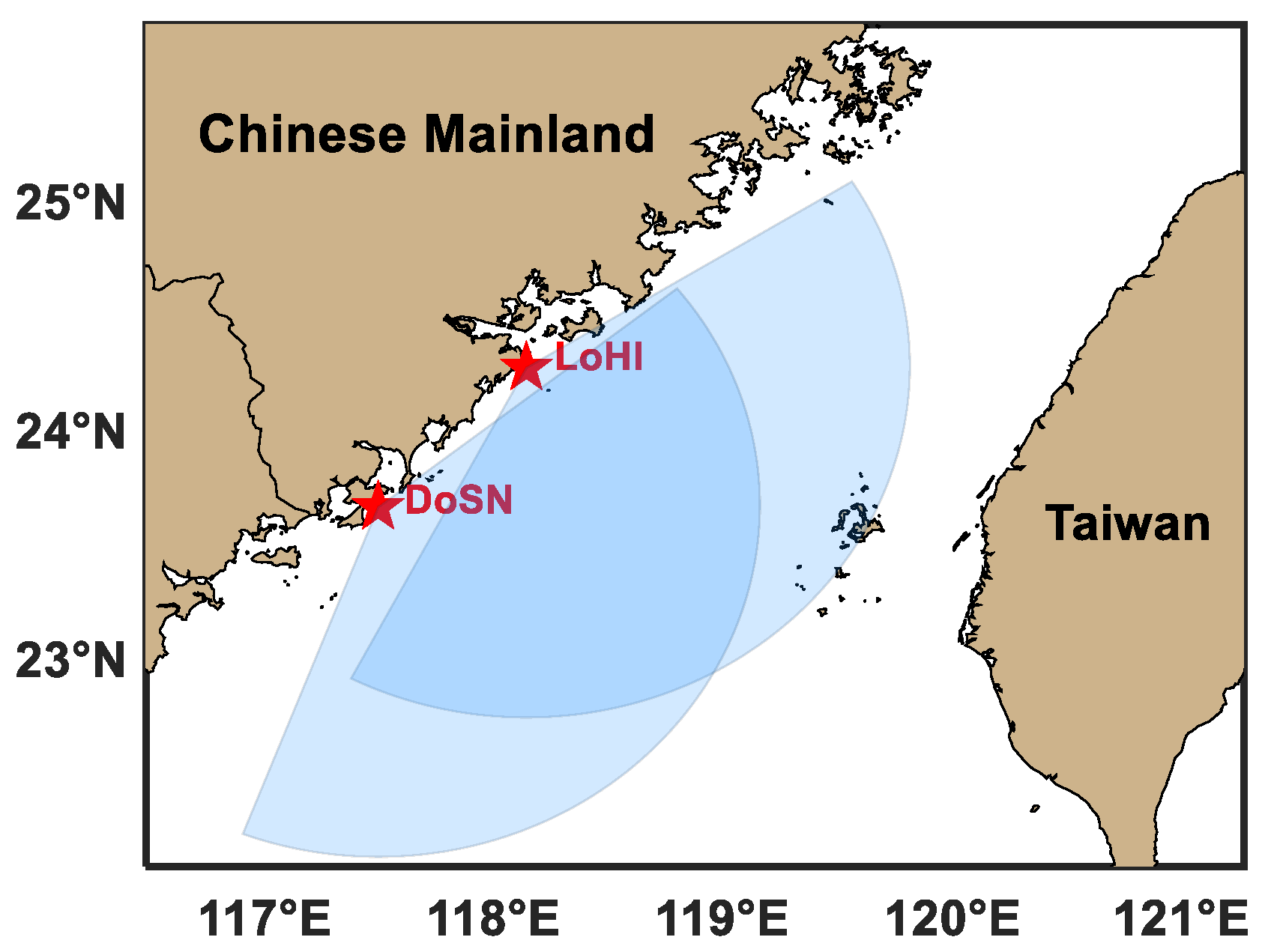
This study utilizes experimental data collected by the HFSWR system of Wuhan University from 17 to 20 December 2024, in the sea area of Fujian, China (
Figure 1). The radar system operates at a frequency of 4.68 MHz, employs a 4-transmit 8-receive MIMO array, and has an equivalent receiving aperture of 200 m. The angle between the normal of the receiving array and true north is 132.5° (clockwise direction is positive). In this paper, the Direction of Arrival (DOA) is defined as the clockwise angle between the incident direction of the target signal and the normal direction of the array. The radar accumulation cycle is 300 s. In the target detection module, beam-forming and high-resolution range estimation algorithms were employed to obtain detection plots. With Kalman filtering serving as the basic tracking method, the NNDA, PDA, and the proposed multi-feature adaptive association method (ESMaS) were applied, respectively, for plot-to-track association. The association results were evaluated using metrics such as track duration and association accuracy. This analysis was performed using MATLAB (v2021).
This paper also incorporates AIS data as a reference benchmark to validate the accuracy of radar-derived tracks. AIS data includes both static and dynamic information of vessels, including unique identity (MMSI), precise geographic location, course over ground, and speed over ground. Our AIS-radar correlation evaluation method is as follows: First, data preprocessing is performed by linearly interpolating AIS data to align its timestamps with radar data frames. Based on this alignment, matching is conducted using the correlation rules shown in
Table 1 by comparing key metrics such as time tolerance, position deviation, and speed consistency. For each radar track point, the nearest neighbor matching method is employed to find a matching object among AIS points that satisfy the spatiotemporal thresholds. This enables quantitative assessment and validation of radar track tracking performance.
3.1. Case Analysis
3.1.1. Case 1
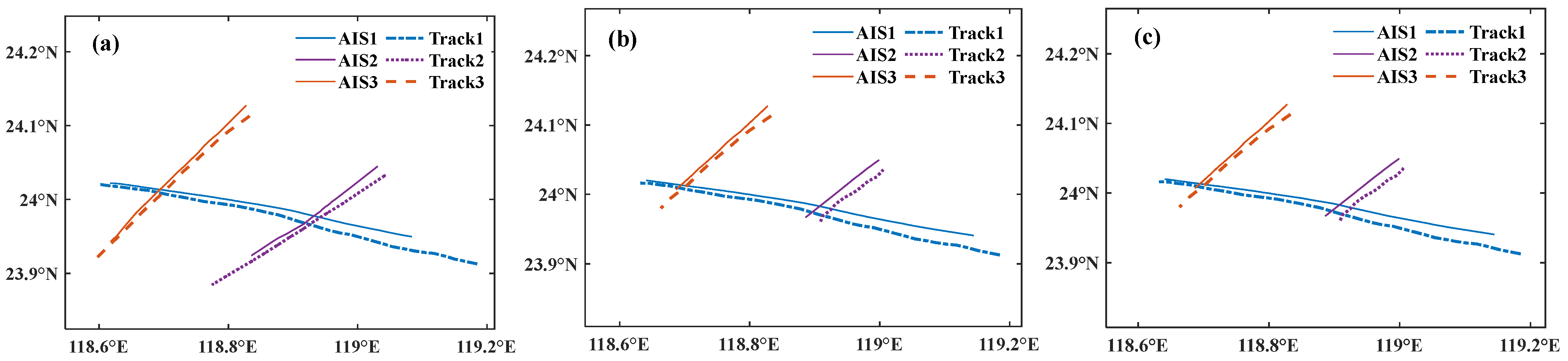
Case 1 involves three actual targets selected from the observation data of the Longhai radar station on 19 December 2024. The tracks of these three vessels were located near the normal direction of the array. Detailed tracking results and specific information of the individual targets are shown in
Figure 2 and
Table 2. A comparison of the tracking results in
Figure 2 shows that Vessel 1, initially located about 113.6 km from the radar station near the normal direction of the receiving array, and moving toward the radar station. During its voyage, it successively encountered Vessel 2 and Vessel 3, which were traveling from the northeast to the southwest. During the track crossing, the three targets were at similar distances, and different association algorithms produced different tracking outcomes: the ESMaS algorithm correctly distinguished each vessel in the crossing scenario and maintained stable tracks for all. Both the NNDA and PDA algorithms were able to continuously track Vessel 1 and produced long trajectories, but they exhibited track fragmentation in tracking Vessel 2 and Vessel 3. As shown in
Figure 2, both the NNDA and PDA were disrupted by Ship 1 during tracking of Ships 2 and 3, resulting in trajectory interruptions.
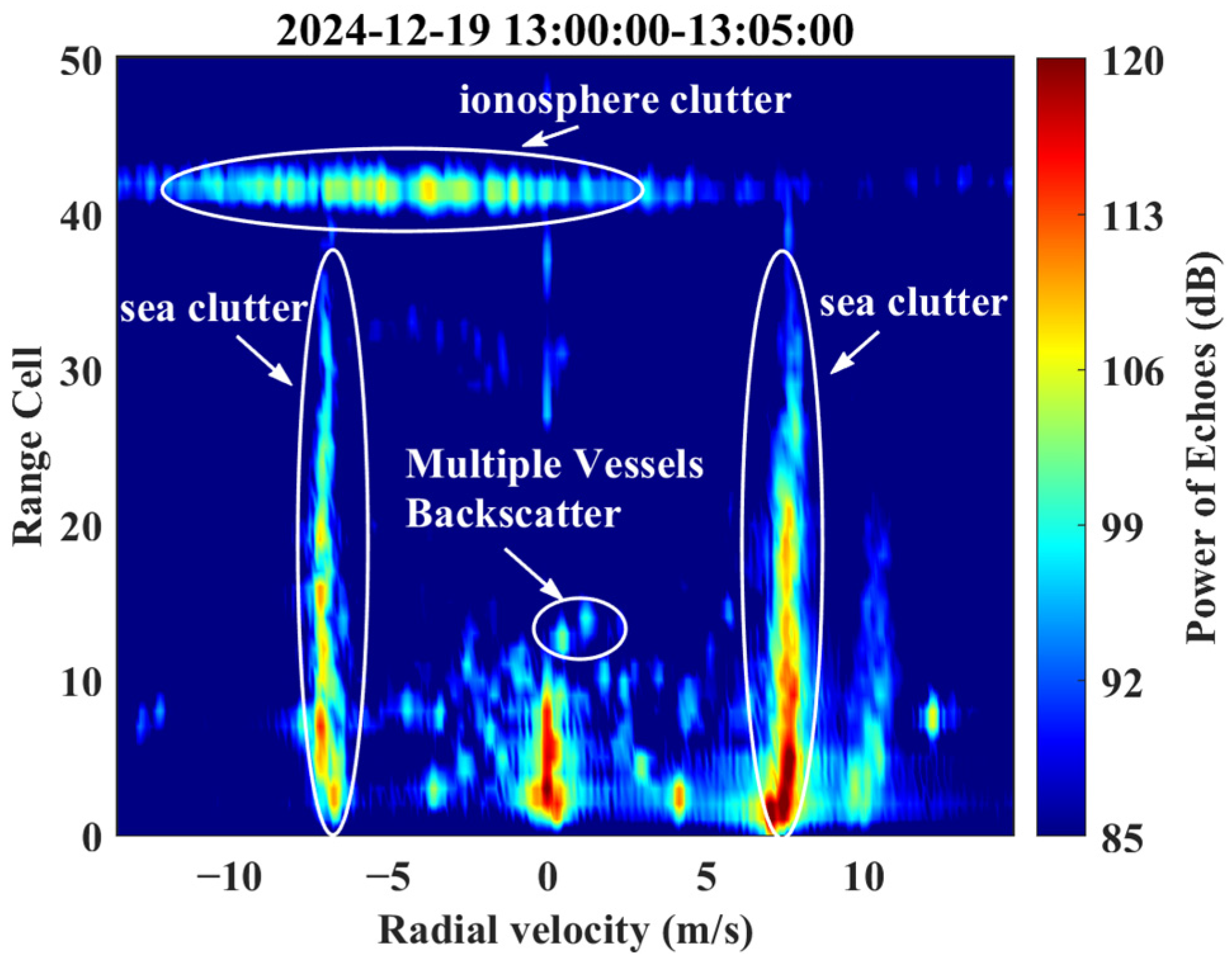
Figure 3 shows the RD spectrum of a radar accumulation cycle during the tracking process.
For the tracking results of Case 1, three track association methods were employed to identify associated AIS tracks. The error metrics of the tracking results are presented in
Table 3, which records the total tracking duration, mean distance error, root mean square error (RMSE) of distance, mean DOA error, and DOA RMSE for the three vessels using each association method. It is evident that the ESMaS method achieved the longest total tracking duration. An accuracy analysis was conducted on the tracking results obtained by the proposed method, examining distance and bearing errors for the 55 matched association points. As shown in
Figure 4, distance errors primarily distributed within 0–0.3 km, with a mean distance error of 0.12 km and distance RMSE of 0.23 km, with an average DOA error of 1.27° and DOA RMSE of 1.98°. This demonstrates that the proposed algorithm achieves both enhanced trajectory tracking continuity and high tracking accuracy.
3.1.2. Case 2
Case 2 involves two actual targets selected from the observation data of the Longhai radar station on 20 December 2024. The two vessels crossed paths at right angles, with their DOA azimuths relative to the array normal direction shown in
Figure 5 and
Table 4, which present the detailed tracking results and target information. A comparison of the tracking results in
Figure 5 reveals that Vessel 1 followed a linear trajectory moving from southeast to northwest, with an initial DOA azimuth of 8.8°. When comparing the tracking results of different association algorithms, it was found that both the NNDA and PDA methods mistakenly identified interference points from vessel 2 as the trajectory starting point during track initiation. These interference points were then associated with subsequent actual target tracks, forming a continuous trajectory that was misinterpreted as the vessel making a sharp turn. In contrast, the ESMaS method eliminated interference points with excessive azimuth deviation through the directional cosine features in the association gate. Vessel 1 moved in a straight line from southeast to northwest, with an initial arrival bearing of 8.8°. When tracking multiple targets simultaneously, multiple target measurement points appeared within the association gate. In this multi-target crossing scenario, the PDA method incorrectly associated vessel 2’s spectral points with vessel 1’s track, leading to track fragmentation. Meanwhile, the ESMaS algorithm, by comprehensively considering kinematic features, successfully maintained the tracking trajectory of both vessels.
For the tracking results of Case 2, three track association methods were employed to identify the associated AIS tracks. The error information of the tracking results is presented in
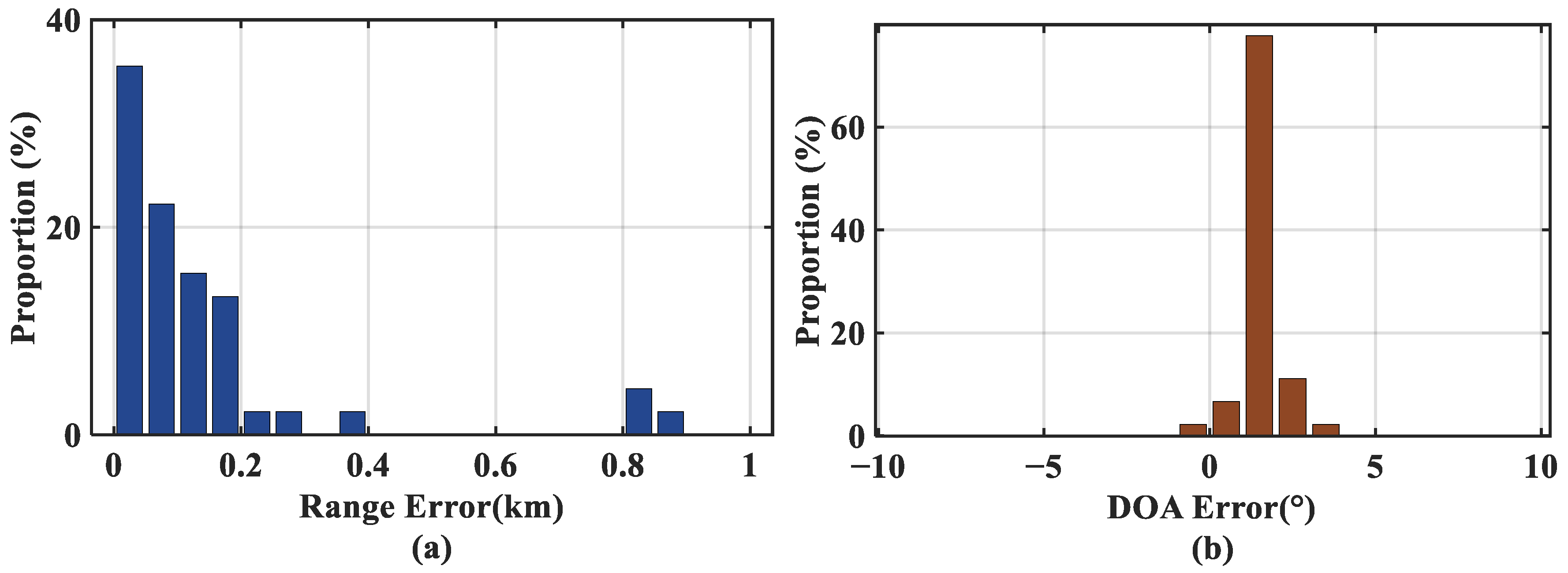
Table 5, which records the total tracking duration, mean distance error, RMSE of distance, mean DOA error, and RMSE of DOA for both vessels using the three association methods. Accuracy analysis was conducted on the trajectories obtained by the proposed method. Distance and DOA errors were analyzed for the 55 matched correlation points, as shown in
Figure 6. The distance errors primarily distributed within 0–0.2 km, with a mean distance error of 0.14 km and distance RMSE of 0.25 km, with an average DOA error of 1.70° and an DOA RMSE of 1.80°.
3.1.3. Case 3
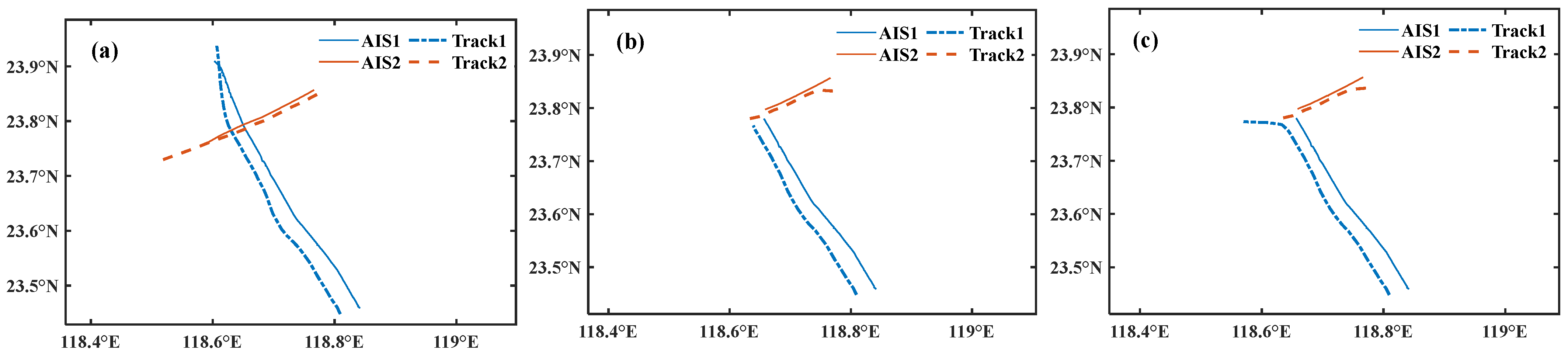
Case 3 involves two actual targets selected from the observation data of the Longhai radar station on 17 December 2024. The two vessels crossed paths during tracking. The DOA azimuths of the tracks relative to the array normal direction are shown in
Figure 7 and
Table 6, which provide detailed tracking results and target information. Vessel 1 originated 25.6 km from the radar station. Its track DOA relative to the array normal was −13.3°, heading eastward. During navigation, Vessel 1 was overtaken from the left front by Vessel 2. As shown by the orange solid line representing AIS data in
Figure 7, the course changes triggered by this overtaking maneuver caused both the PDA and NNDA algorithms to exhibit track fragmentation in the scenario. However, the complete tracking segment generated by the ESMaS algorithm effectively captured this overtaking event, with the trajectory segment highly consistent with the AIS data.
For the tracking results of Case 3, three track association methods were employed to identify the associated AIS tracks. The error information of the tracking results is presented in
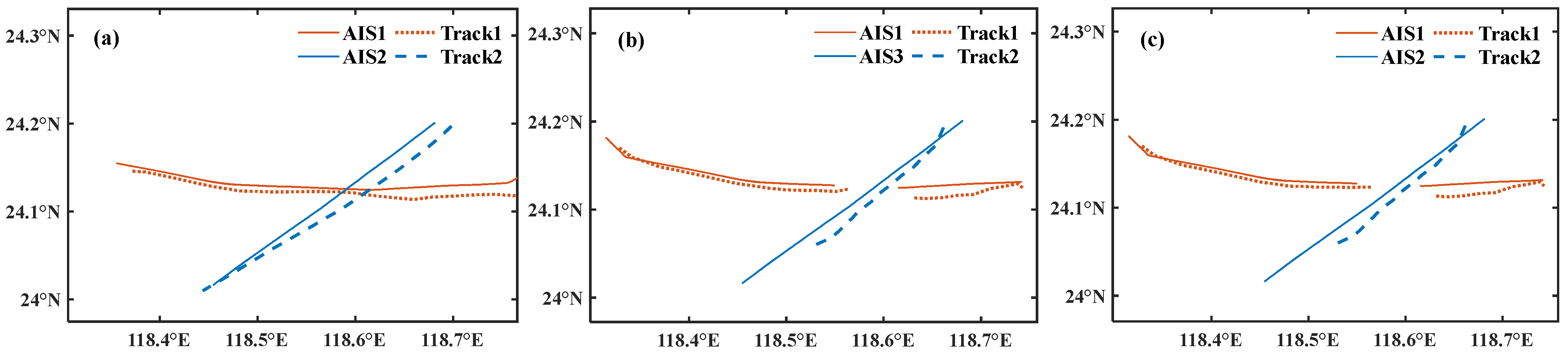
Table 7, which records the total tracking duration, mean distance error, RMSE of distance, mean DOA error, and RMSE of DOA for the two vessels using each association method. Accuracy analysis was conducted on the trajectories obtained by the proposed method. Distance and bearing errors were analyzed for the 44 matched correlation points, as shown in
Figure 8. Distance errors primarily distributed within 0–0.2 km, with a mean distance error of 0.05 km and distance RMSE of 0.11 km. with an average DOA error of 1.12° and DOA RMSE of 1.25°. This demonstrates that the proposed algorithm produces trajectories with small distance and azimuth errors, achieving both improved tracking continuity and high tracking accuracy.
3.2. Statistical Analysis
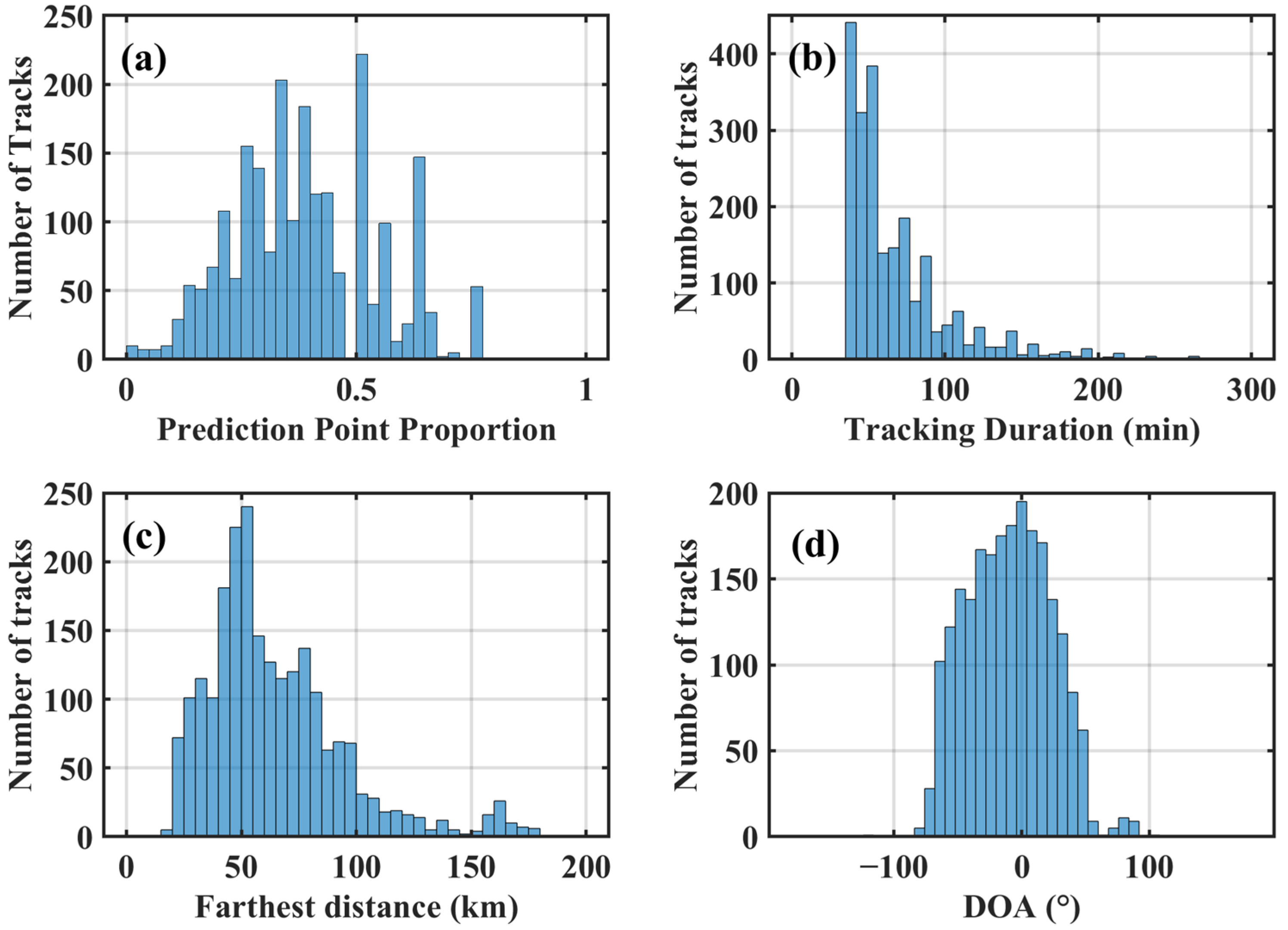
By comparing the tracking trajectories generated by the proposed algorithm at Longhai Station from 17 to 20 December 2024, with AIS data, a total of 1074 successfully associated trajectories were obtained. Among these, 965 trajectories matched the AIS data, yielding an association success rate of 89.9%. Statistical analysis was conducted across multiple dimensions for each track, including the proportion of predicted points, tracking duration, distance error distribution, and bearing error distribution. This analysis validated the detection metrics and performance of the radar system employing this method.
A statistical analysis was conducted on the proportion of predicted points to detected points in the associated trajectories, as shown in
Figure 9a. The association gate set by the proposed algorithm in this paper screens the detection points in each frame. If no detection points fall into the gate due to scenarios such as multi-target crossing or clutter interference, the Kalman prediction module is used for prediction, while the prediction counter is incremented by one. The trajectory is terminated when the prediction counter reaches 4. For trajectories maintained by the prediction module, if the target is successfully tracked again before the trajectory ends—meaning a detection point falls into the association gate—the prediction counter is reset to zero, and tracking continues. Finally, a statistical analysis is performed on the count sequence of the trajectory’s prediction counter. The proportion of predicted points is represented by the ratio of the number of non-zero elements in the counter sequence to the total length of the sequence. As can be seen from
Figure 9a, in the trajectory tracking results, the majority of trajectories have a predicted point proportion distributed between 0.3 and 0.6. This indicates that nearly half of the points in the detection results come from the prediction module, demonstrating the important role of the prediction module in trajectory tracking and maintenance.
A statistical analysis of the tracking duration for trajectories obtained by the proposed algorithm is shown in
Figure 9b. Most trajectories have durations distributed between 40 and 90 min. During the three-day experiment, nearly 100 trajectories were tracked for over 100 min, with the longest tracking duration reaching 285 min. The maximum detection range of the trajectories obtained by the proposed algorithm was statistically analyzed, as shown in
Figure 9c. The average detection range was 64.38 km, with most trajectories distributed between 30 km and 100 km. The system was able to detect vessel trajectories up to 176 km away, corresponding to ships navigating near the Penghu Archipelago. The azimuth distribution of the trajectories obtained by the proposed algorithm was statistically analyzed, as shown in
Figure 9d. The DOA of trajectories is concentrated in the range of −68° to 50°, exhibiting a normal distribution centered around the receiving array’s normal direction (i.e., 0° DOA). The array’s field of view (FOV) is close to ±90°. Such performance benefits from the omnidirectional array gain, as the array pattern is nearly isotropic. Combined with beamforming technology for directional detection, the system can cover a wide maritime area.
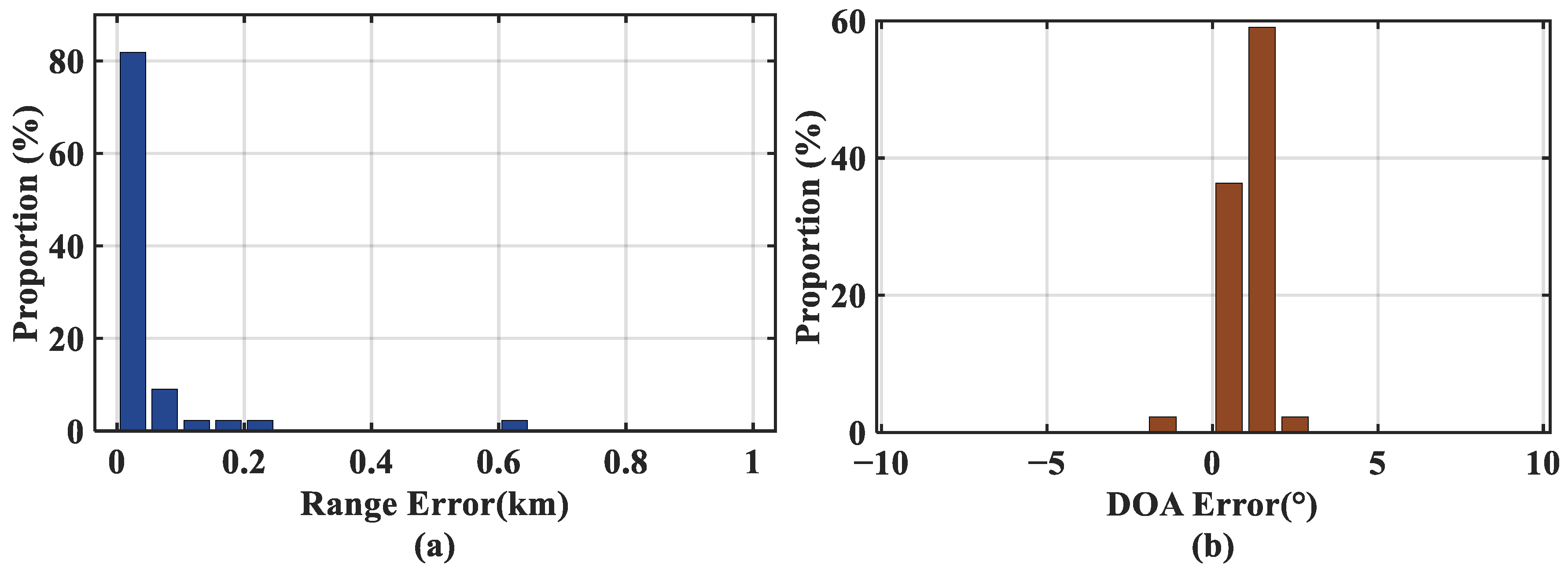
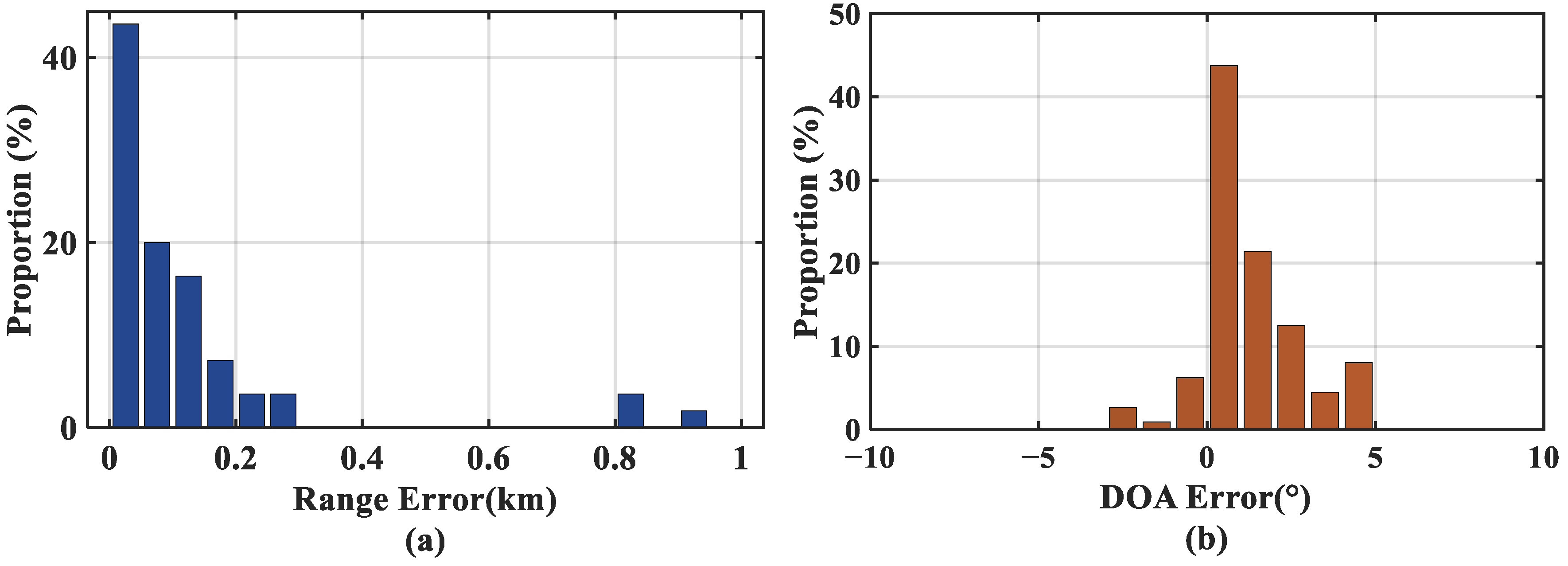
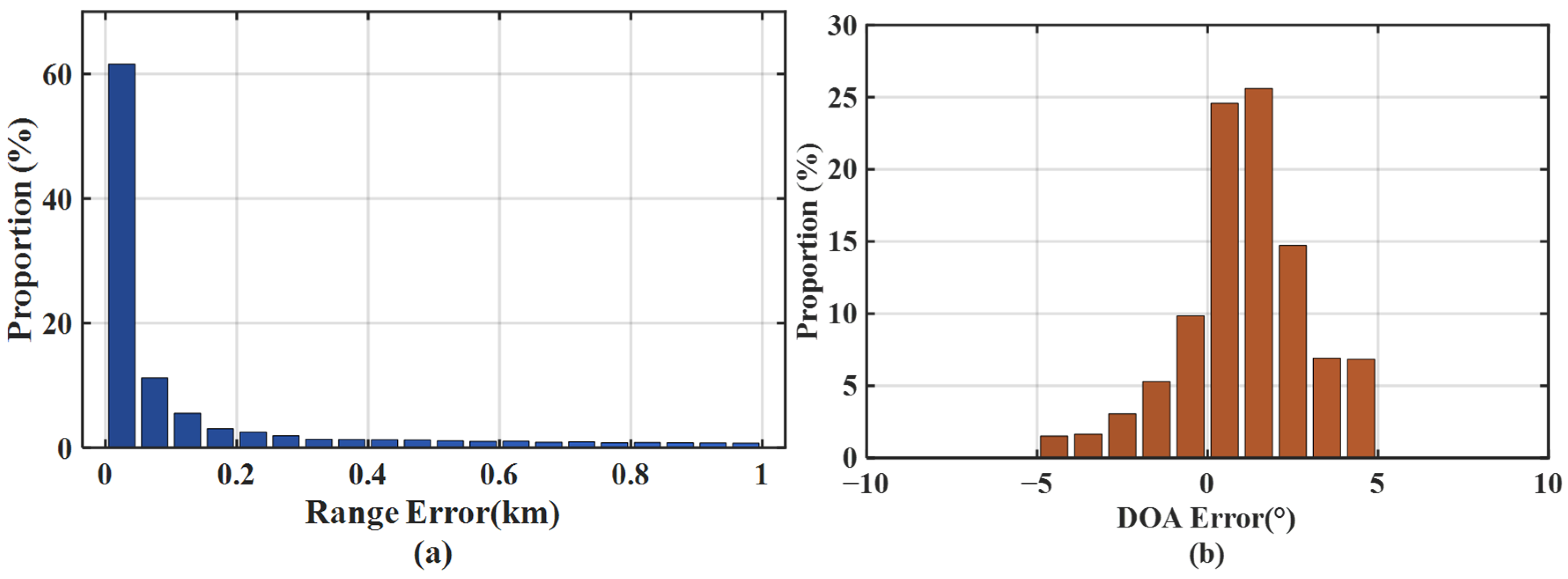
The distance error and azimuth error of successfully associated tracks were analyzed using the algorithm proposed in this paper. The error distribution histograms are shown in
Figure 10.
Figure 10a depicts the distance error distribution, with a mean distance error of 0.127 km and a distance RMSE of 0.25 km.
Figure 10b shows the distribution of DOA errors, with a mean DOA error of 1.102° and DOA RMSE of 2.17°.
3.3. Comprehensive Performance
3.3.1. Ablation Experiment
To validate the contributions of each component in the proposed ESMaS method, ablation experiments were designed. The performance of the following algorithm variants was compared using 10 h of continuous real-world data (encompassing various cross-talk, parallel, and noise scenarios).
As shown in
Table 8, the ablation experiment results indicate that feature algorithms relying solely on Great-circle distance or Mahalanobis distance exhibit poor performance in IDSW and Frac metrics. They are susceptible to interference from multi-target crossing scenarios and complex sea clutter backgrounds, leading to frequent trajectory ID switching. When direction cosine features were introduced to these two algorithms, the corresponding ID switching and track discontinuity issues were effectively mitigated. However, the corresponding false negative rate increased, indicating that direction cosine features can effectively maintain track continuity and enhance ID retention capability. Yet, under the assumption of uniform linear motion direction cosine, it inevitably filters out some highly maneuverable vessel tracks, resulting in partial false negatives. Concurrently, false alarm (false positive) rates also decreased, demonstrating that direction cosine features can reduce false alarms by focusing detection points on vessels moving at constant linear speeds. When using the adaptive multi-feature fusion ESMaS algorithm with direction cosine features disabled, trajectory discontinuities increased significantly. Nevertheless, performance metrics remained superior to single-distance-measurement algorithms, highlighting the effectiveness of adaptive multi-feature fusion in maritime tracking scenarios. When employing the complete ESMaS algorithm, the IDSW and Frac metrics achieved the best performance, and the distance RMSE metric was also the lowest. The above ablation experiments effectively demonstrate the validity of the direction cosine and multi-feature adaptive association algorithm with fused Mahalanobis distance.
3.3.2. Statistical Significance Analysis
We selected eight independent, 12 h-long actual measurement data sequences (covering different time periods and traffic densities). To verify whether the performance improvement of the ESMaS method relative to the baseline methods (NNDA, PDA) is statistically significant, a paired sample test was conducted on the eight independent data sequences (each 12 h long).
Table 8 presents the mean ± standard deviation for each metric across the eight sequences, along with the significance test results (paired
t-test, significance level α = 0.05). For the calculation parameters of the OSPA metric, we selected a cutoff distance of
c = 6000 m and
l = 2.
As shown in
Table 9, regarding tracking continuity, ESMaS exhibited significantly fewer identity switches (IDSW) and fewer track breaks than both benchmark methods across all 8 experiments (
p < 0.01), with extremely large effect sizes. This indicates that ESMaS effectively reduces track fragmentation and identity jumps caused by target crossovers and clutter interference.
Regarding tracking robustness, ESMaS significantly improved identity retention accuracy (IDF1) (p < 0.001) while maintaining comparable OSPA and positioning accuracy (with slight improvement in distance RMSE). These highly statistically significant results confirm that the ESMaS method delivers superior and more stable overall performance compared to conventional methods under complex sea conditions.
3.3.3. Key Parameter Sensitivity Analysis
- A.
Predictive Counter Threshold Analysis
As shown in
Table 10, with increasing prediction count thresholds, both the number of ID switches and the number of trajectory breaks gradually increase. This indicates that the trajectory of a genuine vessel becomes increasingly fragmented. The IDF1 first increases then decreases, reaching its maximum at a prediction count threshold of 4. This occurs because a reasonable maximum prediction count effectively bridges temporary missed detections. When the threshold is excessively high, the algorithm becomes overly reliant on the prediction module, leading to the introduction of substantial noise and the generation of false trajectories. The FN and FP metrics further illustrate this issue: the prediction module reduces the probability of missed detections by temporarily updating trajectory points in complex scenes or cluttered backgrounds, thereby mitigating trajectory discontinuities caused by missed detections. Conversely, an excessively high prediction threshold introduces a large number of false alarms.
- B.
Adaptive Weight Conversion Threshold Analysis
The trajectory length threshold determines when to switch from the initial phase weighting to the maintenance phase.
The initial phase of the trajectory is dominated by the weighting of the nearest great circle distance. However, the Mahalanobis distance requires at least two trajectory points for the covariance matrix to be meaningful—meaning distribution characteristics only emerge when the trajectory possesses two or more points. Therefore, the adaptive weight conversion threshold
serves as a criterion for determining when the Mahalanobis distance begins to take effect and performs stably. The parameters listed in
Table 11 represent values under conditions where the Mahalanobis distance is meaningful. It can be observed that the algorithm is not sensitive to this parameter. Comparing the IDF1 metric across several settings reveals that selecting
yields the optimal metric. Furthermore, we conclude that a trajectory’s morphological and distributional characteristics begin to emerge only when it comprises at least four points. At this point, the Mahalanobis distance becomes meaningful.
3.3.4. Selection Method for Movement Direction
When utilizing direction cosine features, the trajectory motion direction can be selected in the following ways: a. The direction formed by the first two points of the trajectory is adopted as the motion direction. This approach assigns higher trust to the initial formation stage of the trajectory. Given that this algorithm applies to vessels undergoing uniform linear motion, the direction formed by the first two points holds reasonable validity under this assumption. b. The direction formed by the two locally nearest points. This method is directly influenced by the trajectory’s terminal direction. When measurements deviate from the true direction due to complex environments or errors, the locally nearest direction may cause the associated wavefront to deviate from the actual motion trend. The predictor may exacerbate this offset, leading to trajectory deviation and discontinuity. c. Velocity direction from the Kalman filter. The current framework employs a Kalman filter, whose velocity direction output integrates historical motion data with current measurements. This better reflects the target’s current motion trend, particularly during minor maneuvers or when systematic errors exist. As shown in
Table 12 results, using the initial direction enhances trajectory stability during the initial phase, preventing breaks caused by single-point jumps. This approach does present a potential issue: it is insensitive to maneuvering targets. If a target changes direction mid-tracking, the initial two direction points become unrepresentative. The velocity direction from the Kalman filter yields lower IDSW and Frac values while maintaining association and tracking during minor target maneuvers. Therefore, this method is selected as the velocity direction for the direction cosine in the trajectory.
4. Discussion
To address the challenges of data association in small-aperture HFSWR for maritime multi-target tracking—particularly in scenarios with strong clutter interference and frequent target crossings—this paper proposes an adaptive data association method based on multi-feature fusion. Validation and comparative analysis using real-world data demonstrate that the method achieves improved trajectory continuity and effectively suppresses false associations. The following discussion integrates these experimental findings with relevant research.
Taking Case 1 from the experimental analysis as an example, in the scenario where target tracks intersected, the three vessels were at close range but exhibited different radial velocities. Traditional methods such as NNDA and PDA, which rely solely on the correlation between plots and the end of existing tracks, were prone to incorrectly associating sidelobe clutter points to the track under clutter interference, leading to track fragmentation. In contrast, the ESMaS method proposed in this paper integrates multiple features for similarity calculation. By leveraging the Mahalanobis distance to emphasize the spatial distribution characteristics of the trajectory, it effectively filters correct plots and maintained the continuity of Vessel 2’s and Vessel 3’s track, increasing the tracking duration by 40 min compared to traditional methods. The experimental results of Case 2 demonstrate that the proposed method improves association stability in multi-target crossing areas. As shown in
Figure 5b, the NNDA method, relying solely on a single distance metric, was susceptible to track fragmentation due to local optimal solutions. The proposed method, through the complementarity of multiple features, maintains discriminative capability even when the great-circle distance deviates, thereby ensuring track continuity by utilizing features such as the Mahalanobis distance. Furthermore, in areas where vessels sailed steadily, the directional cosine feature effectively distinguished targets with similar current motion directions but different historical courses, significantly reducing the number of false tracks. The results of Case 3 demonstrate that even when detection points are lost in multi-target intersecting scenarios, the proposed algorithm can still generate tracking trajectories for targets while reducing the number of fragmented trajectories. As shown in
Figure 7, traditional algorithms all exhibit trajectory fragmentation. However, the proposed algorithm tracks two fragmented segments as a single continuous trajectory, effectively addressing complex scenarios.
The combination of the Kalman prediction module and the motion model further provided reliable state estimation during periods of missing plots, forming a closed-loop process of “association–prediction–update” that enhances stability. It should be noted that the “long-trajectory-priority” matching mechanism in the proposed method gives priority to stable tracks in plot competition. This not only ensures the continuity of real targets but also suppresses resource occupation by false-alarm trajectories, thereby optimizing the overall performance of multi-target tracking at the system level.
For the results in
Figure 9a, the higher proportion of predicted points primarily stems from two factors: First, the inherent sparsity and loss of detection points in compact HFSWR under interference such as clutter and occlusion; second, the active trajectory maintenance strategy adopted by the algorithm to compensate for such data interruptions. Sensitivity analysis indicates that the setting of the prediction counter threshold directly influences the trade-off in tracking performance. This reveals the dual role of the prediction module: First, a significant portion of prediction points indeed originate from trajectories that ultimately break. Typical track lengths span only 10–15 points, yet tracks often undergo multiple consecutive predictions (e.g., four times) before final breakage. This directly inflates the overall prediction point ratio, reflecting real-world challenges where targets frequently disengage from associated wave gates due to wave occlusion, cross-interference, and other factors. Second, and more critically, the prediction module plays a central role in successfully recovering targets after brief disappearances. Optimal performance is achieved with a threshold of 4, indicating this threshold is sufficient to “bridge” most short detection gaps caused by transient clutter or occlusions. During these gaps, the algorithm maintains trajectory state through prediction. Upon target reappearance, the proposed multi-feature association method (ESMaS) accurately reassociates measurements to the original track—rather than initiating a new one—by leveraging features like direction consistency and historical track distribution (Mahalanobis distance). This “predict-recover” mechanism significantly reduces track breaks and identity jumps, directly enhancing track continuity. The reduction in false negatives (FN) achieved by the moderate threshold in
Table 10 further validates this benefit.
However, the methodology employed in this paper still has several limitations. First, the current approach utilizes a uniform linear motion model, with the correlation wave threshold set to . The prediction limit is set to four times. These parameters are empirically determined and update the position and heading state during prediction while maintaining the radial velocity, fully leveraging the characteristics of targets moving at constant velocity in a straight line. The prediction module is suitable for transient interference scenarios where the target is continuously obscured for no longer than 20 min. Longer periods of obstruction or strong sea clutter interference require separate investigation.
Secondly, the adaptive weighting strategy distinguishes between the initialization and maintenance phases of a track. During the initialization phase, the great circle distance dominates the weighting. Once the track length exceeds the threshold , the Mahalanobis distance is introduced with balanced weights. The phase division and weight allocation can be adjusted based on the sensitivity analysis presented in this paper according to actual conditions. We select the trajectory distribution Mahalanobis distance, which measures the spatial distribution match between measurement points and historical trajectory points. Its advantage lies in effectively utilizing historical track patterns to distinguish intersecting trajectories with different courses. However, it is insensitive to sudden maneuvers, potentially causing delayed responses. The innovation Mahalanobis distance utilizes the Kalman filter’s innovation to measure the match between measurement points and the filter’s current prediction. Its advantage lies in effectively leveraging the uncertainty of the current state estimate. The disadvantage is its heavy reliance on the accuracy of the motion model. If the motion model can be accurately modeled, subsequent research may consider using the innovation Mahalanobis distance for dynamic adjustment of the association threshold.
Finally, the algorithm is applicable to vessels undergoing uniform linear motion; high-maneuverability targets require separate investigation. By adjusting the direction cosine threshold, it can adapt to targets with varying degrees of maneuverability. However, its tracking capability for highly maneuverable targets remains inadequate and requires future improvements through the introduction of maneuver models or variable-structure filtering.