Optimizing Spatial Representativeness of LULC Samples over Complex Karst Terrain Using Remote Sensing Phenology and Landform-Constrained Joint Stratification

 ,
,
Highlights
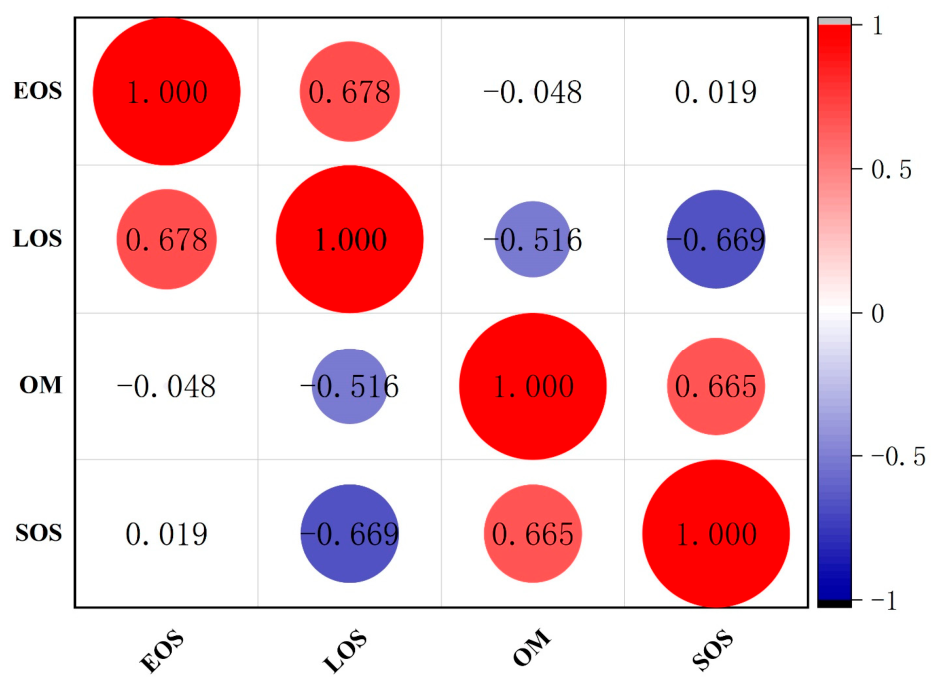
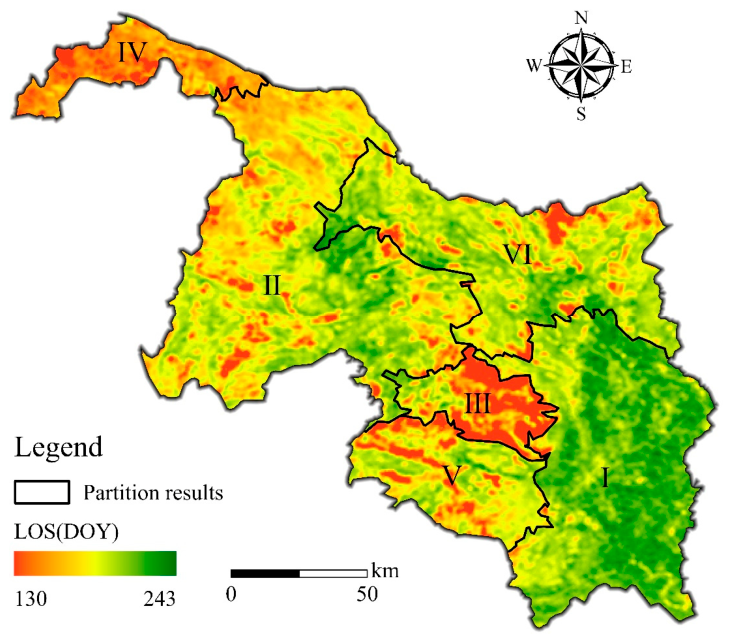
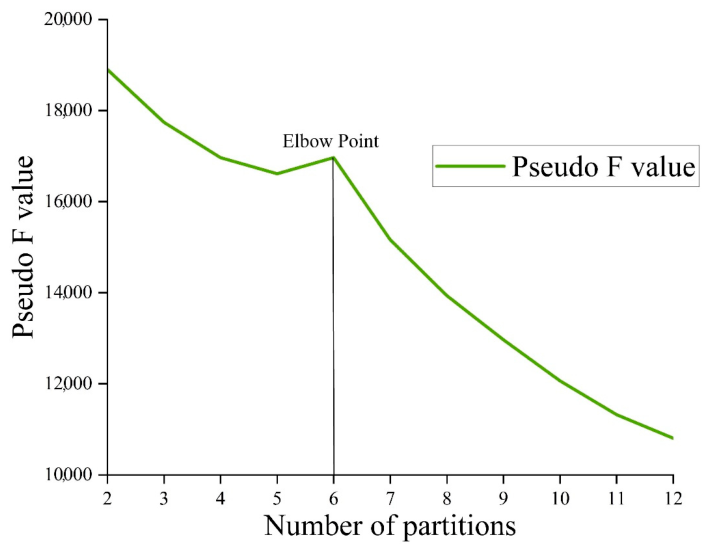
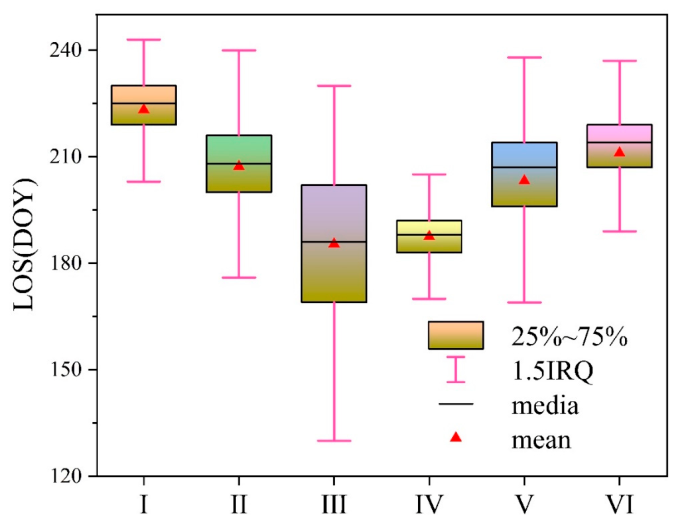
- The Beipanjiang River Basin (Guizhou section) was divided into six spatially contiguous phenological subregions; LOS was used as a simplified indicator to characterize long-term vegetation phenological gradients, while the independent roles of SOS, OM, and EOS should be acknowledged.
- Under the current experimental setting, the landform-constrained phenological stratification and dual-weighted sample allocation scheme increased OA from 71.33% to 77.55% and Kappa from 0.43 to 0.62 compared with simple random sampling.
- The joint use of remote sensing phenological background and landform heterogeneity provides a potential sample-organization strategy for reducing insufficient spatial representativeness over fragmented karst landscapes.
- The proposed framework may serve as a methodological reference for LULC sample optimization in ecologically fragile karst regions, but its transferability still requires validation in additional years and regions.
Abstract
1. Introduction
2. Materials and Methods
2.1. Study Area
2.2. Data Sources and Pre-Processing
2.2.1. Phenology Data
2.2.2. Remote Sensing Image Data
2.2.3. Landform Classification Data
2.2.4. Sample Point Data
2.3. Research Methods
2.3.1. Research Approach
2.3.2. Development of a Remote Sensing Phenological Zoning Scheme
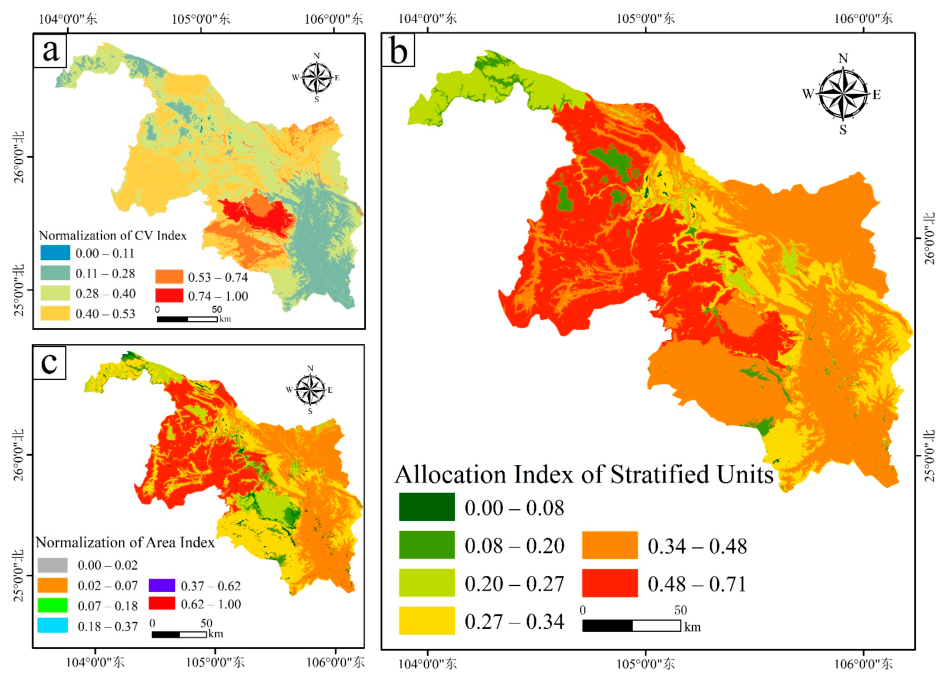
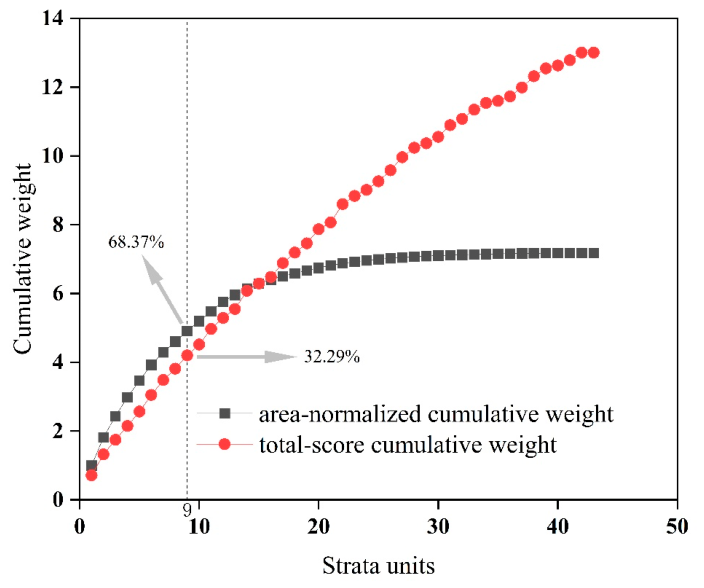
2.3.3. An Optimized Adaptive Stratified Sampling Scheme for Multidimensional Heterogeneity
2.3.4. Land Use/Cover Classification
- Sampling
- 2.
- Feature Parameter Selection
2.3.5. Accuracy Validation
3. Results
3.1. Remote-Sensing Phenological Pattern Zoning and Evaluation
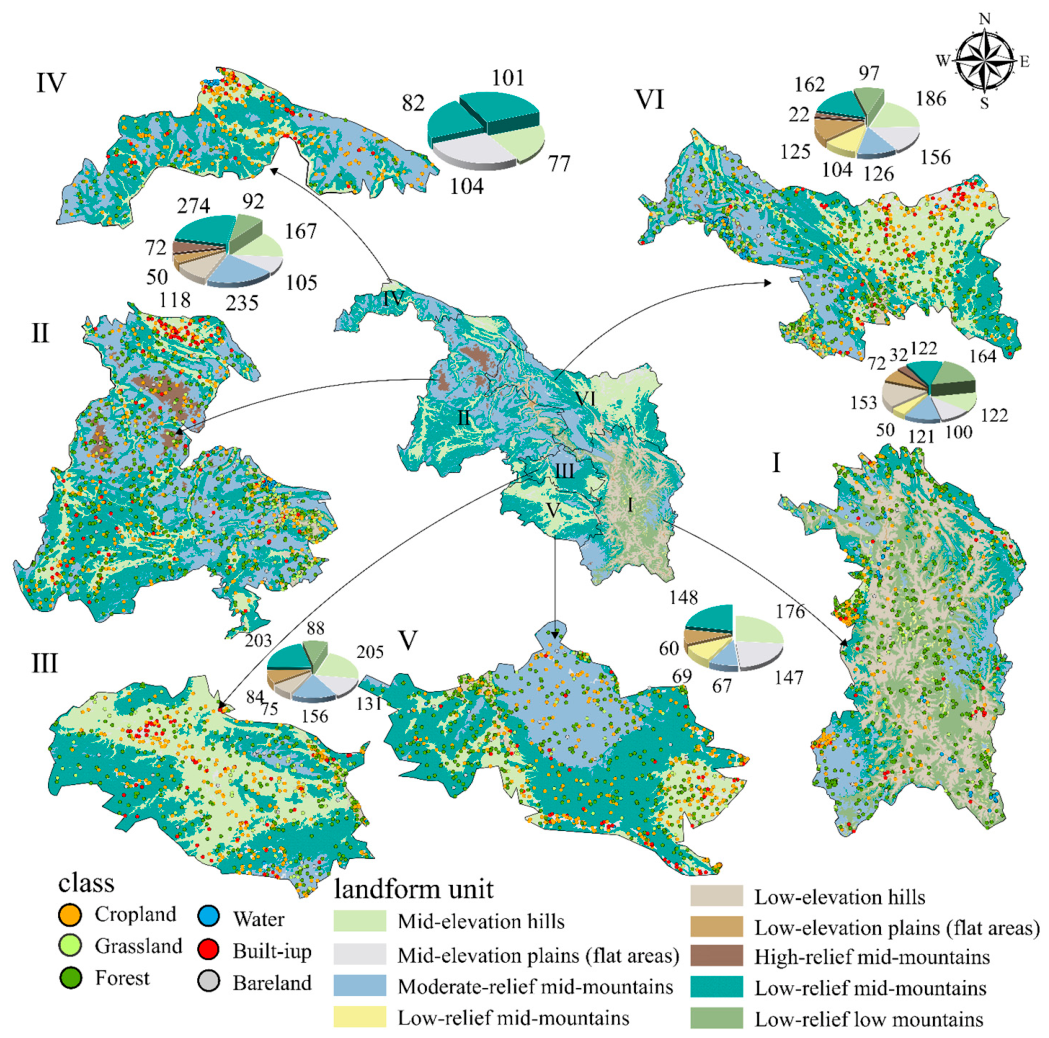
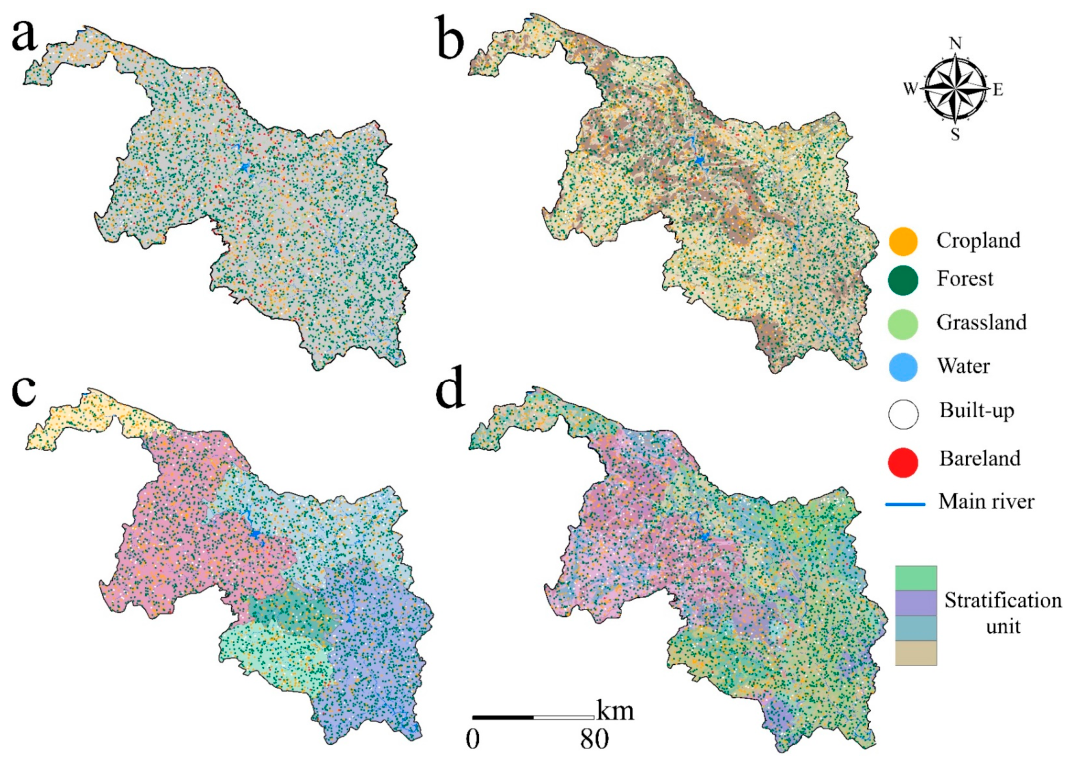
3.2. Stratified Results of Phenology–Landform Joint Stratification and Spatial Distribution of Samples
3.3. Response of the Sample Optimization Scheme to LULC Remote Sensing Interpretation
3.3.1. Ablation Analysis of Phenology, Landform, and Dual-Weighted Allocation
3.3.2. Class-Level Accuracy Response of the Optimized Sampling Scheme
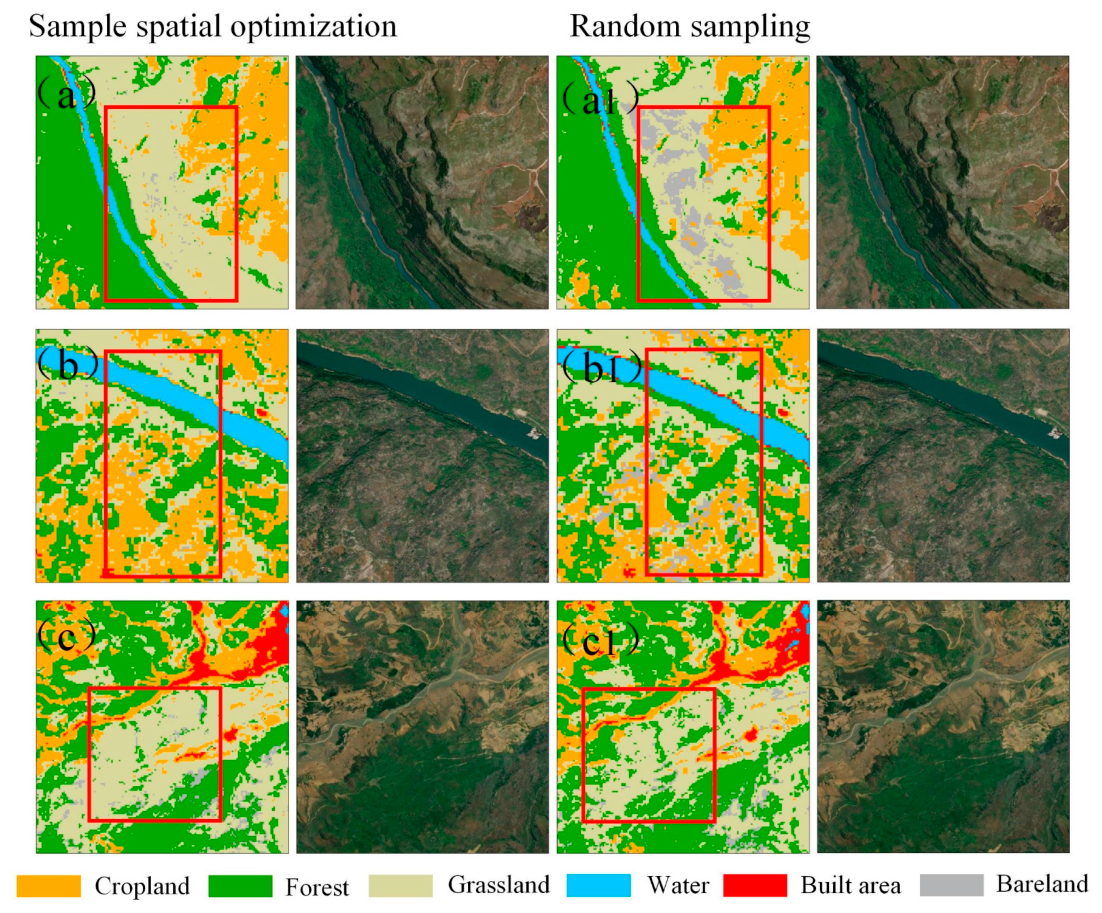
3.3.3. Local Comparison of LULC Classification Results
4. Discussion
4.1. Impact of Remote Sensing Phenological Model-Dominated Zones on Karst LULC Samples
4.2. Analysis of Sample Optimization Gain Sources
4.3. Limitations and Outlook
5. Conclusions
Author Contributions
Funding
Institutional Review Board Statement
Data Availability Statement
Conflicts of Interest
References
- Brown, C.F.; Brumby, S.P.; Guzder-Williams, B.; Birch, T.; Hyde, S.B.; Mazzariello, J.; Czerwinski, W.; Pasquarella, V.J.; Haertel, R.; Ilyushchenko, S.; et al. Dynamic World, Near Real-Time Global 10 m Land Use Land Cover Mapping. Sci. Data 2022, 9, 251. [Google Scholar] [CrossRef] [Scilit]
- Wang, Y.; Sun, Y.; Cao, X.; Wang, Y.; Zhang, W.; Cheng, X. A Review of Regional and Global Scale Land Use/Land Cover (LULC) Mapping Products Generated from Satellite Remote Sensing. ISPRS J. Photogramm. Remote Sens. 2023, 206, 311–334. [Google Scholar] [CrossRef] [Scilit]
- Naboureh, A.; Li, A.; Bian, J.; Moharrami, M.; Ebrahimy, H.; Lei, G.; Nan, X.; Zhang, Z.; Feizizadeh, B.; Dabove, P.; et al. Accuracies, Discrepancies, and Challenges of the 10 m Global Land Cover Products in Mountains. GIScience Remote Sens. 2025, 62, 2556064. [Google Scholar] [CrossRef] [Scilit]
- Sovann, C.; Olin, S.; Mansourian, A.; Sakhoeun, S.; Prey, S.; Kok, S.; Tagesson, T. Importance of Spectral Information, Seasonality, and Topography on Land Cover Classification of Tropical Land Cover Mapping. Remote Sens. 2025, 17, 1551. [Google Scholar]
- Schug, F.; Pfoch, K.A.; Pham, V.-D.; Van Der Linden, S.; Okujeni, A.; Frantz, D.; Radeloff, V.C. Land Cover Fraction Mapping across Global Biomes with Landsat Data, Spatially Generalized Regression Models and Spectral-Temporal Metrics. Remote Sens. Environ. 2024, 311, 114260. [Google Scholar]
- Li, Y.; Sun, B.; Gao, Z.; Su, W.; Wang, B.; Yan, Z.; Gao, T. Extraction of Rocky Desertification Information in Karst Area by Using Different Multispectral Sensor Data and Multiple Endmember Spectral Mixture Analysis Method. Front. Environ. Sci. 2022, 10, 996708. [Google Scholar] [CrossRef] [Scilit]
- Xu, A.; Wang, F.; Li, L. Vegetation Information Extraction in Karst Area Based on UAV Remote Sensing in Visible Light Band. Optik 2023, 272, 170355. [Google Scholar] [CrossRef] [Scilit]
- Wang, K.; Zhang, C.; Chen, H.; Yue, Y.; Zhang, W.; Zhang, M.; Qi, X.; Fu, Z. Karst Landscapes of China: Patterns, Ecosystem Processes and Services. Landsc. Ecol. 2019, 34, 2743–2763. [Google Scholar] [CrossRef] [Scilit]
- Huang, D.; Zhou, Z.; Zhang, Z.; Dai, Q.; Lu, H.; Li, Y.; Huang, Y. Land Use/Land Cover Remote Sensing Classification in Complex Subtropical Karst Environments: Challenges, Methodological Review, and Research Frontiers. Appl. Sci. 2025, 15, 9641. [Google Scholar] [CrossRef] [Scilit]
- Wang, J.; Zhou, Z.; Zhu, M.; Wan, J.; Wu, X.; Liu, R.; Zheng, J. Study on the Response of Net Primary Productivity to Vegetation Phenology and Its Influencing Factors in Karst Ecologically Fragile Regions. Atmosphere 2024, 15, 1464. [Google Scholar] [CrossRef] [Scilit]
- Feng, S.; Jiang, S.; Liu, X.; Zhang, L.; Gan, Y.; Xia, N.; Wu, W.; Zhou, C. Extraction of Abandoned Cropland Using Multisource Remote Sensing Images in Suburban Regions: A Case Study of Zengcheng, Guangdong Province. IEEE J. Sel. Top. Appl. Earth Obs. Remote Sens. 2025, 18, 18055–18067. [Google Scholar] [CrossRef] [Scilit]
- Zeng, H.; Wu, B.; Wang, S.; Musakwa, W.; Tian, F.; Mashimbye, Z.E.; Poona, N.; Syndey, M. A Synthesizing Land-Cover Classification Method Based on Google Earth Engine: A Case Study in Nzhelele and Levhuvu Catchments, South Africa. Chin. Geogr. Sci. 2020, 30, 397–409. [Google Scholar] [CrossRef] [Scilit]
- Liu, X.; Frey, J.; Munteanu, C.; Still, N.; Koch, B. Mapping Tree Species Diversity in Temperate Montane Forests Using Sentinel-1 and Sentinel-2 Imagery and Topography Data. Remote Sens. Environ. 2023, 292, 113576. [Google Scholar] [CrossRef] [Scilit]
- Dong, S.; Guo, H.; Chen, Z.; Pan, Y.; Gao, B. Spatial Stratification Method for the Sampling Design of LULC Classification Accuracy Assessment: A Case Study in Beijing, China. Remote Sens. 2022, 14, 865. [Google Scholar]
- Shetty, S.; Gupta, P.K.; Belgiu, M.; Srivastav, S.K. Assessing the Effect of Training Sampling Design on the Performance of Machine Learning Classifiers for Land Cover Mapping Using Multi-Temporal Remote Sensing Data and Google Earth Engine. Remote Sens. 2021, 13, 1433. [Google Scholar] [CrossRef] [Scilit]
- Foody, G.M.; Arora, M.K. An Evaluation of Some Factors Affecting the Accuracy of Classification by an Artificial Neural Network. Int. J. Remote Sens. 1997, 18, 799–810. [Google Scholar] [CrossRef] [Scilit]
- Shao, Q.; Huang, C.; Xiao, Y.; Liu, L.; Liu, W.; Huang, R.; Zhou, C.; Weng, W.; Huang, J. Selecting of Global Phenological Field Observations for Validating Coarse AVHRR-Derived Forest Phenology Products Based on Spatial Heterogeneity and Temporal Consistency. Ecol. Inform. 2025, 90, 103216. [Google Scholar] [CrossRef] [Scilit]
- Zhang, Q.; Zhang, Z.; Xu, N.; Li, Y. Fully Automatic Training Sample Collection for Detecting Multi-Decadal Inland/Seaward Urban Sprawl. Remote Sens. Environ. 2023, 298, 113801. [Google Scholar]
- Belgiu, M.; Bijker, W.; Csillik, O.; Stein, A. Phenology-Based Sample Generation for Supervised Crop Type Classification. Int. J. Appl. Earth Obs. Geoinf. 2021, 95, 102264. [Google Scholar] [CrossRef] [Scilit]
- Karasiak, N.; Dejoux, J.-F.; Monteil, C.; Sheeren, D. Spatial Dependence between Training and Test Sets: Another Pitfall of Classification Accuracy Assessment in Remote Sensing. Mach. Learn. 2022, 111, 2715–2740. [Google Scholar] [CrossRef] [Scilit]
- Suman, S.; Rawat, A.; Kumar, A.; Pant, N. Study of Training Parameters Effect in Noise Clustering Classifier for Handling Heterogeneity Within the Class for LULC Classification. J. Indian Soc. Remote Sens. 2025, 53, 1183–1196. [Google Scholar] [CrossRef] [Scilit]
- Wang, J.; Li, M.; Yu, C.; Fu, G. The Change in Environmental Variables Linked to Climate Change Has a Stronger Effect on Aboveground Net Primary Productivity Than Does Phenological Change in Alpine Grasslands. Front. Plant Sci. 2022, 12, 798633. [Google Scholar] [CrossRef] [Scilit]
- Peng, H.; Xia, H.; Chen, H.; Zhi, P.; Xu, Z. Spatial Variation Characteristics of Vegetation Phenology and Its Influencing Factors in the Subtropical Monsoon Climate Region of Southern China. PLoS ONE 2021, 16, e0250825. [Google Scholar] [CrossRef] [Scilit]
- Li, C.; Ma, Z.; Wang, L.; Yu, W.; Tan, D.; Gao, B.; Feng, Q.; Guo, H.; Zhao, Y. Improving the Accuracy of Land Cover Mapping by Distributing Training Samples. Remote Sens. 2021, 13, 4594. [Google Scholar] [CrossRef] [Scilit]
- Ahmed, S.A. Land Use and Land Cover Classification Using Machine Learning Algorithms in Google Earth Engine. Earth Sci. Inform. 2023, 16, 3057–3073. [Google Scholar]
- Shao, S.; Zhang, H.; Fan, M.; Su, B.; Wu, J.; Zhang, M.; Yang, L.; Gao, C. Spatial Variability-Based Sample Size Allocation for Stratified Sampling. Catena 2021, 206, 105509. [Google Scholar] [CrossRef] [Scilit]
- Xie, H.; Wang, F.; Gong, Y.; Tong, X.; Jin, Y.; Zhao, A.; Wei, C.; Zhang, X.; Liao, S. Spatially Balanced Sampling for Validation of GlobeLand30 Using Landscape Pattern-Based Inclusion Probability. Sustainability 2022, 14, 2479. [Google Scholar] [CrossRef] [Scilit]
- Ye, N.; Morgenroth, J.; Xu, C.; Cai, Z. Improving Neural Network Classification of Indigenous Forest in New Zealand with Phenological Features. J. Environ. Manag. 2022, 314, 115134. [Google Scholar] [CrossRef] [Scilit]
- Yang, Y.; Zhou, Z.; Huang, D.; Zhang, F.; Deng, F.; Du, S. A Comparative Analysis of the Applicability of Typical Land Cover Datasets in the Karst Strongly Heterogeneous Terrain in Southern China. Geocarto Int. 2024, 39, 2395318. [Google Scholar] [CrossRef] [Scilit]
- Liu, Z.; Zhang, Y. Vegetation Cover Change and Its Response to Human Activities in the Southwestern Karst Region of China. Front. Ecol. Evol. 2024, 12, 1326601. [Google Scholar] [CrossRef] [Scilit]
- Li, Y.; Ke, Q.; Zhang, Z. Millennial Evolution of a Karst Socio-Ecological System: A Case Study of Guizhou Province, Southwest China. Int. J. Environ. Res. Public Health 2022, 19, 15151. [Google Scholar] [CrossRef] [Scilit]
- Tang, G.; Yang, X.; Li, F.; Xiong, L.; Li, S. Global Basic Landform Units Datasets. Version 1. Yangtze River Delta Science Data Center, National Earth System Science Data Sharing Infrastructure Nanjing, China, National Science & Technology Infrastructure of China, Nanjing, China. 2023. Available online: http://geodata.nnu.edu.cn/ (accessed on 28 May 2026).
- GB/T 21010-2017; General Administration of Quality Supervision, Inspection and Quarantine of the People’s Republic of China, Standardization Administration of the People’s Republic of China. Current Land Use Classification. Standards Press of China: Beijing, China, 2017.
- Liu, X.; Wang, Z.; Yang, X.; Cheng, W.; Zhang, J.; Liu, Y.; Liu, B.; Meng, D.; Zeng, X. Remotely-sensed phenology pattern regionalization for land cover classification of natural scenes: A case study in China. Acta Geogr. Sin. 2024, 79, 2206–2229. [Google Scholar]
- Huang, X.; Zhou, Z.; Zhao, X.; Wu, G.; Long, Y.; Chen, J. Information Extraction and Characteristic Analysis of Cultivated Land Abandonment in Karst Rocky Desertification Mountainous Areas Based on Time-Series Vegetation Index. Sci. Rep. 2025, 15, 12554. [Google Scholar] [CrossRef] [Scilit]
- Amini, S.; Saber, M.; Rabiei-Dastjerdi, H.; Homayouni, S. Urban Land Use and Land Cover Change Analysis Using Random Forest Classification of Landsat Time Series. Remote Sens. 2022, 14, 2654. [Google Scholar]
- Ahmed, R.; Zafor, M.A.; Trachte, K. Land-Use and Land-Cover Changes in Cottbus City and Spree-Neisse District, Germany, in the Last Two Decades: A Study Using Remote Sensing Data and Google Earth Engine. Remote Sens. 2024, 16, 2773. [Google Scholar]
- Mu, X.; Hu, M.; Song, W.; Ruan, G.; Ge, Y.; Wang, J.; Huang, S.; Yan, G. Evaluation of Sampling Methods for Validation of Remotely Sensed Fractional Vegetation Cover. Remote Sens. 2015, 7, 16164–16182. [Google Scholar] [CrossRef] [Scilit]
- Lehmkuhl, F.; Römer, W. Geomorphological Processes and Landforms in a Global Scale—Previous Concepts and Future Challenges from a German Perspective. Z. Geomorphol. 2022, 64, 53–71. [Google Scholar] [CrossRef] [Scilit]
- Hermosilla, T.; Wulder, M.A.; White, J.C.; Coops, N.C. Land Cover Classification in an Era of Big and Open Data: Optimizing Localized Implementation and Training Data Selection to Improve Mapping Outcomes. Remote Sens. Environ. 2022, 268, 112780. [Google Scholar] [CrossRef] [Scilit]
- Lv, T.; Zhou, X.; Tao, Z.; Sun, X.; Wang, J.; Li, R.; Xie, F. Remote Sensing-Guided Spatial Sampling Strategy over Heterogeneous Surface Ground for Validation of Vegetation Indices Products with Medium and High Spatial Resolution. Remote Sens. 2021, 13, 2674. [Google Scholar] [CrossRef] [Scilit]
- Shao, Z.; Cheng, T.; Fu, H.; Li, D.; Huang, X. Emerging Issues in Mapping Urban Impervious Surfaces Using High-Resolution Remote Sensing Images. Remote Sens. 2023, 15, 2562. [Google Scholar]
- Su, M.; Guo, R.; Chen, B.; Hong, W.; Wang, J.; Feng, Y.; Xu, B. Sampling Strategy for Detailed Urban Land Use Classification: A Systematic Analysis in Shenzhen. Remote Sens. 2020, 12, 1497. [Google Scholar] [CrossRef] [Scilit]



| Dataset | Year/Period to Report | Spatial Resolution | Role in This Study |
|---|---|---|---|
| MODIS MCD12Q2 phenology | 2001–2020 annual metrics; multi-year mean | 500 m | Long-term phenological background for stratification/sample allocation |
| Sentinel-2 Level-2A | 2021 | 10 m | Target-year LULC classification features |
| GF-2 reference imagery | 2021 | 0.8 m | Target-year visual interpretation and label verification |
| LULC sample labels | 2021 target year; auxiliary checks in 2025–2026 for stable sites only | Point samples | Training/validation labels for 2021 classification; temporally unstable or ambiguous samples excluded |
| Global Basic Landform Type Unit Dataset | 2023 | 1:200,000-scale vector geomorphological dataset | Landform background stratification |
| Sampling Design | Principle | Applicability in Karst Areas |
|---|---|---|
| Simple Random Sampling | Samples are selected completely randomly across the entire study area. | Use with caution. It cannot ensure sufficient representativeness of all important feature types in the fragmented karst landscape. |
| Systematic Sampling | Sampling is conducted at fixed spatial intervals (grid) within the study area. | Use with caution. It is acceptable for macro-pattern analysis but may fail to capture the patch randomness under karst microtopography. |
| Stratified Random Sampling | Taking classification maps or prior knowledge as “strata”, random sampling is performed (proportionally or with a fixed quantity) within each category (stratum). | Highly recommended. It is the most commonly used and scientific method for land cover classification accuracy assessment and can effectively address the uneven area distribution of feature types in karst areas. |
| Spatial Balanced Sampling | Specific algorithms (e.g., GRTS) are adopted to achieve uniform spatial distribution of samples while maintaining randomness. | High potential. It is particularly suitable for in-depth studies requiring spatial statistical analysis and uncertainty modeling, as it can more objectively reflect karst spatial heterogeneity. |
| Parameter | Setting |
|---|---|
| Number Of Trees | 100 |
| Variables Per Split | Sqrt (number of input variables) |
| Min Leaf Population | 1 |
| Bag Fraction | 0.5 |
| Max Nodes | no limit |
| seed | 0 |
| Kappa Value Range | Interpretation |
|---|---|
| Kappa < 0 | Poor agreement |
| 0 ≤ Kappa < 0.2 | Slight agreement |
| 0.2 ≤ Kappa < 0.4 | Fair agreement |
| 0.4 ≤ Kappa < 0.6 | Moderate agreement |
| 0.6 ≤ Kappa < 0.8 | Substantial agreement |
| 0.8 ≤ Kappa < 1 | Almost perfect agreement |
| Scheme | Strategy | OA (%) | ΔOA (%) | Kappa | ΔKappa |
|---|---|---|---|---|---|
| T1 | Simple random | 71.33 | — | 0.43 | — |
| T2 | Phenology-area | 73.74 | +2.41 | 0.49 | +0.06 |
| T3 | Landform-area | 73.21 | +1.88 | 0.48 | +0.05 |
| T4 | Joint-area | 75.86 | +4.53 | 0.56 | +0.13 |
| T5 | Joint-dual | 77.55 | +6.22 | 0.62 | +0.19 |
| Class | T1 | T5 | Change | |||
|---|---|---|---|---|---|---|
| PA | UA | PA | UA | ΔPA | ΔUA | |
| Cropland | 80.47 | 61.23 | 88.92 | 66.74 | +8.45 | +5.51 |
| Forest | 85.55 | 82.27 | 90.68 | 84.96 | +5.13 | +2.69 |
| Grassland | 20.73 | 40.58 | 29.14 | 49.37 | +8.41 | +8.79 |
| Water | 79.62 | 76.47 | 93.18 | 83.52 | +13.56 | +7.05 |
| Built-up | 43.86 | 69.81 | 55.24 | 78.73 | +11.38 | +8.92 |
| Bareland | 3.92 | 30.77 | 6.11 | 44.44 | +2.19 | +13.67 |
Disclaimer/Publisher’s Note: The statements, opinions and data contained in all publications are solely those of the individual author(s) and contributor(s) and not of MDPI and/or the editor(s). MDPI and/or the editor(s) disclaim responsibility for any injury to people or property resulting from any ideas, methods, instructions or products referred to in the content. |
© 2026 by the authors. Licensee MDPI, Basel, Switzerland. This article is an open access article distributed under the terms and conditions of the Creative Commons Attribution (CC BY) license.
Share and Cite
Li, Y.; Zhou, Z.; Huang, D.; Lu, H.; Fan, R.; Dai, Q.; Luo, Y.; Huang, C.; Yu, Y. Optimizing Spatial Representativeness of LULC Samples over Complex Karst Terrain Using Remote Sensing Phenology and Landform-Constrained Joint Stratification. Remote Sens. 2026, 18, 1915. https://doi.org/10.3390/rs18121915
Li Y, Zhou Z, Huang D, Lu H, Fan R, Dai Q, Luo Y, Huang C, Yu Y. Optimizing Spatial Representativeness of LULC Samples over Complex Karst Terrain Using Remote Sensing Phenology and Landform-Constrained Joint Stratification. Remote Sensing. 2026; 18(12):1915. https://doi.org/10.3390/rs18121915
Chicago/Turabian StyleLi, Ya, Zhongfa Zhou, Denghong Huang, Huanhuan Lu, Ruiqi Fan, Qingqing Dai, Ying Luo, Changyan Huang, and Yuexing Yu. 2026. "Optimizing Spatial Representativeness of LULC Samples over Complex Karst Terrain Using Remote Sensing Phenology and Landform-Constrained Joint Stratification" Remote Sensing 18, no. 12: 1915. https://doi.org/10.3390/rs18121915
APA StyleLi, Y., Zhou, Z., Huang, D., Lu, H., Fan, R., Dai, Q., Luo, Y., Huang, C., & Yu, Y. (2026). Optimizing Spatial Representativeness of LULC Samples over Complex Karst Terrain Using Remote Sensing Phenology and Landform-Constrained Joint Stratification. Remote Sensing, 18(12), 1915. https://doi.org/10.3390/rs18121915